
In short
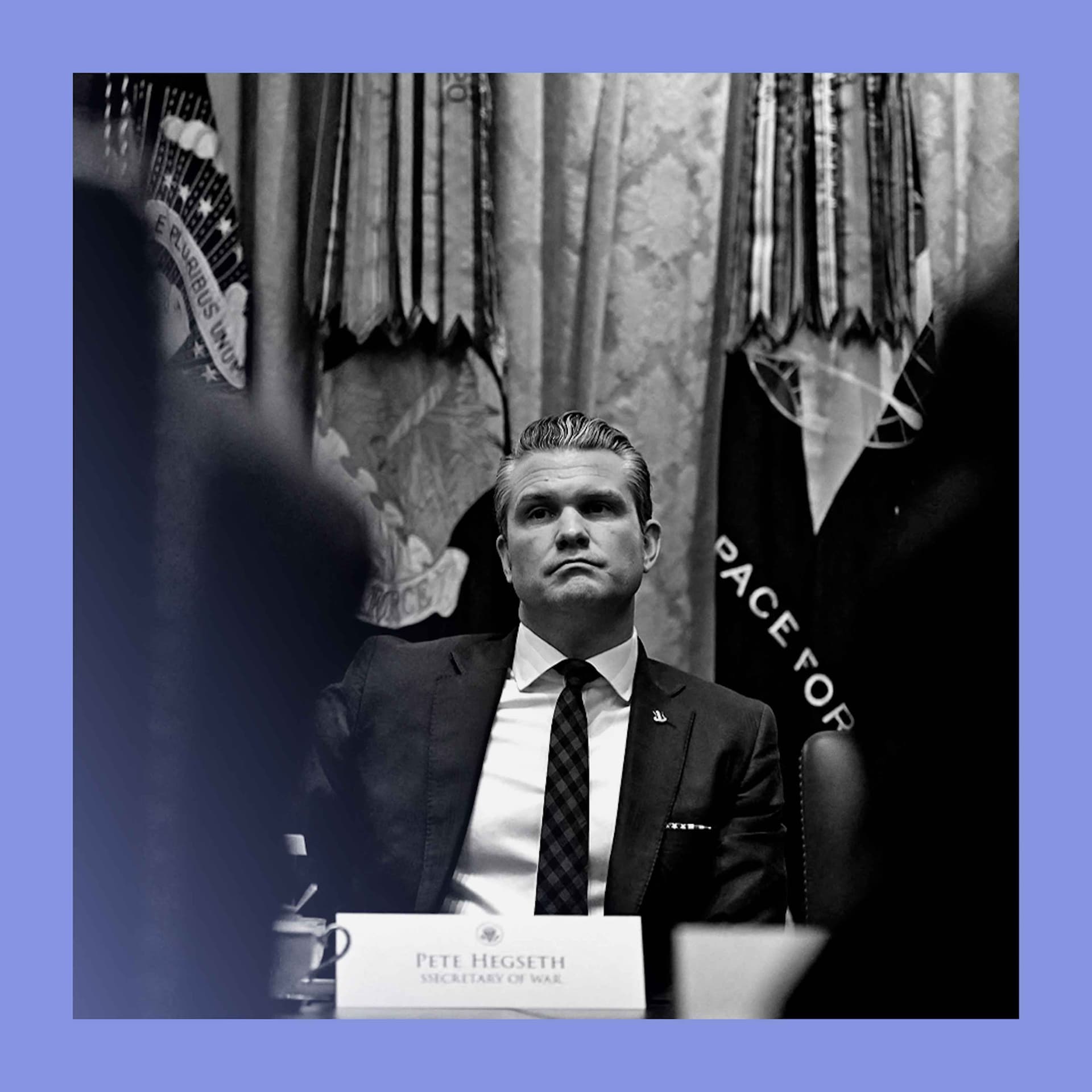
The episode of The Intelligence from The Economist covers three topics: (1) America’s Caribbean ship-bombing campaign and whether a September 2 strike on a boat off Venezuela may have been illegal. Defense editor Shashank Joshi says the US ordered an initial strike, then conducted subsequent “double tap” strikes that disabled and sunk the vessel, killing survivors. He argues international law’s “hors de combat” rules prohibit killing surrendering or shipwrecked survivors; he cites the Pentagon law-of-war manual and the 1945 Pileus trial. He notes Congress (Senate Armed Services Committee) is investigating Admiral Mitch Bradley and questions whether Pete Hegseth authorized survivor-killing. (2) Gene editing embryos: Emily Steinmark discusses He Jiankui’s CRISPR babies, Preventive’s plan to research embryo editing, safety risks, and Silicon Valley funding. (3) Japan’s women’s sumo: Moika Iida reports on the All Japan Women’s Sumo Championship, grassroots growth despite religious and gender barriers, and the tradition-preserving stance of the sumo association.
Guests
Shashank Joshi (defense editor), Emily Steinmark (science correspondent), Moika Iida (East Asia reporter).
Written by AI. May contain mistakes. Listen to the episode to check what was said.
Chapters
Tap a time to open that second in VOOverview of Controversial U.S. Strikes
1:27 to 3:00
Discussion of U.S. missile strikes in the Caribbean and the implications.
“Big biotech firms are looking to get into the ethically sticky business of gene editing on embryos.”
Details and Legal Concerns of the Strikes
3:00 to 5:20
Examination of the specific attacks and the legal ramifications involved.
“And the White House, as well as the Pentagon, are both under fairly sustained attack for their role in what led to these very controversial killings.”
Political Fallout and Accountability
5:20 to 7:50
Analysis of the political consequences and accountability related to the strikes.
“There is this concept in the laws of armed conflict called hors de combat, which literally means out of battle.”
Broader Implications of Military Strategy
7:50 to 11:22
Discussion on the implications of the current military strategy and its alignment with historical practices.
“In public, we have seen really bipartisan outrage and serious concern.”
Gene Editing Controversy
12:39 to 14:00
Exploration of gene editing in embryos and the ethical questions surrounding it.
“In 2018, a Chinese scientist named He Zhongkui said he had done something in secret that drew condemnation around the world.”
Understanding CRISPR Technology
14:00 to 16:45
Learn about CRISPR, its functions, and its implications for gene editing.
“it suggests that perhaps what was and still is a kind of illegal scientific endeavor might in time become more normalized and within the realm of the mainstream.”
Ethical Concerns and Safety in Gene Editing
16:45 to 20:40
Explore the ethical dilemmas and safety issues surrounding embryo editing.
“So both strands, the two ends of the DNA could mend itself in ways that are not normal, let's say, and could be dangerous.”
The Future of Female Sumo in Japan
20:40 to 24:42
Discover the status and challenges of female sumo wrestling in Japan.
“emily thanks very much for joining us thank you I came to see a sumo tournament in Kyoto, and I'm inside the stadium and the atmosphere in here is very enthusiastic.”
Transcript
Automatic transcript. May contain errors.0:00What does running your business feel like with Avalera, the agentic AI platform for global tax and compliance? You don't hover over the submit button. You don't ask for a second opinion. You don't wake up thinking about a filing. Because Avalara's Agentic AI handles it. Calculating, filing, validating. With the accuracy and audit defensibility your team can stand behind. Avalara. Agentic AI tax and compliance with confidence. To grow beyond limits and even beyond your aspirations, you need the London Business School MBA. Ranked fourth in the world by the Financial Times, the program delivers academic excellence and unlocks access to leading global businesses and a network of over 58 ,000 professionals.
0:4886 % of the most recent class accepted a role within three months of graduating and the returns continue beyond today. Search Discover London Business School MBA to find out more.
1:05The Economist
1:12Hello and welcome to The Intelligence from The Economist. I'm Jason Palmer. And I'm Rosie Bloor. Every weekday we provide a fresh perspective on the event shaping your world.
1:27Big biotech firms are looking to get into the ethically sticky business of gene editing on embryos. The promise is clear for easily tackling horrible diseases. Problem is, it's still illegal in most places and presents a slippery slope towards designer babies. And the biggest hit to Japan's patriarchal reputation this year was the appointment of its first female prime minister. But even that involved less change than one women are still wrestling for, to be part of the national sport of sumo.
2:04First up, though.
2:12For the past two months, America has been raining missiles on boats in the Caribbean, which the Trump administration claims are carrying illegal drugs. After each strike, grainy footage has shown the vessels going up in flames. More than 80 people have been killed in the attack so far. Bombing ships was already controversial. Now one particular hit is attracting condemnation on all sides. On September 2nd, the US struck a boat off the coast of Venezuela. Shashank Joshi is our defense editor. But in the intervening weeks, some serious questions have bubbled up about how and why this specific attack was carried out.
2:57Indeed, whether it may have been a war crime. Now we have reached a sort of political boiling point. And the White House, as well as the Pentagon, are both under fairly sustained attack for their role in what led to these very controversial killings. so let's just talk about these controversial killings first can you just lay out for me what we actually know for sure happened in these strikes so on september 2nd the u.s ordered a strike on a boat in the caribbean we know that for sure i think there's been a little video of that the white house has acknowledged that not everyone was killed in the first strike there were some survivors left clinging to the wreckage of the boat and what we know for sure is that there were subsequent strikes that effectively disabled and eventually sunk the boat as well as killing all the survivors.
3:47That has sometimes been called a double tap, which I think is a phrase that was originally used in the context of drone strikes when the US would kill the target of a drone strike and then it would go back and kill those coming to the site. This is now when the facts get a little bit murky. Previously, Donald Trump and Pete Hegseth, his Secretary of Defense, basically said this is all fake news. This is all false. The White House backtracked on Monday. Secretary Hegseth authorized Admiral Bradley to conduct these kinetic strikes. Admiral Bradley worked well within his authority and the law, directing the engagement to ensure the boat was destroyed.
4:23The White House said Hegseth did authorize the strikes, but that the order for the subsequent strikes, the specific orders, came from Admiral Mitch Bradley, and he's the commander of Special Operations Command, or SOCOM. They also denied reports that Hegseth had said, kill them all, or words to that effect. And yesterday, Hegseth said he was not even in the room when the second strike took place. I watched that first strike lot. As you can imagine, at the Department of War, we've got a lot of things to do. So I didn't stick around for the hour and two hours, whatever, where all the sensitive site exploitation digitally occurs.
5:02So I moved on to my next meeting. Shashank, there have been two months of these quite extraordinary attacks, which are themselves controversial. So just explain for me exactly what it is about this moment that's provoked such a backlash. The important thing to remember is that many international lawyers, experts, think this campaign is all illegal. These are all murders. These are not legitimate strikes. But what's controversial about this one is that even if you accept the administration's rationale that these are acceptable legitimate targets because they are designated terrorist organizations and the US is in a non-international armed conflict, as the phrase goes, then the problem is that the US military and international law set out rules of engagement vis-a-vis survivors at sea.
5:50There is this concept in the laws of armed conflict called hors de combat, which literally means out of battle. And it means that if someone is surrendering, if they've put down their gun, raised a white flag, you can't kill them. It's a war crime to kill them. And that applies in a very particular way at sea. The Department of Defense's own law of war manual says, here's an example of a clearly illegal order, orders to fire upon the shipwrecked. That's an example of a patently illegal order that a commander would not just be allowed to refuse, but would have an obligation to refuse. And there's lots and lots of historical law on this.
6:24There's a very famous trial of a German U-boat captain from 1945 called the Pileus trial, which established that it was never okay to kill helpless survivors. And indeed that a commander doing that couldn't just say I was following orders. There's also other reporting by CNN saying the boat had already turned around. It was no longer headed towards the United States. So that really is a controversy. I think what the Pentagon and Admiral Bradley might say is that their second strike was not deliberately to kill survivors. They were effectively incidentally killed. It was to destroy the boat, which in the original Washington Post story is described as a navigational hazard, and perhaps because they feared they might radio back for assistance.
7:06But I think the lawyers are very sceptical of that explanation as far as I can see. Now, Shashank, you say this has already reached political boiling point. So who gets to determine whether it was or wasn't legal? the US military lawyers themselves will be looking at these sorts of things but ultimately this role will fall to Congress to really look into it properly they have the powers to call people like Admiral Bradley to testify so the Senate Armed Services Committee is looking into it and that includes Republicans so the Republican chairman of that committee Senator Roger Wicker said on Monday that the lawmakers are planning to interview Admiral Bradley on Thursday Bradley is headed to Congress for a closed-door session and he'll have to answer some very difficult questions.
7:50In public, we have seen really bipartisan outrage and serious concern. In fact, I was noting a comment by Senator Tom Tillis, a Republican from North Carolina, who said this was a violation of ethical, moral and legal codes. If the facts play out the way they're currently being reported, somebody needs to get the hell out of Washington. So if someone needs to get the hell out of Washington, presumably that's a suggestion that Hegseth himself would be in danger. It's interesting, the White House and the Pentagon on have been very, very deliberately putting responsibility onto the Admiral, who clearly made the operational decision for that second strike.
8:24The question is, to what extent did he do it because of the specific order that Hexeth gave around survivors? Or did he do it for very separate reasons? But I think Hexeth is in some trouble. And obviously, Rosa, you know the context of this, which is that Hexeth has had a rocky time as Secretary of Defence. He unknowingly put classified details of military operations into a signal chat that included Jeffrey Goldberg, of the editor-in-chief of The Atlantic, and then lied about it publicly for many weeks afterwards. He has focused more on encouraging troops to shave their beards and pump up their muscles and fitness standards than the important questions facing the department around procurement reform.
9:01And it's also interesting, isn't it, that if you look at the peace talks around Ukraine, Trump did not send Hegseth. He sent the Secretary of the Army, Dan Driscoll, who is subordinate to Hegseth, on this trip to negotiate with the Ukrainians and to talk peace. which I think is a fascinating choice. It's perhaps an indication of how he sees Hegseth's role and competence. So I wouldn't be entirely surprised if Hegseth is gone within six months, perhaps to be replaced with Driscoll. But of course, this administration now sees this issue as a test of its ability to hold the line against woke liberals.
9:34And I think therefore they will resist any rapid decision on Hegseth. And Shashank, obviously this throws a spotlight on the whole anti-drugs campaign, which the Trump administration is calling a war. What does all this tell us about the Trump administration's approach to war more generally? First of all, they are repeating many of the same mistakes that we've seen in military practice out of the United States for many years, which is a campaign that almost substitutes kinetic action in body counts for some real metric of success. We already know, Rosie, that most boats coming out of Venezuela, for instance, are not really carrying fentanyl bound for the United States.
10:14So it's not clear to me whether this is working as such. The administration says the number of boat crossings is down and that itself is a measure of deterrence, of course, I should mention that. But I think more broadly, what I find interesting about this is this debate over the second strike, over the amount of force the US is using, this is a symptom of a much broader ideological shift in the US government. Because Pete Hegseth, before he came to office, wrote frequently about his time in Iraq and his sense as a serviceman that military lawyers had tied up America's military in red tape, that they had put them in a straitjacket and that that's why America lost these campaigns.
10:57It was a kind of stab in the back myth, except lawyers were to blame. And that's why he sacked very senior military lawyers when he came into office. That's why he excoriated lawyers as being sort of namby-pamby constraints on US freedom of action. And I think that that really carefree and radical attitude to the laws, to the Geneva Conventions, is what has finally brought us to this moment. Shashank, thank you very much. Thank you very much. And you can hear more on America's boat bombing campaign in the Caribbean and its strategy on Venezuela in this week's Checks and Balance, our weekly U.S.
11:34politics show, which is out on Friday. You'll need to be a subscriber.
12:03and even beyond your aspirations, you need the London Business School MBA. Ranked fourth in the world by the Financial Times, the programme delivers academic excellence and unlocks access to leading global businesses and a network of over 58 ,000 professionals. 86 % of the most recent class accepted a role within three months of graduating and the returns continue beyond today. Search Discover London Business School MBA to find out more.
12:39In 2018, a Chinese scientist named He Zhongkui said he had done something in secret that drew condemnation around the world. He had used gene editing on human embryos, aiming to tweak a gene that can protect against HIV infection. He ended up in prison for three years for doing something not only illegal, but dangerous, unethical. The two little girls born with edited genes remain anonymous. The promise of tweaking embryos' genomes is clear, but the science and the law are not. Enter the move-fast-and-break-things billionaires who want to pursue it anyway. At the end of October, a website appeared with just a single post on it.
13:25Emily Steinmark is a science correspondent for The Economist. It was from Preventive, an American startup. And they announced that they were going to look into embryo editing using the same technology that He Jiankui used for his infamous experiment to create CRISPR babies, CRISPR gene editing technology. The founder, Lucas Harrington, claimed to have raised$30 million for this endeavor. And since that blog post, it's come to light that a lot of that money has come from tech billionaires from Silicon Valley. it suggests that perhaps what was and still is a kind of illegal scientific endeavor might in time become more normalized and within the realm of the mainstream.
14:14So let's take a step back and talk about what you mean when you say gene editing. What we normally refer to is CRISPR, and that's a technology that was kind of invented slash discovered in 2012. And it lets scientists make very precise changes to DNA. So the normal analogy is that it works like a pair of molecular scissors. You can send it to a specific bit in the genome. They will cut the genome and then the cell goes in and fixes that stretch that you've cut. And you can do that to either disable a gene or put in some new stuff. So it's a really handy tool. it earned the inventors Jennifer Doudna and Emmanuel Charpentier a Nobel Prize.
14:58So really cool. Basically transformed biology used in labs all over the world every day. And it's also led to some gene therapies or at least one approved gene therapy, Caschevy, which, you know, the data is still suggesting basically cures people of sickle cell disease. So very powerful tool. So this is already used in some kinds of therapies and moving it on to what Preventive wants to do is a straightforward question? The way that it's used in adults and also very occasionally in children is not that straightforward. You have to get the CRISPR enzyme to the right cells in the body, and that's quite difficult.
15:33In the case of Casgevy, you have to take people's stem cells out of their blood. You have to send those cells to a lab to be edited, send them back, and they have to have a bone marrow transplant. Very expensive, tricky to do. People have to go through very horrible chemotherapy. But with embryo editing, most of the proposals to do this sort of stuff looks at doing the editing when the embryo is basically just one cell so it's much easier to get to the tissues that you want to reach acid grows then the edit will make its way to all the tissues and that would probably also mean that embryo editing wasn't to become a clinical and commercial reality would be significantly cheaper than gene therapies are now.
16:19Because Jevi charge, depending on the sort of deal they have, around$2 million a pop, which is very expensive, not just for individuals, but also for healthcare systems. And Lucas Harrington, the founder of Preventive, says, well, we could do this for like five grand an embryo, which is a pretty big difference. But can they do it safely? There's always twitchiness, ethical concerns around embryos. Yeah, I mean, that is the big question, the big if. CRISPR, the standard technology, breaks the DNA double helix. So both strands, the two ends of the DNA could mend itself in ways that are not normal, let's say, and could be dangerous.
16:58There is evidence to suggest it might not be that safe in embryos and could cause new mutations that way. You could make one edit to prevent a particular disease, say, and it's not always clear whether that edit will have no other consequences. So for example, with He Jung Kuei's edit, which was supposed to give the twin girls some protection against HIV, we still have no idea what the impact of that edit, which wasn't actually exactly the edit he wanted to make either. We have no idea what the impact of that is. It could have made them susceptible to a bunch of other stuff. And there's a lot of genes that work that way.
17:37So that puts in a bunch of uncertainty into the mix that is still unresolved. And in point of fact, you spoke with Dr. for an episode of our science show, Babbage, in February. What did you make of that interview? I think the thing that stood out to me the most is that he has no regrets about what he's done. No regrets about doing it in secret. He's got no regrets about what he has put on this family, put on these specific twins. He seems to have no regrets whatsoever, apart from the impact himself and his family. The only thing if I was to do again, want to change a little bit, is to get more protection for my own family.
18:14My wife and the kids, they may be absolutely different. But unfortunately, it became a disaster. Probably not the most fun to see your dad or your husband or whatever go to prison, but in the grand scheme of things, it seems very selfish. So it's not clear to me then, given that background, the degree to which Dr. He has been ostracized, the ethical concerns that people have had from the start, the illegality in lots of jurisdictions, how a company like Preventive thinks it can do what it says it wants to do. In America, what's illegal is to create babies' children through this method. But you can, and people have done, experiments on human embryos using private funding and use CRISPR on them, edit them.
18:57And so what they're saying they're going to do is that they're going to do that kind of research and establish safety first. And only if there are no safety concerns will they look at moving on to something clinical. But you mentioned at the start, this is in any case kind of on the path to becoming mainstream. You think we're on that path? Preventive is not the only company in America that has said they're interested in this. That suggests that perhaps there's a bit of a spread of the idea that once you have the capability to edit embryos, which would make some things in terms of curing disease easier, then you have an obligation to use it.
19:34And when I speak to scientists, some of them say that that resistance that has been in the community since He Jiankwe's experiments might not last forever. One of the people I spoke to, Robin Lowbadge, who's at the Francis Crick Institute here in London, he said that there's emerging data showing that newer versions of CRISPR called base editing that don't break both strands of the DNA could be safer. And that looks promising. At the same time, though, I think there are still big outstanding questions. Robin O 'Badge very worried about Silicon Valley money making its way into this whole area. Some of the companies have also not preventive, but some of the other companies have also mentioned that maybe you don't just want to edit for things like diseases, but things like height and intelligence and then you're looking at something much more controversial so i do think we're on a path to something that feels more mainstream but there are going to be a lot of big and difficult discussions ahead i think before it becomes reality emily thanks very much for joining us thank you
21:00I came to see a sumo tournament in Kyoto, and I'm inside the stadium and the atmosphere in here is very enthusiastic. Moika Iida is our East Asia reporter. So I'm seeing two wrestlers in the ring and they're charging towards each other, and they're grabbing each other's loincloths. They're really going at each other.
21:25A referee keeps shouting, which means the game is still on. The rule of sumo is very simple. When one wrestler is pushed outside of the ring or falls on the ground, they lose. Each match lasts only seconds, but once it's over, another pair immediately goes on the ring and this goes on and on for the whole day. Now, usually sumo matches involve big male wrestlers, but what I'm seeing is very unusual. All the wrestlers competing today are women, and there are hundreds of them, from children to adults. They've come to participate in the All Japan Women's Sumo Championship. And it is really uncommon to see women in the sumo ring, isn't it?
22:07Yes, it's a very unusual sight. even people inside Japan aren't aware that female sumo even exists but the tournament I went to was pretty big there were hundreds of wrestlers but actually all of them are competing as amateurs because there's no professional track for female sumo wrestlers yet so the country's official sumo is called grand sumo and has a very long history stretching back to the pre-modern Edo period But throughout its history, sumo has been seen as a sport that's reserved only for men. And in fact, women aren't even allowed to enter the dohyo or the sumo ring. And there is a religious element to this.
22:46So from a Buddhist point of view, women are seen as impure and ritually polluting. But there is a growing number of women practicing sumo on a grassroots level. So this female sumo championship that I attended, it's been going on for the past three decades. And since they started this, the number of female wrestlers has grown in Japan. But again, because there's no professional track, a lot of them are practicing through school, university clubs. And then after they graduate, they have to give up. And I suppose the exclusion of women from sumo is kind of in line with the degree to which Japan is very gendered.
23:22Yeah, definitely. So you can say this ban on women from the ring is emblematic of a broader problem related to gender equality in Japan. So if you look at these international rankings, like the World Economic Forum's gender gap index, Japan often ranks very low. So in this gender gap index, it was 118th out of 148 countries. And that was higher than Saudi Arabia, but worse than Bahrain. And also, it's not just sumo where women face similar obstacles because of religious reasons. So, for instance, until recently, women were not allowed to even enter tunnel construction sites. And that's because of this belief that the mountain god is a woman.
24:02And if you let a woman worker inside, like the god will get jealous and cause accidents. But as we start seeing more women in the workforce, you see these rules start to liberalize. So this ban on women in tunnel construction sites started to ease in the 2000s because you simply have more women in the workforce. You're seeing more women in the workforce. You're seeing more women sumo wrestlers. You're seeing a Japanese female prime minister. The ideals are shifting, are they not? Yes. So, I mean, things are changing. So, Takaichi Sane became the country's first female prime minister, which is a really, really big deal.
24:34It's a major glass ceiling that she broke. And actually, after she took office, there was a surprising talking point in Japan. So, people were talking about whether Takaichi will go on the sumo ring. There's a prime minister's cup in the grand sumo tournament. And at the closing of the tournament, it's the job for the prime minister to go on the ring and give the prime minister's cup to the champion. The previous Grand Sumo tournament closed quite recently, and in the end, Takaiichi didn't go on the ring, and she sent another government official, who's of course a man, to award the cup on her behalf.
Read the full transcript
25:11It's not necessarily unusual for prime ministers to use proxies because they're very busy, and this tournament was outside of Tokyo. People are probably going to be talking about this again when we have the next Grand Sumo tournament in Tokyo next year. But it seems quite unlikely that she will try to go on the ring because she's known as a social conservative. So just to give you a sense of her views, for instance, she cites Margaret Thatcher as her role model. So what's your view then in light of all that for the future of female sumo wrestling? So I reached out to the sumo association that hosts the Grand Sumo Tournament about whether they might see a change in the rule.
25:47And they responded in a very short line. They just said, we intend to protect the tradition of Grand Sumo. So basically that's saying they're not going to change the rule any time in the near future. But when I was at the sumo tournament in Kyoto, where I saw all these women competing, they were really, really passionate about it. But again, when I asked them if they'd like to keep practicing sumo in the future, like a lot of them don't see themselves doing it in the long haul because there is no professional track. One 16-year-old wrestler called Yamashiro Hanna said a lot of people are hopeful.
26:22But maybe if women's sumo continues to grow, then something might change. So I guess the young female sumo wrestlers in Japan, even if they kept getting told by the higher-ups that women don't belong in the ring, they're going to keep challenging that notion.
26:40Moika, thanks very much for joining us. Thanks so much for having me, Jason.
27:00That's it for this episode of The Intelligence. See you back here tomorrow.
27:22What does running your business feel like with Avalara, the agentic AI platform for global tax and compliance? You don't hover over the submit button. You don't ask for a second opinion. You don't wake up thinking about a filing. Because Avalara's Agentic AI handles it. Calculating, filing, validating. With the accuracy and audit defensibility your team can stand behind. Avalara. Agentic AI tax and compliance with confidence. To grow beyond limits and even beyond your aspirations, you need the London Business School MBA. Ranked fourth in the world by the Financial Times, the program delivers academic excellence and unlocks access to leading global businesses and a network of over 58 ,000 professionals.
28:1186 % of the most recent class accepted a role within three months of graduating, and the returns continue beyond today. Search Discover London Business School MBA to find out more.
From the publisher
America’s attacks on possible drug boats in the Caribbean is already controversial. Now critics are questioning the legality of one particular strike in September. What does this mean for the US secretary of war, Pete Hegseth? Why American firms are raising funding to explore gene-editing babies. And women in Japan face a long fight to play the national sport: sumo.
In “Babbage” earlier this year we interviewed Chinese scientist He Jiankui, whose use of gene-editing technology on babies landed him a three-year prison sentence.
Listen to what matters most, from global politics and business to science and technology—Subscribe to Economist Podcasts+
For more information about how to access Economist Podcasts+, please visit our FAQs page or watch our video explaining how to link your account.
Hosted on Acast. See acast.com/privacy for more information.