In short
This episode of The Intelligence from The Economist covers two main stories. First, it explains why France and Britain’s relationship has warmed: President Emmanuel Macron’s three-day state visit to the UK, focused on defence and security, including Ukraine coordination and possible updates to the 15-year-old Lancaster House defence treaty. Guests and backgrounds: Sophie Petter (Economist Paris bureau chief; reporting from Windsor) and Peter Ricketts (former ambassador to Paris; says the relationship is best since Brexit).
Key claims
Starmer and Macron cooperate despite domestic troubles; Trump’s return has aligned UK/France priorities; sticking points include small-boat crossings and French policing in shallow waters.
Notable examples
Ukraine summit with Zelensky via video; potential Arctic/Baltic security projects; Peru/Latin America illegal gold mining and its links to cocaine-market shifts, plus the BBC shipping forecast’s history and ongoing cultural role.
Written by AI. May contain mistakes. Listen to the episode to check what was said.
Chapters
Tap a time to open that second in VOShifting Focus in Latin America
0:33 to 1:05
Exploring the implications of Latin American states withdrawing from mining.
“Capital One's tech team isn't just talking about multi-agentic AI.”
Shifting Focus in Latin America
1:27 to 2:05
Exploring the implications of Latin American states withdrawing from mining.
“just at the time that cocaine smuggling becomes less profitable?”
Macron's State Visit to Britain
2:05 to 3:22
Details on the royal visit of Emmanuel Macron and its significance.
“At Windsor Castle in Britain, preparations have been underway for days.”
Evolving Franco-British Relations
3:22 to 4:14
Discussion on how UK and French ties have improved post-Brexit.
“One of them was the arrival of Keir Starmer in Downing Street.”
Agenda of the State Visit
4:14 to 5:16
Overview of key discussions and events planned during Macron's visit.
“who said that in his view, the Franco-British relationship was the best it's been for a decade, at least since Brexit.”
Challenges in UK-France Relations
5:16 to 8:00
Reflection on historical disagreements and current tensions between the nations.
“And it will, in the end, I think, be remembered probably mostly for the defence and security issues that they will be discussing on Thursday.”
Closing Remarks
9:01 to 9:31
Concluding thoughts on the strengthening relationship post-visit.
“Did you know the SIBO VIX Index at its core is a measure of market uncertainty?”
Closing Remarks
9:34 to 10:11
Concluding thoughts on the strengthening relationship post-visit.
“Capital One's tech team isn't just talking about multi-agentic AI.”
Government Responses to Illegal Gold Mining
14:03 to 17:14
Learn about the ineffective governmental approaches to illegal gold mining in South America.
“So how have governments across the region reacted to this?”
The Shipping Forecast Overview
17:15 to 17:34
Discover the history and significance of the BBC's shipping forecast broadcasts.
Show all 11 chapters
The Art of the Shipping Forecast
17:35 to 22:55
Explore the poetic language and structure of the shipping forecast and its importance to sailors.
“the BBC has broadcast the shipping forecast until recently four times a day.”
Transcript
Automatic transcript. May contain errors.0:00Did you know the SIBO VIX Index at its core is a measure of market uncertainty? The VIX Index could be rising because of bullish positioning in the underlying SIBO SBX Index Options market due to fear of missing out rather than fear of downside. Download our white paper at SIBO.com slash VIX Insight. There are risks associated with SIBO Company products. Review the disclosures and disclaimers at SIBO.com slash US underscore disclaimers. This episode is brought to you by Capital One. Capital One's tech team isn't just talking about multi-agentic AI. They already deployed one. It's called Chat Concierge and it's simplifying car shopping.
0:42Using self-reflection and layered reasoning with live API checks, it doesn't just help buyers find a car they love. It helps schedule a test drive, get pre-approved for financing, and estimate trade in value. Advanced, intuitive, and deployed. That's how they stack. That's technology at Capital One.
1:04The Economist
1:11Hello and welcome to The Intelligence from The Economist. I'm Jason Palmer. And I'm Rosie Blore. Every weekday we provide a fresh perspective on the event shaping your world.
1:26What happens when Latin American states and companies pull out of mining operations just at the time that cocaine smuggling becomes less profitable? You get gangs moving from the drug trade into mining and bringing violence with them. And the calm, soporific sound of the shipping forecast is almost like a prayer to many Britons, not least because most of us don't understand it. Our correspondent explains its enduring allure.
2:04But first...
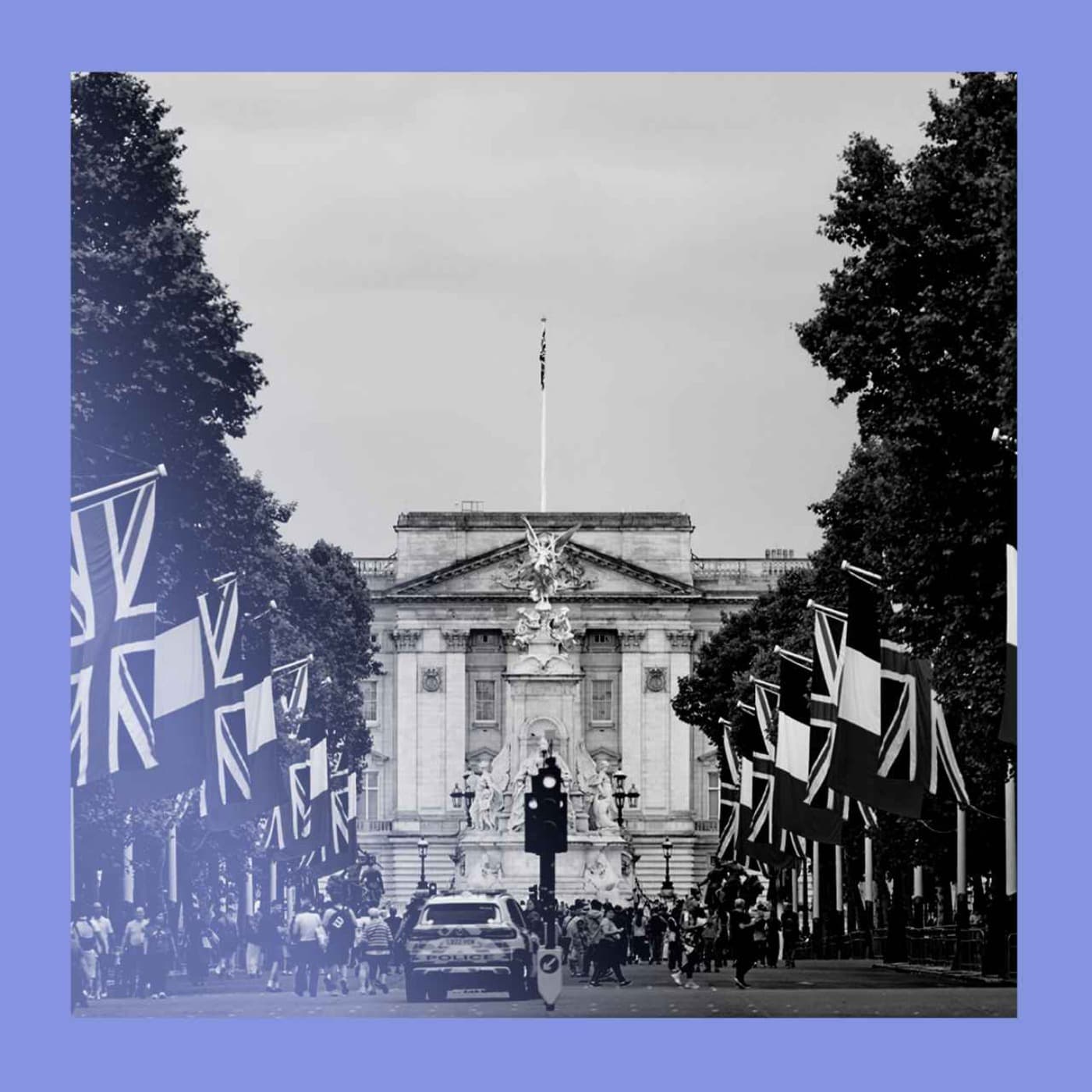
2:13At Windsor Castle in Britain, preparations have been underway for days. The royals do pomp and circumstance extremely well. And today, the groomed horses and polished carriages will greet France's president, Emmanuel Macron, and his wife, Brigitte, who are starting a three-day state visit. But it's not just a cart-and-pony show. Mr. Macron will also be meeting with Prime Minister Keir Starmer, where the biggest order of business will be defence and security. Since the Brexit vote in 2016, cross-channel ties have been really difficult, sometimes almost glacial. Sophie Petter is our Paris bureau chief, and this morning she's also in Windsor.
2:57I think the British have often felt that the French were out to punish them for leaving the European Union, and the French were annoyed that Britain had indeed done that, and it felt like a weakening of their project that they believe very strongly in. So this trip really is an important one to seal what has been a very recent rapprochement between the two countries. Well, how did we get this far? How did things move from frosty to friendly? I think a couple of events have helped. One of them was the arrival of Keir Starmer in Downing Street. He and Emmanuel Macron are very different. I mean, they couldn't be more different in style.
3:36But they share the fact that at home they're facing a lot of domestic political trouble. And I think that they have shown that they've been able to work together very well, particularly on foreign affairs and on leadership in terms of Ukraine. The other event was the return of Donald Trump to the White House. And that has, in a way, aligned the two countries more than they've been for a very long time. If you think of traditional foreign policy, Britain has often looked towards America across the Atlantic, and France has always looked towards Europe. Donald Trump has in many ways aligned those two countries more than they've been for a long time.
4:13I spoke to Peter Ricketts, who was a former ambassador to Paris, who said that in his view, the Franco-British relationship was the best it's been for a decade, at least since Brexit. So what exactly is on the docket for this visit? Well, today is very much the royal day. The Macron couple arrive at the airport and they're taken straight to Windsor Castle by Prince William and Princess Catherine. And then they are going to have a procession around Windsor. It's really full pageantry, carriages and Windsor at all its splendour. The rest of the summit is a lot more political. There's going to be a summit between the two governments.
4:54There's going to be a moment to discuss strategic affairs, particularly with regard to Ukraine at a military base north of London. Zelensky, the Ukrainian president, will be joining by video link. And there's a cultural element tomorrow. Macron visits the British Museum. He goes to Imperial College to discuss innovation. So a real mix, I think, across the spectrum of bilateral relations. And it will, in the end, I think, be remembered probably mostly for the defence and security issues that they will be discussing on Thursday. The issues on which they are in recent times very aligned, I guess.
5:29Well, again, it's interesting and it's partly the result of Donald Trump's disengagement from Europe. You've seen a sort of joint leadership by Starmer, the British Prime Minister and Macron, the French president, on trying to put together a coalition reassurance force for Ukraine. Obviously, that hasn't come to much yet because it relies on a ceasefire, but it's a very interesting and quite new development. They're going to have a further meeting on Thursday. Obviously, Britain and France can't do everything together. They can't even do that much together. They need Germany. They need Poland.
5:59They need other European partners and non-European partners. But France and Britain remain nonetheless the two only nuclear armed powers on the continent. They are the only permanent members of the UN Security Council. and that does give them a certain legitimacy in taking the lead on these sorts of issues. So I think we will see some updating perhaps of the Lancaster House defence treaty between the two countries, which is 15 years old now, and probably some more joint projects to improve Arctic security, Baltic security, and possibly even discuss further nuclear cooperation between the two countries.
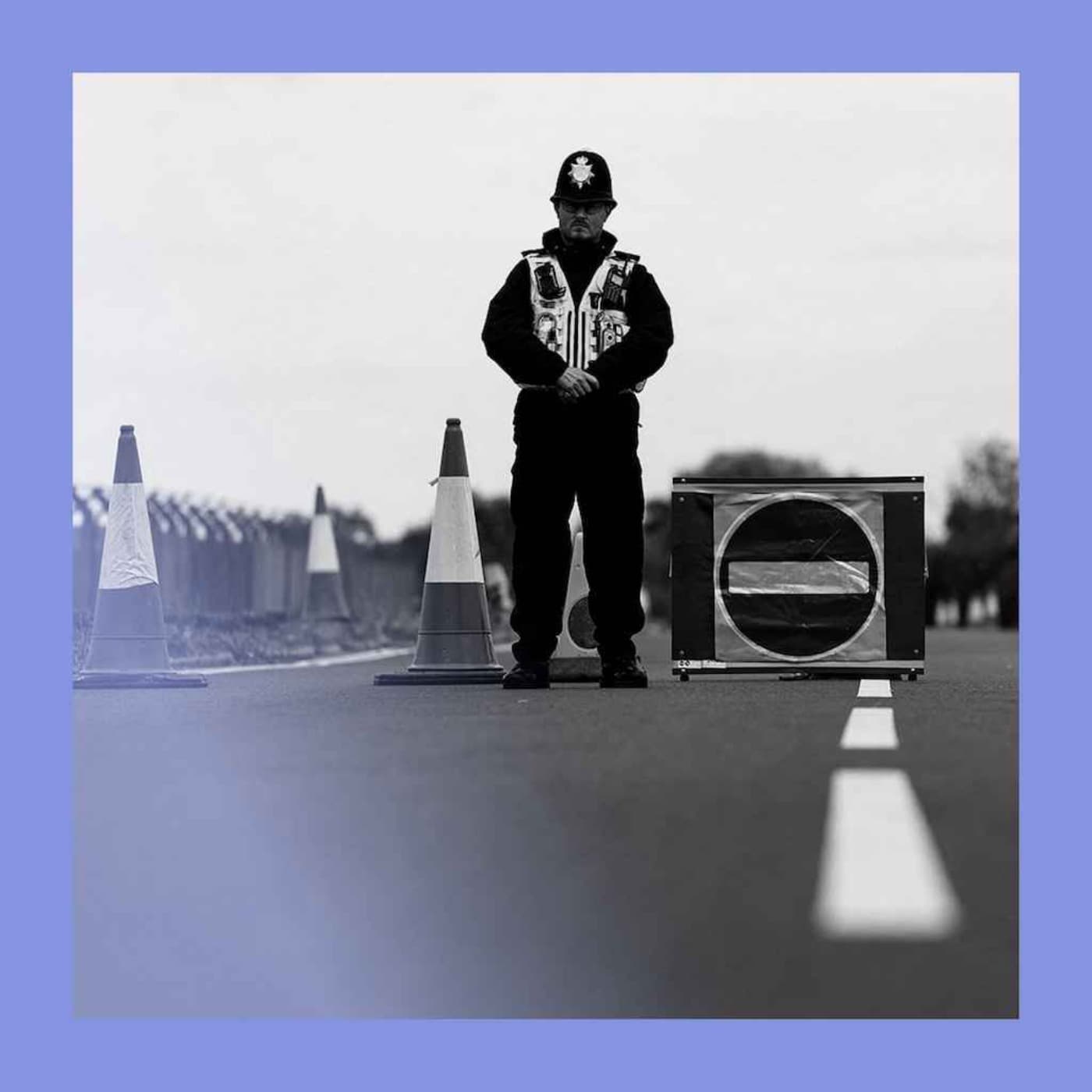
6:33Any possible sticking points? These are a couple of countries with some long-standing disagreements. Oh boy, that's certainly the case. and we will see those. I mean, obviously they range from things like trade policy, industrial rivalry. There's plenty of differences between Britain and France. There always have been. Probably the most pressing one that is very much part of the British political debate, but not the French debate, is the question of small boat crossings. I mean, that's something that the British get periodically quite upset about, the fact that there are so many crossings. This year there was a record number in the first six months from the northern shores of France over to the UK.
7:09And there is a feeling on the British side that the French police don't do enough to stop these crossings, despite the fact that they are partly funded by British taxpayers. So that is always a sticking point. There is an effort to try and improve police tactics in the shallow waters in France. So we'll probably see a little bit of movement on that. But there always will be rivalries and there always will be differences between Britain and France. That goes without saying. But all told, this is towards the positive. We expect them to be closer at the end of this than further away. I think so. I think that that's the way that the relationship is going.
7:43It really does look stronger than it has done for many years. I've been watching this relationship closely. It has reached some pretty poor low points in the past. Things are a lot better. The countries are more closely aligned. And I think that we will see a strengthening of that on the back of this three-day visit.
8:01Sophie, thanks as ever for joining us. You're very welcome. It's always a pleasure, Jason.
8:20I just want what's best for you, dear listener. So I want to point out how good the listening experience is on our app. First off, no ads. The irony of this ad directing you to an ad-free experience is not lost on me. In the app, you can download episodes, create audio playlists, go through the archive of all of our shows. And at any moment, you're one tap away from the print or digital articles that take you deeper on segments that interest you. So if you know what's best for you, listen and read in the app. And then you won't have to hear the ad that most people will bump into right now.
9:01Did you know the SIBO VIX Index at its core is a measure of market uncertainty? The VIX Index could be rising because of bullish positioning in the underlying SIBO SBX Index Options market due to fear of missing out rather than fear of downside. Download our white paper at SIBO.com slash VIX Insight. There are risks associated with SIBO Company products. Review the disclosures and disclaimers at SIBO.com slash US underscore disclaimers. This episode is brought to you by Capital One. Capital One's tech team isn't just talking about multi-agentic AI. They already deployed one. It's called Chat Concierge and it's simplifying car shopping.
9:43Using self-reflection and layered reasoning with live API checks, it doesn't just help buyers find a car they love. It helps schedule a test drive, get pre-approved for financing, and estimate trade-in value. Advanced, intuitive, and deployed. That's how they stack. That's technology at Capital One.
10:10In Peru, mining can be a deadly job
10:17In the past three years, dozens of workers have died in a wave of violence linked to illegal gold mining In Pataz, a region in Peru's Andean hinterlands Since October, two mass graves have been discovered In Pataz, there's been a lot of violence in the last few months And it all goes back to a COVID-19 pandemic Fraser McIlwraith is a news editor at The Economist It's been gold mining in Pataz for several decades It's been a big part of the local economy there But what happened a few years ago was that the state pulled back from the region, lots of mines shut, and gold robbers moved into the tunnels and started to take control of them.
11:01And one of the things they did was that they brought with them security guards, and a lot of those were hired gangsters from Trujillo, which is a tough city on Peru's coast. Very soon after this happened, the gangs basically ended up taking over. And that situation in Pataz is being replicated elsewhere in Peru, and the region, is that right? There are lots and lots of cases of this kind of thing happening. There's a pretty broad spectrum of criminality that associates with mining in Latin America, but it ranges between gangs moving out into regions that they really shouldn't be working in. So that's maybe protected areas in the Amazon.
11:41You get lots of miners who move in and force indigenous people off their land. That's something that's happened in the Peruvian Amazon. It's also something that's happened a lot in Venezuela and Brazil. But you also get established mines being taken over by gangs. So what we've seen in Pataz is a good example of this, where you've had gangs move into tunnels that are owned by big mining companies. You've also got cases in Colombia, Colombia's biggest gold mine in Buritica, which is controlled by a Chinese company. But the Gulf Cartel, which is the biggest armed group in Colombia, has moved in there over the past few years and stolen about$200 million worth of gold from its tunnels.
12:22And aside from the wrong people reaping the profits from the gold or areas being despoiled, what is the greater problem for Latin America of this illegal gold mining? So there's lots of problems. One of the big reasons why illegal mining has taken off for gangs is that there's been a glut in the cocaine market over the past 10 years. Coca production has doubled since 2010. Wholesale prices have stagnated, and at the same time, the gold price has shot up. Gangs which are worried about the cocaine trade becoming less profitable are trying to make up for losses elsewhere by moving into gold mining.
12:57In Peru, gangs make more money from gold than cocaine. It's the same in Colombia. In Brazil, government released statistics earlier this year, which suggests that in 2022, which is the latest year that they've looked at, gangs made more money from gold than cocaine. And the two activities often complement each other. So in the Amazon, if you've got airstrips that serve gold mines and coca farms, then you're able to spread the cost of those investments more broadly. You're also able to launder the proceeds from drug dealing through gold mines. So what this does is it increases the footprint of gangs, it increases their influence and increases their power.
13:34And aside from the rising crime, which you talked about, what are the implications or what are the consequences for local populations? First and foremost is the environmental damage. Illegal miners very often raise the Amazon, deforest whole areas. Illegal mining causes a lot of pollution, particularly mercury poisoning. Mercury is a chemical that they use to separate gold from the ore. And a lot of this gets discharged into rivers in the Amazon, which for local communities is disastrous. So how have governments across the region reacted to this? So they've reacted in pretty disappointing ways for the most part.
14:14The government in Peru has generally been fairly ineffective. They imposed a state of emergency in Potas last year because they were so worried about the rise in violence. But it's achieved very little. In other countries, there's much more overt collaboration between the government and mafias and gold mining gangs. And that can often be to do with corruption. So in Venezuela, the Maduro regime directly collaborates with gold mining mafias in the Amazon. And then in countries like Bolivia, you've got a slightly more complicated relationship between the government and illegal gold mining. So you've had legislation introduced which allows small-scale informal cooperatives to work, in theory, within the bounds of the law.
15:03but they very often do things which are contrary to the rules and often this leads to a lot of environmental damage and Bolivia is an interesting case because in recent years the government's actually been forced closer to these ragtag groups of miners because of a foreign exchange crisis the government's unable to get its hands on foreign currency and so one of the things that it's done is that it's set up a state-owned company that goes directly to these miners and buys gold from them in order to sell onto the central bank to replenish its reserves. The company, it has to be said, denies that it buys any gold that is illegally mined, but lots of opposition lawmakers have accused it of doing just that.
15:46Fraser, given that governments haven't been particularly successful at cracking down on the cocaine trade, how much hope is there of them actually cracking down now on illegal gold mining? Yeah, so it's a pretty hopeless situation, but there are a couple of things that governments could do. The first is rethinking their budgets. So in Peru, even though illegal mining is a much bigger earner for gangs than drug trafficking, the government spends about a quarter as much dealing with illegal mining as it does dealing with narcotics and associated criminal enterprises. The other thing that governments could do is trying to get formalization right.
16:25So one of the big reasons why legal mining is such a problem in South America is that there's a big informal mining sector of small-scale miners who are working on the edges of the law, often without kind of proper protections. And it's very, very easy for gangs to take advantage of them and to extort them or to provide them with protection. So one thing that can be done is to help those miners move into the formal sector, start working for big companies, set up their own companies that abide by the proper regulations, and that will provide gangs with a reduced footprint in order to be able to take advantage of the region's resources.
17:08And if they fail to do that, then the rising gold price means that this problem is just going to get worse. Fraser, thank you so much. Thank you.
17:34For the past hundred years, apart from during the Second World War and some interruptions during the pandemic, the BBC has broadcast the shipping forecast until recently four times a day. And now on Radio 4, the shipping forecast issued by the Met Office on behalf of the Maritime and Coast Guard Agency. With the first bulletin of the day at 48 minutes past midnight, the BBC, in conjunction with the Met Office, the British weather forecasting agency, uses longwave radio to transmit a series of messages across the airwaves. Dominic Ziegler is a senior editor at The Economist. To the untrained ear, the words sound cryptic, but to seafarers, they provide a very familiar, very precise, and really reassuring prediction of the weather at sea for the following 24 hours.
18:26There are warnings of gales in Fitzroy, Shannon, Rockall, Mallon, and Hebrides.
18:34The shipping forecast is what it says on the tin. It helps ships, vessels out at sea, understand what kind of weather is about to be thrown at them. The forecast is read in a calm, clear voice. That's important because out at sea, you've got waves crashing about or you've got the loud hum of the engines. So you need to be heard above the din.
19:00The announcer reads out the general synopsis. That's the overview of the pressure systems that are hanging over the North Atlantic. Developing low, moving rather quickly eastwards. Expected pharaohs 999. It's a very concise way to convey wind strength, sea state, the weather, and the visibility. If you listen to it in the abstract, it's almost poetic, a lot of the language. For instance, if there's a low pressure which is dissipating, it's said to be losing its identity. Systematic forecasts really started with a shipwreck in 1859. The Royal Charter was coming back from Australia. It had no clue of the weather.
19:42It was going up through the Irish Sea. The weather changed viciously and rapidly, and the ship was driven ashore. 450 people died. And that was really where Robert Fitzroy comes into the story. For some time, Fitzroy had been lobbying for a more rigorous, systematic system of weather forecasting. Forecast was a word he invented himself. And he'd been scraping through the logbooks of ships that had been out in the ocean. He also took pressure readings from coastal stations around the shores of the British Isles. And together, he produced what he called a synopsis, weather charts, that tried to give a sense of the overall weather systems and how those systems would affect different parts of the coast and of the sea around Britain.
20:31It's striking how little weather forecasts at sea have changed since those mid-Victorian times. There's of course much greater accuracy. There are satellites, weather radars, and there are hugely powerful computer models. What has changed is the means by which vessels at sea get their forecasts. It's much less the case now that they tune in to BBC Radio 4 or 3 Longwave. They listen out much less for that iconic tune, sailing by that soothing waltz with strings and clarinet. Spoken bulletins are increasingly redundant, Redundant, though they're not redundant for low-tech sailors like me. Partly to save money and partly because it is increasingly redundant, the BBC is scaling back its shipping forecast.
21:27Until March 2024, there were four spoken bulletins a day. They've been cut down now to two, with three at weekends. But even if the shipping forecast is less important than it was, I don't think the BBC has any intention of giving it up altogether. Closing the shipping forecast would provoke a national uproar. The critics would argue quite rightly that the shipping forecast is a national treasure.
21:56I think the seas have significance for British people. To some, they were long a conduit to empire, and today they're still the route to a further world. And at times there's been metaphorical gold in the ocean. Fishing, of course. And then later came the oil and gas industry. But there's another strand of Britishness, which is more isolationist. And to the isolationists, the seas around Britain really are a kind of moat defensive around their blessed plot. And I think there's a final reason why the shipping forecasts won't be shut down altogether. Just as that tune, Sailing By, is a signal for Marys to know that they've got the right radio station to listen to the forecast at 12 minutes to one o 'clock in the morning.
Read the full transcript
22:37So the lullaby waltz is balm to insomniacs on land.
22:56That's all for this episode of The Intelligence. We'll see you back here tomorrow.
23:07Thank you.
23:38There are risks associated with SIBO Company products. Review the disclosures and disclaimers at SIBO.com slash US underscore disclaimers. With no fees or minimums on checking accounts, it's no wonder the Capital One Bank guy is so passionate about banking with Capital One. If he were here, he wouldn't just tell you about no fees or minimums. He'd also talk about how most Capital One cafes are open seven days a week to assist with your banking needs. Yep, even on weekends, it's pretty much all he talks about. In a good way. What's in your wallet? Terms apply. See CapitalOne.com slash bank. Capital One N.A.
24:16Member FDIC.
From the publisher
Anglo-French relations have not been so good since before the Brexit vote. Beneath the state-visit pageantry, though, there is much co-operation for President Emmanuel Macron and Prime Minister Keir Starmer to discuss. Gangs have infiltrated many of Latin America’s mining operations—with violent results. And an ode to Britain’s Shipping Forecast, an inscrutable radio feature that is turning 100.
Additional audio courtesy of Alexander Seale @alexseale.
Get a world of insights by subscribing to Economist Podcasts+. For more information about how to access Economist Podcasts+, please visit our FAQs page or watch our video explaining how to link your account.
Hosted on Acast. See acast.com/privacy for more information.