
In short
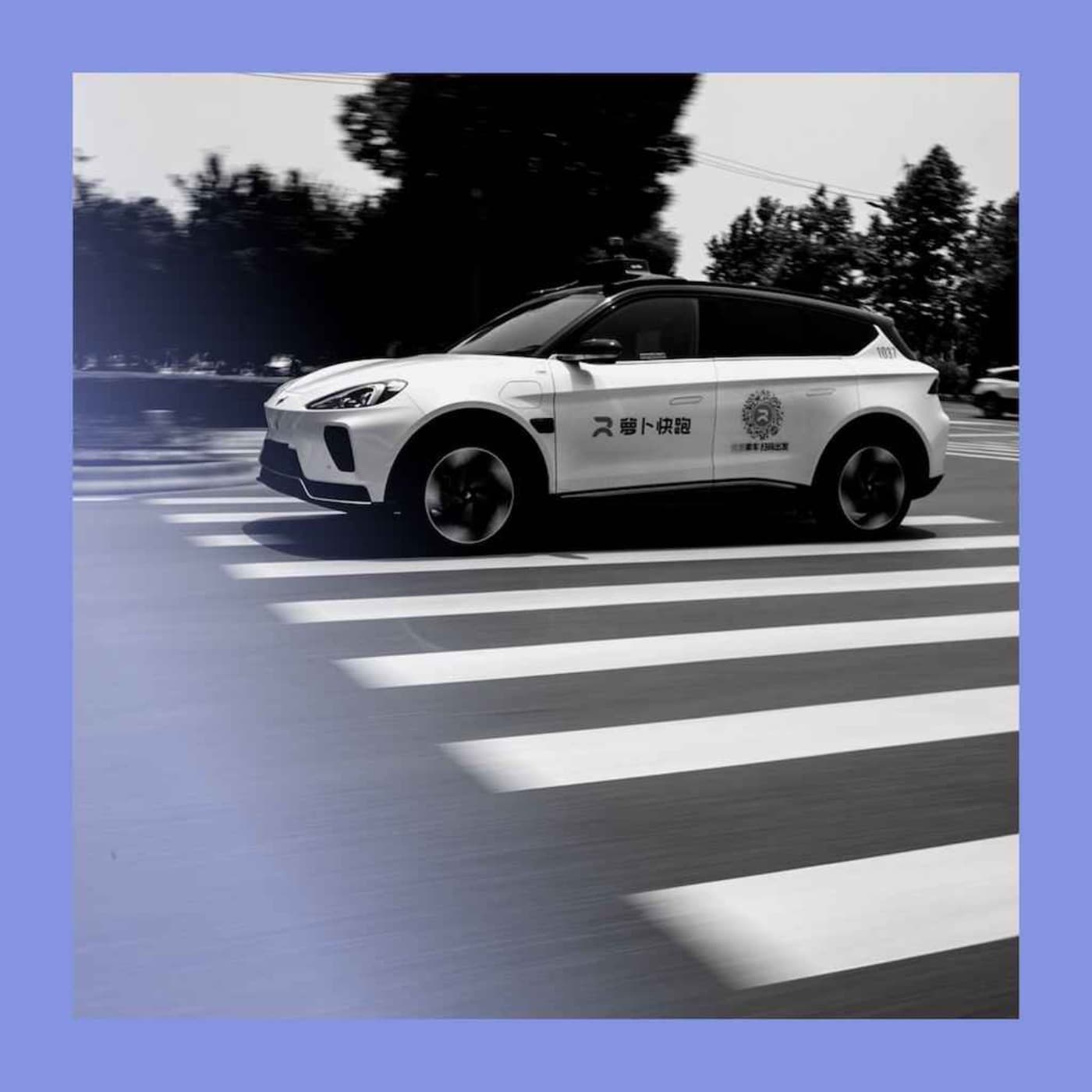
The episode of The Intelligence from The Economist covers three segments. First, “China’s robotaxi revolution”: China is ahead of the US/Waymo, with pilots in 50+ cities and cheaper robotaxi hardware ($40,000 vs $130,000–$200,000). It also argues China’s pharma innovation has shifted from generics to new drugs, with China running about a third of the world’s clinical trials and improving regulators’ speed/approvals.
Key claims
agile/permissive local regulation, deep talent/manufacturing scale, and harsh domestic competition producing champions; policy elsewhere may need tariffs and must consider connected-device security/surveillance risks. Second, “Which country is most like Britain?”: Spain is ranked closest; France second. Third, capybara pop-culture: origin in Japan’s onsen parks, viral spread via Capybara-san and TikTok, and IRL demand (Hertfordshire Zoo breeding pair since 2022; sold out through 2026).
Guests
Rachna Shambhog (Business Affairs Editor) and Joel Budd (Social Affairs Editor).
Written by AI. May contain mistakes. Listen to the episode to check what was said.
Chapters
Tap a time to open that second in VOCuriosity About International Policy
0:30 to 0:53
Exploration of which country is most similar to Britain.
“What if you had a room where no one interrupts?”
Curiosity About International Policy
1:29 to 2:12
Exploration of which country is most similar to Britain.
“I bet you've got a few ideas bubbling up already, and I bet they're mostly wrong.”
China's Advances in Robotaxis
2:12 to 4:26
Discussion on China's lead in the robotaxi industry and its implications.
“Hail a taxi in America and there's a growing chance that it will be driverless.”
Pharmaceutical Innovation in China
4:26 to 6:18
Overview of China's transition from copycat to innovator in pharmaceuticals.
“There's lots of innovation in R &D that's now happening.”
Global Implications of Chinese Innovation
6:18 to 7:47
Analysis of how China's advancements affect global markets and competition.
“And of course, the competitive environment at home is really brutal.”
Wrap-up on Chinese Innovations
7:47 to 8:38
Reflection on benefits and risks associated with innovations from China.
“You have to think about security and you have to think about safety, but there is some upside here and I think it's important to bear that in mind.”
Wrap-up on Chinese Innovations
8:43 to 9:21
Reflection on benefits and risks associated with innovations from China.
“Boost your credit scores instantly by getting credit for bills you're already paying.”
Similarity Between Britain and Other Countries
9:21 to 14:00
Exploration of which country is most similar to Britain using various measures.
“Users who received a boost improved their FICO score rate from Experian by an average of 14 points.”
Lessons from Spain on Immigration
14:00 to 15:22
Discover what the UK can learn from Spain's immigration policies.
“doing immigration policy or prostitution policy or drug policy but the truth is they're just not that similar they're happier they're richer they're more content with how democracy works they're smaller.”
The Rise of the Capybara Craze
15:22 to 18:13
Explore how capybaras became a cultural phenomenon worldwide.
“The capybara, a furry rodent from South America, has become something of a cultural icon of late.”
Show all 11 chapters
Capybaras in Real Life: A Personal Account
18:13 to 21:01
Hear a first-hand experience with capybaras and their appeal.
“And they basically broke into the lawns, defecated all over them, and ripped up all the immaculate grass.”
Transcript
Automatic transcript. May contain errors.0:00What does running your business feel like with Avalera, the agentic AI platform for global tax and compliance? You don't hover over the submit button. You don't ask for a second opinion. You don't wake up thinking about a filing. Because Avalara's Agentic AI handles it. Calculating, filing, validating. With the accuracy and audit defensibility your team can stand behind. Avalara. Agentic AI tax and compliance with confidence. A BetterHelp ad. Hold on. One second. Mommy. I just need to...
0:41What if you had a room where no one interrupts? No notifications. No expectations. Just space to talk. With BetterHelp, therapy happens in a space that's yours. Visit betterhelp.com slash randompodcast for 10 % off your first month of online therapy.
1:06The Economist
1:13Hello and welcome to The Intelligence from The Economist. I'm your host, Rosie Blore. Every weekday, we provide a fresh perspective on the events shaping your world.
1:28Which country is most similar to Britain in terms of policy, development, population or anything else? I bet you've got a few ideas bubbling up already, and I bet they're mostly wrong. Listen on to find out the answer. And they've been referred to as the chillest animal on Earth. At a time when the world is not always a chill place, people have gone mad for capybaras, rodents that are cute, hairy, and apparently very zen.
2:05First up, though.
2:12Ready. Hail a taxi in America and there's a growing chance that it will be driverless. Doors are closing. Waymo, which is miles ahead in the country's robotaxi revolution, recently announced its expansion into five new cities. Next year, it will add London to its destinations. But if you're looking for innovation in self-driving cars or many other spheres, you might do better to turn away from the US, because there's another country that's already far out in front. Governments and companies around the world have already been watching what's coming out of China with trepidation, from solar panels and electric vehicles to artificial intelligence models.
2:58Rachna Shambhog is our business affairs editor. That wave of innovation shows no sign of stopping. And there are two areas in particular that are worth watching. One is self-driving taxis, autonomous taxis. The other is new pharmaceuticals. So Rachna, let's just take those in turn. I don't remember Chinese roads as being something you want to emulate. So what's going on in China with robo-taxis? Yeah, this is really interesting, Rosie. So in the West, there's a lot of excitement, especially in America, about robotaxis spreading to different cities. They're due to come to London as well. But China's miles ahead in a couple of respects.
3:38So 50 odd cities now have tried the technology and run pilot schemes. And Chinese firms are able to build these cars for much cheaper than American firms are able to do. This technology is very expensive. You need lots of sensors on cars so that they can process data, they can learn from it. And China is able to build these for$40 ,000 a piece compared with about$130 ,000 to$200 ,000 in America. And we've talked a little bit on the show before about Chinese innovation in pharmaceuticals. What's happening with drug making? Now, this is another really interesting area. So the stereotype of Chinese drug making is that Chinese firms are very good at producing copycat drugs, generic drugs, but not innovating.
4:23And that's really changed quite drastically. China is now the world's second largest developer of new drugs, including those that tackle cancer. There's lots of innovation in R &D that's now happening. Lots of clinical trials now running. I think a third of the world's clinical trials now run in China. So within less than a generation, China's gone from copycat to innovator. Right. So as you say, we used to think of China as a copycat nation. It's clearly very far from all of that. What does this tell us about Chinese innovation? A few things, I think. Some that we knew already, but a couple that are surprising.
4:57One is that China has this big advantage, a deep pool of talent, a huge scale and a large manufacturing base. And that helps propel it further up the value chain. So, for example, with autonomous vehicles, China is a low cost manufacturer of electric vehicles. It's a manufacturer of the sensors that are used for self-driving. And so together it was then able to produce this new product at a very low cost. In pharmaceuticals, you have the experience of making generics, the profits from making them, and armies of people who are signing up to clinical trials. And you bring that all together and you've got innovation.
5:35The surprising element is that regulators in China are agile and permissive, actually, which might be a bit of a surprise. China's an authoritarian state, but its local regulators are very keen to entice talent and investment. So they set up these test beds really for technology. So you've had more than 50 cities trying out autonomous taxis, lots of digital infrastructure to help guide them and to help them process data. With pharmaceuticals, you have the drug regulator being beefed up and a big backlog of approvals being expedited. Now, part of the Chinese system also is subsidies and help for companies, for example, access to cheap finance and so on.
6:17But it's the regulation that really helped turbocharge the progress in the technology. And of course, the competitive environment at home is really brutal. The economy's in deflation. There's a lot of money that's been spent that won't be recouped. Loss-making companies probably won't survive. But this harsh environment has really honed a few champions that will now be looking abroad to do business. So what does all that mean for innovation elsewhere in the world? The worry in the rest of the world has been and will continue to be, what does this mean for our manufacturing sector? Are we going to see our own industries hollowed out?
6:55Some of this is unfair competition because of the subsidies that I've talked about. How can we compete? and I think that where there has been that unfair competition, I think policymakers and governments are really going to have to think about how to counter that and maybe that is punitive tariffs, targeted tariffs and so on. They're also going to have to think about the security risk because autonomous taxis, for example, are highly connected devices. They collect a lot of data. Could that be used for surveillance? There is a risk about that. But I think in all the kind of anxiety, it's easy to forget that there are some benefits coming from these Chinese products as well.
7:34And I think it's really important that both buyers and customers, but also governments, remember that if cheap Chinese drugs can help patients in the developing world, patients in the rich world, that's great news. You have to think about security and you have to think about safety, but there is some upside here and I think it's important to bear that in mind. Rachna, thank you so much. Thank you, Rosie.
8:28With the accuracy and audit defensibility your team can stand behind. Avalara, agentic AI tax and compliance with confidence. Hi, it's Paige from Giggly Squad, and this episode is sponsored by Experian Boost. Summer glow up? Check. Credit glow up? Even better. Boost your credit scores instantly by getting credit for bills you're already paying. Your phone, utilities, rent, and insurance. I wish dating kind of worked like that. Connect your bank account, add those on-time payments to your Experian credit file, and your FICO score updates right away. You could instantly raise your FICO score by an average of 14 points with Experian Boost.
9:08Download the Experian app for free today. Results will vary. Users who received a boost improved their FICO score 8 from Experian by an average of 14 points. See App Store or Experian.com for details. Results will vary. Not all payments are Boost eligible. Users who received a boost improved their FICO score rate from Experian by an average of 14 points. Some may not see improved scores or approval odds. Not all lenders use Experian credit files, and not all lenders use scores impacted by Experian Boost. See Experian.com for details.
9:43For a lot of my colleagues at The Economist, there's nothing they love more than being asked a tough but slightly ridiculous question. Joel Budd is writing a piece about which country is most similar to Britain. And I was wondering what your guess might be. Canada will be the most similar to Britain. Australia? Particularly when there's kind of a right answer. I suspect that the answer is going to be France. There are bits of Australia that feel, I don't know, some of the landscape feels quite similar, and bits of New Zealand. I suppose I'd go for something like Sweden. So what do you reckon? Which country is most similar to Britain?
10:30British people love to look at other countries. They love to try and pick policy lessons from other countries. They love to compare their own country to other countries. Joel Budd is our social affairs editor. And so it seems to me that it's interesting to try and work out what country Britain is actually most like. So, I mean, it's a funny question, but does it matter? It does matter because the government will send out civil servants and MPs to other countries to study them on particular measures. For example, Britain just sent a whole lot of civil servants to Denmark to learn about its asylum and immigration policies and has subsequently tried to import those policies.
11:17to Britain. So before we get to the answer, I mean, how do you even ask this question? How do you investigate which country is most similar? So I decided to limit it, first of all, just to members of the OECD. So these are mostly rich countries, there are 38 of them. And I tried to pick measures that give a bit of a spread. So some of them are straightforward measures like the size of the population. Some of them are economic measures like tax as a proportion of GDP and GDP per head. And some of them are cultural. So for example, I look at the proportion of births outside marriage. I look at what people say about how important religion is to them.
11:57And I look at alcohol consumption per head. I take 10 measures in total and then I rank other countries based on how near they are to Britain. Before you began, what did you expect to find? I thought it was probably going to be France, but I had a horse in the race, which was Ireland. I mean, after all, Ireland was part of Britain for a very long time and Irish and British cultures are extremely, extremely similar. So I was sort of hoping it might be Ireland. Tell me some of the candidates. Well, lots of people seem to think it might be the Netherlands, and Britain does often look to the Netherlands for policy lessons.
12:40Some people thought it might be America, or they thought it might be New Zealand, perhaps. And it turns out not to be any of those countries. Okay, go on. Tell us, Drumroll, what's the answer? So the country most similar to Britain on these measures turns out to be Spain. Okay, why? Well, it's odd because Spain is not identical to Britain in any respect. Spain comes out closest because it is not really unlike Britain in any way at all. It's quite like Britain in pretty much every regard. It has a similar proportion of both sides of Barrage. Spain, intriguingly, is about as religious as Britain, even though perhaps we think of it as a much more religious country, it's not.
13:25And alcohol consumption? Alcohol consumption is a bit higher in Spain. Also a bit surprising, actually. Although it's been falling. It's been falling quite a bit, as it has in all Mediterranean countries. And where does any of this get us? Like, Britain is a bit like Spain. Now what? I think we should take Spain, and I think also France, which comes second, much more seriously than we do. We should, in particular, I think, stop looking at Scandinavian countries. so Scandinavian countries are great because they're very hospitable and their inhabitants especially their politicians speak fantastic English they'll tell you exactly how they're doing immigration policy or prostitution policy or drug policy but the truth is they're just not that similar they're happier they're richer they're more content with how democracy works they're smaller.
14:19And the differences are so large. Trying to learn from them is a bit like a corner shop trying to learn from a multinational or a runner trying to learn from a swimmer. They're just too different. And what can Britain learn from Spain? Well, one thing Britain can learn from Spain is that you can be more relaxed about immigration. So Spain currently has a fairly open door immigration policy. And in particular, it's had quite high immigration from Latin American countries. And it's doing fairly well out of that. It has pretty rapid GDP growth, about twice the level of British GDP growth. So all those people moving to Malaga for their retirement knew what they were doing?
15:01They did. Well, British tourists love Spain. British tourists go to Spain about twice as much as they go to France, which is the second most popular country. And working class British people have always felt that Spain is a hospitable country to them. So I think it's time for middle class people and MPs in particular to follow them. Joel, thank you so much for talking to me. Thank you.
15:40The capybara, a furry rodent from South America, has become something of a cultural icon of late. Barkley Bram is a senior producer. It has its own song by a 22-year-old Russian blogger, Alexei Plutnikov, which has over 33 million streams on Spotify and has become an audio meme on TikTok, and which I guarantee you too will now not be able to get out of your head.
16:12All around the world, there are capybara cafes in America, Indonesia, Taiwan, Thailand, and there's even one opening near London. Maybe you've seen capybaras recently on key rings, backpacks, stationery. You can even get a soft capybara toy from Swedish retailer H &M for around 50 US dollars. And for those wishing to celebrate Christmas in furry rodent style, an advent calendar where each window opens onto a different capybara.
16:49So where did all this start? Some say the craze began in Japan in the 1980s. Keepers at the Izushabuten Park realized that they could marry the semi-aquatic nature of the capybara with Japan's love of warm bars or onsen and created their own onsen for capybaras which visitors loved to visit and watch the rodents play and bathe in the water. And if you look at some of the most popular viral videos of capybara today they are from this onsen and from another park in Nagasaki which has come to be known as the holy land of capybaras. One of my favorite capybara videos is one in which a capybara emerges from the onsen, stares directly at the camera, a mandarin orange balanced perfectly between its little ears.
17:39Of course, soon after, brands realized the merchandising potential of the capybara. In the 2000s, a Japanese toy maker created the character Capybara-san. Capybara-san then became a very popular anime character. And in recent years, as popularity for all things Japanese has spiked, so too has Capybarasan. Another reason for their online popularity in recent years is that capybaras became unexpected anti-capitalist icons after they invaded a luxury-gated community in Argentina, which had previously been part of their grazing habitat. And they basically broke into the lawns, defecated all over them, and ripped up all the immaculate grass.
18:24so i've just turned a corner at hertfordshire zoo and there are two very beautiful capybaras they're much bigger in real life than you would think they would be but they do have this very cute tiny little oh the ear just tweaked oh they're doing the ear tweak i've seen that on Very beautiful. And now with capybaras reaching almost saturation point online, people are making pilgrimages to see them IRL. Hertfordshire Zoo in Britain acquired a breeding pair in 2022. And as a completionist and a very intrepid journalist, I obviously made the trip myself. You're coming over. Here we go. So yeah, this is Maple and this just here is Manny.
19:12Hello. Since acquiring the pair, Hertfordshire Zoo has never had more social media traction and it has more visitors than ever. The capybara experience, where you can meet the capybaras themselves, that's nearly sold out all the way through 2026. And I must say, upon meeting a capybara for the first time eye to eye, they're not as soft as I would have imagined. They're actually nothing like the memes. Wow. Oh, they're not as soft as they look on TikTok. No, they're so bristly, aren't they? They are a little bit bristly. A bit like a pig. Makes it extra waterproof. I guess, yeah, more like a hedgehog than I would have thought.
19:54And that's the strange thing about capybara. They're not endangered. They have small eyes, large snouts, quite bristly fur, ungainly feet. So why do people love them so much? I think it's because the capybaras just seem so unbothered by the world. Many people refer to them online as the chillest animal on earth. In fact, the collective noun for capybara is a meditation. And in our world, their unflappability is almost aspirational. Yeah. We live in the capybara time. And has the fame gone to your head?
20:39She's not responding. She's vetoing that question. No comment.
21:01That's it for this episode of The Intelligence. We'll see you back here tomorrow. Thank you.
21:36more. Then ask Adio to prep for a meeting, spot a deal at risk, or find out where your pipeline stands. It's the AICRM that keeps you 10 steps ahead. Ask more from CRM. Ask Adio. Get 10 % off at adio.com slash intelligence. A-T-T-I-O dot com slash intelligence. This message comes from Jackson. Taxes aren't something you can only think about once a year. With investments, planning for tax days year round. Fortunately, Jackson offers tax efficient products. Visit Jackson.com for more information on how our products can make your tax bill a little bit less painful. Jackson is short for Jackson Financial Incorporated, Jackson National Life Insurance Company, Lansing, Michigan, and Jackson National Life Insurance Company of New York.
22:19Purchase New York.
From the publisher
Once derided as a copycat nation, China is now leading the world in innovation, from driverless cars to pharmaceuticals. Our correspondent explains what others can learn from it. Britain looks abroad for policy ideas, but which country is most like it? And why the capybara is a creature of comfort for our troubled age.
Listen to what matters most, from global politics and business to science and technology—Subscribe to Economist Podcasts+
For more information about how to access Economist Podcasts+, please visit our FAQs page or watch our video explaining how to link your account.
Hosted on Acast. See acast.com/privacy for more information.