In short
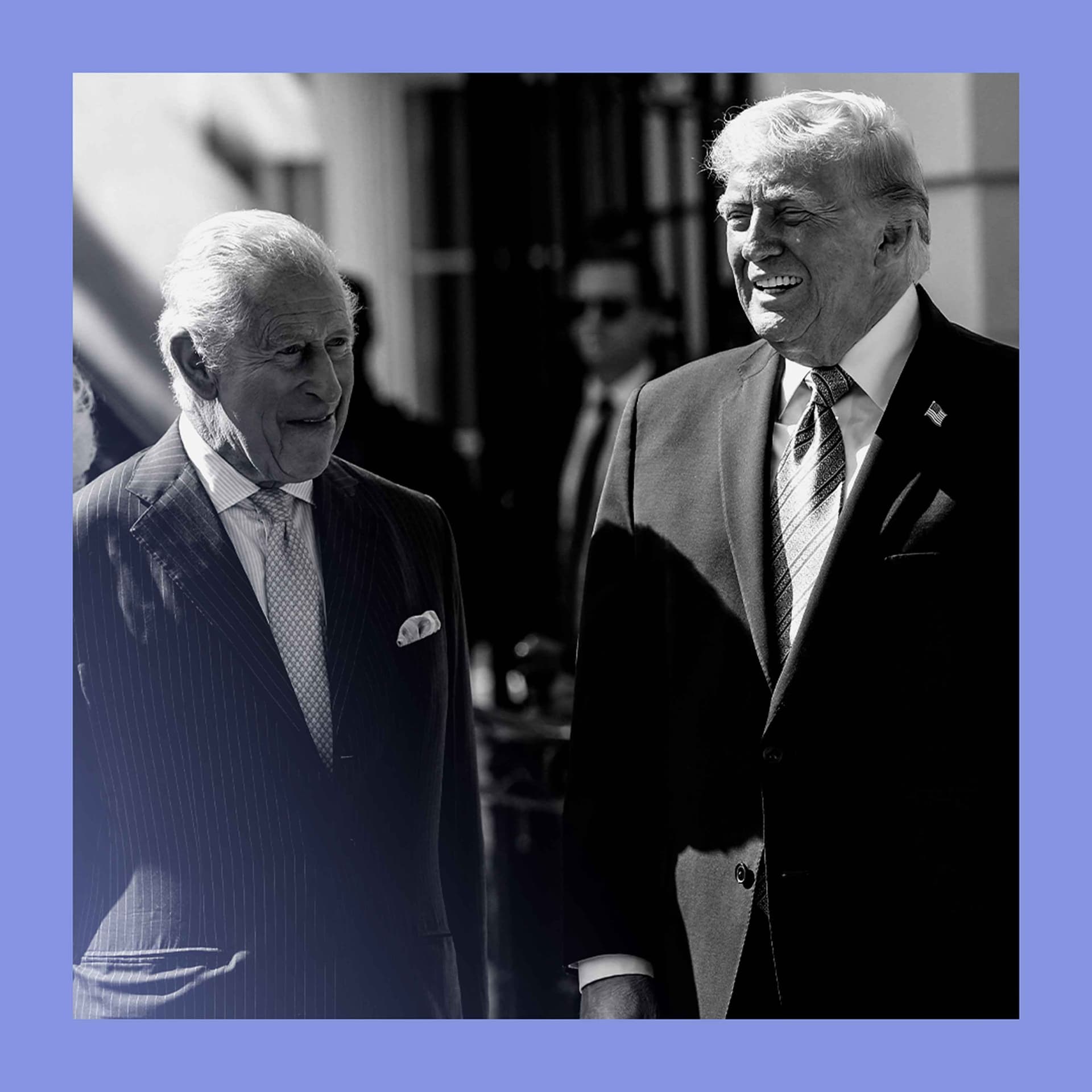
The episode covers three timely topics. First, it discusses King Charles’s first U.S. visit as monarch and whether he can “boost” the “special relationship” amid a crisis between the UK and the Trump administration. Guest Daniel Franklin (senior editor at The Economist) argues the relationship is strained by disagreements over Iran and NATO/UK support, with Trump criticizing Keir Starmer and Starmer resenting U.S. barbs; Charles can’t change fundamentals but may cool rhetoric and emphasize shared history (e.g., 250th anniversary of the American Revolution). Franklin notes Five Eyes intelligence cooperation (GCHQ–NSA) and nuclear/military ties, plus Trump’s unusually positive view of Charles. Second, Ethan Wu (Money Talks host; Asia business and finance editor) explains why Japanese carmakers are losing ground: Trump’s 25% U.S. tariffs, China’s EV dominance, and Japanese reliance on hybrids; examples include Honda’s first net loss since 1957 and Nissan’s restructuring (factory closures, model cuts). He highlights Toyota’s “multi-pathway” strategy (hybrids leadership plus EV push in China). Third, Stevie Hertz (U.S. policy correspondent) reports on whether it’s safe to eat Hudson River fish after PCB cleanup: New York Department of Health advice allows striped bass and some other fish for most adults; she interviews licensed guide Seth Barashanes (Central Park Fishing) and recounts the Superfund cleanup and remaining upstream advisories.
Written by AI. May contain mistakes. Listen to the episode to check what was said.
Chapters
Tap a time to open that second in VOThe Special Relationship Explained
0:45 to 1:06
An exploration of the historic bond between the UK and the US.
“Today on the show, why Japanese carmakers may be running out of road, and would you eat fish from the Hudson River?”
King Charles's Visit to the US
1:06 to 3:19
Discussion on King Charles's visit to strengthen UK-US ties.
“Neither the sure prevention of war nor the continuous rise of world organisation will be gained without what I have called the fraternal association of the English-speaking people.”
Current Tensions in US-UK Relations
3:19 to 4:07
An examination of recent crises affecting US-UK relations.
“So Daniel, tell us, what's gone wrong with the special relationship?”
King Charles's Impact on Relations
4:07 to 5:20
Analysis of how King Charles can influence the UK-US relationship.
“So in many ways this is probably the worst crisis in the special relationship since the Suez crisis of 1956.”
The Value of the Special Relationship
5:20 to 7:48
Insights into how both nations perceive their relationship today.
“They started with tea at the White House and a reception.”
Opportunities Ahead for King Charles
7:48 to 8:23
Potential ways King Charles can strengthen ties during his visit.
“That slipped quite a bit in America and it's plunged to just 34 % in Britain.”
Challenges Facing Japanese Carmakers
10:12 to 14:05
Overview of the struggles of Japan's auto industry and market dynamics.
“and edge-of-your-seat thriller about big tech and even bigger secrets is on stage at Writers Theatre April 9th through June 14th.”
Japanese Automakers and the Shift to EVs
14:05 to 16:21
Explore the challenges and adaptations of Japanese automakers in the electric vehicle landscape.
“They've had roots in Thailand going back to the 1960s.”
Toyota's Strategic Position in the Market
16:21 to 17:44
Learn about Toyota's multi-pathway strategy and its competitive advantages.
“No, I think it's too early to say that Japanese carmaking is dead.”
Future of Japanese Auto Industry and Potential Consolidation
17:44 to 18:39
Discuss the future of the Japanese auto industry and the possibility of mergers and collaborations.
“And so it's no surprise that in Tokyo, the chatter is that consolidation in the auto industry will be inevitable.”
Show all 11 chapters
The Hudson River's Fish Populations and Environmental Recovery
19:44 to 22:47
Discover the various fish species in the Hudson River and the environmental efforts that led to its recovery.
“I usually take a lot of pictures, but you let me know.”
Transcript
Automatic transcript. May contain errors.0:00When do the images we see online become too much for us to handle? Job at Writers Theatre is an intense psychological thriller that skewers the insidiousness of the internet, the meaning of work, and the ramifications of a secret revealed. The off-Broadway sensation and edge-of-your-seat thriller about big tech and even bigger secrets is on stage at Writers Theatre April 9th through June 14th.
0:40Hello and welcome to The Intelligence from The Economist. I'm Rosie Blore.
0:50Today on the show, why Japanese carmakers may be running out of road, and would you eat fish from the Hudson River?
1:06But first...
1:14Neither the sure prevention of war nor the continuous rise of world organisation will be gained without what I have called the fraternal association of the English-speaking people. This means a special relationship between the British Commonwealth and Empire and the United States of America.
1:42This speech by Winston Churchill in 1946 coined the bond between Britain and America as a special relationship. Daniel Franklin is a senior editor at The Economist. As part of an effort to continue that relationship, King Charles arrived yesterday in Washington, D.C. for his first visit to America as monarch. And with this trip, he continues the legacy of his mother and grandfather before him. History is made at the nation's capital. Their Majesties, George and Elizabeth, first reigning British sovereigns to step on U.S. soil, are met by Secretary of State Hull. His mother, Queen Elizabeth, met 13 U.S.
2:22presidents in her time as monarch. The first was President Truman in 1951. I'm glad that before sailing for England, we had to have this chance of seeing at least something of the country with which the whole British Commonwealth has so many friendly ties. She met Eisenhower in 1957 and Reagan in California in 1983. Your Majesty, I welcome you this evening on behalf of the American people. And in 2007, she dined with George W. Bush at a state banquet. The American people are proud to welcome Your Majesty back to the United States, a nation you've come to know very well. Your Congress and our Parliament are the twin pillars of our civilisations.
3:09King Charles has met Donald Trump before, most recently last year, on Trump's second state visit to Britain. But on his first trip to America as king, this may become a mission to salvage the two countries' so-called special relationship. So Daniel, tell us, what's gone wrong with the special relationship? Well, quite a lot lately, particularly Iran and the Iran war. Britain takes a very different view of that war. And as a result, Donald Trump has got very angry and has said some extremely unflattering things about Keir Starmer in particular, saying he's no Churchill. but more deeply he feels offended that NATO in general and Britain in particular hasn't been there when America needed them to be there and that soured things.
3:57Meanwhile from his point of view Sir Keir Starmer is rather fed up as he put it with the barbs coming from America, the trouble coming from America. So in many ways this is probably the worst crisis in the special relationship since the Suez crisis of 1956. And what can King Charles do about that? What are the two going to discuss? He can't really change the fundamentals. There are just things between Britain and America that are tricky at the moment. It's a very uneven relationship and Donald Trump has serious grouses. But I think Charles can soften things, tone down the rather heated exchanges that have happened.
4:41And it's a bit of an opportunity to try to put things back on track. And they must have thought this trip was really important. There were discussions about cancelling it because of the assassination attempt on Trump. They've decided to go ahead anyway. Well, there were thoughts of cancelling it or opinions in Britain that this shouldn't be allowed to go ahead well before that. People thought that this is unfair to the king, that he shouldn't be put in this position at such a delicate time in Anglo-American relations. It was decided that no, it should go ahead. And then, of course, the trouble at the White House correspondence dinner created another wrinkle, but that's not going to put things off.
5:19And what's the itinerary? They started with tea at the White House and a reception. And then the serious end of the business happens today with an address by the king to joint session of congress these things don't happen all that often so it's a big event and then a state dinner at the white house and then tomorrow the king and queen will head off to new york city where they'll visit the 9-11 memorial so daniel what value does each side put on the special relationship rather different values i think it's much more important to Britain these days than it is to America. America is the most powerful country in the world, Britain much less so.
6:03But I think it's wrong to suggest that it's actually trivial to America. The two countries do have extremely close relations in certain areas, and particularly in intelligence cooperation through the Five Eyes Pact of English-speaking countries, and especially the signals intelligence between GCHQ in Britain and the NSA in America. That's really unusual. There's very close nuclear collaboration and military collaboration more broadly, though in a sense that's where the problems start because America is not terribly impressed, in many ways rightly, by the state of Britain's armed forces today. And Daniel, as you said, King Charles doesn't really have any power in this, and yet our stereotype, in Britain at least, is that the Americans love royals, and that's got to count for something.
6:51I would say a few things on this. First of all, they do love royals. If you go to America, you might be surprised that they don't often worry about Britain all that much. They don't ask about Britain all that much. But if they do ask, they're as likely as not to ask about the royals. And at the same time, perhaps surprisingly, Charles isn't terribly popular. In fact, his favorability ratings are marginally negative. Slightly more people have an unfavorable view of him than have a favorable view. Why that is, hard to tell. Certainly the unflattering portrayal in the crowd didn't help, but I think it's still possibly a lingering Diana effect.
7:31The Queen was much more popular. Beyond the royal family, it's true that mutual opinions of Brits of America and Americans of Brits have been falling. Back 20 years ago, 80 % of each other's populations had favorable views of the other side. That slipped quite a bit in America and it's plunged to just 34 % in Britain. So it's not a terribly encouraging state of affairs at the moment. Despite all that, I think one American who does have a very favorable opinion of the royal family and of Charles in particular is an important person, Donald J. Trump. He's been unfailingly positive when he's talked about King Charles.
8:15And I think that gives an opportunity for Charles to build on this occasion to do a good thing for Britain. And what does that opportunity really look like? What would be the best case that he could do for Britain? There are probably a few things on the margins that make a difference. Out of the Trump administration have been coming some noises about the Falklands Islands, for example, in the wake of this latest spat over Iran. What can America do to needle Britain? Well, maybe Charles can point out that's also part of his realm and this isn't terribly helpful. But more generally, I think it's just a good opportunity to stress historical ties.
8:56After all, the ostensible reason for this visit now is nothing to do with Iran. It's all to do with the 250th anniversary of the American revolution. So for better or worse, ties between the two countries go back a very long way. And to stress those ties, the cultural links, the connections which were expressed in rather lyrical terms back in President Trump's state visit to Britain last year, it gives a chance to restore the idea that Britain and America matter to each other. Daniel, thank you very much. Thank you, Rosie.
9:33And you can find out more about the crisis in the special relationship on the current episode of Insider, our video offering, available on The Economist's app or website. You'll need to be a subscriber to watch.
9:55When do the images we see online become too much for us to handle? Job at Writers Theatre is an intense psychological thriller that skewers the insidiousness of the internet, the meaning of work, and the ramifications of a secret revealed. The off-Broadway sensation and edge-of-your-seat thriller about big tech and even bigger secrets is on stage at Writers Theatre April 9th through June 14th.
10:30The 1982 Honda Civic four-door sedan. It handles four people comfortably. It handles the road smoothly. It handles gas prices economically.
10:46Japan's carmakers used to seem unstoppable. In the 1980s and 90s, Honda, Toyota and Nissan all built a reputation for producing reliable, affordable roadrunners. They set the standard for the global industry. But in recent years, that success has begun to stall. So is Japan's automobile industry reaching the end of the road? If I were to sum up where Japan's carmakers stand, I don't think I could do that much better than the CEO of Honda did last month when he said the Japanese automotive industry itself is on the brink of survival. Ethan Wu is host of our Money Talks podcast and is also our Asia business and finance editor.
11:28Honda recently announced it would post its first net loss since 1957. And over at Nissan, another Japanese car-making titan, and once the sixth largest carmaker in the world by sales, it's entering the second year of a brutal restructuring plan, with seven factory closures planned by 2028. As part of this turnaround plan, just this month Nissan said it would slash its global lineup from 56 models to 45. to try to streamline their offering to customers. So I think it's fair to say the pain is relatively broadly shared across the sector. As one indication, in 2019, Japanese carmakers accounted for nearly a third of all cars sold in the world.
12:10But by last year, that share had dropped to a quarter. So tell me, Ethan, Japan's car industry used to be revered. What went wrong? What's happened is a collection of headwinds, both short-term and longer-term. In the shorter term, Donald Trump has imposed a 25 % tariff on most car and car parts imported to the U.S. This is often the biggest market for many Japanese automakers, as well as a huge source of profits. But the deeper story is the rapid rise of Chinese automakers that can produce cars more quickly and more cheaply than their Japanese competitors. The key here is that China has come to dominate in electric vehicle technology, where Japanese carmakers have been much slower to embrace that electrification.
12:55Japan's carmakers were skeptical that EVs would take off as a technology, instead doubling down on conventional hybrids, which are easier to produce if you're a traditional kind of petrol carmaker. Even today, conventional petrol cars still make up more than half of sales across the Japanese auto sector, and at some carmakers like Nissan, it's closer to 80 % of their fleet. So just put this in context for us. How big is the electric vehicle market now? And what is it, therefore, that Japan is missing out on? So in the past several years, as Japanese car makers have been slow to come around on the electrification story in EVs, EV sales have ticked up relentlessly.
13:34They were just 3 % of the global market in 2019, whereas last year they were 26 % of global auto sales, once you include plug-in hybrids. And adoption has been driven, of course, by the Chinese markets, but it's also been accelerating across Asia. A third of cars in the region sold last year were EVs, and that's increasingly true in Southeast Asia. In Singapore, in 2025, 45 % of new car registrations were EVs, and in Thailand, that share is 20 % and rising rapidly. I mention Thailand because this has historically been a particularly strong market for the Japanese auto sector. They've had roots in Thailand going back to the 1960s.
14:13Thailand was once called the Detroit of Southeast Asia. But in the Detroit of Southeast Asia, Japanese dominance is slipping rapidly. So, Ethan, is Japan now switching course? Are they now making electric vehicles? Slowly, belatedly, Japanese automakers are beginning to turn to EVs. But it's been a bit of a rocky rollout. Honda in 2024 launched its first mass production electric vehicles, jointly developed with General Motors, which is an American automaker. But in March, when it signaled big losses coming, Honda also killed off several promising EV projects that had been in development for some time.
14:53And while the automaker cited changes in regulations and Donald Trump's tariffs as the main reasons, there is a deeper problem. And that's the fact that EVs are fundamentally different to build than traditional petrol vehicles. EVs are more akin to a computer on wheels, as some analysts have called it. The main way you compete in EVs is by having the quickest software, the fanciest features. It's an entirely different car architecture than Japanese automakers are used to. And so their big advantage in mechanical engineering that made them so dominant globally has become a less important advantage with the rise of EVs.
15:31Now, Japanese automakers have recently tried to find ways of shoring up their weaknesses. One example is Nissan's recent partnership with Wave, a UK startup, to develop a better advanced driver assistance, a kind of autonomous steering technology. But these partnerships are difficult. Also in March, Honda killed off a software partnership with Sony, a Japanese tech firm, which some thought could have been a promising way forward for old-fashioned Japanese car makers to innovate to the new software-driven way of making cars. And as the industry pursues the necessary research and development for electrifying their fleet, for introducing better software to their cars, R &D costs are soaring.
16:11This means that Japanese car makers are spending more, even as their sales around the world suffer because of more competition from China. So what does that mean for the future of the industry? Is Japanese carmaking dead? No, I think it's too early to say that Japanese carmaking is dead. They still, again, sell 26 % of the world's cars. That's still a lot of cars. And there are strong spots. Notably, Toyota remains the one Japanese carmaker in a strong competitive position. It's still the world's largest carmaker by sales and by profit. The profits totally dwarf the rest of the Japanese automaking industry.
16:46And what Toyota has done is quite interesting. It's pursued something that it calls a multi-pathway strategy. And this means pursuing first dominance in hybrids. It's the global leader in conventional hybrids with a 40 % market share. But at the same time, Toyota has not neglected its electric vehicle fleet, particularly in the hyper-competitive Chinese market. It's rolled out a series of EV models tailored to Chinese tastes under the thinking that the learnings from the Chinese market can be exported to the rest of the world. It's partnered with Chinese tech firms like Huawei and car makers like BYD to learn about their supply chains and their technology.
17:24A full Toyota EV fleet is expected in the next year or so. And I think at least at this early stage, we can say the strategy looks to be working. But Ethan, one player that's doing well doesn't exactly make a roaring success for the whole industry, does it? Yes, that's right, Rosie. Toyota alone can't save Japanese automakers writ large. And so it's no surprise that in Tokyo, the chatter is that consolidation in the auto industry will be inevitable. And there is some recent precedent for thinking that. In 2024, Honda and Nissan explored a merger that would have created the world's third largest carmaker.
18:03But those talks ended up collapsing. So with mergers a potentially tricky route, companies are exploring new ways to collaborate. Recently, my colleague Noah Snyder and I interviewed the boss of Nissan. He talked about setting industry-wide standards for procurement. Perhaps the car makers could all buy steel together. No one competes on the quality of their steel if you're making a car. In the meantime, both Honda and Nissan are attempting big turnaround plans. And the two of them could find ways to collaborate. But I think even as Japan's carmakers grope toward an uncertain future, it's going to take bold thinking for these storied firms to survive.
18:39Ethan, thank you very much. Thank you, Rosie.
18:56100 % someone just got engaged. It's extremely exciting.
19:02On a recent Friday night, I headed downtown to a park called The Battery. Stevie Hertz is our U.S. policy correspondent. It's right on the southern tip of Manhattan, and this time of night it's busy with tourists heading off to see the Statue of Liberty and joggers. I even saw one couple get engaged. I was there for a different reason. Hi, what's up? Good, how are you doing? Nice to meet you. Nice to meet you too. Welcome. Thank you for setting up. This looks amazing. Yeah, of course. I like your setup here. This is great. Thank you. I was meeting Seth Barashanes. He does this kind of thing pretty regularly.
19:41He was there to teach me to fish. Basically, I have some drinks. I have some snacks. I usually take a lot of pictures, but you let me know. Seth is a licensed guide with his company, Central Park Fishing. That sounds great. He tells me all about the fish swimming below us in the Hudson River. Here, we have a number of species of fish, right? So striped bass, black sea bass, blackfish to tog, croaker. So it's a whole variety of fish. And we're just going to go multi-species, right? So whatever bites, we're having. Many of his customers are tourists or couples on unique dates who throw their catches back into the water.
20:13So we're always looking behind us when we cast. Because it's New York and it's crowded. And I tell people, we don't want to hit a tourist, right? That is fundamental for when we're out here. But now, even in this river that snakes around New York City, there's another option, eating the fish.
20:34The New York Department of Health issued advice earlier this month that one portion of striped bass and a few other fish should do no harm, regardless of who is eating it. Previous guidance had warned off children and women who might become pregnant. This is a striking turnaround for the Hudson. It was once lined with factories and filled with sewage. The Hudson used to be a dumping ground for all kinds of sludge. The most significant was polychlorinated bifinols, or PCBs, a kind of insulating fluid used in capacitors. From the 1940s, General Electric used PCBs in two factories along the Hudson.
21:13These chemicals probably cause cancer, and from the 1970s, the Environmental Protection Agency banned their manufacture. And in 1984, it declared a 200-mile stretch of the Hudson, starting from the battery, a Superfund site.
21:32General Electric was tasked with cleaning up the muck. From 2009, 2 million metres cubed of PCB sediment was removed. That's enough gunk to fill 100 New York City blocks one metre deep. It cost$1.7 billion. But the project was largely successful. The amount of PCB and fish in the Hudson sediment has been falling dramatically ever since.
22:03Now, people can swim in most of the Hudson, most of the time. It's a great recovery, a real good news story in American environmentalism. But there's a lot of work still to be done. Because of where those PCB spewing factories were, it's an odd situation where the further upstream you go, the dirtier the river is. Eating fish caught further north is still off the menu for all species. The EPA will announce next year whether further cleanup is necessary. And even though there has been plenty of improvement, a lot of people still don't want to eat the fish. I, thankfully, did not have that moral quandary, because the fish still have a say in it too.
Read the full transcript
22:43Seth and I left the battery with nothing but our leftover bait. Shrimp from a local Whole Foods.
23:04That's all for this episode of The Intelligence. See you back here tomorrow.
23:32We'll see you next time.
23:47and edge-of-your-seat thriller about big tech and even bigger secrets is on stage at Writers' Theatre April 9th through June 14th.
From the publisher
The “special relationship” between Britain and America is at its weakest since the Suez crisis of 1956. Will a state visit by King Charles III to America salvage the tie? Why Japanese automakers may be running out of road. And fish from New York’s Hudson river are now safe to eat.
Guests and host:
- Rosie Blau, host of “The Intelligence”
- Daniel Franklin, senior editor, Britain
- Ethan Wu, Asia business and finance editor
- Stevie Hertz, US policy correspondent
Topics covered:
- King Charles III, state visit, special relationship
- Japanese carmakers, Toyota, Honda, Nissan, EVs
- Hudson river, fishing
Listen to what matters most, from global politics and business to science and technology—Subscribe to Economist Podcasts+
For more information about how to access Economist Podcasts+, please visit our FAQs page or watch our video explaining how to link your account.
Hosted on Acast. See acast.com/privacy for more information.