
In short
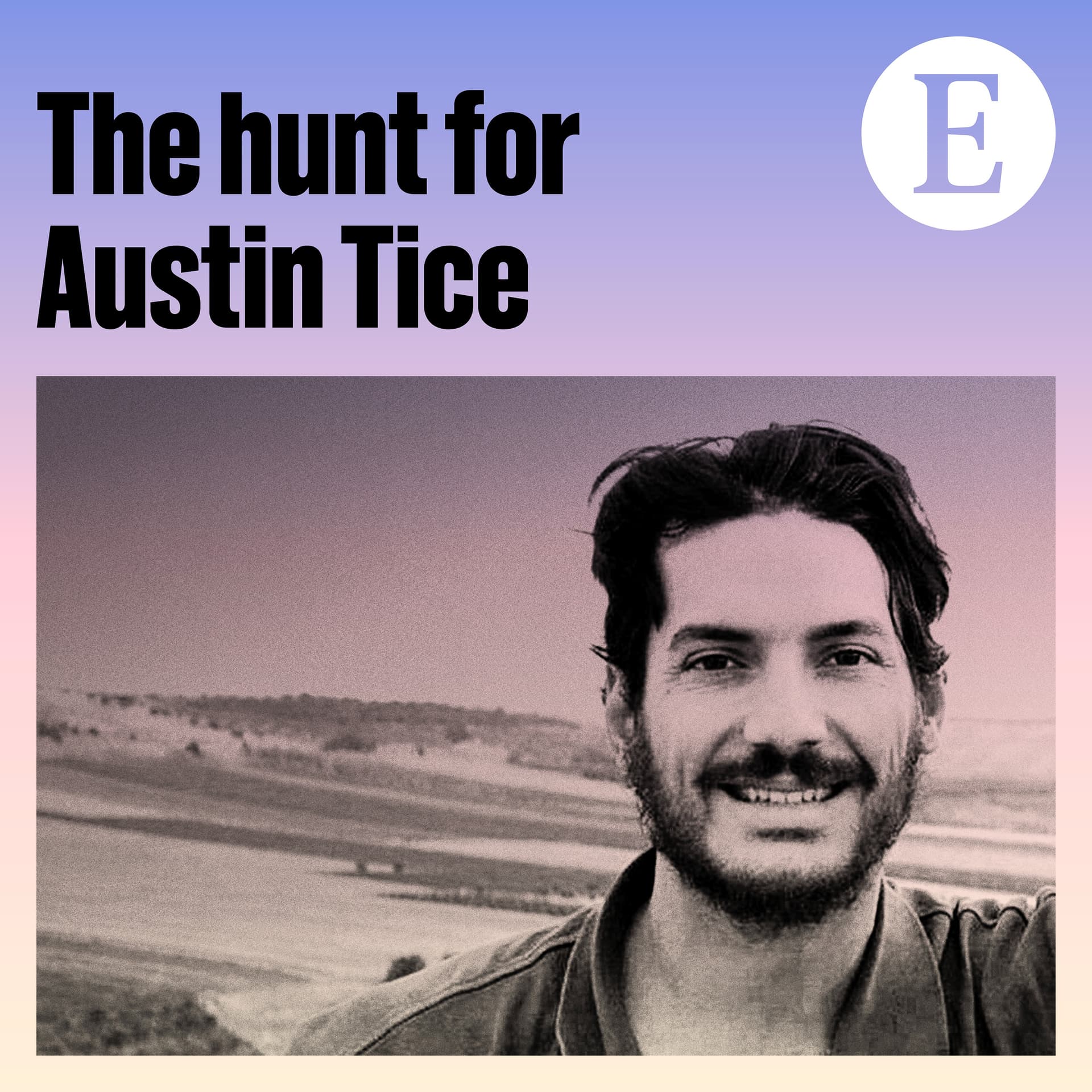
The Weekend Intelligence: The hunt for Austin Tice is the first episode of a three-part series about the disappearance of American journalist Austin Tice after he entered Syria in May 2012. Topic: how Austin was detained by (or connected to) Bashar al-Assad’s security state, why the U.S. believed he was alive, and what the fall of Assad in December 2024 revealed about Syria’s prison system.
Guest backgrounds
Gareth Brown, The Economist Middle East correspondent, spent six months investigating; Clarissa Ward, CBS correspondent and conflict reporter; Brian Bruggemann, former Marine officer who commanded Austin as a reservist; Wasim Enawi, Syrian activist who hosted Austin in Yabrud.
Key claims
Austin may have been held for 13 years as a bargaining chip; Assad’s “Human Slaughterhouse” prison Sidnaya held thousands; a 2012 anonymous video showed Austin blindfolded and praying.
Notable examples
Sidnaya’s emptied cells during rebel takeover; Austin’s practice video for CBS; his Yabrud photo with musicians; his July 2012 “oasis of calm” reporting; the “Austin Tice Still Alive” YouTube video.
Written by AI. May contain mistakes. Listen to the episode to check what was said.
Chapters
Tap a time to open that second in VOThe Context of Austin Tice's Disappearance
2:15 to 9:08
Explore the background of Austin Tice's case and the aftermath of Assad's regime.
“when Syrians finally got their freedom and the state's secrets began to unravel.”
Austin Tice: A Journalist's Journey
9:08 to 14:00
Learn about Austin Tice's background and experiences as a journalist in Syria.
“So what we're seeing here is the olive grove where they put all the victims of last Wednesday's violence.”
Austin's Journey into Journalism
14:00 to 17:43
Learn how Austin Tice's military background shaped his curiosity and drive to report.
“Not necessarily the hot conflict and fighting, but where in the world was there the friction?”
The Correspondence with Clarissa Ward
17:43 to 21:47
Discover the intense mentorship and correspondence between Austin and Clarissa Ward.
“In his call to CBS, Austin described a rebel attack he'd witnessed on a Syrian secret police base.”
The Correspondence with Clarissa Ward
22:24 to 23:05
Discover the intense mentorship and correspondence between Austin and Clarissa Ward.
“Dan Egan, VP of Behavioral Finance and Investing, explains how Betterment takes the time-consuming work out of smart investing.”
Austin's Unique Reporting in Syria
23:27 to 28:00
Explore Austin's firsthand accounts and experiences as a journalist in Syria.
“He was producing vivid first-hand accounts of rebel advances, documenting what the regime didn't want the world to know.”
Austin's Immersion in War-torn Syria
28:00 to 30:03
Learn about Austin's experiences in Syria and his motivations for reporting.
“He's sitting in a circle of musicians, playing a hand drum between his knees.”
The Recklessness of Passionate Reporting
30:03 to 33:18
Explore the risks Austin took while pursuing his journalistic ambitions in Syria.
“But by late July, Austin was getting a little restless.”
The Disappearance of Austin Tice
33:18 to 37:11
Uncover the events leading to Austin's disappearance while trying to leave Syria.
“He got into Damascus just like he said he would.”
The Mystery of Austin's Captivity
37:11 to 39:21
Delve into the aftermath of Austin's disappearance and the search for information.
“Our motto is semper fidelis, always faithful.”
Transcript
Automatic transcript. May contain errors.0:00This show is supported by Odoo. Business software is expensive, and when you buy software from lots of different companies, it gets confusing, slow to use, and hard to integrate. Odoo solves that because all Odoo software is connected on a single affordable platform. Save money without missing out on the features you need. There are no hidden costs and no limits on features or data. Check out Odoo at odoo.com. That's odoo.com. Thumbtack presents Uncertainty Strikes. I was surrounded. The aisle and the options were closing in. There were paint rollers, satin and matte finish, angle brushes and natural bristles.
0:41There were too many choices. What if I never got my living room painted? What if I couldn't figure out what type of paint to use? What if I just used Thumbtack? I can hire a top rated pro that knows everything about interior paint, easily compare prices and read reviews. Thumbtack knows homes. Download the app today.
1:06The Economist
1:14Today on The Weekend Intelligence, we're bringing you something a little different. The first episode in a three-part series we've been making for months. It's a groundbreaking investigation about an American journalist who went missing in Syria over the summer of 2012. The search for him has lasted more than a decade. His name? Austin Tice. Can I just ask you a question in English? And you try to answer in English, if you can. Who has the answer to Austin Tice's case? Who knows what happened to Austin Tice? For the past six months, The Economist's Middle East correspondent Gareth Brown has been on Austin's trail, trying to find out who took him, why they held on to him, and what Syrian dictator Bashar al-Assad knew about the American detained in his country.
2:04It's an attempt to shed some light on a decade of darkness in one of the most mystifying and oppressive dictatorships of the modern era, a story that could only be reported since December 2024, when Syrians finally got their freedom and the state's secrets began to unravel. I'll hand over to Gareth.
2:39On December the 8th last year, rebel fighters seized the Syrian capital. Their advance into Damascus after 13 years of revolution stunned the world. The country's dictator, Bashar al-Assad, was finally gone, escaped on a Russian plane to Moscow early that morning. One of the first things rebels did as they swept through cities was open up the prisons. People run down the streets after being released. The disappeared reappearing. Under Assad, the Syrian regime had kept a labyrinth of jails, torture chambers and secret cells to lock up enemies and dissidents. As city after city fell, guards abandoned their posts and prisoners came streaming out.
3:22Many had spent years inside with no contact with the outside world. They looked gaunt and starving. Some bore signs of torture. A few were so traumatised they'd forgotten their own names. In Damascus, the final prison doors were flung open in the early hours of Sunday morning, after an eight-day campaign to reach the capital. I arrived in Damascus during the evening of December 8th. I followed a crowd out of town to a prison called Sidnaya, 19 miles north of Damascus. This is the road to Sidnaya. Just so much traffic. Thousands of people trying to get to the prison. some who have had relative friends missing for more than a decade.
4:06Sidnaya was notorious. It was known by a grim nickname, the Human Slaughterhouse. Many of the people who went in never returned. Activists say tens of thousands of people had been murdered inside. We are walking into Sidnaya prison. Traffic was jammed for miles that evening, so I walked up, into the hills along with hundreds of Syrians and went in through the open prison doors.
4:36The cells were emptied by then but I followed the crowds, exploring the building with the lights on our phones.
4:48It was sickening. The filthy cells were full of piles of sodden blankets and bottles of urine. Desperate graffiti was scribbled on cell walls
5:01Rebels had smashed through concrete looking for hidden chambers It's not a place to keep even an animal, so what about the human? Like every Syrian who had been forced to flee their country during the war Wasim Enawi was anxiously watching the news Waiting to see who might come out Now is the moment of having an answer for the question, where is the person? Where is my relative? One of them was Austin. One of them was Austin. Austin Tice had entered Syria in May of 2012 as a freelance journalist to report on the war. He'd become a friend to Wasim. But after several months reporting in the country, he disappeared.
5:50He hadn't been heard from since. One of the first things I thought about was Austin. If he was alive, this was going to be the moment. CNN correspondent Clarissa Ward was also tracking events, searching for any mention of Austin. I think there were a lot of people who were holding their breaths and desperately hoping that we might see him walk out of some facility or another. Why did Austin's case attract so much attention? He was just one of many thousands of people who disappeared over the course of Syria's war. Sure, he was unusual. An American journalist disappeared in Syria. But it was more than that.
6:37For years, Austin's case had haunted Syria's dealings with America and the West. Through official meetings and back channels, intermediaries had been raising Austin with the Assad regime. They had reason to believe that Austin had been held in secret for the past 13 years as a potential bargaining chip. Years of trying hadn't produced Austin, but now the regime's fall presented an opportunity. In the chaos, maybe, just maybe, Austin might finally emerge from whatever godforsaken cell he'd spent a decade in.
7:16Good afternoon. What happened in the Middle East? As Bashar al-Assad was settling into his first day as a fugitive in Moscow, in the White House, standing in front of a Christmas wreath, President Joe Biden held a press conference. He revelled in the end of Assad. He called it a historic moment of opportunity for the Syrian people. After the address, Biden turned from the podium and headed for the door. Reporters shouted questions after him. Thank you very much. God bless America and God protect our troops. Thank you. To Assad now, Mr. President. What does the U.S. know about where Austin Peiss might be and if he's safe?
8:04That last question caught Biden's attention. Just as he was stepping through the door to leave, he stopped and turned to answer. We believe he's alive. We think we can get him back and the slides will be held accountable. We believe Austin Tice is alive and we think we can get him back.
8:27The hunt for Austin was on.
8:32On December 8th, private detectives, diplomats, spies, relatives and journalists like me started searching for him. We didn't know what we were looking for. A dead body. A prisoner. A ghost. Finding answers would prove to be fiendishly difficult. Understanding Assad's deep security state. A place where lies and conspiracies flourished. Only since the regime has fallen have we come to understand just how confounding it all was. And because of that, truth and reconciliation will probably elude Syrians for a long time. But finding out what happened to Austin, that could be a watershed. Because if we can lay bare what happened under Bashar al-Assad during 13 years of war and half a century of brutal dictatorship, if we can put names to orders to deeds, then perhaps a pathway to justice can be opened for all the Syrians who were victims of the Assad regime.
9:31I've been on Austin's trail for over six months now spending days in dark rooms with shady characters trying to separate kernels of truth from hours of lies It's taken me from Washington DC to Beirut to Baghdad and to every corner of Syria in an attempt to piece together what happened What follows is everything I've found out
10:10Are we rolling? Yeah. So what we're seeing here is the olive grove where they put all the victims of last Wednesday's violence. This is one of the few bits of video that exists from Austin's time in Syria. His parents sent it to me. He's in a loose, buttoned green shirt. It's opened down to his chest. They said that the cemetery in town is actually oftentimes a target for government attacks. So they buried him here. The video's from the summer of 2012, not long before Austin went missing. It's from a town outside of Damascus. This was one of the most dangerous places in Syria at the time. Austin's walking away from the camera, passing a long plot of turned up dirt by a row of trees.
10:59He's a freelancer from Texas. He's only just become a journalist. And watching the video, you can tell he's sort of new at this. He hunches and turns away from the camera. When he talks, he walks out of frame at one point. I guess this is a practice video, but apparently it's one he's trying to sell to the American networks. I'm Austin Tice for CBS News. Jaday Dog 2's Syria. Austin's a good-looking guy. Tall, broad-shouldered, athletic, boyish with dark hair and eyes. He'd be 30 years old in the video, the same age I am now. He'd been studying law at Georgetown, about to head into his final year.
11:40And before that, he'd been a captain in the US Marine Corps. He's still finding his feet journalistically. But this might be his new calling. He carried himself like you'd think a U.S. Marine officer would carry himself. I mean, he had a presence about him. He does have a presence about him. He holds your attention, even in practice mode. Brian Bruggemann was an officer in the Marines. When they met, Austin was a reservist, called up for duty in the unit Brian commanded. I would still, I need to go on the record right now, I'll still outbench press him. But, you know, that's just an aside. You can take that out, Gary.
12:21But yeah, he was physical and he was a bit of a character too. I asked Brian to give me a sense of what Austin was like. The memory that sticks out most to him was from a quiet spell on base. As a bit of a morale builder, we actually got the military police unit that was right next door to us to bring their working dogs over to our compound. and give us a bit of a demonstration. We had a vote as to who would dress up in the protected padded gear as to who would be attacked by the dog. I was one of them. And then Austin was actually voted by his peers to be the other officer to get attacked by these German shepherds.
13:08And, you know, these two dogs were just all over him, pulled him down to the ground. They pulled the dogs off. He gets himself up, he takes off the helmet, and he yells to the entire unit, are you not entertained, from the famous line from Gladiator. I'll never forget that. Everyone laughed, and it was vintage Austin Tice, I'd say. Marines, eh? Austin deployed with Brian's unit to Afghanistan in May 2011, a year before he went to Syria as a journalist. Every day, Austin would knock on Brian's office door at the base to ask when he was going to be given his next mission. I definitely understood very quickly that all he wanted to do was be in the middle of the conflict.
14:00Not necessarily the hot conflict and fighting, but where in the world was there the friction? And he wanted to understand it. deeply. Brian says that's what really set Austin apart from other Marines, his curiosity. The very first time I noticed it was when we got a local interpreter assigned to our unit soon after we arrived in Afghanistan. His name was Mohammed, we called him Mo. And Austin made him essentially part of our unit. Austin would take his team out for physical training in the morning and Mo would be there. Mo showed up wearing whatever Mo wore and Austin said, nope, tomorrow you're going to be wearing what the Marines wear when we do physical training, our familiar green over green PT outfit.
14:57And there was Mo the next day, green over green, part of the unit. Austin was using Mo as just a fountain of information to learn more about what it was like to be in Afghanistan. Just like a journalist, Austin was cultivating his source. What was it like before 2001? What's it been like since we've been here? What do people think and why? And that's where I saw something different for the first time with Austin. One day there came another knock at Brian's door. He was holding a box that he had just gotten from Mail Call. and it was some kind of fancy camera. And he's like, you know what? I'm going to learn how to use this.
15:48And I think I want to become a photojournalist and go to where the friction is and write. I thought, good for you, Austin. Deployments are certainly the place where we have epiphanies like this. And that was Austin's. Epiphany in hand on the 8th of May, 2012. Austin tweeted, this is either going to be wildly successful or a complete disaster. Here goes nothing.
16:19And so he headed to a country which at that time held the epithet of most deadly for journalists. Austin's new career in journalism started in Turkey but his goal was to be the first foreign journalist to travel from the rebel-held north into Damascus. It had been a year since the revolution started. The Arab Spring had threatened the rule of Bashar al-Assad, whose security forces were using lethal violence on protesters that had led to war between the regime and the rebels. Within a couple of weeks, Austin had smuggled himself across the border from Turkey with activists. Over the coming months, he zigzagged between rebel-held enclaves in Syria.
17:01His career as a journalist was off to a good start. His work appeared in the Washington Post and the Miami Herald. He was doing radio hits for the BBC. And he phoned in to CBS News. Syria rarely allows reporters into the country. So first-hand accounts are rare, but we have one this evening from reporter Austin Tice, who is inside Syria on assignment for the Washington Post. I need to interject here. Austin hadn't been allowed in. He had snuck in, illegally. Other Western journalists were doing the same at the time, smuggling themselves in with local reporters and activists who were desperate to get the revolutionary message out.
17:43In his call to CBS, Austin described a rebel attack he'd witnessed on a Syrian secret police base. It was quite a scene when they struck the government flag on the roof and raised the free Syrian flag. There was quite a bit of celebration in the streets. You can just imagine the scene. He tweeted in the middle of June, I sincerely hope I'm doing some worthwhile stories that otherwise wouldn't get out. Because seriously, this is the dumbest thing I've ever done.
18:16I first encountered Austin early in the summer of 2012. The summer Austin travelled to Syria, Clarissa Ward was a correspondent for CBS, based in London. There weren't very many Western international journalists who were able to get into Syria. And I suddenly saw a mention on Twitter flash up from somebody called Austin Tice, which said, hey, Clarissa Ward, drop me a line. Clarissa was a seasoned conflict reporter in the region, and Austin was looking for advice. Clarissa was intrigued by Austin's profile. Former Marine captain, law student, now travelling through war-torn Syria, trying his hand at journalism.
19:06Austin did not have any journalistic experience. He was very smart and very savvy, but he had never been to Syria before. He did not speak Arabic. This might all sound a little crazy, but it's not so unusual. This is how many budding war correspondents get their break. You don't just walk into a foreign correspondent role at the Washington Post. You have to prove yourself. It's also pretty similar to how I started out in 2016. Except I went to Iraq, not Syria. I had just graduated. I had a little bit of experience working with newspapers. But I figured that the best way to learn how to be a journalist was by doing journalism.
19:53It was thrilling and dangerous, and yes, probably a little stupid. But I was 22, and I was desperate to be out in the world reporting. And I felt it was worthwhile. Freelance journalists in conflict zones often play an unsung role. They tend to get access others can't. From my experience, they also tend to be more committed to the story. so clarissa took notice especially as austin started racking up bylines in big newspapers she too was desperate to get into syria but at the time she and austin were communicating she was stuck in turkey waiting for the go-ahead from her editors to enter she had time to kill
20:39So I replied pretty much immediately to Austin. And that really marked the beginning of a very intense correspondence between the two of us. This was before the days of WhatsApp and Telegram. So we were basically ping-ponging emails back and forth, sometimes 16, 18, even 20 emails a day. He wanted to learn how to write articles. He wanted to, and he did learn how to write articles and how to write them well in an astonishingly short period of time. I think what resulted or the reason that our communication correspondence became so intensive was that in the process of mining for information and nuggets and hacks, he realized that he had found someone who was also very attached to Syria, very intensively emotionally invested in what was happening in Syria.
21:43And for both of us, it became an outlet. And I think if I'm being honest, I was a little bit in awe of Austin.
22:13on the features you need. There are no hidden costs and no limits on features or data. Check out Odoo at odoo.com. That's odoo.com. This message comes from Betterment. Dan Egan, VP of Behavioral Finance and Investing, explains how Betterment takes the time-consuming work out of smart investing. I grew up learning about finance and investing myself and realizing that I needed to reinvest dividends and rebalance my portfolio, and if there was an opportunity to tax loss over time. And then I realized that I was doing all of these things that were pretty straightforward to implement. I just needed to spend my time doing them.
22:53Betterment automates the same good practices so that I know I'm doing portfolio management and goal-based planning in a way that makes sense and is responsible without me having to spend hours of my life doing it. Learn more at Betterment.com. Investing involves risk, performance not guaranteed. Betterment does not offer tax advice. TLH may not be suitable for all customers. Learn more at Betterment.com slash TLH dash terms.
23:26Lots was being written about Syria at this time, but most of it was being reported from outside the country. Austin's access was unique. He was producing vivid first-hand accounts of rebel advances, documenting what the regime didn't want the world to know. Indeed, later that year, Austin would win the George Polk Award as part of a McClatchy newspaper's team for their work chronicling the complexities of the war. Here was a guy free of the bounds of cautious editors. He was charging towards the story, relying on his wits, which he had honed in the military. Every single time we talked, I was just so incredulous as to how far he was going and how fast he was going.
24:12Not as a warning, but I was kind of amazed and taken aback that, man, he's just doing it. Here was this young, idealistic American aspiring journalist who had seemingly bought himself a ticket to Antakya. and done the whole thing on his own with very little fanfare and kind of improvising along the way.
24:49By early July, he'd made it all the way to Yabrud, a town an hour north of Damascus. At the time, all eyes were on the capital. With the rebels managed to take the city and topple the dictator, Austin wanted to be there if and when it happened. All he wanted to do was be in the middle of the conflict. Looking back on it, I can't help but to think, there was probably some naivete in how he approached where he wanted to go, where he wanted to be a journalist. He wanted to go to the toughest spots. You know, I don't think he knew perhaps the risks that he was taking. Or he knew and he thought he'd be just fine.
25:37Austin would spend most of July in Yabrud, plotting a way into Damascus. It was a chance to catch his breath. Yabrud was unusually peaceful. Assad's forces were leaving it alone. It was self-governing. And the revolution was alive and well. In a story for the Washington Post, Austin called Yabrud an oasis of calm in the conflict. Austin turned out to be a talented writer, and his love of the town comes through in the story. He wrote about how Yabrud's idyllic farms and bustling urban life stand in stark contrast to much of the rest of the country. He admired the revolutionary artwork covering public buildings and the weekly demonstrations by thousands of local Syrians.
Read the full transcript
26:30Can you tell us about the first time you heard the name Austin Tice? The first time when I saw Austin, it was in the first day, or in the 1st of July, 2012. In July 2012, Wassim Enawi, a Syrian activist, was living in Yabrud. He was part of a network of journalists opposed to the regime. When a reporter turned up in town, people would bring them to Wassim, who would show them around and try to keep them safe. Austin had arrived in Yabrud with a convoy of wounded fighters. For three weeks, he'd stay at Wassim's family home. The people directly asked, is he a spy? Are you receiving a spy in your home?
27:10but no, he was clear, he was open to everyone in the street. People could be a little suspicious. Wasim asked why Austin didn't carry a weapon for his own safety. Austin said he wanted to make clear to everyone that he was only there to report. And after two or three weeks in Yabroud, the people loved him. He was familiar in Yabroud to everyone. Wasim's family welcomed Austin like one of their own. His mum kept trying to wash Austin's clothes. He wore that same green shirt every day.
27:45On his Flickr account, there's the picture which became quite famous of him. Yeah, it's a very important part of his visit. Austin posted a photo of himself in Jybrud. Wasim's there next to him. He's sitting in a circle of musicians, playing a hand drum between his knees. Austin captioned the photo. Yabroud is one of the best places I've ever been in my life, and I freaking love it here. So he was shocked. Am I in Syria? Am I in the war? How the people are able to be happy, to play music, to be normal? And maybe in any time, any second, this far where we were sitting, it could be shot. It could be attacked by the Syrian regime by a cannon or anything.
28:35So the people decided to be happy even if they can't be dead in any second. Do you think in those moments, moments like that, he forgot he was in a war zone? Yeah, 100%. He forgot. I saw him, he's acting like he is in his home. It seems your relationship with him, it wasn't just a journalist and a media activist. You became friends, he became part of your family almost. Yeah, exactly. That's what happened. He is someone, he put himself in a risk like our situation. So it was, I really appreciated that. I said to him, what made you leave America, you were safe to come to Syria? What is your benefit?
29:18For what? For the people? He said to me, yes, for the people. This is what he wrote on Facebook. Clarissa Ward pointed out the post that, to her, encapsulated Austin's drive to report from Syria. It begins, against my better judgment, I'm posting this on Facebook. Flame away. I don't have a death wish, I have a life wish. So I'm living in a place at a time and with a people where life means more than anywhere I've ever been. Because every single day, people here lay down their own for the sake of others. Coming here to Syria is the greatest thing I've ever done, and it's the greatest feeling of my life.
30:02And I think if you're looking to understand what really motivated Austin, that is the crux of it.
30:18But by late July, Austin was getting a little restless. He was spending days in Yabroud, but nights with the advancing Free Syrian Army. He wanted to get to Damascus. Austin was really fixated on getting to Damascus and he was growing increasingly frustrated with the various different rebel factions that were hosting him because he didn't feel like they were letting him move quickly enough to where he wanted to go. Clarissa was trying to slow Austin down. The area around Damascus was incredibly dangerous, and not just because of the fighting. An American journalist passing illegally through regime territory was liable to be detained.
31:02We talk a lot in this industry and people who cover conflict about this analogy of the frog in the boiling water, right? I think that when you spend a protracted period of time in a conflict zone, it becomes all too easy to essentially become desensitized to the very real risks that you are facing. And I definitely think that's what happened to Austin. At one point, Austin told Clarissa he'd abandoned his rebel hosts and tried walking into Damascus. He was getting reckless. And remember, he's a lone operator. There's no security team on standby to whisk him out if he gets in trouble. Austin did a story about wearing a woman's abaya and literally running through a government checkpoint.
31:57And this was a moment for me where I understood that he really needed to get out immediately. immediately because this is not the way journalists comport themselves in conflict zones. And I understood that he had crossed the Rubicon there. And when we had a back and forth about it with me pretty much shouting at him over email and trying to impress upon him the risks if he been captured and what could happen to people who were enemies of Bashar al-Assad, which we understood and know on certain terms that Austin was at this stage because he had been not just prolific, but very public, posting on his Facebook and on Twitter about what he was seeing and what he was experiencing, essentially really thumbing his nose at the regime.
32:52And I don't know whether Austin at that stage was thinking clearly about risk anymore. I would venture to say that he was not because he so firmly believed on some level that he could do it. And he did it, right? He did do it. He got into Damascus just like he said he would. Austin made it all the way to Dariah, a suburb of Damascus. All the while, he was writing to his old host, Waseem, in Yabroud. I said to him, just I am happy to know that you are alive. He said to me, yes, still alive. If anything kills me, it's going to be boredom. Did he tell you in Dariah where he was sleeping? He's sleeping in a building or a school or in an apartment?
33:48In a farm. He was in a farm? In a farm, yes. In a farm with a swimming pool, he went swimming. He said to me, I went swimming today. And in the background, the sound of the machine and guns and bombs. On August 11th, 2012, Austin tweeted, spent the day at a free Syrian army pool party with music by Taylor Swift. They even bought me whiskey. Hands down, best birthday ever. Austin turned 31 that day. That tweet still sits right at the top of his page. His problems came about when he then tried to leave. Having made it into Damascus, Clarissa says that Austin was ready to take a break. He'd head to Beirut.
34:35It's where journalists often went when they needed a time out from covering the conflict. I travelled to Lebanon for work at exactly the same time that Austin was supposed to be crossing out of Syria into Lebanon. And I had been in touch with him as I was on my way to the airport. He wrote me a message saying, if everything goes to plan, we'll be throwing back cocktails soon. Brian, his Marine commander, noticed that Austin hadn't emailed in a while. And so I had a funny feeling. I was on a family camping trip in Monterey, California, in August of 2012, I got a phone call from the State Department contact of mine and he called me out of the blue and said, hey, we've just gotten a report that Austin is missing.
35:30In Yabrud, Wasim got a message from an editor at the Washington Post. Had he heard from Austin? Wasim hadn't. His assumption was that Austin had been captured by the regime's security forces and he was distraught about what that might mean for his friend. They even held a demonstration there in Yebrud, demanding Austin's release.
35:54But in Syria, every day you have something to make you feel sad. Because at that period, when discovered that he disappeared, every time we lose people from our family, people from our community, we are very busy about the attack on the regime if the regime will come to our city etc so yeah we had a bad feeling but you know every day you lose some people near or far you don't have the time to mourn someone or be worried for too long because you just have to keep moving on to the next challenge yeah for sure you are sad but always there is a new thing which will make you sad. And you are also, there is a lot of things to do.
36:47You can't just stay at your home. If you stay at your home, no one will cover your days, what you are doing for your revolution. No, you will carry on. You should continue. All lines to Austin went silent. In Beirut, Clarissa waited to hear from him. And then he never turned up. Our motto is semper fidelis, always faithful. We don't leave anyone behind. And, you know, here's a Marine, and he was missing.
37:28It took six weeks for any news of Austin to emerge. In late September, a video was quietly posted to YouTube. The account was new and anonymous. The video was titled, Austin Tice Still Alive. It is 46 seconds long. It starts on a daytime shot of three vehicles driving in convoy down a dusty road. The camera is shaky.
37:57Ten seconds in, there's a cut to another shot. A group of four or five men steps out of one of the vehicles. They're wearing neatly pressed robes, clothing more associated with Afghanistan or Pakistan than any part of Syria. They are armed with AK-47s and repeatedly murmuring, Allah Akbar, Allah Akbar, God is great.
38:26The men are flanking a tall white guy with dark hair and a ripped green shirt. Austin is blindfolded and being led by the men up a hill. In the final shot, Austin's shirt is hanging open. He's grown a beard. His matted hair sticks up out of the blindfold. He's bent over, resting his head on the arm of one of his captors. He looks exhausted, terrified. Austin stands up straight. He's panting and praying in Arabic. Oh, Jesus. Allah, Ya Allah. The video ends there.
39:18On the next episode of The Hunt for Austin Tice, I meet the American who was sent to bring Austin home. I'm one of the people that believed that the Syrians were holding Austin and that he was alive and waiting for me to come and get him. I tracked down some of Austin's captors in Syria. So after about two months of trying, I finally managed to sit down with... And we spoke for almost three hours. He gave us very detailed information about the early days of Austin's detention. And I go further into Assad's Republic of Fear. I would say it was one of the most secretive regimes, both in its existence and towards its end.
40:05Conspiracy theories drive everything. Where has Austin been all these years? And can I figure out what's become of him since the fall of the regime? Are you still feeling optimistic? Yeah. I mean, I see no evidence he's dead. Well, and that's what everyone has always said to me.
40:54Plus. This episode was reported by Gareth Brown and produced by Sam Colbert. Sound design by Weidong Lin and fact-checking by Andrea Burgess. The executive producer of The Weekend Intelligence is Gemma Newby. We'll all see you back here on Monday.
41:24And when you buy software from lots of different companies, it gets confusing, slow to use, and hard to integrate. Odoo solves that because all Odoo software is connected on a single affordable platform. Save money without missing out on the features you need. There are no hidden costs and no limits on features or data. Check out Odoo at odoo.com. That's odoo.com.
From the publisher
On December 8th, 2024, rebels swept into Damascus and ousted Syria's dictator, Bashar al-Assad. One of the first things they did was open up the prisons. Syrians who disappeared years earlier began to emerge from their grim detention cells. Would missing American journalist Austin Tice be among them?
In a new three-part series on The Weekend Intelligence, Middle East correspondent, Gareth Browne investigates what happened to Austin and explores what his story reveals about Assad's Republic of Fear.
In episode one, Gareth tells the story of Austin’s time in Syria leading up to his capture.
Listen to what matters most, from global politics and business to science and technology—Subscribe to Economist Podcasts+
For more information about how to access Economist Podcasts+, please visit our FAQs page or watch our video explaining how to link your account.
Music by Blue dot Sessions and Epidemic.
This podcast transcript is generated by third-party AI. It has not been reviewed prior to publication. We make no representations or warranties in relation to the transcript, its accuracy or its completeness, and we disclaim all liability regarding its receipt, content and use. If you have any concerns about the transcript, please email us at podcasts@economist.com.
Read more about how we are using AI.
Hosted on Acast. See acast.com/privacy for more information.