In short
The episode covers three segments. First, Ukraine: Pentagon officials in Kyiv discuss a US- and Russia-drafted 28-point “peace proposal” that Ukraine rejected.
Key claims
it would cut Ukrainian forces to about 40% with no Russian reduction; require ceding additional land; restrict Ukraine’s use of long-range weapons; ban foreign troops on Ukrainian soil; and force Ukraine to adopt Russian as a second state language and accept the Russian Orthodox Church. The plan is linked to timing amid Ukraine’s “Mindich Gate” corruption scandal: alleged $100M+ money laundering via 10–15% kickbacks at the state nuclear agency Energoatom, with recordings, a “golden toilet” described in Timur Mindich’s apartment, and alleged tips before his flight.
Guests
Oliver Carroll (Ukraine correspondent). Second, Spain: Michael Reid (Spain correspondent) reviews Spain’s post-Franco democratic transformation and current challenges—fragmented politics (Podemos, Catalan separatism, Vox), housing shortages (~700,000 units), youth hardship, and immigration pressures. Third, workplace economics: Daniela Raz (data journalist) and Emily Nix (USC economist) discuss a Finland administrative-data study on dating your boss.
Key claims
women dating male managers earn ~6% more; after breakups earnings drop ~10 points over the following fall and decline for four years; firms retain four fewer employees over four years.
Notable examples
men dating female bosses see about twice the pay rise and smaller post-breakup losses.
Written by AI. May contain mistakes. Listen to the episode to check what was said.
Chapters
Tap a time to open that second in VOContext on Ukraine's Peace Proposal
1:31 to 2:16
Discussion on the Pentagon's visit to Kyiv and the proposed peace deal.
“After Franco died 50 years ago, Spain made a remarkably swift and mostly painless transition to democracy.”
Corruption Crisis in Ukraine
2:16 to 3:29
Analysis of the corruption scandal affecting Zelensky's government.
“Pentagon officials are in Kiev today to discuss a new peace proposal.”
Details of the Mindich Gate Scandal
3:29 to 5:26
Insights into the scandals involving the Ukrainian nuclear agency and its implications.
“just tell me quickly what we know about this peace proposal.”
Political Pressure and Yermak's Role
5:26 to 10:46
Exploration of political pressures on Zelensky and his advisor Yermak amid the scandal.
“Okay, so a blow of atomic proportions, crisis in Kyiv.”
Future Implications for Ukraine
10:46 to 14:01
Discussion on the ongoing anti-corruption efforts and potential political fallout.
“But even if you know say Yermak is cast aside.”
Spain's Economic Challenges and Growth
14:01 to 19:56
Explore Spain's recent economic performance and the challenges it faces, particularly for young people.
“And thirdly, Vox on the right, which now commands around 20 % in the opinion polls.”
Impact of Office Romances on Careers
20:46 to 27:46
Discusses the implications of dating managers on career trajectories using recent research findings.
“Office romances are pretty common, but not all work relationships are equal.”
Transcript
Automatic transcript. May contain errors.0:00Ireland's workforce tops the world rankings for flexibility and adaptability. Quality is critical to any company driven by innovation and vision. It's just one of the reasons 1 ,800 international businesses, including 13 of the top 20 global technology companies, have established a base here. IDA Ireland, the inward investment promotion agency, partners with you, connecting your business to unique opportunities. Learn more at ideaireland.com. This Economist podcast is sponsored by Bill, the intelligent finance platform that helps businesses and accounting firms scale with proven results. With AI-powered automation, Bill isn't just moving money.
0:43They're simplifying financial operations for nearly half a million customers. Bill has securely processed over a trillion dollars in transactions. That's proven infrastructure. Ready to talk with an expert? Visit bill.com slash proven and get a$150 gift card as a thank you. That's bill.com slash proven. Terms and conditions apply. See offer page for details.
1:09The Economist.
1:16Hello and welcome to The Intelligence from The Economist. I'm your host, Rosie Bloor. Every weekday, we provide a fresh perspective on the events shaping your world.
1:31After Franco died 50 years ago, Spain made a remarkably swift and mostly painless transition to democracy. Our correspondent asks how far the country's come and where it might yet be going. and dating your boss has got to be a terrible idea but an awful lot of people do it so what does it do to the size of your package and yes obviously i am talking about wages here
2:07first up though
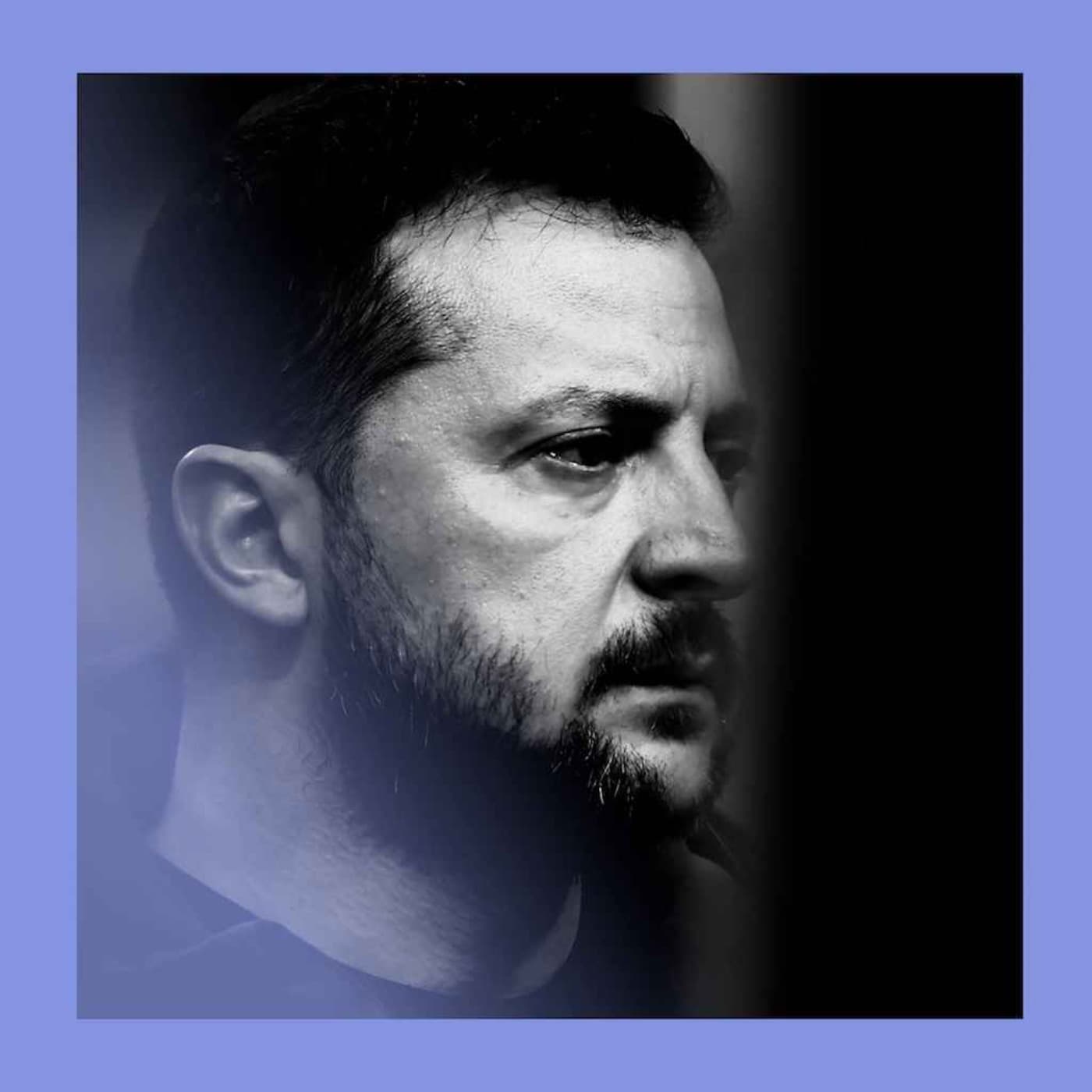
2:16Pentagon officials are in Kiev today to discuss a new peace proposal. It was drawn up by America and Russia and includes many measures Ukraine has already rejected. These meetings come at a particularly tricky time for Ukrainian President Volodymyr Zelensky. His government is currently embroiled in a giant corruption scandal, the biggest crisis since Russian tanks arrived in early 2022. Battles within government, battles on the front line and now a plan that Ukraine had nothing to do with The so-called peace deal is a pretty shocking punt of a plan to end the war Oliver Carroll is our Ukraine correspondent And it's clear that it's blindsided swathes of the US government Ukraine, for sure, had no role in its drafting The driving forces appear to be Donald Trump's special representative Steve Witkoff and Putin's envoy Kirill Dmitriev.
3:15Much less clear is what Mr Trump himself makes of it. But taken at face value, it's little short of a demand for capitulation. Oli, before we get to Zelensky's darkest days, just tell me quickly what we know about this peace proposal. So from my conversations with sources who are familiar with the plan, it runs to 28 points and it reads like a greatest hits collection of Russia's old demands. With a few new tracks added for good measure, just running through the top lines. Ukrainian forces slashed to roughly 40 percent, no matching reduction on the Russian side. Surrendering more land beyond the broad stretches of the east and the south already under Russian occupation.
4:00Ukraine wouldn't be allowed to use several classes of weapons, including any long-range system that can reach Moscow or St Petersburg. There would be no foreign troops on Ukrainian soil. And then Ukraine would also be told to declare Russian a second state language and accept the Russian Orthodox Church, an institution the Kremlin has used throughout the war for propaganda, espionage, and even on occasion to store weapons. And what is Ukraine likely to make of these proposals? They see them as non-starters. The situation on the front lines, they aren't good at the moment. But Ukraine's position is not so desperate that Zelensky would need to agree to such punishing terms.
4:41Oli, even before this plan emerged, Zelensky was under pressure from a giant corruption scandal engulfing his government. Has the timing of this peace proposal got anything to do with that? I mean, there's certainly those in the Ukrainian presidential office who'd say that at a minimum, the US is using the corruption crisis to push Ukraine into unreasonable concessions. Some go further. But it's impossible to overestimate the sense of crisis in Kiev at the moment. The so-called Mindich Gate scandal, it's rethinking almost every given in the political landscape. I was speaking to an unusually worried intelligence officer the other day, And he described it to me as a blow of atomic bomb proportions.
5:26Okay, so a blow of atomic proportions, crisis in Kyiv. Tell me about the scandal. Yeah, so what's come out so far, and we understand actually more is on the way, centres on Enelga Atom, which is the Ukraine state nuclear agency. Now, according to the anti-corruption bodies, that was basically the center of a huge money laundering scheme of at least a hundred million dollars and probably a whole lot more basically through 10 to 15 percent kickbacks on all contracts now it's a pretty huge achievement by the anti-corruption bodies to do this they're tiny in respect to other state institutions and these state institutions certainly some of them were actively impeding them all the way i was told that some of the detectives were followed intimidated as soon as this group got wind of their interest.
6:19So how did they unearth all of this? It was a bit of a sort of cat and mouse game by these detectives. But basically, they managed to get recording devices in several offices and flats around Kiev, which were being used for conspiratorial purposes. And the details of what they released so far in the recordings, they're pretty extraordinary. One of the accused complains about back pain for having to lug these millions of dollars of cash around Kiev. Other things that were revealed in the course of the investigation, a golden toilet bowl in the apartment of Timur Mindich, who's actually a former business partner of the president, and is now accused of co-organising this scheme.
7:00In other moments, the alleged members of this syndicate are talking about how much of a waste of money it would be to protect substations near the nuclear power plants. Now, just a couple of days before the scandal These very substations were hit by Russian missiles and drones. So the sheer cynicism of this, it's shocking for Ukrainians, many of whom are sitting in cold apartments throughout the country without electricity. Oli, how high does this scandal go? Is Zelensky himself implicated? Those involved in the investigation tell me they haven't worked out how high knowledge of the kickbacks went.
7:42And certainly the organisational roots of the scheme went back to well before Zelensky was president. But what we know is two of his ministers have been directly accused, the Energy Minister Svetlana Grinchuk and the Justice Minister, the former Energy Minister Germán Galushinca. They were both fired by Parliament yesterday. Important to say, both deny any involvement in the scheme. A former Vice Prime Minister has been arrested, Alexei Chernyishov. Again, he also denies any involvement in the scheme. Some of the money stolen in the scheme ended up being wired to Moscow. Mindich, that's the man with the golden toilet, fled the country mere hours before detectives arrived at his home, suggesting perhaps someone may have tipped him off.
8:28But there is a real pressure right now mounting for Zelensky to make a real statement, and especially pressure is mounting for him to get rid of his top advisor, Andrei Yermak, who many consider to be a key architect of the system that allowed this whole thing to exist. So what's so important about Andrei Yermak and why do people think he's the one who needs to go? Yermak is this sort of totemic figure in Ukraine, a very intimidating chief of staff. That would be to understate his actual role. You know, he's the gatekeeper to Zelensky. Now, this unelected advisory role has always been important in Ukrainian politics, but the war and the centralizing tendencies of it have made it even more important.
9:15He isn't directly implicated in the scandal, but this scandal is clearly too big not to have a fall guy. For Yermak's detractors, of whom there are very many, he is the magical whisperer in Zelensky's ear, an almost Rasputin-like influence on the president. But whatever the truth of that, he has alienated a lot of people, friends and enemies, and a knoll of knives are being sharpened right now. And Oli, you say there's more on the way. What happens next? OK, so right at the moment, Naboo, which is the anti-corruption investigative wing, have put publications on hold citing martial law. But it's clear that since July, the anti-corruption bodies and the presidential office have been on collision course.
10:02And that is bound to continue as prosecutors try to do deals with some of the accused. And certainly today in particular is seen as a day of reckoning. I understand at four o 'clock Zelensky will be meeting with his MPs, many of whom are very angry, and they will be demanding action. The coalition particularly against Yermak is very broad right now, and it stretches from senior officials whose names I can't actually tell you but to a sizable faction in the president's own party. You know one top official put the choice in pretty stark terms Zelensky either has to cut off his own leg i.e. sort of Yermak or he lets the body die.
10:45You know of the two of them only one or none of them can survive. But even if you know say Yermak is cast aside. I wonder, you know, will that be enough? Ukraine's corruption problem clearly runs far deeper than one single man or two. You know, it's a post-Soviet legacy and it's connected with poverty, inequality, and for some, you know, really unhealthy fixation on big money. That can't be cured overnight. But with US pressure and the domestic wars gathering, Zelensky has to come up with something now. Oli, thank you very much. Thank you. It's always a pleasure, Rosie.
11:43When Francisco Franco died 50 years ago today, change finally seemed possible in Spain.
11:54Franco's dictatorship had lasted almost four decades When Spain's dapper General Francisco Franco Led his well-drilled foreign legion and Moorish troops into Spain His fascist rebellion became of major concern To every first-ranked power in Europe Over time, he loosened the reins on the economy But he continued to deny political freedom And suppressed regional identities leaving Spain socially and culturally constrained. After he died, waves of strikes and protests forced King Juan Carlos to give up absolute power. Spain became a constitutional monarchy and a democracy. It put in place a welfare state, joined NATO and later the EU.
12:40But half a century on from Franco's death, how's it all going? Spain is a country that's completely transformed. Michael Reid is our Spain correspondent. In 1975, apart from the lack of social and political freedoms and censorship, there was a lot of poverty still, rural misery and urban shanty towns. Life expectancy was just 73. It's now 84. In the last 50 years, in purchasing power terms, real incomes have increased two and a half fold. and Spain has moved from Catholic conformism to become one of the most liberal societies in the world and there's been a revolution in the position of women and women's rights in the society.
13:31But of course, like many other places in Europe and as time passes, Spain faces new challenges. I thought you were about to paint a picture of a perfect utopia there but tell me what are the challenges that Spain's facing now? Well, the financial crisis in Spain, as in other places, really was a turning point. The political system has fragmented. First, Podemos on the left, then the mutation of Catalan nationalism into identitarian separatism. And thirdly, Vox on the right, which now commands around 20 % in the opinion polls. And that kind of fragmentation has meant that Pedro Sanchez, the socialist prime minister, has governed in a minority since 2018, and his position is in some ways fairly precarious.
14:20There are new challenges. One is how to handle immigration, how to handle rural depopulation, and the urban housing shortage. The younger generations have it much harder than their parents. And there are also signs in the opinion polls of decay and disillusion with the democracy itself. Okay, so we've got a lot of ground to cover. You said there that the financial crisis, 2008, was a turning point. How is Spain's economy doing now? The financial crisis prompted a big slump and Spain lost six years. Unemployment surged to 26%. but sustained growth started again in 2014, interrupted by the pandemic, but it continues and recovery from the pandemic has been strong and Spain's economy is now in many ways the envy of the rest of the euro area.
15:16It's growing two to three times as fast. Growth this year will be close to 3 % again, as it was in the past couple of years, and unemployment is now back down to 10.5%, which is still high by European standards, but obviously much lower than it was. And yet you mentioned that young people are facing such challenges. What's going on there? I think that the biggest single challenge is the housing shortage, because the economic growth comes partly from EU funds, partly from higher productivity and structural changes, but also to a considerable degree from immigration, in other words, from adding labour.
15:55There are more people, but there aren't more houses. So each year, around 140 ,000 new households are formed in Spain, but only around 80 ,000 houses are built. The Bank of Spain thinks there's a housing shortage of around 700 ,000 units. And one consequence of the housing shortage is that young people are delaying forming their own families and living with their parents. And partly for that reason, partly because women's preferences have changed, the fertility rate has plunged to just 1.2%, which is one of the lowest in the world. And that obviously means the population is not going to reproduce itself, which is one reason why Spain up till now has been generally welcoming to immigrants.
16:44Michael, the immigration story is fascinating. It's very different from many other places where people have not been welcoming to immigrants. It is fascinating. I mean, I think why has Spain been generally welcoming to immigrants? Two reasons stand out. One is that it started pretty recently. It started in this century. And Spain until then had been a country of emigration. Under Franco, many Spaniards went to other European countries to work and get higher incomes than they could get at home. The second reason is that around half of the immigrants are from Latin America or Romania, and they either speak the language already or learn it easily, and they adapt to the customs of the country fairly easily.
17:29But I think there are some warning signs, and one is starting to see stress on not just housing, but also on the health service and schools. And I think concern over immigration is one factor in the recent bigger rise in support for Vox. Opinion polls show that a small majority now think there are too many immigrants. And so integrating those that are here and controlling the flow will be a big challenge for the governments from now and until the future. Spain's transition to democracy was so quick and painless in many ways. I think a lot of people could be forgiven for forgetting that it's only 50 years old.
18:10is it healthy now? Well the transition was seen in many ways as exemplary and it involved a spirit of cooperation between right and left expressed in the constitution but also in other ways that they cooperated. I think perhaps inevitably with the passage of time and the stress of the financial crisis and so on that has given way to the kind of polarization one sees in many European countries at the moment. It is reflected in a sense that each of the two main parties thinks the other is less than legitimate for various reasons, and a sense in sectors of the society that the democracy needs a bit of renewal and that there's a degree of decay.
18:55I think that said, Spanish democracy remains essentially healthy, and it's in many ways a successful country. That is reflected in the fact that so many people want to live here. So I think despite the problems for most Spaniards, life is still essentially pretty good. Michael, great to talk to you. Thank you so much. Thank you.
19:31summer can throw off even the best routines but ag1 makes it easy to keep one healthy habit consistent ag1 is a daily health drink that combines a multivitamin pre and probiotics superfoods and antioxidants in one scoop mixed with eight ounces of water from late nights to long weekends, and everything in between, AG1 offers a simple way to add consistent nutritional support to your day, wherever the morning begins. Visit drinkag1.com slash theintelligence to get a free morning person hat and a free AG1 sampler in your welcome kit with your first AG1 subscription, an$82 value. That's drinkag1.com slash theintelligence.
20:12This Economist podcast is sponsored by Bill, the intelligent finance platform that helps businesses and accounting firms scale with proven results. With AI-powered automation, Bill isn't just moving money. They're simplifying financial operations for nearly half a million customers. Bill has securely processed over a trillion dollars in transactions. That's proven infrastructure. Ready to talk with an expert? Visit bill.com slash proven and get a$150 gift card as a thank you. That's bill.com slash proven. Terms and conditions apply. See offer page for details.
20:52We all know couples who've met at work. Office romances are pretty common, but not all work relationships are equal. Unsurprisingly, dating your boss is particularly controversial and not always good for your career. A new paper shows a pretty remarkable finding about what happens when you date your boss. Daniela Raz is a data journalist and U.S. correspondent. Emily Nix, an economist at the University of Southern California and her co-authors, use an unusually rich trove of administrative data from Finland to answer this question. seems still kind of surprising to me that you'd be able to get that kind of information from data how did they do this there are a couple of clever steps here first to isolate specifically the effect of a woman who's dating her manager the authors compare those types of couples with women who are dating someone more senior than them but at a different workplace so comparing those two groups kind of helps you separate out the general benefits of dating someone who's just more experienced, maybe still in your field, from the potential perks of dating someone who is quite literally your own boss.
22:13And then identifying when people break up is fairly straightforward to track since the researchers can kind of pinpoint the exact date when the couple stopped living together. But because they can't observe the exact moment when a relationship began, when people started flirting with each other in the office, they have to do a bit of, I guess you could call it some data detective work to figure out when the relationship actually started. So in order to do this, they look at survey evidence. And survey evidence kind of suggests that roughly 70 % of couples date for two years before they move in together.
22:51So they take the date that couples started living together and they look backwards two years, and that's when they start tracking earnings. And it turns out that the estimate from survey data is fairly accurate because around two years before moving in together, these two sets of couples start to see a divergence in their earnings. So what exactly did they show then? So the vast majority of manager subordinate relationships entail women subordinates dating their male bosses. So looking particularly at women, the data show that starting a relationship with the manager is linked to a 6 % increase in income compared with that control group I mentioned earlier of women who are dating someone who's more senior than them but works elsewhere.
23:39Now, that bump can turn into a cliff pretty quickly. After breaking up with their manager, women's earnings fall by about 10 points over the fall you see in the control group. That is obviously a super high number. It is mostly driven by the fact that these women seem to be either leaving the workforce altogether after going through this kind of a breakup with their boss. And when they do stay in the labor force, they switch to firms that have worse pay and seem to not be as good of a fit for them. Tragically, that decline in earnings continues at least over four years with little sign of recovery.
24:19Daniela, please tell me that there are at least some men who date female managers. Yeah, so there are some men in the data set who date their female managers. Unfortunately, or fortunately, I guess, depending on which perspective, men do fare a lot better when they date up. So in instances when it's men dating their female bosses, the researchers find that the men dating up see roughly twice the pay rise that women got from dating their male bosses. and then when those relationships end, the drop in men's earnings is much smaller. So in other words, men not only gain more while the relationships last, but they also lose a lot less when it ends.
25:00We shouldn't be shocked by those results, should we? Daniela, what's the cost of this for employers? So it's not just the couple who are involved in the relationship that's affected. the firms that had these manager-subordinate relationships could expect to retain four fewer employees over a four-year period than the control group. So basically, they have much more turnover than you would expect. And there were two instances when firms were hit hardest. So one is smaller companies, and presumably we can speculate that it's because it's much harder to disguise this kind of favoritism in a small office.
25:38And the other was when the pay bump the subordinate received was much larger. So clearly colleagues are grasping the scale of the unfairness as well. And this study was about Finland only rights. So how likely is it that other countries would replicate these same trends? Obviously using Finnish data might not be entirely representative of other countries. Finland is a fairly unique country, very egalitarian, relatively homogenous, and seems to kind of have flatter workplace hierarchies. In more hierarchical cultures, you could maybe see the effects being more pronounced, both in the pay bumps and in the fallout after the fact.
26:18And maybe in places where the lines between your work and personal life blur more easily, the effects could be milder. So essentially, your conclusion is that dating your boss is bad for you and it's bad for the company. And a lot of companies now have rules about this, don't they? There's a lot of company policy on this, but I think it differs a lot in terms of the size of the company. So small businesses, which in a lot of countries employ a large share of workers, they might have less formal and rigid HR structures or rules around workplace relationships. and obviously even though lots of companies do have policies against this type of stuff even where policies do exist what is written down can really differ from what actually happens in practice.
27:06Daniela thank you so much. Thank you for having me.
Read the full transcript
27:25That's all for this episode of The Intelligence. See you back here tomorrow.
27:46This Economist podcast is sponsored by Bill, the intelligent finance platform that helps businesses, and accounting firms scale with proven results. With AI-powered automation, Bill isn't just moving money. They're simplifying financial operations for nearly half a million customers. Bill has securely processed over a trillion dollars in transactions. That's proven infrastructure. Ready to talk with an expert? Visit bill.com slash proven and get a$150 gift card as a thank you. That's bill.com slash proven. Terms and conditions apply. See offer page for details.
28:49Learn more at IDAireland.com
From the publisher
Pentagon officials are meeting President Volodymyr Zelensky in Kyiv to discuss a Russia-US peace proposal Ukraine had no part in writing. That merely adds pressure as a giant corruption crisis is already embroiling top officials. Fifty years on from the death of Franco, our correspondent assesses how much Spain has changed. And should you date your boss?
Listen to what matters most, from global politics and business to science and technology—Subscribe to Economist Podcasts+
For more information about how to access Economist Podcasts+, please visit our FAQs page or watch our video explaining how to link your account.
Hosted on Acast. See acast.com/privacy for more information.