In short
Podcast Summary: Economist Podcasts - Years Ending: Notable Lives Lost in 2025
Episode Overview In this episode of *The Intelligence* from The Economist, host Rosie Bloor takes a reflective look back at prominent figures who passed away in 2025. The discussion ranges across various fields including religion, politics, music, and film, highlighting the impact these individuals had on society and culture.
---
Key Figures Discussed
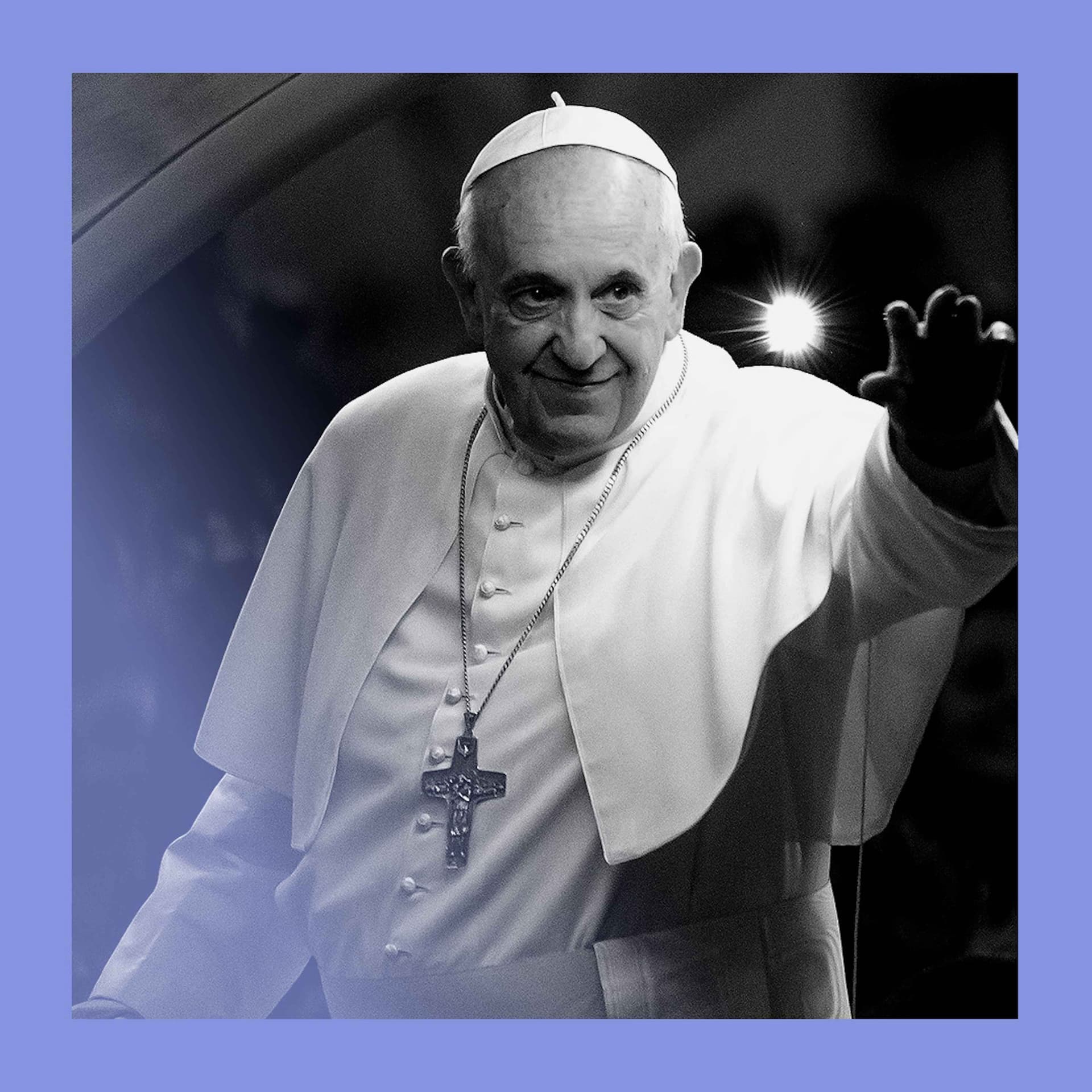
Pope Francis
- Legacy: Known for his open-minded approach, he aimed to reform the Catholic Church.
- Personal Background: His tenure as Bishop during Argentina's Dirty War raised questions about his motivations for reform.
- Key Traits: Gregarious, curious, and focused on mercy within the church.
Dick Cheney
- Reputation: A controversial and powerful Vice President known for his divisive politics.
- Notable Actions: Critiqued Donald Trump and supported same-sex marriage, showcasing his complex political stance.
- Cultural Perception: Often referred to as Machiavellian, reflecting the polarized views on his legacy.
Charlie Kirk
- Background: A young political activist and conservative voice who was murdered at age 31.
- Political Impact: Known for championing free speech and engaging in contentious debates on college campuses.
- Context of Death: His murder underscores the rising political violence in the U.S., highlighting concerns about safety for public figures.
Jane Goodall
- Contributions: Renowned naturalist who revolutionized the study of chimpanzees and animal rights advocacy.
- Legacy: Helped reshape global perspectives on wildlife conservation.
Alice Tan Ridley
- Career: A subway busker turned television star who spread joy through her music.
- Personal Story: Overcame personal challenges, used busking as a means of supporting her family, and eventually gained recognition on *America's Got Talent*.
Brian Wilson
- Musical Influence: Co-founder of The Beach Boys, known for his creative genius in pop music.
- Struggles: Faced mental health issues and addiction, which affected his music production but also contributed to his legacy as an innovator.
Martin Graham
- Vision: Builder and owner of an opera house in the Cotswolds, which he turned from a dilapidated structure into a cultural venue.
- Philosophy: Believed in the transformative power of art and culture, viewing his project as a spiritual endeavor.
---
Key Takeaways
- Impact of Notable Lives: The episode serves as a tribute to how these figures shaped cultural, political, and social landscapes, leaving lasting legacies.
- Reflection on Society: The discussions invite listeners to consider the broader implications of these individuals’ lives and contributions in the context of present-day issues.
- Complex Personalities: Each figure was presented with a multi-dimensional view, showcasing their complexities, motivations, and the controversies surrounding them.
---
Conclusion The episode not only commemorates influential figures but also invites reflection on their impacts on modern society. It emphasizes the importance of remembering those who have shaped our world, as well as the ongoing challenges they faced in their respective fields.
Written by AI. May contain mistakes. Listen to the episode to check what was said.
Chapters
Tap a time to open that second in VOPope Francis: A Legacy of Mercy
1:22 to 1:56
Reflecting on the life and influence of Pope Francis.
The Motivation Behind the Pontiff
1:56 to 2:17
Exploration of Pope Francis's motivations and challenges.
“Some wondered what could have motivated him.”
A Vision for a Merciful Church
2:17 to 3:01
Examining Pope Francis's ambition for a merciful church.
“Argentina's dirty war in the late 1970s and 1980s.”
Dick Cheney: A Controversial Legacy
3:01 to 3:46
Discussing the impactful and divisive tenure of Dick Cheney.
“He wanted the church to be a merciful church.”
Cheney's Stance on Freedom and Marriage
3:46 to 4:00
Cheney's views on freedom and same-sex marriage are highlighted.
“As many of you know, one of my daughters is gay.”
Charlie Kirk: A Political Figure's Impact
4:00 to 4:40
Analyzing the life and political impact of Charlie Kirk.
“Charlie Kirk embodied a fiery style of conservatism that energized young voters.”
The Rise of Political Violence in the U.S.
4:40 to 5:47
Exploring the issue of political violence in the U.S. context.
“Charlie Kirk was an interesting political figure.”
Jane Goodall: Advocate for Animals
5:47 to 6:12
Reflecting on Jane Goodall's impact on the perception of chimpanzees.
“Charlie Kirk was killed, apparently, at a distance of hundreds of meters.”
Reflections on Cultural Icons Lost
6:12 to 7:46
Tributes to various cultural icons who passed away.
“I wish that I could greet you as I know you often greet audiences when you're giving talks.”
Brian Wilson's Musical Journey
7:46 to 8:34
Exploring Brian Wilson's contributions to pop music and his struggles.
“It's a fantastic process and you're inside of it in love.”
Show all 14 chapters
Alice Tan Ridley's Musical Legacy
10:21 to 11:23
Examining the life and influence of subway busker Alice Tan Ridley.
“trumpeted, but still profound ways, such as Alice Tan Ridley, a New York subway busker turned superstar.”
Life as a Subway Performer
11:23 to 14:01
Insights into the life of a subway performer and their impact.
“where for three decades, Alice Tan Ridley sang gospel, Motown, rhythm and blues, rock and roll, to the commuters who were racing to the trains.”
The Journey of Alice Tan Ridley
14:01 to 16:46
Learn about Alice Tan Ridley's rise from busking to fame and her love for music.
“She'd been brought up in a little place called Lumpkin in Georgia, which was hidden away in the pine woods.”
Martin Graham's Opera House Vision
16:46 to 23:57
Discover Martin Graham's passion for opera and his unconventional journey to build an opera house.
“she would hug them and she would encourage them to sing a duet with her.”
Transcript
Automatic transcript. May contain errors.0:00With no fees or minimums on checking accounts, it's no wonder the Capital One bank guy is so passionate about banking with Capital One. If he were here, he wouldn't just tell you about no fees or minimums. He'd also talk about how most Capital One cafes are open seven days a week to assist with your banking needs. Yep, even on weekends, it's pretty much all he talks about. In a good way. What's in your wallet? Terms apply. See CapitalOne.com slash bank. Capital One N.A. Member FDIC. There's one place for the newest drops in wellness and performance and the biggest sale of the year. It's the drop by GNC, curating the best of what's new, handpicked by the pros who know what works.
0:42And right now, get it all, buy one, get one 50 % off during the semi-annual LiveWell sale. From crushing workouts to leveling up your nutrition and everything in between, get the best deals on the latest innovations. All the newness is all on sale right now during the Livewell sale on The Drop by GNC.
1:06Hello and welcome to The Intelligence from The Economist. I'm your host, Rosie Bloor. Most weekdays, we provide a fresh perspective on the events shaping your world.
1:21Today, though, we're looking back at some notable lives The inspired and inspiring figures who died this year Pope Francis shunned fancy vestments And paid surprise visits to prisons and hospitals The most open-minded Pope for many years changed the Catholic Church But not as much as he hoped Our obituaries editor Anne Rowe remembered a reform-minded pontiff who preferred to be among his flock.
1:57Some wondered what could have motivated him. He was such a gregarious, smiling, curious figure, always interested in what was going on around him. they wondered whether all this energy and tremendous speed with which he was trying to do things was an attempt to make up for something. He had been the Bishop of Buenos Aires during Argentina's dirty war in the late 1970s and 1980s. Possibly he'd made mistakes there or failed to do something that he was trying to make up for. But it seemed more likely that His motivation was simply to change the appearance of the church.
2:48To change it from this giant institution, which seemed to have made a good many missteps in recent years, to a place of mercy for everybody. this was the most important aspect. He wanted the church to be a merciful church. And he lived every day of his life in that ambition.
3:16Many American vice presidents have an unremarkable tenure out of the spotlight. Dick Cheney broke that mould. He was the most powerful, the most divisive and most consequential veep of the modern age. The left called him sinister and Satan, even Darth Vader. All sides said he was Machiavellian. Cheney wasn't afraid to go against the orthodoxy of the Republican Party, calling Donald Trump the American Republic's greatest threat. And he was an early supporter of same-sex marriage. Freedom means freedom for everyone. As many of you know, one of my daughters is gay. People ought to be free to enter into any kind of union they wish.
3:59any kind of arrangement they wish.
4:06Charlie Kirk embodied a fiery style of conservatism that energized young voters. He challenged liberals until the day he was murdered. One of Kirk's dear-held notions was that of free speech, and he was free till the last to share his divisive, combative, often bigoted worldview. Our digital editor Adam Roberts spoke to us the morning after he died. The murder of Charlie Kirk in a public setting in front of thousands of students just shines a light on the horrific level of political violence we're seeing right now in the US. Charlie Kirk was an interesting political figure. He was only 31. He'd been active in Republican, hard-right, MAGA politics since he was 18.
4:54He dropped out of college, in effect, to start arguing with people. He loved to get together with students who he thought were far too left-wing or too liberal and to confront them and to push his own views, his Christian views, his strongly conservative views, and to confront their views with his. And that was face-to-face. He would love to do that just sitting at a table or chatting to a small or a large group of people in person. He became a powerful political figure. He raised a lot of money from Republican donors. The more that the woke movement got powerful in American universities, the more there was talk of cancel culture, the more that someone like Charlie Kirk could then go to donors and say, we have to confront this, we have to fight back.
5:37The truth is that violence is much more tolerated in the US than it would ever be in Western Europe. And the availability of really sophisticated military-style weapons makes it very hard to combat it. Charlie Kirk was killed, apparently, at a distance of hundreds of meters. So securing any space where a politician is is much harder in the US than it would be elsewhere.
6:02Jane Goodall spent her life telling humans to honor animals. The naturalist and activist changed how the entire world thought about chimpanzees. Eight years ago, my co-host Jason Palmer had the privilege of speaking with Jane Goodall. She greeted him as a fellow primate. I wish that I could greet you as I know you often greet audiences when you're giving talks. Could we hear what that sounds like?
6:36A number of influential figures from stage and screen died in 2025. Among them, Diane Keaton, who brought an offbeat charm to every role. The dashing Robert Redford, Terence Stamp, the face of 60s film, and Claudia Cardenale, sometimes known as the accidental film star. Actress-turned-animal-rights campaigner Brigitte Bardot used to laugh at bardolatry, the excessive attention she attracted. Later, she felt hunted and tried to hide from the human gaze. Rob Reiner's movies covered an astonishing range of genres but they're linked by one thing sparkling humour that went all the way up to 11
7:22Few artists receive the honour of becoming an eponymous adjective Dickensian, Shakespearean, Orwellian, Kafkaesque David Lynch was one of them He mesmerized filmgoers with mystery, beauty and horror. To try to do something to an audience is the wrong way around for me. It's the ideas that you fall in love with that dictate what follows. And they're always talking to you. It's a fantastic process and you're inside of it in love. Brian Wilson was the creative mind behind The Beach Boys, who uncovered the bliss in bubblegum pop. Senior culture correspondent John Fassman told us that his music came from a darker place.
8:12The opening tracks from his unfinished album, Smile, Our Prayer and Gee, reminds us that Wilson was not only a genius, he was also a very troubled man. This is from 1967, the year after Pet Sounds. This was supposed to be a big follow-up album. It was never finished because he fell into a spiral of drug abuse and addiction and mental illness and he was secluded for decades. But it is a reminder that Wilson's legacy is a pioneering pop producer. He pushed the boundaries of pop music in a way that nobody had before and really nobody has since.
8:53How I love my girl.
8:59With no fees or minimums on checking accounts, it's no wonder the Capital One bank guy is so passionate about banking with Capital One. If he were here, he wouldn't just tell you about no fees or minimums. He'd also talk about how most Capital One cafes are open seven days a week to assist with your banking needs. Yep, even on weekends, it's pretty much all he talks about. In a good way. What's in your wallet? Terms apply. See CapitalOne.com slash bank. Capital One N.A. Member FDIC. Taking care of your eyes shouldn't be a hassle. That's why Warby Parker is a one-stop shop for all your vision needs.
9:37Our prescription glasses and sunglasses are expertly crafted and unexpectedly affordable. Stop by a nearby store or use our app to virtually try on frames and get personalized recommendations. Did we mention we offer eye exams and take vision insurance too? For everything you need to see, head to your nearest Warby Parker store or visit warbyparker.com today. That's warbyparker.com.
10:21trumpeted, but still profound ways, such as Alice Tan Ridley, a New York subway busker turned superstar. Orpheus was surely the first of the buskers.
10:46He strolled through Hades with his lyre, comforting the lost souls, looking at Sisyphus heaving his rock and Tantalus with his food cravings, making them feel just a bit better. And in the end, getting even evil Pluto to accede to his requests.
11:14The power of music is a wonderful thing. And music showed its power, too, in the subway system of New York, where for three decades, Alice Tan Ridley sang gospel, Motown, rhythm and blues, rock and roll, to the commuters who were racing to the trains. She would look at these people as they moved along the platforms, and their faces creased into worry about their jobs or their mortgages or just the day ahead of them. And she wanted to turn each frown into a smile. One of her favorites was Midnight Train to Georgia, a steering ballad about a man leaving L.A. and his lover wanting to come with him away from the stars to a place where she'll be happy.
12:21As she prepared to do her day's work, however, she took rather more than a liar. She packed a big blue valise with an amplifier, a microphone, a lot of flyers about her act, a set book of a hundred pieces that she liked to sing, and a folding chair and a cushion. and all this she heaved down to the subway platform and there she would sing usually for about three hours. People used to wonder whether she must be homeless or a beggar if she was doing that. She wasn't begging for money at all. She was doing a professional job as far as she was concerned. On a good day she could earn$300 and since she was a single mother, divorced, two children to bring up.
13:15She certainly had to earn well to keep the bills paid and the food on the table and she found busking was the thing.
13:35she tended to have an optimistic and happy attitude to life she didn't let things get her down if something had gone wrong she moved on to the next thing so if she found for example that her husband had for six years been living with another woman as his wife. She let it go. She did divorce him, but she still considered him a close friend. The fact was that she loved working down in the subway because she loved New York. She'd been brought up in a little place called Lumpkin in Georgia, which was hidden away in the pine woods. when she was brought up, there was still problems with the Ku Klux Klan there.
14:18They were not a wealthy family, but they were all brought up to do something skilled in the music line, either playing an instrument or singing. It was her mother who trained them in that. And two of her siblings, she had seven siblings, actually moved to New York before her, her brother Roger and her sister Dorothy, and she would come up and visit the city and be absolutely amazed by it. All the cars, the people, the lights. And as far as music went, it was really like making music in a great cathedral.
14:55And all this time, she was, however, wondering if she might be a star. But it wasn't until 2009 that a young Israeli called Devir Asulin came along and offered to be her agent. He thought that she would do very well if he put her up for America's Got Talent.
15:20So in 2010, Alice Tan Ridley went to Las Vegas and sang in front of the three-man jury and was absolutely sensational.
15:43My love has come along She sang a song called At Last and the jury were simply gobsmacked and didn't know what to say about her except that one, Sharon Osbourne, said, why have you been hiding underground all this time? And that was really what the audience was thinking.
16:02So she got through to the semifinals and also wowed people, but unfortunately not quite so much as the group that won. So she took it in her stride as she normally did, because a certain amount of fame had arrived just from being in the TV world that she put in. She went on tour, she went abroad too, to South America and Europe, and looking as great a star as she could hope to be. By 2014, she had actually gone back to busking again.
16:38The reason she had was very simple. She loved the closeness of it. When she sang her songs there and people came up and stood beside her, she would hug them and she would encourage them to sing a duet with her. She was giving New York something rather unexpected and always comforting and stirring, a real peel of joy.
17:17For many, an opera house is where art is expressed. For Martin Graham, the venue itself was art.
17:30Whenever his family went away on holiday, Martin Graham had to go through a particular routine.
17:42First of all, he had to say a formal goodbye to the garden, the trees and the house.
17:52And he would make sure all his treasures were locked up. and only when all that was done would he consent to go away.
18:09When he was in his 60s and 70s, he found himself going through a similar procedure to say goodnight to his treasure. He would go in to lock up the foyer and the auditorium. He would then go in to turn out the lights. He would watch as they faded over the ranks of red plush seats, which he'd managed to get as a job lot free from Covent Garden. And he'd watch his assistant threading his way through the orchestra pit among the chairs and the music stands, putting the whole place to sleep. And when his assistant had left, he didn't immediately leave himself, but he would always make sure he'd say a gentle goodnight to this toy of his, as he called it.
18:58Some people in his position had got rich and had then collected Rolls Royces and Ferraris. His toy was an opera house.
19:16It stood in the village of Longborough typical Cotswold village of lovely golden stone houses and views across the Evenlode Valley very beautiful place
19:35his opera house stood out rather it was painted bright pink on the roof there were three statues of wagner mozart and verdi all this was according to his own treasured plans but however he spent two years fighting the cotswold district council to get these things put up he managed to negotiate a change of use from a chicken shed and a cow barn, and there he would put a high temple to culture. It was a bold and brave and extraordinary idea, but he thought, and had always thought, that if you wanted something badly enough, then it could come to be. You could make it possible. And his dream that he made clear from the very start of the enterprise was that he wanted to stage, Richard Wagner's Ring of the Nibelungen, in full, in the middle of the Cotswolds, in his opera house.
20:37He was by trade not a musician at all or anything in that industry, but he was a builder. He had left school early and become a brickie or a builder's mate. He always believed that if you wanted something, you could take a spade, go out in a field and just dig and you'd probably come up with what you'd wanted. And he took the same approach to his opera house. In the early days, though, it was still half a hen house. And when you went there, you had to park in a very muddy field. The boxes were made of plywood. And people sat around on straw bales or on very cheap benches to watch the opera. And the hens were very evident, wandering in and out everywhere.
21:21It's only gradually over the years that the place became rather good-looking and rather stylish, mostly as a result of getting those plush red seats from Covent Garden.
Read the full transcript
21:38Mr Graham hadn't had any formal musical training and there was no musicianship in the family, but he got most of his knowledge by befriending as a boy, a village character called Jack, a tall old man who used to walk through the streets declaiming and singing and who had an immense record collection. And that was how Martin Graham learned about Mozart, Haydn, Schubert. So he continued, trying to stage his operas, first of all starting with smaller scale ones, then going on to put on mini rings, which was a reduction of the whole ring made by other musicians, which would have suited him fine, except that he still had this crazy dream in his head that he would do the whole huge thing.
22:30The one thing that rather worried patrons was that they wanted to keep Longborough as it was, a rather quaint place where hens would wander about and where there was a certain amount of mud to negotiate, so people came in jeans and old clothes. but it was impossible to hold back the idea of making it a little Glyndebourne. So people now quite often wear black tie and they bring their picnic hampers and picnic on the garden terraces, which now look much more elegant than they did. Some people saw it as a decline and others as an improvement to becoming one of the staple British opera houses. What didn't fade was Mr Graham's absolute faith in his project.
23:17First of all, that whatever he wanted to do, he would do. And if it required going out and digging with a spade in a field, then that was perfectly fine and that was what he would do. And he also felt right in his soul that it was never a matter of profit to create this opera house. What he was doing, in fact, was making a work of art. He said it was more or less a religious enterprise that had given he and his wife a whole new meaning to life. And that was the reason he had put his wonderful pink and white building among the Cotswold Hills.
24:16that's all for this episode of the intelligence see you back here next year
24:35This episode is brought to you by Capital One. Capital One's tech team isn't just talking about multi-agentic AI. They already deployed one. It's called Chat Concierge and it's simplifying car shopping. Using self-reflection and layered reasoning with live API checks, it doesn't just help buyers find a car they love. It helps schedule a test drive, get pre-approved for financing, and estimate trade-in value. Advanced, intuitive, and deployed. That's how they stack. That's technology at Capital One. There's one place for the newest drops in wellness and performance and the biggest sale of the year.
25:11It's the drop by GNC. Curating the best of what's new, handpicked by the pros who know what works. And right now, get it all, buy one, get one 50 % off during the semi-annual LiveWell sale. From crushing workouts to leveling up your nutrition and everything in between, get the best deals on the latest innovations. All the newness is all on sale right now during the LiveWell sale. On the drop by GNC.
From the publisher
Today’s show is a tribute to those whose lives we remembered this year. From Pope Francis, the most open-minded pontiff for decades, and controversial vice-president Dick Cheney, to champ of the chimpanzees Jane Goodall, bubblegum pop star Brian Wilson and Alice Tan Ridley, a New York subway busker who became a superstar.
Listen to what matters most, from global politics and business to science and technology—Subscribe to Economist Podcasts+
For more information about how to access Economist Podcasts+, please visit our FAQs page or watch our video explaining how to link your account.
Hosted on Acast. See acast.com/privacy for more information.