
 Ask ChatGPT

- Podcasts
- Electoral Dysfunction
- 'A bloodsport': Were journalists to blame for Keir Starmer’s downfall?
Electoral Dysfunction28 Aug 2026 · 43m · 14 chapters
'A bloodsport': Were journalists to blame for Keir Starmer’s downfall?
In short
A Q&A episode on the relationship between politics and the media, focusing on whether journalists “bloodsport” Keir Starmer’s downfall and whether relentless Westminster coverage creates a self-fulfilling sense of government failure.
Guests/backgrounds
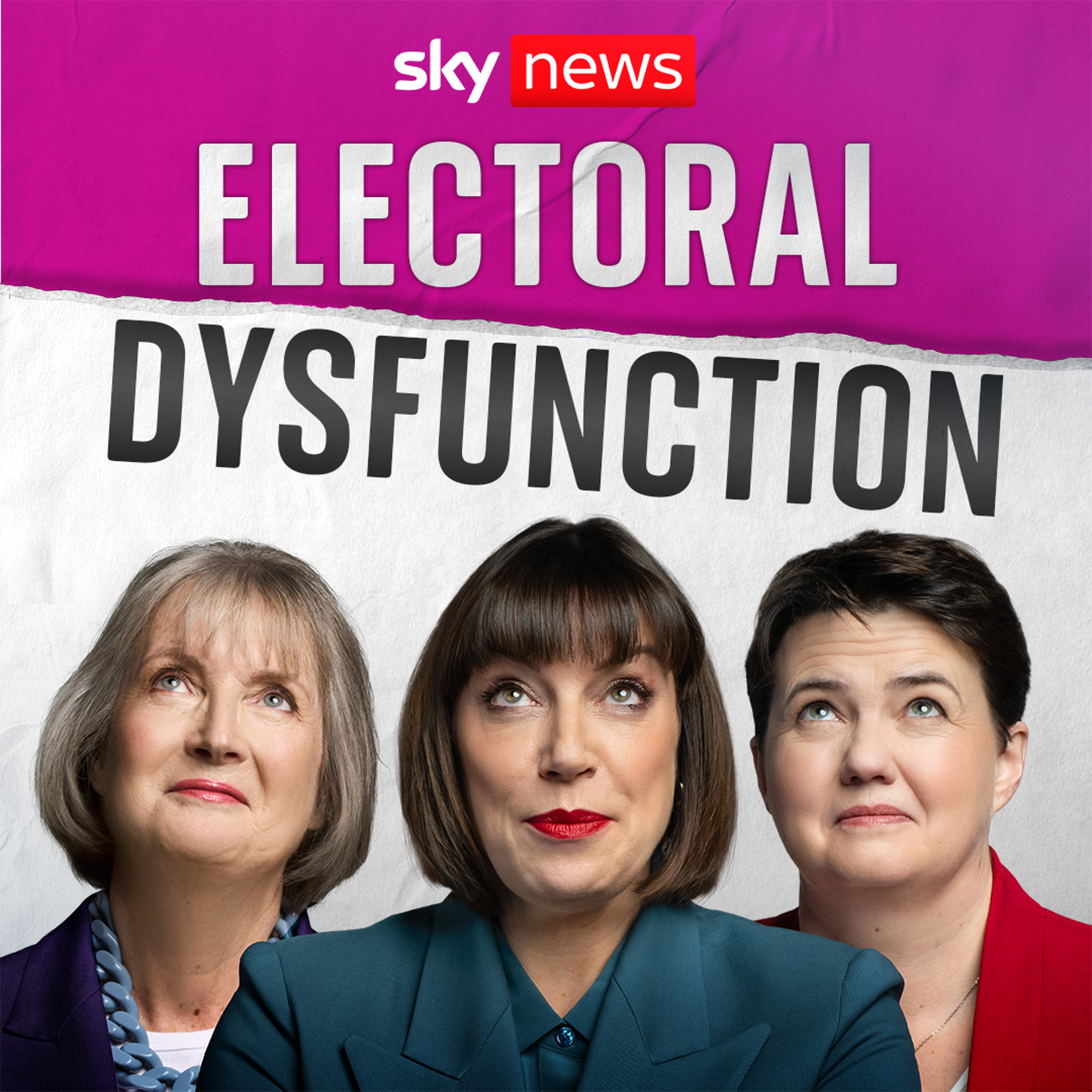
Ruth Davidson (former journalist and Conservative leader; broadcaster on Sky News). Harriet Harman (Labour MP; former journalist turned politician; former Secretary of State). Beth Rigby (journalist/broadcaster; Sky News political editor).
Key claims
Beth argues journalists chronicle real political crises, shouldn’t sensationalise, and that Starmer’s downfall was driven mainly by Labour Party disappointment, polling, election results, and loss of authority; the 24/7 news/social media environment speeds everything up. Harriet says an independent press is vital but warns of “bloodlust” and one-sidedness; she cites examples from her own time in politics and supports press regulation (Leveson) to protect privacy. Ruth adds that newspapers are less influential than before and that governments need comms discipline and “progress” to reduce scrutiny.
Notable examples
Murdoch’s influence in the 1990s; Tony Blair courting Murdoch in 1997; 2002 Estelle Morris resignation “thrill” among lobby journalists; journalists wearing “save Harriet Harman” badges; Leveson press regulation and Cameron’s dropped cross-party work; Starmer’s Number 10 plane routines and a “Chris” crisp-flavour anecdote (worcestershire sauce).
Written by AI. May contain mistakes.
Chapters
0:46
Setting the Stage for Q&A
Hosts discuss the format of the episode and invite questions from listeners.
“All that flummery which dates back to the hereditary principal days, that needs to be gone.”
1:47
Media's Role in Political Instability
Discussion on the media's impact on the political landscape and perceptions of failure.
“So I'd love to get your take on the role of the media in what feels like an increasingly unstable political system.”
2:53
Journalistic Responsibility in Reporting
Beth addresses criticisms of journalists as bloodthirsty and discusses their responsibility.
“It feels deeply serious when a government is beginning to implode.”
7:21
The Interplay Between Media and Politics
Exploration of historical and current dynamics between the media and political figures.
“Is it an oyster that changes sex several times in its lifetime?”
13:34
Press Regulation and Ethical Considerations
Discussion on the need for press regulation and the implications of media intrusion.
“their lives were turned upside down by the press.”
14:01
Press Regulation in Scotland
Discussion on the challenges of regulating the press in Scotland.
“And like you say, Harriet, there was cross-party working on it and it was all being set up to be this committee that was going to regulate for the press.”
16:49
The Burden of Political Scrutiny
Exploration of the pressures politicians face from media scrutiny and public perception.
“You know, it sounds silly sometimes to talk about Keir Starmer being given free suits or a free set of glasses or whatever.”
19:04
Media's Influence and Balance
Analysis of the media's role and influence over politics, including social media's impact.
“You've got to have a pattern for how you report it.”
21:02
Inside the Prime Minister's Plane
Description of the dynamics and logistics of traveling with the Prime Minister.
“They've come from a chat sparked by a picture of you and your team on the Prime Minister's plane, Beth.”
23:28
Starmer's Personality and Preferences
Light-hearted discussion about Keir Starmer's personality traits and preferences.
“They charge you to go on the plane and we kind of subsidise the trip, right?”
Show all 14 chapters
28:03
Discussion: Airplane Snacks and Political Titles
The hosts discuss airplane snacks in the context of political titles and reforms.
“But he is a pescatarian, so he'll get a nice meal on the plane.”
34:24
Question from Mersey: Kemi and the Conservatives
A listener's question sparks a discussion on Kemi Badenoch and the Conservative Party's strategy.
“Andy Burnham is likely to pull the Labour Party more towards the left.”
37:45
Navigating Political Ideologies in the Conservative Party
The hosts explore the challenges of navigating political ideologies within the Conservative Party.
“Labour versus reform at the next general election.”
42:00
Listener Engagement and Episode Teaser
The hosts discuss listener questions and tease the next episode for members.
“My old party director in Scotland, Mark McInnes, is now the chief executive of the Tory party and is running central office down there.”

Ask about this episode
Get the gist, explore an idea or ask about something said.
 Claude
On Electoral Dysfunction, what are the key points of this episode?
Searching your listeningTranscript
Automatic transcript. May contain errors.
0:02Harriet Harman: Sky News, the full story first.
0:09Harriet Harman: Hello Dysfunctioners, it's Ruth here with your final summer episode of The Pod before normal service resumes next week. And it is a bank holiday treat because you get me, Harriet and Beth Rigby on this one. We recorded it before we all went our separate ways for our summer holidays, which might feel like an age ago and you might be wanting another holiday yourselves. but I promise you that this episode is an absolute cracker because we're answering your questions and we're getting that bit of Beth that I know you've been missing.
0:41The criticisms sting a bit actually because I don't see it as a sport. I don't see it as a game.
0:49Ruth Davidson: All that flummery which dates back to the hereditary principal days, that needs to be gone.
0:57Harriet Harman: You feel hunted in your own house through your own phone. Like, it's horrific. And in saying all of that, I utterly, utterly believe it is necessary.
1:08Hello and welcome to Electoral Dysfunction with me, Beth Rigby. Me, Ruth Davidson. And me, Harriet Harman. And in this episode, it's over to you, our lovely dysfunctioners. We're giving you the microphone and answering some of your questions this week. And we have got lots of questions and lots to get into, and we haven't done it for a bit. So we hope you enjoy it.
1:32Harriet Harman: Now, if we don't get to your question this week, or if you have another question for us, do keep sending them in. The number to WhatsApp is 07934 2444, or you can always email electoral dysfunction at sky.uk.
1:45Ruth Davidson: Or if you're one of our subscribers, you can use the members forums so leave comments and questions or even chat to each other on that yeah okay should we get going i love q a's right i always get nervous at the q a's i always feel like i'm going to say something dumb oh you never say they do the q the questions really make our brains work harder don't they they really do okay should we kick off uh with something we've talked about a fair bit on this podcast but recently feels like a really important question about the relationship between politics and the media. So this is Andrew's question. Thank you for your question, Andrew.
2:21Ruth Davidson: Ruth, have you got it? Can you read it out for us? Let me read it out here.
2:24Harriet Harman: So I'd love to get your take on the role of the media in what feels like an increasingly unstable political system. Whenever a new prime minister takes office, the media often seems to move almost immediately into a cycle of criticism, scandal and speculation about failure. In light of Starmer's resignation, is it fair to say that what feels like a relentless focus on Westminster drama creates a self-fulfilling sense that governments are failing rather than encouraging scrutiny of policy and long-term outcomes. I'm not suggesting that Keir Starmer's government was beyond criticism or that everything was going well, but as an ordinary voter, it often feels as though political problems are magnified out of all proportion, creating a sense of crisis long before a government has had time to deliver or fail to deliver on its promises.
3:11Harriet Harman: that's quite that's very fair-minded Andrew um and I think we have to put that to you Beth you're you are one of these Machiavellian people with a microphone Machiavelli with a mic that's you and a set of high heels so um were you unfair did you jump in too early or was Keirst Armour just a bit shit it's a really good question from Andrew and it's it's something I've been thinking a lot about because there was quite a lot of chat certainly on social media around the downfall of Starmer and whether or not kind of journalists were treating it as some sort of blood sport as in was it just a game did they look like they were kind of feeding on it and also what had they done in the hunt you know had they been the ones that given chase and I have been thinking a lot about it and actually uh the media editor at the Guardian Michael Savage wrote a piece about this and interviewed me and Robert Peston of ITV about it so I've thought about it a lot and I have to say Andrew that the criticisms sting a bit actually because in all sincerity that is not certainly what I try to do it's not what I want to do I don't see it as a sport I I don't see it as a game.
4:31It feels deeply serious when a government is beginning to implode. And I sort of have a great sense of responsibility about covering that and reflecting that, but not sensationalising it and not making light of it. And also at the heart of it, and it gets forgotten sometimes. And I thought Ed Davey was really good in the Commons, actually, when he reminded everyone there are human beings in it. And a prime minister is still a father and a husband and a dad and a man, you know, just as the Cabinet are, and all the advisers and all the people that are, you know, potentially about to lose their jobs.
5:09So there's kind of people at the heart of it.
5:12Ruth Davidson: Mr Speaker, can I also recognise how difficult it was for the Prime Minister to make the statement he did on Monday? It's an important reminder, as we debate issues robustly in this House, that we are all human and it's something that everyone should remember. So in my experience, what I try and do is I try not to over speculate. I always try to report what I know and don't speculate on what I don't. I try and do that. But my job really is to find out what's going on and try to reflect that to audiences. and if we are reporting around political crises it's not because we're creating it it's because the political crises are happening um i do think that where it has got harder for governments is the environment in which they are operating because what has certainly changed from when i was starting out in journalism, is it even 30 years ago?
6:16My God. Yeah, 25 years ago to now, is that the environment in which politics and news is happening has completely changed. So it's 24 hours, seven days a week. There is endless social media, endless platforms. the pressure of that fast turnaround, constant news environment, I think has definitely sped things up. And I think things move at a much faster pace. And I think it's much more difficult to operate in. But at the heart of it, journalists are only reporting what is going on. And it is our job to reflect what's going on. And really, the downfall of Starmer wasn't created by the media, the downfall of Starmer was really created by the disappointment his parliamentary Labour Party felt in him, poor polling, bad election results, and a loss of authority.
7:18And it is my job as a reporter to chronicle that and reflect that in the reporting. I'm not saying we always get it right. and I always think about tone as well and I sometimes think because sometimes genuinely when you're outside number 10 and it's all quite fast moving and the cabinet ministers are coming out and it's very live it is quite exciting in that there's just adrenaline you're just full of adrenaline and I do sometimes reflect on did I get the tone right was I respectful because you don't want uh to appear like you're taking this stuff lightly because it is sort of really serious and it's a privilege to do it and it's a responsibility so that that's my genuine answer but do either of you feel differently do you think the media does contribute because you guys have been on the other side of it you know you're in all of this although we pod together we are on different sides i'm the journalist and you guys are the actual principles well i'm a bit
8:18Harriet Harman: like, what is it? Is it an oyster that changes sex several times in its lifetime? And I've been one, then the other, and then go back to the first one in a kind of sense. So I've got a foot in each camp. So why don't we go for the purity of Harriet Harman first, and then I can come in with my mixed messaging after.
8:37Ruth Davidson: Well, just starting with the principles, we'd all agree that to keep your politics clean and accountable and democratic, you've got to have a strong and independent press. I mean, that is fundamental to democracy and holding government to account. But the question is whether or not it's one-sided. And there's always been a strong interplay between politics and the media. And I remember, you know, back in the 90s, Murdoch held sway and it felt like it was almost impossible for a government to get elected because of the power of the Murdoch Press. And that was so much the case that Tony Blair, in order to try and win the election in 1997, actually went across the world to some South Sea island where Murdoch was having his big corporate conference in order to kind of pay suit to Murdoch, to try and get past the obstacle of getting into government of the massive Murdoch Press.
9:40Ruth Davidson: And then, of course, there's been other things that have happened, like the decline of the local press, which used to be such, you know, the local newspaper was such an important way of holding things to account locally. And that has been obviously hollowed out. Then there was the emergence of 24 News. I mean, I think it used to be quite relaxing in Downing Street when actually the news happened at nine o 'clock or in the Sunday newspapers. And now then it became 24-hour news, which absolutely accelerated and changed politics. And then, of course, social media. So you get your local media, but you also get Elon Musk and social media joining in.
10:21Ruth Davidson: But I do, I think, honestly, Beth, I always feel that you try and keep the balance. You try and do a professional job and you try and not have that bloodlust, which does, I think, affect some journalists. And I'll give you two examples of it. In 2002, I was celebrating my 20 years anniversary of being a journalist. a member of parliament. And there was loads of journalists there, really everybody from the lobby was there. And it was the time when people had pages. And suddenly a message came through that Estelle Morris was going to resign. And the kind of thrill and excitement and the bloodlust that was in the air.
11:03Ruth Davidson: I mean, everybody evacuated, all the political lobby journalists evacuated out of my party, but there was a kind of excitement and a glow on their faces. Estelle Morris was a good woman. She was an excellent Secretary of State for Education. She felt things had gone wrong for her, but there was no need for that fizz of glee. And I felt that was ugly. And in relation to me, when I was having one of my many periods of difficulties with the media, when I was a Secretary of State, somebody reported to me that they were all wearing badges in the lobby. All the journalists were wearing badges, ironic badges, saying, save Harriet Harman, you know, meaning I was for the chop.
11:51Ruth Davidson: And they were making a huge joke of it. And there was that bloodlust. But the difficulty is what you do about it. And I've been quite interested that one of the complaints that's been about the press is they do terrible invasion of personal privacy of ordinary people and make their lives a misery if they've been subjected to a crime or got involved in a road accident, or they're just an ordinary member of the public that something awful happens to. And then the press massively invade their privacy. And I'd be quite interested that Hugh Grant, who's the actor, but who was very involved in starting Hacked Off, which wanted press regulation, has got a good close relationship with Andy Burnham.
12:29Ruth Davidson: And it'll be interesting to see whether or not the idea of regulation of the press, whether by statute or by royal charter, is raised again with Andy Burnham as prime minister, because that is about protecting individuals whose lives are turned upside down, ordinary private individuals whose lives are turned upside down by the media intrusion. That's Leveson too, isn't it? Lord Leveson did a report into press intrusion, basically, and better regulation.
13:01Harriet Harman: After the porn hacking scandal and all the rest of it. Yes, exactly. Better regulation of the press. And the conclusions of that have not been properly, fully implemented. And, you know, there's been lots of talk that the reason it hasn't been fully implemented is because successive governments haven't actually wanted to take on the press because of all the things that you've just said, Harriet, about the importance of media support for governments.
13:24Ruth Davidson: So Cameron was promised that he would do it. He promised the McCann family, whose lives were absolutely turned upside down after the dreadful abduction of their daughter, their lives were turned upside down by the press. And David Cameron promised that he would do some press regulation. And we did work on it together on a cross-party basis. But then he dropped it. I just think he felt the pressure, the jeopardy of doing something the press didn't want him to do was too much. and therefore it's been in abeyance for quite a long time. But now it's raised as an issue again.
13:58Harriet Harman: Well, as a Postscript, we had a bit of a constitutional crisis over the Leveson Report because there was all this stuff that was happening down in Westminster. And like you say, Harriet, there was cross-party working on it and it was all being set up to be this committee that was going to regulate for the press. And obviously newspapers operate all across the United Kingdom. And then somebody went, but wait a minute, the whole setup of the Scotland Act is that that which is not specifically reserved is devolved and press regulation was not in the original Scotland Act as something that was reserved because nobody thought that it was ever really going to be a topic or an issue so suddenly we had to do it ourselves and we had to have all these cross-party meetings for all the leaders in Scotland it was in Alex Salmond's time so it's quite a while ago now and we all had to kind of sit in a room and decide what we were going to do despite the fact that you know it's one of those ones that crosses borders you can't have a separate Scotland room, even though there's Scotland editions of all the newspapers.
14:53Harriet Harman: And it was mostly to do with the, mostly to do with the press rather than the broadcast media. But, but so we're all sitting around going, bloody hell, what are we going to do about this? And as it happened, my chief spinner at the time had been the editor of the Scotsman newspaper and went on to be the head of the organisation of editors in Scotland. So I had somebody in my corner that could tell me all about it. But it's kind of interesting. Like I say, I have been both a journalist and a politician. And all of my time, I've never felt like a proper politician. I've always, always felt like I'm a journalist that then went and did some politics.
15:32Harriet Harman: And even when I was a politician and even when stuff went wrong and I was being hunted and it's horrible, like I cannot explain to people how horrible it is when you're being chased across a lobby by like people you're having stuff thrust under your nose when you can't get your car without people shouting questions at you when you know the worst thing you can do is have the body language that says get away but everything and every fiber of your being is screaming back off because you don't have the line or you don't know what it is or you haven't seen the report you don't want to get to you know you don't want to say anything that's not true that you'd have to backtrack on um or somebody has done something and so much of your time as a leader is answering for other people's fuckwittery, if I'm allowed to say that point, I'm not sure.
16:13Harriet Harman: It's like a counsellor that's done something daft or an MSP that said something stupid or, you know, if all you had to do was your own job, it'd be so easy, but you're always answering for other people. And it is horrible. And then the social media, the pylons that happen, like you feel hunted in your own house through your own phone. Like it's horrific. And in saying all of that, I utterly, utterly, utterly believe it is necessary, utterly believe it is necessary, because you cannot have spaces wherein politicians can hide things that would compromise them. And it matters that people can see what's going on.
16:49Harriet Harman: You know, it sounds silly sometimes to talk about Keir Starmer being given free suits or a free set of glasses or whatever. Like it's a piddling little thing. But if the person that's giving you free stuff gets access to number 10, if they've got access to areas that even other politicians don't have, never mind other members of the public don't have, that matters. If you're taking the free stuff at the exact same time, despite your£100 ,000 plus salary, at the exact same time you're saying that pensioners on£15 ,000 a year are getting their winter heating cut, that matters. So I don't think it's a conspiracy theory.
17:31Harriet Harman: And I also think, in terms of the question, I also think Like, newspapers have never been less influential than they are now. Like, the worries that I used to have, so I'm talking, so when did I take over? 2011, so 15 years ago. The worries that I used to have waiting for a particular columnist to come out in a particular newspaper that was read by a lot of Conservative voters that I would worry about each week and how did I do in that particular column at the start, even by the end. And I was only leader for seven, eight years, you know. Even by the end, I was much less worried about it, much less worried about it because it just didn't carry the weight that it had.
18:09Harriet Harman: And certainly not now. And the other thing as well is, if we're talking particularly about Keir Starmer's downfall, I don't think, as somebody observing him from the other side, that he got a particularly hard time when he came into office. He certainly got through an election campaign with almost no scrutiny whatsoever to me as a Tory. I thought he got, you know, everything was accepted, even things like the talking about the 22 billion pound black hole left by the Tories, when you had people like actual organizations whose job it is to audit that saying that 22 billion pounds is not the number, it was still repeated verbatim by all the news agencies.
18:46Harriet Harman: And it didn't matter what the Tories said to say, no, that's not happening. You have a responsibility. Feed the beast. You get your lines right. If you have a drumbeat, if you've got a comms department that works, if you're making announcements, if you've got forward momentum. And if you're feeding the beast every single day, you will have a better time than when you're not talking to the press. You've got to have a plan. You've got to have a pattern for how you report it. You've got to have key people that know their jobs that are the people you go to. You've got to have discipline within your party to cut out the other noise.
19:16Harriet Harman: And you've got to have progress. Progress wipes everything else out. Forward momentum, the press has nowhere else to go. Lose that, that's when you struggle.
19:28Ruth Davidson: But I think, Beth, you're a broadcaster. And as such, you're in a regulated environment. You have to have a sense of balance. And that's by statute. And it's regulated by Ofcom. Although there's been a lot of criticisms that GB News has not been properly regulated, but you're in a regulated environment. Social media, as Ruth says, is the new frontier that is massively important in politics. And the regulation of that is still very much contested. Progress made in terms of tackling misogyny and incitement to terrorism and child porn through social media, but the question of political balance, nowhere.
20:07Ruth Davidson: But the news media, the newspapers are still influential in that they're part of the lobby. They have their own online delivery. So it's not that people buy hard copies anymore, but they still are influential. And it's that balance between being relentlessly scrutinising, which is absolutely necessary. Nobody wants MPs and government ministers to be standing on a pedestal and just respected all the time and not scrutinised. But there does, I think, have to somewhere be a balance. And that really lies with Ofcom. And we'll see whether or not in terms of protecting individuals who are not in the public eye from massive invasions of privacy by the media, we'll have to see whether or not Andy Burnham does make a move on that in the direction of Hacked Off.
20:58Harriet Harman: Well, following on from that, we've had two questions from our members forum over on Sky News Insider, also loosely about the role of the media. They've come from a chat sparked by a picture of you and your team on the Prime Minister's plane, Beth. So first we have a question from Susie who says, that plane doesn't seem very full. How many journalists and broadcasters from the UK actually go to these events? Yeah, so Susie, that is a good question. So these planes, this is a special government plane and they do get full in that there's a few things going on. so the journalists we all sit at the back um in economy sometimes if it's a long flight i get to sit in business because not because i'm spoiled although i am quite spoiled but often we you know we hit the ground and we start broadcasting pretty immediately and they do need a fresh beth uh to do pm rounds and not be too tired and grumpy and if you speak to my team they will always tell you that i'm never tired and grumpy on trips i'm sure you're a delight beth I'm an absolute dream, absolute dream on a trip.
22:03The trips are brutal, actually, because you, I mean, I'm not complaining. It's a privilege to do it. But, you know, just the G7, you had a 6am start, 5am start, 6am start, and you're finishing at 10pm that night. So they're just full on. But they're, I mean, they're fascinating to go on. But on the plane. So what you have is the prime minister goes out and then he takes his team and they all sit. So most of the plane is set up in business class so that people can work and sleep, etc. And then the journalists go at the back. The plane is typically pretty full, but it gets fuller on the way back because what happens is all of the outriders.
22:45So all of the people from number 10 that go to prep the trip and they sort out the locations and they do the logistics and they get it all ready for when the prime minister and his team land. They all then come back on the plane. So actually, the plane is typically full. And in terms of how many journalists and broadcasters go, basically, the number 10 team will put out an op note, it's called an operational note to the lobby, which are the journalists that work in Westminster and their lobby accredited journalists. And typically each newspaper will send a correspondent or their political editor if it's big enough trip.
23:24And then the broadcasters will typically send a reporter, a cameraman and a producer. How does the money work? They charge you to go on the plane and we kind of subsidise the trip, right? So actually the broadcasters help subsidise the plane and the trip and that's kind of the deal.
23:45Ruth Davidson: And it's not a government plane as in owned by the government or RAF, is it? It's chartered, isn't it? So, Harriet, this is really interesting because it is a government plane and it is typically an RAF plane. And then actually the personnel on the plane are actually RAF staff. So it is an RAF plane. Do you leave from Heathrow or do you leave from like Bryce Norton or something? So you go to a private place for private chartered flights. but actually you are right Harriet occasionally if the prime minister takes a business delegation they have chartered a flight so when we went to China we actually flew on a BA flight because he took a big business delegation that plane was really empty because the business leaders obviously all went in the business class seats and then the lobby were kind of in the back to be honest I was in a business class seat I'm not gonna I'm not gonna sort of pretend I wasn't because someone just call me out on that.
24:41But most of the lobby and actually some of the people going that worked in the public sector, so bosses of charities, etc. They were an economy, but they all had like eight seats. You know, it was pretty empty. So that's, that is how it works. But there is a bigger plane. There is a bigger plane that sometimes is sometimes used, but I think sometimes the royals use that plane as well. Or sometimes it's been used for RAF purposes. So that is how it works.
25:09Harriet Harman: So there's a follow-up question that was in this forum chat as well, which came from Sean. And it says, he wanted to know whether Starmer had a go-to meal on the plane. And he says it seems like he seems like a plain cheese sandwich sort of a man. And it reminded me of something I got into trouble for. So years and years ago, about six, seven years ago, I used to do a radio show on a Sunday night and interviewed some people. And Jess Phillips, sometime of this parish uh doing some of the election dysfunctions for the insider group on a tuesday um i was interviewing her and we were talking it was just after keir starmer got elected and i said you know he just strikes me as the sort of man that if you sent him if you're in a bar and you sent him to get some snacks he'd come back with ready salted crisps which to me is this like massive insult and she was like but i like ready salted but he does he does strike me in that sort John Major tucks his shirt into his underpants, likes peas kind of a way, as just the most straight, boring, least adventurous palette of a man.
26:08I've actually got some breaking news for you. So when we went to the trip to the G7, a couple of YouTubers came in the lobby. So they were invited by Number 10 and they did different types of content, I would say, around the Prime Minister. And one of them asked Starmer what his favourite flavour of Chris was. So I know the answer. I want you both to guess.
26:32Harriet Harman: I mean, I'm guessing ready salted. Mm-hmm. Harriet? Prawn cocktail? You're closer. This is so wild. This has blown my mind.
26:41Ruth Davidson: What's the answer? Put us out of our misery. Worcestershire sauce. Oh, wow. That's old school. You don't hear that much now. I think, honestly, Sean is not going to have to wait long for the answer to his question because we know that Andy Burnham is going to be holding the camera and doing a little video of himself eating on a plane. So we'll know what sort of kimchi he has. I think Andy Burnham's my favourite flavour. Yeah, crisps and gravy flavour. It'll be kimchi. No, not this Man of the People. Something for gut health. He doesn't even know what it is. He doesn't know what kimchi is. No. Don't you start be making him a new Labour lovey.
27:22Don't you do that.
27:23Harriet Harman: Starmer might know his way around a hummus or not, but I don't think that Burnham goes for kimchi when he could have... Right, okay. But look, I've got to go back to the core question here. Now, Sean, I don't... I'm going to say I don't know that answer. What I can tell you, because I love this detail, he does have a mug which he puts his tea in on the plane and it says number 10 on it. And I thought I'd love one of those mugs. So he's got a special number 10 mug and also... Oh, I hope he gets to keep it. Yeah, and he gets to sit right at the front. He's like, he is like the star of the show. So he gets served first.
28:04But he is a pescatarian, so he'll get a nice meal on the plane. But it's awful if Andy's then going to be holding his mug as well as everything else. I'll tell you something else that's really nice at the front of the plane that they get. But I never go down because I haven't got... So right at the front of the plane, they have a kind of bit and they'll have a lovely snack. They have a snack section and you can go and get like crisps and snack bars and a little packet of olives and some of those nice, you know, some nuts and things. But they're right at the front of the plane. So if occasionally we go past the front on the way down, I might nick something or just borrow it, just eat, just take one or two things.
28:44But what you can't really, can you imagine me kind of going up the plane and going, hi, Prime Minister, I'm just taking your Worcestershire sauce, Chris, so you don't mind. I mean, you can't do it.
28:52Harriet Harman: So I've got this kind of view of you like being frisked on the way off the plane with just like those miniature booze bottles clinking in your pocket. It's kind of you've been like robbing them. No, actually, I have a... A bit of Bombay Sapphire having a clink. My cardinal trip rule is you do not drink anything on the way out because you can't. But you do on the way back. Is that right? What happens on tour stays on tour on the way back. That's what I'm saying. So talking about mugs, you say you want a number 10 mug. I think she'll get you one of the mugs that you can buy in the gift shop from the House of Lords.
29:21Harriet Harman: because they've got quite cute ones that say your lordship and your ladyship on them. So we might get you one for your ladyship, Beth. We could get you one like that. I'm not even a lady. It's you two that get that. Oh, don't bother to invest in one of those mugs
29:35Ruth Davidson: because Andy Burnham's going to do lords reform. And I hope one of the reforms he does is take away everybody's titles and make people to be properly senator, not lords and ladies. I mean, all that flummery, which dates back to the hereditary principal days, That needs to be gone. Don't buy the Lord or Lady Mark.
29:54Harriet Harman: I will bet you£100 to the charity of your choice, Harriet Harman, that Andy Burnham will go nowhere near substantial Lord's reform at his time as Prime Minister because it takes up too much time and the public don't care enough about it. He might change names, but there is no way that he's substantially changing the second chamber because it is a vortex of a black hole that things go down. And I support Lord's reform. I would have it as a democratic chamber. He will go nowhere near it. Before you two start getting all heavy on our crisp discussion, it's like, well, stop it. We're just talking about cheese sandwiches.
30:27Why do you have to make it so heavy? No, I'm telling you what I'm going to find out. I want you to both guess Andy Burnham's favourite crisp. And when I next see him, I promise I will find out. I'm going to ask him. I'm going to ask him. So what do you think it is?
30:46Harriet Harman: I'm trying to think of something so on brand. Do you know what I think? This is very specific. but I think he probably likes Smith's Square crisps with a little salt packet that you pour on yourself because it's like so on brand for his exact sort of age and stage. They're owned by Walkers now because they bought Smith's out, but you used to get them. Right. What are you going for, Harriet?
31:08Ruth Davidson: Something that I tried the other day, which is they're not miso crisps, they're umami crisps. They're very strong. and they're fluorescent green. I think that's probably what he likes. Harriet, I really think that you are still in the era of Andy Burnham 1.0. I haven't got with the North West vibe, you think. Not Andy Burnham 2.0. Do you know what I mean? I think she's... I've never understood. I think, Harriet, you're sort of... He's still in the cabinet with James Purnell in your mind. He's still that kid. But he's moved on, Harriet. So I am 47 years old
31:45Harriet Harman: and I've spent my entire 47 years never understanding the same way as the other 65 million people that don't live in London have never understood all these jokes that media types in London make about the difference between normal London and North London. And Harriet, you've just explained it to me in one thing. I take it you're from North London, right? No, I'm from North London.
32:06Ruth Davidson: Actually, I'm from South London, but perhaps I'm a spiritual North Londoner in terms of my crisp choice. Also, Harriet, the bit of South London you live in is actually a really fancy bit of North London. It's like North London on steroids, but in South London, I think. Well, actually, the heart of coolness now is Peckham, my former constituency, now represented by Rising Star, Miata Fambula. Yes, Miata.
32:33Harriet Harman: And also features very heavily in Dame Muriel Sparks, The Ballad of Peckham Rye, which is a great book, and I will direct you to Scottish literature at every point. And the thing about North London, because I can say this because I actually literally live in the epicentre of North London, is that the thing about North London is a lot of Labour politicians live in North London and there's kind of a North London, I think there's a dinner set that I'm not included in, where all the North London sort of intelligentsia, isn't it? Is it like a salon? Yeah. I think they just go and have dinner parties and sort of straight their chins and have big thoughts, wring their hands.
33:11But I'm not really, although I live in North London, I feel I am not of North London.
33:17Ruth Davidson: But it's going to be the number 10 of the North now, and everybody's going to be getting together in the Northwest and a good thing too. And also, I mean, given that my mother was from Oral, have I mentioned that, and in the Makefield constituency, and I love Northern Seoul, I have told number 10 North that although I was born in the South and raised in the South, I am technically a Northerner. So I'm just trying, you know, trying. People are really starting to do that. There's a real thing of people discovering relatives, long lost relatives who used to live in Manchester, but the really premium ones are the ones where they can discover a long lost relative who actually used to live in Makerfield.
33:58Ruth Davidson: Yeah, like me. And I've actually heard Labour MPs actually saying that. I mean, it was my mother though. She's not a long lost relative.
34:15Okay, we are back and the next question is for you, Ruth, and it's from Mersey in Edinburgh, who says, I'm going to read it, stand by. Andy Burnham is likely to pull the Labour Party more towards the left. With this shift left and with reform on the right, do you think this opens up more of the centre ground for Kemi and the Conservatives? If you were advising Kemi, what would you say her optimal next move should be? And how do you think the parliamentary Conservative Party would react?
34:48Harriet Harman: Well, I mean, I'm very glad that you're asking me this, Mersey, because this allows me to do a free advert. Did you write that question and pretend your name's Mersey? Did you? I didn't. But I literally could have. I literally could have because, as you know, I was involved in helping set up an organisation under the auspices of a whole bunch of Conservatives, but not of the Conservative Party, called Prosper UK, which is exactly trying to talk to the about 7 million people that are kind of centre or centre right and self-identify as that, but that feel that no party talks for them. I think that the Conservative Party only wins when we're a broad church.
35:29Harriet Harman: And I completely get, 100 % get, when she took over a couple of years ago and reform was looking like it was going to rise and rise and rise, that she wanted to sort of dig a line in the stand and say no further here in terms of stealing Conservatives and all the rest of it, get all of that. But if you're going to speak to the whole country, you can't just speak to the right, you have to speak and pivot. And I think now as we see a plateau in terms of some of the by-election results for reform, and we've talked about this on a previous pod, as we see Farage getting himself into trouble and taking himself out of the media because he doesn't want to be questioned about certain things.
36:04Harriet Harman: She has this amazing opportunity to pivot. And to be fair to Kemi, she's got a lot further away from some of the identity politics she focused on when she started and moved into the economic space. And we saw at the Aberdeen South by-election talking about energy reform and what we're going to do. You see her talking about tax, welfare reform. So she is pivoting into spaces on economics. She's doing a lot more outreach work with business, doing a lot more city dinners. She didn't really do much of that at all in the first six to nine months. So my clear advice to her, where I presume to advise her, would be more of that, stick to the economics.
36:40Harriet Harman: You can build a bigger coalition sticking to the economics. And also, you know, we still need people to forgive us for 14 years. They kicked us out. They kicked us out hard. They did it on purpose. It is hard when you've just left office to rebuild that sort of trust. Talking about what works economically is one of the ways in which you can do that. I mean, Harriet, one thing that has struck me when, because you and Ruth have been talking a lot about whether or not reform have peaked and will fall backwards. I mean, if we'd been talking about Baden-Ock three, four months ago, we'd have been like, they're just going to, the Conservatives will just be irrelevant in the next election.
37:24do you think we're moving to a place where they will be in real contention again i.e. the big kind of party to beat we've assumed it will be a kind of Labour versus reform election effectively do you think that there is a world in which that changes over the next two to three years?
37:44Ruth Davidson: Well I did think you know when reform was really on the up and in the ascendancy that it would be Labour versus reform at the next general election. But I now think that there's a very real possibility that it will be Labour versus Tories at the next election, given that we all know that there's much more fragmentation anyway. But I think that what Ruth has said about the Tories in the centre ground and the Tories focusing on the economy is absolutely right. And also that the public are not yet ready to back the Tories again. So I think the right of the spectrum is likely to remain split for a while, but I think she can't and wouldn't want to and shouldn't want to out-reform reform.
38:29Ruth Davidson: So she's got to do the detailed, dedicated work that actually Ruth has outlined. So I definitely think she should be listening to the advice that Ruth is generously proffering her, And that would be better for the Tory party, better for the country as well. We definitely want the opposition to be the Tory party, not reform. And I think that's increasingly likely to be the case. But, Ruth, I mean, is she listening? I mean, you really are on this kind of one nation wing of the party. Yeah, I'm dripping wet. Yes, I am. Happily dripping, yes. Much more centre-right than...
39:08Harriet Harman: I think the centre part of centre-right is as important as the right part of centre-right. I've always been pretty upfront about that. Cemi doesn't know, does she? No, she's naturally far more to the right than me. But I mean, I think it is also true that, you know, I don't think that my part of the party deserves to have the ascendancy in perpetuity. And we had it for quite a long time in Cameron. But Cameron was bright enough, despite being far more central than, say, his predecessors in terms of Michael Howard or in terms of Ian Duncan Smith or even William Hague to understand that you needed some of these voices of the right in the tent and that you could only speak to the whole country if you had that represented.
39:52Harriet Harman: And you could only govern the whole party. And as we are seeing from Keir, actually governing your parliamentary party is important to getting stuff done for the country. So he created important roles for people like Ian Duncan Smith and put their talents to good use in areas and used them. and he had space for them. And I think that the difficulty that you have, particularly when you very quickly leave office, and when you're a rump of a party, is that it's an ideologically safe zone in the Conservative Party to just go for people of the right. And one of the things that certainly in my lifetime has been true is that the party membership, who elects the leaders and who you speak to and all the rest of it.
40:37Harriet Harman: When we can't win, it prefers ideological purity. So it will go for people that are very much of the right. When you're in the running to become the government, and I'd say this more for our party than the Labour Party, we want power more than purity. We want to be the government. We want to do things. Quite often you get the sense from Labour that not that they're happy in opposition, but they really care about the ideological purity more than they care about the power. And, you know, I would say the Corbyn leadership was one of the examples of that. So I think that there will be siren voices trying to drag Kemi to the right and into a safe space for her ideologically.
41:21Harriet Harman: I think that she has to recognise that if she wants to get us back on the pitch, and even though we had a resounding thumping at the ballot box in 2024 before she became leader, the mountain we've got to climb to get back to being government is higher than most other leaders have faced. She has to speak to the whole sort of spectrum and she needs to involve the whole spectrum of the political party in that. All right, well, look, we're going to see about whether or not Kemi's going to phone up Ruth and give her an advisory role. That'll be fun. Well, I mean, I'm not on her speed dial. However, any time I do want to just moan about stuff or make suggestions or put things in.
42:01Harriet Harman: My old party director in Scotland, Mark McInnes, is now the chief executive of the Tory party and is running central office down there. So he is the person that I moan at. And I'm fairly sure he roundly ignores me and just gives me the WhatsApp thumbs up emoji to be like, yeah, yeah, yeah, go away, Ruth. But I feel like I've vented. So I feel like I've been heard. Yeah, okay. It's very important. It's very important to feel heard. and we hope that you have felt heard in this Q &A to our beloved listeners. Oh, good link, Beth. You're a broadcasting professional. Look at you. But look, that's all we've got time for today.
42:42Harriet Harman: Well, thanks for your questions. They were great. We're going to be back on Tuesday. That episode is for our members only. You'll be able to hear that by subscribing to Sky News Insider and the details are in the episode description. Anyway, the burner phone is still in action, so do please send us all your thoughts and questions to 07934 200 444 and you can email us at electrodysfunction at sky.uk goodbye goodbye goodbye
43:18Ruth Davidson: we all have routines i'm jabron and with diabetes mine was finger sticks sometimes i skip them
43:25Harriet Harman: because it hurt. The Freestyle Libre 3CGM changed that. It gives me glucose insights without finger sticks. Learn more at freestyllibre.us. Finger sticks are required if your glucose alarms and readings do not match symptoms or when you see check blood glucose symbol for the first 12 hours. The views expressed should not be used for medical diagnosis or treatment as a substitute for professional medical advice. Individual circumstances may vary. For prescription only. Safety info found at freestyllibre.us. Hiring fast is one thing. Hiring fast and staying compliant across different countries is where things get tricky, and it's exactly the problem Pebble solves.
43:58Harriet Harman: If you've ever tried to do it on your own, you know. The paperwork, the approvals, the regulatory blind spots. It can take months just to get someone started. Pebble makes global hiring simple. Through embedded compliance and AI-driven workflows, Pebble takes the delays and guesswork out of going global. So founders and HR leaders can move fast without adding risk. Hire in over 185 countries in minutes, not months. Contracts, payroll, benefits, all in one place, integrated with the tools your team already uses. Pebble starts at$3.99 per month per employee. And right now, there's a limited time offer just for podcast listeners that makes it even easier to get started.
44:41Harriet Harman: Go to highpebble.ai before it's gone. That's highpebl.ai. Terms and conditions apply.
From the publisher
Do lobby journalists bear some responsibility for the collapse of the Starmer Government – or was it down to poor polling and a loss of authority?
Beth Rigby, Ruth Davidson and Harriet Harman discuss whether the chaos around Keir Starmer turned into “a game” for the media - and unpack what it’s like to cover a Prime Minister’s last days in office.
Plus – the panel answer more of your questions, including what Kemi Badenoch can do to rebuild the Tory party’s electoral chances.
This episode was recorded in June.
You can read Michael Savage’s piece in The Guardian here.
To listen without ads, get new episodes a week early, exclusive bonus episodes, and much more, become a Sky News Insider. Find out more and subscribe at https://skynews.com/electoraldysfunction
Got a question for the burner phone? WhatsApp 07934 200 444 or email [email protected].
Sky News Insider requires a paid subscription and is available to UK listeners aged 18 and over.
More from Electoral Dysfunction
All episodesWe use cookies.They keep VO running smoothly and help us improve it. Privacy policy