
 Ask ChatGPT

- Podcasts
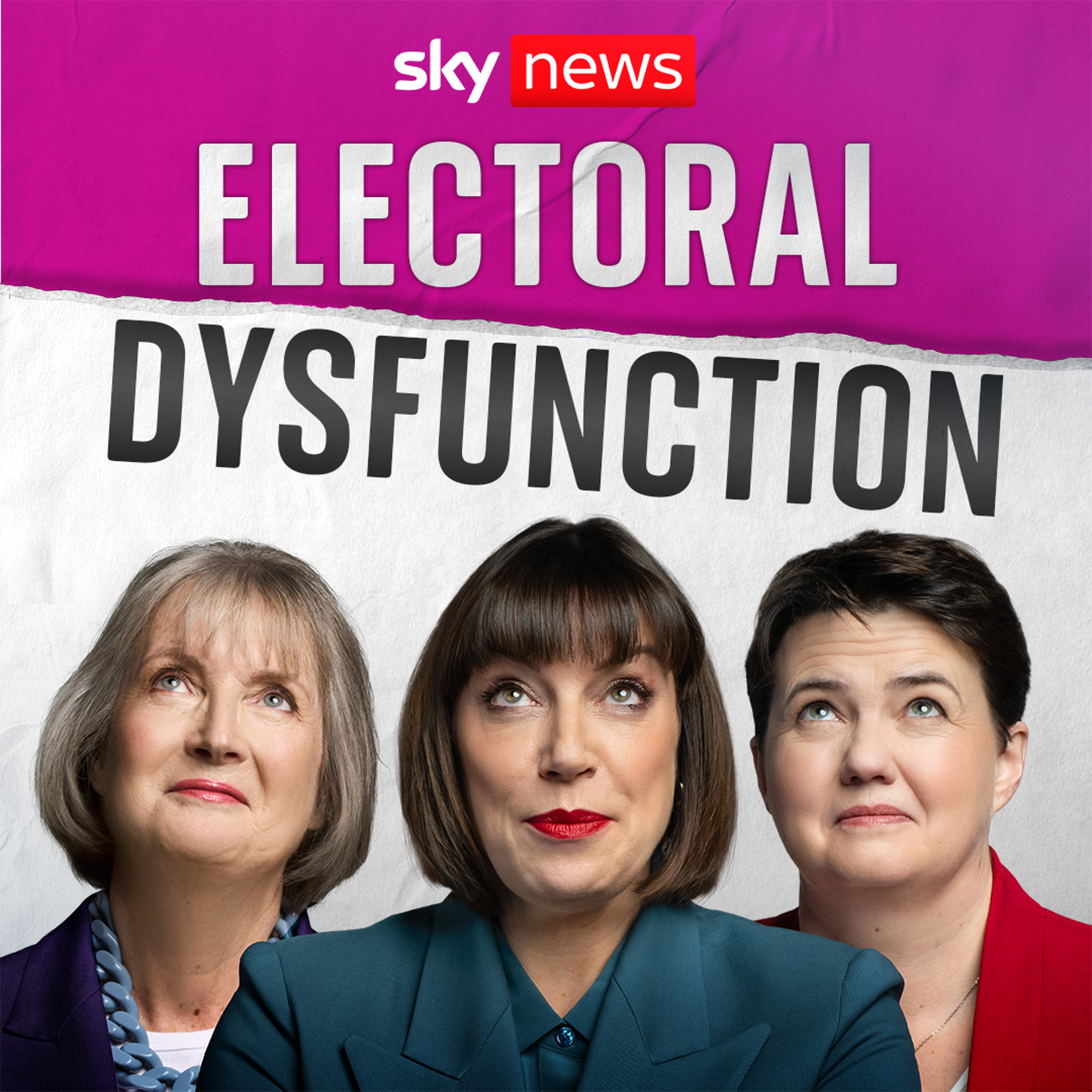
- Electoral Dysfunction
- Nothing left to tax – are painful cuts on the way?
Electoral Dysfunction30 Oct 2026 · 47m · 18 chapters
Nothing left to tax – are painful cuts on the way?
In short
Analysis of the UK Labour government’s budget and what it signals for upcoming “painful cuts,” especially around welfare reform, defence spending, and public spending pressures. Guests discuss the £100 council-tax-linked energy support, modest tax changes, rising debt interest, weaker growth forecasts, inflation concerns, and the “kicking the can down the road” approach to welfare and defence funding. They argue welfare savings will likely be politically difficult and may involve tightening eligibility for PIP and changing support for NEETs, with reforms due after reviews in November.
Guests
Beth Rigby and Harriet Harman (hosts). Gillian Keegan, former education secretary and Conservative MP (lost her seat in 2024). Darren Jones, former chief secretary to the Treasury and chief secretary to the prime minister under Keir Starmer.
Key claims/examples
Debt interest up £14bn; growth forecast ~1%; inflation above 2% target; 98 measures with ~£7.6bn tax giveaways funded via banks/savers/property. £100 payment to 20m council-tax homes; website crash. Defence target 3% by 2030 implies ~£10bn/year extra. Manchester cited as proof transport + FDI can drive growth. Keegan says welfare criteria tightening is needed; Harman calls Labour’s “labour way” incoherent given youth-employment barriers. Keegan criticizes Kemi Badenoch’s response for lacking “tests” and solutions.
Written by AI. May contain mistakes.
Chapters
0:46
Budget Expectations and Political Context
Discussion about the current political climate and expectations for the budget.
“And our members will know that we are ruthless this week in many ways.”
1:38
Budget Day Reflections
Reflections on the significance of budget day and its implications.
“Well, this is the stability that was offered, right?”
3:08
Welfare Review Insights
Insights into the reviews of welfare spending and implications for future policies.
“And are you looking forward to the cutting pickle prices thanks to the Chancellor?”
4:09
Impact of Economic Decisions
Analyzing the impact of economic decisions on various government sectors and budgets.
“and chutneys in there and you get a very red and gold label, like as if it's fancy pickles.”
7:38
Welfare Cuts and Public Perception
Discussion on the challenge of welfare cuts and public sentiment towards government spending.
“So you can see how much that debt pile is eating in to government.”
12:38
The Politics of Welfare Reform
Exploration of the political dimensions surrounding welfare reforms and budget cuts.
“said in the budget do it the Labour way they have to take the party with them.”
14:00
Debating Welfare Cuts and Public Sentiment
Explore the complexities of welfare cuts and public opinion on unemployment.
“And every time you ask them about having to cut the welfare bill or find savings in the welfare bill, they will say what you said, Harriet, which is it's about investing in young people and it's about training.”
16:50
Challenging Government Budget Decisions
Discuss the challenges Labour faces with budget cuts and public spending.
“Yeah, and I think it reminds me of New Labour's rights and responsibilities agenda.”
19:20
Regional Growth and Decentralization
Analyze how decentralization impacts regional growth and government funding.
“If you hold out the prospect of them even keeping some of the taxes that have been generated in their area, that's money which goes to the regions away from the centre.”
22:00
Reflections on Budget Impact and Strategy
Reflect on the implications of recent budgets on economic strategy and public perception.
“I didn't think with Healy that he had an economic strategy.”
Show all 18 chapters
24:20
John Healy's Public Image and Political Style
Examine John Healy's political style and his presence in the government.
“Did you work with him in the Treasury with Gordon Brown?”
28:00
Analyzing Kemi Badenoch's Performance
Discussion on Kemi Badenoch's response to the budget and leadership challenges.
“downs a pint of lager, puts the thing on his head.”
29:42
Critique of Political Strategy
Exploration of Kemi Badenoch's missed opportunities and the role of political processes.
“You've been leader of the opposition, having to respond to the budget.”
31:34
Expectations for Future Elections
Discussion on the implications of a potential early election and current political landscape.
“And I think she's just had a bald critique without any convincing solutions or any explanation as to why the Conservatives left the situation in such a bad place.”
35:14
Budget Insights from Darren Jones
Darren Jones shares insights on the recent budget and its implications.
“It's really good to have you on because you know a lot about a lot.”
37:10
Assessing Future Spending Reviews
Discussion on the implications of the latest budget for future spending decisions.
“I mean, this was a budget that was designed to try to help people with the cost of living and businesses who need it the most.”
42:00
Budget Evaluations and Political Strategies
The hosts discuss the implications of the recent budget and political strategies for the future.
“Because you said last week, this budget must be the last budget in which the question on how we reach spending of 3.5 % on GDP on defences left unanswered.”
45:40
Reflections on Leadership and Popularity
The conversation shifts to the performance of Andy Burnham compared to Keir Starmer.
“doing a better job as PM than Keir Starmer.”

Ask about this episode
Get the gist, explore an idea or ask about something said.
 Claude
On Electoral Dysfunction, what are the key points of this episode?
Searching your listeningTranscript
Automatic transcript. May contain errors.
0:02Sky News, the full story first.
0:12It's going to be a really tough year, isn't it, for Labour next year for this government? Andy Burnham's kind of aura of popularity is making a lot of things possible that weren't possible under Keir Starmer.
0:31Something's going wrong when you're spending so much on that budget and it's jumped massively in a short period of time. Hello and welcome to Electoral Dysfunction with me, Beth Rigby. And me, Harriet Harman. And our members will know that we are ruthless this week in many ways. We have no Ruth Davidson. We're going to give you some ruthless analysis of this budget as well. But we haven't got Ruth, but we have got a special treat because we are joined by Gillian Keegan, friend of the pod, former education secretary and all round political legend. So it's lovely, Gillian, to have you. Welcome to the show.
1:14Thank you. It's wonderful to be here. And I think you were on in 2024 at Christmastime, weren't you? Yeah, not long after I lost my seat at the election and myself and Penny came on. You and Penny Morden. And we had a really good conversation, didn't we, about the downfall of a government. But that feels like a lifetime ago, doesn't it? Doesn't politics move so quickly. It really does. I mean, we've been through two more prime ministers since then. Well, this is the stability that was offered, right? Wow. I mean, it has been, talking about Christmas episodes, it has been a kind of political Christmas week because we've had budget day.
1:49For most people that are waiting for Christmas, I'm waiting for budget day and it has now passed. Well, you must have been disappointed. But, you know, if you think about it, we're now on budget boxing day, I'd say. We're going to get through. There's lots of wrapping paper on the floor. We're going to unpack those presents and now we're going to analyse those presents. and presents. That's quite a good analogy. What's the opposite of present? Well, it's also, that's a good analogy because the question is you open up the package and there's a lovely toy, but oh my goodness, there's no battery.
2:18Or the toy then starts to malfunction and it begins to unravel. Sometimes that can happen with budget. So we're going to go through all of it. So we'll discuss all of the big announcements and what we made of Kemi Badenowicz's response and the fallout to that. And I also spoke on Wednesday night to Darren Jones about the budget. Now, you might remember him as the chief secretary to the prime minister. He was the chief secretary in the treasury. So he did the last spending review. That's when the government decides what funding and budgets they're going to give to all the different departments.
2:54So how are they going to spend your taxpayer money? And they've got to do another one of those next year. And it's going to be one hell of a doozy because there's a lot of difficult decisions stored up. But before we get on to all of this, I have a very important Christmas themed question for both of you. What's your favourite pickle? And are you looking forward to the cutting pickle prices thanks to the Chancellor? Economics, as it's been called. Economics! Actually, that was the one good bit of Kemi's speech, actually. But my favourite pickle is jalapeno. A jalapeno. You know, it adds something.
3:30I'm not sure gherkins do. I was trying to think what I'm going to do with this gherkin, you know, this sort of huge sort of reduction in gherkins. Apparently make tartar sauce with them, so we can make more tartar sauce. You can fry them, deep fry them. Who knew that? I don't want to try that. That must be up north. We need Ruth to tell us about what they're going to do. Ruth, when you're back next week, I'm going to have a think about this because I want answers on your pickles as well. I make pickles at Christmas. So again, this is a sort of theme of mine. So at the weekend, I made pickled onions and pickled shallots.
4:03Harriet, what's your favourite pickle? Well, I think everybody's Christmas present this year has got to include, sorry to be so on brand here, but the House of Lords do amazing pickles and chutneys in there and you get a very red and gold label, like as if it's fancy pickles. It's very lovely. The merch there is, you know, beyond anything. I mean, just on this Kemi joke, if you're thinking, why are they talking about gherkins when we're meant to talk about the budget? It was because John Healy announced a suspension of 100 supermarket products tariffs on them so they get a bit cheaper. And one of the things that you can save money on are gherkins.
4:40And then Kemi came out with this absolute sizzler where she said she had a prime minister come into the House of Commons promising to end 40 years of neoliberalism. And instead, we got four pence off gherkins.
4:58let's get to the serious business of this budget because it was pitch rolled within an inch of its life and it didn't disappoint in terms of what we expected and what we got it was full of small announcements a record number of measures and actually 98 measures but in terms of tax giveaways and tax rises, pretty modest, 7.6 billion of immediate tax giveaways. And basically that was funded through taxes on banks, taxes on savers, taxes on property owners increasing. But when you actually look at it in the round of what Rachel Reeves did in her first two budgets, 66 billion of tax raising and big spending into public services in the early part of this Labour administration this was really modest in terms of this budget the biggest announcement was that a hundred pounds off your energy bills you get a payment from government into your bank account if you pay on direct debit for all houses in council bands a to d that's 20 million homes that get 100 quid in january in their bank account which i would say is a quite canny populist measure.
6:11But again, it was in this theme that Healy and Burnham have of this every little helps, everyday measures, trying to do bits here and there to help people. It caught something because the website crashed. I mean, I went to check as well. And there was been an interesting discussion about why they linked it to council tax bans, this payment of£100, rather than universal credit. And I think it's because it's easier to pay for some reason, but also because it goes to more households. The£100 goes to more households, but it's on top of the abolition of the standing charges, the abolition of VAT on electricity.
6:48So it's cumulative. We're on a bit of a journey here. I think it's a mistake to see it as a one-off event, a be-all and end-all. The other big thing in it, which I kind of, I wasn't surprised, But obviously, it sort of pointed to the very, very gloomy outlook, really, that the economy has given what's going on with the war in Iran was that debt interest payments, that's the amount that the government, it's not even the debt pile, it's the interest they're paying on the debt. They went up 14 billion and that's because of the cost of borrowing going up, because bond yields are going up, because of uncertainty.
7:26So investors are asking for more interest on the money they are lending. And 14 billion quid, to put it into context, is about a third of the Department of Transport's budget. So you can see how much that debt pile is eating in to government. and also the growth forecasts slightly dropped for next year going to 1 % growth. So again, you can sort of see the difficulties that the government have in the macroeconomic picture. Inflation is what worried me in the OBR report. It is much higher than the 2 % target for the whole of the rest of the decade. Yeah, which I have a little bit of empathy with.
8:05In fairness to the government, inflation was tacking down and it's going back up. But I think what it is with ourselves and the way that the bond markets are viewing us is they don't believe our forecast. They don't believe the baked in 2.6 percent savings that are there in the Labour plan to cut public spending by 2.6 percent towards the end of this parliament. That's that's on a par with George Osborne's austerity, that everyone screamed austerity. That's almost at the same level. So that's a huge savings cut that we don't think that they're going to make into environmental budget. What you're talking about there, Gillian, is that I was talking a bit earlier about the spending review.
8:45And what happens is when the government sets the spending review, there's projections about what happens to spending. And the way that Rachel Reeves did the last spending review in 2025, it front loaded public spending. And then towards the end of the parliament, as Gillian's saying, as you're saying, spending then begins to fall by 2.6%. So what the government have got to deal with in the spending review next year is that they've got a squeeze on spending any baked in. And then they've got to find the defence funding as well, all against the backdrop. And social care, I guess. And social care, all against the backdrop of an economy that doesn't look like it's slightly below forecast.
9:29Now, it can also outperform the forecast, so it might change. But what you're saying is that there's quite a lot of difficulty on the horizon. There's already a lot of baked in spending pressure. And, you know, when I was education secretary, the thought of trying to take a couple of percent off the budget, largely it's operational budget, school's budget. There's not much sort of income that you order expenditure that is, you know, one off. So and all of that will have already probably been shaved. So it really is cutting school budgets and which is largely then cutting probably pay or number of people or salary or staff.
10:02so it is really painful cuts these are not easy at almost every departmental level i mean what would you what would you have done differently what would you have liked to have seen that you felt was missing i don't think there's any point in waiting to do the big things that need to be done we know that the welfare bill has gone up massively since 2019 and it's not because you look at welfare and think that's an easy target something's gone wrong in the system there's two million more people claiming since 2019 we need to go back and we need to tighten the criteria and it'll probably be around some of the mental health and some of the other conditions that people are now claiming for that perhaps they didn't in the past and I know they have got the Tim's review and I don't know whether he's going to come up with with different criteria or whatever but something's going wrong when you're spending so much on that budget and it's it's jumped massively in a short period of time it's never going to be easy to do so I'm not saying it's an easy thing but government is about doing hard things there's no reason to wait nothing's going to help you nothing's going to change and i don't think it's going to change in our favor that quickly over that next two years you can't avoid these decisions i'll just explain to to listeners just on welfare what's going on at the moment is the government have two reviews one is the stephen timms review that's looking into personal independence payments and they are payments They are universal for people that have disabilities and it helps with their cost of living, help them to live a full life, help them to work.
11:33And then the Milburn Review is looking at young people not in education, training or employment. There's one million of them. And it's how do you get those kids back into work? So there's two reviews going on. Now, what the Chancellor did announce yesterday, which was new, was that those reviews are going to come out in November. then he's going to publish a white paper and that's basically where you set out all the reforms and then he's going to legislate and it seems to me that what's happening is this government know that they have to do all of that work in order to get to the point where they put forward savings and cuts but they have to take the Labour Party with them because as we all remember Keir Starmer Rachel Reeves tried to put through with Liz Kendall five billion of reforms and the benches revolted and it really was the beginning of the end for the Starmer administration.
12:28So I think there's a lot of politics in this. I think that probably in an ideal world a Labour government would like to find some savings now but they understand that they have to when John Healy said in the budget do it the Labour way they have to take the party with them. But what I don't detect from members of parliament, and it's quite weird in a way, is that Labour MPs don't seem to have any of the kind of anxiety vibes that they did under the Starmer and Reeves regime. So I don't know what they think doing it the Labour way means, which is different from what was in the previous welfare bill.
13:07But clearly, that is going to be a big set of reforms. They've got to find billions in savings. It's a big set of reforms, but so far it seems that the block on that, which was Labour MPs saying we're just not going to be doing this, it doesn't seem to be there. Andy Burnham's kind of aura of popularity is making a lot of things possible that weren't possible under Keir Starmer because Labour MPs will go with the flow of it and take it in the rounds. I don't think that the proposals will be wildly different from what was produced under the Starmer Reeves regime. I hope they'll have a lot more investment in actually helping young people get those jobs, subsidising employers, helping with training.
13:53That costs money, helping with mental health. But that's upfront spending rather than immediate cuts. It's so interesting because on Wednesday I was on set, so lots of Labour voices coming into the room. And every time you ask them about having to cut the welfare bill or find savings in the welfare bill, they will say what you said, Harriet, which is it's about investing in young people and it's about training. And I get all of that. But in the end, it's about doing that to get them off benefits into work and find savings or with the person dependence payments about changing the criteria. And it is around that, isn't it?
14:28So the way Labour are framing it is we've got to get people back into work. But underlying it, there will be savings. But it's like it's like it becomes but also it becomes like this dirty word. Like I actually think that the public want to hear the Labour government say the welfare bill needs to come down because working people don't like the idea of long term unemployment and a million kids on needs and people claiming disability benefits when perhaps they should be having other sorts of support to get back into work. right? So I don't, why is making savings on the welfare bill become like a dirty word for Labour?
15:04I'm genuinely interested. Well, picking up on that point, somebody's done various calculations about how many Labour MPs have got a bigger number of people who are NEETs or a bigger number of people who are on PIP than their actual majority. And they're assuming that everybody in those constituencies will be hostile to the cuts. But as you say, Beth, people who are living alongside whole loads of young people who are literally on the scrap heap and are not in training, they've got nothing to do with their lives, they're not in work, they actually feel that. They don't want that. And people who are working hard and not on high incomes and they're paying their taxes and they see people that they are on PIP that they think shouldn't be, They feel it more keenly.
15:51So I think there's a wrong assumption that those communities where there's high levels of NEETS and high levels of PIP don't want reform. But it has to be done in a way which is not punitive, because at the end of the day, you know, if you've got a disability, you're very vulnerable and you're on a low income and you don't want a sort of, you know, a cruel cut. And that's why this thing about we'll do it in a labour way is reassuring to labour backbenchers. ventures. There's slight madness in this because what they've actually done the Labour way is they have made it much harder to employ young people.
16:23So on one level you've got taxes on businesses which are impacting youth employment or youth unemployment and at the second time and with the other hand they're giving money or proposing to give money to businesses to take these young people on. It's nonsensical it's an incoherent policy. I actually think for the Conservatives if Labour do not grasp the nettle on this, it's a massive opportunity for Kemi Badenock and the Conservatives. Do you agree with that, Harriet? Yeah, and I think it reminds me of New Labour's rights and responsibilities agenda. You've got a right to a decent standard of living, but you've got a responsibility to do everything you can to work and generate your own income.
17:01It's the responsibilities as well as the rights that they need to get over, but I think they will do. I want to come on to sort of like moving into next year, and part of the kicking the can down the road element of this budget, which is the tough decisions, which we've just been talking about, which is how you reform welfare, how you get it through your benches, how you fund defence spend. And again, John Healy said publicly, it was very funny because he publicly said, we're going to hit 3 % by 2030. And someone in government messaged me and went, you know, that's harassing you. And I was like, no, no, I knew they were doing that.
17:38it's because it's been discussed so much and I think Burnham said it in the commons in an answer yeah so in my mind the government had already committed to doing that but it was a moment you know in that Healy's publicly committed to it but again didn't say how he's going to do that and that three percent of GDP on defence by 2030 I think it knocks up to about 10 billion quid a year in additional funding. Again, a massive chunk of money. So if you sort of take all these elements, I mean, it is stacking up, isn't it? A squeeze on public spending anyway in the latter half of this parliament. Welfare bill needs dealing with, defence commitments need paying for.
18:26I mean, it's going to be a really tough year, isn't it, for Labour next year for this government? Well, it's interesting that the defence side of things seem to be quite confident that this 3 % by 2030 is going to be delivered. So that makes them happy. But that makes other departments slightly, as you say, Beth, quake in their shoes, because everybody's got to be hoping that growth is better than forecast, because then that takes the pressure off. But if it isn't, there's more pressure on other government departments. And the other thing that was there in the budget, which was part of, you know, Andy Burnham's big argument about the future growth of the country was devolution.
19:06And if you actually allow local areas, mayoralties and big areas to keep more of their business rates in order to give them an incentive to enable businesses to grow in their area. If you hold out the prospect of them even keeping some of the taxes that have been generated in their area, that's money which goes to the regions away from the centre. And that means the centre has got less. So that's a third element that is there, which is putting pressure on central government departments. But it is on the basis that that will unlock more growth. If you've got these regions lagging behind, then, you know, that doesn't help overall growth in the economy.
19:54If you liberate them, then actually they can then, you know, their incomes can rise up locally. But it doesn't happen by magic. What you need to do is invest in businesses and attract foreign direct investment. So look at Manchester, which obviously Andy talks about a lot. Really what revolutionized Manchester was the transport investment, which had been done over many decades. And then the foreign direct investment, a lot of it from the Gulf, but others as well. And that was what happened. if you don't have the environment where businesses are confident to invest in more employees and grow and to grow the size of their business or foreign direct investment who have a choice of countries, most of whom are trying to tempt them to them as opposed to us who are trying to push them away.
20:42So if you don't have the right environment, the mayor can sit there with the 25 % business rates and try and do things. But if they don't have that investment, which literally unlocks it like they did in Manchester, it's not going to reduce growth. It's not going to increase growth. I am fearful it may actually go backwards, not forwards. Well, that's the argument against decentralisation. One thing that I have been thinking about about this budget is a budget can be a really big moment that you set the growth strategy, you set the direction of the country. And I felt that this was a government that in that moment just stepped back from all the big decisions.
21:20Yeah, it was like, let's just not rock the boat let's not try and dent fragile keep the bounce a bit longer yeah yeah keep the bounce a bit longer and watching this budget i was like this isn't the moment we think our big moment big set piece first big government set piece this isn't the moment the 10-year plan's the moment the 10-year plan that burnham delivers in december that's going to be the moment that i think will define what this administration uh wants to do and and sort of set the tone, I think. I think there'll be a series of moments. I think you're absolutely right. It wasn't the big, dramatic, performative moment.
21:57There'll be a series of moments pursuant to a sense of direction, which Andy Burnham has given. But if you're a political opponent, and as per Gillian was saying, there's a big opportunity here, isn't there, for the Conservatives and opposition parties, when businesses are saying, like, we need something more radical or we need something bolder in order to try and fire the economy. I didn't think with Healy that he had an economic strategy. But listen, look at this 10-year plan. This is going to be interesting. Is this 10-year plan going to focus on growth measures or spending measures? Now, if it's like his conference speech, which was all spending measures, and if it's going to flesh out a bit more detail of that, then it's not going to grow the economy.
22:43Based on my knowledge of these people, this 10-year plan is going to focus rather more on how you'd spend the money, social care, etc. Which, you know, I agree that we do need to look at social care. I was a social care minister. But it is something that if it doesn't have the right growth measures in, it's still going to have all the same problems, which is when we have the money, and when is that going to be? But I think Gillian can make too much of the distinction between what public spending is and growth, because actually some public spending helps growth if it's investment in infrastructure that then brings in more private investment.
23:22It doesn't help it in the short term though. Infrastructure is normally a longer term. Yeah, but it can, because as soon as you're spending the public investment, you're generating jobs, you're generating confidence, people start planning for the future. We've got that. With housing at the moment, this should be all over it right housing's a huge investment they've said they've got the money but they're not happening and then when you look underneath why they're not happening again it's confidence in the market it's confidence in the the pricing of of houses it's also the skills and the skill sectors etc the same thing that we talk about a lot it's there's no real quick fix with with infrastructure and he's got to do this and you know we've got two and a half years left at the parliament i mean show a trajectory that's you're absolutely right there's no quick fix it's got to be patient investment.
24:06But when you talk about the big moment, I think a lot of people think, and the drama of a budget, a lot of people go back to Liz Truss and think, well, actually, we don't want one of those. So it's certainly on the spectrum of excitement. What about, how do you think John Healy, what did you think about John Healy's performance? Did you work with him in the Treasury with Gordon Brown? John Healy was a Treasury Minister when Gordon Brown was Prime Minister. He's on the photos of some of those photos. But the irony is they have to remind everybody because nobody can remember that he was there. So they're actually producing these photos.
24:44And it's like it's not a fake. He actually was in the photo. Do you remember him being there? I'm afraid I can't remember him when he was there. But that's partly because Gordon was filling up all the space. So Harriet, just to be clear, you don't and you have an impeccable memory. You don't remember John Healy at the Treasury whilst you were also in government. You can't remember him. I don't. I don't. John, I'm sorry. That's probably the story of his life, to be honest. But it is not the case. He's quite understated, isn't he? It's not the case that you can not always remember junior ministers.
25:19Because, I mean, there are some junior ministers now. Like, for example, nobody can forget that Torsten Bell is in the Treasury. Who can forget that? Even though, you know, he's not the Chancellor. But you do sometimes remember junior ministers. But I think the thing is, John Healy is a kind of low ego minister. And actually, he's just doing the job. And sometimes it's a bit of a relief. I always think with John Healy and also with Andy Burnham. He's not a peacock, is he? Well, they're both quite laddish. There's loads of stuff about being in pubs and pulling pints and eating these pork scratchings and football endlessly.
25:57But they're not macho. They're not threatening. They're not macho. And this is my analysis of male characteristics here, is that I think you can have too much of people who are macho. I think laddishness is harmful if it's not actually threatening, which it isn't. What I thought was really interesting watching it, and we're going to get onto Kemi's bit of it, is Andy's body language. Andy Burnham looked quite uncomfortable quite a lot of the time. I think he felt uncomfortable looking at some of the charges that he was getting loudly sort of thrown at him from the opposition, which is them doing their job.
26:35And I think he was quite surprised by some of that because some of those attack lines are literally going to land with the public. Such as? Such as the fact that the welfare is out of control, the fact that defense is if you can't defend your country, then you can't even be worried about Social Security because you're not defending your country. the fact that there's fiddling while Roan burns you know the four p we need more and the fact that there isn't really an answer to any of the big questions You are leading me so nicely into comedy but before we do you have to indulge me in something I missed this last night because I was quite busy still but this morning I've had the pleasure or pain take your pick depending on what you think of this video of John Healy in the two chairman pub have you seen this?
27:19Down in a pint Has anyone seen this? Oh, surely that's got to be a deep break. No, no, it's real. That's what they do at Stag Do's. He downs a whole pint. Halfway through, he throws his tie over his shoulders. Yeah, I'm not sure what that's about. Well, to not dribble. This is the Gordon Brown tie, is it? Bear on his tie. And then he takes his pint glass and puts it on his head upside down to prove he's down the pint. I did actually do this myself once when I think I was auditioning for the Drinking Society at the university. I was actually very, very skilled at Downing Pints. So this was not a problem for me.
27:54What do we think of this? This is the two chairmen. So the whole treasury team are in the pub. The principal comes in, the boss comes in, gets behind the bar, downs a pint of lager, puts the thing on his head. Well, it must have been authorised. It must have been authorised by the Chancellor if it was put out by junior minister. But clearly there must be an audience for it somewhere. It goes back to Andy Haldane's point about, is this just Keir Starmer's government with better TikTok videos? That's a little bit of a TikTok video moment. But genuinely, I'm like, I was a bit like, oh, I did that when I was a teenager.
28:29But then maybe, as you said, maybe I'm not the audience. Maybe I'm not the target. TikTok. I'm definitely not the audience for that. I think you ED listeners, you should text us in and tell us what you think because I'm slightly discombobulated by it. I'm not sure how I feel about it. He's more of a completer finisher with the pint than he is with the actual spending commitments. But it also is... Defence is still waiting. They always get a little political point in. It looks quite celebratory. And there was nothing celebratory about the budget because of the difficult storms. I do want to bring you on to Kemi Badenow's performance because it was a big day for government, of course.
29:09But this is a big moment for her as leader of opposition. And, you know, if we look back to last year's budget, lots of people said that her performance after the 2025 budget, she kind of arrived in that moment. She had a good conference and then after a really tough first year, eh? And then she did a good speech. And we talked on Tuesday's Insider episode about what it's like to be the leader of the opposition on Budget Day and the pressure you're under. So if you haven't heard it, do check it out. But Harriet, how did you think Kemi did? And what would you have done differently? Because you've been in Kemi's shoes.
29:45You've been leader of the opposition, having to respond to the budget. How do you think she did? Well, I do think that she missed the moment. And just for Gillian's information, I do. If Kemi does well, I always do, you know, give her credit for that. But I do think she missed the moment here. I think that she should have at least set out some tests and said, here are the five tests for growth. Here are the five tests for, you know, decentralisation. Here's the three tests for welfare to work. so that she was like taking people on a journey of her critique. But she wasn't. She just did, this is all rubbish, and then sat down.
30:27And I think that doesn't put her in the story of where things are going. I mean, the fact that she sort of stood up and went, is that it? That kind of did capture the moment a bit, didn't it? Did capture the mood, which was, well... Didn't it? And politicians are a bit wary of process. And this government are the process kings, right? Everything's going to happen sometime in the future. after a process. And then the process is going to happen after the process. And the reality is politicians know that that is kicking the can down the road. So the process bit they know is either used for party management, putting off a decision because you know it'll be unpopular, or trying to sort of figure out what you're going to do.
31:06Whatever it is, politicians are very, very sceptical about it. And that's what she's saying. You know, you resigned over defence. You literally wrote out in a letter what should happen. You're now in the job that can deliver that. And you fail to do it. And everybody is suspicious that this 10 year plan based on his conference speech is everything's going to happen after 2030. He may not be prime minister in 2030. He's prime minister now. Do your job now is what she would say. I think she's got to do a bit better than scepticism. And I think she's just had a bald critique without any convincing solutions or any explanation as to why the Conservatives left the situation in such a bad place.
31:46So I don't give her very high marks. How much marks do you give her, Julian, for that response? I actually love it because I thought it was really funny. So I like humour. She's very good at ad-libbing. She'll pick up, you know, oh, well, you know, such and such a body is saying that over there. They can't add up or whatever. She's very quick. She's got a sassy style. That style doesn't work for everybody. But I think, you know, it works if you're in opposition. And she's the leader of the opposition. I thought what was really interesting about yesterday is where was Nigel Farage? Yeah, he wasn't there.
32:12He didn't actually, he filled in his prayer card wrong or the wrong prayer card. He wasn't present at all. The problem is for reform as well is that every time he does, because he did go and do some breakfast rounds because he wanted to talk about the budget. But there has been another kind of scandal around something and a close associate has said that was derisory about Kemi Badenock and then he just gets asked about that. So the kind of internal ructions of reform and the problems they have and the difficulties they have and the way in which some of the people around him behave is just really causing him difficulties.
32:49But one thing I did want to ask as well was, what did we think about the odds of an early election now? Because Andy Burnham said something really interesting. He and John Healy did a visit and the Prime Minister did a pool clip. I don't know how many times I've done this now, But yes, I can rule out calling a general election in the next 12 months. I have said repeatedly since coming into this job, I'm not thinking about myself. I'm not thinking about my own party and its prospects. I am thinking about people. I went, oh, 12 months. That's new. You've ruled out an early election, but you've never put a time frame of 12 months on it.
33:31Harriet, what does it mean? Am I reading too much into it? What he's trying to do is dampen down firmly the expectation. I keep thinking that why would any Labour prime minister call an earlier general election if the result of calling an earlier general election is that you reduce or end your majority and you usher in 100 reform MPs? I mean, what a horrific result that would be when you don't need to have a general election. He's got a big majority. He's got supportive MPs. He's got a difficult job to do. I think he's going to crack on with it. And reform, although they've stalled, they are still quite substantive in the polls.
34:17Would you want that on your conscience that you bring in reform MPs? There are only five at the moment. Would you want it on your conscience that you bring in 100? You're the prime minister that did that? I don't think you would want that. So I'm still betting on not an early general election. And I'm betting that it's going to keep me very busy. He's definitely keeping me in work for the next year, isn't he? Definitely, yeah. Which is a good thing. But look, we're going to take a quick break. And when we come back, you can have a listen to what someone else thinks about the budget, which is Darren Jones, the former chief secretary to Keir Starmer and a former chief secretary to the Treasury.
34:56So he's done with those spending reviews. I tell you what, there's not that many people that know as much about budgets and spending reviews as Darren Jones.
35:13Darren, welcome to the pod. It's really good to have you on because you know a lot about a lot. Because you were Chief Secretary to the Treasury under Rachel Reeves. And then you were Chief Secretary to the Prime Minister, Keir Starmer. did John Healy in your words do what you wanted him to do which was to meet the moment? Yeah I think so I mean look the the council tax rebate of£100 is good I think the support for hospitality and leisure businesses on the high street will be welcomed by lots of businesses across the country I mean look it was a low risk budget yeah because there's not much money to throw around right now it seemed to me like it could have been a budget that Rachel Reeves delivered?
35:53Yeah, I mean, yeah, in line with the fiscal rules, stability on public spending, setting out the pathway to defence spending commitments, which Rachel had done previously. So where I get confused on that, Darren, is that Andy Burnham went into number 10 saying that he was going to change up 40 years of neoliberalism, as he put it, that he wanted to be radical. This budget wasn't that, was it? No, but I think that's probably where the 10-year plan comes. Do you feel, as someone that worked with Rachel Reeves and then with Keir Starmer, do you feel vindicated by this budget that the decisions you took actually were the correct decisions?
36:32They're taking a lot from the past administration into this budget. Fair? I don't know if vindicated is the right word. I feel proud about what we've done over the last two years because, you know, Keir Starmer and Rachel Reeves and all of us did a lot of heavy lifting to get us into a stronger position where we can withstand these types of international shocks that we're dealing with right now. That's made John Healy's job easier today. But in terms of the direction of the Burnham administration, I don't think we learnt that much. There didn't seem to be a change in economic strategy. There didn't seem to be these big radical changes.
37:06Well, I think you're right. We probably need to see more of that from the government. I mean, this was a budget that was designed to try to help people with the cost of living and businesses who need it the most. It did that and kind of met the mark on it. But did it articulate an economic strategy for how Britain is going to become stronger and richer and more fairer in the future? I'm not so sure. But presumably, we will therefore see that in the 10-year plan and the spending of you next year. Wouldn't you expect a Chancellor to have an economic vision? Well, yes. But I suppose you wouldn't want to get ahead of the Prime Minister's strategy, right?
37:41So I'm not entirely surprised that this is a budget that is almost a bridging budget. It's done the job that it needs to do in terms of balancing the books and giving people a bit of a hand over what we know is going to be an expensive winter. But it's right that the Prime Minister sets out their strategy first and then the Chancellor comes in with how to implement that. Do you think the public understand that? I don't know. I don't know. If you're a puncher at home watching it, you're like, hang on. There's a big change PM. We're going to do things differently. And this feels really piecemeal or little or modest.
38:14I mean, I think to be fair to Andy, like on cost of living issues, he's been very clear. He can't help with all of the pain people are going to feel on energy bills or food prices. But where he can help and where John's been able to help, they will do it, even if it's just a little, you know, a little bit. Now, the spending review, it seemed to me that lots of massive decisions were clearly kicked into next year, not least defence spending and welfare and welfare reform. You have led a spending review. You did the last spending review. Just tell people who don't necessarily know what it is, what does it entail and what do you have to do?
38:49Yeah. So the Chancellor will give you a budget and say you've got this much money to spend. And then your job is to meet with every Secretary of State and the Chancellor and the Prime Minister on a very kind of frequent basis to figure out how to split the pie up. And you're the person that's having to make the recommendations to the Chancellor and through them to the Prime Minister on how to do that. So you're constantly having to figure out how much I want to give to health, how much to defence, to teachers, to net zero, to warships, all of these things. And the thing about the next spending review, which will set the spending envelopes for departments from, what, 2028 onwards, is that a lot of the tax rises that Rachel Reeves did were front loaded in public spending.
39:32So there were already cuts coming to budgets post-2028 anyway. So there was a big increase in public spending from me and Rachel in the early years of the Labour government because we'd inherited books from the Tories where it cut very significantly. But then there are two other things. The first is we want departments to be more productive. Government's done a pretty good job of that, actually. But the other thing that's a problem for us is inflation. Because we were expecting inflation to come down to 2 % and it stayed higher for longer. So the salaries you pay the nurses and the doctors and the teachers and the soldiers, but also the cost of just buying the stuff is more expensive than planned.
40:07Having looked at this budget, looking at the financial outlook, how difficult do you think next year's spending review is going to be? Oh, it's going to be really difficult. I mean, we've got the commitments on defence spending, which is good, but that's another, what,£10-12 billion a year that you have to take from somewhere else. If you put your Chief Secretary to Treasury hat back on and you're looking at this, do you find defence funding through welfare savings? No, you could do a bit. But I don't think, I mean, I know the Conservatives say this, but it's really not as easy to just swap out welfare and put it straight into defence.
40:42Because a lot of the welfare budget is actually pensions. Okay, let me put it another way. Do you expect there to be hefty savings in the welfare budget legislated for next spring? I mean, I don't know, is the answer. My sense is you probably can't bank on it because it's hard. What would you like? What would you like to see? Well, I would like more young people to be in work and not at home on universal credit because I think that's rubbish for them. But the trouble with the welfare budget, as I say, is mainly pensions. And you can make changes to universal credit and other things to make some savings.
41:12but it doesn't solve all of your problems. I know the Conservatives say this, but it's not a magic bullet. So you're going to have to make some trade-offs. How much can you put into new hospital buildings or net zero infrastructure versus defence? You can't do all of them. So you're going to have to pick your priorities and articulate to the country why you're making those public spending commitments. I mean, Healy said, defence investment plans are fully funded, but funded from savings in other departments. So they're ring-fencing defence spending and cutting elsewhere. Which departments would you go after if you were doing that?
41:47He's referring to Keir Starmer's defence investment plan, which Keir funded before he left as prime minister. And one of the ways in which he funded that extra spending on those capital costs was going to departments like transport and energy and others to say, you've got to give us some of the money back. Because you said last week, this budget must be the last budget in which the question on how we reach spending of 3.5 % on GDP on defences left unanswered. But I didn't hear an answer on that, did you? No, but he committed to the trajectory and the timescale, which was important. But what that means is he's also committed to doing the job next year.
42:22So it gets hard. So next year, you have to put the numbers in the Excel spreadsheet and say where you're getting the money from. But he's kicking the can down the road for now. Yeah, but that's the right thing to do, because you can't suddenly take 15 billion pounds out of health or education or transport, you know, outside of a spending review. And out of 10, how would you rate this budget? That's a bit of an arbitrary question, Beth. I often ask you arbitrary questions. Maybe an eight and a half. An eight and a half? Is that good? I think that's good. God, yeah. I mean, eight and a half is like nailing it.
42:53I think it was a pretty decent budget, but I do expect to see more kind of political strategy coming through the 10-year plan to set out what we're going to be doing over the next couple of years. Now that Andy Perlman's prime minister. You're very positive. Are you going back into Canada? Maybe I'm half full. My heart just... Are you thinking I'm angling for a job? I don't know. I don't know. No, no, no. I'm happy to have a break, to be honest. I mean, I'm not angling to go back for any job that becomes available. I hope that, you know, I don't want to become the special envoy for paperclips or something.
43:20But you'd like to go back at some point. Yeah. I mean, look, when you become a politician, You want to be in a position to help change the country. And the best way to do that is to be in the cabinet. And there's been lots of questions about an early election. Some people say this boring budget is pointing to an early election. It seems like big, difficult decisions have been kicked down the road. What's your take on that? I mean, Andy Burnham has said repeatedly, and again this week, there is not going to be an election in the next 12 months. Interesting you put a timescale on it, 12 months. But he's been very clear there's not going to be one.
43:55I, though, just at a constituency level, I'm going to be ready in case that changes. I don't want an early election. And in the end, I don't think they're going to have one. But it's always better to be prepared. When he talks about 12 months, so do you think he'll go in early 2028 or 2028 at the latest? I mean, that seems like a kind of obvious time. You've had a four year term at that stage. It will depend on the polling figures and people's cost of living pressures and those types of things. Do you think the government must avoid further tax rises next year? Tax burden, the OBR has just said its highest ever level.
44:30They can't tax anymore, can they? I'm not sure there are many places left to go, to be honest. Rachel's already put taxes on business, which comes at a cost. We've got manifesto commitments to not increase the main rates of tax on workers. John's gone to a few other little places like banking and reliefs and other bits and bobs to make it add up. There isn't an obvious place to go next. So some departments are going to face cuts next year, you think? They're going to have to. You're going to have to prioritise certain things. You can't do everything all at once. And where would you cut? Well, it depends what's in the 10-year plan.
45:03I mean, you've been inside there. Where do you think there's cuts to be had? Well, it depends. I mean, look, if you're trying to put more capital in defence, you maybe have to have less capital in energy. We put a lot of capital into the transport department for railways and rail lines and roads because we thought that was important to stimulate economic growth. Maybe you just can't do as much of that. Or you've got to find other ways to fund it. So one of the things I welcome today is the idea that mayors can retain a percentage of their income tax that will allow a mayor to borrow privately against those income receipts in the years ahead to do their own transport projects.
45:36I've got to let you go, but first 100 days of Burnham, do you think he's doing a better job as PM than Keir Starmer. Well, the polling says so. Yeah. I mean, the Labour Party is more popular. We're ahead of our opponents. Andy Burnham is popular in the eyes of the public. He's clearly doing a much better job of connecting and communicating to the public. And I celebrate that and support that. And how do you feel personally about whether he's doing a better job than Keir Starmer? I feel fine about that. I want him to do well. I'm on the record of saying that the way in which the kind of coup happened, I didn't think that was the right way of doing it.
46:11I'd rather it was done in a different way. But there's no point sweating about the past. I want to get on with the Labour Party being successful, changing the country and putting us in a stronger, richer and fairer place for the future. Well, thank you, Darren. Thanks so much for having me.
46:29Well, look, that is all we have time for today. Gillian, thank you so much for coming and being our pod friend. this week and for listeners out there Gillian will next week be on a lovely cruise around the Caribbean with her parents yep so I wish that Gillian was related to me because then she might take me on a cruise as well and and next week I'm actually not going to be here because I'm actually going on a luxury cruise with Gillian I'm not here but I'm sadly not in the Caribbean send us all your budget thoughts in the meantime on our new members forum if you're one of our insiders the links in the show notes or to the burner phone on 07934 200 444 and thanks for joining us and goodbye for now goodbye goodbye
47:29you're listening to a quick ad you know what else is quick selling your car on carvana Just put in your vehicle information and we'll give you an offer. Done. No hassle. No negotiation. No guy from an online listing lowballing you. Which means by the time I'm done explaining this, you could have basically done it.
47:52Still haven't started? Hey, better late than never. Sell your car today on Carvana. Pickup fees may apply.
From the publisher
It’s the first budget of the Andy Burnham Government – but Chancellor John Healey’s been accused of kicking important decisions around welfare spending and defense into the long grass.
So did John Healey play it too safe, or was he wise to try and avoid market and political upset?
Beth Rigby, Harriet Harman and Gillian Keegan give their verdicts on the budget – and discuss whether John Healey was being too ‘laddy’ when he was filmed downing a pint at the pub afterwards.
Plus, former Chief Secretary to the Treasury Darren Jones joins the pod to give his assessment.
Tickets for our London live show are available now, join us on 26 November: https://cadoganhall.com/whats-on/electoral-dysfunction-live/book/1391434/
To listen without ads, get exclusive bonus episodes, and much more, become a Sky News Insider. Find out more and subscribe at https://skynews.com/electoraldysfunction
Got a question for the burner phone? WhatsApp 07934 200 444 or email [email protected].
Sky News Insider requires a paid subscription and is available to UK listeners aged 18 and over.
More from Electoral Dysfunction
All episodesWe use cookies.They keep VO running smoothly and help us improve it. Privacy policy