
 Ask ChatGPT
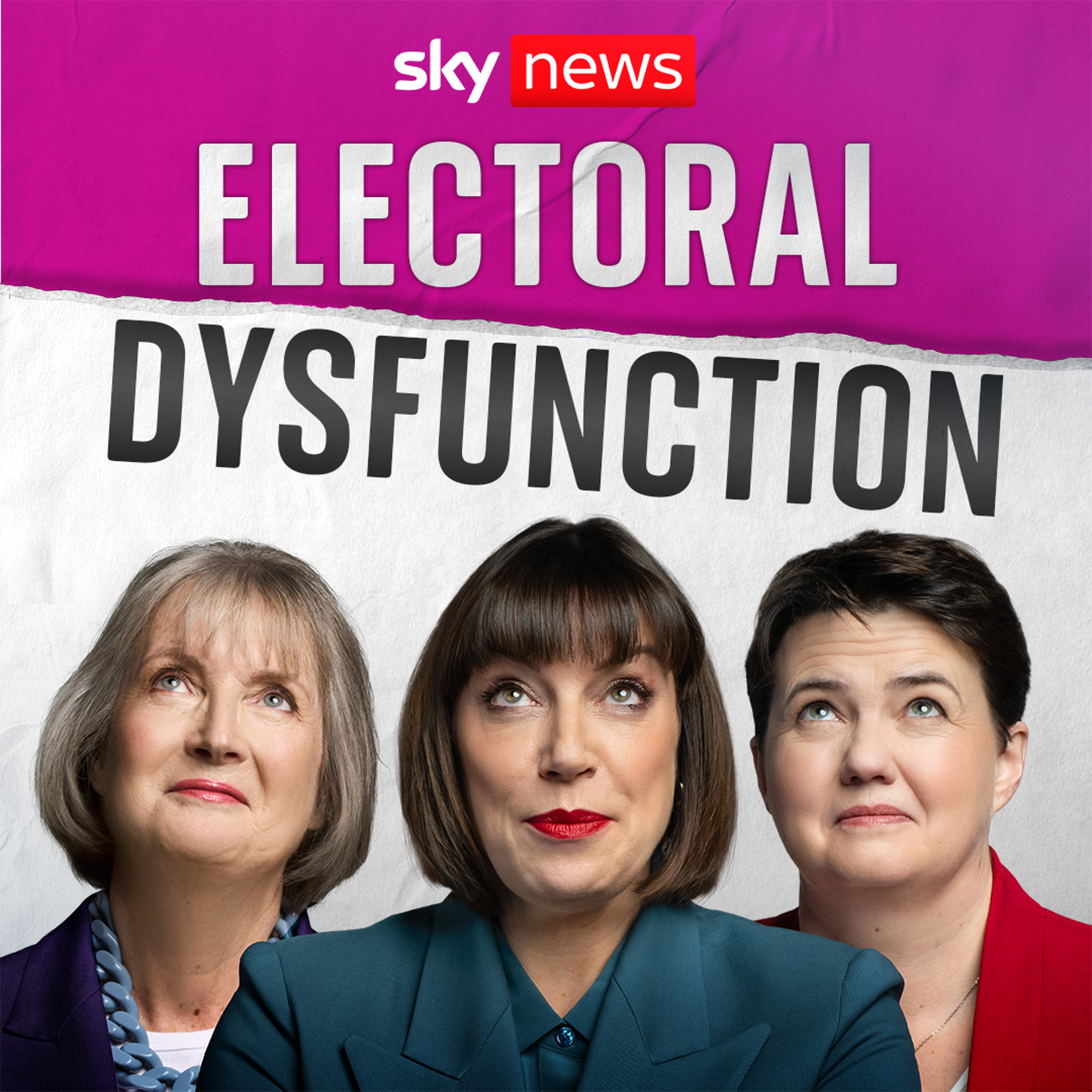

- Podcasts
- Electoral Dysfunction
- Does Andy Burnham know enough about AI?
In short
Liz Kendall (former UK Technology Secretary) discusses Labour’s early “Burnham era” priorities: welfare reform and welfare bill growth, the budget and fiscal rules, and making AI central to a 10-year plan. She argues the UK must boost growth via AI-led investment, regulate/shape AI with “guardrails,” and prepare young people for AI-driven job change. The episode also includes a Scotland/independence question from a listener and discussion of AI governance speed and parliamentary oversight.
Guests (backgrounds)
Liz Kendall, Labour MP; former Work and Pensions Secretary and former Technology Secretary (led on social media/online harms policy including the social media ban). Beth Rigby (host, political journalist). Ruth Davidson (host, former Conservative leader). Harriet Harman (guest/host, former Labour Deputy Leader). Martin Brunt and Katie Spencer appear as Sky News hosts/commentators.
Key claims
AI is essential to growth and re-industrialisation; Britain has “bronze medal” AI capability but low public trust; legislation is too slow for fast AI cycles; welfare reform must focus on getting people into work to reduce costs and tackle child poverty.
Notable examples
Leicester pilot on “what should our kids do in a world of AI”; US/China model testing and guardrails; Online Safety Act taking “over eight years”; NEET AI skills pilot in Wigan; social media ban coming into force.
Written by AI. May contain mistakes.
Chapters
1:12
Transitioning to Liz Kendall
Discussion on the party conference, voter sentiment, and upcoming live show.
“And we have a very exciting episode today because we're joined by Liz Kendall.”
2:30
Liz Kendall on Andy Burnham's Leadership
Liz Kendall discusses her views on Andy Burnham's performance and public perception.
“But before we do, I've got to remind you, there are still a handful of tickets remaining for our upcoming live show.”
5:50
Reflections on Welfare and Future Plans
Kendall shares insights on welfare reform and the importance of a ten-year plan.
“But I think the really big thing is going to be this 10 year plan for Britain.”
8:13
Challenges in Welfare System
Discussion on the challenges and changes needed in the welfare system and PIP.
“the system at the minute isn't it's writing people off and it's denying them those opportunities.”
11:33
The Importance of Work for Young People
Kendall emphasizes the significance of providing opportunities for young people.
“we've been able to bring those costs down.”
12:45
Budget Priorities and Focus on Growth
Discussion about budget priorities and the necessity of focusing on growth.
“It's all from the IMF this week that they've upgraded their growth forecasts.”
14:00
Economic Growth and Public Spending
Discussion on the importance of growth, fiscal policies, and public spending in the UK.
“That message about the future is very important.”
17:06
The Role of AI in the Future
Exploration of the critical need for AI in the UK's 10-year plan and its implications.
“Now let's get to artificial intelligence and the big element of the 10-year plan, because I know that you think it should be artificial intelligence.”
19:14
AI Leadership and Global Positioning
Discussion on the UK’s position on AI regulation and its global role amidst US and China.
“Because we need to shape it to deal with the risks and meet our values.”
21:50
Concerns About AI and Society
Addressing public fears about AI's impact on jobs and societal changes.
“He entirely rejected this idea about a global regulatory framework.”
Show all 17 chapters
23:49
Preparing Young People for AI
Initiatives aimed at guiding young people on skills and opportunities in an AI-driven world.
“I wanted to bring you to young people because a big body of work that you did was the social media ban.”
28:00
Shaping AI for Everyone
Discusses the importance of inclusive AI development and the role of government.
“And it isn't a choice, as I said, between having it or not.”
29:10
Balancing Safety and Advancement in AI
Explores the philosophical questions surrounding AI safety and necessary political actions.
“I do, because on this issue, it needs that kind of clarity of thinking, but also the kind of understanding of the fear that people have.”
33:30
The Role of Parliament in AI Regulation
Debates how Parliament should approach AI legislation and the need for swift action.
“How can it be speeded up so that you don't look as though you're absolutely behind the game on those protections which are necessary to build a trust which is a partnership for AI?”
39:30
Preparing Young People for an AI Future
Highlights the importance of equipping youth with AI skills for future job markets.
“I think absolutely that if you want a better future for young people, you've got to equip them with the skills and the confidence and the ability to deal with a world where AI is part of all of our lives.”
40:50
Engaging with Political Questions
Hosts discuss youth engagement in politics and the state of governance in the UK.
“Well, you should write that part of the 10-year plan and send it into number 10 and publish it as well.”
42:02
Political Reflections and Independence Debate
Explore the complexities of Scottish independence and the current political climate in the UK.
“I went into full kind of mode and I have to take a step back because I try really hard on this pod.”

Ask about this episode
Get the gist, explore an idea or ask about something said.
 Claude
On Electoral Dysfunction, what are the key points of this episode?
Searching your listeningTranscript
Automatic transcript. May contain errors.
0:00Ruth Davidson: I'm Martin Brunt, Sky News crime commentator. I'm Katie Spencer. I cover entertainment for Sky News. We have more than 60 years of experience between us covering the biggest crime cases. Russell Brand faces seven charges, rape, sexual assault and indecent assault against six women. He denies all the allegations. Now a jury of 12 people will decide. Russell Brand on trial. Listen now wherever you get your podcasts.
0:32Ruth Davidson: Sky News, the full story first.
0:42Ruth Davidson: We walked down Downing Street together in 1997 when I was appointed. Tell me about this. We got sacked together the following year. We did, we did.
0:52Harriet Harman: If there are issues about leadership in the UK, is that de facto a reason for Scotland to become independent?
1:00Liz Kendall: This incredible technology that could transform our lives and yet people are worried it's going to take our job or kill me. That is not a good place to be.
1:11Hello and welcome to Electoral Dysfunction with me, Beth Rigby. Me, Ruth Davidson. And me, Harriet Harman. And we have a very exciting episode today because we're joined by Liz Kendall. She's the former Technology Secretary under Keir Starmer. And she's been telling us for the first time what she's planning to do next. Now she's no longer in government. And it won't surprise any of you that Liz Kendall, the former technology secretary, is all about artificial intelligence. We are very tech savvy on this podcast. We've all downloaded ChatGPT or the likes.
1:46Harriet Harman: We're also keen, as well as getting into the guts of what's going on in the tech world, on getting out of the Westminster bubble. So as your resident Scotland correspondent, I will remind you that the party conference season is not over. It is SMP party conference this week. And Lewis has sent us, I think, a great question because the great questions should be like grit and the oyster. Because I was reading it and then I got to the end of it and it made me bristle. It made me really bristle and find myself wanting to go into sort of like proper politician attack modes to like slap it down. So we'll have a chat about Lewis's question as well.
2:21Harriet Harman: And I'll try and calm my inner politician. So we'll get to that too.
2:25Ruth Davidson: Well, Ruth will calm herself and bring a calm answer to Lewis's question. But we'll bring all of that to you in just a moment. But before we do, I've got to remind you, there are still a handful of tickets remaining for our upcoming live show. That's on 26th of November at Cadogan Hall in London. And the link to get tickets is in the show notes. And as I am so AI tech savvy, I actually thought that I could input our electoral dysfunction Christmas night out into AI and see what it replied. And it said, I think it could be a really enjoyable evening, particularly if you like politics, strong personalities, a bit of humour and hearing what goes on behind the scenes.
3:09So there you go. That's the tech bros endorsement of electoral dysfunction. And this is why kids... Can I just say, you just wimped out there, Rigby. Yeah, it also said, blimey, is that Harriet Harman still going?
3:22Ruth Davidson: No, it didn't though, did it? That's someone's written in an ageist joke there, which the AI, the human Rigby decided not to include.
3:38Liz Kendall, welcome to our electoral dysfunction podcast. Lovely to be here. It's really nice to have you here. And you were the Technology Secretary of State until this summer. But Andy Burnham then disbanded your department. We're now 100 days into the Burnham era. How do you think he's doing?
4:00Liz Kendall: You know, I was out door knocking last week in my constituency in Leicester. And we were in an area where there's been a lot of fed up people. and I thought it was quite interesting. One guy I spoke to said, I like your new guy. He said, it's early days. Let's see what he actually does now because you lot always make lots of promises, but I like what I see. And I thought that about sums up where the country is. He's getting us a hearing and I know that he and his team will know that they've got to deliver on what they're saying, but having that shift, that change that the public is hearing again what we're saying I think is really important.
4:47Okay, that's really interesting because Harriet, who is going to come in later, Harriet Harman, she said on the pod the other week, because she really argued that she did not want Starmer to be forced out, she didn't think it was a good idea. She said, I actually think I was wrong on that and that the change was the right thing to do. how do you feel about it Liz because you obviously you backed Keir Starmer you kept your head down you kept on doing your job do you kind of think that maybe it was the right thing so I think in
5:19Liz Kendall: the end what matters in politics is is the purpose not not the person and anybody who thinks it's all all about them is sadly mistaken and I think that that's what in the end will matter are we focusing on the things that people care about? Are we dealing with the big challenges the country has got? And critically for me, and I think this is the big thing we're going to see over the next couple of months is, have we got a plan for the future? There's a lot of focus on the budget. And I'm sure we'll come to that. But I think the really big thing is going to be this 10 year plan for Britain. And I think it's really important that that has a big message about the future, as well as an analysis about what's going on in the past.
6:07It's really great to have you on because not least, the two big briefs you did do in government are briefs that are going to touch not just the budget, not just the next year of this Labour government, but that 10-year plan because you were the Work and Pensions Secretary and there's a massive body of work on welfare and welfare reform and getting young people into work. And you were also the Technology Secretary of State, so you were dealing with artificial intelligence, social media, online harms and all of these things and these are such pertinent issues. So there's lots to talk about but before we get on to young people into work and education and the opportunities and challenges of AI, I just want to ask you about the government's failure to get that welfare bill through last summer.
6:54You were asked to find five billion of cuts by 2030 and the government had to retreat on that how do you reflect on all of that now Liz? So I have always believed if you're
7:07Liz Kendall: going to make changes in this area which is so critical to so many people's lives yeah people have got to know you're doing it to help people to give them better opportunities that it's not just an exercise of filling a gap in a spreadsheet number one yeah yeah and number two that the support people need, whether that's employment support or mental health support, has got to be in place first. And if you're looking at big changes on things like disability benefits, actually, the best way to do this is to have a fundamental look at what are the needs now, how have they changed, and is the system fit for purpose?
7:47Liz Kendall: So I think it is right that Pat McFadden, the Work and Pension Secretary and Stephen Timms have been given more time to make the argument and make the case on the basis of values because that's the best I mean that's what motivates me and I think this is is the right approach and as you saw in a big interview Pat McFadden gave this week an excellent interview he said our goal has got to be to give people better lives and that the system at the minute isn't it's writing people off and it's denying them those opportunities. I mean, I don't want to reflect too much on the past. It's done now. But when you were in the middle of it, did you think we're not doing this the right way?
8:25Because we're kind of...
8:26Liz Kendall: Well, clearly we weren't because we weren't successful. But did you feel it when you were... Because you have to front something up. You do indeed. I think that we're actually, after that, where Keir got to, and now certainly where Andy and Pat are, is this is the right approach to doing this. Because I'm deeply worried about the number of young people who don't have those opportunities, who are written off before they've even begun. It's terrible for them and it's bad. It's bad for businesses. You lose out on their talent. So this is the right approach. For listeners, if they're not familiar, there's two reviews going on.
9:00Stephen Timms is reviewing the personal independence payment system and that's the main disability payment in England. And Alan Milburn is doing a massive body of work on young people not in education, employment and training. So there's two strands here. on the PIP. That was the main focus of your reforms.
9:22Liz Kendall: Well, actually, the big reform we succeeded in getting through was to start to deal with the incentive to define yourself as unable to work rather than focusing on being able to work by reducing the health top up and actually increasing universal credit for the first time ever. So we did get that through, but it was the PIP bit that we didn't. And that was what I wanted to ask you, because Stephen Timms' review is clearly, the criteria is not to find cuts. I mean, it doesn't start off, the review doesn't start off with the basis of you have to reduce the spend. But do you agree with John Healy that there is a moral duty to reduce the number of people claiming benefits?
10:05There's a moral duty to get people back to work and basically maybe slow the growth of the bill?
10:10Liz Kendall: So to slow the growth because you're spending less on failure is essential because good work is good for people. It's good for their sense of dignity and self-worth, their independence. Actually, good work can be good for mental health too. And it's also about making sure businesses can draw on all of the talents in our country. So I have always believed that good work is good for people and that too many people are denied those chances and choices to work. So I very much agree with that approach. But do you think that the government needs to slow the growth of the PIP bill? We need to slow the growth of writing people off and denying them chances and choices in life.
10:58Liz Kendall: I don't, I mean, actually, I think it is right to start on the PIP review to say, what are the changing needs people have? How can we best support people with the additional costs of living with a disability? That is the right framing. And I'm sure that is what Stephen and Pat McFadden are focusing on. Do you feel like when you go on the doorstep to the public, you need to be able to say, we have made some savings in the welfare bill, because we've got people back into work? I think you're going to fail on welfare if you fail on work. And I want to be able to say, because we've got more people into work, we've been able to bring those costs down.
11:35Liz Kendall: And I would argue, as I always did, is, you know, we want to get more people into work, reduce those costs, and put it where it matters, which I believe is into tackling child poverty. And that was a big achievement, actually, which is the big changes we've made on tackling child poverty. And you wrote about that in your resignation letter, because I reread that today. Yeah, the argument I always made was we've got to get people back into work and use those results to tackle the problems that the root cause, which is too many kids growing up in poverty. Let's move on from this. But just to finish up, as a former Work and Pensions Secretary of State, you believe that there is a path through for Andy Burnham and his team to get to the next election having cut the welfare bill because they have got more people back into work.
12:21Cut the iris.
12:21Liz Kendall: I know this sounds too technical. Cut the growth. Reduce the rate of growth because you're getting young people back into work and giving them better lives and life chances. And I've always believed that labour is the party of work. And whenever we forget that, we're in a big mess. OK. And OK, let's move on, Liz. What do you want to see in the budget? I think there's some solid foundations to build on here. It's all from the IMF this week that they've upgraded their growth forecasts. They've also actually singled the UK out for getting a grip of the public finances, starting to get our borrowing, our deficit and our debt down.
13:01Liz Kendall: So I think that's good foundations to build on. I think the two critical things are this. We have got to be straining it a bit to get more growth because without that, we're not going to create the jobs to put money into people's pockets or have the money for our public services. And I also want to see a big message about the future. Andy is right to talk about growth in every part of the country, re-industrialization. And for me, the thing that links these two, and I know we'll talk about it, is AI. Because the thing that was driving our better growth, that the IMF said, is investment in AI. And actually, if we're going to have a re-industrialized country, AI is really the kind of steel of the future.
13:49Liz Kendall: You know, we led on the industrial revolution. We now need to lead on the AI revolution. And I think we have this really important window of opportunity in this government to kind of seize this technology and make it work for all. That message about the future is very important. I'm going to come on to AI, but before we do, just in terms of you've talked about growth and the importance of growth, with that in mind. I mean, I would have argued this under Starmer as well as now. I don't think you're saying anything to me that you wouldn't have said actually when you were a secretary of state. But in terms of growth, there were£62 billion of tax rises in the past two budgets.
14:30Are you saying that Healy really needs to stop raising taxes, stop increasing public spending and just actually rein it in and focus on growth?
14:40Liz Kendall: I absolutely believe that. We have got to double down on our strategy for growth in this country, that we cannot tax and borrow our way out of the problems that we're in. I think there's some solid foundations for John to build on in terms of the public finances and the growth we're beginning to get. And he needs to stay the course on the public finances and he needs to focus on getting that growth that we desperately need because otherwise we will, you know, Britain will remain in this kind of doom loop of ever higher taxes and yet ever higher borrowing. I mean, Liz, just one other thing this and then I want to ask you about artificial intelligence.
15:18But the Institute of Fiscal Studies this week, a think tank that closely follows budgets and fiscal events, argued that the government are going to need to find£35 billion in either tax rises or spending cuts in order not to massively cut public spending at the back end of this parliament because Rachel Rees raised a load of tax, front loaded it to public spending. And then had a big fiscal consolidation. Yes, had a big fiscal consolidation and the growth figures. I'm sure Rachel Reeves, when she sees the IMF this week and the growth figures, feels vindicated in what she did as Chancellor because she's having better than expected growth figures in the economy right now.
16:01But do you think the government are going to have to find spending cuts?
16:07Liz Kendall: The big thing is going to be the spending review next year. And I think that is where we will set out for the rest of the Parliament and beyond our plans. But they've got a horrible spending review, haven't they? Because all of the spending has been front loaded. And that will be helped if the Chancellor does what he needs to do. And I'm sure he will, is focus on growth here. Because the more we can get the economy growing, the better the fiscal position. Stay the course on the fiscal rules. if I think about the rest of the year we've got the budget say the course on the public finances start to boost growth you've got the 10 year plan and then you've got the public spending review and then the welfare reform in the middle of that which hopefully will find some savings for government that is a plan for I believe that's a plan but you think that welfare review will need to find some savings for government to help them with the spending review I think it will have to set a path for starting to bring down that growth because the growth in the costs is too much Okay.
17:05All right. That's really clear. Now let's get to artificial intelligence and the big element of the 10-year plan, because I know that you think it should be artificial intelligence.
17:15Liz Kendall: I mean, we can't have a 10-year plan for Britain without AI at its core. Well, you just said it yourself about the Industrial Revolution. We're in the foothills of a technology revolution that could even be more profound and consequential. In fact, I think it will be to humanity than the Industrial Revolution. Do you think that the UK is meeting the moment to both benefit us from AI but regulate AI? So I think we've got a British AI paradox at the moment. We are third in the world, third in the world behind China and America in building it. But we have got, you know, declining faith and trust in it.
17:55Liz Kendall: And that is a bad position for us to be in. Because if people don't trust it, we won't be able to get the benefits of it. and the reason that is a problem is that anybody who thinks we can just kind of stop this you know pull up the drawbridge hope it goes away that is not going to happen the choice isn't between having it or not it is between shaping it to win for britain and for the british people or being left at its mercy a whim so i think we have to do far more here to tell a story of how we're going to win for Britain on AI, how we're going to make it work for all, we're going to deal with the risks and seize the benefits.
18:34Liz Kendall: And I think we need a healthy dose of reality here and political leadership in making that argument. Do you think Barnum is doing enough to make this argument? I believe he understands how critical this is. Have you spoken to him about it? When I spoke to him when I lost my job, the main thing that I said to him is the absolutely critical thing for the future of the countries seizing this moment for Britain. Because, you know, I see it like, you know, we're on the podium, we've got the bronze medal, okay, but we are still in a race for our lives. And I think Britain has a unique role to play here, not just in making it work for the British people, but making AI work for the world.
19:19Liz Kendall: Because we need to shape it to deal with the risks and meet our values. So Liz, it's really interesting what you're saying because at the United Nations General Assembly, Burnham did a big speech. He did talk about AI and actually didn't talk about it much at all in his bid to become Prime Minister or win Makerfield. No, I do believe he understands. And, you know, Kanishka Narayan has been a minister in cabinet. We've got to take it far more seriously. I mean, Beth, if you think about when Brexit happened, terrible Brexit happened to this country, every single department had a Brexit minister looking at how they were going to deal with it.
19:57Liz Kendall: You know, AI is going to have far more profound consequences. Do you think there should be an AI minister across all departments? With responsibility in every single government department to think through what are the implications, what are the risks, what are the challenges, what are the opportunities for Britain. It needs to be absolutely at the heart of our growth strategy. I mean, we have got to reduce our reliance on US AI and tech. We've got to turbo charge British AI so we get more of the benefits here. And we've got to understand how it's going to affect every walk of life from education to the health service and businesses.
20:32Two things on that. So just to be clear, you're saying that you think that every department should have a minister with AI responsibility.
20:38Liz Kendall: Absolutely, who is thinking through from first principles, what is it going to mean for the future of our education system, for businesses and everything else? Part of the issue about, because you've talked about the UK being third, the two AI superpowers are China and the US. We don't have any, although we do have Google DeepMind here. We don't have the frontier companies. We don't have frontier AI companies. Burnham's argument at the UN was that the UK could become an honest broker and help coordinate a regulatory framework. He is right on that. Yeah, I know, but then Trump basically told him to do one.
21:14Okay. But at the same time, what has really happened in the States
21:19Liz Kendall: is that they have set out a new framework for the AI companies to submit their models for testing. The Treasury Secretary, Scott Bassett, has been deeply concerned about the impact on the economy. It is also true that in China, while they're in a race with the US, they're also worried about if bad actors get hold of it. So what I believe is, you know, if you don't want the kind of wild west of America or the authoritarian control of China, if you want to be ambitious for this tech and responsible, come to Britain, build in Britain, back us. He's right. We are in a unique position here. Well, this is what Trump said.
21:54He entirely rejected this idea about a global regulatory framework. He said the US totally rejects any attempt to construct a globalist scheme to control artificial intelligence. That's been spoken of so much now. We're going to encourage it, not reining it in. And then he said about China, who wins wins. I mean, it was not a, it was not a, that was not a president that was here in RPM.
22:22Liz Kendall: There's one thing to say, we want one global system for regulation. And there's another when you look at the reality of what is happening is increasingly the tech companies themselves are saying we need to have guardrails in place. The US, as far as I understand, has now enabled us to get access to these frontier models. But this is the important thing here. Let me just say this is I understand a lot of the fear about this. Yeah. It's this incredible technology that could transform our lives. And yet people are worried it's going to take our job or kill me. That is not a good place to be. right.
22:55Liz Kendall: So we have to solve this to get the benefits. But they're right to be worried about that, aren't they? We're definitely right to be worried about these potential risks. And so our job is to tell people, how do we really deal with this? And because the US and China have these frontier models, unless we try and start bringing people together, we can do everything we want in this country. But if we don't have similar guardrails in place in America or China, we aren't going to deal with the more fundamental problems. So I believe that there is a way forward. You're increasingly seeing these discussions and I am always a glass half full kind of a woman.
23:33Liz Kendall: And I believe that together we will get those guardrails. But Britain, and this is really, really important, we have got to get more leverage in this debate. We have got to do more to back British AI. As I said, we've got the bronze medal at the minute, but we're in a race for the future and there's no prizes for coming forth. I wanted to bring you to young people because a big body of work that you did was the social media ban. You worked tirelessly on that, getting that across the line. It's going to come into force. You're smiling because I can see that you know it was very important to you, both as a minister but personally as well, you know, as a parent.
24:11Yeah, totally. And you're now looking at AI. I mean, do you worry for our young people and how, like, we've got kids. Like, what our kids' futures will be, what their jobs will be.
24:25Liz Kendall: This, again, is this huge paradox. You've got, like, the highest ever usage of AI amongst young people but the plummeting trust. And it's really interesting. It was actually in my own family with my nieces but also increasingly in schools in Leicester where young people are thinking, like, what am I going to do? What subject should I take? What skills do I need? What job am I going to get? and so the big new piece of work that I am going to be doing is what should our kids do in a world of AI and I'm going to start in my city in Leicester with my local universities schools and businesses to start you know discussing what should our kids do in a world of AI because I think parents are thinking you know what should I be recommending my kids do young people are thinking, why would I do the law if there's no entry level jobs there and computers as well, AI is doing all the coding now.
25:21Liz Kendall: You know, this whole debate about is it going to make creative skills more important, human empathy skills more important, that role of critical thinking. So I think this is a big question for the future. And that's what I'm going to be working on. And certainly saying to the government this story about opportunities for young people, making sure that they've got hope that they've got a better future. Yes, that's about housing. We've made some big improvements there. But it's also about where the job's going to come from. What should young people do? I came into politics because I think your chances of fulfilling your potential should never depend on where you're born or what your parents did or your gender or the colour of your skin.
26:06Liz Kendall: And so having that hope for young people in a world of AI is absolutely vital. And if we could have a big part of that in the 10-year plan, I think that would be really important. You're going to try this pilot scheme in Leicester, yeah. In your constituency, trying to bring business university schools together. Do you hope that if that works, the government will roll that out? I hope what we'll do is then do that nationally. I mean, it really, I tell you, there's a really if we've got time when I went to Silicon Valley as tech sec I didn't go to the sort of Ivy League Stanford or anywhere like that I went to this amazing San Jose State University 40 ,000 young people the workforce of California and there was an incredible woman who ran it and she has made every single faculty nursing marketing business administration engineering all of them think through from the bottom up, what does AI mean for us?
27:03Liz Kendall: What will it mean for my job? What will it mean for what my skills, my knowledge? Yes, they had their AI faculty, but it was throughout everything. She said to me, we are in the belly of the beast. And if I don't figure this out, I'll be betraying a generation of young people. And I thought, wow, we're not doing that here. We're not doing that in government. We're not doing that in our schools or our universities but we can and we should and we must and I hope that is something that this work in Leicester what should our kids do in a world of AI will be an important contribution I hope to the 10-year plan and I believe to the future of the country.
27:42So I think Liz Kendall I'm going to conclude on this is you are loyal to the new government at the moment but if if the AI is not in the 10-year plan you're going to have some words
27:51Liz Kendall: You know, I want Labour to succeed. But you also want to see this happen. Yeah, absolutely. Because this is happening. And it isn't a choice, as I said, between having it or not. It's about shaping it to make it work for all, all parts of our country. Women as well as men, not just the tech bros, you know, that whole agenda. And I believe we can do it. I believe we have agency. We have the right values. And that won't just be good for Britain. That'll be good for the world.
28:26Ruth Davidson: I'm Martin Brunt, Sky News crime commentator. I'm Katie Spencer. I cover entertainment for Sky News. We have more than 60 years of experience between us covering the biggest crime cases. Russell Brand faces seven charges, rape, sexual assault and indecent assault against six women. He denies all the allegations. Now a jury of 12 people will decide. Russell Brand on trial. Listen now wherever you get your podcasts.
29:01Well, Liz, thank you for coming on and talking to us about AI, which I know we're going to talk more and more about. But Ruth, I think you want to ask Liz a question, don't you?
29:10Harriet Harman: I do, because on this issue, it needs that kind of clarity of thinking, but also the kind of understanding of the fear that people have. I mean, I think there is a philosophical question about safety versus advancement. And I just I don't know where I should be on that. So what should I think as like a mother of one, a middle aged lady who doesn't really get it, but knows that it's big? What should I be thinking about this and what should I be asking my politicians about it?
29:35Liz Kendall: So I think what's really important is that we are able to test these models before they're put out, that all changes need to be made to get rid of those risks. And actually, that's not just about what government does, but it's also about those companies themselves actually putting in place. You can't have products that are going wrong like that and they need to make those changes. and it was quite interesting in Parliament this week, there was a big evidence session that Liam Byrne was leading as a select committee chair on all of this and the companies themselves saying, right, we've got to figure this out, but we know we need to submit the models for testing.
30:13Liz Kendall: We need to have independent assurance that that's been done and mitigations put in place. And I have no doubt that whatever President Trump says across the world, we are moving towards that system. I mean, do you think Trump is kind of just rifting on it a bit and actually behind the scenes, different things are going on? They see themselves in an existential race with China. Yeah. And they don't want to take their foot off the accelerator here. But we do know there was a huge thing recently about an executive order and how strong was it going to be? Was it going to require them by law to submit their models for scrutiny?
31:00Liz Kendall: It ended up being voluntary, but they have now got that. And I'm absolutely sure that's because of concerns, including within the financial sector and Scott Bessent, the Treasury Secretary, that they had to put some of these mitigations in place because they were worried about that. So, you know, as is often the case beneath the headlines, I think there is movement. Okay. And Harriet, this is Liz's worst section of this interview because you used to be her boss, so now she's going to get questioned by her boss. And inspiration. But Harriet's like, what do you mean?
31:34Ruth Davidson: I've just come here to admire Liz, same as Ruth. And, oh, God, we've got so much history. We walked down Downing Street together in 1997 when I was appointed. Tell me about this. We got sacked together the following year. We did, we did, we did. Tell me about the walking down together. So you were... In 97. She was my spad. I was going to be newly appointed.
31:55Liz Kendall: She had her all white on. We did have to discuss a lot about what we were going to wear. We were going to wear walking down there. And I remember being so, so, so nervous. You were Harriet's advisor. Harriet was the minister. So Harriet got sacked and then you lost your job as well. I did indeed. But I always remember what she said before we left. She said we have achieved some great things. the first ever New Deal for Lone Parents, the first ever National Child Care Strategy. We're going to go out and achieve it even more. And we are not going to be bitter or angry about this because the only person who suffers from that is you.
32:28Liz Kendall: And there's more to do and more to achieve. And that's what we're going to do. And I remember thinking, oh, great, great. I can just go out and move on. And you also said this thing, which is we are a contributor, not a commentator. And I never forget that from all those years ago.
32:48Ruth Davidson: Well, I'm sorry you've had to put that advice into practice again for having been sacked now this time. But I was just thinking you're an absolute role model for how people should be using all your experience from government, but still contributing. And everything you said about AI is absolutely right. And, you know, the government will be listening to it undoubtedly and putting it into their 10 year plan undoubtedly. But if I can just ask you a question, which is you did loads of stuff on social media to protect children, building on the Online Safety Act and to protect women. And yet the feeling is that the government had to be dragged kicking and screaming to do things like, you know, amendments would be brought forward in the House of Lords to strengthen things and the whip would be to vote them down.
33:36Ruth Davidson: and then finally they'd be done. How can it be speeded up so that you don't look as though you're absolutely behind the game on those protections which are necessary to build a trust which is a partnership for AI?
33:49Liz Kendall: So, number one, you know, we did change the government's position and I think that is because parents out there were desperate for help and I think in the end that won through. But what you're really right about, if I think about the Online Safety Act, it took over eight years it's just way way too slow and if you think about AI these models I mean this was when I was in government it's probably changed since then were doubling their capabilities every four months so if you think you're going to have a piece of legislation that takes years to get through it'll be the whole thing will be different by the time that's happened so you've had some interesting ideas about how we as a parliament try and deal with that and I think that's a big issue we've got to grapple with.
34:34Liz Kendall: How do you set a framework that can be continually updated without having to always, always, always go through a big new legislation which can often take too long? Well you always talk about Harriet this idea about having a committee in the Commons doing it rather than it having to go through the House.
34:50Ruth Davidson: Yeah I think that basically it needs to be delegated to a very powerful experienced senior standing committee that can actually do legislation, primary legislation on behalf of the House, rather than it taking, you know, years and years or always being out of date. Do you agree with that?
35:09Liz Kendall: The idea that you have a framework which can then be updated more, we actually did this on the Online Safety Act, which is what we did was we took some powers, actually, sorry, in the children's bill, which said we can deal with features and functions, whatever those features and functions are. We took a power within that to act. That was a new way of doing it. I think the challenge with what Harriet said is, then what is the role of ministers? If the whole power of setting a framework for AI is delegated to a committee within the House, what is the role of ministers in that. And I think if you've got to look at those two issues together, but without doubt, we're too slow.
35:56Liz Kendall: We need also a big push on this international work. And I wonder whether that is another very important thing for Parliament. Because if we don't, the truth is, if we don't get China and America to also put in guardrails, we We can put into as many as we want. But if they're not, it can still, it's still got those existential risks.
36:18Harriet Harman: I wanted to jump in because I think you're right about there's a role for parliament here, but there's also stuff that can only really be done by government. And government, therefore, has to kind of listen to what's being put forward. And my little ears pricked up because you did a politician's answer in that you said, well, you know, when he was telling me that I no longer had a job, he said X. And the way it was said, it made me think, have you not had a conversation directly with Andy Burnham since then?
36:47Liz Kendall: I haven't spoken to Andy since then, but I wouldn't expect that to be the case. What I did say when I spoke to him is that even if the department is going science, tech and AI, it's got to be at the core of what this government does. So whatever the structure of government, this needs to be at the forefront because it is the future. It is what's driving growth. And it is a key strength of Britain, both science and tech. So that was the point I was making to him.
37:19Harriet Harman: And I'm just wondering if, for example, on welfare reform, whether he's got scope to go further than Keir Starmer because he's got a new PM bounce. he's you know there's everybody seems to be behind him at the moment um and has got the opportunity from the back you take the temperature of the back benches because you are a back bencher now if he's got a scope to go further than starmer got voted down on or or is it still the case that everyone elected just thinks i did not come into politics to cut welfare so on welfare
37:49Liz Kendall: i know from when i was uh work and pension secretary i see what he's doing in manchester And what was he doing there? He was saying you need to bring together the mental health support, the employment support, the job creation and put all of that together to help people into work. And I think he will continue to do that. And that will be his approach in government. where I'm urging us to go further is you've got to think again about welfare reform in the context of AI. Because if AI is going to have a big impact on entry-level jobs, that could cause even more problems for young people. And so when I was the tech secretary, we did it's only a pilot, but AI skills for NEAT.
38:42Liz Kendall: young people in education, employment and training in Wigan. We should be thinking about that right across the board because if you're thinking about a future for young people, the one thing we know, like we cannot predict the future. We cannot future-proof skills because we don't know where AI is going. But the one thing we know is people who know how to use AI are more likely to get a job and get a better paid job. So whatever happens here, we've got to upskill the nation on that and that's got to start with our young people. So if you were helping write the PM tenure plan, it's clear that you'd have a big section of AI in there.
39:21If you could do one big thing on welfare reform, you know, with those two hats on, what would it be? Would it be the kids with AI?
39:30Liz Kendall: I think absolutely that if you want a better future for young people, you've got to equip them with the skills and the confidence and the ability to deal with a world where AI is part of all of our lives. And that's got to be a story about a better future for young people. You know, we've rightly talked about people are desperately worried about getting on the housing ladder. They're worried about their bills, but they're also worried about where will I get a job? What jobs will be available for us in a world of AI? And that is something that not only Pat McFadden needs to look at, But the education secretary, the business secretary, we've got to look at it across the piece.
40:11Liz Kendall: And that is why I think it should be an absolute. I mean, somebody said to me, one of the first things they said when I was tech secretary was AI has got to be a top three priority for this country. Otherwise, you won't have you have failed at your job. And I remain of the view that we can we can do this. we are incredible at this, but we've got to deal with the fact that the public and the AI world is in two different places. We've got to put them together. And that means showing people, you know, workers have a say in how it's adopted. Workers share the benefits that it brings, that this doesn't just go to a very few, very powerful, unaccountable, brackets, men, but we make it work for all.
40:55Ruth Davidson: Well, you should write that part of the 10-year plan and send it into number 10 and publish it as well. Why not do that? Harry has always given me the best advice. There you go. Liz, thank you so much for coming to talk to us today. I really enjoyed that conversation and I learned a lot as well, which is always good. Thank you.
41:17Okay, look, the conference season is not, not, I repeat, not quite over because the SNP is now having its conference in Aberdeen. So we, of course, would be admiss not to mention that. Not least because Lewis has messaged us on the burner phone with a question for you, Ruth. And he asks, I'm a teenager from Scotland. I was raised by a unionist family, but I've since joined the SNP. I'm 18 and I'm on May 8th PM. My mother was 41 when she hit her eighth, which was Liz Truss. Does this not show that the union is ungovernable and maybe it's time to move on and look again at independence. So that's a good question.
41:57Take it away, Ruth Davidson. So when I was pre-reading this before the show,
42:01Harriet Harman: I felt my hackles rise as the question went on because I wanted to kind of launch into being in Parliament again and being sort of toe-to-toe with Alex Ammon and Nicola Sturgeon and go, yeah, well, if we're talking about leaders here, Hamza Yousaf only lasted 14 months as First Minister and Leader of the SNP. I lasted 700. I went into full kind of mode and I have to take a step back because I try really hard on this pod. Yes, to bring my own background and experience to it, but also to discuss things in a more maybe thoughtful way because I'm not a frontline politician anymore. I've got the luxury of doing that.
42:36Harriet Harman: And quite apart from the fact that we clearly disagree on the constitutional question, can I just say how heartening it is to have an 18 year old, you know, getting in touch with a political podcast to tell us that he's joined a political party, that he's interested in the conference, that he's contributing to the debate. So I think in terms of is the UK ungovernable? I don't think it is. I think there is a lot of churn in world politics right now. I think the UK is absolutely seeing its share of that. But I also see churn in lots of other places as well, particularly with the rise of populist parties in other parts of the world.
43:14Harriet Harman: Also, if there are issues about leadership in the UK, is that de facto a reason for Scotland to become independent? The one thing I've always found quite difficult about the framing, particularly at the referendum and post that, is this idea that the SNP have been very successful at, which is that the Union, the United Kingdom, is something that is done to Scotland and done to Scotland against its will, rather than it is something that we helped build, that we have ownership of, that we have agency in, and that we are also part of it. It is not a foreign body to us. So I think that that's a very different way of looking at it.
43:51Harriet Harman: And I think we're coming at it from different points of views. And in terms of the SNP agenda at this party conference, they build it as a different type of push for independence. It's going to be their biggest campaign since 2014. Do they need something else at the top of their agenda? I mean, it is up to the SNP what they put in their agenda. It is line one of their constitution. It is what they exist for. I mean, just one thing on, Harriet, something that some people were talking about when Andy Burnham reopened that discussion about getting closer to Europe and potentially at some point in the future, maybe another vote or decision about going back into the European Union.
44:36were you concerned that in doing that it it it fuels because I know you're a unionist it fuels the flames of Scottish independence but I think in a way it does rather the opposite and by the
44:48Ruth Davidson: way hi Lewis and think that he's grown up his whole life under the SNP in government in Scotland quite a thought there but I think that actually it that that reflection on the Brexit compared to the Scottish referendum possibility or proposition is that what Andy is reflecting on is that by drawing away from our closest ally, it's done more harm than good on the economy particularly, but on national security and for a whole load of other reasons. And what he's reminding us is that actually you need to be close together and unity and working together is better. And therefore, that's the opposite of Scotland cutting itself off.
45:31Harriet Harman: It absolutely, absolutely gave them a new injection because there is a sense that, you know, they can say, look, what is sauce for the goose is sauce for the gander. If you want to either rerun a referendum from 2016, why on earth can we not rerun a referendum from 2014, which is what we've been asking for for a long time? Or the idea that there could be something that doesn't even go to a referendum. It's just a parliamentary majority. Well, while we haven't seen since the parliament which contained the referendum result in Scotland, we haven't seen a SNP majority in parliament, we have seen a pro-independence majority.
46:08Harriet Harman: If you add the number of green MSPs and SNP MSPs together, and they're both parties with a overt pro-independence position, you have already seen that that exists in the Scottish Parliament. So you can kind of see why the SNP are getting quite excited by this, that the door has been opened. That's it from us today. Thank you so much for listening. And we'd love to know what you think. If you are a member, you can access our brand new forum, the link to which is in our show notes. or the burner phone is still very much in action on 07934 2444. And you can always email us as well, electoral dysfunction at sky.uk.
46:57Or you could just turn up to our live show and see us face to face. It's up to you.
47:02Harriet Harman: But you'll have to be quick because there's only a couple of tickets left. So do get online, try and book them. Live show 26th November at Cadogan Hall in London. And we would love to see you there. Link is in the show notes.
47:13Ruth Davidson: Well, we'll be back on Tuesday, but until then, goodbye. Goodbye. Goodbye.
47:43Ruth Davidson: or readings do not match symptoms, or when you see check blood glucose symbol for the first 12 hours. The views expressed should not be used for medical diagnosis or treatment as a substitute for professional medical advice. Individual circumstances may vary. For prescription only. Safety info found at freestyllibre.us. I'm Martin Brunt, Sky News crime commentator. I'm Katie Spencer. I cover entertainment for Sky News. We have more than 60 years of experience between us covering the biggest crime cases. Russell Brand faces seven charges. rape, sexual assault and indecent assault against six women.
48:16Ruth Davidson: He denies all the allegations. Now a jury of 12 people will decide. Russell Brand on trial. Listen now wherever you get your podcasts.
From the publisher
Is the UK Government ready for artificial intelligence (AI) – and will there be any jobs left for the next generation?
Former technology secretary Liz Kendall joins Beth Rigby, Ruth Davidson and Harriet Harman to discuss her push to get the UK to the forefront of AI development – and tackle some of the fears of the public.
Plus, she reflects on her time in the Department for Work and Pensions, and why she wasn’t able to get her welfare reforms through.
And, closing out conference season, Beth, Ruth and Harriet discuss the Scottish National Party, and why they’re making they’re making another big push for a second referendum.
Tickets for our London live show are available now, join us on 26 November: https://cadoganhall.com/whats-on/electoral-dysfunction-live/book/1391434/
To listen without ads, get exclusive bonus episodes, and much more, become a Sky News Insider. Find out more and subscribe at https://skynews.com/electoraldysfunction
Got a question for the burner phone? WhatsApp 07934 200 444 or email [email protected].
Sky News Insider requires a paid subscription and is available to UK listeners aged 18 and over.
More from Electoral Dysfunction
All episodesWe use cookies.They keep VO running smoothly and help us improve it. Privacy policy