
 Ask ChatGPT

- Podcasts
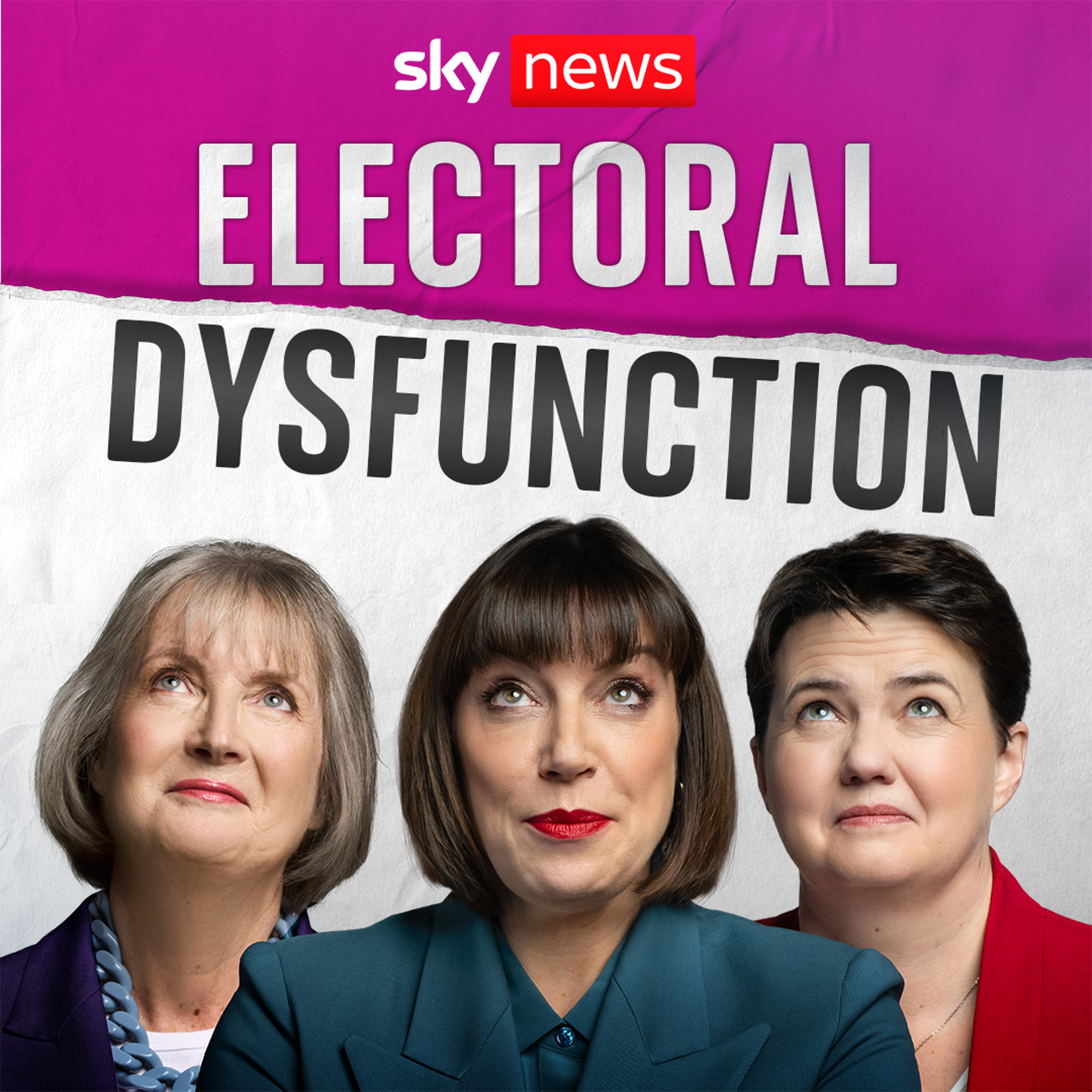
- Electoral Dysfunction
- Andy Burnham draws his battle lines
In short
Electoral Dysfunction discusses Labour Party conference and Andy Burnham’s consequential prime-ministerial speech, focusing on “battle lines” for a new politics/economy and the policy trade-offs—especially scrapping the pension “triple lock” to fund a national care service, plus electoral reform and Brexit options.
Guests (hosts)
Beth Rigby (Sky News political interviewer/reporter); Ruth Davidson (former Scottish Conservative leader, MP; co-host); Harriet Harman (Labour MP, former Deputy Leader/Acting Leader; long-time conference attendee).
Key claims
Burnham’s speech was emotionally powerful (a pause tied to his father Roy Burnham’s death) and politically divisive, cementing Labour unity. Triple lock removal is framed as necessary for social care funding, but critics argue it’s bad economics and may not deliver “free” care in practice.
Notable examples
Roy Burnham tribute moment; comparisons to Gordon Brown (2009) and Theresa May’s 2017 conference mishap; Scotland’s “free personal care” threshold (£22,000) and Ruth’s parents’ dementia care costs (~£600,000).
Written by AI. May contain mistakes.
Chapters
1:41
Reflections on the Labour Conference
Discussion on the atmosphere and key moments from the Labour conference.
“But it feels quite strange to be away from conference and back home because it's such an incredible bubble and it's such an overwhelming feeling.”
2:53
Andy Burnham's Speech Analysis
An in-depth analysis of Andy Burnham's impactful speech at the conference.
“There's something about party conferences that's just a bit odd in that momentum shifts.”
4:23
The Emotional Impact of the Speech
Hosts discuss the emotional weight of Burnham's speech and its connection to personal loss.
“And a lot of them were saying, look, it's not going to.”
4:43
Public Reception and Political Maturity
Exploration of the public's reaction and Burnham's growth as a politician.
“could really have confidence that when they were liaising with the government and when they announced a policy, it would actually come to pass.”
6:13
Final Thoughts and Reflections
Hosts reflect on the implications of Burnham's speech and the future of Labour politics.
“Let's get back to Labour Conference, because you are right, Harriet.”
14:00
Andy Burnham's Emotional Speech
The discussion revolves around Andy Burnham's emotional speech, touching on his father's recent death and the impact it had on him during the delivery.
“you know, friends within cabinet about whether or not he should include this section on Roy in his speech because maybe he wouldn't get through the speech.”
18:06
Interview Insights with Burnham
A detailed account of an interview with Burnham following his speech, focusing on his reflections and emotional state regarding his father's memory.
“I poured everything into that bit because it was everything I wanted to say about him.”
19:18
Divisive Policies in Burnham's Speech
The hosts analyze the divisive policies introduced by Burnham, discussing their implications for Labour and the political landscape.
“I'm doing it not just as I wanted the job, because I want to change things in a way that he always said to me.”
22:29
Future of Labour and Electoral Reform
The conversation shifts to the future of Labour, electoral reform, and the potential for a general election, reflecting on Burnham's ambitions and challenges.
“And just going through some of those policies, I mean, he promised to end the triple lock if he's still prime minister in 2030.”
26:54
Cabinet Reactions and Brexit Discussions
Insights into cabinet reactions to Burnham's speech, particularly regarding electoral reform and Brexit, highlighting divisions within the party.
“He puts this all into place and then you have to have a vote for it.”
Show all 21 chapters
28:00
Divisions in the Labour Party on Electoral Reform
Explore the differing views within the Labour Party regarding electoral reform and Brexit.
“He's saying the voting system doesn't work in a way that makes people feel it's fair.”
29:18
Debating the EU and Brexit's Impact
A discussion on the potential for Labour's manifesto to include rejoining the EU.
“But I think nobody can feel that it isn't the case, that Brexit's done more harm than good.”
30:28
The Triple Lock and Social Care Funding
The implications of the decision not to review the triple lock and its impact on social care.
“commitment to rejoin or do we want to have something else?”
32:19
The Political Landscape of Social Care
An analysis of how political decisions surrounding social care affect the public.
“What did you make of that when he announced that?”
34:35
Personal Experiences with Care Provision
Personal anecdotes highlighting the challenges of caring for elderly parents.
“The way it was framed was good politics.”
36:56
The Emotional Toll of Care Costs
Reflections on the emotional and financial burden of long-term care for elderly parents.
“So even though my parents were assessed for free personal care, because they needed residential care, because it was Alzheimer's, we paid for all of that.”
39:41
Gaps in Care Provision and Political Consequences
Discussion on care provision gaps and the political ramifications of social care reforms.
“the Glasgow council house he grew up in, leaving school at 16, to be able to own, you know, a three bed detached home in a sort of commuter village in Fife, you know, was a big thing for him.”
42:07
Gaps in Care and Political Implications
Discussion on the gaps in care for the elderly and the political ramifications of proposed policies.
“So it's not as if it's only if your parent happens to get Alzheimer's and happens to need residential accommodation that you're still going to have to pay money.”
43:16
The Triple Lock Debate
Exploration of the triple lock's sustainability and its political implications.
“I mean, this at the moment is polling fine for Andy Burnham because it's only his side of the story that's been put out there this week.”
44:28
Trust in Pension Funding
Discussion on public perception of pension funding and its impact on policy.
“in their manifesto for the next election.”
46:12
Upcoming Political Events
Preview of upcoming political events and interviews scheduled for the podcast.
“So next week, we've got the Conservative Party Conference.”

Ask about this episode
Get the gist, explore an idea or ask about something said.
 Claude
On Electoral Dysfunction, what are the key points of this episode?
Searching your listeningTranscript
Automatic transcript. May contain errors.
0:00We all have routines. I'm Gibran and with diabetes, mine was finger sticks. Sometimes I skip them because it hurt. The Freestyle Libre 3CGM changed that. It gives me glucose insights without finger sticks. Learn more at freestyllibre.us. Finger sticks are required if your glucose alarms or readings do not match symptoms or when you see check blood glucose symbol for the first 12 hours. The views expressed should not be used for medical diagnosis or treatment as a substitute for professional medical advice. Individual circumstances may vary for prescription only. Safety info found at freestyllibre.us.
0:32Harriet Harman: Sky News, the full story first.
0:42Harriet Harman: I get emotional at lots of things. I cry at Donkey Sanctuary adverts on the television. I mean, I'm a really easy, really easy steers. I was pretty untouched.
0:55Ruth Davidson: You were right. I was wrong. I was hoping for the Starmer Project to succeed.
1:02She'll be able to say, you're going to take money off pensioners and you won't actually reform the welfare bill. Hello and welcome to Electoral Dysfunction with me, Beth Rigby. Me, Ruth Davidson. And me, Harriet Harman. And I'm not going to lie, I am pretty exhausted. It's lovely to see you both. I've seen Harriet a lot, actually, because we've been up at Labour conference. And in between, I've got a half marathon the weekend after next. So I've been running a bit, but I've mainly been running around politicians, chasing them. But also, I've just been running around with Jess and Harriet at conference.
1:40So I've had quite a nice time, to be honest.
1:42Harriet Harman: I'm feeling a little left out. You went to New York with Harriet. You've been to Liverpool with Harriet. Like, come on now, women. I know. I'm sorry about that.
1:49Ruth Davidson: But it feels quite strange to be away from conference and back home because it's such an incredible bubble and it's such an overwhelming feeling. It really was. And thank you to all of you. And particularly those young men, Harriet, that came and asked for our photo on the Sunday night. I saw one of them again. Toby. Toby. And I was asked to make sure we give them a shout out. So Toby and the gang, this is your shout out. Also, I should say, we also recorded a special insider electoral dysfunction live with Angela Rayner. She took a bit of convincing because it started at eight o 'clock and she was like, if I don't have to do the morning round, why on earth am I coming to see you all at 8am?
2:39But it was really fun. And if you haven't seen that, you can see a shorter version of our chat on the Sky News app and YouTube. So you could watch that. But Ruth, I am coming up to you. I am coming up on Sunday to Tories.
2:55Harriet Harman: There's something about party conferences that's just a bit odd in that momentum shifts. And it did feel like there was a momentum shift at Labour. Like, despite the fact you'd won this enormous majority two years ago, like massive, massive majority, at no point did it feel, looking at the Labour Party, that you actually had confidence in yourselves having won. and it felt to me watching it that you guys have now got a set of self-confidence and bordering on evangelism and we can talk about the actual speech from the leader in a bit that um that that has kind of shifted the dial for how it's going to be for for MPs trying to explain how the country is being run now that's what it felt like for me watching it we're suddenly
3:43Ruth Davidson: having our post-electoral euphoria, which we sort of didn't feel confident enough to have. And I was having a conversation with my successor, Miata Fanbuller, who's now the Member of Parliament for Peckham, which I represented for so many decades. And I'd been saying to her, look, you've just got to help Keir Starmer. You've got to support him. It's a difficult thing being Prime Minister. But look, he's led us into victory. There's now 400 Labour MPs. And she was saying, it's just not going to work. And I had to say to Miata, especially after Andy's speech, you were right, I was wrong. I was hoping for the Starmer project to succeed.
4:23Ruth Davidson: And a lot of them were saying, look, it's not going to. Face up to the reality. The reality is that it's not going to. They were more in touch with the public than I was. And I think the point is that without Keir Starmer having the confidence of MPs, nobody on the outside, whether they're businesses or whoever, could really have confidence that when they were liaising with the government and when they announced a policy, it would actually come to pass. Because although on paper he had a majority of over 100, he couldn't actually deliver anything with that majority. And I think now it's absolutely evident that we've got what we thought we got at the general election, which is a stable government with a huge majority which will get on and deliver a programme.
5:12Harriet Harman: Well, I think this is one of those kind of pivotal conferences where stuff happens and it slightly changes the landscape for what comes next. So undoubtedly we'll be unpacking it in this pod and in future pods, but we'll also be unpacking the shift that's happened with the government at our live show. So we're going to be doing that in London. If you haven't heard, insiders are able to buy tickets for it now. Now, on Monday, everybody else is open. The tickets are going very, very fast. If you are an insider, you get a 15 % discount from the live show too. It's London in November the 26th at the Cadogan Hall.
5:47Harriet Harman: And genuinely, I've spoken to our commercial people. I know everyone says tickets are selling fast. Ours actually are. So get on it and don't leave it because that 15 % as well, that money off, that is only valid for another week. And another thing, let me tell you, the 15 % off you get from the ticket price is more than it costs to become an insider. So, you know, in your interests, get on board. That was a public service announcement there from Ruth Davidson. Thank you.
6:17Let's get back to Labour Conference, because you are right, Harriet. It really was like going into this bubble and then you come back out and you're like, what's going on? And I have to say, this one did feel really consequential. We talked, hadn't we? on the pod after the United Nations in the run-up to Labour, that you were going to be left in no doubt that this was a changed Prime Minister with a specific agenda. And bloody hell, whether you like what he said or you hated what he said, it was quite an incredible speech. Afterwards, people were talking about it being the best speech, political speech of a generation, comparing it back to Gordon Brown's big speech around the financial crisis back in 2009.
7:08And it felt very consequential in the whole because Andy Burnham really was making his argument for, as he put it, a new type of politics, a new economy, a different path. And you were left with no doubt that that is what he intends to do. And I would say that he is an unusual politician in that he's honest. He says what he believes. He doesn't dodge the question. He went on that stage and he pulled out his entire guts and heart. You know, and actually, even in the interview yesterday I did with him, he said, I just decided I'm not going to think about focus groups. I'm not going to worry about this or that or what I should do.
7:58I'm just going to do what I think is the right thing to do, driven by my family and my parents and how I've been brought up, and I'm going to go for it. And that's what he did in this speech. And Sean messaged us on our forum to say, I'd love to hear people's opinions on the Prime Minister's speech, and I really would like to hear both of your opinions. But Harriet, you were right in the front row. So Harriet was honestly, because I come in and I go and stand on the side because at the end, we have to run up to the front of the stage and do a piece to camera for our reports. So I'm sort of in the side, but right by the stage.
8:37And who was in the front row, smack middle in the front row is Harriet Harman.
8:41Ruth Davidson: I mean, it was just, it was an emotional experience. I mean, it was overwhelming at times. There was that moment where suddenly he'd finished a little passage and he stopped. And I thought, oh my God, what on earth has happened? I turned round and looked at the screens, which is giving him his autocue, which is his script for him to read it. And it started with when my dad died. And so I knew that what had happened was he just was taking a moment. And I reckon that he must have known, having practiced and rehearsed the speech, that this would be a difficult moment for him. So he had a plan of how to deal with it, which is just to stop.
9:28Ruth Davidson: But it seemed to go on for ages. I think somebody was saying it was like 35 seconds. It felt so long. And then, of course, the whole conference was willing him strength to be able to get on and speak it. It was a massively emotional speech. Except for one year, I've been to every single conference since 1982. And this is one of the most outstanding I've heard. Yeah, actually, Harriet, just on that, people were comparing it to Gordon Brown's 2009 speech. Do you remember that one? Yes. And that was very rhetorical and very compelling. But Andy's was different in a way, because what he was doing is saying things have got to be done differently.
10:18Ruth Davidson: By the end of his speech, every 100 % of people in that hall were up for going with him for that change. I mean, for my bit, because I was in the hall, and we're going to get to the substance of the policies. But in terms of the presentation, if you like, the oratory, the storytelling, it was truly an exceptional speech. There was a moment, as Harriet said, because for everyone that has been bereaved, and most of us have been bereaved, that raw feeling that you knew he was feeling in that moment about his father, you could not help but feel moved by that. It touched for me on my mum and my brother and my friend Laura.
11:02And I, I, in that moment was, you know, I felt my own grief and I turned around because like Harriet, I was like, why has he stopped? Cause he just stopped dead and he just couldn't continue. And I thought, oh my God, he's going to lose it. He's going to, you know, when you've tried to, I gave a eulogy recently at my uncle's funeral just a few weeks ago. And I got three paragraphs in and I nearly lost it. And then I said to myself, Beth, like, pull yourself together, woman. And then I kind of, I found that thing and I carried on. And that's kind of what happened to him. And I turned around, the cabinet were in tears.
11:44Ed Miliband, who's recently lost his mother, he was in tears. Louise Haig was in tears. Annalise Midgley, some of the people that have been very close to Burnham, those two politicians. I mean, it was really, really genuinely emotional. And because of that emotion, when he did start to speak again, I mean, the atmosphere was just incredible in the room and people were just willing him on. The way I described it when I spoke of it afterwards, it was like, yes, it was a prime minister laying out his vision for Britain and his argument. But also in that moment, it was a son grieving for his father and remembering his father in a very public, visceral and vulnerable way.
12:31And I just think whatever your political persuasion, you can't fail to be moved by that. But I think there was such a political maturity
12:40Ruth Davidson: about it as well, because, you know, I knew Andy from when he was in his early 30s. And And I could never have imagined the place that he got to with that speech. He's at ease with himself. Some people were saying that he was very relaxed about the speech. I don't think the speech was relaxed at all. It was incredibly intense, but it was genuine and at ease with himself. And a lot of people might say, oh, but conference speeches, nobody cares about them. Nobody even knows the Labour Party conference is happening. But it does matter because he was communicating to us about what we need to do in terms of supporting this agenda that he's taking forward as prime minister.
13:21Ruth Davidson: So that cementing of his relationship with the party, because remember, the party never voted for him. And that cementing of that relationship was like 100 % now, they are 100 % behind him. But just also just on the context of him, both writing that speech, and could he deliver that speech. People around him have told me that Andy Burnham did write that speech. It was his speech. Also, he had a political cabinet before he made the speech to outline the policies. And someone told me that there had been questions amongst some of his, you know, friends within cabinet about whether or not he should include this section on Roy in his speech because maybe he wouldn't get through the speech.
14:12And it had gone back and forth a bit. You know, when he was practising, it had gone back and forth a bit. And in the end, it was, he decided, I want to do it. You know, and his cabinet then sort of rallied behind him and said, go for it, we believe in you, you know, give it a go. Yeah, I mean, I think if you write that, you're going to deliver it.
14:32Harriet Harman: I mean, no matter what the rest of his cabinet said, where they said, oh, maybe leave it out. You know, if you've actually committed to that, partly as well because of the time, like his dad's not buried yet, you know? No, it's his dad's funeral this week. This week, exactly. So, I mean, it's really, really fresh. And I don't think people outside of politics understand how much the people that are elected and do big jobs owe the people around them and that love them and that support them. and if he's ever written a passage that he wants to give as a tribute to his dad at the point in which his dad has died um he's always going to give it and just you know i'm getting quite emotional even just talking about that i get emotional at lots of things i cry at donkey sanctuary adverts on the television i mean i'm i'm a really easy really easy to tears i was pretty untouched through the television screen by that section.
15:28Harriet Harman: And a bit like you guys, at the stop, I thought, shit, the teleprompter is broken. Like I really did. I really did think it had. And I was willing the audience, you know, having been at potentially the worst political speech in the history of party conferences, at least post-war, which was Theresa May's one, where everything went wrong. She lost her voice. She got delivered a P45 by a protester. the lettering fell off the wall behind her head. Like, I mean, genuinely, like the fear that you have of something going wrong in the moment kind of evaporating in such a public way, even when it's your opponent, I was willing the audience to start clapping earlier and encourage him.
16:07Harriet Harman: And it really reminded me of Louis Capaldi at Glastonbury when he struggled to finish a song because of his Tourette's. And you could see him physically being lifted by the crowd and getting back able to perform again. I was like, come on, guys, because 35 seconds is a long period of silence, a really long period. And I was watching it live and I was like, come on, lads, help them out. But the actual bit that came after, I didn't find it as emotional as people in the room. And I think that's the difference between TV and being there. For me, some of the best political speeches have been where the speaker doesn't speak to the room, they speak to the country at home.
16:44Harriet Harman: But you're right, in terms of raw emotion, you could see that it had affected people in the room. And I think he carried that over, Beth, because you interviewed him on a one-on-one and he got emotional again with you, didn't he? Yeah, so the next day, on the Wednesday, we all went to Everton to the Hill Dickinson stage and of course we did. In fact, I did actually get a photo of me in David Moyes' chair in the press room. But in the interview, obviously I kind of pressed him on. I pressed him on social care. I pressed him on Europe and then I pressed him on the cost of living stuff because the reality is the idea that there's breathing space on the cost of living is just for the birds really, given what's going on in the economy.
17:28And then at the end, I asked him about that pause in the speech and he got visibly upset in the interview. And I do want to come, if I may, to your dad, Roy. There was a moment on stage yesterday and I was right at the front and I saw you so closely when his name came up on the teleprompter and you just stopped. And then the hall began to cheer you on. What was going through your mind at that time? Did you think you couldn't carry on? Well, I knew that was the bit of the speech that I was going to struggle with. I poured everything into that bit because it was everything I wanted to say about him.
18:12And it's hard even now, but he was a proud son of this city. He represented everything it was about, but also what this country is about. I just wanted to talk about that in relation to where Britain is at and the idea that Britain might break up. Well, I wanted to talk about that because my dad believed in people sticking together and unions of people, unions of countries. That's what he believed in and that's what he taught me. You're always better if you're working with people and, you know, working and reaching out with people. So that's what he believes. And I wanted to speak to that in relation to the Britain that I believe in.
18:53I want Britain to stick together. I want Britain to be able to have prospects for people in every single postcode that are better than they've been. And that will be the way we stick together. So it's been hard because I came into this job, this journey as prime minister, knowing he was ending his journey. And it has been difficult, but the best thing to do is to channel it because it reminds me, why am I doing it? Why am I doing this job? I'm doing it not just as I wanted the job, because I want to change things in a way that he always said to me. Things do need to change to be fairer. You know, he says there that he stopped because he knew it was the bit of the speech that he was going to find, as you said, Ruth, the really hard bit.
19:36And he said he pulled everything into it because it was all that he wanted to say about his dad. And at this point, you know, you can hear it, his voice broke. He had tears in his eyes. I then felt quite upset as well, because I'm looking at this guy and I'm like, I know you're prime minister, but your dad died, what, 15, 16 days ago. You're having to go to New York to see Trump. You're coming here to do conference. He's so clearly feeling the emotion of what he's going through. And if I compare that briefly to, say, Keir Starmer, when he was prime minister, he suffered the loss of his brother.
20:16You know, he went up and cleared out the house the first Christmas, I think it was, that he became prime minister. He went up and sorted out his brother's stuff over recess. And he was clearly very, very upset about that. Then there was the whole incident about his house being firebombed at the time his sister-in-law was living in the house. And he was deeply affected by that, as was his wife, Victoria. But I think Keir Starmer keeps his emotions quite closed in, not criticising that. Different people do things differently. But Andy Burnham is just all out there. So what he's feeling, you then feel.
20:56But I think the skill of that as a politician is if you can do that, I imagine, but Ruth, you're saying it came across differently on television, that he connects with people because they can see that he's feeling what he is saying.
21:11Harriet Harman: What's really interesting is in moments like that, you glimpse the human being underneath. And for a lot of people, voters, people are disillusioned with politics, people that just, you know, have the telly on in the background while they're making their tea at night, politicians are almost like ciphers. You know, they're almost kind of not real. And then actually sometimes the person underneath that surprises you. And when you see the person, I think that can be quite powerful.
21:49I think we can all agree in terms of delivery, it was a very accomplished piece of oratory. And it is one of those conference speeches, I think, that will endure. and I really do think it was consequential, both in terms of him introducing himself to the country, but my God, the policies, bloody hell. I actually personally think that for a politician that appears to be very clubbable, wants to make people like him, seems very collegiate, the nice guy, bloody hell that was a divisive speech. The battle lines that he's set in terms of policy And he's basically saying to the country, this is what my Labour government is about, pick a side.
22:34And just going through some of those policies, I mean, he promised to end the triple lock if he's still prime minister in 2030. This is the policy where pensions rise by either average earnings 2.5 % or inflation, whichever is highest. it has meant that pension pensioners have had a relatively good uplift in their pension for the past 16 years it will save the government 15 billion a year by 2040 by scrapping this policy so being no doubt that this is this is taking money that pensioners would would otherwise expect and he's justified why he's done it. But pensioners, you know, it's a£15 billion saving by 2040 for the government.
23:23He has repeated his pledge to create a national care service, funded in part from the savings of that triple lock being scrapped. Although he also said that he now doesn't think he has to raise taxes to do it, having said on Sunday that he might have to raise taxes to it. Ruth's looking sceptical because everyone's sceptical he won't have to raise taxes to do it. So we've bookmarked that bit of my interview. Electoral reform, he says he's going to create a commission for recommendations on how to change the first-past-the-post system to put in the manifesto for the next election. Andy Burnham has been a proponent for electoral reform for many, many years.
24:02This is one of the things he genuinely believes in. He also talked about Brexit, laying out options for what we might do with the future of the European Union, and then going into a series of broadcast interviews, including with me on the Wednesday, basically saying, you know, we could go all the way. I'm looking at all the options. He told me he personally wants to get closer to Europe. So he reopened the Brexit wars there, if you like. He said he would repeal Thatcher's ideological ban on ownership of water companies. Got his first stand innovation in the hall for that one. He said he'll scrap right to buy for newly built council homes.
24:43And he announced a cut of VAT on energy bills for six months. He'd already announced that, but that came into force yesterday. I mean, bloody hell, if you wanted a prime minister to say, I'm different from the last guy, I'm going to have a new economy and a new politics, all of these policies add up to that offer. He has set the dividing lines now for a huge political discussion in this country. For the Conservatives, this is good, isn't it? Because it actually gives you clear dividing lines now on which you can challenge Labour.
25:23Harriet Harman: What was really interesting for me about the policy in the speech is that there was almost everything was for post three years from now. And there was almost nothing for today. So the only things for today was£2 bus fares and that off your Leckie bill. And that had already been pre-announced. Everything else was post a future election. So I think the odds on will there be an election before 2029 have just shortened, because at some point he's going to want a mandate to do some of these things. But I don't want to be unduly negative. One thing you had there was absolutely, here's what I stand for, here's a big picture.
26:00Just on what Ruth said about an earlier general election, I thought exactly the same thing, because it seems to me that Louise Casey will come back with her social care plan. Andy Burnham will outline his 10-year plan at the end of this year, later this year. He will set and train the Commission on Electoral Reform. He will look at taking more public control of utilities. He is going to have his summit with the European Union about how the relationship might change. And that could be anything from rejoining the customs union to the single market to full-blown EU membership again. All of that requires a general election.
26:49I think that he is maybe gunning for a general election in 2028 now. He puts this all into place and then you have to have a vote for it. I mean, Harriet, do you really see an election now? Not until the latest he can do it is August 2029. I can't see it.
27:06Ruth Davidson: Well, I'm still not convinced and can't feel sure that there will be an earlier general election because there are some things he said he wants to be getting on with right now. So it's not as if there aren't things to be getting on with. But when it comes to economic growth, I think one of the reasons why he was arguing that we should revisit the Brexit issue is because not just it's made it harder for us to control immigration, but it's made it harder for us to trade in a way that underpins our economic growth. So he's basically saying it's done more harm than good. We're going to discuss the options.
27:48Ruth Davidson: And just as he said with Brexit, you know, there is a problem. There's some options going forward. You need, we can all discuss it together and then decide what to do. He said a bit, he said the same on voting. He's saying the voting system doesn't work in a way that makes people feel it's fair. I also spent a lot of time in the sidelines of the conference, bumping into people, chatting to people. I spoke to at least one cabinet minister who said to me bluntly, I absolutely hate the fact he's put electoral reform back on the agenda. But, you know, my view is it's Andy's bugbear. He's always wanted to do it.
28:27So if you want to have a go, like put it in the speech. But there was, I think, big divisions over that. And then on Brexit, you know, I asked another cabinet minister ahead of his speech, don't you think that he might want to revisit Brexit? And they're like, absolutely don't want to do that. It will affect other trading deals we've now drummed up with other countries. And actually, you know, I know he united that hall in the moment because people were behind him as their leader. But Harriet, this is like, you know, I'm right, aren't I? There's a load of people in his cabinet that will not agree with these policies and not want them and probably think, oh, well, maybe he'll do a commission on voting reform and nothing will come of it.
29:11Or maybe he will look at options for Brexit and then decide to keep the status quo. I mean, what did you pick up? There are divisions, aren't there? There's people opposed to this.
29:20Ruth Davidson: But I think nobody can feel that it isn't the case, that Brexit's done more harm than good. And obviously some members of the cabinet who spoke to you feel that we should do nothing about that. But we've got to face into them because of the change in the national security situation. We've got to face into them because of the economic situation. Would you like the next Labour Party manifesto to say that Labour will campaign in this election to rejoin the European Union? Macron's already said we'll have you back. I've seen two European leaders saying over the past 24 hours they would love the UK to rejoin the European Union.
30:01Ruth Davidson: The current crop of European leaders are in no doubt. And whenever I've been on international delegations abroad, they've always said, look, we know you're still part of the family. We still love you. We still want you back. But there's changes in Europe happening. I think it's too early to say, and probably it's too early for Andy Burnham to be saying as well, do we want to have a manifesto commitment to a referendum or do we want to just have a manifesto commitment to rejoin or do we want to have something else? What do you personally want? Do you want to go back into the EU? This is what I asked him yesterday.
30:35Ruth Davidson: I would like us to go back into the EU, but we've got to have the country being happy with it because the country did actually vote to leave. So the country has got to be on board for that. Okay, Ruth, what do you want? I love this. I'm torn because I love a wider union,
30:53Harriet Harman: spent my entire political life talking up wider unions. I hate referenda because of how divisive they are and how they split the country down the middle. And because they push people into two tribes, we all become tribal about it. And it is only now that we are beginning to get to the point where it doesn't matter which side of the independence referendum or the Brexit referendum you were on, you can talk about other issues and people will listen to you that were on the different side. So I'm torn. Like I like wider unions. I want the UK to stay together. I wanted us to stay in Europe. But I hate the idea.
31:26Harriet Harman: Like I literally hate the idea. I've got the scars on my back. I've got the PTSD of the idea of having another referendum campaign.
31:33Ruth Davidson: Do you think you can change the voting system without a referendum. There's always been an assumption that if you're changing the way a government is elected, you've got to let the people who are being governed, so you've got to have a specific mandate. You think a referendum is essential for that.
31:49Harriet Harman: Unless every party in the Commons who is representative of the people agrees, but that's not going to happen either. So yeah, you have to. But the big bomb of the speech was the decision not to review the triple lock. I mean, I was told the night before that he was going to raise the triple lock in the speech. And I thought he was going to maybe review the triple lock, but he didn't review the triple lock. He announced his intention to scrap the triple lock to help fund social care. I mean, Harriet, were you expecting that? What did you make of that when he announced that?
32:21Ruth Davidson: Well, it had been trailed. So I think that was not entirely a surprise, but part of, if you like, what was the problem when the triple lock was introduced. The problem when the triple lock was introduced was still pensioners lagging behind others in terms of income. And actually, now the bigger problem is the catastrophic effect on the finances for older people who are unfortunate enough to get dementia or to get Parkinson's or Alzheimer's or some other disability. That terrible lottery that can have a catastrophic effect on your finances, and that actually that's the priority. And therefore, instead of going on with the triple lot, which obviously was never intended to go on forever, that this is the point at which you shift over to making the priority social care.
33:11Ruth Davidson: But it was interesting because he mentioned social care was one of the things that was privatised along with housing, along with water. He mentioned care was privatised. And of course, I remember when I was first an MP, once you got old and you couldn't be doing your shopping, you had home help. You have meals on wheels provided by the council, which you wouldn't pay for. If you needed help, you couldn't stay in your home. You'd start off in sheltered housing where there'd be a warden, again, provided by the council. And if you were very dependent, then you would end up in a nursing home provided either by the council or by the health authority.
33:54Ruth Davidson: So actually there was a nationalised provision of support for older people. And what happened was with the cutting back on spending by the Tory government and cutting back particularly on local governments, all that disappeared. So it's switching away from ever increasing increasing pensioners' income to actually giving some of that. I mean, pensioners, as Jess Phillips said on the Insider podcast, pensions will still rise, but they will rise less than they might otherwise have done in order to put some of that money towards paying for social care. So you don't have to be bankrupted when you become ill.
34:34Harriet Harman: Ruth, what did you think? The way it was framed was good politics. I think the whole thing is quite bad economics. I think that leaders of the Tory party will be, you know, breathing a sigh of relief on the grounds that, you know, a lot of people have recognised that the ratchet effect, which is the fact that it rises by the highest of these three things every time, so it outstrips inflation mostly, and it becomes a bigger and bigger proportion of government spending, did probably need to stop. So I think that somebody else is taking the pain for that. I think the smart politics was linking it to the social care policy.
35:08Harriet Harman: If you give something up a little bit, you'll get this big thing back in return. I think that the problem is twofold. One, really, really big promises, particularly from politicians, particularly at the moment where trust in politics is low, mean that when those promises don't turn out as bills, the disappointment is bigger and the backlash is huge. So it became apparent almost immediately that actually residential part of your care isn't covered. So selling of your family home to fund residential care is still going to happen and you'll be giving up the triple lock of your pension. So I think when that hits home, that'll be quite hard.
35:43Harriet Harman: But the economics is pretty bad. The reason that there was, even if it was a behind the hand, quiet consensus, that at some point the triple lock would have to be broken was because it was financially unsustainable for the country. Now, breaking that triple lock and saving up to£15 billion a year in future rises is one thing. But then setting up a nationalised social care service that costs in excess of what the triple lock for pension would have cost means that it's extra unsustainable. You've not saved money, you've reallocated future spending and then some somewhere else when you said that the future spending you couldn't afford.
36:23Can you tell us how it does work in Scotland, Ruth?
36:26Harriet Harman: Yeah, so in Scotland, there's what's called free personal care. So you're assessed by the local authority. And if you need things help, say, in your own home with washing and dressing and things, people can come in and do the hours, the kind of people that from care companies come in and do that. And mostly it's care companies that are sent over by the council. And sometimes it's different for local authority area to the other. I've got some quite direct experience and like I say the local authority area my parents were living in is different to others so it's it's different but to talk about my own experience about nine years ago this month my dad was diagnosed with mixed Alzheimer's and vascular dementia and about six months later my mum was diagnosed with straight Alzheimer's so we've had quite a long journey in the system so it started off you know they were able to do stuff and then they kind of weren't and the assessment occurred but because it was post-covid there actually weren't anybody sent in so there was a recognition from the council that my parents weren't able to look after themselves in their own home without help anymore but they couldn't actually provide any help and even trying to find private and paying for it help was really tough I mean there's just a scarcity of care workers in my region at that time I don't know what it's like now so we did that and then when it became really apparent that they were no longer able to stay in their own home they were moved into residential care i moved them down closer to me so we crossed the local authority boundary and they've been in a care home since april three years ago so that's three and a half years we obviously ran down the savings to pay for that we then sold the family home and we've now crossed the threshold the threshold is when you you've got less than 22 £2 ,000 left, that's when the state steps in and starts taking over some of those costs.
38:10Harriet Harman: So even though my parents were assessed for free personal care, because they needed residential care, because it was Alzheimer's, we paid for all of that. It was over£2 ,000 per parent per month that we were paying. So we've paid somewhere in the region of£600 ,000 once the house was sold. So this idea that it's all going to be free in England for everybody else, if they base it on the Scottish model, that is not true. I mean, I can see it's really hard to talk about this. No, no, it's your parents and it's really tough when they have that disease and you're trying to care for them. But also what you're saying there, I mean, I'm genuinely surprised.
38:53I mean, effectively, all of their savings, their home, you've paid hundreds of thousands of pounds in care.
39:04Harriet Harman: You know, it's not the money. Like, my parents gave my sister and I an education and a good start and the ability to be able to support our own families. But like, my dad worked really, really hard his entire life. And he was so proud that he was the first generation of his family to own their own home. Like, it was a big thing. And to have that stability for his family. And I think he would have been upset about the idea that he wasn't able to pass stuff on. And like I say, like my sister's in her 50s, I'm in my late 40s, you know, we're established. It's not like we were expecting anything, but the sum total of his life's work to get him from the Glasgow council house he grew up in, leaving school at 16, to be able to own, you know, a three bed detached home in a sort of commuter village in Fife, you know, was a big thing for him.
39:52The family home is something that it feels bigger than just money.
39:56Harriet Harman: And it's quite a symbol. So I think there is a danger for Andy Burnham to promise people that, yeah, you're going to get less of a pension and what you're going to get back in return is you're going to get all of this free personal care, where for a lot of families, it won't be free and it will cost a lot of money and you'll still have to be selling the family home in order to pay for it. So big promises when they're not delivered, particularly on things as personal as your parents' well-being, of the family house, letting people down on that, making them feel like they've been sold a pup or they've been lied to or that what they were promised isn't delivered.
40:35Harriet Harman: That has a really serious political downside for Andy Burnham if he messes this up. It's not easy to talk about. So thank you for sharing that with all of us. What you said has really struck me because in the past, obviously, when politicians have looked to try and reform social care, it gets turned into the dementia tax back in 2017 under the May plan. And then when the Labour government was looking at it, it became the death tax, didn't it? But what you're pointing out quite rightly, Ruth, and this actually also flowed out a bit in the days after he announced, because he sort of said on the BBC on the Sunday, I'm going to fix social care.
41:13And then it turns out, well, actually what you're saying is you're going to pay for personal care in your own home or a residential home. But the lodge and boarding, if you end up in a home, that is not going to be funded through the state. And if someone develops Alzheimer's or dementia and then they require long term care in a home, it's still going to cost their family a lot, a lot of money, hundreds of thousands of pounds potentially losing their home. And that that's to me, that isn't that isn't fair, is it?
41:50Harriet Harman: The issue as well is it's not just about that proportion of people that require residential care. The system in Scotland, we still found, even when my parents were still in their own home, we were having to pay for care provision because the provision that they may have been entitled to wasn't available. So there's still gaps in the care. So it's not as if it's only if your parent happens to get Alzheimer's and happens to need residential accommodation that you're still going to have to pay money. In my experience, and I think the experience of lots of people across Scotland, although not all, there are still gaps in the care.
42:24Harriet Harman: And that's not because people want there to be gaps in the care. It's just because that's how the system is. So we were still paying for care in my parents' home because while there had been provision, while there had been an acknowledgement that they needed it, you know, the waiting lists were pretty long and there just wasn't enough carers. but the politics of it i get that too so when you talk about theresa may bringing forward this idea of raising the threshold of dementia tax and all the rest of it about when you have to sell your home and it really did for it was one of the things that and removing the interview allowance really did for her in the 2017 election as soon as i heard it as soon as i heard the announcement i was at an event with press in scotland i found the nearest tv camera i could find and i went We will do it differently.
43:11Harriet Harman: We're not going to have that. Because I saw it was a vote loser, a total vote loser. I mean, this at the moment is polling fine for Andy Burnham because it's only his side of the story that's been put out there this week. When the attacks start coming in, we'll see how it polls because people have stayed off this for a really long time for a big reason. But just one other thing, Ruth, back onto the politics of it. Because for the Conservatives, I get the impression that you personally think that the triple lock should be scrapped. Yeah, so I think there's actually quite a lot of acknowledgement within the Tory party that long term it's not sustainable.
43:46Harriet Harman: It would keep getting pulled up and up and up. I also co-chair Prosper UK, which does a lot of policy work. We've already done a paper on this. It also came to the same conclusion that over time it was not sustainable. And also remember there have been other pension changes as well. So things like auto enrolment. So you already have another pension income that's not just the state pension. Changes to pension credits, for example, to make it less universal and more focused towards people at the poorer end of all of this with the lower income. That's all happened in there too. So I think there is a lot of Tories that will privately acknowledge that over time, this was not going to be long term sustainable.
44:26Harriet Harman: I would expect, though, that the party will put this as a point of difference in their manifesto for the next election. And to be fair to them, it may be that they thought that it would still take more than another parliament to get to the point where it needed to decouple in terms of pensioner poverty. This is great for Kemi Bade not going into Conservative Party conferences, isn't it, Ruth? She'll be able to say, you're going to take money off pensioners and you won't actually reform the welfare bill. So you're just going to make working people pay for people not to work, and then you're going to take money off pensioners who have paid in all their lives, right?
45:02Harriet Harman: I think it's also helped by the fact that people think that because they've paid their national insurance, that that's sitting somewhere in a pot and they have a pension pot that the state pension comes out of. And that's not the system. So today's taxpayers and national insurance payers pay for today's pensioners. So what I'm paying in the right-hand column of my paycheck every month doesn't sit in a pot waiting for me when I'm 68 and I retire, which is my retire age. But people kind of feel like they have ownership of the pension in a way that they perhaps don't feel for housing support or assisted living support or something else, because they feel like they've already paid it and they're only getting back their own money.
45:41Harriet Harman: So yes, I think that the framing of it for the Tory party could work very well for them.
45:45Ruth Davidson: There's quite a lot of controversy about the changing on the triple lock in the Labour Party as well. So whereas on the right, you might hear people saying, why should they take money off pensioners when they're letting all these immigrants coming in and being on benefits? The Labour version of that is, why are you picking the pockets of pensioners when you should be doing a wealth tax? And I think Andy Burnham knows absolutely that he's got to be persuading people.
46:18So next week, we've got the Conservative Party Conference. Ruth, I'm so seeing you there, babes.
46:25Harriet Harman: There's some really great curry houses in Birmingham that I'm looking forward to hitting, I have to say. We are, Ruth and I are going to be rendezvousing at the Conservative Party Conference. And Harriet, you can have FOMO this time for once. Because I'm not at the Tory Party Conference, right?
46:44Ruth Davidson: I'll be crying my eyes out.
46:47Harriet Harman: Yeah, I mean, I detected a hint of sarcasm there, Harriet, I have to say. But interestingly, you guys interviewed Angela Rayner at the Labour Party conference. We're going to be interviewing her opal from before she left cabinet and then came back because James Cleverley, who is putting himself forward to be our candidate, the Tory candidate for mayor in London, he's going to be on there. And he used to shadow her when she was community secretary the first time around. And they used to have some good ding-dongs over the dispatch box. Yeah. And next Friday is a big, busy day for us. Yes, we're going to be a bit late because we'll be covering everything that happened in Holborn and St Pancras by-election, but also the general sale for our tickets for the live show on the 26th of November are out.
47:26Harriet Harman: So, you know, make sure you get involved. It's just, it's wall-to-wall electoral dysfunction. We're everywhere. So I had wall-to-wall Labour, then I'm going to have wall-to-wall Conservatives, then I'm going to have a little by-election and then we'll have a little lie down. It's going to be a fantastically fascinating week but so come back to us on Tuesday for the insider with James Cleverley and otherwise we will see you all next week goodbye goodbye
From the publisher
Andy Burnham set out his stall during an emotional speech at the Labour Party conference – pledging to scrap the triple lock, create a national care service, and reform the first-past-the-post voting system.
Beth Rigby, Ruth Davidson and Harriet Harman discuss whether he can deliver on his promises, and if the odds of an early election have just shortened.
And has he inadvertently given Kemi Badenoch her attack lines for the Conservative Party conference?
To listen without ads, get exclusive bonus episodes, and much more, become a Sky News Insider. Find out more and subscribe at https://skynews.com/electoraldysfunction
Got a question for the burner phone? WhatsApp 07934 200 444 or email [email protected].
Sky News Insider requires a paid subscription and is available to UK listeners aged 18 and over.
More from Electoral Dysfunction
All episodesWe use cookies.They keep VO running smoothly and help us improve it. Privacy policy