
 Ask ChatGPT

- Podcasts
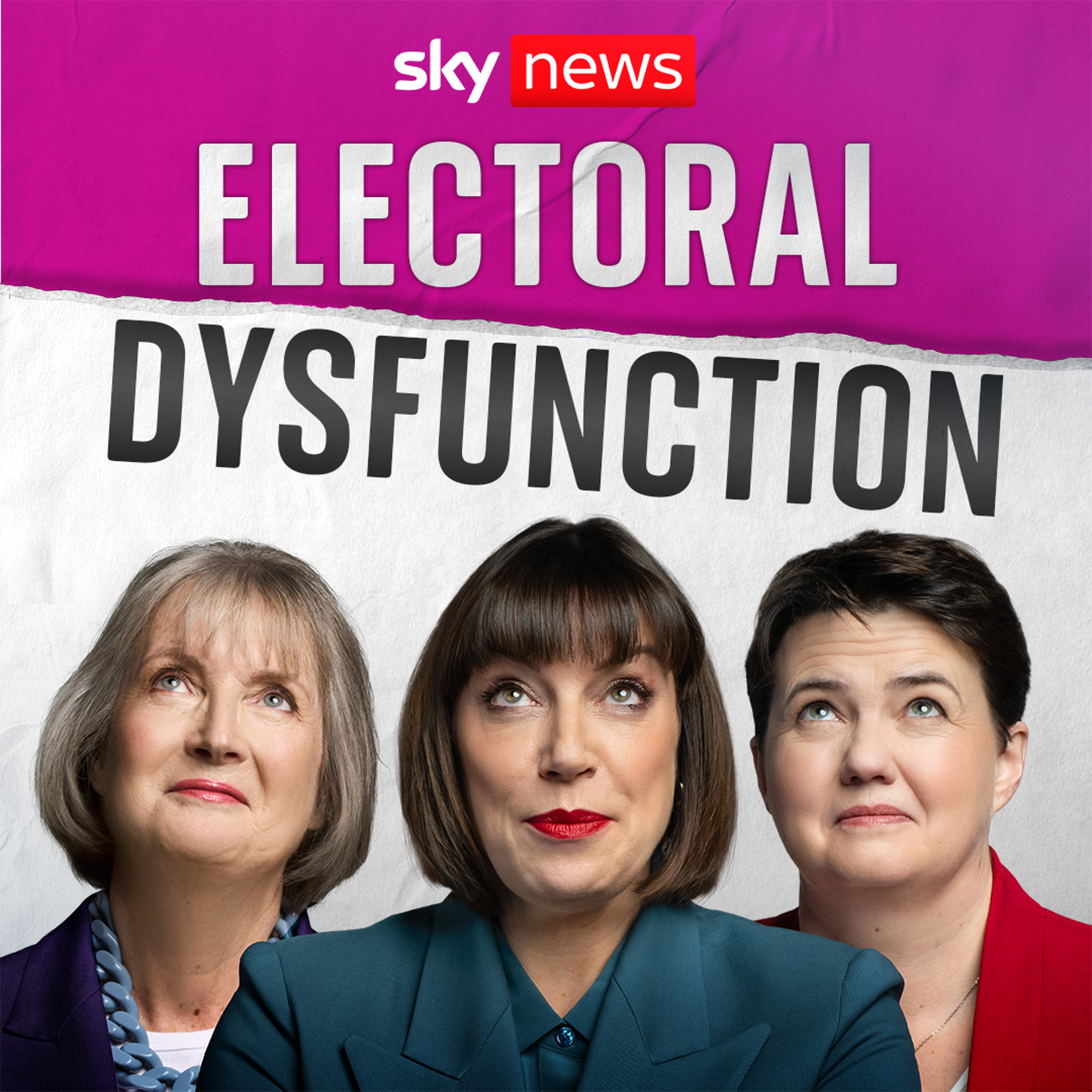
- Electoral Dysfunction
- Is the Burnham government starting to feel like The Traitors?
Electoral Dysfunction24 Jul 2026 · 45m · 14 chapters
Is the Burnham government starting to feel like The Traitors?
In short
The hosts debate whether Andy Burnham’s new Labour government is becoming factional like “The Traitors,” focusing on cabinet reshuffles, loyalty vs merit, and tensions in Scotland. They also discuss Burnham’s early policy messaging and whether it’s being funded properly, plus why prime ministers move ministers rather than keep proven expertise.
Guests (hosts)
Beth Rigby (Sky News political correspondent), Ruth Davidson (former Scottish Conservative leader; journalist turned politician), Harriet Harman (Labour MP; former deputy leader).
Key claims
Burnham is accused of rewarding Starmer loyalists’ opponents with cabinet roles while sacking Starmer loyalists, creating “score settling” and bad precedent. Anas Sarwar’s move to the House of Lords as a trade minister is framed as a betrayal of Scottish Labour expectations and triggers a Scottish leadership election. Harriet argues Burnham must “steer the narrative” away from “Manchesterism” and build bridges with excluded MPs.
Notable examples
VAT cut on electricity bills; business rates cut for pubs/bars/music venues; fare capping; early release linked to a police officer killing; Darren Jones’ tweet undermining funding claims; appointments including John Healey (Chancellor), Wes Streeting (Defence), Ed Miliband (Foreign Secretary), Louise Haigh (First Secretary of State).
Written by AI. May contain mistakes.
Chapters
0:45
The Politics of Parliamentary Recess
Discussion on the paradox of parliamentary recess during political turmoil.
“they don't need a rest they just want to go all summer they do, they do, don't you Ruth?”
2:35
Concerns about Andy Burnham's Leadership
Exploration of concerns regarding Andy Burnham's focus on the North and cabinet representation.
“And I think this idea, this talk of Manchester being the north star of the United Kingdom is going to get pretty tired pretty quickly.”
4:40
Factionalism and Party Politics
Analysis of factionalism within the Labour Party and Burnham's controversial cabinet appointments.
“of the politics that Andy Burnham said he didn't want to introduce.”
8:06
Economic Statistics and Challenges Ahead
A look at recent economic statistics and potential challenges facing Burnham's government.
“So there's a feeling that there is one less job for these very able new people who've come in from Scotland in the 2024 general election.”
12:01
Consequences of Leadership Decisions
Discussion on the implications of leadership decisions made by Burnham and their impact on party unity.
“And this is something that Andy Burnham has got to repair and he can do that quickly.”
14:01
The Rise of Andy Burnham and Party Dynamics
Explore the political shifts and party dynamics surrounding Andy Burnham's rise as Prime Minister.
“I think that it's worth remembering that the overwhelming majority of the Parliamentary Labour Party wanted Keir Starmer to succeed as Prime Minister.”
25:31
Cabinet Appointments and Political Strategy
Understanding the rationale behind cabinet appointments and the political maneuvering involved.
“What we're going to do now is we've had so many questions from you.”
28:00
Political Cabinet Dynamics
Explore the complexities and considerations behind cabinet appointments.
“It's about having people that are your people, loyal to you, will battle for you around that table, putting those into post as well.”
33:10
Finding Your Political Community
Discussion on the importance of finding one's community within politics.
“He's set the people in their posts, give them at least two more years to get on with the job and build up that expertise.”
39:35
The Social Side of Political Involvement
Highlighting the social aspects and community building in political parties.
“because we've got the first married gay men in the Secretary of Stateship of Northern Ireland and the Secretary of State for Defence.”
Show all 14 chapters
42:00
The LGBT Tory Disco Experience
Learn about the vibrant LGBT Tory disco and its social significance at party conferences.
“if you're really into politics, it can be fun.”
42:42
Listener Engagement and Insider Access
Explore the ways to engage with the podcast and become an insider member.
“And thank you for sending us that and sharing that with us.”
43:17
Shout-Outs and Upcoming Content
Hear shout-outs to listeners and exciting upcoming episodes, including a discussion on trainers.
“And I'd like to give a shout out to Laura, who just sent us this lovely email.”
43:58
Personal Running Goals and Future Episodes
Discuss personal fitness goals and tease future episodes with guest hosts.
“Did an unbranded pair of trainers from the 70s pave the way for Trump, Farage, and ultimately China's economic dominance?”

Ask about this episode
Get the gist, explore an idea or ask about something said.
 Claude
On Electoral Dysfunction, what are the key points of this episode?
Searching your listeningTranscript
Automatic transcript. May contain errors.
0:02Harriet Harman: Sky News, the full story first.
0:12Hello and welcome to Electoral Dysfunction with me, Beth Rigby.
0:16Ruth Davidson: Me, Ruth Davidson. And me, Harriet Harman. And you might not believe it, given the week we've just had, but it is actually parliamentary recess now. It's the time of the year when politics slows down. my out of office goes on and I go and lie on a beach which given we've got a new prime minister is not the best timing but I just do need a rest but urgent inquiries can be forwarded to the great Ruth Davidson and the great Harriet Harman who given that they are seasoned politicians they cannot get enough they don't need a rest they just want to go all summer they do, they do, don't you Ruth?
0:54Harriet Harman: Also this whole August off thing Do you know, I love the whole fact that lots of things that I do are to down south timetables. So everything speeds up in July because everybody's trying to clear the decks before essentially August becomes like a downtime. Whereas school holidays stop in like the last week in June. So I'm already three and a half, four weeks in to try to work full time, juggle a child, like all the rest of it. So I've only got, what, three weeks left, four weeks left. And then Finn's back at school. So it's all good. All good. Yeah, and then you can really drill down on the pod while I'm on the beach in Greece.
1:27It's perfect.
1:29Harriet Harman: Wow, I'm planning a coup because that seems to be the order of the season. I'm going to make sure somebody else runs against you. There's going to be a by-election for your seat. And then I'm going to come in like Jesus on the donkey on Palm Sunday. I'm going to be heralded. Well, look, while I've still got my chair for the final pod until Ruth, the queen over the water, comes to get me. Right, we're going to talk about, I'll tell you what we're going to talk about. We're going to go straight into this. This is Nicola, our dysfunctioner, who had this question on email. I'm going to read it to you.
2:03I live in Hampshire in a pretty deprived area in Gosport. I'm no Labour supporter, but I want to give Andy Burnham a chance. However, other Southerners that don't live in the South East are going to get fed up with him continuing to talk about the effort that needs to go into the North. should we be worried that we only have four MPs from the southern region in the cabinet?
2:27Harriet Harman: Yeah, Nicola, you know, you might be from down south, but I'm from an actual part of the north called Scotland, which Andy Burnham seems to have forgotten about. And I think this idea, this talk of Manchester being the north star of the United Kingdom is going to get pretty tired pretty quickly. And if you look at, you know, the whole of the United Kingdom, Scotland's about a third of the landmass. I know I bang on about Scotland all the time, but to get from the top of Scotland down to Manchester city centre is nearly 500 miles from John O 'Crofts to Manchester. I think this talk about the North being a bit of England, in the North West of England specifically, I think there's going to be people in the North East, in the Midlands, in Wales, in Northern Ireland and Scotland, in the South East, who all just get a little bit tired of it.
3:12Harriet Harman: And for somebody whose shtick at the beginning has all been about, let's all bring everyone together, do politics differently, hold hands and sing kumbaya. There is quite an othering about it. I think there's some alarming patterns emerging in these early days of othering, not just about representation or the feeling of who he's representing in the country, and what Nicola's picking up on. But in the parliamentary Labour Party, I'm going to say it, the early moves by Andy Burnham have gone down in different parts of the party pretty badly in that he's completely shuffled out a load of Starmer loyalists, people that have been briefing against colleagues, etc.
4:01have been rewarded with cabinet posts. I spoke to someone that was very close to all of this and got on the wrong side of some of the choices made, if you like. And they said, what is happening at the moment and what MPs are seeing is that people who have briefed against the former prime minister, who have tried to destabilise him, who have tried to destabilise other colleagues who were loyal to Keir Starmer, have been rewarded and promoted. And that actually it is the same old, same old. It's the factionalism. It's the score settling. It's the tribalism of the politics that Andy Burnham said he didn't want to introduce.
4:44He wanted to do it differently. So he said one thing and then how he's actually behaved has said something else to MPs. And then just to add the cherry on the top of the cake to that, this morning it emerges that Anasawa, who was the first senior Labour figure to call on Keir Starmer to resign. The big, massive moment when he did that. The Scottish Labour leader is quitting as this Labour leader in Scotland to come to the House of Lords, having said but weeks ago he would never do that, by the way, to become a trade minister in Andy Burnham's government. And I think it's fair to say that it has gone down like a bucket of sick amongst not just MPs and MSPs up in Scotland, but also some of those in Westminster as well.
5:33And I just wanted to get your takes on that and what you both think about it. I mean, who wants to kick off?
5:40Ruth Davidson: I think starting off with what has been positive, we've had some decent economic statistics, inflation steady, borrowing down, the opinion polls have gone up, which are incredibly important in terms of the mood of politics. And he's had three good announcements on the cost of living with measures to cut VAT on electricity bills, cutting business rates on pubs, bars and music venues and capping fares. So that's all on the plus side. But as is inevitably the case, there have been issues on the problem side, some within his control, some within the Prime Minister's control, and some not. So, for example, the prison release issue, where it looks like early release is going to be granted to somebody involved in the terrible killing of a young police officer under an early prison release scheme to avoid a crisis in the prisons.
6:37Ruth Davidson: That's suddenly come up because his widow and his family have been told that he's slated for early release and he'll have to deal with that. Trump is stepping up the bombing in Iran, so that is going to cause further economic shocks. But two particular things on the problem side, which he is going to have to deal with, is one which is the disaffection and discontent of the sacked Starmer loyalists. And he can do something about that because even if you've sacked people, you can still include them. You can think of important contributions they can make. You can keep talking to them. If you sack somebody and they start complaining publicly against you and briefing against you privately, you can either double down and say they were a terrible person anyway, I was right to sack them.
7:26Ruth Davidson: Or you can actually lean into recognising that they've got attributes that are useful for the party and the country and actually double down on your engagement with them and he should definitely do that. And then there is the question of the big unsettlement of the situation in Scotland, which is, in addition to the points that you've made a number of things, is that Anas Sawa is going to be given a ministerial job. And because of devolution, there's a restricted number of ministerial posts that Scottish members of Parliament can take. If you give a ministerial post to somebody in the Lords, then that's one further thing that is not available to Scottish Labour members of Parliament.
8:10Ruth Davidson: So there's a feeling that there is one less job for these very able new people who've come in from Scotland in the 2024 general election. But also there's going to be a leadership election. There won't be a by-election because Anna Sawa's seat was part of the regional list. So Anna's will go and Monica Lennon will take his place in the Scottish Parliament and then there will be a leadership election for Scottish Labour.
8:36Harriet Harman: In terms of this loyalists getting sacked and people that were disloyal getting promoted, Andy Burnham's stirring up kind of trouble for himself here because it's a terrible precedent to set for particularly ambitious backbenchers on what do you get if you're loyal to the Prime Minister. If we look at the people that he's sacked, it sort of falls in two groups as to the ones that you can understand it and people in professional politics would understand it. A new prime minister will want a new chancellor. So changing Rachel Reeves, I think, understandable. He'll want a new number too. So he's got Louise Hagen.
9:08Harriet Harman: He's going to call her the first secretary of state, whereas he didn't want to keep David Lammy around, who was the deputy prime minister. You can kind of understand that. You want your top team to look and feel refreshed. Darren Jones has behaved pretty badly since he got kicked out. So, I mean, that sort of proves the point that he probably should have been. But people like Peter Kyle, Peter like Liz Kendall, people like Nick Thomas Simmons, people like Steve Reid, they were loyal to Keir Starmer. They're not in a clique. I mean, these people weren't like hanging out and having dinner at his house on a Friday night and breaking bread.
9:41Harriet Harman: Keir Starmer didn't really have a clique, particularly when he came into the post of being Prime Minister. These were people that were loyal to the Labour Party, loyal to the idea of service and government, loyal to the idea that you do your best and that actually you don't brief against a sitting prime minister. So the idea that some of these people have been subject to the putsch, I think, is actually in a weird way more damaging than some of the headline acts because it is a terrible precedent to set. And also the idea that, and this will take us back onto Anna Sarwar, the idea that somebody that spent an entire election campaign saying the Labour government's terrible, please vote Labour, which is what he essentially had to do as soon as he called way back in February for Keir Starmer to go and refuse to rescind it.
10:29Harriet Harman: He had to spend like every question was about that. And every time he stood up and said, the Prime Minister's crap. So for people that were trying during that period, when it looked as if it could go either way and the government might survive, and, you know, they were trying to not have scuttlebutts and gossip dominating the headlines, but we're trying to actually highlight some of the policy changes that they were making and some of the forward momentum that they were making. The idea that you give this really super disloyal guy a promotion out of the job that he's got to do after he's already kind of lost you a number of seats in Scotland and delivered your worst result in 27 years there.
11:09Harriet Harman: I mean, it just, it really, there are a lot of people in Labour angry and not just Scottish Labour, but Scottish Labour are
11:16Ruth Davidson: white-hot furious. Andy Burnham did say he wanted the Lords to be a Senate for the nations and the regions, so you could look at it as part of that. But going back to the time of when he and Asawa said that Keir Starmer had to go, really there was a quite united view in Labour in Scotland that they just could not get past the Keir Starmer problem on the doorstep, that every discussion on the doorstep was not about what Labour would do in Holyrood, what the bad things that the SNP had done, that it was all about public opinion on Keir Starmer and therefore that it was a necessary thing to actually get past in order to have a conversation with people.
11:55Ruth Davidson: Obviously now, especially him having ruled himself out of going to the Lords, now people are alleging it was a deal. And this is something that Andy Burnham has got to repair and he can do that quickly. He'd do that over the summer. He's said he's travelling around the whole country anyway. Early visit to Scotland required, I think. Can I come in on that, Harriet? Because if he hadn't have done it in the first place, he wouldn't have to repair it. And actually, if you are someone that had backed the Prime Minister or didn't want the leadership race to happen and wasn't actively mobilising against Keir Starmer, to watch this unfold and see that John Healy, who resigned from Starmer's cabinet over the Defence Investment Plan returns as the Chancellor.
12:42And Anas Sawa, who first called for Keir Starmer to go, and then emerges in the House of Lords with a peerage that he said he never wanted as a trade minister. And then Wes Streeton, who also resigned from Cabinet, is promoted to Defence Secretary. And Shabana Mahmood is kept in his Home Secretary. And Ed Miliband, who called on Starmer to go, is now promoted to Foreign Secretary. and then you have Louise Haig, who is promoted to first secretary of state, admitting in a podcast to Nick Robinson that they'd been planning for a year for Burnham's ascent to power. you could conclude if you are not in the group of Andy Burnham's winners that this is quite a targetive, well-organised, well-planned, well-executed defenestration of a sitting prime minister where actually a big faction of the Labour Party is rewarded and that Andy Burnham, far from changing politics and doing it differently and having a different kind of party and making it non-factional and bringing everyone together.
13:47In all of his early actions, he's done exactly the opposite. And I'm going to say it now. I think that this could bode very badly for him going into the autumn and winter because all of his actions have poured flames on the fires rather than soothed these wounds.
14:09Ruth Davidson: I think that it's worth remembering that the overwhelming majority of the Parliamentary Labour Party wanted Keir Starmer to succeed as Prime Minister. They did not want to be part of an organised plot to get rid of him. But what happened is that he made a few mistakes early on, which he's acknowledged. He became ridiculously unpopular with the public in a way which I think was completely unjustified, but it was actually a fact. And also reform was surging and there was a deep fear of reform. And that is what meant that the Parliamentary Labour Party lost confidence in him. And that's why they turned to Andy Burnham.
14:48Ruth Davidson: Andy Burnham now being the new prime minister, it's inevitable that he's going to want to shape his own cabinet. It's perfectly acceptable for him to bring in people that he wants to serve alongside him in his cabinet.
15:03Harriet Harman: And when he became the Labour leader on the Friday, before he became the prime minister on the Monday, he made a speech, a huge chunk of which at the top was about how to bring the Labour Party together and how that he would reflect all parts of the United Kingdom, all parts of the party from the left to the right, that he would have gender diversity, that he would have other types of diversity. And he's not done that. And basically the undertone was, and everybody needs to get in line behind me. But he's only done one part of the deal. He's expecting everyone to get in line behind him, but he's utterly shafted people who were loyal to whoever the sitting prime minister was, even though they weren't particularly in a faction or not.
15:39Harriet Harman: And he's rewarded people that outwardly tried to destabilise a Labour government.
15:43Ruth Davidson: They weren't trying to actively destabilise a Labour government. What happened is that the public... Well, but what actually influenced the parliamentary Labour Party was not Anasawa saying Starmer should go. And West Streeting was as well. What influenced the parliamentary Labour Party was not West Streeting resigning. what influenced the parliamentary Labour Party was that Keir Starmer had made mistakes, that the public had turned against him and that reform was surging. And the question is whether you think it's cause and effect. And I think it's the effect. And now the optic is it was all a plot.
16:18Those around Burnham would say to me, it's not that Burnham took Starmer's job, Starmer lost his job. I don't disagree with what you're saying, which was Starmer had control and then lost control by errors he made. And Andy Burnham and his allies took advantage. It's politics, it's nasty. Let me put it another way to you. What did you think of Anas Sawa quitting as the Scottish Labour leader to come down to take a seat in the Lords and become a trade minister? And do you think Andy Burnham has made his job easier or more difficult by his early actions in terms of how he's managing the party?
16:55Ruth Davidson: There are difficulties as a result of the appointment of Anas Sawa. and he has got to sort those out in Scotland. But I would say there's two further things he's got to do. One, and this relates to Nicola's question, he's got to steer the narrative. Manchesterism is not about an alternative to London, London bad, Manchester good. It's about an analysis which says, if you look at other European countries, they have their capital city helping drive economic growth, but they have big regional engines of economic growth in the other big cities in the country. And we don't have that. And that that holds back the economy of the country.
17:33Ruth Davidson: And therefore, it's not just Manchester, it's all the big cities, but politically, that we are held back by people in towns and coastal communities feeling that they're left behind. And therefore, it's an economic and political analysis that rests on devolution. And he's got to explain, it's not about Manchester versus everywhere else. It's a different analysis. And he's got to make sure that people understand that. But he's also got to build bridges with the people for whom there is not been space in the cabinet, but are still members of parliament, have still got all the attributes and interests that they have.
18:09Ruth Davidson: And that is perfectly possible. So as well as encouraging and supporting his current cabinet with the work that they're going to take forward, he's got to talk to the people who are in the previous cabinet who've got expertise that they can actually, and wisdom they could feed in. He's got to be talking to them as well as talking to his current cabinet ministers. And if he does that, I think that he can build bridges. So Harriet, if you, if you, you would, you would advise Andy Burnham to get on the blower to Darren Jones ASAP, would you, or some of his team? Absolutely. Invite him in. Darren Jones is a repository of a lot of wisdom and expertise.
18:49Ruth Davidson: And if the Prime Minister calls him and talks to him, he will want to help. But what he won't want to be is totally excluded as if he's been thrown on the scrap heap. So I think that that's about including people. And Andy Burnham has said, he wants to be inclusive. But the truth is, you cannot include everybody in the Cabinet. There's a limited number of places. He's entitled to have people he wants in every single cabinet post.
19:19Harriet Harman: Can I posit a different idea here, which is that Darren Jones knew exactly what he was doing in saying that... Yeah, he did. He did.
19:29Ruth Davidson: And I said that was completely wrong.
19:31Harriet Harman: Rather than being somebody who, you know, needs loved, Darren Jones needs to be told that that's not how you behave. because presumably that's what a lot of people think. Because, I mean, you know yourself, Harriet, like you've been in this game a really long time. There is a window. And I get that Andy Burnham is like a lucky general. He's lucky that reformer off imploding over on the left-hand side over here so he's got a bit of space. He's lucky that the timing that he's come in means he's got the entire summer to make policy announcements without having to face any scrutiny on any of them because Parliament's not sitting.
20:07Harriet Harman: He's not done any sit downs with any journalists yet, proper ones. So he's getting a free ride. He's getting three months of a free ride. But he will be established in people's minds pretty early. And the idea that the Tories are running right now is he's going to give lots of money away and he's not going to tell you how you're going to pay for it, that he's economically illiterate and it's back to big spend labour who are going to have to tax you more eventually. And having Darren Jones come out on your very, very first policy proposal and say, oh, the way you said you were going to pay for that, for scrapping ID cards, we'd never put any money into that anyway.
20:44Harriet Harman: Can you not do your sums? Do you not even know that? Are you so out of touch? The implication of that he's either trying to pull a fast one on the public or that he doesn't know because he's not been in parliament for a while, I mean, is devastatingly damaging. And if that narrative catches hold that, you know, he might be a pretty face with some long eyelashes and, you know, and a cheeky smile and he can talk about the football, but that he can't do the sums and it's going to cost us all even more in taxes is devastating. So it's not just that you need to hug Darren Jones close and, I don't know, make him an envoy to New Zealand or something and pat him on the head.
21:21Harriet Harman: Maybe you need to sort out what the chat is and make sure that you copper bottom your policy announcements before you come out there, but that also that you treat people in a way which respects how they have acted so that people understand that if they act badly, they get slapped down. And if they act well, they get promoted. Not the other way around. Harriet, this is a question from Charles. If the VAT cut isn't funded, the electorate has a right to know, surely. Why did Burnham imply it was?
21:55Ruth Davidson: I think, obviously, it's important that when Andy Burnham makes announcements that he says where the money's going to come from, there's no secret about government funding because it's all set out in these books. So it's not as if Darren Jones was giving a secret that he knew from having been an insider that otherwise would have not been available to the public. Had Darren Jones not tweeted first thing in the morning, by midday, a whole load of other economic journalists and other analysts would have actually said, yes, this was a commitment, but it was a commitment that hadn't yet been funded the digital ID cards.
22:32Ruth Davidson: So I'm not saying that Darren Jones should keep secrets from the public. The public obviously have a right to know. I'm just saying that for Darren Jones' own sake and for the stability of the government, you don't want to look as if you are undermining a prime minister on his first day because you've been sacked from the cabinet. I just think it's not a good mindset for him, obviously it's disappointing. And, you know, he's brimming with knowledge. He knows a whole load of things and it's very difficult if you've got, you're brimming with knowledge and you've got no outlet for it because you're no longer in the cabinet leading a huge department.
23:11So I think it was more from Darren Jones's own point of view and party
23:15Ruth Davidson: unity, not in me saying that the secrets should be kept from the public or that Andy Burnham should be making commitments which there's no means to pay for them. So I guess my observation is, doing the job I do, that there is a bit of a disconnect in what Andy Burnham promised in terms of the party and this fresh start and doing things differently and the kind of bad blood that has been spilled both over the cabinet, the way it was handled and the cabinet appointments and how they were handled and then the sort of reward in Ovanasawa in the way that it's obviously going to destabilise Scottish Labour.
23:56But it's how I put it in my TV report the other day. If it was a bloodless coup, there has been quite a vicious cull of Starmer loyalists and it has spilled bad blood and left bad blood within the parliamentary party, which I think could have been avoided. And it just seems like Andy Burnham has got unnecessarily got off to a start that he could have avoided.
24:32Ruth Davidson: Hi, producer Laura here. We'll get back to this episode of Electro Dysfunction in a moment, but I'm just interrupting the podcast to remind you about our new Members Club. You will have heard Beth Reeth and Harriet talk about Sky News Insider a lot lately. it's$2.99 a month and you get an extra episode from us every Tuesday you might have seen already that Jess Phillips is back she's back on the podcast with some of those members only episodes as part of your subscription you will also get these Friday episodes completely ad-free and if you listen to our sister podcast Trump 100 or if you're interested in our new Sky News podcast Stuff Matters with Ed Conway you can get ad-free listening and bonus episodes to both of those shows too it's all in the same bundle as your ED member subscription you'll also get access to a host of new ways to interact directly with Beth, Ruth, Harriet, Jess and us, the team who make the podcast.
25:17Ruth Davidson: Terms and conditions apply. You can only become an insider if you're over the age of 18 and if you're in the UK. Subscription auto-renews at the regular price unless cancelled via my account. Cancel any time effective at the end of the billing period. Okay, that's enough from me. Back to Beth, Ruth and Harriet.
25:36What we're going to do now is we've had so many questions from you. And also we've had so many listens, like everyone's been really into it. So thank you. We appreciate that. And do tell your friends about ours.
25:47Harriet Harman: Yeah, like an old fashioned chain letter. Do you know that way we had to write to 10 people and then they had to write to 10 people and then they had to write to 10 people. We did it at primary school and then you saw what the multiplying effect was. And I think it was supposed to show you about compounding or something like that. I'm sure there was a point to it, but anyway, it was fun to do. But yes, do that with your friends. Tell 10 of your friends. Electoral dysfunction. Brilliant podcast, you know. And then they're till 10 and then they're till 10. The dog is back. Oh my God. And now my cat's just jumped on the table.
26:16Wow. She is quite sweet. I don't think everyone needs to see your bum. Thank you. Right. There she goes.
26:23Harriet Harman: Now from Carol, who's one of our listeners, she's from Edinburgh. She messaged on the burner phone. She asked, can you explain why new prime ministers don't keep ministers in cabinet roles where they've already built expertise. For example, Yvette Cooper as foreign secretary and bringing John Healy and Wes Streeting back to defence and health respectively. Surely it's better to have the cabinet up and running quickly without a period of handover where work can continue. Brackets and at pace, please, Andy Burnham! Exclamation point, close brackets. Thank you, Carol, for that. Actually, Beth, why don't we ask you that one first?
26:57My cat's answering it. Look, she actually looks like she's taking the mic. She does look like she's taking the mic.
27:04Harriet Harman: Yeah, so if you're watching on YouTube, you can see Iris the cat. There's another cat called Scooby that sometimes makes an appearance. He's a mouse killer. She's gone, thank the Lord. Why would you move Yvette Cooper to health? I mean, as I understand it, she was going to be moved to defence and didn't want that and took health instead. But why would you move her out of a job that she's been doing for a year or so and is doing well and, and, and? Yeah, so, I mean, it's a really good question. And I guess, Carol, for lots of people watching it, you just think it doesn't make any sense. If you've got someone in a job and they're performing well in the job, why would you move them?
27:39But the thing about a cabinet is politics is partly about meritocracy, but it's also about patronage. It's about loyalty. It's about rivalry. And so what you want to do in a cabinet and also is about potentially peace amongst men and women. So part of putting a cabinet together is about different factions of the party so that you keep different groups of people on board. It's about having people that are your people, loyal to you, will battle for you around that table, putting those into post as well. It's partly about having really excellent people in certain roles if you think that they're going to do a really good job.
28:23So there's lots of considerations that any prime minister makes when they appoint their cabinet. It's also the height of their power. This is the prime minister's most powerful moment because they get to decide who are going to have those big jobs. And it's their patronage that they want to reward partly. So if you've been loyal to the prime minister, if you're helpful to the prime minister, they reward you and then they lock in your loyalty and then off you all go. So when you're appointing your cabinet, you're taken into all of those considerations. And in truth, meritocracy and who might be better at the job isn't always the priority.
29:06And that is the truth. It shouldn't necessarily be the way it is. But I think that is fair to say, isn't it, Harriet, that sometimes the consideration isn't has that person got the most experience or will they be really good at the job? It's about other considerations around configuring your top team and loyalty and patronage and trying to represent the party. And politics are at play when you make the choices.
29:32Ruth Davidson: Well, I think you're right, Beth, that all those things have got to be balanced. But I also strongly, strongly agree with Carol that, you know, there is a price that's paid every time a minister is moved. Because when a minister is there in their department, they get to know all the civil servants and they get the working relationship with them. They get to know all the outside stakeholders that are concerned with what that government department does. They build up their expertise and their understanding. And if you just move them, all that is lost. And then I think it takes at least six months, if not a year as a minister to really build up relationships, to get your feet under the desk and really know what you're doing.
30:16Ruth Davidson: So I think there is an under recognition of the price that is paid of moving people around. I mean, I think John Healy will be an excellent chancellor. I can see Yvette Cooper being an excellent secretary of state for health. Similarly, Wes Streeting at defence. There has been some building on expertise. So, for example, Miata Fanbulla, who is the new Secretary of State for Energy, she was a junior minister in that department before and really excelled. So she is going back in. Although she's a new appointment and she's higher up, she's going back in to a load of expertise. She's already got a relationship.
30:56Ruth Davidson: She's already built up.
30:57Harriet Harman: I think there's one thing that's really interesting when building a cabinet is because you know the people around the table, because of your colleagues, because you've worked with them, you kind of sometimes forget their backstory. And then, so when you pick a cabinet and you think you've got, you know, you've, I don't know, it's quite well gender balanced, or there's people with a diversity of backgrounds in terms of people from ethnic minorities, or, you know, that are openly LGBT, or something like that, and you've got a mix of stuff, you kind of sometimes forget what people have done. So maybe a day after it comes out that, for example, with this one with Andy Burnham, it's like loads of people went to Oxbridge.
31:34Harriet Harman: OK, but I'm pretty sure when they had the board up and they were wondering who was going to be, you know, which one, they didn't go into their CV and say, OK, now, which university did they attend 25 years ago? because you don't care about that particularly. Or sometimes you get, so how many people went to a fee-paying school or a grammar school where it was a selective school on educational attainment rather than on something else. So a selective school and how many people went to comprehensives or suddenly they'll go, not just where their seat is, so not how many people come from a constituency somewhere, but where are they from?
32:09Harriet Harman: Because sometimes people don't represent an area where they were born because their family moved when they were younger or they had a job there as an adult or whatever. So you can quite often be caught out. So this idea of diversity that you have and people count stuff and journalists count things, you can quite often get yourself into trouble quite quickly without really thinking about it. But it is 4D chess. And that's where I think sometimes, and this comes back to Carol's question about why people get moved. Quite often it's optics as well as delivery. And I think sometimes we need to be a bit less worried about one and just get delivery right first.
32:46Ruth Davidson: Can I just back up Carol's point and say now that he's made all those decisions, he's taken into account all those things that Ruth mentioned that he has to balance in the 4D chess, is that now he's decided on who his cabinet and his junior ministers are. I would say, you know, in the spirit of Carol, leave them there. Let them get on with the job short of a scandal. And I just think political reshuffles are a bad idea. He's set the people in their posts, give them at least two more years to get on with the job and build up that expertise. And when people have got the pictures on the board, like in the X Factor or working the Rubik's Cube to try and get the balance, I think existing relationships and existing expertise is sometimes not rated highly enough.
33:37Just finally, Carol, also on Cabinet Reshuffles, as we were saying in our episode earlier in the week they also go a bit wry sometimes so uh they're quite unpredictable because you're offering people jobs and you don't know if they're going to take them and as we were saying Rachel Reeves turned down a job and just to just to clarify on that um I said in the pod on Tuesday that I thought she'd been offered defense uh other people have subsequently told me that she was actually offered education I'll say again Rachel Reeves team will not discuss what she was and wasn't offered. But that just, I just, given that I've got new information on that, I thought I would share that.
34:16And just on the sort of purge of Starm rights, I've got a Labour MP message me because we've been talking about this this morning. They've made the point that Starm that Andy Burnham did not purge Starm rights at lower levels of government. So beneath the cabinet, he still kept many on board but they also say Harriet this is coming back to our person of the day of the week Darren Jones this person said that they think sacking Darren Jones was harsh because he is very capable so Carol there's an example of someone that maybe should be in cabinet on capability experience merit
34:54Ruth Davidson: he was not capable of having the judgement that to wake up in the morning and do a tweet like that was not a good thing Well, yeah, there you go. So he's undermined his own case. I hope we answered that, Carol. Look, we've got one final question and it's for you, Ruth. All right. It's from Joshua. I'm going to read it out. I'm 27 from Britain's rural shires with a growing passion for politics and have been listening to the podcast for just shy of a year now. Thanks, Josh. That's Joshua. Thank you. I was moved by what you said in one of the episodes when you were talking about growing up in rural Scotland as a gay conservative woman.
35:32I was getting a bit of my own life in that. I'm in a similar place now as a gay conservative man. It can feel incredibly isolating. I sometimes feel like I'm living in self-isolation because of my political beliefs combined with my sexual orientation. So my question is, how did you find your people and how should I go about it? P.S. Beth, you are my fave political correspondent. Please, please stay away from Sky Sports.
36:02Harriet Harman: I think Joshua watches politics more than he watches sports from that to be honest Joshua um the the sky sports is just my own fever dream sort of linked to fever pitch it's never going to happen so don't you worry they're going to keep me in my lane and that is politics but Ruth yeah well first of all thank you for writing in Joshua because actually sometimes it's it's quite hard to say look this is who I am this is where I am and this is how I feel so thank you for that and keep at the politics. We need good people, whether it's in my party or Harriet's party or any others out there that want to be involved and to keep coming forward.
36:35Harriet Harman: Because quite often we talk about how hard politics is or we get into the kind of minutiae of it. And we forget that actually public service is quite noble and we need good people to make decisions on behalf of the country and do things well. So thank you for that. In terms of finding your people though, so I came out really late. So I was already in my mid-twenties when I came out and I was a journalist at the time and I was really strong on the idea not only that I had to be impartial but that I had to be seen to be impartial. So I didn't join the Conservative Party until actually I joined it on the same day that I put in my voluntary redundancy request from the BBC.
37:10Harriet Harman: I did know lots of politicians because I'd done a bit of political correspondency and all the rest of it but I wasn't part of a Tory tribe. I was never at university. I was never in a Tory society. All my pals, because I grew up in Scotland and Tories were pretty rare at that time, belonged to other political parties or they were quite political people. We were all kind of into, you know, current affairs and all that sort of stuff. And we would have big arguments in the pub and things. Some were members of a political party, some weren't. But none of them were Tories particularly. So I also felt like a bit of a black swan.
37:42Harriet Harman: I was, in terms of my university pals and my pals from school, I was the only gay, I was the only Tory. So I've always felt a bit different. I think what was interesting for me was once I got involved and once I joined the party and I quite quickly became a by-election candidate which is mad because you have a lot of people around you is that actually there are lots of gay tories there are hundreds of them hoaching, the party is hoaching with gays and also people mostly don't care they just want you to be good at what you do and to contribute and be part of a team and one of the things that's so beguiling about politics and one of the things that keeps people in it for so long, even when they've, you know, perhaps been demoted or lost a job or whatever, is that you feel like you're part of something.
38:27Harriet Harman: Being in a political party makes you feel like you're part of something. So my advice to you would be to reach out. There's an organisation called LGBT Plus Conservatives, which is a campaigning group within the party. You can, you know, it has a website. I'm one of the patrons of it. There's plenty of others if you look through of people that have been elected, but it's mostly non-elected people. And they do events, they have a party at party conference, if you choose to go to that, they will also, if there's elections on or by-elections on, they'll go as a group and help LGBT plus candidates for the party.
39:00Harriet Harman: And that might be one of the ways that you can find your people, if you like, people like you within the Tory party and feel part of a group within a group, if you like, and maybe that'll make you feel more part of the main group. But also, let me say, it is also okay to feel different and to still make a contribution. And I hope that you get more involved with the party and I hope that you get more involved in politics because, like I say, we need good people. And the more involved you get, the more people you'll meet and the more, I think, you'll feel that you have a home.
39:34Ruth Davidson: And symbolically, there's been a big change because we've got the first married gay men in the Secretary of Stateship of Northern Ireland and the Secretary of State for Defence. For all we've talked about, the symbolism or who's good at their job or not,
39:48Harriet Harman: there is something that says politics is about representing the whole country and having representation at the highest level of government is important and being seen to have somebody like you, whether it's from your hometown, whether it's from your ethnic minority, whether it's from your sexuality, whether it's from somewhere else, to show that it can be done, that you can get to the very, very top and matter and make a difference and change the politics of the country, change the country, it does matter. You know, it does matter. So I've completely changed my view on role modelling in the last sort of 15 years.
40:21Harriet Harman: And I think that everybody that breaks that ceiling that little bit just makes it easier for those who come after.
40:28Ruth Davidson: Well, I think the moment you took the leadership, Ruth, was a really big moment. And not just, I wouldn't say for gay people, but for everybody who wants a sort of society where you are not limited by prejudice and discrimination. So I remember it was a huge, huge moment. Yeah. Also, what you said there, Ruth, reminded me, and I think is really lovely to say, and Joshua, you should think about it, is that we talk a lot about politics and the aggro and the arguing, but actually, and I see it because I go, I've never been in a political party. I've never joined a political party, but I go and observe political parties at conference and they are places where people can find a sense of belonging.
41:11And we kind of talk about running clubs or swimming clubs or, you know, joining the orchestra or joining a football club, et cetera, et cetera. But actually, you know, you, you could find your family in the conservative party and you could join a party and participate and find your people there. And it's funny, actually, that we never really talk about the sort of social side and the sense of community that you can have if you are really enthusiastic politically of actually joining a political party. It's kind of not been that much in vogue. But actually, you know, when I go up to conference, there's lots of young conservatives and having a great old time, you know, they go into events, they're watching their cabinet ministers speak, or shadow cabinet now, they're off, you know, dancing at the disco afterwards.
41:59It's actually, you know, if you're really into politics, it can be fun.
42:04Harriet Harman: And yeah, the LGBT Tory disco at party conference is one of the best attended events. Like there's a spectator party, which is invite only, but that everyone wants to get an invite to because there's lots of free posh wines and champagnes. And you get to see everybody in cabinet or shadow cabinet. But the other big event actually is the LGBT Tory disco. And they always have a guest person that comes and does some DJing and all that sort of stuff. And I think not just families are formed, but relationships are formed at that because I've seen them happen in front of my very eyes. There you go. All right, Joshua.
42:42I hope that was a great answer. So thank you. And thank you for sending us that and sharing that with us. That was really good of you. Okay, that is it for us for today. But do tell us what you think. You can do that over on the burner phone. That's 07934 200 444.
43:01Harriet Harman: You can also send us an email. The email address is electoral dysfunction at sky.uk. And if you're an insider, you have access to our brand new members forum. So there's so many different ways to get in touch. If you want to become an insider member, there is a link just in the show notes for this episode. And I'd like to give a shout out to Laura, who just sent us this lovely email. You guys are my current faves, having just secured an elusive London marathon place in 2027 in the ballot. I will be listening for training tips too over the coming months and not just your political take on the world.
43:37So maybe Laura will do an electoral dysfunction run club special on a Tuesday. Let me know if you want me to do that. I'll have a go.
43:46Harriet Harman: Well, also, if you're getting the right trainers for running, you can also download N Conway's Stuff Matters podcast next Monday because it's an episode about trainers. And here's Ed's theory on that episode. Did an unbranded pair of trainers from the 70s pave the way for Trump, Farage, and ultimately China's economic dominance? I mean, there's going to have to be a lot of breadcrumbs to lead me through that episode, but his Stuff Matters podcast is just a thing of beauty. It is really, really good. I literally cannot wait for that one that's it get it listened to I love it okay I need to get in shape because before I'm 50 I want to do a half marathon before I'm 50 and I am not a runner so anyway come on you could do it with me and Harriet could be Harriet could be on the final mile dressed in magenta cheering us on
44:39Ruth Davidson: final 10 yards I'd say but Ruth will be back on Tuesday with a guest host on our insider episode and then Beth and I are here next Friday with something a bit different. But until then, goodbye. Goodbye. Goodbye.
From the publisher
In appointing his new cabinet Andy Burnham has removed many of Keir Starmer's faithfuls, including previously key figures like Rachel Reeves and Darren Jones.
And critics feel 'traitors' who had tried to destabilise the recently departed PM are being rewarded for their disloyalty.
Former Scottish Labour leader, Anas Sarwar, called for Starmer to go back in February. Now he's off to the Lords for a ministerial job under Burnham.
At the Electoral Dysfunction Round Table, Beth Rigby asks Harriet Harman and Ruth Davidson how Burnham can deal with the bad blood his choices have created. Harriet wants him to 'build bridges' with those he ousted.
We also have lots of questions from Dysfunctioners about a big political week.
We’ll be back on Tuesday for our Sky News Insider subscribers - find out how to subscribe here: https://skynews.com/electoraldysfunction
Got a question for the burner phone? WhatsApp 07934 200 444 or email [email protected].
Sky News Insider requires a paid subscription and is available to UK listeners aged 18 and over.
More from Electoral Dysfunction
All episodesWe use cookies.They keep VO running smoothly and help us improve it. Privacy policy