
 Ask ChatGPT

- Podcasts
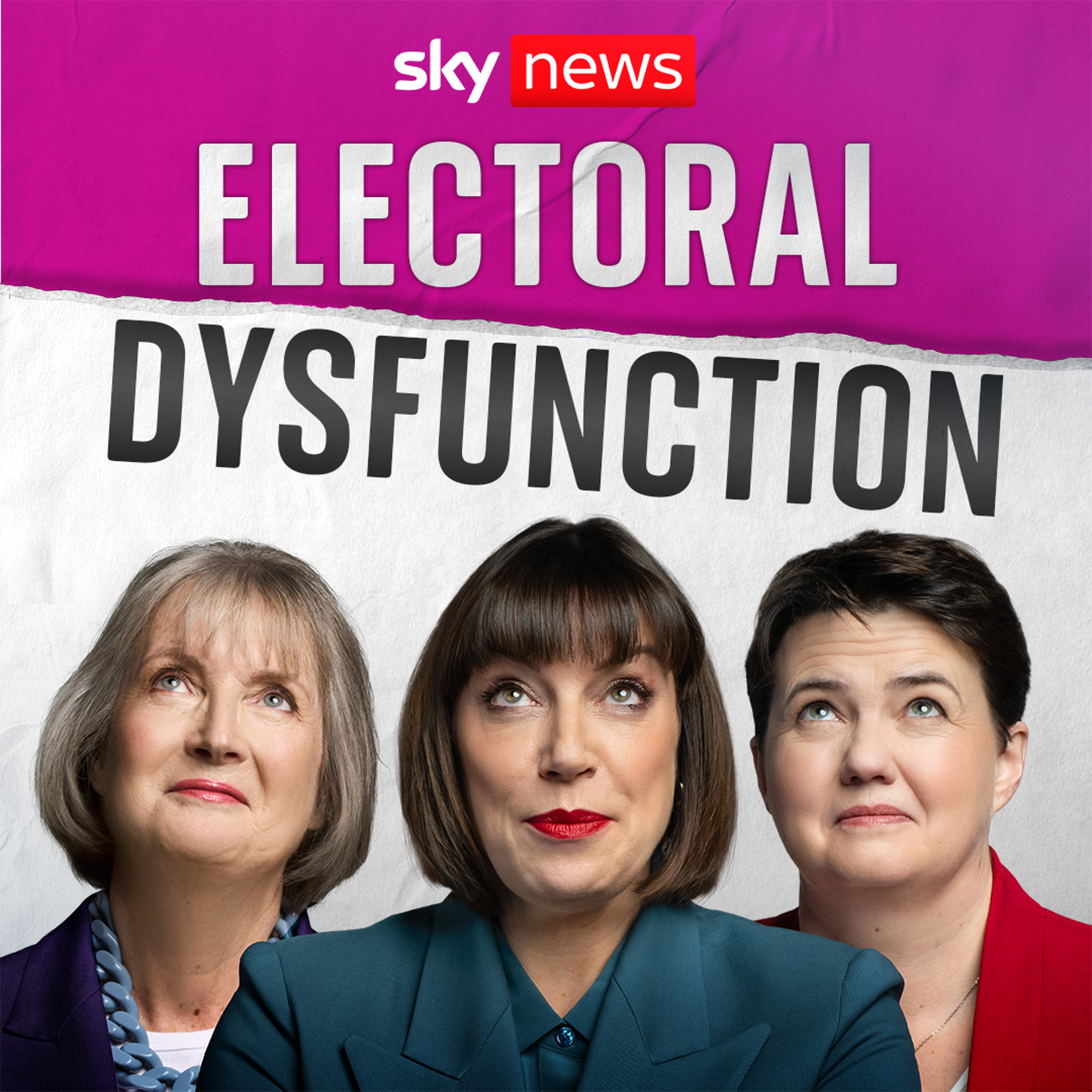
- Electoral Dysfunction
- Is the government doing anything to stop AI killing us all?
Electoral Dysfunction18 Sep 2026 · 57m · 19 chapters
Is the government doing anything to stop AI killing us all?
In short
The episode debates UK government handling of asylum accommodation and online safety regulation, then pivots to whether government is doing enough to regulate AI amid warnings it could be dangerous.
Guests (backgrounds)
Lisa Nandy, Secretary of State for Culture, Media and Sport, newly given responsibility for online safety/digital regulation under Prime Minister Andy Burnham. The hosts are Beth Rigby, Ruth Davidson, and Harriet Harman (political commentators); they discuss asylum and women’s safety concerns.
Key claims
Government should be more interventionist and quicker to update laws as tech changes. Online Safety Act needs “more legislation” and faster enforcement; doxing (e.g., publishing names/addresses) should be criminal and platforms must act. For asylum, national policy to move people from hotels to military sites must be paired with engagement and fairness to avoid concentrating burdens on poorer communities. On AI, government must develop a regulatory model and “guardrails,” invest in UK capability, and lead internationally.
Notable examples
Piddington (Oxfordshire) referendum against housing about 1,200 asylum seekers at a disused MOD site; Wigan asylum hotels; RNLI volunteer doxing and addresses shared online; TikTok/YouTube/X roundtable where X didn’t attend; Afghan nationals cited as about three times more likely to be convicted of sexual offences (with data limitations).
Written by AI. May contain mistakes.
Chapters
0:46
Exciting Live Show Announcement
Details shared about an upcoming live show and its significance.
“Look, we have some news for all of our dysfunctioners.”
2:53
Asylum Seekers in Piddington
Discussion on the controversy surrounding asylum seekers being housed in Piddington.
“And when Andy Burnham came in, he's put her in charge of a lot more stuff about online safety.”
4:22
Community Reactions and Demographics
Exploration of local reactions to the housing of asylum seekers and demographic concerns.
“So it's an absolutely tiny little hamlet, if you like, in a beautiful part of England.”
6:28
Government Strategies and Local Empowerment
Discussion on the government's approach to asylum seeker housing and local empowerment.
“He wants to empower to the lowest democratic level, whether that's through metro mayors, whether that's through local councils, parish councils, whatever, until it clashes with national strategies.”
7:52
Balancing National Policy with Local Concerns
Analysis of the tension between national asylum policies and local community concerns.
“I'm not saying that only one part of the country or one group of community should do all of the work.”
9:22
Cultural Implications of Asylum Policies
Discussion on the cultural implications and perceptions of asylum seekers in communities.
“how it can be done in a way which makes them feel less alarmed about it.”
11:17
Safety and Security Concerns
Addressing safety issues and the gender imbalance in the asylum-seeking population.
“And then I've lived in a city for all of my adult life.”
14:01
Women's Safety and Asylum Seekers
Explore concerns around women's safety related to increasing asylum seekers and the complexities involved.
“And then when they build businesses and get more affluent, they move out and move elsewhere, who think that they have been unfairly had these people put on them.”
18:34
Government Engagement on Immigration Issues
Discussion on the government's responsibility to engage with public debates on immigration.
“And actually, we haven't seen the Home Secretary about really, have we?”
20:56
Community Concerns About Asylum Hotels
Lisa Nandy shares her experiences with asylum hotels and community fears surrounding them.
“She's the Secretary of State for the Department of Culture, Media and Sport.”
Show all 19 chapters
24:49
Online Safety and Government Responsibility
Discussion on the government's expanded role in online safety, particularly for children.
“I think there's definitely something going on about people being connected to those in positions like ours where we get the ability to be heard.”
28:00
Government Accountability in Regulating AI
Explore how government needs to step up in regulating AI and the responsibilities of tech companies.
“and Andy and I just aren't prepared to cede this to the private sector anymore.”
30:26
Doxing and Online Safety Legislation
Discuss the issues surrounding doxing and the need for stricter online safety laws.
“I want to go back onto the big picture and whether this is a big shift in government because the way you're framing it, it sounds like it is.”
33:15
Shifts in Government's Approach to Online Safety
Analyze changes in the government's approach to protecting children online and the role of political figures.
“that government is going to have to be far quicker, far more interventionist.”
36:39
Future of Online Safety in Policy
Understand how online safety will be integrated into future government plans and the approach to technology.
“mine and we were chatting about it the other day and she was, I think she's feeling that as well, from her perch as a sort of holding our feet to the fire and being our moral compass on the back benches.”
39:33
AI Regulation and Humanity's Safety
Address the urgent need for AI regulation to ensure the safety of humanity amid rapid technological advancements.
“Are we going to see a much more heavily regulated tech sector, bluntly?”
42:00
Government's Role in AI Regulation
Exploration of the government's responsibility in regulating AI for safety.
“race to develop ever more powerful AI amongst these big operators, these big companies, could actually endanger humanity.”
45:00
Challenges of Foreign Influence on Democracy
Discussion on foreign funding in politics and its implications for democracy.
“So we're going to see some sort of more comprehensive action plan in the coming weeks then when it comes to AI and regulation, right?”
48:30
Concerns About AI Safety
Reflections on the risks posed by AI technology and the need for government action.
“and don't have as much right to be heard.”

Ask about this episode
Get the gist, explore an idea or ask about something said.
 Claude
On Electoral Dysfunction, what are the key points of this episode?
Searching your listeningTranscript
Automatic transcript. May contain errors.
0:02Sky News, the full story first.
0:12I mean, it is disgusting, actually, in my view, that they didn't bother to reply or to turn up.
0:22Do you really need to step up here and develop a serious regulatory model?
0:31I think we're going to have to start getting used to the idea, actually, that government is going to have to be far quicker, far more interventionist. Hello and welcome to Electoral Dysfunction with me, Beth Rigby. Me, Ruth Davidson. And me, Harriet Harman. Look, we have some news for all of our dysfunctioners. Now, our members will have heard us tease this already. We have a big announcement coming for you very soon. and we can't tell you what it is, but it rhymes with jive snow. Not sure how good a hint that is. I mean, you might as well just say it. What could it possibly be? I'm sure the decoders amongst you might have worked out that jive snow rhymes with live show.
1:19Yeah, I don't think you had to work that one out, do you know? I know, we're doing another live show. We are. The whole of us, all of us, all four of us. You've got the entire girl band. It's like Jerry's come back to the Spice Girls. Anyway, it's going to be on a Thursday night, which we all know is the new Friday. And more than that, it's going to be, it's going to start, it's going to kick off your Christmas season. Because what more could you want to do to herald the festivities, but actually have a live show of electoral dysfunction? And of course, it comes at a time when it's been a really extraordinary year for politics, both here at home and abroad.
1:57So we can all discuss that together. And the biggest of years for our new Prime Minister, Andy Burnham, who right now is a sort of brand new fresh Prime Minister, but is facing a humongously difficult budget. Harriet, can I just give you a yellow card? I mean, I love you dearly, but did you just already mention Christmas? I might crack out the Christmas gravy prepsi. You'll get a head gravy. So the show is in London. It's Thursday, the 26th of November. Our Sky News insiders will get early access to those tickets and 15 % off. Got a couple of weeks until they go on sale to our members. So it's a good time to sign up for those extra episodes every week and all the other perks we're going on about.
2:41But we'd love you to come. I honestly, I've been dying to do your live show. So anyway, we have got a guest on our pod today. We've got Lisa Nandy on our pod today. She's the Secretary of State for Culture, Media and Sport. And when Andy Burnham came in, he's put her in charge of a lot more stuff about online safety. So she's had a massive enlargement of her brief. She's got a much bigger brief now. But there's been lots of questions about whether or not the Online Safety Act is fit for purpose and whether they need another jab at that. And given that Andy Burnham is about to launch in November this 10-year plan for government, it seems a good time to talk to her about that.
3:25But just on the live shows, before you go to another part of the country, Harriet, we're going to talk to you about today. Next year, we would really like to get out of London and do a series of shows around the country like we did a couple of years back. I'll drive. I'll drive the minibus. She'll drive and stock us up with Diet Cokes. But where else are we going before we get to that? We're also going virtually only, I would say, to a little village in Oxfordshire because the government are proposing a big centre for asylum seekers on the edge of a little tiny village called Piddington. And that has raised huge controversy, which has brought in it arguments about devolution, about women's rights, about migration always, about right wing politics, about international development.
4:14A whole range of issues now being raised by this government proposals and the villagers' objections to it. Yeah, let's come to this story because Piddington, it's a village in Oxfordshire with just over 300 residents. So it's an absolutely tiny little hamlet, if you like, in a beautiful part of England. And it's found itself at the centre of a culture war this week after the parish council held its own referendum on leaving the UK. and it's basically in protest against 1 ,200 asylum seekers being housed in a disused MOD site nearby. Now this was about the government trying to house asylum seekers in disused military spaces around the country rather than only housing them in towns and cities and the residents of Piddinton do not like this one bit and they voted to leave the UK in this referendum.
5:18And I think there was just over 300 votes. 285 of the residents voted to leave the UK. And I think what it is about this story is it captures so much about what is going on. It's a zeitgeisty story in a way about, you know, what's going on in the country, immigration and how people are feeling. I mean, Ruth, will you take us through it? Yeah, so I was listening to one of the kind of people from the village that had been put up to speak on the television, and he was really articulate. And the point that he was making was, look, you know, there's 300 people in this village, and right on the village's edge, in a kind of military hangar, you're going to put 1 ,250 men.
6:04So in terms of who was due to be housed there, it was all men, like, of fighting age or of working age or of whatever it is. But that sort of age group. And he was saying that, you know, it's just you cannot assimilate that. You cannot assimilate something four times the size that skews the particular demographic into a very, very small community. And it did strike me that this goes to a little bit to the conundrum that's facing the government, because we know since Andy Burnham came in, he wants to give local areas more powers. He wants to empower to the lowest democratic level, whether that's through metro mayors, whether that's through local councils, parish councils, whatever, until it clashes with national strategies.
6:48So the national strategy is to move asylum seekers out of hotels and move them into military bases. That's what the UK is going to do. But then if you happen to be the community that has a military base that's now going to be repurposed for this, what happens when you say no? The referendum was slightly earlier in this week and I actually happened to be the broadcaster doing the clip with the Prime Minister on Wednesday. And obviously I asked him about this referendum. Well, I understand the strength of feeling and that's something that is across the country. But the only thing to do is to get the numbers down, the number of crossings down.
7:30And they are significantly down. They are now at a seven year low. We also made a commitment to people to end the use of hotels to house refugees and asylum seekers. And that commitment needs to be honoured. And I think the vast majority of people say, yeah, that really does need to need to proceed. So this involves difficult, difficult decisions. It's about fairness across across the country. I'm not saying that only one part of the country or one group of community should do all of the work. It's difficult. And obviously, I will look at the issues being raised by the community and in the referendum.
8:08But we have to ensure that we have a fair plan as well as getting the numbers down. And the numbers are coming now significantly down. I think it's interesting that you mentioned that there needs to be a fair plan. And what lies behind this is a sense that there's been unfairness to people in towns, in northern working class towns where they've had, or towns in Essex, where they've had asylum hotels right in the middle of their town. And they've been put there because the accommodation is cheaper than if you put it in expensive areas. And that that's been unfair on the local people there. And it's time that other areas took a fair share of what is a national issue is dealing with asylum seekers.
8:53But I think in a way, this really brings to a head the issue of the relationship of the governing and the governed. Because I think in a way, we know that the opposition have been down there. We know that Suella Braverman and Chris Phelps from Reform and the Tories have been down speaking to the villagers and Restore. And we don't want to see a situation where the next lot of people who are down in the village are protesters in black balaclavas. And I think there needs to be a discussion between government ministers and the villagers about if this is going to be done, how it can be done in a way which makes them feel less alarmed about it.
9:33I mean, I'm not in on any sort of discussion on this and I don't know whether any discussion is going on, but I can imagine if Ruth and I were sitting down working out how to do this, we'd go down there, we'd say, right, supposing we start with just 500 and would that make you feel all right if we start with a smaller number and only increase if certain conditions are met? supposing we actually ask you okay you're taking a hit for the country uh here how can we make it up to you do you want a new bus service do you want your village hall refurbished what can we do to make you feel that we're kind of compensating you in a way for what you're you're doing on this can we say reassure you with cctv or say that there'll be a condition on the asylum seekers that they don't go into the village they just have to go straight into oxford or kidlington if they need to be going out somewhere.
10:23And I think in a way, we don't want to stand off between the government and this village. I mean, the government is applied for planning permission. That hasn't yet been granted, but I'm assuming it will be. But it's got to be done with some agreement of the villagers. But I think that clip that you had, Beth, from Andy Burnham was really instructive. And it was quite interesting, because he is so good at doing the empathy that I hear you. I think the difficulty he's going to have going forward is the second half of that. If he continues with every issue to say, oh, I hear you, I understand, I'm chief captain empathy of the nation.
10:59And then his second half of it is, but we said we're going to do this and we're going to do it anyway, which is essentially what the message was. He's going to come up pretty short. People might like him, but they won't trust him and they'll start to resent him. I mean, the first thing I'd like to say about it is that I grew up in a village near a sort of town. And then I've lived in a city for all of my adult life. So I've lived in very different communities. And when I go back to where I grew up in this lovely little village called Tyler's Green in Buckinghamshire, and I think about that village, which actually is much bigger than this, much more connected to towns.
11:38and the idea of suddenly 1 ,200 people being plonked outside your village, I can completely understand why the people living there are like, we don't want this. But I thought what was so interesting about what you said, Harriet, was actually the village isn't being targeted. It's just that's where the government land with the space to house asylum seekers happens to be. and maybe it is as you said Harriet that there's conditionality that the the people that are staying in the in on the military site just aren't allowed in the village and so you almost try and seal off the housing of asylum seekers from the village but the point I think you very rightly raise is that everyone that we've seen going down there have been opposition politicians it hasn't being government ministers or MPs trying to solve the problem and trying to engage with the villagers.
12:40It gives a sense of there's this group of people, as you said, Ruth, making quite reasonable points and they're being ignored and they're not being heard. But it's also, it is a bit, isn't it, Ruth, about culture wars? Because what does Piddinton represent? It represents quite affluent England, doesn't it? And part of what Andy Burnham was talking about, about fairness. But they're not necessarily all affluent in that, you know, that's the assumption that people will make. I think it's the homogeneity. It's the middle class homogeneity. So it's a small village that preserves what other people would call a British way of life, like that village green, that whole thing.
13:23And the idea that there's, you know, there's then plonks down without sort of any kind of agreement or invitation, a community that's four times the size of there on their fringes, who are all speaking different languages, coming from other countries, all got different backgrounds. So what's the solution? Because you've got a manifesto commitment, the promise to close the asylum hotels, and they've got to do that. You make a really good point there, Harriet, which is there are lots of communities which are communities that have cheaper social housing that have often been used as the first port of call for immigrant communities that come in.
14:02And then when they build businesses and get more affluent, they move out and move elsewhere, who think that they have been unfairly had these people put on them. And now it is middle-class Britain's turn and everybody's squealing because it's the middle-class Britain. It's a rock and a hard place, isn't it? Because actually fundamentally, the issue is that people hate feeling the borders aren't controlled and that there's lots of people coming and claiming asylum here and they are living, not working, they're taking benefits, they're being housed. So I think it's a safety and security issue because of the number of reports of sexual assaults on women, women feeling unsafe in a community, because of the gender disbalance and imbalance between the number of people who are coming here who are single men rather than families or women with children that seek asylum here.
14:57I mean, Harriet, do you think you've worked so all your life in women's rights and fighting for women's rights and better protections and legal changes to both better prosecute sexual predators and better protect women. Do you feel anxious about women's safety because of this influx of asylum seekers of whom many are young men, don't know where they're from. I mean, can you empathise with that? Or do you think, in a way, these issues have been hijacked by the right to weaponise in some way these asylum seekers? Well, that issue has been absolutely highlighted by the women of Piddington, as it's called, writing to every single woman MP saying, we are fearing for our safety and we want you to take action.
15:55And of course, we argued for there to be women MPs and more women MPs so they could listen to women and take action on women's concerns that hitherto had previously been largely ignored by men, women's safety being one of them. So actually, it's always been on the left of politics that Women have argued for representation of women and for highlighting the need for new laws against sexual violence. And it's been regarded as a kind of progressive cause of women's representation. And here we see it being adopted by people whose initial stance is anti-immigration, which is also oppositional to a left-wing stance of being more understanding about the concerns of asylum seekers and humanity towards migrants.
16:47And of course, there's also the background of the grooming gangs. The idea was that sexual abuse of the most horrific scale was ignored because these were minority ethnic gangs and therefore nobody would take action against them for fear of being accused of being racist. So there's a lot of background on all of this. I was talking to Jess Phillips about this actually and she was saying that there actually is no evidence that a young man is any more likely to commit a sexual assault than an older man and there is no evidence that asylum seekers are more likely to commit sexual offences than people who are here.
17:31Yeah and Sky have done some work on this and our estimates conclude that some nationalities appear to be convicted of sexual offences at a higher rate than British nationals. For instance, according to existing data, Afghans are approximately three times more likely to be convicted of a sexual offence than someone born in the UK. But there are serious limitations to the data because nationality is not always recorded, can be self-reported, which means that that's potentially an overestimate. And the Home Office has said the number of Afghans in the UK may be underestimated and Afghans are more likely to be of working age compared with Britons who include a higher proportion of elderly people and children in the data.
18:18So again, that could skew it. It's not clean cut. We're going to have to wrap up on this, but I do think that what I've taken away from what both of you are saying is the government actually needs to engage more on this. And actually, we haven't seen the Home Secretary about really, have we? Shibana Mahmood has not been out talking about these issues at all. I mean, look, she's made big policy around trying to drive down the small boats and reform of the immigration system. But what I think I've taken from both of you is the argument is being had in the country. The debate is being had in the country.
18:55and the government can either step in and take a role in that debate or step back and allow opposition politicians with a different agenda amplifying and stoking tensions in a way rather than trying to downplay those tensions. I mean, Ruth, do you think the government should row back or do you think they should press on? Honestly, in this particular case, I think it would be useful for everybody for the planning permission not to be given on the conversion of the space site. Yeah. And Harriet, what do you think? Well, I suppose in a way, because the planning permission has not yet been granted, the government hasn't put in all the machinery of getting everybody together to talking about how to make it work.
19:36But I think it needs to go ahead of the planning permission being granted and sit down and talk about the nature of the people who's going to be going there. Should they include families as well, rather than just men? should they phase it in really slowly with a proper complaint system so that the impact on the village can be monitored. So I don't think that they should run away from this because it's been so controversial, but I think they've got to step forward and engage rather than just saying this is going to happen if planning permission is granted because we've got a problem and it was in our manifesto.
20:17Are you looking for some fun with your feminism? Well, the Guilty Feminist podcast is a live comedy show where we explore our noble goals as 21st century feminists and our hypocrisies and insecurities which undermine them. Join me every Monday for comedy, conversation, campaigning and confessions of the ways in which we fall short. Be on the lookout for our Road to Gilead episodes where we tackle the far right. We need to know how to form a joyful resistance and create a better existence. Find us wherever you get your podcasts.
20:55Now, this is very exciting because we now have on the pod Lisa Nandy. She's the Secretary of State for the Department of Culture, Media and Sport. it's known sometimes as the ministry of fun because you get to promote sport music and culture and all the things in life that we all love but Lisa your brief's been made a lot bigger because Andy Burnham came in and he's given you all of the online safety world so you've got now a much bigger brief and I'm going to ask you about that but before we get into that I just want to if you allow it we've just had a big discussion, Harriet, Ruth and I, on Piddinton.
21:38I know you were asked a lot about it earlier in the week, but Lisa, what is your view? Because obviously you've had a lot of issues with migrant hotels in your own community up in Wigan. Yeah, well, we have definitely had that here. And in fact, I had a, you know, it wasn't the same because the numbers are very different, but I did have a very early example of one of the asylum hotels that opened under the Conservatives. We actually ended up with two in a very small former mining village that you'll know well, Beth, called Standish at the top end of my constituency. And overnight, with no consultation and no warning, not to the police, not to the council, not to me, not to people, suddenly the whole nature and character of the village changed and people had no idea what was going on.
22:28People's weddings were being cancelled at the local hotels that they'd been saving up for for years. And there was a lot of fear and there was a lot of rumours going round about safety and security, and it was really difficult to get answers. So I am really, really sympathetic to people in Piddington who are worried about how this is going to change their community. But I would just gently say that we've had not just asylum hotels, but we've had HMOs as well opening up in some of the poorest postcode areas in Britain, almost entirely concentrated in those areas because the accommodation is cheap.
23:06And a lot of people around the country have been saying for a long time, we want better conversations about this. We want you to reduce the asylum backlog and process claims faster. We want you to get a grip on things. They were ignored for a really long time under the last government. And our government is not prepared to ignore that anymore. We can't keep piling all of not just the asylum accommodation, but accommodation for ex-offenders, accommodation for children leaving care, accommodation for people who are temporarily homeless. We can't keep putting it all into the same streets. It's not fair to poorer communities.
23:43And we've all got to do our bit to be able to house asylum seekers while we as a government get a grip on the asylum system and make sure that that is sped up, operates much faster, and we don't have the sheer numbers that we've had hanging around waiting in the system for so long. So you think it needs to go ahead in Piddinton? I mean, I don't see what the alternative is, unless you're suggesting that some of the poorest communities in the country need to just continue to shoulder 100 % of the load. And I don't think that's right. And I wonder why there hasn't been this outpouring, this wall-to-wall coverage of what communities like mine have been saying for such a long time.
24:30And it took residents in Piddington to stand up for suddenly everybody to pay attention. I just think people are entitled to be aggrieved. And if the alternative is to say, well, those poorer communities have to do more, have to do all of this, then I just think that's wrong. I mean, is there something going on here about class or culture? I think there's definitely something going on about people being connected to those in positions like ours where we get the ability to be heard. Because a lot of people just aren't seen or heard in this country. You know, this isn't just a criticism of the media.
25:08I think us in politics bear responsibility for this as well. But when I think about my community and particularly the poorer parts of my community, I would say drugs is probably the biggest single issue that we're dealing with at the moment. I would say off-road biking until Yvette Cooper, as the Home Secretary, started to clamp down on it and got a grip on it with the biggest issue. Really, really ruining people's lives. And it doesn't get the attention that it deserves. Thanks for talking to us about that because you came on to talk about your new brief. So let's move on to that. Lisa. So you've got your department, you go in and see the PM, you know, you've got your major culture secretary job back.
25:52But what has he added to your brief? And why did he do that? Why did he say he's doing it? And what does it mean for you and your job? I did have a discussion with him some time ago about the frustrations that I'd had in my job with not being able to look across the whole piece and look at traditional forms of media, online safety and new forms of media and Ofcom as well. I did say to Andy a long time ago, it would be so much more coherent and so much more effective if we could think about the democratic space that is our media as one entity because people don't disaggregate. You know, most people will be reading things like the Wigan Evening Post online nowadays rather than in person, and they don't see the difference between these spaces.
26:43And in the end, he agreed. And so I am now the Secretary of State for Digital, Culture, Media and Sport with responsibility for what happens online as well as what happens in the real world. And I have to say, I think that is the right way round because I think we've got ourselves into a very odd place as a country where we've essentially treated the online space as if it's somehow a private sphere that can be outsourced to private companies. And I don't think it is. I think it's as much a civic space as the town hall or the high street. And I think we need to treat it as such. And this week when I had social media companies in to talk about the doxing of RNLI volunteers and the challenges of young people putting dangerous driving videos on sites like TikTok and encouraging others to do the same, And I was really struck actually by, I mean, what a damning indictment it is of all of us as a collective failure that we've had to become one of the first governments in the world to say we are taking children out of social media altogether because we cannot keep them safe.
27:50I mean, that is, you know, if that was happening in the real world, if we're taking children out of town centres because we just couldn't keep them safe, I think we'd be having a huge national debate about that as a country. and Andy and I just aren't prepared to cede this to the private sector anymore. We've outsourced child source effectively to the likes of Elon Musk for long enough and the government needs to step up and we're going to. Okay, because Lisa, a couple of things on that. You had that, you convened that meeting, X didn't even bother to turn up. I mean, what does that tell us about the way in which these companies view government, regulation and accountability?
28:29Well, I think it tells you that they haven't been held to account for a very long time and do want to be fair to those who did turn up, you know, the likes of Meta and TikTok and YouTube and others. I mean, some of them are doing much better than others and they're doing it voluntarily. So TikTok were telling me yesterday that somebody being doxxed, this practice of putting names and faces and addresses online, they would automatically take that down. The law astonishingly doesn't say that they have to, and we're going to fix that. But there are other companies that were sitting around that table who just aren't.
29:09And X, like you said, I mean, it is disgusting actually in my view that they didn't bother to reply or to turn up. I think it says a lot about how they don't see that they have a moral and social set of responsibilities to us all. But it was quite crystallising because in the end, if you've got platforms that aren't going to take their responsibilities seriously, then we do have such a thing as a government and the government can step up and make that happen. And we intend to do that on behalf of the people of this country. It's not just because I want to keep people safe online, although I absolutely do.
29:45and that is the first responsibility. But it's also because, you know, in the same way as we spent a lot of time over the last decade thinking through how do you rethink high streets and town centres, how do you make them good, flourishing, inclusive, thriving, empowering places, that's the vision that Andy and I have for the internet as well and online spaces. And I, you know, I think we can do better than just keeping people safe. I think we should be using the internet as a force for good and we should become an absolute exemplar in the world at how you do that. Just to say Sky News has approached X for comment regarding their decision not to send a representative to that meeting.
30:23And if we do receive our response, we will include it in the show notes. I want to go back onto the big picture and whether this is a big shift in government because the way you're framing it, it sounds like it is. But just before we do, on the doxing, this was around the RNLI lifeboat cruise, wasn't it? because some of their addresses were shared online. Yeah, so there were photos and the names of RNLI volunteers and staff put online. There were addresses put online as well. I'm not sure how many of those were RNLI, but certainly people were going after police officers. There were journalists from both the Daily Mail and I think from the local newspaper as well in Kent who were having their addresses put online.
31:13And astonishingly, that is not automatically a criminal offence. So if I wanted to go and find a private citizen, take a photo of them, put their name and address online, it would have to be proven that I'd done that with the specific intent of causing fear, harm or distress. Now, I don't know about you, but if I'm putting your address online, Beth, I don't think I'm doing it because I want everyone to send you a birthday card. I'm clearly doing it because I want something negative to happen to you and I want you to feel fearful about that and so we are going to change the law to sort that out because it should not be okay at all to put individuals' private addresses online there would have to be a very good reason why that you could demonstrate for why you've done that in order for that not to be an offence And in order for that not to be taken down very quickly, and like I said, some of the social media companies will do that because they get it and they say, no, look, we've got responsibilities.
32:14It shouldn't take government to legislate for us to take action, to keep charity volunteers safe. But quite astonishingly, there are others who just say, no, that's not our responsibility. Well, frankly, I think it is. I like to see them step up. I don't think the government should have to legislate for everything, but because they're not going to, we will. And this is the thing on the legislation. So we had the Online Safety Act. It was meant to make the UK the safest place to be online. I think I don't need to ask you whether you think it has from the conversation we've just had, which you clearly think it hasn't because you're saying we're having to take kids offline because we can't keep them safe in a digital space.
32:56What are you talking about? Doxing and regulating. We've got the social media ban coming in next year. Is there going to be an Online Safety Act 2.0? And is this where you're going to fix some of this stuff up? Yeah, I mean, there's no question that we're going to have to introduce more legislation. I think we're going to have to start getting used to the idea, actually, that government is going to have to be far quicker, far more interventionist. And I think we're going to have to see the law updated regularly because tech is changing so fast that we've got to be able to respond. I think it took eight years to get the Online Safety Act onto the statute books from start to finish.
33:33I sort of have a vague memory of Nadine Dorries doing it for a long time. And, you know, if you think about that, a whole generation has grown up since we started trying to introduce that legislation. And the minute that it was on the statute books, we already knew there were other things that we needed to do. So, yes, I think this is a big shift. I think it's also a shift in how we see youth and childhood, but also think about how do we make this a great place to grow up? At the moment, it's a very negative debate and it is for a reason because online spaces have become very negative spaces. But we could flip it on its head.
34:10We could become the best in the world at this. You've talked a lot about you and Andy and you and Andy wanting to improve the online space and make it safer. I mean, Keir Starmer, one of his kind of big final acts was to announce a ban on under 16 social media. He made violence against women and girls and trying to halve it a big theme of his administration. but equally you know when Jess Phillips resigned she talked about cultural not just inertia but actually resistance in number 10 that there was a cohort of people that were more interested in accommodating and not agitating the tech bros than they were protecting women and girls online and protecting young people online was that your experience and do you see that there is a shift now that there has been a change of Prime Minister?
35:06I think there is, but I don't think it's a shift in terms of how much we care about keeping children safe. I think what's different with Andy, though, is I've known him now. We were neighbouring MPs when he was the Lee MP. Then he was my mayor. Now he's back as my neighbouring MP over in Makerfield, where I think your Aunty Rita lives. She does. I would say he is somebody who's always worn his heart on his sleeve. he feels his way through politics as much as he thinks his way through politics. He reacts sort of instinctively to things. And he was one of the first people to say, actually, I think we've got to take kids off social media.
35:48And since then, we've had this quite astonishing, this sort of coalition building, which around something where government is saying we're going to be more interventionist, I think it's really interesting because, you know, a lot of conservative women have been pushing this very, very hard, not ideologically necessarily where you think a conservative politician would be it's a really interesting group mostly of women across the political spectrum and I was reflecting on it before I came on to your podcast because I was thinking there's another group actually who've been trying to tell us this for a long time and that's young people but we can't hear them as easily in the political system Andy did make his mission in Greater Manchester to listen to them.
36:27So it feels much more, how do I put this, without any disrespect to anyone who went before, it feels much clearer. It feels much freer. It feels like there's much more urgency around it. And I think Jess, I mean, Jess can speak for herself, obviously, but she's a good mate of mine and we were chatting about it the other day and she was, I think she's feeling that as well, from her perch as a sort of holding our feet to the fire and being our moral compass on the back benches. I think she's really feeling that as well, that suddenly it feels like we can just stop sort of, you know, trying to square every circle and we can just say, look, this is the right thing to do.
37:05The government has a role here. We haven't fulfilled this for too long and we're going to do it. And Lisa, just in terms of Andy, as Prime Minister has talked about giving people breathing space, he's talked about devolution, he's talked a lot about more, yeah, more interventionist state. I haven't heard him talk a lot about online safety and violence against women and girls. And I have heard him talk, as you said, a lot about young people and their opportunities. But when he puts out this 10-year plan for Britain in November, am I going to see, are we going to see your work with him on online safety in that 10-year plan?
37:46Is this going to be like one of the foundation stones for this new iteration of the Labour government. Yes. So rather, I mean, I don't know quite, maybe this isn't the right way to articulate it, but rather than thinking of it as a foundation stone, I think of it as running right through the 10-year plan as a sort of silver thread from beginning to end, because the online world and the offline world are no longer distinct entities. I think you will see a lot of focus on this, I think particularly on online safety, you'll see that absolutely as the core of some of the work that we're doing around young people.
38:23And I think part of the reason I'm very energised by it is because I'll just give you, like your listeners, a bit of a sense of what it's like to work with Andy. You know, he says, we need to talk about, I said to him, we need to talk about this and a few other issues quite quickly. Went in to see him a couple of weeks after he became Prime Minister. I said to him, look, here's what I think about this. What do you think? He said, I absolutely do think about this. And I think there's the law and there's the threshold of where we need to set the law about what is illegal and what is not illegal.
38:51But there's also a bit of a debate to be had here, isn't there, about how we treat one another and what sort of society and what sort of country we want to be. Can you go away and have a think about that and try and work out how you turn the online space into a place that is nurturing, is thriving, is empowering. And And that's the way that he works. And then off I go and I have a think about it. And, you know, we've got some ideas backwards and forwards. And we're developing a lot of this for the 10-year plan. And we're talking to other friends and colleagues as well about it. But that is the way that he likes to work.
39:22He did it in Greater Manchester as mayor. He likes to work with a wide range of people, think about it quite deeply, work out where this country's going and then get everyone enthused behind it. Lisa, I mean, what has come across in what you've said, in what Ofcom itself has said, actually, about policing the online safety bill, is that the space hasn't been regulated well enough. Are we going to see a much more heavily regulated tech sector, bluntly? I mean, look, the way that we've approached this as a government is that we would like the tech companies to be partners in this endeavour. you know I think there is a really exciting opportunity to make the UK the best place in the world to be online I was thinking about with child line years ago I used to work with in child protection and for a lot of children you know not having when I was growing up if you if you had a problem in your home you would have to go down the road find a phone box and ring child line now children can ask for help from the safety of their own bedrooms and so the internet can be an enormous force for good.
40:27Tech can be, social media can be, but we haven't done well enough. And I guess the message to tech companies, and I gave it to them this week at the round table, is that we'd like to be partners in this endeavour. We think there are really exciting opportunities. We think the public wants this, but if you're not going to do it, then we will, because we are here to represent people. We're not just here to keep people safe. We're here to make sure that people can live better, richer, larger lives. And that includes what happens online. And just a couple more things. Do you personally support the under 16 ban, Lisa?
40:59Yeah, I do actually. I mean, I got there quite early. I'm going through it at the moment. I've got an 11 year old son and he's just got his first phone. And I think what a lot of parents feel, including me, is that there is a sort of new norm developing where kids shouldn't be on things like Snapchat until they're 13. But there's pressure more and more for kids to be on these things from a very early age. And so I think what a social media band does as a minimum is it just creates a new normal. But I guess I'd just say one other thing, which is that I don't really want us to be in this position.
41:34I would much rather children were able to be online because we'd created good social media spaces for them to be. You're saying about taking kids offline because you can't keep them safe. And we've just had this discussion in the past few days from AI bosses of the biggest AI companies speaking about, amid a series of these dire warnings for researchers, that the race to develop ever more powerful AI amongst these big operators, these big companies, could actually endanger humanity. So we're talking about keeping children safe, But is this government even having a conversation about how it keeps humanity safe?
42:18And do you really need to step up here and develop a serious regulatory model or try to even get into the conversation on regulating AI? So the short answer, Beth, is yes. I mean, all governments do. And actually, every meeting that the current Foreign Secretary and the former Foreign Secretary go to, the top agenda is always AI because the tech is developing very fast it has massive and profound implications for how we live how we work how we connect to one another and yes it's a space where there has to be government intervention and there has to be government regulation Andy sees AI as something that can be an enormous force for good but obviously can do an enormous amount of harm and he wants us to become world leaders in how we get involved and shape that tech for good.
43:09There is a role for government, a very clear role for government. People can expect to see more from us on this and we're determined to make sure that we harness the benefits of AI, yes of course, but I think perhaps the missing bit of the conversation that people haven't really heard loud and clear enough from government until now is that we will protect people from harm. You see the UK as what potentially being a convener of some of those middle powers to try and help shape a more regulatory agenda, because obviously there's a bit of an arms race here between the US and China. And we're kind of getting lost in the middle of that, right?
43:47Right. Yeah. So we've already done a lot of work, as you know, to repair our relationships with our closest friends and neighbours across Europe, all of whom are grappling with these challenges. And we're working closely with them as AI technology develops. But I guess I would also say that we're not prepared to go at the speed of the slowest. And where we see harms, we are prepared as a government to lead. so you know I want to pay tribute to Liz Kendall who did an enormous amount on this things like you know in her when when she had a responsibility for online harm she stepped up immediately when Grok was developed to was able to strip women on the online and post videos of them the reason I was able to go into the chamber a few weeks ago and say we'll become the first country in the world to introduce controls on phones and tablets so that children cannot take nude images and share them is largely thanks to the work that she and Jess Phillips did.
44:45And you can expect to see us continue in that vein when it comes to AI. We're not prepared to go at the speed of the slowest. So yes, we are working with like-minded countries, but you can expect to see a very British form of regulation emerging as well. Okay. All right. So we're going to see some sort of more comprehensive action plan in the coming weeks then when it comes to AI and regulation, right? Yes, and that includes us investing in our own capability around AI, because you can't shape tech as a force for good if you're not in it and you don't have control of it. And you mentioned China and the US and the dominance that they have in this area.
45:23But the UK is one of the other countries behind the two of them that is really at the forefront of some of the development of some of this new tech. And we've got to continue to do that because otherwise we can't shape it and make it work for people and help it to be an enabler that helps you get a hospital appointment faster, helps your children to get better outcomes at school. You know, all of these things are things we're developing now and we've got to be in the game in order to shape it. Lisa, we're out of time, but I do want to ask you one more thing, because you and Angela Rayner are also working on a big project via your respective departments about tackling threats to British democracy, including illegitimate funding, donations, the way in which foreign influence can come into our politics.
46:12you're in this new task force looking at this. Quite simply, do you support a cap on donations now, given what you've seen in the past week from reform, getting this 72 million quid from two crypto billionaires? I think the biggest challenge that we've got as a country, and this is actually quite longstanding, not just in relation to what's happened in the last couple of weeks, is that we've seen more and more money coming into the UK from overseas. Some of it is, you know, is welcome. Lots of it is welcome. In fact, to think about my area where you've got investment going in to things like film and TV from major American companies, working in partnership with the BBC.
47:00It's great that we can attract investment from all over the world. But in politics and in media, we have seen more and more money coming in from overseas that seeks to influence the outcome of our democratic processes. And that is not okay because democracy belongs to people in this country. It is not for sale and we've got to be more robust about it. So just as I've taken quite stringent action to introduce very clear checks and processes when it comes to foreign state investment into the British press, Angela Rona is also rightly pressing ahead with reforms that stops big money overseas influence in our democracy and the reforms that she's pressing ahead with at the moment will make it much harder for people to be able to make donations here in the UK to political parties if they're not somebody who is resident here for a larger proportion of the time so essentially a domestic voter for voting purposes.
48:11And we think that is the right thing to do because it's about backing people, ordinary people in communities like mine, to be able to exert as much influence over the democratic process as people with deep pockets and big money who live overseas, who don't have a stake in the outcome of this country, who don't have skin in the game and don't have as much right to be heard. You're regulating the media sector with big multinational companies seeking to invest in the UK. Do you think there should be a cap on political donations now in light of how things are changing personally? Well, look, I think there's a lot of concern about individuals and how much influence they're able to exert over the system.
48:55I know there's been a bit of debate about trade unions recently. I have a very strong view that ordinary people putting a few pounds in every week and choosing to do that, they can choose to opt out very easily if they don't want to do that, is a very different prospect from individuals who can wield great authority and influence over politics. I think Angela's right to take the action she's taking. We've shied away, I think, as a country from saying that there is a cap for what I think is a fairly good reason, which is that if If individuals and donors and trade unions and ordinary party members aren't funding our politics, then we'd be asking the state to fund our politics.
49:39I think there are real challenges and real problems with that. But I think more and more you can expect to see from our government that we will not hesitate to take action to introduce greater checks and balances in the system. We haven't decided to implement a cap, but I think Angela is keeping her mind open to whatever she needs to do to make sure that the balance of power is tilting back in favour of ordinary working people in this country.
50:10Right, OK, so look, that was Lisa Nandy. She's clearly got the bit between her teeth, hasn't she, about this expanded brief? She already regulates the media sector, but now she's got digital regulation. Ruth and Harriet, I want to ask you what you thought about the interview. Let's kick off with Ruth. I've always thought Lisa Nandy's impressive. I never understood why she got briefed against from the centre under Keir so much, because she's so impressive as a minister. But the thing that I've really struggled with in the last few weeks is all of these warnings that have come out about AI. You've got people that have worked for Anthropics saying that there's a one in 10 chance that it can kill all humans, essentially.
50:57And other people from within these AI developers saying, yeah, yeah, that's actually probably quite right. The point that really struck me from what Lisa was saying was she said, you know, we've had to take children offline because we cannot keep them safe. Well, if people that are developing AI are saying that there's a one in 10 chance it will kill all humans. That's also kind of not safe. And we need the government to insist on guardrails to have a plan. And we've just heard nothing from them. And to give just a little bit of context, if you think about what we did at COVID in terms of keeping people in their houses, trying to keep people safe that way, we changed the entire country.
51:33And at the very height of the Omicron variant, it was less, you know, it was an 8 % chance of catching it. And then for those people who caught it, it was a less than 1 % chance of dying. You know, we're talking a risk factor in the multitudes more than we locked up an entire country for. So I just, I want to hear more from the government on this. And I, you know, I just, I really kind of, I really kind of worry that, as she said, we're too slow on this stuff because it's changing all the time. And Harriet, I mean, what were your main takeaways from that? I agree with Ruth. I think Lisa Nandy is a great asset to the government and public life.
52:12You know, she's all compassion, but also common sense. She's really grounded, but determined to take action. And I thought it was very interesting hearing her talk about not being prepared to go at the pace of the slowest. Yes, there's going to be international cooperation on protecting people from the worst elements of social media, but also AI, but they're not going to go at the pace of the slowest. They want a thriving social media and thriving AI space like the high streets, but they're also going to regulate it to keep it in line. I mean, the other thing I was left with was just the impression that we are going to hear a lot more in this space in the coming weeks because the AI by necessity, I mean, the idea that the government can't now begin to become more muscular given what the AI bosses are warning.
53:00But also, I thought Lisa was very, very clear there on the government's determination to improve the online space for young people. Work, to be fair, started by Keir Starmer. But look, we're almost out of time. But I cannot go from this episode without this question from Sean over on our members forum because it's for you, Harriet. And it's very timely. Sean says this. I've just watched the trailer for Sky's war game show and after loving the podcast version this is definitely a must watch for me I saw Harriet is in it would love to know how she found it and how close did it come to a real government scenario Harriet absolutely extraordinary it was like being in the real situation where Russia is you know taking terrible action against to us.
53:53And you sometimes just have minutes to respond and you have to take huge decisions. So I think it was completely realistic. I mean, they'd actually gone all over all the processes, all the facts. And in the role of the chief of the defence staff, they had former chief of the defence staff. In the role of the national security advisor, they had former national security advisor. So it's as near as you can get, I would say, to the actual real thing and will prompt a lot of people saying, well, actually, if that's what it's like, we need to actually step up our game on this. Well, look, that's all from us today.
54:29We're going to be back on Tuesday for our subscribers only episode. And yeah, Harriet and I will be in New York, baby. You won't, I believe. You can do your best Carrie Bradshaw and Samantha and Charlotte and all the rest of it. Sex in the city. Harriet and I are going to do a bit of sex in the city. Donald Trump is going to be in New York as well, as well as... I just said Burnham. I'm just parietly segwaying to Donald Trump. I don't want to see either of you two ladies segwaying into Donald Trump, if that's all right. Donald Trump does have a cameo in Sex and the City. So this is all actually, you know, in keeping with our two themes of Sex and the City and Donald Trump.
55:11But yeah, let's go back to why we're actually going. Yeah, because it's quite important. It's the UN General Assembly. It's the UN General Assembly, yes. We're going to the UN General Assembly. Well, I'm going to observe. I mean, Harriet actually participates. I'm going as the government's envoy on women. Harriet's going to the UN to be the government's envoy for women. That's pretty cool. And I'm going because Andy Burnham is going and wherever he goes, I go. And he's going to be meeting Donald Trump. I mean, out of all of us, he will be the one meeting Donald Trump, not you and I, Harriet. Well, I hope I can meet you, Beth, and we can have a cocktail in one of those fancy New York bars.
55:48You've got to have a go for a dirty martini. Surely, girls. No, dirty martini, babes. If you want to listen to these fabulous ladies doing fabulous things in one of the world's fabulous cities, do sign up to our Members Club for access to those extra episodes. If you also want early access, like we said earlier, early access to tickets to our live show, as well as that 15 % discount on the ticket price, well worth it. The link to all the details is in the episode description. And the burner phone is still, as always, in action. WhatsApp us on 07934 200 444 or email us at electoral dysfunction at sky.uk.
56:26But goodbye for now. I'm off to prep for New York, which is getting one of those little paper umbrellas to put in my suitcase. I can unfurl it and put it in my martini. And I'm obviously going to go off and work out my outfits all weekend for New York. So goodbye. Goodbye. Goodbye. Thank you. Pebble takes the delays and guesswork out of going global, so founders and HR leaders can move fast without adding risk. Hire in over 185 countries in minutes, not months. Contracts, payroll, benefits, all in one place, integrated with the tools your team already uses. Pebble starts at$3.99 per month per employee, and right now there's a limited time offer just for podcast listeners that makes it even easier to get started.
57:41Go to HiPebble.ai before it's gone. That's HiPebble.ai. Terms and conditions apply.
From the publisher
The government needs to step up and properly regulate AI - that’s what Culture Secretary Lisa Nandy told the podcast - saying we can expect to hear more about it soon.
She’s on the podcast this week talking to Beth after we’ve heard warnings that AI “could kill us all by the end of the decade”. Lisa Nandy also reflects on the online safety act - are the tech companies taking the UK government seriously?
Beth also gets her take on the growing row over plans to house asylum seekers at a former military site near Piddington, Oxfordshire - the village of 300 people who held a referendum this week to leave the UK.
So who gets the final say when national policy clashes with local democracy?
Beth, Harriet and Ruth debate whether the government needs to rethink its plans on housing asylum seekers, why some communities feel unheard, and how immigration is becoming a defining battleground in British politics.
Plus - we have an exciting announcement for our Dysfunctioners!
To listen without ads, get new episodes a week early, exclusive bonus episodes, and much more, become a Sky News Insider. Find out more and subscribe at https://skynews.com/electoraldysfunction
Got a question for the burner phone? WhatsApp 07934 200 444 or email [email protected].
Sky News Insider requires a paid subscription and is available to UK listeners aged 18 and over.
More from Electoral Dysfunction
All episodesWe use cookies.They keep VO running smoothly and help us improve it. Privacy policy