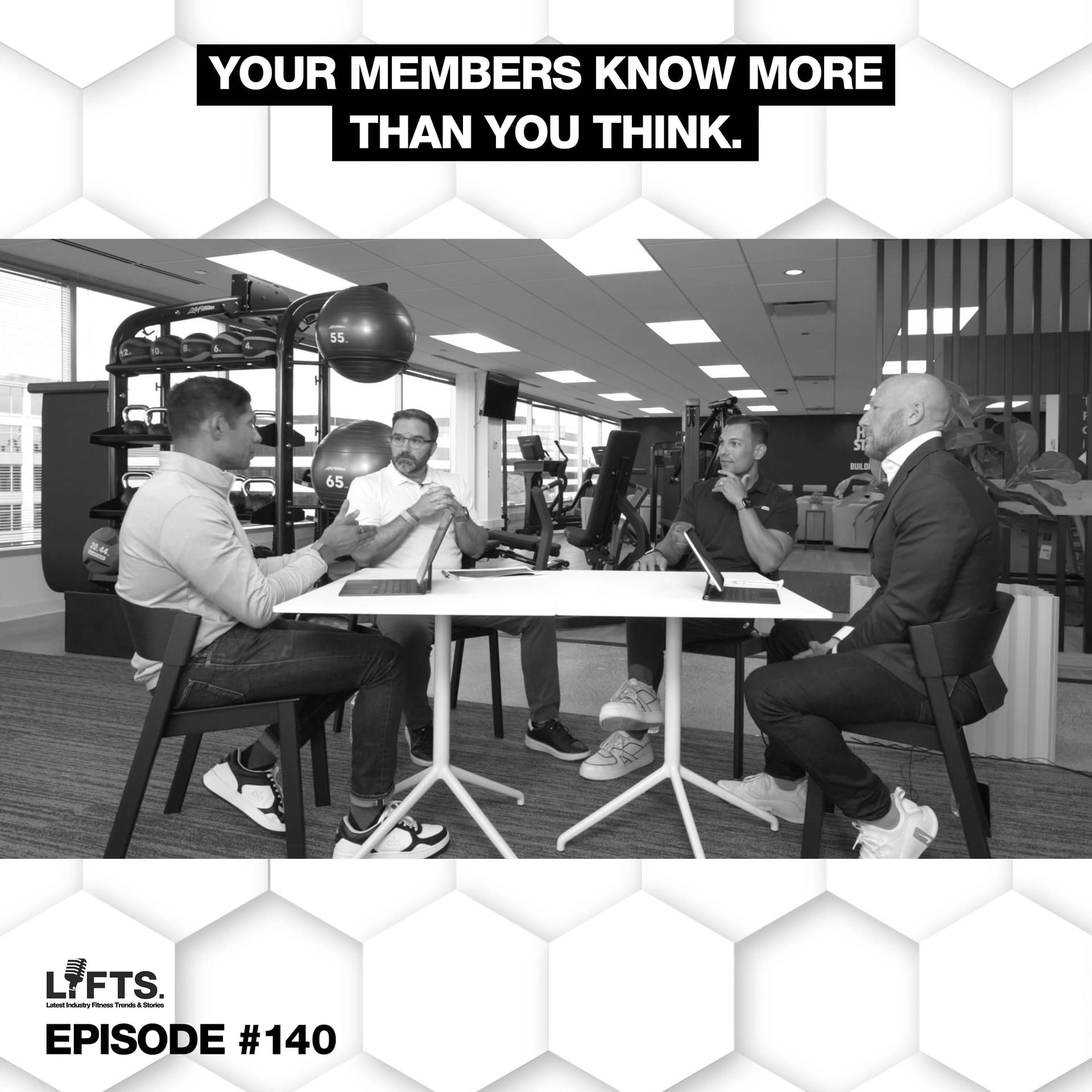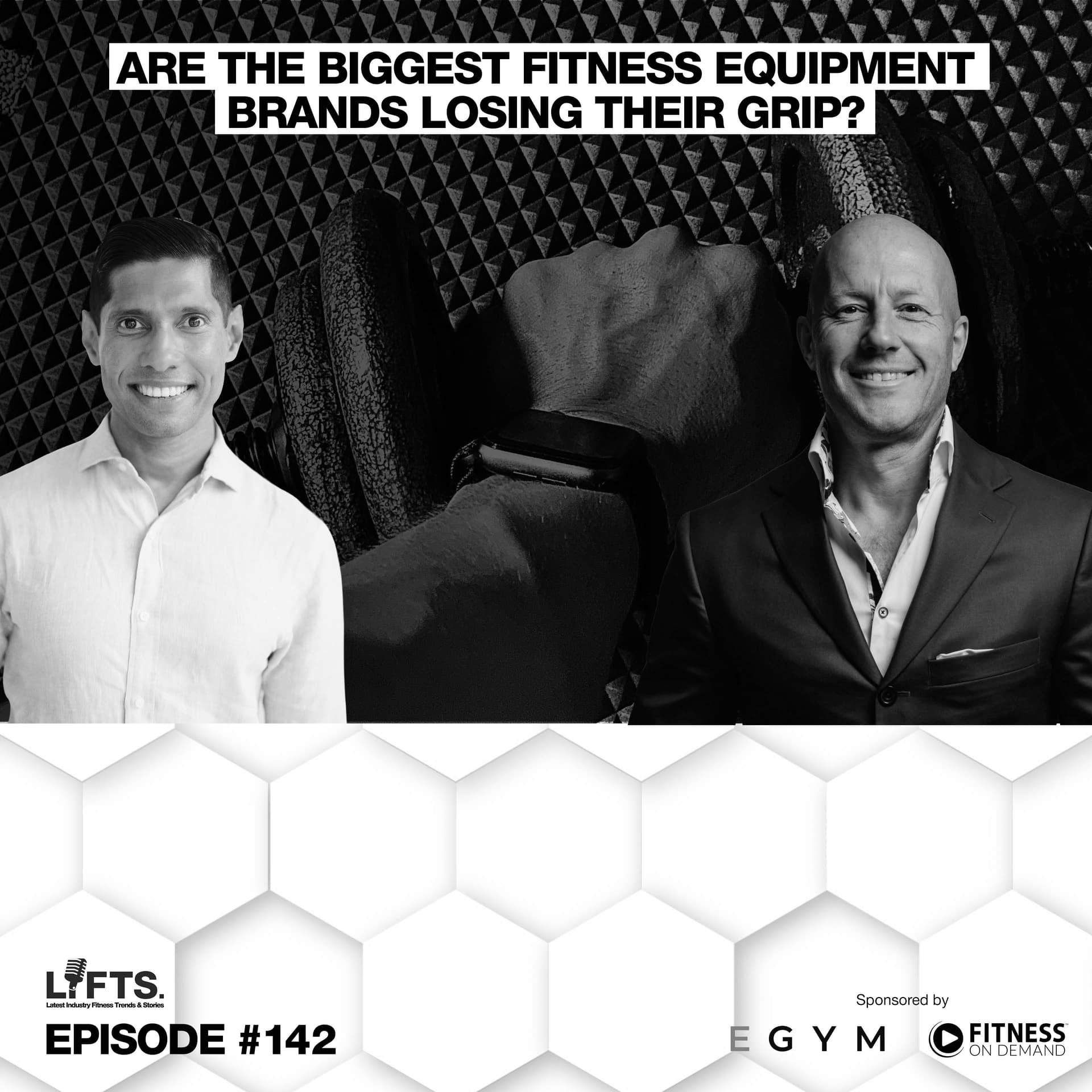

In short
Whether major fitness brands are losing consumer control, amid consumer-led shifts in wearables trust, GLP-1 adoption, premium “value” gyms, and niche strength equipment; plus a cautionary note on FitLab’s operational/financial unraveling and an ACSM strength-training takeaway.
Guests
Matthew Januzek and Mohamed Iqbal (podcast hosts). No external guests are interviewed in the transcript.
Key claims
- Wearables are widely trusted (about 50% of active population), but Aura faces a sleep-accuracy class action alleging ~53.18% accuracy in sleep-stage classification.
- Weight Watchers is adapting to GLP-1s rather than being displaced; “clinical subscribers” rose 55%, though total revenue fell.
- Gyms are moving upscale: Crunch Select (boutique + premium amenities) and EOS Lux (recovery-focused amenities).
- Equipment demand is shifting toward niche, movement-specific brands promoted via TikTok/Instagram.
- FitLab appears operational but has lawsuits, merchant cash advance loans, payroll delays, and studio/class cancellations.
- ACSM: “consistency beats complexity”; progressive resistance training with adequate weekly effort matters most.
Notable examples
Aura lawsuit; Weight Watchers/Sequence; Crunch Select (Long Beach) and EOS Lux (West Hollywood, planned); recovery amenities (cold plunge, infrared sauna, cryo lounge); equipment examples like Center/High Rocks sleds; Primal and Skelkor digital-first brands; FitLab/Y7/Mile High/Assault Fitness/Ragnar; Tonal for quantified progression.
Written by AI. May contain mistakes. Listen to the episode to check what was said.
Chapters
Tap a time to open that second in VOConsumer Awareness in Fitness
0:00 to 0:44
Discussing the importance of consumer preferences in the fitness industry.
“I think a lot of it's going to be consumer-led and everyone's going to be making bets, right?”
The Rise of Wearables
1:02 to 2:18
Exploring the increasing reliance on wearables among consumers and their impact on health.
“Well, the first one I want to talk about is related to a subject that is something that comes up quite a bit in our podcast, and that is around wearables.”
Aura's Legal Challenges
2:18 to 3:26
Discussion on Aura's lawsuit regarding sleep accuracy and consumer trust in wearables.
“So what's interesting is this week, Aura had a lawsuit filed against them over sleep accuracy, over the very thing that makes Aura Aura.”
Impact of Lawsuits on Trust
3:26 to 4:41
Analyzing how legal issues might affect consumer trust in wearable technology.
“For so many people, Aura continues to be an incredibly trusted product.”
Weight Watchers and GLP-1s
4:41 to 8:10
Examining Weight Watchers' adaptation to GLP-1s and its impact on their business model.
“One, do you know anything about the organization that's filing the lawsuit to see whether there's any sort of anything there that's worth noting?”
Business Strategies in the Fitness Industry
8:10 to 10:09
Discussing the importance of rebranding and adapting to new trends in fitness.
“So if you look at going back to 2021, they were doing around about$4.9 billion in revenue, whereas 2025, it's dropped down to$3.1 billion.”
Consumer Spending Trends
10:09 to 12:31
Insights into how GLP-1 users are impacting spending in fitness and wellness.
“And it's really helped them lose some of the stubborn fat.”
The Shift to Premium Fitness Offerings
12:31 to 14:00
Analysis of how fitness brands are transitioning to upscale offerings and amenities.
“two other stories that I wanted to bring up, and maybe now's a good time because they're both related.”
The Evolving Definition of Value Fitness
14:00 to 14:36
Explore how fitness brands are redefining value through amenities like recovery.
“I think this matters because like crunch, EOS is really stretching the definition of value fitness.”
Consumer Awareness and Equipment Trends
14:36 to 16:41
Discuss the impact of consumer awareness on gym equipment choices and preferences.
“I've kind of rebranded that for myself to call it HVL Premium, which is almost like what the airlines did where you sort of introduced this premium economy.”
Show all 18 chapters
Rise of Independent Equipment Manufacturers
16:41 to 18:22
Learn about the emergence of independent brands in the fitness equipment market.
“you have faced stiff competition from other manufacturers who might sell this all in one package.”
Rise of Independent Equipment Manufacturers
19:25 to 19:50
Learn about the emergence of independent brands in the fitness equipment market.
“from your fitness space by creating connected experiences across screens, workout areas, and digital touch points that keep members engaged and coming back.”
The Challenge for Traditional Fitness Brands
19:50 to 23:06
Understand the struggles traditional brands face against modern, tech-savvy competitors.
“And gyms would buy these niche products because they serve a specific purpose.”
Future of Fitness Brands in a Changing Market
23:06 to 27:52
Discuss the potential evolution of fitness brands and their adaptability to market changes.
“So it'll be an interesting space to watch.”
The Unraveling of FitLab
28:00 to 30:40
Explore the issues facing FitLab and its associated brands, including financial troubles and operational challenges.
“So in some cases, they only have three classes a week.”
Strength Training Insights
30:40 to 33:54
Learn about recent research emphasizing consistency in strength training over complexity.
“Well, I was going to finish off on some actual strength research.”
Personal Training Experiences
33:54 to 36:11
Hear personal insights on the practicalities of strength training, equipment availability, and maintaining progress.
“you've learned a lot from your experience with Tonal, which I believe you have, like, what are your thoughts on that?”
Industry Transformations and Challenges
36:11 to 39:57
Discuss the transformation of the fitness industry and the need for businesses to adapt to new technologies and consumer expectations.
“So as I'm speaking, I'm going to to ask you, Mo, like what are one or two takeaways that you got from our conversation today?”
Transcript
Automatic transcript. May contain errors.0:00I think a lot of it's going to be consumer-led and everyone's going to be making bets, right? So you think about the rise of consumer awareness and look at all the things we talked about. We talked about Aura, wearables, trust around wearable devices. We talked about Weight Watchers moving more into GLP-1s and consumers make the decision on their own to go on that. And now we're talking about value gems that are adding premium amenities. Crunch is betting on boutique fitness as the anchor component. EOS is betting on recovery as the anchor component in both of the premium offerings. Consumer preference matters.
0:43Matthew Januszek:We're live. Welcome to this week's episode of Lyfts. I'm Matthew Januzek, and I'm here with my co-host, Mohamed Iqbal. We're now two-thirds of the way through the year, and a lot has happened across the health, fitness, and wellness industry. So today, we're going to look at some of the biggest stories that are shaping the direction of the industry. And Mo, I'll hand it over to you to introduce the first story. Well, the first one I want to talk about is related to a subject that is something that comes up quite a bit in our podcast, and that is around wearables. We always talk about wearables.
1:16or talk around wearables or how wearables are influencing the member's journey. And, you know, Matthew, one of the things that when you ask people, do you wear a wearable, more and more people are starting to wear one. And so many of us have been reliant upon the wearable to help at least give us directional advice on how we're sleeping and how we're feeling. So we're leaning on it for things like our recovery. if we're not feeling so good. Well, okay, I had a bad night's sleep. My aura's giving me a score of 30 or 40 or whatever's bad for you.
1:51Matthew Januszek:Didn't you say the other week that there was about 50 % of the population now wearing one, was that correct? Yeah, 50 % of the population, of the active population wears a wearable. And that number is increasing at a pretty significant account. So when you look at how much trust there is coming into wearables, and in some cases, People even trust their wearables more than they trust their doctor. And it has really become a central part of how they view their health, their fitness, and their wellness. So what's interesting is this week, Aura had a lawsuit filed against them over sleep accuracy, over the very thing that makes Aura Aura.
2:34So many of us rely on, whether it's Aura or Whoop or I have an ultra human on now or Apple Watch, whatever your wearable is, on sleep accuracy. But Aura, I think, more than any of them. So if you look at Whoop, Whoop might have made its name on really their strain score and how they're able to really – their North Star is around recovery. A lot of Aura's North Star has been around sleep. So that's why when you have a class action lawsuit that comes out against Aura saying that, and this is a quote, there's a coin flips chance of it being accurate, that is pretty damning evidence against Aura. Now, here's the thing.
3:16I think that this is a lot about the claims maybe that Aura makes and the validity of those claims and not really around the accuracy. For so many people, Aura continues to be an incredibly trusted product. But this kind of shows you, and I do think Aura ultimately will prevail in this class action lawsuit. But here's the thing. This is asking the question that ultimately consumers want to have answers for, which is, how do I know that I could place this trust that I've somewhat blindly placed to my wearables? So I do think that losses like this one will create more awareness for consumers to maybe better understand things like what sensors are in here, how are they tracking their sleep, can they track the algorithm that these devices are outputting.
4:16So we'll see what happens. But I will say that since this came out, Aura put out a pretty public statement standing by their science, their research-backed methods, and the validity of what they're providing. I've been an Aura user, I think, Matthew, for many, many years. You've been an Aura user for as long as I've known you. I'll continue to trust the product.
4:39Matthew Januszek:A couple of questions because it's more of a space that you certainly have an insight in rather than me. But two things. One, do you know anything about the organization that's filing the lawsuit to see whether there's any sort of anything there that's worth noting? And then two, based on the sensor capability and some of the algorithms that are out there, what are your thoughts? Is it a coin flip? Is it likely to be a coin flip? Or is there genuinely some unique technology that's built into that ring that's likely to provide more than a coin flip in terms of accuracy? I think, one, the plaintiffs are citing a 2025 scientific reports study of sleep lab patients in which Aura achieved just a 53.18 % accuracy across wake, light, deep, and REM sleep classification.
5:29So the study found that there's also considerable individual variation. So for example, Aura overestimated total sleep by about 11 minutes, but individual errors range from an underestimation of 54 minutes to an overestimation of 97.5 minutes. And that's kind of what this is. Now, the details of the study I'm not aware of to see how many people kind of came out with it. But look, I personally, and I know other people that wear multiple wearables. I have an Apple Watch and a smart ring. So I'm able to really compare the two. And yes, there are variations within them. But the key thing is that directionally, it is giving you the right data.
6:11So if I slept, I'm about to fly over to Australia, I might only get six hours of sleep or maybe a few naps. The wearable tends to capture that. Now, is it exactly accurate to the minute? Probably not. And it's off. But the main thing from a fitness perspective and wellness standpoint is getting the macro numbers. If you're off by a couple of minutes, it's not going to make or break your day or not going to change your habits. I'm also a little bit concerned that losses like this will have a negative effect where people are going to lose all faith in wearables. And that's an unfortunate side effect of these types of class action lawsuits.
6:50Matthew Januszek:Well, one of the stories that caught my attention this week, and there's a bit of a theme running through a few of them, but it's Weight Watchers. And basically, with the introduction of GLP-1s, you would have thought that that seriously undermined the business model they spent decades building. And if you look at the numbers, it has had a serious effect. However, what they seem to have done is instead of fighting GLP-1s, they brought them into their proposition. A couple of facts, Q1 this year, they had 2.5 million total subscribers and the clinical subscribers, as they call them. So those people that are using GLP ones are actually up 55%.
7:34Matthew Januszek:So I think one of the interesting things here is in relation to the fitness industry, because certainly when they came out, the response from gyms are, are people going to need to use a gym anymore. That doesn't seem to be the case. But I think this is a good example of where they've embraced it, built it into their model, which is by offering a service where you could actually get the support, coaching, and a GLP one. And it seems to have been successful in slowly turning their business around. Now, when I did look into it in a little bit deeper, they They have had a significant decrease. So if you look at going back to 2021, they were doing around about$4.9 billion in revenue, whereas 2025, it's dropped down to$3.1 billion.
8:20Matthew Januszek:However, the clinical side of the business in 2024 was$81 ,000. It jumped up to$126 ,000. And now, same quarter, sort of year on year, it's up to$197 ,000. And so although they've had definitely a huge decline in their top line revenue, it does seem as though this has provided a bit of a turnaround. So a question to you, Mo, on this is, do you think that more established businesses should look at what's happened with Weight Watchers and maybe consider incorporating this into their offering? It's interesting because Weight Watchers has really been through a journey. They tried to rebrand themselves as WW to really go away from the Weight Watchers name, thinking that that is a negative thing.
9:09They went through an additional kind of branding exercise just around people and saying what is healthy, what looks healthy. They also moved away a bit from this calorie deficit idea to focusing more on wellness. And then they actually acquired a GLP-1-based company called Sequence a few years ago. But I think that initially it was pretty poorly integrated. And now they're leaning in. So look, I think we all should look at the impact of GLP-1, not only in what Weight Watchers is doing, but the industry as a whole. I looked at some interesting numbers. the public data around how many of our country's citizens are on it is around anywhere from about 10 to 12 percent.
9:58The unofficial data, and these are people that are getting compounds, even through people like Weight Watchers, is closer to 30 percent. So the number's high. Matthew, I talk to people who are incredibly fit, who are in the industry, and I find out that they're on a GLP-3. It's a microdose, but they're on it. And it's really helped them lose some of the stubborn fat. It's also helped them manage blood sugar better. There's all the health benefits to GLP. It's not just about losing weight, but there's not enough resources around it. And still as an industry, I still have the feeling that there is some sort of stigma against GLP and peptides in general, I do think that's changing.
10:44I do think that peptides in some ways are more acceptable than a GLP, even though GLP is a peptide and a lot of people forget that. We should embrace it because you've got to make lifestyle changes. That's not just going to come from taking a drug. You've got to incorporate resistance training, some zone one, zone two cardio training, and also you have to eat better. So you've got to make these lifestyle changes. This is going to help us open up a new group of members and a broader segment that we haven't seen before.
11:20Matthew Januszek:It seems there was something that came out this morning, which would support what you've just said there. And it was a new US consumer survey, which was released today. And it found that GLP users were reporting average monthly fitness and wellbeing spending of around about$449 versus$120 amongst non-users. Now, the survey amongst those GLP users, 81 % reported paying for gym memberships versus 43 % of non-users with higher spending also reported across personal training, supplements, and recovery. The only sort of caveat to that is the survey or the study covered only 500 US adults, including 123 GLP users and spending was self-reported.
12:05Matthew Januszek:So, you know, there could be a little bit of, you know, the headline could be a little bit stronger than the supporting data. But if that is true, then it could be a very positive signal for the industry because these people that are on those are likely to be getting involved in a much more healthier lifestyle, nutrition, and workouts. Yeah, look, and they're going to be higher in 10, and they're going to spend more on their health and fitness. And look, this is why there's two other stories that I wanted to bring up, and maybe now's a good time because they're both related. And that is HVLP clubs or clubs that we thought as HVLP, going more upscale, going more premium.
12:42So Crunch Fitness unveiled something called Crunch Select on August 20th. And this is really a premium concept, which has the regular gym with boutique studios that has more than 60 hours of classes and a broader, more kind of premium aesthetic, a more premium environment. So that goes very much in line with what you're talking about as it relates to GLP One users and that they're going to spend a bigger chunk of their wallet on health and fitness. Look at the other one, EOS. So I would say EOS is probably Crunch's number one competitor. And now what they're calling an EOS Lux location in California.
13:28So one, Crunch Fitness is opening up Crunch Select in Long Beach, New York. And on the other coast, EOS is opening up EOS Lux in West Hollywood in Los Angeles in 2027. They're investing$6 million into a single location. Those locations could include things like a cold plunge, infrared sauna, massage, a cryo lounge, e-gem equipment, AI, personal training products, and so on. I think this matters because like crunch, EOS is really stretching the definition of value fitness. So we think about high value, low price, that value component is really going more upstream. And recovery, we talked about this a lot.
14:16Recovery is really moving from being something that was more of a specialist thing, kind of in the corner or in a room, to being something that is a key gym amenity. I think we're going to find members selecting facilities based on the recovery amenities. The other difference I would say is, you know, if you think of -
14:36Matthew Januszek:Sorry, just a quick jump in on that. I've kind of rebranded that for myself to call it HVL Premium, which is almost like what the airlines did where you sort of introduced this premium economy. But just to come back to your point about recovery and the gyms themselves, I do think there's also a connection to the conversation we had at the ABC event just a few weeks ago where consumers now are becoming a lot more aware of equipment and training methods and things like that. So I also wonder how much of this is also consumer-led, where they're actually saying, hey, we want more. There's definitely a price that we're prepared to pay for more.
15:19Matthew Januszek:But I just wonder how, when they're starting to look at some of these facilities and thinking about piloting some ideas, there's got to be a demand for saying, we're not just satisfied with some basic equipment in our gyms. we actually know that we need these recovery modalities. And we know a little bit about the type of brands that are out there, or we know about our strength training and we want particular products. I just wonder how much of it is consumer-led now. I think a lot of it's going to be consumer-led and, and everyone's going to be making bets, right? So you think about the rise of consumer awareness and look at all the things we talked about.
15:57We talked about Aura, wearables, trust around wearable devices. We talked about Weight Watchers moving more into GLP-1s and consumers making the decision on their own to go on that. And now we're talking about value gyms that are adding premium amenities. Crunch is betting on boutique fitness as the anchor component. EOS is betting on recovery as the anchor component in both of the premium offerings. Consumer preference matters. And Matthew, I do think that, and this is going to be a real curious one to pull the thread on in the next couple of months, is think about equipment. So if you look at Escape Fitness, you've had this premium product, high quality.
16:40In a lot of ways, you would sell against yourself because the stuff never breaks and just lasts for over 10 years. you have faced stiff competition from other manufacturers who might sell this all in one package. But look at what consumers who are coming in want today. We've been talking about this in the podcast. They may have booty-specific machines like Booty Builder, as an example. There's a focus on that. They may be cardio-specific machines. Maybe they want to train for High Rocks. We've looked at brands like Center that partner with High Rocks who are selling their sleds. What makes their sleds different than a sled from Rogue or somebody else?
17:21Well, it's a sled that matters because that's the same sled that you use when you do the Hyrux event. So consumers want to train on the same equipment that they would be using at the event. I do think there's going to be more of a focus and demand from a consumer when they're looking at the gyms. When they go to the gym, I think if you look at, hey, this whole gym has been outfitted by life or by core or by whoever, I don't know if that's going to work anymore. I think consumers are going to come into the gym and say, I want this equipment. I trust this brand for these movements. And I think you're going to see gyms where we saw gyms a couple of decades ago, really being careful on how they buy equipment.
18:02We saw a big shift into gyms just buying, you know, one brand outfitting the majority of the club. I think we're going to see a shift going back to what it used to be. I'd love to get your perspective on that. I mean, have you seen that shift happening with Escape?
18:18Matthew Januszek:Well, it's given me an idea about a podcast because we had a meeting in our head office this week, and there's a gentleman that actually is very well researched on this. And there must be about 20 or 30, but I thought I knew a lot about the industry, but there's about 20 or 30 brands that I'd literally never heard of before that are making equipment from around the world and are growing definitely in specific niches. And this is really high-end, high-tech, providing, in some cases, technology and feedback, or in some cases, just very analog equipment that looks beautiful and has fantastic movement.
18:52Matthew Januszek:So I'm definitely seeing this underground or sort of groundswell of a lot of these new independent equipment manufacturers that are making really nice equipment that seem to be building up a lot of awareness through places like Instagram and TikTok. talk. And I think we're going to start to see a lot of those in gyms now and equipment that a lot of us people that have gone to places like us over the years may not necessarily recognize. Thank you to our sponsors, Fitness On Demand. Fitness On Demand helps you unlock more potential from your fitness space by creating connected experiences across screens, workout areas, and digital touch points that keep members engaged and coming back.
19:36Matthew Januszek:From on-demand workouts and mobile access to heart rate training challenges and more everything works together through one connected platform increase engagement strengthen retention and power your performance with fitness on demand but if you think about it isn't that how the gym industry the equipment industry got created if you look at nirio's first machine with techno gym was i believe a leg press device or something of that nature you look at what augie created with life fitness it was the life cycle right that was I believe, their first product. And gyms would buy these niche products because they serve a specific purpose.
20:12And then these companies built entire brands around it. But we were at Life Fitness a few weeks ago. And what we found there is there is still core things to their DNA with Hammer Strength and with Life Fitness that you look at them and you look at the equipment, you're like, no one does Hammer Strength like Hammer Strength. They kind of own that category. It's in their DNA. They understand it. And so I wonder if we're going to see a show. And then, of course, there are these newer products coming out, like what you guys just talked about, that we're going to start, I think, seeing more of. That is going to make it a challenge for some of these equipment companies who have said, I want to go in and blanket the entire facility with just my equipment.
20:57I think that's a counterintuitive strategy to member acquisition because the member is going to walk around and say, I would love to have some optionality.
21:06Matthew Januszek:The challenge that a lot of traditional brands are facing with is that the demand is being driven through a lot of influencers. And you're like, there's a couple of examples that I saw just the last couple of days. So there's a company in England called Primal. They seem to do a really good job on their digital side with partnering up with many influencers, bodybuilders, that kind of stuff. And these people have got huge followings. And so what they're being very successful at doing, different to maybe some of the traditional manufacturers, is they're almost developing from scratch being these almost like social media first brands.
21:48Matthew Januszek:So there's not a lot of history. They come with this instant credibility. So they haven't got to overcome some of their history that may not necessarily be totally favorable. And a lot of younger people and gym owners are actually putting their equipment in. And what that's doing is causing some of the other brands to go in and have a look at what they're doing and say, well, we want what they have. Another one which I saw as a new brand, we both know them, is the guys from Skelkor. They've done a great job. Again, brand new company to some extent. But they have this launch pad of being very digital first.
22:20Matthew Januszek:And they're building their brand and they're being quite successful. I saw they've done a project with Stephen Bartlett in South Africa. Very impressive, Jim. And he was speaking very highly of them. is probably one of the most successful podcasters at the moment. The challenge with some of the bigger brands are they've been around for a long time and they've got an image. They're definitely not tech forward. They're not on TikTok and Instagram in quite the same way. Even I would say Hammer Strength may have sort of done quite a nice job at becoming relevant. But some of the older brands, it's like, well, how are they going to connect with that audience?
22:51Matthew Januszek:And I think that's going to be a big challenge. And I think if they don't figure that out, they're going to be sort of almost like the old brands that you don't want to buy from because it's not cool. And And then these newer brands are going to come on. And I think they're going to sort of take a lot of that market share over the next few years. So it'll be an interesting space to watch. And it's interesting, as I'm hearing you talk about that, you can apply that same thing to software. You think about it. It's the same thing. In our industry, it's happening to software. You've got our legacy brands, like an ABC or DAXCO or MindBody playlist.
23:22And then you've got a lot of newer brands who are coming up. And I'd be curious to get your perspective, Matthew, because at least on our side, there There's a lot around trust, compliance, things like uptime, make sure the platform doesn't go down. Those things still matter. Architecture is still hard. I always say you can create an app on a weekend, but actually scaling it is a hard part. Having the right support team is a hard part. Applying the right type of AI agents to work for you is a hard part. What is the parallel to that on the equipment side? because I would start thinking about things like service and maintenance and sales.
24:01How do you think these younger kind of companies are going? Because a smaller, younger company might not have a global service network. So do operators even care if they're lacking service in a region or is it something where they're saying, you know what, if it breaks, I'll take that on myself?
24:20Matthew Januszek:Well, I think we've been here before. Many of the brands that you know today did start, as you say, with one or two products, Life Fitness, for example, started with a bike. It wasn't until a lot later they even acquired a strength company. I think we're seeing that again, but slightly different because the industry is a lot more established. There's a lot better infrastructure now. Many of the major brands have partners that do delivery install service, particularly in the US, a lot more than what you would see in Europe. So what I'm seeing happening, and this is where I think bigger brands need to take note, is that they're coming in with one or two really cool pieces that are quite popular that they've jumped on or they've listened to the customer.
24:57Matthew Januszek:They've delivered the best back machine that kind of hits it in all the right places. And these are things that some of the bigger brands would take quite a long time to go out and develop and research and put into the market. Now, do they have the same support and testing and infrastructure? No. Could they get there? Yes. and are they likely to go from one or two or three pieces in the gym to then saying, hey, these guys are pretty good. Let's give them a chance of doing a whole strength area. And I think that's what's going to slowly happen. I think it's going to be a slow creep. And then suddenly I think there's going to be a big shift and you're going to start to see these sort of one or two piece brands in some major gyms and they're going to be doing the whole area.
Read the full transcript
25:36Matthew Januszek:And that's going to be a big challenge to a lot of the sort of, I guess, big four that are currently dominating. And what's your perspective on brands like Center that has partnered with High Rocks? I mean, all of their growth has, I would say, awareness has come from High Rocks, or even a brand like Rep Fitness that was mostly at home and is now coming into the gym. Do you think they're going to face some of the same operational challenges that these other brands are facing? I've kept an eye on Center. I think they've definitely evolved. Like, they came into the fitness equipment business there.
26:09Matthew Januszek:Some of their products were good. Some of them needed a lot of work. And I think they've been quick to react, as they'll probably admit. I think the challenge with that particular brand, if you go back, they're pretty much doing exactly, well, it's a very similar model to what Rogue did years ago with CrossFit. And Rogue were very successful at manufacturing business. And they used to deck out all of the CrossFit events. And if you were a competitor, you wanted to train in your box with the same equipment that you were going to go eventually and compete on. That's exactly what's happening with high rocks.
26:44Matthew Januszek:What you don't want to be doing is using a kettlebell that's going to be slightly different in its diameter or the way it's balanced or anything else like that. Same for the sled. It's the exact same one. So I think that's a great strategy. However, there will be a time, certainly you can't see it at the moment, but there will be a time where that sort of acceleration will level out and it will start to flatten off. And then it's like, well, how do they evolve? Rogue have done great work because they've almost become the Amazon of the fitness and wellness market. Rogue are making mountain bikes.
27:14Matthew Januszek:They're making office equipment. They're doing everything. And they also have a fantastic platform where you can buy supplements. You can buy clothing. I heard some figures of the amount of revenue they're doing just in apparel, and it was phenomenal. They do weightlifting shoes and you name it. So I think what Rogue were very smart to do is recognize that this CrossFit thing had built them, but they were very quick to revolve the business. So if CrossFit went away, Rogue will still be there indefinitely. I think the challenge for the guys that sent it is can they think long enough into the future to be able to revolve their business once High Rocks levels out and then somebody's on to the next thing.
27:52I have one more story for us to cover today. And I know we have a whole episode on this, which would have really been released by the time this comes out, but that's really around FitLab. And really, since we recorded the episode with Matt Davis, I've just read more things on FitLab on Reddit as an example, just from users complaining, saying that classes with brands like Y7 and Mile High, which are FitLab related classes, are being canceled. So in some cases, they only have three classes a week. So people are paying for classes. They've paid for memberships, and they can't even take anything.
28:27So I think we are in the early stages of it. And to your point around equipment, they also acquired Assault Fitness. Seems like there's issues there. Their event platform in Ragnar, there's issues there. And obviously, they shut down all of the Nike studios. This unraveling really seemed to start when Nike decided to shut down. I wonder if Nike was either funding them or giving them some support that once they pulled the plug, everything became unraveled.
28:58Matthew Januszek:I know we had the conversation with Matt a couple of weeks ago. So do you have any idea? I know at the time, some of the actual published information about FitLabs in themselves was a little bit vague. But do you know exactly what the situation is now? Are they still operational? What have you heard on that front? It sounds like the company is still operational in some ways, but here's the fact. They have a lawsuit against them for almost a million dollars for a contractor to help them build the Nike studios. We know that they took out not one, but two of these merchant cash advance loans. We know that they've had payroll delays in corporate and also in studios.
29:36We know that studios are just being shut down without giving any notice. So there's a lack of customer support. There's no response from corporate. It just seems like a lot of financial-based issues. From what we heard from the episode with Matt is that they're trying to raise capital. But my question is, what are you raising capital for? And more broadly, we spent some episodes talking about operational excellence. It sounds like that was unfortunately lacking here because when you have such a big portfolio of really good brands, like brands like Y7, Mile High Run Club, Ragnar, Assault Fitness, Fitplan, you know, even if you look at Fitplan, that app is having issues now.
30:23It's not being supported. It's crashing. People can't get any customer support. It's unfortunate to see, you know, how this transpired because I do think that the vision was the right one. and hopefully we'll find out in the coming months what actually happened to have this whole strategy unravel.
30:40Matthew Januszek:Well, I was going to finish off on some actual strength research. One of the things I keep an eye on is what's happening in the strength space. And we talk a lot about companies, but I thought this was quite interesting. So everything around health and fitness seems to be getting more sophisticated. We're very connected. We started the story talking about wearables. We then went on to talk about some of the additional enhancements that you can have around your physical shape by using things like GLP-1s. But this was particularly interesting because they're talking about the science of getting stronger.
31:12Matthew Januszek:And what we do know as a result of people using GLP-1s is one of the things that they are losing a lot is muscle. And that is likely to create a lot of problems for people on them going forward, unless they have a really good program or unless there's a plan to sort of to maintain that muscle and um and what i what what this research this acsm research basically says is it's um is is that strength training and muscle building is actually a lot more simpler than i think us as an industry make out so the survey was from a 137 systematic reviews of over 30 000 participants so it's quite a big study and and essentially the headline is uh consistency beats complexity.
31:55Matthew Januszek:I've been very guilty of trying out all of these latest men's health type of workouts that you think are going to give you that extra sort of, you know, a little bit of muscle, a little bit of strength. And some of the examples that they claim are probably less important than what you'd think are the perfect rep range, training every set to failure, complicated periodization, and highly specialized training methods. And what they're saying is Yeah, that's great, but it's not as important as regular progressive resistance training. And the key word there is regular. Adequate effort. So making sure that you're just working out hard enough.
32:36Matthew Januszek:Enough weekly volume. And I'll come on to what they recommended there. Training all of the major muscle groups and then using heavier loads when strength training is a goal. And what they essentially said is for hypertrophy, it's just around 10 sets per muscle group per week, which is a useful reference point. And in terms of what this means for gyms, I think there's a lot of approaches. In some cases, we overcomplicate things. And what the ABC report, and I keep going back to that because I think it's a real big takeaway for me, is really what we need to be thinking about for an industry or individually really is creating that exercise habit of consistency.
33:18Matthew Januszek:And if you can do, if you can hit those major muscle groups two to three times a week, if you can do the right amount of sets, then really it doesn't matter what equipment you use. It doesn't matter where you are. As long as you can create a bit of a habit for strength training, you're gonna, well, this report certainly, or this study certainly proves that you're actually gonna get where you need to do. So I, I, again, it comes back to the fitness industry, really focusing on creating these habits and community and support system, as opposed to getting overly complicated on the, on the programming side.
33:53Matthew Januszek:Just wonder if I know you've been strength training, you've, you've learned a lot from your experience with Tonal, which I believe you have, like, what are your thoughts on that? No, I, I, all that, all that alliance. And yeah, I mean, and look, I mostly work out at home. So I have a full gym here. I've got a Tonal here, But as you know, especially in the last couple of years, I've been traveling a lot. And what I do try to do is, yeah, have the consistency. I've not really been one to get too gimmicky, but there's two limitations that I have. One is the availability of equipment to what is around me, if I'm in a hotel gym or even at home.
34:28I don't have all the equipment we were just talking about as an example. And then the second one is time. And time is a limiting factor for both you and I. I think we both train about an hour a day, which is a lot, I guess, for most people, but not like what we used to train, which is a lot more. And what I've tried to do is just that. It is to focus on hitting a body part for about 10 to 12 sets, but continuously working, like making sure that I'm feeling the effort and I'm trying to be progressive in it. The cool thing about tonal and digital is that I'm able to quantify that. So sometimes it will automatically set that weight number for me without me even having to do it.
35:13Because if you had to do it, you kind of default to the same weight. I mean, how many times, if you go on the bench, you're putting on the same plate, the same weight, you're not thinking about being progressive. But when it's digital, it will remember what you did the last time and help you be progressive. And it will also counter for, you know, if you do 15 reps versus eight reps, right? what does progressive mean? Because how much do you have to lift for eight reps to do the same amount of work as you would do for 15 reps? Yes, you could figure that out, but when it's digital, it kind of automates that for you.
35:41So that's been hugely helpful for me. We talk about High Rocks and the wonderful thing about these events is you can actually test to see how you've done. And as I'm about to do High Rocks, I'm going to come back from Australia. I come back on a Friday, I'm doing a higher off on a Saturday, but I expect to be better than the last four that I did because of a focus on strength, right? And, um, and really a focus on progression. So I, I, I'm going to, I've not read that report. I'm going to send it to me. So I want to, I want to dig deep into that because I think there's a, there's a lot of good there.
36:15Matthew Januszek:Well, that's it for this week. Um, we normally do a takeaway. So as I'm speaking, I'm going to to ask you, Mo, like what are one or two takeaways that you got from our conversation today? Well, it sounds like that there are a lot of themes that we covered. And when you try to unpack it, it's really like a chart of where the industry is going. We talked about gaining trust in wearables. Maybe we put too much trust now. We're going to be questioning the trust and hopefully earning that trust back. We talked about GLPs and peptides, and that's another big one. We talked about the evolution of people investing more in fitness.
36:54We see that with clubs like Crunch and EOS going premium and ultimately the help of digital NAI to help us focus more on improving outcomes. It's a transformative time in our industry. And you would certainly hope that leaders, certainly listeners of this podcast are going to look at that and say, look at their own businesses and say, am I doing the right things? Because it's not just one thing. It's really like 10 things. And I know as an entrepreneur, we're taught and our mentors will tell us, don't do too many things. I think it's going to be hard for us to avoid that because there's so much going on.
37:31How about you, Matthew? Yeah.
37:33Matthew Januszek:Well, as I prepared for this one, I started to create a lot of patterns. And we meet every week. We talk to a lot of people. And so there are definitely themes that start to repeat. but one of the, I don't know what you would call it when you're sort of trying to bake a bit of an idea in your mind, but I'm probably going to come back to this quite a lot. And as somebody that hasn't really been tech forward or tech first, I've been very much an analog person. I'm starting to see that if you imagine what are going to be the most successful companies in the next 10 years, and whether that's an equipment manufacturer making strength machines or someone selling supplements or even, or probably more importantly, bricks and mortar locations, is I can't help looking at what many of these digital first app-based software companies have done.
38:27Matthew Januszek:And I think they're very, and now they're incorporating things like AI, but we didn't get a chance to talk about all of the stories. But what I'm now starting to see is some of these app-based tech forward companies are now starting to get community involved, which is pretty interesting. And there's different ways they're doing that, but they're bringing in community. And what they're starting to do is to go from this purely digital to more in real life experience. And I think that the challenge is if you're an older business that comes from the analog world, whether you're a gym that's been going 20 years or an equipment company that's been going 20 or 30 years, I think the challenge is how to almost like incorporate some of the good bits that the connected companies are doing and bring that into your business because it's going to be almost impossible to compete with a company that has all of this data and is able to personalize the experience, narrow down, as you say, like we're trying to do too many things.
39:25Matthew Januszek:That's because we have too many people that we're trying to service. And I think the key is if you want to win, you're going to have to really narrow that down. And the only way you can narrow that down is to have good information about who engages in your product and who doesn't. And then to be able to provide or predict the sort of things that they're interested in and have your future product development map based around those details. So I'm not quite sure how that happens. And I've not seen many companies that have successfully made that flip. But I certainly think it's a subject worth talking on about on some of our future episodes.
39:59Yeah, I would absolutely agree with that, because I think that of the pace and In speed of transformation, you might not even have the right team. And we constantly go back to, do you have the right team? Do you have the right process? You have to reevaluate nearly every aspect of the business. And look, we even talked about very specific tackle things like having the right equipment mix. And a lot of times when you think about the capital intensive nature of equipment, you're amortizing that over anywhere from three to seven years, depending on if you're a premium gym or an HLP gym. Do you have to rethink that?
40:28Is that still a viable model? So I think there's a lot of questions to come here. Well, we're at time. This has been a great episode, Matthew. We should do these at least once a month because I think we don't get a chance to cover some of the top trends. And I remember when we started Lyfts, this is what we did. I really enjoyed this episode. If you enjoyed it as well, be sure to subscribe and share and comment. We love hearing back from you. We are continuing on with the Lyfts briefs. I think we're on episode or newsletter six, which has been fantastic. If you aren't getting that in the inbox, Go to liftspodcast.com and subscribe to it.
41:03A ton of value and additional insights that we've learned from our preparation for these episodes that you will find in there that we don't have time to cover during our actual episodes.
41:28Bye.
From the publisher
Is the fitness industry still telling consumers what they want — or are consumers increasingly telling the industry what it needs to deliver?
In this episode of LIFTS, Matthew Januszek and Mohammed Iqbal unpack some of the biggest stories shaping health, fitness and wellness.
They discuss the questions being raised around wearable accuracy, how WeightWatchers has responded to the rise of GLP-1s, and why consumers using GLP-1s could represent an important opportunity for the fitness industry.
They also look at the changing gym floor as value operators move towards more premium experiences and consumers become increasingly knowledgeable about specific equipment brands, training modalities and recovery.
With new equipment companies building audiences through social media and digital-first strategies, Matthew and Mo ask whether some of the industry's established brands risk losing relevance with a new generation of consumers.
Plus, they discuss new strength research suggesting consistency beats complexity, and why creating sustainable exercise habits could be more important than increasingly complicated programming.
Are the biggest fitness brands still shaping the consumer — or is the consumer now shaping them?
Chapters
00:00 Are Consumers Taking Control of Fitness?
00:44 The Biggest Stories Shaping the Fitness Industry
01:08 Can You Trust Your Wearable?
06:50 WeightWatchers, GLP-1s & the Fitness Opportunity
12:25 Why Value Gyms Are Going Premium
15:47 Is the Consumer Now Driving the Gym Floor?
19:23 Sponsor – Fitness On Demand
19:50 Are Single-Brand Gym Floors Becoming Outdated?
27:54 What's Happening With FitLab?
30:39 Why Consistency Beats Complexity in Strength Training
36:15 What Does the Future of Fitness Look Like?
Sponsored by Fitness On Demand and EGYM
- Fitness On Demand: https://www.fitnessondemand247.com/
- EGYM: https://egym.com/
📩 Subscribe to the LIFTS Newsletter: https://www.liftspodcast.com/newsletter
🎧 Apple Podcasts: https://podcasts.apple.com/gb/podcast/escape-your-limits-lifts/id1321349827