Ask ChatGPT
 EUVC
12 Nov 2026 · 43m · 19 chapters
European pension funds’ case for investing in venture capital, how to build a long-term venture program, and why venture should be treated as an opportunity (not just a risk), including portfolio construction, access, and geography (US/Europe/China).
Written by AI. May contain mistakes.
Explains the significance of venture capital in investment portfolios.
“You should think about venture not only as a risk factor.”
Discusses the initial decision to allocate to venture capital and the thought process behind it.
“This show is not investment advice, and the hosts of this episode may be invested in the funds and companies featured.”
Shares insights on beginning investments during the dot-com crash and the challenges faced.
“So we started to think about how could we, as a small pension fund in Gothenburg, Sweden, starting to invest in venture.”
Describes the process of establishing relationships with venture capital managers.
“Now I'm picturing you on Sand Hill Road with your suitcase.”
Explores the maturity and development of venture capital as an asset class over 25 years.
“Obviously, we cannot go through every 25 years, but I'd love to hear how have you seen venture grow as an asset class?”
Discusses the long-term approach to venture capital investments and the patience required for returns.
“And then we have developed, we have seen returns coming and therefore we have increased venture capital.”
Explore the unique risks and returns associated with venture capital for pension funds.
“Things that were promising one year ago could be non-promising today.”
Learn about AP2's function within Sweden's pension framework and its investment strategy.
“And for us, if you think about our private equity portfolio in general, we have 40%, 40 % in venture and growth.”
Hear about how AP2's investment strategy has evolved and its geographic preferences.
“That makes it that we are not that dramatically focused on liquidity that some investors need to have because they had another, call it cash flow scheduling built into the system.”
Discuss the differences and similarities between European and U.S. venture capital markets.
“So I think they're at least in a competitive advantage for producing something or have manpower on board.”
Discussion on the need for European incubators similar to Y Combinator.
“Yeah, I think that would be entrepreneur first, who've done a great job out of London.”
Exploration of investment strategies and manager selection processes.
Insight into balancing early-stage and late-stage investments.
“There's a tension between early stage and size of fund though right?”
Discussion surrounding the perceived risks and opportunities in venture capital.
“But the question is if it's that risky, to be honest.”
The significance of innovation and diversification in investment portfolios.
“So you must be open over the years to build up a program that could take advantage of the next shift and the next shift as well.”
Challenges and strategies related to gaining access to high-performing funds.
“You should talk to people that are doing capital allocation and try to let them understand.”
Insights on navigating the landscape of European pension funds in venture.
“You're lucky if you're able to get in even three or four or five years.”
Learn why investing based on outdated statistics can lead to missed opportunities.
“If you just look at that, it's rearview mirror investing.”
Explore the importance of networking and engagement in the venture capital space.
“And I hope that everyone who tuned in today will do the same.”

Get the gist, explore an idea or ask about something said.
 Claude
On EUVC, what are the key points of this episode?
Searching your listeningAutomatic transcript. May contain errors.
0:00You should think about venture not only as a risk factor. It's an opportunity that you should have in your portfolio. And I think it's important. If you don't commit to groups you have conviction with when they're available, you won't be able to commit later. So you need conviction and you need execution. We are not sitting behind a desk and look at statistics only. I think we are out there trying to meet managers. have done that for many, many years. And I think to create that kind of conviction in both directions, in fact, have been very helpful for us, at least. What I hear in what you're saying is, firstly, it's a people business, so you have to be out there or else you don't really have a knowledge.
0:41And secondly, the statistics are always five to 10 years behind. If you just look at that, it's rearview mirror investing and you miss things like, you know, Lovable, one of Sweden's new stars. The companies that will break those incumbents, they are coming from venture capital. So in that case, you hedge yourself a little bit against disruption. Welcome to the podcast. Right now, we are at a time where most European pension funds are circling the question, should we be in venture? And how about European venture? My guest today stopped circling 25 years ago. Anna Strömblatt has allocated to venture from inside the Swedish pension fund system since 2001 and consistently through every cycle.
1:21And he is still deploying, and today we're diving deep into why, how, and where we are headed as an ecosystem. With me as a co-host for these pension fund dialogues, Joe Short, founder and managing partner of Isma Capital. He's one of Europe's most experienced LPs in venture, invested in funds across the continent for the past decade, more than 100 by now, and then he's done a lot of institutional work through Cambridge Associates prior. Today's conversation is all about Anas and how Anas thinks about venture. So that's why I made sure that Joe will not spend all our time hearing about his accolades.
1:55Joe, Anas, welcome to the podcast. Thank you. Thanks, Andres. Hi.
2:02This show is not investment advice, and the hosts of this episode may be invested in the funds and companies featured. So, Joe, as my co-host for this pension fund series, I want to ask you to open up this conversation with Anas. because you know this space better than I do. Yeah, I mean, there's a lot of directions we can go, but you've been in venture more than 20 years now, allocating consistently. So I guess a good beginning is to start at the beginning. Can you take us back to that decision to allocate to venture in the first place? Absolutely. And let me be clear about how we come up with it because when we started off, we were thinking of broadly private equity.
2:47So venture was one of the strategies inside private equity that we find out. And we have gradually gone into private equity over the years. But we thought in the beginning, when we thought when we should build a private equity portfolio, we were thinking about would we use So what we take in venture capital in that slice, because at that time, the venture capital market was quite small and very narrow, very opportunistic, I would say generally as it looked like. Our thought at that time was that by picking some of the most famous and the best managers into the portfolio, we'll give enhanced return in the private equity portfolio.
3:38We didn't at that time, to be honest, didn't think so much about diversification and other benefits that come out with the venture capital allocation. So return enhancement was our view. And already at that time, in the beginning, we did see through the statistics available. There were a number of managers and those managers were quite consistent, very good. So we started to think about how could we, as a small pension fund in Gothenburg, Sweden, starting to invest in venture. And just to be clear, what year are we talking about when this private market program started? Well, the first year, I could have wrong in one year, but I were on Sand Hill Road with my suitcase first time in late 2001 or early 2002, just after the internet crash.
4:36And there were a lot of to let on the houses on Sand Hill Road at that time. So it is a number of years ago. So this is, in some ways, a crazy moment to begin because you've just had a very big asset bubble that burst, the dot-com crash. Some of us were around for it. Many listeners were not. But why? I mean, didn't that scare you away? How was your committee or your board? How were they thinking at that time? I think we were curious to see if we were able to create this kind of network. I think we did got help as well, to be honest. We started off to make a number of investments in private equity in the Nordics and around us.
5:24But we also made a commitment to Pathway Capital. And you know, Pathway Capital is a fund of fund. And they have the tailored fund for us with a specific allocation as well to venture. So for some doors that was open to us, Pathway did help us to open that doors. And we, or we better say, I met all the managers that Pathway did take into their vehicles as well as a proof of concept. So we did a lot ourselves, but we also had some help as well in the beginning. So you had a guide to begin the journey, at least. And I guess, you know, you did something kind of counterintuitive, I think, that most investors buy at the peak and allocate less down below.
6:12But you must have been in a moment where venture returns were not very good when you started. Is that true? Absolutely. That's true. I think we were not thinking that. We thought this is a long term, this is a marathon for us to really get access to those managers that we really want to get into. So it's better to start now than wait and see when we could build a portfolio. We didn't have an allocation target. We didn't say we should be ready 2010 or 2008 or whatever. So we did take it very slowly, to be honest. So we didn't take a bet on timing at that time. We should probably have gone in, if you look in the mirror, we should have done very much more in the early days, in the beginning of the 2000s than we did.
7:06Yeah, interesting hindsight. But we all get trained as investors, buy low and sell high. But it's amazing how few do that. we we we we were we were probably better in the next hit to the when gfc comes in then we were up and running better and we we didn't we did take we did get allocation to some funds that were open at that time as well so at that time we we we managed to do that and we were we were happy with the result as well because in these dips a lot of investors don't allocate and therefore or you can step in. I could step in, yeah. Fantastic. So take us back. Now I'm picturing you on Sand Hill Road with your suitcase.
7:51You don't have an allocation. You don't have a timeline. You're just thinking, I'll try to meet some of these managers I've heard about with my guide. How did that work? How did you go about it? So I was sending out more or less cold, cold emails to some people. and for some I had there are always I'll call it fundraisers out there helping funds, raising funds so I got help from the placement agents as well so it was a combination of things the mistake I did was that I thought Sandhill Road was a more narrow and shorter road than it was so that was a quite interesting thing with my suitcase and me coming and walking so it was very unprofessional So it was good for the legs though?
8:37It was good for the legs. At that time as well, to be that one thing that come up quite early was that a couple of funds at that time didn't want to have our money, even if they have space, because we are public, public investors and they were afraid of freedom of information act, for example. So there was a couple of those, but otherwise I think we were welcomed and we, we have built up relationships with some managers over a long time. What was your pitch to them at the time? I'm guessing, tell me if I'm wrong, I'm guessing that a Swedish pension fund turning up in California in 2001 was pretty strange.
9:20There weren't many. No, there weren't many. I think there are two things. We are interested to build a long-term program to this. They got diversification on their balance sheet to have another investor from another part of the world that have long-term money behind us because we are there more or less forever. So I thought that was one good thing. The other thing is that I think it's for an investor like ourselves, you have to create credibility against the GP as well. So they know who you are, how you're thinking, what your strategy is and understand you as an organization as well. So it's not has not only been myself meeting people, but other people have also met the GPs as well.
10:09And we're now 25 years in. I'd love to hear. Obviously, we cannot go through every 25 years, but I'd love to hear how have you seen venture grow as an asset class? And where would you say? And if we fast forward a bit to today, where would you say that we are today? How do you think about venture as it is today? I think we are seeing a much more mature asset class today than we did 25 years, of course. And that's due to a number of things that should be taken into account, I think. And those changes that we have seen over time doesn't come one day. It's gradually changing the environment over time or the market.
10:50So first of all, I think what we normally call the ecosystem in the market has developed a lot. And I think the US was far ahead of Sweden or as far ahead of Europe, absolutely. But we have also seen since the last 10, 12 years, Europe have come up very well when it comes to ecosystem. And that's everything from, if you think about incubators, studios, seed investing, that has become institutionalized in a way that it wasn't in the beginning. It was more than if I were an inventor, I went to the Sequoia store and knocking on the door and say, hey, I got an idea. Now there are other types of ways to source deals that are quite interesting.
11:41So on that side, it's important. It's also important to see how the firms have developed over time. I think in the beginning, there were, if there still are reasonably small firms, there were even smaller firms in the beginning. And there were one or two very strong persons in those funds that really had a connection. I think the firms today are very much broader and they are reaching out much better. I also think there has been a big change how venture firms are helping their portfolio companies during their lifetime as well. We see firms like Andreessen Horowitz or maybe General Catalyst. They have a lot of help functions if you are an entrepreneur that really could help your company and help yourself as an entrepreneur.
12:29What should we do next? How should we develop the company? could you please help us with with pricing could you help us with uh recruitment or whatever that kind of service was very rare if available at all in the early early days so i think that has changed a lot it has become more as a well-run well-run organizations i will not say that a small organization is worse than a bigger one but our different models have come up as well so i think everything is that but if the returns hadn't show up either in the other way that should have not been this or sex so i think over time venture capital has been able to deliver such attractive return to the portfolio to investors like ourselves so we think it is good to have in the portfolio and we will maybe come back on it but i think it's it has that and for us we didn't say that we should have a certain percentage of venture capital in the first days when we think we thought it should be there.
13:34And then we have developed, we have seen returns coming and therefore we have increased venture capital. And I could come to more, maybe a little bit more sophisticated way where I think venture has a place in institutions, portfolios. Anders, did those returns come immediately? I mean, was it super clear? No. So, no, venture return in that case is a little bit odd. But we are long-term investors, and we are not dramatically in need of liquidity. So we have the patience and can wait. We still see, in fact, that we see from venture firms that was launched 2010, 10 we got very good good returns from there already today and we got very good distributions so it is it is an asset class that you should be aware of it it could take long time but if i should do yes a sidetrack there is also if you think about how how the the secondary market has developed as well over time so i think now there are more liquidity tools available at least than it was 25 years ago even for venture capital but i think compared to other asset classes for buyouts for example you see very rapidly if quite rapidly if a fund will go come and be good or not as good after five years they're very clear signals and the statistics tells for that i think it's a a little bit different in venture capital specifically if it's strategies which do more deep take taiko strategies where it takes longer to develop and so on you probably will see that in climate as well for example from an idea then you build out so so liquidity is something that you you should be aware of as an investor so so buy out buy out tracks much easier venture is, as we know, more volatile.
15:39Very much more volatile. Things that were promising one year ago could be non-promising today. So could we go back a little bit to if we're advising the pension funds of Europe who have not yet gotten into venture, maybe they're doing buyout, maybe they're not. Back in 2001, you took your suitcase up and down. You allocated to some managers, no particular mission. We heard you, but you picked some. How long did it take until, you know, things started to develop and within your organization, you knew it was working? I think it's come gradually. We saw examples for investments that we did and then, ah, this worked.
16:21But it's also, then we come into the characteristics of venture capital as a NASA class as well. What does it bring? because in the beginning we were focused on returns. But we also understood quite rapidly, or over the years at least, that if you put in venture capital in your portfolio, it will come with another type of companies. And they are different in different ways. First of all, you've got innovation risk in the portfolio. And innovation risk doesn't come with larger public portfolios. So you've got something there which are totally different. Secondly, portfolio or venture capital finance companies today are private very much longer and more of the value add are created during the time when they were private compared to public.
17:14So they were staying. So we captured that wave as well, I would say. So I think that is a very important thing to say. I think also when technology shifts come along, and you have a lot of incumbent companies, for example, in buyout or in the public sector, public equities, the companies that will break those incumbents, they are coming from venture capital. So in that case, you hedge yourself a little bit against disruption. If you have one company that's been disruptive, you have the company that will come instead coming up. So you've got to take a more portfolio view, including venture capital in your portfolio thinking.
18:05But still very much for us, we still think it's the main argument is that, first of all, we have got good returns. And secondly, I think it come in with some other types of risk that we have. That is the most important topics. And for us, if you think about our private equity portfolio in general, we have 40%, 40 % in venture and growth. And that's a lot compared to many people, I guess. That's American style, I would say. Some of the big endowments have similar numbers. I remember I was able to, in my advisory days, be part of a new private equity program for a pension fund. And it's all great at the beginning.
18:46It's all exciting and new. My experience of the killer years were kind of years four and five or three or six, where this J-curve is having effect. You've put out a lot of money. And I'll never forget one board director saying to me, Joe, you told us this was great stuff. and we've just been paying into it and it's worth less than we paid for it. What's going on? Did you have that moment? We did that moment. And I think I got a very good support from the management team of AP2 at that time because we said we should not start measure private equity that much in the beginning because we know that we'll be hit by fees and we should wait the number of years before we are starting to taking those returns, figures seriously to be honest so it was a very well understood in the top management and i was saying the board as well of ap2 so a lot of thanks to to those people that were there at that time as well and supported me and some some are still there so that's that's really good i do agree with you when you are building a program and and if you say that we were starting to do venture and the first venture funds doesn't do well, it's very easy to just close down the program.
20:01And I think patient is a very good thing to have. Sometimes it's very hard in the pension fund, but I think it could bring so much good, but you need to have patient over time. Yeah, I was just about to say that we haven't made this remark earlier, but AP2 is, of course, a buffer fund in the Swedish system. Maybe you can explain to the audience what that means, because not everyone will be familiar with that. And then, of course, tie that into the boldness or the patience, the combined boldness and patience of your executive team. That makes a lot of sense. So the Swedish Social Security pension system, which is the first pillar to everyone, is where we are involved.
20:45And the system works, I will say, make it a little bit not too complicated, but it's a pay-as-go system. So every employer pays a fee or a tax that goes into the pension system today. And that money is tunneled more or less directly to those who are retired today. And if the liability for the public pension and the money comes in one month is not sufficient to cover the payout, we are there to push a little bit of money into the system so the system could deliver what it has promised against the liability. So we don't have a monthly payout like a normal pension fund because that's covered by the pay-as-you-go system.
21:33That makes it that we are not that dramatically focused on liquidity that some investors need to have because they had another, call it cash flow scheduling built into the system. There could be a pension fund that should pay out full pensions every month. We are just paying out a little bit to balancing the system nowadays. So you've spent 25 years on this. You've had good returns, as you said. but I guess a lot of structure and pattern recognition evolved. How does the program look today? How do you think about which stages you want to invest in, U.S. versus Europe versus Asia? You said it got sophisticated.
22:17What does that look like now? More sophisticated.
22:27So if you take the geographical split first, So we started to invest only, I would say, we did some very small, small investment in Sweden in the beginning, which was not good at all. So we said we should do this from the ground. And we saw that most mature market, most managers, most money goes into innovation, R &D was in the US. So the US has been the start for quite many years. If we go back almost 15 years from now, I think we were taking a very deep look at China. And we started to invest in China venture capital as well, which over time has played out well for us. But China is not a big portion of the portfolio.
23:17We haven't done any active China investment for a number of years. So we are not doing China any longer, but it was a reasonably substantial part of our program for some time being. Now we also, after a number of years, we have seen that the European venture landscape has matured a lot. We have a number of funds, more than a handful of funds, that are more or less pan-European, has been doing very well. They have also now we see a number of the number of unicorns coming up in Europe has not called it exploded, but dramatically increased during the number of years. We see incubators, we see other types of structures.
24:01We see more family people coming into the early stages of investment, seed investments and so on. We see that the matureness of the European VC landscape has come up significant. And we also understand that it's cheaper to do something in Europe compared to the U.S., where the salaries are very much higher for scientists and so on. So I think they're at least in a competitive advantage for producing something or have manpower on board. So we see a good tailwind for European venture nowadays. So we have started to invest in Europe as well and have a number of managers. We don't do small funds. We do reasonably big funds because we don't have the resources to do tiny funds.
24:54And we are trying to do a little bit larger bets than maybe some others are trying to do as well. That's a little bit how we think. So I'm dying to ask, did you come full circle back to Sweden? Because Sweden has been quite productive. some great unicorn outlier companies. Yes, yes. So we are back. You know, the first Swedish fund we invested in was a fund called Swedestart. And Swedestart made a fantastic deal in 1998 or 1999, which was dramatically, they've become world famous. So we thought, here is the guys in Europe that will be now leading the European venture industry. So we invested with them, but that didn't happen really.
25:44But we followed the star saying we should invest with those with the good returns. But we are full circle. We are back and we still do absolutely US, more in US than in Europe at the moment. But we do Europe nowadays. And we are in some of the funds that have those kind of some of the Nordic famous companies as well. So you have Spotify and those ones. Fantastic. Let me ask you, Anas, I'm very curious because we started this episode talking about how venture as an asset class has institutionalized and professionalized and gotten sophisticated. We did that a lot in the context of U.S. Now that we're talking Europe, I'd love to ask you, when you look at Europe today, do you think that it is a one-to-one comparison between a U.S.
26:37fund, a European fund? It's a matter of just how you want to spread your own allocation, U.S. versus Europe. So it's a geographical consideration. It's a consideration of how big you think the market is and those types of things, rather than it's a quality of manager perspective. How do you cut that cake, so to say? I think if at least if you think about those European managers that we have looked at and some of those we are investors, they have the same, more or less the same quality, I think, as they have in North America. I think what we haven't seen in Europe that much is if you take, I gave some example earlier about funds that are very focused on value-add to their portfolio company in a specific way.
27:25We have General Catalyst and we have Andres and Horowitz, for example, which have built very big platforms with a lot of people that could support their portfolio companies in many, many directions. I'm not saying that is the way to do it because there could be different ways to do it. But I think we haven't seen any of those kind of large scale platforms in europe yet that have a lot of different of strategies but also a big support from experts in different areas in business so i think that's maybe something that we would love to come we one one thing that is still everyone wants everyone but most people want to go to y combinator in u.s for example which is the most famous incubator that you could find it would would be extraordinarily important for europe and find something which are close to and have the same same reputation as y combinator have which drawn a lot of competence from europe in the early days when they started funds as well so that could be an area where europe could be stand up and become better.
28:36Yeah, I think that would be entrepreneur first, who've done a great job out of London. And then more recently, maybe Antler as well, which is set up in lots of places. But that maybe should mature a little bit before we got a really, I'll call it, proof of concept. How do you think about the program today? Do you have a specific number of managers you want to have or do you have allocations to regions or or is it still just picking managers with the suitcase no we don't pick managers with the suitcase any longer so that's hopefully hopefully a little bit and there is a private equity team is managing that portfolio today so it's not it's a real team doing that not not one man's effort at once and they are gaining access to new managers sometimes we have we have a program where we do things from seed up to i would say growth the the difference between late stage venture and growth is still a little bit of a gray area but if you take them those two together when when our program how our portfolio look like we have ranges how big we should be in different areas and how big we should be in different strategies and when you look at you will probably get a little bit more allocation over time I think in the mid to late stage but we I think we are not those that really want to avoid the early stage because the early stage is really interesting so I think we will continue to invest in the early stage and we will not abandon them at all in our work There's a tension between early stage and size of fund though right?
30:23I don't know how much early stage Andreessen Horowitz can do these days. Yeah, but they have also seed funds as well, for example. And there are some of the funds also, they are blending in seeds in their normal venture capital funds. There is not one size fits all. Everyone is doing it in different ways. And if you take the Swedish ones like Creandum and those guys, they are also investing in very, very early stages but they have a reasonably significant size of the fund as well that we think makes sense. And that's one thing as well. As an institution investor, as we are, we are a public entity.
31:03We must have everything on board when it comes to compliance and everything like that. So it's hard for a very small fund to bear that kind of burden, in fact. Yeah, governance and, what do you say, compliance seems to get bigger and bigger every year. So the firms have a big cost. So back to our other pension funds in Europe, a lot of them that we talked to lately are they're researching venture. They're sitting in the European market and watching it happen around them. How do they move from this kind of we're thinking about it? When is the time right to deploying? How would you advise them? first of all people say timing is everything and it is so but but i think one thing that i learned very early from i think it was from the guys that were running calpers at that time when i started so when we we discussed that a little bit and they said one good thing is because in the private equity it's very hard if not impossible to time you should try to be a consistent investor in the market and you should come try to do reasonably equally big checks every year depending on naturally how you have your total fund look like and that's something that we have tried to follow over the years we should be a constant investor we could not pick the venture the the vintage that will become very good or we cannot avoid a very bad one.
32:43So building a portfolio where you are constantly investing, I think, is a good thing to do. That's probably one of the most important things. But I think when it comes to venture capital and the criticism, yes, it's risky. But the question is if it's that risky, to be honest. We haven't talked yet about the sophistication of venture capital firms Yes, but they also think today very much more about their portfolios than they did 25 years ago. They are thinking about how they create the portfolios, how portfolios look like, and what kind of things they could do with the portfolio to minimize risk.
33:23It's still volatility in the venture, but they are very much more systematic in their thought about portfolio construction and the companies they are selecting. So I think you can measure volatility, you could measure a lot of risks here and there. But I think when it comes to that venture capital brings things in that I say innovation risk, it's very hard to measure that. And it brings also a portion of you come into industries that are not, you don't see them yet. and those and they are totally new and you and you got diversification between different type of new strategies as well not only one so i think and also in time of very rapid technology shifts as we are in just now i think it's an extraordinary good thing that we have a lot of venture in our portfolio because they are creating those new industries and if if you aren't in now it's hard to do it, I think.
34:32So you must be open over the years to build up a program that could take advantage of the next shift and the next shift as well. Let me ask you back on this risk point, because I hear that quite a lot as a reason not to do venture at all. We don't do venture because it's too risky. And often my counter is, well, if you invest in managers that are thoughtful about portfolio, it's actually rare that you lose money on a fund. And the risk is more, in my mind, the opportunity cost. And so if you back a basket of funds, even lower risk. But I mean, has that played out that way in your portfolio or would you see it differently?
35:10So absolutely. We are thinking portfolio-wise, absolutely. We think that's an... And I think if you ask our investment committee about the risk, absolutely, we see volatility. But we also see the diversity, I call it the benefit of diversification a lot. That we have different managers doing different things and could deliver good returns. We see that, for example, something that once lies of the venture space called DeepTech. And we see that DeepTech have historically delivered maybe good returns, but very slow. We come up with new things. I think we are seeing a rebirth of deep tech nowadays, where deep tech is very much in favor in those technologies that is arriving to the market just now when we think about AI in different ways and so on.
36:07You should think about venture not only as a risk factor. It's an opportunity that you should have in your portfolio. And I think it's important not only to, you should talk about these issues, not only on the team. You should talk to people that are doing capital allocation and try to let them understand. In buyouts, they are still writing in newspapers that PE managers are lending too much and too little equity in the transactions. In fact, I did see facts yesterday, seeing that the equity participation in buyouts hasn't been higher since for a very, very long time ago. They don't create value by leverage.
36:51But that is still a word in the market that say everyone thinks they have too much depth on their balance sheet. So I think it's an oil tanker to move. Let me ask, I would love to ask both of you a question, and I got to do it because we only have a couple of minutes left. Venture, when you are looking at it from the outside, is this weird beast? Because on the one hand, you have access as a constraint, because access is truly difficult when you're talking about those proven winners. And you've mentioned some of them. Many of our friends in the U.S., of course, Sequoia and A-16 set and so on. and then in Europe, the likes of Coreandum.
37:37Those are one type of funds where it's a long courtship process. You're lucky if you're able to get in even three or four or five years. And then there's the rest of the ecosystem, which, and now, Joe, I'm looking a bit to you because this is where you play a lot and it's all about picking. Some of them are access constrained, but in the small end of the market and even also in the large end of the European market, because all the European funds, most of the European funds are growing. So there it's a true picking art. I'd love to ask both of you, and let's start with you, Anas, on this note of access and picking, how do you talk to other pension fund investors about that?
38:23So I don't have that much of a dialogue on that topic with other investors. I think the funds we are in are very hard to come into. And one issue for us maybe in the long term is that we normally don't invest in funds when they are too small. And then when they get bigger, we have hard to get allocation coming on. I think we are lucky a little bit because we have a quite good reputation of what we have done. and people know that we are very trustworthy when it comes that we are long-term in venture capital and so on. So I think that's a good thing for us. But that's an issue. And I think a number of initiatives that are now happening on the European Union, for example, I hope some of those initiatives, some are very large up in the large scale, but more happening and I think more will come.
39:19I think that will be good for the system as well. Joe, maybe I can pass it to you to give a closing remark on this wider group of the European funds and how you navigate that, not just the ones that are oversubscribed and you'll be building for years relationships to get in. But those were there's an opportunity, but you have to figure out if you want to. Yeah, I think Anders just described the chicken and egg conundrum. so if you don't commit to groups you have conviction with when they're available you won't be able to commit later so there is this this concept and it's you know i i loved hearing your story about those early days because essentially what i take away is you you had a conviction on this asset area and you set off to execute as best you could within that so you need conviction and you need execution.
40:12I mean, what I've done with starting Isomer is to say, that's what pension funds can do because they have to write large checks. They need larger funds. And there's a structural part. We'll do the small funds to complement that on purpose. And they'll be very, very early. They'll be probably riskier. They'll be emerging. And by the way, that's where Europe has been over the last 15 years. So we'll do that. And then as they grow up, we'll hand them off and so on. And the beauty of the small funds, I would argue, is that when you do have an outlier, it drives a very high return. So we're kind of hunting that, but fully knowing that when we get a firm that just keeps repeating their success, so long as they stay in our scope, I always tell our managers, if you're still on Fund 27 doing the same thing with the same people, I'll be there too.
41:04You know, I'd love that's a beautiful thing, but markets evolve, teams evolve. And I guess what I also heard in your advice, Anders, is you just have to get started as a pension fund and learn and out of that conviction to continue over time. I'm not sure that I've done the right thing, but I think we are not sitting behind a desk and look at statistics only. I think we are out there trying to meet managers, have done that for many, many years. And I think to create that kind of conviction in both directions, in fact, have been very helpful for us at least. So I think that's one thing we should be out there and really looking and really see what's happening.
41:48Because there are so many interesting companies that we could solve the future issues and the problems with in different ways. Yeah. And what I hear in what you're saying is, firstly, it's a people business. So you have to be out there or else you don't really have a knowledge. And secondly, the statistics are always five to 10 years behind. If you just look at that, it's rearview mirror investing. And you miss things like Lovable, one of Sweden's new stars. We're so excited about that. And it's, what is it? Three years old, four years old. It's already a category leader. So somehow, yeah, I totally agree with you.
42:26We're out there nonstop and that's it to discover what's coming. Anas and Joe, I will now let you both get on with your day and get out there as we just spoke about. And I hope that everyone who tuned in today will do the same. Get out there, meet some managers. We will be meeting a couple at Slush. Of course, we're all going there. We're having our dialogues there together with the Slush team. Going to be very exciting to see how our pension funds in Europe are thinking about venture today. So in case enough you are with the Pension Fund, don't hesitate to reach out either to me, Joe, or, of course, Anas as well, because I know, Anas, you've done such a big lift for the community in Europe to help them think about how to get started in venture.
43:06So thank you for that. And thank you for coming on the record, doing it here on the podcast. And they need more of your help. So keep going.
Why should pension funds consider venture, and what does it take to build exposure that can survive multiple cycles?
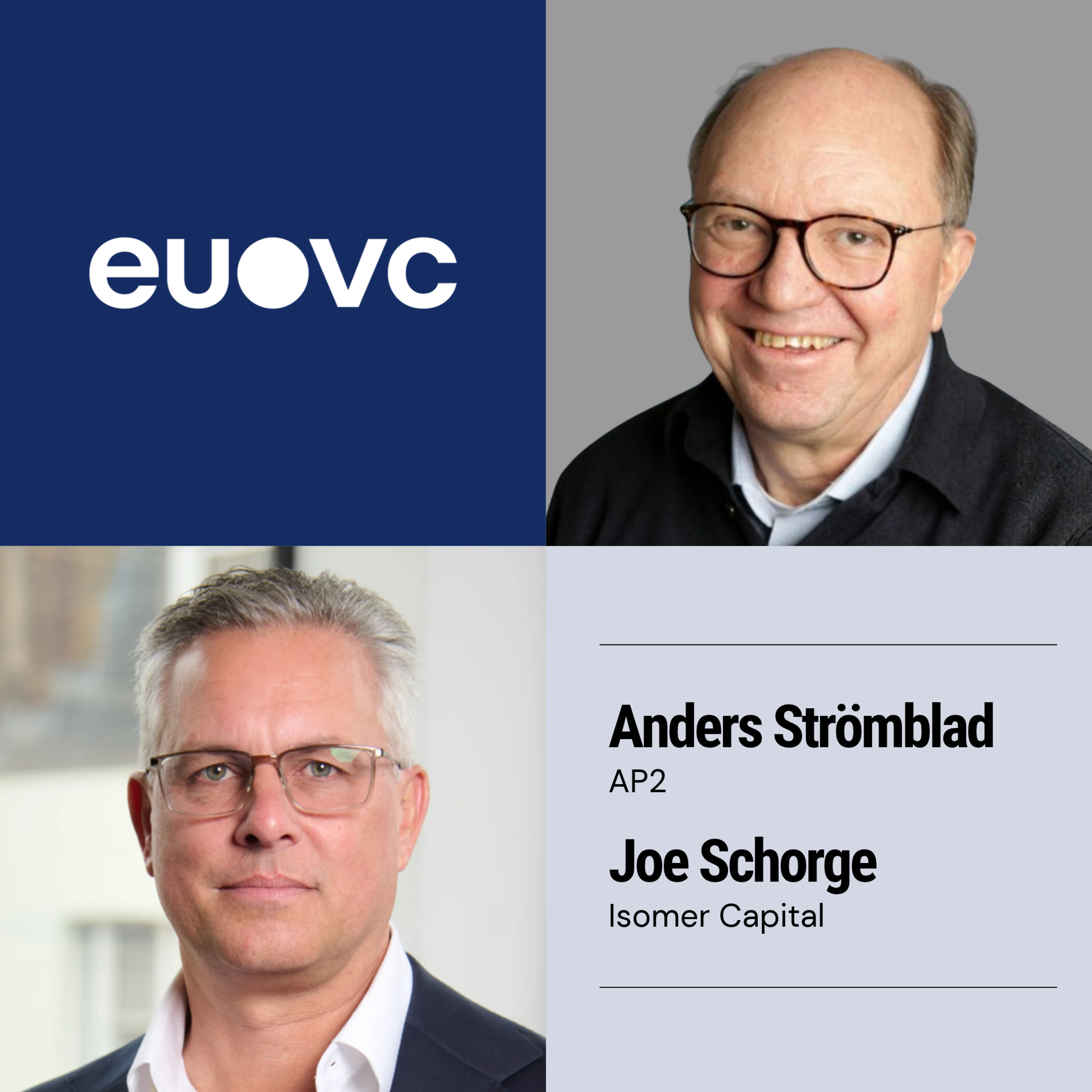
In this EUVC conversation, Anders Strömblad, Senior Adviser Private Investments at AP2, and Joe Schorge, Founder and Managing Partner at Isomer Capital, discuss the institutional case for venture, drawing on decades of experience allocating across the asset class.
Anders explains why AP2 began investing after the dot-com crash, why patience and consistent deployment matter and how venture can give pension funds exposure to the companies driving technological shifts before they reach public markets.
Anders and Joe also discuss Europe’s maturing venture ecosystem, the challenge of accessing strong managers, the structural difficulty of investing in smaller funds and why conviction is built through long-term relationships as much as historical data.
Highlights
Why venture belongs in the pension fund conversation
What AP2 learned from more than 20 years of allocation
Why venture is more than a risk factor
How venture provides exposure to disruption
Why Europe has become more investable
Why access takes years to build
The challenge of backing smaller funds
How institutional investors build conviction