Ask ChatGPT
 EUVC
22 Nov 2026 · 36m · 20 chapters
Pre-seed contrarian investing “from the fringe” and why true contrarianism should feel uncomfortable; also how a three-GP partnership makes emotional, consensus-light decisions and stays human in an AI era.
Hampus Jakobsson, a programmer-turned-VC at Pale Blue Dot (described as a three-GP climate/impact tech micro-fund with a shared back office and no formal IC). Background themes: structure/process mindset; wants to “be human” amid AI; uses Claude/AI for investment research and data analysis.
Every fund claims to be contrarian, but pre-seed contrarian investing requires discomfort because you’re judging terminal value, not popularity. It’s wrong to hype-chase while pretending otherwise. True contrarian decisions are personal anxiety-driven; they lack an IC and rely on each GP’s independent conviction plus follow-on defaults.
Portfolio tech-enabled companies Ember, Hive (package delivery), Varm, Solar Rock; comparisons to “indexing” VC deals via uncapped notes; follow-on “default” percentages (e.g., 75% then adjust).
Written by AI. May contain mistakes.
Learn how true venture capital requires comfort with discomfort.
“When you're a pre-seed fund, if you want to invest in stuff that you think is truly venture and it's going to work out, it will be uncomfortable.”
Explore the concept of investing in fringe markets as a VC.
“I just asked you, what should we talk about?”
Understanding that all funds claim to be contrarian but few succeed.
“And that's way more complicated because then you can't play this Keynesian beauty contest where you're guessing if other people will like your company, but you have to guess if the terminal value is going to be good.”
Discussion on evaluating startups beyond hype and trends.
“And I always say that both can be lucrative.”
Analyzing different investment strategies and their implications.
“There used to be a fund, a really awesome GP, I like him a lot, who their strategy was when a top tier fund in London invested in the company, they offered 1 million uncapped notes to that startup with 15 minute meeting.”
Exploring the dynamics of a VC partnership and decision-making processes.
“I think the funny thing is about that is that the fringe isn't that cool.”
Personal accountability in investment decisions and its emotional impact.
“For follow-on, we have a default set we want to do, so not 100%.”
Strategies for maintaining effective communication and respect in partnerships.
“So my hand, did you come to that because you think structurally that's the best way to run a VC firm?”
Realizing the value of personal relationships among partners for success.
“Tell me, you just described the personalities also of you as partners here.”
Discussion on how being prepared and personal connections influence investment decisions.
“They did a small ticket in the first close.”
Exploration of the tension between efficiency and personal engagement in the age of AI.
“I think I'm changing that actually thanks to do to Claude and friends.”
Insights into fostering strong partnerships and effective communication among co-founders.
“okay it's actually it's interesting because what you just described to do a really quick deep dive into into AI, what I'm finding with AI is exactly that.”
Understanding the role of tension and resolution in entrepreneurial relationships.
Discussion on creating a distinctive investment approach that fosters genuine connections.
“And does Harry Peele the Dot have to be anything beyond the three of you?”
Exploration of maintaining authenticity in venture capital interactions and decision-making.
“We said to them, wow, we didn't know the valuation was this high.”
Learn about the competitive nature of venture capital and early-stage investing.
“And I think it was way better dynamic than the, you know, faking and also like having a person next to me who does like industry stuff and I wouldn't use that person.”
Explore how AI can enhance decision-making and data analysis in venture capital.
“We will in the forest and in not too much.”
Understand the importance of self-critique and reflection in investment decisions.
“And for me, it's really good when somebody says, oh, do you think Fusion is good or bad?”
Discuss the impact of constant digital input on thinking and creativity.
“I think it is because, but I mean, I like writing with a pen as well.”
Reflect on the transformative experience of extended periods without input.
“which to me is just absolutely daunting.”

Get the gist, explore an idea or ask about something said.
 Claude
On EUVC, what are the key points of this episode?
Searching your listeningAutomatic transcript. May contain errors.
0:00When you're a pre-seed fund, if you want to invest in stuff that you think is truly venture and it's going to work out, it will be uncomfortable. I think the biggest VC game in the world is the game of just amassing a lot of money and getting management fee. But we don't have an IC. Like we're not going to figure out if the average is more than seven and then we invest. It's literally, if Yul loves this company, he can do it. If Hyde loves this company, she can do it. If I love this company, I can do it. And I think that's it. That's the whole thing. And I think that one of the hardest things right now when AI comes along is actually to be human.
0:31I'm really trying to figure out a way where I can balance efficiency and the way I love it with actually just being very personal and just being very human and actually being there and seeing people and showing them that this is not my AI who generated this. This is actually me saying, I hope you're okay. We are live. We are live. In five. We are live. Four. We are live. Three. We are live. Two. We are live. One.
1:05Embers, welcome to the podcast, my friend. I'm happy we're talking again. I just asked you, what should we talk about? And you said, well, what I'm thinking about these days is that as a VC, you really have to invest in the fringe. What that made me think was, well, you're basically saying here you have to be contrarian. but then oftentimes you see people saying you have to be contrarian at the same time as they're very much in the most hypey markets. So tell me a bit about why you're saying the fringe is actually because it's a different way of saying the same thing but I think it might be a more productive way of saying the same thing.
1:41Yeah I think the tricky thing about contrarian is I think every single fund is a contrarian and I think every single fund is a top decile fund and it's just like 85 % of American men drive better than average American men. Like, you know, it's obviously the math doesn't work out. I think the tricky thing is that I feel like when you're a pre-seed fund, if you want to invest in stuff that you think is truly venture and it's going to work out, you have to be, it will be uncomfortable. And I think there's a big VC game. I think the biggest VC game in the world is the game of just massing a lot of money and getting management fee.
2:12And then essentially the best strategy is investing in the most deep tech topic that's very, very hard and obtruse to figure out if it's good. Fusion, quantum, defense, whatever. Plow money into it because four years later and raise the next fund, nobody can tell if this fusion company is going to work out. So then you can raise the next fund. And I think that if you want to invest in really good companies, you have to be there for the 20. You have to be there for the carry. And that's way more complicated because then you can't play this Keynesian beauty contest where you're guessing if other people will like your company, but you have to guess if the terminal value is going to be good.
2:44And that's actually a different job. Like, I mean, a substantially different job, which I think. I actually, I think you're hitting a very important point there. And I always say that both can be lucrative. Yes. And both models can work as a VC. And it's just very, very important that you are aware whether you're one or the other. I actually, the one thing I don't like are the people that are the hype chasers and don't publicly, or at least in an honest LP meeting, declare themselves as such. Yeah, yeah, yeah. Because it's a model that very much works. Yeah. And oftentimes, the people that run co-invest strategies are kind of, they wouldn't say it because it doesn't sound good that you're not concerned.
3:32But if you run a strategy where you, by definition, cannot lead, you're getting very close to it. And if you then cannot make that decision yourself, so to say, and fund it on your own and don't have that capacity in your fund, then why would you not be then chasing the deals where there are the biggest, clearest group that can make this happen? And you just need to tag along. I love that investment strategy. I think it's actually, in most cases, the best in the sense that it's very difficult to run a truly contrarian strategy. Yeah, it's horrible. And you get a lot of financing risk and there's a lot of things that compile there.
4:12Whereas if you run the other strategy, what you've got to prove to me is you have the best network, you're a really good salesman. And then I'm pretty much ready to underwrite you on that. Yeah, I think it's really fascinating. There used to be a fund, a really awesome GP, I like him a lot, who their strategy was when a top tier fund in London invested in the company, they offered 1 million uncapped notes to that startup with 15 minute meeting. And when I talked to him, I was like, wait, this is this strange, you're just indexing Excel index. And he was like, yes. There are tons of problems with that, of course, because you can say that, well, Index can afford that or Accel can afford that at the very early stage when they're doing your uncapped note because they're returning it.
4:57No, they invested after them. Their deal was if a list of these 20 VC's invested, if that index invested, they called the founder and said, like, hey, I'll give you a million dollars. Yes, but my point is that Index, they have all our capital. So to them, they're saying, well, it's one million out of a billion. So what do I do? But if you're a 20 million fund, it's a pretty bad strategy. Exactly. So they're all the problems compound, of course. Yeah. And I think that's the exciting part. I think I have a huge respect for micro funds. Like I love solo GPs that are doing a fund that is like 20 million or below because then there is no game.
5:30Like there is only the truth. And I think that is such a clarity of what they do. And I think I so respect that. Yeah. And so then let's dive further into you. I just wanted to clarify that part around it's very wrong in my view to be dunking on the strategy where you're just recognizing venture for what it is and saying I'm playing that game and that's what I do. Like that's perfect. It's a perfect strategy for someone. You should just go ahead and pursue it. What I don't like is when people in effect do that, but they're saying they're doing something else. Yeah, of course. Now let's then turn our camera to your strategy, so to say, the contrarian strategy where you are actually trying to pick in the fringe.
6:14So let's talk about that. I think the funny thing is about that is that the fringe isn't that cool. The true fringe isn't that cool. By definition, not cool. But, like, I mean, if you take, like, we have four companies now. Is it four? Is it even five that are tech-enabled companies? Like, we have Ember, Hived, Varm, Solar Rock. and if you take like i mean the most extreme if you take like hive the number hive is a they're a package delivery company they literally deliver packages that's what they do and i think that it's like every time we talk to somebody about that company they always ask us do you think it's not going to be valued like a pe company in the end and like you know that's going to be the exit and i think that's the fringe part of that company right nobody's surprised about that people can deliver packages it's not quantum but i think that that makes us really uncomfortable all the time and I think that's the thing is that it's not about doing uncomfortable of the kind that you're comfortable with it's about the kind of sitting there thinking that's we know the problem like the headache is that we know that's gonna be solved and I kind of that's hard I think that it's it's always like you know putting money in the fusion pile and saying we're doing a yet another fusion reactor that's not very fringe how do you get to terms when you know that I am contrary on this oh we don't we're doing nonetheless oh we don't your partnership let me understand the partnership dynamics because payable dot part of what it requires to be truly contrarian some would say is also that you in your partnership don't need to come to an agreement there yeah we have three people we have that in spades so say if you look at pivot dot we're a three solar gp fund with a shared back office so anybody can do an investment without talking to other people but the thing is of course they do talk to people they're not crazy but we don't have an ic like we're not gonna figure out if the average is more than seven and then we invest it's literally if Yule loves this company he can do it if Hyde loves this company she can do it if I love this company I can do it and I think that's it that's the whole thing so I think that the biggest thing about Pilbaraud is that when you meet a company when I meet a company it's my complete personal internal anxiety of like I even if Hyde and Yule says yeah it's kind of nice it doesn't matter anymore because I am the person who will feel responsible when I go to bed on a Saturday night I will be like should I do this company this might be done and I think that's a good thing Is that the same decision process for follow-on?
8:28No. For follow-on, we have a default set we want to do, so not 100%. And then it can go up if everybody's keen, and it can go down if the lead is unkeen. So you have a default, you will say 75%, for example. We do 75 % and Purata, but it can go down. There's like a clinging curve that says, like, for example, if we do the first round, it's a million dollar round. and then the next round is a 20 million round. We won't probably do full Parada on this because it's such a very high valuation. So we will probably by default maybe do like 60 % Parada on that. Like I don't know where the curve that is calculated.
9:04But then all the three of us are saying this is the best company we've ever had so let's bounce that up to 90. Or the lead says, I don't like the incoming fund. They did really sloppy DD. Like they met in an elevator at Super Eternals. That feels really weird. So I would love to go down 10%. I would do just 50 % Parada. And then the other GPs, like the three of us together, can like change it. But it's like, it's more of a consensus bet. And then like bridges and like the in-between rounds are also done. Each GP has a budget. So like I can bridge one of my companies like on a weekend at the board meeting and they say, we would like to have 250 more K.
9:40And I could be like, yep, you have 250 more K from us. Like, don't bother about it. We'll fix it. But of course, I will like not random do it. Like I will probably say to Heidi Newell, it's like, I really want to bridge this company. And they're like, yeah, it's your money. It's like your budget. And the same, it's not like it's the same for all three of us. Like we have exactly equal roles and we have different troubles and anxieties. And that's how life is. So my hand, did you come to that because you think structurally that's the best way to run a VC firm? Or did you come to that because this is how we as three individuals that are GPs in a partnership together feel like we have to do it for us?
10:15Yeah, it's a second. I could post-talk justify it by saying we have this intelligent, brilliant strategy that if you're a pre-seed fund, you have to be super contrarian. and they have to do this way. And that's not the truth. The truth is that we started by doing more consensus structure and we started like voting. And the headache is because we're so different. We always have at least two people trying to rip each other's hairs out and like, you know, shout at each other in ridiculous manners and talking about each other. And then it just feels like when you get into those like broken marriage relationship, when somebody's, you know, somebody's angry because you didn't, like you didn't put down the lid on the toilet stool and the one is saying, you don't respect me.
10:49And it's just like, you're not even talking about the same thing. Like, stop, stop fighting about this. Then you start to realize, I think we started realizing that we won't be able to say, like, let's sum up the votes. So then we started doing a lot of different structures of like, okay, so you can veto out the deal. And we tried a lot of stuff. And then we went really far off and said, like, okay, you do your own deals almost completely. And then we kind of now fell back into this structure, whereas, like, you do your own deals. But what you do is, like, you create a channel on Slack. You write all the things.
11:19You call the other people individually. You talk to them. you call a meeting you kind of get bashed quite a lot um you know that's that's it the process is very emotional it's not like a calculated time process it's very much a like why the fuck do you love this guy like this is really weird or it's like this is a massive bias you know that you love this because of this and that and the found and the one of the three of us was like i know i know i know i know i love it look at that and we have three different biases like very different biases and it's very clear that we go on an island with all our founders in eastern sweden and kayak and literally we're on that kayak out you can look at the founders and you know exactly who's who like it's like who back to who it's like yeah hamper's founders completely reckless people they don't care if the door is blocked or not they just kick it in and they're like i don't care heidi's founders like genuinely the best people in the world they're just like you wish they ran the whole world and you all's founders are sitting there optimizing the kayak paddle and be like i think i can make this slightly faster and they haven't left the shore by the way And it's like, you just go like, oh my God.
12:19It's like, and we're with those people for three days on the island. And it's really fun. Tell me, you just described the personalities also of you as partners here. And this is becoming a bit of a dissection of people who don't, but I think many people will find this very interesting. Tell me, how do you make the partnership work between you? What have you found is the most important thing to make such three diverse people really work together because in the end you are one of the funds that are most talked about in European climate impact tech. I would know you like climate impact. No, no, no.
12:54I would... Stupid stuff. No, exactly. I would say the honest answer to this is that I'm married and I've been married for, what, like 26 years. The thing is, it's extremely similar. It's extremely similar. I think that it's really... I think the easiest way to survive a marriage is to not interact with your partner at all. I think that's a really dumb way to get married. And I think that the thing is that it requires insane amount of respect and curiosity and work to actually make it work. And to actually sit down and listen when the other person isn't listening to you. And I think that that's a thing we're constantly practicing.
13:29Like constantly. We like, you know, once every month we go hiking in the forest. I usually cook for those two crazy people because they haven't packed the right stuff. Heidi always come in complete gear. Yule comes in like shorts when it's raining. it's like I have like a complete kit of food I planned every like every I have a notion page where we're gonna walk we all have like we're we're weird in our different ways we had like deep deep conversations about a lot of tough stuff and I think that that's the thing is I think that really like seeing each other as people is really important and I think that that's one of the things I think that a lot of partnerships like we had an LP who came to our they did our fund one They did a small ticket in the first close.
14:08They did a very large re-up in the second close. And I asked them why. And they said there were two things that made it. And I said, what? And he said, I've called 10 of your founders. You come to the meetings prepared. That sounds like a low bar. That's amazing in our industry. Second one, I came to your office. You were holding a kid I thought was yours. And I realized it was Heidi's kid. And then you talked about the fact that you all is doing IVF. Completely comfortable about it. You know each other. no other gps do and i was like whoa that moved the ticket from one to seven but it was it's crazy because i think i get it it's really hard like i mean i've i've had flaming attacks to both of those people and they've they've been angry at me for a lot of stuff and vice versa traveling with heidi newell is traveling with a married couple like they they fight about why the forks have five or six spokes on a plane and it's just like please stop it doesn't really matter hamper's telling me um you've shared with me in the past that the best compliment you can gadgets that you're a machine?
15:08Not anymore, actually. I think I'm changing that. Yes, tell me. I think I'm changing that actually thanks to do to Claude and friends. So like I am originally a programmer. Like, I mean, that's like how I think about stuff. I think about stuff in processes. And I think that one of the hardest things right now when AI comes along is actually to be human. And I think that, and I mean that sincerely, I think when mobile phones come along, the hard time was to be in this room and not with my friends somewhere else, right? Like that, When social media came along, it was really hard to be satisfied with this and not like with a picture of a beach with a friend.
15:41When AI comes along, it's really hard to be happy with like a person who doesn't say perfect sentences and doesn't have like doesn't understand that you should m dash. That's how actually you do right. But somebody who writes the way they write. And I think that's the thing is I'm really trying to figure out a way where I can balance efficiency in the way I love it with actually just being very personal and just being very human. and actually being there and seeing people and showing them that this is not my AI who generated this. This is actually me saying, I hope you're okay. So I actually think that it doesn't come naturally for me, to be very honest.
16:16It comes way more naturally to me to be hyper-efficient and to have structures for everything. Heidi and Yule jokes that I'm a very functioning autistic. I'm not really sure I'm autistic, but I think that I love good structures. but I also love people and I think that at the end of the day the reason I love fiction is the only technology on the planet I've found which allows me to travel other people's minds and I love it and I want to travel other people's minds in the real life too like I want to know about you for real and not because like you could invest in my fund I don't give a shit because life is long and I think that's the thing which I think is hard to not be a machine okay it's actually it's interesting because what you just described to do a really quick deep dive into into AI, what I'm finding with AI is exactly that.
17:04So I have always been a very disconnected type worker, meaning that nothing I do is in a structured way. And I'll go one way, that way, that second, and then I'll go another, the other. And I've always, and anyone that knows David and me, my co-founder and I will know that David is the opposite. And that is why David and I have been able to do good things together. But now I'm truly feeling that the beauty of having clot in my pocket and not having to think, I have this note, I got to put it inside my CRM and then I should also make sure, bum, bum, bum. I just tell it exactly what just happened here at Superventure.
17:49And then it knows from my context that I took the time to deliberately teach it and teach it the internal ecosystem to then go and find all the right places and follow up with me on monday on blah blah blah yeah i am finding that it is empowering me to be andreas instead of structures operated by andreas exactly and i think the thing there which i think they're beautiful i think i know a handful of people i would say 20 of people who ai makes more human yeah because this allows you to be more andreas and less what andreas is supposed to be according to society and the school system. And I think, but I sadly know 80 % of people who become more, they become less than Andreas because their emails are generated by AI and everything's really, their chats are generated.
18:33And it's suddenly like, what are you doing? It's like you're orchestrating an AI. That's like, that's nothing. So I think that's, I think is the real complexity of actually being there. Tell me, I'd love to ask you, if we go back to the partnership dynamics there, I'd love to ask you a bit about those hikes because I'm doing high school people as well you and I are doing one yes I often think about yes I want them to be organic but I at the same time want to show up very prepared and use this very unplanned dialogue that's going to happen in the forest over five hours but I still find it incredibly important that I show up knowing what do I want out of this and what can I give you, so to say, and having had that strategic frame of mind and using it that way.
19:25And I'm, of course, asking here about how do you run a process to make sure that you as a co-founder, co-founding team, operate very effectively together and actually get closer and closer and don't just go on a hike. Because you can all go on a hike in small talk. But for you to know about Joel's IVF, you have to go and know. So I'm like Neo in the Matrix. I lived two different lives. Like my wife is the perfect combination. If you describe my wife, she's like the combination of a nuclear reactor in a dictionary. She's like hyper structured and hyper correct about everything. And it's like when I'm home, I'm like making sure that everything works out because otherwise it might blow up.
20:03When I'm at New Orleans, we book a meeting and the meeting is called fund model. I know it's 20 % probability that it's going to be about a fund model. They're like a quantum computer. Like we have a conversation and they start talking about something else. And I'm like, can we, can we get to the fund model? and they're like, yeah, absolutely. So then I was going to the hotel and then I was like, but can we, like, we have 20 minutes left and we have to talk about the fun model. Like, our meetings at work and our hikes at work, they never fall on a agenda. Like, it's absolutely not. But I actually have come to terms with that, even in my condition of, like, as Heidi will call me, autistic, because I think I've come to terms with realizing, you know, there's certain candies where they're all different sizes and you pour them out and all the biggest candies ended up pop.
20:43And that's because of physics. They just, you know, know that's the small ones get down and the top ones can't the big ones can't get down i kind of feel like our hikes the conversations are like that like we you know move around this candy and talk a bit and then the big questions end up being there and i think it is the reason because i think that we're all like very there we're all very curious and we're kind of like to be honest i think we're all kind of like uninterested in work and i say work within air quotes yeah i mean like when we talk about like how harbor works and how it's like we're super passionate we have great conversations and then somebody says oh are we looking at a hardware company now no no no no no we just saw like a youtube thing about it and people are like what or like when we talk about like a founder and we take about do you think modern founders should be more hustlers now or do you think they should be more ai experts whatever and we have like a super deep conversation and there's no particular founder we talk about it's like um because we're just talking about it and i think that is really how our hikes and meetings are like i think the thing we're doing though is that we're blocking time for it so like we really have a lot of time like monday we were sitting at like a big garden thing where they do a lot of vegetables just outside melna and just the conversation is very random about everything and it was really really good we had super deep conversations and there was a good conflict that had been brewing we did this event or heidi ran this event which is really really good which is called europe next which is bringing to some of the most frontier European funds and talk about how they should develop.
22:13And it's complicated because we can only have one person per fund. So then it becomes like, okay, so you and I, can we not join and everything? That of course creates a tension, but that is a good tension. You know, we end up refining the format. We end up talking about what we should do as a GPs. We end up talking like, is it better we separate the brand and like all those conversations. And it's hard conversations, but I think it's hard. I think it's like, as you know, in relationship, it's hard because we care. it would have been so much easier to just be like I'm going to stay at a hotel tonight and you use the bed but I think that we end up saying no no we're not going to go to bed angry we'll try to figure this out and we'll talk to each other constantly and I would genuinely say that it's not easy I think that the biggest headache Paypal.com has is succession planning because I cannot see us being able to hire a fourth GP or junior investor But do you necessarily have to succession plan?
23:10No, we're very, very young. I mean, for God's sake. And does Harry Peele the Dot have to be anything beyond the three of you? No, no, no. But I also know LPs who say, like, what do you think about the institution you're building and everything? And I'm just like, I don't know. Like, it's like, I just try to be in the now. I just try to, like, figure out if I love this founder or not. And if I really believe in the company they're building. And we try to do this for each other a bit. But I think that if somebody says, what are you going to do in eight years? I don't know. What does the team look like today?
23:39We're three people, three of us, Heidi and I. And then we are an amazing group of people who try to make sure that we don't spend time doing other stuff than investing. So we have like a head of finance, like a head of operations, like, you know, head of legal. Like we essentially have all the people who do everything else as a fund so that we can focus on staring at founders and thinking about that. So like we don't have principals or associates or anything. and I think that's the beauty of the model I think that when we meet a founder we have so many times where we have end up investing in a company because we don't have associates I would say so we have one case where we met a founder we declined them they end up recommending us three companies why because they had a great process like we talked to them a lot add them on whatsapp try to help them with around we like them a lot it was just not our company We had another founder.
24:32We met them. The valuation was very high. We said to them, wow, we didn't know the valuation was this high. We really like you. We had a great conversation. We said we're interested, but not this valuation. They came back, and we ended up doing it. Why? Because I think the problem for them is when they had talked to an associate of the fund, when they came back and said, we're interested in low valuation, that associate said, I'm not risking my career again. I brought you up for the partner, and they shouted at me, and I'm not going to do it again, even if the valuation is lower. I'm sorry. When that person pings us on WhatsApp, we're like, oh, you've landed on planet Earth.
24:59Let's have a conversation again. it doesn't mean you're bad because you like you know we all know the first round you were trying to raise was ridiculous yeah so like you know good you tried but so i think that those come because we don't have associates yeah but of course what's the cost of that the cost of that nobody does first calls but us yeah which means negative it means that we end up having quite a lot of first calls and that's of course telemarketing like it's just what it is like you just go on a call you try to figure out who they are and i think that's messy i found personally that one of my greatest joys now when i meet a founder is explaining our process completely transparently without wasting their time we met the company four weeks ago five weeks ago and uh it was you who was gonna he was super interested but by mistake that like i end up being involved in the beginning and the founder booked a meeting with me so i had a meeting on the thursday and you'll have on monday and i was gonna cancel my meeting because like i mean why should i talk to the company first before you will talk to them like there's no real in point for me talking to the company but i realized 20 minutes before the call so i was like okay so i joined the call said hey to the person and i said okay very very quickly i can save you you know 30 minutes very quickly like you will list the interested lead like this is how process works so i said either we quit now or if you want we can spend the coming 22 minutes where i can just help you with whatever you want because you know i like i'm not gonna drive this process or vote or anything we had 22 amazing minutes great conversation like you know we talked about like how to onboard a customer we talked about like a hiring problem they had super conversation super super good the founder was like this was really really good and i was like great you enjoyed it you know like bye hung up told you all a bit about the problems the person had like you know send them my granola minutes like you will look at it and he was like great you all came to the call and the first thing the founder said like i talked to your brother that was a great call why was it a great call because it wasn't like a strange date where the person says where do you live and what's your salary it was a date where somebody says like hey how are you oh that's a cool shirt and like you know had a good conversation and i think the funny thing is the best call for me and for this founder when i one was i stopped being a vc yeah do you engineer that into your process i imagine you do i know now i do yeah actually i was about to say for destin is one that i rate a lot in the ecosystem and he always says he tries to lead with this let's work together if I like how you work and you like how I work and we can see I think the headache is you I think it's very hard for me to do that when I'm a lead because the thing is that I also want to run a process I want to kind of figure it out I had a company like I led a year and a half ago in and it was like super competitive I didn't know what happened was like I met them and it was in my favorite space which is logistics and I was like I love this is so amazing we end up just jumping on the call I introduced them to like six different customers three of our founders there's like bombard them on whatsapp I asked so many questions and then three days later the dude says like now you added more customers than I've talked to before like you know before this call like it's insane and I just said wait I haven't gotten started like I mean this is so exciting and the reason I did it was not because I knew I was going to invest or anything it was because I also wanted to know like you know my own thoughts about this company and then you know of course I called the other people what do you think about them and like they're super early but it's really good we have this problem and when the founder turned around and said like i would love a term sheet from you and i was like yeah okay great i didn't understand it was super it was super competitive but i didn't know because the other VC funds that they've met the associate then they got one partner meeting then they had a pitch in front of the IC and they had done nothing for them yet they just interviewed them and they repeated the same thing and i had like i was like true true true true investing right like i mean i love what you do but I haven't really talked to a co-founder.
28:43And I think it was way better dynamic than the, you know, faking and also like having a person next to me who does like industry stuff and I wouldn't use that person. It's like, I'll do what I can. Let me ask you before we close, because we could talk forever. We will in the forest and in not too much. We will. Let me ask you, AI, we're doing an AMA session soon as well. I'd be so curious if you would just share with all of us, what have been your highest leverage built for yourself as a VC using AI? I would say like the biggest leverage as a VC is definitely the work Ewell has done, one of my co-founders.
29:30Like Ewell has built an amazing structure of understanding all the investments we previously done and really normalized and structured that data. So we understand like what our average ticket size is, and really understanding like how many times we invested. It's much easier for us to be like when we look at a product, like, you know, looking at the valuation of a company to really understand and see trends. And this is the thing which is crazy about it is that we have done this exercise every year, I would say. But I think then we've done it in spreadsheets. Now is the first time when, first of all, like the data is true because like Claudia can actually filter out these like weird edge cases and stuff.
30:05But also now we can have a conversation with our data. we can really start like actually gleaning and understanding what's going on and i think that's been tremendous and it's like lots of yules dates late nights and you know we've had grumpy for many mornings but it's worth it like both heidi and i high-fived and hug you on monday when we had a conversation with a company and yule said wait and he's like and we saw the answer coming out and we were all like that would have taken us so long to figure out before that was amazing i would say that's the biggest value i think that the biggest value ever like as a person for me or all the systems that try to remove the impersonal stuff from me all the things that are like trying to help me be more human um and i've also find like it's really good all the ways when i'm looking at something and interested about something having it to get me to think around corners and like critique myself because there are a lot of times like it's very easy as a fund or a venture person or as a dude i don't know which one this is to just be very overconfident about stuff.
31:05And for me, it's really good when somebody says, oh, do you think Fusion is good or bad? And I can be like, this is what I think. But then I can just talk to Claude a bit and I can be like, I never thought about that. I had an awesome conversation the other day with a founder about that fuel shortage is the biggest problem in Fusion. And I was like, end up having, you know, an hour car ride where I essentially had a conversation with Claude about it. And I think that's the topic where I couldn't, you know, you can't really find a podcast that is tailored for you, even if your podcasts are great.
31:31yeah um could be there soon exactly tailored podcasts exactly well i do think that those are already there with uh with google of course they're making it inside google yeah yeah exactly i do i do quite a lot of those when actually that's a very common one i meet a founder we had a great conversation it's a bit of a weird field i take my granola notes i push it into notebook llm i asked it to do reader research then i start biking home because i live in sweden so i bike so i have a 20 minute bike ride listening to two people saying it's funny margaret the quantum is so new but that's so old and it's like i know but the founders and i'm listening to it i'm like this is really good this is really interesting when i come home i send whatsapp to the founder with a couple of questions and that i think is like that is a such a good interaction of getting that podcast are you using a whisper or are you still typing both depends on topic exactly i i I like typing.
32:22I think it is because, but I mean, I like writing with a pen as well. I've stopped using chisel completely actually. But I really like writing. I think there's something about like, it's something about forcing myself to be slow. It's really good. My wife says this all the time. Like I'm way better when I speak slower. And I think the good thing about writing is like I can't write that fast. I, and let's close the podcast now. I just want to say one last thing this surprised me i was driving in the cab here was talking to the cab driver turned out he was a european fisher pro uh and like had gone to all these european level competitions and i asked him this was probably around 55 or so i asked him so what do you what do you do while you because we were talking about podcasting as well so that would do listen to anything whilst no no i'll just be there like for five hours yes like how many times a week well two three when I was at my highest four times.
33:23And it dawned on me, oh my God, I tried to think back, when did I last? What was the longest duration? If I should even go back and say, like no input from anything or anyone, I think it's 30 minutes. I don't know when I should go back to to get beyond 30 minutes, which to me is just absolutely daunting. Do you ever do hiatus from any tech for longer durations? I think the biggest one I do structurally is I read a lot of fiction. And I read that on a dead tree. Yeah, no input whatsoever. No input. No, that's like, again, I have a sparring partner at home that asks that question quite a lot. I can bear about it.
34:02I mean, listen to podcasts in 1.5x speed. That's why I speak like this. It's like, I think that it's like, I just love info. so let's commit to closing the podcast now to each of us over the next two months to be to be real even be able to do it we'll commit with doing a three-hour walk i'll do it in denmark you'll do it in sweden no input we just have to walk all alone yeah that's okay though that i can do yeah all alone all alone yeah i have no problem doing alone walks those are actually really good without the podcast too yeah i think i do but the headache is i think that also not using it as thinking time because the headache is i do that quite a lot when i'm trying to think about something i go for a walk and i just think about that thing but that still becomes input yeah well still in your own mind like i haven't even done that yeah i love like i mean we went to this like deep work trauma camp when we had no no no input yeah and that was incredible like what happened to me was the craziest shit ever.
35:00When I came home, I was a normal, complete normal person. 13 days after, I remember this exactly. I was in the shower in the morning. I was showering and I heard a voice in the shower and I turned around because there was someone in the shower. There wasn't anybody in the shower. And then I realized it was my own voice in my head. And then I realized that it had been completely silent for 13 days. Well, that is interesting. With that, I'll let the Simons take go over. Thank you, Hamphers, for joining me. Thanks for having me.
Calling yourself contrarian is easy. Backing something that genuinely makes you uncomfortable is much harder.
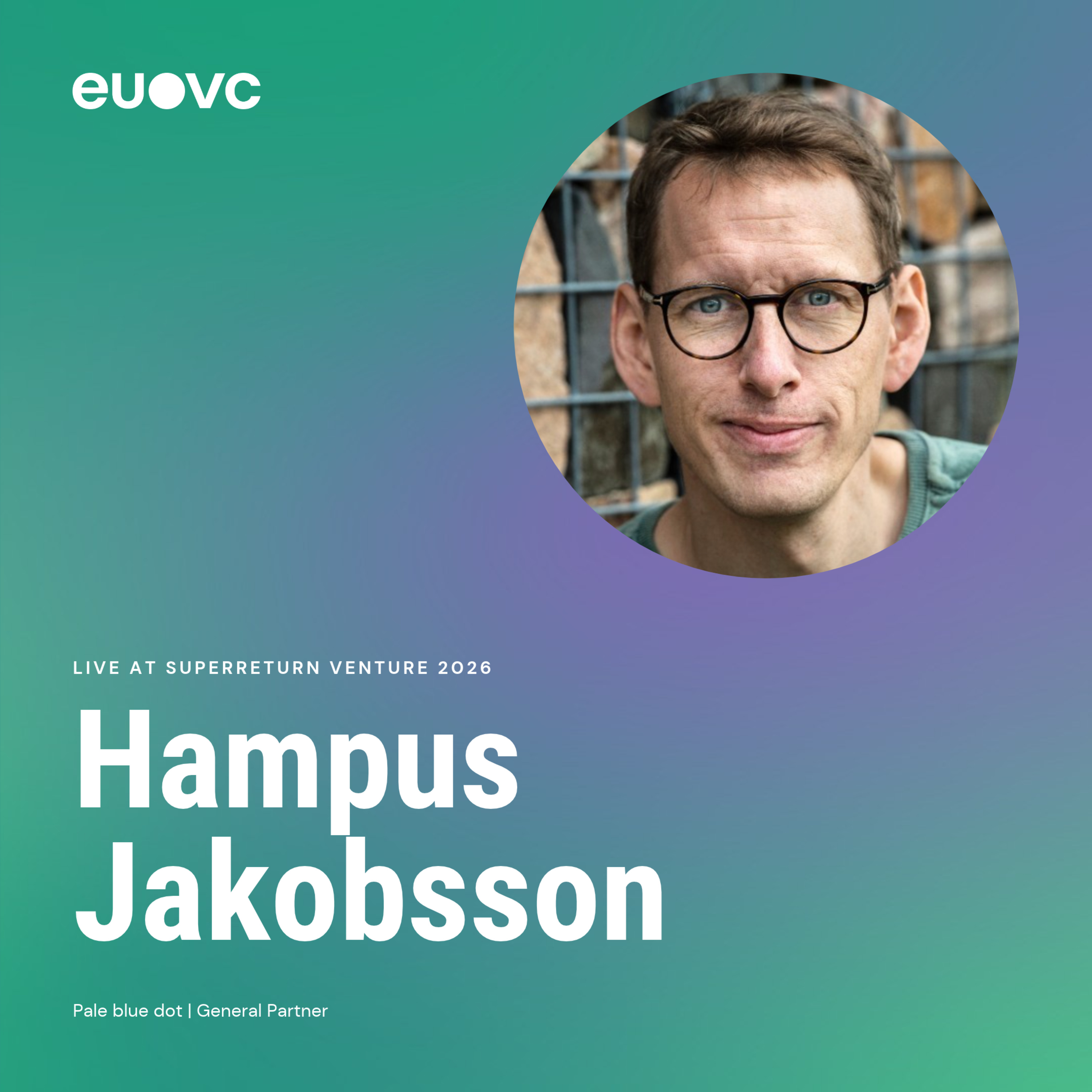
Recorded live at SuperReturn Venture 2026 in Berlin, Hampus Jakobsson, General Partner at Pale blue dot, discusses what it means to invest at the fringe, why consensus can distort decision-making and how the firm structures conviction without a traditional investment committee.
Hampus explains why the most interesting opportunities are often the ones that do not look obviously exciting, why individual GPs are expected to own their decisions and how the partnership has evolved around very different personalities and investment instincts.
He also reflects on the role of trust between GPs, how AI is changing the way investors work with data and why greater automation may make being genuinely human more important.
Highlights
Why true contrarian investing should feel uncomfortable
Investing beyond consensus
Why the real fringe is often not fashionable
How Pale blue dot operates without a traditional IC
Giving individual GPs real decision-making responsibility
Why trust matters inside a VC partnership
Using AI to understand portfolio data
Why AI may make being human more important