
In short
EUVC Podcast Episode Summary: Announcing Our Investment into Satgana Fund I & An Established Portfolio at 4.2x 📈
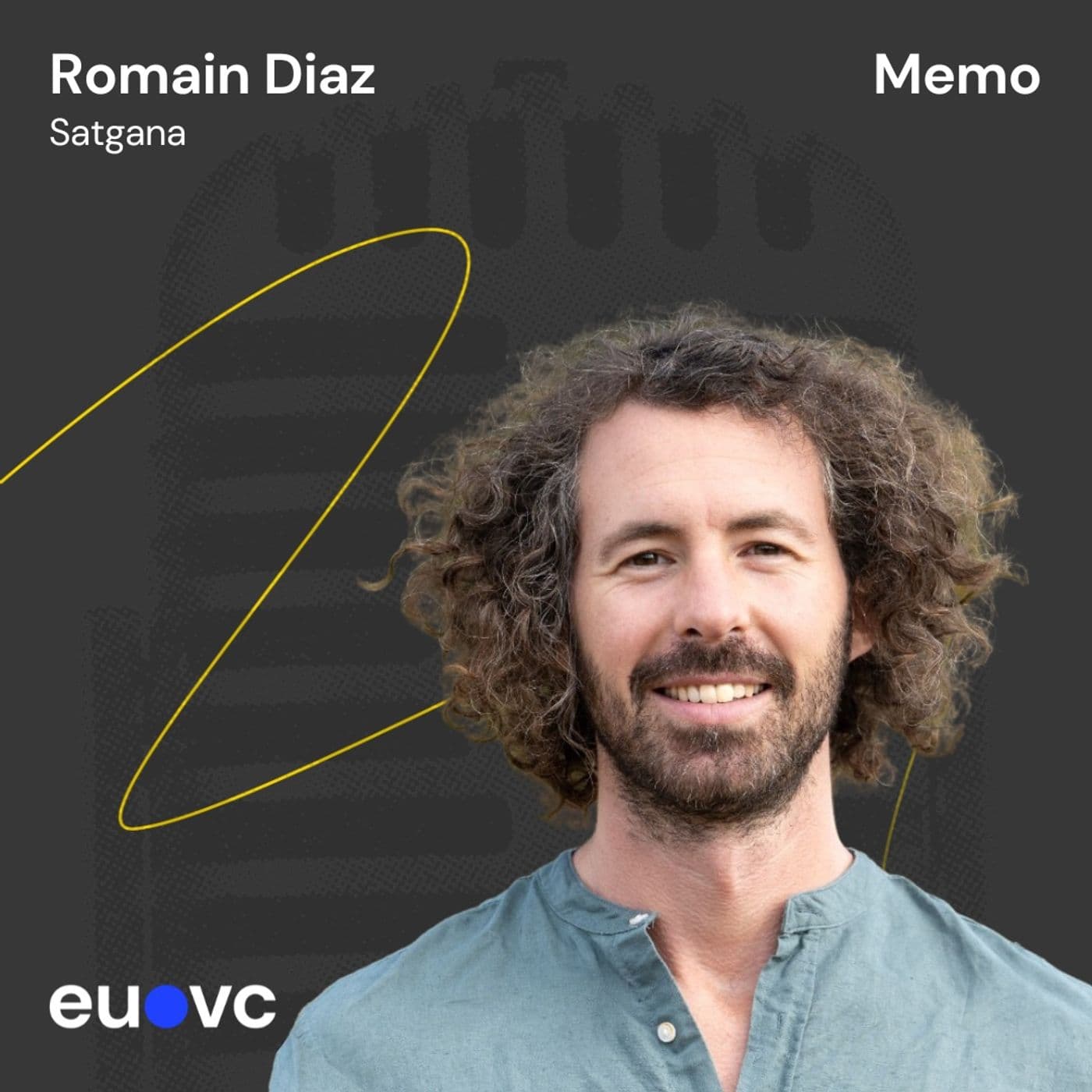
Podcast Overview Podcast Title: EUVC Description: EUVC is a podcast focused on European venture capital, co-hosted by Andreas Munk Holm and David Cruz e Silva, featuring insights from leading figures in the industry.
Episode Specifics
- Episode Title: Announcing Our Investment into Satgana Fund I & An Established Portfolio at 4.2x 📈
- Episode Description: This episode discusses Satgana, a Climate Tech VC firm with a strong focus on impact investing and sustainability, along with the significant performance of their portfolio.
Key Takeaways Introduction to Satgana Fund
- Background: Satgana is a next-gen Climate Tech VC investing in impactful startups.
- Investment Focus: The fund supports purpose-driven entrepreneurs in Europe and Africa tackling environmental issues.
- Portfolio Performance: Satgana has achieved a Multiple on Invested Capital (MOIC) of 4.2x, indicating strong early fund performance.
Key Chapters and Discussions
- LP Syndicate into Satgana Fund One (00:00:00)
- Co-hosts discuss leading a syndicate into Satgana Fund I.
- Community-Focused Approach (00:02:16)
- Emphasis on Satgana’s community engagement with 60+ Limited Partners.
- Climate Change Challenges (00:04:27)
- Discussion of the urgent need for impactful solutions in light of climate change.
- Fundraising Journey (00:06:23)
- Insights into the challenges and successes during the fundraising phase.
- Investment Strategy (00:14:22)
- Focus on climate technology and early-stage investments.
- Portfolio Performance (00:23:49)
- Growing interest in Satgana's portfolio companies and their revenue growth.
- Future Outlook (00:27:54)
- Discussion on plans for expanding investments and co-investment strategies.
Portfolio Insights
- Current Portfolio: 11 companies across various sectors, including climate tech, food, mobility, and energy.
- Investment Focus: Primarily pre-seed stage with small ticket sizes (100-200K) aimed at 30 companies total.
- Geographic Spread: 75% of investments in Europe, 25% in Africa.
Notable Companies
- Orbeo Earth: Focuses on monitoring and reducing methane leaks using AI technology. Recently joined Y Combinator and raised subsequent funding.
- Qubic: Invests in low-carbon buildings using recycled plastics, primarily based in Ethiopia. Recognized for its potential impact and innovation.
Commitment to Impact
- Article 9 Fund: Satgana adheres to high standards for social and environmental impact.
- Diversity in Portfolio: Approximately 40% of portfolio companies are founded by underrepresented individuals.
- B Corp Application: Satgana is applying for B Corp certification to further solidify their commitment to social and environmental responsibility.
Conclusion This episode of EUVC highlights the growing importance of climate tech investments and the successful model adopted by Satgana Fund I. With strong early performance metrics, a diverse portfolio, and a commitment to social impact, Satgana is positioned to be a significant player in the climate tech space. The discussion among the co-hosts and Roman Diaz provides valuable insights for investors interested in the intersection of venture capital and sustainability.
Additional Notes
- Upcoming Events: Listeners are encouraged to sign up for a roundtable on non-dilutive funding in Europe.
- Engagement: Listeners can follow the podcast and connect with featured guests for further discussions.
---
For more insights and detailed highlights, visit [EUVC](https://eu.vc).
Written by AI. May contain mistakes. Listen to the episode to check what was said.
Transcript
Automatic transcript. May contain errors.0:00Hi, everyone, and welcome to the European VC podcast. I am David, as you know, aka LP Syndicate Lead. And as usual, I'm super happy and excited to be here alongside with my esteemed co-founder, Andreas, the LP hype. Today we have with us what I would like to call a newfound countryman because he's based in Lisbon as well, Roman Diaz from Satgana. We've known Roman for quite some time now, and we had the pleasure of cooking, talking shop, and even going on events together, and now also investing. Yes, and that is exactly what brings us to today's episode, because we are leading a syndicate into OMA's fund, Satgana Fund 1.
0:43And we thought, what better way to tell the world than bring OMA on the European VC podcast on a far too belated episode, I think, because we have spoken many times about bringing you on, but we never got around to doing it. So here the final episode is getting done. Exactly. And to the attentive listener we've had, Romain, on another episode already. So you'll revisit some content, but here we'll dive much deeper. So if you're ready for a talk about climate, French accents, winning personalities, interesting track record, preliminary performance in an emerging fund, this is it. This is what we promised for today.
1:27As I said, we have Romain Diaz with us. from on his French and Spanish living in Lisbon, general partner at Satgana, a Luxembourg-based pre-seed impact venture fund backing European and African climate tech startups building the future of Earth. Satgana is investing out of fund one with a total of 3 million euros AUM. Yes, we love our micro funds. We love that. And an established portfolio of 11 companies so far and notable investments including Urbio Earth, Cubic and Fullsoon, which we'll talk a bit more about later. Attention folks, on December the 11th we're hosting our virtual roundtable, mastering non-dilutive funding in Europe, on LinkedIn.
2:09Sign up to eu.vc. Discover cutting-edge approaches and best practices in leveraging non-dilutive funding, a crucial tool for both your startup portfolio and if you have the flexibility, even your own investment strategy. Gaining valuable insights from Gilles de Malbosque from Harmony, a seasoned family office investor, on optimising these fund avenues for maximum returns. Hear from Bailey Morrow at HSBC Innovation Banking about the evolving role of banks in non-dilutive financing and how this impacts your investment decisions. Venture capitalist Hamao Fraser-Rouao shares a unique perspective on balancing equity and debt for optimal growth in the European startup ecosystem.
2:55Learn from Benjamin Ryder from Levenu, a successful entrepreneur on how his platform aids businesses in securing non-dilutive funds effectively. This roundtable would deepen your understanding of non-dilutive funding options, strategic implementation and how they complement traditional investment methods. This is an essential event for VCs, angel investors, family officers and financial leaders seeking to refine their investment strategies. Secure your spot now. Transform your investment portfolio with non-dilutive funding knowledge. Visit eu.vc. Head on over to the events section and sign up to join us for an in-depth look at how to win with non-dilutive funding instruments in Europe.
3:39Finally, if you're listening and love our show, drop us a review, follow the pod, and subscribe at eu.vc.
4:17This show is not investment advice. and the hosts of this episode may be invested in the funds and companies featured. Roma, let's start this thing off with the founding story of St. Ghana. Tell us everything. How did you come to founding St. Ghana? Thank you so much, guys. Super excited to be here today. So, yeah, thank you for having me. A bit of background on me before getting into how we got there. I am originally from France, as you can hear from the accent. I've lived and built companies for many years in emerging markets before relocating back to Europe with a very entrepreneurial background, co-founded a number of ventures, had two modest exits so far.
5:03I also co-founded and ran one of the first venture studios in Africa, a fund called Far Ventures, which is now fully deployed and having quite a high performance for our RIPs back in the days. And a couple of years ago, I started to read and learn about climate change, about sustainability, about the existential threats that humanity is facing. So that led me to decide to take a bit of a break after having an exit that gave me financial freedom for a while to really explore what I really wanted to do. that led me to decide to travel to India, really take time to think about what I really wanted to do and decided basically to do what I had done before, although it was not so focused on impact.
5:52It was more traditional AI, fintech and more traditional ventures. Decided to take all the learnings of what I had done before to do it at a bigger scale. Having relocated back to Europe, I'm now lucky to be based in Lisbon and most importantly to focus on what I believe is one of the biggest challenges, but also one of the biggest opportunities of our time, which is climate change. So based on that, decided to start to look at the pipeline of companies, to identify gaps in the ecosystem, to speak to a lot of founders, and to start positioning ourselves into the ecosystem as a pre-seed climate fund.
6:30And when we felt like we had enough of a good team, strategy, pipeline, and so on, we went out to market to try and raise our first fund, which we are now deploying from. We've done a first closing last year. I'm sure we'll dive a bit more in detail into this. And yeah, we're still in, let's say, day one, still very early in the process, but very committed to this long-term journey because we believe it's the right thing to do. It's an immense crisis, but also an immense opportunity. And we're very, very energized by the quality of founders and co-investors and LPs and so that we get to speak to on a daily basis.
7:08So we really feel like we're doing the right thing at the right time with the right people. And Romain, I know because we did chat that the first closing of the fund was somewhat of a pivotal moment, obviously for you as a founding GP, of course, but more importantly for the firm, for the fund itself, but for the firm as well. I'd love to ask you to share a bit about that. A lot of our listeners might be hustling to get their funds structured, designed, or even raised or launched. So obviously there's learnings there, but above all, share with us like that pivotal moment and how it's kind of shaping your path forward.
7:43Yeah, for sure. It's been one of the most pivotal moments in my whole professional life, I would say, because we started really at the very beginning of COVID. So early 2020, and the first closing happened in June, 2022. So it took us two and a half years, although we had been raising for about a year, year and a half, because it also took time at the beginning to not go out to market directly without having a proper team and strategy pipeline and so on. So let's say about a year to a year and a half to get to first close, which is, by the way, something to really keep in mind for any GP raising their first fund is to at least ensure that they have the runway to last for a while without having any salary or any compensation.
8:27That's very, very important. And knowing that it takes time because it takes resilience and perseverance and self-doubt and so on. So for us getting to first close, I'm actually super grateful to one of our LPs because initially our first closing target was 5 million euros. And the first LP who committed, which is a family office out of Germany called Coulomb Capital, he allows us to communicate on his name. He's also committed to other climate funds out there. He told me, let's do a first close on 2 million. I really believe in you, in the strategy, in what you're doing and so on. So do a first close at 2 million so that you can start deploying.
9:08And that was really a blessing because he was the first person to commit and enabled us to do a first close on something that goes against a conventional wisdom. A lot of people say you need to do a first close at 30, 50, 70 % of your total target. He said, even if it's 10 % of your target, Let's do it. You'll build a tracker gold. You'll deploy. You'll build early performance and so on. It will get a lot easier. And I'm super grateful for that because the moment we got to 2 million in commitments, we did the first closing. That was 1st of June 2022. And then it was not a question of if this thing is going to work because in the fundraising period, there was a lot of doubt, obviously.
9:50Am I crazy to do this thing? Is this going to work? a lot of people tell you it's too hard to raise the first time fund you need xyz and so on and still decided to pursue that and um yeah it eventually worked out and then the question was not if anymore but more like how much and how big and how like on what time frame and what impact and so on but at least you can deploy and then the conversations with entrepreneurs become different the conversation with lps the conversation with session with talent with co-investors and so on so that was really pivotal and on a more personal note I had been working like crazy for two and a half years doing basically nothing else than working and like a wink of history in my own personal life is that the day after the first closing I met the woman who is going to become my wife next year so that's that that was kind of moment for me it's always better to meet the a woman who's going to be your wife and mother of your children on the back of having management fees coming in versus...
10:57It is true. So, Roma, I'd love to ask you to just share a little more on those reflections on a personal level of deciding to do that first close at$2 million. We can all figure out with the team. There's not a lot of management fee for yourself. on that fund size. And a lot of people come and visit them, or at least what many people would say is, well, I want 5 million at least before I do the first close. We, of course, David and I, I think many knows that we have a propensity to love small funds, of course, for the returns potential on something that's as small as that. And it's just easier to return big multiples on that type of money.
11:44But then there's also the other part, which is it shows a hustle mindset, which I think is super paramount in venture. And it allows founders and it's of course a signal to founders that you are in the same boat as them, that you're not just a wealthy guy flying in. But for me as an LP as well, it also goes to show that you're not in this just to milk the cow. So, Omar, I'd love to ask you to tell us a little more about your own reflections there. I think you're making very good points. We're obviously not getting rich off of fees at the moment. Not that it is even the goal in the long term, because I think the trust that LPs put in us is paramount.
12:25And just getting rich off management fees, if we ever manage billions, is not really where we intend to go. It's more about really delivering the performance from a financial and impact perspective. That's what matters. But obviously the question is around how do we make this work? A lot of people have asked us. And so there's a number of levers that we've pulled. And you also said something around being on the same boat as entrepreneurs. I consider myself almost more of an entrepreneur than an investor because I come from that background. And because I'm building a firm, that's what I'm doing.
13:00I'm building an investment firm. And our product is a product for NPs, it's a product for founders. but in the end what I'm building is Satkanan as a firm that is doing fund one and we'll do fund two and so on and we might get there later but I'm more of an entrepreneur and because of that I tend to think out of the box and find solutions and pull levers here and there so to be quite transparent on the levers that we had to pull in order to make two million fund work first of all so we have a small team which draws fairly small salaries so below market rate so again not making a lot of money out of fees.
13:38A second lever that we were very grateful and fortunate to have is that we've been selected as part of the International Climate Finance Accelerator in Luxembourg, which selects four climate fund managers per year and gives them access to a working capital facility for the fundraising period. So that also helps. We've also implemented a fee structure that front loads some management fee in the first year so we have a standard management fee over the course of the fund over its 10 year life but we front load some management fees in the first years which also helps and then last but not least and that's maybe one of the main tools that we have is that we have a very innovative and inclusive carry structure which gives carried interest to quite a few people that enable us to have a whole lot of wonderful people who have expertise in climate in impact technology marketing fundraising specific industries and so that you can pull from that's a consortium of about 20 people in total there are advisors venture partners venture scout and so on and that carry model is based on different levers like startups referrals, NPs referrals, time invested, et cetera, et cetera.
14:57And all of that enabled us to make things work, basically, with a very long-term outlook. So before we deep dive into any of that or anything else for that matter, I gave you a quick rundown of Setgana, which is obviously nice, but I obviously fell short. Give us the rundown. What is Setgana? What are you building? Not only the fund, but the firm. At the core of it, maybe the name is Satgana means a good company in Sanskrit. That's really what we're trying to be by doing the right thing in terms of how. So you could think of it more as ESG. So gender inclusivity, again, carry sharing and so on.
15:36So it's more around the how, but also, and maybe even more importantly, is the what, what do we invest in? so we really strive to invest into what we believe is what the world needs not necessarily always what the world wants we see a lot of opportunities that might make money but we don't think it's necessarily what the world needs at this point in time because we see a whole lot of intertwined crisis namely the climate crisis the biodiversity crisis are the two main ones that we're looking at. Currently, the main, let's say, the main vertical or asset class or paradigm that we're tackling is climate, because that's where we see a lot of opportunities.
16:16But we also look at plastics. We'll also look at biodiversity. We'll also look at pollution in general, air, soil, and water, and so on. But in general, it's climate tech. That's the vertical that we focus on. My background, the opportunities that we see and where we think there's a gap in the market means that we invest at the pre-seed stage. We are among the very few that invest so early. And I can really confirm that because a lot of deal flow that we receive is from founders who say that the other fans out there that I love and work with say that it's too early. And also a lot of fans that we work with send us deal flow in saying, we'd love to invest in that company at seed stage, but it's a bit too early for us.
16:58So look at them. So that's also a gap that we've identified in the market is that very, very few people invest in pre-seed climate tech because it's high risk and oftentimes it's very unproven or early in being proven in terms of technology, market, and so on. So in the end, we invest in teams, first and foremost. We invest in big markets. We invest in big potential impacts. And fair terms, basically, that's what we do. I'd love to ask you, Romain, on that pre-seed note, because, yes, we don't have many VC funds that are dedicated or too interested in the pre-seed space, to be honest. I do think that that is very true in the climate space.
17:38I would like to ask you, how do you see the angel environment in Europe? Because you're investing broadly, right? So I'm sure you have a very good view on the angel scene, particularly the angel scene for climate tech. Definitely quite active. We like to co-invest alongside angels who bring value beyond just capital. That's very obvious. We even sometimes do SPVs to increase, especially when you have very high conviction into a specific company and we can't deploy that much. We will then put together an SPV and raise with outside angels as well. We generally see appetite because of the returns potential because everybody knows by now that we need to decarbonize all sectors the economy from mobility transport to food agriculture energy and so on so there's returns potential there's also impact potential which is very much something we see with angels is that they want to put their money to work towards things that contribute to making this world a better place we may have all have slightly different definitions but in general there's intentionality from the founder side and from the investor side and generally obviously they try to become quite involved with the startups and that's something that we like to see the angel scene may be a bit more active in certain markets than others let's say i would say london paris berlin are probably the main three hubs where we see angels being active on deals but there's other markets in denmark in in the netherlands in sweden and even a bit more up-and-coming market that i maybe know a little bit less but very active and we really like to collaborate with angels i always have this reaction to when i hear a gp say something that every single gp says which you did say which was we like to co-invest with angels but i think it's important to share and i'm here looking at all the data we have on satgan and i'm looking at the current portfolio and without disclosing names for obvious reasons i can say that there's at least two deals where you have this big group of strategic angels backing the companies as well So this is just me saying, yes, everyone says it.
19:49Yes, Roman said it. Well, I have some data that shows it's true. And so I thought I should put it out there, which is really important. Roman, I'm going to, and maybe it's an unfair thing to do and we can come back to it and revisit it, but I'm going to skim a bit quickly over the fact that climate tech is a growing area of interest and there's basically a megatrend. And you talk about this. And again, we can come back on this or even if a listener is interested, ping us and we'll do a dedicated content piece or whatever on that with Roma and some of our other friends in this space as well. I want to go straight into the investment strategy side, right?
20:25So here we are today. You have 11 companies in the portfolio. To my understanding, you're striving to build a portfolio of 30-ish companies or so, putting in, as you said, small tickets, pre-seed tickets, so 100 to 200K. Give us a quick rundown of the strategy here as well. I gave the major highlights here, but also how do you plan to pull it off with your fund size and what are the levers that you can play with as you might fundraise more capital, less capital? We never know, right? I'd love to hear you expand a bit on the strategy and how you adapt to the macro. One thing for sure for us in terms of strategy and in terms of where we want to go for this first fund is that we will deploy into 30 companies regardless of our fund size.
21:15Currently, we're still raising. I think it's no secret anymore. We're in the final leg of fundraising for Fund 1 and we already have enough capital to grow into 30 companies based on our fund size. The variable is how much we will be able to reinvest at seed. So we don't know exactly how much we'll end up raising, What we know is when our final close will be and we'll end up on a certain amount. And that certain amount will have an influence on how much we can reinvest that seed. One other thing for sure is that, not for sure, but there's quite a high chance that many of our portfolio companies will raise subsequent rounds.
21:54And what we've mentioned to our LPs is that we will offer co-investment opportunities, use our prorata as much as possible to enable them to double down on our winning companies. For example, we have one company that currently has raised quite an exciting seed, and I can delve a bit more into it a bit later. We're very confident that they will keep on growing and raise Series A and so on. But we will not reinvest in the current state of things because we really want to first focus on deploying on 30 companies, which is really what we've sold as a value proposition to our LEPs. and also what we believe is a healthy diversification.
22:34If we do more than that, it becomes unmanageable and it becomes basically an index and then you have low quality in your portfolio and so on. And if you do too little, you don't have enough diversification and you might return zero as well. Obviously, it might also mean that you return 20x but also zero. So we feel like 30 is a good diversification and with what we have already, which is, yeah, it enables us to deploy into 30 and then we'll see how much we can deploy in four months. Yeah. And you mentioned something that for obvious reasons, I am somewhat passionate and attentive about, which is collaborating with the both angels, generally speaking, but angels in your own LP base.
23:12And you mentioned co-investing in provider rights, which, again, many talk about it. What I tend to find is it's conceptually a great thing. It's actually quite hard to pull off for multiple reasons, right? from the GP standpoint, it's hard to pull off because it's not that evident how can you keep this group of individuals engaged and up to date so that they can act quick enough at the times that you need when you need and more importantly, when the founder needs. But also from the angel side, sometimes it's really hard to get that clarity and understand what's the pipeline like, what are the timings like and kind of nudge the GP for it.
23:49So I'd love to just ask in terms of your reflections on how to pull that off. And obviously, it fits into a bigger concept of GP angel collaboration, GPLP collaboration, right? Love to hear you expand a bit on that. Yeah, for sure. You're raising very good points. And on top of that, there's another complexity, which is around the amount and timing, because even if you're quite involved in the round, you never fully know exactly when it's going to close and you don't know how much allocation you should ask for with the founders. It might be a competitive round and it might be hard to squeeze you in.
24:23and then you still ask for whatever, 200K, 500K, but you actually don't know, maybe you are going to do less and then deceive your, disappoint your founder. So it is tricky. So it's really a matter of communication at the end of the day with your NP-based and with the founders. Also transparency with founders is super important to say, hey, this investment will not come from our funds, but from syndicate that we're trying to put together. Explain why it might be of interest for the founders as well. keeping one line of the cap table as much as possible so it is complex but at the end of the day it comes down to a very clear and transparent communication what we know from our LP base we have about 68Ps in our in our fund is that some of them are interested in co-investments and they've mentioned it multiple times and some of them are more like okay we know you we trust you we like your strategy and we don't need to double down some of them don't even have the capital or some of them just do fun investing.
25:20So not all are invested or interested in investing on a deal-by-deal basis. So what we did is that we openly asked to our LPs, in general, are you open and willing to co-invest and double down on our specific portfolio companies, knowing the risk is more high risk, more high reward, etc. And then we know within our LPs who is interested. We've put them into a specific category so that we can push deal, and then they kind of know what it is about. They know the rules of the game and so on, And then you quickly need to do back and forth between your IP base and your startup founders to really ensure that you calibrate it the right way.
25:55And I think this is the perfect time to talk a bit more about the portfolio and the follow-on potential, right? Because this is all driven by that. And I think there's a cool little number that I'd like to tease out of you, which is there is a little nice markup on Fund1. Not that bad. Tell us about it and tell us from your perspective, how did you get to that? So indeed, currently, our fund is sitting on unrealized MOIC multiple on invested capital of a bit more than four. That's driven by a number of our portfolio companies, which have been raising subsequent rounds at higher valuations than the ones that we came into.
26:38So far, it's primarily driven by one or two. one of them has recently joined Y Combinator and then ended up raising quite a sizable round at a very attractive valuation I can't disclose numbers because it's not out yet but it's one of the leading Silicon Valley based funds that led the round over the crowd round and we were leading the pre-seed round and it's our biggest investment so far so that's really leading the trail in terms of MOIC so far for us, knowing that the vast majority of our portfolio companies have not even started to raise their subsequent rounds. And we're still like the average age of our investment out of 11 portfolio companies is only about six, seven months.
27:26So we're still quite early in our deployment, yet already posting that MOIC of more than four. So we think it's a very promising trajectory. And obviously, we intend to really be involved with all our portfolio companies, some more, some less, to really help them on everything operationally. That's also coming from my background as a previous Venture Studio founder. So I really like to really get involved with our portfolio companies and fundraising because we know a lot of the investors that we like and trust in each geography and each market and each vertical. So we really try to help our founders to raise the best rounds and the best timing with the best investors.
28:04So we trust that this early performance is going to keep on increasing. And that's only a beginning. And for the more skeptic listener or kind of, you know, more quant driven people listening in, this is all valued based on the rounds that are happening, right? You're not marking up startups yourself. It's just based, you know, you have it at cost and then you mark up because there is an upcoming round that just changes. No, no, it's really only based on the rounds that actually happened. And another metric that I can share is on revenue growth, because obviously people can also challenge valuation.
28:45But in terms of revenue growth, I mean, you could also argue that it's revenue and not profitability, but I think it's still a very good promising trajectory. You can always argue. You can always argue. And I welcome the skeptics. but the revenue in our portfolio since our investment with an average age of six to seven months is 15x. And that's driven by a number of companies. It's also not only one company. As of now, it's over 5 million in revenue generated so far. And when we invested, it was at less than 200 or so. So it's also enormous growth from a revenue perspective. So also very promising.
29:26Yeah, and I just wanted to jump in on this as well and say, in the beginning, we said that we love the small funds. And here you're seeing the power of it, right? We said in the beginning, 3 million AUM. That is, of course, what also allows for Forex to surface this quickly and this early. And then you might say, or in normal venture terms as a big LP, you might say, well, I'm less interested in these small funds because I can't deploy the big tickets that I want to into these small funds. And for that reason, I can't spend the time there. But for angel investors like David and I that love partnering up with funds, we don't care about that, right?
Read the full transcript
30:10My problem is not deploying, how can I be allowed to deploy 2 million or 3 million into Saat Ghana? It's about getting my 10, 20K into Saat Ghana and then build a really good relationship with Oma and see the money that I put in there in the beginning grow and then leverage that connection to then build my way into the next. And Omar, I'm sure that you're also seeing that this matches the profile of investors that you have. Of course, also considering everyone can do the math here, you've got 50, 60 LPs to 3 million. That means that this is a group of people that are interested in being close with you and like seeing high multiples on relatively small tickets.
30:57Yeah, exactly. I think you summarized it very well. we are building a firm that we intend to be more institutional in the future in the long term but in this current fund which we think is going to drive maybe the biggest performance of all our funds maybe in the long run by its nature of being small because as you said and and maybe the main reason is that you just need one outlier one moderate significant exit and you already have your 5x, your potentially 10x fund. So that's why we believe from a pure MOIC and IR perspective, we think it's going to be a very high performing fund. But in the mid long term, of course, we want to start being a bit more institutional and be able to accept because we are technically, we have the deal flow, we have the pipeline and even the portfolio to deploy more.
31:50It's just that it takes time to build a firm and to build the AUM. So, but we'll get there. Absolutely. And we love being part of the journey. So now, Omar, let's dive into the investment verticals and the portfolio that you have already established. I don't want us to, of course, dive super wide. I'd much rather that we pick three specific companies to dive into. But first, tell us about the verticals and unpack the climate space and how you think about it first. I know we said we wouldn't talk too much about why Climate Tech, but I think I'll just drop a brief line on saying that the climate funding gap is huge if we want to reach net zero and remain within planetary boundaries.
32:32And there's a lot of tailwinds that are bolstering this vertical around regulatory pressure, around investors' preference, around corporate net zero commitments, shift of talents, etc., etc. And that means that all of that is really a macro trend for the next 30 years across all the sectors of the economy. And so you could say that climate tech is niche, but it's also encompassing all sectors of the economy. And we've decided to opportunistically look at all of them because they all have a massive impact from a greenhouse gases perspective. And also because we see a lot of opportunities across these verticals.
33:16So we invest in food and agriculture, energy, mobility, industry, buildings, carbon removal, and quite a bit of circular economy as well. We see a very interesting value propositions in this space that generally have a double impact, which we really like. And so, yeah, these are the main verticals that we invest into. Always really early stage and with the business model that's really ingrained, where impact is really at the core of the business model, whereby there's no trade-off between impact and returns, but it's really the more company scales, the more positive impact it has. I think that there's both a mission-driven reason to be joining into these investments, but also a pure business one.
34:00Let's dive into the first company. And I'd love to ask you to dive into Orbeo Earth and tell us both about that startup, but also, of course, what are the key achievements and share a bit of light there. So Orbeo is a company that we invested in about a year ago. We led the pre-seed rounds. what they're doing is that for a little bit of education methane is a very potent greenhouse gas about 80 times more potent than co2 in its first 20 years and it's not being addressed as much as co2 one of the main sources of methane about a third of methane emissions come from the energy sector notably from the oil and gas sector notably from leaks so it's basically things that could be quite easy to fix.
34:49Some people say that it's the lowest hanging fruit we have in the fight against climate change is to just to fix these methane leaks from oil and gas. And this company, Orbeo Earth, which was born out of Germany from two co-founders, Rob and Jack. Rob is from Germany and Jack from the UK. They came up with this algorithm and this AI-enabled technology to help the energy sector to monitor and reduce methane leaks. That's what they're doing. And we've been working with them very hands-on for the past year on everything from technology development, from impact management, marketing, fundraising, a lot of fundraising support and so on.
35:32And they were about to close their seed rounds just in June, but then they got the news that they got into YCubinator, so they decided to not close that seed round, which eventually was a very good thing because they ended up raising a much bigger seed round at a much bigger valuation after YC. So super proud of what they've achieved. And they've also multiplied revenue by four since they got into YC. And yeah, super, super exciting growth trajectory and impact trajectory. From my understanding, Roman, this is obviously impact related, obviously, right? But it's also in some way, is it hardware as well?
36:10Does it have a hardware play to it? I mean, they're using hardware infrastructure because they leverage satellites, but it's existing satellites. So it's existing data sets and they use these public and private data sets, but their solution is purely software. So it's AI, it has a bit of space tech into it as well, right? Yes. Yeah, exactly. AI, space tech, climate tech, all the cool stuff. So this is, from that perspective and the reason I bring it up, it's a good example of what you were saying earlier before, how climate is niche, yes, but at the same time, it kind of embeds many other areas.
36:45And also the reason why you have this network of advisors and the carry sharing agreement around you allows you to understand the nuances of each one of these specific spaces where you, Roma, might not be an expert. Yeah, exactly. I'd love to ask you, Roma, on this Y Combinator topic because I think it's something that a lot of people in the European ecosystem or like it's this fabled incubator slash accelerator that everyone kind of knows, but at the same time doesn't know firsthand. I'd love to ask you, how do you think about Y Combinator for your portfolio? How do you work yourself with Y Combinator now that you've successfully brought one of your, or seen one of your startups go in there and build on the back of that?
37:34And maybe not the best place in the sense that I only have experience with one so far from our portfolio. But we've clearly seen that it has really helped them. And it's not only because of the fame of YC, because obviously that drives a lot of attention and media and a lot of investors outreach. And before even YC was over, they had 16 investors lined up for the seed round and so on. so really like it it drives because of the name and the fame and so on of course it it's a very powerful signal but it's not only that it's also really i can see that the revenue has really skyrocketed also because of the groundwork that we had done previously but i can see that the work that has been done through the problem is not just about signaling it's about mentoring it's about getting opening the right doors it's about really supporting the founders in a different way than that we've done it so far.
38:33So as of now, I can say that for us, it's been a success. I also know from like not all YC companies will be successful. And maybe if you don't end up raising successfully after YC, maybe that's a bad signal. And maybe that can really be detrimental for the long-term success of your company. But so far for us, if you do it right, so far it's been very much a success. Would you take us into talking about one other portfolio company? And I'd ask you to pick whichever you prefer between Qubic and Fullsoon, because I think both provide good stories around what it is that you're doing with Zach Ganna.
39:11Maybe I'll speak a bit about Qubic. So Fullsoon, for the record, is a company that we invested in at Prezi. They do AI solutions to help restaurants to manage and reduce food waste. Really, really interesting. And we love the founders and the team. but I'll speak a bit more about Qubik because that's also illustrating quite well one of the specificities of our fund which is that we have earmarked about 30 % of our funds to invest in Africa. That's primarily driven by the fact that I had co-founding one of the first venture studios in Africa. I've been involved in the early days of what became the first unicorn in Africa about 10 years ago and my partner Anil is also coming from Africa so although he's based in Europe we have really a foot on both continents.
39:57And we know that RLP base likes to have some exposure to Africa. It's not an Africa fund, but having some exposure to it is very interesting for them from an intellectual and impact perspective and financial, because there's obviously a lot of growth from the continent. A lot of people say that Africa is the next China. So we think there's a lot of interest and impact potential on the continent. so in short cubic is a company that we have invested in at so they're doing i really love them because there's a real triple impact embedded into their business model one is that they do low carbon buildings made from hard to recycle plastics so it's also a circular economy startup to do affordable housing so low carbon buildings circular economy and affordable housing all in one business model and they are doing something really really hard from a country that receives less than 0.1 percent of global venture capital which is ethiopia ethiopia receives less than one percent of african vc funding and africa receives one percent of overall vc funding so actually my math should be 0.01 percent of global vc funding so it's incredible and the founders are just incredible they're from ethiopia but they studied in iv league schools in the us and they relocated back to ethiopia with this really strong mindset of driving impact and change and we've invested and right after our investments they have been nominated and named startup of the year at the global startup awards in copenhagen they have generated or they have signed a big contract with UNICEF.
41:44We've worked really hands-on with the founders. They came to visit me and Anil in Lisbon. We've worked with them for a week and we really love them. They're currently raising a subsequent round, which is not embedded into our current MOIC calculations, but quite a significant round as well. And I really love what they do because of the founders and because of the triple impact potential and the returns potential, obviously. With those two deep dives in mind, Could you give us an overview of your entire portfolio, the 11 startups that so far have been invested and kind of tell us a bit about which tech they fall in, which deals and which sectors?
42:20Just overview before we wrap things up. Yeah. So indeed, 11 investments so far out of 1 ,500 startups that we've analyzed, which means a selection rate of 0.7%. In terms of portfolio construction, we try to be really mindful of how we do so from a technological perspective. So we have about half of our portfolio, which is hardware focused, about a third, that is, or 25%, which is purely software and about also a quarter of a combination of hardware and software. That's what we think is the right thing from a climate impact and returns perspective and portfolio diversification. In terms of geography, we have about 75 % from Europe and 25 % from Africa.
43:05and in terms of sectors, we look at food and it's pretty well spread across food and agriculture, mobility, industry, energy, the circular economy and the built environment and water. So yeah, that's currently our portfolio and we try to keep it well balanced. That's 11 portfolio companies in one year. We intend to have 30 in three years in total and to keep more or less that spread in terms of technology, geography and sectors. I have two things I really want to surface before we wrap things up. I think first one is what you just shared with us, Homa, is really interesting. Obviously, the data in itself is interesting.
43:47But it's interesting also because it's not common, and this goes into many things that I see from Satgana. It's not common to see such a small emerging fund to have such structured approaches in many things. As an example, you have your portfolio organized and structured. You can talk about it and you're keeping track of it. And as you move forward, you will be able to report on that to your LPs, but also just kind of asset test your strategy. And as you said, you're building a firm, right? What will fun to be like, right? And you're kind of tracking it and learning. And that goes as well into your data room.
44:20Like when I saw it, I was really well impressed about its institutional grade or very close to, right? And that is not common, to be honest. I thought I should surface that because I think it's a really important thing to highlight. Yes, we love small funds. Yes, we love emerging. That doesn't mean slacking, right? Quite the opposite. And one thing I wanted to highlight before we wrap things up, and I always, you know, when talking with GPs like yourself, I always kind of veer off about talking too much about impact or sustainability or, you know, climate. I just did it right earlier in this recording.
44:56But I think it is important to highlight this is not a brand play, right? It's not a marketing play. You know, you guys are committed to this. You guys are really thinking about, you know, how can you create impact, whether that's, you know, environmental or social, whatever, but you are thinking about it and you are an Article 9 fund, right? So I just thought before we wrap things up, I should give you some time to talk about your commitment to impact, how you think about impact, but maybe more importantly, what does it mean or what should it mean for upcoming LPs in your fund and their angels who want work with you.
45:26So first of all, thank you so much for all the kind words and the support really means the world from you seeing so many GPs. So yeah, Impact is very much at the core of what we do. As you mentioned, we're Article 9 funds in the SFTR framework. We actually even literally this morning before this call, we wrapped up the completion of our B Corp application. so we will submit soon to become one of the first they are a few other funds that are B Corp certified but that's quite a big piece of work and commitment as well and you can't just greenwash your way through B Corp it doesn't work like that so it's a true commitment this carry sharing is very important to us diversity is super important to us from a gender perspective and from ethnicity perspective about 38 percent of our portfolio so far is coming from underrepresented minorities and that's really a commitment we have it's also about really striving to do the right thing and showing that it's possible to make money while doing the right thing and inspire others to do so so it's more indirect impact but that's also at the core of what we do thank you as well for your mentions on on the fact that we're thinking about uh being institutional great and the reason for that is also as simply as this is the company of my life I want to do it for the next decades.
46:50And for that, we need to scale in terms of who we work with, institutions, in terms of portfolio, in terms of NPs, in terms of co-investors, in terms of community. And so part of doing that is also going in this direction. So thank you so much for giving us that opportunity. Amazing, Roma. Thank you so much for inviting us to join you on your journey. And thank you for joining us on this podcast. and to everyone listening in, thank you for always being an attentive listener and for listening to the European VC podcast and hopefully also dropping a review and subscribing on EU.VC. As always, we'll be dropping together with this episode a bunch of highlights and key insights from the conversation.
47:36So don't miss it on EU.VC. And if anyone would love an intro to Roma, we're always happy to provide it. And otherwise, I guess your LinkedIn is probably not always the best place to reach you because it's not a problem. So there we go. Omar is better at tending to his inbox than I am. So everyone, thank you so much for listening. And as always. Attention, folks. On December the 11th, we're hosting our virtual roundtable, mastering non-dilutive funding in Europe on LinkedIn. Sign up to eu.vc. Discover cutting-edge approaches and best practices in leveraging non-dilutive funding, a crucial tool for both your startup portfolio and if you have the flexibility, even your own investment strategy.
48:29Gaining valuable insights from Gilles de Malbosque from Harmony, a seasoned family office investor on optimizing these fund avenues for maximum returns. Hear from Bailey Morrow at HSBC Innovation Banking about the evolving role of banks in non-dilutive financing and how this impacts your investment decisions. Venture capitalist Hamal Fraser-Rawal shares a unique perspective on balancing equity and debt for optimal growth in the European startup ecosystem. Learn from Benjamin Ryder from Levenu, a successful entrepreneur on how his platform aids businesses in securing non-dilutive funds effectively.
49:08This roundtable would deepen your understanding of non-dilutive funding options, strategic implementation and how they complement traditional investment methods. This is an essential event for VCs, angel investors, family offices and financial leaders seeking to refine their investment strategies. Secure your spot now. Transform your investment portfolio with non-dilutive funding knowledge. Visit eu.vc Head on over to the events section and sign up to join us for an in-depth look at how to win with non-dilutive funding instruments in Europe.
50:04European response. Europe is a story of new beginnings. New beginnings. Let's start acting.
From the publisher
What is more, with a community-focused approach and 60+ Limited Partners, Satgana is a great match for us and clearly well-positioned to become one of our strong partners in the climate space giving us exactly what we look for in emerging managers: potential outlier performance, insights and strong co-investment opportunities.
In one sentence, Satgana is looking to support purpose-driven entrepreneurs in Europe and Africa who are developing pain-killers (must-haves), not vitamins (nice-to-haves), to the increasingly severe environmental problems we face today. Needless to say, we’re more than eager to share this in-depth episode and article on Satgana, their journey, and the mission and vision that unites the team behind it.
Chapters:
00:00:00 - LP Syndicate into Satgana Fund One
00:02:16 - eu.vc - a union of values
00:04:27 - The Challenge and Opportunity of Climate Change
00:06:23 - The Journey to First Close
00:08:17 - The Decision to Pursue Funding
00:10:21 - Building an Investment Firm with LPs as the Focus
00:12:19 - Fee Structure and Carry Model
00:14:22 - Investing in Climate Technology
00:16:22 - Investing with Strategic Angels
00:18:14 - Investment Strategy and Fund Size
00:20:09 - Co-investment and Diversification with Angels
00:22:00 - The complexities of GP angel collaboration
00:23:49 - Following On Potential and Portfolio Performance
00:25:50 - Promising Trajectory and Revenue Growth
00:27:54 - The Power of Small Funds
00:30:01 - Investing in Climate Tech
00:32:06 - Addressing Methane Leaks in the Energy Sector
00:34:13 - Y Combinator and the European Ecosystem
00:36:14 - The Success of Y Combinator and Portfolio Companies
00:38:12 - Investing in Africa's Impact Potential
00:40:16 - Portfolio Overview and Investment Focus
00:42:20 - The Importance of Structure and Tracking Investments
00:44:02 - Commitment to Diversity and Social Impact
00:46:02 - Reaching Out on LinkedIn


