
In short
Eka Ventures’ Camilla Dolan discusses impact investing aimed at outlier returns and system change, using “shared value” (commercial impact built alongside impact).
Key claims
in Fund One, each £ invested generated ~£10 follow-on capital, often from tier-one investors (e.g., Balderton, Index, etc.). Their founder assessment predicts scale: 90% of unicorns have a founder in place; they back first-time, young founders. Founder screening includes a 60-minute interview, Hogan psychometrics, and detailed referencing, targeting exceptional learning rate, high intentionality, and evidence of outlier achievement.
Notable examples
Flock Health (AI lower-back-pain diagnosis/treatment; reduced waitlists 12 weeks to zero; 55% fully treated; no humans in loop). Accel Energy (grid stabilization via heat pumps/EVs; ~£100/year back to consumers). Runner (running training app; exited to Strava; only seed term sheet).
Guests
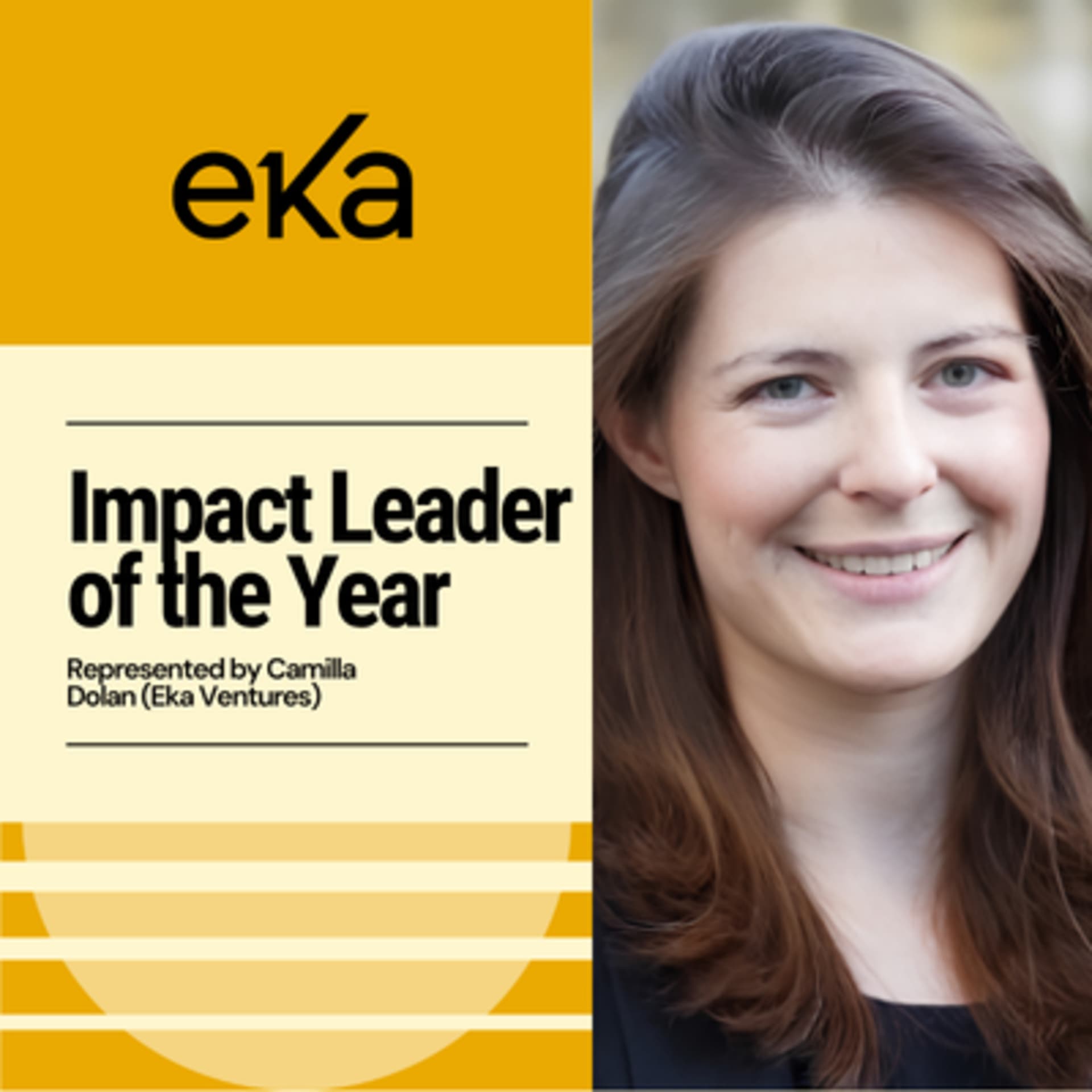
Camilla Dolan (co-founder/partner at Eka Ventures; Impact Leader of the Year 2025). Mentioned but not guests: Dougie and John (Eka Ventures partners referenced), Merva (Hive co-founder/CEO), Wing (Sourceful CEO/co-founder).
Written by AI. May contain mistakes. Listen to the episode to check what was said.
Chapters
Tap a time to open that second in VOUnderstanding Impact and Commercial Value
0:45 to 1:39
Discussion on the intersection of impact investing and commercial success.
“We want to drive, we want to sort of use impact investing to drive outlier returns and through doing that catalyze more capital into the market.”
Redefining Healthcare with Technology
1:40 to 2:54
Exploring innovative models in healthcare using technology to improve access.
“and a lot of that capital has come from extremely commercial tier one investors.”
Scalable Business Models in Impact Investing
2:55 to 3:52
Identifying key themes in scalable business models that create impact.
“So those are the types of businesses we're really excited about, and we think there are three main sort of themes that applies to.”
Criteria for Assessing Founders
3:53 to 6:28
Examining the founder assessment process for identifying exceptional talent.
“And some of the really powerful stories coming through in the portfolio there.”
Insights from Successful Exits
6:29 to 7:54
Insights on the exit of Runner and the importance of strategic investments.
“And part of what we were looking at when we had this debate with judges for the winner for the 2025 award was what happened in the year 2025.”
Reflections on Fundraising Success
7:55 to 9:34
Reflections on closing Fund 2 and the significance of showcasing portfolio success.
“I wonder if you could just share reflections from that fundraise and that achievement also.”
Transcript
Automatic transcript. May contain errors.0:00Camilla Dolan:We want to sort of use impact investing to drive outlier returns and through doing that catalyze more capital into the market. And in Fund One, one of the things that we're really most excited about as an early sign into that is for every pound we've invested, there's been about 10 pounds of follow-on capital. And a lot of that capital has come from extremely commercial tier one investors. So we want people that learn at an exceptional rate. And very specifically, we want people that can go from zero and learn above the curve is what we refer it to. The second is extremely high intentionality.
0:32Camilla Dolan:So people who are like, we have a vision for the world and they make it happen. And then the third is like, we are live. We are live. And five. We are live. Four. We are live. Three. We are live. Two. We are live. One.
0:55we talked or trailed a little bit how you think about bringing commercial value and impact value together in your sort of shared value thesis as you call it and also the way you're bringing in systems thinking and systems change as part of that could you unpack what that what that means
1:09Camilla Dolan:for you and how you put that into practice at eco yeah 100 so we think about it as sort of two different levels so we think about sort of system change from a fund perspective and for us that's really clear. We want to drive, we want to sort of use impact investing to drive outlier returns and through doing that catalyze more capital into the market. I think we heard earlier from Devi that really the pounds sort of, you know, drive some of the system change. We also really believe that. And in fund one, one of the things that we're really most excited about as an early sign into that is for every pound we've invested, there's been about 10 pounds of follow-on capital and a lot of that capital has come from extremely commercial tier one investors.
1:47Camilla Dolan:So the Axel index says Baldertons of the world. And then the second really sort of key system change thinking is sort of how we've sort of built out the thesis and developed it around the concept of shared value. So shared value, obviously, really, really sort of theoretical. But what it means for us is companies that are building commercial impact in parallel with impact itself to try and sort of put that into a bit more sort of context. There's a company called Flock Health that I think is a really awesome example of this. At the moment, the healthcare system is extremely capacity constrained, as anyone that's been to the NHS, I'm sure, has sort of experienced.
2:24Camilla Dolan:But we really believe technology can start to change that. So if you take Flock, they have developed a system to diagnose and treat lower back pain care. And they're doing that using AI. So with no humans in the loop, fully regulated and currently outperforming sort of doctors and physios. And in the trials that they've been doing, they've actually reduced wait lists down from 12 weeks to zero. and 55 % of people are fully sort of treated through that system. So these types of models are just unlocking huge capacity at a fraction of the cost of sort of what the system looked like. So those are the types of businesses we're really excited about, and we think there are three main sort of themes that applies to.
3:04Camilla Dolan:So one is affordable and accessible life essential products and services. So that's how do you get accessible insurance, financial services, education. The second is a shift from a very treatment-led, very sort of painful healthcare system into a proactive, preventative-led system all the way through from companies in the wellness space like Runner, which is a running training app, through to sort of regulated healthcare, as we just touched on. And then the third is sort of decarbonization and resiliency in our major consumer supply chains. And a really awesome example in our current portfolio there is a business called Accel Energy, which is helping to stabilize the grid using consumer energy assets.
3:45Camilla Dolan:So heat pumps, electric vehicles. And through doing so, it's giving consumers about 100 pounds back into their pocket a year. So we think those types of business models are extremely scalable and also have a really incredible commercial and impact value that comes through there. And some of the really powerful stories coming through in the portfolio there. And this building a commercially successful business is sort of hard enough. Doing that and also changing the systems in which you operate, changing the lives of many thousands, maybe millions of people, incredibly difficult to pull that off.
4:17and a big part, and we trailed this earlier also, a big part of how you assess the ability of folks to do that is this founder assessment that is more sophisticated than I've seen at seed stage from any other investor. I wonder if you could just walk us through what that looks like for you in practice.
4:31Camilla Dolan:Thank you. And I'm not sure there's lots of funds doing awesome things there. But I think for us, when we look to the data, 90 % of companies that get to unicorn status have a founder in place. We mainly back first-time founders. We back a lot of young founders. We're like, we really need to sort of try and put a system into place, which sort of Dougie mentioned. So it has three main course to it. So we do a 60-minute interview, Hogan psychometrics, and then detailed referencing. And what we're really looking for in that process is sort of three specific things. So we want people that learn at an exceptional rate.
5:04Camilla Dolan:And very specifically, we want people that can go from zero and learn like above the curve is what we sort of refer it to. The second is extremely high intentionality. So people who are like, we have a vision for the world, and they make it happen. And then the third is like some evidence of outlier achievement. And I think it's always helpful to sort of bring that to life a bit. So we have like two amazing founders that I think are really great examples of this. Merva, who's going to be on stage later, can articulate her story much better than me. But she's the co-founder, CEO of a business called Hive that raised a Series B last year.
5:36Camilla Dolan:And we backed that company in 2021 at Preseed. And when we did the founder interview with Merva, we found she had excellent academics, that she was on the under-17, she was captain of the under-17 Man City Women's football team. And before influencers was really a thing, she'd built a huge influencer strategy for her family's takeaway firm. So we were like, wow, this lady is just incredible. She's achieved so much. And she was only about 22 at the time. Another amazing example, founder called Wing, who's the CEO and co-founder of a business called Sourceful. and he was sort of top of his year in computer science at Cambridge and then took a very unusual track.
6:12Camilla Dolan:So rather than going into professional services, he joined a really early stage e-commerce company called The Huck Group. He moved up to Manchester, went from intern to being the CTO and the CMO at that business all before he was 30. So those are the type of exceptional people we're sort of looking for and traits that we see in those processes. And part of what we were looking at when we had this debate with judges for the winner for the 2025 award was what happened in the year 2025. And one big part of that story for you at Ica was the exit of Runner to Strava, which was meaningful for the fund and really exciting to see.
6:47And I think connecting that a little bit with something that your partner, John, said on a podcast we did last year, that in that fund one, something like 70 % of the term sheets you put down were not competitive at that point. You were sort of there ahead of others. I think I'm right in saying this was one of those. Yes, it was definitely one of those. I wonder if you could talk us through the story from that point through to the exit, how you thought about it, and just share some of your insights from that.
7:10Camilla Dolan:Yeah, 100%. I guess so. Runner is a running training app. So we made an investment into that in Q4 2022. Then it exited to Strava. So we were sort of really pleased with the overall scale of that exit. I think, as Dougie sort of mentioned, we were the only sort of term sheet for that sort of initial seed round. And I think that really came from that sort of focus on consumer impact scale. So one of the things we were really excited about with Runner is a significant percentage of the base were people that were new to running and they'd driven this zeitgeist behind it. And then they were able to upsell them over time.
7:42Camilla Dolan:But I think that came from that sort of intersection of looking at consumer accessibility and health. And that helped us see things early into that. And then the second thing is the founders were just exceptional. I won't share Dom's story because I don't think he should have shared it that widely. but in that sort of founder assessment there are a few things that like really stood out and in particular intentionality was something that was just crazy we were like wow like you've mastermind did exactly how you've got to where you've got to today how you want to get to where you want to get to in the future and I think it's played out uh similar to maybe how he had planned uh definitely faster than uh we we had anticipated and then this is a slightly more recent after the year that we looked at in terms of achievements but a great achievement to highlight nonetheless is last week or the week before you closed Fund 2 at your hard cap, a great achievement in the current fundraising environment especially.
8:34I wonder if you could just share reflections from that fundraise and that achievement also.
8:39Camilla Dolan:Yeah, 100%. So we were really fortunate, as Dougie sort of mentioned, we closed 107 million Fund 2 last week with really awesome support from Better Society Capital and a range of other investors. I think one of the really incredible things was being able to showcase the portfolio. So when we fundraise for Fund 1, it was very theoretical. We talked a lot about shared value. We had a few examples. It was pretty difficult. I think in Fund 2 we were able to say we have a portfolio of 20 companies. They're raising lots of capital. They're growing extremely fast. We're really fortunate to have had this first exit.
9:10Camilla Dolan:So if you are interested in this space, like it's a really good time to test the water. And through that we were able to bring in a large number of sort of foundations. And I think that's also done some of the amazing work that Better Society Capital has done in terms of sort of educating and bringing sort of LPs on that journey. And then I guess maybe also lots of founders that we have backed continue to invest, which I think was really fortunate as well.
From the publisher
Camilla Dolan, General Partner at Eka Ventures, joins a conversation following Eka being named Impact Leader of the Year 2025 at the EUVC Summit & Awards Show 2026.
The award recognises exceptional positive impact alongside strong financial performance, with impact intention, measurement and reporting integrated throughout the investment process.
The recognition follows the close of Eka’ $107 million second fund, focused on health, wellbeing and sustainability as long-term drivers of value.
In the conversation, Camilla explains Eka’s shared value thesis and why the firm believes impact investing can drive outlier returns while bringing more commercial capital into the market.
In Fund I, she says every pound invested by Eka has been followed by roughly £10 of additional capital, much of it from commercial investors.
She also explains how Eka assesses founders, looking for people who learn at an exceptional rate, show high intentionality and have evidence of outlier achievement.
Camilla connects that approach to investments including Runna, which Eka backed in 2022 before its acquisition by Strava.
The discussion explores what it looks like to treat impact as part of the investment discipline itself, rather than something separate from commercial performance.
The EUVC Summit & Awards Show returns in 2027. Find out more and secure your spot here.


