
In short
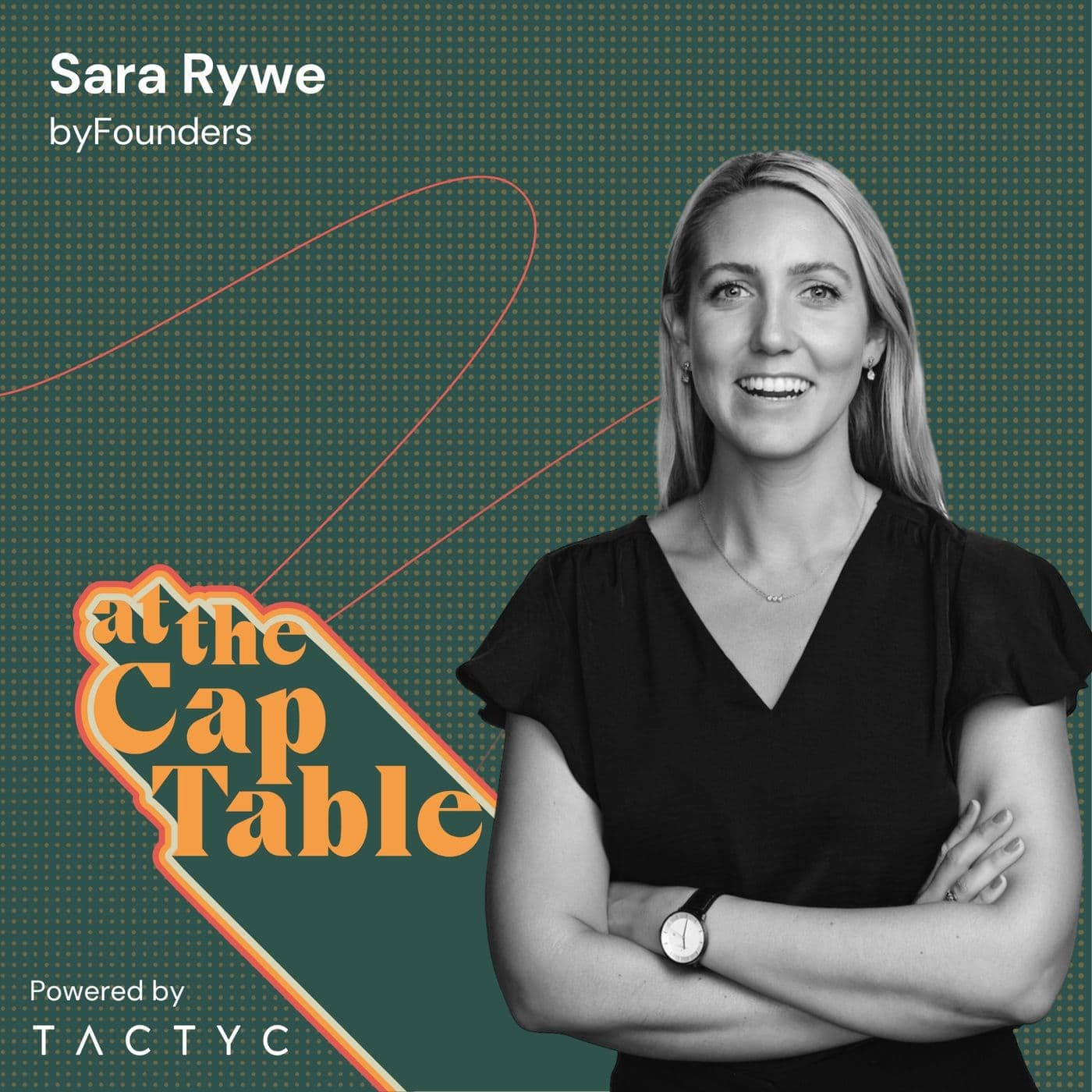
EUVC Podcast Episode Summary: E199 | ACT | Sara Rywe, byFounders
Podcast Hosts: Andreas Munk Holm and David Cruz e Silva Guest: Sara Rywe, Partner at byFounders Podcast Description: EUVC covers everything related to European VC with insights from prominent figures in the industry.
---
Episode Overview In this episode, Sara Rywe shares her journey into the venture capital world as a partner at byFounders, a Nordic and Baltic early-stage tech investor known for its community-driven approach and founder support. Sara discusses her unique path, the importance of impact-aware investing, and how she has influenced byFounders' investment strategy.
---
Key Themes and Discussions
- Community-Driven Investment Approach
- Transparency:
- ByFounders publishes metrics, ticket sizes, investment terms, and standard term sheets on their website, ensuring founders know exactly what to expect.
- Support Network:
- Portfolio founders gain access to the “byFounders Collective,” a group of experienced individuals who provide mentorship and guidance.
- Sara's Unique Journey
- Early Career:
- Started working at McDonald's at age 14, followed by various jobs that shaped her understanding of work ethic.
- Founded a dance school at 17, igniting her passion for entrepreneurship.
- Switch to Tech:
- Gained experience in tech startups, expanding her skill set and interest in the tech sector.
- Transition to VC:
- After working at McKinsey and Danske Bank, Sara decided to return to her roots in entrepreneurship and joined byFounders to make a more significant impact as an investor.
- Investment Philosophy
- Focus on Impact-Aware Startups:
- Sara emphasizes investing in companies that combine profit with purpose, specifically in climate and health sectors.
- Responsible Founders:
- ByFounders aims to invest in founders committed to sustainability, diversity, and ethical practices.
- Investment evaluation is guided by four ESG themes: diversity and inclusion, employee well-being, data ethics and security, and carbon footprint.
- Challenges and Adaptations in VC
- Internal Structural Changes:
- Sara discusses the challenges of implementing a responsible investment framework within byFounders, emphasizing the need for buy-in from the entire team.
- Balancing Returns and Responsibility:
- The firm aims to invest at least half of its funds into impact startups without sacrificing returns for their LPs.
- Career Development in VC
- Path to Partnership:
- Sara's journey from associate to partner involved learning the nuances of VC, participating in deal-making, and engaging deeply with portfolio companies.
- Importance of Ego Management:
- Encourages aspiring VCs to set aside their egos and focus on learning and contributing, which enhances career progression.
---
Key Takeaways
- Community and Transparency: ByFounders sets an industry standard for transparency and founder support, creating a unique investment environment.
- Impact Matters: Prioritizing responsible and impact-aware startups can drive significant change while also yielding positive returns.
- Versatility in Roles: Flexibility in roles and responsibilities within a VC firm can lead to a more enriching and educational experience for associates.
- Candidness in Failure: Sara’s candid discussion about her failures highlights the importance of vulnerability and authenticity in personal and professional development.
---
Conclusion Sara Rywe’s insights provide a fresh perspective on venture capital, emphasizing the need for transparency, community support, and a focus on sustainable, responsible investing. Her journey serves as an inspiration, showing that diverse backgrounds can lead to impactful careers in VC.
---
Sponsors: This episode was sponsored by Tactic, a leading software for venture capital funds, which integrates various aspects of portfolio management and reporting.
For more information: Follow EUVC at [eu.vc](http://eu.vc) for updates on European VC trends and discussions.
Written by AI. May contain mistakes. Listen to the episode to check what was said.
Transcript
Automatic transcript. May contain errors.0:05Hi, everyone, and welcome to At The Cap Table Podcast, a new series that shines a spotlight on the investors who are changing the VC industry in Europe. I'm your host, Southam. Our next guest is Sara Viwe, partner at BuyFounders. BuyFounders is a Nordic and Baltic's early stage tech investor with a difference. They stand toe-to-toe with founders and have a community-driven approach to investing. Founders know exactly what they're getting into when they engage with BuyFounders, from the metrics they're looking for to ticket ties, investment terms, and the fund's standard term sheet. It's all published on their website.
0:41Portfolio founders also have access to the wisdom of the Buy Founders Collective, a group of experienced founders, tech experts and more who can help them through the company building journey. The firm has two funds under its belt and invests across tech sectors. Sarah joined in 2019 as an associate with a focus on finding, funding and having the back of founders across the New Nordics. But for someone who's had a meteoric rise through VC, Sarah describes herself as someone completely ordinary. In many ways, Sarah's prior experience at McKinsey, her MBA, and the fact she's a Kauffman Fellow gloss over the fact she did not originally pursue a conventional path.
1:20She'll talk more about her journey starting work in her teen years at McDonald's, through to her entrepreneurial journey starting up a dance school, and how this led her to catch the founder bug and lead to opportunities in tech. Sarah's deep interest is an impact-aware start-ups. She's mentored and invested in startups in sectors that combine profit with purpose and has a particular focus not just on responsible companies, but responsible founders. In this episode, we'll hear more about Sara's journey into VC, her path to partner, and how she's turned her interest and impact into a core pillar of the investment strategy and decision-making process at BuySanders.
1:58Stay tuned for a great conversation. And now, some words from our beloved sponsor. Tactic is the leading forecasting and scenario planning software for venture capital funds. Tactic combines portfolio construction, portfolio management, forecasting and reporting into a unified platform. Investors are empowered with data-driven insights on fund strategy, reserve allocation, exit planning and fund performance. Tactic was built using quantitative techniques researched from hundreds of data-driven fund managers and is trusted by over 250 funds globally today. Tactic is a proud sponsor of the first season of the At The Cat Table podcast series.
2:38If you'd like to learn more, please check out tactic.io. T-A-C-T-Y-C.io.
2:51Sarah, welcome today. How are you doing? Very good, thank you. And thank you so much for having me. I've been looking forward to this. Amazing. Well, before we started recording, we were talking a little bit about not just how you came into VC, but just a little bit about your background, how it is slightly atypical to venture capital in general. And if you don't mind, I'd love for you to kind of tell our audience a little bit about yourself and how you found yourself at Buy Founders. Yeah, I guess my background is very typical and ordinary, just not pretty typical in VC. So yeah, I grew up in a small town in the northern part of Sweden.
3:37Yeah, grew up spending most of my time outdoors and working from a very young age. So started working when I was very young, but had my first real job, so to say, when I was 14. That was when I started flipping burgers at McDonald's. But yeah, had a lot of different ordinary jobs besides McDonald's. I stayed at McDonald's for almost five years, but also worked as a home help, helping elderly, worked on a factory floor and many other things. And yeah, grew up with a single mom who was amazing, but also no one really in my close proximity that had any type of university degree or similar. So I started off in a very ordinary place and just fell in love with entrepreneurship when I was 17.
4:24And I started my own dancing school and that allowed me to have my first employees. I realized that this thing called entrepreneurship was pretty cool, even though at that point in time it had nothing to do with tech. Absolutely. I mean, you know, entrepreneurship comes in so many different forms. So how did you go from kind of, you know, your own dance school to kind of where you where you are today? Break it down for me. Yeah, sure. I mean, I think what defines me is I'm a true optimist and I say yes to most things in life. And I think that's really what happened here as well. After I ran that dance school, I ended up winning some of the awards around young entrepreneurship in Sweden.
5:09And that took me out in the rest of the world, working with other young founders and supporting them. And then that led me into starting a network that ended up being the largest network for young entrepreneurs in Sweden. And so I got really just entrenched in the whole startup community. And based on that, I also got a chance to work at a couple of tech startups. So that's kind of where the technology came into play. just shorter stints but still very amazing experiences as a young naive optimist passionate about startups so worked at a company called my cube out of singapore and another one called fandom out of new york and yeah so i think i just said yes to things along the way and the small dance school took me into the world of technology and I ended up loving it and and tried to stay in it even though I had a few years in between where I ended up on on the other side I think that connection to entrepreneurship and and actually kind of building companies is so vital to kind of having that the empathy that you probably do now as an investor and I I would love to kind of understand, you know, how exactly you made that transition from, you know, startups and working in tech through to, as we call it, the other side where you are now.
6:38Yeah, I think what happened was that I became more of an adult in some ways. I ended up taking a university degree. I won something called like the Young Innovator of the Year in Sweden. And actually the prize was a chance to study at Stock of School of Economics. So even though I had no plan whatsoever to take a university degree, because that's not what founders do, I had heard, I ended up starting a university and really enjoyed it. And there I was very lucky to also be one of the few people that got a chance to get an internship at McKinsey. This was very, very far out for me. I never thought I would be a management consultant, but I fell more in love with the people I got a chance to work with and learn from than the actual job itself.
7:31So I said, what can an internship do? I'm not going to work with it anyway. However, McKinsey is really, really good at what they do. And I ended up staying there for about three years and ended up focusing a lot of my time on financial services and large strategy topics. And that then led to me being asked if I wanted to lead strategy implementation at the largest retail bank in the Nordics called Danske Bank. So I quit my job at McKinsey and started working at Danske Bank. Only a few months in, a big money laundering scandal happened, which of course made it difficult to lead a global strategy.
8:13and I saw that as a sign that this was my time to get back to where I belong, which is with founders and startups and not large corporates. And yeah, I took an MBA and then started working in VC after that. Amazing. And, you know, when sort of thinking about what sort of firms you might want to work at, what stood out about Buy Founders at that point, given your sort of background in, well, financial services, but then also kind of entrepreneurship and building communities as well? I mean, for me, it was really two things that I looked for when I had made a decision that I wanted to become an investor and work at a VC fund.
9:02I, of course, started looking around on all the funds that's out there and I ended up speaking with quite a few as well. And there were mainly two things that were important to me. The first thing was around founder compassion. I really wanted to join a fund that treated founders with the respect that I think that the founders deserve. This is extremely close to my heart. And of course, every single investor I spoke with said these things that they are, you know, super founder friendly. But Buy Founders was the only fund I spoke to that actually could turn those words into something real. And one of the things, just as one example that they mentioned is, yeah, so hence, we have removed all downside protection from our term sheets and published our term sheet online for everyone to see.
9:51Because how can we say that we're eye to eye with founders if we sit with a lot of protection that they do not have? And for me, that was just like one out of many things said that really, really symbolized that they were like walking the talk. So that really caught me. And then the second thing was around culture. I really appreciate my time at McKinsey and Bank, but in the end, what I wanted to do was to enter more of a startup. I wanted to enter a place where I know that, you know, I would have autonomy where everyone on the team would have autonomy and we would trust you know the individuals and therefore I really wanted to join a more early-stage kind of challenger fund that would allow for that so those were the two main reasons.
10:44It's so hard I think to evaluate funds when you're thinking about a new role if you were to give any advice to someone that is either an aspiring associate or wanting to kind of move into another fund, what tips would you give for them to evaluate their next potential employer or partner? Take references. It's that easy. Like call out some people that have worked at the fund previously and it's not working there anymore. Maybe someone who's still working in the fund or a founder in their portfolio, but just take references and ask those very specific questions, such as how would you describe the ways of working?
11:27Or if there's some things that really means a lot to you, like for me, for example, it was very important that each individual on the investment team was a part of the investment committee. And that's not standard practice at many funds. But for me, that was crucial. If I could not, after many years working with startups and other things, if I could not be in the room and the decision was being made, how could I learn and then even better why would my voice not count if I've done the work on the deal so there's some of those very specific things that if it matters to you you know dare to ask people and take references knowing what matters to you is the first step right and then knowing to knowing who to ask and not be afraid to just go for it when it comes to references I think one thing I've always learned is there's always an official reference list and then there's linkedin yes which you know so everyone's got thousands of contacts just just go for it it's open season as far as references are concerned very much so so thinking just a bit about kind of the your kind of early days at by founders you know i mentioned before that i previously thought that you'd joined as a principal but you said you joined as an associate and you know the transition has been all the way through to partner would love to understand what the key differences are in these roles, particularly at ByFounders and kind of the difference or the step change in what you were doing at the beginning versus now.
12:54As a starting point, and I just kind of alert to it when I talked about the ByFounders culture, ByFounders is very unique in the way that no matter your actual title, first of all, the titles are just used for internal reasons. So externally, the titles are not known to people. and that is very much made by purpose because we know at some funds, if you are an analyst or an associate, almost all the time that you spend is sourcing or kind of desktop research, while at ByFounders, as an analyst or an associate, you can lead a deal end to end. So we think that it's a very unfair thing to try and get a title to express something about the actual work that you do.
13:40So that's just one thing. So when I joined as an associate, I was very much taking a few steps down. Like my role before that was leading a quite large team at a bank where I was CEO minus two and it's 21 ,000 people. So I was in a fairly senior position. And then I came in as the most junior person on the team. But I love that. And that's kind of the way that we work, because we know that even though I had tons of experience, I did not have VC experience. And it's just something you need to learn by doing. So you need to see a lot of investments and work on it. So I love that. And it's about, I would just say, I would encourage anyone that want to enter the world of VC to just let go of your ego in those instances.
14:32If you're good, you will be able to prove that very quickly. and then you'll be able to move up the ladder quicker as well. So when I started as an associate, I was able to work on almost everything in the fund. But I think the main difference is when I then became more and more senior is that I, of course, spent much more time with portfolio companies. In the beginning, I only was a board observer on one or two companies. And, you know, today I'm a board member of nine companies. So, you know, that's, of course, a huge transition and also how big percentage of your time that you're spending with portfolio work.
15:11But then also when it comes to fund operations and strategy and fundraising, those are also some of the topics that, you know, takes up much more of my time today than it did when I was more junior. And I mean, you know, when you think a little bit about areas that you're particularly excited about, what kind of companies or sectors do you keep you up at night, but in a really good way like you can't stop thinking about i mean as a baseline i don't get excited about companies i get excited about founders but if i would like force myself to really say okay what type of companies that excites me i would divide it into two main categories so the first category might not be a surprise to anyone who who knows me is what you could define as impact companies, but it's mainly climate and health.
16:02So it's companies where the product really, really make a difference for our climate or for people's health or lives. So that's about half of the companies that I'm actively working with and on the board of belongs to that category. And then the second category is B2B SaaS companies. B2B SaaS that is truly needed. I think it's a huge category, but it's filled with a lot of nice to have companies. And I just love when the product is the core that you use. So to take an example from our portfolio and one of my investments, Digitail, it's a practice management system for veterinarians. And this is a system that vets spend about six hours a day in.
16:53like it's it's the only core system that you have with every single piece of data that exists and that excites me so yeah you need to have b2b sales companies you know i i guess kind of the other area that i i sort of know you from is this idea of of impact as you've mentioned and you know i think i don't know if i can if i can say this or or if you'll be happy with saying this but i really credit you a lot with kind of making by founders a lot more impact aware and would love to kind of hear a little bit about how you've done that and what impact aware means to to you as a firm if this is something that we've spent a lot of time on in the last four years so what it means is that we realize the responsibility that we have today we have 210 million euros in in AUM across two funds and how we decide to deploy that money can really make a difference for people and the planet.
18:00So that's the main thing, really realizing that we have a responsibility and that we ensure that we do whatever we can to invest that properly. So what it means is if to simplify it and where we kind of position ourselves if you have impact funds on one end and when I say impact fund that is most often than not an article 9 fund according to the EU taxonomy that only does impact investments and that means that the product itself needs to you know make the world a better place. And today that those impact companies represents about 20 % of the investments that are made in the Nordics and the Baltics, which is our home turf and where we do most of our investments.
18:51And so you cut off 80 % of the deal flow. So you're purely focused on impact. And then on the other side of the spectrum, you have all the other VC funds that, you know, around focusing on that. And they therefore can invest in 100 % of those companies. What we've decided to do is that we want to push the envelope and move away from being a traditional VC that can just invest however we want, step up in regards to responsibility. However, we believe that the market is not mature enough yet for us to cut off 80 % of our deal flow. Because in the end, our main responsibility here is to give really good returns to our LPs.
19:43And sadly, we don't think we're there yet where we can do that without a trade-off. So what we've done is that we have set a target that or let's say an ambition to have at least half of our investments in impact startups because we believe that the outsized returns will come from impact startups. Those are many times the ones solving the biggest challenges today. And hence, that's also where most of the demand lays and what most of the opportunities are. So the big deck of corn so tomorrow we think is going to be there. So that's one thing. And then 100 % of the investments we do will be in responsible founders.
20:23And then we have our way of defining what a responsible founder is. So even though your product might not be an impact product, you as founders will run the company in a responsible way. And we have four main ESG themes that we evaluate after. It's diversity and inclusion. It's people's well-being. It's data ethics and security and it's your carbon footprint. So if you truly care about those four main things and work with that, then we believe that you can run a responsible and scale a responsible business. I laughed a bit at the when you said that you need to provide a return to your LPs. And I'm just going to say that's because Isma is an LP in ByFound is a very proud LP, which is why I laugh.
21:16and great to kind of hear that. Just thinking a little bit about that piece on responsible founders, how is that something that you assess and kind of keep track of over time? It's super difficult and it's always going to be biases that comes into play. But some of the things that we've done is, first of all, we've created like a founder team evaluation template. This is where we know that there are certain things that will impact both the financial return and the kind of reputation and impact of the company. And we want to ensure that no matter who you speak to in the buy founders team, you will be evaluated around the same principles.
22:01Because the last thing we want to happen and see is that if you speak to one of my colleagues versus if you speak to me, then your likelihood of getting an investment will increase or decrease. We want to remove as much of that bias as possible. So we created that founder evaluation form. So that's kind of the first thing we've done. The second thing we've done is that when you've passed that and we've given a term sheet, you know, we conduct the legal due diligence like all other funds do. But as a part of that, we also conduct the responsibility due diligence. And that is like more of a longer form questionnaire that makes us really understand that the founders fill in, that makes us understand where they're currently at and what the ambition levels are and if they really truly care about these topics that I just mentioned.
22:52And we combine that with a form that is filled in by the investment lead internally by founders, forcing the investment lead to think through some of those topics. And then we can triangulate those answers and say, okay, this is founders that we truly believe in that will treat people well and people that we will feel proud of when they are on stage or when we see them in the newspaper. I mean, you know, you've described the kind of quite a rigorous process. And, you know, there's also some changes to a traditional due diligence process internally as well. How was it structuring a transition like that within the team?
23:33It took time. I think the great thing with VC, and now I can only speak about by founders here, is that as long as you provide good enough arguments and data, you will be able to win the hearts and minds of your colleagues over time. So what I first did, I spent about a year and a half just collecting all the data that exists, like all the reports that have been published, all the correlations between financial returns and responsibility factors, all of these things. And as an LP, you've also seen some of those data points. I spoke to probably 80 % of the impact funds out there and many traditional funds.
24:21I spoke to 60 funds in total to really understand what they're doing, what changes they made, etc. So throughout this, we had these difficult conversations internally where we really challenged each other. So in the end, when we found the position that we wanted to be in, which is actually, it might sound that it's rigorous, but it's actually a very pragmatic approach. I mean, it would have been easier for us to just go out and say, we're an Article 9 fund. We're going to do what EU taxonomy tells us to do. But we think that is too rigorous. We think that is not founder-friendly today. We hope that it will develop over time and become more founder-friendly.
25:04But today, the framework is developed the same for if you're a mature private equity fund or an early stage venture fund. So we do not want to push down this long list of 50 KPIs down the throat of our portfolio company founders because we know the last thing they want to do is to answer surveys. So we really try to find our position on what is the most pragmatic thing we can do that still makes us ensuring that we can have governance in place and that we can trust our decision making, but reduce the administrative burden as much as possible. So yeah, it was a long process and many conversations.
25:45And finally, we ended up in a place where the full team truly committed to this. And we made it one of our three core pillars of our second fund. So I've taken up loads of your time today, but I've got one last burning question for you. And that is, what would you say has been your biggest failure? How did it feel? What did it teach you? It's a pretty deep question. in. I've had a lot of failures, but there is one failure that for sure was defining and is on the topic of failure. So I think this is a good time to mention it. A big passion of mine for the last 15 years have been around communications and rhetorics.
26:29And I had this big dream about having a TED Talk. This was probably eight years ago now, but I ended up being selected as one of the four top candidates for being able to have a TED Talk. And we, you know, I quit my job. I practiced the hell out of it. And I ended up having my TED Talk in front of a smaller audience. And then they would choose which one of us four that would be selected to host the main TED Talk. I was not selected which I'm fine with because that has happened many times before however the reason that was provided to me afterwards was along the lines of you know we've looked at your resume and you know we know you're gonna have a TED talk one day so we gave this opportunity to this other guy who we think would otherwise not get that opportunity it just became so clear to me that that what people could see of me online, for example, on my LinkedIn profile, just showed a tiny, tiny fraction of my actual life because it only showed the few successes that I've had and not all of the failures that I've had along the way.
27:44And it just, yeah, it was epiphany from me. And the reason it really made an impact on my life was that that actually made me publish a CV of failures and this was way back and yeah it blew up it became this big thing and that was the one time when I realized that I if by being vulnerable and sharing all those things around failures I could even turn that into a strength of mine so that has made a lasting impact on me and me daring to be very open and honest today. And I'm very grateful for that. So yeah, me not having had a TED Talk and not to this date, that's a failure that has made me a better person, I would say.
28:34Amazing. Well, if anyone from TED is listening, now is your chance before she gets snapped up or before I do another podcast recording. Sarah would be an amazing TED Talk candidate. Sarah, thank you so much for your time today and for joining us at the cap table. Really appreciate you sharing your story. It was really my pleasure. Thank you for listening to this special episode on the European VC. If you love our show, join our community by subscribing at eu.vc. And now, some words from our beloved sponsor. Tactic is the leading forecasting and scenario planning software for venture capital funds.
29:14Tactic combines portfolio construction, portfolio management, forecasting and reporting into a unified platform. Investors are empowered with data-driven insights on fund strategy, reserve allocation, exit planning and fund performance. Tactic was built using quantitative techniques researched from hundreds of data-driven fund managers and is trusted by over 250 funds globally today. Tactic is a proud sponsor of the first season of the At The Cat Table podcast series. If you'd like to learn more, please check out tactic.io. T-A-C-T-Y-C dot I-O.
From the publisher
They stand toe to toe with founders and have a community driven approach to investing. Founders know exactly what they're getting into when they engage with byFounders from the metrics they're looking for to ticket size, investment terms, and the fund standard term sheet. It's all published on their website.
Portfolio founders also have access to the wisdom of the byFounders collective, a group of experienced founders, tech experts, and more who can help them through the company building journey. The firm has two funds under its belt and invests across tech sectors. Sara joined in 2019 as an associate with a focus on finding funding and having the back of founders across the new Nordics.
But for someone who's had a meteoric rise through VC, Sara describes herself as someone completely ordinary. In many ways, Sara's prior experience at McKinsey, her MBA and the fact she's a Kauffman Fellow gloss over the fact she did not originally pursue a conventional path. She'll talk more about her journey starting work in her teen years at McDonald's through to her entrepreneurial journey, starting up a dance school, and how this led her to catch the founder bug and lead to opportunities in tech.
Sara's deep interest is in impact aware startups. She's mentored and invested in startups in sectors that combine profit with purpose and has a particular focus not just on responsible companies, but responsible founders. In this episode, we'll hear more about Sara's journey into VC, her path to partner, and how she's turned her interest and impact into a core pillar of the investment strategy and decision making process at byFounders.


