
In short
EUVC Podcast Episode Notes
Episode Overview
- Podcast Title: EUVC
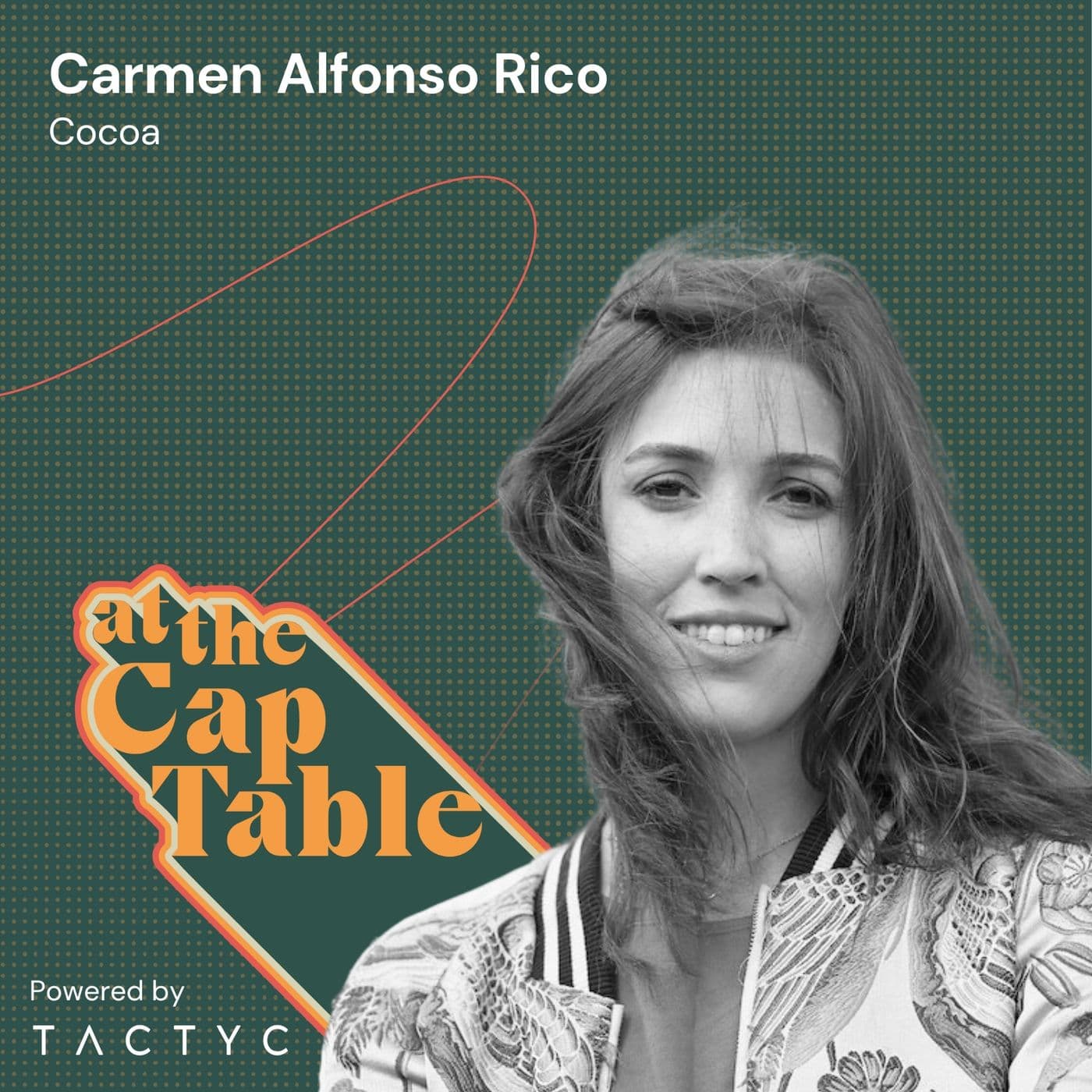
- Episode Title: E242 | ACT | Carmen Alfonso Rico, Cocoa on investing as an angel with a VC checkbook
- Co-hosts: Andreas Munk Holm, David Cruz e Silva
- Guest: Carmen Alfonso Rico, Cocoa Ventures
- Date: [Insert Date]
Episode Description In this episode, Chloe Dagnell from Isomer Capital interviews Carmen Alfonso Rico, a former VC turned angel investor at Cocoa Ventures. The discussion revolves around Carmen's unique approach to investing, her experiences in venture capital, and insights on the current investment landscape in Europe.
Key Takeaways
Carmen's Journey to Cocoa Ventures
- Started career in politics in Spain before moving into investment banking at Morgan Stanley.
- Transitioned into venture capital (VC) to build a network and gain insights into company success.
- First significant investment: Carmen became the first investor in Hopin while working at Blossom Capital.
- Aha Moment: After founding a company that didn't resonate with her passion, she returned to investing and found fulfillment in supporting founders.
- Launched Cocoa Ventures to provide angel checks while leveraging her VC expertise.
Cocoa Ventures Model
- Investment Strategy: Focus on providing initial checks of $250k-$500k for pre-seed and seed stage startups in Europe.
- Unique Position: Operates as an in-house VC, helping founders navigate the complexities of funding while remaining independent.
- Investment Thesis: Prioritizes "founders who are obsessed" with their business, defining them as "killers with a heart."
- Invests in companies with significant business pain points and no structural impediments.
- Seeks founders with speed of learning, execution capabilities, and market clarity.
Fund Economics and Angel Investing
- Differentiation from Traditional VC:
- Angel funds generally seek lower ownership stakes, allowing for collaboration with other funds.
- Carmen emphasizes the flexibility of ownership stakes at Cocoa, enhancing founder alignment and minimizing competition with other investors.
- Concerns with Current Investment Landscape:
- The market is confusing due to shifts in capital costs and macroeconomic factors.
- A "flight to safety" is noted, leading to capital concentrating in select opportunities, particularly in tech and AI sectors.
Future of Cocoa Ventures
- Vision: Aspires for Cocoa to work with the best founders in Europe, focusing on building strong relationships and trust.
- Trends: Believes Europe is at an inflection point with high-quality talent and capital, despite short-term market challenges.
Key Concepts Discussed
- Investment Philosophy: The importance of founder characteristics over traditional market analysis when evaluating early-stage companies.
- Economic Impact: The influence of macroeconomic changes on venture capital dynamics, especially regarding funding strategies and capital allocation.
- Networking and Relationships: The significance of building trust and collaboration in the investment community.
Personal Insights
- Favorite Chocolate: Carmen humorously mentions her preference for Venezuelan chocolate and her fondness for Cocoa Runners, highlighting her passion for both chocolate and quality craftsmanship.
Conclusion Carmen Alfonso Rico's insights into the evolving landscape of European venture capital provide a refreshing perspective on angel investing, emphasizing the role of dedicated founders and a collaborative approach. Cocoa Ventures, under her leadership, aims to support this new generation of entrepreneurs with both capital and expertise.
---
Call to Action
- Follow EUVC for more insights on European VC trends and discussions with industry leaders: [eu.vc](https://eu.vc)
Sponsor
- Tactic: Leading forecasting and scenario planning software for venture capital funds, trusted by over 250 funds globally. Learn more at [tactic.io](https://www.tactic.io).
Written by AI. May contain mistakes. Listen to the episode to check what was said.
Transcript
Automatic transcript. May contain errors.0:04Hello, everyone, and welcome to At The Cat Table, the exciting new series dedicated to hearing from top European female investors who are taking the VC industry by storm. Our next guest is the brilliant Carmen Alfonso-Rigo, the self-described VC-turned-angel at Kokoa Ventures. Having previously been at Consumer Fund Felix, Series A Fund Blossom, as well as Spanish HQ, Semi Pata, Carmen is responsible for being the first investor into companies such as Hopin and SideQuest VR. Now, Carmen is leading the charge at Kakoa Ventures, an angel fund providing the first check for founders across Europe.
0:44Investing 250 to 500k, Kakoa supports founders as their in-house VC, helping them hack the system with independent and unfiltered investment insights. In today's episode, we're discussing everything from how Carmen actually helps her founders hack the system to fund economics. Bear with me on that fund economics point. It's one of the most interesting and overlooked parts of being a great VC and fund manager. And for Carmen, it's led to some pretty contrarian views on how she puts her portfolio together. And of course, I couldn't resist asking the woman behind Kakoa Ventures what her favourite chocolate is.
1:17So if you want the hottest tip in town for the best chocolate, then listen all the way to the end. And now, some words from our beloved sponsor. Tactic is the leading forecasting and scenario planning software for venture capital funds. tactic combines portfolio construction portfolio management forecasting and reporting into a unified platform investors are empowered with data-driven insights on fund strategy reserve allocation exit planning and fund performance tactic was built using quantitative techniques research from hundreds of data-driven fund managers and is trusted by over 250 funds globally today tactic is a proud sponsor of the first season of the at the cap table podcast series If you'd like to learn more, please check out tactic.io.
2:03T-A-C-T-Y-C dot I-O.
2:13Hey, Carmen. Firstly, thank you so much for joining me today on the pod. Now you're joining us from your London office from Kakoa Ventures HQ, am I right? Yes, Kakoa HQ. So fun, so fun. And I've just been told as well that there is a stack load of Charlie and the Chocolate Factory books in the background, which is super cool and super exciting. Exactly. Over there. This is full of like chocolate theme related things from books to actual show you like lots of chocolate that we received today. Love it. Absolutely love it. This is my my dream place to work as a renowned chocoholic. um so for our listeners can you just fill us in on your journey to how you got to where you are today because you've actually approached this whole vc angel thing in a slightly backwards way so unlike others who are angels first and then they build to grow their own vc firms you've slightly done this the reverse engineered it so we'd love to hear you exactly i think like if there's something i wish somebody would have told me when i left uni is that it was not going to be a straight line.
3:21It was going to be more like that and then backwards and then totally. I actually, I'll keep it short, but basically I started my career in politics, actually, in Spain. So I did a couple of years of politics. I realized I was like in a cabinet of a person of a region in Spain. And I realized that it was a great job probably to end your career if you love politics, because you do have an impact and you do see a lot and you can really also help people. But the reality is that it's not a great place to start your career, probably, because they don't have, in Spain, structures to manage talent. So the only thing I was learning was how to be a politician.
4:05I saw my friends who were in banking and in consulting, and they were learning to think critically and getting exposure to projects and problems that I wasn't getting exposure to. And so I decided I was going to go serve my time, move to London, joined Morgan Stanley. So the three years of investment banking, serve my time properly. That was like a real military job, though. I must say people, when people here, I was at Morgan Stanley for three years, they feel sorry for me. I loved it. Like you work with tons of super young driven people. It's probably not something to do for me for the rest of my life, but it was fantastic.
4:41Three years learned a lot, lots of soft skills that have been very, very helpful throughout my career. But there was a point which I always wanted to be a founder, basically. And the paradox is I joined BC because I wanted to be a founder. I felt it would make me a better founder. And the situation is I come from a family of entrepreneurs, like for generations, they have been what we used to call businessmen and businesswomen. As my dad says, everything that you can touch, so no tech. but I always thought I would do something in tech because I like to be at this forefront. I have a very acute sense of opportunity cost so I don't like to be in industries that I feel are falling behind and tech is there for like you know a growth and forefront but I had a problem which was I was not technical because my parents focused a lot on languages but not on actually coding which now tiddly state bites me a little bit oh absolutely i think everyone that is non-technical in vc is always like i wish i could code i it's just like this in a build like i have all these ideas i can't build anything and so i have so much respect for those who can build it but i and and then the reality is also i didn't have a network because i had a network in banking but not in tech and and so i thought well like vc is this perfect combination of finance which right now like I get and it's in tech and it's going to give me this incredible like muscle of what makes companies succeed and fail because I'm going to see so many little did I know it takes 10 years you know I thought two years I'm gonna get the full playbook and then I thought and this was correct it would allow me to build a network in tech and then I could start a company after and so I was very lucky that Antoine at Felix Capital gave me my first chance ever in venture when they were launching Felix.
6:27I'm forever grateful for that chance because it was the beginning of everything. And joining VC to be a better founder, I actually did launch my company eventually just to realize that I missed investing a lot. That was a big aha moment is that I bootstrapped it from my living room here in London. And I think two key learnings that have informed my career and my investment thesis. One is I'm an investor at heart. I was talking to founders about different problems and learning about lots of things. At the end, knowing a little about a lot. I miss that and I live off that. It's what drives me every day.
7:11And the other thing was, I actually wasn't passionate about the problem. I over-optimized for being a founder and found a problem that made sense. Basically, we launched a direct-to-consumer brand, so we're inspired, right? I feel like this is, but a direct-to-consumer brand for pregnant women, because we wanted to empower women to live maternity their own way. Reality, though, is I had a lot of friends who were having babies, but I didn't even have a boyfriend. Like, pregnancy was not a problem, or even like an opportunity in my life at any point near or close. And also, I didn't care about fashion and so suddenly I found myself so like enjoying the process of building something but when it got very operational I just didn't have the passion to get the resilience and so now that's why I look for founders are obsessed because yeah have that founder problem fit and and I just think like yeah I wasn't passionate enough and then it gets too hard and so I joined I went back into investing and this was like I haven't looked back I know it is what I want to do forever.
8:16And then how did I go? That was venture, great. And now how do I then twist it and go from being a VC to being an angel? It's because summer 2019, I made my first angel investment. Complete CERN DPT, a business angel called Andrew White asked me to meet a founder and tell him what I thought. His founder was Johnny from Hopin. I met Johnny when he was raising his pre-seed. I couldn't invest from the fund. I was a partner. I was a partner in a Spanish seed fund. I couldn't invest because they didn't do pre-launch. Johnny was pre-launched. And I wanted to help him. And so I helped him doing what I knew how to do, which now looking back is very obviously I help him doing what a VC knows how to do.
8:57But back then I was like, just figuring out, we always joke. If I would have known how to cook, I would have made him dinner. That's the one thing I don't know how to cook. Like I feed people, but not on my like a credit but i knew what investors he had to meet so i put together 100 of hopkins pre-seed captive while every single investor from sitcom to my family i introduced him i know how to put together a day review his term sheet like actual build the actual excellence spreadsheet of the captive all these things that for vcs are bread and butter it was my day job but for a founder or not and what i realized and this was the biggest aha moment was that i was building a very strong relationship of trust with him like i was becoming sort of a trusted confidant for him And I figured in my mind it had to do with the fact that on one side I was tiny in his cap table.
9:43Like I was literally insignificant. But on the other, I knew all the tricks of VCs. And I knew not tricks, like ways of working, ways of thinking. And I also knew everybody because I was one of them. And I could help him bridge the gap from the position of an angel, right? Back then, I didn't think of it as a fund. I just thought I loved it. And so I started to do lots of angel investments. I put together a small vehicle on AngelLess to do$50K checks into pre-seed companies in Europe. At the same time, I was a partner in a C &G fund called Blossom. And I did around 20 angel investments. And it's when I realized that there was actually a need and an opportunity for a VC turned angel.
10:23So to take the VC skills, but invest from an angel position, become the in-house VC for the founder. And that's Cocoa. We invest 250 to 500K checks, depending on the size of the round. But whole point, no friction allocation, and we don't compete, we collaborate. We come in as small, small in the cap table so that we can be neutral, independent, agnostic like an angel. But to that angel check and angel stake bring our VC network and our expertise, because we've been VC's, become the in-house VC for the founder. So that's the journey. We love to hear it. Now, you mentioned there that Kakoa Ventures is like the first check angel fund, and you're pretty generalist, right?
10:58Completely agnostic, as you just mentioned. but I've also heard you describe your investment thesis before as founders, which sounds actually stupidly broad, but I know that there's a ton more behind that. So maybe you could clarify what you mean here. Maybe talk us through, you know, when you saw Johnny, what was it about him that was so exciting that you just wanted to get on board? What's the most noticeable things about these individuals when you invest? They're obsessed. They're completely obsessed. Johnny was obsessed. So I'll tell you how, because I've been able to verbalize and put in a much more concise way my thesis since happened.
11:36Quite a few years have gone by. But basically, when I say that founders are my investment thesis, and I will specify what actually that looks like, but it's also because I invest at pre-seed, right? And see that it's like super early. And I invest on a 10 to 12 year time horizon. And so I am very aware and very careful to make sure I check on myself and my own limitations, right? And at the end of the day, if you think about it, when you're at pre-seed seed, when you look at the elements that are key for conviction building in an investment, the one that you have more information about is the founders.
12:15The markets, yes, you can check whether there's something, and I do structural impediment to build a big business because it's not big. But the reality is it's going to change and the best companies create markets and our imagination in how that can play out is quite limited, right? And then go to market, a business that is going to change a trillion times before they actually go live. And so I try to make sure that I actually, people think it's like emotional decision to back the founders. It's actually the most rational decision when you're at pre-seed because it's definitely one thing you have in front of you where you have more information.
12:51year. So if you look at like my investment thesis is I back killers with a heart and I'll explain what a killer with a heart is going after very big business pain points because they need to be business pain points and they need to be big in markets where there's no structural impediment to build a big business because it is true that there are markets or models where there's a structural pain like there are unit economics that don't work it doesn't matter like what you do, they're not going to work. Or there are markets where it's so competitive that there's going to be a lot of destruction of value.
13:26So there are certain things that are structural. But if there's nothing structural and you've got killers with a heart and you've got a big business pain point, I'm very happy to take a step back and be like, these killers are going to figure something out in this market. And that has taken me to invest in areas like steel. like one of Cocoa's most exciting companies is AI applied to steelmaking. If I would have done top down whether I thought steelmaking was an interesting market I don't think I would have landed there right and I met Thomas and I was blown away I was like I'll follow you to the end of the world like you know and and and that like has taken me to discover an incredible market and And so I try to just like kind of be mindful of what I can assess and cannot assess and be very hands-off in that that I cannot assess.
14:19Now, what's the key here? What's a killer with a heart? Like a killer with a heart to me is a person who is obsessed. And you have to be because launching a company is irrational. Like you should say that. I think that it is the hardest thing that you as a person are going to do, like voluntarily and proactively decide to do. And it's such a long commitment and it's going to get so hard. Even if it goes great, it's going to get so hard that unless you have an irrational reason to build this company and solve the problem that you want to solve, it's impossible. You can't endure that. And so that's one.
14:58The other one is an ambition that is borderline naive. But that is not delusional. And that's a fine line. To me, how I measure that fine line is speed of learning and speed of execution. Because at the end of the day, what I want is founders who don't necessarily know all the challenges that lie ahead of them, because if they were to know, they might not do it. But that when these challenges come, because they are going to come, they have the skills to overcome them. And speed of learning and speed of execution is a key metric for that. And then third, and this is a personal thing of myself, they need to have a lot of clarity of mind, of clarity of vision.
15:38I think that I look for founders who understand the market inside out. And they cannot have clarity on what's going to happen, that's for sure. But they need to have a deep understanding of the dynamics of the market they're selling into, of the problem, of the user they're selling into. Because if not, I think that they're just going to spend too much time catching up on that. And especially in a market like today where money has a cost and it's more limited, I think that you can't afford that. And so that's basically a killer with a heart. And if you look at Cocoa's portfolio, you've got like, you know, yeah, Thomas, who will explain to you, let's start by the clarity of mind, clarity of vision.
16:21Thomas can explain to you, and he's a PhD in physics and AI. And he can explain to you what is the problem in steelmaking, comparing it to cake baking. And you get it in like two minutes. That is the level of understanding you need to have to be able to do somebody who knows nothing about steel. Make me feel the pain is insane. You've got Dave from eventstore.com, who's like a database for events sourcing. He quit his job because he was a CTO in a big company, came across eventstore as a solution. It was an open source project. He decided the world had to see this product and he quit his job and joined eventstore to build eventstore.
17:02He's obsessed, like completely obsessed. And if you think then the point around ambition, like you speak to like, for example, Santi from Papaya, who's like basically building an operating system for the electric vehicle industry, right, to manage it. There's no obstacle big enough. Like he's going to be the operating system for EVs. And you speak to him and you realize this guy's not going to stop. Like he's just, and trust me, there have been challenges that we couldn't even foresee a year and a half ago. she's not gonna stop right and and so i think like these characters like or orla to talk because we have amazing like female characters orla like you know like she's like a powerhouse that went through vr and with like vr winter several vr winters and she's managed to like raise rounds like incredible runs backed by google ventures like there's nothing that they just believe in their product and in their solution so much that they're just not gonna stop and i think that that Well, it sounds like you also work in a similar way, right?
18:07You never want to stop hustling for your founders. So I would love to know from your side, what is the difference between operating as a normal angel and operating as an angel fund? So what are you delivering that maybe regular business angels just aren't? So that's an amazing question. And actually, I'm a geek of fund economy. So I'm going to answer your question on value. And then I'm also going to answer the question around how does the model work differently for a physical angel and an angel fund? Because I think it's important for founders to understand so that they can know what is the right source of capital for them.
18:42When we look at sources of capital, we need to separate almost like between physical person and fund and then VC fund and angel fund. That is the, because sometimes people confuse angel fund, angel. And so the reality is if I'm a physical person versus a fund, what changes is how I look at returns. So I am Carmen, physical individual, and I invest 10K in a company. I'm going to look at the returns as a multiple of that 10K. generally. If I am a fund, I'm going to look for a fund returner. So I'm going to look at my investment as a multiple of the full fund size. So if I invest 100K into a company, I'm not going to look at it as a multiple of this 100K.
19:30Of course, I'll do the math, but it's not the driver. The driver is whether it returns my full fund. So that's one. And that's why sometimes funds tell founders like, oh, but this is not big enough. When we say this is not big enough, it doesn't mean your business cannot be big enough. It doesn't mean you cannot build an amazing business that changes your family's life for generations. It means that I can't see a fund returner because, and this brings me to the point, if you think about it, if let's call a VC fund that is 100 million, if they need a fund returner, they need to believe that they're going to make 100 million out of your company.
20:05If they are going to own 10 % at exit, you need to be a$1 billion company. That's the math that they're doing. Whereas if I am an angel and I make 10x on a 10K check, I'm the - Pretty good too. Incredible. Like invest 10K, exit at 100K, the bomb. I'm a fan that invest 1 million, exit at 10 million. I've done 10x, but I want that 100. Right? So that is, and this goes again to the point on the sources of capital. Like sometimes you want to make sure at the beginning, especially if the size of the upside is a question, that you get individual angels because the way they look at returns means they're going to be less concerned about that size of the outcome initially.
20:47And then many times afterwards, there is more clarity on the fact that this was actually indeed a big upside potential. And then VC money will come or fund money will come. Now, what's the difference between, and that is also why I can operate differently to VCs, what is the difference between an angel fund and a VC fund? The main difference is the size, which means it impacts the percentage, the ownership state they need. So an angel fund, let's call it, is going to be small versus a VC fund that's going to be bigger. Now, we did the math earlier. If I want a fund returner and I'm a$100 million fund and I'm going to own 10 % at exit, I need a company to be a$1 billion company.
21:26Fine. If I'm this same$100 million fund and I have 1 % at exit, I need a company to be a$10 billion company for me to make$100 million. What is more likely that a company is a$1 billion company or a$10 billion company? It's a$1 billion company, right? So I can't afford having 1 % at exit because it decreases the likelihood of a company being a fund returner for me. The same company. Now look at an angel fund. Let's say I'm a$10 million fund. If I have a one percent exit, I need a company to be a$1 billion company to be a fund returner. So guess what? I can afford having one percent exit because the likelihood of a company being a fund returner is higher because my fund size is smaller.
22:09It's a point that's super overlooked, right? A lot of the time. Totally. Totally. At the end of the day, you need to think funds, angel funds or VC funds, most of them are going to think in terms of fund return. How do you calculate a fund return? You divide size of the fund divided by the stake, ownership stake. And that tells you how much, if you're a 500 million fund and you own 10%, a company needs to be a$5 billion company for you to make$500 million. If you have 500 million and you own 1%, a company needs to be$50 billion. That's a very challenging outcome to see. So the larger a fund, the more stake they need.
22:46This is why founders, many times fans, tell you they need a minimum 15 % and they need a minimum 10%. It's because otherwise their economics don't work, right? And when you're an angel fund and you're small, because the size is small, the stake you need is also much less. So you can be much more flexible. And this is Cocoa's whole thesis. It's like we don't give a damn about stake. Because if I don't give a damn about stake, I can do two things. I can collaborate with other funds, not compete, because it's never going to be you or I. Because if you need 15 % and I need 15%, it's going to be you or I.
23:16If you need 15 % and I don't need anything, it can be both of us together. One. And the other one, it allows me to be completely aligned in interest with founders. Because I can help founders optimize for valuation in around where I'm going to invest. Because stake is not critical for me. And I can help founders optimize, because I don't follow on, I can help founders optimize their next valuation because the hit they take is the hit. So that's the key. And in how I operate versus a VC, the key is that I don't give a damn about stake. And that allows me to collaborate with other funds, not compete, and it allows me to be neutral, independent, in-house VC for a firm.
23:55Now, what is my difference between an angel, physical angel? The main difference is that, and to your point on my weird journey backwards, most angels haven't been VCs before. It's a very rare journey to go from VC, to go basic from bigger to smaller. So angels add a lot of value on what they know. So many have been CTOs. I can't help a company build a tech team because I've never built one, so I will stay away from that. They help with product. They help with sales, business dev, go-to-market motion. But if they haven't been VCs, they can't be the in-house VC for founders. So that's the key to Cocoa's value prop.
24:35is like I can help founders navigate everything VC, think like a VC basically, but from the position of an angel because I don't care about stake. It's a super unique approach, right? Would love to know about some of your LPs. So who is putting money into your fund and how are they getting comfortable with this more contrarian view of the world? I think that's a phenomenal question because actually this thing that I said, I don't give a damn about stake. By the way, I'm a firm believer that it should be us pitching to founders, not the other way around. And so everybody who's been in touch with Cocoa knows that we have a founder deck.
25:11The founder deck, there's one page that says we don't give a damn about stake. That same slide was in our fundraising deck. It made Elpis choke, like literally, like it was like they thought they were running off air. Because to your point and spot on question, their fund theory says that you need ownership stake. because of the math that we just explained, right? Now, my thinking is size changes fund theory. And I agree, ownership stake matters because math is math. But the impact it has decreases when the size is smaller, right? And so I think that to your point on what this is, we wanted to make sure we had a very supportive and also flexible because we're very small.
26:01So you don't want to be caught in the requirements of a large fund, but with the resources of a small. So we wanted to make sure that we had LP-based that basically bought into the model and basically bought into our value prop, which is optimizing access over stake. So what we're going to offer to LPs is accessing to Europe's best companies, because this point of not competing, collaborating and being the in-house business means we can get into the best companies in Europe and high returns. Because even on a small basis, you can return a smaller fund many more times. So it's like investors who wanted access into Europe's best companies and who wanted high returns even on small amounts.
26:48then also we wanted an lp base that was aligned with the founders work on a pack so coco is back 70 like we have 70 percent tech founder money we have 20 founders of unicorns on the ground mostly european uh that back does that's the main kind of investor base and third and this applies to investors like co-investors and lps investors into coco but also investors that i co-invest with into companies, I want to work with people who care. Because at the end of the day, venture is a tricky, it's a financial asset, but it's a tricky one in the sense that you are investing into people's life projects, right?
27:34And I want to work with people who care and empathize with that. Because when you think, and this is something I tell portfolio founders all the time, I actually had this conversation this morning with a founder. I'm like, Cocoa, think about 30 companies. You're one of them. You do well, phenomenal. You don't do well, okay, bad, but it's one out of 30. For you, it's one out of one. And so you want investors who understand that and care about that and are going to care about the fact that even if it's one out of 30 for me, it's one out of one for you. And that to me is like very, very important.
28:11And so I think that that's a little bit how we structure our LP base and we're very, very happy with it. They've been incredibly supportive throughout all the process of launching a first fund, which is also not as straightforward as you think it's going to be. And actually that one learning, I'm talking a lot to founders, but if there are any prospect emerging managers here listening, one key learning, the same we tell founders about their capital that make sure that you get the right people because you're getting people into your home your family your bed same applies to lps you're gonna need lps at some point even if you think that you're done you are and having a supportive lp base makes the whole difference so be ruthless scrutinizing like who you allow into the fund because the way that they push you, challenge you and support you when things get harder is going to be game changing.
Read the full transcript
29:18So that also I can only be grateful to our LPs. Perfect. And then maybe just a few seconds on how you see Kakoa's future then. So if you're growing as you are supporting more and more founders, where does this all end up? It's a very good question. And to be honest, how I think, because to the point also on how I look at backing companies and like, there's so much we don't know, right? And Cocoa at the end of the day is a small startup. Like it's also a startup, like in a fund, like the product is a fund, but it's a startup and there's so many uncontrollables. And if you think about it, we raised Cocoa one, October, 2021, we started deploying in a different world.
30:02January 2022 was already a different world than October 2021, which is the peak of the market. And so I am careful in how I project my plans because I am mindful of what's uncontrollable. The one thing that is my North Star is that the reason I do this every day and what I would consider success is if I can look back five, 10 years from now, whatever the future is in time and look back and see that Cocoa has worked with the best founders in Europe. I think that that is my North Star. How that looks from a model perspective, it's so unknown, but that's my, so how I see Cocoa in the future is in the capital of Europe's best founders.
30:51So not just in the capital, but having built a relationship of trust with them. Amazing. And, you know, you must really get a feel for that entrepreneurial energy at the moment. I think, you know, you just mentioned you started deploying in 2021. Times were very, very different. What kind of vibes are people bringing to the table right now? How do you find the current climate to invest in? What's it like for you out there trying to find new deals and find those amazing new European unicorn founders? So it's a very funny question because, and I'll ask with one word when you say, how do you find the climate confusing?
31:25incredibly confusing because i think we live almost on like a parallel world right i think what has happened is that and this is my explanation so by no take it all with a pinch of salt but is that a lot of the funds coco included that are being deployed now were raised in a world where money had no cost interest rate zero like peaks of the market everything now they're being deployed in a market where money does have a cost and it's gonna it's looking like It is going to have costs. And we don't really know what's happening at a macro level. And there are lots of geopolitical issues. It is a weird time and not in the positive way necessarily in the world overall.
32:08And so people are mindful of that. And that is impossible that it doesn't affect you because we're people. But at the same time, there's money to deploy. And so what's happening is that it is all concentrating. There's like a flight to safety. So it's all concentrating in a select number of opportunities when we talk about pre-seed in a select number of founders with a specific background, right? Or going after a specific market, AI, basically. And so it is a confusing market to navigate because it's not like strong flying, but at the same time, there is money and it's concentrating. So you've got a lot of pre-seed rounds done, like very large rounds at very high valuations because there is competition for that.
32:53asset, right? And so I think I'm finding that a bit tricky to navigate. Now, on the other hand, on the optimistic, like very optimistic side of things, I think Europe is clearly at an inflection point in terms of quality of talent and quality of capital. And if you see the volume of operators that have seen scaling that have been part of companies that are now multi-building, companies in Europe that have seen that growth and that now decide it is their time to be founders. It is incredible. And I think that that's the first time that Europe completes the loop and it ensures a super high quality founder quality for the next generation companies.
33:43And I think that that is very exciting. And also the quality of the capital is also very high. And so I think that in the long term, the trends for it to be optimistic are great. In the short term, even for Cocoa that doesn't care about ownership stakes, I don't care if I'm around this$25 million, I mean, I care, but I can invest. The point is risk-adjusted returns, I think, are dislocated because seed and pre-seed compress. And so some pre-seeds are pricing at$15 million. and I'm not sure that the seats will price at 45. And so actually from an investor perspective, like what's the point of investing at 15?
34:24If in 18 months, that is going to be at 20 and you're going to have 18 months more of data and they will have burned like 2 million. So I think that that's a little bit how do you navigate this excess of capital that is concentrated in a select number of founders and makes the risk adjusted return a bit difficult to figure out. But that's a short-term dislocation, I think, versus a very positive long-term trend. And maybe focusing more on that positive trend, you mentioned kind of the European flywheel effect that we're starting to see from all these amazing unicorn companies. And we know that these companies are super distributed across Europe, right?
35:04You're Spanish, you're now based in London. Are there any hubs or geographies that you're particularly focused on exploring more at the moment? Or are you really sticking to those main markets? No, and I actually, everybody who knows me knows me that I live on a Ryanair flight. It's really not sexy. People are like, oh, jet setting. Yeah, really glamorous. It's 4 a.m. in Luton and it's raining and I'm outside waiting to get into Ryanair. I'm not sure this is jet setting, but still, okay. I'm still happy with it. So basically, I do. And I think it's actually one of Europe's strengths, right? The fact that there's so many kind of exciting hubs.
35:44So Cocoa is based in London, so natural that we do a lot in the UK. We actively cover France and Germany, which means we spend time every month in both France and Germany. Now, for the last year, I've been spending much more time in Stockholm. I find Stockholm super exciting ecosystem. Founders are incredibly strong. Somebody said at the dinner, I'm going to give credit to Adam from GC. He said the noise to quality ratio is actually very low. There's very little noise. The quality is super high. And the flywheel has gone twice in Sweden. It's like unicorn flywheel. So that's even more interesting.
36:28And I am starting to spend more time in Copenhagen as an extension, a little bit also, of this Nordic coverage. and I'm excited about Poland and like Romania and that because I think the strength of the technical talent there is very, very strong. So yeah, that's where I would say I have been spending my time and want to spend more time in. Amazing. Well, that's a very fun note to end on, but maybe we just go with what is your proudest moment from Kakoa or from your career to date? Would love to hear about, you know, how you think of your biggest achievements. Okay, so let me start by then. I think that my biggest achievements and my proudest moment are yet to come.
37:13This is not to say that, so I've been in venture for eight years. I started Cocoa two and a half years ago. I am very, very, more than proud, very grateful for all that I've been able to do and everybody I've been able to work with and all the founders. I'm very proud of every founder that I'm working with. I still think there's so much to do. Like we're on not even day one. It's like base zero and things are yet to come. And that is actually very exciting because it would be really boring if like, you know, I would already be proud about too many things. So that's yet to come. And yeah, very excited for what's ahead.
37:51There's this phrase that I use a lot and a lot of emails and like presentations and everything on, which is the best is yet to come. And that's very much my guideline every morning. Perfect. I think you have to have it to keep you going, right? In this job, you should always be chasing more. So I think it's a great mindset. And maybe we'll wrap it up with one very fun one. Kakoa Ventures. Carmen, what is your favorite chocolate? chocolate you know that's also the question my husband asked me the first weekend he came to see me in london and i will tell you my response um i told him my favorite chocolate was venezuela 80 and he was like what because he was expecting a brand and i went for beans and and he now always jokes that he should have run away at that point because like you know he was expecting like Milka, Lindt or something.
38:47And I was like, well, Venezuela, I also like Cuba. And she was like, what? And now I will say now, probably like I'm talking about Venezuela and Cuba and like being to bar and responsibly crafted chocolate, anything on Cocoa Runners. And if you guys, and I'm not an investor, so I'm just a happy customer. If you guys haven't checked Cocoa Runners, it's the best thing ever. Spencer and the team have a passion for chocolate that, you know, it's like when we say we want to work with people who care, they care. And they travel the world looking for the best chocolates and they just curate them for you.
39:22So anything he curates, I'm a happy taker. Okay, I feel like this is the hottest tip ever to end on. So core runners, the best. I received mine this morning and it's those. And again, not paid advertise, like, and I'm not an investor. So I'm just, no, I love it. Love it, absolutely love it. Carmen, thank you so much. It's been a pleasure having you on the pod. I hope everyone listening has enjoyed it and we'll catch up soon. Thank you so much for having me. Bye, everybody. Thank you for listening to this special episode on the European VC. If you love our show, join our community by subscribing at eu.vc.
40:02And now, some words from our beloved sponsor. Tactic is the leading forecasting and scenario planning software for venture capital funds. Tactic combines portfolio construction, portfolio management, forecasting and reporting into a unified platform. Investors are empowered with data-driven insights on fund strategy, reserve allocation, exit planning and fund performance. Tactic was built using quantitative techniques researched from hundreds of data-driven fund managers and is trusted by over 250 funds globally today. Tactic is a proud sponsor of the first season of the At The Cat Table podcast series.
40:38If you'd like to learn more, please check out tactic.io. T-A-C-T-Y-C dot I-O.
From the publisher
Now, Carmen is leading the charge at Cocoa Ventures, an angel fund providing the first checks for founders across Europe. Investing $250k-$500k angel checks at pre-seed/seed, Cocoa supports founders as their in-house VC, helping them hack the system with independent and unfiltered insights.
In today’s episode, we’re discussing everything from how Carmen actually helps founders hack the system to fund economics. And bear with us on that fund economics point, as it’s one of the most interesting and overlooked parts of being a great VC and fund manager, and Carmen claims some pretty contrarian views on how she puts her portfolio together.
And of course, we couldn't resist asking the woman behind Cocoa Ventures what her favorite chocolate is 🍫 . So, if you want the hottest tip in town for the best chocolate, then listen all the way to the end 😁


