
In short
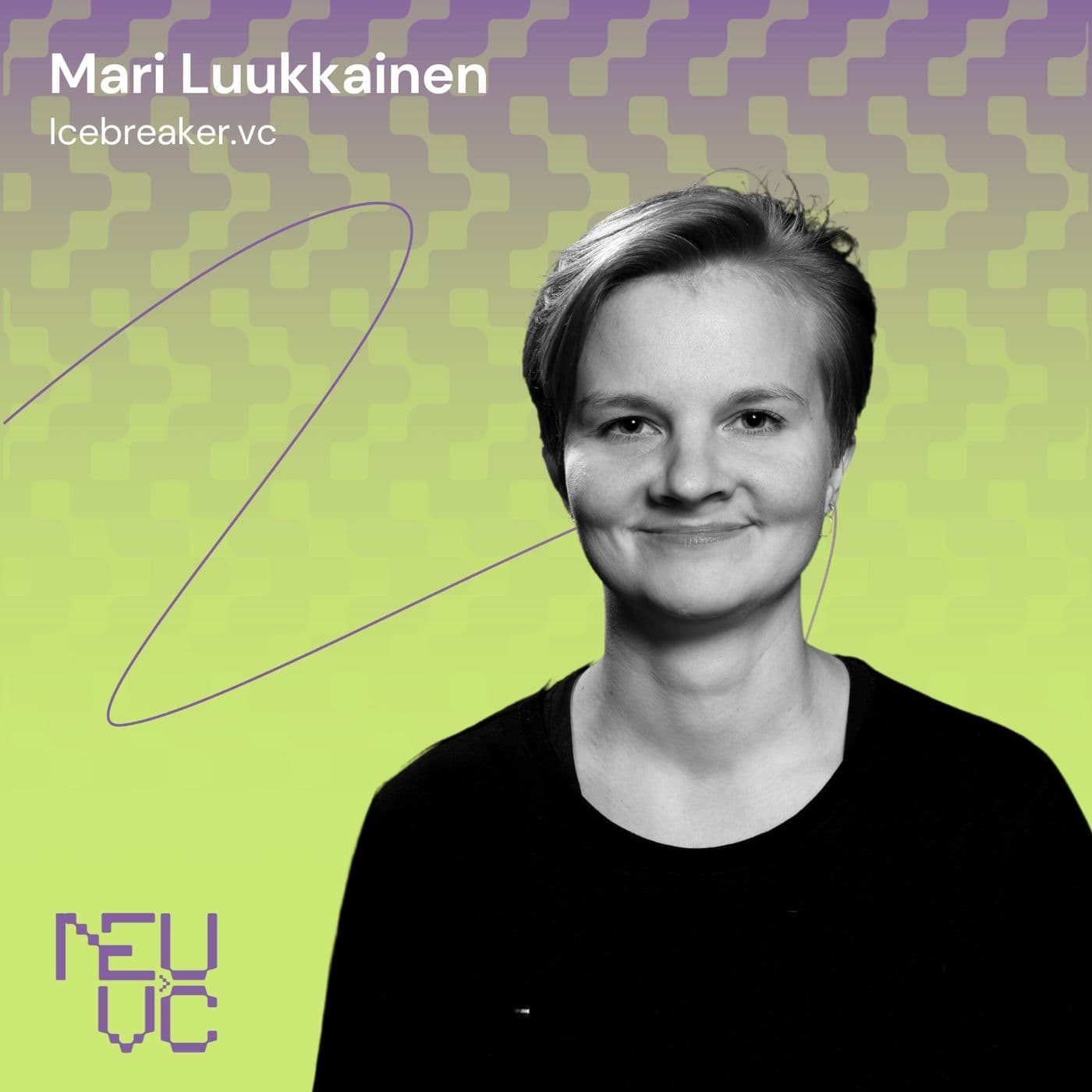
EUVC Podcast Summary - Episode E253: Mari Luukkainen of Icebreaker VC
Episode Overview In this episode of the EUVC podcast, co-hosts Freddie Macpherson and Linda Võeras engage in a discussion with Mari Luukkainen, Principal at Icebreaker VC. The conversation revolves around Mari's journey in venture capital (VC), her insights on personal branding for VCs, and the importance of emotional support in startups. The episode aims to provide valuable tips for those starting in the VC industry.
Key Themes and Discussions
Personal Journey
- Background: Mari shares her journey from being a young girl interested in computers in a small Finnish town to becoming a successful venture capitalist.
- Skill Set: Her superpower lies in her stubbornness and ability to generate impressive numbers, which has shaped her career trajectory.
Transition to Venture Capital
- Mari transitioned from startup operations to VC after seeing the role that early-stage investors played in helping businesses grow.
- Her previous experience in affiliate marketing and startup growth equipped her with the necessary skills for her current role in venture capital.
Developing a Personal Brand
- Consistency: Mari emphasizes the importance of consistency in content creation to build a personal brand on platforms like LinkedIn.
- Value Proposition: The content shared should resonate with the audience and establish a brand identity that showcases expertise and experience.
- Emotional Connection: Good branding should evoke emotions, even if they are negative, as this creates recognition and lasting impressions.
Challenges in Branding
- Mari discusses the paradox of branding, where founders often avoid taking risks due to fear of negativity, which can stifle brand development.
Importance of Emotional Support
- The significance of emotional support in the startup environment is highlighted, with Mari discussing how VC professionals can provide this support.
- She notes that founders often face emotional challenges, and having someone who understands their situation can be invaluable.
Networking and Audience Building
- Mari suggests that networking is crucial for increasing visibility, particularly for VCs looking to attract founders who are still in the ideation phase.
- She shares her approach to social media, where she advocates for regular posting of engaging content to enhance visibility and attract the right audience.
Transferable Skills
- Skills from her previous roles, including writing and psychology, have proven beneficial in her current position. Mari suggests that professionals consider how their diverse backgrounds can contribute to their roles in VC.
Advice for Emerging VCs
- Mari advises aspiring VCs to build something on their own, even if it’s a simple project, to gain practical insights into entrepreneurship.
- Understanding the founder's journey through personal experience fosters better empathy and coaching abilities.
Key Takeaways
- Brand Building: A personal brand requires consistency, emotional engagement, and a clear value proposition.
- Emotional Support: Providing emotional support is essential in building relationships with founders.
- Networking: Growing your professional network and maintaining visibility is crucial for success in VC.
- Transferable Skills: Diverse experiences can enhance your capabilities as a VC, particularly in understanding and supporting founders.
Closing Thoughts The episode concludes with Mari highlighting the importance of resilience, adaptability, and the willingness to learn and grow within the venture capital space. The hosts express gratitude for her insights, encouraging listeners to reflect on their personal branding strategies and the emotional dynamics of building successful startups.
---
For more information about the podcast and to stay updated on European VC trends, visit [eu.vc](https://eu.vc).
Written by AI. May contain mistakes. Listen to the episode to check what was said.
Transcript
Automatic transcript. May contain errors.0:08Welcome to the latest episode of the special series New VC, hosted by Freddie, an analyst at Ice Capital and Linda, an associate at Karma Ventures. We are delighted to welcome Mari Lohkanen, principal at Icebreaker Capital, a Finland-headquartered early-stage fund. With a background of building and scaling companies, she has now amassed a massive following of 20 ,000 people on LinkedIn. In this episode, she was kind enough to share some tips and tricks for VCs looking to develop their personal brands and some insights as her background as an operator.
0:41Mari, pleasure to have you here on the new VC show. I was super happy to have you. So first and foremost, who are you? What do you do? And what is your superpower? Thank you. Good to be here. It's a hard question because I need to decide always, do I tell the long or short story? short. I'm principal at Icebreaker, early stage, precede a VC firm, investing in Nordics and Baltics. In my background, I'm a former startup operator. I have also founded a couple of companies myself, so entrepreneur background also. But originally, I started in affiliate marketing, so built my own websites and monetized them since late 90s.
1:29So I've been in internet business quite long time. And so what's your superpower? I think my superpower is what I, or years ago, I didn't think that it's a superpower. I thought that it's a flaw. So basically, I'm from a very small town in Finland where it was really a minority to be a girl interested in computers. So no one really believed me. So I considered that as a flaw. but nowadays I have really experienced that being so stubborn that I just wanted to do it I didn't stop it even everyone said that that it's not something I'm supposed to do I just continued doing it and also another thing there is that back then fortunately that has been chasing a lot for now if you're compared to nowadays but no one really took me seriously until I made amazing numbers so I'm very good at making amazing numbers I don't do I don't present or talk about anything if I don't have the numbers that has been definitely also my superpower of being the numbers person the skill set that you have now the skill set that is that makes you very valuable to both founders and and what kind of makes your money now is one that basically you were pushed into in a way right yeah exactly and it's uh it's interesting and i i really like to highlight this in in this kind of context where we hopefully have some uh younger people listening to that because these days especially i i meet a lot of young people who have a lot of pressure of how can i ever like decide what i want to do when i have all the opportunities available also they feel stressed that i haven't decided yet i'm already this and this like years old and everything.
3:22I suffered this quite a long time also that I didn't have like a plan because when I started, there wasn't any terminology for instance, like search optimization. There wasn't startups in Finland. I had never heard about venture capital or considered myself as someone who can end up being an investor and so on. When I now retrospectively think about all the steps and things have led me into this role, all of them are valuable. All of them are actually super valuable right now because I can really relate in certain things that the early founders are going through and so on because I've experienced a lot of mistakes myself as someone who started without anything available on YouTube or chat chibit nowadays.
4:15Nowadays, it's actually super easy compared to that. But yeah, I have been able to find a lot of benefits from the things that I back then considered that this don't make any sense. I'm just wasting my time and so on. Probably even you feel like that nowadays that it's hard to decide. You can turn everything, all your learnings as something valuable. Maybe you can open up your history a little bit more, especially your journey maybe to VC? Because I think that that would kind of create a really good kind of understanding of how your skill set has developed over time and how I have the end of up in the role where you're now.
5:00Basically, what I like to do most is building something a little bit and then not take care of that at a later stage. So that's why I really like to be a three-seat VC because I can spend hopefully the rest of my life just doing that and kickstarting things or cold starting things like Andrew Chen would say. I like to build things and that's what I really loved when I was an affiliate marketer. I built things, then I sold some of them, some of them stayed as passive income and so on. But how to turn that then to be easy, I didn't have that plan ever. From affiliate marketing, I did that for 10 years.
5:49And then the market started to mature a little bit in terms of digital marketing in general. So there started to be terms such as Facebook advertising, Google advertising, search engine optimization and so on. So I started selling those services as a consultant. During that period of time, I did a short stint in corporate consulting and created a lot of reports and analyses that no one probably read ever. Got a lot of money, but it was complete opposite of the affiliate marketing that I'm used to do. So basically in affiliate, you have the responsibility of everything. So you need to just get it working or kill it, basically.
6:37That was complete opposite to corporate consulting. So I didn't do that quite a long time, but my friend was working in startups. And again, I don't have any university background, so I'm completely out from that world. But I ended up doing some front-end development in one local startup. It wasn't even marketing, which is quite funny. I did a little bit of like Sipu's JavaScript stuff, but I also learned that, okay, this like, I have no idea what this startup thing even is. But in this kind of companies, you need to do things because if you don't, you will run out of money, which is a common factor to affiliate, obviously.
7:20Then I started, I continued going to different startups over and over again and was in multiple of them before I was hired to a home cleaning startup called Fresca as a head of growth. That was the first cross-functional role I had in startups because previously I usually was in development or marketing. And basically, especially from marketing perspective, traditionally, if you are good in marketing, which I am pretty good at it, you will still end up having issues if the product doesn't work because you will have a massive journey and you can't do anything about it because you are just marketing.
8:04So I felt that a little bit frustrated that, okay, I'm in this environment where I have the background of being able to do a lot of other things than marketing, but I'm still like siloed in this certain place, even we have the pressure of getting things done. But in Fresco, like I had no idea what is set of growth, like what is growth function? It didn't exist in Finland before Fresco. But the introduction to that role was quite interesting, like do whatever grows this company. and you can do anything. Then I went there and I did everything. So I did marketing, so client acquisition, but you can't really grow the company if you don't have cleaners also.
8:45So I started doing cleaner recruiting. And basically I managed to get the position in the company where I was able to oversee and review the whole business all the time over and over again and find a bottleneck wherever that is right now. And usually it wasn't only marketing. It was somewhere else and then fix it somehow and then move to another and another. And Fresca grew from under$13 million annual recurring revenue in the two years I was there alone. That growth position and whole function and also marketing function. I did have one colleague in marketing, but growth was basically me. Then obviously, like I said, my sweet spot is the early stage, starting things but not taking care of when they're too big.
9:37So I wanted to find a place. Okay, now this is over 10 million annual revenue company. We need to restructure it in a different way. I want to find a place where I can replicate the same learning. And the only thing that led me to join VC that I never thought that I'm going to end up at was, or actually two things. First of all, it was that at Fresca, the mandate to hire me and give me the whole mandate to do whatever growth this company came from our early stage investors. So I figured out that, okay, whatever these VCs or investors are, they probably had some kind of idea of like, some kind of mandate of like putting this kind of like new thoughts in the founders heads and then another thing was that I participated already before joining Fresca to Icebreaker's first pre-founder project so even I had experience from VCs only from the other side of the table so basically fundraising as a startup I had an idea of Icebreaker being somehow different at least in a way that I could be relevant there without any university finance, like traditional background that you usually have, like as an adult, like from outside of the industry.
11:03So I joined Icebreaker as my first title was head of marketing, which turned to head of growth at some point. But basically, I did portfolio development for a couple of years, tried to implement different kinds of things in our portfolio companies. And And then last year I was asked that, hey, Mari, have you ever taught joining investment team? And I was like, okay, why not? That's probably something new at least to learn for me. And that was also quite funny because I didn't actively think about that even I had already worked for two years in a VC firm. But then I started in investment team last year and it's quite simple and complex at the same time.
11:48wasn't that hard after all, but at the same time, it's super hard. But yeah. I can really see how your prior experience at Alfruska to then joining Icebreaker in terms of platform development and sort of growth stage, but how has that marketing experience helped you in working at Icebreaker? When I started working in portfolio development at the Icebreaker, It took quite some time for me to get rid of the mindset of helping the companies hands-on. That was definitely something that I was really stuck with quite a long time because I used to do everything myself. But at the same time, in this kind of position, it can be a flaw because it's more scalable if you find a way to coach them to do it themselves.
12:43and understand that they really need to take the responsibility of their own company and its growth like instead of you hands-on helping them because I did a lot of hands-on things at the very beginning like built like for pipeline visibility dashboards and everything and no one did take like care of them like after I did it and used them in the development of the of things So that took quite some time. And then if I think about my experience as the current role, actually the marketing experience, it's not that relevant at all, especially the super deep domain expertise. is it's not that relevant.
13:31It's more like how to identify what is relevant and priority for them right now and then helping them to see it is more relevant in the current position. Because if they go too deep in, for instance, marketing, they are, in most cases, just wasting time. Because the most important thing at early stage is not basically building anything, for instance marketing campaigns it's speaking to your potential customers and doing that in very non-scalable way which is then often very counterintuitive in founders head and if if i was the founder like back then years ago and someone said to me like just like like invest time on on interviews and don't do anything scalable like i i would have thought that they are insane just put a lot of money there and you will collect data but you're like at this stage the problem is that you don't even know what to communicate and to whom and on which channel so where they even are and that that is mainly what I just repeat over and over again to these founders and related to that the most useful skill I got already when I was 18 like like back then in in the small town like no one really believed that there is any any jobs in internet so so at school and and so we're like it's it's it's it's a paradox now when you think about it I was at the same time making money with my websites and at the same time I was talking to like unemployment offices, like consultants, like what I will become as an adult.
15:18I was trying to like really, really find something that I'm interested in that is not internet. And the only thing I was like for some time very interested in was psychology. I studied, this is my only touch point, to university. I studied open in Jyväskylä Open University psychology courses. and currently one of the most valuable skills that I have is psychotherapy models that I learned back then that I implement now to discussions with founders when I try to get them to figure out certain things themselves without me saying it to them because they don't believe usually what I say but I need to communicate it or make them realize that themselves by using self-reflection or using some other founder as a mirror that this person has done it.
16:18You can do it as well. And that kind of models. So it's completely like non-marketing. But you're obviously very, very good at getting people to listen to you or take an interest in what you have to say because you have 19 ,000 followers, if I'm not mistaken. LinkedIn. Yeah. How do you even get to that position? And how long does it take? And what does it actually take to get to that level of following on LinkedIn? That's also quite interesting because a lot of people think about that it's you gain that if you actually have something to say. To be clear, I do also have something to say because I have so much experience in different things and I've been able to at the KPI level to get something done as well.
17:10But I can already see the podcast title. Mary, I have something to say. I have something to say. Yeah. But the main thing what works in social media is that you just push out something every single day. Consistency. Consistency doesn't have anything to do with a lot of things that I have done. usually like the main things that I could talk about are 2D domain expert things but those are not the things what people want to read in online they want to read inspirational things and and basically lightweight very short things that for instance chat chbd is very good in producing or before using chat chibity i was using ghostwriters so so most of the content i push out is or hasn't been in in many years written by me it's something that i have gathered during years and i schedule it every every three months and it's going out all the time and and that's quite funny observation in like related to building a personal brand that no one from my following as at least I know haven't ever contacted for instance Fresco and asked did I even work there ever and did I do anything useful there well I did work there and I did some useful so go ahead and do it but but it's really just like pushing out stuff all the time and being very consistent that something is going out because that creates some kind of like imagine that okay I need something related to growth hacking and that thought or that term connects to my brand because I'm just pushing out stuff all the time about those things and that ultimately leads to a conversion of sending me a message if someone needs something related to early stage startup startups, growth hacking, startup growth, and these teams, and usually they don't even understand at Consus level why did they reach me out.
19:30They just have a feeling that I know a lot of things about that. But I have a thought that probably I could do that even without knowing anything about these things that I write about or post about because it's so strong, just the image that I have been able to create by being just very consistent. So basically, my answer to the question would be that, yes, I put a lot of effort on at some point when I started to activate myself on LinkedIn on writing super long, very deep domain expertise stuff like no one cares like my most awareness gained post which i think still is not not maybe the most seen or or at least in in top three or something finnish post it got almost 700 000 views in finnish language which is quite niche still it's pretty much like every single That Finnish person using LinkedIn, at least back then, saw the post and it was about whining about my bank connection.
20:46It sucked. And I thought I'm pretty good in creative writing. So it was quite a funny post as well. But it was basically whining about bank that, but dear Danske Bank, I've been your client for some time. We need to, now it's our goodbye because blah, blah, something, something. I have never got such a visibility with anything like domain experts, actual content. It's memes and inspirational, short, easy to consume stuff that I just push out all the time. And that works. So if you want to do something like that, just like I have been doing that for five years. So obviously I would have stopped that if it doesn't work.
21:33But just build a massive content bank and repost it. Same things all the time, every single day. And little by little, you end up having a full verbase as well. So at its core, its consistency, content for your audience, making it short and humorous. Yeah. And a bit of luck. the entirety of Finland will listen to you. Not a little bit of luck. That's true, that's true. But the luck component, that's the tricky part in us building a startup or being a VC because like why Treska succeeded so massively was luck basically. We were at the right place, right time with the right team. how to replicate that as a VC that I find these cases where we have the right people doing the right thing at exactly the right time that's actually very hard.
22:38If you were to start again five years ago what advice would you be giving yourself to build this audience online and to build that following? Yeah right now I would start by just being very consistent and networking with people all the time because now it feeds itself like I'd really have to do anything like extra effort there like I get new followers every day I suppose like a month ago about like okay I will hit 18 ,000 followers soon do you want to be that one that's there like the 18 ,000 now and that's probably what you commented as well. I'm going to be at 98 ,000 very soon and I haven't even like realized that okay now I'm at 18 ,800 or something like that so it's that's going to happen quite soon.
23:34And obviously as we see the main thing that obviously you and I majority probably Feddy as well thinks about all the time is pipeline. How does startups find me? How to get deal flow, etc. So what have you kind of noticed about how this followership helps with your deal flow? And then how much does it translate into quantity versus quality? And overall, what have you noticed? Good question. That's probably something that we need to do a follow-up at some point because I haven't done so many deals that we have a lot of data to actually analyze that a little bit more in depth because we operate in very, very early stage.
24:18So usually when we meet the team and do the investment, they didn't even have a website yet or they don't even have a LinkedIn page yet. We are very heavy tech VC. We have a lot of machine stuff implemented there to find these like founders when they don't even know yet that they will become founders. Obviously, something that would help there quite a lot is the visibility of your personal brand that you would attract the people already when they are at pre-founder stage. So basically, domain experts thinking about that, okay, I'm so frustrated to meet this problem all the time at my work that I'm kind of like playing with the idea of founding a startup.
25:08Usually they don't necessarily know that founding a startup is the right way to solve it, but they want to solve it. And we would like to create more awareness that you can actually approach us before you have the company entity. You are just like thinking about it, like fixing a problem that exists, but you don't really know how and where to start from. so so attracting that definitely the inbound would be would be amazing but also i have realized that my my like mainly my visibility is in within the networks that usually know what startup is and know what we see is so so i need to spread that a little bit to more traditional places such as like traditional PR, being a speaker in more like non-startup related events and as such.
26:01So I'm now like pushing myself a little bit to that direction to try out. Do we get a little bit more relevant inbound from there? But I do get quite a lot of inbound, but usually the machine has been first. So it has seen it before I see it. but it's an interesting challenge that I'm looking into right now. On that point, when you started five years ago, that was when you were at Al fresco and then you were the growth portfolio support role within Iceberg and now you're on the investment team. Have you had to think about how your brand has had to evolve those different roles and how you need to tailor your content in order to provide value to your day-to-day?
26:49Yes, I have been. actually switching my brand's focus quite many times. Originally, I wrote only in Finnish. So that was one switch, switch my main language to English. Okay, I've been doing that actually quite a little bit longer because I started LinkedIn Posting already before joining Fresk. And then it was very like Finnish marketing related content that I focused on. And definitely like two domain experts stuff because I only had like SEO specialists and that kind of people in my audience. But I also see it from the audience that it has been switching more and more to founder profiles. And now I have unlocked a new segment of investors.
27:33So I've gained investors as a follower base and so on. I have made multiple conscious changes on my personal brand. And the latest one was a year ago when I switched from a portfolio development to an investment site that I added a pool of content related to investing in my pool of content that I recycled. And I also wrote or used ghostwriters and AI to write a couple of block pieces related to investment. But there are definitely certain sections on how you can build my personal brand journey. That now it was this time and now it switched for whatever reason to this. This is also a topic that I'm quite often asked that, okay, do you then, like, if you switch that focus completely, does your engagement drop?
28:36And I have never seen that happening for, I don't know, whatever reason. But I also have very consistently stayed at common sense, quite top level, like a type of content, inspirational more than domain expert and so on because of the fact that it gains. I get more engagement and more engagement in relevant audiences if it's not too complex to digest. So it's also something that is commonly easy to consume. Even I have to switch the kind of like a little bit like explain it, explain VC things like easily and that kind of things. like maybe my mom wouldn't understand it but but a lot of my friends who are not working in tech or vc can understand it from your side dissecting a successful kind of personal brand what do you think that are the the key components like especially for investors what do you think will make a good personal brand for an investor and and then do you have any examples in your head who do you look you look for for inspiration or for you know as an example of how it's done i find actually very hard to kind of like identify myself as a branding guru but then at the same time i've been extremely successful in specifically that even it's kind of like again a little bit paradox because when i started as younger like 20 years ago like focusing more and more on data things like mainly because I wasn't taken seriously as a young young female in tech back then but but it also led into conclusion that okay this is actually nice because I don't have to talk about opinions anymore which branding usually is so I only only had like I just showed the numbers and and that's it end of discussion then it's it's like that so I've been very into like like I don't want to do anything related to branding it's boring it's complex it's opinions it's definitely something I don't want to even touch and then at Fresca we were able to build a brand that didn't like only it convinced on all the Finns that first time in your life you should let an immigrant into your home to do cleaning when you are not there which was very hard to swallow for a lot of fins but we were able to switch that mindset with well branding basically but at the same time it was extremely profitable like it had profitable customer acquisition cost all the time sort of the ROI of our like performance driven branding like activities was actually really positive all the time when I've been working with brands nowadays ended up to be some kind of branding guru even I didn't expect that to happen in most of the cases like the core issue is that the founders or the owners of the company don't want to take any risks with the brand or or their communications in general which then leads to situation that no one cares about it because it didn't it doesn't bring any emotion up with anyone so so basically a good brand like it should create some kind of emotional memory.
32:08People will forget it completely immediately if it doesn't do that. It should excite. Even negative emotions are good because you can't be in a position where you only create positive emotions. I'm sure that I also create negative emotions. As a personal brand, that's something that people usually forget that that happens also or then subconsciously or consciously they are afraid of that that they never start their whole personal branding thing or branding thing for their company's brand they are afraid of the negativity but you just need to accept that it will happen people talk about my income level at some point in Jodell in Finland and obviously it felt it didn't feel good to like read that kind of discussion but you just need to consciously accept that if you want to do that thing branding you need to accept that part as well and as a company it's I think it's quite funny that a lot of founders are afraid of that because that's still like the company entity it's it's not you but a lot of founders especially at early stage kind of like the company entity is same with themselves so they they feel hurt when someone is saying that your brand color or something is off and they're oh and we need to change it immediately like like they should be proud that okay like you you were able to like create an opinion at least instead of being just blah so so if if i need to name like one thing like related to brand like that should be it.
33:57Like I said that you need and should create some kind of emotion by your brand and you shouldn't be afraid of it. You should be afraid if you don't create any emotion because no one cares. But even the companies that we have that have amazing numbers, they could get a little bit of higher valuations in funding rounds if they added the brand component there by taking a little bit risks in their narrative building, in their positioning. But they usually like to be a little bit something for everyone when, especially at early stage, you should choose one niche and focus completely on that and be non-relevant to everyone else but that niche.
34:45And when you have chosen that niche, go even deeper because usually it's not enough niche before you go super deep. So moving on a little bit to the differences in VC, you've had various different roles already at Icebreaker. How are they different? Obviously, my experience is only from Icebreaker, so I have no idea what it is in other VCs, but I have been fundraising multiple times and I've been working with VCs as a startup. and I have never worked or met VC where everyone doing decisions, making investments, have a startup or operational experience. And we have that. And you can really see that if I compare my experiences, like when I work only with VCs that don't have any experience in startups, I really didn't feel that they understand what we are going through.
35:53It was sometimes like very hard to have those conversations. Now as a VC, I can get it and I can coach these founders to talk the VC language, which is one part that I do. I would have been like better in my role if I had also that knowledge that I was able to talk to them. But to compare those experiences in startups, we work with the founders a lot more. We are in touch a lot more. We talk about completely different topics than I have ever talked with any VC. in my opinion we are more understandable in in in certain things which some like non-startup experienced VCs or or investors in general because I have had angel angel groups as well like for instance that firing a first first time firing a person it's just not just like you just kick off some person out from your company kind of like having the discussion about the emotional support there as well and listening to founder and their experience and offering them solutions like okay how to get over that and how to accept that that is not it will not be the last time and and that kind of things like adding that kind of like Usually it's adding that emotional support level on this technical discussion, which in my experience missed completely when I was in startups.
37:38So that definitely. And so far also I haven't met a VC around here that makes the investment so early that we can do the decision before you even have the company entity yet. so we also operate in super early space but also like adds a little bit of spice on the work itself because you don't really have any numbers that you can base the decision at it's really just like the founders and what kind of DD can you have with the founders like well you sit down and you talk to people and then you get some kind of idea that does this person have it? And then still you can have some surprises. This question about operators versus people from financial backgrounds, diversity overall in backgrounds and focus areas and skills in VC, I think is something that we're only in the beginning, I think, in discussing and really realizing what are the benefits.
38:43Because I think that the venture industry is so young overall, in Europe at least, that I think that these are only the first kind of conversations we're having on this and people with your backgrounds I think are the ones are showing how to do it differently and what are the different ways of getting into VC and using skills in VC so it's been super interesting to listen to your journey and and you know how it relates to the founders and overall VC ecosystem but before before we kind of finish what we have is we do these quick kind of few personal insights in the end and and maybe Maybe the first one would be, we've talked a lot about the skills that, you know, from marketing perspective that you've used in VC, but maybe what skills have been surprising that now, especially on the investment side that you're kind of using, again, maybe the psychological part was already something that you mentioned as well, but what is the key?
39:40Yeah, that is definitely like something that I've been very surprised at. I never thought that it will become like a useful skill ever. But I probably did like. And another one is actually the writing skills. So as mentioned, I'm quite good in creative writing. And I'm good at that. Because, well, you get good at stuff that you do a lot. But that I haven't been doing as much like in professional context that I do as a hobby. because I have been playing these text-based role-playing games over 20 years. So basically, you're writing with your friends. So both of you have characters that you just imagine what they do together and write stuff.
40:32Basically, before the busy market went down a little bit with the global market in general, we started going very, very deep into narrative building. I like to adapt the situation okay narratives are not a thing so I will build narratives and how to build narratives suddenly I'm very very good at that because I'm able to use that creative writing skills and an imagination from that like basically just describing worlds and and situations and and completely like imaginary characters like just like that and and that has been like completely just a hobby uh for me right before this like as working VC like suddenly that's super valuable as well and uh that's something that I really encourage people think about like like I see a lot of people that have like very wide selection of different skills but they are just not able to implement the parts of that to their current role or current or dream role.
41:42So basically, I would encourage to think about a little bit like what kind of things you are good at or what kind of things are easy and what you like to do. Because usually there is a way to implement something from there to your professional role that you didn't really think about because traditionally the roles are very fixed that as a VC you just invest but in reality you really talk to founders, support them technically and emotionally usually just talk because that's kind of the I think that will be like a difficult shift for a lot of ex-operators from startups that or founders even that think about hopping to VC, how to shift that like okay I will take care of everything and do everything to I don't do anything I just support and talk and coach because that was very hardship for me and and also also in a way like counterintuitive because you don't get the instant feedback immediately that something happens like immediately when you have the chat but then you realize that okay a month ago something happened and it was more scalable impact.
42:59So you need to also have a lot of patience of waiting for other people to do the mistakes themselves and learn and be there supporting them, not being like, okay, what did I say? Now you did this thing like completely opposite way. But you think about like, what could I do differently next time to convince this type of person in this kind of situation? What can I learn here to be a better mentor and coach and VC because you need to give people space to build and grow their companies themselves. You can do it because that's not, again, sustainable at all. And also not your role. Yeah, exactly. Exactly.
Read the full transcript
43:45It's fascinating how, you know, you come from quite a technical background and yet your interest in psychology has just led you to both evoke emotion in others by the content that you create and also relate to founders and other people in your network on an emotional level it's interesting how you bring that sort of fundamental level of interest just into your day-to-day i think like all of us like everyone has some like fundamental interests but often they haven't just found a way to well monetize them if you are like completely brutal but like in finland as at least like in in that small town we have very this like there's workers and then there's bosses like mindset in that kind of like mental environment it's very hard to accept that i can really enjoy working because it should be something you suffer and you wait for for that to stop when you're like 65 years old or 70 and then you can lift and you can you're you're old but then you can lift i have never really felt that way like i just do things that i generally like to do, but I've been also like able to find a place and position and shape my role in a way that I can use the skills and interests that I'm just generally interested in.
45:07And I never thought that it's a VC firm where I can find this kind of position, but it's this early stage VC where I can always stick in this early stage place where I don't need to like a restructure or anything ever, but just like keep start things and working with early stage founders when there's only like a handful of people. So it's very manageable and you can get really known to all of them. And then also like this very, very technical, interesting, usually online scalable context of like getting very into interesting new technological things that I also am interested in, like digging into what AI can do and then try to like help people to shape that in a form of something like globally scalable, healthy business that is communicated in a way that other users can understand what it is about.
46:08Cool. And then final question, you know, in a couple of sentences, is what would you if you had to give one piece of advice to young professionals starting out in vc what would it be definitely build something yourself first but that something doesn't have to be a lot like it can be nowadays it can be even um non-code uh thing like downloadable pdf that costs a little bit and you wrote that with chat gpt but that's something you need to learn what to do, how to do it, and how to get someone to pay for it for the first time. And that already has a lot of very valuable skills that then you can coach founders to understand.
46:56Yeah, I think empathy here is the key word. And for empathy, you need understanding. And for understanding, I think you need to experience at least to a certain extent similar things in this environment. But it's super interesting to listen to your insights, Marie. Really appreciate you taking your time and demystifying maybe this angle of that personal branding just happens to people and it's something that happens naturally where in reality it might happen to some people that way, but in reality there's a lot of hard work and inconsistency that's behind it. So it's been absolutely wonderful listening to you.
47:33Thank you so much, Sarah. That was fantastic. Yeah, thank you for the invite. This was super fun. Thank you for listening to this special episode on the European VC. If you love our show, join our community by subscribing at eu.vc
From the publisher
Chapters:
00:00:00 - Developing Your Personal Brand in VC with Mar Lanan
00:02:59 - Finding Value in Your Journey
00:05:53 - Transitioning to Startup Growth
00:08:43 - From Cleaner Recruiting to VC Investment
00:11:40 - From Hands-on Help to Coaching
00:14:48 - The Paradox of Finding a Job
00:17:56 - Consistency in Content Creation
00:21:12 - Consistency and Networking for Building an Audience
00:24:18 - Attracting Founders at the Pre-Founder Stage
00:27:10 - Building a Personal Brand for Investors
00:30:16 - Overcoming the Challenges of Branding
00:33:12 - The Importance of Emotion in Branding
00:36:20 - The Importance of Emotional Support in Startups
00:39:17 - Transferring Writing Skills to Investment
00:42:14 - Shifting from Operator to Coach in VC
00:45:05 - Building Something Yourself First
00:47:54 - The Role of Venture Capital


