
In short
EUVC Podcast Episode Notes
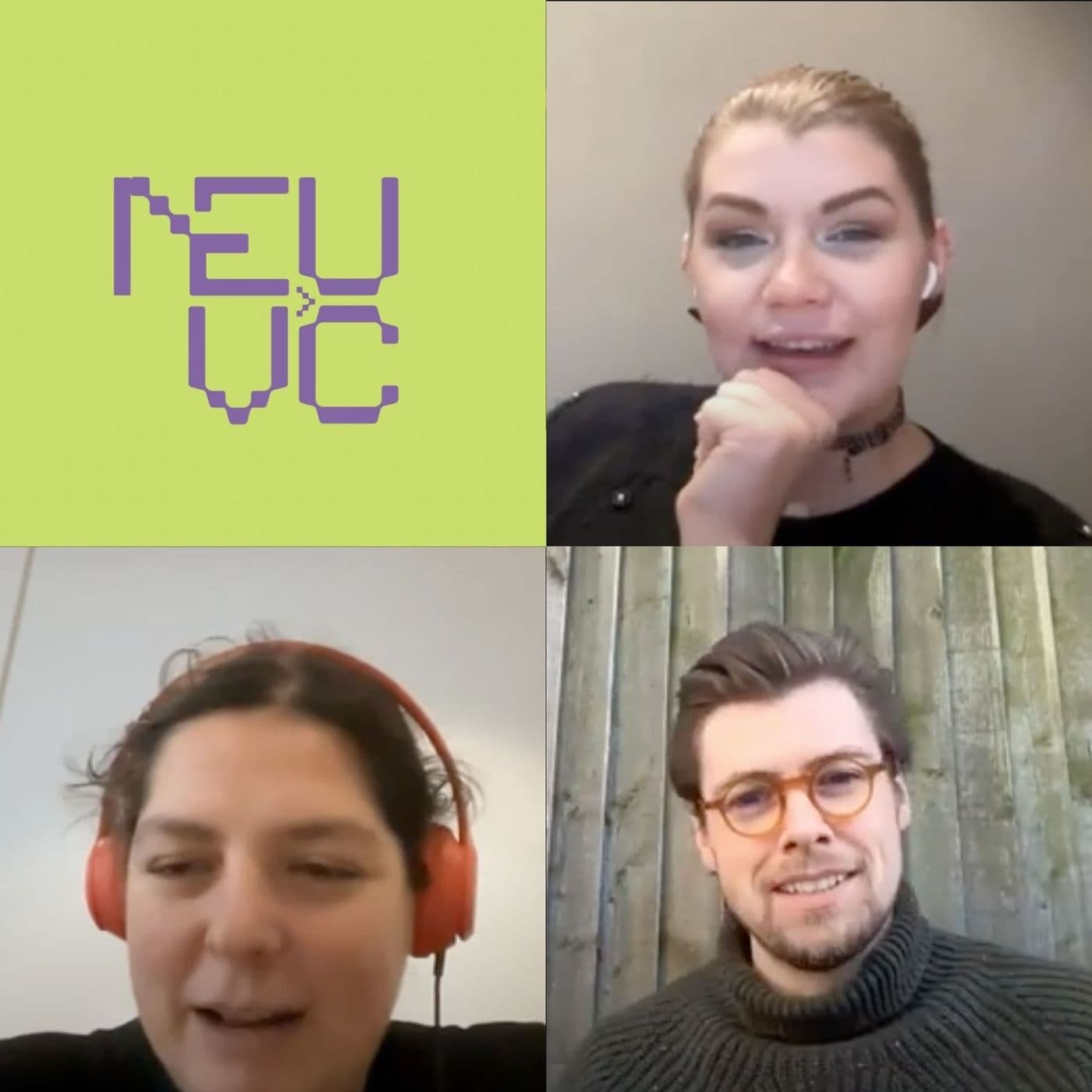
Episode Summary In this episode of the EUVC podcast titled E292 | NEUVC | Marie Brayer, Partner at Fly Ventures on technical founders and solving hard problems, co-hosted by Freddie Macpherson and Linda Võeras, the discussion centers around the European VC landscape, particularly focusing on technical founders, the evolving French tech ecosystem, and the strategies for supporting deep tech startups. Marie Brayer, a partner at Fly Ventures, shares her journey and insights about investing in early-stage, tech-heavy B2B companies.
Key Themes and Discussions
- Introduction to Marie Brayer
- Background: Marie Brayer has a finance background with a strong interest in engineering. Before joining Fly Ventures, she worked at Serena Capital, backing over 10 French B2B startups.
- Fly Ventures: An early-stage VC specializing in deep tech and tech-heavy B2B software, investing in technical founders from day zero to seed stage across Europe.
- Marie's Journey into Venture Capital
- Initial Interest: Marie started as a software engineering student and developed a keen interest in machine learning and applied technology.
- Career Path: After graduation, she worked in the tech industry before pivoting to venture capital to help technical founders navigate the funding landscape.
- The Evolution of the French Tech Ecosystem
- Historical Context: Discussion on how the French tech ecosystem was small but has grown significantly, particularly after 2015-16 with increased international attention and investment.
- Current State: The change in perception regarding technical talent in France and the emergence of new funding sources for technical ideas.
- Supporting Technical Founders
- Investment Philosophy: Marie emphasizes the importance of understanding complex technical solutions and the need for patience in VC relationships.
- Value Addition: It's crucial for VCs to offer not just funding but also experience and guidance through the entrepreneurial journey, particularly in deep tech sectors.
- Navigating the European VC Landscape
- Geographical Insights: Marie discusses how different regions in Europe have unique strengths and weaknesses in supporting technical startups.
- Comparison of Ecosystems: The podcast highlights successful ecosystems like Oxford, Cambridge, and ETH Zurich, which foster a culture of entrepreneurship and success.
- Board Dynamics and Governance
- Advisory Stance: Marie advises founders to be cautious with governance early on, suggesting that initial heavy governance can stifle creativity and innovation.
- Timing and Structure: The importance of delaying formal governance structures until the company reaches a point where such measures are beneficial.
- Advice for New VCs
- Networking and Relationship Building: Emphasis on the importance of building genuine relationships and understanding what makes a compelling investment.
- Curiosity and Engagement: New VCs are encouraged to be intensely curious and engage deeply with the industry to foster relationships and enhance their investment acumen.
- The Future of European VC
- Trends and Adaptation: Insights on shifting trends in venture capital, including the increasing focus on complex tech solutions and the need for VCs to adapt their strategies accordingly.
- Side Projects and Personal Development
- Value of Side Projects: Marie discusses how engaging in side projects can significantly enhance a VC’s understanding and network in the industry.
- Final Thoughts
- Embrace the Journey: A call for new VCs to enjoy their careers, embrace the challenges, and work intensely, as this phase of life offers unique opportunities for growth and learning.
Key Takeaways
- Technical backgrounds can enhance a VC's ability to support technical founders, but it’s not mandatory.
- The evolution of tech ecosystems varies across Europe, with certain areas gaining prominence due to strong academic and entrepreneurial ties.
- The role of a VC is not just to provide funding but also to act as a supportive partner in the founder's journey.
- New VCs should focus on building authentic relationships, deepening their industry knowledge, and leveraging their unique perspectives to add value to their founders.
Conclusion This episode provides valuable insights into the European VC landscape, emphasizing the importance of supporting technical founders and adapting strategies to a rapidly evolving market. Marie Brayer’s experiences and thoughts on governance, founder relationships, and the future of venture capital offer a wealth of knowledge for both new and seasoned investors.
For more insights and to stay updated on European VC, visit [eu.vc](https://eu.vc).
Written by AI. May contain mistakes. Listen to the episode to check what was said.
Transcript
Automatic transcript. May contain errors.0:07Welcome to the latest episode of the special series Neo VC, hosted by Freddie, an analyst at Isomer Capital and Linda, an associate at Karma Ventures. Delighted to welcome Marie Brer, a partner at Fly Ventures, an early-stage deep tech and tech-heavy B2B software specialist firm. Being in the French ecosystem for over 10 years, we asked her about the development of the local ecosystem, as well as the secret sauce behind a number of her portfolio companies that have gone on to raise hundreds of millions in following rounds. Is the VC value-wide a myth or a skill just few possess?
0:43Hello, Marie. Absolute delight to have you here on the show. As always, we'd love to firstly dive into who are you, what do you do, and what is your superpower? So, hi, guys. Thanks for having me on the podcast. So, I'm a partner at Fly Ventures. We invest at a pre-seed stage all over Europe in technical funders. and I would say if you want me to phrase it this way my superpower is to be really used to work with this specific type of equity stories and particularly help founders who really want to take on huge technical challenge to maximize the impact that they can have in this specific journey that comes through through, of course, fundraising, through raising the ambition that they are getting the means so that they can succeed in the challenge that they set for themselves.
1:49It's kind of deep tech and overall complex tech is increasingly now a topic across Europe and more and more fans are kind of branding themselves as deep tech. Do you need to be technical to help technical founders? And what have been your learnings? So I'm probably a bad example in this because I trained as a software engineer. So I have technical background. I did a little bit of machine learning and computer vision at the time where this wasn't cool yet. So, you know, before the deep learning era of all these things. but I wouldn't say you need to be technical to be a good deep tech investor but what you would need however is an ability to explain complex things to understand them and the patience to really go into but I would think that's the same for even on technical markets to be fair because even tech or marketplaces are deeply technical if you look at them and their business model and how it works and network effects and stuff like that.
3:01So I don't think you need to be technical. There might be a small cultural element, though, where maybe it's just not the same. Maybe social proof is a little bit less of importance in your relationship when you try to rule people who are technical. Maybe it's more of a values thing than of a background and knowledge, hard skills thing, to a degree, of course. And then, of course, because these things are a bit more specialized in a way, so the barrier to entry for a generalist to understand them, it's a bit higher. It helps to be at least in a specialist firm or be the specialist person at a firm about these technical topics because the barrier to entry is a bit higher.
3:54You touched on it slightly there, but could you give us a bit of a background as to you and how you ended up at Flux? That explains a lot of your technical expertise. I started as an eager software engineering student. I was truly passionate about early machine learning at the time and what you could do with it and the early products that you had. And I should remember, no, maybe you didn't, you probably don't. But at the time, a really, really cool product was the device that you would buy with your Xbox that was recognizing your hands. And there were a bunch of video games that were developed in 2011.
4:36So using the Kinect, it was called. And I actually bought one of those and then plugged it into my computer to do computer vision experiments and see, oh, OK, what products can we build with that? And it, of course, killed my computer because of the volume of data. It did not literally kill, but it was way too much memory usage for my poor MacBook at the time. So I bought a really big gaming PC and retried and did a bunch of stuff with that. So I was, I think, truly interested in that and all the internships I had done were in that space of applied ML. But so after uni, after engineering school, I did a year at HEC to learn a little bit more the business side of all of this because I was really not very aware of how the world really works on the trance.
5:37And after that, I went to Singapore to join two guys who were starting a data management company for the bio-research world, and that didn't last long. It wasn't a very successful experience for me. I mostly learned that you don't join people you don't like. In the character in Frozen, in Disney, you don't marry a man you've just met. It was a similar experience. You don't join two people you don't know to start a company. Oh, to be up. Exactly. But what's super interesting, we still did a bunch of stuff. But I went back from Singapore with no money, absolutely no network in France, and I had to start again.
6:23So I really networked my way into finding a job at a boutique, an M &A boutique which was specialized in helping founder and sell the company and raise money in the tech industry. And at the time, the French tech ecosystem was very small. Let's put it that way. Very small with just maybe five, six VC firms that were quite known. And that was pretty much it. So as a founder there, you were stuck with the international firms were not interested in investing in France. So this was a very interesting place to be on the founder side at the beginning and to help another founders raise their two million series A at the time was a cool thing.
7:14So that's stuff we did. And after a few years, I started to realize I somewhat had a pattern of clients which were always the more technical founders, the polytechnic guy in France, the people who usually were doing complex enterprise software or developer tools or things that were still a little bit more on the technical side. I also felt that my time there was over because the market was changing. France was opening up a lot more talent. And Criteo had IPO'd on the Nasdaq. So foreign firms were starting to take an interest in France. One of my clients, we had managed to get them funded by Index.
8:01Another one by GFC. at the time it was almost first in France because so few foreign investors were looking at our market. But what do you think that is? Just to kind of intercept a little. Because in France it's been huge, you know, a lot of talent. No, no, it's not. So I'm talking about 2014. So it's still like 10 years ago now, I'm realizing. So I feel very old. Thank you. But at the time it was, so just to give you an idea of volume, the volume that was invested in France was maybe less than a billion per year, if you must imagine. So super small. And everything changed after 2015, 16 or so, with a lot of help from VPI.
8:46So I'm going to switch from talking just about France. So that's when I realized I needed to switch to somewhere else, and especially to VC firms. So I was lucky to to meet Bertrand Dar, the founder of Thailand and people of Syri now who had decided they wanted to capitalize on a new way of technical French founders and wanted to to and I had raised a specialist fund called Data Ventures, the second one of the new vintage of this fund active today still, still led by Bertrand, whose thesis was to say okay we're going to back technical French founders doing data science, big data infrastructure, developer tools, etc., as only as possible because there is an interesting talent pool here, and we're going to see what this comes up to.
9:38So I went there to deploy the fund and ended up also doing a few deals on the vanilla fund. Maybe some people would know Malt or Descartes on the right, who both went on to raise hundreds of millions from European investors. Yeah, but after five years there, I reached the point that a lot of people reach, which is, ooh, I no longer want to work for someone. I actually want to be my own boss or just a version of that. I'll be part of a team that would see me as an equal. It's just not a thing that happens in most VC firms. So I left to start my own MonoGP firm, like a version of Sitcom or something like that, which I would gladly do.
10:29When I was asking the people that had raised funds in the last two, three years, I talked to a person I really, really appreciated and respected, Gabriel, the founder of Fly. and he told me, oh, you know what, actually, we were missing a partner in the team, so you should actually join here instead of starting your own thing and let's build the next steps of fly together. So it was hard to say no. The TELIS was really close to that adventure, so technical founders, but out of Europe this time. no fear of taking the strongest technical risk, which we still had an issue with at Serena, which was more conservative.
11:22Gabriel had backed really crazy, technically crazy projects with a lot of success. I love that. And of course, that came with a great set of NPs, which has never been my strong inclination or skill. and that came with working with Gabriel and the rest of the team at Flyer who are all really awesome humans so it was really hard to say no. And working with technical founders now for a long time how do you think that the landscape on that side has changed? Because I guess you kind of have the same problems I think everywhere across Europe or even broader where you know there's a technical festival build a great technology or innovation, has that changed or is that fundamentally the same and the problems remain similar during your time investing in early stages of technical families?
12:16So I've had a lot of time to reflect on that and it's a super interesting question. I would say it's not a problem that is shared in the same way all over Europe, but the best example of a successful ecosystem, I would say it's Oxford and Cambridge, So we call that Oxbridge now, which is truly the only mature technical ecosystem that we have and overall in Europe. And to get that level of success, you need to have the combination, which is pretty difficult. First, you need elite teachers and students, really people with the a lot of IQ that's necessary to just great minds and great talents. But it's not just Augsbridge that has that, right?
13:04You have that in urban places all over Europe. So that's the first component. You need the really elite people. The second thing that you need, and that's very unique to them, is three, four generations of PhD or, you know, expert people who started companies and were VC-backed. And that's really the hardest, because this creates a culture of success, because after, like, the second or third generation after a deep mine, for instance, you have friends, as a new PhD candidate, you have friends who work for DeepMind on our page, Theron.K, per year, You have people from your school who started companies and were backed by angels who work at DeepMind.
13:55I'm just going to say DeepMind, but there are way more companies than this. Of course, it's just one to use, to say. You have a bunch of friends working in the same lab that are thinking about starting a company because, you know, they want that experience for them, and they know that's probably one of the only ways that they're going to see their work transformed into a company, else they're going to have to just follow the roadmap of OpenAI or DeepMind or wherever they're going to go, if you're in AI, for instance. And so everyone is doing something around you or is benefiting from this ecosystem.
14:35If we take AI, it's benefiting of this ecosystem. When you're, it's starting slowly to appear in other places. This also comes often from GAFA investments or GAFA, Google, Facebook, acquisitions. In Paris, you start to have that with a few startups that were acquired to become the AI labs of Google or Meta or their research team. You have this. Maybe the second best example in Europe is what's happening with ETH in Zurich with the huge R &D lab of Google that used to be very much nearby and all the dynamics this created for the master's students and the PhD students of ETH and the opportunities.
15:31And I think the link to all these two bricks so they're really smart people, and the, let's say, economic interest or the startup energy that you get from these people, it's the fact that ETH and the really good schools of August Bridge, they have teachers who are not just, you're not just like professor at Oxford and blah, blah, blah. You're also VP of AI at Microsoft. or your professors have a foot both in the economic world and in the science teaching world. And that makes all the difference because they truly see the application, especially for applied sciences, I wouldn't say for pure mathematics or things like that, but for all the applied sciences and engineering sciences, it just makes all the difference to have an unlimited budget or directly a company that is willing to try whatever you are thinking about or just to get the sounding board of the real world to check whatever you're thinking about.
16:40Just to kind of summarize your thought, it's kind of firstly mindset difference, right? Like you can commercialize IP and then you've seen it happen. If you take another cluster who has been successful in a different way, like the Grenoble region in France, you wouldn't know that this is a good place for engineering. I don't think you've heard of Grenoble ever, probably. It's just that success takes a different path there because this culture of being VC-backed never materialized. People have tried to raise, to them it's, oh, that's something that is unlikely to happen. So they're really big on European subsidies because 3 million from the EIC is a real thing to do.
17:29They get that. They get French subsidies. They get industrial strategic partnerships. And then they quietly are acquired by Siemens or, you know, the industrial. It's more industrial tech. Whatever industrial companies are interested in what they build. So this is something that's completely, that's also true in Germany for some of the tech clusters that are there, where the path of success is not through venture capital because these people don't have the culture that this exists and this is a path for them. But what is interesting is that it's starting to evolve in some of the geos. I would say Germany and Paris are particularly interesting that front, the Netherlands with a lot of the big tech companies and their headquarters there.
18:19It's also interesting because some of them have their labs there, and it creates a lot of ambition for the people working at the labs at some point to start their own thing. And I would say, in my opinion, the most interesting region is CEE at the moment. Because it's funny, it was the Francis' treatment was very similar 10 years ago. it was a great place for the US tech company to hire their, let's call that, offshore. France used to be that for them, but now it's too expensive. So where do I hire my super good experienced engineers in Java or just my gaming studios who will just, you know, they won't think of the game, but they'll just make the game for me if I'm a big publisher.
19:16And all these people, you know what, after being the Eastern Europe department of Sumo Logic or the R &D of whatever gaming studio, the R &D department of this gaming studio, they have their achievement that have made billions of dollars to the US tech companies. And at some point, and this point is now, they're starting to think, hey, you know what? I could do that too. I've done that for you, so I could probably also do it myself and keep a better part of the value created for me this time and for my country. So we see a lot of really cool things happening in CEE for that reason now that we've sort of reached the time where people now get the access to funding to materialize their own ideas after being the tech offshore department of someone else.
20:14The goal when you joined Fly was to build up the French side of their investment practice. But now looking more broadly at the pan-European approach, how are you winning deals? How are you sourcing deals? It's a big geography to cover. We are probably a bit weird in that. So I did not join to build a French geo because Fly was already fairly present in France before, like with 25 % of the money invested in France, we calculated that for an ask from French LPs. So no, actually, Fly is not a brown place. So I think there are very little places where people know about us and know of us. So it's really not something that is very classical.
21:03If there is one firm that we sort of revere in Europe and that would be more of a model for us on inspiration because not yet a model, it would be probably more hummingbirds. It's also not a brand play. It's just very opinionated play on a type of founder and a type of thing where the mode that we build, it's not brand for us. And it's also weird operations on our side because we don't have geographic restrictions. We don't, and I would tell you it's even funny because we're, so I'm based in Paris, but I don't think it's actually an advantage to win a fly type Paris deal because our founder also liked the fact that we're the foreign perspective on something.
21:54And so I would say we found, it's not because I'm in Paris that I'm necessarily looking at the French deal either. It's just we try to match with founders who we vibe with wherever they are, if I may say it like that. So my latest deal, for instance, is a founder from, one of them is from the US but moved to the UK. and the other is from Bulgaria, who used to be at ETH. So that's the connection we got to them. And so our sourcing, as you can imagine, Sales Navigator is not really great for us. So it's a lot through very particular, I would say, points of network that we get to meet these interesting founders.
22:46A little bit of a different angle, but in my previous life, I work a lot with deep tech founders in kind of pre-seed companies and pre-revenue companies. And from my perspective, it's a risky bet that you're taking, right? Oftentimes, you're going in early and these are highly technical solutions. You know, hard to find talent for, you know, there's a lot of risk in working with technical founders overall. So my first question is, how can an investor support that? and where can you add value? And secondly, are there any kind of key things that work across your portfolio that you've seen that kind of really help them, especially in the beginning, to kind of get going?
23:29Because I would imagine some things are fairly universal and some things are very case-by-case specific. So some thoughts maybe on that. So the first answer that I immediately feel obligated to do is that I don't really believe that we have an impact in the grand scheme. So just, or at least that doesn't drive, I think we do have an impact on a lot of founders, not mainly, but the ones that return your fund, you don't have an impact on. Or the impact that you have is that you've helped them feel better and less lonely by being their companion throughout this process. But on one small occasion, you have maybe added a little thing, but the fund-returning people, you're not helping them.
24:14And that's, you do impact, I think, the cohort of people who are just next to that. And sometimes in a very good way. At least I hope, I hope that we did. And the way, I think the biggest way we do that is through the only advantage we have really as a VC, which is our edge of experience over fundraising. The problem with Europe is that, except for a few people in the bigger fronts, and even so not all of them, there are very, very few people who really understand the industries where we invest. And for us, I mean, it's at pre-seed stage, so it's really fine. It's about knowing, OK, is this possible?
25:03Are there the right people to do this? Do they have the right to win? are they intense and awesome founders we want to back? So that doesn't require an army of people to understand because it's really most of the humans, right? But when you reach the later stages, it becomes a little bit more analytical. And then you need someone who has done the work before they meet your founders because all this just turns into... I'm just going to give you an example. It's simpler. We have a portfolio company called Orbital Materials It's former deep mine people, really, really strong team, and they're applying, you know, the latest advanced transformer models to the sense of finding new materials and synthesizing new materials to achieve what the chemical industry is struggling to do.
25:53So it innovates way faster on the key things like carbon capture or really big problems, you know, that humanity face. So the question he was asked by Tiawan Firms at the Series A was, oh, but this doesn't look very much like a SaaS business model. So I'm not sure I'm in. When are you going to monetize? How are you going to monetize? Clearly, this is not what this is about. It's about a long-term science play where you do, it's a different model of company where you do IP sharing with people who can actually manufacture your company. compounds. And there has been a few examples of that in the..
26:37I'm not going to go further. If you don't know about this business model and this type of company, of course you're going to ask, oh, is this SaaS? No, it's not SaaS. It's something else. And the problem is that in Europe, people who don't ask the question, oh, how is it SaaS, are zero. and in the end it requires an extraordinary effort to identify who this person are in the US who have done this before who are going to ask you the right question are going to love the awesome things that because they are truly awesome if you know this thing and yeah they found they're awesome there is eight people in the US because that's where the market VC market is mature enough to have someone who took the time to specialize into the more unusual deep tech go-to-market and more unusual industries to apply this in.
27:37And it's not just on the purely deep tech stuff, because we do a lot of things that you would not call deep tech. And we could have complex things just before deep tech, if you want, in the grand scheme of things. We have this other portfolio company who is, bear with me, a Salesforce OEM for the hospitality industry. So it's a weird license of Salesforce that you can use to use the bricks that make Salesforce. It's not just a Salesforce integrator. It's actually a pure software play. And that's the model of one of the most expensive technology companies in the NASDAQ, Viva. When we raised Series A for this company, do you know how many people in Europe knew of the Salesforce OEM model?
28:26Three. We loved the three meetings. One of them actually, you know, sent a term sheet, Rafi at Singular. And the other two were also really cool conversation. And the rest asked us if we were a Salesforce integrator. Not everyone, but a lot of the questions were phrased that way. we talk then to battery, to I'm not going to name drop, but to a bunch of the really big enterprise to our VC platforms in the US and all of them are like, oh sure, you're doing Viva for hotels, okay, then question, question, question, question. It's just different. So the edge that we have as VC to these people is just know who to talk to for your next round, just shorten that cycle into to something that just respects the founder's time and have already a connection built with a lot of these people so that the round is not painful, but actually enjoyable and intellectually nice experience for them.
29:27Do you think it comes from the immaturity of the European VC landscape that we've just seen more of one type of deal and we just haven't seen kind of a lot of alternatives and the US has kind of been around for longer or is it just that there's more capital there, more specialists and it's an inevitability. To me, it doesn't speak to the quality of the people in Europe by no means. It's just there is more in the US. They've been there longer. They've had to differentiate. I don't know how many hundreds of firms they are. So they all have to be better, you know. And in the end, it's not about how intensely people work or how smart they are, because I would think that we're just as smart and as intense in Europe as what they are in the valley.
30:11but they've had 30, 50 years of experience over us and on some of the stuff this just makes all the difference unfortunately because these are more complicated and again I would say that we do get all these things when we meet them but since our angle is slightly different we try to look for the more convoluted things and so it's just like a very unique approach that we have on our market Europe just loves B2P SaaS. We love recurring companies. But you know what's funny about that, sir? It's just, I think all the big platforms who are people in Europe now, they have hit this calendrum. We're like, okay, SaaS is dead.
30:52Everything's been done. Oh, the margin is smaller than it used to be. Okay, let's phrase that correctly. Fintech, same thing. Oh, marketplaces. I'm bored already. Kill me. And then they're going to have to do, and that's why they all went really heavy into AI because this looks like something with, honestly, a lot of good hires, a lot of really cool deals. And of course, it's just painful for us because we've built this knowledge in the past seven years and you guys just realize it's cool, so thanks a lot for the 20 million pre-sip tickets you're giving to people now. But okay, it just means that we need to go a bit more frontier on these things, of course.
31:34But it's really cool, I think, that complex shit is becoming mainstream, because just the value and the margin is becoming much smaller in the more mainstream markets. So that's interesting. I'm acutely aware I'm on a call with two deep tech investors. But we don't call ourselves deep tech, right? We do some deep tech stuff, yeah. I just think, you know, this podcast is sort of, the premise was around, you know, how to help the new VC and sort of people entering the industry and on their journey to sort of principal and partner. And I was thinking a lot about, you know, that fundraising support and I think value add, whatever that means, and people seem to come up with different versions of it.
32:21The fundamentals seem to be helping the fundraiser. good fundraisers now being seen as looking at the more established markets raising from the US or for some places in Europe raising from the UK. What would you recommend is the best way to develop those later stage relationships to help founders raise being a younger employee Yeah I think you're doing that well with the podcast because it's just a great way to reach out to random people So that's actually a very classical pattern of network expansion. So the first thing is to just source good deals, because you're just the investment banker of the next guy.
33:07So as an early stage VC, you should know your data, because after two rounds, you're aligned with the founder anywhere on the cost. So you're just that. That's what you are. So the first thing is just to really pick good deals and have the rest of your team pick good deals because that's your, everything in network is, especially in the US, it's super transactional. So it's like, oh, are you adding value to my work or are you just draining my time and resources? So the first thing is just that, bring your good deals. Okay, that's obvious. but how can you expand beyond because as a firm for instance we do 28 deals per fund that's not a lot not all of them are also worthy of being shared to tier 1 network connection and that's sad but that's just a fact so how do you increase your volume or your footprint to just be more efficient at network two ideas that I've implemented successfully the first one is if you're local to somewhere just use that to the maximum degree what I used to do in my San Francisco trip I worked with an associate on the list of all the French deals of the year all of them, it was possible it's 400 at the time in 2019 or so it was really doable and for all my meetings there because they all take the first meeting with you if you have a good cold email it's the first meeting if you don't manage to get it you just need to do better and then it's all about what you do in the meeting And so for all these people that I met at these US firms, I just went with my list of the 400 French deal, and I had flagged, okay, these three ones you should talk to.
Read the full transcript
34:53They're not in my portfolio. We actually did not back them at Serena because they were not in the data venture thesis, or we didn't win them or whatever. But these three, from your latest investment, and it's partner to partner, right? You have to know what they like. You research them, et cetera. You do the work. okay, I think you should look at this tree. And you know what? I know everybody in France, so I can introduce you if you're interested. And that's a lot of value to them because it's like in five seconds, you've given them a 400-line database, you've introduced them to the tree people that mattered, and they feel that they have cut through the noise of an entire geo.
35:33That's value. That's a lot of work. But you need to do that if you want to be remembered. And if it's just a conversation where you're going to talk about the weather or whatever social event that you are in, you're not going to be remembered. So they don't have the time. Another idea is to be super interested. It's a little bit of the same focus on work. Super interested into a really cool market or a really cool topic that they're also interested in. So this doesn't work for everybody, of course. For instance, let's say you're super interested in AI in gaming. After you've done a bunch of interviews, maybe one investment, a lot of research, you start to be probably in the top 1 % of the people in the world who have a decent understanding of how does AI affect the gaming industry.
36:28Hopefully, because else, if you have worked 50 hours on something, you're still not really understanding it, then it's just too bad for you. And this has a lot of value, because people who've done that from a super good vantage, a super good point of view, let's say the guy at Lightspeed that specializes in gaming, for instance, he doesn't have a lot of people to talk to. So hopefully then, he wants to talk to people who have a really novel point of view and something he's super interested in too. so this this is a different way to build actual connections with people by just nerding on the stuff they're nerding as well so i think that what i'm kind of gathering and to summarize what you've just said is to firstly understand you know who's in front of you do your prep work and and and understand it and secondly use the information that you have and the leverage that you have to kind of get the best out of the meeting.
37:28And then I think that this also probably then needs a certain element of qualification because there is no point in going into a meeting with someone who doesn't have any point of reference with what you do. And I think potentially this could be something that investors could be getting better at from two sides, one, from branding themselves better and more accurately what we actually do, because many of us try to avoid two specific labels because you don't want to meet a deal or you want to be more opportunistic, etc. So it's actually kind of digging a little bit deeper on the website and understanding the company itself.
38:06And secondly, doing a little bit more prep work and finding the time kind of ahead of the meetings to do that. Do you take a lot of time to do all of that as well? And you feel that that's a kind of fair investment and then you see the return afterwards. Is that fair to say then? It's a very significant time spent on this when a portfolio company raise funds. Like, almost all my time. It really takes time even from sourcing. So, yeah, I would say it's very, very important. So I don't do it in a vacuum. I usually do it around milestones for portfolio companies. But, yeah, I would say it's over 50 % of my time.
38:45Do you think that what makes companies interesting has changed in the last few years? And there's multiple things that kind of play into that. the market has been changing obviously since 2021 there's new buzzwords and have yeah i know but also you know the trends have changed what is exciting now etc so haven't you seen that you've had to kind of readjust and and kind of freshen up those relationships to understand then how thesis's fund by fund have changed as well. Yeah, it changes all the time. So that's for sure. It's something you need to continuously update on your side. Just like I was saying earlier with the people who have funds over 1 billion just trying to find creative ways of returning that billion or that 10 billion for some of them.
39:44So yeah, you do need to update that. There is one thing that has not changed. It's actually being very refreshing to... Okay, just let me pause. The thing that has not changed is just people want intense founders who can execute whatever the topic. So that's never changed. The definition has broadened a little bit, and that's a good thing because it includes people who were not looking all the same. So that's a very nice change, I think, compared to maybe a few years ago. So yeah, that's still similar. And what change is compared to the, let's say, top two years of the bull market, whatever I call that, starting companies is now back to the, oh, it's very risky bucket in people's careers, you know, wishes.
40:39so it's actually been nice because it has moved a lot of people who looked like very intense founders but were not and it's been interesting to leave this as an investor to see a bunch of these people that had all the criteria you were looking for in an intense founder but were not resilient and were actually not happy to because even in the greatest success stories, there are always a near-death experience. There are very tough moments. There are disputes between founders. There is that fundraising that goes wrong. There is always crisis, always, all the time. And these people who wanted the safety of a job as a CEO of a tech company, they just weren't cut out to do that.
41:34But they were giving off the same signals at pre-seed and it was very hard to distinguish them. So I just want to say that truthfully. And that's also, I think, part of why these vintages are not going to be awesome. It's just the valuation crunch, but also that maybe some people were not true founders. One of the questions we sort of had was around board dynamics, especially pre-seed and seed. And I suppose the simplest question is, you know, what are you advising founders to think about at the pre-seed in terms of building a board that's going to push them into success? So here I am very opinionated.
42:18Don't have a board, don't have any form of governance at all because, okay, you might take references on a VC, but it's even worse than taking references on a person on their portfolio companies they just have to say it's great so it's very rare to get an actual sense of how good the people are so take no governance delay the governance as late as possible we mostly do safes, we have very little rights because we're embracing this, we think that the best people don't want governance in their company And then if we have value and if they like talking to us, they'll talk to us. So we feel this is the best, most respectful way to be the companion.
43:13And don't believe we are hands off, we're extremely hand on, we spend a lot of time. It's just they want us to do that, we're not pushing this on them. So it's very different. And this time, especially for complex companies or more technical companies, the beginning sometimes it defies the usual YC logic of oh you need to be close to the market you need to blah blah blah seven percent every week no sometimes they know what they want to build it's going to take six months that's just how it is and if I talk to them every two weeks oh did you blah blah then it's just not going to help doesn't mean you can't do market discovery or you can't you know just get market insights for the next phase anyway that's still a good thing but this is not what this is about for a lot of them and some stuff need you to be close to a customer to build it most of the things do but some of this stuff don't and it would be disrespectful from us to be present when it's not helpful so yeah don't take any governance of any kind also because for some of these people and we're really aware of that and it's fine, it's a game a lot of these really great technical people they are the best potential distance for them is to be equity hired earlier.
44:26Because they're great at building the company, they're not great at distributing the product when it's built. That's very hard to have the two things in a person. It's not a great realization when we realize this as their VC, because of course we wish for them to be able to build the biggest independent player in their category. But sometimes it's just not who they are. It's also okay. And then if you have an investor who is probably pushing you to be what you're not and and not take the 15 million from meta then it's it's also not good for you as a founder so just sometimes it's great uh that your destiny is to be the next product of that dog and reach out 10 million for it it's it's it's just of course vcs are pushing people to to go beyond because that's our business model but we've just accepted that it's not the destiny of everybody.
45:21And that it's still a very good personal outcome to be the acquire in a great platform. It's a strong opinion, but I also think that it's one that probably founders themselves find kind of releasing in a way or freeing in the sense that I think that investors like governance and then we like reporting to our LPs and giving everybody a heads up, but building a company is more of an art than a science, right? And to be able to think... I'd be curious, honestly, to have an LP, like someone who is in a lot of stuff, I don't know, EIF or someone like that, if they could do a graph with asking governance and performance.
46:06I would really be curious to see the plots, how this looks like. I think I would not be surprised. It's one that I haven't seen yet either. Amongst all of these reports, I think there's some area obviously still to be discovered. Here comes a Q-Mart project. Yeah, I begin to see that. Absolutely. But we're now getting to the end part. And always we finish with a quick fire round.
46:38three kind of or kind of a few quick questions that will be helpful for for the audience listening and the first one is um what skills have been surprisingly crucial in your day-to-day life and obviously you refer to the fact that you know working with technical founders being an engineer so that's maybe the obvious one it has what else has been very surprising surprising So it's surprisingly helpful, sorry. It's surprisingly helpful. The return on investment of side projects is immense. Everybody is relatively smart in this industry and works hard, so if you're not doing something different, you're not better.
47:22I've had a number of side projects in this 12-year career so far, and that has been my differentiator in a lot of the cases, and contributed to finding, winning, or just getting new relationships. So yeah, side projects. And side projects that help the whole, that just turn towards, you know, pay it forward thinking in a way. Like, oh, here is the current one I have, is the list of all the VCs that do seed in Europe. It's free, you just need a password to access it. So you can just ping me on LinkedIn and I'll give you the password. It's called theflywheel.vc. When you say that, do you mean, in terms of side projects, do you mean like producing something for external parties or can it just be internally just for you, a side project?
48:22Everything that is not day-to-day operation that you do to do something different. So it can be content because that's basically content. Content for everyone, that's unique content. It can be just you decide randomly to talk to, I don't know, all the CFO from industrial companies. Just to make, you can make content, but even not, just to understand what they go through. Extreme research, for instance, is a side project because this has zero impact. even if it's for a portfolio company, or to say, okay, I'm going to do... I'm going to be the SDR of my portfolio company for two weeks, and I'm just going to see what happens.
49:06What I found is that it's stuff not a lot of people do, so when you do something extremely, a little bit more than other people do, it's where you actually get differentiating value. That if you were just to do one more hour of Sales Navigator, or just whatever else you wouldn't get, it's not it wouldn't be differentiating it's a great piece of advice I'm getting some great light on my face I'm loving this it's almost like I'm in a studio we're so professional no so the final question is what would be your parting piece of advice to a new VC this is an awesome industry and you're so lucky to be in this industry it's also so selective so just one stop complaining and just enjoy it embrace it to work as intensely as you can, especially when you're in junior position, the joy of it, and I'm really missing that, to be honest, you get to network with anybody just by asking, oh, do you have 30 minutes to help me with my career?
50:09It's way harder to say that when you're a partner, because it sounds like, you know, it's just something that you can't do with the same people. and I'm still keen and curious to know what other people are doing I would love to be able to still do that with everybody and just be curious intense and meet everybody read about everything become expertize weird curious shit that nobody cares about and that just tells that to be helpful in the next deal and that's it's it's really industry where you get to be intense about the most unusual things and talk to a lot of interesting, smart people. So it's not the time to be...
50:55It's also usually a time where you don't have a family or at least you are a bit freer than later. So if you can work 20 hours a day, do it. If you don't need sleep, do it. That's really an awesome time to be in your life and embrace that. Yeah, would be it. You should join the WikiVC events here in Tallinn. We don't discriminate against partners, and we bring cool people together to talk about things. So you should join without feeling guilty about it. So I think that there are still ways, but I agree. I think it's definitely easier as you're going up, and once you're already at a certain level of success, people are less likely to help you because they think you're already very successful.
51:37Yeah, you should know. Yeah, and it's actually, I think, scientifically proven as well. that you know successful people get less people offering them help because of the fact that they think they already have everything but absolutely fantastic insights marie and thank you for for finding the time to to kind of talk with us and and and share your kind of experience uh over the course of your career and then some nuggets for us to take away as well so thank you very much and see you again soon guys it was awesome thank you for listening to this special episode on the European VC. If you love our show, join our community by subscribing at eu.vc.
From the publisher
Fly Ventures is an early-stage deep tech and tech-heavy B2B software specialist fund. They are the first-check VC for technical founders and invest from day zero to seed, backing founders from all over Europe.
Marie has a background in finance and a keen interest in engineering. Before joining Fly Ventures in 2022, she worked with Serena Capital, where she invested and worked with more than 10 French B2B startups, including Descartes Underwriting, Lifen, Malt, and Kili Technology.
Marie is always looking to help founders who really want to take on a huge technical challenge. Make sure to listen to Marie’s inspiring story on today’s podcast episode below.
Go to eu.vc for our core learnings and the full video interview 👀
Chapters:
- 00:58 Marie's Journey into Venture Capital
- 03:54 From Software Engineering to Venture Capital
- 06:23 The Evolution of the French Tech Ecosystem
- 08:35 Expanding Horizons: From France to Europe
- 10:20 Joining Fly Ventures: A New Chapter
- 11:47 The Changing Landscape for Technical Founders in Europe
- 12:26 Education and Ecosystems in Tech Success
- 16:53 The Diverse Paths to Success in European Tech
- 20:22 The Strategy Behind Winning Deals Across Europe
- 22:46 Supporting Deep Tech Founders: Risks and Rewards
- 29:27 Navigating the European VC Landscape
- 42:02 The Future of Board Dynamics in Early-Stage Startups
- 47:08 The Power of Side Projects in Venture Capital
- 49:40 Advice for New VCs: Embrace the Intensity


