
In short
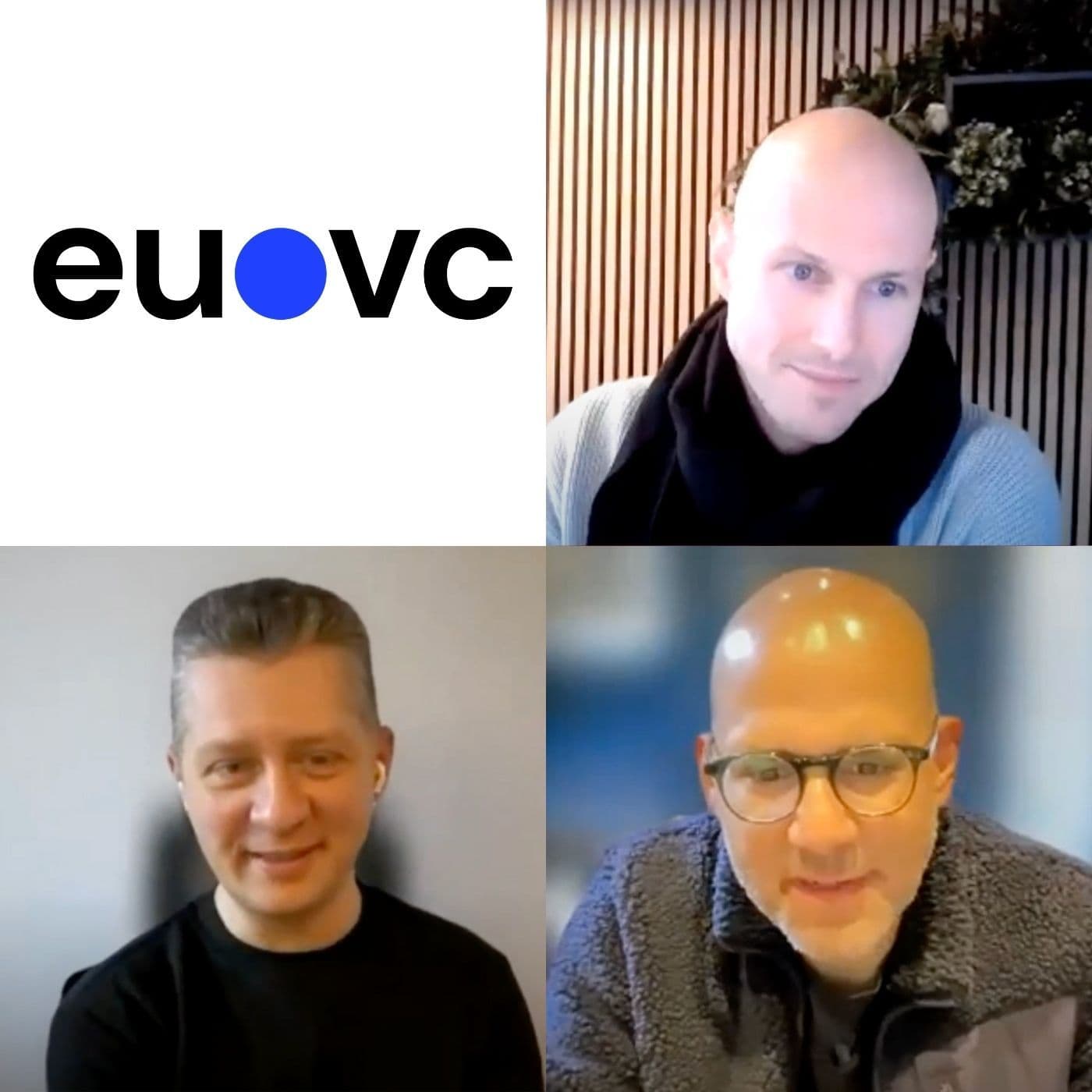
EUVC Podcast Episode Notes: E300 | Eduardo Espinal & Bogdan Iordache on the Shifting Sands in Venture Capital
Episode Overview In this episode of the EUVC podcast, co-hosts Andreas Munk Holm and David Cruz e Silva engage in a rich discussion about the evolving landscape of venture capital (VC) in Europe, particularly focusing on fundraising during and after the tech reset. They are joined by two notable guests, Carlos Eduardo Espinal from Seedcamp and Bogdan Iordache from Underline Ventures, who share their insights and experiences in navigating the VC landscape.
Key Guests
- Carlos Eduardo Espinal: Managing Partner at Seedcamp, a leading seed fund in Europe, known for backing innovative European entrepreneurs.
- Bogdan Iordache: Founding GP of Underline Ventures, a seed fund in Romania focused on supporting Eastern European entrepreneurs with global ambitions.
Episode Highlights
Introduction to the Guests
- Carlos Espinal: Notable for investments in over 460 companies including UiPath and Revolut. Recognized as a leading voice in the European VC space.
- Bogdan Iordache: Pioneering solo GP in Romania, emphasizing the importance of community and local support in venture growth.
Main Discussions
Shifting Sands in VC
- The conversation kicks off with a discussion on the "shifting sands" of VC, highlighting the impact of the recent tech reset on fundraising strategies and emerging managers in Europe.
- Both guests share their experiences through the tech reset, noting significant shifts in investor sentiment and fund dynamics.
Fundraising Experiences
- Bogdan's Journey: Discusses his challenging experience raising Underline Ventures amidst geopolitical tensions, particularly the Russian invasion of Ukraine that coincided with his fundraising efforts.
- Initial excitement in the tech sector turned to challenges as the market rapidly shifted, impacting investor appetite.
- Carlos's Insights: Shares how Seedcamp adapted to the changing landscape, highlighting the importance of credibility and established networks in securing funding.
- Emphasizes the value of backing emerging managers and understanding the evolving market dynamics.
Key Challenges in Fundraising
- Both guests discuss the difficulties faced by emerging managers, especially in securing commitments from traditional LPs (Limited Partners) who may have limited appetite for risk in overlooked geographies.
- Bogdan notes that local investors are generally more optimistic about Eastern European potential compared to their Western counterparts, who often seek more data points before committing.
The Art of Fundraising
- Carlos reflects on the educational aspects of fundraising, emphasizing the importance of adapting strategies based on market feedback and insights gained from potential investors.
- The need for diversified teams, generational planning, and effective recycling strategies are highlighted as important factors for successful fundraising.
Overlooked Geographies
- The discussion touches on the potential of overlooked geographies in VC, particularly Eastern Europe.
- Bogdan outlines the common reasons for rejections from traditional LPs, including a preference for more established funds and hesitance to invest in local ventures.
Community and Relationships
- The importance of community in venture capital is heavily emphasized by both speakers.
- Bogdan shares how his earlier experiences with Seedcamp helped him establish valuable connections and build a network that supports local entrepreneurs.
Closing Thoughts
- The episode concludes with reflections on the evolution of the VC ecosystem in Europe, the importance of community support, and the ongoing need for adaptability in fundraising strategies.
- Carlos and Bogdan both express optimism for the future of venture capital in Europe, particularly as more emerging managers gain visibility and support.
Key Takeaways
- Market Adaptation: VC firms must adapt their strategies to navigate the complexities of the current market, especially post-tech reset.
- Community Importance: Building and leveraging community connections is crucial for emerging managers seeking support from LPs.
- Investing in Emerging Managers: There is significant potential in backing emerging managers, particularly in overlooked geographies, but this requires a leap of faith from traditional LPs.
- Learning from Rejections: Fundraising is an educational process that provides insights into market dynamics and investor expectations.
Final Remarks
- The episode serves as a treasure trove of insights for anyone involved in the venture capital space, particularly those interested in the European market and the evolving dynamics of fundraising.
---
For more information about the podcast and its future episodes, follow EUVC on their official website: [eu.vc](http://eu.vc).
Written by AI. May contain mistakes. Listen to the episode to check what was said.
Transcript
Automatic transcript. May contain errors.0:00Hi, everybody, and welcome to the E-New VC podcast. Today, I am all alone. I don't have David with me, but instead I have Carlos Eduardo Espinal and Bogdan Jordak, both of whom have been on the pod before. So you're in for a friendly conversation today where we will dive into the Shifting Sands adventure, Overlook Geos, the role that senior VCs have in supporting the next generation of managers, as well as the rise of new LPs. But let's get the intros done real quick. First of all, we've got Carlos, as I just said. He is the managing partner at Seedcamp, arguably Europe's leading seed fund. First launched in 2007 to support European entrepreneurs in truly competing on a global scale.
0:46With investments in more than 460 companies, this was written a while ago, so I'm sure we're almost close to 500 now, including publicly listed Romanian-founded UiPath, Wise, and Unicorns Revolut, WeeFox, and Pleo. Carlos is also a published author. He is a fellow podcaster, and he has been on the Forbes Meet Us list as one of the most influential VCs in Europe for more or less as long as I've been alive. Now, Bogdan. Bogdan is the founding GP of Underline Ventures, a$20 million vertical agnostic seed fund in Romadium, and the first solo GP in the region as well. Bakhtin and his team are focusing on back in Eastern European founders, also with Global Ambitions.
1:34There's a link there. And though I just said vertical agnostic, Underline do pay more attention to enterprise automation, AI, cybersecurity, industrial tech defense, and climate-related startups. So before we get into the episode, let me just state one thing abundantly clear. I expect today's conversation to be incredibly insightful. Not only have we brought together one of Europe's true veterans, whose success I think we should all strive to emulate with one of Europe's rising solo GP stars, Mr. Bogdan. We've also brought together a GP and an LP. And this is something that we at EUVC find incredibly important and also the foundation of our syndicates, bringing together senior vets with the rising stars.
2:23So I'm happy and super honored that we today will be able to give a small glimpse into the dynamic in such a pairing. As always, if you're enjoying listening in, hearing my monologue here at the beginning, or I've already skipped past it, but hearing the small part now, do follow the pod and subscribe at UWC. Here's a few words from our beloved sponsor. This episode is part of the series dedicated to raising venture funds across Europe and come together with the launch of the European VC Fundraising Bible. Together with our friends at Isma Capital and Flow, we've spent the winter digging into the past nearly 300 episodes, as well as the latest market data and Isma's vaulted data treasure to uncover how the tech reset impacted the fundraising market in Europe and how leading VCs across the continent have changed their strategies, tactics and operational handbook.
3:16filled with graphs, beautiful narratives and video interviews, providing an entirely new and engaging experience. The fundraising Bible promises an experience only surpassed by the actual hitchhiker's guide to the galaxy. Don't miss it. Go get it now at flow.io forward slash raise. That's F-L-O-W-W dot I-O forward slash raise. And the revelation doesn't end there. Join our live roundtable with venture capitalists Apostolis, Speedinvest founder Daniel Kuyper-Kanor and SuperSeed's very own Dan Bauer, alongside disciples of LP Investing Christian Hortz-Pedersen from IIP Denmark and Joe Schorge from Isma Capital.
3:59Sign up for it via flow.io forward slash raise as well. Your venture journey redefined. This is a union of values. United and determined, we can serve as a model for other regions of the world. The nature of a problem requires a European response. Europe is a story of new beginnings. New beginnings. Let's start acting, acting, acting, acting, acting. This show is not investment advice, and the hosts of this episode may be invested in the funds and companies featured. So, gentlemen, with that long monologue out of the way, let's get into today's conversation. The first thing I would love for us to talk about is the shifting sands around emerging managers in Europe and really VC in general.
5:01Both of you have raced through the tech reset button. You raced pre and during tech reset. And Carlos, I believe that you raced Seacamp 6 only within the tech reset time. And both of you achieved your target. Seacamp actually managed to surpass it. So you have some interesting experiences to share here with our audience. I'd love to ask both of you, and let's start with you, Bogdan, to share with us your journey of your race and the reflections as you see them being valuable to our audience here. First of all, thanks for the invite. An absolute honor to be joining Carlos in this episode. Indeed, we started raising Underline Ventures first fund in 2022.
6:00I mean, at the end of 2021, and we did the first closing at the beginning of 2022, just one week before Russia invaded Ukraine, which is basically a war at our borders that adds to the general complexity of the changing VC landscape. And I would say that that period of time, second half of 2022, beginning of 2020, second half of 2021, beginning of 2022, was quite exuberant. Everybody was super excited about technology. They wanted to invest. I mean I can tell you anecdotally that I was in Bulgaria in a resort during the summer with the family and I got approached on the beach where we were basically sunbathing so there was like no business contact at all by two different people independent one of each other recognized me on the beach and they came up to me and told me that they would want to invest in in my fund because they've heard by some of their friends, from some of their friends that I'm raising a fund.
7:16It was that crazy. Obviously, 2022 then, it was totally different. I think that if we would have not been able to do the first closing at the beginning of the year, then it was just impossible to raise the rest of the fund. different dynamic interest drop off of a cliff. And I spent almost one year raising the second half of the fund. And it has been quite a substantial effort in doing that. Andres, maybe this is a good moment to talk a little bit about that beach experience Bogdan was describing. Maybe this is a moment that I can be his hype man for a second. It doesn't surprise me that he had, you know, I know that there was everything that happened geopolitically and economically that slowed things down for everyone.
8:17But even though it slowed everyone down, people like Bogdan were able to really succeed when others were struggling because of who he is and what he's achieved. So I met Bogdan probably in 2010, you know, if memory serves me right, somewhere around then. One of the things that we have observed since the beginning of SeedCamp is how much it takes a local hero, a local champion, if you will, to really elevate an ecosystem. And what Bogdan has done for Romania is something maybe, you know, if this podcast is one of the few moments where we can talk about that, then that's great. But I'm sure it's a story worth telling multiple times.
8:58He started alongside several of his colleagues the How to Web conference in Romania, in Bucharest. And, you know, it was at a time when it wasn't obvious that Romania was going to be what it is today. It wasn't obvious. And that takes a lot of faith in the local community. And Bogdan did that. Not only did he raise the funding for it, host the event, bring the speakers. is he brought a lot of people from all over the world to come and bring everyone together and sort of learn from each other. And he's done that every year after year. And so the raise of this fund really is a sort of an extension of that success.
9:40It's not from nothing. He's built a community of people who love him, but also who really rely on and to have built that ecosystem that is now in Romania. I'm sure there's other people who've obviously contributed to Romania. I'm not saying that, you know, he's the only one, but he is a huge force, I would say, in the Romanian ecosystem. And it doesn't surprise me. And part of the reason why we love working with him is not just because he's got this ambitious view for Romania and the region. It's because he's a great guy, too. You know, and, you know, he's actively trying to do the right thing for the ecosystem, for founders.
10:17And so, you know, I think that's part of the story that's worth telling and possibly why those two people went up to him on the beach. Yeah, that's very kind of you to say. It has been a decade in the making, this fund indeed. There's almost two types of emerging managers. There's the ones where it's a natural growth out of what you've done and everything that you've built throughout your professional career that you then bolt on a fund or turn to do a fund. And then there are those where it kind of seems more like it's an interest that have grown in them. And they then are almost inventing it out of thin air.
10:55And yes, there can be a super exciting thesis. Yes, you can be as an individual incredibly sharp and very good at whatever you set your mind at. But there's just such a substantial difference whether you're plugging into a fund that's plugged into a strong established base or you're not. And I think that the likes of you are the ones that can race through this tech reset that we're seeing. And in the frothy times, we had many more emerging managers being able to come to market without building on the back of something established already. Carlos, I'd love to ask you because you're also, as I introduced you here as well, an LP.
11:42And I'd love to ask you, how do you reflect on the frothiness of 21 and before versus the market we're in today from the perspective of someone choosing sometimes to put your money behind emerging managers? So it's probably worth clarifying before anybody who's listening to this gets the wrong impression. We're not an LP. We don't have a mechanism by which to have a fund-to-fund program the way that you do. Part of the reason why I'm so inspired by the things that you do. And we need to get to what you guys are doing on this podcast and how you support emerging managers. But basically, what we've done is with people that we've worked closely with, and Bogdan is one of them, we wanted to just give a little bit of support to help them along the way.
12:34So I think I would probably be doing everyone who is a formal LP a disservice by stating some sort of strategy that we have. We don't. I think it's more of we've worked with people for a long time. And when they decide that they want to start some sort of vehicle to back their efforts, as you said earlier, the extension of what they've been doing, I think it's a natural thing to see if you can give them a little bit of money to help signal to others in the ecosystem that you believe in them. And so I think that's the extent that we've invested as an LP in terms of what we've witnessed pre and post tech.
13:13I mean, I don't know that the tech reset is sort of a funny one because I would say it was that's looking at it as if. Something that happened inside tech. Yeah, it's more like there's this bubble, distorted bubble. It's almost like we're talking about that bubble rather than a reset. It's just like looking at things from a positive or negative point of view, right? And the bubble was a very strange period because it was a period when everyone in the world who had capital was looking for a way of making returns in excess of the overall stock market or interest rates. And so people naturally started looking for funds.
13:56And a lot of that included family offices and other capital pools that, you know, had access to funds. And so, of course, that meant that anybody with an emerging fund that told a unique story had more access to capital than previously. But it didn't necessarily mean that, obviously, as we know, that some of that was sustainable capital. And so I think, you know what's happened is a whole distortion of of the capital landscape you know like we haven't fully seen it through you know there's still a lot of capital on the sidelines but basically you know pre that period um there was linear growth right and then during that period there was exponential growth now the question is with what's it's cumulative exponential it's not like it declines it's it doesn't satisfy itself immediately right it's exponential growth that is left with inventory of capital.
14:50And so what we haven't seen right now is how that inventory of capital affects all emerging managers, how that affects existing VCs, because, you know, there's a few funds probably who will not be able to raise a second or a third fund. And as a consequence of that, you know, where does that put the founders that they've backed and et cetera, et cetera. So I think it's a changing landscape. It's too early to tell what the impact of that reset will be. I think we're just starting to see the other side of it right now. I think we're starting to see the impact on portfolio companies backed by that period are starting to look like.
15:24So I think there's a lot of change there. It's very hard to qualify the post period, but the pre period was probably just to say it was linear. It was exhausting for everyone. And I think the only good thing that came out of that period was that I think it opened the world open and exposed the the benefits of emerging managers and it allowed a lot of new people to come in. I would add that in Romania, that was also doubled by the rise of UiPath. UiPath was listed, if I'm not mistaken, early 2021. So it was an amazing journey, I think five or six years from seed to a listing on the IPO on the stock exchange.
16:10And when the stock exchange market was affected, obviously that impacted your UIPAP, valuation, etc. It was a double whammy on the local interest when it comes to technology. Because for many investors in an emerging economy like Romania, the first question is, does venture work? work before thinking about how much I want to allocate to venture and what vehicles does venture actually work from Romania. And UiPath was for a number of years, a success story that showed that it works. Then for a short period of time, everybody said now probably doesn't. And now it works again, right? But that was also a part of the impact.
17:02Now, Carlos, I want to ask you the same question that Bogdan really answered, which was, tell us your journey through the race. How did it go? And I would maybe ask you to add a bit of color to your race and context in terms of, as we've spoken about before on the part with you as well, you've grown from being a very small fund to now being in some people's eyes, a very substantial fund. And then as you said on the last part. Well, if you think about it and you look at the inflation and everything, maybe we're not, we haven't grown that much. But now you're at fund six, tell us where you are, size, how you're thinking about sizing it, why you ended up with both the target and the final subscription amount that you did and why you chose to put it together as you did.
18:00And I'm wondering if you can also put some words to, because you ended up going above your initial target, right? And I'm sure there's some strategizing behind that that's interesting to share with people in terms of navigating through the time we're in right now. Maybe some context is useful here. When SeedChem started, the average round for seed was anywhere between 150K to 500K. And that meant that the working capital for a startup in 2007 through 2010, roughly, was enough. That 150K to 500K was enough for, let's say, a year's worth of building and having a team. And it's important to note that today, the average seed round is somewhere between 750K in pounds to, let's say, three to four million, you know, during the heyday of 21, 20, 22, early 22, it was up to 5 million for seed.
18:57It's gone. It's obviously come down a bit. But if you look at that, you know, we're looking at almost a 10 X increase and that puts pressure on all funds that are early stage to be bigger. And, and it looks, when you look at any kind of blog posts or anything like that, that are historical about different funds that have been around for a while, it looks like there is this intentional growth in the fund as if it were an aberration of the strategy. The reality is there's quite a bit of inflation that's in the system that you need to accommodate for if you want to partake in the traditional seed sizes of the time you're in.
19:36And so it is an interesting thing to note because our current fund is our largest, but it is an adaptation for the time and the type of tickets that we need to write rather than it's a progression rather than like an intentional massive increase. We did the numbers. And as a fund manager, it's really scary to sort of have to decide, do you want to have a certain size fund that might be too small? Or if you're too big, then there's an issue of how do you return it, especially when the market is compressed so you know there's a whole conversation there about the right sizing of a fund depending on the ticket entry and the round size for the vintage that you're in um so we can you know we can come back to that if you want but in terms of our our background you know it's a very it's a you know we've talked about it in previous episodes but just very very quickly you know it's been a very interesting uh six six months you know like the first four were hard very very hard uh with all sorts of weird things that happened, including, you know, we've had LPs drop out because of Brexit.
20:41We had, you know, COVID. We had like, there's tons of things that happened that sort of derailed our fundraisers. Nevermind the fact that people didn't believe in what we were doing in the first place because it was very unusual. So, you know, by the time we got to fund six, the issues become different. You know, what's really interesting for me is that fundraising um for for anyone who's listening who's raising right now is such an educational experience like i i get so much every time we fundraise because i get insights as to what not only what other gps are saying to these potential lps but what is the sensitive points for where you are right now you know like it's almost like holding a mirror to to yourself and it's everything from is it do you have a diverse team do you have um generational planning do you have um the right recycling strategy.
21:33There's all these little nuggets. And I'll share a funny story with you. I mean, it's kind of embarrassing, but it's kind of a funny story. We were raising not the sixth fund, but the fifth fund. And over the course of the first four funds, one of the things that we never had the luxury of is this idea of recycling, fund recycling. And this is the technicality that maybe if you're a founder listening to this, you've never heard of this. If you're a GP, you'll probably know what this is. But, you know, fund recycling as an idea is that you get some returns early and you reuse those funds so that you can make up for the fees that erode the overall usable capital, right?
22:12And that's the general idea of recycling. Now, in early Europe, there was very few exits. So this idea of recycling within a certain period of time is like unheard of. And so we had never thought about it for the first four years or so. and so we were pitching to like a tier one lp you know david uh or you know some of his peers right and uh and we were pitching to this vc this lp that i won't mention and uh and they asked us like you know what's your what's your recycling you know you know you don't have anything about recycling here you know we've seen the top performing i remember this is top performing funds have a you know 100 you know like use of funds and and i look at reshma and she looks at me you know like hoping that one of us knows what the hell we're talking like oh well yeah yeah we do that yeah and it was just one of those things where you realize wow okay that these things that there's always something that you haven't fully thought through and it's a chance to go back and rethink what it is that you're doing and not necessarily always look at what others are doing.
23:24Because I would love to understand the thinking behind, because it's not inflation that made you go from 130 to 180.
23:37Maybe we should adapt things here. Could you tell us about that decision? First of all, I guess it depends whether you're talking dollars or pounds, but I tend to have it memorized in pounds, but the range based on inflation for us was between 130 and 150, and we ended up 143. And that was calculated to the cent about what number of companies we wanted to do, what the inflation, what the typical round size was. So that was very much adjusted. It's the same strategy we've had over the years, just adjusted for the typical round size. One of the biggest challenges we had was, and this is now digressing, because I want to come back to a funny story that I had with Bogdan.
24:20When we were raising on SACS, we were during that period when things were really going really fast. And I did a model along with my colleagues of what that potential round inflation could be by the third year of deployment. And so the way that year on year rounds were growing, because it looked at rounds 2020 and in 2021, there was almost like a 30 % increase in like six months in terms of round sizes. So if I use that and extrapolated linearly, we were looking at the average seed round being like 10 million by the time that we were done deploying fund six. And so we had data sets for like maybe three months, six months, 12 months, maybe of this sort of exponential growth in round sizes because of all the capital that was in the market released by COVID relief programs.
25:12And so it was a very tough decision because we were like, well, if we raise a smaller fund, we will be undercapitalized for these kind of seed rounds. We will not be able to hit our ownership targets. We won't be able to execute anything. And we just took a bet that there had to be some sort of slowdown. And we didn't know when it would happen. We didn't know how it would happen, but we didn't shoot for this endless exponential growth in seed rounds. It had to stabilize at some point. And luckily it did because otherwise we would be underfunded at the moment. But I want to bring it back to Bogdan for one thing though, because fundraising is always funny and I won't name the LP because it's kind of pointless to do so.
25:53But I do remember Bogdan and I both being at the same time at the same offices. I think this is when Bogdan was of raising his original fund. And we were both getting rejected at the same time. And we were just hanging out in the lobby talking about like, wow, that was a really weird LP meeting because I think I had the meeting first and he had it second or he had it first and I had it second. So we just met up in the lobby and spoke about it. So, you know, it's a funny experience. Even if you're in different stages of the fund life, you still have these funny moments. Speaking of rejections, I'd love to get to another topic that matters a lot to both of you, which is, of course, the overlooked geos.
26:37And Mbogden matters a lot to you, of course, because you're racing out of one of those. Carlos matters a lot to you because you have a strong affinity and belief in the overlooked markets, specifically in this case, the Eastern European ecosystem. So Bogdan, let's stay on the rejection line and say, what are the things that you've heard from the traditional LPs that kind of kept coming back to you as it pertains to the geo you're in? Actually, the rejections for the fund generally felt into three different buckets. So the bucket number one was institutional capital, EIF, IFC, all of those players with whom I had a brief conversation.
27:32And everybody told me, listen, we're not doing solo GP. So that was check. We moved to the next one. Local investors are, from what I've seen, much bigger believers in Eastern European potential to build significant technology companies than generally Western European investors. And the reason is that Western European investors, they acquire more data points. Like, right, we've seen some companies coming out of Eastern Europe, but we don't have 10 years of data showing us that, you know, every year you have a unicorn in each of these countries. so like data is still sparse and if you don't have direct access like direct access to this information it's sort of difficult to make up your mind and when it comes to European investors I think one of the funniest ones I was discussing with this LP I won't obviously name names or even countries or anything like that but he told me listen we like you very much we like what you're doing, we like your background and we have one check for Eastern Europe and it's between you and Early Bird and I was like well you know guys between me and Early Bird who has like 15 years of history in this space I think you should invest this money in Early Bird because it's probably a more conservative bet and you know maybe you do a discovery check with us or something like that But there is definitely less appetite and very little capital allocation for Eastern Europe from Western European funds, from Western European LPs in general.
29:29And I think that makes sense. Just, you know, they look to the whole market more closely. When it comes to the Eastern European investors, Eastern European investors are generally sold on the emergence of this high growth technology industry from Eastern Europe. They have seen firsthand the rise of a number of these companies. I mean, obviously, you know, Bucharest, in Bucharest we have UiPath, but we also have Big Defender and Emag and some others who have grown to be billion dollar companies throughout the years. And each of the cities in Eastern, each of the big tech cities in Eastern Europe has at least one unicorn.
30:30so they have like proof that you can build something massive out of out of here the most common rejection reason for eastern european investors would be we don't want to invest in venture capital right now for different for different reasons that could be i don't know we just want to do more real estate. I think that's quite a common one. Or we already have significant allocation in venture and we're going to skip the generation of funds and we talk again with you in three to four years. That was mostly the rejection that we've got. But I mean, generally, if I look at the distribution of the LPs that we have attracted in the fund, I think we have been super successful with local founders or operators from the technology industry.
31:36that have been, you know, I mean, sort of based on the networks that you build throughout your professional life, right? So I don't think it's a, you know, it shows a perfect view of the way capital is allocated in general in venture funds in East Niro. But that was my case. Carlos, I mean, I've actually listened to your episode prior to this when you were telling me about all the rejections that you got based on your model, how would you manage that, why don't you invest only in the winners, etc., etc. I didn't got many of those. Yeah, it's an interesting one because listening to you, Bogdan, this is maybe a good time to pick John Andres and ask him as an LP of the angel syndicates that he puts together.
32:30you know the the rejection seemed to fall into one of three categories you know it's like um the traction performance you know that's something that i get it where you know as an lp you're looking to see that this person can reliably deliver on something right but usually that's sort of a proxy for two things right one of them is the ability to discern what is a good deal and get into it. And then the other one is to source the right companies in an environment where it's competitive. And one of the things that the LPs probably rely heavily on is performance as a proxy for those two things. And I'm curious, Andreas, you've backed us and obviously with Bogdan and wanted to understand, what do you guys do?
33:24Like the new generation of LPs, What do you guys do to sort of shortcut that and invest in emerging managers all over the world? The big issue is how do we get, or that's at least what I'm very taken by or thinking about all the time, is how do we get more LPs into venture, allocating to venture, and many of them being the ones that say, well, I'd rather do real estate. and what we do to shortcut is kind of not anything that they can do. So I'm caveating with that because what we of course do is we're immersed in venture all the time. I think about venture all the time. I talk to people in venture all the time.
Read the full transcript
34:10So in that sense, first of all, I have trusted networks. I have trusted paths that managers get to me. And if you get to me via one of those, I tend to be already quite well prepositioned or what it's called towards that manager. Because as an example, Carlos, you've said to us through the time that, you know, this guy, I think he's really, really good. He's putting together a fund. I think you should talk to him. Then I'm automatically very excited because I trust, because I'm in venture all the time, I have tons of people like you, Carlos, that I know that you're on the ground all day looking at deals, discussing deals with others.
35:00And when there's someone that you then recognize as an expert in your space, I'm automatically very excited. The problem is that the average family office or whoever builds their wealth in something else than tech and then is approached by a VC, won't have any access to credible peers that they can really talk to. And I think that's the very difficult part. Of course, we make up our own mind as well, but I always say, honestly, there are specificities and things that you need to be good at in venture, like portfolio model and modeling and so on that you need to know the craft of. But diligencing the competitive edge of a manager isn't, in my view, that difficult because it's a lot about referrals.
36:08It's a lot about whether you think that this person is trustworthy. It's a lot about making sure that there's grounding to what the manager, because every VC is a very good salesman, that there's grounding to everything that they say. And as such, I don't actually think that it's that difficult to pick an emerging manager. If I'm very honest, if you're in venture all the time, it's not that difficult. But the problem is how do you solve that if you're the, in quotation marks, the random LP or the tourist LP that's looking to build up allocation? And where I would say that we shortcut is for them that, of course, by doing our syndicates, we allow them to kind of piggyback on whatever we do.
37:05And that's also why we always announce every investment we do very publicly so that anyone can choose to piggyback on that. And luckily, we're seeing the managers that we bank get a ton of reach out afterwards from people that have seen our memo. And I think that this is interesting to explore. And that's the position that I hope that more LPs will take in Europe, being very honest and upfront about, who we're investing in, why we're investing, so that we can give the lift to the GPs and also provide a knowledge base for all the incoming LPs. Because the problem is, if you're not spending a lot of time in venture, there's not that much material to really get better at investing in venture.
37:51And that's why, to turn the camera back to you, Carlos, that's why I think it's so incredibly important that, and I was so thankful that you'd come on this pod to talk about your investment in the underlying, because as you might only have put, I don't know the amount you put, but let's say 50K or 100K or 200K, that is not what matters. What matters is that the industry recognized guru chose to put money with Bogdan. That is what matters. And if all the VCs that are doing this behind kind of the scenes and not saying too much about it would do it, I think we would be in a much better place as an industry because all the emerging managers would get that lift from having been, I'd almost say, what's that called?
38:46When you get, when you're given knighthood or you've been knighted by callers, right? That does matter, Bakhtin. I'm sure you can also talk to that. It mattered when you could say that callers and seek can have backed me. Well, I think, well, first of all, thanks for the kind words, but I think that it's worth sharing some of the attributes about Bogdan that really sort of fulfill this question that I asked you, right? Because, you know, the question I asked you was, what are the heuristics that an LP can use other than traction? Because otherwise an emerging manager won't show up. So maybe it's a time to sort of talk a little bit more about Bogdan, you know, because I think it's an interesting conversation to have around what can the world of private capital look for in emerging managers?
39:33And where does somebody like Bogdan fit into that? And I think if I stop talking as Carlos, the friend of Bogdan, and just let's pretend for a second that I was a meaningful LP just entirely on that, I think we need to look at what elements make a good fund return. I don't think it comes in knowing fund management and admin. Like, you know, I gave you the funny anecdote of myself and Rashma sort of struggling through rethinking recycling. And it was because we were never in a position to really have to think about that. But does that mean that we were bad fund investors? No, it just meant we didn't have all the technicalities.
40:17And I think we're entering a phase of VC where the roles of EUVC and new LPs can help somebody who is a new manager understand the admin part of it. So I say having that as an experience is nice, but in my opinion, it's not a requirement, which means that that opens the door for a lot of first-time fund managers to be able to partake in the industry, even if they have no experience in the industry before, because it can be taught and it can be supported by the very LPs who back them. So that's the first sort of change I think that's happened in the last three years, is that there's a community of LPs who can support emerging managers.
40:56The second one is, and you said this earlier, Andres, is it's the community that you have to figure out whether somebody is good. It requires a community. And I think, Bogdan, maybe it's worth talking a little bit about your community and the reason why you have such great connections to other DC funds. I think that's definitely worth talking about. Your background technically is also helpful. So if you look at an emerging manager, it's about the communities they have that they bring to the table and that they're going to activate to actively source deals and the knowledge they have in area or sector or geography, which allows them to make better and smarter decisions in deal discernment.
41:39But maybe, Bogdan, you can talk a little bit more about that. Actually, this connects very well to me getting to know the venture capital world in Europe through mini Seedcamp events. 14 years ago, when I would basically crash the Seedcamp demo day in London without being a member of a startup, without being a mentor, pretending I do interviews so I get to know people. and these folks would be kind enough to let me in. I think I was sort of the only odd folk there just going around and saying hi to people. And that was an amazing experience for me because again, 2010, I'm in Bucharest. There's nothing happening in Genta around here and that was my gate to this industry.
42:34And then I started working in venture 10 years ago, but I've been, you know, seriously taking advantage of the seed camp community, especially in the earlier and throughout this decade. So there's just one thing that I want to thank you for that. And I do believe community is super important in venture. indeed I have you know built I mean with HowToEv I never thought I'm going to build a community I thought and just building a helpful instrument for founders it has somehow transformed into a community because we have so many VC friends coming over every year almost to join us so that was helpful but I don't know I mean yeah this is all I can say about venture, I think about our venture community.
43:35I do think that we've been because of the conference, I've been putting people in touch with the venture funds for a decade. I think this is what Carlos refers to when it says our work because I've been sending deals from Romania and the region to seed camp and other seed funds throughout the last decade. I'm super happy to do that now again, but also I had to check through Underline Ventures. Yeah, but maybe it's also worth talking a little bit about your background, also knowing the difference between a good company and another, because it's not just sending us anything, it's discernment, right?
44:19Right. So, you know, I'm an Eastern European and I'm really not good at promoting myself, but I'm going to give it one more try. I'm an engineer by background. I'm an ex-founder. I had a small success back in the past. And I think this background helps you a lot. A, to understand who are the founders who are in this game to build something and who are the founders who are in this game for fame and ego and all the wrong reasons. And if anything, I think I've been pretty good at figuring out who is really passionate about, you know, what they do and focus, you know, heads down on building a great product and a good company.
45:12And I'm super helpful to help some of these individuals to build the thing that they dream of. um second uh second part is that i have a i have a an engineering background and uh nowadays there is this actually have an ai um background but i i don't want to get too much into that um i i did some ai research back in my uni years um and and you know that was one of the absolutely most not pragmatic decisions of my life. Like if 20 years ago you would choose AI as your specialization and you would just like walk that path, everybody would say, you know, this is stupid. As my university professor would say, AI is the realm of problems which are unsolved.
46:13Whenever we solve something, it becomes a computer science problem. and that eliminates any practicality after we try. So it has nothing to do with building economical value on top of that research. But you make this decision and 20 years later, you start the fund and same year, AI picks up. It has been quite amazing. We've done a couple of green birds in this area and I really hope we're going to do some more. I was just sitting thinking here. In every single episode, we've done with you, Bogdan. And last time we said, I think we intro'd you as one of the most humble people in VC. And it's so funny because I actually had a couple of guys reaching out afterwards and saying, I'm so happy you said that.
47:05That's exactly Bogdan. And it's very well-respected people in the industry. So I want to just really double down on the point that Bogdan has been absolutely instrumental, as Carlos said, for the Romanian ecosystem and to an increasing extent for all of Eastern Europe, because How2Web is also becoming such a big power as it is. So Bogdan, you're being too humble as always. Listen, I want to share a story about SitCamp because I think it's you. Do we have time for this story? I'm just looking at... It's going to be like 30 seconds. So back in 2008, like 16 years ago, right? One of my friends, Vladimir Juane, raised money from SitCamp.
47:57He raised 50K for, I think, 10 % of the company or something like that. And this was absolutely unheard of in Bucharest. And the question on the street, like whenever people would meet him, you know, meetups or whatever, the question was, how did you fool them? Like, nobody thought this is even possible, like legit, you know. How did you fool these guys to give you 50K for 10 % of the startup that is to be launched, I think, at that point? um i mean we can we can discuss about me doing some stuff in bucharest but like you know honestly you know sit can't see effect on europe is it has been amazing and uh the the the impact that you guys had is is that that's humbling you know that that's really humbling and inspiring and i'm i'm super happy to be able to say that we do business together any business i mean for me it's a dream come true.
48:59So with that, those numbers seem funny in history, don't they? Yeah. It's a sort of like funny anecdote. You're like, wow, like very different. That's why inflation matters because otherwise it looks very weird. I talk to my colleagues from the conference and I tell them about, you know, stuff that has happened in 2005, 2006. And they were like, oh my God, I was starting school back then. So, yeah. We're dating ourselves Bogdan, we're dating ourselves. And we welcome with Andres' podcast, talking good old times and fun new times. 2005, I was 15. Andres, you look like, you're one of those guys that's probably looked awesome since they were like, you know, five.
49:48I've always, no, I have not at all, but I've always said that I'm going to peak at around 42, 43. That's why I'm going to look so great. So I'm still waiting for the day where I... Gentlemen, thanks so much for joining us for this. This was quite a love fest. It wasn't designed as such. It ended up there. I think that goes to show an important part about a GPLP relationship between two parties that are very well matched, or maybe even three. I want to close this off just by saying, Carlos, you asked about heuristics for LPs. And I always say, because many of the LPs that are coming in that we are not really seeing enough of, I think, in venture are the angels that just don't do fun tickets.
50:43And what I always say when you're talking to an emerging manager, it's very easy to just think of the heuristic of, you're going to hire this person to do a job for you. And if you wouldn't hire the person, you shouldn't put money in the person either, in the person's fund. And I always say that this person, there are so many great emerging managers out there. So if he doesn't blow or he or she doesn't blow your socks off, just pass. Because there's so many great emerging managers out there. And for that reason, if you're not having your socks blown off from looking at what this guy is doing or girl is doing and building and everything, then I think that, you know, that's when you should say, well, exciting, but I'm going to meet another one tomorrow.
51:33So let's see. With that, everyone, thank you for listening in. I hope you enjoyed this episode as much as we did here in the Lovefest studio. Do drop us a review, follow the pod and subscribe at EU.VC. Here's a few words from our beloved sponsor. This episode is part of a series dedicated to raising venture funds across Europe and come together with the launch of the European VC Fundraising Bible. Together with our friends at Isma Capital and Flow, we've spent the winter digging into the past nearly 300 episodes, as well as the latest market data and Isma's vaulted data treasure to uncover how the tech reset impacted the fundraising market in Europe and how leading VCs across the continent have changed their strategies, tactics, and operational handbook.
52:20Filled with graphs, beautiful narratives, and video interviews, providing an entirely new and engaging experience, the fundraising bible promises an experience only surpassed by the actual hitchhiker's guide to the galaxy. Don't miss it. Go get it now at flow.io forward slash raise. That's f-l-o-w-w dot i-o forward slash raise. And the revelation doesn't end there. Join our live roundtable with venture capitalists Apostolis, Speedinvest founder Daniel Kuyper-Kanor and SuperSeed's very own Dan Bauer, alongside disciples of LP Investing Christian Hortz-Pedersen from IIP Denmark and Joe Schorge from Isma Capital.
53:03Sign up for it via flow.io forward slash raise as well. Your venture journey, redefined.
53:15down this wall. It's more than just an alliance. This is a union of values. United and determined we can serve as a model for other regions of the world. The nature of a problem requires a European response. Europe is a story of new beginnings. New beginnings. Let's start acting.
From the publisher
Carlos Eduardo Espinal is a Managing Partner at Seedcamp, arguably, Europe's leading seed fund, first launched in 2007 to support European entrepreneurs truly compete on a global scale. With investments in over 460 companies including publicly listed Romanian-founded, UiPath, Wise and unicorns Revolut, wefox and Pleo. Carlos is a published author, fellow podcaster and has been on the Forbes Midas List as one of the most influential VCs in Europe for more or less as long as yours truly has been alive.
Bogdan Iordache is the Founding GP of Underline Ventures, a $20M seed fund in Romania and the first solo GP in the region. Bogdan and his team are focusing on backing Eastern European founders with global ambitions, and though I just said vertical-agnostic, Underline does pay extra attention to enterprise automation, AI, cybersecurity, industrial tech, defense, and climate-related startups 🌳.
Chapters:
00:14 Shifting Sands and the Rise of New LPs
00:32 Seedcamp and Underline Ventures
04:52 Shifting Sands and Impact on Emerging Managers
05:43 Bogdan's Journey Through the Tech Reset
07:58 Carlos's Insights on Supporting Emerging Managers
10:23 The Challenges of Fundraising
12:00 The Tech Reset on VC Funding
17:10 Raising Fund Six and the Importance of Fund Size
21:02 The Art of Fundraising and Learning from LPs
26:27 Exploring Overlooked Geographies in Venture Capital
39:00 The Role of Community and Background in VC
47:44 Reflecting on the Evolution of the Venture Ecosystem
50:02 Closing Thoughts on GPLP Relationships and Emerging Managers


