
In short
EUVC Podcast Notes
Episode Title
E301 | Rainer Märkle, General Partner at HV Capital on Going from a CVC to Venture Capital
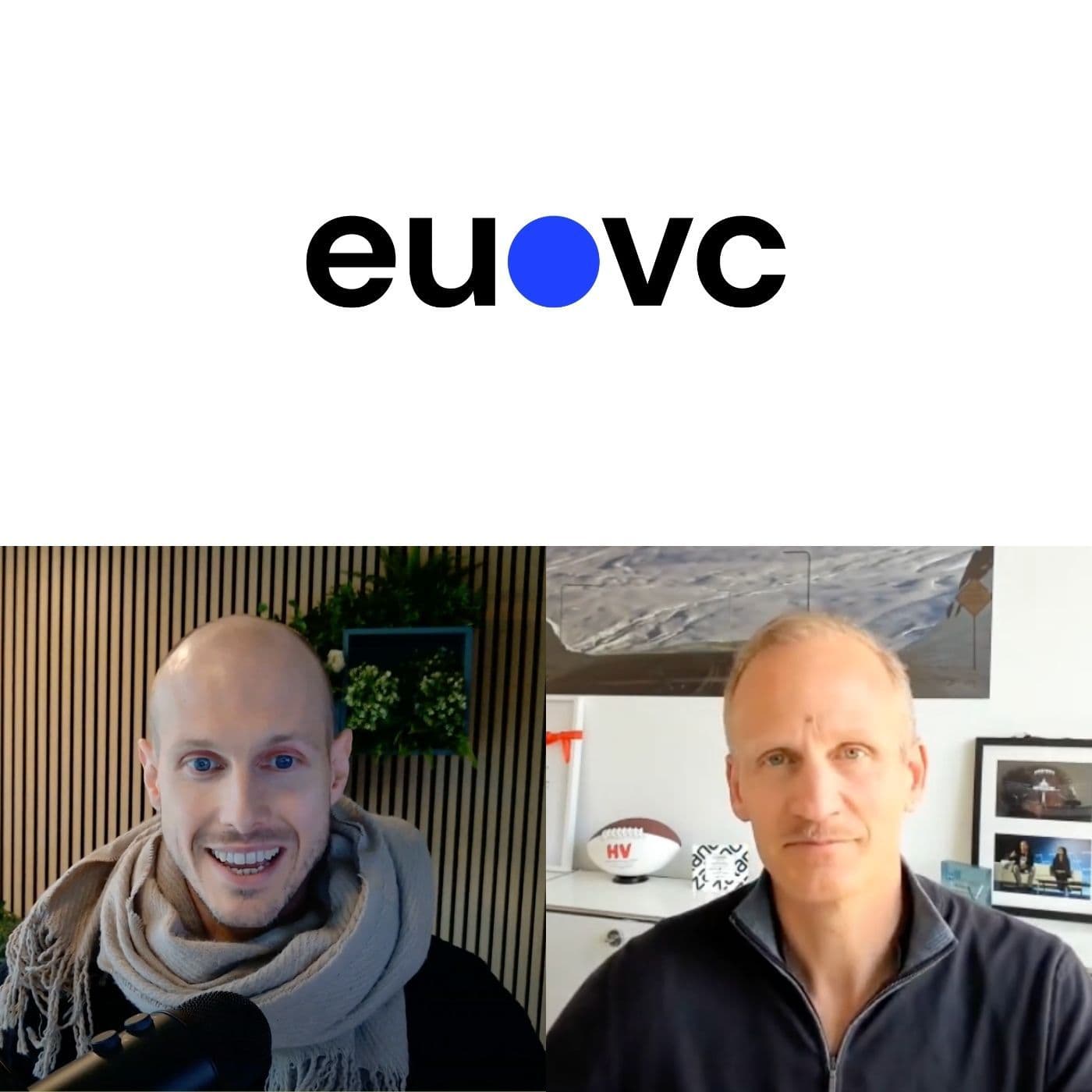
Episode Overview In this episode, co-hosts Andreas Munk Holm and David Cruz e Silva converse with Rainer Märkle, General Partner at HV Capital. The discussion focuses on Rainer's journey from corporate venture capital (CVC) to independent fundraising and insights on navigating the current venture capital landscape, especially during challenging market conditions.
Key Information About Rainer Märkle
- Current Role: General Partner at HV Capital
- Experience: 15 years at HV Capital, with nearly 20 years in VC overall.
- Notable Investments: Involved in the growth of Zalando, HelloFresh, Flixbus, and others.
- Personal Interests: Active in sports, including participation in Ironman World Championships.
HV Capital Overview
- Assets Under Management: Approximately €3 billion.
- Funds: Recently raised a €380 million venture fund and a €400 million growth fund.
- Investment Focus: Primarily internet and technology sectors, increasingly branching into deep tech.
- Fund Structure:
- Venture Fund: Investments in seed to Series A.
- Growth Fund: Investments in Series B and beyond.
---
Chapter Summaries
- Rainer’s Journey: From Engineer to VC (03:16)
- Background in engineering before transitioning to venture capital.
- Initial role in corporate VC under Siemens led to a passion for investing in technology.
- Diving Deep into HV Capital (04:04)
- Discussion on the evolution of HV Capital from its CVC origins to an independent firm.
- Highlights of growth, strategy adjustments, and key investments made over the years.
- Transitioning from Corporate VC to Independent Fundraising (07:21)
- Key motivations for spinning off from corporate structure to pursue larger opportunities.
- Advantages and challenges faced during this transition.
- Raising Funds in a Challenging Market (10:56)
- Insights on the recent fundraising journey amidst market changes and economic uncertainty.
- Importance of a robust existing investor base and adapting strategies to attract new capital.
- Maintaining Trust with Existing LPs (13:26)
- Strategies used to build and maintain strong relationships with Limited Partners (LPs).
- Emphasized the importance of long-term commitments and transparent communication.
- Staying Principles Against Market Hype (16:03)
- Discussion on maintaining discipline in investment choices despite market pressures.
- Importance of avoiding trends and focusing on long-term value creation.
- Strategies for Achieving Fundraising Goals (30:57)
- Different strategies employed to meet fundraising targets in a competitive environment.
- Emphasis on the need for a clear narrative and adaptable communication.
- Importance of DPI in Fundraising (32:39)
- Defined DPI (Distributions to Paid-In capital) and its significance in investor confidence.
- Shared experiences of liquidity events that reinforced trust with LPs.
- Balancing Act: Liquidity vs. Value Potential (34:33)
- Discussion on the challenges of finding the right balance between realizing liquidity and maximizing long-term value.
- Decision-Making Dynamics Within the Firm (37:34)
- Insights into how internal discussions and diverse opinions shape investment decisions at HV Capital.
- Adjusting Strategies and Narratives in Changing Markets (39:29)
- The importance of adapting strategies without compromising core principles during market downturns.
- Insights for Emerging VCs and Fundraising Challenges (42:05)
- Practical tips for emerging managers based on lessons learned from the fundraising process.
- Shout Outs to Emerging Managers and Partners (44:30)
- Rainer highlights commendable emerging funds such as V Squared Ventures and UVC Partners for their innovative approaches.
- Key Learnings from the Latest Fundraise (48:26)
- Reflections on the key takeaways from the recent fundraising journey.
- Advice for Younger Selves and Emerging VCs (51:43)
- Encouragement for young VCs to be bold, take risks, and not overanalyze decisions.
---
Conclusion This episode of EUVC offers valuable insights from Rainer Märkle on navigating the complexities of venture capital through various economic cycles. The discussion emphasizes the importance of principles, long-term relationships, and adaptability in the ever-evolving landscape of European venture capital.
Key Takeaways
- Long-Term Focus: Building trust with LPs through consistent communication and demonstrating long-term commitment.
- Adaptability: The ability to adjust strategies while maintaining core principles is crucial for success in changing markets.
- Fundraising Insights: Understanding the importance of DPI and effectively communicating value to potential investors can enhance fundraising success.
For more details and to follow the latest trends in European VC, visit [eu.vc](https://eu.vc).
Written by AI. May contain mistakes. Listen to the episode to check what was said.
Transcript
Automatic transcript. May contain errors.0:00All right, everyone. Welcome back to another episode of the European VC podcast. Today, we are speaking to Reiner Makler, General Partner at HVKabit. HV has just around$3 billion under management, and they just raised a$380 million venture fund and a$400 million growth fund. And they did that through the tech reset, as you will hear. So this episode is fully dedicated to that. Reiner is based in Munich, and so is HV Capital. They're spun out of a corporate there, as you'll hear later. They're a multi-stage firm. They're focused on Europe. They invest primarily in internet and technology companies, but also starting to do more in the newer spaces like deep tech.
0:47They have invested in famous companies like Zalando, which I think we've all used, Delivery Hero, HelloFresh, Flixbus, Depop, SumUp, Scalable Capital, and many others. So I really think you're in for a great episode here with a bunch of learnings around fundraising. If you're listening in and love our show, do drop us a review, follow the pod, and subscribe at UW. BC.
1:12Tear down this wall. It's more than just an ally. This is a union of values. United and determined we can serve as a model for other regions of the world. The nature of a problem requires a European response. Europe is a story of new beginnings. New beginnings. Let's start acting. Acting. Here's a few words from our beloved sponsor. This episode is part of a series dedicated to raising venture funds across Europe and come together with the launch of the European VC Fundraising Bible. Together with our friends at Isma Capital and Flow, we've spent the winter digging into the past nearly 300 episodes, as well as the latest market data and Isma's vaulted data treasure to uncover how the tech reset impacted the fundraising market in Europe and how leading VCs across the continent have changed their strategies, tactics and operational handbook.
2:14Filled with graphs, beautiful narratives and video interviews, providing an entirely new and engaging experience, the fundraising bible promises an experience only surpassed by the actual Hitchhiker's Guide to the Galaxy. Don't miss it. Go get it now at flow.io forward slash raise. That's F-L-O-W-W dot I-O forward slash raise. And the revelation doesn't end there. Join our live roundtable with venture capitalists Apostolese, Speedinvest founder Daniel Kuyper-Kanor and supersedes very own Dan Bauer, alongside disciples of LP investing Christian Hortz-Pedersen from IIP Denmark and Joe Schorge from Isma Capital.
2:57Sign up for it via flow.io forward slash raise as well. Your Venture Journey, Redefined This show is not investment advice and the hosts of this episode may be invested in the funds and companies featured. Rainer, welcome to the European VC Podcast. Hi Andreas, thanks for having me. So Rainer, we always start by asking about your journey into venture. So let's start there and then afterwards dive a bit deeper on HB. Right, yeah, my journey into venture. I'm a VC for 20 years now. originally I actually graduated as an electrical engineer worked as an engineer for three years in mobile comms, fiber comms, high tech stuff before then getting into VC to invest in that area for a corporate VC, a subsidiary of Siemens really by coincidence 20 years ago and since then I stayed in VC joined another firm along the way, 3i before then joining HV, where I'm now a general partner 15 years ago and counting.
4:02That is a long journey. Now, let's just first touch on HV, and then I'll ask you a bit about the journey with HV. But if you would just give us the highlights of HV in your own words. absolutely hv capital is a european fund we are based out of germany two offices in berlin and munich investing on a pan-european basis we do this now out of two parallel funds one for venture and one for growth each at about 400 million in size which we raised last year and with the venture fund we invest in seed series a early stage companies whereas with the growth fund We invest in Series B, C, and beyond. And the growth fund can invest actually in any company, irrespective whether it's a former portfolio company or just the best company at growth stage in the market.
5:02And we do this across internet and technology relatively broad, covering fields such as fintech, B2B marketplaces, software SaaS, enterprise, but increasingly also new topics such as deep tech. Now I'll ask the question that I wanted to ask before, which is 15 years with HV. HV has developed incredibly since. You now have north of 3 billion in AUM, or at least in that neighborhood. I'd be very curious to ask you a bit about that journey. How have you seen HV grow and change over time? Yeah, it's a specifically interesting piece because actually 24 years ago, HV was founded as a corporate VC, a subsidiary of the German publishing group Holzbrink.
5:52And we operated under this umbrella for 10 years before spinning off in 2010. And we spun off as we saw the opportunity getting larger and larger. and we wanted to fully pursue this opportunity and hence spun off from the publishing group now 14 years ago. And since then, we raised funds every three years to go after this ever-increasing opportunity, adapted our strategy. And I joined actually when we were still a corporate VC all the way through. I was about to say you joined at a very interesting time then. Absolutely. Yeah, I joined at a double interesting time because on the one hand side, we were still a corporate VC and then only spun off two years later.
6:38It was interestingly also the time when we decided to do e-commerce investments, which turned out to be the most successful strategy in that time frame. So companies such as Zalando, HelloFresh and the likes were born out of that time. So it's really an interesting timing. I was about to say you have Zalando behind you there. HelloFresh, as you just mentioned. I don't know if I see it, but you also have Flixbus, which is also one of the very big achievers in European venture. So yes, I believe it really made a ton of sense to move away from the corporate focus. Could you tell me a bit more about how you experienced the firm and how you grappled with going from being a corporate VC to raising no more funds?
7:30Yeah, it was obviously a decisive step for us. I mean, we were very happy in the corporate setting. It was just that we saw the opportunity getting larger and larger and the corporate could not come up with the funds that we wanted to invest. So we spun off. It was a secondary primary transaction without going into details back then, but which worked for all sides involved. So it was really the start of a second life of our firm. And yeah, then we set out to raise larger and larger funds every three years, adapted our strategy continuously. and the main difference was that we then set the strategy as the owners of the firm and tried to convince new investors of that strategy.
8:19So yeah, we were in this open world of GP, LP situation. We have many in our audience that run corporate VC firms and I don't think there's too many. Oftentimes in corporate VCs, there are quite a few thinking about when will I, should this firm develop as yours or should they spin out to do something else? If we start with the first question, if you're with those considerations, how do you kind of any learnings that you'd say this is worth thinking about if you're in that position? Yeah, obviously there are many aspects. I think there are clear advantages of being a corporate VC. Normally, you have some strategic added value in the background of the corporate you work for, which you can leverage to your investment targets.
9:14But then there are also downsides where normally you don't get the long planning horizon that independent managers get. There's always the danger of a management change, a strategy change, a liquidity crunch whatsoever at corporate level, which might impact your position. So stability is generally a downside. And I think it's points such as those that you have to evaluate whether the corporate setting is really stable and beneficial for the ecosystem and you going forward. If you come to the conclusion that it's not stable enough or you see more benefits spinning off, then this is the path you should pursue probably.
9:56And how about then this process of actually spinning out? What were the learnings around that? Yes, I think there are generally, and I mean, obviously there are many nuances, but there are generally two ways to spin off. Either you say, well, you know what, I'll just set up a new fund alone or with parts of the team or with the full team. And you don't take any of the history along with you. That's obviously the easier way. Probably not so easy for the corporate. What we did, we actually said, well, we'll take the full portfolio with us. We have the full buy-in of the corporate. And then you need secondary investors buying themselves into the portfolio.
10:42So you continue developing the portfolio that you built under the corporate umbrella. That's the path we chose. But there are obviously many nuances between the two general ways. With that being 14 years ago, I don't want to delve into further details here. But let's instead change the focus to where you are today, which is you've just announced the closure or not too long ago, announced the closing of your latest set of funds, which is a 380 million euro venture fund and a 400 million euro growth fund. It has not been the easiest market to raise any type of funding, much less two funds of that size.
11:27So, Raina, I would love to just ask you to tell us a bit about that journey, raising that fund and how it was different to past funds. Sure, yeah, absolutely. And again, it's a very interesting time. We actually set out at the end of 2021 to set out the strategy for the next fund and raise this basically over the course of 2022 with the target close being at the end of 2022 and then finally close early 23. This was always the master plan. And what we didn't anticipate is that the market would change dramatically exactly over that timeframe. So you have to basically recollect when we set out in 21, it was the heydays of our industry.
12:20Everybody was going after every company. Valuations were super high. And the main question marks on the LP side were, whoa, do I have enough liquidity to go after all those growth funds? And what happens to valuation levels? And over the course of our fundraise, the market dramatically changed. Valuations melted. Liquidity was super scarce. So it was a very, very different and challenging fundraising environment. So the main reasons why we could pull it off in the end was a combination of being able to count on a very, very strong existing investor base where we got early commitment and early indications of what we could count on working with them.
13:10But then also a couple of new pools of capital that we were able to win for the new funds and that allowed us to step up in fund size by this heavy environment by almost 60 % overall in commitments. If we stick to the consideration that you had a strong existing LP base, that if we start there, what do you think made them retain their trust in them or in you? Because many have come into this market having a strong existing LP base, right? But those that have not had very close communication, as an example, or have been over-promising in a period or maybe not even over-promising, but just been slightly more transparent or vocal about what they expect, kind of very quickly got egg on their face.
14:08So I'm curious to understand what do you think allowed you to be in such position of strength with your existing LP base at that time? Yeah, we always carried the deep conviction in us that VC is a very, very long-term industry and people underestimate this from the outside. And hence, it's an industry that builds really on long-term relationships. And as a VC or any stakeholder, you better nurture those relationships. So we really not invested time and energy into these relationships only, but we had a very, very long time horizon with those people and substantiated by a very high degree of team stability, very predictable execution of investment strategies and translating into an investment in portfolio companies.
15:05that build up really over the long term, operationally relevant. And we try to avoid those super hyped topics. We try to avoid those momentum investing schemes where you just hike up a valuation from one round to the other. We always try to focus on the long term, both on the LP and portfolio build up side. And that was paid by the LP's trust that they say, well, we have this long term commitment to the firm. We know the team is super committed, super stable. Any change that they would envision would be notified with very long notice period to us. And this stability translating into also a pretty continuously strong track record gave them the confidence to back us even in that more challenging time period.
15:58Everyone wanted to be disciplined, right? And everyone said they were. Not everyone were. could you share with us some of the principles that you have used to stay principled and stay out of the hype sectors either from back then or even applied to today's hyping that we have in the AI market right I remember so many times seeing posts on social media about like we have to dance because the music is playing so what can you do I was like that's true but at the other hand, you're bound to be caught with your hand in the cookie jar at some point. And there were the lucky or smart few that managed to stay sober, but many did not, right?
16:49So I'm curious to hear what do you think allowed you to stay cool-headed in this period? Yeah, it's super difficult. And I'm not saying that we always stayed cool. Everybody had their situations. What we tried to stick to is, first of all, the investment period of the funds. So we didn't shorten the investment periods. We say, well, we deliver at least a two and a half or three-year investment period. And then within this investment period, we try to invest pretty linearly through all cycles. So we always said, at least on the early stage side, we are not trying to time the market in any means.
17:34We're just looking for the best long-term ideas and founders and try to avoid like the super hectic deal making. We've done the one or other super fast decision in hyped companies. But it's kind of this long-term orientation again, where we say, well, we have an investment period of three years. We do about 30, 35 investments. That's 12 a year. That's one a month. Let's just try to sail through that strategy with a pretty continuous investment approach. But it's difficult. And I think one discipline which makes it especially difficult is they are the old VC guys. And I count myself into that bucket for sure.
18:21But then the majority of our industry now is young people who haven't seen any bear cycle before, who want to make deals, they want to build a track record. So every week they're bringing on the next hot deal, which you have to do and balancing the two worlds without being kind of only the grumpy old VC who says no to every hot deal is a challenging situation. What do you think were the lessons that you managed to impart or either managed or sought to impart in your younger partners when they came with these harder deals? Because I remember speaking to a deep tech investor the other day and he said we have these amazing young team members and they're bringing one moonshot idea after the other.
19:18And it's great. We love it. And they're doing great and they're putting together amazing analyses and so on and so forth. They're sourcing, especially he was taken aback at their ability to source. They could see anything anywhere in Europe. But what he was seeing oftentimes in younger investors in the deep tech space was they're too often missing the commercialization angle of these. It's great that you want to build a moonshot in deep tech and there's so much of it. But if you can't see a path to what will be the first customer for this and how will the unit economics of this work, even though it's in a deep tech seven years out or further, it's still something that you do need to kind of attune your mind to, which he saw oftentimes was what junior team members would struggle with.
20:15I'm curious to hear in your space, because you're primarily consumer, sorry, not consumer, but IT. I'm curious to see or hear from you, what are the things that you saw? This was very hard to get through. No, absolutely. And again, an interesting one to dive into. So I think the real challenge, and many people quote this, is that you only become a really strong VC after a relatively long time because you really have to live through the experience. what does it not only take to do interesting deals, but what is the portfolio work, not only in good times, but also bad times. How do you handle company situations along the lifetime before ultimately preparing and helping build towards an exit?
21:10And you need, in the end, experiences both on the positive and the negative side of development before you can actually feedback those learnings into your investment decisions. and that's I think the key challenging part. You don't want to be the old VC telling the young, well, I've seen that and that before and that doesn't work, that doesn't work, that does work because otherwise you kill the really novel ideas and ideally the young people have to live through those situations before they make their really big bets. So what we are trying to do, So we try to bring on our new joiners, irrespective of the level, directly into portfolio work.
21:55So they see, breathe and live the daily challenges of startups. So they accompany a partner into the portfolio work. So we try to shorten this feedback and learning cycle. So they take their own early decisions with a different perspective. but in the end it's just honoring both perspectives, the juvenile fresh look at things which is the only spirit that will detect the really good ideas and changing ideas and this with the experience and the perspective of the more experienced people who tend to see the more negative aspects of building up a business and specifically touching on the commercialization which you say it's easier in kind of companies where you're relatively fast with product to market but then obviously in what you refer to deep tech investments it's super super difficult so the only thing that we do there is basically say well let's just assume this idea works out and then let's just go through how a commercialization how potential customer how a financial case buildup could work, but it's more like an exercise to get some substance to something that's very far out in the future.
23:24I want to go to asking you then about, because now we touched on what you think is really what allowed you to have such strong backing from your existing LB base. If we now look at the new ones coming in, what do you think was the magic there same stuff or or yeah it's a so there were some lps that were observing watching us from the sidelines for quite some time and that's a normal pattern that you see lps track gps for a pretty long time before they see well there's enough proof that we should come on board we see this but then it's also just because we have many emerging managers listening could you share like what do you normally see like the good sophisticated LP how often what's not no it's not rare for you to see them just being on the sideline getting to know you yeah I think the key is really seeing LPs and meeting them and building relations when you're not fundraising I was recently actually going to see one of our LPs and he was already expecting some news, some stories, some change, let alone a new fundraise.
24:40And I said, hey, I just came to see you. I took the trip, built a relation. I'm ready to share our portfolio build up, but I'm open to answer your question. And let's just discuss how you see the market, how I see the market. And there was a big relief on his face when I met him. It's really rare that somebody comes to see me without a specific ask. And he really enjoyed the conversation. now obviously when you're an emerging manager you don't have a long time to prepare you cannot invest a couple of years in building relations before you're then on this one visit you can for fun one but you can for fun exactly yeah so it's you have to kind of strike the balance without like pushing too much but it's it's totally fair as a new emerging manager to be much more upfront and much more focused on what you're trying to do here rather than an established manager.
25:38But then there are new, what I wanted to touch as well, what allowed us to ramp up so significantly is also new pools of capital in the market. And I think that's also a chance for many emerging managers. There are pools of capital that are dedicated to specific topics, be it deep tech, be it the ESG, specific diversity, diversity inclusion pools so either your setup qualifies you for one of those pools or your investment strategy your focus so there's it's there's really a lot of initiatives coming up from the public side partially also from the private side and some of those pools also allowed us to end up significantly i got confused by me having so i've killed all notifications so our audience if you hear any notifications happening even though I killed them they keep coming I have no idea what's happening today It's the deep tech AI engine in your background Not even aware of Yeah It's not good So I wanted to ask you on that angle because I recorded with Daniel from Speed Invest just the other day and what he said was as one of his parting remarks, really don't disregard your home market.
27:01We have a surprisingly large amount of capital coming from our home market. Is that the same for you as well? Would you say so? Interestingly, it's increasingly so, yes. So our home market has been super weak in kind of LP money flows into venture capital funds. and if I'm not mistaken actually our first two fund generations that we launched after spinning off were done almost exclusively with Anglo-Saxon investors so obviously we had our publishing mother as one of the sponsors and we early on tapped into the EIF funds but only with small commitments but it took us a long time to really develop our home market if we fast forward to today the picture has actually drastically changed also because we want we made it a strategic priority but right now two-thirds of the funds that we raised are coming from europe and i think about one-third actually from the very german market so that's definitely a very positive development that the whole of Europe and all local tools have really woken up and there is plenty of capital to be locally invested as well.
28:27Do you attribute that to the market changing or you guys being more focused? I think it's really the market changing. So there's a big realization across many levels of the ecosystem, driven by macro markets, but also political initiatives. I'm not even getting into European sovereignty, which is relatively fresh, but there is a clear realization that Europe and all the member states have to dedicate more money to fuel private fund managers to really fuel the ecosystems. And there are some markets that are stronger than others. I think France is a leading example over the last couple of years, what this can actually trigger.
29:17And so it's really a market change accompanied by GPs delivering strong results. And if you pull out any VC benchmarks, there are many numbers, statistics, where you see that European VC is not lagging behind US VC in performance that much anymore. You said that you sized out the fund basically in 2021, which means that you then sized the fund and built the strategy and so on, up towards then a huge crash, which really fundamentally changed quite a few things. Was it to a level where you went back and said, let's rewrite? both the entire strategy, the allocation strategy and so on, or was it more on the narrative side?
30:12So we were very firm on our target. I can admit that we did not fully reach our targets. So we originally set out with a 400 million target size for each to growth and the venture fund. We reached it exactly for the growth fund. In the venture fund, we closed at 383 million. So slightly short, but almost there. And I think it counts. Yeah, it counts. But still, I'm a very ambitious, very competitive in every discipline. So, yes, and I think it counts. It's a clear tribute to the market conditions. Nevertheless, we always stood firm to this goal that we wanted to achieve. We just had to sell harder, address more LP pockets, work much more intensively on a very broad basis.
31:12So it was harder to pull it off. And that's what we changed our whole approach to go very, very broad. But it's not the narrative, let alone the goal. Yeah, but you, in other words, you stuck to the fund size, you also stuck to the strategy, no change in the assumptions that were underpinning the model. Yeah, we had one very strong ingredient to our fundraise, which now at hindsight, it's even stronger than it was back then. We actually had an especially strong 21, where we decided to deliver a large amount of liquidity to our LPs. So we had two major transactions in the portfolio, 100 % sell of one company, Depop, to Etsy in the UK.
32:06Second was a large secondary in a big portfolio company, SumUp, at the time. And the third was that we actually executed a continuation fund where we rolled over older funds into a new vehicle. And in aggregate, those three transactions delivered$1 billion in liquidity to our LPs in 2021, so at the peak of the market. and hence in the 22 fundraise our lps were super happy because they had received a lot of cash but also we had a big check mark in the dpi topic which nowadays every lp is obviously scrutinizing their gps for you might carry good book values but hey in the end cash counts what's your DPI and maybe for some of your audience which haven't heard it yet, DPI is basically the distribution to paid in capital.
33:04So it's the actual cash that you deliver from your portfolio exits. And that's the key number everybody's looking at now. And we had a very strong number going into the fundraise. I can imagine that helped quite a bit. I would love to ask you brutally, honestly, if you can reply to that. in 21, was this just a very lucky coincidence that you made it to do it in the peak of the market before everything tumbled the year after? Or was it we were seeing this and this and that, and for that reason, we felt there was time? Yeah, I mean, we could paint ourselves like super smart at hindsight, but telling the truth, it was just an execution of our strategy.
33:58We always kept telling our LPs that at any point in time, we will balance total value potential versus liquidity. And every year we were looking at which are the opportunities where we could generate liquidity. And in 21, it was not that we specifically saw, hey, the market is going crazy. let's get rid of some assets or it was oh before it turns let's try to liquidate something it was just those were the opportunities that we saw we could execute and we decided to execute and return liquidity yeah straightforward what what are some of the guiding principles that you use to make that decision yeah good question i think for us it's just this rigorous focus on when you have strongly performing funds you should always go after high potential of the funds but at some point you have to also take your mandate to deliver cash within the fund lifetime that you originally set out you should not forget this and if we look at this fund where we basically realized the exits from it was a 2012 vintage fund which has a 10-year lifetime plus a two-year extension if you want it.
35:15We decided, hey, it's 21. We're approaching year 10. Let's find a solution for our LPs because that's what we set out with our mandate. So it was just this rigorous execution of the strategy that we originally set out before. But the exit to Etsy is kind of, that's hard to engineer. But the other two, I guess, were quite engineerable. That was a very proactive choice from your side, I imagine. Yes. Yeah, absolutely. So the secondary was an opportunity of some of that we saw. And that was obviously a long discussion because it's a strongly growing company. It's performing very, very strongly as of today.
36:06and if we would have held on to the stock, we could probably have sold it today at a higher valuation. But at the time, we're just getting back to the point. So, well, there is an opportunity. There is interest in the company. So let's divest parts of our holding. We still own 20 % of the shares that we had back then. Yeah, and that's the interesting part, right? How you balance that sale of the shareholding. because sometimes it's not a matter of selling all of it. It's actually just a matter of how should we take some of the chips off the table. Many often argue, try as soon as you can to get the money back and then the rest is upside.
Read the full transcript
36:57Yeah. And there are different philosophies and I totally respect this. I mean, there are some American investors who basically say never sell anything hold on as long as you can because you always underestimate the potential. And there's the other school which says, well, my job is to deliver liquidity. And let's kind of, as you say, let's maybe take 1x the fund as early off the table as possible. and then everybody finds their own matching strategy somewhere in between those most extreme poles. Do you have inside the firm some that argue the one way always and some that are more principled the other way?
37:40And how do you, I'm not asking you who, but I'm asking you, do you have those extremes in the firm and how do you run a process so that you get to a decision that you're all comfortable with? Yeah, we do have obviously the extremes in our firm. There are the long only people and there are the fast liquidity people. And for us, does it somewhat follow the age that we described before? It actually does not know one of our general partners. He is a strict long only believer, whereas I am more on liquidity front and we are basically the same cohort. So there's no secret. People know this in the market, which makes it a very enriching partnership.
38:29No, because you have to. I think that's incredibly important. Yes. Absolutely. Yeah. You have to have very diverse partner group on these topics. So where we land in the end, I mean, and you see that people sometimes play this extreme view to convince the other party to not be so extreme in their own view. and then most often you land somewhere in a sensible middle. And obviously people now realize, well, whereas in 21, you would have hoped that you wouldn't have sold any single share of whatever you owned before. When you look back at the same companies now, you would say, well, actually we did quite well selling those shares back in 2018 because then they were valued higher than as of today.
39:16And I think it's just important to take on those learnings into your current decision making and then you will land at a matching outcome for yourself. Yeah, yeah. So now we spoke a bit about adjusting the strategy and so on. I also wanted to ask you about adjusting your narrative to the change in the market. Again, just because it's a somewhat similar story, the one that I, you know, the episode that I did with Daniel in that they started in 2021. And then maybe it was, no, they did. At least they started preparing in 2021. And then all of a sudden they were in the market and then the market changed.
40:04And what he described was he saw LP conversations going from being about the portfolio, being about, you know, the high performers and the low performers and discussing normal venture things to then all of a sudden being about macroeconomics and what's happening and the liquidity crunch and so on. so all of a sudden he's at work with the same deck didn't change anything there but the storytelling and the discussions happening on top of it changed completely during 2022 I think that's similar for us I think they stayed in the market even longer than we did we did a time boxed approach in the end we always communicated well there is a deadline for our fundraise will close for sure at that date.
41:01And Germans, you can trust us if they close. And hence, I think we managed to get some more urgency and pressure into the process. And maybe by this avoided two high-level discussions. But obviously, and we always said, well, you know what? It's interesting to have those macro discussions. but for what we are doing main age or late venture investing it's actually pretty irrelevant because we will build companies that will matter in the market only in five seven years lifetime and nobody can predict the markets then so let's abstract and stay out of those micro discussions around the current market conditions and focus on what the world could look like in five seven ten years obviously that's easier said than done and we found ourselves more often than not in the same situation as daniel but yeah that's at least what we tried to do any tips you'd give to to people racing in the current market um on this narrative specifically that you'd say this is really this is where we have seen that we have been able to build something that resonates very well in this particular market?
42:27I think it's actually a very difficult to read environment right now. And I couldn't really tell where we are because I'm not in active fundraising, but I'm leading many LP discussions. I went to see a large LP this morning and we had a good market discussion. and I think everybody sees that there is a lot of money in the market and funds get successfully raised, large funds like EQT and other flagship funds, but then also smaller vehicles, whereas some others heavily struggle to raise funds. And I think trying to be very simplistic here and overly simplistic, I think either you are a very well-established brand with a super predictive track record, strong numbers, and you can just race on that story and on your track record.
43:19Or you're at the other end of the spectrum and you do something really exciting. And I think for both ends of the spectrum, it's pretty straightforward to race. Now, obviously, the interesting one is the more innovative part. And I think if you're a team that has a credible approach to rather new segments in the market, being going after really the deep tech opportunity, the AI opportunity, maybe the European sovereignty, semiconductors, etc. If you are able to cover and address those relatively new market segments, I mean new 4VC, with a new approach, with a fresh approach, with an interesting team setup, then you have an edge over the established funds who will always be slower to move into those segments.
44:13And there are many strong examples of those buckets. So I think that's something that you see currently in the market of really good teams successfully raising first-time funds or emerging funds. Feel free to give shout-outs. We're about to go to the shout-out where you're going to give it to someone else. But we always try to entice as much love in the ecosystem as possible. So if there's anyone you're ready to call out on the emerging manager side and say, this is a great example of what I just described. No, absolutely. And I'm happy to share. I'm a big fan of locally here. There are firms such as V Squared Ventures who addressed this deep tech opportunity out of Munich.
45:02They cover it for quite some time already. Highly successful, super interesting. similarly UVC from the it was originally a spin-off fund from the University of Technology UVC Partners now called Unternehmer to Manager Capital similarly very credible approach in the more tech-driven ecosystem and then super early funds such as yeah our friends at Speedinvest you talked to Daniel but trying to be just very very early very broad going after every entrepreneur Those are really, really strong approaches that challenge us as a more generalist and more established fund on a daily basis. But super happy working with them and super happy for what they've built in the ecosystem.
45:53Luckily, a couple of names there that I'm also good friends with. So happy to hear that.
46:05on that note i'd love to ask you if there's anyone else you'd want to give a give a shout out to i want to shout out actually two of our lps which we really like working with and that somehow get some criticism in the market which is the european investment fund and the German KSW, KFW, two public fund institutions that manage public money. And we like to partner with them for several fund generations already. And I think they are doing an incredible job, given all the limitations they have, all the mandates they have in the background to orchestrate those flows of public money, fulfill the public mandates.
46:49obviously they get swamped with investment proposals these days and somehow they really manage to get this money deployed and with a I would say really pragmatic approach so normally they don't get many shout outs or mentions but we really like working with them
47:13now i think that um at least in the podcast here we very often get get the shout out to them that the market would not be where we are today we've bossed before that um and then you can always argue about okay some would say that maybe they're doing like hv capital that's an allocation that some would say, do they still need public money? And that's a discussion you can have forever, right? When does their mandate run up? But you can also argue, well, isn't it just nice that we finally have some public money that actually creates returns? Exactly. And that's the view of the fund managers at those funds.
47:55They say, well, we have this established relationship. They produce returns. why shouldn't we produce the returns for the public funds in the best way possible? So, yeah. Yeah, and it's a balance, right? I think the right thing is to make it a balance. If they only ended up doing the established, then we'd have a problem. It's not what it's built for. But it would also be stupid if they seeded great managers and then didn't continue once they actually produce big, meaningful returns. Yeah. so now I want to ask you about your and it's really just a sum up of what we just spoke about but you're you know if you were to summarize the three biggest learnings from your last fundraise what would those be I think um yeah trying to time box it and put a deadline to it so creating um a clear planning horizon uh but then also some urgency to get done at some point in time i know it sounds a bit maybe awkward to new managers who say well how should i time box something where i don't know where i come out at the positive end at all but i think executing very transparently and reliably along a time plan is just a good ingredient the second i think would be stick to your narrative but not blindly be able to adapt it or tweak it when necessary but generally don't surprise anybody by major changes just be very yeah very continuously focused on delivering the same narrative and strategy and the third one is obviously it's definitely a marathon of many sprints don't get too negative in down phases we had we faced a very very hard fundraiser as well and i spent one and a half years of my life almost 25 24 7 i would say on the desk on the phone and endless salesforce lists endless efforts but and there are those moments where you say well why do I do this and it's never going to work out and why don't we adapt and just pull it through in the end we fund managers we are entrepreneurs ourselves for what we do and I'm always saying well it's it's the part of our job where you can probably relate to the challenges of an entrepreneur most and you get very humble and that's a very good discipline as well for a VC yeah you wrote you wrote in your notes which i just want to you know reiterate that statement or make it very clear you said stay humble in good times and you will get rewarded in hard times absolutely yeah yeah that's actually that's also what we decided that in the best days where we were performing like crazy we were delivering money we were raising new funds on exactly the same terms as we did in bad times and that's a good example of that so when you have that tailwind don't overdo your game just stick to what you are doing because then the balance will turn and you will be able to come back to this and you will be rewarded just do exactly the same in good and bad times and now the quickfire
51:43And on the notes of that type of advice, I want to ask you, what would you say to yourself if you came to come upon yourself, but just in a teenager, younger version? I mean, not surprisingly, I would tell myself, well, just don't reflect too much. Don't overthink too much. Don't hesitate. be brave, be bold, be courageous, take decisions fast. You will regret some, but you will so many others. So I would be more radical. That is, it is so interesting. I think our audience have gathered your profile by now. So I think it aligns well with that. But it's so funny, it's because I think I would probably say in many ways, temper yourself a bit more.
52:36So it's always interesting to see how... Yes, question of personality, obviously. Be more radical doesn't go well for everybody out there. But me as a super analytical, very structured person, maybe I should have been more radical, taking the shortcut in some of those many situations. But I'm happy where I am. I was about to say, you ended up in a good place though. Yes, and I'm very thankful as a VC. Also, you need to be very thankful of the spot that you were and the opportunity that you are provided in the industry. And you need better be very self-aware that this is a very privileged position to be in.
53:21And so I'm a happy man. Especially in the rise of AI. My God, we are seeing some interesting things these days. So now I want to ask you about your top tips for emerging VCs who are fundraising across Europe. Yeah, for emerging, I think even more so be just courageous and step up and follow all the things that we discussed even more rigorously. don't let yourself down on some negative experiences and just try to pursue your goals. And I think more practically, it's important to not just try to do the same things that others have already done, but do something different. Find your niche, find your segment, find your clear theme, and then don't be overly ambitious in the first cycle.
54:14it's a long-term game and you might start with a very very small first fund invested only for a year or one and a half years before then raising the next so i wouldn't set the initial bar too high for what you're doing in the first place i think that's a wise piece of advice now finally before we close out i want to ask you about your most counterintuitive learning since you've been in venture? The most counterintuitive, I already, I think, alluded to it. For me, as a very analytical, structured person, it's actually, I have to admit, 20 years into VC, following my gut feeling and my intuition more often would have allowed me one or the other shortcut without overthinking it.
55:03So for me, this is counterintuitive because I came into this industry thinking if you do the perfect analysis, then the perfect investment decision will result. And my feedback loop tells me, well, in many cases, it's true and you have to do your work. But in the end, yeah, trust your feeling. Yeah, gut feelings in the end. And what I actually still tell our young people, my hardest times were when I was taking the investment decision myself. So before presenting it to the IC and I used to carry that decision with me in a couple of nights and I was almost not sleeping. I was thinking over and over again.
55:47And at some point you felt like, okay, this is what I want to do. And now let's convince the others to do it. It's important to carry those decisions with you. And it's a heavy burden that you take, but only then you arrive at the right outcome. Yeah, I think that's true. It's part of the journey.
56:11Rainer, thank you so much for joining us. Everyone listening in, I hope you enjoyed the episode. This was a special one, I find. So thanks so much for joining us for it. Do drop us a review, follow the pod and subscribe at EU.VC. Here's a few words from our beloved sponsor. This episode is part of a series dedicated to raising venture funds across Europe and come together with the launch of the European VC Fundraising Bible. Together with our friends at Isma Capital and Flow, we've spent the winter digging into the past nearly 300 episodes, as well as the latest market data and Isma's vaulted data tragedy to uncover how the tech reset impacted the fundraising market in Europe and how leading VCs across the continent have changed their strategies, tactics and operational handbook.
56:58Filled with graphs, beautiful narratives and video interviews, providing an entirely new and engaging experience, the fundraising bible promises an experience only surpassed by the actual hitchhiker's guide to the galaxy. Don't miss it. Go get it now at flow.io forward slash raise. That's F-L-O-W-W dot I-O forward slash raise. And the revelation doesn't end there. Join our live roundtable with venture capitalists Apostolese, Speed Invest founder Daniel Kuyper-Kanor, and SuperSeed's very own Dan Bauer, alongside disciples of LP investing, Christian Hortz-Pedersen from IIP Denmark and Joe Schorge from Isma Capital.
57:41Sign up for it via flow.io forward slash raise as well. Your venture journey, redefined.
57:53Tear down this wall. It's more than just an ally. This is a union of values. of values. United and determined we can serve as a model for other regions of the world. The nature of a problem requires a European response. Europe is a story of new beginnings. New beginnings. Let's start acting.
From the publisher
Rainer joined HV 15 years ago. In his third week at the firm, HV invested in Zalando. Accompanying the founders of Zalando from seed to IPO and beyond has been the most rewarding chapter in his VC career. It taught him that anything is possible, boundaries are imaginary, and amazing things can happen by working in the right set-up. Aside from this, he has been involved in big exit stories with HelloFresh, Quandoo, and Stylight. Some of his other highlights include working with Scalable Capital, Alasco and finn.auto.
In his spare time, Rainer is a family guy. He also likes to push boundaries in sports, participating in the Ironman World Championships Hawaii and many other endurance events.
Go to eu.vc for our core learnings and the full video interview 👀
Chapters:
03:16 Rainer’s Journey: From Engineer to VC
04:04 Diving Deep into HV Capital
07:21 Transitioning from Corporate VC to Independent Fundraising
10:56 Raising Funds in a Challenging Market
13:26 Maintaining Trust with Existing LPs
16:03 Keep Your Principles Against Market Hype
30:57 Strategies for Achieving Fundraising Goals
32:39 The Importance of DPI in Fundraising
34:33 Balancing Act: Liquidity vs. Value Potential
37:34 Decision-Making Dynamics Within the Firm
39:29 Adjusting Strategies and Narratives in Changing Markets
42:05 Insights for Emerging VCs and Fundraising Challenges
44:30 Shout Outs to Emerging Managers and Partners
48:26 Key Learnings from the Latest Fundraise
51:43 Advice for Younger Selves and Emerging VCs


