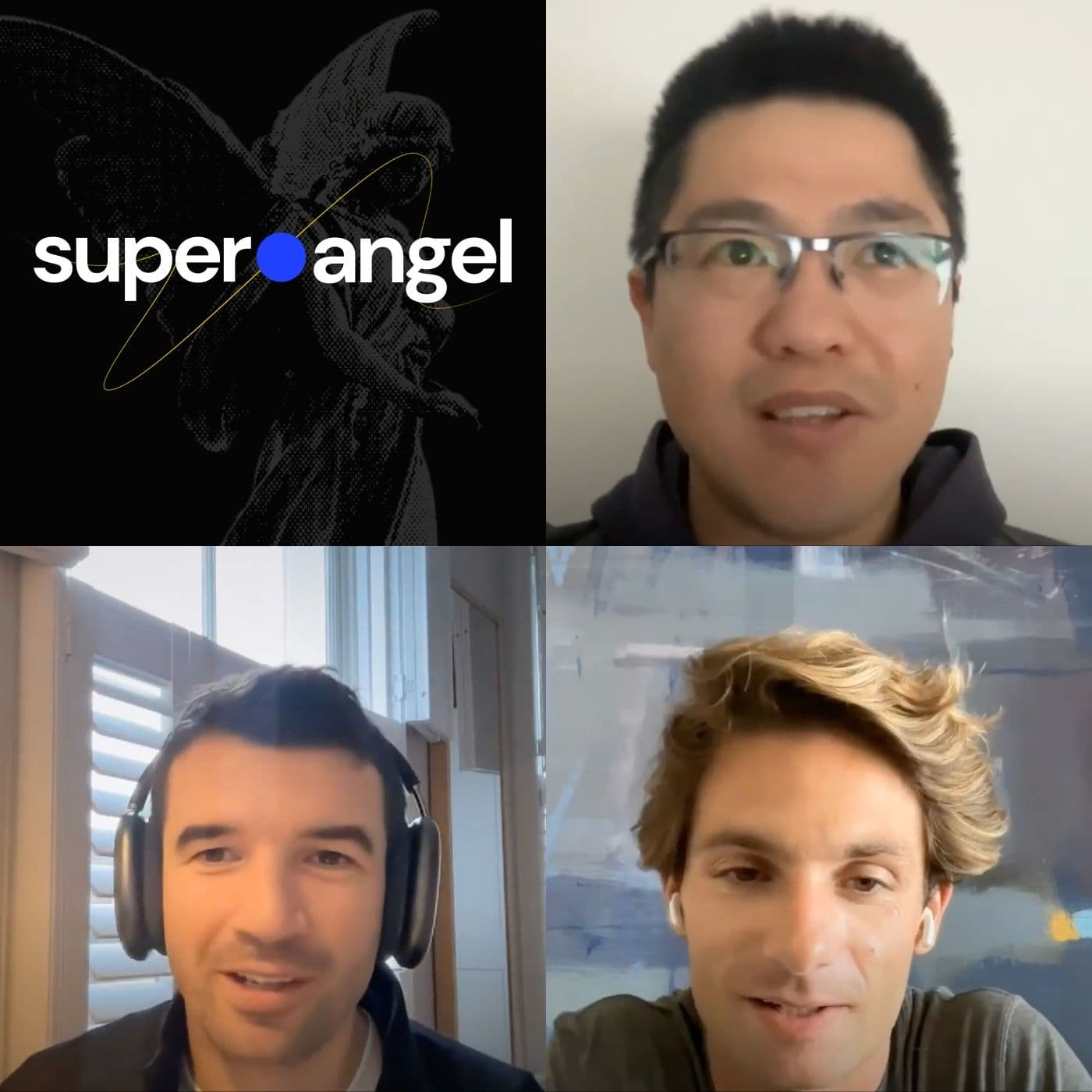

In short
EUVC Podcast Episode Summary: E313 | Super Angel | Angel Investing Insights with Leng Lee
Overview In this episode of EUVC, hosts Andreas Munk Holm and David Cruz e Silva engage with Leng Lee, an angel investor and the co-founder & Chief Product Officer of Oui Therapeutics. The conversation explores Leng's background in tech and healthcare, his journey into angel investing, and his insights into evaluating startups and founders.
Key Guests
- Leng Lee: Co-founder & Chief Product Officer at Oui Therapeutics, formerly Head of Product at Codecademy and Director of Product at MongoDB.
- Tom Wilson: Co-host from Seedcamp.
- Anthony Danon: Co-host from Cocoa Ventures.
Episode Chapters
- Leng's Journey into Angel Investing (00:54)
- Overview of Leng's educational background and career transitions.
- First job at Teach for America leading to a connection with Codecademy.
- From Academia to Tech (01:01)
- Transition from academia to tech, highlighting lessons learned at Codecademy and MongoDB.
- Navigating the Ecosystem (05:25)
- Advising startups and gaining insight into the investment ecosystem.
- Early Investment Philosophy (07:23)
- Initial experiences and lessons from early investments.
- Development of a structured investment philosophy.
- Evaluating Founders and Startups (16:11)
- Key traits and storytelling importance in founders.
- No-go areas in pitches and engagement.
- Healthcare Investment Trends (19:21)
- Current trends and challenges in healthcare investments.
- The significance of the U.S. market for healthcare startups.
- Supporting Founders (28:30)
- The dilemma of balancing support with the need to stay out of the way.
Key Insights and Takeaways
Leng's Background and Transition to Investing
- Leng's initial career path was rooted in academia, focusing on economics and law before transitioning into technology.
- His experience at Codecademy and MongoDB laid the groundwork for his venture into angel investing.
Angel Investing Philosophy
- Early experiences in investing led Leng to recognize the importance of clarity in his investment thesis.
- He emphasizes the need for a systematic approach to investing and understanding market dynamics.
Evaluating Startups and Founders
- Leng describes the importance of storytelling in pitches, highlighting that a founder’s ability to convey their vision is critical.
- He identifies the "wave, board, and surfer" analogy, where the founder (surfer) must effectively navigate market conditions (wave) using their technology (board).
Trends in Healthcare Investment
- The episode discusses the unique challenges of investing in healthcare, particularly in the context of AI and regulatory environments.
- AI's potential in healthcare is recognized, but also its slow adoption due to regulatory hurdles.
Importance of Networking
- Leng stresses the value of building and maintaining professional networks for accessing investment opportunities.
- His advice to aspiring angel investors includes physically attending events and networking to build relationships.
Core Learnings
- Continuous Learning and Adaptation: Acknowledge that you may not know everything; stay curious and invest time in learning about the industry and market trends.
- Diverse Motivations Among Investors: Recognize that angel investors have varied goals, and there is no singular path to successful investing.
- Investment Frameworks: Understand that rules from public market investing may not apply to angel investing; adapt your strategies accordingly.
Conclusion The conversation with Leng Lee offers valuable insights into the world of angel investing, emphasizing the importance of storytelling, networking, and continuous learning. Listeners are encouraged to approach angel investing with patience and a structured mindset to navigate the complexities of the startup ecosystem.
For further details and to watch the full video interview, visit [eu.vc](http://eu.vc).
Written by AI. May contain mistakes. Listen to the episode to check what was said.
Transcript
Automatic transcript. May contain errors.0:00Welcome everyone to the Super Angel Podcast. I am super excited that we've got Lang joining us today Lang it's great to have you with us Thanks very much
0:37This show is not investment advice and the hosts of this episode may be invested in the funds and companies featured. Yeah, thanks for joining us, Leng. And what an experience. I mean, many times entrepreneur and many, many involvements with different funds. Very, very excited to dive in. And so let's get started with the first segment. Do you want to tell us a bit more about your backstory and also what got you into angel investing in the first place? Yeah, sure. So I'm Australian. I studied economics and law. And during my time at university, my main interest was really around, I guess, you know, politics, econometrics and social policy type stuff.
1:13So it wasn't sort of like I had a strong draw to tech or entrepreneurship at a young age. And then I came to the UK to do my PhD. Again, more econometrics, more research around China type stuff. During that time, I was in a long distance relationship, like three, four years with my then girlfriend, now wife. And so when she moved to New York, I basically followed, which starts sort of pattern of following her around, as you'll see. And my first job wasn't in tech. It was for a nonprofit, Teach for America. I was doing statistical analysis on education type stuff. And I quickly realized like, I'm not really sure this is for me.
1:48So I was back to square one and had visa problems and stuff. And so at that time, I was like scratching around looking for a job. And as you know, like, you know, when you're sort of unemployed or whatever, you sort of like, you got to go out and meet people, right? So So I was just lucky. I was catching up with a guy called Zach Sims. So he's the co-founder and ex-CEO of Codecademy. I actually taught him economics when he was in high school in a Stanford program in Beijing. Like it's just this random thing. And we were catching up. And he was just like, so dude, what are you doing? And I'm like, not a lot.
2:16And at that time, like they just finished YC. They just raised their Series A from USV. And they were just starting to hire. And at the time, like I didn't know what YC was. I didn't know anything about anything. and it was sort of like, what are you thinking? And I'm like, I don't know anything about this. And I saw some other people and they're like, what's there to lose, right? Like, you know, this is, you know, if it goes bad, whatever, all the other regular jobs are still out there, but this sounds like it could be a good thing. So I joined as the first employee and that ride at sort of Codecademy sort of really, I guess, set up most of my things for the rest of my career, right?
2:48So like I said, when I joined, I didn't know anything about anything. I didn't know how to program. I didn't know anything about tech. I didn't know how startups work, nothing, right? And I still remember a meeting we had where the group was talking, like, you know, there was like, our first engineer was like Amjad Massad, who's like now the founder of Replit. You know, a designer was talking about like, you know, the role of communities and stuff. And everyone was talking and I was sitting there going, like, what the hell is a community? Like, what's relevant to this? And afterwards, I talked to like one of the co-founders.
3:15I'm like, oh, does everyone know about this stuff? And he looked at me like, yes, everyone knows. And I'm like, oh, crap. Like, I'm literally like so irrelevant, right? And it really came to sort of made me realize, like, you know, if you want sort of influence, you want to sort of like, you know, normally be able to be participating in the company, like, you got to know stuff. You got to like have some context. You got to know the backstory. That's sort of, I think, what I sort of realized. I got to become a student of the game, right? You're going to become a student of not just like business, but also like, you know, startups and how it all works.
3:42And there's a whole bunch of backstory around that. And so, you know, read every PGSA, read all, you know, PayPal mafia, all the books that you had to read and stuff. you know figured out like you know i had to learn who bill girley was fred wilson from tom wilson like all those people like you got to know these things because if you don't like you're pretty relevant so those first couple years was pretty formative for me um at you know code academy and stuff you know i came to the uk as well through that because code academy were expanding and the uk were learning how to program you know in schools and stuff as to where i met sort of you know people from seed camp like seer and carlos you know saw cline was on our board so i met him through that sort of stuff and index.
4:16So I was pretty lucky through that sort of formative period at Codecademy. And then I ended up running product there for a little bit. And then I went to MongoDB, where I was running their cloud product. And that was really great as well. So Codecademy was really great for learning about consumer. And then I figured if I want to sort of stay in tech long-term, I better understand technology really well. I learned to program at Codecademy. No one's going to let me push to production, but I can make stuff with a lot of bugs. But I thought you know database getting down to the metal level would be really helpful understanding cloud computing that phase shift at MongoDB and then you know David DeChuria you know was a bit of a legend in enterprise you know go-to-market that sort of stuff right like you know if you read The Hard Thing About Hard Things by Ben Horowitz like you know the company that Ben was coming up against was BladeLogic and that's Dave's company right so you know I was lucky enough to be able to get you know a meeting with him every second week on the calendar like he you know looked after me and I was you know I learned a lot about you know go-to-market motion that sort of stuff and then I had to come back to England.
5:15My wife again moved. She got a job at Cambridge. So yeah, so I followed my wife to Cambridge. At that time, I didn't really have much of a game plan in terms of I was thinking about maybe trying to start at something. And then I was lucky again, like the Seacamp crew were very kind to me. I'd met Cia when he was an intern and then now he was a partner or was becoming a partner soon. And Carlos was always very kind to me and they sort of like let me hang out there and I started sort of advising some companies. I remember the first company I helped advise was Juro. And then they sort of like put me on as an advisor to the company.
5:48You know, I was doing some stuff at Index, you know, part of the with Dominic Jackerson, sort of trying to help with recruiting and setting things up. So I was around the ecosystem, but I wasn't fully in it. So I didn't know I wasn't, you know, I was interested in being a capital allocator. I didn't know what I was doing at the time. And then I tried to start a company and then that led me back to New York. So I was away from my wife again. and that company failed. But through that, you know, I met my co-founder through First Round Capital. And so, you know, that was sort of the story for sort of how I started in my company now in prescription digital therapeutics.
6:22In terms of how that sort of journey ties to angel investing, I think a lot about, you know, angel investing, there's, I guess, two basic preconditions you need, right? One, you need money. Like, if you don't have money, you're not really going to be able to invest anything. And I think the second thing is you need sort of the opportunity. You need sort of a network or a way to sort of like, you know, start meeting founders and that sort of stuff. And so, you know, for me, you know, I had been around and tried to study the game of startups for a little while and stuff. And so, you know, through SeatCap and through my friends in the US or whatever, like that was okay.
6:52It wasn't like, you know, I was the most plugged in guy around, but I had some sort of, you know, a little bit of a network. And then the thing that really sort of made things possible was Codecademy's exit. So, you know, again, like, you know, I'm not like, you know, I don't have a few money or anything like that, but just having a little bit of capital, which allows you to, you know, start saying, you know, I can write some checks and stuff. And there's small size checks. Like, I don't want anyone listening thinking I'm going to be writing big checks and stuff. But, you know, that's sort of like how things started.
7:17And once you sort of get rearing, you sort of start developing a system and developing, you know, a game plan of how you want to do it. This is an amazing story. And thanks for sharing. And, you know, thankfully you're with good friends along like Tom and Sia and the gang. I mean, such great points. A follow-up question I had is whether you want to kind of share whether it's like the first deal you ever did once you've had that exit and now you're ready to do investments or maybe a few memorable deals you think are referenceable. The first one is really interesting to talk about from my own personal background because I'm thinking about sort of like the journey around, you know, what does it mean to be an angel investor?
7:54What are your goals of angel investing? What's your philosophy? How do you think about it? Right. So, you know, at the first one, I was just like, I'm just excited to be in the game. You're just excited like, oh, I can now write checks and stuff. I can go up to sort of look at deals and stuff. And at that time, you tried to invest in what you know, right? So you try and invest in things that you have a little bit of background on. You can hopefully make a little bit better judgment. And so it was an education-based company. And looking back on it, it was sort of like I wasn't disciplined, right?
8:20I wasn't clear about sort of what is the company? How is it going to grow? Or what is its upside? Yeah, all these things come with risk. But I think my biggest disappointment was not that it failed because it did fail, but in hindsight, was it a company that could have potentially been a breakout hit? And I'm not sure it was, right? But at the time, I hadn't really gotten clarity around painkiller versus supplement, for example, right? A lot of things that I tend to do have been around the human capital space, education, health, fitness, that type of stuff, because I love human capital type stories.
8:52I love people's stories of getting better, but typically they're not really great investments to make, right? like in terms of great outsized returns and stuff. So that first investment was a solitary lesson in terms of being more thoughtful around, okay, if I'm going to do this and I want to be in this game long-term, I want to be a student of the game, I want to think about investing as a personal individual for a little while, I need to sort of start developing a more systematic and more thoughtful approach to what I've done, yeah. It's so great to hear you kind of put the whole story together there, like so many kind of learnings from different elements and kind of so many different companies and then obviously working with funds, working with us, which has been fantastic and really enjoyed kind of co-investing together over the years and stuff.
9:34If you kind of put it more specifically onto angel investing, when you think about angel investing in that kind of like context, what would you say it's given you kind of like personally and maybe professionally as well? I've obviously given a lot. I was trying to think about how to break it down what it's given me. I think my goals of angel investing, obviously, I don't know how many people angel invest as a way of maximizing or accumulating wealth. I'm not sure. That's probably the way that you think about if you really want to maximize wealth or get risk-adjusted returns and stuff. I'm not sure angel investing is the go.
10:08I think for me, the main goal was really around I want to be in working tech long-term. And to do that, a lot of that is you need to learn more stuff and get sources of information and sources of patent recognition and learning about the ups and downs and the journeys of lots of different companies. In my lifetime, how many companies am I going to work at? 10, 15, max, right? The couple of allocators who do it through institutions and stuff, their patent recognition is through the roof. You guys see that stuff, hundreds and thousands of deals in your lifetime. So for me, long-term, if I want to be a founder and start more companies or maybe become a couple of allocator, like this is a starting point for me sort of like as part of my professional development, right?
10:53Like, and the professional development is twofold. One is just learning, like learning, you know, all the paperwork that goes around, you know, fundraising, that sort of jazz, all the, you know, preference stacks and all that sort of jazz, but also then like learning about the ups and downs of company journeys. Like you're getting quarterly updates and stuff. You're seeing the, you're writing all the bumps with the companies and stuff, right? So that's hugely helpful. And then the second part, which, you know, as you may have seen through my story, like the network becomes incredibly important as you you know get higher and higher through the ranks right like there's no doubting like you know i didn't tell you with mongo db story like i got that job through because i was i used to run with the vp of engineering like she was someone that introduced me like i had no business being there like it's just people taking a chance on you right so you know through the networks you know c camp in the uk um i was you know pioneer which is sort of an incubator that Daniel Gross had founded in the US.
11:47These are sort of networks and things that you meet people, you learn through these people. And I think it's, as someone who's also moved around a lot, not just professionally helpful with the network, but also personally, right? Like, you know, as you get older, I don't know how you guys have moved through your life. Like, it's hard to make friends as an adult, right? Like, you know, it's like, I play a lot of tennis, I try to hang out with people. But as you get older, it's like, you know, it helps make life more enjoyable as you move around different countries as well. So both professionally in terms of learning, learning about startups and that sort of stuff, but also personally in terms of just meeting more people and stuff.
12:18No, that absolutely rings true. I think that kind of combination of networks, expanding it geographically, different sectors, super exciting and very, very inspiring. Oh, no. Not about the thesis segment.
12:36So that was the sound of the investment thesis segment. that means now we're going to really kind of double click a little bit on how you think about the portfolio which you've been constructing and the angel investment which you've done to date lane i know that you've kind of alluded to a couple of deals already but it would be great just to spend a little bit of time thinking about you know where you are at the moment maybe how many investments you've done generally what you like to do maybe any sectors or things of focus that you've kind of like started to start to explore a little bit more i like to think of myself as sort of like, you know, in the first innings, hopefully a long journey of angel investing and capital allocating, whether for myself or, you know, down the track institutionally, right?
13:17So, you know, it's, I'm still, I think, in that early stage of trying to develop my analytical approach, but also my thesis around this approach, right? So, you know, one thing I've been trying to do more in recent times is actually think about public market investing. And the reason, obviously, the stage is hugely different, right? They're much more mature companies, there's huge differences you can talk about. But at the end of the day, tech companies are tech companies in many ways, right? And so I think about public market investing, I think about, well, there's a lot more data that they have evolved, right?
13:46Like, you know, you get management discussion, you get, you know, quarterly reports, you get the financials and stuff, whatever, right? And so I'm trying to sort of think about what is my framework of how I'm going to analyze this? Like, you know, if you lose the discounted cashflow approach and stuff, you look at terminal values, you're looking at, you know, long-term growth rates or whatever, stuff like that. It forces you to think about the macro. It forces you to think about a lot of different things that you may not think about when you're angel investing, right? When you do angel investing, the story becomes so important.
14:15Making a judgment around an individual becomes important, right? So what I'm trying to do is like the public market investing, I don't do a lot of it, but I try to think about the key companies and try to think of the frameworks that I'm using to break these companies down. and then what I try to do what I'm trying to do I guess now with the you know early stage companies is okay well I'm going to get a lot fewer data points from from them right like you know there's financials there's nothing there's like basically a story um my opportunities to meet with these folks are pretty limited and stuff right but I'm going to try and start at least what are some of the dots that I can try and join and stuff right and so to answer your question around like you know my investing portfolio currently like I think it's barely over 10 so I'm I think I'm a very early stage of this sort of stuff.
14:56A big part of my investment has focused on healthcare type stuff, just because, you know, through We Therapeutics, the company that I founded, like, you know, I have an understanding of some of the challenges of, you know, running, you know, clinical trials, for example, so that, you know, motivated the investment in Lindus. I have some understanding of, you know, traceability concerns and data concerns when you try to submit for drug trials and stuff. So that motivated the interest in Varysian, you know, so, and then, you know, I have interest in data type stuff, right? So, you know, with the MongoDB and the work that I've done during my PhD.
15:27So that helps motivate my interest in something like text QL, for example. So you try, I try and draw themes from areas that I have a little bit of background in, right? Because obviously, otherwise I'm going to make useless judgments, like, you know, social networks or, you know, cosmetics or jewelry. Like I know nothing about these things, you know, like fast fashion or anything like that. Like I can't play in these areas, right? So, you know, the answer to your question is like my investment philosophy, I think it's nascent. You know, I'm in the early phases. I'm trying to really learn more about what I'm doing, but trying to be more thoughtful about it as opposed to I think my early days is more like, oh, it's so fun to play this game.
16:03Like, OK, now I'm going to try to play this game a little more seriously. You know, you talked a lot about some of the areas as well, and would love to double click on that in a second. But before that, you know, what would you say is kind of the one element you look out for in founders or, you know, more widely, right? What are the types of traits you get excited about or even reversely any no-go areas, you know, as you develop your filter to the very kind of earlier angel investing side? It's funny because, you know, like online, you can see there's all these pitch decks that everyone says, like, you know, every pitch deck has to have the certain story, right?
16:36Everyone cares about the market, the product, the team, and there's a checklist you can try to develop. But I thought I was listening to, I think Mike Volpe from Index, he put it really nicely in terms of how those checklist elements actually have to sort of fit nicely together. So he talks about the wave, the board, and the surfer. And obviously, the wave is sort of like the why now, what is the conditions, what's the secret that you as the founding team know about this market that no one else knows. That's the wave. and then the board obviously is the technology. What are you going to do to try and ride this wave?
17:08And then the surfer actually becomes the most important thing, right? So the surfer is the one that has to ride that wave, has to ride the board and figure out the conditions, the competition, yada, yada. And obviously the waves change and the board can change, but the surfer, like it's a lot more difficult to change that individual, right? And so what I try to look out for is the storytelling from that founder or that surfer in how they tie these pieces together. Because, you know, if it's a checklist, Just, okay, this is the TAM, this is the size, whatever, you break it down and stuff. That's not going to be, I don't think, that helpful in terms of, well, what if the market conditions change?
17:41How well can they spot these changes? How well can they adjust when conditions change? And the conditions will change, right? No seed story has ever stayed the same from start to exit, right? So the ability for that founder to be nimble, to show, the first signal I ever get about a founder is that story that they've identified a wave and tried to identify a board that could fit. That's the first signal I've ever got from this person. And the question then becomes, well, if you could ask them during those early meetings, what if these conditions change? How would you react or how would you think through that?
18:15That's sort of like the hypothetical, like try to get some gauge, get some signal from that surfer or that founder about how they would respond and how that would do. And so that for me is a really strong signal and really important to me. Like, cause you know, that's, you're investing at the very early stage in the story and in that individual. Um, in terms of no-go's like, you know, I think the biggest thing for me is like people like me, who's just rambling right now, right? If the story's not clear, if it's not interesting, I just get bored. Like that's a massive no-go. Like, you know, if you can't hold my interest and I'm, I want to give you money to invest in you, how are you going to hold the interest of your potential buyers or your potential clients?
18:53Right? Like ultimately as a founder, your job is to be able to convince people to, to spend their labor and their time with you or spend their capital on you. Right. And they, if you can't do that with a good story and be not be engaging, like with me, like, you know, I'm trying to be like on your side. Why would someone who has no interest in you at all? Like, you know, follow you or lend you their capital. Right. So that's my no go. No, and don't worry, like your story is definitely capturing, it's capturing me and Anthony. So it's, it's all good. It's all good. And I'm sure it's happening for the listeners as well.
19:21One, one point I'd love to pick up on is, you know, So you alluded to a couple of companies there and you've done a lot of investing in and around healthcare. And obviously you build a company, you're a founder of a company in that space as well. What are the trends in that world which are exciting you at the moment? And then kind of related to that, you sit in Cambridge, it's a kind of a world leading area for that space. But a lot of the kind of companies that we look at have to be thinking very, very quickly about the US. So how important do you think the US is for healthcare companies? I'll start with the second question first.
19:55I think the US is critically important. One of our investors is CVS Health, for example. So I often talk to them about how they construct their portfolio, how they're thinking about the payer mentality and stuff like that. So I think one of the difficult things for UK health companies is going to the US. It's just a different beast, like how you make money, how their healthcare system works. It's just nuts in many ways, right? It's just very different. I won't claim to say that I understand all the nuances of how it works because it's very complex. But going from the UK to the US is, I think, very critical just because of the market size and the opportunity that exists in the US.
20:44The trends haven't been so positive, I guess, in the last three, four years. As you know, post-COVID, the interest rates rising and stuff, healthcare has really gotten a lot more conservative in terms of what they're willing to invest in. It's, I think, slowly climbing out, but regulatory acceptance of things like AI, for example, I think we look at AI being the one shining light in the tech industry right now. Now, it's unfortunately not something which plays easily in healthcare just because of the FDA's reluctance and a lot of, I guess, suspicion from medical professionals as well. Right. So, you know, it's funny that the trend broadly is that AI is changing the world.
21:23AI is eating the world wherever on the way software was. You know, when Andreessen wrote that article, it's not doing that for healthcare. So it's not really a positive trend per se, but it's sort of like a, I guess, a negative trend in that AI is dominating everywhere except for the area that I work in. Yeah. Very, very interesting. And yeah, no, I think we've seen some of that kind of like friction around adoption for sure. But then hopefully we're kind of moving forward with more opportunities and more kind of appreciation for what the technology is capable of. And if the regulators can get on board, then I think there's massive upside there as well.
21:56Yeah, that's the one thing I'd probably just add a caveat. Like, you know, when I talk about healthcare stuff, the one thing I didn't mention was sort of, I guess, the role of AI in drug discovery, the role of AI in, you know, DNA type work and stuff like that. Obviously, that's sort of biotech and less health tech. But that area is, you know, as you mentioned, Tom, like, you know, I live in Cambridge. I'm trying to get more involved in the local investing scene and understanding, you know, the opportunities around. Obviously, biotech is massive in this area. So that's, you know, I think an area where AI, you know, hopefully potentially will be a big deal.
22:28Yeah, I had one more question because you talked about in some respects, you're kind of like the mecca of a lot of that happening in Cambridge. But also, you know, you talked a lot about, you know, working with the seed camps of the world and index and other other funds like that. When it comes to your scope. Right. You also talked about the U.S. being very important. Going back to angel investing or, you know, more more broadly, like following new companies. How do you think about basically geographical coverage? Right. Do you think more local and, you know, you got to believe that kind of being local matters a lot.
Read the full transcript
23:04or do you have ways in having access to more global types of companies and with the lens to angel investing as well, potentially? Obviously, my journey is a little bit unusual in that my professional career is based in the US, but my physical presence is based in the UK. The companies I've started, they're all in the US. My professional network is all in the US. I've never worked like a real full-time job in the UK. I'm starting to do now some product advisory work with Cambridge University Press, doing some AI consulting work, product consulting work with, you know, some local companies here in Cambridge.
23:39But like I said before, at the very start of your angel investing, there's two preconditions. You need money and you need the opportunity in the network to be able to invest. For me, my network, you know, has predominantly been in the US. And so I've mined that a little bit more through being living here now in the last sort of three, four years. I've, you know, tried to spend more time here. And then obviously Cambridge specifically, right? Like you always try to look for health. You always try to look for an edge, right? Like there's no point of me trying to find lots of deals in London. Like I just don't have that edge because I don't live in London.
24:09I don't know anyone there. It's a lot more difficult, right? Like, you know, I'm sure there's tons of deals and interesting companies in Europe. I look at, you know, Aiden and Kleiner. Even there's like huge games in Holland. You know, my friends, the president there, for example. Like it's a company that's done really well. They didn't raise a bunch of money. Like really capital efficient. No one's ever heard of it, I don't think. Like, but they exist, but the likelihood that I'm going to be able to discover them or find them, like, it's pretty hard, right? Like, you know, I, I would love to be able to eventually get out there and stuff like that.
24:39But I think for me, like, I have to try and mine what's more local to me and what's more immediate to me. Like, you know, capital allocation, allocating capital is not my full-time stuff, right? Like, you know, full-time jobs in my, you know, the companies I founded, this is, I got to be, you know, be a bit more careful and thoughtful about where I focus my time. where I can try and uncover deals. Yeah, it makes a ton of sense. I do think that given your experience, so many founders would be kind of, would be a privilege for them to get access to that, right? So, you know, I'm sure a lot of what you're doing creates center of gravity.
25:11So over time, you'll get a bit of pull from a lot of places also beyond that. Got here learning more about them angels, are you?
25:24So if you've heard that sound, we've just passed into the core learning segment. And with that, I wanted to ask you, if you had to share three core learnings from your time angel investing, what would those be? I think the first one is like, Lang, you don't know what you're doing. That's the first core learning. And I think maintaining that sort of mindset of like, you've really got to just keep improving when structuring and clarifying your thesis and your approach. Like, that's a big core that I've had to sort of take on really. And I think like, approach it like a real job, right? I think at the start, it's easy to think about angel investing as a little side hobby, a little nice thing that you do and stuff, right?
26:01But I think for me, the more that I've put into it and more I've thought about it systematically, the better and more enjoyable and the more I've got out of it. The second thing I've learned to think about angel investing is that the heterogeneity of angel investors and their goals and their motivations is pretty huge, right? If you're an institutional capital allocator, it's pretty clear. You have LPs, you have a very clear mandate, you have very clear goals. and internal rates of return and yada yada that you have to meet. You may be a certain fund set up for certain goals like ESG or diversity or whatever, but it's pretty clear that you have that set up.
26:35Now, angel investors, individuals, they're all running their own pirate ships of allocating capital. Meeting all of the different angel investors and hearing their stories about why they get into it and what they're trying to get out of it, the heterogeneity is huge. And so I don't presume that sort of there's one right way to angel invest or that I know why people do it. It's more for me like just recognizing and appreciating that fact. And the third thing I think I've really learned about angel investing is that the corral reason that the ties to public market investing and the rules that you, the heuristics that you come up with in terms of diversification, like some things hold and some things don't hold, right?
27:14Like, you know, when I think about constructing my portfolio, you know, like diversification just goes out the window. If I'm thinking about really trying to reduce risk and trying to get a free lunch by diversifying risk or whatever, it's sort of relevant for me in angel investing. Price sensitivity, a lot of these things just don't become that important as part of my own angel investing philosophy. Now, if I was a capital allocator through institution stuff, price sensitivity does become important, obviously. You've got to meet your multiples. You've got certain things that you're going to reach.
27:42but you know for me like some of these rules of thumbs that you hear from you know podcasts or whatever things you read perhaps they don't always apply as an angel investor well thankfully you know in this podcast we're sharing we're sharing a bit of the opposite which is which is great and i agree with you like there's many ways to heaven and also it's such a it's such a craft work right and when you do it as an angel investor and even more so because you're not necessarily constrained with external capital i would 100 agree with that the other thing that i found many times and we tend to reference a lot on that podcast is like angels that do try to over uh obsess about diversification actually there's a countering argument and variable to it which is like your capacity to support those founders right because you're doing it as a sidekick so it's such a such a you know multi-sided uh i guess equation right in some respects yeah for sure you know like i think in terms of supporting founders and stuff right like you know i think about the cap table i think about you know my role in a cap table like you know every institutional investor i think Like often it's like, you know, we want to be the first call that any founder has if anything goes wrong and stuff.
28:46And I'm thinking like, okay, if there's a whole cap table that the investor has, like where on that list would I be if anything goes wrong? Like I'd be pretty low, right? Like if anything goes wrong, it's typically going to be at a board level. It's typically going to be with, you know, big level stuff that I probably can't help with. Now, you know, when I get on calls and I try and, you know, offer hopefully not just more money, but like, you know, the background, like my pitch is around product help. Like, you know, I've done a lot of product advising. I've worked on products from zero to one stage and stuff.
29:14That's what I try to offer. But how often is that relevant or important for the founder as they're juggling a billion things? Often it's not that top of mind. I would love to be helpful as I can, but typically they've got to this stage because they're okay. They've sorted the stuff out, right? So I think oftentimes I'm always very curious about other angels and what sort of, I guess, introductions I can make or what they do for their portfolios and stuff. Because I'm always thinking, maybe I could be doing more. I don't know. Yeah. It's really interesting. And this kind of comes up, this point comes up quite a lot when we have the opportunity to speak to angel investors.
29:51I mean, that feeling of having a specialism and something that you can offer. And when you were getting into angel investing, did you think that you were going to have to offer more or do you think it's different in any way? I don't know what expectation I had. I guess I thought I would. I don't know. I wasn't sure as to how much I wanted to offer or what they would lean on. But having seen what I've seen, I'm not surprised I'm not leaned on more. I figured they probably have lots of different resources. It's the common VC phrase, let me know how I can be helpful. How many times have we all written that or seen that and stuff?
30:32And the other side just like, I don't know how you can be helpful. Like, can you get me some customers? Can you get me some investors and stuff? Like beyond that, like I don't, like that seems always top of mind for most founders. You know, I think day to day, like recruiting, like those are the sort of three basic things. Now, you know, unless you can really win the trust of the founders where like, they know that you can, you know, come in and really understand their context and really give that advice that they can get. Because if you don't have that context, you're not involved with the founders day to day and operationally understanding the challenges that they have or what the team's going through, the advice you're going to give is probably going to be pretty generic, right?
31:07Like it's probably just going to be stuff they've read in Paul Graham's essays or some blog post or whatever, right? So, you know, my thinking is like, the way I can be most helpful is don't waste your time, respond quickly, sign documents quickly. If I see anything which just seems like really, you know, maybe that other people may not have seen and seems a bit wrong, I might raise it. But do they want me sending articles or sending suggestions on this and that? like no because i've been on the other side like you know we've had people who you know investors or whatever i've seen in the past and perhaps they they try they're well meaning but it's like distracting right like you know signal a noise so that's the sort of the challenge and the last i want to be is a noisy you know investor absolutely absolutely you know i think the one of the learnings that i've had you know now almost 10 years into into investing venture is you know knowing when to not get in the way i mean that can be one of the most valuable things you We're incredibly lucky, I think, everyone on this call.
32:04And you're a founder yourself, obviously, to partner with incredible founders. And sometimes getting out of the way is the right thing. Being available, if people need you, asking that famous phrase of, how can I be helpful? But also knowing when to get out of the way is a super important skill. And I think it's equally as important for angel investing as well. But it's just fascinating to hear how that learning comes about. And I think it's definitely a key one. Yeah. And I think what's interesting too is like, you know, part of it is like as an investor yourself or, you know, as, you know, as investors, like part of our job is, you know, doing these sorts of podcasts and whatever to all writing blog posts to sort of demonstrate like some, some skill or some, some value that you could potentially add, right.
32:47One for deal flow, but also as a signal to, you know, your existing portfolio, whatever, like this is the stuff I know about. Like, you know, like, you know, as I was thinking about, you know, Bill Gurley's essays around network effects or whatever, or, you know, revenue quality and stuff. Like as a signal to like, okay, like he's signaling to his people, like he knows about network. He knows about how networks are constructed and all that sort of stuff. Like, so when anything comes around that, like his people are more likely to, his portfolio, they're more likely to sort of reach out, right?
33:14Right now, like, you know, in this world of like, you know, people who have taken my money, do they really understand what I could possibly do? Well, part of that's my job to really sort of, I guess, build that brand or explain a little bit about how I know some stuff and hopefully if they find that useful, great. And similar for Tom and Anthony, there's a ton of things you probably do and sort of part of your role is just getting out there and okay, this is stuff I'm really good at and hopefully then your portfolio understands that and will reach out to you because it's the founder's job too to learn what's at their disposal, right?
33:44And so part of that is just meeting them halfway that, yeah. Couldn't agree more, couldn't agree more. Look, Lang, I think we could talk all day but there's so much to unpack but we're kind of conscious that we're coming towards the end of the episode now. But before we finish, there's one section which we always love to do, which is a bit of a quick fire.
34:09It's quick answer questions. So 30, 60 seconds each. How does that sound? Sure, sounds great. Right, so what was the most counterintuitive thing you've learned since you started Angel Investing? Typical notions of risk and return just don't apply in the same way. I think the notion of non-linearity, trying to think in a very... Because I think most people's exposure to investing from young comes from public markets. I don't know many people, maybe Peter Fenton, because he's from a VC family, whatever, grow up thinking about early stage investing. So public stage investing is what you typically know of.
34:49And you think about risk return in your own everyday life. Angel stage investing is just radically different. right? Like the graphs and the shapes just are really different. So just having to sort of change that mind shift, I don't know how counterintuitive it is, but that was something that I had to really sort of change and think a lot more about as I sort of entered the world. What would be your top tips to angels wanting to do more international investments? Go there, meet people, make pals, make yourself available, turn up. I think one of the things that I learned was that just the value of turning up like when i first came to the uk you know i'm not the most like outgoing kind of dude i'm not the most fun dude i'm not going to parties and stuff like i love all that sort of jazz right but if you don't turn up like nothing good's going to happen like you know a big part of it is just turn up and talk to people that's just step one obviously that's not enough but that's the prerequisite if you don't do that like it's impossible and that sounds obvious and try right whatever right but you know it's often not as complicated beyond that like if you just go and talk to people and just ask who else someone i should talk to like it's that that first step is just all there is and everything hopefully should follow from that absolutely 100 great advice on advice so the next question is what advice would you give your 10 year younger self if you only have 30 seconds oh my god there's so much eat less be good to your wife in terms of angel investing and stuff like it's just be patient i think like you know i was keen i'm always keen to sort of like you know i look at the sort of role models of operators and investors that you know you know you grew up i grew up in mine right so you know like guys like you know rich barton and mike spicer and all these sort of legends of the game and you think okay you know you would like to sort of model their career is like well it hasn't happened for me right like i'm not rich barton i'm not mike spicer i don't work at sutter hill all that sort of stuff but being patient and just sort of like following my own path and stuff and still just being a student the game still keep plugging away keep learning keep developing my own frameworks and just having that faith that like you know things will turn things will be will work out okay like you know i'm quite yeah where i'm sitting right now like i feel quite privileged i'm really quite happy with sort of the balance of the works that i have right between my companies that i founded the investing work the advisory work whatever you know the chance to sort of travel remotely and that sort of stuff like there's no complaints right like you know so it's just sort of stay patient things will work out just you know follow your own path yeah hey lang i mean love to hear your story very unique background i think the ecosystem is lucky to have you and so we are we today so thanks for joining us uh it was a delight appreciate it thank you so much couldn't yeah just to echo that i think we could we could have this episode could have been three times as long there's so much to unpack, you know, so much to dive into.
37:35So thank you for being so open with your story. And I'm sure all the listeners are going to get a huge amount of value out of that. Thank you. Is this a dream? No, it's not a dream. I'm an angel. Why would God send me an angel? Because God knows that everyone needs a little coaching now and then. I'm loving angels. I saw an angel. All angels say. For all of you. Please send me an angel. With a smile on her face We're here now together, but don't help me, Johnny. You think that's why an angel, girl? Girl.
From the publisher
Leng was previously the first employee at Codecademy where he was the Head of Product, before joining MongoDB as the Director of Product (Cloud). He later spent a year as a Research Fellow at the Columbia University Centre for Anxiety and Related Disorders, developing a virtual reality product for social anxiety.
Leng is an Expert-in-Residence at Seedcamp, Europe’s leading seed investor. He is an active angel investor through Seedcamp, and the accelerator program Pioneer, and is an advisor to a number of SaaS companies. He is also on the product advisory board for Cambridge University Press.
Go to eu.vc for our core learnings and the full video interview 👀
Chapters:
00:54 Leng's Journey into Angel Investing
01:01 From Academia to Tech: A Career Transition
04:16 Expanding Horizons: MongoDB and Beyond
05:25 Advising Startups and Navigating the Ecosystem
06:22 The Leap into Angel Investing
07:23 Learning from Early Investment Experiences
09:35 Developing an Investment Philosophy
16:11 Evaluating Founders and Startups
17:53 Evaluating Founders: The Art of Storytelling
18:40 The No-Go Zone: Clarity and Engagement in Pitching
19:21 Healthcare Investment Trends and Challenges
22:28 Local vs Global: Angel Investing Perspectives
23:11 The Dual Life: Balancing U.S. and UK Ventures
25:24 Core Learnings from Angel Investing
28:30 Supporting Founders: The Angel Investor's Dilemma


