
In short
EUVC Podcast Episode Summary: E314 - David Dana on Emerging Managers and Performance
Episode Overview
- Podcast: EUVC
- Co-hosts: Andreas Munk Holm, David Cruz e Silva
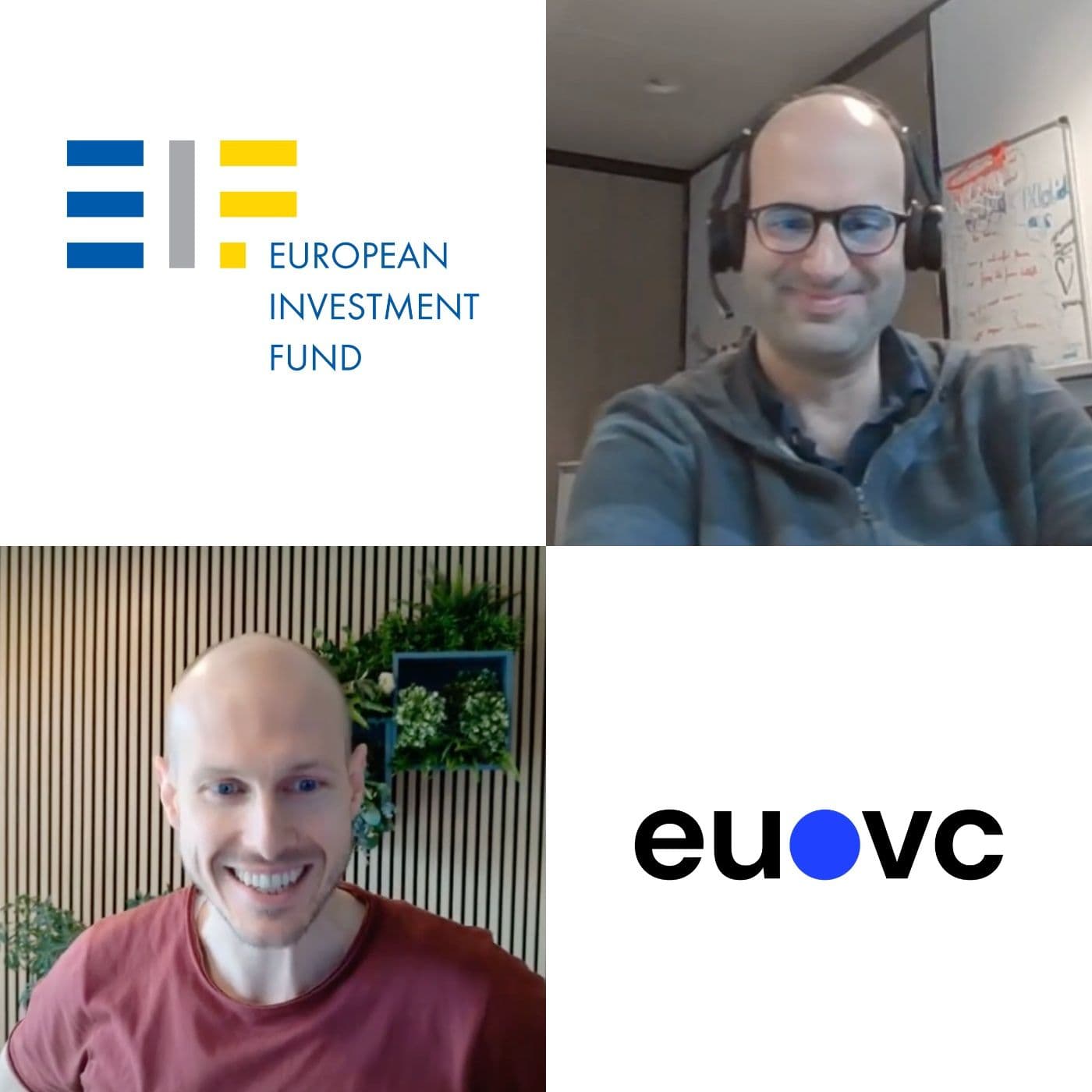
- Guest: David Dana, Head of VC Investments at the European Investment Fund (EIF)
- Focus: Discussing how emerging managers can demonstrate performance in their funds, particularly in the context of deep tech investments.
Guest Profile
- David Dana: Head of VC Investments at EIF, leads the Disruptive Tech & Innovation VC Team with a focus on emerging technologies.
- Experience: Over 15 years in VC, managing investments of more than €3.5B across 120 funds, specializing in AI, blockchain, quantum technologies, and deep tech strategies.
- Contributions: Key player in developing the #InvestEU financing program for ensuring Europe's technological sovereignty.
Key Chapters and Discussions
- Initial Thoughts on Emerging Managers (04:03)
- Importance of understanding the added value and differentiation that emerging managers bring to the market.
- Focus on what unique advantages they offer compared to existing players.
- Evaluating Added Value and Differentiation (04:35)
- Seeking specific strategies that showcase the team's expertise and operational backgrounds.
- Emphasis on the need for technical knowledge combined with VC management experience.
- Challenges with Deep Tech Investments (07:28)
- Discussing the inherent difficulties and risks associated with investing in deep tech sectors.
- Understanding the long timelines for returns from deep tech investments.
- Assessing Company Performance and KPIs (07:50)
- Importance of evaluating portfolio companies based on key performance indicators (KPIs) and market traction.
- Mention of the challenges in measuring performance due to the nature of deep tech investments.
- Co-Investors and Market Feedback (09:52)
- The significance of assessing co-investors and their feedback on portfolio companies.
- Leveraging relationships with known investors for validation of business prospects.
- Initial Meetings and Questions (10:29)
- Standard questions and topics of discussion during initial meetings with emerging managers.
- The need to gauge the manager’s understanding of their investment strategy and market.
- Track Record and Full Cycle Experience (11:29)
- Discussion on the expectation for emerging managers to have some level of investment experience.
- The importance of showing past investment results, even if not fully matured.
- Challenges with Exits in Europe (12:43)
- Examination of the difficulties surrounding exits for European VC funds.
- Exploration of the low liquidity and exit opportunities in the European market.
- Importance of a Strong Fund Model (20:20)
- Discussion on how a well-structured fund model can significantly impact investor confidence and fund performance.
- Need for clarity and feasibility in fund modeling for successful fundraising.
- Submitting Proposals to EIF (22:31)
- Insights into the proposal submission process and the importance of being prepared before approaching EIF.
- The necessity for a self-explanatory pitch deck to facilitate initial discussions.
- Advice for Emerging Managers (33:20)
- Emphasizing the need for emerging managers to differentiate themselves and articulate why their approach will lead to higher returns.
- Encouragement to have a compelling narrative as a basis for attracting investors despite limited track records.
Key Takeaways
- Differentiation Matters: Emerging managers must clearly articulate their unique value proposition to stand out.
- Track Record Importance: While first-time funds are not expected to have a long track record, showing some level of past performance, guidance, or related experience is crucial.
- Focus on Team Composition: Successful funds often have a blend of technical knowledge and VC management expertise within their teams.
- Investment Thesis Clarity: The rationale behind investment strategies must be clear and well-structured to gain investor confidence.
- Realistic Expectations: Emerging managers should be aware of the challenges in deep tech investments and prepare for longer timelines and potential risks.
Conclusion This episode provides valuable insights for emerging managers looking to secure funding from institutional investors like the EIF. Understanding the nuances of presenting a strong investment case, articulating differentiation, and preparing for the realities of the VC landscape are crucial for success in raising venture funds in Europe.
Written by AI. May contain mistakes. Listen to the episode to check what was said.
Transcript
Automatic transcript. May contain errors.0:00Welcome back everyone to another episode of the European VC podcast. Today we are talking to David Dana, head of VC investments at the EIF. We're talking exclusively about how emerging managers can show performance in their first, second, and third fund. But before we go there, let's just hear a bit more about David Dana. David is a very seasoned VC LP. He has allocated more than 3.5 billion to more than 120 VC funds in Europe. He is specifically an expert within the deep tech fields, both as a direct and indirect investor in AI space, Web 3.0, blockchain, quantum technology, semiconductors, and tech transfer.
0:44If you want to know more about how the EIF invests and how David Dana specifically thinks, I advise that you go to EU.BC and search for the EIF or for David Dana, because I think we've done five or six episodes with him so far. So definitely a bit of a treasure a trove there. Also, this episode is part of our series dedicated to how VCs raise funds in Europe, which is, of course, closely connected to the report we've just published together with Flow and Isomar Capital, which you can go and check out at flow.io-raise. It is exclusively focused on raising VC funds in Europe post the tech reset.
1:26So I think if you haven't yet gone there, you'll find quite some insights that's worthwhile. We're diving into 300 episodes we've done, plus also some dedicated interviews with managers just specifically for this report. And then, of course, we also dissect data from both Isomer Capital as well as the available market data. So definitely go and check that out. Here's a few words from our beloved sponsor. This episode is part of a series dedicated to raising venture funds across Europe and come together with the launch of the European VC Fundraising Bible. Together with our friends at Isma Capital and Flow, we've spent the winter digging into the past nearly 300 episodes, as well as the latest market data and Isma's vaulted data treasure to uncover how the tech reset impacted the fundraising market in Europe and how leading VCs across the continent have changed their strategies, tactics and operational handbook.
2:22Filled with graphs, beautiful narratives and video interviews, providing an entirely new and engaging experience. The fundraising Bible promises an experience only surpassed by the actual hitchhiker's guide to the galaxy. Don't miss it. Go get it now at flow.io forward slash raise. That's F-L-O-W-W dot I-O forward slash raise. And the revelation doesn't end there. No, no, no, no, no, listen. Join our live roundtable with venture capitalists apostolies, Speed Invest founder Daniel Kuyper-Kanor, and supersedes very own Dan Bauer, alongside disciples of LP Investing, Christian Hortz-Pedersen from IIP Denmark and Joe Schorge from Isma Capital.
3:05Sign up for it via flow.io forward slash raise as well. Your venture journey, redefined.
3:16Tear down this wall. It's more than just an ally. This is a union of values. United and determined we can serve as a model for other regions of the world. The nature of a problem requires a European response. Europe is a story of new beginnings. Let's start acting. This show is not investment advice and the hosts of this episode may be invested in the funds and companies featured. David, thank you for joining us for this conversation about how emerging managers can show performance. Always a pleasure. Yes, it is always a pleasure. So now I'll go directly into that. Just simply ask you, what do you look for when you meet an emerging manager and you need to look at their performance?
4:11You want to evaluate where are they at? Sure. I would say, even before looking at the performance, there's one critical aspect, which is, for me, of the highest importance. You know, as EIF, but like any LP, we don't mind adding a new line in our portfolio, usually, because it's not about adding one and two or less. It's about what will it bring to us and to the market. meaning what is the added value and the differentiating element they will bring which is not yet covered by the existing players. Why should we consider them as being a potential good investment opportunity for us? So this is the very first element.
4:54And then it is for sure the performance aspect is of very high importance too meaning that we cannot expect for first-time teams, first-time fund especially for some of these innocent markets where we are actively investing like space tech, AI, quantum, semiconductor, on that kind of typical deep tech segments of the market, we cannot expect a full-fledged track record of two, three, four generations of fun. So there are a number of elements we can give us comfort instead of having a concrete or a fully relevant track record. So we would be looking for a number of elements. First one would be indeed for the specific strategies, which is what would be the added value brought by the team.
5:40So we have to make sure that the team members have a strong expertise, technical expertise, but also operational, because they will be bringing money, but not only money to the entrepreneurs, more importantly, they will be bringing added value. This is what is looked after by the entrepreneur. So this is the very first element. Then if you only have a team of tech guys, it will not help either, meaning that managing a VC fund is something so special that you need people who know what VC is, what the VC market is, what the VC fund is, how it works, how it interacts with other investors, but also with the LPs.
6:17So we are always looking at a combination in the team. So of this technical expertise, but also the more VC management expertise. And one other element which is very important is, again, keeping in mind that we may not have a relevant track record, at least a couple of business central type of investments that have been done by the team members. So if individualities have been able of sourcing and selecting companies which seem to be performing well and are delivering and showing some strong performance and expansion, then combining this with this VC experience and the technical expertise, we already have something which is much more solid than, you know, guys do.
7:06We just want to do something with no clue on how to do it. Now you answered what do you specifically look for with first-time teams. So let's stay a bit with that. And then after that, we look to the second-time and third-time funds as well. If we break them down one by one, let's start from the end. So you said at least some business angel investments. Oftentimes, those are also not mature, right? So they might be only two years, three years, four years old. So you would not expect DPI for sure. Also, because it's oftentimes, in your case, deep tech investments, it's not necessarily that likely that there are large up rounds as well.
7:48So what do you do there? So first of all, we assess where those companies stand, meaning that compared to where they were at the time of the investment, how they have evolved and what has been brought to them indeed by these individuals again. and from there we also look at what the coinvestors if any what is attraction what are the expected KPIs so what would be the revenue what would be the gross rate what would be the potential would say profitability of the company or where do they stand there is there still a very long time ahead before potentially getting some cash back or is it still very new and if it's still very new, then we have to make sure that we get a bit of comfort by people who know those companies that we know as well, that the companies are not doing things that would not make sense, but are developing technologies and products that could become marketable and hopefully that can scale up to a certain level in the near future.
8:49But you're right, GPI is hardly visible. bit. Do you, when you're in this situation, at what point do you care about seeing TVPI or having markups in there that, is there any rule like you say, okay, if it's three investments, it's like, it's directly to individual company analysis, but if there's seven or 10, or is there a magic number where you start? No, it's really a case-by-case analysis, because it can be that you may have a a portfolio of 10 investment of 5 ,000 euros each, but you may have also a portfolio of four companies with 50k each. So there's also a bit of appreciation about how it has been weighted and built.
9:35So I would say for sure, if those companies have already raised additional money with the upside valuations, it's even better. But sometimes, as you know, it's a bit tricky to find. So it's very much about trying to assess more in detail those companies and also because it's very rare to have that kind of business answers investing just by themselves so trying to see a bit who are these coinvestors again and what is their views of the companies and in many many cases those companies will have already approached a number of vcs that we know so we can also test a bit the feedback of those vcs uh some of them might still consider it as an investment opportunity some not but maybe for good reasons as well so So just trying to understand a bit what those companies are saying and what they can demonstrate in terms of quality.
10:29Can I ask you, how do you see this well presented in a deck or in the first meeting? What are the questions you ask and what are the things you look for when you're looking for this specific item of checking their track record, basically? I would say for a first discussion, we will not yet go into details on the table. But if there's no track record demonstrable at all, then we would ask why and try to understand how we can get comfort on the capacity of the team to source and select this. because as a starting point, I would say it's not a discriminatory element not to have a very extended, highly extended track record yet again.
11:18So what we want to see is that the people who want now to raise a fund and to get our money on board know how they will be deploying it and investing it. So we want to make sure that they have already experienced this. Ideally, for sure, we would like to see full-cycle experience, meaning at least one exit. And even better if it's a profitable one. But at least we want to have people in front of us who have already seen that at least one time or a couple of times. Because investing money is something. Divesting it is something else. If we go to that issue of divestment experience, which is definitely where Europe is like.
12:01And when you're then also looking at frontier technologies, it gets even harder. How do you gauge that? How do you, because in fairness, most will not have it. So I guess it's much about trying to understand if the managers understand the challenge and that they are applying good principles to think through it and so on. Or how do you? Let's say that for this, we cannot just rely on what is in the deck. Because all the decks, when they approach this specific section, are very similar. we'll be looking at trade sales, financial sales, or IPOs. Okay, great. But in practice, what about me? And especially as you said, one of the main elements which have been missing in the full European channel of financing for startups has been exists for a long time.
12:55So when looking at the performance of the funds, it may have been less impressive for the last one to two years, but it used to be very high in terms of TVPI and IRR. But in terms of DPI, there were very few funds who were capable of generating recurring liquidity for investors. And this is why also we see now the emergence of these secondary players, especially for VC because I know that there are a huge number of companies which remain in all of the VCs. I basically don't know any single VC fund manager would have been capable of closing a fund within 10 years. It just doesn't happen because it's already good if at that time they have sold half of their portfolio.
13:40So I would say the liquidity and DPI question is a concern, generally speaking. And this is also one of the missing parts in Europe to be a real competitor to the US, for instance. But there are a couple of reasons for that as well. First of all, I think there is a low appetite from European corporates to acquire tech companies, and not only to acquire them, but also to pay premiums for that. Then the IPO market in Europe is closed. Even in the US, it's very complex. And historically, if you look at the few VCs who have been capable of generating high level of liquidity, most of the exist in the US.
14:21So we are very much depending on non-European entities for that. Specifically then, diligencing that capability with a team that does not have the hard facts to back it up. What do you look for? What are the questions you ask? First of all, when some of the team members manage to experience an exit, how replicable would it be? Meaning sometimes it's a purely strategic opposition, which makes sense still, but not something easily replicable. Then if you see a pattern of specific growth paths for the companies, reaching some specific and predetermined milestones to become potential targets for a number of players, then it's a bit more reassuring.
15:06But again, if you look at specialized strategies, I think the strategic, again, component will be much more prominent. Because at the end, especially, again, talking about aerospace and semiconductors, all that kind of tip-take against sectors, there's a huge need for innovation. And in many cases, we've seen that corporate VC was not as successful as anticipated. So sourcing innovation comes through acquisition. But again, now we have to make sure that it happens. And this is where we need these strong skills and capacities. So first of all, to detect the ones who have the highest chances to become the next successes, but also the capacity and connections and networks to discuss with the right people at the corporate table as well.
15:56Okay, cool. So that was the how do you diligence at least whatever BA track record that the first time fund manager has or past experience at other firms or anything? Basically, that is real investment experience. Then how do you look at that VC management experience? How do you diligence that? So what is really important, again, is that when you manage a VC fund. So from scratch, when you have very limited experience, say, okay, it will not be complex. I will invest in X number of companies. This arrangement, and that's it. Whereas at the end, you have to take care of many, many aspects. First of all, you have all those limitation constraints imposed by LPs.
16:40You have the timeline, which is usually longer than anticipated. You have to manage carefully the reserves. You have to be following a very rigorous approach because sometimes we as NP agree with a manager on a specific model. It doesn't mean that it has to be followed strictly, but broadly, it gives a strong indication of what is expected. So for instance, if you have a fund which comes to, okay, we've been investing in 20 seed and precede companies, and then first investment invested in a series B round, it's already starting on a good path. So you have to make sure that you respect what you sold to the ALPs, because if you sold that and if the ALPs boast that strategy, it means that you are convinced that this is the best one or the ones on which you can deliver the best returns.
17:29So you have to follow rigorously this approach and make sure that there's someone who knows how to tackle and how to monitor and control this. And this is why having someone with a strong knowledge of the VC market and VC technicalities helps. Portfolio models and the capacity slash capability slash existing understanding of the different models in venture, why some assumptions are fair game and why some are not. How do you kick tires with a potential VC around that? I would say the way we look at these models is, again, to be backtested compared to two elements. One is our quite extensive internal database.
18:22You know, we've got more than 700 PC fans, so we have quite some trends on what works and what does not work. But then at the same time, we have to make sure that whatever the expected returns presented in this model, First of all, that there's no mistake in the calculation, first of all, but more importantly, that it can rely on the past experience of the team. And that's why it becomes even more important for teams with some track record to show. Basically, if a GP comes and tells me, okay, we will be generating 10x on average per line, I will never believe it because it never happens. By design, VC means that some companies will fail.
19:01And this is something you have to accept and also coming back to the previous question on this VC experience, you have at a certain point in time when things don't go as anticipated and as expected, and if you don't see any positive outcome, you have to learn how to pull the plug. It's always difficult because, you know, and especially at the early stage, there's a lot of human interactions and it's very much a human business. But sometimes the best choice is just to say stop and we don't go further because it will not work. And that's something difficult. But again, this FAN model is important because it will show, first of all, whether the GPs are still down to herbs or not.
19:40And again, sometimes you have this 10x, 50x multiple, or also depending on the number of lines, for instance, which is very basic, you know, financial theory. And no later than yesterday, I spoke with someone who wants to launch a new fund, telling me, yeah, it's already said, but I would focus on 10 companies. So 10 might be a bit too limited. Why not 15 or 20? And I explained to him that just looking at the financial theory, 10 % of the portfolio should be overperforming. 10 % out of 10 is one company. Out of 15 or 20, it's two. Simple math. So this is maybe a bit theoretical only, but it has been even dense over the years on various properties.
20:20Does it matter to you, David, that when you get into these conversations with managers, that they get it? That they know the basic principles of venture? They know when they deviate? And they have a good reason to deviate because what I often find is in the heydays, you could probably get around some of that because you have more people with less VC experience and thus they would know less obviously about the different models that might work in venture. I'm really often surprised at how basic assumptions by quite many that want to be a VC are disregarded. I think again, it leads us to the very first question.
21:18All this VC wannabe, basically they just say, okay, we are very good at this specific segment in the market. But it's not enough. And okay, you may have a huge added value to the company, but still, if you have a fund, it's something very particular. And, you know, convincing an LP is very tough. And if from day one, you don't keep in mind that there are a number of elements to demonstrate that you have a good understanding of the market. You know, at IEF only, we are receiving more than 650 proposals a year. So if we are looking at a strategy which looks interesting, but then the fund model is completely good.
21:58crappy. I'm not even sure we will give another chance to the manager. Yes, and that's an important point to state, right? And that's one of the things that I guess you can say because we've often spoken to you about when should managers reach out to EIF and if you can then add some words to that question following up on what you just said if the fund model is crap or just does not make sense I might not look at that again, right? Yeah. The thing that I always say to the GPs is that no need to hurry to submit a proposal. Just do it when it's ready and when it's a final one, because we are receiving so many of them that the first step will be made most probably just a very few interactions with you.
22:50So we need to have a pitch deck which is self-explanatory. So if there's anything which may appear as being over-thought or over-engineered and just not making sense, we may just go to the next one. And that's something really important. So again, what we do very regularly is that we speak informally with a lot of GPs before they submit a proposal. And many of them are always asking the same question. Can I send you the version so that you have a look before I submit it? Might be, but first of all, you need to make sure about what you want to do. So it's not up to me to tell you what to do. It's really up to you to convince me that what you want to do is something that I should support.
23:33And that's always a critical point again, is that people need to know what they want to do. And if they have any doubt, they should think about that a couple of times before submitting a formal proposal to NLP, not only to us, to NLP, because you will not have many shots to try and convince those people. Yeah, you're absolutely right there. And I think that's a very important learning for everyone because we are helpful in the ecosystem, all of us. We do want to help. But there's also, if you show ignorance, you've shown ignorance. That's just what it is. It's very hard to come back from. And that's why, again, this combination of skills within a team is really important.
24:15And I have many examples in mind. One of them, for instance, was a team of highly skilled technological experts guys. but there was very few if any VC experience and we said that we like what they wanted to do but we will not proceed before we have some comfort on this and that they looked at the market and they found someone with whom they've all worked individually in the past and who was in a VC manager and the combination has become no I will not give a name but that it has become one of the most successful European VC now it was more than 10 years ago another one that coming back again to this fund model, a team focusing on deep tech, which had a highly scientific approach on the fund model.
25:02Maybe too much, I would say, about once. And it was based on highly complex calculations and things like that. So we were not convinced and we said no. It turned out that over-performed, so too bad for us, but it happens. We never make any good decisions. But this is something you have to keep in mind that people in front of you as an lp you are rarely a specialist you know you have a generalist approach you can know more about some sectors uh talking about myself again i've been more of focused on deep tech for the last five six years so i know a bit more on that film but again i'm not an engineer i cannot and i will not challenge the technicality of a specific company but i can tell you whatever the strategy whether a fund model has chances to work on it because this is based on experience and we have many fund managers that are much stronger on the other parts and not very strong on that part so it's definitely something we had fred destin on who said it as well if you don't show that you have financial understanding and and know how to to build a fund model and test it and so on, then no LP is going to give you money.
26:21I think that's pretty much how we build it. And that is not the understanding by everyone, every fund manager. That's why I'm insisting on it because it may appear as being a minor part of the proposal. And typically, we see a lot of focus on the presentation, on the market opportunities. Okay, sure, of course we need it. but don't underestimate the importance on all the aspects. You don't get around it, right? It's not something that you can just figure out along the way or you can have your back office guys help you with. Let's say that we can try to optimize it in a way along the way, but we have to start from a strong basis.
27:06If we start from something which does not make sense at all, it would be very difficult for us to be convinced and then to convince also internally because the thing is that what people have to keep in mind is that at least at EIF, when we are convinced that an opportunity is worth potentially getting a financing from EIF, we become the advocates of the proposal internally and we have to convince all of our colleagues from risk management, legal, compliance, anyone that this is something we should be doing. So we need to have the material to do that. Okay. So now I want to just go to, and much of what we just spoke about, of course, is also perfectly valid for second and third time fund managers.
27:53But there are some nuances when there is a full cycle of investing, at least not divesting, but investing that you can look at. So maybe if I asked you the same question, David, but just thinking about the second and third time funds, how would you nuance what you just said? I would say the main difference would be that the track record component will play a much bigger role. So for a second time fund, we would need to see some positive evolution in the portfolio of the first one, for sure. Again, maybe not yet DPI, although we would welcome it, but maybe not yet. And for third time funds, then we need to have concrete DPI because at the end, you know, it may happen to anyone that one son generation does not work for lots of reasons.
28:45It doesn't mean that the manager is a bad one. Maybe it is, but we will most probably give a second chance if we are convinced that it was not related to mismanagement. But then if at the time of the third time generation of fun, we have the two first generation who are delivering very poor performance, then it becomes a kind of pattern, and then it raises a lot of concern. And again, even the number of proposals we have and the potential number of good deals that we cannot support every year because we cannot do everything, then most probably we will pass on the third generation in this case.
29:21So I would say the longer you have, the higher number of generation of funds, the more important the track record component is. And also what is, I will not say funny, but it's surprising to see how the fund models evolve over time. Yeah. Yeah. And that was actually what I was about to ask you was if you could go super deep on how do you then diligence the track record when you're looking at that established portfolio of say 20 companies, 25 companies from fund one, what do you do with that? And what do you expect to see there? So the way we are conducting our due diligence is very common to any fund, but maybe we'll do it a bit deeper than some other LPs in VC because this is our day-to-day business again, so we are only doing that.
30:08When we have our due diligence, which is already quite advanced in the investment process, we go line by line into each of the companies which have been invested. So let's assume we are talking about fund two. So we go line by line into the 15, 20 companies of fund one. We want to understand how the company was sourced, who led the deal, why the investment was made, what was the status of the company at that time, and what it is now and what is the added value that has been brought specifically by the fund manager into the company which we will anyway test and cross-check with a market player so we need to be convinced that first of all they have delivered based on what was sold so coming back again to this fund model concept again it's not because they had been the model that they would They would have done 18 investments and they made 17 or 19 or 20.
Read the full transcript
31:03It does not work, but it has to be in the same lines. And then we would check also what it has delivered in terms of interim performance. Well, it is leading us to and what are the key milestones for those companies to deliver further. So it's really a thorough investigation in a way, because we need to make sure that the decision that we made and the commitment that the GP took in terms of what it would be doing was respected. So in other words, when you're looking, if we take it from the top right and say pitch deck stage, this is where you would say you definitely want to be showing the core numbers, TVPI, DPI, so on, IRR, but oftentimes less important.
31:53And then you would say definitely augment that with case studies on the portfolio. And then you'd also say definitely show that what you did is what you promised you'd do. And there was one exception maybe, which is whether it was obvious for whatever reason that what was agreed on was not what would have led the fund to become a success. So if, because you know, when we invest in the fund, we are always asking for a seat at the advisory board. So this is, you know, this entity, a governing body within the fund, which is opining on the number of things like conflict of interest, key man and whatever.
32:38So we regularly ask for an update in terms of fund deployment, pipeline, and how the market is evolving. meaning that if we see that the market is conflicting for whatever reason, as it was the case during the COVID period, for instance, of course, we could not expect the deployment to be exactly the same one as we agreed before that. So we all adapted for the best. So that's why I keep saying that this is very important, but we are not either stupid. So if we don't stick to one model, which was agreed, if it didn't make sense, you know, going further in the process. There's so much we could talk about.
33:19We're running out of time. So I just want to ask you a final question, which is what advice would you give to emerging managers in overcoming the challenges of having a limited track record? Be different and explain to us why this difference would lead to higher returns. So in other words, if you have limited track record, you definitely need to have a very, very good story and reason to exist. Because otherwise, it's tough. Yeah, there will be so many other players with some maybe more convincing data that we need to decide to support you to be, again, convinced. If you convince us, then we can try to convince internally.
34:00But for that, you need a very strong influence. Beautiful. Thank you so much, David. Here's a few words from our beloved sponsor. This episode is part of a series dedicated to raising venture funds across Europe and come together with the launch of the European VC Fundraising Bible. Together with our friends at Isma Capital and Flow, we've spent the winter digging into the past nearly 300 episodes, as well as the latest market data and Isma's vaulted data treasure to uncover how the tech reset impacted the fundraising market in Europe and how leading VCs across the continent have changed their strategies, tactics, and operational handbook.
34:37Filled with graphs, beautiful narratives, and video interviews, providing an entirely new and engaging experience, the fundraising bible promises an experience only surpassed by the actual hitchhiker's guide to the galaxy. Don't miss it. Go get it now at flow.io forward slash raise. That's f-l-o-w-w dot i-o forward slash raise. And the revelation doesn't end there. Join our live roundtable with venture capitalists Apostolese, Speedinvest founder Daniel Kuyper-Kanor and SuperSeed's very own Dan Bauer alongside disciples of LP Investing Christian Hortz-Pedersen from IIP Denmark and Joe Schorge from Isma Capital.
35:20Sign up for it via flow.io forward slash raise as well. Your venture journey redefined.
35:32Down this wall. It's more than just an alliance. This is a union of values. United and determined. We can serve as a model for other regions of the world. The nature of a problem requires a European response. Europe is a story of new beginnings. New beginnings. Let's start acting.
From the publisher
David is the Head of VC Investments at the European Investment Fund, leading the Disruptive Tech & Innovation VC Team with 10 investment professionals. He contributed to developing the new #InvestEU financing program of the EU, aiming at ensuring the technological sovereignty of Europe.
Previously, he has been in charge of EIF investments in VC funds in France, Israel, and of the Luxembourg Future Fund. David was also overviewing EIF activities with Accelerators. Over 15 years, invested +€3.5B of capital in over 120 VC funds, mainly following deeptech strategies. Previously, spent 6 years as investment professional at SGAM AI Funds of Funds and senior advisor Corporate Finance at PWC.
David is also a regular contributor to podcasts and speaker at industry events, expert in deeptech fields such as AI, Space, Web 3.0, Blockchain, Quantum Technologies, Semiconductors, Tech Transfer.
Go to eu.vc for our core learnings and the full video interview 👀
Chapters:
04:03 Initial Thoughts on Emerging Managers
04:35 Evaluating Added Value and Differentiation
07:28 Challenges with Deep Tech Investments
07:50 Assessing Company Performance and KPIs
09:52 Co-Investors and Market Feedback
10:29 First Meeting and Initial Questions
11:29 Track Record and Full Cycle Experience
12:43 Challenges with Exits in Europe
14:38 Diligence and Replicability of Exits
16:13 VC Management Experience
17:47 Fund Models and Financial Theory
20:20 Importance of a Strong Fund Model
22:31 Submitting Proposals to EIF
24:10 Combining Skills Within a Team
27:42 Due Diligence for Second and Third Time Funds
33:20 Advice for Emerging Managers


