
In short
EUVC Podcast Episode Notes: Episode E342 - Panel Discussion on Legal Tech
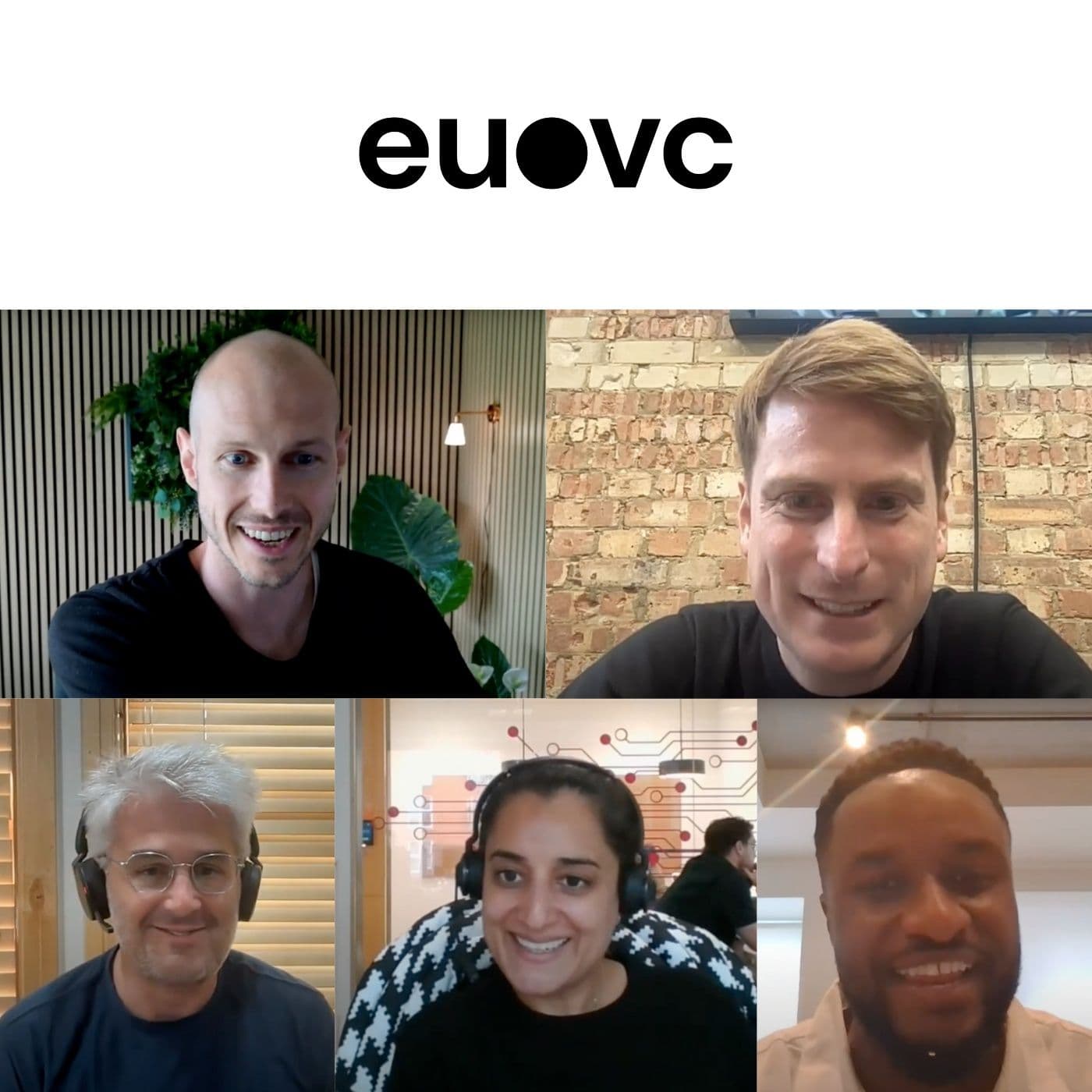
Episode Overview In this episode of EUVC, co-hosted by Andreas Munk Holm and David Cruz e Silva, the panel discusses the intersection of law and technology, particularly focusing on legal innovation in the wake of generative AI. The discussion features:
- Tom McGinn - General Counsel at Northzone
- Zach Posner - Co-Founder & Managing Director at The LegalTech Fund
- Shruthi Ajitzaria - Partner at A&O Shearman and founder of the LegalTech incubator Fuse
- Nnamdi Emelifeonwu - CEO & Co-Founder at Definely
The panel explores the evolving landscape of legal tech, addressing customer pain points, the impact of AI, regulatory challenges, and the distinctions between the European and US legal tech markets.
---
Key Discussion Points
- Defining Legal Tech
- Vertical vs. Horizontal: The panel discusses whether legal tech functions more as a vertical industry or a horizontal function across various sectors.
- Zach Posner emphasizes the importance of the term "legal tech" for community building among entrepreneurs.
- Shruthi Ajitzaria points out that many companies may not classify themselves strictly as legal tech, even though their core functions relate to legal documents and contracts.
- The Evolution of Legal Tech
- The panel reflects on how legal tech has grown, especially with the recent surge in interest due to generative AI.
- Shruthi initiates a discussion about the historical context of legal tech, noting that there were fewer startups in earlier years compared to the current landscape.
- Generative AI in Legal Tech
- The conversation shifts to the role of generative AI in shaping legal tech's future.
- Nnamdi shares insights on initial excitement about AI, followed by a realization of its limitations in real-world applications.
- Zach mentions a significant increase in investment and interest in legal tech companies leveraging AI.
- Challenges and Opportunities
- Regulatory constraints are identified as a significant challenge in the legal tech space, particularly in the US where non-lawyers face restrictions in law-related businesses.
- The panel discusses how deregulation in the UK has fostered a more innovative legal tech ecosystem.
- The Future of Legal Tech
- The panelists express optimism about the future, noting the increasing complexity of legal services and the need for tech-driven solutions.
- Nnamdi highlights the importance of building strong teams and a focus on customer experience to ensure business success.
- Ideal Legal Tech Entrepreneurs
- The discussion covers the profiles of effective legal tech founders, with emphasis on the blend of legal expertise and entrepreneurial spirit.
- Zach suggests that former attorneys make great entrepreneurs, but warns they sometimes struggle with risk aversion.
---
Key Takeaways
- Legal Tech Landscape: A growing sector with significant potential, driven by increasing demand for efficiency and improved user experience in legal services.
- AI as an Accelerating Factor: Generative AI represents both an opportunity and a challenge for legal tech; while it can optimize processes, its limitations must be understood and navigated carefully.
- Regulatory Changes: The regulatory environment is evolving, particularly in Europe, facilitating innovation and inviting new players into the market.
- Community and Collaboration: The importance of building a supportive and collaborative ecosystem in the legal tech space is emphasized, particularly through initiatives like A&O Shearman's Fuse incubator.
---
Closing Thoughts The episode concludes with a call to action for the European legal tech community to collaborate and innovate, emphasizing that the future of legal tech holds great promise as professionals and entrepreneurs work together to redefine the landscape of legal services.
---
For more insights on European VC, follow EUVC on [eu.vc](https://eu.vc).
Written by AI. May contain mistakes. Listen to the episode to check what was said.
Transcript
Automatic transcript. May contain errors.0:00Welcome back everyone to another episode of the European VC podcast. Today, we are talking all about legal tech and it is an episode that has been put together by our good friend Tom at Northzone. And he has put together a panel that just blows my mind. And this conversation is exactly the kind of conversation I've been looking forward to to have for a long time. When we've been hearing all the time about how generative AI would disrupt legal everywhere around the world. But in fact, I think in this episode, as we're talking to some of the real vertical specialists of the field, we will bust some bubbles for some people.
0:36I will not say more than that and just wish you a very hearty welcome to this episode of the European VC podcast.
1:06European response. Europe is a story of new beginnings. New beginnings. Let's start acting. This show is not investment advice and the hosts of this episode may be invested in the funds and companies featured. All right, everyone, welcome to the European BC podcast. You're all new faces except for you, Tom. So I think we should just run around the table here and I'll start with you, Zach, ask you to introduce yourself and particularly, of course, or if you say a few words about how you relate to the topic of legal tech. Awesome. So my name is Zach Posner. I'm a co-founder and managing partner at The Legal Tech Fund.
1:45We are the only dedicated investor across the globe that just focuses on the legal community and companies transforming the world of law. Our portfolio is 60 strong and it's awesome to meet some new friends and spend some time with some old friends today. Beautiful. Thanks, Zach. Sruti, would you please? Sure. Hi. Nice to see you. I'm Sruti Ajit Zarya. I'm a partner at A &O Sherman. I'm a former derivatives lawyer, but about seven years ago, I launched VUZ, which is our legal tech incubator. Beautiful, Sruti. Do you invest as well, or is it purely incubator? No, we don't. We leave all the investing to Zach and Co.
2:20To the likes of Zach. Beautiful. And Nandi? Sure. Great to be on the podcast. I'm Nandi Maifanu. I'm a former lawyer as well. but I'm also the co-founder and CEO of Define Me, which is a legal tech company. We are focused on simplifying contracts for lawyers, and we have a productivity suite that allows lawyers to create, draft, read, and understand their contracts. Our customers are both law firms and in-house teams as well. A &O Sherman, actually one of our customers, and we have a team of about 65 people now. Beautiful. Thanks, Nambi. Just as one would think we couldn't be in better hands, we also have Tom from Northstone with us.
3:02And Tom, you have been the mastermind behind this whole gathering and roundtable conversation. So first of all, thanks a million for putting in the work of putting together such a panel like this and also helping develop the script for it. But Tom, say a few words about yourself and how you relate to the topic. Yeah, sure thing. Well, it's great to be here. I'm Tom. I'm the General Counsel of Northstone. We're a multi-stage fund investing from seed through growth across the US and Europe. And I used to actually work for a legal tech startup. So I pushed off becoming a lawyer after graduating. I worked for an online dispute resolution startup in the US, which was a short-lived experience.
3:40And that was about 15 years ago now. But I've been following kind of legal tech pretty closely ever since. Okay. So then let's start at the very basics of this and ask the question, is legal tech a really helpful word to help you think about this as a category? And Zach, I see you're already pondering, so maybe you'll start us off there. Look, I think it is for us. It's extraordinarily helpful. It's in the middle of our name. And I think it's really helpful for the entrepreneurial community. I think that between the construct of legal tech and over, I think, where everybody else's base, the law tech, it almost gives entrepreneurs a way to identify, even if that's internally, because I would venture to say half of our companies that we consider in the legal or law tech base would kind of identify in some other vertical externally.
4:33But when we talk to them, it kind of feels like they have a home. I think it's an important world, an important designation, an important concept. And otherwise, you'd have people just kind of lost. So it enables community building and things along those lines. Is it correct to think of it as a horizontal for you more than as a vertical? Since you're saying that they don't necessarily recognize themselves as a legal tech company? It's funny. We've always thought of it as a vertical. I've never... I understand your question. Yeah. We think of it as a vertical. The vertical can live within different verticals.
5:10Yeah, maybe it's legal as a function is horizontal. So you're making me rethink everything I've always thought right now in the first 30 seconds of this podcast. Okay, but that makes a ton of sense. And I think the interesting part is, of course, the deliberations that you had coming to your conclusion that, okay, clearly it is a vertical as an investment space, but it is a horizontal in the company. the horizontal is something along the lines of like think of a company like docu sign you know may may have identified in 40 different verticals legal tech may not have been one of them or you know all these cap table companies that are in existence like attorneys used to do that but they would probably find themselves in the fintech vertical and then the loss of crossover yeah yeah and surely when you launched fuse you didn't refer to it as a legal tech incubator um But here you are on this podcast.
6:07So why did you not do that back then? Yeah, just because Zach and I are friends. And the context for the fact that I'm about to come out against him is that Zach was in London recently and blew off a very kind lunch invitation from me for him and his wife to go to Wimbledon. I mean, I personally think I'm more interesting than tennis. But seeing as he made his preferences clear, I don't feel bad at all disagreeing with him now. For clarity, we were there for five days. and every day and every evening was offered to Shruti. And she came back with the one day we said we were going to Wimbledon. But continue, Shruti.
6:43But we didn't because of the fact that I think, and actually I don't disagree with Zach in saying that sometimes people don't classify themselves as legal tech, but when you look at what the core is of what they're doing, it relates to contracts and documents. And so we've had that a lot where, for example, someone who is issuing a blockchain bond that will think of themselves very much as being a fintech. But in reality, 90 % of what they are doing relates to the creation of the contractual underpinning of a bond, which really at its heart is legal and is being done in a different way, and which I would actually very much classify as legal tech.
7:20So I think there are some instances in which legal tech will be treated as a vertical, but actually very many others in which it is a horizontal, which is why I personally don't find the term particularly helpful. So when we first started Fuse, really what we tried to say is if you are doing something that would be interesting to a law firm or else to a lawyer generally, just let us know. And that's kind of how we got around the term. So you were about to say something. He was about to apologize for going to Wimbledon instead of lunch with me. No, far from that. Yeah. I mean, look, if you think about legal, it's intertwined with everything that we do in our lives, from birth certificate to will.
8:01Every single thing that we do is governed by a legal doc. When you think about all of enterprise software, in some capacity, it's trying to track down truth or source data and then make that data more accessible so you can do things with that data. But where does truth or source data come from? It comes from an agreement. But I guess, Andreas, going back to your construct as like a horizontal, there's a lot where that makes sense. And then going back to shoot this concept, the first thing that I said about legal tech is it's a place where if you're an entrepreneur, you know you kind of belong a little bit in that world.
8:39So for us, the word is so important because it can kind of cultivate that community, opposed to entrepreneurs being everywhere. yeah how about you namdi then as a as a founder and when you when you when you started fundraising in the beginning for defiantly would you use the term legal tech startup how did you describe yourself yeah i i think one of the really interesting things is just the evolution of how that term is perceived uh from sort of the from this side of the table as an entrepreneur um because i you know when when i first started sort of defiantly um you know legal tech in terms of like there weren't as many startups you know popping up as you'll see sort of now obviously there's been a massive massive influx of interest in this in the sector given sort of over the last sort of 12 to 18 months particularly following sort of the you know the chat gp3 launch but I think when I first started I actually saw the term as if not neutral but maybe a negative thing because when you're speaking to investors a lot of investors weren't really excited about the legal tech sector you know it just it just wasn't a place where investors you know a lot of investors will tell you that they've had a intro you know they've been looking at it for years and then you ask them how many investments have you made in the sector and they'll tell you zero and it's like you know you're probably not that interested if you're that excited if you've been looking at something for a number of years you're still to make uh an investment so i think that that is changing now i think that's an exciting thing uh because the market is growing for all of us and And that's a very compelling thing.
10:13But I think, yeah, when I first started, it was definitely not as sexy a term as it is probably today. So a lot of entrepreneurs, I would probably argue, would be trying to stay away from classing themselves purely as a legal tech company and trying to see what other verticals they could sort of bring into their business just to make the markets bigger. How about you, Tom? Because North Zone is obviously not a legal tech focused firm. You very much have an affinity for this base, obviously. What's your take? First of all, is legal tech sexy today, as Namdi just said? I mean, I think we've probably reached peak sexiness, peak frothiness.
10:55Maybe it's not the peak, but certainly the peak in terms of what I've seen over the past. Basically, since I started working with that online dispute resolution company in 2011, 2010, And for sure, it's a very sexy word now. I think a lot of the barriers that existed for legal tech, at least barriers to investment, are kind of slowly eroding away. I think that's probably something that we'll focus on later on during the discussion. But yeah, in short, for sure, I think this is a great time to be building a legal tech company. And maybe, Zach, you've created a legal tech landscape map that I'm thinking maybe you could describe.
11:38that a little bit and help everyone think through kind of how can they structure, conceptualize legal tech as a vertical in their mind? Well, there's lots of ways to think about it. I think that we're at the highest level of sexiness that we've seen. And I don't know that it doesn't go a little bit higher, because there's a lot of areas where there's just so much opportunity. So from our end, I think when we think about the map, the first thing we think about is software that sells into law firms versus software that sells into corporates. And then we even think about software that sells to consumers.
12:17In fact, we think about it as like a pyramid. So up top, you have applications that are the business of law, then into the practice of law for the law firm. Then you go into the general counsel's office. Then you go into legal ops office. Then you go into business units office. Then you go into SMBs. Then you go into consumers. And what happens is as you go down that pyramid, we think the markets get much bigger. But also what's interesting is as you go down that market, everything down here, it changes the roles and the responsibilities of everybody upstream. So all of this technology that's coming out, if NAMD's technology is going to help a client do something, well, that changes the way they interact with the law firm.
12:56So we broadly think about the map in the construct of the types of customers that it's serving. So that's kind of how we think about it. And there's tons of sub-sectors within each one of them. And Zach, is there kind of a customer profile that you're particularly, that you think is really kind of driving this kind of peak sexiness of legal tech? Like, is it the corporates? Is it the in-house teams who might have an incentive to cut spend? Is it law firms who are moving away from the billable hour? It's all human capital right now, which is, there's an extraordinary margin behind that. But if tech can do anything, if somebody's charging$1 ,000 an hour or they're priced at$1 ,000 an hour to deliver some sort of service, it's not that hard to identify where there's huge margin opportunities there.
13:47So I think it's just greenfield and it's all of it. And then even down to the consumer stuff where$1 ,000 an hour may outprice a lot of consumers with their legal needs, but technology that can deliver this for pennies may not. And Tom, just I suppose from my perspective, so much of it is around, to Zach's point, really, the interconnectivity. So for us, when we first launched Fuse, nobody was really talking about legal tech. And the question I used to get asked most often is, what is in it for A &O? Because you're basically eroding the billable hour proactively. But I suppose the foresight that our senior partner had at the time was that, well, technology is available to us, but it's also available to everybody else.
14:33It won't be very long before the clients realise that we shouldn't be charging X per hour for Y job. It's just not reasonable and it's not just. And so, yes, it's taken the market a little while to come to that sort of general realisation and understanding. But the pressure now is entirely coming from the clients. So the reason why the law firms are having to adjust their models, adjust what they do, adjust their technology investment is really because they have no choice. because I, if I'm using technology, would always be able to do something cheaper than my counterpart and often more accurately and better and with a better client experience often as well.
15:10So it's about understanding that there is always knock-on effects. And the other one that I just think is human nature is when we first launched Fuse, I remember thinking, well, hang on a minute, you know, I order cabs in this way. I order food in this way you know so much about what I'm doing my day-to-day life has changed it's not possible that those same innovations aren't applicable across the piece to different industries including to law it doesn't take genius to make that connection no jokes nandy I know I'm not genius don't need to hear from you um but but you know it doesn't take a huge leap to figure that out and and as soon as you realize that and just even slightly thoughtful about what you can be doing better, picking up innovations from different industries and verticals, you can move along fairly quickly.
15:59So I think the combination of those two things have just changed what law firms think they can and can't do, really. Oh, and I think there's been an acceleration with large language models, and really primarily because of the fact that people could see this technology in action. And everybody saw it. Everybody said, you know, that started people thinking with a lot of questions. But I think this has been evolving for 10 or 15 years. Like there was a point, you know, in litigation, there's a concept of e-discovery and the law firm or discovery and law firms used to say, you can't trust an outside vendor to make Xeroxes for you.
16:37You know, and now that entire space has been outsourced. More recently in this space, we see a lot of technology and a lot of people that have just built alternative legal service providers around like NDA review. And lawyers say, we don't, we don't, NDA review is fine. We don't want to do that work. Cap tables, you know, lawyers used to do that work and now they're happy to work with some of these companies. You look at outside counsel guidelines on the cost pressure and they say, we're not going to let you bill for a first year associate. put all this stuff together. And I think that it's just like accelerating at a faster pace than it's ever been.
17:11I think this sets you up perfectly, Namdi, I imagine. Because you've seen the adoption, I imagine, from the customer side, how both, if Saga is correct, you've seen with LLMs that everyone all of a sudden was much more open to using a service like yours. Or is that not what has happened? I mean, what we're seeing is that when ChatGP3 and GP3 launched, like there was a lot of excitement and you had a lot of, you know, excitement from like firms and in-house teams, you know, really about the potential of what it could do. And I think you saw a lot of firms sort of racing to get their hands on these LLMs to find out sort of how applicable they were and what sort of use cases they had.
17:57I think what we're finding out now, probably over the last couple of months, is that initial hype is simmering down slightly, and people are being a little bit more realistic, not just about the opportunities of these LLMs, but also the limitations that they have as well. Where initially people thought, okay, they could sort of be a panacea and sort of solve every particular use case that they were trying to solve. I think more people are now being more realistic and realizing that there are actually a lot of limitations. There are a lot of things that they can't do and you have to apply them in the right way.
18:31So whilst we saw a lot of interest from sort of law firms maybe 12, 15 months ago, I think today they're a bit more cautious and measured. And some of them are building their own. Some of them are using external providers. The good thing for us is that it allows companies like mine to really just be focused and not sort of try and go with the hype, essentially. Because it's very easy to just sort of say, hey, this is what everyone's doing. Let's sort of jump in the bandwagon. And one of the things that we decided to do was to take a much more cautious approach. Could you kind of provide a bit of color around that cautiousness?
19:10Is the cautiousness kind of data protection related? Or is it, hey, we need to integrate this with our existing tech stack. That's difficult. or is it just kind of the usual risk aversion that lawyers have of kind of kicking things to technology partly like which how does that cautiousness kind of what does it look like i think for ross um you know i can only speak on behalf and finally our cautious has really been to actually identify proper use cases um there's been a lot of vendors that have come out with and a lot of them do quite similar things um which you know it starts to sort of you start to wonder how do you differentiate between one sort of vendor and the other.
19:51So for us, it was about, yeah, you can do all those sort of similar things that all these other companies are doing. But what are the real, real use cases that goes to the heart of how a lawyer actually works, how I used to work when I was an associate for five years, day to day, and try to identify how we can make that process more efficient and easier for the lawyer. And that takes time. That's not just something you wake up and sort of start trying to solve. It takes time. It takes a lot of investment. It takes the right team. And that whole process takes time to bring to the market. So we're very, very excited about what we're building, what we're trying to bring to the market.
20:25But we're also sort of quite realistic that it's not, you know, it's not going to sort of be an overnight solution. Can I add, Namdi, though, the thing that's interesting about Define is, so we, I think it's fair to say, we're basically the first users of it. when we first started to use it I think we very much saw defined it as an efficiency gain tool because you've just mentioned efficiency and it made me think you know lots of the tools that are coming out now are viewed as efficiency gain tools but not ones which minimize risk so what we're hearing a lot of is okay if you were to use this tool you would have an efficiency gain but it comes with an associated risk I think that the differentiator between lots of the things that are new on the market now and something like Definely is actually over time we've gone from looking at Definely as being just an efficiency gain tool to actually being a risk management tool.
21:18So sometimes when the technology is a bit more tested and not, for example, the sort of the latest, greatest GPT, whatever number we'll get to, is going to hallucinate or do something different or perhaps give us unexpected consequences. is sometimes when the technology is actually slightly more basic, it does actually enable you to look at the use of legal tech from a different lens. So not just that of the efficiency gain lens, but also that of the risk management lens. And for lawyers, really, risk management trumps efficiency gains because at our heart, that is what we're there to do. We're there to manage risk.
21:58It's funny, Shuti. I thought you were going to say the opposite there. I thought you were going to make the point that Zach made around, And hey, Gen.ai is obviously very sophisticated technology. And as a result, you can kind of trust it a lot more. And therefore, lawyers are becoming more comfortable. I mean, we definitely are becoming more comfortable with it. And it is getting better and it is improving. But I suppose it's like the equivalent of saying, would you rather use a calculator or an Excel spreadsheet to adopt lots and lots of numbers today? Probably an Excel spreadsheet, right? you know but but would you rather use an excel spreadsheet or would you rather use i don't know some technology that's not completely tested not totally known and which sometimes will throw out mistakes uh past you know there's a middle ground somewhere and i think we're at the point where law firms can comfortably be in the middle ground because they can see that it can provide some efficiency gains they can see that it also provides some risk management but it's not tipping you into the edge of the completely unknown and i think for some law firms the the generative AI piece is still actually goes into the completely unknown category and the risks I think it's it's it's the quantification of the risks and understanding of the risks which is is the scary bit for lawyers so weirdly I never very rarely come out in support of NAMD and he'll agree as a true fact um but we're weirdly in sort of coming out um to that for the fact that um it is important i think for legal tech companies not just to jump on the generative ai bandwagon regardless of the use case regardless of the anything else just because of the fact that it is in inverted commas sexy you know it's still understanding what are you actually adding here and how is that helpful and how is your customer going to actually respond?
23:47Yeah. And Tom, I don't think we are, we're excited about the technology and kind of the future. By no means do I think we think it's here right now and everybody should be using it 100 % of the time. The strongest uses we see in our portfolio are companies that were been thinking about this for a long time, have some decent distribution and are incrementally adding this in. Maybe it's 5 % of the product. Maybe it's used for summarizations. Maybe it's used for translations. Bill Gates has a quote that we think about a lot. People overestimate what happens in a year. They underestimate what happens in 10 years.
24:24So for us right now, we don't believe the best technology wins as of today. So we believe it's about the best user experience and how you can get people to change their habits. And we think that the underlying technology is going to get orders of magnitude better in the next couple of years. So we're kind of excited for that type of future. We're kind of excited for companies like Nnamdi's that are delivering an amazing experience to their clients today and that start to bake this stuff in and then become just absolute powerhouses in the next couple of years. Let me just understand that correctly.
25:01So that means that all the startups that you might see or surely do see come up now that are building foundationally on Gen.ai, you would say the tech is probably not there yet. Yeah. And the simplest explanation was, I think that the latest version of ChatGPT made something like eight or 9 % of YC companies obsolete that were in their cohort right now. Wow. So the tech is growing at that type of rate where we look at it in two ways. We look at it as saying, hey, incumbents have a huge advantage because they have a lot of data, and it's really hard to compete against them in some ways if you add some LLM functionality to it.
25:46But the earlier stage companies, they have this advantage of redefining the user experience. And we think this has nothing to do with LLMs. User experiences and workflows have just been so neglected and legal that there's so much opportunity there. And then LLMs are just going to be this accelerating factor. So we are definitely seeing the low-hanging fruit stuff. And then we're seeing tons of entrepreneurs enter into this vertical. I think we just did all of our reporting for Q1. Our deal flows up like 245 % year over year. And we see a lot, but those types of numbers, like we're literally seeing that that type of influx of engineers working on these problems but a lot of them that are coming out saying hey i think llms can be used to do something like really like um summarizing depositions that's like a logical one that we've seen no less than like 20 companies going after but we just say well is that a standalone company or is that for the existing companies with tons of distribution to layer on some technology So we don't think, you know, we're really excited on the LLM side if you want to focus on the tech for the companies getting started in the next six months or a year.
27:10We think they're just going to have such a leg up compared to the companies that were started a year ago thinking about this stuff. Or we think about the companies, you know, like non-theater out there day in and day out, have a ton of distribution on the customer side, have extraordinarily happily customers whose habits are baked around the product. and then how does somebody like him use this to kind of improve that experience? I think one thing I would add to that is that people, people for some reason or whatever, they underestimate how difficult it is to build a company. It's not just about trying to use the latest technology.
27:46It's about making sure, as Zach said, that the users within, ultimately we are selling to businesses. We're not selling, this is not a B2C in what we do anyway. you know we're selling to sort of law firms or selling to in-house teams these are other businesses and there are barriers barriers to entries to selling to you know b2b in the b2b category um i think a lot of people just underestimate how difficult that is because yes you could have a law firm or in-house team sort of get really excited about you know what the latest sort of lm you're using and what you know it's a possibility and they've got a budget uh to sort of spend uh to sort of see what you know what what the use cases are and explore that but then it's about retention Can you keep that same customer the next year and the year after and the year after?
28:29And can you grow the users within those customers? Because ultimately, if you don't, then you're not really providing that value and ultimately you become obsolete. So I think all of these things need to really be considered when sort of trying to come into this space. It's not just about, yes, there are a lot of applications. And as Zach said, law has been neglected for a long time. So there are a lot of opportunities, which is super, super exciting. but also people need to be really realistic about how difficult it is to to build a a business especially in this space i guess i have a question for the group following on from that which is i mean would you guys say that the best legal tech entrepreneurs are people like nandy so ex-lawyers no no tom i would never say that what a silly question Absolutely not.
29:14I set that up wrong. You have a deep understanding of the customer because they used to be the customer. Yeah, I was going to say from our end, former attorneys jumping over have the potential to be great entrepreneurs. They also have the potential to build something for a very specific use case that's just them and solving their pain point. And it's not broad. So our dream type of entrepreneur is, or is not dream, I mean, every entrepreneur is different. Entrepreneurs can come from anywhere, come with any sort of background. But the ones that we have found that have been fascinating are the ones that maybe have a legal background, but very specifically work in a product role within, you know, trying to solve some legal background.
Read the full transcript
30:03Because they not only understand the pain points, but they understand how you solve them thinking about product first. So I would say that that's kind of the hybrid that we look for is some understanding of the legal vertical, but also understanding from a product perspective of how you build software. I mean, you have both of them together. We've seen some pretty extraordinary things. I definitely concur with Zach. Like we've seen a few ex-lawyers who had a real frustration, left the law to deal with that particular frustration and then don't have the 360 degree view of what else is going on to be able to figure out how to broaden that issue out into something which actually gives them a business rather than just a product which solves often a very niche pain point.
30:50but I do think I mean we saw this year in um a fuse a business which was a couple of like super super brilliant um tech guys with a you know really amazing backgrounds but they didn't have the legal person in the mix and they just didn't understand the problem like at all it was kind of fascinating like obviously they had spoken to a lawyer once stumbled across what I thought was a brilliant problem but had no real understanding of like the intricacies of that problem and and what what their their solution might do to actually address the real pain points so i do think you need a mixture and what's i suppose really fascinating to me again just the the evolving landscape is when we first um started fuse in many ways we were offering ourselves out as a kind of like a design partner and without really knowing that that's what we were doing but this seems to be the latest thing because I've had like three calls this morning already of random legal tech companies saying oh we're looking for a design partner I'm like congratulations to you but actually it appears that law firms are really going for this model now and I think it's helpful because one of the things and NAMD if you'll mean about a few years then we'll have words later but one of the things I think what we do the best is we get lots of different lawyers from different geographies different levels of seniority different departments to look at products so whereas you You know, NAMD may have built definedly for X use case because he was, you know, in this department at this time looking at this problem through these eyes.
32:19You'll find someone from our Frankfurt office will have a completely different view of the world. And somebody who is a partner will have a totally different need. And someone from our Document Production Centre will have a different perspective on what is helpful. And so I do actually think that the breadth that you get from having as many eyes on something as possible is really good. But without that core co-founder or founder who has got the legal perspective and the idea and a really solid understanding of the initial problem, I think it's really difficult to get something proper off the ground.
32:54It's interesting because I totally agree with that. But I think you could even go further. And this is not just an issue with people trying to create legal tech solutions. It's kind of a venture challenge generally, which is that you don't canvas enough opinions from potential customers and that you find a design partner to use that language true to you and that you just solve for their intricacies and create something that is very hard to then scale across multiple clients and different customer profiles. So I think that's just generally a challenge that a lot of kind of entrepreneurs I speak with are dealing with, like being too quick to develop a product.
33:33There's so many great technologies out there and not spending enough time to figure out, hey, which section of customers are we going to go after? We see this a lot. And we see a lot of entrepreneurs, a lot of companies come to us with one or two design partners. You know, the good and the bad of this industry is like people are willing to pay for it. And, you know, and so like they have this a little bit of revenue, but it's kind of like they're floating. They're just kind of in the middle, you know, and others aren't interested in the product. And but like it looks really good from these one or two customers.
34:08But how do you turn that into something that that looks like can be venture backable? And I think that a lot of entrepreneurs in this vertical find themselves in that place. I love to just stay on that venture backable part. Where do you see typically that entrepreneurs go wrong most often? Are there categories that are like, this is a place where so many come in and think you can build a business that's venture backable, but you just cannot. Where it's like the time is just not there. It's like asked in a different way. what parts of the legal tech landscape of the legal tech map that you described before, Zach, does venture just not play?
34:48We would love to see more. We think there's tremendous opportunities on the consumer side. We see a lot of people trying to solve things that are almost like borderline nonprofit oriented and a little bit of traction, but just can't get that big. I think that a lot of the stuff that sells into law firms, historically people have felt that way about. But maybe now things are changing because the clients are also interested in adopting this technology. So what could have been looked at something as pretty small is now something that, as clients go in, your markets expand. So we come into a lot of these things with wide open eyes and we're not trying to, we don't have blinders on because we think market size is going to be a little bit deceiving, especially when these are like um you know everything we're doing is in or around source documents source data truth data and we think there's a lot of exhaust businesses that get built by accident or not by accident but once you have that and the um you know the one i think about a lot is carta structures data from cap tables and started out as something that they help companies with because they have a lot of our company's information we now use them as a fund administrator because they then dabbled within a secondary marketplace.
36:10There's lots of different areas you can go once that original data is structured properly. And we think there's lots of opportunities like that in legal. And just super quickly, because you mentioned Cardizac, I mean, I think that's a phenomenal example of a company that had a really well thought out go-to-market strategy. Because I think they initially tried to target law firms, right? Like, hey, guys, you should use this amazing cap table management software. You can, you know, as basically using law firms as a funnel into companies. And that didn't work very well until they've pivoted and said, okay, we're actually going to go after the companies directly.
36:46And now. Even that tipping point, when the product became strong enough that lawyers wanted to interact on Carta versus not like that distribution method where every single law firm now has their own page and partnership with Carta. And as you sign up for a law firm, they say, hey, we use this as your cap table solutions that are right with you. So we think that this channel of having attorneys recommending your product, so not selling to them, but using them as almost a referral source is just one of the greatest untapped distribution channel that's out there. you know when you when your attorney recommends something you use it can i just say one other thing though which is we were talking earlier about the profile of founders and i do think you know you asked andreas you know what's one of the biggest reasons why companies fail weirdly i do think the fact that so many of the founders of legal tech companies are lawyers and so the the risk profile that they are willing to accept is so different to most entrepreneurs you know you they'll have spent five or six years of their careers basically minimizing risk minimizing risk minimizing risk and then all of a sudden they're out in the big wide world and doing some of the things that they have to do in order to be able to scale quick enough raise funds quick enough you know just to be brave enough and bold enough to to make some of those scary decisions we've seen a number of companies where i've always thought gosh you know is it really to say gross and balls i don't know but you know come on just you know forget you used to be a lawyer because now you're not and now you're doing something else and you need to be prepared to take some big brave decisions um but that sort of the risk averseness never quite I don't think leaves you as a lawyer so I think that's like the risk profile of legal tech co-founders I think is interesting just because generally speaking what we see is people are scared and they don't they don't really have that sort of Elon Musk mentality of I can rule the world regardless of you know whether it's realistic or not and the other thing I think people always underestimate is how long it takes to go through a sales cycle which I know actually is the big thing for venture you know like the big old story is it takes so long it takes so long it takes so long that's why legal takes practically uninvestable but there is so there are so many just from an from a law firm perspective there are so many steps to go through before you can actually use anything and it is so laborious and time consuming that even with the best technology in the world it's really difficult to say okay well this is brilliant this is fabulous it's going to change our lives we're going to use it today that actually even if you wanted to even if everybody wanted to it's really really hard thing to achieve because we have got clients that and we've got data that is so sensitive so there is so many kind of steps to go through it just just does take a lot of time and we've seen again so many companies fail at just the last minute where they were so close to signing a contract, but they never quite managed to get it over the line on time.
39:49And I think those are the two things that we've seen go most wrong. But we also see that can be an asset at times because we like to think, hey, really hard to sell into, but really hard to get out once you're in. I'm assuming, when attorneys around you start using software, that's it. They're there and it's going to take a lot to get them to change that habit again. We almost look at that as, and I agree with you, we see so many companies. Every company is a month away from signing three deals. But at the end of the day, cash is almost like oxygen for these companies. And without it, you can't breathe.
40:29But yeah, I'm curious how you think about that because we also look at that and say, I mean, it's almost a screener for us. The companies that are able to navigate through that cycle, we think lasts a long time. Yeah. I think the two things that make legal tech products really sticky in a law firm are firstly, lawyers hate going to training and learning new things. So once they've kind of been bothered to do it, once they're almost never, you know, a tiny incremental benefit on a different product is almost never worth it. You know, it would have to be something much, much, much better to convince lawyers to switch from one thing to another.
41:01but the second is wherever you're dealing with and this isn't true of all legal texts but often times if you are dealing with something which is going to give you better access to data or a better understanding of documents or a better understanding of you know what someone's negotiating terms are those products become incredibly sticky because they basically become a knowledge base as well as just a product. Nandi I'd love to ask you and we've heard now some thoughts around the difficulty of getting a legal tech company off the ground. What did you and they finally do to kind of surpass this problem?
41:41I think what I was quite lucky with was that I had an incredible team from the outset. So even before we launched our product in 2020, it was about two, three years of working with really smart individuals that plugged a lot of the gaps that I had in my skill or in my experience. So for example, given the example that Shruti said, because I was a former lawyer, yes, I understood the problem and I understood what we're trying to solve, but I was probably a little bit more risk averse than, for example, somebody else in one of my other C-suite, somebody else in my C-suite who has spent 15, 20 years as an entrepreneur so sort of the company I could complement and fill that gap that I had right so I think for for for me um you know that initial stage when as as both Zach and Shruti have said when you're literally just trying to survive you want to sort of you know make sure you can survive until you sort of get that that first contract or to until you raise that next that next around having a an incredible team uh becomes super super important because you know There are so many things and so many unknowns, especially at the beginning stages that you just can't account for.
42:56And so you need to sort of not just have a great team, but also have a lot of discipline as well, as well as financial discipline as well. So oftentimes, a lot of companies, they run out of cash because they're not disciplined with their finances. So that becomes super, super important, especially in the early days. I guess, Zach, when you started out saying what you really look for is founders or teams that are focusing on a better user experience, that's also connected to the fact that if you know you can deliver everything else in a better package, then you should be able to sell. Whereas if you come with a very innovative tech stack in the background and that is what you're trying to sell, that's harder.
43:39Is that correctly understood that it's a way of knowing that you won't run into the chasm of saying, okay, we've built great tech, but we can't sell it because they're just not comfortable with what they're looking at? Yeah. And we just see different companies receive different responses when they kind of go to market. We've looked at a lot of companies recently in the IP space and we see 10 of them with an idea or we see eight of them with an idea. We see one of them with two pilot customers you described, and we see one with 40 customers signing up three a week. And you look at the user experiences and you just, I mean, to going back to how we started this conversation, you know, if you're in this, if you're creating a legal tech product, you get the, you have to play off of that user experience.
44:30you know you know otherwise it's just a general tech product and you could put like the legal tech product you want that user experience to be 10 times better than what microsoft's going to offer me or google's going to offer me or something along those lines and i think that we see it and when it happens you know it's happening all right guys i want to bring us back to the topic of generative AI. You said some things in the beginning that made me think that if I ask the question are we experiencing a legal tech bubble you'd likely say there's a big risk we are. But I'd love to ask you straight up all of you, are we experiencing a legal tech bubble or not?
45:10I'm going to say no. And it's more because the space is just forget all the generative AI stuff. It's missing so many work. There's so many workflow opportunities that can be better optimized. And I think you're seeing a bubble of people trying to solve problems that they're more qualified people to solve. As an add on to that, are you seeing those companies funded as well? Yeah, there's a lot of funding going into the space. I think you have a couple is happening at the same time. You can look at funding numbers and it looks down. And I think that's completely wrong. I think that it looks down because, sorry, it is down for the way later stage companies.
46:00The 100, 200, 300 million dollar rounds that were happening three years ago are not happening. If you take one of those rounds and say, that's 100 seed companies at a million dollars a piece. So I think we spend our time on the earlier stage to precede the Series A. And in this space, we're seeing more capital getting put into this space than ever before. And I think there's more problems. And I think people want to solve these problems. I think that the exact makeup of the entrepreneurs trying for this stuff isn't the perfect one right now. But a bubble, like, do I think that there's enough problems in an arguably$2 trillion space between legal and compliance that need to be solved?
46:47And do I think more are getting created every day, a lot by regulations that start in Europe and then come to the US? Like, yeah. So in other words, your take would be, obviously, you're a specialized firm, so you'd say that. That for a specialized investor in legal tech today, you're in very good times. But if you're an LP exposed to legal tech as a vertical via a group of generalists, you would probably look at that and be a bit anxious. Yeah. You guys see some of these more recent Series A-ish where the generalists are jumping in with 10, 20, 30,$40 million checks. We have great relationships with all of them and we talk to them quite frequently.
47:40but we look at a company and we think the valuation should direction, I believe about a quarter of what it is. And they come in and they're not as valuation sensitive. So it kind of, it drives prices up. So I think we, there's just a lot of different characteristics happening, but do I think there's an opportunity? Do I think legal is an untapped market? A hundred percent. And do I think that you can, you're, we're going to see some massively large companies being built in the next decade. A hundred percent. What role do you think regulatory constraints play? I think a lot of people listening might not understand that there are regulations in place that, like in the US, that prevent non-lawyers from running businesses, that make it harder to get outside investment, which can then have an effect on acquirers of this sort of technology.
48:36We think about this significantly. The UK deregulated in 2007. And I think there's not one piece of the legal ecosystem that doesn't have outside capital in it. And for those that aren't as familiar, the regulation I think you're really referring to is the construct that you can't make money on the practice of law if you're not an attorney. you know i think and that kind of has like these limitations as to what technology can do historically and who can participate and i think and then what you're seeing though tom you're seeing these regulations change you know we're like seeing this in a real-time basis this is the other theme that we don't talk about as much because people just aren't as interested in it because ai's got everybody's attention but you have ai and then you have like states like arizona Utah Washington DC and interesting articles coming out of states like Texas right now that say for the first time there are constructs being set up that you don't need to be a lawyer to participate in the profits that come from I think in Utah we have a couple companies that have set up within their sandbox that are doing some amazing things so if you look at AI and this construct and the changing regulatory environment you kind of get even more excited about what's coming but in general our technology the technology that we're seeing is not issuing legal advice you know it's more helping the practitioners cut through some lower level work you know and this stuff on the consumer side it's stuff that like no attorney wants to help people with some of these things because they're so small dollar, there's no alternative.
50:27So I don't think that we're seeing it. If I look at it and I look at the leverage model that says you have partners all the way down to paralegals, I don't look at like, I see the model like shrinking over time a little bit, that pyramid, but I think partner rates go up. And I think the advice that people want to turn to law firms for becomes even more important and more expensive. Now, the lower level work, hey, how do you manage data on a cap table that maybe was historically done? Maybe some of that stuff shifts. Or some of the stuff, yeah. Anyway, I could go on and on about this. But I would just say the regulatory environments, it feels like it's changing.
51:13But that being said, there's even such low level workflows that people need help with. I'd love to ask you all the big question as now we're on the European BC podcast I have to ask Europe and legal tech what's good in Europe what's less good I think just generally from our experience you know on the customer side I think that the profiles are quite similar to be honest selling to law firms is a lengthy process, whether it's Europe or in the US. You know, they're just things you have to do to get into those law firms before, you know, somebody can use the technology, as Shruti mentioned. So on the customer profile side, I think it's quite similar.
51:58Why I think there is a noticeable difference is probably on the investor side. I feel like investors in Europe are probably a little bit more, well, more conservative, whatever range you want to sort of apply to that. you can you know it's up to you but they're definitely more conservative uh than their u.s counterparts how do you see that expressed namdi i'd love to ask this is not necessarily a a bad thing but it's it just depends on sort of how you want to view it right so a few ways for example i think exactly mentioned um you know it's much more likely that you are going to get a higher valuation in the u.s without as much traction it's just very unlikely that a european vc will give you a crazy valuation if you're not.
52:42The numbers don't back that. I think probably that's one example. But also in just the other ways is just the willingness and the proactivity of US VCs to actually just want to try and grow the business and grow revenue. I think European VCs, they're very much more focused on processes and making sure you have sort of the right process. I get the reason they're trying to help you build a big company. And if you're going to build a big company, then you need all the processes in place to make sure that that, you know, that company is sort of, you know, corporate governance and all of those things are in place.
53:23I completely get that. But I think a US VC, their main thing is wanting to help you acquire as many customers and grow revenue and grow, you know, win as many customers as you can. So you see a lot more proactivity in terms of them making referrals and introducing you to talent or other investors to just try and see how they can help you grow that business. So that's one aspect which I've seen. I would say when you look at verticals or horizontal, legal is, well, depending on how you think about this, legal is one that Europe's actually pretty far advanced on. And I think it's because they were thinking about some of this deregulation stuff way earlier than us.
54:05I would venture to say 30 % of our conversations are with companies of our day is with people in or around Europe thinking about this stuff. And I think that's high for a US investor. Like a typical US investor would be blinders on 95 % US, 5 % Europe. So what percentage of that is the UK as opposed to continental Europe? Over half. Okay. Interesting. I mean, look at the program Shruti runs. I don't know that we really have an equivalent in the US. Shruti, is there? No. So but what actually I was going to ask, Zach, is do you think that's in part because London really was an early mover in legal tech?
54:56And when it sort of all kicked off, there were a few initiatives, I think, that helped it become a very cohesive, collaborative ecosystem. And so in terms of kind of like finding your way around, if we were to accept that legal tech is in fact a vertical for one minute, to find your way around that kind of ecosystem is much easier I think in London and actually in Europe than it is in the US because the US doesn't seem to have found that same sort of collaborative ecosystem and like one central landing place so I know you know obviously like I came to Miami last year for the conference you ran and that was fabulous and there were actually a load of legal tech companies there but it's quite rare I think that you would find a meeting of minds in that way in the US, I suppose because of its size, in a way that in London actually you go to, I don't know, a legal tech conference and you feel that there is something, there is a community and you feel that people know each other.
55:57And I don't know, I think it's something about the way in which it's grown. It's kind of grown up amongst kind of a collaborative, community-led sort of vibe, which means that people do tend to congregate together. What do you think whatever you're saying i agree with like i always know but no i know i don't know why though i don't like the way you were talking about it with london i agree i like when we go to london there's there's like two or three folks like you that the whole globe knows there's clear places to show up and be a part of a community and thinking out loud like i don't know anything like that in new york that exists you know in new york has every big law firm you can possibly imagine.
56:46You've had some firms dabble with some of these accelerators, but nobody has consistently year over year said, this is a priority. I don't know if people can see Shruti's background, but their space is amazing that they have for this sort of stuff. So I don't know. Yes, there's much stronger of a sense of a community in London, to your point, than there in the US. And we're trying to build that, but we're really trying to build on a global basis with the event that we do in Miami. I was just going to ask, I wondered to what extent the deregulation in the UK of the provision of legal services has contributed to that.
57:24This is like 15, 16 years ago now. I think for 15, 16 years now, people have been thinking about law firms in a less traditional way. I don't know the answer. I just wondered what the perspective of the room is on, on the role of, again, deregulation on this. I think it's cultural, Tom, from my perspective. It's cultural. It's enabling people, other people into the tent and enabling people to think, oh, actually, we can push at the boundaries. Yes, we can be ambitious for this sector in a way that is harder when you can't, if you can't get into the tent in the first place, you can't really see what the problems are.
58:01And you can't apply any innovative thinking to a store. And if what you're being told is you have to fit a certain mold to operate within law, I think it's quite difficult then to say, oh, and actually I want to do something that was really quite ambitious and different. So I think it's helped set the culture of pushing, trying new things and giving people a license to be slightly different and come at things from a different perspective, as well as obviously all of the practical benefits that it brings. I would love to close this episode heralding the European community and focus around collaborating.
58:41I think that would be a beautiful place to stop. Thanks, Rudy, Nnamdi, and Tom. Thank you so much for joining us for this episode. I do hope everyone who are listening learned a bit more about legal tech as a vertical or as a horizontal. What's happening there, whether you're into AI or not, is going to change everything. I think there it's more of a time horizon than anything. Guys, thanks so much for joining us. Thank you so much for having us. Thank you. Thanks.
59:11Tear down this wall. It's more than just an alliance. This is a union of values. United and determined we can serve as a model for other regions of the world. The nature of a problem requires a European response. Europe is a story of new beginnings. Let's start acting.
From the publisher
We are joined by:
- Zach Posner, Co-Founder & Managing Director at The LegalTech Fund, a dedicated investor across the globe that focuses on the legal community and companies transforming the world of law.
- Shruthi Ajitzaria, Partner at A&O Shearman, a former derivatives lawyer, who about seven years ago, launched Fuse, an incubator focused on LegalTech.
- Nnamdi Emelifeonwu, CEO & Co-Founder at Definely, a LegalTech company that provides a unified solution for lawyers by simplifying access and understanding of legal documents.
Chapters:
- 03:46 Defining Legal Tech
- 04:47 Legal Tech as a Vertical vs. Horizontal
- 08:58 The Evolution of Legal Tech
- 10:44 Legal Tech's Growing Market
- 11:31 Legal Tech Landscape Map
- 16:08 Generative AI in Legal Tech
- 17:11 Challenges and Opportunities in Legal Tech
- 23:21 Future of Legal Tech
- 28:57 The Ideal Legal Tech Entrepreneur
- 29:52 Importance of Legal and Product Knowledge
- 32:58 Challenges in Legal Tech
- 48:09 Regulatory Constraints and Opportunities
- 51:18 Legal Tech in Europe vs. the US
- 57:15 The Impact of Deregulation
- 58:32 Closing Thoughts on Legal Tech


