
In short
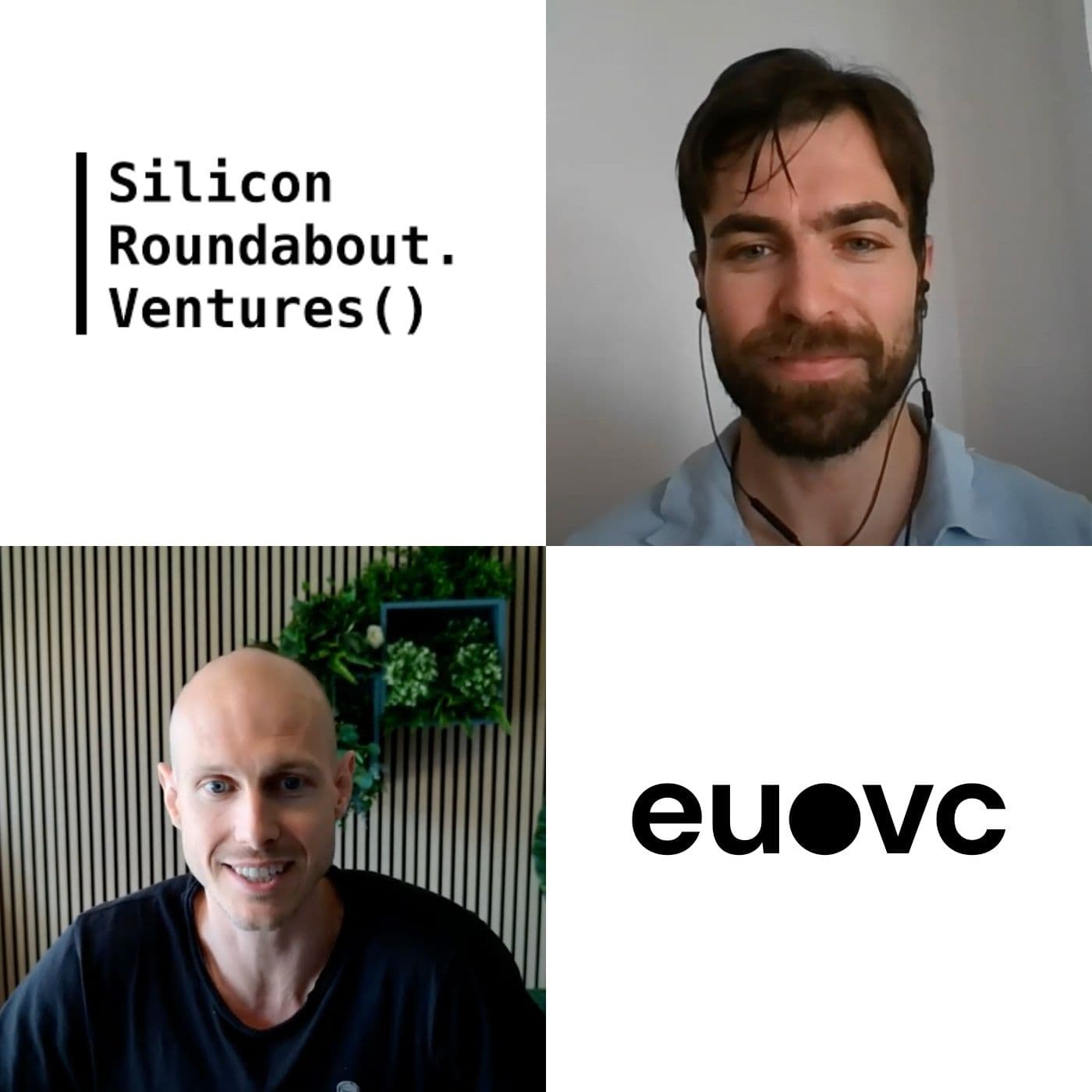
EUVC Podcast Episode Notes: E343 | Francesco Perticarari: Announcing our investment into Silicon Roundabout Ventures
Summary In this episode, co-hosts Andreas Munk Holm and David Cruz e Silva announce their investment in Silicon Roundabout Ventures (SRV), a £5 million SuperAngel Deep Tech pre/seed fund led by Francesco Perticarari. The discussion covers Francesco's background, his community-driven approach, the challenges he faces as a solo General Partner (GP), and the investment strategy of SRV focusing on deep tech startups across multiple sectors.
Key Points
Introduction to Silicon Roundabout Ventures
- Investment Announcement: The episode highlights the investment in SRV, emphasizing the confidence in Francesco's capabilities and vision.
- Background of Francesco Perticarari:
- Former CTO and Lead Software Engineer with experience in deep tech startups.
- Established a community of over 15,000 founders and engineers in London through 600+ tech meetup events.
Deep Tech Investment Focus
- Definition of Deep Tech:
- Focuses on companies that leverage substantial advancements in engineering and science.
- Emphasizes the technical risk and innovation required to create their products.
- Investment Categories:
- Technical: Leveraging in-house expertise.
- Infrastructural: Addressing large-scale global challenges.
- Defensible: Emphasizing strong intellectual property.
- Trend-Setting: Targeting industries with significant revenue potential.
- Global Impact: Prioritizing advancements in computing, climate, health, and defense.
Francesco's Journey into Venture Capital
- Initial Journey:
- Came from a non-VC background and built a community to support tech innovation.
- Transitioned from engineering to angel investing after recognizing the potential of deep tech.
- Challenges of Being a Solo GP:
- Discusses the difficulties faced in raising funds and the necessity of building a firm out of a solo operation.
- Highlights the importance of a solid network and community for success.
Community-Driven Approach
- Leveraging Community for Investment Success:
- The tech meetup community has provided a platform for startups to showcase their products.
- Demonstrated success with the pitch competition winners from 2016-2020, amassing an enterprise value of £6.3 billion across 26 competitions.
- Building Relationships:
- Emphasizes the importance of relationships and trust within the community to facilitate investments.
Fund Economics and Strategy
- Fund Structure:
- SRV operates as a concentrated fund with a target of 20-25 investments, aiming for ownership of 1-3% in each company.
- Aims for a graduation rate above the industry average for deep tech startups.
- Investment Strategy:
- Focuses on building a portfolio from early-stage to seed funding with an aim to mitigate risk through concentrated investments.
AI and Emerging Technologies
- Current Landscape of AI:
- Francesco expresses skepticism about investing heavily in AI due to the saturation of the market.
- Focuses on foundational technologies and hardware that will support AI development rather than just software applications.
Vision for the Future
- Long-term Goals for SRV:
- To be a leading deep tech fund in Europe, fostering connections between engineers and founders.
- Aims to create a stronger collaborative ecosystem to enhance the overall success of deep tech companies in Europe.
Chapters
- 02:32 - Francesco's Journey into Venture Capital
- 03:27 - Building Silicon Roundabout Ventures
- 05:50 - Defining Deep Tech
- 08:20 - Challenges of Being a Solo GP
- 15:58 - Leveraging Community for Investment Success
- 20:44 - The Origin and Growth of the Tech Meetup Community
- 27:06 - Impact and Achievements of the Community
- 29:02 - Understanding Enterprise Value
- 29:09 - Challenges of Raising a Fund
- 30:18 - Angel Investing and Fund Commitments
- 31:11 - Evaluating Early-Stage Companies
- 32:08 - The AI Investment Landscape
- 33:01 - Sector-Specific AI Investments
- 33:51 - Fund Size and Investment Strategy
- 36:51 - Deep Tech and Emerging Sectors
- 43:24 - Fund Economics and Allocation Strategy
- 50:11 - Vision for Silicon Roundabout Ventures
Conclusion The episode encapsulates the essence of Francesco Perticarari's vision for Silicon Roundabout Ventures, emphasizing a community-driven approach to investing in deep tech startups. The discussion highlights the challenges and opportunities within the European VC landscape, especially for emerging managers operating in the deep tech sector. The co-hosts reflect on the importance of collaboration and innovation as key drivers for the future success of the industry.
Written by AI. May contain mistakes. Listen to the episode to check what was said.
Transcript
Automatic transcript. May contain errors.0:00Welcome, everyone, to another episode of the European VC podcast. Today, I'm super excited to announce that we are investing in Silicon Roundup Ventures, which is headed up by Francesco, our good friend. He is the hustler of hustlers in the deep tech space and venture space in Europe. So I will not spend more time here because he's going to introduce the whole fund and how he broke into venture and got it all started. So for that reason, I just want to say lean back, enjoy the episode. And I really do hope that you'll connect as well with Francesco as we have at UBC. Here's a few words from our beloved sponsor.
0:31This episode comes to you by the support of our partners. Mara, one of the best kept secrets in the SPV structuring space. Well, it wouldn't be a secret if I told you. Having worked with some of the biggest names in the European venture scene, like Isamer, Notion Capital and Speedinvest. Established funds, emerging managers and the leading investment clubs and syndicates, including us at EUVC, are all using Mara to make their funds and deals more accessible, efficient and professional. Some things are made for platforms, music, cabs, pizzas, but fun solutions aren't one of them. Mara takes pride in taking care of your business from beginning to end, so you can focus on investing.
1:11Their individual client focus and regulation-first approach is your guarantee for flexible solutions accommodative to a broad range of deal and client specifics. With a track record of onboarding investors from the UK, Switzerland, EU, Middle East and the USA, and experience working with sponsors domiciled in the UK, Luxembourg, Jersey, Austria, Cayman, BVI, Canada and Delaware, Mara has you covered. The kicker? Mara delivers this tailored offering competitive price points to all the leading platforms in the market. Why get a product off the shelf when you can get a product tailored to you? Go to marainvest.com and get the deal structuring partner you've been looking for today.
2:00It's more than just an ally. This is a union of values. United and determined, we can serve as a model for other regions of the world. The nature of a problem requires a European response. Europe is a story of new beginnings. Let's start acting. This show is not investment advice, and the hosts of this episode may be invested in the funds and companies featured. Francesco, my friend, welcome to the European VC Podcast. Great, Andreas, great being here. So this has been a long time in the making. We have known each other for quite a while by now. We first got to talk when you started thinking about building SRV slash Silicon Roundabout Ventures.
2:51And now we're finally at the stage where we're investing into the funds. I'm super excited about that. Yeah, me too. Super excited. Thank you for having me here. Thank you for investing in the fund. And yeah, quite a journey, right? You've seen it all. Yes, yes, we have. And yeah, so you can all imagine context, obviously being that Francesco started out with a fund in the middle of the hype. And then he's battled through what has been a very tough time for any emerging manager. So definitely we're going to dive into that story here as well. But Francesco, let's start where everything starts with how did you get into venture?
3:32How did you get exposure to the tech scene? And what made you build Silicon Roundabout Ventures? Sure. So the story goes that I started out actually not even knowing what venture was. I am originally Italian. I moved to the UK because I come from this very tiny rural area where at best you sort of graduate and become a lawyer or a pharmacist type of thing. and so I went to London and I worked and my day job was computer science and you know engineer and I continued my studies there and I worked there but alongside that maybe I don't know because I was a lonely you know junior Italian engineer like in a foreign country I ended up joining and co-founding effectively as a co-founder of this tech meetup community that has grown into the largest deep tech meetup community in the UK probably in Europe and through that community around 2016-17 we started to organize demo days for engineers, scientists, founders to showcase their early products and I became passionate and captivated by the whole advanced technology field.
4:38Not just technology but actually you know companies that were building their product based on substantial advancements in engineering and science and I guess we can you know call them deep tech now because it's an easy label to put on that and And through that journey, over three, four years, that led me to start angel investing. And then, like you mentioned, around 2021, I started to think that I couldn't just be a full-time engineer slash tech lead and then run the community and then invest full-time into this wave that I felt could be. And I still believe it is the next wave of value creation in venture capital and startups, which is deep tech, and doing all well.
5:22So I ended up leaving everything I was doing as an engineer and focused purely on creating something that could unite all of these passions and these beliefs. And that resulted in launching Silicon Randabelle Ventures, which is, as you mentioned, my solo GP venture fund back in deep tech companies, which is what I love to do and what I believe is right to do. Maybe I can start by asking you a question. and I'm sure you've gotten from many potential LPs as well. How do you define deep tech? What is it for you? Where do you focus? Harsh it.
6:02If it's easy to make and to the point that any odd competitor could just sort of look at you when you announce on TechCrunch and copy the exact same thing you do using APIs or frameworks or whatever, then it's not. So the reality is that it's a little bit of a fuzzy definition, right so even the label it's something that i myself got accustomed to uh i remember you know pitching the first ideas of the fund and in the first decks and the first stories it didn't even necessarily feature the word deep tech it was something like you know i'm launching a fund to back advanced engineering and science companies whatever and then i remember you know this guy i think it was actually um at the rest of from a vc lab he might have told me no you're investing in deep tech, make it simple, stop, you know, do something, say something that people can understand.
6:52The reality is that then people ask back, what is deep tech? But the reality is that it does give you this sense that I'm not investing in B2B SaaS, marketplace, fintechs, or anything that might be easy to build. And even that is a slip-through definition, because it's not that I'm against any specific sector, you know, and I don't think that the reality is that I'm all about companies that are using some strong technology development at core to build the product and the product cannot really exist without a substantial technical risk associated with it. So this is kind of the long-winded definition of a deep tech company.
7:29I would say, you know, if in that gradient of tech, if it's substantially towards the side of it's fairly easy to understand that there is a market demand, say, you know, you build a quantum computer that actually works and produces, I mean, not works, there are those that work, but that it actually delivers commercial results. The demand is there. You know, governments are already investing billions in effectively prototypes of the industry, and so are large corporates. So the demand is clearly there. Nobody's cracked the whole picture yet because there is a technical race. So if you are more towards that end of the gradient, then I would categorize your deep tech if you can build your app or whatever with you know as a solo coder you know in your bedroom or maybe a bunch of people and then it's all about marketing and growth and the you know customer acquisition then it's probably not and then maybe let me ask you the obvious question of so you're a solo gp you can't do everything or and you can't be a specialist and everything.
8:33And deep tech is so difficult. So how does it work when you're a solo GP in the broad space of deep tech and big data startups? Right. Well, I mean, on the difficult side, to me, it's actually probably more difficult not to do this in the sense that I really respect all of the DCs and angels that don't do deep tech Because to me, to understand whether a social media app or a, you know, B2B SaaS applied to fintech or a marketplace of any kind and figure out which one of the, you know, thousands of copycats that might pop up around the world and figure out which one is going to win is almost an impossible task.
9:19whereas to me it's a lot easier to look at four or five potentially fusion-related companies, let's say, and decide that I got convictions towards one team that does one part of the supply chain. So on the difficult side, actually, maybe because of my technical background, maybe because of just, I don't know, how my brain works when I look at companies as an investor, I actually find it a lot easier to focus on deep tech because I don't need, again, an army maybe of people looking at every possible marketplace solution that exists. Again, my competitive analysis tends to be quite small. But it is challenging, I would say, like every other solo GP.
10:00It is challenging because, one, you are, I'm a European, like you are, so you know that the LP environment here is only now started to get accustomed to solo GPs. It's quite the novelty. And a lot of them still have restrictions. So, for example, I knew when I went solo GP, and I did consider not going solo GP. And you probably met me when I still had the idea of at least considering having partners in the first, let's say, MVP idea of the fund. And then, of course, I went solo. But that already means that you cannot get certain types of LPs immediately. Like, that's it. It's just not even worth it to talk about it.
10:39So I would say that's a challenge that everybody has. And then I have another challenge, which is how do you build a firm rather than just you? And I know that some solo GPs don't even want to do that. You know, they just actually maybe don't want to do a firm. They just want to be them and raise a, you know, boutique fund that they can just manage because that's what they do, almost like an angel plus plus. We are a super angel fund in that we are effectively at the level of an angel, you know super angel like investing you know writing our 150 250k checks super early or you know joining seed rounds at the latest but in terms of how i'm thinking of the firm i'm definitely thinking of building a leading deep tech fund and so i need to start to decide what steps to take so that it's not just me even if i'm the only gp and so this is still a conversation that i'm having with LPs, I'm drawing on their expertise, I'm looking at others and I'm still learning.
11:38Because the way I see it, and I guess that's kind of my final answer on what you just asked, is that the way I see it, launching a solo GP fund, if you're looking to build the firm, is exactly the same as having a fund on the investment side. And then having a bootstrap company that gets you to 60, 80, 100, 200K ARR, because that's what effectively the management fee gives you, depending if you're raising a 5 million, whatever, like I have, or a 10 million or so. And then you need to figure out how you manage that to do maybe some outsourcing, maybe using some tech, we're building some tech, and then maybe venture partners and things like that.
12:18So that's kind of the way I'm taking it. For the people in the audience that are thinking about launching their own firm, or maybe have even taken steps towards it, and are trying to figure out Should I do this alone or should I do it with someone else on the GP level? Kind of what would be the things you'd say to them? This is almost like a Star Wars Yoda type of answer. The answer will reveal itself if you pursue it long enough. And what I mean is that I didn't have a preconcept of what I wanted to be. And in a way, for what I said before, you know, the fact that many LPs you speak to almost push you the other way.
13:02Now it's a bit different, but not everyone. So in my case, some LPs actually mentioned the idea of a solo GP when I didn't even have it myself. And I realized that over time, those were the customers, because LPs are kind of the customers of your fund that I wanted to serve. And they were most aligned with my original core vision. And also, like I tell founders, you know, I'm one of those that I am absolutely pro solo founders. If that is kind of the starting point and the best sort of setup, I am not one of those that says you should get a co-founder. That's why I hate incubators and accelerators that force you together in six months just because.
13:40And so I would say the same to all of those that want to launch a fund. Don't force yourself with someone just because. if that is what pulls you to your goal and you really feel that that's kind of the best way and the type of LPs you want are the ones that would fit that and everything is a fit, great. But just like a marriage, you're going to have to be, I believe if you want to have a partner, you're going to have to date and then you're going to have to be engaged and then you're going to have to marry. And even then, you know, there are risks, right? So take it, take it, take it very, very slowly.
14:17And if the other party is not feeling the same way, just be honest with yourselves and maybe you should consider solo. Yeah, I would definitely say that I've seen many partnerships being formed and, you know, from the very early days. And then we've also diligenced partnerships that have been formed basically to incept slash create the fund that they're raising. And I definitely think that there are instances where a solo GP would have been, it would definitely come with lower risk. Like you might say, okay, they're complimentary and all these things. But the fact of the matter is that oftentimes one of the very big dunks on a solo GP is that, well, there's only one person.
15:09So there's a lot of key man risk. And that to me is just like when I've seen the partnership risk that I think is inherent in many, many emerging managers. I really don't think that that argument is too solid. I do think, however, that you can say many, many people that they're not necessarily stand alone, powerful enough to be able to build a meaningful firm within their space. So I think that there are many other reasons that you might say, okay, a bigger partnership is better than a solo GP. But I think that the part around you need to just be two to both have a diversified risk on the key men or key persons, that argument is not a very good one, I find.
15:58Okay, so tell me a bit about... So we know it's a solo GP, but tell us a bit about... Because it's not just you, you do have some people with you. So could you tell us a bit about the, I was going to put it, both the firm, but also the infrastructure you're embedded in? Yes. So the community I mentioned before is still live and kicking and we still do events. And that's how we bring people together. and I'm constantly, especially now that I've closed or closing up the fundraise of the fund, effectively the idea is how can I bring more value through the community to the startups I already invested in and the ones that will invest in the future, but also how I can reinforce that aspect.
16:39So there is definitely an aspect of people that are not formally engaged with the fund, but are engaged to a certain degree with the fund. For instance, the last investment I have done, And I was able to quickly through WhatsApp, LinkedIn, you know, re-warm up some connections I have in the community in that specific space, which was part of the broader computing space. Not to go into details about that deal because we haven't announced it yet. But through those, I got extra referencing, not only the ones that the founders provided, but people that had links to the word, even links to that particular company, but from a impartial perspective.
17:18And so that's always part of it. Then closer to my actual investment activity, I have three venture partners. Two are more like DD support. And so they're like engaged on an ad hoc basis. And, you know, I rely more on their PhDs and knowledge when a particular deal pushes me to require that. But one thing I always do is I've learned to do is to leave the technical property at the very, very end. because there are so many reasons to say no to a company or founders that before you even look deeper, obviously you would look somewhat, but look deeper into the technology. And so actually, you know, I only diligence at that level very, very few companies.
18:03And when I get to that stage, it's almost very unlikely I wouldn't invest because so far I have never seen a Theranos type of company in Europe. I hope I never do, but, you know, I believe in Europe we have almost the opposite problem. we undersell ourselves so if i get conviction enough to go and spend so much time and pulling people to reference the technology rather than the people and the company in the market that that's what it that you know it's always a normally a good site and then i have a venture partner who is more um actually is an engineer like me and the fact of having someone that can spend time and you know that's actually quite regular you know ralph uh has been spending time with me on a weekly basis and we're building our own tech and we're trying to automate more and more and at the the moment it's mostly geared towards saving my time effectively you know and automating things away but we can already see the beginning of the infrastructure that will help if we are able to scale this firm because you know we're super believer that uh whilst we don't I don't believe AI will replace humans anytime soon in terms of you know investment at all because I think there is an element of consciousness that is completely missing from LLM completely but you know might be We're wrong, but that's my view at the moment, even as an engineer.
19:19Having said that, there is a lot of the process that can be dealt away with machines and that you don't need to hire minions to do. And that's the direction we're taking. Can we have an automated analyst or two in the background that supports us without, and they grow with us. So the more we need an extra deal flow because the firm gets bigger, the more we have that tech infrastructure to support it. You've mentioned quite a few times community and community is obviously central. The whole Silicon Roundabout community is what really incepted or allowed you to build this. Just a side note to that.
19:56I always want to talk to emerging managers or people that are thinking about it. I always say that being a VC, kind of as you said with the Yoda quote almost before, that the truth will reveal itself. It's not something you can think yourself into. It's not something you can ambition yourself into, something you have to build yourself into. And then over time, there will come a point where you will then be able to be a good GP yourself. And some people do that by being in firms and growing their way as investors. Others do that by building a big tech conference like Bogdan has down in Romania with HowToWeb and the community that's around that.
20:39or like you have done with the Silicon Roundabout community in London. So let's talk a bit more about this community that you've built. When did it start? What is it like? Who are the core partners and ecosystem players around it? And this is, of course, what's super interesting, that when you built your firm in the beginning, got started, you had one part was your angel track, but another part was what had come out of this community that you're tabbing into part, which is kind of like people call it, what are the words for it? Shadow portfolio or someone call it magical football or whatever. Football league portfolio that this is what I could have invested in.
21:25In other words, I'd love to ask you, Francesco, to deep dive a bit on that community and then on what it has created and spawned as a tech ecosystem in its own, right? Yeah. So the story goes that actually I was this, well, I guess now a friend of mine, Luis, who initiated the original meetup on meetup.com. And as a young engineer, I joined in and eventually in the early phases, it was three of us, Luis, Paul and myself. Then Luis went on to pursue his entrepreneurial different ambitions and actually did quite well in the event space. That was almost like, in hindsight, also a warning for me in the sense that when I wanted to do something entrepreneurial with this community, I was eventually left alone to manage, you know, over time, different, took different roads.
22:14I knew I didn't want to be an event business. I wanted to really focus on the working with the startups as an investment type of thing. And one of the things I tried out was to do almost like a syndicate. And I realized that maybe now it would be different because news say different stories. But at the time it was almost like, hey, I have this big tech company I want to put together on SPV. And people would be on the angel side. It was more like, bring me a B2B SaaS. And then the deal would close. And I think we did four with different people, but very small. And that was one of the real pushers towards, no, you've got to have a fund or you've got to have something where you can control if you want to do this deep tech thing.
22:57And so, you know, fast forward to what I mentioned before, you know, the sort of middle of the last decade, we started to organize these demo days and then those demo days were eventually giving me this shadow portfolio. And one, maybe, I mean, there were different people that sort of made me focus a little bit more that way, but one that I remember in the early days became then an investor in the fund, uh jonathan from molten ventures and at the time you know it wasn't obviously thinking you know investing or anything but we were just he was giving me feedback on my early very ugly pitch decks you know we even did an article i put it out there now i'm completely ashamed about that day but you know hey look it helped other it helped others it helped me mature and in and in that process i realized that one let's say the greedy reason you know you've got the bigger reasons you know you believe that i believe in deep tech i believe there's more to be done i I believe that computing, defense, climate, you know, healthcare needs substantial technology advancements, not just another app to, you know, a marketplace.
23:58But then there is also a greedy reason, you know, like I, you know that the stats are against you if you launch a fund in ventures. Most likely you're going to lose money, maybe make some money, but you would much better off just investing in the stock market. So why would I personally put my own money and, you know, like into this fund? I would go all in. I would burn my career as an engineer. I would now I'm basically I managed to work up with this final closing to the salary of a junior engineer, you know, from unpaid intern, which was the status quo for the last few years, three nearly, you know, and so it's a big decision also for my family.
24:37I just had a kid. Why would I do it? It's because of that virtual portfolio. I looked at these companies that we had early access to. I still had some connections with some of the founders and I asked them, would you have taken money from us? What could we have done as a community? And most of them would have been like, yes, we would have loved to have you as an early partner. And some of them have become unicorn, some other exit, some failed. But you start to plot this sort of 20 odd, 30 companies, I think. We had the graduates, winners of this demo day. They didn't win anything, by the way, it was just for the glory of pitching in front of engineers and whatever.
25:10I realized that actually had I invested as a fund then, he would have been you know a 5x plus fund so actually he would have made a lot of money considering ventures and then I started angel investing with your money and because I started in the sort of 2020 period there was a little bit of that hype cycle and then coming down so I felt and deep tech takes a bit longer to get to say series a so I guess I it's been stretched out somewhat in terms of numbers but now I start to see the outliers you know we've got a few companies that have done that 3x jump we've got some other com one company in particular that's past 40 million in revenue is skyrocketing and you know i was one of the early angels but my check size would have not normally have allowed me to get in even if you know precede seed the only reason i'm on that cap table is because of that community that relationship that i managed to build with the founders and so this fund is just basically that continuation of my mental story that i could see there and that I managed to, that some LPs managed to see, which is, well, if early companies you didn't invest in but selected, at least some of them were able to testify that they would have taken money from you, would have loved to have money from you.
26:17And, you know, assuming some rationale in terms of dilution, growth, whatever, you would have done well as a fund. Then you invested as an angel, people still took money from you despite the small checks and some companies are showing at least early signs of our performance. Now you're doing it as a fund, let's see what happens and you know this fund is small theoretically it's easier to return a small fund also don't have to worry too much in fact almost not in fact nothing about follow on but you know the idea is to sort of be in there start to win deals my next fund ideally i'd like this i'd like a size where i can start to lead but not having to lead so that i can start to see whether it can actually make sense for us to do it and start you know building from there you know taking it easy taking it passionately but have this long-term big ambition of we'll do the full stack eventually, just one step at a time.
27:06Francesco just gave us the whole story behind it, but it did not give us the numbers. So now I'll just put them out there so that the ones that are thinking, okay, so this story that Francesco just told, what are the numbers then? So you've done since 2011, which is the inception time, you've done more than 600 future of tech meetup events. So that means, okay, very vibrant community. You've got 14 university partners of which University of Oxford, Imperial College, London are two. And so you can very much see that there are important research universities that are closely connected to this community.
27:46And then you've got 67 ecosystem partners where you have London Metropolitan University, Excellerator, the TechWorks community, so on and so forth. So this is a bit about the community, right? If you then look at the number of members that you have, and you can always talk about how to measure these things. But here we're talking 15 ,000 plus. And it's a mix of entrepreneurs, engineers, startups, or leaders, definitely also investors in there. So that's just to say that these are some of the numbers on the community. And then in addition to that, you've then within this run 26 pitch competitions, all in deep tech and big data.
28:23This happened from 2016 to 2020. And then if you could tell us a bit about them, you know, you've screened 5 ,000 startups. You've done 12 deep tech angel investments yourself in that period, 2020 to 2022, as you said. And you've run 26 pitch competitions in the period. And then you've ended up at it. Like what you then did when you did the whole calculation here was you said all this. Correct me if I get this incorrectly. But if you calculate the startups that you could have had access to and add that together with the ones that you have actually invested in, you're reaching$6.3 billion in enterprise value.
29:03This is in pounds. So what I'm trying to explain with this monologue here is that this is the type of network that you have or community that you have around you as the fund. and I'm bringing it out there as a KPI or benchmark for all those that think that they have a community around them that they can raise a fund on the back of. And Francesco, and I mean this in the best way, but let's also highlight that your fund is not a large one, right? Many think that, okay, I'm going to do a 20 million euro fund or whatever as the first one, or I'm a solo GP, there's only going to be 10 million or something like that.
29:49This is not only, it's not only, unless you're a breakout investor from Balditz and or Index or whatever, getting 10 million or 20 million off the ground is not an easy thing. Francesco, maybe you can add a bit there. Yeah, no, you were spot on. And that was exactly the flow in terms of the numbers that happened both in my head and how eventually also like it translated into the fund that, you know, we had these 26 competitions all the way until 2020 obviously i'm stopping there not because we stopped doing them but because i started angel investing and so at that point i cannot say oh my virtual portfolio extends beyond because you know i could have invested as an angel so i should have um there was obviously there were some opportunities in the sort of end of 21 22 when i did invest in a couple but um i was already committing the gp commit so you know there are a couple of anti-portfolio companies they missed in that area and you know let's see but I feel they were good companies and it's the life of a fundraising fund you know I you've got a raise you've got a deploy and you know you can you do what you can but in general yeah you're right and the idea is look some of the companies obviously more towards the 2016-2017 area there are some clear out performers there you know their values whatever then later you know some companies are starting to show signs then in my angel portfolios like some earlier signs and then now with the funds again we look always it's it's time does matter right so you know if you started your company you were pitching a preceding 2016 17 today you're either dead or probably you've got somewhere you know if you're if i'm investing now in a company today or i invested as an angel three four years ago you know two years ago you know obviously that the time is different and what I'm trying to track is would the signs of today look similar to what happened to those companies back then and I think this exposure to companies is one of the reasons why I know everybody talks about the power law but I think it's so difficult like it's so inhuman to do it's literally and I might be still not doing it right but I feel that having looked at some of the early winners one thing I noticed is that they were really looking not just to build a tool or something.
Read the full transcript
32:04They were trying to change an entire industry from the ground up. And these are still the same signs I look for today. Trying to always think, which is why I do almost no AI. Right now, it's like you look at a pitch-in day from more open pitch-in day. It's not deep-tech focused, and it's all AI, AI, AI, AI, AI, on every single line. And to me, that's the equivalent of B2B SaaS back in 2016, 17, 18, like it's not a differentiator because most of them, they just use it and they say, oh yeah, we train our own models. It doesn't mean anything. I mean, I'm looking now at the sort of frontier technologies and this is kind of what I'm sort of training, right?
32:42We should look at the sectors or technologies that you're most interested in or most actively looking for things in, but AI, you just scratched the surface there. So let's talk about it. So as you just said, there's a ton that is just AI applied to different sectors. And I think that my take is probably that those investments are best done by the sector specialists. So if it's something within construct tech, just the fact that they use AI doesn't mean that deep tech, they're still actually construct tech more than anything else. And then they have a tech angle that needs to be solved and need to obviously be viable and so on.
33:22and does need to be diligence. But the core thing is within Construct Tech, does it solve a problem that's incredibly meaningful? And the deep tech investor is typically not the right one to make that call. But Francesco, within AI, for you then, what do you look at? Where do you say, okay, this is something that's for me. This is frontier. Almost nothing. Because almost nothing because here is the thing. So you mentioned it before, my fan size is small. I was fortunate enough that in the darkest hour, I guess it happens to all the entrepreneurs, you know, of real self-doubt and imposter syndrome peaking and LP is not closing.
34:07I mean, I was fortunate enough to speak to meet, I think it was actually a trip, Dragon Chaser trip, maybe the first one. And I was sitting in a bus with Reese from Concept Avengers And then, you know, the same trip I was, you know, speaking to Stefano from Unruly. And both of them I remember clearly, you know, and I kept talking and asking for feedback later. You know, we remained good friends about them starting with a 1 million fund or a 3 million fund. And actually, you know, launching with a 3 million or a 2 million or a 5 million. It's perfect, especially if you hit carry. And the best thing is that you can play, you know, a lot easier and you can access deals.
34:46Your check size is smaller. But a lot of reasons why actually it can make sense not to do a 20 million fund as your very first fund, even though you sacrifice income. That's just the taking. You're going to basically suffer a lot longer. But, you know, it's a give and take. So in that respect, you know, I was I feel privileged that those people helped me to realize that there is this endurance part to raising in venture capital, whereby you just keep going, even with a small side, even if you just raise from angels. Because another one later on, you know, he launched this fund a lot faster because he maybe had better connections.
35:21But, you know, Pietro Invernizzi, who left Stride, launched his fund. He also told me, look, you know, just hit angels. I raised my entire fund with angels. You don't need larger institutional. So all of this pointed in that direction. The downside is that, I mean, downside. The trade-off is that you've got a small fund. So in AI, what I would really believe to be foundational things are basically almost at the, you know, let's say foundational models level. But you look at any launching site, it's round. I mean, it's technically a seed, but it's industry. I mean, they're like tens of millions, even in Europe now.
35:55And I don't have, you know, the right, the mathematics wouldn't work. So other than that, I would still look at alternative models, alternative types of AIs, the chips. And I do a lot. Actually, I do quite a lot of that. The chips, they're underlying, the infrastructures, like anything that is related to it, the energy that would power the future needs, the connectors, the switches in data centers, literally the infrastructure. But it tends to be more in what people overlook, which is the hardware behind it. I'm not saying I wouldn't do software, But if I did something pure software, it would have to be maybe in tech buy or cyber.
36:32And there will really need to be a very strong reason why the company is building a lot of that in-house versus pulling from APIs, which I think is 99 % of the cases, the best course of action for a business. Of course, it means I wouldn't invest, but there are plenty other investors that would if you're taking that path. Am I right in saying, Francesco, that in defining AI here, you're also leaning heavily towards LLMs in the sense that there's a lot happening in AI with the computer version and the robotics world and so on. It is interesting to play, but whenever someone talks about AI these days, 90 % of the time, we're talking LLMs.
37:17i mean in that it's it's almost a reaction to the market as in you know this is kind of what you see when when i mentioned before you you know you get invited to i get invited to demo day and you know you look at every single status and nine out of ten mention ai that's also what they mean and look it's what we do but that's actually the same if we as a fund you know me as a solo gp with avenger partner working part-time can create an AI on our data set, just pull in some APIs. And of course, it doesn't mean that that's all you do. You can do some traditional, you know, like machine learning, you know, but that still means that it's mostly based on whatever, TensorFlow or libraries you build online.
37:58And there isn't really anything special that a couple of callers can, or even a single caller can do in, you know, herself, himself, themselves. So that's kind of what I'm going back to. If I define deep tech as something that is really hard to build, like it's not even 100 % sure the company would achieve it, technically speaking, then how is this part of it? You're not redefining the AI infrastructure and you're not even building, again, a new foundational sort of company. You're just building it on top of something and applying it. To me, again, that's no different to applying the framework.
38:34work. And this is, again, just to caveat everything, no one's dunking on anything. It's just that it's not deep check and it's not Francesco's place to be playing. I personally think that there is incredibly important and interesting things. And we're going to see so many small teams in accepting incredible products that's going to get as a lifestyle business or as a small business or even just one that makes the founders incredibly wealthy. Those we're going to have so many of them. I think it's incredibly exciting. They're more interesting to be part of as an angel than as a VC, most likely, because the VC types of outcomes, you're not getting with that.
39:12Okay, Francesco, we spoke about where you're interested a little bit or at least where you're not. So maybe could you just say a bit about which sectors, which technologies do you look at more than others? You all have propensities for specific things, even though you're open to the broad spectrum of deep tech, we all tend to say, this is kind of where I am most efficient in the world. Well, yes. So the premise here, and it relates to what we've just discussed, is that I think that especially as a new fund, whether it's solo GP, but let's say micro fund or a new entrance fund, you've got to find a pool where you're fishing without much competition.
39:58And that's why, for example, one of the reasons, you know, the fund size, the general state of the market, I also stay away from maybe a borderline AI deal where, you know, it could be deep tech, but also it's easily understood or easily hyped by from everyone else. And therefore, brand size gets bigger, whatever competition. And I think, you know, this applies not just to the type of, for me, it's the sector. But I've seen it work, I've seen it, you know, play out very well also geographically, you know, a hummingbird, you know, early bird digitalists, they made a killing. and speaking with the GPs, you know, one of the things or the people around the GPs, you know, LPs, they invested in them.
40:33You know, one thing that was clear was access to Turkey when nobody wanted to go there was the single biggest factor to initiate that franchise successfully. Or at least, you know, fund to whatever, whenever they got in there. For me, it's thinking what sectors, what areas, not many people are still venturing in. And then, of course, you know, because I particularly focus on deep tech because of the broader market beliefs, then that means, you know, for example, in, you know, in computing, not many people are still heavily focused on the infrastructure, the insert in the computing infrastructure in general.
41:07Some people just look at, for example, you know, Graphcore, you know, maybe now being acquired by, you know, maybe not at the best valuation. And they think, oh, Europe can really scale a chip company, look at what happens when they try. I think, you know, there are many factors in there. But this is kind of, it tends to scare people away who don't look beyond the surface? And that's exactly what I'm looking for. So, for example, I'm doing a lot of defense these days and people say, oh, defense is overhyped. Is it really? Or are people just talking about it? Because I've done deals where people would not venture into.
41:38Not everyone. There are some that do because you cannot just basically do deals alone, but it's not very competitive. It's very collaborative. So do you really do defense? And I'm not talking about just something that is broadly related. Or quantum computers, do you really sort of want to get into the nitty gritty parts of the parts, the actual components. Do you understand what it takes to go and build a broader computer, full-fault-tolerant computer? Again, future of computing, defense. Climate hardware. I mean, climate has had waves of hype and it's still right now well-funded overall. But the bigger players tend to come a bit later in life because they have, for example, the big CVCs that have a big climate mandate.
42:18They just can't do the super, super early pre-seed. So I tried to go a bit earlier and then take advantage of that wave if the company gets to the right milestones so you know always looking for the sort of entry points health audio a bit less i would say you know climate defense computing are the three right now biggest and then you sort of spot within trends you know i happen to be doing quite a lot of photonics or photonics related company not by design but because again i noticed that is still an emerging area where you know it's there is a good ratio between where i believe the companies can be huge the infrastructure needs something different and not too much competition is yet going on.
42:54On the health side, again, I have done some and I will keep looking. The irrational there is always, is it infrastructure? Can I get in early? Would it make sense when the company grow? Would a first check give me enough ownership to be diluted down without being killed? All of this thinking is going on in my head when I look at these sectors. So I want to ask you one more thing and I'm going to do that at the end. And that is, so what's the vision with SRV? what are you hoping to build over the next 20, 50 years? But before going there, I want to just touch on the fact that, and it's something we've spoken about a couple of times, SRV is a small fund.
43:32It's a 5 million pound fund. And many don't know so much about the economics of that type of fund, how you build the allocation strategy. So maybe you could talk a bit about that, the sizing of the checks and the equity targets that you have, and especially the equity target part is something that some might be like, well, can you really make a VC fund work if that's the equity target, given that, you know, obviously it's a, you know, you can't do 5 % in a competitive round with a 5 million euro fund. I have one answer, but of course, every fund's got a different answer. And I don't think there is a right answer, you know, at least there is not the right answer.
44:11So I think there are many answers that can work. the specifics of my funds are that what I realized by doing a lot of modeling with this fund is that you can actually almost mirror whatever a fairly concentrated fund can do just on a smaller scale because the percentages don't change and so you know to return a 50 million funds you might need a 10 but to return a 5 million fund you might only need one because realistically the dilution is the same in fact it's probably better because I think of it as a first check fund the checks allow me to deploy the whole thing. One thing I realized actually, and talking to a lot of people, for example, there was a person that just left a moonfire and it's a fund that does a lot of, you know, obviously tech and based things and modeling.
44:56And I realized that actually, you know, even when you do a lot of modeling, even when you do like Python simulations and or loads of excels and sheets, spreadsheets, the reality is that you can make any numbers you want. And so it's a matter of what strategy. So the strategy I chose is to have a fund which is fairly concentrated, did about 2025 companies you know 25 is kind of this ideal target which is smaller smaller than the 30 40 which is kind of a mid-size size fund uh number of portfolio bigger than 15 because it's not a series a and i need to account for mortality and graduation rate to series b there are various assumptions there one assumption is that i'm a good picker or that the community and the pool i'm fishing from has an higher than average graduation rate this fund size wouldn't work if you just assume.
45:43And if I end up having exactly like the average venture capital mortality rate, because then, you know, it would underperform. But I'm not trying to track the market. I am effectively taking a gamble on myself, on my community, on this fun thesis, and that we're able to have a higher than average graduation rate above Series A. And then from there, you know, effectively the mass is the same as a 10 % ownership. It's just that I have a 1 % ownership. In reality, because it's so early, I'm targeting 1 % to 3%, which is a bit better because then, you know, if I manage to get a 2 % in a company because it's the very first check, the dilution works a bit better.
46:18Again, the assumption there is that I shouldn't have the average industry mortality rate for the super pre-seeds because then I will lose sort of half of my bets. My assessment is that when I take that bet, hopefully the company should get to seed and I should know enough that at least, you know, the graduation rate should be at least a seed level rather than a pre-seed. But, you know, basically with this assumption, that's the model that I'm doing. And the ownership that I mentioned is basically 1 % to 3 % per company. And then it just dilutes from there. With this model in mind, how do you then think about exiting slash liquidation timing?
46:57Is that something where you plan to do? And obviously, being a younger investor, this is also what LPs would typically challenge you on. Okay, you can make bets. Can you also find your way out of them while there's still money on the table? Well, the good thing of a small fund is that, again, it has less issues, especially if you go in the right companies early enough, less issues on magnitude of exits. and so whilst i am playing the game for outliers i believe that actually even 25 is a very small number of bets to take or shots to go on target so i personally again different vcs have different approaches some have even suggested hey you know make sure you maybe invest in some more mature maybe companies that will not be unicorns but you think they will exit early on i chose not to pursue that.
47:52I might be wrong in the future, but I basically think 25 is actually, statistically, I have even zero odds to get a real outlier. So I better take every single one with the belief that at that point in time, they have the capacity to be. Having said that, with a small fund, if you do get, let's say, 100 million exit, it could be a fund returner provided that, you know, maybe it's only one round down the line or two rounds down the line maximum and the dilution it you know makes sense so with that in mind at the moment and i'm still speaking to more mature gps because i think there is all to learn i have you know five six years to actually learn and and make a decision there i think what i'm gonna try to basically be aware of if it's enough secondaries to return the fund or a substantial amount of the fund without killing the in their position because the moment that i get close to returning the fund uh or you know or get there then you know then it's kind of downhill from there everything is profit lps got their bpis everyone is happy.
48:48I am making people aware that being deep tech actually the longest period is that period. It does take longer to get the first meaningful, you know, valuations and cash out potential. It catches up later. So I'm not expecting this fund to be any longer than a good software fund. You look at Unionsquare Ventures and any outperformers in the industry, they're holding companies for 17 years. So, you know, we're all lying when we say it's 10 plus one plus one but that's just as i'm doing it as as the the software funds the good ones are doing so yeah that's how i'm thinking of exits that i wouldn't exit on secondaries just because i think i can return some cash just because what i might do is to make in fact i will because i'm very open with my altiza right to them monthly uh is at least and i have many of them on whatsapp probably actually all of them it is to make them aware that there is a possibility when there is that possibility and why I think I shouldn't pursue it and let them be part of that conversation.
49:46But if they invested in the first place, I've never said to anyone that they should expect cash for the next six, seven years. So hopefully we're all on the same mindset that this is a deep tech fund. It will take a bit longer to get DPI, but when we get there, it should hopefully be higher than the industry standard. In fact, that's the goal. We don't want to be industry standard. We want to be at the very, very, very peak. Yes. And that is also what you should aim for. So Francesco, let's close on the ambition of Silicon Round of Adventures. You're just getting started, but still I think it's worthwhile spending a bit of time on what do you hope to build in terms of a firm?
50:23So in terms of firm, the vision is to be the leading fund that stretches across Europe with its community in terms of deep tech, empowers people to connect with each other, engineers, founders, to connect with each other, and the ecosystem to effectively come together. And that, in my view, will lead us to be one of the best performing funds in venture and definitely in deep tech. And the ambition, it comes from what I've seen with our work from the community. Obviously, I'm making a bit of inference there. But what I've seen is that there is some kind of human magic, calling whatever you want, that happens when people with similar mindset get together.
51:05Some of the reasons why I got into some deals, even when my checks were lost, more than what I write as a fund. And even with this fund, the only couple of cases where round got hotter was actually not necessarily because of the value add per se of the community, but because people could track that spirit of building something pro bono for everyone, even though we only take a few bets. And so I think that with Europe, you've got this big challenge of bringing the ecosystem together. I might feel it more than others being an italian married to spanish living in the uk with a kid born here so i was sort of very hit at core by things like brexit because to me you know that is an inventory still happens even without the political move that every country sometimes just thinks locally and i think that when we've got at best a sort of you know couple of you know three trillion double economy and this is like the best the europe has managed to master and everybody's thinking you know london Stock Exchange, Amsterdam Stock Exchange.
52:03It's bullshit, right? We're dealing with China. We're dealing with the US. And there is, I believe, the only way to actually be a reasonable player here in this space is to come together. And I think that the one great way of doing this is to have this community where people meet and people cross-connect. That should then, in turn, allow us to have at least a very reasonable best-pick window to what's happening in this space. And so my main ambition is to grow this community. And I believe that the best performing fund that is attached to it will be a consequence of being able to do this well.
52:40Francesco, you are incredibly embedded in the ecosystem. You're a hustler like no other. So I can only say I'm super excited that we are finally joining you on this journey to build Silicon Roundabout Ventures and take the industry by storm. So I just want to say, Francesco, thanks so much for joining us on this episode. Now, thank you guys for inviting me here. And also thank you for enabling the broader community to join this fund through your syndicates. That's exactly why I love working with you. I think the more we can democratize access to these venture funds, the better it is. So not just for this fund, but what you guys are doing is amazing.
53:16I love to have you on board finally. I actually I did not do a plug for the fact that you are building in public. You have a whole, you know, a whole segment in your signature on your email saying, follow me building the MyPC fund in public. I think that there's something incredibly interesting about that. And it's something that obviously, David and I, we've built everything in public, given that we're media. But I'm super happy to see that you're as transparent and honest as you are about how you're building Silicon Roundabout Ventures. So a big plug for that. anyone following it and wanting to build a firm of your own, someday I definitely urge you to make sure to follow Francesco's work.
53:56Thank you. Thank you so much. Here's a few words from our beloved sponsor. This episode comes to you by the support of our partners, Mara. One of the best kept secrets in the SPV structuring space. Well, it wouldn't be a secret if I told you. Having worked with some of the biggest names in the European venture scene, like Isomer, Notion Capital and Speedinvest. Established funds, emerging managers and the leading investment clubs and syndicates, including us at EUVC, are all using Mara to make their funds and deals more accessible, efficient and professional. Some things are made for platforms, music, cabs, pizzas, but fun solutions aren't one of them.
54:35Mara takes pride in taking care of your business from beginning to end, so you can focus on investing. Their individual client focus and regulation first approach is your guarantee for flexible solutions accommodative to a broad range of deal and client specifics. With a track record of onboarding investors from the UK, Switzerland, EU, Middle East and the USA, and experience working with sponsors domiciled in the UK, Luxembourg, Jersey, Austria, Cayman, BVI, Canada and Delaware, Mara has you covered. The kicker? Mara delivers this tailored offering, competitive price points to all the leading platforms in the market.
55:13Why get a product off the shelf when you can get a product tailored to you? Go to marainvest.com and get the deal structuring partner you've been looking for today.
55:26Tear down this wall. It's more than just an ally. This is a union of values. United and determined we can serve as a model for other regions of the world. The nature of a problem requires a European response. Europe is a story of new beginnings. New beginnings. Let's start acting.
From the publisher
Backing Silicon Roundabout Ventures is a bet on Francesco. We’ve known Francesco for three years now and following his journey, unwavering hustle and community grow has been an inspiration. Francesco brings a strong technical background as a former CTO/Lead Software Engineer at deep tech startups and the University of London and has made 15 angel investments, 12 of which are within Deep Tech/Big Data and are progressing well.
We love Francesco for his community-driven approach leveraging his community of 15,000+ founders and engineers, built through more than 600 deep tech meetup events held in London since 2011. As an example of the opportunity this community presents, the 26 pitch competition winners from 2016 - 2020 have a combined enterprise value of £6.3 billion. The ecosystem Francesco has built around himself and plugged the fund into clearly provides unique access for SRV.
Francesco and the team at Silicon Roundabout Ventures invest in "Next-Generation technology startups" across five categories:
Technical: Leveraging in-house science and engineering expertise
Infrastructural: Solving large-scale global problems at the infrastructure level
Defensible: Building fundamental hardware or low-level software with strong IP
Trend-Setting: Disrupting industries with 1B+ revenue potential in 10+ years
Global Impact: Addressing key challenges in Computing, Climate, Health, and Defense
With this investment, we cement and announce to the world that we believe Silicon Roundabout Ventures is well-positioned to build one of Europe’s new truly meaningful deep tech firms. If you'd like an intro to Francesco, don't hesitate to reach out 💌
Chapters:
- 02:32 Francesco's Journey into Venture Capital
- 03:27 Building Silicon Roundabout Ventures
- 05:50 Defining Deep Tech
- 08:20 Challenges of Being a Solo GP
- 15:58 Leveraging Community for Investment Success
- 20:44 The Origin and Growth of the Tech Meetup Community
- 27:06 Impact and Achievements of the Community
- 29:02 Understanding Enterprise Value
- 29:09 Challenges of Raising a Fund
- 30:18 Angel Investing and Fund Commitments
- 31:11 Evaluating Early-Stage Companies
- 32:08 The AI Investment Landscape
- 33:01 Sector-Specific AI Investments
- 33:51 Fund Size and Investment Strategy
- 36:51 Deep Tech and Emerging Sectors
- 43:24 Fund Economics and Allocation Strategy
- 50:11 Vision for Silicon Roundabout Ventures


