
In short
EUVC Podcast Episode Summary
Episode Information
- Podcast Title: EUVC
- Episode Title: E344 | Alex McDonald (Sequel.co), Mads Jensen (SuperSeed), and Andreas (EUVC) | AI Fears, VC Returns, and UK Immigration Policy
- Release Date: August 23, 2023
- Description: A deep dive into tech, startups, and venture capital featuring insights from prominent figures in the industry.
Key Themes and Discussions
Introduction and Collaboration
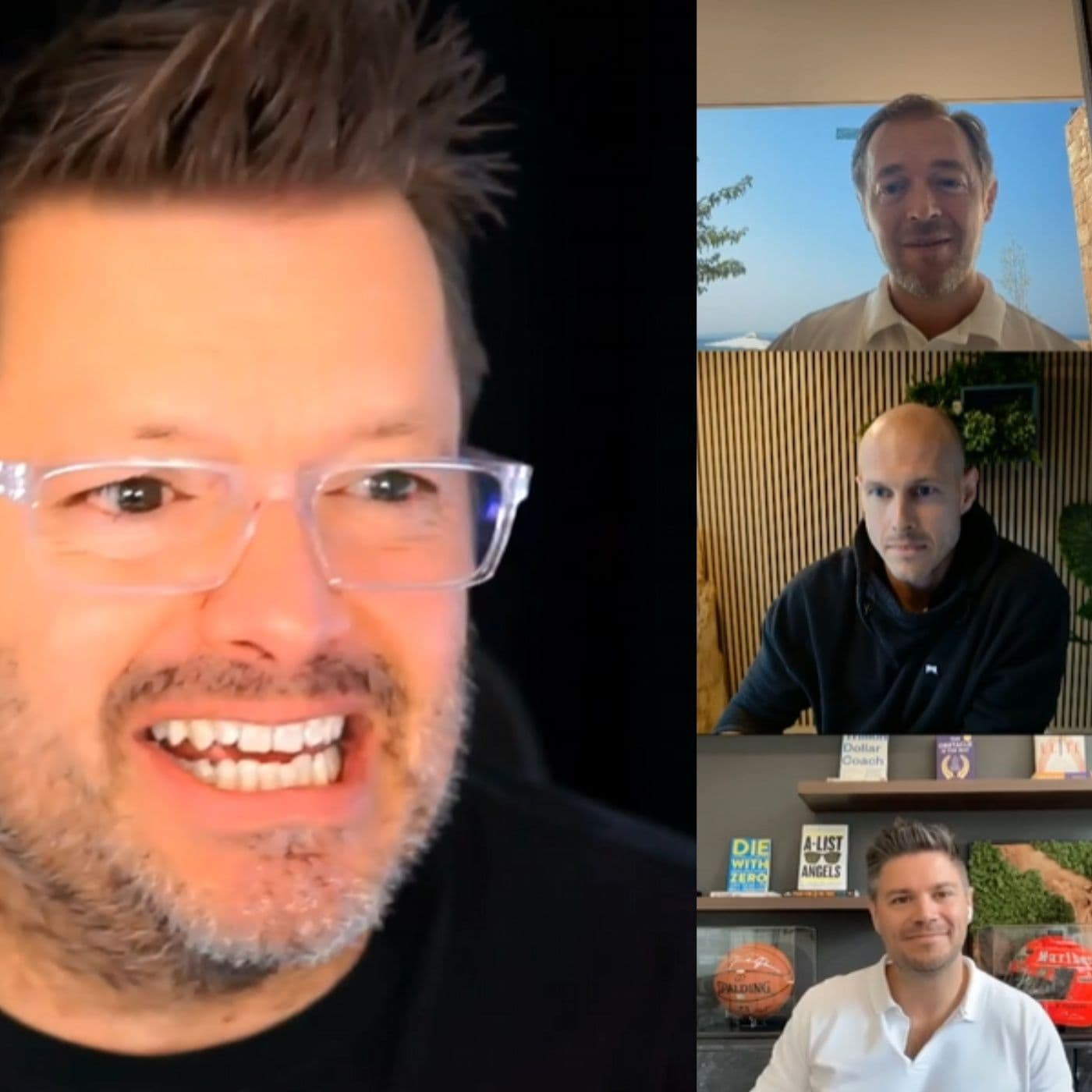
- Hosts: Andreas Munk Holm, David Cruz e Silva, with guests Alex McDonald and Mads Jensen.
- Collaboration Launch: Introduction of "The Seed" podcast collaboration between SuperSeed and EUVC, aimed at elevating discussions around European venture capital.
UK Immigration Policy
- Youth Mobility Scheme Proposal:
- The EU proposed reinstating freedom of movement for young people (18-30) between the UK and EU.
- Rejected by both Labour and Conservative parties, seen as a political maneuver.
- Implications: Participants agree that this policy could attract talent and investment to the UK, but express skepticism about its rejection reflecting short-term political thinking.
AI Regulation and Industry Concerns
- Rising Fears Around AI:
- A report indicates that 56% of US firms consider AI a potential risk, a significant increase from previous years.
- Alex's View: Opposes heavy regulation, arguing it stifles innovation and benefits incumbents.
- Mads' Perspective: Acknowledges the need for oversight due to the potential disruptive impact of AI.
- California's AI Regulation Proposal:
- Proposed legislation could hold model developers liable for unintended consequences, sparking discussions about the regulation's focus and potential impacts on innovation.
Startup Ecosystem and Market Trends
- Startup Shutdown Increase:
- A reported 60% increase in startup closures, interpreted as a natural correction following a boom in new startups during 2021-2022.
- Alex's Insight: Emphasizes that these closures do not indicate a failing ecosystem but rather a realignment of market forces.
- VC Returns and Market Sentiment:
- Discussion on a "silent VC recession," with a reported 0.4% return in Q4 2023 after a two-year drought.
- Mads' Analysis: Suggests the need for patience and a return to company building rather than expecting quick returns.
Future of AI and Innovation
- Concerns About Progress and Regulation:
- The conversation reflects on the balance between encouraging innovation and ensuring safety and ethical development in AI.
- Alex's Standpoint: Advocates for minimal regulation to allow startups the space to innovate, while acknowledging potential risks.
Key Takeaways
- The rejection of the youth mobility scheme by UK political entities may hinder talent acquisition and investment opportunities.
- The growing anxiety around AI presents both risks and opportunities; regulation needs to be carefully considered to avoid stifling innovation.
- There’s a cyclical nature to venture capital—with recent reports indicating potential recovery, the importance of patience and strategic building in startups is emphasized.
- The discourse highlights the ongoing tension between government regulation and the need for an open, innovative market, particularly in fast-evolving sectors like AI.
Closing Thoughts The episode concludes with a recognition of the challenges and opportunities facing the venture capital landscape, particularly regarding talent mobility, regulatory frameworks, and the evolving nature of AI technologies. The hosts express hope for a constructive approach that balances innovation with necessary oversight, allowing the venture ecosystem to thrive in the face of change.
Written by AI. May contain mistakes. Listen to the episode to check what was said.
Transcript
Automatic transcript. May contain errors.0:00Welcome everyone to the seed. It is Friday the 23rd of August and today we have Alex McDonald old. We've got Mads, Andreas, and myself. Andreas is going to kick off in a second, but let me first introduce Alex. Now, Alex is one of those annoying people who's cool, handsome, smart, thoughtful, accomplished, and exited founder, currently running Sequel, which is an investment platform that connects the world's best athletes to the world's best startups. Also an angel investor in 50 plus startups and an LP while running his family Foundation with his wife Miriam, who I hear is a bit sick, so get well Miriam.
0:35That's focused on healthcare and social mobility. And very recently I've noticed, Alex, that I've just seen on LinkedIn that you've invested in Venezia FC. How did that come about? Tell us a bit about that before we kick off. Yeah, actually funny enough, it was a couple of friends who actually work in venture. We originally got sent that investment opportunity by Drake's manager, as in Drake, the rapper and singer. I've always been interested in owning or in sports team ownership. Never seen an opportunity that I thought made sense. As you can imagine, most of them are huge sort of burning piles of cash with no real business prospects.
1:17But this is the first time I actually found one which I thought the business plan, the team we had involved, the co-investors in terms of Drake and some of the other people from PE and VC that are taking part in this investment made sense. So yeah, I put in a small ticket and now I'm a happy investor and probably what I'd describe as the most fashionable football club, certainly in the world, Benetti FC, famous for their kits. It looks super cool. And they've also just been promoted. So they're now in Syria. So that was a lucky bonus a few weeks after we invested that they got promoted to Syria.
1:54Good for you, man. It might well be a burning pile of cash, but it sounds like you're going to have a lot of fun with it. Andreas, now give us the, we're working together on this. Give us a little bit of an intro. Yeah, well, all I wanted to say was, so if you're tuning in from the European VC podcast or EU.VC and thinking, what the hell is this? Then this is the birthing day or the day where we give birth to the collaboration between SuperSeed and EUVC to take the seat to the next stage. I've been following Dan and Maz's work on both on content and investing for a long time. Big fan, as you all know.
2:32We've done the lowdown before, which was a LinkedIn experiment that where we're doing something similar to this. And then I saw that Dan and Maz had launched this initiative. And I said, why don't we join forces around this? Because I really want to bring this format into the European VC podcast as well. So this is an exciting day where we're joining forces. and I'm just super, super, you know, how would I put this? Excited to see. Excited, thrilled. Thrilled for now. I think it's right. There we go. It's going to be fun. It's going to be fun. Thanks, Andres. And thanks for the support. Always a pleasure.
3:10Always a pleasure. Now we've got a bunch of topics here. We've got a bit on freedom of movement. Alex, you wanted to chat about startup work culture, which I think could be a deep and dark rabbit hole, but let's dig into that. have a look at AI. There's a new report about US firms being extremely anxious about AI and it's tipped up a lot over the last year. Does politics interfere too much with tech? Another mega topic, I'll try and keep that one contained. Bit on AI regulation, a little farewell to Mike Lynch. Is there a silent VC recession? VC globally has made its first return for a couple of years.
3:50It's a small 0.4 % contribution, shall I call it? It's a tiny one, but we're back out of the red. What's the story with that? And then if we have time, a bit more US politics, looking at some populist measures from Kamala Harris, a lot. So Mads, first up, freedom of movement. Now, reading the report, it looks like the EU have suggested to the UK or asked the UK government to reinstate the freedom of movement for 18 to 30 year olds, both ways. And it sounds and feels like a really sensible thing to get some freedom of movement for young people for three years, to study, to work, to volunteer. Labour and the Tories rejected this.
4:35What's going on? What's your take? Well, what's going on, I think, is it's politics as usual, just in terms of what it is. So the idea of this youth mobility scheme is to allow people under a certain age to go and work anywhere else in Europe for a few years. But then with that time defined period, as we have seen with other countries, for example, Australia, New Zealand and other young people from other countries that can do something similar. So it's not freedom of movement as we knew it. It's not sort of unrestricted movement on an indefinite basis, but it's sort of more of a contained idea.
5:16It's obviously a fantastic idea. It's exactly what we need. You know, the ability for young people from the UK to go and work elsewhere in Europe, but also for great people from Europe to come to the UK, to London, to, you know, work in business, to set up startups, to do, you know, all these great things. It's something that could give us so many positive benefits. I think what's going on is it's politics as usual. Labor are still very scared of sort of the Brexit brigades and this notion of being seen to roll back on their promises not to rejoin the single market or the customs union or indeed agree to freedom of movement.
5:53I'm hoping that it's posturing. I'm hoping that it's sort of a starting point where they will be setting out this date to then try and negotiate something they feel that works and that they can sell politically because it is absolutely the right thing to go. But I must say, if they sort of go whole Brexity on this one and just completely reject the notion without entertaining in the negotiation, then it would be a huge disappointment because this is exactly where we should be starting as we try to make our way back to a sensible way of working with the rest of the European family. It sounds a bit weird.
6:27I mean, I saw a poll of 58 % approved and thought it was a great idea. And only 10 % of Brits said it wasn't. So it's a very small percentage that didn't like the idea. But Starmer sounds so firm on moving at all. It just feels like a very weird posture. Alex, now you're an LP and an investor in a number of European firms' funds. And I know you do a lot of stuff in the States as well. What, good, bad, indifferent, what's your take? Yeah, look, broadly, I'm very much in favor of freedom of movement. And this seems a very strange, short term outlook by the government, I think, reacting probably to recent events in the UK, to take this approach.
7:12It's very sad, seems like they're almost trying to imprison the talent in the UK, which I think is a very, very sad way of looking at things. And also, I think it misses out on a big opportunity for us to welcome more talent, more companies, more investment to the UK as well. So again, this is unfortunately tends to be what happens when politics interferes with any part of the private sector. You have a lot of short term shifts in populist views impacting important long term policies, which could create a lot of value for the country. So yeah, very, very sad to see that again you know given how short term uh the government thinks you i wouldn't be surprised if they completely switched their view on this policy in a few months time so um i wouldn't have a funny feeling you're right i hope i hope they uh i hope they they listen to common sense in the end but um but yeah it's probably it sounds like me a kind of knee-jerk reaction to some of the you know some of the challenges the country has faced in in the last couple of months.
8:19And there was another thing that we were discussing, which was this whole politics interfering in tech. And obviously, there's the political side with the freedom movement stuff. But we were also talking about, you know, the government has recently scrapped the 1.3 billion pounds of funding that was going to go into AI and compute projects. And it looks like, and maybe this is a kind of a Labour-Tory thing. Tories proposed it, but Labour have reneged on it. What do you know about this, Alex? And what's your position on this? I think founders, firstly, should not rely on government for anything.
8:58And I think they should make their own plans, proceed with their own plans, regardless of government policy. There are some great sort of organisations in the UK, like the Startup Coalition and Dom Hallas. Their work is great in trying to sort of advocate on behalf of startups in the tech sector here. but you know occasionally there comes these big shifts in in technology big opportunities for our nation to take advantage of big shifts in technology and platform and artificial intelligence is one of those which does require such huge amounts of investment for us to be competitive as a nation attracting talent attracting you know investors here um attracting you know, engineers, et cetera, that it justifies having some government involvement in the sector.
9:46And hopefully that involvement is in the form of funding and resources. And so I think this initiative originally, you know, which was a conservative initiative to invest, I think it was£1.3 billion for AI compute projects. I thought, you know, it's a great initiative. and this week Labour announced they're scrapping it. Now, again, you know, my assumption is probably they're going to come up with their own initiative very soon, which might have very similar numbers and very similar policies, right? And I hope that is the case because obviously a lot of work has gone into that. There are probably a lot of companies and organisations who had already secured funding or were, you know, in the process of securing funding from that initiative who are now, you know, basically have lost several months, if not years of work they've done, which is a big shame.
10:43So I'm hoping, again, this is a short term knee jerk reaction, and they just really want to rebrand this policy and launch it again in a couple of months time under Labour and really feel like they're getting the political benefit of the policy. But I would say that as a general way of working as government is extremely backwards. The country doesn't benefit from that, right? It's an extremely short-term way of viewing the world. So it's a shame that when we have a change in government, these kind of shifty approaches to taking existing policies, cancelling them, rebranding them, and then launching again have to happen because the country loses a lot of productivity over it.
11:23It damages the economy. It damages companies. It damages our brand globally. There are a lot of countries in Europe and in the US that are laughing at us right now when this kind of stuff happens. So it's a shame that we have to go through it. It's childish, in my opinion. But here we are. So, yeah, look, it seems like bad news again in the short term. But again, I'm not holding my breath. I hope that there's a new shiny Labour£1.5 billion investment announced in AI in the coming months. And if I were a betting man, I might bet on that. I think we'll see maybe a chat GPT spun version of this 1.3 billion that has spin the text and then promote it in the new marketing field.
12:10Sorry, Mads, I spoke over you. Yeah, no, I just think there is an angle on this or kind of another perspective, which is that the country is broke. And Rachel Reeves has completely hemmed herself in in terms of saying, look, I'm not going to borrow for anything. We're just going to focus on maintaining the financial posture and actually improving things. And so you have initiatives like this that, in my understanding, were proposed and announced by the previous government, but hadn't been custed in the budget. So they sort of said we're going to spend the money, but they're not allocated budget to it.
12:45And you have the two forces colliding with, on one hand, the Chancellor saying, I'm absolutely not going to borrow for anything. In fact, I'm going to cut things. And then you have a big spending promise that hadn't been budgeted for. and I think the treasury has gone through all of this stuff, not just this, but everything that was of that nature and actually just said it was not going to happen because you can't do both. You cannot both balance the budget and spend money you don't have. So yes, it is extremely unfortunate. I agree with you because this is the type of investment we should be making and I, like you, hope that as they take their time to look through the books, they will find that maybe there are other things that are much less NPV positive type investments that they can trim the spend so they can allocate funds to this because this is exactly where we should be spending money to grow the future economy.
13:35Do you think there's a slight time delay as in, do you think obviously government playing catch up, looking at all these kind of foundational models being released and all the big tech, do you think we just missed the boat? I mean, 1.3 billion pounds isn't really that much in comparison to what these companies are spending. But do you think maybe there's a side of it which is we've kind of just missed that boat? Maybe we need to focus, maybe there's a new way to focus AI in new directions with new capital? Yeah, look, I don't know that this was only meant to be for foundational models. I think the initiative was a little bit wider and could have addressed a number of things, including some of the things you talk about.
14:15So I think, like Alex says, it is damaging that the cut has been made and hopefully we can find a way to reinstate, if not this specific program, then something like it because the investment, I think, is important. Yeah, I think we, you know, I'd say missing the boat, I wouldn't agree with that. I think, honestly, the UK is in a very unique position globally from an AI perspective in terms of being able to compete. I think we can compete with the US. I think we have some of the very best talent in this space in the whole world are currently in the UK. DeepMind is a crowning sort of jewel of that.
14:54And it is, if we're going to make some investments as a government in future technologies and areas, I would say that AI should be at the very top of that list. So I don't think we missed the boat. We've got some great talent here. We should encourage them to stay. We should encourage more talent to come here. And these kind of projects and initiatives and that level of funding can absolutely help us do that. So I do really hope that, you know, Labour get their rebrand done of the policy very quickly and put it through chat, chat, EBT and we get it out quickly. Well, there's there's been an interesting development in the States where I've been reading a report about the US's largest companies now seeing artificial intelligence as a potential risk to their business.
15:39Now, this went up from about 9 % of companies polled in 22 thinking of AI as a risk to about 56 % looking at AI as a risk and as a problem to solve. I see that as companies waking up to the potential of AI. So if we put a positive frame on it, it feels like, oh, this thing isn't blockchain, crypto, big data. It is going to really, really transform what we're doing. But what's the reality? What's the reality in how much it's going to impact these organizations? Should they be scared? What's going on behind the scenes, do you think, Mads? Look, I think the fear is real. I mean, if you look at the last big wave around internet, ask Blockbuster or Borders or Sears or Toys R Us or Circuit City or Xerox how that worked out for them, there's a big argument to say that the AI disruption could be even bigger.
16:42And so I think many of the Fortune 500 companies we know today could be gone 15, 20 years from now, or at least reduced dramatically because AI will upend their business models and their operating models. So I think the fear is valid. And I think these companies need to look out and do so very carefully. And of course, the flip side of that is, that is the reason we have seen such extraordinary investments into chips for training models and for deploying these things because all corporates today are experimenting to figure out, is there, where are the opportunities and what can they do to position themselves in the best possible way to benefit from what they can do with AI?
17:24So I think the fear is real and I think people need to, if you're running a big company, you need to watch out. If you're looking at Salesforce, their concerns are ethical, Motorola are talking about bias and harmful or offensive information. Netflix is worried about competition. So it feels like there's a blended set of fears. But Alex, I mean, you invest in a lot of organizations that are AI-centric and obviously LP and funds that are investing in AI. What's your insight? AI could definitely be a threat in the same way that pretty much any other technology can in the wrong set of hands. Broadly, I am in the camp where we should reduce regulation and open up these opportunities for companies to innovate and invest more and launch new products.
18:22And I think as soon as you add regulation to this space, justice is the same in every other space. There's a great talk by Bill Gurley on this in the telecom space. He gave that talk at the All-In Summit. You can find it on YouTube. I encourage anyone to watch it. But as soon as you introduce regulation into a space like this, all it does is it helps the incumbents. It suppresses innovation. It will kill startups. And so, you know, my broad sort of approach to AI and regulation and, you know, the kind of fear mongering that is happening in both the press, as with this article and, you know, online on Twitter and LinkedIn and other social media is, you know, that is all really part of a campaign to try and introduce regulation.
19:11And a lot of that stuff is being funded by the largest AI organizations in the world at the moment who are trying to protect their lead. They're trying to protect their position. They are worried about startups coming in and eating, for example, their$270 billion cloud market that they have sewn up between four of them. So broadly, I'd ask, when you see these kind of headlines, I think it's worthwhile remembering that. And personally, I'm pro innovation. I'm pro startups. I'm pro small business having an opportunity to fight and disrupt some of these large incumbent monopolies or oligopolies. And and AI is certainly a space where where that fight is is being fought right now in the media and and and outside of the media.
20:02So. So, yeah, I I'm pro, you know, pro deregulation. I want to keep this an open space. I think we'll see more innovation. I think we'll see more benefit for mankind if that's the case. Do you have any safety concerns about the speed of progress? I don't currently with what I've seen across all the different tools and products and some of the investments I've made in the space. I'm personally, you know, I think we're certainly probably five years away from really having to take some of those concerns seriously. we're still at the point you know where really AI can't do anything particularly useful for you beyond sort of processing some information right and the notion that it's a threat to security national security or safety I think right now is it's relatively limited and I certainly don't think that regulation is the right way to solve that problem I think innovation is and I companies coming up with solutions to those problems is the way to solve it, rather than a government trying to regulate the space.
21:10I've been trying to decipher the Californian AI paper written by Senator Weiner, and then reading OpenAI's public response to their objection to the bill that he wants to pass on AI regulation. And it doesn't feel like a regulatory capture play for anybody. And it doesn't look like it affects startups. It looks and feels like it only affects the big guys. And also, it feels a bit weird that it's a statewide law and not a federal law, which I think was obviously covered in the rejection from the CEO of OpenAI. So Mads, over to you. I know that you understand and look at this space. And I know that we have our own, what I think was the Bletchley, I forgot where they got to with the naming convention for that.
22:02There's other stuff going on in the EU around AI regulation, but this is like quite a public thing that's going on in California. It's trying to be set as law and how that affects a federal regulation. What's your take? Yeah, so what the law, the law does a number of things, but one of the important things it does is it seeks to place liability with the model developer. And so that's, of course, a watershed moment because it means that if a model is developed and if it turns out that it has some unintended consequences that causes economic damage or harm to others, then you can sue the developer of the model, which is a massive thing.
22:45I mean, it's not typically something we see in technology, actually. So that is kind of a watershed moment, if you will. it's a californian law as you say but it will apply to all companies not just located in but also doing business in california so it's kind of regulating a little bit like the eu does saying basically everybody is doing business in california because if you're not you can't be a real business and therefore it will apply to businesses everywhere and so it is an attempt to to say look the federal government has not done anything in this space so we're trying to put a law in place to address this.
23:22I think to Alex's point, yes, having as much deregulation as possible, I think is right. The question in my mind is how much we know and how much we understand about the potential of these models. And I think like you, Alex, we would probably overestimate in the short term how powerful they are. But we also know that they move very quickly. And there is the potential for these models to become exceptionally powerful. Many are trying to move towards AGI. And the question then becomes, if a private company develops something that is so powerful that it could subjugate a nation state or it could do things that are nefarious, then who should supervise that?
24:06Who should be aware of that? And who has the responsibility to place the call to say, look, there is something here that's so powerful. We think we, you know, we may need some safeguards around it. And I mean, it's an open question. I think some level of supervision probably is helpful. And I wonder whether you can supervise for awareness without sort of a lot of heavy-handed regulation. You know, to make the example, if you're developing nuclear bombs, you're probably not going to let a private company just go off and do that on their own and then hope it goes well and hope they give you a call and tell you, you know, how things have been progressing.
24:43you're probably going to want to have some level of governmental oversight or supervision of that so that there's some grown-ups who can say, look, this looks like it might get out of hand, and this could be a little bit dangerous. What's the equivalent here? Or is there an equivalent is, I guess, a question in my mind. If the government was able to limit themselves to that kind of awareness-level regulation, I'd 100 % agree with you, Mads. And not just in this space, right, in other spaces as well, beyond AI. And unfortunately, we've seen in the past with many areas that, you know, government starts off with an awareness level regulation.
25:19And as, you know, as happens with pretty much all politicians, they want more power. And that awareness regulation suddenly becomes, you know, action and regulation and it stifles innovation, you know, benefits the incumbents and kind of does. there's a lot of unintended consequences when you put in place that regulation, which negatively impacts the economy and startups particularly. But yeah, broadly, I'd be in agreement with that sort of awareness level regulation. Personally, I think the comparisons to nuclear weapons at this moment is a false analogy. I don't believe we're anywhere near that with the level, with the models and with the capabilities of AI that we have today.
26:02But yeah, look, I'd agree with you. If we could rely on government to have that kind of you know, ability to, you know, restrict themselves to purely having awareness of what's going on, then yeah, I think that's a great way to regulate this space, particularly now. But as we've seen in the past, they tend to want more and more power and they tend to therefore instigate rules and regulations. It's an interesting one. I mean, look at food or automotive or aerospace, they all have guardrails. So something has to happen at some point is now the moment in time and how deep and broad should it cover, I think is going to be the question of the moment for quite some time.
26:48Another thing that came up this week was this silent, this notion of a silent recession, this notion of a silent VC and or startup recession. And Alex, this came up for you as well. So what was on your mind with this recessionary topic? Yeah, so I think the one particular article, which I was reading, and there was a lot of commentary on this on Twitter, was the startup shutdowns data, right, which Carter released, which I think showed something like a 60 % increase in startup shutdowns this year. And I can understand why Carter released this data. It's great publicity for them. And they've got lots of people writing articles about it.
27:25And I personally love Carter's data team. I use their data all the time for some of our projects. I think it's worth considering, though, when you're looking at the number of startups shutting down, how many have been started. And if you go back and look at the incorporation data in the U.S., what you'll see is in 2021, you'll actually see there's broadly across those two years together a 60 % increase in the number of companies being started. Right. So there is at the start of the journey, there was a lot more companies being started. And obviously there's a lot of funding going into startups over post COVID.
28:04And obviously we're now seeing some of those startups haven't proven product market fit, and they're therefore rightfully shutting down and probably their teams are going to go on and build something useful for society. But I don't think it's anything particularly to panic about when you look at the incorporation data and you consider it in the context of that incorporation data. So yeah, I think it's more news masquerading as bad news when it's actually pretty neutral news and it's just something for people to get upset about and discuss online. So I would say if you're a founder looking at that stuff, don't worry too much.
28:43It's not an indication of the health of the venture ecosystem. it's actually an indication that there's more and more people who want to start companies, more and more people who want to build things valuable for society so I don't see anything negative coming from that story. If it bleeds it leads baby. Mads what's your take? There we go. What Alex said it's nothing out of the ordinary and the numbers aren't that high. I saw somebody say they thought it was millions of jobs in startup land that we lost. I just can't see how you get to anywhere there. That number with a few hundred startups closing down, which I think was the headline.
Read the full transcript
29:26I think the flip side is 2020, 2021, remarkably few startups were shutting down at the time because there was so much funding. So there's a little bit of catching up to do. And I think that effect compounding with more companies having been started just means that, yes, it's sort of time for, as Alex says, for some of those teams to go and turn their attention to productive things that will do more good for society. I think that's the creative destruction of capitalism. And that's, I think, what we, to some extent, we thrive on, right? That's the reason why the system works. Startups may die, but founders never do.
30:03Looking at the data, looking at the quarterly fund returns across VC globally, for the last 10 years, obviously mostly in the black. Um, what's happened since basically end of Q4 21 is that venture capital hasn't returned anything. LPs are, are frustrated. However, green shoots, grass green shoots, Q4 23. So the end of last year, venture capital return 0.4%. Boom. We're out of the docks. We're off the way. But if you look every four years backwards, so 2016, 12, there were quarters, if not longer periods of time where venture capital didn't return. So I don't know what's cyclical and what's real.
30:49But however, for the last two years, VC has been in the doldrums. But it feels like we're back. Now, Mads, are we back? Is this a trend or is this just we've got more to wash through? I think there's a bit more to wash through. I think the 2021 is not going to come back. We're not likely to be at 0 % interest rate anytime soon. And that's a good thing because I don't think it was healthy. So expectations need to be adjusted a little bit. I think there are two things that are compounding. So lots of companies were started. Some of those are closing. Others are finding that the bar to hit the next valuation milestone and raise the next round has gone up.
31:29So that means that, yes, you're taking some more losses in the near term, and it takes a little bit longer for the markups to come through. And then you have exits in DPI where you've seen a huge issue around there just not being enough M &A, especially on the larger end of the bracket due to the antitrust policies, not just the U.S. government, but also, frankly, UK and EU. I think all of these things are coming together. So, yeah, we're seeing a bit of green shoots. I would more say it's a bit of a leveling off. I'm expecting that you're going forward. The industry is just going to have to get used to really doing its work.
32:09It's not just you write a check, you make an investment, you lean back, and then you wait for the markup to sort of roll in in sort of 9 to 12 months. It's back to company building. It's back to working with founders to build great businesses. It's back to really hitting valuation milestones, which can take 18, 24, 30 months. right and then and then over time you're going to start to see the industry get back to a a healthy returns as as i think we we've always had in aggregate of course it's a huge distribution it's a power law and amongst that you've got firms that are doing exceptionally well and other firms that aren't doing very well at all but i think the asset class is going to return to its overall you know healthy level of attractiveness you know alex i'd love your your thoughts on that i know you see a lot of firms and investment strategies out there as well.
32:54Look, I think there was, you know, again, there was more data from Carter this week about like DPI in recent vintages for funds, which I thought was an interesting report. And basically it showed that, you know, in the more recent vintages in the past few years, sort of 21, 22, 20, the percentage of funds which had returned some money or distributed some proceeds to their LPs was lower than it was for previous vintages. Given the cyclical nature of this asset class, I think that's to be expected, right? Because there are just windows when exits happen and there are windows where they really don't, or if they do, it's very few companies that are exiting.
33:41And it was interesting, the response to that online, there was a lot of people sort of saying, basically pressuring VCs to try and distribute and create some exits or create some liquidity in their portfolios. And I thought there was a, and again, I don't necessarily agree with that. And I thought it was a very interesting response from David Clark, who I think is one of the most experienced LPs globally, but certainly in the UK. And he actually shared the data from all the funds that they've invested in as a fund of funds, which actually showed the funds that optimized for generating some DPI in the first five years ended up being the worst performing funds, right?
34:25And the ones that actually hadn't generated any DPI in the first five years ended up being the best performing funds. So I think, look, you have to, if you're a GP or you're an angel investor in the space, I think you have to accept the cyclical nature of a venture, right? And if you try and break that cycle by manufacturing some DPI or manufacturing some returns in the short term to kind of please some LP or try and optimize a certain image in a news article, I think that ends up punishing you in the long term, right? And the funds that the managers and the angel investors that accept the cyclical nature of the business and understand that there are certain windows where you want to harvest returns and optimize for liquidity and generating returns.
35:14And there are certain windows where it's not in your interest to do that. Other ones in the long run will become the very best investors and will be seen as the very best investors. So, yeah, I think we've gone through a period where those exits have been few and far between and weaker. And at some point, that will be the opposite. And so it's as with any asset class, you know, the patient investors will be the ones that win. That is a lovely point to end on. We are going to close there. That is The Seed. It's been Friday the 23rd of August and it will be all day. We'll see you next week. Here's a few words from our beloved sponsor.
35:51This episode comes to you by the support of our partners, Mara. One of the best kept secrets in the SPV structuring space. Well, it wouldn't be a secret if I told you. having worked with some of the biggest names in the European venture scene, like Isomer, Notion Capital and Speedinvest. Established funds, emerging managers and the leading investment clubs and syndicates, including us at EUVC, are all using Mara to make their funds and deals more accessible, efficient and professional. Some things are made for platforms, music, cabs, pizzas, but fun solutions aren't one of them. Mara takes pride in taking care of your business from beginning to end.
36:29so you can focus on investing. Their individual client focus and regulation first approach is your guarantee for flexible solutions accommodative to a broad range of deal and client specifics. With a track record of onboarding investors from the UK, Switzerland, EU, Middle East and the USA and experience working with sponsors domiciled in the UK, Luxembourg, Jersey, Austria, Cayman, BVI, Canada and Delaware, Mara has you covered. The kicker? Mara delivers this tailored offering competitive price points to all the leading platforms in the market. Why get a product off the shelf when you can get a product tailored to you?
37:08Go to marainvest.com and get the deal structuring partner you've been looking for today.
37:29for other regions of the world. The nature of a problem requires a European response. Europe is a story of new beginnings. New beginnings. Let's start acting.
From the publisher
Featuring insights from Alex McDonald (Sequel.co), Mads Jensen (SuperSeed), and Andreas (EUVC). Join us for a deep dive into the latest in tech, startups, and venture capital.
Chapters:
00:00 - Intro and welcome
01:14 - Launch of The Seed podcast collaboration
05:14 - UK rejects EU youth mobility scheme: Missed opportunity or political maneuvering? Mads and Alex discuss the implications for talent and investment.
10:02 - AI fears on the rise: 56% of US firms now see AI as a potential risk. Alex argues against heavy-handed regulation, while Mads considers the need for oversight.
18:42 - California's proposed AI regulation: Discussing potential liability for model developers.
23:15 - Startup shutdowns up 60%: Alex provides context, suggesting it's part of a natural cycle following increased startup formation in 2021-2022.
25:33 - The "silent VC recession": Examining the recent 0.4% return in Q4 2023 after a two-year drought. Mads explains the industry's need to adjust to new realities.
31:54 - The value of patience in VC: Alex shares insights on why funds optimizing for quick returns often underperform in the long run.
36:22 - UK AI funding controversy: Discussing Labour's decision to scrap a £1.3B Conservative AI initiative.


