
In short
EUVC Podcast Episode Summary
Episode Title
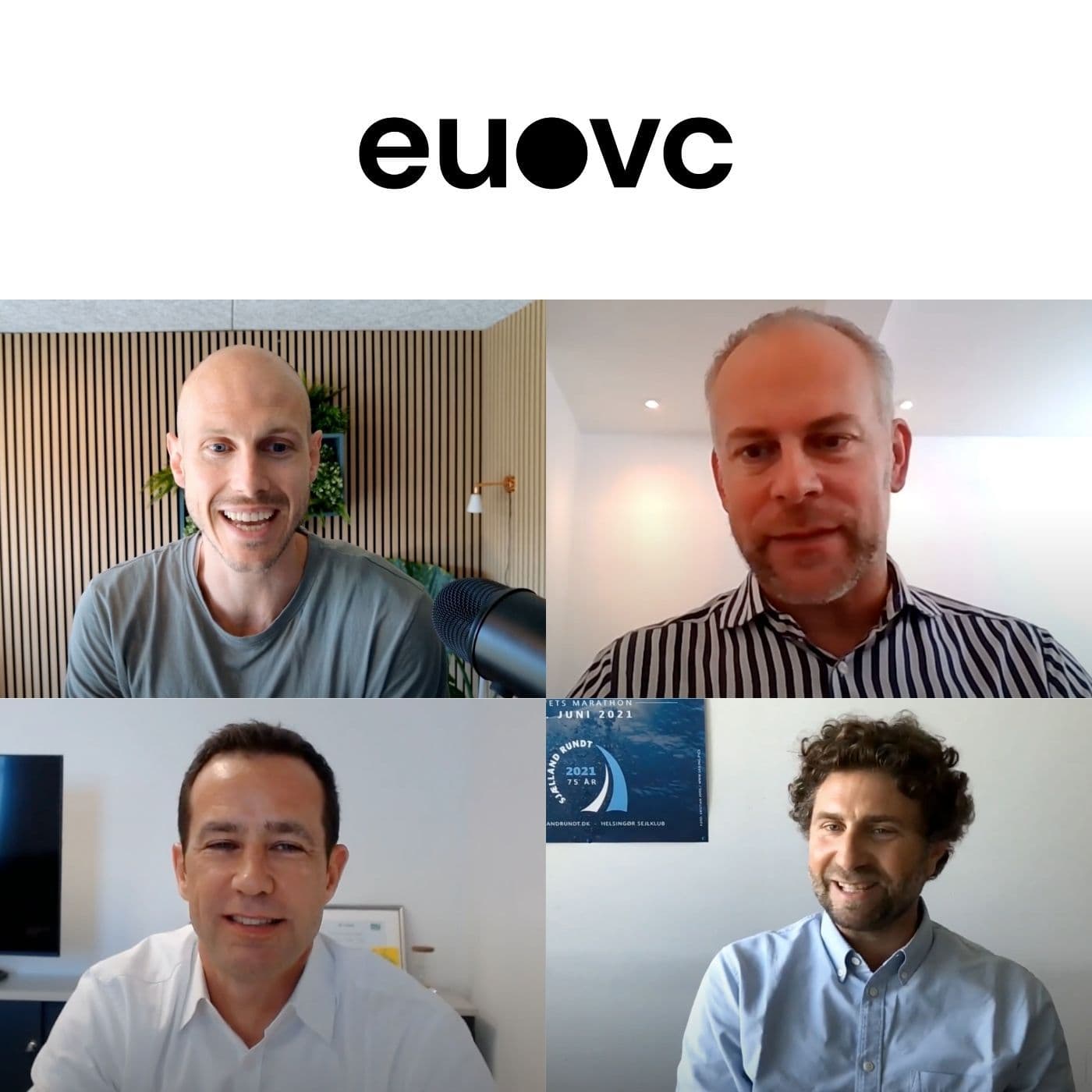
E355 | Francesco Di Lorenzo (Copenhagen Business School) & Crispin Leick (EnBW New Ventures): Panel Discussion on Corporate Venture Capital
Podcast Overview The EUVC podcast, co-hosted by Andreas Munk Holm and David Cruz e Silva, focuses on insights from the European venture capital landscape. Episode E355 dives into the intricacies of Corporate Venture Capital (CVC), featuring experts Francesco Di Lorenzo, an Associate Professor at Copenhagen Business School, and Crispin Leick, Managing Director at EnBW New Ventures.
Episode Description
The panel discussion explores
- How to set up a CVC successfully
- Engaging with CVCs
- Strategies for effective collaboration between VC, CVC, and corporate entities
Key Participants
- Francesco Di Lorenzo: Expert in corporate venturing and strategy.
- Crispin Leick: Leader of EnBW's corporate venture efforts focusing on innovative startups in climate tech.
- Jeppe Høier: In-house CVC expert and consultant.
---
Episode Breakdown
00:03 - Introduction to Guests
- Meet and greet the panelists: Jeppe Høier, Crispin Leick, and Francesco Di Lorenzo.
04:50 - Understanding Corporate Venture Capital
- Definition: CVC is framed as a venture program within a corporate to engage with startups.
- Components: Acceleration, incubation, corporate clienting, and direct investment.
06:02 - CVC Strategies and Models
- CVC Models: Emphasis on understanding different strategies used by corporates to engage with startups.
09:22 - Challenges and Successes in CVC
- Discussion of what challenges corporates face when implementing CVC initiatives.
- Importance of balancing strategic and financial goals.
13:50 - Importance of Financial Returns in CVC
- Financial returns are essential for sustainability and credibility of CVCs.
- Understanding the necessity for CVCs to provide value to corporates.
18:12 - Setting Up a Successful CVC
- Recommendation: Establish clear expectations and integrate governance structures.
- Importance of securing buy-in from top management.
44:12 - Measuring Startup Growth
- Focus on growth metrics rather than traditional financial returns.
45:02 - Importance of Gross Margin
- Highlighting gross margin as a key performance indicator for startups.
45:20 - Investment Strategies in B2B Digital Models
- Discussing the importance of strategic investments in digital solutions.
45:49 - Challenges and Benefits of Seed Investments
- The debate around the suitability of seed investments for CVCs.
46:37 - Strategic Corporate Investments
- Importance of aligning investments with corporate strategy.
48:01 - Commercial Agreements and Conflicts of Interest
- Exploration of potential conflicts arising from CVC involvement in commercial agreements.
53:50 - Engagement Management in Corporates
- The role of engagement management in bridging corporates and startups.
01:00:56 - Governance Structures in CVC
- How governance can influence the success of CVC initiatives.
01:14:42 - Evergreen Model in CVC
- Discussion on the advantages of an evergreen model for CVC operations.
01:18:14 - Future Trends in CVC
- Predictions on the evolution of CVC in Europe, emphasizing the integration of various corporate venturing strategies.
---
Key Takeaways
- CVC as a Strategic Tool: CVC is increasingly recognized as a vital strategy for corporates to access innovation and stay competitive.
- Hybrid Models: The conversation hints at a future where hybrid models (combining CVC and traditional VC) may become more common.
- Governance Matters: Effective governance structures are crucial for aligning the corporate goals with CVC strategies.
- Financial Returns: The necessity for financial returns is highlighted as a key driver for the success of CVC initiatives.
- Venture Client Models: The emergence of venture client models is projected, indicating a shift towards more integrated approaches in CVC strategies.
---
Conclusion This episode presents a comprehensive dialogue on Corporate Venture Capital, emphasizing strategic alignment, the importance of financial returns, and the future landscape of CVC in Europe. With insights from seasoned professionals, listeners gain valuable knowledge about establishing and managing successful CVC initiatives.
Written by AI. May contain mistakes. Listen to the episode to check what was said.
Transcript
Automatic transcript. May contain errors.0:00Welcome back, everyone, to another episode of the European VC podcast. Today, we have Francesco Lorenzo. He's an associate professor of strategy in Egypt and Crispin Leic, managing director at ENBW New Ventures, as well as also our good friend Jeppe Hoyer, who is our in-house corporate venturing expert. And I can tell you, this is a roundtable where we're diving into everything corporate venture capital, how you best engage with them, how you best set them up, how you best Think about the strategies, the collaboration between the VC, the CVC and the corporate. So I can only tell you this, I think, is one of the best roundtables we've ever done.
0:42Definitely one to mark as one for you to listen to if you're VC, LP, angel or corporate. So hope you enjoyed as much as I did. Here's a few words from our beloved sponsor. How to Web Conference is the leading startup and technology conference in Eastern Europe. You're shitting me! The 2024 edition takes place on October 2nd to the 3rd in Bucharest. You tell him I'll be there! You can enter the most electric space for doing business and building technology in Eastern Europe. There you'll find 3 ,000 plus international attendees, 500 plus startups, 200 plus investors, 100 plus global speakers and infinite possibilities to connect and get inspired for your next move.
1:23Venture funds joining include Creandum, Atomaco, North Zone, Seedcamp, Kokoa, 3VC, Startup Wiseguys, Salesforce Ventures, Common Magic, and many more. That's a lot more than 10 guys. How2Web conference also hosts Spotlight, the early stage startup program and competition for Eastern European founders, gathering the sharpest founders in the region. See you there.
1:57values. United and determined we can serve as a model for other regions of the world. The nature of a problem requires a European response. Europe is a story of new beginnings. New beginnings. Let's start acting. This show is not investment advice and the hosts of this episode may be invested in the funds and companies featured. Crispin, Francesco, Jeppe, welcome to the European VC podcast and a roundtable on CVCs. Thank you for having us. So this is a large, large one. So I think we need to just run around the table, make sure that everyone knows who's who in this call. Jeppe, let me start by you?
2:44Yeah, I'm a former fund operator, corporate investor, and now I spend most of my time as a corporate venturing expert and consultant within infrastructure. Yeah, and we at UVC are doing a ton with Jabbos, so you'll hear more from him for sure. Crispin, let's move to you. Hi, thank you for inviting me. I'm actually, I would qualify myself as an energy enthusiast, especially sustainable energy, and a little bit as a CVC dinosaur. So I'm doing this since many, many years. So many different models and stuff. So it's great to talk later about this. And I'm running EMBW New Ventures, my second CVC, since eight years now.
3:34And we are a single LP from a utility, single LP, CVC with investor and a utility, a German utility. And Francesco, finally, who are you? You've got Danish letters behind you. Those are the people that are tuning in that know Danish. They will recognize that there's someone here from Denmark, but Francesco is not a Danish name. No, I'm actually Italian and I joined Denmark more or less seven, eight years ago here at CBS, Copenhagen Business School. I'm an associate professor for strategy and entrepreneurship. And I spend my time trying to understand the corporate venturing. That's what I do my research on, particularly initially on corporate venture capital, and mostly on corporate venture capital.
4:19But I'm getting more and more interested in new trends of venture clienting and partnership, M &A, and all this integrated framework. That's my bread and butter for every day. So, yeah, happy to share more insights about my research today. And I have to say, I am the same Francesco, getting more and more interested in all the different models, because I don't think necessarily that the pure CVC model is the smartest one for most people to engage with. But we'll get into this in this conversation. Let's start with the what is corporate venture capital question. Maybe, Jaber, you could kick us off with a foundational understanding of what CVC is.
4:59For sure. I think for us that have been in the area for many years, it's good to put a frame around corporate venturing in general, because there's a lot of strategic element into it. I normally call it a venture program within a corporate, and it consists of acceleration, where the corporate assists startups in their growth with advice and so forth. Then you have incubation, that is corporations starting their own startups. And then you have corporate clienting, that is very much the relationship between the corporate and the startup with respect to. It can be commercial, it can be co-creation of products and so forth.
5:45And then where we will focus most of our time today is direct investment or corporate venture capital. And maybe from there, we should go to you, Francesco. You're the academic in this context. So maybe you could give us what would an academic say about CVC? How would you describe it? Well, so certainly, you know, corporate venture capital is perhaps historically the most prominent. And at the moment, if you look at the numbers, still the most used corporate venturing strategy by a lot of large corporations. I also want to highlight that, you know, also SMEs, small and medium enterprises, are looking at this as a strategy for growth.
6:28So basically, you know, corporates want to grow. Entrepreneurship is the way to go. I recognize CVC as the way to tap into new technologies or accessing new market, right? So that's mostly what we are looking at the function of corporate venture capital. If you look at general kind of a trend in the last 20 years, CVC has been established as the second largest investor after VC for new ventures. this is actually something that created even a double digit growth in the last five years in many countries so we registered recently like a high of all times in a number of investments number of committed capital but also number of new funds that has been created and unit and if you actually look at why firms do that in a recent survey that i've been leading and collecting data and publishing recently, and I can tell you more about it later, the primary reason why Nordics, because the survey is basically on Nordics, corporations tap into corporate venture capital, is primarily to explore innovative and specialized technologies, products and solutions for themselves, or basically looking at new innovation and new frontiers that might actually represent new trends for the core business.
7:48So in a way, the corporate venturing is a way to grow using entrepreneurship as a lever for success. And I think also tapping in, right, we have seen some of the disruption that is often mentioned within direct investments for corporates, right? But I think we have to realize that it's also a strategic tool nowadays and it's becoming more and more common. Europe is significantly behind our US counterparts. But sometimes it feels like how I saw, you know, I was at a conference in Berlin back in 2010, right? And people were talking about, should you even do startups in Europe, right? Because it was something that the Americans were really good at.
8:27And I think we all know the conclusion on that. You know, Europe is a very, very good place to do investments today and build startups. Yeah, since this is a podcast and it's VC-centric, we have many young people on the podcast. And I love always having someone who's a bit older who can say, well, you remember back in 2010, we were at a conference and people were talking about, I love bringing that context in. And I have some people that to not put them in the same position as you did. I just put you in, yeah. That I am so thankful that I have in my network so they can tell me, Andreas, remember, this is how it was like where we come from.
9:07So remember, when we now have almost half as many Series A's as they do in the US, that is incredibly meaningful. So we're coming from a very different place from where we have been before. Now, Crispin, let me go to you and ask for some of the practical examples of what CVC can do in this world. I mean, so many things have been tried in the corporate innovation space in general in the last, well, I would even say 20 years. But let's stick with CBC, because this is what I do day in, day out. But let me give you a little bit sort of the history of how it actually all came together with EMBW. Because as a sort of corporate innovation activity, they started to really having to do something about it because they were basically disrupted in the energy markets more than 10 years ago, around 10 years ago.
10:00And they first, as a typical corporate answer, they started with what Jeppe just mentioned. They started to do, I call it venture building, but it's acceleration and then also incubation. So it's sort of the venture building piece of it where you, well, you have internal people, you build sort of startup type-like structures in order to follow and build small businesses and to see if this actually gets you somewhere in order to make the whole organization faster and more entrepreneurial. But then what happened, and I think this happens with many corporates, after two years into this, it became clear that being a utility, there are not hundreds and hundreds of entrepreneurs in their own organization that you could actually get going.
10:50People talk about entrepreneurs in that case, but there were not so many. So it became clear that the corporation needs a tool to cooperate with entrepreneurs. with fully fledged external entrepreneurs. The problem is, well, they tick really different than a large corporation. So there's quite a bridge to gap, or there's a big gap that you need to build a big bridge. And they wanted to have also access to talent. And they knew and understood that there are many people out there that are great, but they don't want to work for them. They just don't. And of course, the strategic part or the idea of the top management was also that there are scaling and M &A options, sometimes down the road, and they wanted to get some ideas or they didn't want to be completely disrupted.
11:38But being a utility and being very conservative, they were never ready to really throw billions at sort of a disruptive risk, but actually they wanted to just sort of have a portfolio and have pieces and little things into it. And therefore they needed a failure-tolerant setup. And that means you need to build a portfolio. And this means you end up with CDC. So this is the answer to all these things. And maybe about our specific setup, which is up to today not the typical setup, and there are always sort of waves with regards to this strategy versus financial orientation. But we are a pure profit center.
12:16We have a separate entity, single LP, committed capital. We have our own decision bodies. We have a team incentivized on the return of the fund, not any strategic, let's try to measure something that we can't measure. And therefore, for us, the startup success is always first, and the financial return is the license to operate. Why is this so important? Because we call ourselves CVC, and I mean, there's VC in it. So if you sort of go against this business model, then you should call yourself something, but not CVC. and how can we work with the community if we have not a good fit to entrepreneurial founders and the entrepreneurial founders don't care about the strategy of a corporate.
12:56They want to make their startup successful and big and so you just get a mismatch if you are too strategic there. And also a fit to co-investors because going to a board meeting of a startup and discuss and say, yeah, but for strategic reasons we don't want to do this and that. That doesn't work. That just doesn't work. So you need to have a team that is dedicated to the startups. And that's basically us. So we actually see the possible cooperation between the corporation and the startup portfolio. This is sort of like an additional free option. And it's paid for because we deliver return, financial return.
13:37And we never try to force this corporation. Because if you force either the entrepreneur, you need to work now with this corporate. or if you've tried to force the corporation to work with a startup, it ain't no good. And Christian, you know, you are a CBC specialist, right? So we have talked quite a lot in the past and also me trying to get my hands around what I've experienced in the past. But going back in time, right, what have you been most proud of within ENBW and maybe where you have struggled? Just one example of each, right, at this point of time, because we'll get back into it. Yeah, probably you get later to other things.
14:19But honestly, I mean, I think ENBW never expected that we saved the world for them. So that was never the expectation. And I think this is a difficult expectation if you start a CEC and you think, okay, they will save the world. What makes me really proud, and this boils, of course, into the business model, and this is why I'm heading the unit and not someone else, in the last three years, we have delivered well above hurdle rate returns every year. and we've done every year exits. We've also won exit to EMBW, so 100 % takeover of one of the startups, which is, of course, the thing where, well, if you manage that, then you add value to the organization.
14:58And how did this happen? Well, basically, it's about business models that are either too small or not profitable enough at the very early point, where then sort of the corporate would say, I don't care right now. But when they care, it's too late or they have to buy a company for a huge amount. And they have to pay market prices if they buy one of our startups. That's clear. Otherwise, our business model wouldn't work. But, of course, as we are 100 % subsidiary, if we own already 15 % or 18 % of this unit, of this startup, then, of course, they have an average in price, which is much cheaper if we were in early.
15:37So what makes me second, what makes me very proud, is that half of all of our startups are actually commercially cooperating with ENBW. And not because we forced them, but because we try to invest into business models and into topics that might have an impact on ENBW. But let's be clear. I mean, ENBW is an entity with 28 ,000 people. Last year, 6 billion EBITDA. so getting an impact on that one we're still working on that I would love because you asked or you didn't ask you said something controversial I think Crispin because you said that we have a carry component in our structure and it's the only way if you want to play in DC you've got to have that and that made me just ask my good friend Chad TBT what's the numbers on this And what I could find was that, according to PitchBook and Global Venturing, around 25 to 30 % of CVCs in the US offer carried interest.
16:43But in Europe, it's only 10 to 15%. I'd love to ask the three of you to riff a bit on the carrier point and maybe particularly force Jeppe and Francesco to take a stance on the Crispin statement that it's the only way you can really do it. Maybe I add just one piece. Oh, my God. How are you going to caveat it? I say it's the only way. I refer again to the VC business model. So when we talk about our talent that is working for us, this is people that want to do venture capital. So what I've seen in my first fund that I was managing, we had not this strong incentive. We had it for the managing directors, but not for the team.
17:26I lost my best people. I mean, some of them are now partners in other funds. And if you don't want to lose the really good ones out of your team, you need to be competitive on that end. Still, you need to look for people that still like the C in the CDC. So that C, this advantage of having a large organization with many experts, with a lot of know-how that they can tap into without sort of having to go to external advisors or I don't know. so the talent and the fit to the business and sort of trying to make your portfolio happen work day in day out if you have a corporate contract with paying overtime and I don't know what and hundreds of days off this doesn't work so I guess this very kind of full of different perspective conversation about interest and return on investment make me probably invite the elephant in the room, which is basically the balance between the strategic versus financial return of this CNC unit.
18:35And this is actually a very, very under-discussed, I would say, topic in the field. One of the reasons why it's under-discussed, at least from an academic perspective, I know the practice is actually much more active into this discussion, at least in those rooms where people can raise their voice and yell and find obviously the truth of the usefulness of CVC, right? Basically for us, for academics, it's very difficult to understand this topic because it's very hard to know the initial orientation of any Sandor unit. So the data available, financial data available, even the most complex and rich that I have access to, we don't really know actually unless we ask what's the orientation of the unit.
19:18So that creates a lot of bias, let me say, or at least a distortion in how we measure success. So at the very least, there are a few attempts, right, that have been trying to map, mostly to survey. And the survey basically suggests that the primary orientation of a citizen unit is either purely or mostly strategic, right? But again, from strategic, as opposed to financial, right? So strategic, again, let me return to the point, means accessing new innovation, having these windows on new technologies or accessing new markets, typical of fintech, for example. So in that sense, I don't think the conversation here, my view is not much about strategic versus financial and that for the carry interest as a way to incentivize the financial returns from the managers of the unit.
20:07For me, it's more about how much is the risk tolerance or how much low or lower returns the parent company is allowed itself or in general tolerate to return on CBC specific investment. Because if there is a strategic nature, that must be also coupled with more flexibility and tolerance, let me say, on risk and returns. does it actually happen? Well, actually, talking in the beginning with the unit managers, that happens. But when it comes, as actually Chris will also say, after a couple of years, three, four years, let's remember that the life cycle of a CVC unit is very short, too short, in my opinion, to create value.
20:52So that may be, after a while, the strategic goals are a little bit, maybe put aside or toned down in the light of, okay, but now we have to return also on the Fed that we put some money on the table, and that made some demand for returns. So I think, again, for me, it's not a much either or. CBC, in my views, are established to reach strategic returns as first. And then the point is, what's the tolerance for risk? And that's obviously varies, of course, also in economic cycles, where first we actually have more pressure for cashability and EPS focus rather than just growth and scouting opportunities.
21:31But for me, it's a tolerance for risk, not much the conversation about strategic versus... I truly agree with Francesco here, right? Because this is a matter about the principal agent model and incentivizing the people. So when we talk, you know, corporate venture capital, I'm also in agreement with Crispin. If you do not have carry in a CBC, you cannot keep and attract talent. you will not be able to do what you're supposed to do. What I think comes a lot into play here is that when you look at these big corporations, it tends to only be in the financial sector that someone that is not the CEO can make more money than the CEO, right?
22:16If you are a trader on a floor somewhere, you can make a significant amount of money and that is because you take the risk. But a lot of corporations are not, But especially not in the sectors that Crispin and I came from. They're not risk - willing, right? If you take risk, there's a chance of people dying, right? So it's kind of intuitive that you don't take the risk. But that is also why you do CVC, right? That is to understand to take the risk. So it is, for me, and what I always talk about, it is before setting up a CVC, you need to understand what it is and what elements are inside of it.
22:54So if I want to give a number, in the recent survey, the first way of serving the Nordic CBC activities, 61 % of the respondents, you're talking about large Nordic firms, declared to be purely strategic oriented in their CBC activities, an additional 26 % to be balanced between strategic and financial goals. So this left basically at 13 % that somehow is purely financial. For me, this is a 13 % that I would really like to understand better because what does it actually mean is curious in that sense. I would love to put a little bit another flavor on this because if you would ask me like strategic or financial, my answer to your big surprise now is end.
23:39It's an end. Now, but let's go one level deeper because how do you set this up? How do you do this? And from the corporate view, if you would ask top management, 100 % agree. The answer is we have created the CVC. And this is what I said before, for strategic reasons, out of the view of the corporate. And then comes the big next step. Is the corporate deep enough, and especially the top level management, deep enough into understanding the different innovation business models, especially CBC, to choose a setup for the CBC, which is purely financially oriented, and you only bring in the strategic piece into the investment strategy, but not into the individual decisions on the startup.
24:27You're not forcing the startup, for example, the startup comes up with and says, hey, here market fit doesn't work, but here's another market, market fit does work, but that's not a strategic market anymore for the corporate. Well, if you are on the cap table, you have to support the startup to be successful, to make money, to grow. So you cannot just say no. Well, it doesn't fit the strategy of my corporate. This is why I don't support this. This doesn't work. So the CVC unit has to be purely financially, but within a frame that is set by the corporate in order to achieve his financial targets.
25:00And this is where always sort of these mixed structures where sort of people are responsible for the CVC that are also doing strategy or are also doing this is very difficult, at least in my experience, because the CVC setup must be sort of as sharp and clear as possible. And I circle now back to otherwise you're getting not the best founders. You're getting not the best co-investors. You're getting into a spot where more like in a joint venture spot where you can do some strategic joint venturing with other corporates. But that's not VC. And as a CVC, I would also argue, well, we know and we don't try to be the best of all the VCs.
25:44I mean, there are VCs out there that know extremely well what they do. But we have a special bridge into the corporate. So we know the pain points of the corporate. And therefore, we can offer something else into the cap table in order to create value for the startup. And if we do it right, automatically also for the corporate. So I think this understanding of not saying, well, it's an end and let's mix it all up, but really to say, okay, the corporate for strategic reasons, but the CVC unit is a financial return oriented. We want to have successful startups. If we don't have successful startups, it doesn't make sense to let them cooperate with the corporate because then we have a lose-lose and not a win-win.
26:23So, and this is the funny thing that I always go this one level deeper and it's very surprising that still 80 % of the CVCs are not set up like this. So maybe I'm wrong, probably, or, well, it still needs to evolve. I think the whole CBC area is professionalizing a lot in the last years. It's really, and that's really great because for me, like in the early years, it was really difficult, especially in Europe. Because even, and there, I mean, if I would now, if a corporate would talk to me and say, hey, we want to create a CBC, I would first say, okay, let's talk about to all your board members and let's ask them, do they know what CBC is, how the business model ticks, what they need to accept, how it should be set up in order to be able to be successful.
27:13If you're doing it wrong, it cannot be successful. It's not a failure of the manager of the CVC unit, but of the setup. And so for our case, just to be in sort of the real setup again, we report into the CFO. To make crystal clear, license to operate is return. By the way, this is also a lot of pressure because there might be also some teams out there that are quite happy with their corporate contracts and being in the innovation thing. Because this is a huge pressure. You have to be successful. And the second thing, I was really lucky in the early days in ENBW, they have put me into the top management group.
27:50I mean, I had zero employees, and all these guys had like thousands of employees, and they put me in there like a wild card and said, if you want to do your job successfully, you need to understand how this thing is ticking. What are the pains of the operational guys? And then think about if there's something out there that could help at the end of the day to get the scaling. And this is difficult to find. It's not because the corporate is so different. Could you share also who took the decision of creating ENBW Ventures? Yes, it was actually at the time, interestingly enough, it really came out of the innovation management.
28:29management. So as I said before, they created first the internal innovation venture builder. And they had the chief innovation officer basically said, we need a separate, we need another tool. And then there was a big discussion within the corporate about, okay, so the finance side, of course, said, okay, you're now asking for 100 million euros. you know I want to ensure that there is a very very strict financially driven view on this you know we will not put 100 million into the startups and hope that it somehow works so the finance side of the business was not ready to do this in the innovation structure and this is why then the separate unit was formed and this is where sort of discussions with me started at the time I think that is super interesting right because often times we see kind of the innovation part coming out of strategy, right?
29:27I've talked to many CBCs that got started this way. And also, you know, we have spoken a little bit about it previously on the show, right? That you also have the J-curve within CBC, right? Because you kind of have a three-year period to be kind of financial successful. And it's difficult in the J-curve, right? But if you're lucky enough to go through that, kind of the next gate of a close down is lack of strategic match, right? And that is where you have all the collaboration, the KPIs, all of that. And, you know, then you might get lucky and get into year 10, right? And then you are in pure survival mode, right?
Read the full transcript
30:08Then you are there to stay, right? Because then you have kind of contributed to that. But also, you know, a lot of the corporates that of talking to, right? They did not make a plan. Like you said, right? It actually sounds like ENBW was on top of it and kind of had a process where they talked through, you know, how are we going to be successful in this? And also from, you know, both the financial and strategic perspective. Yeah, the chief investment, the chief innovation officer at the time actually went out to the market and was talking to practitioners, to CVCs, but also to investors, to the founders and so on, to understand how does this work.
30:45And there was the clear emphasis, let's hire someone who did it before, not trying it for us, our own, for the first time. And I think what is extremely important on day one of creating a CBC, as I said before, like talk to all the board members and understand what are they expecting, have they understood it, and get access to top management. And the third thing is, you have to understand really well the core business of the corporate, the core business model. Because if you want to think about how can I actually leverage, how can I support them somehow without forcing it? And I had like before that 15 years in the utility business.
31:25So I know all the different value chain steps in this. I didn't need to learn that. So understand the corpus as well. And for us, for example, our investment thesis from day one was the utilities investing into infrastructure, really billions into complex, large-scale infrastructure. So we said from day one, that's not for us. We also don't want to do deep tech because they are technology agnostic and they are a late user. They're not trying something new on the technology end. So what do you do as a VC investor with such a corporate backer? And for us, it was clear from day one, okay, let's write it down.
32:04We are looking for startup that in mostly digital business models are improving and scaling this huge asset infrastructure rollout that they need to accomplish with the energy transformation. So, for example, battery rollout. Yeah, well, they need to build many, many batteries, but this is a new asset. They don't know. So we have an investment into one company that is actually intraday trading all these batteries and another startup that is actually monitoring all the data of the batteries and ensuring that the battery is in perfect health. So you improve the operating business model of the core, but you're not stepping on day one on the toes.
32:43and you're doing something that is digitally scaling, so you're not in this death thing of let's do deep tech for the next 20 years because the utility will not wait 20 years with your CDC approach. So think about this thesis on day one. What is it? And it might fail, but at least you can say, okay, this is what we're trying to realize here and there must be the buy-in, not of one board member. Get the buy-in of all the board members. In order to get, you said three years, I think you need five years. if they are not willing to give you five years to prove the point, it's very, very difficult.
33:18But it's very interesting, Christian, that you talk about these five years. I'm very curious about, is that even possible? In the sense that I could see actually examples of very regional or international players that have been in the last five years changing two or three times the view on the CVC. So if you want also the investment thesis behind and still be successful in that change. And that changed because of the change in the corporate core business view on where the value creation was done, basically from upstream to downstream. And then you can see that you maybe have someone coming from this operations, maybe at the beginning, and then more someone was close to sale later on to lead the unit.
34:04So do you see this as something that is somehow creating more friction than benefit or is it actually an optimal response to the dynamic that actually a business can have? I think it is very, very, very difficult to build a CEC where you have every two, three years a different investment strategy. I mean, I've seen this from a couple of large energy players, oil and gas and so on, also from some others. I think you have to think about your investment thesis in a way that it should be good for a little bit longer than two, three years even for the corporate. Yes, the corporate is changing its strategy but for example, one of our core part of this we had megatrends and we said, okay, we only go into electrification stuff we don't go into all the other things.
34:52That's old stuff. We go into the new stuff electrification. We go into digital solutions because we felt like, okay, this big organization, you know, the people that are very first digital and are really developing new things, they're not really the typical sort of first one to say, I want to work for utility. So you need to make a little bit of the gap analysis in order to help the corporate really. And I think it is very different depending on, I mean, we have a utility, I would maybe say an insurance or a telecommunication is maybe a little bit the same type. But then if you are an OEM, that's completely different.
35:30If you're developing hardware technology, then of course your CVC will look different and will have a completely different proposition. And if you are an IT digital company, it will be different again. So what I'm just saying is do this in the beginning and it should be good for quite a while. We are reviewing our investment strategy every four or five years. But the changes have been absolutely minor. And there's also this thing like you are in the startups and you should not lose your interest in making them successful just because the corporate is a little bit changing the strategy. So there comes again the financial orientation.
36:10So my team will fight for the best value created. I think what is interesting here, right, if we take the helicopter view on CVC, right, and also what Crispin said earlier, right, that it was kind of a CFO decision. When you take big corporates, they are measured on the basis of their annual report. It's a 12-month cycle. And when we discuss startups and the world of funds, we're talking about at least eight years to build a startup. And most of the VCs that I know about, they're going into 14-15 years before they have closed the full cycle. So a board in a large corporation that understands that this is the strategic tool can help put it in place.
37:06But if you ask a CEO or a CFO in a company to allocate 50 million euros or in your case 100 million euros that could generate profits in other areas, remembering that their bonuses are based on a 12-month cycle, right? They are just things that do not add up. And then again, if you are a listed company and look at the stock market and the financial analysts, they don't hardly give you any value for driving a CBC. So there is something in the market that does not fit with core venture capital. And then remember, a lot of the startup IPOs that are done, all the value is based on the promise. And that is super interesting, in my opinion, to bring that into play.
37:57I think there are solutions to the issues that you mentioned. The first thing is the size. So if you start with 1 billion CBC, you get under pressure. if you like like enbw is investing 40 billion in this in the sort of this this uh 10 years into their assets um for them i mean if we invest in a year 10 15 million that's like one offshore foundation or so so it's it's really small so this is where you buy a little bit of time so i would suggest don't don't don't go big on day one but go big when you have boom your case um so that's one possible outcome. The other thing is most of the corporates are not, it depends, but they're not so much cash driven, but result driven.
38:47And if you build a portfolio, which is not a seed portfolio, but sort of a little bit like Series A plus, the probability is pretty high that your J curve is there, but it won't kill you and the losses will be not as big. As an investor, you know, you invest and yes, there's a cash flow that you need, but you're not negatively pushing down their results. So there's not always this contradiction. And yes, I must say this was just lucky that I'm working for a CFO that from day one just absolutely understood what we're trying to do, why we're trying to do it, and what effect it would have on the corporation.
39:29And this is definitely, I mean, this doesn't happen very often. so that was pure luck and what was even more luck is that the same CFO, we are now in year 9 and he is still the same so the whole board of EMBW has changed, there were four board members like three have changed, one is still there and that's the one that is actually our link so this is also you have to be lucky also on the way I was wondering Francesco, I can't remember, do you from your study look at who does the CVC refer to? What is the reference line? I can't remember. I was actually about to give this. I'm looking forward to this because I asked chat GPT the same question.
40:18So I have other numbers that we can compare here. We can do some real life comparison of AI here. Okay, I feel the pressure of chat GPT as the actual knowledge. Well, I have sources. Mine are PWC and Pitch Group and Global Corporate Venturing. No, no, absolutely, Andrea. So I was just pulling out the numbers. Again, these are numbers that are, again, very, very difficult to observe. That's why I took this initiative a few years ago, and I'm pushing forward to creating this Nordic survey to understand at least how it works here. So in the Nordics, at least, basically, so the units are average size like seven people, more or less.
41:07And they tend to report mostly to the CEO and while being the CFO and the business development unit, second Iraq. So at least in the region, it seems that the unit reports directly to the CEO as being very strategic. In fact, it speaks very much to the strategic nature that I was telling you before. When it comes to the type of employees, right, Christian was actually, and also, Jepa, you were discussing a lot about attracting talents, the talents that are coming from and with the people that compose this unit. And again, from the survey, I can see here that, you know, like 50 % usually come from business development.
41:54And there is another 44%, which it doesn't sum up. People can come from different units as well, to the R &D. So basically, one out of two in the unit are not necessarily from the financial background of the core, okay? And they try probably to bring those skills and capabilities needed, right, to push forward the activities in the unit. I just want to say another couple of things again, one again from the numbers. At least in the Nordics, 40 % of the responded aspect returns more than five years. And this is also their basic investment horizon. So they seem to be very patient investors in terms of when to aspect returns from those activities.
42:44right and so this speaks maybe to a nordic way of doing investments uh i understand that from the conversation that christian and jeff had uh before especially the experience that christian was bringing maybe there's a little bit more uh a faster pace right in looking at returns and investment horizon but the nordics at least seems to be um a little bit more patient uh one thing that I want to bring to... Let me keep you on that point, Francesco, because Carter just came out with their data recently saying that basically in year five, that's where we're starting to see a little bit of returns, but it's real cash on cash returns, DPI, but it's so minuscule, right?
43:30And typically it's actually the less good funds that return money already in year five. So I would think, and I'd love to ask you this question, Crispin, year five is not a good year to expect to have anything meaningful, not just in the books, but in hand. What's your reaction to the number that Francesco shared there? the first thing that you can prove and this is what you can try to prove also much earlier than actually your cash on cash exit is I think a CBC investor is smart or in my personal view it would be smart if you label yourself as a growth investor and this can be measured easily are your startups growing, are they advancing and here just to give you two numbers, our expectation for each individual we're not VCs.
44:25So we're not expecting 300 % every year. We're expecting 100 % per annum of growth for each from our portfolio companies. And we had years in the last couple of years where the average of the portfolio was hitting that. So all of them on average around 100%. But what we need to have is 50 % growth on average. And what are you counting their revenue? We are second piece. and 50 % is what we need on average and this we have hit in all the years since we have been established. Is that valuation increase or what increases? The growth that is important to us is not turnover, revenue, top line but we are looking at gross margin.
45:11Gross margin contribution. This is what we're looking at. Why? Because all the other stuff down the road how do you want to measure that? But that is also a question of the investor. So we are typically investing in B2B digital business models. So there you can measure it like that. Maybe others are doing it different. But we're using gross margin. So we want to have high gross margin businesses. And we want to see that the product is that, I mean, how do you want to measure product market fit? By the pure, okay, top line growth is, of course, nice. Number of logos and customers and so on. But also sort of we really look at the financial numbers.
45:47And, of course, at the sales part and so on. and we do customer reference calls and I don't know what. This is why I would always argue doing seed investments and many, many CVCs are doing seed. Yep. I'd love to ask you that question because we've had this conversation before as well. And you also said, I think Series A is the best place to put yourself as a CVC. It's quite easy to do a pre-seed or seed round, right? It doesn't take a lot of effort, right? Because you don't need that big of a match with the corporate strategy to make it happen. You can talk about, you know, this is going to be good in the future.
46:23You know, I've done investments for Maersk in last mile delivery, right? And, you know, Maersk is about moving containers primarily, right? So why would you talk about moving something on a bike, right? So I think when you want to be part of the strategy of the corporate and be meaningful, you need to go a little bit later stage. So I did an investment on behalf of Maersk into a company that is doing autonomous electrical trucking. That made a ton of sense, right? Because it was the green transition, lower emissions for Maersk. Also, you know, the autonomous part with time, you know, knowing how difficult it is to hire a truck driver.
47:11It made all the sense, right? And that was a serious B2, quite a significant investment for Merck's growth at the time. And then on top of that came a very, very large commercial agreement between this growth company and Merck's. And then everybody around the CBC kind of saw what you could do. And that is where it's meaningful. But it was also a bought decision to do that investment. It was not something that we could do in the CBC. I think the key word, I know the operation I'm talking about, it was very well discussed in the Nordics as being one of the largest. As you can mention, the name is not, we've spoken about it before in the back as well as public.
48:00So Einheit, right? I want to stress something about what you mentioned to me, very important, which is the commercial agreement, the follow-up. So I think if CDC wants to go into a later stage, which implies obviously double-digit million euros investment for every round, or triple at some point, if you're talking about really big scale-up, the commercial agreements or the contractual perks attached to the investment are fundamental. So the recent study that I've been doing on pharma and ICT, like, you know, the last 20 years, I've been looking at like a very one by one investment. And because having having having contractual agreement data is not really available in data sets.
48:48So you have to go to news and basically go and check one by one. So it took me a lot of time, but we actually discovered how many the kind of a strong correlation between having later stage investment from corporate by the CVC and the licensing co-development and commercial agreement attached to the investment as a necessary condition, in fact, to make the investment going through. So I think what you're pointing is something which is what we all basically are saying here is that the return, the financial return, right? So that will happen through a commercial agreement also speak to the strategic position of Merckx, in this case, in the new segment, which is E-vehicle, any tracking, right?
49:28It's extremely important for the future. So they go hand in hand, and this is what I would like to see in the discussion also we had before. So additional contracts are fundamental for the success of later stage CBC investing in my view. The interesting thing is that this is a very, very difficult spot. Why? Because if you mix up things, then you land exactly in this area where, well, you tell the startup, okay, you get the big corporate contract when we can invest. So let's get a better price or let's get some advantage or let's get some exclusivity or I don't know what. Or the other way around, the corporate might go to the CVC and say, ah, you're invested.
50:16If we are doing a big contract there, what do we get? What do we get for free? A better price? Or can you tell us what the margin of the startup is? I don't know what. You get into a very, very, very difficult spot. I call this conflict of interest because it's a huge one and if you want to be a successful CVC you should try to avoid this conflict of interest as much as you can therefore I would always suggest and of course as always there's a problem but there's a solution to it because your point is 100 % right it is very very important and that's by the way also one of the unfair advantages of a CVC that there could be this corporation that there could be growth coming from the large corporate that you know very well.
50:57So it's like you have an insight that the others maybe don't have. And I mean, many of our VC friends they call us because they want to understand. So how is your corporate looking on this? And so how we have tried to solve this is that we're strictly saying a CVC. We open doors. We moderate basically the contact but we do not mix into this commercially we don't go into this negotiation and we never connect it hardwired to any investment and so so we take our risk which is the equity side and the business units decide if they want to work with this solution but of course indirectly you know there is more higher probability if we are invested that that we can moderate and help that something happens.
51:52And there's a higher probability if EMBW is working successfully with a startup that we might call the startup and say, cool what you're doing there. Our friends from the operation units have told us you have a great product. It adds a lot of value. When is your next funding round? Let's talk. But if you connected hardwired the valuation with a corporate commercial contract, that is very dangerous. and I think also for the co-investors at the cap table. So again, there is this, you need to really think how you do it, but it's core to solve this. Maybe to give the listener a little bit more flavor, right?
52:32And disclosing a little bit that I'm allowed to disclose, right? So I think at Merck, right, we also always had this rule, right? The pitch decks that we receive, they belong to the CDC. They do not belong to Merck. Just to make clear, that's how it was operated. Then we had a special team that was more, you know, we call it portfolio management. And it was more the people that took care of the glue between the startup and the core MERSC, right? So it was people coming out of the MERSC consultancy business that did all of that. But I think it was huge to get it to work. And then I think what the listener could benefit from, right?
53:16I missed five board meetings in Enright as the commercial discussion was going on and it took six months or so, right? So it was for a long time that I left the board and did not get any information because the VCs around the table, they needed to discuss how to handle this commercial collaboration. And at the same time as an investor, I didn't get stuck in any bad situations where I could deliver information to one side or the other. We have actually only, it's only not even three years ago. And this I've learned from other CBCs because, I mean, you have already heard that our setup is quite strict.
54:02But there was something missing because my team is very small. And day in, day out, they are thinking about the startup, about the next deal, buying, growing the startup, being in the board meeting, selling. So this is where transactional team. But who has then the time to actually moderate and open the doors for a possible commercial corporation? And this is why we've actually started. It's a very small piece of the team, but we have someone in the team that we call engagement management who is not working on the transactions. And that's not only in the direction of the startups to understand what is their sort of who, maybe also to other corporates who could reopen doors, but it is also walking around in the corporate to identify pain points to say, hey, something is really not working there.
54:51Could there be a startup that actually could solve this? So it's also input for the transactional team to say, hey, I've seen this and that. And this is then sort of because getting the timing right is extremely difficult. So you could have a startup that is great, but it's currently no pain point and it takes five, six years until it is a pain point for the corporate. Then you are too early. Or the corporation has already decided that they're solving it in a different way. Then there's also no corporation. So that's also not great. So, yeah, we call it engagement management. Can I ask you guys, because we have media for growth strategies where the media conglomerates are investing basically ad points.
55:37So spend in their ad machine into companies to whom that would be valuable. And they do that at some currency exchange, so to say, into dollars. And then in the US, very significantly lately, we've had Amazon, Microsoft, Google, all investing chips, so to say, or AI power, the ability for the large AI companies to go in and use their servers.
56:14I get 100 % what you're saying, Crispin, that there's a big conflict of interest here, but at the same time, there's also a big opportunity. And I get why you've decided to say, no, we're not going to do it. But I also definitely get the ones that say, no, this is too interesting territory not to go into. Yeah, I think when you're getting this big, it's a different part of the game. And I would say then you need to talk to your M &A team and you should think about, because then when you want to have something so much and you're already sure that it's hugely important for you, then you should go fully fledged ownership control 100 % or 80 % or at least 51 % and buy something.
57:00so it's just a different avenue than CVC where we have a portfolio where we take higher risks but we're not yet, as of today, we don't know, we think it could have an impact but we don't know yet and we don't have the crystal ball to be sure, so it's just a different approach and a different tool but that's probably why that is we come back to the beginning of this rich conversation about the different models so then the CVC cannot fit all but all means all the objective and the way to operate so So I think we've been discussing for quite some time before we don't mention it, the venture client model, we solve a lot of this commercial agreement, right?
57:37And the M &A division is exactly the one, as Griffin said, that should take over when importance is so fundamental to be part of the core. So I think it's very important to see the CVC as probably the strongest weapon that at the moment has been built for corporate to deal with ventures. And that's also what the data suggests, right? In terms of how much capital is committed and how much people are committed and so on. But in the latest few years, especially right now, the conversation is really about what else is there that we can combine with CVC or instead of CVC, right, in order to keep pushing the same goal, which is growth.
58:12But I think one of the things that when we started to contribute to the strategy of MERS-GRISE was when we, I think it was in 2020, there was a strategic insights team created under MERS-GRISE. that was a real analyst analyzing the startup kind of community and finding relevant areas to introduce to the C-suite. It could be anything autonomous, right? Because that was huge, right? Anything that can transport itself. So when we started doing these 30, 40 page reports, they started to listen, right? Then we brought value to them. And that ties into what Francesco said, right? Strategic decisions to do a CVC from the start, right?
59:02And then how do you deliver on that? But I think, and also, Crispin, you were on top of that, right? It is the KPIs. What are the KPIs mentioned and agreed upon for the CVCs to be successful? And then everybody is in agreement around the board and the C-suite of the success of the corporate venturing entity. in our case actually there is a strategy team and there is a transformation team within EMBW that are really discussing the big topics and we have just a close link to them so to bring the sort of startup perspective or investor perspective what we're seeing in the markets for them so we're not sort of giving them this is the big strategy but we're more like reflecting on what they think is the big strategy what we see in in the market in on the investment side and what you mentioned here before, Andreas, with your question, also to the M &A team.
59:54There has to be and there should be a nice connection to the CVC. So the M &A team, if the company is still a little bit younger or smaller and they think about, okay, what do we do with it? Should we engage or not? We're very close to them. So because the probability is very, very high, we're running since over eight years, that this company is in our database and that we have seen, even though we might have not invested, but that we've seen a couple of the rounds that they did before. So we can give them history, or you can give them our understanding of what we think about this company. So in that sense, there should be an exchange to improve also the other functions, but always geared towards sort of what we know from the startup world and the startup market and what we see in this market, but we're in the market.
1:00:39We're not a strategy team or anything like that. And we don't qualify. We would never say we know better and we'll save ENBW, no. I think there are two topics here that is very fascinating just to, you know, conceptualize some of the things that we are, if I may, right? So to kind of have been discussed. On the one hand, there is this idea of kind of a supply versus demand-driven CVC activities. So where, you know, somehow the supply side would be kind of having a strategy, right? For somehow, that's what I want to position my company. It could be, again, you know, EMBW in five years from now, years from now, so please go, guys, and work for it.
1:01:21And guys means everybody, including the CDC unit, right? Or it could be more demand in the sense of demand of fund in this case, right? So the startup world can say, well, I set up the unit, go there and see what's going on, right? So I can clearly see, at least for anecdotes, right, that the second one tend to be a little bit more, less successful, and more costly, and eventually turn down much more sooner than the first one, because it is a backup from the strategy, right, of the general core. This is one thing. So I think corporate, especially the ones starting, has to understand how they want to deal with this, right, because the second one seems to be more like a VC type of job, right, but have the money for doing that.
1:02:00Corporate don't have those funds for doing that, right? The second point I think is very dear to me and is a message that I very much want to promote, at least that's what the research that I'm doing and other scholars worldwide are suggesting eventually, all the results speak to the fact that the CDC is defined as minority investment in young venture or young entrepreneurial ventures by incumbent firms, right? But it doesn't stop to be, and probably is mostly like a strategic organizational tool. So not having the governance, let me call it that way, right? Chris, you are somehow referring to.
1:02:37So the idea that, you know, the M &A department should talk to the CDC department and generally the operation should have a say about what do they need, right? I think this coordination, let me call it governance structures, right, should be at the core of the, including the board, up to the board, right, should be at the core of the discussion of when setting up and how setting up a service unit. And even if we set up, how do we want to run it? So my understanding is that these governance structures, at least from the data I see and the talk that I have, is among the problems, number one, when the unit goes in trouble, when it comes to be terminated or be less relevant or be less impactful, because it's probably less kind of communication and coordination effort by the different actors, right?
1:03:25To make that activities of investing in startup very, very, very important. So I think this is something that is tend to be forgotten too frequently, in my opinion, in the light of putting a lot of emphasis on the investment element, rather the governance structure and how we actually train our employees to think entrepreneurially while they actually deal with startups is a little bit less forgotten. In that sense, I want to mention an example. There is a company that I've been talking to recently before vacation, is A2A, it's a utility company in Italy, and they set up a CVC unit as well, but in a hybrid way.
1:04:07So they basically became an LP for a VC that then function as a GP for them. So it's a kind of like, you know, interesting hybrid model, which is also adopted by a few other firms, including here in Denmark, right? In which basically they say, you know what, the investing part is very complicated and returning on investment is also a matter about knowing finance, right? But I know what I want. I know what I want to position my corporate in five years from now. So let me focus on that, right? So maybe, and this is a question somehow, maybe the separation is a new perfect equilibrium here to search in the new design of CIS and UNIT.
1:04:49But everybody focuses on their own core skills, right? The operations, all the operational elements are strategic and the financial part is actually given. I wouldn't say outsourced, but in some way, right? And I can see firms going that way. So we'll let you know, guys, how do you see this? And it's promising. But I think it's a lot about the decision gates, right? It is, you know, there's a lot of literature also on, you know, should the CBC sit at headquarter or not? Question mark, right? Because it's more, do you get influenced by the normal way of running a corporation with everything included?
1:05:26Because one thing is for sure, our VC counterparts, they do not run corporations, right? They run investment teams and it's all about returns. Right. So I think also, you know, when you look at studies around, you know, how much time does CBCs use on kind of normal management? And that goes from 25 percent and up. Right. In some cases. And that is a little bit crazy. So I think that there are many models. Well, maybe I go a little back in my history because I think there's basically no operational model that I have not lived through. So when I started the first, like 16, 17 years ago, the first CVC for another utility, not ENBW, we were first starting as an internal unit.
1:06:19They had a lot of money to invest. They wanted to do crazy things. then a couple of years later they had no money of course anymore being an internal unit even though you say you need 10 years so no money anymore then we did a spin-off we took an external investor in so we had a hybrid investor structure so being partly CVC partly with a bank as an investor changing the name so being a fully fledged GPLP structure and then CVC became back en vogue and that meant that the large corporate wanted to continue in a more strategic and stand-alone way which of course was not possible for us anymore because we had these other investors in and we had keyman clauses and so on, very professional setup so this didn't work and then finally after a couple of more years I started the second CVC here in NVW.
1:07:23And thinking about what is the real advantage of the CVC and having seen what happens, if you're not part of the family anymore, then it is, in my very personal view, impossible to get the synergies right. And we do also fund investments, not just as part of our mandate to do some fund investments for the community, for deal flow for for making our direct investments better i think a corporate that is trying to be lp in a vc fund will fail because they have no clue how the vc business works and how does this all tick and so on so it's very passive so on the day where you have sent your commitment letter the gp does what it does and they don't care at all about what this corporate thinks they still talk to the corporate in order to get strategic insights or something but there is no no synergy at all in order to figure out where the pain points of the corporate and how could we help because as we said before the vc just doesn't care and he shouldn't because he's 200 just on return um and therefore so for us it's a great tool to do the fund investments in order to be better involved into the community and we learn day in day out and we also learn that we take a little bit different um but the the little unfair advantage that the cvc has gets lost in my personal view in such a hybrid model but i guess francesco as i'm running a cvc you would have not really expected me to say hey let this do external vcs so i'm a little bit biased so sorry that's one thing is that an upcoming trend has not been uh yet to be you know and i think I think for smaller corporations, I would always suggest don't set up your own CVC.
1:09:23You have to have a certain critical size because of its complexity, because of the readiness to lift this business model and to let them do it also. If you are smaller, you should really invest into other VC funds where the investment thesis gives you insights into what you are planning or what is disrupting you eventually. So it's always like a mix. And this is what I said on the very beginning. Every corporate should analyze what they want. But Crispin, on that note, right? So what would your recommendation be if you kind of had 20 million euros to do something within CVC? It's subcritical. I would not set up the own unit with 20 million.
1:10:08No, but would you then do some kind of hybrid model? maybe do an investment into a VC as a service partner or something like that? I mean, I'm not 100 % up to date with a VC as a service. I saw some of these companies five, six years ago and they were incredibly expensive and they were paid deal by deal. So completely wrong incentive. This was not a cash on cash because I strongly believe in cash on cash, not in someone makes some calculation and says they are successful. so therefore if there is the 20 million I mean I think the corporate should then really think about if I do an LP investment do I have people in my organization that get me the benefit out of it that are dedicated to look on the reports to meet with the VC to really offer the strategic insights to the VC but also connect and understand the investment thesis for every single investment from the VC in order to take this with you into your strategic meetings and discussions.
1:11:11If you don't have these people, and this cannot be someone who does 100 other jobs and then has five minutes to deal with that, so I would then take the 20 million and split it over, let's say, five VC, LP investments and really having someone in the innovation department or I don't know, to really take this know-how and learning and to the benefit of both the VC and the corporate. I think you're completely correct there, Crispin. I just pitch in on this one because we're investing as LPs ourselves, my co-founder and I. And then we've helped a bunch of emerging managers get off the ground and think about their fundraise strategies and so on.
1:11:53after 350 or so interviews as well with VCs, I kind of have a feel for what are people's fundraise struggles. And in Europe, they're massive, right? And that would be my core point here, that any corporate that could bring even a million or two million as an LP commit to a fund, as long as you're not talking the large funds in Europe, but anything in the neighborhood of 40 million, which is a very good segment of European seed funds, you definitely have a meaningful ticket there and thus a meaningful interface towards the VC as an LP. And I think that that's a big if or a big point that you're making, Crispin.
1:12:40And you need to have someone internally that knows how to work with that VC, knows how to interface in a way that a VC can interface and know what to ask and what not to ask. Because otherwise, you'll very quickly, as you said, be just turned into a cash cow and you'll try and do the minimum that will allow you to get the next ticket. So or maybe you'll even say it's not worth it. Right. I can't do this. And taking a little bit in here, Andreas, right? I think if you are a corporate and want to do it, it's a matter of setting the expectations, even from the GP side of things, right? What are the deliverables?
1:13:18What can you expect in this collaboration? Because that's super important, right? It's like when you invest into a startup from a GP, what is the expectation? What is the communication level? How much? How little? because otherwise it's going to be successful. And I think, yeah, but there's one very interesting avenue that I think has suddenly become open by the LLMs, which is that those reports that you spoke about before that would require immense analytical work to do on the whole incoming deal flow, that can be done rather efficiently now by even a one-person GP. And that's definitely a flow of information that you can give to a corporate partner that would likely be incredibly valuable, which you in no way could ever have delivered before.
1:14:19That was the purview of the very large firms to be able to service a corporate like Maybe just one more point about just circling a little bit back to the CDCs. Maybe one more point about, like I've mentioned before, a couple of points, what might help or what might not help when a corporate wants to set up a CDC. And one thing that is, I think, also something that is not sort of maturity knowledge. We actually have decided to use an evergreen setup. that's in the VC world. Of course, that is sort of not the typical VC setup with these like five-year investment period, raising the next fund and so on.
1:15:07And over the years now, I've seen that this model has huge advantages for a CVC and also for the partners of the CVC and the co-investors. Why? Because with the evergreen approach, and with evergreen, I mean that like you, of course, you're like a fund. You take the money, you draw down the money when you need it. you invest it in the startup. When you do the exit, you give it back to the corporate, but you have the right to redraw it. All of it, part of it, that depends on the setup, but best is, of course, all of it. What is the big advantage when you set up the CBC? What the board of a corporate really doesn't like, if you're coming back every couple of years and say, ah, I need more money, ah, I need a new commitment, or I don't know what, they are used, the corporate is used to closed-end business models.
1:15:52Either the business model is successful, that it's growing and it's nice or it's not successful, we close it down. That's what a corporate is doing every day. And with an evergreen, you can do exactly that. So you can say, okay, I mean, I need this one commitment in the beginning and then afterwards we grow or we shrink and I have to fire my people. But it depends just on our own success. And sort of this close setup, I think, was especially for more conservative corporates, it's much easier to grasp because if they think, oh, every couple of years, we need to recommit or do I don't know what that's more difficult especially for the second fund I think because as we mentioned before you need the second fund commitment after five years probably you don't have paid back the whole fund yet so it needs an additional commitment so there the evergreen has a lot of advantages and what I've learned over the last years is also in the beginning I thought the evergreen could lead you to less exit pressure but at the end of the day it's more because all of a sudden you're not like a VC fund who is who has some companies are not performing so well but your incentive to sell it is zero because well there's still a real there's still an option value in it that it might turn around um but if I if I sell it the money's gone I can't reuse it yeah but in the evergreen you can reuse it so you're you're you're benchmarking and really sort of pressure on okay so the ones that are not performing so well you will not wait seven, eight years to sell them, actually, you will do it earlier because you can redeploy it into other opportunities.
1:17:25So there's a lot of advantages. And another advantage is you're always on the buy and sell side at each point in time, so you see the market quite well, what is going on. So there's many advantages. So I just wanted to mention that one. I think it's an excellent way to do portfolio management, right? To make sure that you have the right incentives, right? Because you also mentioned that on earlier Crispin about they should make sure that you have enough money to follow on rounds because otherwise you'll be excluded from the ecosystem. Yes. And the way how we are dealing, for example, with other BC funds that we invest in is we tell them when we do the first fund commitment, we are an evergreen.
1:18:03So if you do well, we are your partner, not only for this fund generation, but also for the next one and the next one. Guys, we are getting close to the end. We've run for a super long time has been incredibly engaging. So, you know, I haven't been wanting to control the conversation too much, but I do want to make sure that we make it to the future of CBC, talking a bit about the trends and predictions. I realize it's going to be a bit of a quick fire format here, but Francesca, I'll let you go first. If you should give us your core takes on what we have coming for us in the CBC space. Sure. So I think some of them have been already mentioned.
1:18:46So I'm going to mention again quickly. So one is basically looking at CVC from more like a core business value creator as an initiative. And in that sense, the venture client model would probably be more primarily observed and adopted, or at least explored. going back to the core it's very important especially in kind of tough times like the one that we're seeing now it's a short economic cycle so core business goes back as a lion CBC probably will will look at a venture client in a way to align with that goal second is I think the use of more the flourishing of more intermediaries right so we know these platforms like a plug and play or touchdown ventures right I think more intermediaries of that kind, not necessarily platforms, will emerge because deal sourcing is a problem, right?
1:19:47It's a challenge, at the very least, for a lot of funds. So I see intermediaries for improving deal sourcing will be something that I will see more. The other one is about the governance, but I'm not going to push more. I just want to make sure that one of the things that I continuously hear from a lot of units is they're not invented here syndrome. So the systematic rejection of solution brought from outside from people that are in the CBC unit bringing solution. And then the R &D people, they say, but I didn't ask you to bring anything or this is not really what we do, how we do. So that usual story that if we're in corporate, I think that is something that bringing in the operations more in general, creating governance across different level is that important.
1:20:29And finally, I would say what we've been discussing from the very beginning. So CBC is just one of the corporate venturing initiatives. the integration on a portfolio of different initiatives. So if I have to nail like a mosquito, it's different if I have to bring down an elephant. And so I have to use different type of tools for that. So I think the reflection of between and within corporate venturing strategies will be a fundamental trend that we're observing more and more in the soon future. I think we will become looking much more like the American corporations investing. So my belief is intuitive that there will be more and more CVC entities across Europe.
1:21:15It is also my dream and that is why I do what I do, right? That's also why we are doing this show. It is to make sure that C-suite get an understanding of how to use this strategic tool. And it's very, very important. we have more and more startups in europe we have more and more real businesses in in europe the spotify's the clarnas and and so forth right we will have more and more talent coming out of that that understands how to work with uh with startups so you know you know i believe in a european success story uh also on on the cvc side and then i i jump in and let's be bold so i would say I would say pure strategic CVC approaches will disappear.
1:22:04That doesn't work. All the reasons we've mentioned before, especially you're getting a selection bias for founders, and it doesn't fit to the co-investors, so to the VC investors or to the institutionals, it doesn't fit. Second, and that's also a guess, no surprise, I think the evergreen model will gain in popularity. the reasons I've said before. Overall, I do hope and also strongly believe that the overall weight of CVCs in the total VC community, it has grown a lot, and I think it has still some potential to grow more. So if I have the numbers well, I think right now it's around 25 % of total, total 20, 25 % of total dollars invested.
1:22:53I think this could go also to 40-50 % over the next years because it is just so important for each and every corporation to play it. The larger ones. And, well, finally, and I think this fits perfectly to what Francesco just said, I do believe there are very specific different innovation tools and the corporates that understand these differences and really decide which ones are the right ones for them and maybe combine two, maybe even three of these different tools, while CBC is one of them, they can use these sharp approaches and they will be successful. So I think this is the best way to go.
1:23:39Gentlemen, this has been an incredible episode. So I'm so thankful that you all joined us for it. I really think that this has been one of the very best we've done. Or maybe it's just because it's a topic that I'm much less well-versed in, something that I never scratched the surface of as much as I did here. So guys, thanks so much for joining us. Thank you for the invitation. Here's a few words from our beloved sponsor. How to Web Conference is the leading startup and technology conference in Eastern Europe. You're shitting me! The 2024 edition takes place on October 2nd to the 3rd in Bucharest.
1:24:15You tell him I'll be there! you can enter the most electric space for doing business and building technology in Eastern Europe. There you'll find 3 ,000 plus international attendees, 500 plus startups, 200 plus investors, 100 plus global speakers, and infinite possibilities to connect and get inspired for your next move. Venture funds joining include Creandum, Atomaco, North Zone, Seedcamp, Kokoa, 3VC, Startup Wiseguys, Salesforce Ventures, Common Magic, and many more. It's a lot more than 10 guys. How to Web Conference also hosts Spotlight, the early stage startup program and competition for Eastern European founders, gathering the sharpest founders in the region.
1:24:56See you there.
1:25:01Tear down this wall. It's more than just an ally. This is a union of values. United and determined we can serve as a model for other regions of the world. The nature of a problem requires a European response. Europe is a story of new beginnings. New beginnings. Let's start acting.
From the publisher
Francesco Di Lorenzo is an Associate Professor of Strategy and E-ship at Copenhagen Business School (Department of Strategy and Innovation), where he is actively involved in research and teaching topics related to Corporate Venturing.
Crispin Leick is the Managing Director at EnBW New Ventures, where he leads the company's corporate venture capital (CVC) efforts. Based in Germany, EnBW New Ventures focuses on investing in innovative startups that drive digital and sustainable infrastructure, with a particular emphasis on climate tech.
With a committed €100M fund, they target Series A investments across Europe. Their portfolio includes notable investments in ESG and carbon-focused startups like Sunhat and Cozero and key players in the battery rollout space such as Enspired and Volytica.
In today’s panel discussion, we’re exploring all things corporate venture capital (CVC)—from the best ways to engage with CVCs to how to effectively set them up and the key strategies that drive success. We’re also digging into the dynamics of collaboration between traditional venture capital, CVCs, and the corporate world.
Go to eu.vc for our core learnings and the full video interview 👀
Chapters:
00:03 Meet the Guests: Francesco, Crispin, and Jeppe
04:50 Understanding Corporate Venture Capital
06:02 CVC Strategies and Models
09:22 Challenges and Successes in CVC
13:50 The Importance of Financial Returns in CVC
18:12 Setting Up a Successful CVC
44:12 Measuring Startup Growth
45:02 Importance of Gross Margin
45:20 Investment Strategies in B2B Digital Models
45:49 Challenges and Benefits of Seed Investments
46:37 Strategic Corporate Investments
48:01 Commercial Agreements and Conflicts of Interest
53:50 Engagement Management in Corporates
01:00:56 Governance Structures in CVC
01:14:42 Evergreen Model in CVC
01:18:14 Future Trends in CVC