
In short
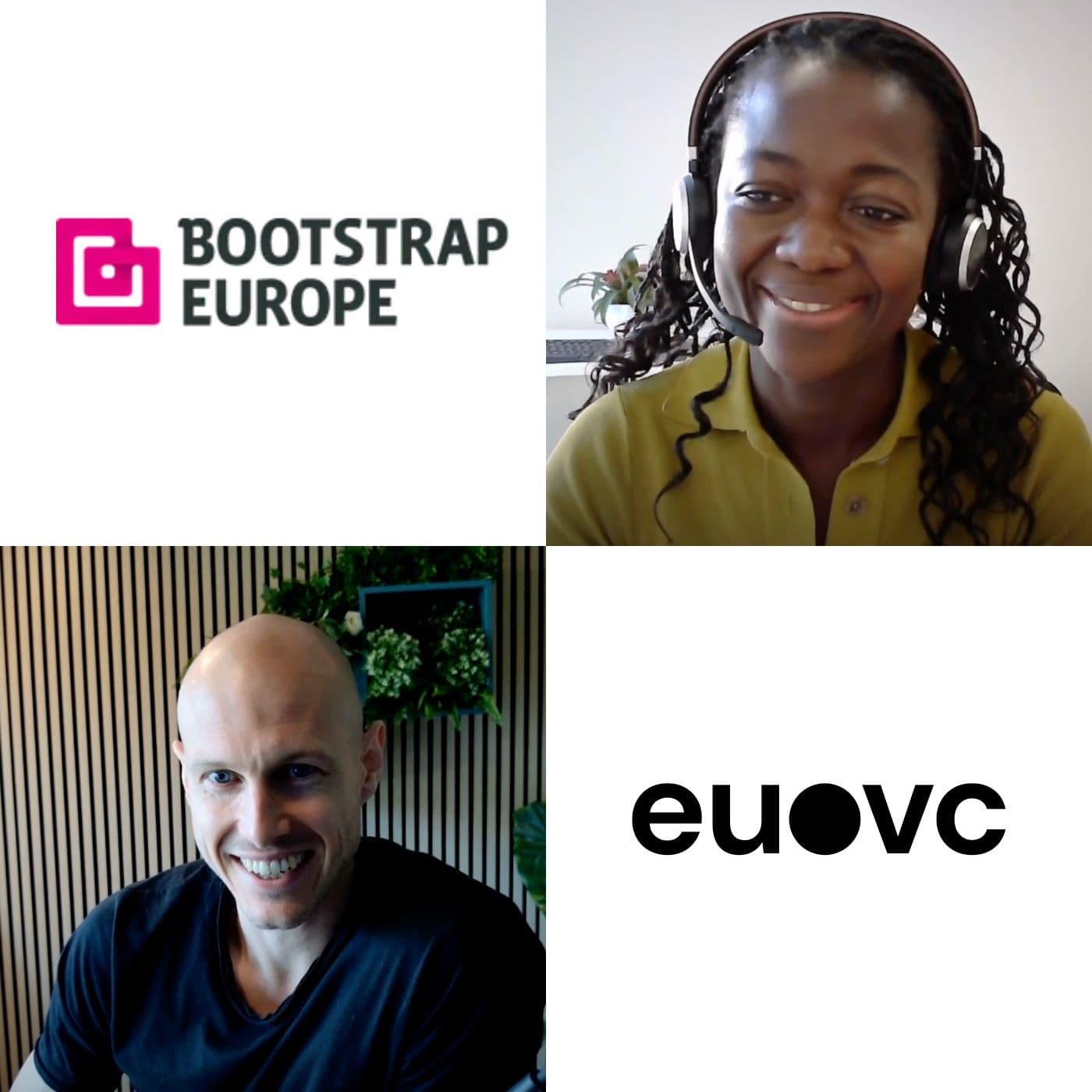
EUVC Podcast Episode Summary: E357 | Fatou Diagne, Bootstrap Europe: Trends in Growth Debt
Podcast Overview
- Title: EUVC
- Hosts: Andreas Munk Holm and David Cruz e Silva
- Focus: European Venture Capital industry insights
- Episode Title: E357 | Fatou Diagne, Bootstrap Europe: Trends in Growth Debt
- Episode Length: Approximately 1 hour and 5 minutes
Guest Profile
- Name: Fatou Diagne
- Role: Founder and Managing Partner at Bootstrap Europe
- Firm Focus: Venture investment targeting companies in post-Series A+ or Series B stages with solid KPIs and valuable assets.
- Headquarters: London, Luxembourg, and Zurich.
- Fundraising Goal: Currently raising the fourth fund aiming for €350-400M.
Episode Highlights
Bootstrap Europe's Investment Focus
- Targets European HQ'd companies or those with European founders/VCs.
- Investment sectors include:
- Deeptech
- Life Sciences
- Cleantech
- Fintech
- SaaS
- Notable Investments:
- Scandit (Machine Vision)
- Blueprint Genetics (Exited during COVID)
- Telensa (Smart city lighting)
Key Discussion Points
- Growth Debt vs. Venture Capital:
- Growth debt is presented as a less dilutive alternative to traditional venture capital.
- Emphasis on preserving founder equity and mitigating dilution.
- Market Trends:
- Increasing acceptance of growth debt in Europe due to tougher equity market conditions.
- Founders are becoming more sensitive to dilution and exploring convertible debt options.
- Geographical Insights:
- Germany: Cultural challenges around debt; however, the understanding is improving.
- Spain: Emerging venture debt market with several financing options available.
- Nordics: Familiarity with and a more advanced appreciation of venture debt.
- Macroeconomic Influence:
- The podcast noted that European venture debt markets are relatively resilient compared to the U.S.
- Interest rates have risen, impacting borrowing costs; however, the cost of equity has seen larger increases.
- Innovative Financing Structures:
- Discussion on different financing structures like M&A financing and equipment financing that suit capital-intensive sectors like climate tech.
- Future Predictions for Venture Debt:
- Fatou predicts continuous growth in the venture debt market driven by a surge in technology and the introduction of new capital sources.
- An increase in innovative company structures and a wave of fresh tech companies to emerge.
Trends in AI and Technology
- The conversation briefly touched on the role of AI in financial operations, including deal sourcing and portfolio management.
- Fatou highlighted the importance of staying up-to-date with technological advancements, especially regarding AI applications within their operations.
Conclusion
- Fatou Diagne provided valuable insights into the evolution and future of growth debt in the European landscape, emphasizing its significance amid changing market dynamics.
- The episode concluded with reflections on the impact of technology, particularly AI, on operations within the venture capital space.
Key Takeaways
- Growth Debt as a Tool: A vital mechanism for startups to avoid dilution while raising capital effectively.
- Regional Diversities: Understanding the cultural and operational nuances in European countries is crucial for successful investment.
- Macroeconomic Resilience: Venture debt markets in Europe show promise for growth despite economic challenges.
- Tech Integration: The increasing role of AI is reshaping how firms operate and make investment decisions.
For further details and to watch the full interview, visit [EUVC](https://eu.vc).
Written by AI. May contain mistakes. Listen to the episode to check what was said.
Transcript
Automatic transcript. May contain errors.0:00Welcome back everyone to another episode of the European VCBee Podcast. And they're focusing on companies with at least one venture capital firm, but preferably two on the cap table. Past product market risk growth with solid KPIs in hand is what they're liking to see. And they're also quite happy to see several patents or strong assets in there. They target companies that are European headquartered with European based founders or VCs. The next fund will have an allocation also to companies that are in the US with an exemption for 10 % of the fund that can go to geographies like Africa. They've invested in notable companies like Scandid, Blueprint Genetics, Talensa, which is the largest installed base of smart city lighting worldwide.
1:11And it was bought by Signify. Recent underclosed exciting investments in robotics is coming. AI healthcare as well, food tech and RNA tech. So I can tell you this episode blew me away. It was incredible diving deep with Fatou on the trends and growth that we're talking about the current market trends, how the market is changing for venture debt, the regional differences across Europe, how the economic situation is impacting the market for venture debt and all the likes of this. I can only say that this is one of the best episodes we've done. I really hope that you'll enjoy it. And if you are loving this, make sure to also go on EU.VC where we have a real three-hour in-depth workshop coming up.
2:00Only on Matudet and how to navigate it as a VC working with your portfolio companies.
2:15This is a union of values. United and determined, we can serve as a model for other regions of the world. The nature of a problem requires a European response. Europe is a story of new beginnings. Let's start acting. This show is not investment advice and the hosts of this episode may be invested in the funds and companies featured. Fatou, welcome to the European Easy Podcast. Thank you. I'm really glad to be here. Thanks for having me. So first of all, before I ask anything else, I want to ask you about the name Bootstrap Europe. Why Bootstrap Europe? Yeah, it's a short story. Actually, it's not for bootstrapped companies.
3:05That's also what I thought when I started. Yeah, but the idea was that, you know, bootstrap companies are very conservative of their own equity and reluctant to be diluted. And given that gross debt is an anti-dilution tool, there was a link there with trying to limit dilution for founders and their shareholders. And then the second link is we're a little bit geeky in the team. And at the time, we were sharing the offices with a fintech company and with the CTO, you know, the term bootstrapped on programming. We thought it also reflected a little bit of the geeky DNA we have and it worked well.
3:44You know, everybody seems to have heard about bootstrap. It sounds like, you know, sweaty and grind type of thing. So that's where it came from. Do you know the concept venture strapped? No. So I've heard it thrown around a bit and it resonated a bit with me. It's that you, as a founder, go and take capital in the beginning, but then you have a very strong focus on not getting ahead of your skis, so to say, getting to profitability as quick as possible and being very mindful of burn. Obviously, that aligns very well with someone like you that is a venture debt provider. So you're saying we should change our name to Venture Strap?
4:33I'm not saying that, but it was definitely a thought. It would be a match, yeah. Well, I think it's an interesting concept if we should just riff on it a little bit. Because, you know, when I spoke to some other friends, Mark Pankala and Vidisha from Altitude, they said, well, that's exactly what we always, you know, say to all our companies. is you have to be default alive rather than default dead, meaning that you need to have that capital or, sorry, you need to have a model that allows you to not necessarily die if you don't race. Maybe you'd comment a bit on that, your own mindset around that.
5:13Yeah, no, absolutely. I think the first rule if you're building a startup is preserve your cash and the last rule is preserve your cash. to this point. It's better to be too conservative in that regard. And when we make an investment into a company, the first thing we look at is, okay, the potential, the resilience, the cash flows, the technology, the IP. But we always at some point sit down with the founders, usually CEO and CFO, and have a very sober discussion about the downside scenario. So if all things went wrong, how would you save the company? You know, like do a stress test and see if you had to optimize your workforce, if you have to optimize your SaaS spending, if you were losing half of your client base, like what would it look like?
6:00Who would you keep and how would you cockroach your way out of it? And we only invest when we have a strong understanding of that. So in a way, we're looking at that cash preservation as, you know, that's your base case. And then anything on top is cherry on the cake. And we're obviously going to talk much more about this because as a venture debt provider, you have to invest with a different risk mindset than as a pure VC. But before we go there, this episode is obviously dedicated fully to talking about venture debt and how to navigate the intricacies of venture debt. I'm also going to ask you, what do you think about the people like Paul Graham, who says that venture debt is completely ridiculous?
6:41I've heard so much about this recently. Everybody, our LPs, clients, companies came back to us with this one. I put it in our newsletter as well because we're doing a dedicated session together with, I'm sure you know, Himal very well. And I put it in the top of the newsletter there because I think it's like... It made a splash. Yes, it did make a splash. What a guy. Okay. Well, Graham knows how to make a splash. But let's continue into it. First, let's get the story of Bootstrap Europe and yourself. Fatou, how did you come to start or found Bootstrap Europe and then tell us the story of Bootstrap Europe?
7:22Yeah, I think most people who arrive in venture are not there by design. And for me, it was very much the case that it was a little bit accidental. I'm originally from Senegal. I still have all my family there and I often go back. So, you know, if you're into emerging art, for example, Dakar Art Biennale is one of the best you should visit in November. But I, let's say before Bootstrap, I worked in investment banking, studied in Paris, then worked in London, South Africa. And one of the things I'm most proud of outside of Bootstrap, my two kids and my husband, is that I was part of setting up a weather disaster insurance in Africa a couple of years ago, 10, 15 years ago, which used very complex weather derivatives, weather information to provide coverage to vulnerable populations.
8:12And in the first year of operation, we managed to assist 1.3 million people because there was a drought in West Africa and they could basically assist themselves instead of waiting for the CNN cameras and things like that. And to me, it was, you know, a stark illustration of what you get if you're mixing finance and innovation. It's true impact. So around that time, my friend Stephanie, whom I've known since we were 17, called me and asked me if we wanted to set up a business to channel more capital into innovation. And for me, it was a no-brainer. And that's how our first business was born. We were advising family offices and entrepreneurs who wanted to reinvest their cash into innovation, managing a portfolio of around$300 million,$350 million of everything private equity, funds, direct, you know, yielding assets, music royalties, film royalties, pharma royalties, all linked to debt, right?
9:07This aspect of debt. And in one of the companies we had in Sweden that was, you know, it was called AI at the time, but it was really natural language processing. We needed debt and we had to get it from WTI in the US because it was not so widely available in Europe. So we realized that the market was really underserved. There was a niche that we could exploit. And And that's when we started doing venture loans and eventually ended up launching our first fund together with the entrepreneurs and families who believed in us from the start. So it was really born out of need. That's the problem we tried to solve.
9:41We tried to do it a little bit differently and to serve entrepreneurs a bit better across the continent. So with Bootstrap today, we have done together with the team around 1 billion worth of transactions across something like 400 transactions. we normally invest in industries like life science, deep tech, material science, energy, software as well, mostly with a B2B angle, fintech. The idea is that if you go back to this idea of an impact, we thought that innovation really can make a strong impact. And so we tend to gravitate towards those industries. You won't find us a lot in the typical B2C apps, the typical marketplaces.
10:24We'll be more, again, in the geeky sector, linked to the bootstrap term. And yeah, with Stefanie, it's been a great partnership for over, I'd say, yeah, more than 20 years. And that has been a great foundation to build a team of exceptional people, very, very smart, very driven, that have allowed us to grow and develop the franchise in Europe. So today we are based between London and Zurich. It's truly pan-European. We have investments all over the continent and we are doubling down now with our new fund, Fund 4, we are raising and launching it towards the end of the year. It's going to be around$350 million.
11:03There is another gap that has been left by the events that happened last year. So we're trying to fill that up. Yeah, maybe let's talk about that a little bit. So when you said last year, you referred, of course, to the collapse of Silicon Valley Bank in the first the U.S. and then here. and you actually took over part of the portfolio or the portfolio in Germany to be specific. Could you tell us a bit about that process, kind of how it came about, how quick it was done and what were learnings maybe also from going in and making that type of transaction? Yeah, it was an eventful year for the whole industry last year.
11:42But what's interesting is that Silicon Valley Bank's assets had no problem. The loan book was doing quite well. Of course, it had been impacted by the 2022 crisis, but the loan book was doing well. And so when it went down, the U.S. quickly sold the U.S. assets to First Citizen, the U.K. assets to HSBC, two very large institutions. And then we knew that the German assets were remaining without a home. And so we basically were preparing for this. So when they went on sale a little bit early summer, last year, process led by the US FDIC with a firm based, I think, in Ohio, you know, in summer in Europe, it goes a bit quiet, but we were very much awake and waiting for that opportunity.
12:28So because the assets were good, I think anyone who is anyone in Europe in venture debts looked at the assets and potentially made a bid for it from the venture debt players to large banks like the Deutsche Bank to large institutions like BlackRock looked at it. But as I say, we have a team that is very, very driven, very smart, very disciplinary, whether it's FX, pricing assets, because not a lot of people could price venture loans. In our team, we have one of our partners who had actually already bought a book of venture debt early in late 90s in Europe. So we had that expertise. We had the expertise of quickly raising capital for that financing as well and optimizing the FX transaction.
13:17So it was really a lot of things that you had to get right to get the assets. And we won that bid in exactly a year, a little bit over a year ago. What was important for us is Germany was a central market for technology in Europe, and we wanted to be there very significantly. there is a huge rosters of very talented entrepreneurs, talented VCs that we wanted to support and clogged that gap when SVP went down. When everybody was turning to fear, there was quite an appetite for us to capture this opportunity, turning to greed when everyone is fearful. And so, yeah, it's been doing extremely well.
13:57We are continuing to invest in Germany over and above that portfolio. and yeah, it's been fantastic also to put VentureDat on the map and show that yes, it's a great part of the ecosystem and it should persist. Obviously, your ability to price correctly is incredibly important and I imagine that that is also what allowed you to give a higher price than the others because you were able to say, well, it's actually worth it whereas the others had to kind of lowball a bit because they had a bit less experience in this type of investment. Am I right that that's basically the expertise that allowed you to take over the portfolio?
14:36That and a little bit more. Yeah. And what's the one more? The one more, yeah. So the expertise to price the assets and understand what a loan was worth and then pay for its right value. Then I think only the pure play eventually players could do that. And then the other complexity we had. Can I just ask one clarifying question? Did you take over only established portfolio or also committed capital? Also committed capital. Yeah. Okay. Yeah. So the total portfolio was around 160, including committed capital. And obviously that committed capital that hasn't been drawn, you can't really discount it.
15:13So you have to price it in and really understand what is going to be drawn, when and what cash flows are coming out of that, which companies were distressed already. For example, SUV had excluded themselves, some companies out of the portfolio because they thought these were distressed loans. So we acquired the performing loans. And so loan by loan, you had to go through something like 160 documents per loan to really understand the true nature of it and the credit quality. We had to make calls to the key stakeholders of each of these companies because also the key thing when we make a venture loan is the partnership with the founders and the VCs.
15:48And so making sure that we could reassure our counterparts that, yes, we were in it for the long term and understand their commitment as well. So you have this pure venture debt expertise that has been developing for years and years and years. So it's not just a matter of luck. It's really knowing those companies. We knew some of them before and could make an accurate assessment. Do the founders in any way, can they block a deal like that or can you always sell your loan? You can always sell your loan as long as you're not selling to somebody who's conflicted. So you can't sell it to someone who's a competitor, like a customer, those type of things.
16:29But your point there is that the US FDIC actually told a lot of people to not even bother turning up to the auction. Yeah, because they said, you guys are conflicted. We're not going to allow you to take this over. Yeah. And I mean, beyond the conflict, it was mostly anybody who was a hedge fund, anybody who was distressed debt investors or special situations. If you were that type of investors, they did not want you to bid for the assets because they wanted the activity to continue. So together with the German regulator, they wanted to make sure this was a sustainable purchase. You were not just going to buy it and then liquidate it and get out of the market.
17:06Yeah, yeah, yeah. So they told all the vulture, you had to sign something like, we are not a vulture fund. We're not a distressed data player before you could enter the data room. So that way it was clear that it was not just a financial transaction. You really had to have an interest in the ecosystem. Yeah. And you said, so you said, who were the parties on the other side that had to agree? So you had, SVB, I guess, were not even selling, right? Because it was the ones who had taken over the management of, so that's the US. FDIC, is that the name? Yeah, so because the German part was still a branch of the US entity, we had to deal with the US government as government as it gets, but very professional.
17:57But you also had to be involved with the SUV team. They were still active at the time, having gone through months and months of uncertainty and not knowing where their next home would be. they knew the best, the borrowers and the companies. And so making sure that that knowledge was not lost was important. I want to ask you a question that you maybe do not want to answer or can answer. That's right. I would have thought that someone like KFW would have been a natural buyer of this because it would have been, we're solving this for the ecosystem. Yeah, good point. We also thought so. we don't know if they've been we did reach out to them to ask could you help us do this because you're interested in the development of the ecosystem they're pushing venture debt a lot right I think at some point they announced they wanted 1 billion of venture debt invested every year in Germany which might be too much I don't know what the right number is but in the end we did not partner with them to do that We did have the very, very strong support of the European Investment Fund, who's one of our investors.
19:09And really, shout out to them. They've been exceptional throughout the process and since they invested in us. Yeah, so they came in as LPs. Yes. And obviously, we had to have the approval of our LPs to go after a transaction like this. And they were very flexible, very quick, very understanding of the market dynamics and quite specialized. So, yeah, you know, you hear sometimes EIF is a bit of an entity, but it's not our experience. They've been very, very proactive. I think the important thing is that people are people, right? And we're all, whether we're in one organization or another, mostly most people are trying to do their best.
19:47Yes. And in this situation, they probably had a very strong mandate or their organization was probably pushing very hard to try and help resolve this. And what causes any issues that I think with the EIF, at least the majority of them, is that they are a government entity and that means that there's red tape and it means that they're restructuring sometimes and that's what's blowing people's processes up. It's not that the people that are there are not hardworking individuals. And I think that's important to all of this. I agree. Okay. So now let's dive into venture debt. We really started in the deep end, I think.
20:36Yeah, we can stick a step back. But if we now go back and talk conceptually, if I ask you about the current market trends in growth debt in Europe and tell me, am I right when I use growth debt and venture debt interchangeably? Or would you say, nah, Andres, you shouldn't do exactly that? Yeah, the definitions and the nomenclature in venture debt are interchangeable to a certain extent. Technology debt is basically one thing that applies to everything, whether you're investing in C, Series A, or a bit later. And everyone struggles with the definition, right? You should try to find stats on what's the size of the gross debt market.
21:19You find anything from like 3 billion or$3 billion to$4 billion according to Dealroom to$30 billion according to PitchBook. So, you know, whereas the truth is in the middle, but effectively, if you're lending to a fast-growing technology company, they're usually cash flow negative. I think that qualifies as venture debt or gross debt. For us, it's important to call it gross debt because we want to emphasize that this is really to fuel your growth. It's not something you take because you can't raise equity. It's not something you take because you're desperate. It's because you want to accelerate that growth.
21:50that is basically at the heart of technology and innovation. And so it helps us to basically distinguish the use case. As such, I'll try and say growth debt instead of event fund debt throughout this conversation. I don't know if I'll manage, but let's try and see. Sure. So I want to ask you, are we seeing in Europe an increase in the use of growth debt between founders or the opposite? And maybe also a comment on how this compares to the US. I think there is a definite increase in volumes and in acceptance of gross debt in Europe. It's not always for the right reasons, but we see a huge difference compared to 2021.
22:32I think really, I think today the market has really recovered from 2022 crisis, mostly because, yes, it's harder to raise equity or equity investors are harder on valuation terms. and because now founders are more sensitive to dilution because of where valuations are standing. So there is this incentive compared to 2021. To give you an example, 2021, we did very few deals just because equity was so cheap. And we are essentially an alternative and a complement to equity when it comes to dilution, right? So today, yes, it's more accepted. It also means that I think lenders have really showed up when it comes to supporting tech companies when equity retreated.
23:17And we were willing to fill the gap that was left by this lack of equity funding. In order to avoid price rounds, founders will tend to do convertible and complement that with gross debt in order to extend the runway further. Actually, the ones that are more aggressive would use it to seize M &A opportunities, right? Because now, you know, you can buy profitable companies at cheaper multiple and do some type of multiple arbitrage, extend your reach. So a lot of founders have done that, the ones that are still doing well. There is also, yeah, the fact that that has been more resilient. We have, of course, worked with founders and their VCs on the terms, on the repayments to make sure that we could see through that period and we don't know where the end is.
24:07Normally, downturns can take three, six years. So maybe we're only halfway through it. We don't know. So the most conservative of founders are looking for ways to prove their business. And we can act as insurance for that. You can negotiate a facility. You might never draw it. But when the moment comes, it's better to have it ready. And the second factor is that we, at least at Bootstrap, believe that gross debt lands itself particularly well to sectors where you have a lot of technology or a lot of intellectual property. And where it's, we call it real tech, right? It's long development cycles, lots of IP.
24:43It's very hard to replicate. And there, your economics are quite stable and quite predictable. So in the past few years, you've seen a huge growth in energy, semiconductor, fintech, life science, right? And so these are sectors that we love. So most of the deals we've done recently fall into that. Robotic, semiconductor, sustainable construction, the energy transition, AI-powered life science. All of that are very popular right now, and all of that we think are the best for venture debt. So that explains it. One side demand, one side supply has been there. And I think the VCs are back to funding the tech, how you used to think about it in the big days of Silicon Valley.
25:29That had made a huge comeback. And then if we just do a quick glance over to the U.S., how do you compare what we're seeing in Europe versus in the U.S.? Yeah, the U.S. is generally more volatile and more elastic than Europe. And they're more impacted. The industry, whether it's VC or gross debt, is more impacted by what is happening on the macro side. So U.S. gross lending has really dropped a lot in 2023 and dropped again in 2024, even though it's recovered from the SVB bankruptcy. It's really recovered after that. But it's still suffering a little bit. What we've seen there is that the volumes have gone down, but the transaction sizes have increased, meaning that the lenders are really focusing.
26:19There's a bigger disparity when it comes to quality. the lenders are much more demanding and will tend to lend more to the quality companies, whereas the ones who don't qualify, they basically, they would have gotten maybe a smaller loan before, and now they get nothing. I think it's recovering. We've seen this year that H2 might be a bit better. But yeah, the U.S. has been more volatile than Europe for good or bad reasons. Yeah, I was about to ask you if you should give your stance on that dynamic of lending more, purely piling more cash into the quality assets and then having a higher bar and saying, well, there's just parts of the market that we do not serve.
27:01Yeah, yeah, the bar has definitely come up a lot since 2022 just because it was much easier for startups to raise before. So you could lend to a borrower that had not all the points perfect and they could still raise money to continue servicing the debt. Whereas today the bar is higher in equity and therefore higher in debt. The other point in US versus Europe is if you look at where the capital comes from in the US, a lot of the players like Hercules, Horizon, Triple Point, they're all listed. And so they have suffered from the equity markets. Not everybody's Nvidia. And they also finance themselves by lending on the public markets.
27:44Sorry, borrowing on the public markets. So they would raise bonds from the public market and then invest. And if today the bond market is not as accessible for them, they will have fewer, less volume available. So it's also about a supply dynamic there as much as it's a demand situation and the quality of startups that are currently. Okay. Now let's shift to sectors then. What sectors are you seeing? You've said it a bit before. You think it's very much the deep tech or real tech, as you called it, sectors. I think the real tech is a propagative, dangerous statement. So I will not say. Yeah, no, no.
28:19But if you could maybe touch a bit on maybe one of the large areas that we're seeing drawing a lot of cash right now is AI. So what sectors are you really seeing utilizing growth debt more than others? So one interesting one that has really been an avid user of growth debt is life science. We do about one third of our portfolio in life science. And there, on the public markets, valuations have come down by something like 80%, 90%. So a company that was worth, and we've seen this in our portfolio, we've seen this in other companies, it was worth$600 million before the crisis. Today, they're raising at$60 million.
Read the full transcript
29:02So, yes, it will overvalue maybe before the crisis, but they've really been punished over and above what they are intrinsically doing. So even when they have quality data in their clinical trials, great products coming to market, they just can't come on the same type of valuations. And therefore, they've been raising more debt than before. So that we've completely seen in the sector. Does that come from having too many people after COVID piling money in? And it's one thing, you know, it's part that money was free, but it might also be that we had an over focus on helping cure the world. Is it weird stuff like that?
29:47Yeah, it was a little bit weird. The valuations were a little bit weird. It's true. When we looked at it, we couldn't understand what was driving them. The public markets were doing well. And so investors in life science were quite optimistic. So the same way that it was unwarranted to have those crazy valuations, the same way it's unwarranted that now they're being so overpunished. You will really see companies delivering exactly what they promised to deliver in terms of data, in terms of progress of the technology, and yet struggle to raise equity. How do you lend to, because I get that you can lend to a B2B SaaS company because there's revenues there, it's going to come in.
30:23You know, there's a business case that's a bit easier to make. I think at the stages where you start getting growth debt in. But that route is much, much harder in life sciences. Yeah, it's completely counterintuitive. What do they service the debt with? If a life science takes, do they then raise an equity round later? But if you really look at it fundamentally, most companies raising gross debt are cash flow negative. So they're not servicing the debt from cash flows. They're servicing the debt from equity. less so in a company that has cash flows, but eventually they have to use some of the equity.
31:02And the bet is really, I'm using part of my equity to get this additional cash from the lender because I think I can reach the milestones faster and therefore raise another round of equity faster. Or I can reach, let's say, instead of reaching 10 million, I'm going to reach 20 million. And therefore I can raise a doubled evaluation. and that cost of debt is worth it because I'm now getting an uplift in valuation that is two, three times more. So everyone is doing it, technology or life science. It's just that life science has no revenues a lot of the time. So in biotech, what's clear is that we have this saying that to have a successful biotech company, you need 20 years and 100 million minimum.
31:47And therefore, if you're a founder or an early stage investor, you're going to be diluted to death on that pass. Therefore, gross debt becomes even more important for you to limit the dilution because you're thinking we are going into phase one, phase two, and three. And at each stage, if we make it, the valuation can increase 10 times, right, between those different milestones. And we know we're going to need to fund it at least until FDA approval. So why not take a little bit of debt now to reduce the dilution? So it's even more impactful in life science and in certain early stages because they know the road is longer and more expensive.
32:25And this is why it's so important that the VCs around the founder know how to deal with debt. Because you can really, you can definitely as the venture debt provider, make an argument towards a founder if you wanted to, that this makes sense for you. big as XYZ, you know, the thought, the train of thought that you just presented. But in reality, you might actually, you know, you might not really be tying on the founder for something that's really, really bad. And that's what Paul Graham is probably saying. And that's why he's hating the growth debt. Now I call it growth debt when I critique. The growth debt sector.
33:11I mean, to come back to that quote is, his Y Combinator. So these are very early stage startups. For them to take gross debt, we normally say don't take it if you don't have yet a product market fit. Don't take it yet if your go-to market is not really well established and your unit economics are clear. You know you're going to borrow$10 of gross debt, invest it in sales, it's going to generate$100 of revenues. You need to know this relationship really well. And the Y Combinator stage, they don't know. So you're taking financial risk on top of your operational risk and just compounding the risk.
33:49So I agree with him. At that stage, don't take it. That's the job of equity at that stage. Figure it out. And once it's figured out, your engine is running and add fuel to it, but not while you're building the engine. Just a quick side question. Can a founder typically take on growth debt without approval by their investors? No, that normally requires... the board approval. Yeah. Does it normally happen in connection to a round or how often do you see it happening in connection to a round or in between rounds? Yeah, it's funny here. Let's, you know, the difference between US and Europe in the US is systematically in connection with a round.
34:29You raise 10 million equity, you add another three, four, five million of debt on top of that. Very systematic. Whereas in Europe, there is not this automatic thinking. So we normally see founders come to us six, 12 months after they raised equity, when they realized actually they raised this amount, it might not last the whole runway they thought it would, or actually they're seeing more opportunity and they want to accelerate. So it's not always linked. And we can come in six, 12 months after a round as long as the company has enough runway and as long as the reason for taking the debt is the right one.
35:02I think the one question we ask is why? Why would you take the debt now? And if there isn't a clear rationale, we don't do the deal. Do you think it's better to do it together with the round? Do you think that that's probably best practice? No, there is no. It doesn't matter. If you raise a round that gives you three years of runway and you just come to us 12 months after raising it, that's fine. It just depends on you want to make sure that when you take the loan, you can put it to work immediately and with the clear ROI. And you want to make sure that you have also enough runway ahead of you so that if you take the debt that you have to service and things don't go as expected, you still have a bit of time to figure it out together with your board and with the lender and you're not forced to go back and raise equity at terms you don't want.
35:50So you want to still remain in control of your own destiny, whether you're taking debt or equity. And therefore, it's important who you take the debt from, what's their philosophy. For us, we really think, you know, the less, the better. Just take as much as you need and not just put it on top like, yeah you know there's this comparison that is like fertilizer uh if you put it on a on the right amount at the right time on the good plant it just helps it grow but if you put too much of it it stinks what's the normal so in venture land we normally say 18 months or three years of runway that's what you kind of want to raise for in venture that what is then that right amount how often do you want to be taking out a new loan if we enter a company together with the equity round or after the round, we would usually be very willing to land again when they raise new equity.
36:42What's important for us is the traction that they have. So it's momentum, really, in your business, that the business is growing because it's an expensive instrument. You want to make sure it's worth it. And the momentum in financing. So if a company keeps raising funds, on average, we land to each of our companies two, three times. It's a long-term relationship. So now I want to go in a completely different direction, so to say, or at least I want to go get back to our core conversation, which is the trends in Europe. And I want to ask you about the regional preferences to venture debt. Do you see anything in Europe that you can say is kind of different across the regions?
37:19Yeah, yeah, definitely. Europe is a little bit different from the US in the sense that we have 27, 28 different jurisdictions, and each of them has its own dynamics based on how financial and capital markets have evolved, what's the regulation, what's the make of the technology financing scene. So if you take the UK, it's really, you know, we call it creditors heaven. It's the most advanced in terms of use of debt. You know, when Silicon Valley banks set up in Europe, they set up in the UK because it's culturally the closest to the US, whether it's how the VCs operate, the use of and familiarity with debt instruments, the sophistication of both VCs and founders.
38:03So it's the deepest market. It's where most of the landers are set up as well. Sometimes we'll see deals from Germany pass through London and being done in London. So it's still a financial place with that regards. And I think it will continue to be, you know, despite the Brexit and everything. At the opposite end, one market that was harder for us to penetrate culturally was Germany. And I think the second market they went to was Germany. They did an incredible job educating the technology scene about the use cases of gross debt. And we are benefiting and piggybacking on that to continue deepening the conversations there with the likes of KfW, with the likes of equity VCs who are organizing knowledge sessions for their entrepreneurs.
38:49But in Germany, Schuld means at the same time guilt and debt. So it tells you how charged the act of taking a loan is. Also because the directors can be liable personally if the company goes down. We can be liable as lenders if we lend too much to a company that ends up in bankruptcy. But again, it's progressed a lot. And yeah, the entrepreneurs are more familiar with this and have more appetite. Another interesting market is pain. there I still don't know what the answer is because there is an incredible amount of venture debt gross debt I've even heard seed venture debt in the market if you want to raise debt you can do it so because there is this gap you know a lot of the Spanish funds stopped just before the growth stage and it used to be that international VCs would come in at the growth stage to complement that funding now it's changing like the CIS they've raised gross funds and they can they can track that gap.
39:49But effectively, that's where debt tends to come. If you're a Spanish company, you will have probably six, seven term sheets of venture debt. And then you have the Spanish banks coming in with crazy terms because their cost of capital is cheaper. So banks tend to come into the technology lending market here and there. They come, they do a few loans, they might take some losses. They retreat. You know, Barclays does it in the UK. Santander does it in Spain, in CIBC, in Canada. So there will always be one or two banks very active, but in Spain, it's quite incredible. And that's where I've seen the concept of seed venture debt.
40:25So, you know, the Paul Graham Antichrist type of transaction happened. That's very interesting. And these Spanish banks will never go across borders. It's all in Spain. They're starting to go across borders. That's the interesting thing. Yeah. So we've seen them in the Netherlands, we've seen them sometimes in the Nordics, and there is more and more appetite granted. So what happened after SVB went down is that I think banks realized the beauty of its business model. So for a bank before, we had the gap in the market because they thought, I mean, it's true, doing a venture loan would cost you on your capital base.
41:07Due to the Basel 2 requirements, if you're doing a very risky loan, it eats into your statutory capital. Whereas if you do it to a corporate, you know, AA, that's fine. And so they never really went big into this. But when they realized the amount of deposits that SVV was enjoying, just all the services on top, FX, lending to the entrepreneurs, lending to the VCs, transaction, you know, RCFs, all those things, then the pot became much larger. And they're now considering that cost of capital, like cost of acquisition. So we don't know what this bet will result in. We'll see in the future. Usually, it's not a beautiful story, the way it ends, because the leadership at the top of the bank stops.
41:49They decide they don't do this anymore. All the borrowers are left hanging, or they decide, okay, these losses are not really something we can report to the board or in our financials. So they just stop, and then they come back five years later. So I don't know how it's going to work. We haven't seen one that is actually doing it really like SVB was doing it. HSBC did take it in the UK, but they don't have the same risk appetite and the familiarity with entrepreneurs. So the jury is still hanging. But yeah, it's an interesting structure. In the Nordics, you have a little bit of that with the likes of Nordea, but Nordea is doing it in a much more measured way that works.
42:23We've co-invested with them in a couple of deals. And the Nordics are very used to taking gross debt. When the US players came, they went to the UK and the Nordics because of the legal system. Yeah, the companies are reasonable with the amounts of debt they take. And one more change I would say is the European Investment Bank. We've seen them, and in full credit to them, they're the ones who can come and do like a 600 million facility to Northolt. No one else can do it in Europe, right? Even if the larger fund did it, it would be half of their fund into one borrower. So EIB has been supporting the ecosystem like that, but they have some conditions that are backfiring for some entrepreneurs, and we see them coming back to market and trying to refinance them.
43:05but it's very expensive to refinance EIB. So yeah, maybe they change the policy and they make it easier to work with other lenders. What would you say in terms of when you're building a firm like yours is because we're seeing in the venture landscape, we're seeing a lot of consolidation and so on. I imagine that with banks interested in this, more and more interested in this, you somewhat frequently talk to banks that reach out either wanting to look you over the shoulder. I don't know if they would do an LP investment or they would put a bid to buy bootstrap Europe. It's a strange relationship.
43:54If they bought a branch of debt player, they would have to let it operate completely separately from their balance sheet. I think it would be very hard for them to integrate it. What we have seen, though, is that they've ceded some of the debt funds. Yeah. And then went and competed with them.
44:16Which is a bit of a sad outcome, but very smart for the bank. They learn while looking over the shoulder of an experienced team. And then they know that they have their LP base in their... Yeah. Yeah. That's interesting. Yeah. And again, once you are a standalone, independent fund, for us, strategically, there wouldn't be a lot of advantages to now have a bank as a parent company. We would love, though, to partner with them when it comes to diversifying the tools that we can make available to founders. So if you're a founder, let's say in semiconductor, you need to buy a lot of components one year in advance.
45:03You need to immobilize a lot of funding in your inventory. And bank cost of funding is better adapted to that. And we would love to partner with the bank and say, okay, could we do a structure like you do in private equity? You will do this portion of the lending and it works for the inventory and revolving credit facilities. And we would do the term loan part, which is more the risky part. And we paid for that risk. Like, you know, I started my career at Citi Group in investment banking and lending as well. And so, for example, Citi is one of the players we're trying to work with to see how we could offer more diversified facilities to borrowers.
45:40Do you as a firm see a lot of coaching from banks? Because I guess if they want to get into this, they likely would be looking at players like you to try and hire from? Not in our team. So we've had a very stable team. I see more that's getting expensive because they keep getting approached maybe maybe we have to stop no no it just takes a very different DNA to work in a bank and to work in a fund because we need to have the same philosophy and psychology as the VCs and that's very very different than if you're a banker and have to like you're a relationship banker That's actually why I ask specifically because my thinking is that it's very hard to grow that mindset within a bank.
46:33So you kind of have to hire someone in and then it's that person that interfaces with the entrepreneurs and kind of make sure that we act as the VC ecosystem would like us to. But then there's a whole group around that person that makes sure that you act as a bank. Yeah, I think the banks then start being adversely selected because I would go work for a bank if I know I'm not getting carried, I'm not getting carried interest, and I'm not going to be in a successful fund, then I might just go and take a bank salary. Do you have a venture debt fund? Is it 10 % carry or 20 % carry? It's the same structure as VCs.
47:10It's LPGP with the same carry structure, and everyone in our team has carry. Same management fee as well on CommitCab? No, slightly different structure because it's debt. So, you know, management fees and VCs, I think you charge on commitment and then your book grows, so you charge more on that, whereas our book tends to go down. And so that's a benefit for LPs that the fees go down as well. Now, I want to go to the economic influence. How does the macroeconomic conditions affect the venture debt market? And maybe, you know, that's also a touchy bit on the US, but focus definitely more here on Europe.
47:47Yeah, we touched a little bit on that when we were saying that Europe has been a bit more resilient than the U.S. because I think the U.S. has more beta. If you want, they're very sensitive to the general environment. It comes from the sources of funding. It comes from also their operating environment. So sure, since 2022, the interest rates have gone up, inflation has gone up. It's harder to grow because enterprise software, for example, is much harder. The sales cycles are longer. Your ACVs are not as generous as they used to be. You might have more churn. So it has been a bit more challenging.
48:28However, and it goes back to this concept of if you have a really differentiated technology, in times of crisis, you will tend either to flatline or you would benefit from the crisis because you're doubly more important to your customer. And so therefore they will tend to stick with you. So selecting companies, you have to really go to the ones that are unique and differentiated. And I think also how the technology funds are funded in Europe matters a lot. So in the US, you would raise from pension funds, from people whose wealth is very much linked to the public markets. sensitive to economic cycles.
49:05Whereas in Europe, frankly, when you look at it, I don't know, I think 40, 50 % of all funding to VCs is from some source of government because our pensions, you know, go through government structures and not through pension funds. Therefore, it's not in private hands, it's in public hands. Government funding has been pretty stable. I think governments have understood that the crisis might threaten an ecosystem that has been thriving for the past 10 years and have really supported it in areas like defense. You know, it used to be that you couldn't really invest in defense as a VC, whereas today a lot of those constraints have been removed because it's a strategic objective.
49:44Semiconductor is the same. Europe is really getting behind US and Asia. And now there's a lot of programs here to support it. If you're investing in deep tech, if you're investing in climate tech, there is a lot of money available for the good operators. How about the terms and conditions of growth? How do they change as we also have seen gone through the latest period? Sure, they have evolved, but that's a good thing. I think they've become more sophisticated. It's no longer maybe 80 % of the market is still the one model where you have a term loan with warrants and then it's amortizing. but we've always tried to be a bit more thoughtful in matching the cash flows of the companies with the structure of the loans.
50:31Similarly, when you're structuring equity kickers, the warrants, making sure that the companies have raised a very high valuations a couple of years ago. So how do you price the equity today? You don't want to punish the founders too much. So we try to be also a bit more creative around those terms to make sure that there is the right incentive. Obviously, interest rates have gone up. If you look at the US, they've gone up from 0 % to 5.5%. In Europe, it's more around 3.5%, 4%. The UK, the same. So the cost of borrowing has increased. Interest rates used to be fixed. Now it's floating. But again, that change compared to the cost of equity is very small.
51:12The cost of equity, in my opinion, has doubled since the crisis because your valuation goes down and then it's more expensive. And VCs have to return more on the winners. to make up for the ones that they're losing. So a slight increase in the cost of debt is not massive compared to how much dilution it saves you. Yeah, it was definitely an interesting time to do venture debt when equity was just so cheap. You have also, so now you have, the market has also horizontally diversified and is deeper because you can get more specialized, right? We have more volume, so you can specialize by sector. There are some lenders who only do life science.
51:50Others will only do B2B SaaS. Others will only do B2C recurring models. You'll have different type of landings that are just revenue-based financing. That has been a great, great addition to the market. For some companies that only want one or two million, it's expensive. So you want to use it sparingly, but it can fill the gap. And it's very easy to get, very automatic and programmatic. We'll see how it performs. Is RBF, revenue-based financing, typically only provided by pure play revenue-based financiers? Or is it oftentimes just a structure within a venture debt firm? Yeah, I think 90 % from specialized RBF providers.
52:35Because within a venture debt fund, if we can provide RBFs, we have modeled that for our borrowers. But it ends up being more expensive. than a normal facility. So, you know, we put it side by side. If you want this one, we can do it. But the other one is more flexible. That's also connected to the startups that you gravitate to in terms of focus, right? Because RBF is tailor-made for SaaS and consumer with good growth rates and real revenue. Whereas, obviously... No, I mean, even for B2B SaaS, if you really look at the all-in cost, because, you know, they take... The interest rate is quite high.
53:12Whereas we're saying our return is split between the interest rate and the upside. So we'll basically put half of our return into your hands. If you succeed, we succeed. And if not, whereas RBF, you pay today. And so in B2B SaaS, if you're going to borrow one, two, three million, you want it fast, you can put an RBF in place. If you want something that is more stable and longer term, also RBF can be very short maturities. Your B2B SaaS contract tends to be three to four years. So you want to align that maturity with the maturity of your loan rather than take very short loans that you have to refinance very quickly.
53:49You might not be able to refinance. We've seen that as well. So at fast-growing B2B SaaS companies, it's still cheaper to take advantage of that. I hope everyone in the audience can follow this. Otherwise, you can go 30 seconds back once in a while. I can't do that in business live. I'm definitely fighting to stay afloat. but I think I'm doing okay. Now, I want to ask you about any other innovative structures because we just heard about RBF, which is a big thing. But what other structures have we seen come into Europe that you think are meaningful? What we've been looking at a lot and just really demand-based is M &A financing.
54:33As I mentioned, a lot of companies are turning opportunistic and acquiring their competitors or different technologies and that we've put, it's really a facility that is there and is structured with given metrics. If the company you target to buy matches it, you just draw on it and it really gives you this velocity to win some of the bidding for M &A. The other, but then again, you need to be very disciplined and understand really well your M &A target. We've done that very successfully with a company in France and they grew so fast that they came back and were like, we'd like more, okay. We thought it would be next year, only six months later.
55:09And very successfully, very disciplined, very successfully. In the climate tech world and energy transition, we've seen a lot of equipment financing requests. Again, linked to that huge need for CapEx. And really, it's not the purpose of equity to finance CapEx. At a certain stage, you don't want equity is way too expensive for you to finance a production facility or material equipment with this. And so that we're able to provide as well. We're able to mobilize additional sources of funding a little bit cheaper to get to a blended cost that works for the startup. Yeah. And I think the other structures that also didn't come from the U.S.
55:53is just basically the ecosystem being more sophisticated in Europe is how you structure around your collateral. So venture debt always takes collateral in discussions where you are potentially licensing out your technology. It can be very sensitive conversations. you're thinking oh well my IP is worth 100 million you know my this load is is much lower and the the pharma licensing it you know might be sensitive around that can we structure around and we can structure around some companies that don't look bankable because they look so asset light might come to us for a loan and you know no one will lend to them but we actually are able so with Stephanie before we did a lot of that trying to find asset back and try to identify where was the value in a company.
56:35And we've done that successfully with a company. We land them, I think, four times since then because they had an incredible asset that no one had really identified. And we could just land on the back of that and help them grow. So we try to, you know, if it's a complex situation, we can really structure around it. I think that has been welcomed by the market. Future predictions? What do you see coming in the growth of that market? Okay, now you're asking me to be wrong. By default. I think the market is going to continue to grow. So we think that it's still an underpenetrated market because, yes, you need more education, but also because there wasn't enough supply.
57:18Today, institutional investors who back us have understood how interesting this asset class is. And so they're providing more capital and that's going to trickle down to the ecosystem. So that's great news. Last year, the acquisition of one of our competitors by a large asset manager was really, you know, they didn't invest in the U.S. They could have invested in the hundred of U.S. venture lenders. They chose Europe because of the potential for growth here. And you could double the market without really impacting the supply side. We don't think, though, that there will be a new wave of new entrants in the market because it's not an easy thing to structure.
57:56A lot of the time, you'd rather go and structure an equity fund than structure a venture debt fund. It's not so easy to raise for and to get together this schizophrenic brain of I'm a lander, but at the same time, I need to look at the upside like a VC. And we also think that the ecosystem is going to recover very much faster than in the US. We're seeing the seeds of that already. Our pipeline has increased massively in the past few years, not just because it's harder to get equity, just because there are such new interesting technologies to finance. All these companies that are being nurtured today by the VCs that see it series A are growing and maturing into a stage where they can take gross debt.
58:38So we are watching it very carefully. And I mean, you can see why we believe, right? We're raising a bigger fund because we think that there is a big demand coming. I think just because you said that part with the pipeline growing massively, to put a number on that, I don't think you shared it earlier, but you had it in the show notes. Your pipeline has grown 9x. Yes. Bootstrap Europe might be on a stride and doing well. But 9x, that's not just a firm doing well. When deal flow grows like that, it is really because then there's something happening in the market that's underpinning it. So that's interesting.
59:15Absolutely. We're flowing with the current. I mean, the wave of capital behind technology is, you know, I'm not going to say finally, but it's really, I think, increasing today. Could you tell me a bit about the companies that you think, you know, are really, because with a venture debt lens, like when you're looking at it and you're saying, okay, these are like the companies that you are really keeping an eye on. Obviously not anything. Maybe you can only talk to the companies that are outside of your reach so that you're not disclosing pipeline. So there isn't a big difference between venture equity and venture debt.
59:53We're really trying to be in the same companies, the best companies. Obviously, in generative AI, right, and AI period, we see now real use cases. It's not just we're doing everything AI, but we have a company, for example, that was doing a very traditional business. And when AI came, we thought it would kill their business, but actually have used it and created even more value for their customers and therefore have almost doubled their revenues in the past. And this is a company, you know, 10, 20 million revenue. So it's not a zero revenue, hope-based gen AI company. We are very hopeful. We think that there is a big wave of SaaS companies that are going to emerge from all the progress in software, in life science as well.
1:00:39It's not just only about developing new drugs because that model is very capital intensive. It's the smarter way of doing it. So there is one company we're looking at right now in France that has a super innovative approach of saying we're going to look at cancer. Who are the survivors in the worst type of cancers and the worst type of survival hope? The ones who survive, like the heroes, why are they surviving? And can we find a good therapy out of this? It's a completely different way to look at the problem. So there isn't a dearth of new technologies, whether it's SaaS, whether even in consumer, whether it's in food tech.
1:01:19We are not going to say, okay, we're going to discover trends because effectively we come three to four years after the VCs have discovered those trends. But it's, yeah, and we are generalists, right? But I really think we are still doubling down deep tech, AI, healthcare, energy transition. and as a climate tech, an impactful tech, just because we don't have a choice as a society but to adopt those. No, but it's interesting. It makes a ton of sense that you would, even though your generalists specialize somewhat within a specific type, because they have the same growth trajectory and the same profile in terms of the very large capital needs for equipment and research, which is different from a normal hyperscaler company.
1:02:08Okay, I want to ask you a final thing. And it's completely different. I am thinking a lot about the tech stack of VC companies. I can only, and I've been speaking a bit to CBCs and to later stage companies, I can really see that AI has done a lot on the tech stack of the larger firms. I'd love to ask you, what are you seeing? how are you seeing AI impact your internal workings? Yeah, it's funny because Stephanie and I are quite anxious about not falling behind the curve when it comes to technology. It's really eating what you're preaching. And you could be using a lot of different AI-driven technologies, whether it's in just notes taking, deal sourcing database, portfolio management, research, due diligence, everything.
1:03:01fund operations. We've seen everything GPT-based. What we have upgraded recently is in terms of CRM, we work with Affinity, for example, and they've really powered their database now with AI. For us as a debt fund back office and operations, really important. So we're onboarding a new software provider in Q4 that is also going to simplify all the process of following the companies monitoring and detecting trends, as well as helping them to report on impact and ESG. That's become even more crucial today. And in research and due diligence, we use OpenAI. I have to say that has personally saved me 30, 40 % of my time, which I can spend talking to people instead.
1:03:47So it's been tremendous. You have to be very careful because it often spits out hallucinations. Yeah, yeah. It's incredible how we all now have an assistant with us that's much quicker, much more well-read than any assistant you could ever get. I mean, the only thing preventing me from asking OpenAI to manage my life is my husband. He's a software engineer. He's like, no way we're putting our personal data there. But I mean, it also begs a lot of questions, right? Let's say just on privacy and data, let's say we're putting in some of the metrics of one of our company on OpenAI and asking it to process it or benchmark it.
1:04:34If someone else is asking a question on the same sector, is it going to use our private data? Or we have a pro account and it's just there in the bottom, which I'm like, got to be able to trust this, right? And they're obsessed, you know, we're not using any of the data you provide or anything to improve our models. How can they not? That's the wealth of their platform. I mean, that's what I'm... I think that there's the proprietary data that you give it, which I think it would be, you know, that you need to be able to feed it and them not taking. but then I think that there's a reinforcement of whether you actually like the answers that it provides and also when you're not uploading into it but you're just asking questions but I do think that you need to be able to trust slash you know they must have it gated so that when you're providing this they can like that would be absolutely incredible so my mind says EVC workspace chats aren't used to train our models.
1:05:42Okay. But then it says right after the dot, it says, JTPT can make mistakes, so maybe that sentence refers back to, well, I might be wrong, maybe we are. Yeah, yeah. No, but at the same time, it's super useful, and we're wondering at which point could we use, for example, for some of the very confidential data we have or some of the LP data? Is it going to be accessible somewhere? I would definitely say reach out to the team because they don't. They cannot be using it. It would be a huge... That would be such a brief with that sentence there. But I obviously haven't read the full terms and conditions.
1:06:28You can ask maybe to tell you if in the terms of conditions. Yeah, exactly. There's a loophole.
1:06:37you have killed in both of us you have a young children i have slightly older um do you use chat gpt uh with your children uh at all not yet i'm still at the stage where i am chat gpt for them so my son is my son is very high energy very curious guy um and i'm giving him so he asked the same questions constantly about things that he asked yesterday or things he asked 30 minutes ago. And many things that I don't know enough about, right? I know he's very much into animals. I know quite a bit, but I can't answer anything. You're not a specialist in dinosaurs? Unfortunately not. At least not as much as JetGBT.
1:07:20So what he has is he has my phone and then we turn on the boys conversation. My son is six. And then he'll He'll walk away, come back 15 minutes later, and he'll have had a long conversation with ChatGPT. Yeah, it's incredible. That's amazing. No, no, it's amazing. And just, you know, using it, I remember I have a former colleague who is teaching at MIT on societies and closed data systems and things like that. And to his students, when ChatGPT came out, he's like, OK, I know you're going to use it and you know that I know. So let's do this. every time I give you an assignment, we're going to ask ChatGPT to solve the assignment.
1:08:03And if your assignment is not better than ChatGPT's, I fail you. Yeah. And that is, no, but that makes a ton of sense. And I think that that's exactly the way to think about it. And I think every teacher that does not go about it that way is doing everyone a disservice, especially for more than anyone, the students. Brave New World, I could not be more excited about being in tech and being an entrepreneur myself man fuck am I happy that I'm right now being able to look honestly so don't say tell my sponsors this but like they're still paying the same prices as someone would before chat GPT right but you can produce things much quicker now yeah yeah no I mean so it's a fantastic world to be in consulting business must be like fuck sometimes I'm thinking we should just start consultants instead.
1:08:57Yeah, because they're, I think, 50, 60 % more productive now. And same should be the same for lawyers who are still charging 800 an hour. Yeah. But even lawyers, many times you do have a fact check, like in the end, this is wrong and this is right. You're a strategy consultant. You have no idea. Could you do a SWOT analysis on this company? Yes, please. And then three weeks later, you'll come back, charge them 15K or 20K. And they'll find out like 10 years after they bought that company that it wasn't such a good deal. Yeah, well, that was great. I think the problem was faulty execution. Is it Deloitte or PwC who has an AI campus in the US that is like a city?
1:09:42And they have a huge amount of software engineers and consultants there. And then they bring their clients. It's like an AI university. In the US. Giant. They should all have that.
1:09:58I'd love to run a consultancy right now. That's how I would put it. Let's start a business. Yeah, no, do you have some debt for me, Vic? How consistent are your cash flows? Not very. Fatou, this was awesome. I'm really happy we ended up on an AI note. That's definitely where I'm spending a lot of my time in these days. Thanks so much for DeepGar. This was an incredible episode. I'm so happy that Vincent from Northstone, big shout out to him, made us really fast-fuck this conversation because then was it fun. Fantastic. Thanks a lot for your very insightful questions and enjoy the chat GPT dialogue.
1:10:39Thank you.
1:10:44Tear down this wall. It's more than just an ally. This is a union of values. United and determined, we can serve as a model for other regions of the world. The nature of a problem requires a European response. Europe is a story of new beginnings. Let's start acting.
From the publisher
Bootstrap Europe is a venture investment firm currently raising the fourth fund, aiming for €350-400M, after closing Fund III with €157M. With €250M in assets under management, Bootstrap Europe is headquartered across London, Luxembourg, and Zurich.
Bootstrap Europe targets companies in the post-Series A+ or Series B stage—those with venture capital already on their cap table, solid KPIs, or valuable patents and assets in place. The firm’s sweet spot? European HQ’d companies, or those with European founders or VCs, with an upcoming allocation to support U.S. expansions. They even have 10% of their fund reserved for other exciting regions, like Africa.
Bootstrap Europe specializes in geeky, transformative sectors: Deeptech, Life Sciences, Cleantech, Fintech, and SaaS, and some of their notable investments are:
- Scandit (Swiss Unicorn) in Machine Vision
- Blueprint Genetics (exited investment, Finnish tech used by Quest Diag during COVID - 1 of 2 largest labs in US)
- Telensa: largest installed base of smart city lighting wordlwide, bought by Signify
- Recent undisclosed exciting investments in robotics, AI healthcare, foodtech, RNA tech
Go to eu.vc for our core learnings and the full video interview 👀
Chapters:
00:03 Meet Fatou Diagne and Bootstrap Europe
00:26 Bootstrap Europe's Investment Focus
01:25 Diving Deep with Fatou: Trends and Growth
02:51 The Origin of Bootstrap Europe
04:11 Venture Debt vs. Venture Capital
11:11 The Collapse of Silicon Valley Bank
20:27 The Role of Venture Debt in Europe
28:29 Sector Focus: Life Sciences and AI
36:45 Momentum in Business and Financing
37:00 Regional Preferences in Venture Debt
38:16 Germany: Cultural Challenges and Progress
39:17 Spain: A Unique Venture Debt Market
40:43 Nordics and European Investment Bank
47:33 Macroeconomic Influence on Venture Debt
54:05 Innovative Financing Structures
56:54 Future Predictions for Venture Debt
01:02:09 AI's Impact on Venture Debt and Beyond