
In short
Podcast Notes: EUVC E361 - Gina Domanig, Emerald Technology Ventures: CVC as a Service Model and Working with Corporate Investors
Podcast Overview
- Podcast Title: EUVC
- Podcast Description: EUVC is focused on the European VC industry, featuring insights from prominent figures in the space.
- Episode Title: E361 | Gina Domanig, Emerald Technology Ventures
- Episode Description: Discussion on Corporate Venture Capital (CVC) with Gina Domanig, Managing Partner at Emerald Technology Ventures, covering topics such as engagement with corporate investors, due diligence, and leveraging technology in venture capital.
Key Participants
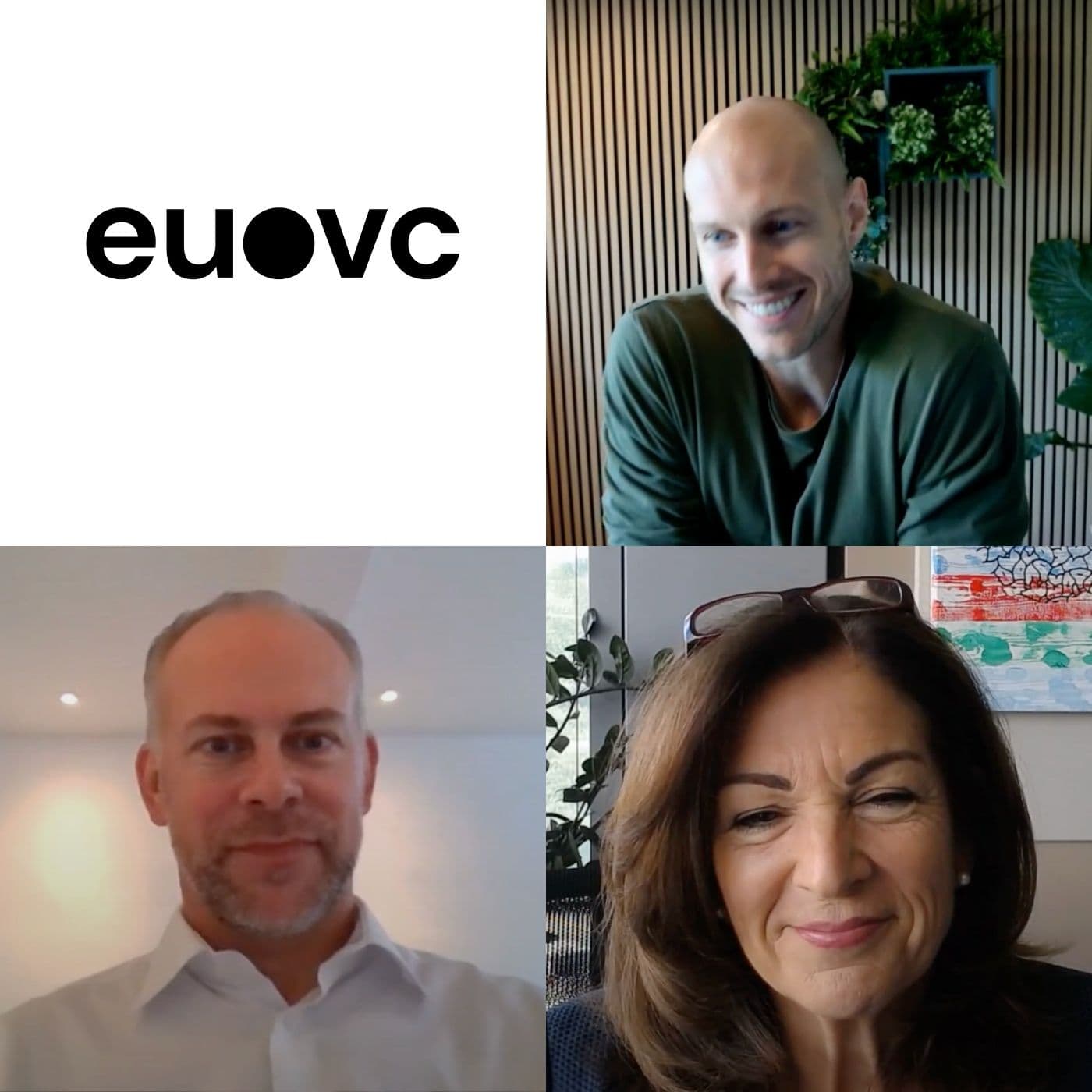
- Gina Domanig: Managing Partner at Emerald Technology Ventures and a pioneer in the European cleantech VC sector.
- Andreas Munk Holm: Co-host of the podcast.
- Jeppe Høier: In-house CVC expert, co-hosting the episode.
Episode Structure Chapters
- 02:25 - Gina's Journey in Venture Capital
- 03:11 - Emerald's Focus on Sustainability and Industrial Technologies
- 04:08 - Flex Term Structure and Corporate Engagement
- 06:56 - Challenges and Innovations in Corporate Partnerships
- 13:48 - Leveraging AI and LLMs in Venture Capital
- 16:58 - Insights on Corporate Venture Capital
- 28:43 - Corporate Culture and Specialist Roles
- 29:07 - Managing Corporate Partnerships
- 29:33 - Investment Process and Portfolio Management
- 30:26 - Corporate Co-Investment and Follow-On Rounds
- 32:04 - Branding and Transparency in CVC
- 32:52 - CVC Team Dynamics and Responsibilities
- 35:48 - Navigating LP Conversations
- 36:46 - Corporate Venture Programs and Team Structure
- 38:16 - Corporate Relationships and Conflict of Interest
- 49:43 - Balancing Corporate and VC Worlds
Key Takeaways
Gina's Journey
- Gina Domanig has been in venture capital for over 25 years, focusing on sustainability and clean technology.
- Emerald Technology Ventures was founded in 2000 as Europe's first independent cleantech VC fund.
Emerald's Unique Approach
- The fund emphasizes a flex term structure, allowing corporate LPs to stay invested longer without the pressure of re-approval every few years.
- Around 50% of Emerald’s team consists of technical experts, aiding in thorough due diligence and understanding of investments.
Corporate Engagement
- Corporate investors seek strategic returns beyond just financial gains and often prefer to outsource CVC to specialized firms like Emerald.
- The importance of flexibility and support in corporate engagements is crucial for effective partnerships.
Leveraging Technology
- Discussion on using AI and Large Language Models (LLMs) to streamline processes like due diligence and deal assessments.
- Emphasis on maintaining confidentiality while utilizing these technologies for efficiency.
Challenges in Corporate Partnerships
- Engaging with corporates can be challenging due to their structured decision-making processes and the need for internal buy-in.
- The necessity of having a structured approach to collaboration between corporates and startups is highlighted.
CVC Team Dynamics
- Successful CVC teams require a mix of investment professionals and individuals who understand the corporate culture and can bridge the gap with startups.
- Clear roles and responsibilities within the team are essential for navigating the complexities of corporate venture capital.
Insights on Corporate Venture Capital
- CVC's function often extends beyond mere investment; it includes fostering innovation and aligning corporate goals with startup capabilities.
- The discussion emphasized the need for corporates to actively engage with startups to derive real value, rather than passively investing.
Navigating LP Conversations
- Domanig illustrates the importance of transparency and maintaining clear communication with LPs about the fund's structure and operations.
- Corporates as LPs have unique expectations and require tailored reporting and engagement strategies.
Conclusion
- Gina Domanig’s insights reflect the evolving landscape of Corporate Venture Capital, emphasizing collaboration, strategic engagement, and the integration of technology.
- The discussion underscored the importance of adapting to corporate needs while maintaining the core values of venture investing.
Additional Resources For more insights and detailed discussions, visit [EUVC](https://eu.vc) for core learnings and the full video interview.
Written by AI. May contain mistakes. Listen to the episode to check what was said.
Transcript
Automatic transcript. May contain errors.0:28Welcome back to the European VC podcast. conversation than you're used to. But Emerald is absolutely one of the front runners in this game. They have 700 million under management and advisory, and they have a team of 60 people. So definitely you want to be tuning in and really listening to everything that Gina is sharing with us today because she has a different mind and a lot of experience when it comes to dealing with corporates both as LPs and partners. So hope you'll enjoy this conversation as much as I did. Here's a few words from our beloved sponsor. Enter the world's largest and most dynamic space for startups, investors and corporate innovators at Expand Northstar.
1:06There you'll find 70 ,000 plus international visitors, 1 ,800 plus startups, 1 ,200 plus investors, 450 plus global speakers and infinite opportunities to connect, collaborate and co-create the future. Mark your calendars. 13th to the 16th October 2024 at Dubai Harbour. where dreams meet scale. Expand Northstar is not just an event. It's an all-in-one opportunity offering a massive value with a single free pass. Expand Northstar provides the ideal ecosystem to turn your ambitions into reality. Back to reality, man! Secure your free pass now and join us in Dubai. Dream big, scale bigger.
1:50Tear down this wall. It's more than just an alive. This is a union of values. United and determined we can serve as a model for other regions of the world. The nature of a problem requires a European response. Europe is a story of new beginnings. Let's start acting. This show is not investment advice and the hosts of this episode may be invested in the funds and companies featured. Gina, Jeppe, welcome to the podcast, both of you. Thank you. Thank you. So we've had Jeppe on the podcast before, so we're not going to put too much emphasis on Jeppe here, but you know him. He's an expert in CVC investing and has been at MERSC before and so on.
2:43I will not ask Jeppe to introduce himself because he'll run into a big rant about how glorious he is. So instead of giving him that opportunity, I'll go to Gina directly and say, Gina, would you tell us a bit about Emerald? And maybe because I've just done an introduction of you that I am 100 % sure did not do you any justice, because there's a bit of complexity or at least differentiation in your model compared to what we normally have on the podcast. Exactly. Well, thank you very much for having us. So yeah, I've been doing venture capital in the sustainability area for 25 years. So originally it was called sustainability, then people called it clean tech, now people are calling it climate tech.
3:23So that area, regardless of the name. And we really are focusing on industrial technologies. Something that's maybe a couple of characteristics about Emerald that are maybe a little bit different. We have quite a large team. We're about 60 people now. And almost half of them are technical people. So meaning that they've got PhDs and a number of years experience in the industries that we've been working. And the other thing is that almost all of our LPs are corporates. So they're really looking to invest to get a window on technology, either to reduce their environmental footprint or to kind of nudge their core businesses to be more aligned with sustainability trends.
4:08And because corporates are really looking for that, I mean, obviously they want financial returns as well, but they really want strategic returns. We found that it was quite important for them to have the flexibility to stay in the fund for as long as they want to. They actually don't like the process of making fund investments. It seems to be quite painful for them. It usually takes them about two years. And so we've developed what we call a flex term structure. where they can choose to terminate their investment period any time after the initial five years. And if they don't, we just kind of recycle part of the proceeds.
4:48So this is a way for a corporate to engage with us and to not be concerned about whether they're going to be able to get internal approval again when it comes time to re-up. There's that, and then there are the other corporates who choose to actually just outsource the management of their CBC to us. So we can talk about that later, but that's also quite an interesting model. The whole thing is interesting, right? I just have one question because maybe some people, we have a lot of emerging managers listening in, right? I imagine there might be some that think, oh, is there something I could copy there?
5:25Is there something like, should I cut out part of my fund for the corporates that come in and mimic this structure? When would you say it's doable? Is it at all doable for a small team? You know, it wasn't, we started this in 2016, right? So we had been in the business for 16 years running standard structured funds. I think having those years of credibility was really important before we launched something like this. But today, people should be able to launch a similar structured fund. And if you'd like, refer to the fact that we have been running it for so many years, right? We've been running it now for eight years.
6:11So it's quite well tested. And we've actually, for many years, we were kind of secretive about how it worked. And just recently, we actually published a video on how it works, actually encouraging other people to copy it, right? because we think that it would be better, I think, for some investors. It doesn't really change the amount of time that you're invested in a company, right? Because you still need to recycle proceeds. So it's not a way to stay invested in startups forever. It's really just to give the corporates or the investors, I should say, this flexibility. So yeah, I would encourage them to copy it.
6:55Gina, on this question, maybe 30 seconds on how you landed your first corporate LPs could be interesting for some of these. Yeah, you know, it was back in 2000, and I was actually contacted by Hydro-Quebec, who had made an investment in a U.S. fund, and had heard that we were launching, you know, because we were the first kind of independent VC fund in Europe in this space, so they were looking for a European fund that would do the same. And so they were the very first ones. But of course, back then, we weren't very well organized to give corporates the strategic insight that they really wanted.
7:39So it was kind of like lob over a list, an Excel list on a monthly basis of deals that have come in. And you've got kind of the name of the company, the location, and short description of what they do, which is kind of laughable compared to what we do today. That's probably not 2 % of what we did today. But it was a start. Thank you for hearing. So it's correct to say that you started with a pure black VC firm with all the normal LPs, sovereign funds, funder funds, family offices, all that stuff. And then you decided to bring in corporates afterwards. could you share a bit because now not now you you answered the question when and and and kind of that they you know someone was looking for it what were your considerations and what would you say to someone who thinks about servicing corporates so to say as part of their lp base what are the things to really keep in mind here i think you made a good point when you said well it's kind of laughable to only be sharing an overview of the deal flow because that's not Yeah.
8:48And I should also mention before I started up Emerald, I was working for 10 years in corporate M &A. I was head of strategy and M &A at a Swiss industrial technology company. So, you know, I kind of came from the idea of corporates actually are looking for innovation. Startups in these sectors have a very difficult time because, you know, these are existing industries which have very large existing players kind of controlling the channels to market. So that seemed to fit. But I think what, you know, at the beginning we thought, okay, we'll just let them know what these companies are. And it was a little bit of a, hey, this is the interesting part.
9:30We've identified these companies. You guys do the rest. And we, I mean, completely underestimated how difficult it is for corporates to actually start that engagement with the startups, right? So today, we receive almost 3 ,000 business plans a year. We give them two-page write-ups on each company. And I should say, we receive 3 ,000 and we invest in maybe 10 to 20. So there's many companies in there that we know very well we're not going to invest in. What you used to do back in the day when we started, I would like to say we would delete the file, but they actually came in hard copy, so we would actually throw them in the garbage.
10:16You know, we say, oh, we're not going to do this. We'd write back to the entrepreneur, and we'd throw it away. Today, what we do is, even if it's obvious to us because of stage or whatever it might be, that we're not going to invest in the company, we still do a two-page write-up. Non-confidential information, and we have a proprietary, you know, portal with the LP so that they can go in, they can search the 25 ,000 deals that we've reviewed over the years, they can download the two-pager. We've got monthly calls with each one of them individually to discuss companies or sectors or solutions that they're interested in, that we're interested in.
10:59Then we've got webinars with them about trends. We do studies twice a year. We do many different events. And one thing that we probably would say the latest innovation that we had is about two years ago, we realized that, you know, very often our counterpart at the corporate are the CVC guys, right? And they are also, let's say sooner or later, going to get measured on how much impact they have on the corporation. And in order for them to have an impact, very often they need to engage with the startups first in pilots or doing some kind of trials. The CBC guys can almost never decide that on their own.
11:46They need the business unit guys to get involved. And very often we found that our colleagues at the corporates, they couldn't get the attention of the business unit guys, right? And so that's why very little was tangibly coming out of these interactions between the corporate or the CBC and the startup. And so what we realized was that if it would be a very limited program, right, and tell the business unit, look, we're going to have a session on seasonal storage, and it's going to go eight weeks, and every Friday at two o 'clock to four o 'clock, we're going to have these, you know, video calls, and these are the deliverables at the end of each week, and we're going to drive this.
12:34We're going to scout all the companies. You're going to articulate your challenge, and we're going to drive this all to a tangible outcome where you're actually doing a trial. Then all of a sudden the business unit guys go, oh, okay, if that's structured and that time-limited and very clear deliverables, we're in, right? And they certainly don't want the CVC guys to be at this session without them, right? So it was a kind of a hook to get to help our colleagues at the CBC units to get their business unit colleagues on board. And so that has been the kind of the latest. I think that's super interesting, Gina, right?
13:15Because, you know, the corporates need the structure to get the most out of every discussion you have. And then you have the startup people that are changing all the time, right? And that is where you often see that cultural clash there is between the big corporates and the young startups. And then you have the CVCs and also the VCs, your co-investors, right? In that total mix. So very, very nice observation of those challenges. Thanks. Am I right? So when you said a two-page write-up, that made me very quickly think of the power of LLMs to help you do this. Am I right in saying that it's something that has, you know, and could you share a bit about how a big firm like yours leverage LLMs and the sudden rise, so to say, in VZ?
14:11That's, you know, that's a great point because obviously there's, it impacts your cost structure when you're doing two page write ups on 3000 companies, most of which that you're not going to invest in. Almost all of it, you're not going to invest in. So we have just in the past couple of years done trials, and now we've implemented kind of a co-worker, we call it, that will go particularly supporting our sector specialists in gathering public information. We still have to be very careful, right, because we need to ensure that nothing in these write-ups is confidential information. So it's great if we can leverage these learning models and all different kinds of software to gather what is out there in the public domain, include it, scan through the deck as well.
15:09If it's a non-confidential deck, it's easier, if you like. If it's a confidential deck, then we have to make sure that we don't add that to the universe of knowledge, let's say, that's being used. And then we still need to have one of our sector specialists review it and add to it, correct it, change it, and also add what their opinion is, right? What's really important as well is, so now that, you know, if you're the specialist and you've been looking at, you know, these type of electrolyzer deals for the past years and you know everybody is out there, what do you actually think about this one?
15:48And we do rate each company on, let's say, well, nine different criteria, but overall the three different categories are the technology or the innovation itself. So, you know, what is the value proposition? Is it very strong? the market opportunity, and actually then also the transaction? Do we think that this is an attractive transaction that's being proposed? And it's so interesting what you're saying there. And I was just about to ask it before, because VC is notorious for our focus on founders and everything is the team. When you're talking to a corporate, things change a bit. Obviously, if it's a very early stage company that needs to scale, then you need to be on that journey.
16:33but most corporates would look at an investment opportunity with a different set of eyes sometimes at least. It's like acquisition as an example. So maybe talk a bit about how you think about team and how you also straddle that. Is that the right way to say it? In your own investing versus when it's the corporate servicing, so to say. Yeah, so sometimes we look at companies. I think this is an important point, right? We'll look at a company and we'll say, you know, it's nothing for us. Valuation's too high. They're raising too much money. It's too early stage. There's lots of different reasons.
17:15You know, risk is too high. They're, you know, it's kind of a one-trick pony. And our corporate that we're, you know, managing a mandate for might say to us, yeah, that's okay, right? So they're taking the decisions. That's what's important. We're doing, you know, they obviously set the strategy. We scout for all the deals. We do the assessments. We do the exact same process that we do for our own funds, but they are the investment committee, right? And they tell us, you know, kind of at the initial stage where we will send, let's say, a deal to our investment committee, and then we will decide, no, valuation's too high.
17:54We're going to pass, right? They may very well say, we're still interested. And we'll let them know, look, we're passing because we don't think that from an investment point of view, you can ever make money at these terms, right? But if you can capture value in another kind of avenue by working with this startup or if the knowledge that you're going to gain is so valuable to you, okay, that's perfectly fine. We will just make sure you get the best deal possible, right? And so we'll negotiate the deal for them. We'll do the syndication. We'll lead the whole deal. We'll even sit on the board of the company afterwards.
18:36But we have to be cognizant of the fact that they're doing this for other purposes and not for financial returns. because actually the financial returns would be a rounding error. Look at Chevron Ventures. Chevron Ventures can be wildly successful financially. And will that even move any of the numbers in the financials of Chevron at the end of the year? Probably not. But I think it's interesting in the selection process, right? Because having worked for Maersk, There were deals that we would look at that from my VC days, I would never have looked at, right? Yeah. An example is, you know, Merck almost has 20 % market share in some areas, right?
19:21So when there is a startup addressing something in that field, you know, we would know that we would be able to put a lot of products into market and hence we could make a good deal, right? So I think that that is also what comes to mind when you are inside the CBC. Yeah. But the only caveat, I would say, and my investors are used to hearing me preach this to them every six months at our investor forums, is please don't lead deals. It's just, you know, they're just too insensitive about valuations, right? And they're going in at high valuations, very little governance, no participating preferred, all kinds of things.
20:13Let's face it, a lot of times at the corporate VCs, there's quite a bit of turnover. It's often within a corporation just kind of one station that you make in your career. Right. So very few of these guys actually have to live with the financial results of their investments, you know, that you only see five, six years later. But we independent VCs would prefer that either that they get a little bit more strict in their financial terms and conditions or just let us do that and they can follow. Very good point. That's also why you, for CVC, need a mixed team, right? You need professionals in there.
20:55Yeah. I'd love to ask you, just because you said before, and to some it might have been as confusing as it was for me. So you're saying that you'll do everything but the investment committee, so to say, is the corporate. Right. That is not for the funds that you manage on behalf of CVCs. That's when it's corporate clienting or like we call it. Yeah, we call it CBC as a service. So it's a mandate. Right. So we have got our four funds where we control the investment decisions. We've got a flagship fund, energy, water and materials and packaging funds. So those four, we control the investment decisions.
21:36And then we've got four CBC as a service mandates where the corporate obviously they, you know, in the funds, they'll invest, you know, five, ten. maybe 20 million. In these CBC service mandates, we're talking more like 50, 75 million, right? They're much larger commitments from their side. And they are the investment committee. In one of them, we sit on their investment committee, but in most of them, it's just purely the corporate. Yeah, but could you speak a bit to your experience with this type of setup? How much have you seen it in Europe slash the world? So I think it's, you know, it's evolving.
22:13I think a lot of corporates and it's not just the corporates who have no experience we're also seeing corporates who have actually quite a bit of experience and have seen you know let's say the jeppe was saying kind of the more professional investors within the team leaving and they're they're challenged to keep this talent in house right so you've got different you know kind of corporates at different stages there's those that are just starting out saying oh i don't want to have to invest in all you know, hire all these investment people. This is not our core competence. That's not where we're going to capture value anyway.
22:50Let's just outsource it. So it's a make or buy right from the very beginning, right? Then there's those who, you know, kind of look to see what their colleagues are doing and saying, wow, people are having a difficult time here keeping their teams together, keeping the continuity in their teams, or they simply don't like the idea that they're going to have such high headcount dedicated to something that isn't really going to move the needle for them, right? I had to laugh because when I was at a corporate, we always used to talk about headcount. As a VC, you don't really care about headcount. You care about whether at the end of the day, you're making money or not on your investments and as a firm, right?
23:29You've got to still stay alive as a firm. Corporates are very, very headcount sensitive, right? So if they're going, Even if it's a successful VC, we have seen cases where they built up a team of, let's say, look at 3M years ago. I think they had like 20 people in each region or something, right? Or at least that's what they were telling everybody they intended to do. Then there's a change of CEO or CFO. Somebody comes by or there's a bump in the share price evolution and they go, who the hell are all these people and why are they on our payroll, right? And then the CEO wants to announce to the firm that there's going to be either a head count freeze or something.
24:14And then they always want to demonstrate that they are also contributing to this reduction in head count. And guess who's on the list, right? It's the CVC guys. And it's also the CVC guys because that business unit does not have revenue. Yeah. It only has a cost element. Exactly. So I think it's a very dangerous place to live unless you can really demonstrate that you are making a contribution to the core businesses. Yeah, maybe this is the perfect exact way to ask you to really distill some of your core learnings and principles from building Emerald. Because I think that, you know, this is exactly what I think many that are in the CBC space are looking for.
25:01Yeah. Yeah, so I mean, if I think if I were going to start out today or so, I think if you're going to be servicing corporates and you're going to be active in our space, climate tech, which is not the easiest space, right, to make money. If that was my only purpose in life, I probably would have picked a different sector. But I think having technical depth in the team is super important, right? We do not invest in things that we don't understand. I think that's really important. On the other side, we are here to take risks, right? So we have to understand what risks we're taking, and we have to do proper due diligence to uncover that.
25:42I mean, we do have a reputation of being rather thorough, if I say it in a nice way, or kind of slow, very intense in the due diligence process. That's just simply part of the deal of working with us. When we do table a term sheet, though, there's 99 % probability that we're going to make this investment because we've done our very thorough due diligence. And it's unlikely that anything is going to happen between that time and closing. Right. So that's super important. I think being very thorough. The other thing that I would tell people is, you know, this is going to be a bumpy ride. right this is not i mean even our most successful startups that we've had over the years almost went bankrupt at least once right and i think you've got to have a stomach for it you've got to you've got to remain calm you've got to be very solutions oriented and you've got to partner with these with these entrepreneurs as long as i always tell them before we invest look you have to be honest with us.
26:50Shit is going to hit the fan. I can't tell you what exactly it's going to be, but believe me, it will happen. Very often, things that are completely out of your control. The earlier you tell us about it, the more options we have to help you, right? And believe me, we've been through, we've seen, God, over 25 years, you wouldn't believe the crap we've seen, right? Things that, But look at Silicon Valley Bank, where on a Thursday, one of our portfolio companies tells us, by the way, we have all of our money with Silicon Valley Bank, and payroll is due on Tuesday. Over the weekend, me together with one of my co-investors, out of the whole syndicate, we were the only two investors that were able to actually take a decision in that short period of time.
27:40and it was just a absolute plain vanilla we're not going to try to capitalize on the situation right how can we make sure the company has two to three million by Monday morning right now luckily we didn't have to do it Silicon Valley Bank got you know saved on Sunday night but you have to be willing to to be really constructive and and then you know that comes back to people you build a reputation of being very constructive and being supportive and people remember that. But Gina, here is that thoroughness that I really like and appreciate and have come to appreciate at my time at Merck, right?
28:21Is that because you have corporate clients behind you or would you do that anyway because that's the way you do business? Yeah, we would do it anyway. And it's kind of a, you know, we have to have all these sector specialists within our team in order to attract corporates, right? In order to be able to interact with the corporate. I have a finance background. Corporate, they don't want to talk to me. They want to talk to, you know, our hydrogen specialists, right? Or, you know, all the specialists that we have here. So I think by having that type of a company culture of being very technically oriented and being very thorough, things don't get past these guys very easily, right?
29:05So I think it's a little bit of both. How do you manage this conversation with the corporate partners that you have, the ones that you run it as a service with? Do they tend to run by the right principles, so to say? Is it easy for them to understand the startup world and the importance of this? Or how do you go about making sure that they do? I mean, they pretty much trust us to do the investment process the way that we, that's why they actually chose us, because that is how we do our business. When you say it like that, is that because once it's in the portfolio and it's value at work and it's deciding on how to support, as an example, in a bridge round or like this?
30:00Okay, so once, yeah. Yeah, so let's look at prior to investing and after you're invested. I think prior to investing, they know the process. They know how we work. They obviously also have an opinion about the technology typically, right? Because it's something that should be highly relevant to them. Then afterwards, they're... And I'm trying to think, you know, it's kind of funny because we... And I think one example we had where we had three of our corporates co-invested with us. One was a CVC mandate client, and the other one were two LPs in our funds. And everybody just let, they just moved to the side and let us do our thing, right?
Read the full transcript
30:44And when we told them, look, we need a bridge, you know, because this and this happened, we strongly support this company. We do impress upon the corporates. I mean, don't pass on follow-on rounds lightly, right? You will get a really bad reputation if you just, oh, you know, it's CEOs out on vacation this week, so we're going to just pass on this round, right? We tell them right at the beginning. We actually even suggest to them that when they make their initial investment, that they already then kind of earmark a certain amount of money for follow-ons and preferably delegate the authority to that to kind of one lower level to let kind of the CBC guys in the team take that decision.
31:34So yes, I would say most of the time they will follow our lead. And when they don't, we are very clear to them what we think the consequences are going to be and also consequences for them reputation wise and you know some corporates think we're such a big company who cares what all these little vcs think about us you kind of rethink about who actually you know where you get your deal flow from and who you syndicate with when you run funds as a service are they branded as an emerald fund or no no No, they're branded as the corporate. Yeah, but we're very transparent. Yeah, yeah, yeah. But it was just in regards to the brand.
32:21It's Naptesco. There's Naptesco Technology Ventures. There's SAS All Ventures. So SIG Ventures. So all these guys, Edomitsu, that's just our latest one. I don't know exactly what their name is, but it has its own name. But then what you said also, that even when you run this model, you typically engage with the CVC team. So that means that there is a CVC team inside the firm, but they have this part of the process outsourced to you. Maybe let's talk a bit about how that works and why it's like that. And just to make sure, you know, we all get a better understanding of how corporates work. It may be CVC in some cases is a misnomer, right?
33:05It's a team that is responsible for making commercial progress with startups. So they're much more focused on, if you'd like, more business development type of work. Sometimes they will take observer seats alongside us on the boards of these companies. Sometimes not. But their role is what I was talking about before with these sprints, right? try to get to pilots, try to structure relationships with these companies. So the profile of that person, they need to have very, very strong relationships internally. So they need to be able to get the ear of the business units. And they also need to kind of know how to interact with startups.
33:52That's very important. And much less obviously focused on the investment side because we're doing that. It's much more focused on commercial. But this makes a ton of sense. Like when we had you on the podcast, you said, I am probably a fan of CBCs being run internally by someone who comes from the organization. Don't bring in an external managing partner because that's very, very difficult to make work. But rather bring in investment partners, So to say that take the charge kind of as you do in this model, but then you have the managing partner or the core team is focused on bridging all the investment activity and the interface towards startups with the corporate.
34:40But I think to chip in here, I think the right way to create a venture unit in a large corporation is to study for what you need. And I normally call it a venture program. And that can consist of all the elements of corporate venturing. And I think the direct investment side is just unique. But if you have a venture unit, it should be somebody from inside that leads it. Otherwise, you will never connect to the corporate. And I think Gina has spoken about that. You need somebody that can transfer the knowledge that comes from the startup and into the business unit and then make commercial agreements or whatever it is that is needed to scale the startup.
35:31So let me then ask you a bit about, because you have this model, it's fascinating from the GP perspective, you can absolutely understand why you would want to run it. from the CVC side or from the corporate side, you can definitely understand why this is an interesting value proposition. Now you have the standalone normal fund, so to say. What's the conversations with LPs like there? Because I imagine that I always, whenever I talk to managers, it's a bit like anything that's not plain vanilla, anything you've got going on on this side, very dangerous, very something that you should be ready to talk about.
36:09How do you navigate this? What are the questions you get asked? Right. So we kind of try to offer what fits to that corporate. You've got corporates, like I said, who want to outsource the whole investment part. You've got corporates who do some fund investments, some direct investments, and they have a team internally doing direct. And then you've got some who only do direct, right? So they're more kind of co-investor peers to us. They're not, we don't have any kind of formal relationship with them. But there's many corporates like that. I think, you know, what's a little bit interesting about our sector is that you need so many different, you know, if you want to be, if you're an industrial corporate, you're interested in materials technology, You're interested in industrial IT.
37:03You're interested in so many different scientific or engineering backgrounds that I need to have a relatively large team. I've got six energy specialists, three packaging specialists, material specialists, three industrial IT specialists. in order to have this team, this depth, right, and breadth, I need to have also sufficient AUM, right? And I think the corporates understand that I, you know, and they're also interested in making sure that Emerald as a company survives, right? So I tried to explain to them, look, you know, we need to be managing a certain amount of assets in order to be able to fund this type of an organization.
37:50So typically, you know, they're business people. They understand kind of that, you know, they also don't kind of give away their products for free or at negative gross margins, hopefully not. So those are, that's what we usually... And that's depends on whether they're venture backed. Yeah, exactly. The other thing though is it's amazing because you would just, you know, and you can see all of our LPs on our website. We're very transparent who they are, right? And you might think, hey, isn't there a competition then between these guys? And really, very seldom, very, very seldom. I can't remember one case where one of our LPs wanted to co-invest and there wasn't room for them.
38:33We're typically in the lead. It's still difficult for companies to get their syndicates together. We often encourage the startups to take a little bit more money because, as I said before, Things won't always go exactly according to plan. So I think that the ability to get, let's say, to get access to the investment, whether it's as an LP who wants to co-invest with us or as a CBC client, CBC mandate client, I think there's, so far there's always been room for everybody who is actually interested. Of course, it's still up to the startup to say whether they want this corporate to be invested in their company, right?
39:17There are some times where the startup themselves say, no, sorry, to us it's a little bit too close to being a competitor. We don't really want them as an investor. That's their decision. But within your own investor base, so have you set something up to handle conflict of interest? are there ever competition amongst your own investors to get into a union? Yeah, that's what I mean. So far, there's never... First of all, we do have priorities, right? So we have a kind of rule base as far as who has first, second, third priority and stuff. And we will then encourage the startup to take the corporate who has the highest priority from our point of view.
40:04But as I said before, you know, we, and this is also kind of funny because we as VCs and, you know, we get maybe a little bit sloppy, but we give people co-investment rights. The truth is we have no rights to issue shares in these startups, right? So all we're doing is on a best efforts basis, we're trying to encourage the startup to follow our suggestions. But even that being said, that we have these rules, we've actually never had a case where there wasn't enough room or we weren't able to make enough room. Because a lot of times these corporates, they can also add value. And even if the only value they're adding is the perceived kind of credibility that the startup gets by having this logo on their cap table, that makes it work.
40:55No, but I think it's super interesting, right? Because a lot of corporates, they think about, you know, conflict of interest all the time. You're kind of taught through what you can, what you cannot do and all of that, right? But thank you for that. That was super interesting news for me, right? So it's a great day. I'd love to ask you about the management fee, so to say, of this type of structure, because obviously I imagine that your management fees is all this typical thing when it comes to the flex funds. and the closed-end funds, but what does it look like for CVC as a service? It's the same, actually, across.
41:33But I will also say the same for Emerald means 2.5%. Yeah, I was actually about to say, and this is actually something that I say to many emerging managers that I talk to that are thinking or wanting to do a model where they raise from corporates a lot. I say, just be very mindful of what you're getting yourself into, because it's not simple to service a corporate so that they come back and come back and come back. And there's, of course, as you said, the whole decision making process for every fund is a closed end fund, something that they're set up to be able to do in a good way. Maybe not. But there's also there's also this point that if you need to service them on this level that they expect it's not it's not just standard LP reporting.
42:21So maybe you could talk a bit about that. And also, and I guess that since you are on 2.5, that hasn't been an issue. But what I've often thought is that GP should think about saying, okay, if I bring a corporate in, they're paying the standard fee. But that's for the standard package. If we do anything extra, it needs to be agreed that there's some type of side agreement there. Could you talk a bit about that, what you've seen, both of you, what you've seen in the market people doing? You know, like I said before, it does impact your cost structure, right? I think we also have to be quite transparent.
42:59I mean, we've had corporates who have asked us to see our financials, and I will show them confidentially our financials. I mean, I'm not making, you know, ridiculous. People are not driving around in Maseratis here, right? So it's not that we're all living off of a really high management fee. It really does cost a lot of money to employ all these people. And I think our corporates see it. They see the depth of resources that are actually dedicated to delivering these services. And they know that a lot of other funds don't or can't do it. So the reason why we decided back in 2016 to kind of go all in on corporates is exactly this point.
43:40right? The, you know, the corporates want a lot of additional services. They're willing to pay a higher management fee for that. And in some cases, even as you alluded to, we even, if they want to do, let's say, a dedicated sprint just for them, we'll simply charge them for it, right? So we will also kind of sell them additional services if you'd like. Now, if you've got next to these guys an institutional investor, a pension fund, they may very go, well, first of all, they're going to say, I don't like the two and a half percent, right? They typically don't like the flex term structure because they don't know it and they don't want to take the time to get their heads around it.
44:20But they also get very concerned about the fact that their team is wasting time talking to all these corporates, right? Delivering all these services. Now, obviously, we believe that it actually does ultimately drive better performance, right? Our team is much better informed. Actually, I've got incredible continuity in my team. Our sector specialists, I can't remember the last time a sector specialist actually voluntarily left Emerald. They love their jobs. They love interacting with the corporates and with the startups and stuff. And so it is very, very synergistic, but it's not cheap. right um so i you know i can only think of one corporate ever who has not invested because of the management i think i think it's a super interesting discussion right because in this world right we are in the ecosystem around startups and they are different kind of investors but but many of them are the pension funds and so forth right and they they tend to not be able to break out of what they normally do and see the opportunity, right?
45:31It is people that comes with a business background in financial modeling. They are not kind of, you know, really interested in the opportunity. I haven't even a nastier one. Obviously, every so often we do get contacted by institutional investors and they ask, you know, if we would pitch to them. And I typically tell them, well, if I happen to be in your city, fine. Or if you happen to be in Zurich, fine. And I always, I make the analogy as if I'm showing you my family, you know, vacation photos and I get to the photos of my children and you say, oh, just skip over that. That's how I feel when we start talking about our portfolio companies.
46:21They're like, just skip over that, right? It's like, don't get in too much detail, right? We're like, how could you not want to hear about our portfolio companies? We love our portfolio companies. We spend all day, you know, and we're so excited about what we do. And that's the nice thing about working with corporates is you very much kind of feel their excitement as well, right? So it's kind of a nice little match that we have. Yeah, you're right there. If I should just add some context to it, because any sophisticated LP will obviously want to diligence your decision making on your act and so on.
47:00But it's with that focus when you look at the portfolio, it's not because you're excited about hydrogen batteries. It's because you want to see, okay, does Gina actually know what she's doing? Exactly. It's the whole value creation, right? It's like, how do you bring value in, right? And these corporates, they bring immense value also to pension funds. And it seems like they don't understand it. Yeah. Very interesting. Kerry, I want to ask you about Kerry, Gina. Your model, all funds, also the CV? It's all the same. Yeah, 20%. Catch up. What would you say to corporates that don't have that or where that's an issue?
47:46You know, again, it depends on how they're going to run it, right? If in their whole HR kind of strategy, they're going to use the CVC, let's say, posting as a development, a career development, then carry doesn't really make sense. People aren't going to stay long enough, and it's just not going to work, right? If they really want to have that longevity in the team, then they're probably going to, at some point in time, have to have some type of a carried structure. But the thing is that if their ultimate goal is impact on their business, would it make sense that we focus so much on financial returns?
48:37right? Because they're not really, they're actually sometimes even against our advice financially, they still make the investments, right? So is it really right to have that team penalized, if you'd like, for those type of deals? I would rather see my CBC colleagues being measured or given bonuses based on impact on the businesses. How many collaborations did you did you create this year? How many pilots do we have running? If you really want to get them to deliver that value, then that's how they should be measured and probably remunerated as well. Couldn't agree more. So now I have to go to a question that's completely off script.
49:26And we have so many things in our script that we have not talked through. So to anyone who enjoyed this conversation, make sure to go and check out the show notes on eu.vc because there's a ton of learnings there as well. I want to ask you a feisty question. There's sometimes quite some animosity between the VC world and the corporate world. And I also wrote down tech pro culture, meaning you have the all-in podcast where you hear very bad things about corporates at times. At the same time, they've all been in corporates before. They're all selling to corporates. We are all selling to corporate, so on.
50:01So we're kind of in this love-hate relationship with each other. And I want to ask you, first of all, what do you think when you hear some VCs talk? And secondly, where do you live yourself when you're living the experience of being in venture? Do you live more in the corporate world or do you live more in the VC world and thus also very much with the tech bro so to say no i i absolutely cannot identify with this tech bro type of uh thinking right i you know these these startups if if we think that they're going to take down you know bp or something i mean think you know come on you're just you're setting them up for a disaster right Right.
50:52It's so much more capital efficient and the risk can be reduced tremendously if companies, if startups can find ways to partner with the corporates to leverage out of the, you know, rather than setting up your own international distribution network. What are you doing? Right. This is going to cost so much money and it's going to take so much time and execution risk is so high. Why don't you find, without giving up value and decreasing the value of your company, right? Why don't you find creative ways to leverage off of the strengths of those incumbents, right? So I do think that there is, I'm absolutely convinced there's a win-win, right?
51:40I don't think that the startups are giving up anything to be working with the corporates. I think they're actually reducing their risk and increasing the probability of success. And the other thing I have to say is that, I mean, I would love for all of our exits to be IPOs, but the truth is, in the last 25 years, very few of them are, right? Most of them are M &A transactions. And these startups, it's really important. And the other thing, I mean, there's all these kind of phrases that people use. this, oh, companies are bought, not sold. I can't even hear that anymore. You know, what does that mean, right?
52:20You still, some people mean, okay, that means you just sit back and you never talk to a potential acquirer. And one day they're going to just show up on your doorstep. That's not the way it works, right? The selling process starts really, really early in building up these relationships with these corporates. So the more, you know, and I'm definitely a fan of having multiple corporate relationships and having multiple corporates on your cap table, not just one. So I do think that that will actually even improve the chances of a successful exit at the end. That was a long answer. I'm not sure I answered your question.
52:56No, no, no, you did. Maybe you didn't comment too much on the memes and the tech pro culture, but you did very clearly say that you don't feel that you belong to it, which I think is the main Exactly. Oh, you asked, I'm sorry, you did ask whether I feel more that, you know, the corporate, let's face it, the corporates are the ones who are paying our salaries, right? Our investors, I should say our LPs, they happen to be corporates in our case, but they are the ones who are paying our salaries. So they are actually our customers, right? But we spend all day long together with our portfolio companies and with the entrepreneurs.
53:32So obviously, we have a very strong identification with them. So I would have, I'd be hard pressed to pick one over the other. Can I ask you just like, do you tune into, you know, the VC chatter on X slash Twitter? Do you tune into the All In podcast, A16C's podcast, that type of thing? Or is that not a world that's for you? No, I mean, every so often, I've got some colleagues who are much better at that than I am. And they'll forward me things that they think I should listen to. I use them as a filter. But no, I don't regularly keep up on that. Somehow, having 60 people and almost 60 LPs keeps me really busy.
54:15You get enough opinions from that. Well, let's hope that your colleagues will forward you this episode when it comes out. Thank you so much for joining us, Gina. This was really fun. Thank you. You did not say too much. I know you're a very opinionated guy so I think that speaks to the trust and I was learning so much today so it was really I was really enjoying to listen to Gina speak out and then I think you know I'm also in a learning process to be able to do this on my own later on so that's also exciting incredible guys thanks so much for joining us thanks thanks for having me take care bye bye here's a few words from our beloved sponsor enter the world's largest and most dynamic space for startups investors and corporate innovators at Expand Northstar.
55:04There you'll find 70 ,000 plus international visitors, 1 ,800 plus startups, 1 ,200 plus investors, 450 plus global speakers, and infinite opportunities to connect, collaborate, and co-create the future. Mark your calendars. 13th to the 16th October 2024 at Dubai Harbor, where dreams meet scale. Expand Northstar is not just an event. It's an all-in-one opportunity offering a massive value with a single free pass. Expand Northstar provides the ideal ecosystem to turn your ambitions into reality. Back to reality, man! Secure your free pass now and join us in Dubai. Dream big, scale bigger.
55:48Tear down this wall. It's more than just an alliance. This is a union of values. United and determined we can serve as a model for other regions of the world. The nature of a problem requires a European response. Europe is a story of new beginnings. New beginnings. Let's start acting.
From the publisher
Gina Domanig is the Managing Partner of Emerald Technology Ventures. In 2000, she founded the business as Europe's first independent cleantech venture capital fund. In addition to Emerald activities, Gina serves on the boards of Die Mobiliar and the Basel Agency for Sustainable Energy (BASE) Foundation.
In today’s conversation, Gina shares insights on how they landed their first corporate LPs and the challenges of engaging with startups. She also emphasizes the importance of technical depth, thorough due diligence, and being supportive and constructive in the startup ecosystem.
Go to eu.vc for our core learnings and the full video interview 👀
Chapters:
02:25 Gina's Journey in Venture Capital
03:11 Emerald's Focus on Sustainability and Industrial Technologies
04:08 Flex Term Structure and Corporate Engagement
06:56 Challenges and Innovations in Corporate Partnerships
13:48 Leveraging AI and LLMs in Venture Capital
16:58 Insights on Corporate Venture Capital
28:43 Corporate Culture and Specialist Roles
29:07 Managing Corporate Partnerships
29:33 Investment Process and Portfolio Management
30:26 Corporate Co-Investment and Follow-On Rounds
32:04 Branding and Transparency in CVC
32:52 CVC Team Dynamics and Responsibilities
35:48 Navigating LP Conversations
36:46 Corporate Venture Programs and Team Structure
38:16 Corporate Relationships and Conflict of Interest
49:43 Balancing Corporate and VC Worlds