
In short
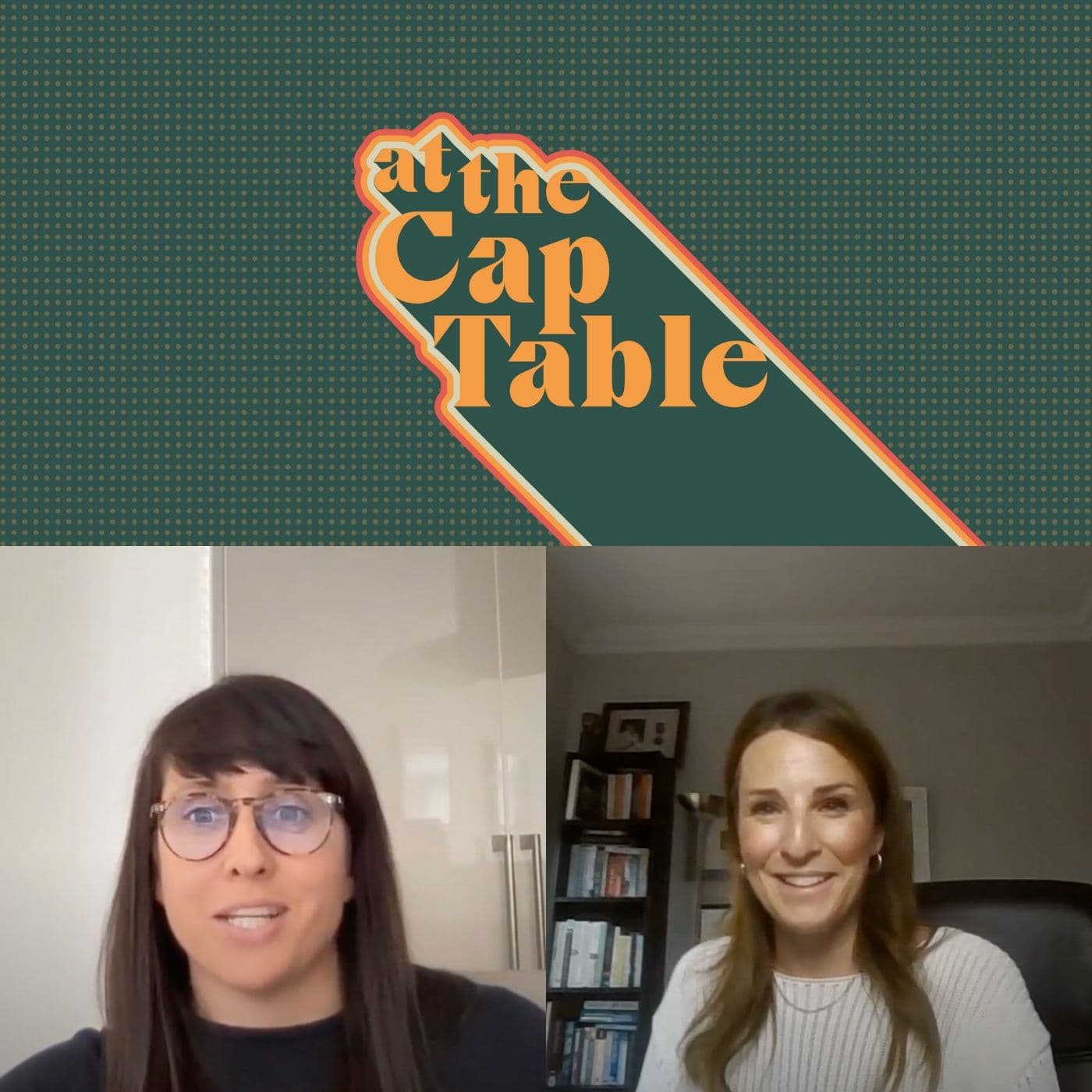
Podcast Episode Notes: EUVC - E364 | Sarah Finegan & Nicola McClafferty
Episode Overview
- Title: E364 | Sarah Finegan, Antler & Nicola McClafferty, Molten Ventures: The Power of Experience: A Journey from Investor to Founder and Back as a Series A+ Investor
- Co-hosts: Sarah Finegan (Antler) and Nicola McClafferty (Molten Ventures)
- Description: In this episode, Sarah and Nicola discuss Nicola's unique career path from venture capital to entrepreneurship and back again, sharing insights on investing, entrepreneurship, and the state of the European VC landscape.
Key Participants
- Nicola McClafferty: Partner at Molten Ventures, formerly with Balderton Capital, focusing on early-stage tech and digital consumer investments.
- Sarah Finegan: Senior Investor at Antler, co-hosting the discussion.
Episode Highlights
- Nicola's Unique Career Path
- Transition from investment banking to venture capital at Balderton Capital in 2006.
- Founded Covotique, a luxury fashion marketplace, which was acquired by ASOS.
- Returned to venture capital at Molten Ventures, combining experience as a founder and investor.
- Key Learnings from Founding a Business
- Importance of empathy towards founders due to personal experience.
- Recognizing the intense personal investment required to run a startup.
- Understanding that successful investment is not solely based on having been a founder but also involves varied insights.
- State of Entrepreneurship in Europe
- Recent challenging economic climate has fostered stronger business foundations.
- Excitement about a potential resurgence of entrepreneurship as the market stabilizes.
- Significant innovations expected in AI and how they will influence business models.
- Irish Market Insights
- Ireland has a vibrant tech ecosystem due to foreign direct investment and a strong talent pool.
- Changing perception among entrepreneurs — they no longer need to move to the U.S. to build scalable companies.
- Shift towards indigenous entrepreneurship, leveraging local resources.
- Molten Ventures' Unique Model
- Operates as a publicly listed venture capital firm, which allows flexibility and access to larger pools of capital.
- Combines direct investment, fund-of-funds, and secondary investments.
- Focus on the long-term success of portfolio companies without the constraints of traditional VC fund cycles.
- Investment Trends
- Notable trends in pre-seed and seed stages, with a focus on AI infrastructure and enterprise software.
- The market is witnessing a bifurcation where capital is concentrated on fewer, high-quality companies.
- Insights gathered from data across the fund-of-funds business point to a resurgence in seed investing.
- Advice for Founders
- Zero to One: Focus on creating a significantly better product than existing solutions.
- One to Ten: Prioritize establishing effective distribution channels and go-to-market strategies.
- Highlight the crucial role of hiring the right commercial leader to drive growth.
- Personal Insights
- If not in venture capital, Nicola would likely dedicate her time to tennis.
- Acknowledges the passion for building and supporting businesses while maintaining a balance of personal interests.
Conclusion
- The episode provided valuable insights into the intersection of venture capital and entrepreneurship, focusing on the evolving landscape in Europe and particularly in Ireland. Both hosts emphasized the importance of innovative thinking and strong foundational practices in navigating the current market.
Listen to the Full Episode For more in-depth discussions and insights, visit [eu.vc](https://eu.vc) to access the full episode and additional content.
Written by AI. May contain mistakes. Listen to the episode to check what was said.
Transcript
Automatic transcript. May contain errors.0:05Hello everyone and welcome to At The Cap Table, the podcast series that shines a spotlight on the investors shaping the future of venture capital in Europe. I'm your host, Sarah. And today we have a very special guest joining us, Nicola McLaughlin, who is a partner at Moulton Ventures. Moulton Ventures is a key player in the European venture capital landscape, and Nicola McLaughlin is a driving force behind their operations. We will speak to Nicola on her journey. It's a really, really unique one. She started as a venture capitalist, transitioned to entrepreneurship as a co-founder and CEO of the online fashion marketplace, Covotique, and later acquired by ASOS, then returned to the world of VC.
0:47So today, she's a partner at Molten, covering consumer and SaaS investing across Europe, bringing a unique blend of experience and perspective to the table. And this episode will share insights from her incredible career path and how her experience as a founder have shaped the way she invests today. Nicola spent five years as a venture capital investor with Balderton and media consultancy Ravensbeck, focusing on early stage tech and digital media investments. She has also graduated from University College Dublin with a degree in international business and French. And I guess in this episode of the podcast, we'll dive into Nicola's personal journey, her transition from VC to founder and back again, and how that experience really shapes her approach as a leading VC today.
1:34We'll also discuss Moulton's unique model which covers everything from fund-to-fund investments to secondaries to series A to C direct investments and we'll explore the state of entrepreneurship in Europe and beyond. I think beyond that, Nicholas focuses consumer software, she likes vertical SaaS and also looks into B2B to C, so we'll look at her insights into that and of course we'll wrap up things with a fun and rapid fire final question to hear more personal insights from Nick and on the dream Here's a few words from our beloved sponsor Enter the world's largest and most dynamic space for startups, investors and corporate innovators at Expand Northstar There you'll find 70 ,000 plus international visitors 1 ,800 plus startups 1 ,200 plus investors 450 plus global speakers and infinite opportunities to connect, collaborate and co-create the future.
2:30Mark your calendars. 13th to the 16th October 2024 at Dubai Harbor, where dreams meet scale. Expand Northstar is not just an event. It's an all-in-one opportunity offering a massive value with a single free path. Expand Northstar provides the ideal ecosystem to turn your ambitions into reality. Secure your free pass now and join us in Dubai. Dream big, scale bigger.
2:59nicola a very very warm welcome and thank you very much for joining us on at the cap table podcast it's brilliant to have you on thanks for having me sarah to kick us off looking at your early journey a really really really fascinating one i think before this call we had discussed that you are our first archetype um of a bc turn founder and then back to bc but would love if you could walk us through some of the key moments that led you to venture capital, then into entrepreneurship, and then ultimately back to investing. Sure. Yeah, no, it's not common. Maybe it's reflective of indecisiveness or something.
3:35But I think the common theme for me is that I've always worked either in or around technology companies. So my very first job when I left university and came to London was in investment banking, but I worked quite specifically in technology investment banking. And this was in the sort of early to mid 2000s when the industry was sort of coming out of the initial dot com kind of bubble bursting, which I managed to miss, but I sort of came out at that inflection point. And we were doing a lot of tech focused M &A advisory. And really, that was a lot of VC and PE-backed exits. And that was kind of my first experience of working with founder-led companies.
4:19And, you know, as a banker or an advisor, you're sort of coming in towards the end of their journey and the investors are looking to exit. And that's the work that we were doing. But I found myself kind of, you get immersed in this business and their story and their history and be part of that sale process. But I found I just loved absorbing, you know, the stories from the entrepreneurs and, And, you know, they were exiting at that point, but it really gave me an understanding and appreciation, I suppose, for the journey they'd been through up to that point. And I kind of thought, here we come parachuting in at the exit point.
4:55And it gave me an appetite for really wanting to be closer to the companies at a much earlier stage in their life cycle, founder-led, innovative, high-growth businesses. So after a couple of years in banking, I kind of realized I didn't want to be an investment banker for the rest of my life. But I was lucky enough to get an opportunity to move into VC. And this was in 2006 when the industry was pretty nascent. I can kind of count on two hands the amount of firms there were around London. I mean, it was pretty early days of, you know, certainly the London ecosystem. And I joined, you know, what was benchmark Europe now, Boulderton Capital.
5:34And really, that was my first foray into venture. I worked with the team there for three and a half years as an associate. And I've always seen this as an apprenticeship business, working with the great team that were there at the time, learning the trade, learning the ropes, getting to meet with and work with amazing companies back then. And so that was really my first my first experience at VC. And I loved it. But again, I was I was really young and it was a very small industry at the time. So after a few years of doing that, you know, many will know, you know, certainly back then it's sort of improved now, but it wasn't necessarily an obvious career path through a firm when you're kind of in your mid 20s with limited experience.
6:20And most of the partners in the firm at that point where I worked were had operating experience or had founder experience. So sort of a combination of thinking through, you know, what I wanted to experience next and what I wanted to learn, but also just having spent time around a couple of amazing entrepreneurs and amazing founders. Eventually, you start to think maybe you can do it yourself. So I guess that was the moment that I decided to set up my own company. And then you made a move back into investing. yeah so I founded my business in in sort of 20 uh 2010 and it was it was a marketplace for pre-owned luxury fashion sort of a like a vestiaire an early version of a vestiaire collective or a kind of a version of a depop of sort of the the the vision was kind of a net-a-porter meets ebay it was the early days of this sort of sharing economy and peer-to-peer and sort of marketplaces And, you know, we had seen a lot of businesses in the secondary marketplace space, but there was nothing that was sort of tackling this vertical, which was a huge portion, for example, of the GMV and eBay was coming from fashion.
7:28But the user experience to buy and sell high-end fashion on eBay was poor. So very much kind of set out with a vision to sort of fix that and create a different and new user experience. And, you know, I had a co-founder and we built and ran that business for about five years. and we got it to sort of a good size, you know, a few million of revenue. But, you know, ultimately we hit scaling challenges. And, you know, that's kind of a longer story for another day. We took investment. We took strategic investment from ASOS. And in sort of 2015, you know, we had the opportunity, you know, I went through the fundraising journey.
8:02I went through all of that. We had the opportunity to kind of sell the business to ASOS, which, you know, I decided it was clear to me it wasn't, you know, I set out to build a really big company for lots of reasons, which is a whole podcast in itself. I kind of was clear that that wasn't necessarily the path that we were going to be on. So when we had the opportunity to exit the business, we sort of took that in 2015. And at that point, I had always stayed close to my network in BC. I think I kind of realized I was probably better on that side of the table and working with the breadth of companies.
8:36I never saw myself as an entrepreneur, to be clear. And I, you know, I had the opportunity to move back and I joined what was Draper Esprit at the time, now Moulton Ventures. And that to me felt like a really interesting way of sort of coming full circle, which is I'd had this depth of experience and I'd sort of been on that side of the table. But the opportunity to get back to working with a kind of a wide variety of entrepreneurs and supporting entrepreneurs on their journey sort of felt like a better fit for me. Fantastic. And I guess reflecting back on your journey so far, I think particularly learnings from, I guess, your founder journey.
9:12What are some of the key learnings that you've taken from your time as a founder that really influenced the way that you operate as an investor today? I mean, there's no substitute for getting sort of the depth of experience in a particular industry or particular vertical in which you're operating. But actually, the most important learnings were sort of more general than that, in a sense that like I now work with a breadth of companies and we sit across kind of a wide portfolio. But I think what it's given me is a different level of understanding and appreciation and maybe empathy for sort of what a founder is going through.
9:56right that leap of faith that you need to make that risk that you're taking it's all well and good that you know we sit here as vcs with you know decision making on writing checkbooks or writing checks into into companies and being able to support those but you know when it's when it's your business and you're a founder it's so intensely personal it's so intense you know it it's your job but it's your life because you really have to put everything into it and having sort of been there and done that I think it just gives an added level of understanding of that and maybe some of the the thinking and the challenges and what it means to sort of live as a founder um I think that's probably the the most important part of it in my experience and I think having you know spoken to other founders they they get it like when you're talking to someone and they realize you've sort of been in their shoes this kind of like oh you you get it and you understand it.
10:51And to be clear, like, you know, I've often heard the question asked, you have to run a business to be a good VC. And I don't think that's true. Some of the best VCs and investors that I've worked with have been lifetime investors. But I do think it just gives you another angle or a different angle. And, you know, that enables and opens up a level of conversation with founders that you may not have been able to have otherwise. Some awesome insights there, Nicola. So I guess I wanted to switch topics slightly. And this is a topic that we have explored with many of our guests before on the notion of the state of entrepreneurship in Europe right now.
11:27I guess a two-pronged question for you. What makes you excited about the state of entrepreneurship right now in Europe? And then second part is, I guess you're based out of Dublin. I mean, what makes you excited about the Irish market right now? Sure. I mean, well, look, stepping back and talking about Europe more generally. I mean, there's no question everybody has felt that we have been through sort of a challenging couple of years, the market, you know, in a way a necessary couple of years because, you know, some might argue it was a hard place to be a good investor a couple of years ago with the market where it was and the kind of the dynamics of sort of cheap and highly available capital, both for companies and for investors.
12:10you know while fundraising might have been easier actually it makes it more challenging to build fundamentally strong good businesses that are sort of have longevity and sustainability so actually I've always I felt very optimistic about you know however we want to call it right a market correction or what we've seen over the last kind of couple of years as painful as it has been for some companies and for businesses that have needed to maybe hunker down and move into a kind of cash preservation mode. So when I think about it, you know, what makes me excited? I mean, you only need to go back over the last kind of 10, 15 years to know that some of the best businesses that we've seen over that sort of time period have been born of tough economic cycles.
12:55So, you know, it may feel counterintuitive, but it's a phenomenal time to be starting a business. Yes, the bar is high for being able to unlock capital. You know, there is less capital available, but there is still a lot of capital available to the best companies. And so the bar is high. But those that do succeed and build in this time have great access. You know, there's still capital available for those companies, great access to talent. There's less noise in the market. you're having to compete with fewer businesses for talent. And so it's a really great time to be building a product, to be hiring and executing.
13:40And I think businesses that build in that environment and that start in that environment, build in such a way that makes them really sustainable and an ability to sort of continue to access capital and build for longevity. And I think that's something we weren't really seeing two years ago. So in that sense, I'm kind of, I'm really optimistic about now being a great time to sort of start a business. And the other, you know, look, the other side of the coin, or not necessarily the other side of the coin, but the other place that makes it really exciting is, you know, one of the things that I've talked about with a few other people over the last couple of years is it's really hard to find.
14:20A lot of the innovation that we have seen has come from kind of innovating on business models rather than sort of true technical innovation. And that can sometimes be a challenging place to kind of build and scale businesses, particularly when, you know, financial markets or capital markets can be volatile. What we're seeing now with AI, and it's talked about an awful lot, and for sure we can argue about what part of the market is overhyped, but it is a very clear platform shift, and it will be a fundamental shift over the next decade. That's not to say that, you know, you have to pile all the capital in today.
15:01It's going to take a long time for its impact to be felt across the wider economy. But it is a true platform shift. And we haven't seen a true platform shift since, you know, either the move to native app businesses with the launch of smartphones or indeed the shift from kind of on-prem to cloud and SaaS. I mean, both of those were platform shifts. And we're seeing that in AI, and that is going to breed a whole new generation of native companies in that space. It's crowded, it's noisy, that always happens in the early days of these. But again, it makes me excited for what's going to come over the next few years and the scale of businesses that can be built off this in this next wave of innovation.
15:41And I guess the Ireland topic. So again, we'd love to hear your insights into the Irish market. Yeah, for sure. I mean, I've been kind of commuting from Dublin. I moved back. I'm probably, I'm back, I keep thinking I'm back a couple of years. I'm back eight years now. So I do have the privilege of being able to sit and operate out of the Irish ecosystem. I probably spend more time on an airplane than is healthy for many people, but such is the life of being based here. But I think it's, look, it's a really exciting time in Ireland, no more like everybody else. For all of the reasons I've just talked about, that obviously applies here.
16:15But Ireland as a market has always punched above its weight in terms of ability to produce high quality technical talent and scale technical businesses. And I think what we've seen over the last few years in this market, again, over the last decade, combination of, you know, demographic of the market, public policy, tax policy. there's been an enormous wave of FDI or foreign direct investment. The Irish government did a phenomenal job of attracting large tech into Ireland. And what that did is, you know, there's, you know, tens and tens, maybe hundreds of kind of US tech companies that have built their headquarters here.
16:59And what that does is it breeds a workforce and it attracts a pool of talent. Now, that's not necessarily all entrepreneurship. The next challenge is turning that into sort of indigenous entrepreneurship talent. And how do you make sure that you harness what you've got with this kind of proliferation of big tech headquartered and, you know, a sophisticated and very international workforce? But what it does is it opens up an enormous pool of local talent for Irish startups. So that's been that's been really exciting. And I think that's something that we that we continue to see. I think, you know, not to harp back to Brexit, but I mean, Ireland now as a market is sort of the only English speaking EU market.
17:47And again, it's always been an attractive place for investment from a demographic standpoint. And, you know, first port of call for US flights coming over from the US into Europe. and so actually there's a strong cultural alignment with Ireland and the US and so Irish entrepreneurs who have historically always jumped on planes to go build their businesses in the US you only need to look at the Colossians deciding you know you want to build Stripe you leave the island of Ireland and you go to Silicon Valley and you build it from there and that was certainly true 10-15 years ago in terms of really the only thing you could do to access the level of capital and talent, you would want to build a business of that scale.
18:28But I think that's changed. And I think the sense now from Irish entrepreneurs, and of course, we spend a lot of time with them, is that you no longer have to sort of leave the island of Ireland to build a global scale company. The access to capital is here, whether that's local, or whether that's just simply the ability to tap international capital, and the access to talent is here. So, you know, while 10 years ago, the best Irish entrepreneurs probably left and built their businesses, now we're seeing them build here and I think that's that's really exciting yeah absolutely agree with you Nicol actually I've noticed like a fundamental shift um over the last kind of decade or so so I guess Moulton you're a partner at Moulton Ventures really really unique model publicly listed exposure to fund to fund secondaries and and series a to c investments and would love to kind of get your thoughts on what really drew you to Moulton and this model in particular And how does it set Molten apart from, say, traditional venture funds?
19:27It's funny, I always think for an industry and a market of people who pride themselves on taking risk by backing entrepreneurs, we're a remarkably risk averse industry in terms of how we run and manage our own businesses. So, you know, that traditional 10-year fund model was a transplant from the US into Europe in the 1980s as a way to kind of back early stage and access private capital, set up a fund structure, run it over, you know, five years investing, five years harvesting. And I think, you know, that's obviously been very successful. There's a lot of very big funds that operate that. But, you know, clearly scaling global companies, particularly from Europe, is it's different to the US.
20:12The time horizons it takes is longer. And that model has sort of inbuilt constraints. And I think from my early experience of working in VC back in the kind of mid 2000s, I kind of I saw some of this sort of come play decisions having to be made about businesses or assets or investments based on where you are in your fund cycle or, you know, how the point at which you need to think about distributions to LPs and all of that starts to kind of play into your decision making. And so, you know, and all of that underpinned why the team, now I wasn't around when Moulton went public in 2016. I joined the firm actually not long after, in about kind of nine months after the IPO.
20:54But the team that kind of took the business public, I mean, that was really their thinking, which is, look, if we really want to build global scale companies and be able to access deep pools of capital, we have to rethink how we do that. And I guess the purpose was twofold, right? Number one is there's only so much allocation to VC that you get from kind of traditional private market LPs and you're competing with private equity as an asset class and property as an asset class. And yet the deepest pools of capital are sitting in the public markets. And so actually, how can you try and harness some of the public market capital availability into the private markets, into VC?
21:32And so, you know, obviously being a listed asset manager is sort of part of that. And, you know, and the second dynamic was how do we build a model that just has more flexibility about how we think about backing companies? And, you know, that is what a patient capital model fundamentally does. It just it removes the dynamics of a fixed envelope of capital or a fixed time structure that a 10 year fund provides and allows you to make decisions on investments and deployment and most critically on follow on investments. it takes that dynamic out of that decision making and you know we should be thinking about those things in the context of what's right for the business and the market not necessarily what we need to deliver to lps or because of our our specific fund timeline so i think those to me and i mean i i'd seen that having worked in nvc before and so that story and that thesis that the team had on how do you build a flexible and sustainable funding model and how do you innovate on this model?
22:39I just loved that, right? I loved the culture of innovation, the risk they took by doing it, because it's not obvious, and it's not an easy thing to do. And of course, while there's lots of upsides, there's always trade offs with these things, right? There's always, you know, it's being a publicly listed VC isn't all, you know, isn't all positive all of the time, right? Like everything. So it has its challenges too. And there's ways in which we have to kind of educate the market and tell our story to the market and you are more at the whims of the public market than you would be otherwise. But to me, it was what really attracted me with both the opportunity to build something new and be part of a platform that could really innovate on how we back European entrepreneurs and just that culture of risk-taking that existed in the firm to just do it in the first place.
23:29Be innovative on our own business, not just, you know, walk the walk, don't just talk the talk. And so we've been public about, that was sort of 2016. So we're eight, just over eight years now. And, you know, in that time, we obviously, you know, our core business is direct investing from our own balance sheet. But in that time, we also launched a fund of funds program. So we are now an LP in 85 seed funds around Europe, which I think makes us probably one of the largest European LPs. And that's run by another team in our business and run by my partner, Jonathan. And that gives us sort of a unique level of both relationship building and insights into the seed market.
24:10We typically focus our direct investing at Series A and Series B. And we've also done a number of secondaries. And again, particularly in a market like this, we're seeing this more and more where we've done sort of portfolio buyout so providing liquidity to earlier stage managers by buying out portfolios and and and then being able to both kind of crystallize or continue to back those assets over a longer time horizon it's definitely unique it's definitely it's a more complex model but it is it's really exciting and I think it's um you know it's very much kind of attracted me to joining the firm because I think it's you know we we really need to rethink how venture as an asset class scales over time.
24:52You've touched upon direct investment and fund investing. I think like you said, 85 investments in seed funds all across Europe. So huge insights into the broader market. But I'm curious also to get your insights or what you're seeing really at the pre-seed and seed stage that are making their way into series A and B right now. Yeah, for sure. And we've recently the team are doing a ton more work on data now and and particularly because we have you know probably six seven years now worth of sort of good data on the fund of funds business we can really start to sort of to see that come through um i think look if we if we take a step back for a sec and we look at sort of the series a and b market it's you know we've just done it before, it's definitely been a much tougher market over the last two years than it had been coming out of sort of bubble.
25:46So it's normalizing, right? You know, I don't think we're in sort of a crash or anything even close to that. We're just simply normalizing. But it's still tough. And there's still a generation of entrepreneurs that are still trying to understand and sort of figure that out. So we recently looked at some of the data around H124. And we're still seeing like A rounds are down 25 % versus H1 23. I mean, that was still in the normalization curve, but still 50 % down for 2022 when the market was sort of first coming off. So we're still seeing a contraction in that market even this year for certain green shoots.
26:24And we can definitely see that the market is picking up. But in Series B, that's even more heightened, right? We've seen the market in H1 is down about 50 % from where it was two years ago. Interestingly, the value is up about 30%. So actually, what that's telling you is that at the growth stage of companies, there's a lot more capital. There's capital available, but it's kind of concentrating into fewer assets, right? So the winners are being backed more deeply, but fewer companies are accessing that capital. And when we looked at some of the numbers recently across the fund-to-fund portfolio, what we've seen in the last couple of quarters is an uplift in the cadence of investing.
27:06So by the back end sort of 2023, the average kind of number of deals per fund was sitting at about three and a half per quarter, which is sort of back to the level that was about six to eight quarters prior to that with that cadence having come down. So it's a return to a really healthy cadence of seed investing. And naturally, what we would expect is to see that. So while Series A investing still on the surface looks like it's down, given the uplift we're seeing across the fund-to-fund portfolio and the cadence of deals happening there, we would expect to see kind of Series A investing pick up over the next couple of quarters as those companies come to market.
27:46So I think that's partly part of the sort of natural economic cycle with kind of growth returning to the market and all of those sort of green shoots and confidence returning to the market. But I think it's also reflective of the level of activity that we're seeing being driven by sort of AI companies raising in the market. you know when we break down that data and look at where is the seed capital going you know the largest category I mean as it always is but quite meaningfully the largest category is in sort of enterprise and enterprise software but again that's an infrastructure software but when you look under that it is a lot driven by AI infrastructure and AI tools that are being backed so you're kind of seeing the market bifurcating a little bit into sort of everything AI and then everything else.
28:35But I think we're seeing some really good, strong, healthy data coming out of the seed portfolio in the fund-to-funds business that will certainly start translating into an uplift in Series A and hopefully on to Series B activity in the next few quarters. Fantastic. And I guess I would love to jump to a related topic. So I guess your own kind of focus in terms of investment. You have a strong focus on sectors like consumer software, vertical SaaS, and B2B2C. So we'd love to kind of hear kind of what trends are you most excited about in these areas? And how are you evaluating those opportunities in kind of like the evolving market?
Read the full transcript
29:17Yeah, I mean, consumer software hasn't exactly been sort of a beacon or hive of activity over the last few years. But I think we remain really bullish and optimistic about the space. Again, we were just talking about AI and consumer applications of new technologies are often some of the sort of earliest adoptions that we see. So I think we're, you know, AI is sort of like, for a reason, it will certainly transform sectors. It will take a while for that to play through and for us to sort of really see it. but we are really starting to see it drive a lot of growth in kind of consumer and prosumer tools.
30:01I mean, some of the earliest use cases that have seen the kind of biggest mass adoption are around kind of creative tools and content generation. And so we haven't seen that level of sort of software application, be it on the kind of consumer side or the kind of prosumer side, which is a lot of where we're seeing that activity. So I think that's really exciting. But I also think that this will drive a level of innovation in consumer products and consumer experiences that we haven't seen in a long time. I mean, there's a reason that when we think about some of the biggest verticals of kind of consumer spend or the biggest platform verticals, areas like e-commerce and shopping, travel, property, large areas of consumer spend.
30:46Frankly, those user experiences haven't changed in sort of 10 years, the end user experience. And so what I'm starting to see is sort of AI being applied to user experiences in these verticals. And I think the opportunity to transform that user experience is really exciting. If you think about what natural language search can do, how you can deliver a much, much more deeply personalized experience, deeply personalized results, much more contextual. I think that will frankly transform the economics of some of these, both the experience and ultimately the economics of some of these verticals. And there's still a lot of open questions as to kind of where will the value accrue and will incumbents take a lot of the value in this space?
31:33And obviously having that data building in a consumer space from a cold start is always a hard place to be. And in any AI business, data is ultimately your greatest asset. But I think we often overestimate the ability for incumbents to sort of truly innovate. And in many cases, it will require sort of cannibalizing their existing business models and their existing relationships. So I'm quite excited about what I'm starting to see in terms of sort of new consumer applications of AI and frankly, how those, you know, experiences are changing both search, but also the kind of automating the kind of the interactions that consumers can have in these kind of marketplace businesses.
32:16So I think that's super exciting. It's really early, but we're starting to see really good, strong propositions and teams building in those spaces, in these hard to build spaces. So that's something I'm keeping sort of a really, really close eye on. And I think more generally, I've always had a background in e-commerce. And while there's not a huge amount of white space in sort of pure e-commerce play for sort of where we sit, we don't do an awful lot of sort of brand or D2C. investing. The area that I get really excited about is sort of next generation of infrastructure to enable this sort of scale of commerce, right?
32:54When you think about it in mature markets, you know, 35 to 40 % of commerce has now moved to homework. The penetration is high and has grown pretty rapidly. You know, COVID gave it the acceleration bump that has sustained. But the infrastructure, both to innovate on user experiences, to drive more data decisioning, to drive more visibility across supply chains, that's still where it was 15 years ago. And so I'm excited. You know, again, we're sort of seeing a generation of entrepreneurs that came out of that early wave and know and understand how to build e-commerce businesses or how to build the technology on which to build e-commerce businesses.
33:35But now doing it in a way that will drive a lot more flexibility, data decisioning, visibility, which for the scale of this market, I think the infrastructure is still pretty kind of pretty dated and sort of pretty monolithic. And so that that broad that that wide space of next generation of commerce enablement, whether, you know, from across the supply chain through the user experience is something that I am pretty excited about. So I guess wanted to revisit something that we had spoken about earlier in the conversation, really around your experience as a founder from the zero to one. And now, you know, in the direct investing side at a later stage, more series A to C.
34:15So a lot of our listeners are founders. So we'd love to hear your thoughts on what advice would you typically give founders on the zero to one versus the more kind of one to 10 phase, especially when it comes to building out the right team. And then, you know, later on kind of unlocking the next round of capital. Yeah, I mean, and there are two different stages. I mean, you talk about zero to one. I mean, to me, that that is all about product. That is the moment at which you need to sort of be pretty obsessive about your product. Because the reality is, if your ambition is to build a global scale business, a business that can, you know, take venture capital and then deliver the kind of returns that, you know, VC requires, you are looking to build a global scale company.
35:04And I think that means building products that are not just incrementally better than what's on the market, but that are sort of 10x better than what's on the market. And so really, really being mindful in that early stages and understanding that, being very, very clear, not just that there's a problem that you're solving, but that it's a very real problem and that your solution isn't just incrementally better, it's 10x better than other solutions. Because I think that's something that I've seen quite a lot of, actually, that, you know, an entrepreneur or founders can really clearly articulate the problem that they're solving.
35:43But actually, is that problem big enough or is it painful enough to unlock the kind of demands that you're going to need to unlock to scale? So that early journey is really about proving out that product market fit, that you have something that customers not only really want, but will deeply use, deeply engage with and pay for. The kind of area then that we tend to be where we focus sort of series A towards C, that kind of 1 to 10 and the sort of 10 to 100 journey, that's all about, frankly, go to market and distribution. and long-term success, distribution beats product every day of the week.
36:26And, you know, having the best product in the market doesn't ensure your success if you don't have distribution. But if you have distribution and you can get into the hands of customers, you can do so even with a lesser product. And I think that's often misunderstood or underestimated and quite how hard that is to do. So a huge part of that kind of, once you've gotten through that early stages and really good early customers and early indication first revenues and the first few million of revenues that's great the thing that's going to make a difference is that you figure out your distribution channels you you now have a product that you know is meaningfully better than what else is on the market and so and that's about hiring the right talent but you know it and it's also understanding how to position your product and drive meaningful demand gen so that kind of leading commercial hire once you're at a few million in revenue the person that can really support the commercial leader that can help take you to 50 million is a really critical hire and it's a hire that we see companies get wrong quite a bit you know if we're looking at a company that maybe it missed its numbers for a while very often it's oh we had a salesperson that didn't work out you know very often it's just down to you know maybe hiring somebody that doesn't necessarily have the level of ability to kind of demo and sell the product in the way that they need to or maybe that the focus isn't clear enough and that in that early stage you weren't really clear enough on who the who the icp for that customer is so for me you know one of the most critical hires kind of post that like late series a coming into series b that'll make a difference between does this business kind of cap out at a few million of revenue or does this business get to 100 million ARR and I'm just going to throw you know as a as a nice large and round number is can you build a commercial team that understand how to get you into the right distribution channels but can you also think about product marketing invest in product marketing in such a way that ensures that your product is is really really well understood so i think that's kind of where we would spend a lot of time with founders and where we see the difference between those that can break out and and those that can't it's those that figure out distribution and repeatable go-to-market you can't do it if you don't have a brilliant product but you know it is you are never going to get there if you don't figure that out well.
39:03So we are on for a final question. And this is something that I'm always really, really keen to hear insights on from our guests. So if you weren't an investor or partner at Moulton, what do you think you would dedicate your life to? Oh, I'd love to say I had big plans to kind of build another big business or dedicate my life. Frankly, I think I would probably go and try and reinvest in my tennis career. I'd go play tennis all day, every day. if money was no object. Fantastic. Nicola, thank you so much for joining us on At The Cup Table podcast. It was fantastic hearing insights into so many brilliant topics.
39:44Thank you. Thanks, Sarah. I really enjoyed it. Thanks for having me. Thanks for listening to this special episode on the European VC. If you love our show, join our community by subscribing at eu.vc. Here's a few words from our beloved sponsor. Enter the world's largest and most dynamic space for startups, investors and corporate innovators at Expand Northstar. There you'll find 70 ,000 plus international visitors, 1 ,800 plus startups, 1 ,200 plus investors, 450 plus global speakers and infinite opportunities to connect, collaborate and co-create the future. Mark your calendars. 13th to the 16th October 2024 at Dubai Harbor, where dreams meet scale.
40:26Expand Northstar is not just an event. is an all-in-one opportunity offering a massive value with a single free pass. Expand Northstar provides the ideal ecosystem to turn your ambitions into reality. Secure your free pass now and join us in Dubai.
From the publisher
Today, Sarah Finegan, Senior Investor at Antler has a discussion with Nicola McClafferty, Partner at Molten Ventures. Molten Ventures, formerly Draper Esprit, is a venture capital firm investing in high-growth technology companies with global ambitions, with offices in London and Dublin. Molten is publicly listed on the London Stock Exchange and takes flexible and patient capital to invest across primary, secondary, and fund funds. Molten invests ~$200 million a year across Seed - Series B stage companies with ~$2 billion AUM.
Nicola spent 5 years as a venture capital investor with Balderton Capital and media consultancy Ravensbeck, focusing on early-stage technology and digital consumer investments. She graduated from University College Dublin with a degree in International Business and French.
In this episode of *At The Cap Table*, Nicola will share her insights and experiences in a dynamic and wide-ranging discussion. We’ll dive into Nicola's personal journey, her work at Molten Ventures, and her industry expertise, offering a mix of personal and business insights. Stay tuned for an engaging and informative conversation!
Go to eu.vc for our core learnings and the full video interview 👀
Chapters:
00:14 Meet Nicola McClafferty
00:32 Nicola's Unique Career Path
03:40 Early Career in Investment Banking
05:01 Transition to Venture Capital
07:34 Building and Scaling a Business
08:00 Challenges and Exit Strategy
08:34 Return to Venture Capital
09:00 Key Learnings as a Founder
09:39 Empathy and Understanding Founders
11:20 State of Entrepreneurship in Europe
15:38 Excitement About the Irish Market
19:00 Molten Ventures' Unique Model
24:59 Trends in Pre-Seed and Seed Stage
28:53 Focus on Consumer Software and AI
33:57 Advice for Founders: Zero to One
39:00 Final Thoughts and Personal Insights