
In short
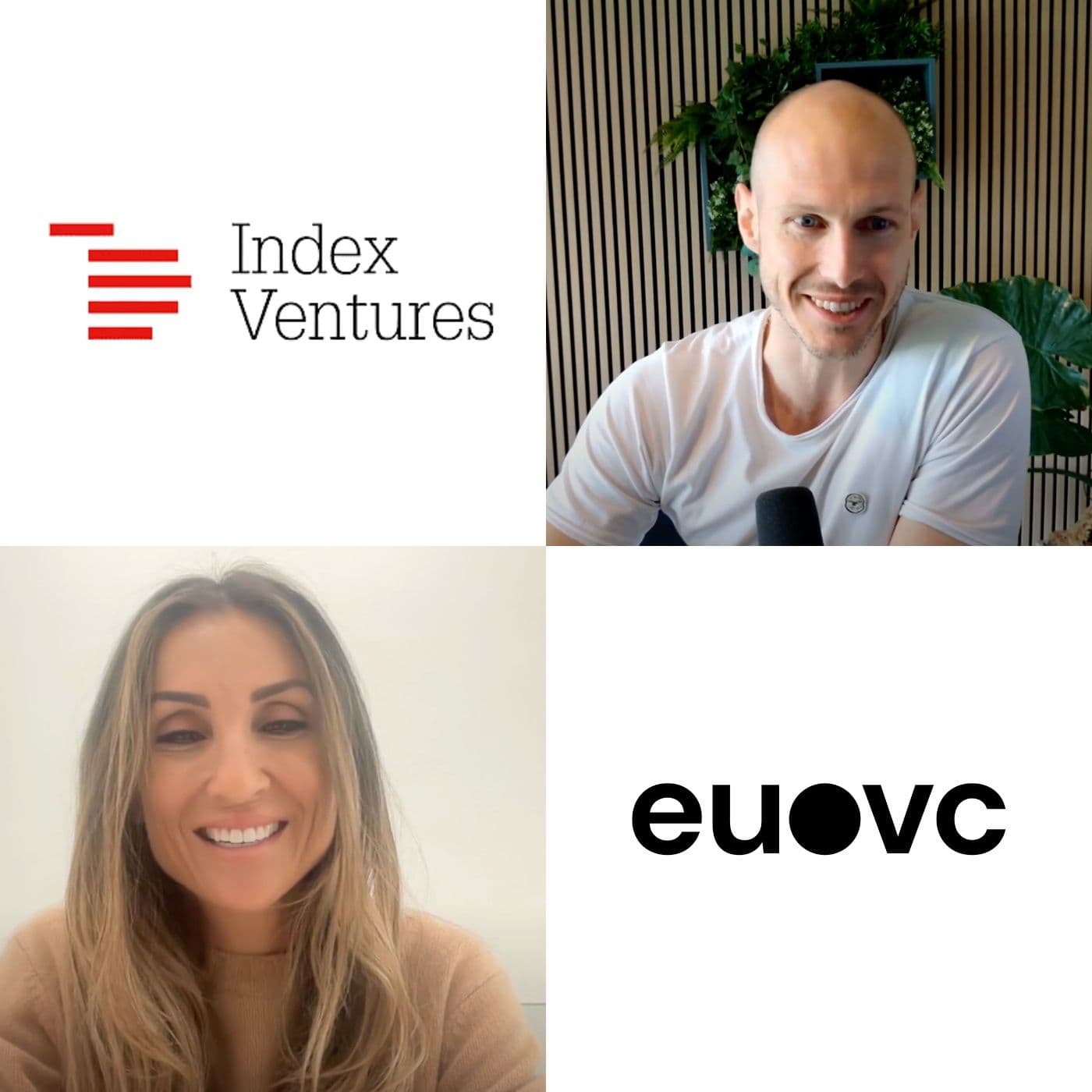
EUVC Podcast Summary: Episode with Hannah Seal, Index Ventures
Podcast Overview
- Title: EUVC
- Description: A podcast focused on the European Venture Capital landscape, co-hosted by Andreas Munk Holm and David Cruz e Silva. It features prominent figures in the European VC industry.
Episode Details
- Episode Title: E365 | Hannah Seal, Index Ventures: Latest fund announcement and building your team from 0 to 1000
- Description: This episode features a conversation between Andreas and Hannah Seal, a Partner at Index Ventures, about founder relationships, the European venture landscape, and insights from the book “Scaling Through Chaos.”
Guest Profile
Hannah Seal
- Position: Partner at Index Ventures
- Focus Areas: B2B software and enterprise AI applications.
- Notable Investments:
- DataSnipper: Enhances auditing efficiency.
- Remote: Platform for global team management.
- Multiverse: Transforms apprenticeship into the digital age.
- Fonoa: Tax technology for businesses.
Key Discussion Topics
- Funding Announcement
- Recent Fundraise: Raised $2.3 billion comprising:
- $1.5 billion growth fund
- $800 million venture fund
- $300 million seed fund (Index Origin)
- Successful Strategy: Focus on investing in people and staying true to core competencies.
- Debunking Myths About European Startups
- Countering VC Twitter Narratives:
- Talent is universal; successful companies can emerge from anywhere.
- Europe continues to produce successful startups contrary to popular belief.
- Insights from "Scaling Through Chaos"
- Research Overview:
- Analyzed over 200,000 career profiles across 200 companies.
- Focused on guiding founders through scaling teams from 0 to 1,000 employees.
- Key finding: Founders typically spend 50% of their time on personnel matters.
- Importance of Talent in Startup Growth
- Specialization in Hiring:
- Early-stage startups need generalists; as companies scale, specialization becomes crucial.
- Founders must recognize when to transition from early employees to specialists.
- Navigating Founder Dynamics and Team Evolution
- Founder Evolution:
- Founding teams may change; often, founding CTOs step back as companies scale.
- Founders need to adapt their roles to suit the company's growth phase.
- AI's Impact and Opportunities in Professional Services
- AI Disruption:
- Professional services like accounting and legal tech are positioned for major disruption through AI.
- Engaging with existing workflows is essential for adoption.
- Remote Work in the Venture Capital Landscape
- Remote Work Philosophy:
- Advocates for a remote-first approach, emphasizing the importance of hiring globally without geographical constraints.
- Establishing a clear company culture is vital in remote work environments.
- Insights on US Investor Expectations
- Navigating Investor Relationships:
- Founders should prioritize personal connections and the right fit over brand reputation or valuation.
- Emphasis on the value of constructive criticism over mere cheerleading.
Key Takeaways for Founders
- Choose Investors Wisely: Focus on those who offer constructive feedback and support.
- Understand Team Dynamics: Be prepared for changes in team structure as the company grows.
- Embrace AI Opportunities: Look for ways to integrate AI into existing services to enhance scalability and operational efficiency.
- Build a Strong Culture: Ensure cultural norms are clearly defined, particularly in remote settings, to maintain team cohesion and productivity.
Conclusion The episode provided a wealth of insights into the European venture landscape, emphasizing the importance of talent, the changing nature of founder roles, and the disruptive potential of AI in traditional sectors. Hannah Seal's perspectives on remote work and investor relationships also highlight critical considerations for founders navigating their growth journeys.
For more information, visit [EUVC](https://eu.vc).
Written by AI. May contain mistakes. Listen to the episode to check what was said.
Transcript
Automatic transcript. May contain errors.0:00Welcome back to this very special episode of the European VCBZ Podcast. We are joined by Hanna's Yale partner at Index Ventures. Hanna is a leader in B2B software and enterprise AI investing, backing founders who are transforming industries by digitizing workflows and automating processes. In this episode, we dive into Index's recent$2.3 billion fundraise and what it means for European founders navigating the intersection of AI talent and market expansion. We also explore Hanna's unique perspectives on scaling startups, why specialization in hiring, especially in technical roles, is critical. Howie Ayes creating new investment opportunities in professional services and her belief that remote work can be a powerful model for building successful companies.
0:40Plus, we unpacked the scaling through chaos research on managing high growth teams. Another episode that's super action-packed. We're here ready to rumble.
1:02values. United and determined, we can serve as a model for other regions of the world. The nature of a problem requires a European response. Europe is a story of new beginnings. New beginnings. Let's start acting. This show is not investment advice and the hosts of this episode may be invested in the funds and companies featured. Hannah, welcome to the European VC podcast. Thanks for having me. I am so excited to be talking to you because we've been wanting to talk to Index for a while, but it's kind of eluded us for some reason. So I'm excited that our good friend, Louis, from your team finally made it happen.
1:47So I'm super excited to have this conversation now. Yes, likewise. I want to get us started. We're going to talk AI, we're going to talk services, But I first want to ask you a bit about the latest fundraise announcement that you had, because that's one behemoth of a fund. So I have to ask you a bit about the success. What's enabled you to do this? Why is it that Index has managed to be so incredibly successful in the European venture space? Yeah, thanks. Thanks. So as you'll know, earlier this year, we raised two new funds, a$1.5 billion growth fund and a$800 million venture fund. And that's on top of the$300 million seed fund index origin that we raised last year.
2:31So yes, as you say, a pretty big fundraise. You know, when you ask the question, what is it that's enabled index to be so successful? I think it's really that we've stuck to our knitting. We've been around for three decades across Europe and the US and Israel, and we've stuck to what we do best, which is investing in great people. And that's really been our mantra from the very beginning and continues to be the case. And that's been a useful strategy for us. I'd love to ask you when you, and this is maybe a contentious topic, but VC Twitter is very full of people dunking on Europe. And I've been very saddened to see that.
3:14And it's kind of seen like that's the thing people want to say these days, or at least the people with the biggest mics right now. For some reason, why is this happening? And what's your take on how we should counteract this as the European ecosystem? Yeah, well, clearly being a European investor, I don't hold the same belief that some people on VC Twitter do. You know, our view at Index is that talent is universal and great companies can be built out of anywhere. And actually, if you look at Europe, many of the most successful companies that Index have invested in have been European companies and continue to be European companies.
3:51I mean, Agen that came out of Amsterdam, and now we have Revolut that originated in London. So I think it's difficult to say with a straight face that Europe is not a place of entrepreneurship. That being said, clearly there's ways that we can make it better, make it an even better place for talent to come and great companies to be built. But I feel like we're doing a pretty good job. Completely agree. I completely agree. And I wonder, it does elude me as well, why is it that we have not been able to counteract effectively this growing narrative? Because I think it's completely wrong. Every single number that you might want to look at shows that Europe is just growing faster than the US when it comes to venture or growing faster than all the other regions.
4:38Many of the US founded companies actually have Europeans as co-founders or early hires. So it's kind of like, it really makes me wonder, but I just wanted to get your take on that. Now, the second thing I wanted to ask you is you've just recently announced the UK or the European version of Scaling Through Chaos. And I wanted to ask you, so first of all, just to set the context there, this is the most extensive research that's ever been done on the growth of VC-backed businesses. You've done an analysis of more than 200 ,000 career profiles at 200 companies, including the likes of Airbnb, B, Datadog, Figma, Stripe, and WIS, of course, portfolio companies of indexes.
5:18I'd love to ask you, tell us a bit about this research and also what it means for European founders. Yes. So as you said, this was a pretty enormous piece of research and it's really meant to guide founders through those chaotic days of scaling from naught to a thousand people. The idea is not to sort of remove chaos from the process. You know, chaos is a feature, not a bug of fast growing companies. But it's very helpful for founders to have an idea of what other companies have done, how it's, you know, how they've scaled, how to organize their teams most effectively so that they can learn from all of the good things and the mistakes that other companies have made along the way.
6:03And I think most of the things in the book hold true for both US and European and other founders. It's generally pretty sort of universal, some of the findings from the book. Things like, you know, at all stages, founders tend to spend 50 % of their time on people matters. And in the early stages, that's probably hiring. In the later stages of a company, that's probably, you know, leadership and persuading your team and that sort of thing. and it might change, but overall, like roughly 50 % of a founder's time is spent on people matters of all kinds. So those are the sort of things that we pull out of the book.
6:39How does that, or how do you as an investor convert that into one-year diligence in teams in the beginning? Because it can be very hard to look at a founder at the very early stages, the company's basically just the founders. How do you, from there, deduce whether this founder will be able to scale with and have that people focus? I mean, you can often tell it from the early stages of how, if they haven't even hired anyone yet, how they're thinking about hiring and what their approach to hiring is and how important they see talent, whether it's an afterthought or whether it's all consuming and everything they think about day in, day out, how they can attract the best people to come and work at their company.
7:19So that's a sort of early indicator. And as the company scales, you can get a sense from the early hires that they've brought on and whether they have that sort of bar for talent and excellence. But also that it's a sense of, do you understand that at different stages of a company, different people might be required? So maybe in the early days, you might need generalists that are going to get their hands dirty. You might that might need to turn into more sort of specialists as you scale. And can you have the ability to put loyalty aside sometimes to some of your early employees and recognize when those employees might have to have to be moved on because the research shows and this is not true for every company but in general when you get to a thousand people only two or three of the first ten are typically still there and that's tough right like the first ten employees they become like a family they were there from the beginning they were in the trenches with you there's so much inbuilt loyalty and to be able to recognize when they might have sort of graduated from the company and not be the right fit anymore is tough, but it's a really important job for a founder to do.
8:25What does it make? So I also know that in the research, you also found that it's very common for the founding CTO to step back at some point. I'd love to ask you about then the scaling of the founding team. How do you think about that? How do you help founders go through this process? Because it's one that's very hard to navigate. And it's one that if you as an investor do not approach it in the right way, you can do a lot of damage. Yeah, that's absolutely right. You know, many founders stay with their company through, you know, IPO and beyond. And others don't. Others love that early stage of building and the chaos and their creativity, but they don't like, you know, the really scaled version of building a big company, which is process.
9:14And, you know, once you go public, having to speak to investors and all of that. So not every stage of a company suits every founder. And it's up to a founder to decide where they want to be. And, you know, that's something that we see often is that founders actually sometimes want to go back to the building or they want to take a different role that enables them to do the stuff that they really love and hand over the sort of more operational stuff that they might not love so much to someone else. So, you know, those dynamics do get challenging as company scale inevitably. There's another thing I'd love to ask you when you're then thinking about it, basically a different perspective on the fact that so many of the early employees end up leaving as the company grows.
9:56That also means that, and this is obviously a big cause of why we're seeing so many spinoff companies, so to say, or new founders coming out of former tech successes. I'd love to ask if you have any stats or any feeling about how often the new teams that you back are actually breakout founders or breakout operators from past investments in index. That's a great question. I don't think we have the stats, but we should probably get them. But, you know, anecdotally, I can tell you that it's very, very common. You know, many of our founders have spun out of existing index companies and also non-index companies from the ecosystem.
10:39I mean, there's so many amazing diasporas of early employees at tech companies that have gone on to build brilliant things. I mean, Robinhood has been a great sort of creator of talent, Deliveroo. It's also been amazing. We're even seeing Revolut now starting to generate some amazing young entrepreneurs. So Agen as well. So it's how the ecosystem evolves. It's the best part of the tech ecosystem, right? Like you get people the skills, they see the scaling journey, they get the bug, they go and build, they sort of know what they're doing a bit more because they've seen a journey once. They have big talent networks.
11:14It's a great accelerant to building great companies. I'd love to ask also, because one of your findings is also that regardless of the sector and the technical talent and the AI, that's really coming all over our sectors now or all over anything that's venture related now, specialisms are more important than ever. Could you expand a bit on that point? Yeah, I think in a world of, you know, many technical companies, you clearly need people that are specialists in what they do. And, you know, Revolut is an example for, you know, at this top of mind, because we had a session with the CMO recently who said, for marketing, they only hire specialists.
11:56No one is good at everything in marketing, right? There's like brand marketing, performance marketing, almost no one is really a pro at all of these things. So if you want the best people to do the best work, you've got to hire people that are really specialized at that. Equally, in the early days, you know, Revolut is a scaled business. In the early days of a company, that's not always true. You need people, you know, it might be an engineer, but you might want that engineer to go and speak to customers sometimes when there's only a six person team and you need all hands on deck. So I think that sort of specialist angle really evolves as the company scales.
12:30Yeah, no doubt about it. I'd love to ask you about that product specialist perspective, because it's one that I think we're talking a lot about whether you want people that are specialists in scaling and more commercial, or you want people that are more product and technical. Yeah, I think the only finding is that there is no standard for this. Every company is different. It really depends. Is it an infrastructure company or is it a consumer business? And then the answer is completely different. So I don't think there's a standard finding for that really. I'd love to ask you then because that ties perfectly into you have a significant sized seed fund and you're investing across verticals, which makes me then think because at the same time, we have an absolute extreme growth in the number of specialized funds.
13:21How do you think about being a non-specialized generalist fund that's investing at the seed stage? Yeah, I think there's room for generalist funds and specialist funds and both coexist together. And actually with our seed fund index origin, the real purpose of that fund is to collaborate with the ecosystem. So often we will do a round and bring in a specialist fund or a specialist angel to complement the work that we do. So we definitely believe that there's room for everyone in the seed ecosystem. My view on seed is that it's all about people. I mean, inevitably, the ideas that you might have when you're thinking of starting a company evolve as you start the company, speak to customers, shift, pivot.
14:05And so often the company that you, or the idea that you end up backing at pre-seed or seed is totally different from the company that ends up being built, which is why our focus at Seed is just people, people, people. And actually with our first Seed fund in X Origin, once we'd finished deploying that fund, we went back and looked which of the companies that have raised follow-on funds, follow-on rounds, or have been super successful and less so. And the teams that have been the most successful were the ones where actually often the idea was like, we weren't that convinced on the idea or the idea was half-baked or it's been a pivot, but we were absolutely just certain that these were people that were going to do something great, regardless of whatever the idea was.
14:49So that's really how we think of things at the seed stage. And if you can then talk just a tiny bit about when you're looking at these people, what are the things clearly they need to be able to manage teams, build a team that is going to be excellent. But what are the other characteristics of a founder at this seed stage that you think are the ones that are absolutely important? Yes, I'd say what we look for in a founder is not a generalist, not someone that's sort of good at everything. It's someone that is exceptional at one thing. And that might be product engineering, an amazing commercial mind, whatever that might be.
15:27It's a spike, a very, very clear spike in a person. And what's even better is if we see this really complementary founding team. So someone's got a spike in one place, someone's got a spike in another, and they just work together super well. So that's why there's no one archetype of a founder. Everyone's got different spikes, but what's clear is that they are spiky people, you know, pretty exceptional at something. The other thing that we really look for is a reason why they want to solve that problem and something sort of around founder market fit. Why are they uniquely placed to solve the problem that they're trying to go after and not a founder that's sort of doing that because he thinks it's he or she thinks it's a way to make a quick buck or because they did some sort of analysis and saw that there was white space in this area and thought that was kind of makes sense.
16:18That our experience is that the best companies are founded by founders who have experienced the problem themselves and felt so strongly about it and then left whatever they were doing to go out and solve that problem. When I look at VC managers, because we invest in funds, right, my co-founder and I, I always say that the best emerging managers are those that, you know, you can almost draw a complete line through everything they've done. And then the next step necessarily has to be a fund. If that is, if you can't do that, like then, then it's just like, then you're going for something that's very sexy these days, which is being a VC, more than you're probably doing just the next iteration or the next step on your journey.
17:03Does that reflect somewhat also how you think about founders? Absolutely. Fully agreed. Maybe I should invest in some founders as well then. Sure, it's fun. Yes, I should. Okay, let's get to the big one here because professional services is something that you care very deeply about these days. And that's obviously because of the unlock that AI has made, which is before professional services was considered by everyone completely non-investable. You're very much saying this is one of the areas where AI is going to really unlock a lot of potential. I'd love to ask you, tell me a bit about your thinking here.
17:41Yes, exactly. As you say, you know, services has always been this dirty word in venture. Low margin, operationally complex, not scalable, and everyone sort of stayed away from it. But actually now my view is it's the moment for services and AI is going to unlock a huge opportunity for investors to be able to invest in these kind of areas. So think tax, payroll, accounting, legal, HR, auditing, all of these sort of fun, sexy areas. Like these are the areas that will be disrupted by AI. Because if you think on the one hand, things like accounting, it's a lot of repetitive manual processes that AI is really good at.
18:21And when you look at law, it's these like huge reams of documents, unstructured data. And AI is also really good at being able to extract insights from reams of unstructured data in ways that's never been possible before. So there's lots of reasons why now is an incredible time to be investing in sort of back office automation and professional services in general. I'd love to ask you because I want to test something on you. We had a prior guest who said this, and it was specifically in legal tech. And the way he is thinking about it is he's not looking for someone who's basically seen, okay, you can do this with AI.
19:05And for that reason, you just go in and build a startup that should do what's being done today. But rather, he's still just as much as he always has been focused entirely on how the the user experience is changed. And then however that is unlocked, however that much better to next better experience is delivered with AI, that is really what matters. That the user experience is changed, not that you can use AI to do whatever you've done before. Do you agree with that mindset? How do you think about looking at these? Because there's never been more startups pursuing the same solutions almost just because it's so evident to anyone with a bit of technical understanding that, wait a second, this could be done with AI and the incumbents are not going to be able to because it's very far from their expertise.
20:00So let me go and do that. Yeah. So our view on this area is that you have to fit in to the workflows that they already have. As much as we believe there's going to be this huge shift in professional services, the individuals that are doing these jobs today are typically quite risk averse they are not people that are used to sort of adopting the new technology all the time they have their ways of working they're often working in highly regulated industries as well which makes change even more difficult so when we typically invest in these areas it's been products that are embedded and fit into their existing workflows so a couple of examples data snipper which we invested in earlier this year a company based out of amsterdam that's built a product for auditors to do data reconciliation, their product is a plugin for Excel.
20:47And it started off not being that. So when the founders first built it for their friend who was an auditor and he was complaining about all of the manual workflows he had to do, they built him a standalone tool. And he was like, guys, great, but I can never use this. I work in Excel and I'm only ever going to work in Excel for the rest of my career. And then once they embedded it into Excel and it was a plugin for Excel, then the growth was explosive. And similarly for other companies that we've invested in, like DraftWise on the legal side, it's a co-pilot embedded within Word because if you know any lawyers, they are only ever going to work in Word.
21:20That's what they're used to. That's what they want to use. That's what all their colleagues use. So you have to meet them where they're working. Could you give me some examples of some that seem to be successful without doing that? Do you think there are any? I'm thinking of someone like Notion as an example. I'm sitting here looking at our notes in Notion. I love Notion. I live in Notion. But as soon as it hits anyone that's not from the tech industry, they're like, what the? I'm never going to get into this. Yes, it definitely stirs up strong emotions. Do you see any large scale successes that don't plug into the existing ecosystems?
21:57I would say there will. To be clear, we're still in the really early innings of this right um so of course there will be great standalone products that are going to be built for people that do not fit into to workflows like i think how i use ai in my everyday life when i'm telling my kids a story at bedtime instead of having to think of something again for the hundredth time another story about football or monsters or whatever it might be i just get chat gpt to come up with the story it's way better way more exciting it can incorporate football and monsters and power rangers all in one story much more creatively than i could ever do um and that's a standalone product that isn't you know something that's embedded in my day-to-day life before that so of course there will be these new products but for for many of the enterprise use cases if you think of another one code generation for example these sort of coding co-pilots they're typically embedded into engineers existing workflows which makes them much easier to to adopt and much more easy to see the value quickly, which is super important.
23:05If we look at the last two years as an example, how many of your investments you've done, would you say, have been in AI? Yeah, great question. And this is actually quite a contentious one because the definition of AI is pretty blurry these days. Barely any company that we invest in will have no component of AI in it somewhere. It might be a consumer business, but maybe their support function is fully sort of AI. And so it's a really tough one, sort of AI native, where sort of AI is really the core of the product, probably 50%, but where AI is being used somewhere in the product or in internal operations, 100%.
23:43It's the operational excellence enabler of a startup, right? That's how I think about it. Okay. And then what sectors, because you described this case of always having to plug into an existing world. But are there any sectors that you're saying, this is where I really think that we're going to see a lot? And are there any where you're saying, we see a lot chasing this, but I do not believe we're ever going to, or at least it's not for the next five or 10 years. I'm not sure there's any sector that I believe will be like untouched by AI. You know, and I think we maybe did think that a few years ago, that certain sectors would be slower, but we're always surprised.
24:24I mean, I think our view on gaming and some of these more creative areas, we thought probably in gaming, maybe less. So it's all about the creativity of the game creator. But actually, when I speak to some of our gaming founders, they say that their ability to build games quickly is just astronomical now. It's gone through the roof. They're much quicker. A team of 10 would have been a team of 10 is now a team of one or two. So I really believe AI will permeate so many different areas, creative or routine or infrastructure, whatever it might be, some will be faster than others and some will be quicker than others.
25:00And we'll have bumps in the road for sure along the way. But I'm optimistic that actually AI will be a feature of all companies going forward. The same way that we used to think of sort of mobile companies and non-mobile companies or cloud companies and non-cloud companies. It's just companies now. When you look at the 50 % that are AI native, how AI specialist do you need to be to be able to create a startup that successfully will build something incredible as an AI native startup? Yeah, so it depends. If you're building an infrastructure company or a foundation model, yes, you've probably got to be highly technical.
25:37Pretty good. Pretty good, right? Not me. Definitely not me. But if you're building an application, an AI application, what's more important is to deeply understand the problem that you're trying to solve. AI and especially generative AI, it's a really new topic in many ways. So it's not like you have tens of thousands of people that you can pick on that are experts. Everyone's got to be getting up to speed on it. And it's moving so fast. So someone that was an expert last week has to continually be updating their knowledge and kind of maintaining their expertise. So in these instances, it's more important that they are an expert in the problem they're trying to solve, but are able to attract the relevant hires that can build the product and understand the relevant tech stack that they need to use.
26:21Could you speak a bit to the technical talent that we have in Europe when it comes to AI? Do you see any hubs that this is where we just see that the startups need to gravitate to very quickly? Or is it more so that, well, it's actually quite widespread across different hubs. So normally we don't see any startups needing to go anywhere specifically to be able to get the talent. I don't believe that you need to relocate to a certain area to get talent. There is so much incredible talent and it's pretty dispersed across Europe, actually. So obviously London and the UK is a massive hub. There's incredible machine learning labs in Cambridge and London universities.
27:04DeepMind has a really deep bench of talent and we're starting to see a lot of founders now coming out of DeepMind. But then equally in France, you see with Mistral, there's amazing AI engineers. ETH in Zurich has also started to generate some incredible companies. is TU in Munich. So I'm incredibly bullish on the talent in Europe, but I do not believe that it's going to be concentrated in one or two hubs. I think it will be incredibly dispersed. Eastern Europe has some amazing entrepreneurs and technical talent as well. So I'm actually more bullish on there not being one hub, actually, and it being really dispersed.
27:40And that's really exciting. Why should there be one place where everyone has to move to and uproot and live in that certain way. People should be able to live their lives where they want to live, with their families or wherever, whatever culture they want to live in, and build a company from that. I got to ask you, just because you said that specifically, your philosophy on remote work? Well, I'm an investor in remote.com, which is obviously a pioneer for my work, but I'm incredibly bullish on remote work. As I said, talent is universal, and why should companies not be able to hire from a global talent pool and get the best person for the job, not the best person in this city for this job.
Read the full transcript
28:23Obviously, there are some advantages of being in person for certain companies. But, you know, we see with remote, which is one of the fastest growing companies in the world, that you can build an incredible company with a remote team. Having said that, you need to be very deliberate about your culture from day one. And set it all out. You see like with remote and also with GitLab, they have a handbook that they have that's public, that everyone knows about the norms, the ways of working. It's asynchronous, how you take notes on things. Everything has to be very, very sort of deliberate. But if you have that and you hire for people that thrive in that type of culture, you can build an incredible remote company.
28:59I think this is one of the places where I think US venture and European venture is quite divided. Most European investors that I talk to are bullish on remote work as well. And I think it's also because our ecosystems are more dispersed. And for that reason, it's just a natural component of building in Europe. Whereas in the US, I'm really like a lot of US ambassadors that I've talked to, they definitely do not think that you should try and build a startup remotely. So I think it's incredibly interesting to see. Yeah, totally. I fully agree with you. There's definitely a different attitude towards it in the US.
29:39I hope that over time it just becomes a moot point. Like there will be brilliant public companies that are built that are remote first. I mean, GitLab is a great example. And then it's not a question of can you build a great remote company? The answer is like, clearly you can. But this is the way to do it. Yeah. And I think that's the important part, right? So it's exactly that. The playbook to do it is markedly different from being able to just have everyone around you in the beginning set the culture via basically just the chatter that happens around the water cooler. So I absolutely agree. I'd love to ask you though, because Index, you're very active in both geos and every single one of your investments ends up pulling in larger or co-investors from the US.
30:25How do you sometimes, because imagine that given that they have this not super big fan take on remote work, when they then see all of these European companies that are quite often has a big remote component, do you ever see that being a cause of hesitation for them or one for contention? Or is it more that, no, they're very loud on Twitter about this being a problem, but in fact, proof comes to the pudding. They're like, it's the founder's business. Obviously, they're growing, so I better shut up. I think it's probably the latter. If it's a great company, investors want to invest behind that founder.
31:07What we do see sometimes is U.S. investors coming in and trying to persuade the founder to move to the U.S., which often causes some tension. And, you know, our view is not that, you know. How do you navigate that? How do you navigate that as index? Because it's always the founder's business, but you're also on the sideline as an investor kind of saying, guys, could we maybe not open that conversation? It could be done here in Europe. Our role as investors is not to dictate where a founder has to be based. Our job is to find the great founders that will make the right decisions for their companies.
31:42If it is the right thing to move to the US, great, that's their decision. But it's up to the founder. A great founder will figure that out themselves, not be dictated to. And that's just not the way we operate. So true. Okay, Hannah, I went directly into the fundraise, then into services and scaling through chaos. but I did not ask you much about yourself. So maybe now let's let the audience hear a bit about Hannah Seale. Okay. All right. Where do I begin? So I grew up in London, as you can probably tell from my accent. And I studied economics at university and I always thought I would be a politician.
32:21I actually, as a kid, I was quite a nerdy kid, wanted to be chancellor of the Xchaka. And then gradually, as I went through my university life, realized I was completely unsuited to a life in politics. Didn't know what I wanted to do with my life. So I became a consultant, as many people do when they are unsure of the next steps. And I was a terrible consultant. I did that for two years. I was just the world's worst consultant. And I, to be honest, hated it. It definitely taught me some great skills around, you know, work ethic and working in a professional environment and Excel shortcuts and all of that.
32:53But it was really not suited to me. And then I I joined Ocado at the time they were building a new general merchandise business or non-food as they called it. So how do you enable Ocado shoppers to buy everything else that they want to buy also from Ocado? So I worked there for two years. Absolutely loved it. It was in those days still kind of felt like a startup. I mean, the warehouse would have challenges every single Friday. Everyone from head office down in the warehouse picking, packing. It was fun. It was a great environment. I mean, I still believe it's an amazing company and it's been such a pioneer in online grocery.
33:31And I really, really love that experience. And then I went to eBay and I worked various roles there, most recently on the consumer marketplace business, which I also really enjoyed. It was really interesting. Also have kind of working for a U.S. company and seeing the cultural differences there. And I was about to leave eBay and join another startup or a startup. and a friend of mine said to me oh have you thought about a career in venture um I think you'd really love it and I was like I've been like advising some startups but when I've been at university I've done a ton of banking internships and I just thought you know it's banking's not for me I'm not I'm just not it's not like you know where I want to want to spend my life and I'd been like put off anything finance related um but she introduced me to index um I met the people here and I was like all right this looks fun everyone seemed really happy I remember one of my interviews with Martin, who's one of the partners here, and he said to me in this interview, he said, I still pinch myself every day that I work here.
34:34And, you know, Martin, he doesn't make sort of platitudes like that. He's really serious about everything he says. And it really felt true across the company that people were just so happy to be working there and doing this job day in, day out. So I was like, all right, I'll give it a go. If not now, I'll never do it. I do feel like there is a time in your career when it's the right time to go into venture. And it's sort of earlier in your career or later in your career. I think it's tougher to go in sort of in the middle of your career. And I thought this is probably the last time I'm ever going to get a bite at this.
35:04So I joined. Why so? Tell me about that. Why so? Why not in the middle of your career? My view on venture is really an apprenticeship business. Whatever you've done before, useful to some degree. Understanding business models, understanding how scaling companies. But the actual job of investing is one that you just need to learn on the job and you just need to have that apprenticeship. So going in when you have some experience, but not like decades of experience and you're willing to start from the bottom. You know, I remember my first day and Jan, who was my manager at the time, said, Hannah, here's your desk.
35:40Here's your computer. Go find some companies. That's the job. That is. That boils down to that. Find great companies to invest in. And you've got to hustle. You've got to meet people. You've got to figure it out. and it takes a while it probably took me three to six months to really feel like I could meet a company on my own and form like a reasonable conclusion on the company despite the fact that when I first came in I had like a list of 100 companies in the UK that I thought were great companies and it turned out they'd met all of them and none of them were suitable so it might idea is one that looks quite easy from the outside but actually like doing it at the bar that index sets is pretty tough so you do need to have you know many years of being an apprentice and that apprenticeship and the apprenticeship never really stops to actually, I think, build your career and venture.
36:24What seniority did you join INDEX at? I was the most junior you can be. It was a role that we don't really have anymore called an associate, but I sat at the bottom. Tell me about growing your way up through venture inside a team like INDEX. What would you say to other people aspiring to do the same or thinking about building a culture We primarily have partners and DPs listening to this show. So how do you think about the culture parts, the things inside Index that allowed you to grow? Yeah, I mean, Index is obsessed, I would say, with this idea of apprenticeship. And we don't have loads of hierarchy and loads of levels.
37:11Partners invest in the newer people in the team and really mentor them throughout the years. And it's also very much encouraged at index not to only work with one partner, which I think is incredibly important. Because if you look across the index partnership, everybody has a totally different style of investing. You know, some care more about business models. Some are just only people focused. Some like very sector expertise. You know, it's entirely different. And they're all great investors. But everyone does it in their own way. And you have to find your own style. So only working with one person, you can be sort of pigeonholed into that way of thinking about companies.
37:49Whereas for me, I was able to work with Jan, with Neil, with Danny, with Martin, with others who all have these different styles. And then I was able to sort of figure out the bits that I like, that I didn't, that suited my personality and craft my own way of investing, way of thinking about companies. Can I ask you a bit about the funnel for startups to get to an index investment? Because exactly what you said is something that always makes me think a bit because founder reaches out to index, wants to get investment, is then declined. But that might be tied to the individual partner or the individual partner's associate that looked at the company.
38:30But had you been another partner's associate, you probably would have been taught, well, this might actually be worth looking at. Or would you say, no, that doesn't happen because at this stage, there's filters. Those are the same, but then the partner nuances only come in later. I think it's the latter. It's very unusual that someone would sort of pass quite quickly and someone else would have taken a very serious look at the company. Not to say it's a bad company. It's just at Index, we know what's suitable for Index and our funds and what we're looking for and the type of business we invest in.
39:03How many partners typically touch a company, so to say, before it's invested? Everyone. So everyone in the partnership will join the final IC meeting and make a view of that company. Obviously, that changes slightly at the earliest. How many will have met the company? You mean prior to the IC? Yeah. There is no sort of fixed rule. If it's a C deal, you might only have had a couple of interactions. But if it's a huge growth check where the company is split across different geographies and it touches a lot of different areas, then often you have five, six partners that might have met the company prior to having invested.
39:43So it really depends on the stage and the type of company. We have no fixed rule, but at the IC, everyone's there. Everyone's making a call on the company, meeting the family. Do you run the same? I'm just pumping you for questions here, right? Go ahead. If you run the same IC meeting for the whole partnership across all of Vindex and you'll see seed and then you'll see A and then B, or do you have a seed IC that meets on Mondays and then the growth meets on? We meet the companies when they need to be met. So we try not to be too rigid on days of the week. if there is a great company and we need to make a decision, we will drop whatever we're doing, we'll assemble, and we will meet the company.
40:28And that's what this job is. You have to know when to prioritize and when to focus on what's important. Yeah. How about these weekly meetings, so to say? Do you have one that's, like, if you could talk me for a bit, some of the magic that happens inside, like some of the processes that you think are absolutely backbone to index? Yeah, so obviously we have our weekly dual flow meetings where we go through the companies that we've met and that we're excited about. And that's a cross index. Yeah. Well, we have a European one and different offices have, and then we also will come together as a group to share the sort of the global priorities as well.
41:11But what we do when we talk about companies, we start with the people. We say, I am excited about this company because of XYZ founder. And that's always the first thing that anyone talks about in a deal flow meeting, because as I said, we are people obsessed. And that's really what we focus on the majority of the time in these meetings. Do you make decisions by unanimity or is it just the deal lead that I'm doing this? I'd love to tell the rest of you and get your input. We are not a dictatorship. We take into account everyone's opinions. and you know but in the end the partner picks no it's a voting system so there's room for you know if if some people don't like it but others feel strongly that they like it then then we're able to do deals and you know many deal many of our best deals have been fully consensus and everyone's supported them but many deals as well have not and had people that disliked it and liked it and many of the many companies that that start off especially in the early days it's quite a quite contrarian bets.
42:14You wouldn't expect everyone to like them because they're kind of wacky. Right. And that's what makes a great company. And that's OK. And we need to leave room for that. Yeah, it's incredibly important. And that's why I dig into it. Right. I think it's super interesting to hear. How do you think about exchanging knowledge between the US and the Europe team? Because it's different dynamics, different play fields. But at the same time, It's super important that you, I met these guys, so maybe. Yeah, as you say, it's incredibly important. And it's also something that we really encourage because it's such an advantage that we at Index have, being one global fund, but offices in London, New York, San Francisco, Tel Aviv.
42:59So we really encourage that kind of knowledge sharing. If there's a security company in New York, Durian, who's in Tel Aviv, will look at it with Shadul, with Jahavi, with other people that also look at security and share their experiences of different companies that they've seen in their relative geography. So it's something that we really encourage you sort of tag teams of sort of sector experts to always look at companies together. Am I right in saying, and I might be getting this wrong, but you started in New York with a New York presence in the US and then only here lately, you've added a partner in Silicon in Valley?
43:38Other way around. So we actually originally started Index in Geneva. That was our very first office. Yeah, yeah. We quickly moved to London and the next office we opened after London was San Francisco. Okay, it was San Francisco. Okay. It's because I saw that you'd added a San Francisco partner. So that's why I had it the other way around. Yeah. I mean, we're always, you know, growing our teams in all of these places. And then New York was our most recent office that we opened a couple of years ago. Any thoughts on New York? Yeah, I think it's an incredible ecosystem. I only wish we'd opened an office earlier.
44:10I think we see at Index, it's been, you know, an amazingly rich ecosystem for a number of areas. FinTech is great there. Healthcare is great there. There's a huge number of sectors that we're seeing really deep bench of talent and companies coming out of New York. The other thing is we see it's a New York is often a bridge for Europe. And a lot of our European entrepreneurs or Israeli entrepreneurs that do want to build out the presence in America, their first port of call is off in New York rather than the West Coast for time zone reasons and other reasons. So it's been a really great bridge.
44:42I mean, companies like Datadog, for example, did it a while ago when they built out their presence in the US, in New York, but also companies like Wiz, which originally started in Israel, also have a really big presence in New York now. So it's really important for us and for our founders that we have a presence in in New York to sort of facilitate that expansion. We had Will Prendergast from Frontline on quite recently, and he said, I don't think you can be a good or great investor in Europe without also being a good investor in the U.S. Do you think there's truth to that? What did he mean by that?
45:20Like you have to have a presence in the U.S.? You have to also have invested in U.S. companies? So I digged into it as well, right? What he said was that there's so much happening in the US that if you're not very knowledgeable of both what's happening on the venture dynamic side, but also competitive startups in the same space as what you're looking at in Europe, you'll not be knowledgeable to the level that you need to be about one of the core markets where your future competitor is going to be. And then there's the other part, which is also being active in the venture ecosystem in the US also allows you to be very connected to all the follow on investors that you'll have.
45:59You'll know how to bring your startups over there and so on. Yeah, it's clearly important. And that's why it's so core to index that we are a global fund across Europe and the US. That's part of your job as an investor to know what's going on in that sector. Where the US is obviously a huge market and there's a lot of incredible companies there. And knowing what's happening there is obviously of critical importance. But equally, there's going to be great companies that are built in Europe that just cater to the European market. And you can build a multibillion dollar company just building finance tools for France or for the UK or for whatever market that might be.
46:40These are really deep markets where you don't necessarily need to be obsessed about what's happening in the US. Would you invest in a startup where you're seeing that at the seed stage, this is what it looks like? It'll work very well in Europe, but like there's a big US competitor who probably will never get a hold of that market or it's just it doesn't fit there. Or would you say, well, it's an OK alternative outcome, but we need to see the route to global scale in the beginning and then maybe we'll end up in just Europe? It really depends on the market. So there are some markets where you can't build a large enough business just doing X, Y, Z in the UK.
47:21But there are other markets like payroll, for example, where there's multibillion dollar companies just doing like payroll for Netherlands or payroll for Belgium. And that's that's incredible. And so absolutely. So we don't take this sort of blanket approach. We just sort of take it on a case by case basis. decision framework in terms of uh final possible valuation slash like any thoughts on that do you say you need to be able to see this investment go to become a fund returner before it's something or do you sometimes say probably can't get to that scale but still you know we'll do it any any do you think about that at all when you enter we never know what it's going to get to that That's our job, right?
48:07It's to be optimistic and think, OK, what happens if this goes right? Probably it won't, because if you look at the probabilities, most companies do not get to multi-billion dollar exits. That's OK. But you have to have a view that how can this be a multi-billion dollar outcome? You have to see a path to it and you have to be realistic. That's unlikely to happen. But you've got to have that sense of like, all right, there's really a chance that there could be something brilliant here. And that's when you pull the trigger. And that takes us back to the founders where we started. Everything sits with the ability of the founder to scale the business in whatever pivot and obstacle you need to transgress.
48:47Okay, now I want to ask you about a strongly held belief that you have recently had to change your mind on. okay so this is basically don't have strongly held beliefs i think it's really tempting and as you say on sort of on x to to be you know tweeting about all of the all of the mantras that you might have but the reality is there is no one right way to build a great company look at all of the great companies in the world and and that'll be but they're all completely different. But what you need, you do need to have is a sense of the company you want to build and the culture and the norms and the ways of working and a real clarity around that.
49:28And that needs to permeate the entire organization. But you can, as we talked about earlier, you can put a great company in person or remote. You can build a company where you hire loads of smart generalists, or you can build a company where you only hire specialists. We recently did an event around scaling through chaos. And we had Antoine from Revolut there, who runs all their growth and marketing. And he has two days a week of back-to-back one-to-ones. And then we had Roy from Wiz, who leads all of that engineering, and he doesn't do any one-to-ones at all and doesn't believe in them. And they're both incredible companies.
50:02So that's, I guess, the belief that has really dissipated recently, which is just do it your own way, build the kind of company that you want to build that's true to you and how passionate you are about, you know, culture and norms and ways of working. And don't pay too much attention to the benchmarks and what else is out there because the best companies burst through those benchmarks, create their own benchmarks and just do it their own way. So a dogma around being non-dogmatic is the dogma you should have. I love that. Okay. I want to ask you now, finally, normally we ask what are top tips for VCs for fundraising, but given index is usually not in a situation where you have to give much thought to that, I'd love to rather ask you, what should founders think about when they're fundraising?
50:46One is just focus on the people that you want around the table. Do not think about, is this the right brand? Is they giving me the highest valuation? If the company works out, that investor will be with you for 10 years. You will see them at least once a quarter at a board meeting, probably once a week at a checkup or on WhatsApp or whatever, however you're communicated with them. You need to want to work with that person. So there has to be that personal connection there. But, and I think this is the most important part, do not go for yes people and cheerleaders. That's really unhelpful. You can find them anywhere.
51:19People that are going to say wonderful, fantastic, this looks brilliant, I'm so happy, best company ever, let me give you my money. The value of an investor is helping you see things that you might not see. The nature of a founder is that they're optimistic. You have to be an optimist to be a founder. And so sometimes you sort of clouded by things or you just want to see the best. And it's helpful actually for investors to say, this is brilliant, but this is an area where I think you could, you know, do with some help or could improve. And let me figure out with you how I can help you in this area.
51:49And that's what's really important in an investor. And also someone that is going to help you course correct if you've gone off course and not just sort of cheerlead and let you sort of fall off a cliff. and I think you can identify that when you're talking to investors even if you know the investor's selling it's a super hot round and they're desperately trying to get in they should always be saying to you you know we're super excited to back you as a company we'd love to help you figure out this because we feel like you could do with some improving there or we've noticed that x way z person your team may not be the right person let's figure out what the right profile might look like so that's the one thing I think is incredibly important that It is easy to overlook because it's so flattering to be inundated with the VCs who tell you how brilliant you are.
52:31But I don't think it's helpful at all in the long run. I think that's incredibly true. Hannah, thank you so much. And almost an hour whisked by incredibly quickly. So thank you for joining me for this conversation. Thank you so much. Great to chat.
52:56values, values, values. United and determined, we can serve as a model for other regions of the world. The nature of a problem requires a European response. Europe is a story of new beginnings, new beginnings. Let's start acting. Acting.
From the publisher
As a Partner at Index, Hannah focuses on B2B software and enterprise AI applications. She works with founders, reshaping every sector of the economy by digitizing workflows, automating manual processes, and transforming the services sector at large.
In close to a decade at Index, she has built a track record of helping visionary entrepreneurs from day one and supporting them as their companies scale. She is particularly energized by founders who leverage technology to tackle daunting problems in large and traditional sectors previously deemed too hard to tackle. Her investments at Index include DataSnipper, who supercharge auditors; Remote, a platform to hire, manage and pay global teams; Multiverse, the company bringing apprenticeships into the digital age; and Fonoa, tax technology for global businesses.
Go to eu.vc for our core learnings and the full video interview 👀
Chapters:
03:02 Debunking Myths About European Startups
04:48 Scaling Through Chaos: Research Insights
06:59 The Importance of Talent in Startup Growth
08:53 Navigating Founder Dynamics and Team Evolution
09:45 The Rise of Breakout Founders
17:15 AI's Impact on Professional Services
23:05 The Role of AI in Modern Startups
27:57 The Future of Remote Work in Venture Capital
29:34 The Future of Remote Companies
30:13 Navigating US Investor Expectations
31:54 Hannah Seale's Journey to Venture Capital
35:11 The Venture Capital Apprenticeship
36:37 Inside Index Ventures: Culture and Growth
38:05 The Investment Decision Process
42:26 Global Presence and Knowledge Sharing
45:03 The Importance of US Market Insight
48:48 Building a Unique Company Culture
50:31 Advice for Founders on Fundraising