
In short
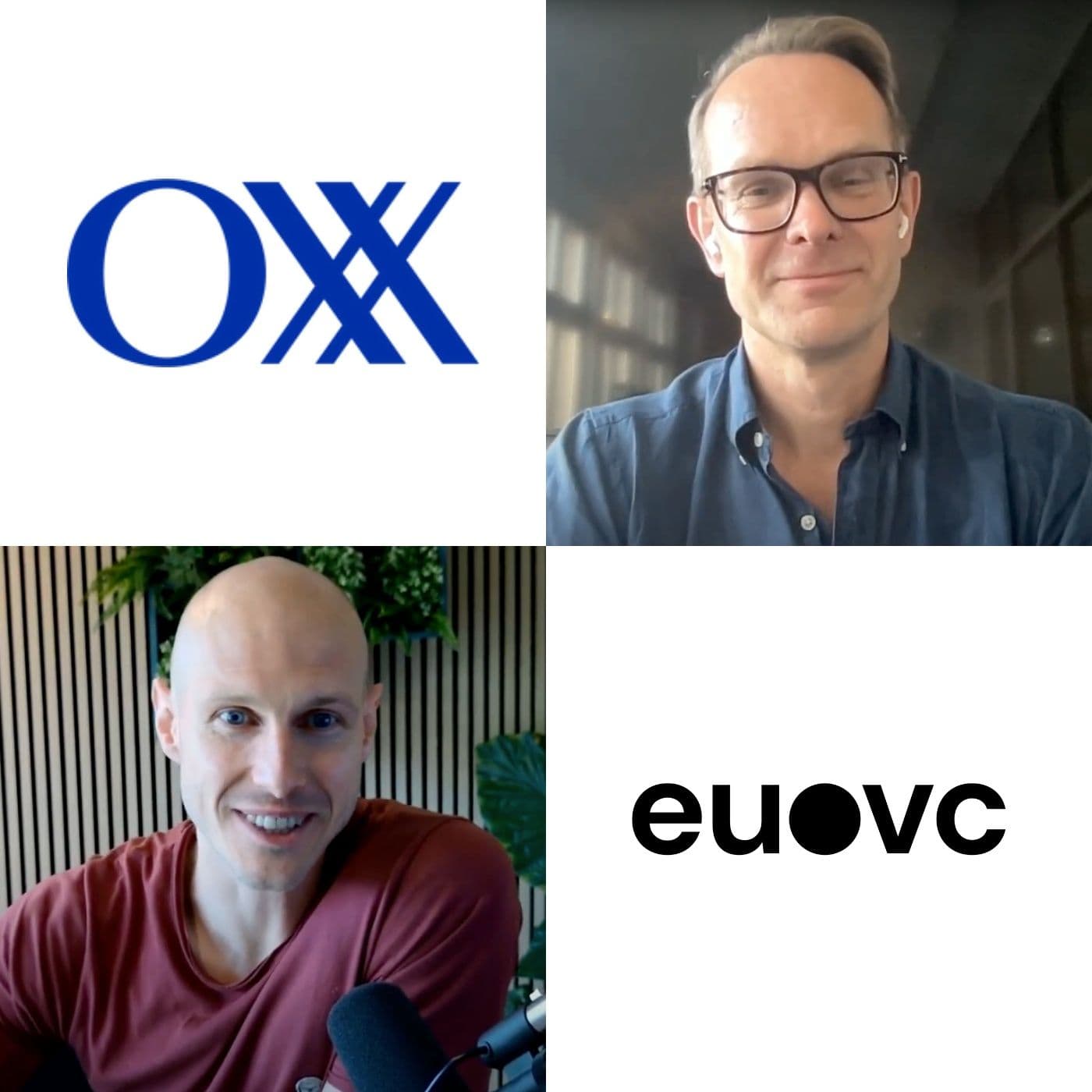
EUVC Podcast Episode Summary: E371 | Mikael Johnsson, Oxx
Episode Overview In this episode, co-host Andreas Munk Holm speaks with Mikael Johnsson, co-founder and General Partner of Oxx, a prominent European venture capital firm focused on B2B SaaS investments. They explore Mikael's journey in venture capital, Oxx's investment philosophy, and strategies for startups to gain a competitive edge in a crowded market.
Key Themes Discussed
- Mikael's Journey in Venture Capital
- 24 years of experience, starting during the dot-com boom.
- Transitioned from aspiring entrepreneur to investor, emphasizing the importance of intellectual curiosity in venture capital.
- Oxx's Investment Strategy
- Focus on scale-up stage companies with significant growth potential.
- Recent fund size of $190M, backing B2B SaaS companies across Europe and Israel.
- Emphasis on product-market fit and analytical decision-making over traditional venture models.
- The European Venture Landscape
- Current state and the predicted shakeout of early-stage seed funds in Europe.
- Discussion on the disparity in funding between early-stage and growth-stage investments compared to the U.S.
Detailed Insights
Mikael's Background
- Initial Interest in VC: Drawn to the excitement of innovative companies and the learning potential from diverse business models.
- Intellectual Curiosity: Described as a key motivator for staying in venture capital instead of pursuing entrepreneurship.
Investment Philosophy at Oxx
- Focus on Product-Market Fit:
- Oxx prioritizes companies that have demonstrated consistent growth metrics and customer retention.
- The approach emphasizes a structured, data-driven analysis to assess market fit before scaling.
- Investment Stage:
- Oxx typically invests in companies in the late Series A to early Series B stages, focusing on those with 24 to 48 months of operational history.
- Portfolio Construction:
- Oxx maintains a concentrated portfolio with a maximum of 15 companies, allowing for high conviction in each investment.
- Aims for a balanced mix of stable growth and potential breakout cases.
Challenges and Opportunities in European VC
- Over-Establishment of Seed Funds: Mikael predicts many seed funds lacking differentiation will fail, leading to a necessary market correction.
- Optimism for Growth Stage: Despite current challenges, Mikael believes there is a bright future for European venture due to rising entrepreneurship and successful role models.
Positioning and Competitive Advantage
- Critical Importance of Positioning: Startups must clearly define their niche and customer base to distinguish themselves in a saturated market.
- Common Founder Mistakes: Founders often neglect the go-to-market fit phase and rely solely on hustle, which can hinder sustainable growth.
Final Thoughts
- Mikael emphasizes the need for patience, the importance of team dynamics, and understanding the long-term nature of building successful ventures.
- He advocates for emerging VCs to find differentiation and maintain a persistent, long-term mindset in their investment strategies.
Key Takeaways
- Persistence and Grit: Essential for both founders and VCs, as successful ventures often take time to develop.
- Depth of Understanding: VCs should have a strong grasp of their market and the nuances of the companies they invest in.
- Market Dynamics: Acknowledges the need for a shakeout in the European VC landscape to ensure sustainable growth and healthy competition.
Conclusion This episode provides valuable insights into navigating the complexities of venture capital, particularly within the European B2B SaaS landscape. Mikael Johnsson's experiences and strategic outlook serve as a guide for investors and founders alike in their pursuit of building successful companies.
For more details and the full video interview, visit [eu.vc](https://eu.vc).
Written by AI. May contain mistakes. Listen to the episode to check what was said.
Transcript
Automatic transcript. May contain errors.0:28Welcome back everyone to the European VC podcast. to the current state of VC and why Michael believes that we will have a wipeout in the number of seed funds in Europe. And of course, we also dive into the sweet spot of Ox, which is investing between Series A and Series B. Hope you'll enjoy this episode as much as I did making it. Here's a few words from our beloved sponsor. This episode comes to you by the support of our partners, Portfolio IQ by Synaptic. Portfolio IQ is the most effective way to track your portfolio. It pulls data from all sources, board decks, financials, MIS sheets, forms, emails, everything, and creates a true single source of truth for your portfolio data.
1:09With Portfolio IQ, you can track all the metrics that matter, not just the standard metrics. All metrics are reviewed by a team of certified accountants. You'll get 100 % accuracy. Not sure about a number? Just click on it to see the exact cell in the document it came from. Portfolio IQ also adds a layer of standardisation to make the data comparable and useful for benchmarking, valuations and reporting. All of this is as simple as forwarding an email. Zero added work for your fund or your portfolio companies. Portfolio monitoring that you'll fall in love with. Go to synaptic.com forward slash portfolio IQ.
1:46That's S-Y-N-A-P-T-I-C dot com forward slash portfolio IQ. The good folks at Synaptic will be happy to give you a no-cost trial.
2:22story of new beginnings, new, new beginnings. Let's start acting, acting, acting. This show is not investment advice and the hosts of this episode may be invested in the funds and companies featured. Michael, welcome to the European VC podcast. Thanks very much, Andreas. Great to be here. I've been looking forward to this conversation. We just featured another piece by one of your colleagues on the European VC website on our insights section, our insights platform, as we call it, where we're sourcing input from the community. And I really think it's something that's working well. And it was picked up very well.
2:58I had quite a couple of people reaching out saying, huh, I learned something there. So that is not what we're going to talk about here today, but we are going to talk about how you got into venture and building Ox. Yeah. Wow. I mean, I've been at this for now pretty much 25 years by now. And it's been a long road when I started in venture back in the 2000s. we were in the middle of the dot-com boom and bust. And I was quite fascinated by what was happening at the time with all these new companies coming up with innovative products and business models and getting funded and growing very quickly and everything.
3:36So I figured that I wanted to be an entrepreneur and build some of that stuff because that sounded really cool and that got me excited. So I started working for a venture capital firm with the idea that that is a really good way to see a lot of different companies and seeing what works and learning what are the mistakes that people make and what are the good things people are doing in order to be successful. So I thought I'd give it three years. So this was in 2000. And then I was going to go out and run my own company. Here I am 25 years later, still on that same side of the table, on the investor side of the table.
4:15I'm running my own firm now, though, together with my co-founder, Richard, obviously. So maybe, you know, all roads lead to Rome after all. I don't know. But it's been a long and winding world for sure. What made you stay in venture, would you say? Why stay on this side of the table instead of the founder side? A couple of things. First and foremost, if you are, as I am, primarily motivated by intellectual curiosity, I don't think there's any better job in the world, at least not from my vantage point. I might be a podcaster talking to all the VCs in the world. I still, 25 years in and at 52 years of age, learn something new every day.
4:59That's what keeps me so excited. I think that's the difference between a VC and a podcaster because I just talk to you, but I don't really make it to internalize it because I don't have to do anything else with it than just have fun with the conversation. So that follows just me being less smart. I think that, you know, it really tickles this sort of intellectual curiosity side of me. I think what I've come to understand about myself is also that I am a person who wants to build. I'm not a manager or someone who just like takes care of stuff. I want to be part of building stuff, seeing things go from nothing to something and maybe planting that seed and watering that seed and seeing it grow into a beautiful plant or tree or whatever.
5:45There's just something philosophically that resonates with me about being part of that and the excitement of really seeing it happen. And obviously, once you've sort of caught that drug, it's really hard to kick the habit. So I think that's also it. No, I still to this day continue to be excited coming out of meeting with new entrepreneurs with great product missions and ideas. And I get a kick out of that. So, you know, it's that side of it as well. And I think the third thing is I'm just damn stubborn. I refuse to declare defeat. It's like there's been so many paths on this journey where I could just hang up my boots and say, no, that's it.
6:21I'm going to go into consulting, banking, whatever, right? or taking a regular job as a manager or something like, but I'm just very, very stuck. Fuck life as a manager. That's not good. I've been there. Never going back. I've done everything I could to not have any hires inside EVC. Now we've brought on two, and I thought I had a full day of working this morning, but it ended up being four hours of onboarding. No, I mean, it's a part of it. So obviously, I've been investing for 25 years. Do I get a kick out of making another investment? As I say, I'm excited by talking to founders, by new propositions, seeing companies develop, but the process of making another investment and stuff, that doesn't really make me excited anymore.
7:10But building a team, as we're doing now at AUX, and being a manager, I guess, but hopefully more of a leader, that's sort of the next phase for me, right? And that's also exciting. But I do see your point of your degrees of freedom. They reduce pretty quickly once you start having employees. Yes. Absolutely. All right. Now, I want to ask you about a pivotal moment in your life. Is there anything that comes to mind when I ask you something, some moment that has really changed how you thought about the life going forward from that? Yeah, I think, you know, coming back to how I started my career in venture.
7:49venture. I started in the really heights. Well, actually, when I signed my contract to get into this line of business, that was in March of 2000. That was exactly the day NASDAQ peaked at that time. And then as I started my job, we'd already gone into a correction, which lasted for three or four years. So it's all downhill from there. So I had very formative experience as an investor, where I came into a situation where there had been tons of overinvestment. There were just casualties by the roadside everywhere, just dead corpses of companies and investment funds and everything. So I very quickly learned that being an investor is not about necessarily, you know, making an investment in a company.
8:34It's about building great companies and being able to exit those companies at some point in time. And it's damn difficult. So I think that has probably, you know that has definitely colored me as an investor in terms of a mindset and how i think about things like it's not just about deployment deployment deployment and getting into the you know hottest sexiest companies like you have to do all the oftentimes you know boring tedious work to just get there in the end and that's the cycles are so incredibly long adventure how would you say then that that because this is something that I've just been scribbling a bit on um and and it's this dpi creation mindset uh from day one so to say and also from how you built your construct your portfolio model and think about when when do you make the big bets when do you make the shorter term bets all those things yeah how would you say that you know is then your mindset, your thinking, the processes that you do affected by this increased focus on DPI creation from day one?
9:47I think it's inherent in the DNA of our firm and in the strategy that we pursue. So traditional venture, get in early, you absolutely need to get into the one or two generational companies. you invest in 30 40 real options you obviously have some sort of analytical framework for trying to make the best bets and assessment but honestly it is a numbers game a very much a numbers game and then with time there's definitely success bias right so the best firms get the best deal flow attract the best entrepreneurs and all that stuff right but fundamentally it's a numbers game I think we are much more on the analytical side when it comes to, you know, almost like a growth equity firm being incredibly high conviction on every single opportunity that we invest in.
10:41And we might get that wrong, right? But we will be crunching the data and we will have our hypothesis and we will test them. And we will do tons of work to do that, which is very different from how most VC firms think about it. So we invest in a much smaller portfolio. So our first file was only eight companies. Our current second file would probably be 12. And I think that's where we're going to be, 12 maximum 15 companies. We're not going to get to 30, 40. But we're doing that with a lens of getting some sort of stable base case whereby we can realize 4 to 5x our money if this just goes reasonably well per what we think.
11:19But always and critically doing that with a very substantial and real option for a breakout case where this thing just flies and returns venture style, you know, top-deck style returns. And I think we've shown that in our first fund where we have, you know, out of eight companies, there's arguably at least three of them who've broken out on that, you know, venture return profile. How would you say this impacts your ability to take big bets, so to say? Because that's the typical critique of this model is that, well, if you're not swinging for the fences or if you're too concentrated, you can't swing for the fences on the things that will either go to a thousand or go to zero.
12:06what is your take on that critique i'm sure that many lps have told you you're too concentrated you're crazy yeah yeah no i agree with the critique it's true we're not going to swing for the fences on next generation uh whatever you know like i can't even come up with an idea like but like the very crazy stuff like we're not going to swing for the fences on that in the early stages we're just not going to do that but i think we are proving and we are very confident that we'll be able to continue to prove that there is a very particular strategy that we're pursuing which is honestly reasonably differentiated and unique there's not a whole lot of people do that there's a lot of people who think about doing what we do almost like i would say micro cap growth equity but they're not investing in those companies where there is substantial venture upside they're not looking for world-class global potential category leading potential they're basically just looking for the steady returns of the two to three to four axis that's not what we're looking for but but to be sure like we we will miss out on some opportunities that could be generational companies for sure we will yeah and that's the and that's the trade-off that you make right yes um how do you could you tell us a bit about then maybe first of all make it super clear to everyone what's this this ticket size and stage that you then prefer to go in that i know i said that back when i did the introduction but some may may have have forgotten so i think be be super clear there and then tell us a bit about how you think about the reserves allocations that you're that you're doing when when you're pursuing the strategy our philosophy is one where we we have a fairly structured model in terms of how we think about building world-class leading software companies and we think it's really really important that you're optimizing for the right thing at the right point in time of the evolution of the company so when you launch a product it's all about finding product market fit you should do everything to optimize for finding product market fit there are way too many people who start thinking about long-term strategic stuff that only becomes relevant five years down the road and trying to optimize for that in the beginning, you just don't know what is your use case, what's your ICP, what's your distribution channel, what's your core market event.
14:27You have no idea, right? So optimize for the right thing at the right time. And for us, that means going for product market fit first. And we think about product market fit in a fairly structured data-driven way. It is about growth, of course, but it's also about growth with a very specific ICP. So one type of customer, one type of use case, one type of product, right? Like not being all over the place. And we also think about it in terms of usage. How is that usage increasing and how is it spreading and how is it proliferating in an organization? We think about it in terms of retention. Are these customers within this ideal customer profile staying with your product?
15:05And we also think about it in terms of customer love. Are they attesting to the fact that your product is better and more differentiated for their needs than anything else out there. So being able to crunch data around those things, that is really core to us at the point of entry. That means the companies we invest in, they will have something like 24 to 48 months of operating history, at least. So that already tells you that we won't be doing seed investments, right? We will invest anywhere at, let's say, late series A to early series B, there in between. And typically, this means companies with 30, 40 to 50 employees, maybe up to 70, 80 employees.
15:48It means having an annual recurring revenue of maybe a couple of million euros up to 5, 6, 7 million euros. But that's not the sort of metric that we're looking for. We are religious about thinking about this customer, the product market fit phase of things. And that really is what's driving the type of companies we invest in. And then we go in, fund them with an initial check size of probably, you know, we invest in rounds of, I'd say, 10 to 25 million euros, where we will do typically, you know, 50 to 100 % of that check. 50 to 100 % of that check. How often do you lead, sorry, not lead, but actually take the full round?
16:30It's rare that we wouldn't have at least insider participation. It is quite common that we wouldn't have a joint lead. But we do, you know, honestly, I think we prefer to investing with a joint lead. Yeah, you prefer to be the only lead, right? No, so we want to be lead, but we're very happy to co-lead with a partner. And I think for many companies, it's just good to have a shareholder investor consortium that is stronger than one party, both in terms of dynamics, but also in terms of funding power and staying power and how you think about things. When it comes to putting together the ideal round and the ideal investor consortium, where do you see that we could maybe do better?
17:20I think, and this is not only companies, this is also only investors. And I think we're guilty of this as well, right? We're all searching for the great companies. Once we find them, we get a little greedy, right? So we want to keep as much as possible of that round if we've negotiated it in terms. I think many times we have very clear examples of this in our portfolio where there's a number of other trusted colleagues, partners around the table. We've fared much better. many companies and it used to be obviously in in 21 and 22 these b rounds or even a rounds were just getting ridiculously large right so getting way too much money too fast you will need to try to drive a return on that and you'll spend it on stupid stuff and and that makes no sense at all we're not seeing that anymore i mean you know the amounts have come down they've halved or even more So I think that's under control now.
18:15Very rarely do we see a company raising too little money. At least, you know, a company that is interesting to us with certain global ambitions, they tend to, you know, raise a substantial check. But the one thing is, I think many entrepreneurs would be better off thinking about the dynamics around the table rather than just getting one check. Because obviously it's easier, right? Just getting the check for me than getting it for me and someone else. But you could enter a discussion with someone like me saying, you know, I'd love to work with you guys, but who else would you bring to the table?
18:46You know, we are very focused on expanding into the U.S. market. Would you bring a U.S. local partner, for instance, right? You know, you could think about that as an entrepreneur. I think there's too little of that.
18:58Take a start.
19:06I know that you are off the view that we don't have too few early stage firms and we don't have too few growth stage firms either in Europe. So I'd love to ask you about both those parts. Yeah, I mean, it's fairly obvious to me what happened over the last few years, right? There was a lot of successful startups in 2020, 2021, 22. A lot of those people made money, wanted to go from entrepreneurs to being investors. There were tons of funds started and there was just a lot of money and firms into the system. So at the earliest stages, I think there's a massive over-establishment of firms. the analogy that I always tell to people is when I got into venture in 2000 there were 200 firms that were listed with the Swedish venture capital association as being active technology investors in venture in Sweden they weren't all based there but they were active there there were 200 in 2003 they were less than 20 that was that shakeout we are in the middle of this shakeout and it's still protruding because people are trying to you know save as much money as they can for a better day in the hope that things will turn around.
20:20I'm not going to put a number out there, but a large number of these particularly early stage seed firms with absolutely no differentiation, they're going to go out of business. So that's a pretty harsh comment, but that's my firm belief. Similarly, I think at the growth stage is what you're seeing now. We're seeing this obviously with some of these firms chasing our companies and seeing transactions that we just can't make any sense of. They raised such massive funds in 22, and they haven't deployed that because the market's been falling. Now they're desperate to deploy, and you have obviously an organization of people who are trying to make a career for themselves, so they have to deploy, and you have to be deploying in order to create a new fund.
21:02So the incentives are pushing the growth funds to deploy quite aggressively as well now. So I think you're going to see, unfortunately, you know disappointing returns from quite a few of those people as well where there might be a shakeout.
21:20Let's start in the early stage because there's so much to unpack I think you said something interesting in the end where you said that we had so many coming to market with little to no differentiation and I always find it super interesting to talk about okay so what is differentiation in venture? I'd love to ask you that question. When you say that there's too many with too little differentiation, what are you then saying that there's missing there? I just think that they've got a similar proposition. Differentiation can come in so many different forms. It can come through access, through networks, through knowledge, through expertise, through experience, through focus.
22:02There are just myriads of ways. There are just so many generalist early stage seed, pre-seed, seed funds out there competing for the same deals. And I just... But can I ask you though, can I ask you though on that question? Because I absolutely agree that there's many, right? No doubt about it. There's also no doubt that our market grew incredibly. So there's also been that ramp up that you're describing. But then if you look at the number of funds or the volume of investment capital in the European venture ecosystem, vis-a-vis the number of startups and the rounds happening, there's more capital per founder in the US than there is in Europe.
22:50so I'm kind of always like is it not just that there's a lot of new players in our market making someone like you feel like fuck what's this name and then there's this one on I don't know I can't hang up this anymore. Hey I'm not competing with it I'm not competing with it I'm not I'm not so you know it's interesting you say that because the numbers absolutely are you know pointing in that direction however if you slice them by stage we're at parity in terms of number of companies and population and GDP with the US at seed and even series A in Europe. When you get to series B and beyond, that's where that drops dramatically.
23:28So we're less than 40 % of the capital in comparison to the US. Yeah. And here you're talking about raised capital, right? So not round... Capital available and invested into companies at that stage. Yeah. But hey, I might be an old fart and I might be wrong about things. There might be So many opportunities in, I don't know, robotics, in virtual organic farming, in whatever type of sector that I'm not focused on. So there might be a massive availability for people to invest in that. The challenge I have, there's just so many seed funds who want to be investing into B2B software without having any sort of experience, track record, understanding or particular knowledge about it.
24:19and I don't see the alpha. I just don't. And there are, to be clear, seed funds who do have that, who are really, really good at doing that. So here comes my provocative take then. Because I don't think so. Looking from the numbers, that's what's making me think, well, I don't think that we have too much capital versus amounts of startups here. I don't think that's the problem. Because then you'd have a bigger problem in the US, and I don't think you necessarily do. What I do think, however, is that you're absolutely right that we do have too many undifferentiated funds. I do think that we have too many going to perform lower than you would want them to.
25:02So they're not worth the risk, so to say. And they, as you also said, and I do think that I'm seeing, we're also LP investing as angels, right? And I'm seeing a lot of funds that I would never put my money with because of exactly what you said. The market is undifferentiated. They cannot give me a good reason why someone would pick them over Ox or Seedcamp. And in the end, the best founders will. It's so easy for the best founder to now reach out to the best firms in Europe. There's podcasts like ours, there's content platforms like ours that makes it perfectly clear who the leaders in the market are.
25:42so a great founder would have such an easy path to go there. So I absolutely agree that you need an incredible amount of differentiation to be a successful VC. I just don't think that it's from a numbers perspective, like there's too much raised capital or too many funds necessarily. No, and I, you know, may I call it? But I think that the capital lives with some of the wrong firms. Yeah, yeah, yeah. And I think that I know people that I have seen not being able to scale their firms as quick as they would maybe want to, or not be able to raise their first fund or second fund as successfully as they would have hoped.
26:21And then at the same time, I'm seeing 10 million and 15 million and so on in other funds. I'm like, how can this guy not be successful? And that's because oftentimes funds are raised on an LP network, not on a founder network indeed yeah so yeah so that was our controversial take part of this podcast that will i'll be very honest i'm super optimistic on the european venture ecosystem overall i i just think like entrepreneurship is like it's just exploding and it's becoming a choice for so many super talented people there's more and more role models coming up obviously with successful both you know, companies, founders, and VCs.
27:02I am really bullish on Europe and, you know, the venture ecosystem over the next 10, 20 years. I think we're going to be seeing some phenomenal companies out of here. My big wish is that we're going to see companies as big on the B2B side of the house as we've seen on the consumer side of the house, right? We have world-leading companies produced on the consumer side. There hasn't been a lot of those on the B2B side, and that's obviously where we're hoping we'll be part of some of those. Okay, now I want to go to something completely else, because I know one of your big passions is positioning and how startups can really build out a sustainable competitive advantage for themselves.
27:39I am the biggest fan of Michael Porter. So anyone that writes the word sustainable competitive advantage makes me happy. So tell me a bit about how you think about that and where you think that founders can really make a difference compared to others. I think this comes back to when we were talking about that formative experience, like being an investor, like investing in things that are fundamentally sound and differentiated with a long term sustainable advantage. Like that's always been the way I think about things. So positioning is obviously a way to clearly distinguish yourself in the market.
28:16Most software is, you know, fairly generic. Eric, there's probably 10 companies that can do at least 10 companies that can do the same thing. How you think about positioning yourself against those companies and against the consumer needs or the customer needs out there is really critical if you want to build a big company. If you fail in doing this, you will be a jack of all trades, a master of none, and you will not be able to grow particularly fast or grow very big. So we think, as I said, we're religious on finding companies where we can find strong product market fit. We then try to help them build for what we think is go to market space.
28:54The core tenant of that is this positioning. Who are you going to, you know, what product, for whom, through what channel, what way, etc. You're doing these things really well and really be better than anyone else for someone, for some use case. Start there and then you can proliferate and expand as you go on. But if you don't nail that down, it's really, really hard to grow a large and scalable company. And that's why we see so many, at least on the B2B side, companies in Europe, they get to 10 million ARR. They might even get to 20 or sometimes 30 million ARR, but then they fizzle out and they sell to private equity or to a strategic.
Read the full transcript
29:37Building companies that get to 100 million ARR or even a billion of ARR, right? You need to be really, really good at what you do then and serve a customer in a unique way. Do you see the fallacies or the errors made by founders that end up fizzling out at 30 million AR as an example? Do you see the errors having been made in the more formative stages or is it at this growth stage where we're missing someone who knows how to take it from 30 and onwards? Our very, very strong thesis, and I think we have some data to back this up, is that if you go from product market fit stage into maximizing growth and just trying to double down on growth, if you skip this, what we call go-to-market fit phase, where you're optimizing things for building that scalable go-to-market machine, it is really, really hard to grow sustainably into the hundreds and beyond.
30:41of AR. So we think it's a formative experience that should take place at the type of stage where we invest. So these will be companies with a couple, three, four million, five million of AR, maybe 50 to a hundred employees. If you want to compete globally, that is where you need to start to think about these things. How do you diligence a company that you're looking at to, you know, at this stage of three to five million, and you want to make sure that they're not making this hour we're not going down the path that will fizzle out at 30 how do you how do you what are the the things that you look for there so we we try to have an informed opinion about the market they're in and the different you know i guess vectors they could choose in terms of positioning you know there could be you know various different ways of doing that and then it's about having a dialogue because very few of these companies will have been thinking about this super strategically and won't have done too much work on it when we invest.
31:40So it's about having a dialogue with the founders and explaining how we think about building the company in this stage and seeing if we can create alignment. And if we can, usually it goes really, really well. But I wish I could say, yeah, we look for these three, four things. If those are in place, we say yes. But it's not like that. No, no, obviously. But there might be the opposite, though. There might be some things. these are the things that we know if this is the the mindset if if there's a founder who is you know that you've you've seen these founders like and they're brilliant in their own sense and they can build really good businesses right they they hustle and they hustle and they hustle but they don't have any other mode other than hustle mode so you know they they get momentum them and they get traction but they lack the sort of strategic point of view and vision and insight to see where are we going next they're basically you know course correcting as they go yeah it's pretty funny and and quite provocative and and counter counter uh vc mindset two things that you've said right because you just said here uh hustle hustle hustle can be dangerous actually because you get blinded to the strategic parts.
33:01And as a VC, investing out from the proposition that what I'm looking for is hustle, well, you can actually get down the wrong route by that. And then you also said that we have a tendency to skip the go-to-market fit stage, as you called it, and go directly from go-to-market and then just to scaling. And when you do that, which you could also definitely, if you simplify the VC model, so to say, or the blitzscaling model of building and do that. And I think this comes back to then your critique of many VCs in your space, that there's maybe too many that don't have an in-depth hands-on operational experience in the space.
33:45And that's where you then fall prey to the fallacies of what you just read of cool content online and you see hyperscale, hyperscale, hyperscale. Okay. Then it's just about scaling, right? Wait a second. There's this thing in the middle that you really need to figure out. I have a lot of friends who are really distinguished VCs, like traditional VC model, have done phenomenally well in that. There's a place and a role for that, no doubt. I think when you're trying to build B2B products that go into the core of a lot of businesses, you just need to understand what are their customer challenges.
34:29It's very different building a collaboration app that you can distribute through a PLG approach to an individual, to an enterprise product that is supposed to drive return on investment for a very particular use case. You just need to pick your poison, essentially. You can do this, you can do that, but don't try to do everything. It's pretty funny because I listened yesterday to Carlos' podcast, the SeatCam podcast, where he was talking to, it was part of their startups and focus series where he was talking to one of their founders, this building in the AI space, AI security space. And when I listened to that podcast, I was like, this is good and bad content.
35:20Because it was so technical and it was so demanding on the listener. that as just sit back and relax content because I was trying to cook while I was listening to it, right? And I'm not a founder building in any way. So for that reason, I was, I had a, you know, that was not easily accessible for me. So that's the bad part of it, right? But then there's the good part of it, which is, this is exactly what you need if you're listening to a podcast that you're hoping to make you smarter. And that's exactly what we try and do with our podcast just for the VC space. So that's why sometimes our conversations get a bit long-winded.
36:06But there's just this dynamic of, and the thing is, I think that many of the podcasts that are out there and the conversations that are publicly happening, they err towards the more interesting parts, but you then miss the nuances that you just described that are so integral. So I just thought that was an interesting take. And I'm always thinking about why is it that venture is broken in a way? Because venture works incredibly well for the people that it works well for. But then the vast majority of VCs don't return what they need to return to be good investments for their LPs, right? So why is this part?
36:45And that's why I'm a bit obsessed about the fallacies of our industry. Any take on that? Do you think, am I right in saying that that's maybe part of where we have a problem? I think, and this is going to make me again sound like an old fart. I think there are way too many people who make a living as VCs today. Most of those people don't have any idea what it means to really be an investor. And that's why I think a lot of them are going to disappear from the market. I know that's harsh and it's like, it's one man's opinion. but I do think there are people who have proven that the venture model can be phenomenally successful I think there are people who have proven that the growth model can be phenomenally successful we're trying to prove that something in the middle can be successful but I think the core thing is you need to think like an investor and you're not there to it's it's it's been too much of a cool job for people like yeah I'm a VC it's it's painful and it's supposed to be painful and you should invest your own money.
37:49You shouldn't just invest other people's money. So I think that's, you know, we're going through that phase where we're clearing that out. But once we're through that, I'm very optimistic. And then I think some of this more shallow, perhaps, reductive content that you're, you know, talking about, I think that's going to fissile out as interest in being a VC banks a little bit. It's just like, there's too many people who want to be a VC. We don't need all these VCs. We don't need me, right? It's like, why do you want to be a VC? Yes, it's fun, but go do something real. Build product. Do something.
38:24I think you're right. It's funny. I spoke to David the other day, just from the content perspective again. Three years ago, I think there were six other content creators in our space doing models of what we're doing. I think we're the only ones left still doing it. It must mean you're doing something right. That's good. Well, no, I just think we had runway and dedication. We've had a lot of negative energy here between us. So let's go to a shout out. And let me ask you to tell me someone you'd love to send some love to instead.
39:09There's just lots of great people in our industry. I have the pleasure of working with or know them, you know, through different means here. But yeah, and it's almost like, you know, when people ask me, what's your favorite portfolio company? I always say you don't choose between your kids, right? But obviously you have a favorite somewhere. Like one person that really deserves, one person who really deserves a shout out. Did you say obviously you have a favorite son? I have a favorite son because I only have one son, but I have a daughter as well. I thought I'm going to blackmail you with this clip.
39:46Yeah. No, if there's one person that I've been working closely with, who I think deserves a shout out, you know, and somebody from this industry, obviously, that would be Saranga at Boulder. Saranga Shani Tilake. He's a really good investor and partner as a color investor. And he probably, you know, thinks more in terms of the big bets and swing for defenses than I do. But we still find a very good rapport and way of understanding each other. And, you know, I've done a couple of co-investments and would love to do more. He's a really good representative of the European venture ecosystem, I think.
40:28We should bring him on the podcast someday. Now let's go to your three biggest learnings. We're on a hot streak here. Tell me, what are the most important things you've learned? First of all, I think this thing about grit, persistence, patience, it just takes time, right? Like, yes, you can build companies in three years with great exits, but that's luck. That's nothing else. It's luck and timing, right? If you want to build real financial companies that matter, you need to have grit and help and passion to build that great company. and not really every company that i know of or have seen closely that are successful they go through these phases and and you know sometimes there's a near-death experience but that is just more formative and makes people even more determined and passionate about getting there in the end so it takes time and patience i think that's the first thing like you know you don't get it and similar thing if you want to be a vc investor honestly it's very hard to evaluate an easy investor on anything less than a lifetime track record because you can do great and you can be lucky and you can throw it all away it's like you double down on red at the left and it's all gone so you're like it you need time and patience i think that's the first sort of thing i would say the second thing is when i started in this business i thought it was all about being the smartest guy right so sitting at the desk thinking the deepest thoughts and being really strategic and smart.
42:00I'm probably at the completely other end of the spectrum today. And while I say that strategy matters and founders, these 30 directions, people cures all ills. It's about people, getting the right people in the right place at the right time. Great people, they'll figure it out. Mediocre people, they'll kill any great opportunity. So I think that's a very distinct and clear learning experience. Let me ask you about that people. Mediocre people will kill any great opportunity. Any thoughts on hiring in the venture space? How do you make sure that you don't hire mediocrity into your firm? Yeah, no, we have a policy of hiring from very diverse backgrounds.
42:39So, you know, and there's absolutely nothing wrong with people with consulting and banking backgrounds. We have those as well. I had a consulting background myself a couple of years, like, don't forbid. But, you know, we've hired people, some people who are fresh out of university who are just damn smart. We've hired people who've ran marketing and sales organizations within SaaS companies. We've hired people who've been SaaS CFOs. We've hired people who've been SaaS COOs. Fundamentally really smart people with diverse experiences. That's how we try to avoid that thing. I asked because I had the other day a conversation with Patrick Hellerman from Foundamental.
43:20Completely different space than you, so you probably don't know him or their firm. But we spoke about this dynamic between small firms and large firms and why returns don't scale and so on. And part of my philosophy is that there's something special about founders and there's something special about founding GPs. And yes, you can scale a firm. And what makes that scaling warranted is that you can also grow to service larger LPs, which means that you can take in more capital and then you can return more, not on a multiple basis, but on a dollar basis, more capital. But you have to do that by scaling the firm.
44:03And I think that there's a very finite resource of founding GP material in any, like in the world. and I think that once you go down the path of scaling a firm, it's just automatically going to dilute returns because there's just not these people around. Do you agree with that to some extent? Obviously, we all leverage ourselves a little bit, but it's just so damn hard to find people that are complete enigmas. Yeah. No, I think you're definitely partially right. I'm definitely partially right. Oh, fuck, man. This is how you say we'll have more than one son. But there are arguments that speak against what you're saying.
44:52Look at Benchmark. Benchmark, probably the most preeminent venture firm in the world, right? They've gone through complete generational shift, still getting top quartile, if not decile returns and LPs. but what they've done is they've stuck to a strategy and a size and just like you know we're going to be i don't know how many partners there are four five six partners doing the same thing over and over over again on the b2b side emergence is a you know emergence capital partners another fabulous example of people just sticking to their knitting really consistent strategy doing the same thing but have been able to do that you know succession in terms of generational shifts and stuff so i think it's possible to do it then you have the you know some of the other really big brand firms who become massive asset managers and like raising just more and more and more more funds as the original founding team has sort of been leaving the building i think it remains to be seen whether that works it's a different mobile for sure i don't know benchmark from the inside But I have heard, I can't remember who told me, and I probably couldn't say his name either.
46:04But I remember the individuals that, well, Benchmark, they always say that they're a small firm, but then they have a small partnership. And yes, it's generational in all this philosophy. But show up at their office, there's a bunch of people there. They just don't have. yeah so yeah yeah but i think in terms of what you said about gp talent there are firms who've proven that succession is possible absolutely true yes yes yes completely so so what i meant was the scaling of the firms like that you're actually growing the the staff force and that's why i think you know it's just so difficult because because you know i think it's this this This is probably more about religion than facts, the way I see it.
46:52And I think my religion is, or our religion, I should say at all, because it's like, we're going to build this firm sticking to what we know. We're not going to raise infinite funds. Yeah, we might raise a growth fund or an opportunities fund on the side, but our core strategy is going to be our core strategy. Doesn't scale infinitely. That's the downside. We can't get rich on management fee. but that's what we're going to do so we're in that religion then there are people who have a different religion and we all respect each other but if you're a Christian you go to church if you're a Muslim you go to the mosque I think that's how you should think about it there might be some truth to that and you'll be best at executing the thing that you believe in and now the quickfire quickfire quickfire quickfire
47:46Now, let me ask you, and that's relevant when I ask you the question, your top tips for emerging VCs, because oftentimes it sticks to you in knitting. Don't let anyone think that you need to be something else. But I'd love to hear, you know, what would be your top tip for emerging VCs that are fundraising? My first tip for emerging VCs, don't be color VC. Make sure, go build product, go sell stuff, go market stuff. Go learn all that stuff. So that would be the first advice if they haven't done that. If they've done that, I would say, okay, if you want to go into this line of business, think very long and hard about what is your differentiation?
48:27What is your unique alpha? Why are you better at doing something for someone that will help you deliver outsized returns to your LPs? Because ultimately, that's what this business is about. don't think that VC is a continuous dance on roses. And most of the job is pretty boring and it's difficult. And then you get the odd celebration, right? So be prepared for, be long-term in the mindset. Don't think it's a quick fix. So differentiation, think about your alpha differentiation. Make sure you're committed to being persistent and staying the course.
49:12I want to ask you something counterintuitive that you've learned since you've been in venture what's like what has you to you just been baffling I don't know if this is counterintuitive it might be like you know the first thing people will say about venture it's like yeah it's it's an apprentice business you need to develop patent recognition right and I think that's absolutely true. If you've read Daniel Kahneman, you know everything about thinking fast and slow. I'm a devotee of that, right? And I really, really believe that's how we function as human beings. And I have the same biases and flaws as everyone else, right?
49:51You do succumb to pattern recognition because the brain is always looking for shortcuts and for patterns in order to explain a situation. now that works really really well in 99 of of all situations that you apply that approach but you know there's definitely a situation where that will you be your worst enemy in the sense that you don't see that what's different right you're trying to attack a situation you try to frame it and you're using all these heuristics and experience and gut feel and pattern recognition but you're missing out on something because you don't have a receptor for that signal.
50:33And I think I've seen that, you know, I'm sure I've seen it with myself, you know, it was really going to sort of like think about, but I see that in some people who've been really successful, who's sort of like, they think about life. It's almost like if you've done math, like it's a vector space and it's only defined by these vectors that, you know, built up their success. And if there's a different vector, they just don't understand how to think about that. Yeah, I think that's where... That I think is slightly counterintuitive. No, no, but the counterintuitive thing is that you would think that from success, you can derive a good decision heuristic.
51:10But the fact is that in venture, oftentimes, that's the last thing you want to do. Because if you've seen what everyone said, no one would ever do PayPal if you'd done fintech before. Because you'd say it cannot be done. And that is very true. It's a great example. That's a great example. Michael, thank you so much for coming on the podcast. It was fun. To everyone who have tuned in, there's a bunch of notes that Michael has been so kind to put into this. And I was jumping around in our script. So there's a ton that you can go in on EU.VC and read the show notes here from Michael if you want a bit more structured conversation than what we had here.
51:48Yeah, this was a lot of fun. These are the types of conversations I enjoy. This is why you want to be a VC. Having conversations like this, bouncing stuff around and speaking about things high and low. Exactly. Thanks very much, Michael. Yes, sir. Thanks very much.
52:28not just the standard metrics. All metrics are reviewed by a team of certified accountants. You'll get 100 % accuracy. Not sure about a number? Just click on it to see the exact cell in the document it came from. Portfolio IQ also adds a layer of standardisation to make the data comparable and useful for benchmarking, valuations and reporting. All of this is as simple as forwarding an email. Zero added work for your fund or your portfolio companies. Portfolio monitoring that you'll fall in love with. Go to synaptic.com forward slash portfolio IQ. That's S-Y-N-A-P-T-I-C dot com forward slash portfolio IQ.
53:08The good folks at Synaptic will be happy to give you a no-cost trial.
53:16Tear down this wall. It's more than just an alliance. This is a union of values. United and determined we can serve as a model for other regions of the world. The nature of a problem requires a European response. Europe is a story of new beginnings. New beginnings. Let's start acting.
From the publisher
Andreas and Mikael discuss the key strategies and insights that have shaped Oxx as a leading player in the European B2B SaaS investment landscape. Mikael shares his extensive 24-year journey in venture capital, highlighting the evolution of his investment philosophy and the experiences that have driven Oxx’s unique approach to backing scale-up stage companies.
Oxx’s second fund, totaling $190M, underscores the firm’s commitment to supporting B2B SaaS innovators across Europe and Israel. With a team of six in Stockholm and nine in London, Oxx maintains a pan-European reach, enabling it to stay closely connected to the pulse of regional tech ecosystems. The firm’s notable investments, including Funnel, Gravitee, and SOCRadar, exemplify Oxx’s focus on high-potential SaaS businesses with the ambition and capability to scale internationally.
Go to eu.vc for our core learnings and the full video interview 👀
Chapters:
02:35 Meet Michael Johnson of Oxx
03:04 Michael's Journey into Venture Capital
04:35 The Intellectual Curiosity of Venture Capital
05:20 Building and Growing Companies
06:11 Challenges and Stubbornness in Venture
07:31 Pivotal Moments and Lessons Learned
09:47 Oxx's Investment Strategy
13:49 The Importance of Product-Market Fit
19:07 The State of Early Stage and Growth Stage VC in Europe
26:00 Challenges in Scaling Venture Firms
26:44 Optimism in European Venture Ecosystem 2
7:30 Importance of Positioning for Startups
28:43 Building a Scalable Company
29:49 Common Mistakes by Founders
30:59 Evaluating Companies for Investment
32:11 The Role of Hustle and Strategy
36:29 Issues in the Venture Capital Industry
49:12 Final Thoughts and Learnings: