
In short
EUVC Podcast Episode Notes
Episode Title
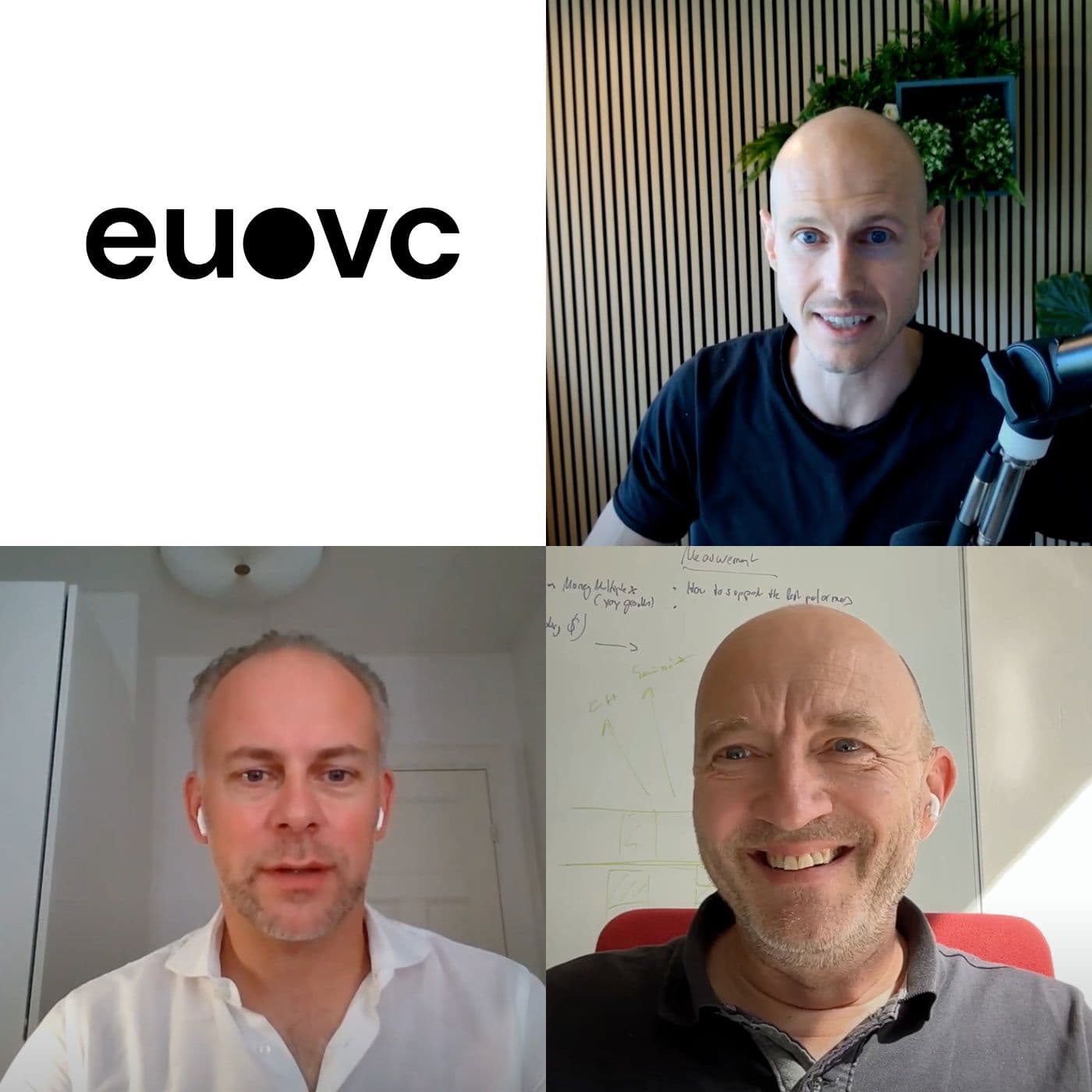
E371 | Samuli Siren, Redstone: The Challenges of Working with Corporate Investors
Podcast Hosts
- Andreas Munk Holm
- David Cruz e Silva
- Jeppe Høier (CVC expert)
Guest
- Samuli Siren - CEO of Redstone, a successful European venture capital firm.
Episode Overview
In this episode, the co-hosts engage with Samuli Siren to explore Redstone’s approach to corporate venture capital (CVC), including the challenges and strategies involved in attracting corporate investors. Redstone has built an impressive portfolio of around €600M across ten different funds, primarily focusing on Series A rounds in the DACH region and the U.S.
Key Takeaways
- Redstone's Portfolio: Specializes in B2B and digital companies, with investments in notable startups like PlanRadar, Liqid, Psy, Finanzguru, Atlas Metrics, and Yoto.
- Corporate Investors: Redstone has succeeded in attracting corporate investors by understanding their needs and establishing strong relationships.
Episode Structure
- The Journey of Building Redstone (01:53)
- Samuli reflects on the long-term commitment and perseverance needed to succeed in venture capital.
- Emphasis on the importance of culture and the right team in building a successful firm.
- Challenges in Venture Capital (03:32)
- Discusses the difficulty of raising funds and managing expectations from investors.
- Highlights the time required for successful fundraising and investments.
- Working with Corporate Investors (04:42)
- Corporates need to innovate quickly but often struggle with startup dynamics.
- Challenges due to cultural clashes between corporates and venture capital.
- Managing Corporate Relationships (07:03)
- Importance of understanding corporate expectations and aligning them with venture goals.
- Strategies for creating effective partnerships.
- Fundraising Strategies and Insights (14:07)
- Insights into the fundraising process and the significance of building long-term relationships with Limited Partners (LPs).
- The Importance of Investor Relations (16:15)
- The necessity of maintaining ongoing communication and engagement with LPs.
- Long-Term Relationships with LPs (19:32)
- Importance of establishing trust and understanding the needs of LPs for future fundraising rounds.
- Key Strategies for Success with Corporates (24:32)
- Emphasis on separating the investment side from corporate strategic goals to prevent conflicts.
- Personal Touches in Business Interactions (25:05)
- Samuli shares techniques for fostering personal connections during meetings to enhance collaboration.
- Tailoring Pitch Decks for Corporates (26:50)
- Importance of customizing presentations to align with corporate interests and values.
- The Pain of Cold Outreach (28:33)
- Discusses the difficulties of cold outreach in fundraising and the preference for warm introductions.
- Fundraising Buckets and Success Rates (29:49)
- Breakdown of fundraising strategies and the importance of targeting the right investors.
- Balancing Passion, Family, and Self (33:01)
- Samuli shares insights on maintaining a balance between professional and personal life.
- Advice for Young CVC Professionals (34:11)
- Encourages young professionals to cultivate humor, understand sales, and improve listening skills.
- Challenges in Corporate Digitalization (40:52)
- Discusses the slow adaptation of corporates to digital changes and the impact on venture investments.
Conclusion
- Final Thoughts from Samuli: The journey in venture capital is long and requires a deep understanding of both startups and corporate dynamics. Personal relationships and strategic insights are essential for success in this field.
- Closing Remarks: Thanking Samuli for his valuable insights and the importance of being genuine and relatable in business interactions.
Additional Notes
- Redstone's Focus Areas: The firm’s investment strategy is continually evolving to meet industry demands and leverage unique opportunities.
- The Role of Humor: Samuli emphasizes maintaining an enjoyable environment during business dealings to foster positive relationships.
---
This summary encapsulates the entire podcast episode, providing an accessible format for readers to understand the key discussions, insights, and strategies shared by Samuli Siren and the co-hosts.
Written by AI. May contain mistakes. Listen to the episode to check what was said.
Transcript
Automatic transcript. May contain errors.0:28Welcome everyone to the European VC podcast. They're focusing on DAG Europe and global, but when it's global, it's mainly US. And they're focusing on, of course, across multiple sectors, but it's always digital and very often B2B. Notable investments for them are PlanRadar, Liquid, SAI, FinanceGuru, Atlasmetrics and Yodo. I hope you will, when you listen to this episode, really pay attention to Samuli and everything he is saying, because he is a guy who has massive success in racing from corporates. So every little word he says here is quite interesting to attach a lot of meaning to. Hope you'll enjoy the episode as much as I did to do it.
1:26This show is not investment advice and the hosts of this episode may be invested in the funds and companies featured. Samuli and Yebe, welcome to the podcast, both of you. Thank you. Thank you. So I think by now everyone knows that Yebe is what I've dubbed to the world our in-house CVC expert. And he said, Andres, we need to talk to Samuli. So Samuli, welcome to the podcast. We're so happy to have you with us. I want to ask you to just dive right in and tell us what has allowed you to build Redstone to the behemoth and great success that it's been today. Yeah, well, thank you for the kind words.
2:07First of all, it looks outside way better than my own view to inside is. Maybe it's the critical person in me. Too humble. Too humble. Yeah, I don't know. I don't know. Look, it's a certain view on things. But, you know, what is the story? I think that the result of being very enduring in a way, you know, never giving up and keep on going. And if you see it as a journey forward, and then, you know, it becomes something over the time. So I remember years back, the city of Helsinki asked me, you know, how could Helsinki become a place like Berlin? And I said, you know, it takes another 20 years to keep on doing that, then it's going to be like that.
2:49So that's the same with the companies. So you develop, you question what you do, and you try to learn through a lot of mistakes and develop further. That's the same thing at Redstone. And I think that's the core of it. It's a long journey, simply. And I think there are a couple of other elements involved, something like that. One is, of course, do you get the right people around you? Do you have the right culture in the company? Which then you kind of generate the feeling to your clients and partners and whoever, and that they feel that that's the case. And that leads all to something successful one day, hopefully.
3:26And I think that's kind of a, sounds very philosophical, but I think that's what it is in the core. But I think also Samuli, right? There's something about how you built this, because now I've been in the venture world for more than 17 years now, and it's hard work, right? There's a lot of people coming in and thinking they can make some dollars on this. yeah I mean it is it's it's it's really tough business in fact you know you can put it in multiple pieces the one is you know raising a fund I always say it's the hardest type of selling you can do at all so that's of course the one thing you know get the people convinced and tell that they give you a couple of millions and you're going to invest in something good and smart and make money and bring them back to them that's that's really tough the same thing is you know but investing in the successful case is really hard.
4:18So people very much underestimate the amount of work involved in all those different levels of collecting money and finding deals and managing the portfolio and making the exits and paying back to your investors. So very true. And it doesn't happen within a year or two or five and five. It takes a longer time. Simple as that. We brought Jebe in for this conversation specifically because you guys have had quite some success with working with corporates. I'd love to ask you a bit about the philosophy and the principles that have been central for you when it comes to working with corporates. The Redstone wasn't really created based on a certain strategy.
5:02It was kind of a result of things happening. And I was running a corporate fund previous to Redstone. So I saw what was going on there. So if you look in general at the corporates, what they're looking for, they understood that the development innovation that all is happening out there is very fast they can't manage and create it in-house anymore so they have to go outside and they're questioning how to do that they're very good in their core business but they're very poor in understanding startups and in venture capital investing so this was kind of the trigger point for us and how I created the first Redstone business model is to say that we know we enable that for the corporates and we try to make the best out of two worlds you know being a professional venture capital at the same time have that corporate access and and building that that bridge and creating that it can be very fruitful at the same time it's extremely challenging mainly because of the clash of the cultures and i think yep you've seen that yourself at me as quite a bit so just the pure understanding between these two worlds and and and to get the people to figure out what's happening on the other side, it's really, really challenging and never really been solved.
6:17No, it's about, you know, making your senior executive understand what is a startup and how do you work with it? How do you create the right structures around it, right? Because now, I think I mentioned it on every show, right? The average lifetime of a CVC vehicle is 3.7 years, right? So there's definitely something about educating our C-suite in how to match this strategic tool. Because with that in mind, the average lifetime of a CVC is 3.7 years. That's not the average time of an LP commit. How do you make those two worlds coexist, so to say, or those two facts coexist? What do you do in that?
7:04If we start if we start right from the beginning, when you're considering fundraising from a from a corporate, how do you decide or disclose? Because this is one of the most important things I'm covering very quickly, whether it's time well spent or poorly spent with this potential LP. What are the signals that you're looking for when you're talking to a corporate, figuring out whether these guys are actually in this for the long haul or it's not a place where I should be investing my time? Well, figure out the signals that there are none. If you go there in the first meeting, they want to do this.
7:39Yeah, yeah, we're all in. We're going to do it big time. We're going to invest a lot, everything. That's what they talk. They explain this for another two years and then they start to kind of question and then the controlling comes and say, you know, is this a smart idea? So what just happened two days ago, we signed, we took over a very big corporate fund CVC portfolio. And we will manage that because they kick out the whole team and they want us to sell all the assets and get rid of it. And I think something like four years is a pretty matching number again in that case. So this seems to be the nature of that.
8:13And I don't think that there are signals or that you can even do much for it. so what we've been doing simply at Redstone was we were managing corporate funds for quite a few years in the beginning now which is trying to kind of force them into LP commitment and then I got the 10 years commitment in I just kind of moved our model way towards the other direction so that you don't have that time problem but maybe similarly I think what is interesting right is that according to academia in the Nordics more than 80 % of CBCs, they do their investments for strategic reasons, right? So I think there is some development to be had when they then do the direct investments, right?
8:57Because, you know, it takes shorter time. So maybe a little question back to you here is, all the years that you have managed the Redstone funds, your understanding of how to work with the corporates, right? Because they ask strategic questions. So one thing is that you now have them as pure LPs in the fund, but how do you manage the relationship with them after investment? First of all, you have to create the right kind of setup. So maybe a good example is our FinTech fund. We have 17 banks as LPs and they definitely have a strategic vision and expectation in investing that. So there's a return is not that relevant.
9:40the amount compared to our balance sheet is ridiculous. So we want to get a strategic advantage out of it. So what we've done first of all is separate the LP investment and being a shareholder in a startup from the strategic part. So the C-level guys are not in discussion when it comes to the fund and us investing doing so. And if they want to do strategic something together with the startup, then that's a different discussion with the different people. So then the startup is talking to the bank itself, go into operational discussion. And that has a different timeframe than the fund. You know, we might invest today, just might start the corporation three years time, maybe because it makes more sense then, or the startup is developed further enough, whatever.
10:27And they have a business relationship, which is not combined with our venture capital investing. And that was one of the keys that we understood because this kind of smart money, you know, we're going to help you little startup and then we get more shares for that that leads only to pure frustration so we keep those things totally separated and then i think and that's what i mean the setup could be then somewhat fruitful so starting point so the corporation is not forced it can happen if it does then you know it's a separate discussion and then you kind of try to manage their expectations and the investment runs separate chain and channel so now if that's happening and your question is then what happens then be as a redstone being the fund manager and and i'm doing the fund we can in the end only facilitate so we can try to bring the parties together and they have to find a way to operate together because it's then pure business thing between them two and now that's from the corporate side takes a lot of from the especially the c-level people really have to you know be supportive and understand because basically they have to say their whatever department guy say you could okay invest one day of your week to work with the startups but please keep your budget targets in your core job that's a challenge in the corporation side and something we can't really help at all But those who do want to, they manage and they get quite a bit out of it then in the end.
12:01It's true, right? I think it is the magic glue when you go over to the corporate side to figure out who is it that manages the relationship with the startups. I also do think our interaction started back in 2018, I believe, where you assisted Merck's growth with a fintech study, actually. So we were in the early phase and we needed to figure out what startups were within specifically trade finance because we had this huge customer base that we wanted to exploit in the best possible way. And I think those discussions were super important for the beginning of Merce Growth because we kind of got an understanding of how to do our own deep dives.
12:51and Redstone specifically helped us with that. So super important part for us. But again, if you do not have anyone on the corporate venturing team, then it's difficult to work with startups in general. And I think also, as a GP getting corporate LPs, you also need to understand what asks are coming from the corporations. What do they want from you? As a GP, I... Yeah, I mean, the point is that having one in the corporate venture team who has the access into the corporation in the departments, that's really key. And it's a really tough role to fill because you need someone who has the credibility within the corporation so that he can call and people listen to him, take time and say, okay, let's have a look on this, take this person seriously.
13:47So usually it has to be someone who's been in the house for quite a while. and has kind of the power and access and can almost force the departments to do something with that certain startup because it seems to make sense. It's a really, really, really tough call. And that's been the most challenging. The bigger the corporation gets, the more challenging that also becomes. You haven't announced it yet, but you've just done a recent fund closing. And I'd love to ask you a bit about the process there, how it was different from past races. but let's maybe start by your core learnings from that race and some of the core stats.
14:25Yeah, I mean, we're bringing out our third fintech fund end of this year. I think it's good because it's an interesting exercise because it's a third generation fintechs we're investing. And the beauty in that is, of course, that you have a two fund generations track record, which is a good one. So we are one of the best performing fintech funds in Europe. And that is so visible in fundraising. It becomes so easy suddenly compared to when you do your very first fund, which is horrible because everybody's asking you, do you know how to do it? So the kickstart is, of course, amazing because when you launch a fund like that, you go to your existing LPs and say, who wants to join the next one?
15:11And anything between 30 % to 70 % will most likely commit. So you have the anchor investors in place within weeks. That's what happened also in this case. And now when you go with this message and you show the background and you basically know quite a bit already who you want to talk to and what kind of profile they have, the whole fundraising is so much easier because you don't have to prove yourself anymore. It's rather a discussion. Is this the field they want to be part of? Do they have the allocation? and then you get fast forward very, very fast. And that is for sure been a new experience also for us because we had the previous funds, all the other we have are the first or max second generation.
15:57So down the road, it's been really, really hard to get the earlier funds all closed in short term. So that's again back to the point you said earlier about that it takes a long time And that's another proof for that, what we just experienced at the moment. This is where it all lines up, right? Both if you're running a standard GP or you have with corporates or without corporates, right? It's the investor relations part. So my VC background tells me that a lot of the time was spent between the startup ecosystem and the GPs. and not that much between the GPs and the LPs and understanding their need and their want, right?
16:46And I think the modern GPs, they really need to focus on the LP community. That's also why I love EU.bc because that is what matters, right? You need to communicate to your LPs all the time and make sure that they understand when you'll be in fundraising and then do some of these more. There's not an easy close at the front, I will not say that, but it will be easier than just cold calling everybody again and you haven't talked to them for four years, right? Very much so. Very, very true. Can I ask you, because you had an interesting statement in the show notes and you said that you have to meet, generally, you have to meet people seven times to convince them.
17:36Tell me about, I'm sure there's a lot of blood and tears gone into coming to that finding, but also tell me a bit about the philosophy. Oh, this is purely when it comes to the fact that, you know, people have a certain amount of money and they would trust you and give you that amount and say, this guy will take care of this and will invest and bring me a lot more back one day. And that's very much a personal trust issue. So that's why I have this seven meetings thing. And we really believe in that. We're pushing that. And that seems to kind of lead to a decision. I mean, after seven meetings, you usually do get a go or no go decision finally, which is very, very important.
18:25So there's not more philosophy in that, a bit of a mathematical view on things. And that's why, especially the Corona time was so hard because this kind of video call, it's very easy if you know the people. But to get to know someone really well, create a personal trusted connection is rather hard. So that's why we follow this seven times meeting rule. And I can tell you that the fund which took over, that was exactly seven meetings we got the signing so that confirmed the idea and by the way just a comment on this one little thing because many startups you know when you call them earlier they are yeah we have a great contact they're going to buy our product whatever and if you start to ask this way around you know they're so far off signing the client and it's really because they haven't really iterated with the person with the client enough and that means it has to be so many times usually before it happens One stat that I know always surprises people a bit, or maybe doesn't surprise as much, but it's nice to see confirmed.
19:33We had Stephen Chandler on the podcast, the founder of Notion, and he said, you look at their latest fundraise, and he found out that on average, the LP, the new LP coming into that fund, they'd known that LP for three years. Does that sound about right for you as well? Most of the time, yeah. I mean it depends of course the type of the investor I mean some let's say successful founders who invest they heard of you they've seen you a certain way you haven't talked about investing as an LP though but that's for sure helpful at the same way they then go after recommendation that's their own group but the more that what you mentioned there the more institutional they become the more it becomes this kind of process so there's a very large global um summer wealth fund from asia who told me that we've been looking to you guys we are very excited what you do that was like two years ago and said we'll we'll now gonna have you on our radar for eight years and if you like what we do then we invest well i have five more years to go but yeah there is you know so and that is of course again to the thing that it's a long run because what you do want to get is you want to get into the allocation plans of the last institution large institution institutional players because then they chip in 40 million every year into your fund structure but that takes 10 or 15 to get into that position that they start to do that with you so yeah you'd have a pain in the ass but maybe i can also chip in here right because samuli my understanding of what you do for redstone right is that you lead the Redstone team and you spend your time on primarily on fundraising.
21:25Is that correct? Yeah, now if you talk about what is my role at Redstone, I think this is exactly two things. I'm really kind of the cultural leader of the company. So in our culture, how do we operate and how we do these things together? How can I empower the people in-house and what is the direction we're going? So the generic strategy. And the other one is I do the fundraising. because these are the two main jobs I have. And it's a good combination. I get the inside and outside view all the time, so I'm feeling very comfortable doing so. It's interesting because, right, I spoke to an emerging manager the other day, and he just managed to raise his second fund, and he did fine and close, right?
22:08He's now 10 companies into that fund and can do another 10. So he will be out fundraising again in another 12 months, right? So he has both the investment partner head on and he also has the fundraising head on. But he tends to be a little bit schizophrenic because he has a very short time frame where he actually can focus on only investing. And then he needs to be fundraising again. So I think there's also something where when you have been in the market for a long time and then understand that you actually need to fundraise all the time. is super important. Yeah, I fundraise all the time. And those kind of personas you described, I mean, those are the superstars I might be not that good as he is.
22:54So to get some good people around me to do some of the jobs. Is it your understanding that when you want to get access to corporate LPs, that then it's more intense effort to get them on board compared to institutional investors? it's very different and maybe yeah more more uh intense yeah because the institutionals are professionals and that's the core task so you talk to them they have a look they have a very specific questions and then they have a process to make a decision you go to the corporation they do it the first or second time whatever and they're all over the place and the corporate thinking comes into the game all the time so you kind of you have a weird discussion and and stuff going on all the time back and forth.
23:45Sometimes you just don't know why. Heck, they're asking this now. And in the end, you get a... They ask then, what is the minimum ticket? Which is kind of, well, what the fuck, yeah. Sorry. And then you tell them 3x what you want. Yeah, it's a bit painful then in the exact moment. So there is a big difference if the LP is professional or not. and it's it's very very lovely to talk with the professional lps because it's such a straightforward clear process so if you have done your homework you have a good data room you understand what is what is their allocation decision making then you go you really get through pretty fast to the decision go or no go which is great how would you say or what would you say are the core things that allow you to be successful with the corporates?
24:40What are the important things to remember as a VC that wants to raise from corporates? I mean, they're looking for these strategic elements. You know, they ask, you know, what can we gain out of this for ourselves? And if you understand that and can put that into format and give them the feeling that you can help them with this element, speak their language that is usually the key to the success the other dimension always a bit underestimated is this whole thing of working with startup innovation should be fun so give them a feeling it's a really cool stuff to do and you can learn a lot and you can have fun and it's a great thing to be part of you can win a lot of simply also with that So making it also exciting, interesting, fun is a huge element of that.
25:33So little tricks, you know, I do really do tricks I use. You might know German a bit. So if I talk about German cooperation, I tend to not to say this formal Z, which is kind of the very formal way of talking to someone. I tend to say directly you, very personal way, which you don't do in Germany. and then I apologize for doing so. Of course, I'm a foreigner. I don't speak that good German. Okay, I might speak very, very good German. So I do it a bit on a purpose. They like that. They're like, oh, yeah, don't worry. I'm Richard, whatever. Call me first name. Let's go. Let's go. The second thing is, and that's the same trick you do, very early on, I make a joke, usually about myself and usually about my bald head, and you make everybody laugh.
26:25And you cracked the meeting very in the beginning. So you're very personal level discussion and you had a good, nice job. So you have a good atmosphere. That's what it's about. And then you talk about startups and explain the innovation and this cool stuff coming and we can be part of all this and let's do this together. And people are like, yeah, I want to do this because they're having a good time. I think I know the answer to this, but I want to ask it anyway to make it super clear. do you run the same pitch deck and agenda for a corporate LP the first time around as you would with an institutional no not at all I mean I run a different pitch deck to every corporate I optimize to each corporate I always spend quite a lot of time when we go to the first meetings to say what are they looking for who is in the room what is driving there what were the last 10 press releases they had what stands on the website i tried to understand by every potential new lp you know what is there why would why am i talking to them and what do they want to hear so it's every time i do a different pitch if you give them the feeling that you've done your homework and you understand their side of the ball game and you can ask directly look you guys did this last time is this the reason do i get it right whatever you connect with them because you show that you've done your homework and you understand what is driving then.
27:47So I think that's one of the things I'm pretty good at. I'm very well prepared for the meetings. How do you know when it is worth doing that much homework before taking the meeting? It's always worth that much homework because you have to take your chances. Every shot you don't take, you're going to miss. Do you work in the same way when you raise from family offices, as an example, or private individuals? Always. If I get a chance to talk to the decision maker, it's always a serious game. I really take it seriously. The worst thing is I go there, they would be interested in investing and I'm not prepared.
28:31Tell me about your first outreach. How do you do that? Well, first of all, I hate that. So the easy part of first outreach is, of course, the people you know. You say, look, we're something new there. Let's have a chat. But the problem is really how to approach the people who don't know. The cold calling is the worst you can do. So we are definitely really trying to seek for intros, warm intros. To somebody tell that, talk to this guy. You can take him seriously. They have some good stuff. So we do a lot of work around this and we've done a lot of work around that. We're not being very good at that.
29:10So we're still learning quite a bit, but we have a massive list of contacts. And yeah, this first outreach is very painful.
29:24And I don't know a better way. I have a feeling everybody else knows a better way than we do. No, I don't think so. So how many of the LPs in your pipeline come from a cold outreach in the beginning by you or someone in your firm versus from an introduction? Well, you have a couple of buckets. So if you start a new fund, the first bucket is you put a list together and say, who are the most probable LPs we know really well who could become the anchor investor? for example our growth fund which we are now raising looking somewhat good to process the list is something 30 plus names that so it's 30 something i know really good i can kind of whatsapp them and say hey we have something coming up shall we have a chat are you in berlin should we have a dinner so i try to get this into very personal mode so that's the first bucket the second bucket is something a bit further away or uh institutional whatever we might need a warm intro they're like yep there has done us few and so so then you go on this level and then you have the third bucket which is like okay we have to get the uh so and well fund from i don't know where and we have no clue how to get there and then you just try different channels and that's the horrible one because that's kind of a you know try to make a difference in cold email outreach why they should read your email at all what is the percentage i mean maybe the percentage is better than in the first bucket you have a good chance of i don't know closing 20 percent of them because you know them so well that you you're very good on handpicking in second bucket maybe you're on level of five and the last bucket you're somewhere like 0.5 so you get declined a lot and you have to accept that and you just said uh for earlier that your fintech fund three you had 70 percent old investors if you think across the funds what would you say is the mix typically how do you mean mix all the new mix of old versus new investors yeah i mean there are statistics out there that it's that you usually get anything between 30 to 70 percent rolled into the new fund and there are different reasons than why people decline maybe that's a good good thing to you know why do they decline so now you get to the market situation so we have a very fruitful situation while we're talking to fintechs and banks because bank had amazing business in last two three years because they had so much interest they came on going secondly they were very aware of the real estate problems way earlier than everybody else understood it so they covered the assets so they're they're kind of good so you have a good success rate with with the banks at the moment if you look on the German or European industry have a different story.
32:18So they all love what you do, whatever, but you don't get many commitments at the moment because they all struggle, automotives especially. So as you see, I can't answer you kind of one answer. You have to look very much in the market and sector and the players and who's involved and so on and so forth. I love diving into fundraising and trying to disclose from someone like you that especially on the corporate side, you have the experience that many don't and I think you've said many things that that does surprise many now I want to ask you just tell us a bit about Somuli because you've just shared a ton about about how you fundraise and you're thinking in this space so let's let's just add some uh some flesh to the bone here yeah what do you want to know look I'm I think as a person I'm very passionate about whatever I do and I think that the company is one of those things so I tend to say that I don't go to work.
33:12I don't have a job. I just have my passion. It's the company. And I love what I do here. So I feel fulfilled and I enjoy the success and I enjoy to manage the troubles we have. So it's very satisfying when you manage. So that's a bit of a way of living. But it's one of the three elements, you know, important in my life. The other one is my family, amazing wife and my two kids. And that's a second very personal thing you have. And the third is myself. So it's about being me and what I do and what is important for me. And that can be my hobbies or learning or not learning and whatever it is. And for me, the balance of those three things are making me happy and satisfied with myself and my life so far.
34:00And that's always the driver for me. So I do things I am excited and passionate about, I like. and in all those three dimensions. That's me, I think. If you were to give advice to a young person in the CVC industry, what would be your advice? This is one of the hardest questions at all because I think it's really, really hard to... Because it's very personal. Every person is so different. The young person is very different in that sense. but if I would pick a couple of the areas and I kind of touched the space already a bit one is kind of this humor and relax being a bit of yourself and create an enjoyable environment I think that's very very useful very often the other one is to understand sales and sales is and I mean with selling selling your own idea and sometimes you have to do it within the corporation to your boss at the other department to get the budget or you sell your product to be c-client whatever but understand the selling as a psychological game even if it's not your strength that is really a driver in your career because even if you're a scientist you have to get the budget so you have to be able to transmit your story and get people to believe in you and what you do there.
35:31Selling is very psychological so it's really about getting into the head of the other side and it's not about what convinces you, you have to think about what do you have to sell if the other side gets excited about this and this would be something I would always encourage people to think about because even if you want to have a job and you're applying for a job You have to sell yourself as a person saying, I'm the right one for this. So people should spend a bit of time with this selling. And it sounds so tough and so not exciting or some people don't like that. But in the end, that's what it is.
36:13And the last piece for sure is then, it took me a while to learn to listen. And there are two dimensions. The one is what is said and the other one is what is not said. But you can still read between the lines. So you can listen carefully and you really think about what are they saying and why do they say this can be very, very helpful in any situation. Some people are way too excited about their own things, way too narrow-looking kind of and own their own business and don't really carefully listen to the other side. but for sure also in my case everything I say now I've been a hard hard learning with a lot of mistakes to get to this point to be able to say this I often get the questions from people working in CVC how do I get into venture capital and then I get a little bit frustrated because I don't now I'm kind of turned I'm a VC turned CVC and I love CVC for everything that it can do for startups, right?
Read the full transcript
37:19But I think, you know, Samuli, getting into venture capital as a young person, if that is really what you want to do, what would your recommendation be to such a young person? Where should they start? I mean, I'm the weirdo in this business anyway. I didn't even finish my studies and I had to repeat the classes in the school. So I'm the crazy one, all in all. so not the normal career path I mean you have of course the education elements whatever what comes after that so maybe other world how do we hire or who do I hire I want to I'm building a very diverse team not in a way the the Vogue movement is talking about diverse diverse in a way of people background thinking and this kind of diverse So we have a very different kind of personality scale, which makes it very, very interesting.
38:18And I'm looking for that. So I'm looking for kind of a cutting edge thinking. I say, okay, that's a different way. I like that. Secondly, and that's the listening thing, that I realized that the people have a learning ability and they listen and they say, okay, wait a second. What is he saying? What does this mean? And I see their head working around that. so I hire personalities and thinkers I don't care about much what they've done before because if I get those first two things then I know okay I can make something out of this and often I'm looking for a bit of the misfits so if you remember the Apple advertising end of 80s early 90s you know think different that's that's a bit of a way how i hire people because i want to get those the bit different kind of people so that's why what is the career path i i don't have you the answer i'm just telling you how i like to hire because that creates some amazing discussions internally and it's very exciting because you know if you have this monoculture everybody's going through the the consulting and then whatever pe funded it and went through this this machine then you have a monoculture which is how everybody's thinking exactly the same way but you have the different approaches and you have the discussion you can go like why on heck is he saying that why is she pointing out to this exact point now and that makes it interesting and that's for me what i'm looking for that's not really an advice for a young person it's rather what i want to hire no but but i think it it allows for everybody to engage with redstone at least, right?
40:07And there's no one that is better than the other, right? Also because there's, currently there's a lot of VCs that like to get former operators into their business because they understand to work with a startup compared to somebody coming out of a business school and so forth, right? So... Yeah, but we have roles, of course. No, of course I have a job description. I say, you know, these are the tasks to be taken care of. But still, there is not a one certain type of CV which is accepted. No, I said there are very many if you cover the, you know, the task and you have the basic knowledge to do so, after that's very open.
40:45I'd love to ask you about some counterintuitive learnings because I think you have some that will surprise people. I mean, it's kind of, it's very narrow view on those, but what surprises me in the corporate world how often the digitalization is not seen as the game changer or not seen as the most crucial thing it's it's really surprising how the people like to you know keep on doing how as they've been doing the business for quite a while so there's a lot of this kind of thing there out there so it's sometimes really hard them to force to think the new way and that's that's somewhat frustrating and and now you see it a bit of happening even in in europe quite a quite a quite a bit the other one which i really tend to hate is and how many times we lost against some internal crappy team guys who've been doing you know marketing whatever i say we do now the corporate venture here and then the c-level guys you know say okay we do it with our own people they are skewed and we leave the professional out i mean that is i hate that because it's just you know really you really pick the the green beast the people who didn't even have an intention to be in that space no experience at all and you trust them to to do the investment part and thinking that it would be so damn easy that's really f annoying i remember speaking to a guy who said the exact same that he just hates seeing, like meeting a family office, hearing about everything they're doing, and then seeing, you know, okay, they're on this track.
42:34Like in five years, they're going to come back and going to say, yeah, okay, we did this, we did that. And now we realize, and then, you know, can we just skip those five years? Can we not waste the 30 million and just start afresh? There is a good number out there, right? Because there was a study done by a Howard professor amongst CBCs. And of those CBCs, 60 % of them, they actually said that C-suite did not understand what they were doing. So I think it also counts into that, right? C-suite needs to be educated a bit more to get into this world and understand what the venture capitalists can actually do.
43:19Last thing, which is very important, by the way, you have a founder who has a startup, a very young one. And if you talk to corporate, there's only one founder there, which might not be there anymore, who's the only CEO or whatever. So there's only one entrepreneur thinker on the corporate side. And that's really interesting. I realize I see myself, if I get to talk to the principal, the family office, whatever, I connect with them immediately because they've been in the same position as I am. They've found us, you know, they've put up their business under the mind. So we have a level of discussing and understanding.
43:54Everybody else is a hired manager, employee, whatever. And their first view on things is, what does this mean to my career? How does this, what we do here, bring me further in the group to get a higher salary, more vacation, a better title, whatever it is. so they barely ever think about is this the best possible thing for the corporation to do no, first is what does it mean to me and then it's good for the corporation and that's really hard to accept especially as an entrepreneur absolutely just a question on that, how often do you raise from the principal versus from the hired gun so to say i don't have a percentage but i can tell you that i'm very good on hiring from the principal and not that good from hiring from some hired manager who has a checklist because the principal you know you speak the same language you get a very personal discussion you say are we going to do this together or not and they say okay let's do this it's a handshake and then we execute the hired manager has his checklist and wants to go through all this of these things and get the tick in the boxes and entrepreneurial spirit and mind like I am get frustrated in processes like that so yeah and in other words or as an extension to that clearly you also target the places where you can see okay I have access to the principle yes redstone covers all the areas but where do we put me as a person is for sure rather okay we have a principle access there I should talk to that yeah yeah makes a ton of sense Samuli thank you so much for joining me and Yabba on this episode like I I don't know if I want to open the podcast with this because I think it's somewhat uh provocative when I do our intro but I've been thinking here I really want to make sure that people listen past the fact that you're a very very calm Finnish guy that is not a speed talking US investor from the Valley because you've had so many profound things to say, but you have not felt at all the need to oversell and be the hype man.
46:13So I want to say that here. Thank you so much for taking the time, diving deep with us, sharing the nuggets and being yourself and being truthful to yourself. Thank you so much. It's been great fun.
46:30This wall it's more than just an ally this is a union of values
From the publisher
Together, we’ll dive deep into Redstone’s approach to corporate venture capital, exploring how they’ve built a portfolio with around €600M across ten different funds. Redstone specializes in Series A rounds and is headquartered in Berlin, focusing on DACH (Germany, Austria, Switzerland) and global markets—particularly the U.S.
Redstone's focus spans multiple sectors, though always with a digital and B2B edge. Some of their standout investments include PlanRadar, Liqid, Psy, Finanzguru, Atlas Metrics, and Yoto. With Samuli, Redstone has excelled in attracting corporate investors, making his insights invaluable to anyone looking to understand how to raise capital from corporates.
Go to eu.vc for our core learnings and the full video interview 👀
Chapters:
01:53 The Journey of Building Redstone
03:32 Challenges in Venture Capital
04:42 Working with Corporate Investors
07:03 Managing Corporate Relationships
14:07 Fundraising Strategies and Insights
16:15 The Importance of Investor Relations
19:32 Long-Term Relationships with LPs
24:01 The Importance of Professional LPs
24:32 Key Strategies for Success with Corporates
25:05 Making Startup Innovation Fun
25:33 Personal Touches in Business Interactions
26:50 Tailoring Pitch Decks for Corporates
28:33 The Pain of Cold Outreach
29:49 Fundraising Buckets and Success Rates
33:01 Balancing Passion, Family, and Self
34:11 Advice for Young CVC Professionals
40:52 Challenges in Corporate Digitalization