
In short
EUVC Podcast Episode Notes
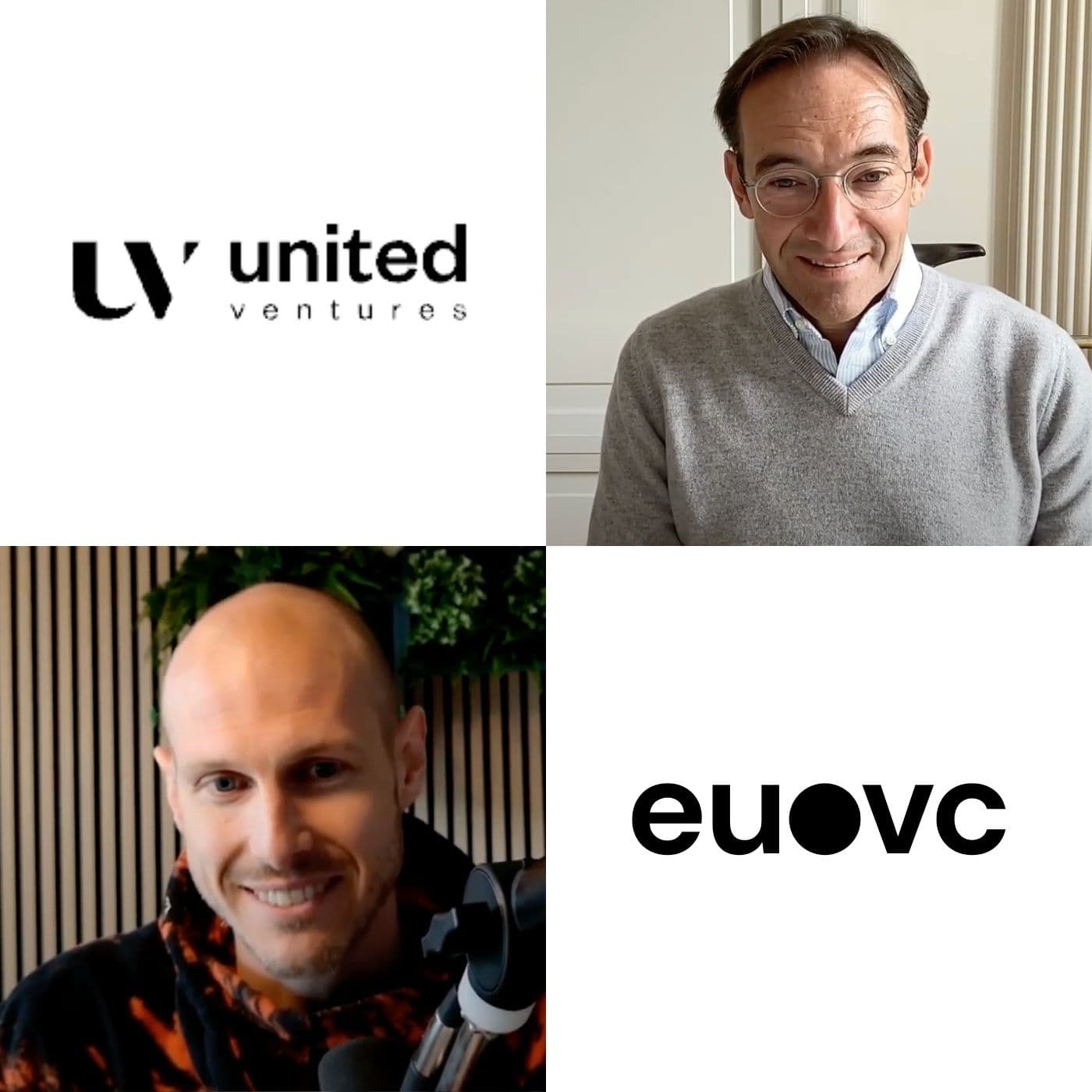
Episode Overview Title: E372 | Massimiliano Magrini, United Ventures: Attracting growth capital and generating DPI in European Venture Hosts: Andreas Munk Holm and David Cruz e Silva Guest: Massimiliano Magrini, Co-Founder and Managing Partner at United Ventures Description: In this episode, the hosts delve into the complexities of scaling startups, the European venture ecosystem, and the challenges associated with attracting growth capital.
---
Key Highlights
Introduction
- Massimiliano Magrini introduces himself and provides insights into United Ventures’ focus on Series A investments across Europe, particularly in enabling technologies for sustainable digitization.
- The firm manages approximately €500M in assets, with notable investments in companies like Moneyfarm, FaceIT, and Musixmatch.
Topics Discussed
- Attracting Growth Capital
- Understanding the importance of growth capital in scaling startups.
- Differentiation between attracting capital as a growth stage investor vs. attracting capital for underlying portfolio companies.
- Challenges in the European VC Landscape
- Lack of large hyperscaler technology companies in Europe that can serve as magnets for capital.
- Comparison of the European and U.S. VC landscapes, highlighting the need for a distinct mindset in European venture capital.
- Regulatory Hurdles
- Complexity due to differing regulations across European countries.
- Need for a more streamlined set of rules to foster a unified market.
- Emerging Opportunities in Europe
- Emergence of interconnected tech hubs across Europe.
- Potential shift in LP (Limited Partner) investments from U.S. and Asia back into Europe, driven by geopolitics.
- Personal Insights from Massimiliano Magrini
- The evolution of his career from media and tech to venture capital.
- His passion for cycling and managing an agricultural estate producing organic wine.
Key Takeaways
- Growth Stage Investment Mindset: Investors in Europe often come from private equity backgrounds, which can hinder the adoption of a true venture capital mindset focused on long-term growth and innovation.
- Importance of Founders: Successful venture investing hinges on understanding and supporting the founder's vision rather than merely focusing on financial metrics.
- Networking and Relationships: Building meaningful relationships with LPs and GPs is crucial for successful fundraising, with an emphasis on shared values and alignment.
- European Ecosystem Growth: The European venture landscape is rapidly evolving, with increasing opportunities for investment that leverage local talent and innovation.
---
Chapters
- 00:03 - Introduction to Massimiliano Magrini
- 00:09 - Topic Focus: Attracting Growth Capital
- 03:33 - Evolution of United Ventures
- 05:12 - Challenges in the European VC Landscape
- 07:56 - Importance of Growth Capital
- 10:05 - U.S. vs. European Investors
- 22:25 - Regulatory Hurdles in Europe
- 23:40 - Europe's Call to Action
- 23:50 - Excitement Over Recent Developments
- 24:19 - Investing in AI and Infrastructure
- 24:59 - Geopolitical Considerations
- 26:47 - Interconnected European Ecosystems
- 27:58 - U.S. Perspectives on Europe
- 33:01 - Personal Interests: Cycling and Vineyard Life
- 36:02 - Lessons in Venture Capital
- 39:35 - Fundraising Challenges and Successes
---
Conclusion Massimiliano's perspectives highlight the unique opportunities and challenges in the European venture capital landscape, especially regarding growth capital. His insights provide valuable lessons for both investors and startup founders navigating this evolving ecosystem.
For more information and resources, visit [EU VC](https://eu.vc).
Written by AI. May contain mistakes. Listen to the episode to check what was said.
Transcript
Automatic transcript. May contain errors.0:00Welcome back, everyone, to another episode of the European VCBZ Podcast. Today, I am joined by Massimiliano Magrini, co-founder and managing partner of United Ventures. Today, we're diving into the big topic of attracting growth capital to your underlying portfolio and also a small bit on generating DPI in Europe. We actually ended up talking so much on growth capital that we didn't cover the second topic too much, but we've done quite a bit on secondaries lately. So if that is the topic you love, do go there and check that out. And then we also talk a bit about US versus Europe, the mindset of growth stage investors and so on, which is really a topic I think we should cover much more here on the podcast.
0:40And then finally, I just want to say, if you're going to 0100, do make your way up to Massimiliano and say hi to him, as well as my dear co-founder, David, because he's going to be there as well. Unfortunately, I'm sitting this one out, but I hope you'll have a great trip if you're going. Here's a few words from our beloved sponsor. This episode is brought to you in partnership with Zero 100 Conferences, which organises networking events connecting LPs and GPs in private equity and venture capital firms across Europe. This will be the fourth and final chance in 2024 to connect with investors from the largest firms worldwide following successful events in Vienna, Amsterdam and Prague.
1:21Their upcoming event, Zero 100 Conference Mediterranean, will take place in Milan from October 28th to the 30th at Palazzo Mezzanotte. Attendees will include major LPs and GPs like the European Investment Fund, Taikao Capital, Vencap, Arcano Partners, Amandi Alpha Associates, P101, United Ventures, Merseyside Pension Fund, and many more. Yeah, baby! Save the date. October 28th to the 30th at Palazzo Mezzanotte in Milan.
2:07This show is not investment advice and the hosts of this episode may be invested in the funds and companies featured. Massimiliano, welcome to the European VC Podcast. Thank you. So today we're going to be talking about attracting growth capital and generating DPI and venture. But before we go there, I just want to let our audience know a bit about you. And I want to invite you to also let me know if I got everything correctly. You're on your fund three, which is 150 million euro vehicle. And you have about 500 million in AUM. You're headquartered in Italy and you're focused on Series A, but you invest across C to early growth.
2:45and your target geo is all of Europe. You're focusing on enabling technologies for sustainable digitization across sectors, mainly enterprise software, deep tech and fintech. Definitely something we could talk about there. And then you've done some notable investments that include Moneyfarm, Faceit or FaceIT, you tell me, which is the right way to pronounce that. Musixmatch, Fiscosin, is that the right word? Xfarm Technologies and Exane. these fucking startups they always have crazy names yeah they're easy to write the right name nowadays there are too many chasing the right names yeah exactly did i did i get it correct did i was that correct does that profile united ventures somewhat correctly it's perfect i just just can add the fact that actually we have a fourth fund we are managing fourth fund with three of them being early stage focus and the fourth one being early growth stage focus.
3:48That's always so interesting how funds develop. So maybe let's just touch on that one second. Why did you choose to add an early growth stage fund to your family of funds? That's a very interesting question. That goes back to the position we have since day one. So the idea was that originally it was early 2010, and we figured it out that eventually Europe would have picked it up in terms of development of venture capital industry overall. And we thought that within Europe there was room for, in Italy, to be part of this renaissance of European venture capital. And so we started selecting an Italian founder to build up and scale global.
4:38And in that regard, we figured it out that overall in Europe was lacking an early growth stage fund, able to capitalize on the investment being made at a stage level to bridge to a real growth company. And so we came four years ago, we decided to raise that fund, which is actually doing exactly what I said, meaning capitalizing on the good opportunity at Series A, but not ready yet to get real growth. I'm sure that this ties perfectly into the topic we're going to talk about. I would ask you one other question, which is you're headquartered in Italy, but you're focusing across Europe. Could you tell us a bit about that journey from, because I'm sure that when you started, I don't know, but I could imagine that you were a bit heavier on Italy than you are today.
5:29Yeah, in reality, we decided to start in Italy just because it's still one of the largest undercapitalized markets within Europe. And we thought it's a great opportunity just if you are playing a game which is global by definition. So you can capitalize on local, I would say, a balance of assets being invested only if you have the right mindset. And the idea was to represent one of the centers within Europe who can connect Europe to the United States. That has always been our goal, which proved to be right because with fund number one, the couple of companies we sold, we sold to institutional investors in the US.
6:16So we proved that the thesis was right. and even more it's coming that way because I think Europe as a whole has capitalized itself in a way that now represents a great opportunity a great market, still not at the same level of the United States as we know there are still steps to be made but at the same time it comes a long way compared to 10 years ago Yeah and I think you just gave us two great pivoting points into the topic for today One being that you decided to build the early stage fund, early growth stage fund, because you saw an opportunity there, but also that you sold your most successful companies to players in the US, which, of course, ties perfectly into the topic of attracting growth capital and generating DPI in European venture.
7:08So just for the context here, for everyone to understand, why did we pick this topic specifically? And when we're saying attracting growth capital, we're not talking about attracting growth capital for your own investment, so to say, as a growth stage investor. But we're talking about how do you attract that to your underlying portfolio of companies and the problems that we have there in Europe. And then, of course, this goes hand in hand with generating BPI because it's oftentimes the same investors that might take a bite out of your existing ownerships, either as strategic or as institutional private financial investors.
7:53So let's dive into that topic. First, let me tell you, or let me ask you to tell me a bit about how do you see the market for growth capital in Europe, just so that we level set there. Yeah, I think that's a very interesting topic to discuss because, I mean, we need to get back to why venture capital is important and what is venture capital. So venture capital is the activity that allows new companies to start and have an opportunity to solve untapped and large problems within the society. That's basically what we do. But we do it for a purpose. So we know that you need to have the right mindset in order to be able to select the right entrepreneur and to support the entrepreneur during the journey.
8:46but also the journey has to come to an end meaning has to have a purpose why we are doing that and what is the goal of those companies which is having an impact on society and eventually they can become large independent technology company solving large projects going public and becoming independent or they ended up being bought by some other company that they take the lineup of products and teams and talent of team, and they integrate it within a larger corporation. That's basically where we are. So if you look at the European market from that angle, we know that it's not yet capitalized in a way that has its own whole set of players within the right stages of development.
9:34We know that. It comes a long way. We have much more fund at early stage, growth stage, compared to 10 years ago, but still is not a full yet capitalized ecosystem that can bring cooperation from sea to go into the public market. That's pretty much what it is. And in particular, in Europe, we are lacking large hyperscaler technology company who can represent that magnet, who can, through the M &A activity, capitalize on all the activity at European. So at a certain point in time, if you are a successful European company, you will position yourself in how to play the relationship with not per se growth investor, but VC growth investors that can bring the company to the last part of the growth and to an exit strategy, which can be either going public or being bought by another technology company.
10:32So if we look at the Ethereum market from that angle, I think we are still lacking that part. and that goes back also to another consideration which is it took a long time in Europe to figure it out that venture capital investing in particular growth venture capital investing it's not linked to the typical private equity investment style it's still very very very different but overall the framework the professionality and the people who work in the growth stage most of them they come from private equity and they keep on promoting that kind of mindset, which is sometimes counterintuitive to what it's the mindset of venture capital.
11:14I'd actually love to dive deeper on that. And I should be the first to say I don't understand growth nearly as well as I understand early stage. And surely in Europe, we've made leaps and bounds in going from this, you know, quite a bit too many private equity style early stage investors to now having a lot of funds where the founders have operator experience or real builder experience as a founder and will come out of the tech ecosystem rather than pure private equity. And for that reason, we've weeded out many of the malpractices, so to say, that we would often see in European venture 10, 15 years ago, both when it came to governance and terms, but also when it came to how you built your portfolio model and strategy, which of course then leads into having a different set of terms and requirements on the companies.
12:11But what I hear you saying now is that this is still very much a problem in the growth stage. The growth stage investors in Europe many times, so obviously here we're not talking about the growth stage fund of IQ Capital or all the other growth stage funds that have been bolted on to the existing well-established, very successful VCs. But we're talking about the growth stage investors that come from pure play private equity and then join into the rounds of the late stage VC companies. Could you tell me a bit about this conundrum? How often do you see it? How do you engage with the growth stage investors to make sure that you're not taking on a partner that will come with a wrong mindset?
13:01What are the flags, the red flags that you look for? All of this problem space that I do not understand very well. Because I know how to talk to a founder about, beware this angel does sound like a private equity style player. But it's easier to see at the seed stage than it is at the growth stage, I think. No, that's clear. I mean, we need to start from saying that all the ecosystem, they develop from the bottom. So first, you establish the early stage ecosystem. And eventually, if you build up enough pipeline of a successful company, you create that ecosystem of founder that has been successful, who started investing money.
13:47And so the system starts to capitalize itself in all the components. That's pretty much what happened in the US. And so we are not blaming anybody here. We are just saying that it takes time and effort and successful story in order to build a full-blown self-sustaining ecosystem. And so when we say that we are lacking some of the components in Europe is that there has not been yet enough successful story being built up from early stage to the growth stage to the IPO. There are some, there are many, but not enough to have a full-blown self-sustaining ecosystem. And in this equation, the part which is lacking the most are the hyperscale technology companies, European, that can capitalize the company.
14:34On the other side, if you look back in the last 10 years, this industry has grown big times. And so usually it was a very kind of small industry in terms of people working on it. And so I think the industry has to borrow a lot of professionality from outside of its border. And so you start hiring those smart young guys coming from business school, from investment banking, from private equity. They are very smart, but they bring to the industry like a mindset which is not the exact mindset of the industry itself, which is on one side very good, but on the other side there's its own limit. And it goes back to the point I was raising before.
15:24Why venture capital is important? Venture capital is important because it's building the company of the future. So if you start just to analyze the T-con zero, the financial metric at T-con zero, most probably are losing the perspective on what the founder is trying to accomplish and the mission they're trying to accomplish. So if you start thinking like a financial diligent person trying to extract value at T-con zero, most probably you are losing the big picture or you are down-sided the big picture. So you need to have people who can combine two components, understanding the path of the founders and being financial diligent on assessing the values and the terms.
16:13Tell me a bit about how do you try when you're meeting these investors, how do you try and gauge which mindset they come with? How do you make sure that they're going to be good actors when you bring them on? What are the things that you really try to be aware of that this is a trick they play or whatever the way you want to put it? This is the term that they will typically come in with and this is super dangerous. Kind of some of that. yeah i mean first and foremost you need to find people as i was saying which try to understand what's the end game in the end of the founder because if you don't start from there you are losing a large part of what we are trying to do then it's a question of figuring out the right terms the right metrics so the right metrics the evaluation and then the terms we are less concerned about terms nowadays and stuff like that if the growth stage investor has figured out the first path.
17:14What we continue to see in the market is that if we have bold founders with outside-of-the-box thesis trying to solve large problems that don't fit exactly in the boxes of how do you measure those companies, you find the audience more prepared in the US rather than in Europe but bridging the gap is not very easy because of course if you are sitting in the US we have this large pipeline of opportunity and one day you are always to figure it out whether it's the right opportunity to take the risk of investing in Europe rather than investing in the ultimate company in the United States so it's I would say something that needs to be addressed properly In the past, most of the companies, they just flipped in the U.S., and that was the way of doing it.
18:07We don't think that it is the right model nowadays. And I have to say that we have been very successful in selling the company to very sophisticated institutional investors in the U.S. They didn't require the company to flip in the U.S., which is very, very savvy on their side. So it's just a question of, I think, filling the gap in Europe to have the right set of growth investor who can bridge the gap. So still thinking as a venture capitalist, early growth and bringing this opportunity full scale in the US. That's the angle we are still kind of missing. In the beginning, I said you're investing both in enterprise B2B, but also deep tech and fintech.
18:54I imagine that you're seeing these problems extenuated in deep tech specifically? Exactly. Yeah, so fintech is not a problem because you know that the local market can be big enough to sustain a full scale growth within Europe. Of course, when we talk about deep tech, we're talking about mainly infrastructure. And if you're talking infrastructure, the level of sophistication that the investment in the US have, still we don't have in Europe. That's pretty much what it is. And at the same time, what we see is that the quality of founder within the deep tech sector is pretty much sophisticated and pretty distributed across China.
19:38It seems that there is a lot of sensibility within European founder about some of the key problems that the infrastructure is facing, particularly when it comes to migrate to the infrastructure that AI is requiring. I obviously will not ask you to mention names of bad actors, but do you think that we in Europe at the growth stage have funds that when you see them on a cab table or you, you know, where you're like, no, I know that this is not like this signals that this company is going a very different path than the venture path? I won't say exactly that. I'm saying that most of them, they have appetite, for instance, for maybe those kinds of initiatives where the financial metric can be spotted early on.
20:34But maybe the level of innovation is pretty thin. So maybe you are taking a risk in the long terms. You are trading a long-term risk versus short-term, comfortable zone of investing. That's pretty much where I see it. But I don't see bad actor. I see actor not really enough to take bold... Yeah, so to be fair, what I meant with bad actors is absolutely not that these are bad people, but just that you know that this signals that there are very powerful players around the table that have a very different mindset from what you as a VC would like to see. Yeah, that's for sure. Yeah. So I think you cannot take out the risk out of the equation investing in venture, whether it's early stage or off the stage.
21:32Yeah. So whenever you are - And if you do it too much, you're definitely taking out the unbounded upside opportunity. Which is everything we have. I mean, we cannot, be judged on the downside of the management risk but we are definitely being looked at if we are able to support the right opportunity and to have those opportunities brought at full scale potential and so I think that in Europe we are still borrowing a lot of expertise which are not exactly coming from people who have seen it, who have done it who have track record on it And so the day we will be there, I think Europe will be at full potential.
22:18But still, we are lacking a little bit of element. Staying on this topic of growth capital, I also know that you see some regulatory hurdles. Maybe you could touch on those a bit. Well, I think if we were to spot what is the limiting factor, of course, we still don't have a real single market in Europe. So it's just some different country with some different regulation. Even from a cultural standpoint, we are still not one continent. And this is, of course, one of the major problems we have. There was recently the report by Mario Draghi who was very vocal in addressing some of those issues. And it's true.
23:03If we don't build a single market with a streamlined set of rules, we're always going to be not in the best position. What was your overall reaction when you saw the Mario Draghi report? I think, I mean, we have been advocating some of those things for years now, and you see them ultimately in paper. And we know that some venture capital across Europe were advocating some of the measures that were listed there. So I think it was smart. It was a call for Europe to stand up. And it's a question of assessing whether Europe is ready enough to take some of those steps. Yeah. What made you most excited?
23:53Because it's a huge ass paper. Not everyone has read it. I haven't even myself made it through it. I've read a lot of summaries and takes on it. But I'd love to ask you, what in particular did you think was uplifting and important? And what would you maybe have wanted to see done differently? Yeah, I mean, we can deep dive, but we can be boring in that. But ultimately, stand up and start investing before it's too late. I think it's the core of the message. We cannot sit and comfortably wait for things to happen if we don't set up ourselves and start investing and putting some big bets on what's going on.
24:39because if you take, for instance, what is happening on AI, we are building a total new layer of infrastructure. And what is the goal, the ambition of Europe within this transitional that's going to be very important? Apart from legislation, it's very difficult to say. I also know that you have perspectives on the redeployment of capital from the US into Europe versus China and India. Maybe you can talk a bit about the importance of this for the ecosystem. Yeah, of course. If you take, for instance, what has happened in the last 10 years in my frequent travel to the U.S., most of the VC were investing heavily in China and India.
25:22And for a reason that makes a lot of sense. If you look at the numbers, the demographics, the growth rate, we're all there. But you took out from the equation the fact that geopolitics, you can take out geopolitics for quite a long time, but not forever. So geopolitics kicks in very, very hardly. And so the geography are not really much anymore in the core of the investment strategy of those LPs. And so the refocusing in Europe is very important. And we see more and more institutional investors from Far East or United States try to refocus and to invest within Europe, which is a very good news for the European ecosystem.
26:05And so the diversification of LPs capitalizing on the continent is definitely one of the biggest news we have, but we have to adapt to them. And so we need to size the industry in a way, in all the components that can be attractive to those LPs. But the good news is that most of them, they are trying to find a way to invest in LPs. When you talk to these investors, investors, what are your core speaking points that are pertaining to the market of Europe, not United Ventures specifically, but rather what are the things that you think are most important to make LPs understand? That's a very good question.
26:47So the way I see Europe and the opportunity of Europe is that I see a proliferation of different centers within Europe start to be very positively interconnected within each other. So the ecosystem is there. And so if you are smart enough to participate this trend and to be there, just right before it's going to be fully capitalized and incorporated in valuation, it's a great opportunity. And so it's a question of talking to the right mindset. And for Europe to capitalize on this, of course, we don't have like 10 years before. we just had London, fully capitalized and the rest like small centers.
27:32Now we have centers spread across Europe, interconnected with sizes that can be I would say not so different in a way the pre-ment one center compared to the other one. So an interconnected centers that can talk each other I think is a healthy way of looking at the opportunity. I have a funny question. The U.S. guys that have the biggest megaphones in venture are dunking quite heavily on Europe. And here I'm, of course, talking about the four guys from all in, even Elon Musk as well, Peter Thiel. There are too many that have a very harsh perspective on your saying stupid stuff. I just literally this morning listened to Jason Calacanis on his podcast talking about, literally saying, oh, what a big surprise that Barcelona, Harper in Spain was super efficient and had very quick unload times.
28:42and he was like, I've been to Spain. I've seen that. I can't imagine anything moving quick there. So this is a big surprise to me. Kind of like, I'm like, who the fuck are you?
28:55Like, what do you see LPs listening to this mumbo jumbo from people that don't understand Europe? I don't think. LPs are Russian people. I mean, if they see returns, they won't be shy in investing in Europe. and I understand where they come from, the people making those remarks, but it's up to us to stand up and find our own way of doing things and ensure that we can have a say in innovation without being the followers in our own way and bringing with us our culture, our way of thinking and which is an asset I think. It's not something that can put us down, but it's something that we can capitalize on.
29:44I'm in two minds about these guys because I absolutely love them. I think they're so great and important and strong thought leaders. I just think on Europe, I'd wish I could bring them on a round trip because I think they'd be surprised if they did anything else than vacation here. Not to be controversial here because this is not going, but when Europe and we go to the United States and Silicon Valley in particular, there are many things that we really love. I mean, the talent, the capability of do things, start and be entrepreneurs. Those are the lovely things. But as a European, then we don't have an appetite to see fentanyl zombies around the street or not able to take a train that basically works.
30:29Those are things that as Europeans we are not familiar with. We try to combine the two things together, which can be a goal that makes sense. Yeah, I do think that there's a nuance that's lost probably in the pursuit of clicks. All right, now, Massimiliano, I'd love to ask you a bit about yourself because now we've dived right in. I'd love to ask you a bit about who is Massimiliano. Fuck, this is a difficult name for a Danish guy in the morning here. Yeah, you can call me Max. Usually people call me Max. I mean, that's easy. That's the easier one. I'll go for that. So tell me about yourself. Who are you?
31:11What are you doing? Oh, that's very, I don't know where to start, but I mean, personally, I've always been like a set of the box thinkers. Even at school, I was kind of not mainstream. And I always tried to do my own things in my own way. That led me to have a struggle at school. I was very brilliant in some things, much less in other ones. And so when it comes to basically start working, I always try to do something entrepreneurial, even within large corporations. I start to work in large corporations. I started my career in a media company way before the internet was born. And I always try to do entrepreneurial things within a large organization.
Read the full transcript
31:59and so when in 2000 the internet came I started working for startup AI and never stopped and very early in my career I started working for search engines which is basically where the AI was the first application of AI basically appeared and ever since then I never stopped to to work around the ecosystem of innovation technology company and then when I left the search engine world, AltaVista first and Google afterwards, I started doing virtual capital and we founded United Ventures. And the name says the goal that we had in mind at the time. So usually you have people coming from large funds, splitting and doing smaller funds.
32:49We did the other way around. So we came together to build something that was bigger and stronger. and the name basically testified the goal at the time. That's cool. And then I know that you have done quite some endurance cycling as those that are watching this on YouTube or on EU.BC can testify or at least probably figure out based on the cycle that you have behind you. But you also have an agricultural estate with your wife. Yeah, I mean, you know, I mean, Venture capital is very interesting things, but there are also some personal interests. As far as I'm concerned, cycling has been a large part of my evolution as a person really interested in sports.
33:39I come from windsurfing to snowboarding, and ultimately cycling took most of the time out of it. Cycling is a very strange sport. you can appreciate from very different angles. The way I like thinking about it is some sort of meditation in movement because when you are on cycling and you have to go uphill, you have to really drain, take all your resources in order to be able to complete those kind of endurance races. Most recently, last weekend, I come from the Eroica. It's where basically you race with a vintage bike from the 80s. And I really like that event because it's not a race, it's an event.
34:27And people kind of have this hard time on bikes, but the overall atmosphere is very, very interesting and not racy at all. So it's a good way of looking at it. On the other side, we decided during COVID, I bought an estate in the countryside. I grew up with my parents, with my grandparents, only a wine yard where I was born. So when we bought this estate, there were wine yard that were pretty not in a good shape. So we started to revamp those wine yard. And now we produce wine, which is organic and natural, which is the angle by which I'm interested in natural. And so it's very interesting because you see something that was basically not in a very good shape and now you have flourishing wine, good wines.
35:21I enjoy it. Do you do events at the vineyard as well? Not yet. It's still something that is really around the family and close friends we have. But eventually in the future, if we can expand, we can think about having more space for hosting people and events. Maybe. Yeah. I'm always on the lookout for incredible places to bring friends and partners. We can definitely ask a couple of people. Yeah. So not a hundred, but a couple of people we can do. I'll remember that. I'll remember that. Okay. So let me ask you about the three biggest learnings you've had in venture. I always find this so interesting to dive into with our guests.
36:11Sure. So I come from the operative world. So I come from companies. And I think the biggest challenge for someone with my background is that when you are in corporation, you are always relying on your capability of doing things yourself. So when you become an investor, you need to understand, you need to step back a little bit. Because it's not up to you to fix things directly, but it's up to you to make sure that you are relevant to people who can fix it. So you need to understand the distance between you and Fanda. And this is fine. I find it to be a very big challenge for people coming from the paradigm.
36:56Yeah, absolutely. Timing, I know you've also learned, is incredibly important. Timing for sure. And the constant struggle to your own biases as well. I mean, we need frameworks. We need to have a vision on the market. But you need to be able every time to block those biases, framework and everything because reality is always richer than you are and your capability of understanding. So you need to maintain this flexibility. And within the team, the way of doing it at scale is to have a vibrant discussion within the partnership. because otherwise you have seniority and if the opinion of the senior people are always more important than the opinion of the other ones, then you don't have a real discussion within the team and you are taking big risks.
37:54How do you do that? Have you institutionalized that in processes and decision-making powers or is it purely a culture thing that you have senior leadership make sure you... It's primarily a culture. It's a constant struggle to have the right mindset within the team where there is no bad politics around because if there are bad politics around and that works both for funds and for corporations, for startups, if you have bad politics, most probably you're going to be failing. If you have good practices, if you have real good culture that is felt by the people, that is the key element to success, both for funds and for companies.
38:36Yeah, I think you're absolutely right. Now, let me ask you, a strongly held belief that you've recently had to change your mind on. This is, I always find it so interesting to ask luminaries of the industry, what have you walked around thinking to then realize, I've got to walk back on this? It's the bias of the thesis. So as people coming from technology, you have these strong thesis. and sometimes the thesis you think is more important than people. I learned the hard way that people are more important than thesis and it's really about the founder and not about the investor, this game. The investor has to find his own way to be relevant to the founder and not the other way out.
39:24Yeah, and that's a very important thing to teach any investor coming in. And speaking of teaching investors, so to say, I'd love to ask you about top tips for VCs who are fundraising. I do think I just want to add on this, $150 million for a fund based in Italy is very significant in the sense that Italy is not an ecosystem that is usually considered very successful as a pure venture space. And in the end, oftentimes, a lot of the capital is raised, and maybe you can touch on that, from the local ecosystem because it's such a small bucket for most investors that it's patriotic money and it tends to go to people that are close by.
40:10So maybe add a comment on that as well, if that's true or not. Yeah. So first of all, let me start by saying that we are based in Italy, but as I said, we don't support the Italian for the Italian marketplace. We support founders for the global market. So we are capitalizing on the people and not on the market itself. So we had this conversation with a lot of LPs and say, oh, yeah, by Italy. Okay, we are not taking the GDP of Italy like a benchmark for us because we are capitalizing on the people and not capitalizing on the overall. But this is a discussion yet with many LPs and the smartest we are able to understand it.
40:50I think ultimately, fundraising, that both works for GPs and for founders, you need to find the right set of people that have a mindset which is in line with yours. That's the difficulty. And maybe you have 10 meetings, but you have to figure out to meet their one to understand what you're saying. And this element of proximity between LPs GPs and founders, it's very important because ultimately it's people driven by people. You need to find people who like you. You need to find people who you like work with. That's what it is at a certain scale. On a bigger scale, numbers, power is in your numbers.
41:42If you start showing DPI, showing that you are in the top quartile of returns, that you can have different kind of conversation. So when you start, you need to find those mind-like people. When you scale, you need to have the numbers who can make up your thesis. What has been the hardest in raising the later funds versus the first ones? The point is that, as you said, once you start having the numbers and the track record, for them it's a question I think for a lot of sophisticated to trade between a European GP based in Milan or the next European GP based in Paris, Berlin or now. That's what it is.
42:30And you need to be able to understand to explain the upside and explain that there are no real downside instead of perception. I think that's a Beautiful place to stop because this podcast is absolutely about championing all of Europe, not only our hotspots. So Massimiliano, thank you so much for joining us for this conversation. And I unfortunately myself will not be coming over for 0100 in Milan. But instead, David is going from our side, but he's looking forward to seeing you. Thank you, Andreas. I'm looking forward. Here's a few words from our beloved sponsor. This episode is brought to you in partnership with Zero 100 Conferences, which organises networking events connecting LPs and GPs in private equity and venture capital firms across Europe.
43:17This will be the fourth and final chance in 2024 to connect with investors from the largest firms worldwide following successful events in Vienna, Amsterdam and Prague. Their upcoming event, 0100 Conference Mediterranean, will take place in Milan from October 28th to the 30th at Palazzo Mezzanotte. Attendees will include major LPs and GPs like the European Investment Fund, Taikao Capital, Vencap, Arcano Partners, Amandi Alpha Associates, P101, United Ventures, Merseyside Pension Fund and many more. Yeah baby! Save the date. October 28th to the 30th at Palazzo Mezzanotte in Milan.
44:07This is a union of values.
From the publisher
Andreas and Massimiliano delve into the intricacies of scaling startups, the European venture ecosystem, and the challenges of attracting growth capital. They also touch on lessons from managing funds across different stages and sectors, and the unique dynamics of Italy’s growing role in venture capital.
At United Ventures, Massimiliano oversees the firm’s third early-stage fund (UV3) of €150M and a later-stage fund (UVTG), managing approximately €500M in assets under management. Based in Italy, United Ventures targets Series A investments across Europe, with a focus on enabling technologies for sustainable digitization. Their portfolio spans enterprise software, deeptech, and fintech.
Over the past decade, Massimiliano has backed notable startups including Moneyfarm, FaceIT, MusixMatch, Fiscozen, xFarm Technologies, and Exein, supporting founders from seed through early growth as they scale their companies into market leaders.
Go to eu.vc for our core learnings and the full video interview 👀
Chapters:
00:03 Meet Massimiliano Magrini of United Ventures
00:09 Today's Focus: Attracting Growth Capital
03:33 The Evolution of United Ventures
05:12 Challenges in the European VC Landscape
07:56 The Importance of Growth Capital
10:05 Differences Between US and European Investors
22:25 Regulatory Hurdles in Europe
23:40 Europe's Call to Action
23:50 Excitement Over the Paper
24:19 Investing in AI and Infrastructure
24:59 Geopolitics and Investment Shifts
26:47 European Ecosystem and Interconnected Centers
27:58 US Perspectives on Europe
33:01 Endurance Cycling and Vineyard Life
36:02 Lessons in Venture Capital
39:35 Fundraising Challenges and Successes