
In short
Podcast Notes: EUVC E378 - Evgenia Plotnikova, Dawn Capital: Navigating Today's Exciting AI Landscape
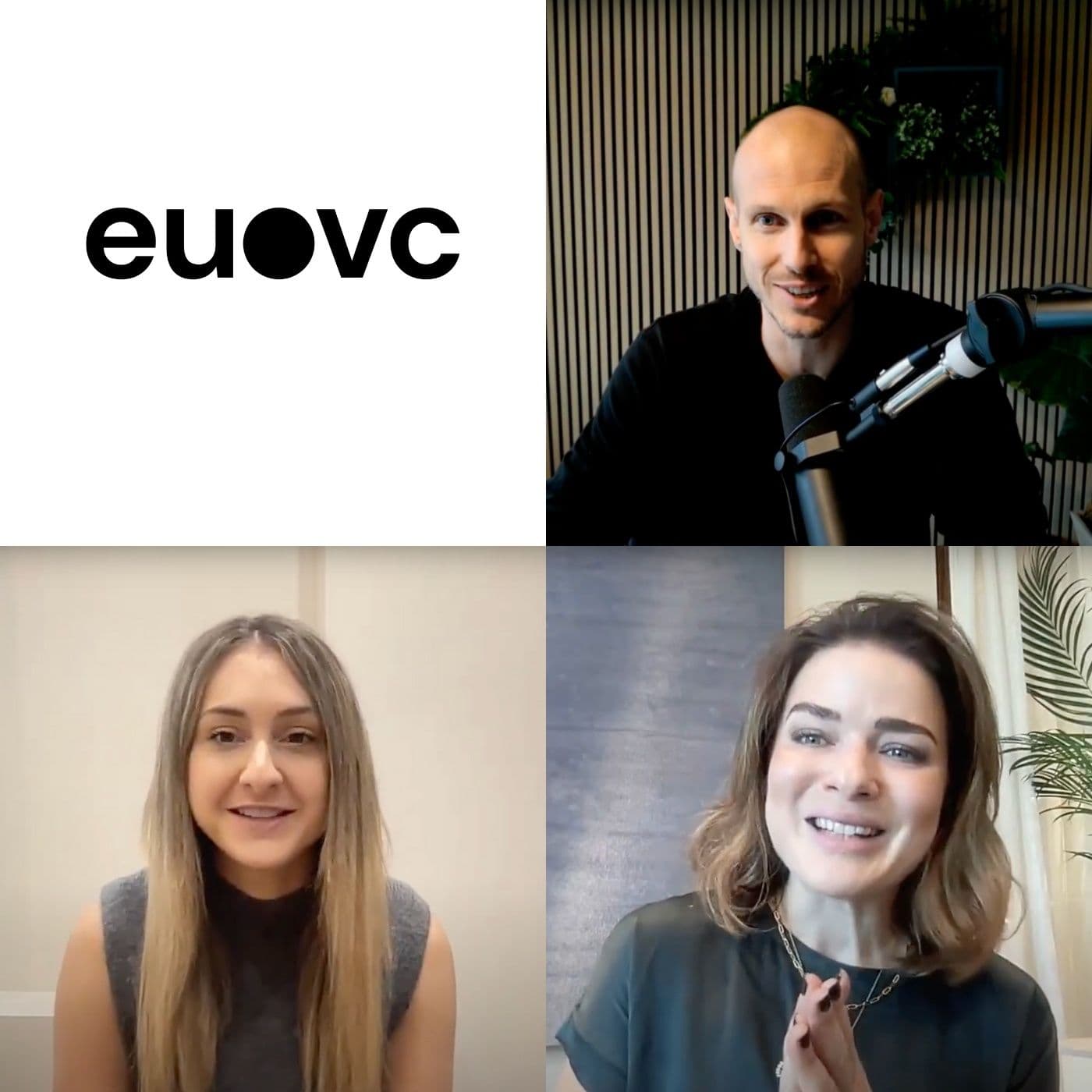
Episode Overview In this episode of "At The Cap Table," co-hosts Andreas Munk Holm and David Cruz e Silva welcome Evgenia Plotnikova, General Partner at Dawn Capital. The discussion covers Evgenia's journey from investment banking to venture capital, her experiences and insights in the AI landscape, and the dynamics at Dawn Capital.
Key Chapters
- 00:14 Guest Introduction: Evgenia Plotnikova
- 00:20 Evgenia's Early Career in Investment Banking
- 00:30 Transition to Venture Capital
- 00:49 Invitation to Venture Escape Event
- 01:24 Welcome to the Interview
- 01:35 Evgenia's Journey to Dawn Capital
- 02:01 Early Career Challenges and Insights
- 03:19 Private Equity and the Shift to Venture Capital
- 04:59 Joining Dawn Capital
- 05:51 Dawn Capital's Focus and Specialization
- 08:57 The Importance of Mentorship
- 09:57 Team and Culture at Dawn Capital
- 13:51 Challenges and Resilience in Venture Capital
- 15:20 The Exit Environment in Venture Capital
- 20:49 AI and the Future of Venture Capital
- 22:34 Final Thoughts and Reflections
- 22:47 Alternative Career Paths
- 24:06 Conclusion of the Interview
Key Themes and Discussions
Early Career Journey
- Evgenia's introduction to finance was during the 2008 financial crisis.
- Transitioned from investment banking to private equity, focusing on offline businesses and recognizing the need for digital transformation.
- Motivated by the desire to be part of disruption rather than being disrupted.
Dawn Capital
- Dawn Capital specializes in B2B software, distinguishing itself as an early specialist in the field.
- The firm emphasizes the importance of a supportive environment for founders, leveraging the team’s expertise and experiences.
- Evgenia discussed the firm's growth from a small team to 40 members and its success in recent fundraising efforts.
Importance of Mentorship
- Mentorship plays a crucial role in Evgenia's development and success.
- She highlights the importance of an open culture at Dawn, where different personalities and styles contribute to collective success.
Challenges in Venture Capital
- Evgenia emphasizes the importance of resilience in venture capital, drawing parallels between investors and founders.
- Discussed the increasing difficulty of exits in the current market, stressing the need for founders to understand the implications of raising capital.
AI Landscape
- The conversation shifted to the impact of AI on venture capital.
- Evgenia cautioned against investing in AI for its own sake, advocating for a focus on genuine customer needs and value.
- She expressed optimism about the potential of AI when integrated thoughtfully into business models.
Personal Reflections
- Evgenia's earlier aspirations included a career in diplomacy, but she found a higher impact in venture capital.
- She expressed a desire to eventually contribute to broader economic and social policies.
Conclusion Evgenia Plotnikova shares profound insights into the venture capital landscape, particularly in the context of AI and B2B software. Her journey emphasizes the importance of mentorship, resilience, and understanding market dynamics. The episode provides valuable lessons for both new and experienced investors navigating the complexities of venture capital today.
Additional Resources
- To learn more about Evgenia and Dawn Capital, visit [Dawn Capital](https://dawncapital.com/)
- For more insights on European VC, visit [EUVC](https://eu.vc) and listen to past episodes.
Closing Note Listeners are encouraged to explore the podcast's community and consider attending the upcoming Venture Escape Event for further networking and learning opportunities in the VC space.
Written by AI. May contain mistakes. Listen to the episode to check what was said.
Transcript
Automatic transcript. May contain errors.0:03Hello and welcome back to At The Cap Table, a podcast series here at EUVC, where we explore the journeys and insights of some of the most influential leaders in European venture capital. Today, we're thrilled to have Evgenia Plotnikova, General Partner of London HQ's Dawn Capital. From her start in investment banking during the financial crisis to her role now in VC, she talks about the challenges, successes, and what it takes to thrive in an ever-evolving industry. We dive into her work at Dawn, what it means to be a B2B software specialist these days, and her thoughts on navigating today's accelerating AI landscape.
0:38Here's a few words from our beloved sponsor. No more clammy handshakes. No more disruptive conversations over loud house music. Let's get real and bring the meaning back to tech events. Are you ready for an unforgettable venture escape? That's my question, because I want to invite you to join us for an extended weekend at the Historic Union Eye Hotel. Luxurious experiences, thrilling adventures, exclusive insights, climb the sax, hike the fjords, dine-in style. Be inspired by Polo Explorer Ben Saunders and connect deeply with our OG VC legend Fred Destin. A journey of inspiration and connection awaits.
1:11Space is unlimited, secure your spot right now on EUVC.events and immerse yourself in nature growth and community.
1:24Hi, Evgenia, and welcome to At The Couch Playball. Thank you so much for joining us today. I'm really excited to have you here. So you're a GP at London HQ's Dawn Capital. Can you tell us a little bit more about your journey into that role? Hi, Chloe. Thank you so much for having me on the podcast today. I'm delighted to be here and speak to you. I'm Evgenia. I am a GP at Dawn Capital, and I did not send out to be a venture capitalist. In fact, I think as I was growing up, I didn't know what venture capital was, neither was the world of finance. So I grew up in a working class family in a small city in the south of Russia, on the border between Russia and Ukraine.
2:11And I grew up in France in the US afterwards. And the way that I ended up in venture was through the road to finance. My initial through into finance was in banking. I frankly didn't set out to be an investment banker either. I went into banking because I was poor and I wanted to succeed. I wanted to discover what was the world of finance, what that career would be like. And when I first graduated, it was in 2008, 2009. So in the midst of the financial crisis, I had the privilege to be in the US at the time in Philadelphia. And just seeing all of those financial institutions grow through the boom and the bust of that period made me really excited and made me want to explore the world of finance.
2:59I think very quickly, despite having some absolutely wonderful bosses in investment banking, I realized that although advisory was fascinating and at the time I was working in oil and gas and mining, sort of very big headline grabbing companies, I really wanted to be on the investing side and the principal investing side. And that career for me started in private equity where I worked with a lot of offline businesses in transportation, in retail, in telco. And those businesses were fascinating to work with. Now, a lot of them were either seeing disruption and they were being disrupted by some up-and-coming young startups who desperately needed tooling to be digital first, to be customer-centric, user-centric.
3:52You know, I remember to this day, we worked with a very large chain of casual dining restaurants who didn't have appropriate payment systems, who used the oldest accounting platform that they could possibly have used. And so I think quite quickly, I realized, rather than be disrupted alongside some of those businesses, I desperately wanted to be part of that disruption. And one of my very first mentors and bosses back in the investment bank actually told me, look, one of the best ways to succeed and to succeed at a pace that you'd like that to be, because I was very impatient, a young investment banker, is to find a wave that's bigger and ride that wave if you can.
4:36And venture capital in Europe has existed for a very long time, and you guys have been wonderful investors in a lot of VCs for a long time. But I think when I joined venture about now 10 years ago, there was a bit of an acceleration, right? And so I felt, you know, here is this wonderful, not quite emerging asset class, but accelerating asset class in Europe. I really want to be a part of that. My foreign venture started at Atomica, which is a wonderful firm that just recently raised a new fund. So congrats to my old home on that achievement. I had a wonderful time there, but very quickly, I really got passionate about software.
5:15And so when Dawn guys came calling, I was really excited to be able to join the firm. It's now been quite a few years. When I joined, we were a small team of five people at the time, I believe. we were fundraising for fund three and I fast forward to today we're deploying money out of our fifth fund we're a team of 40 so even though you know it's not the same journey of the entrepreneurs that we're back to live but it's it's certainly been a scaling journey with Dawn and it's a true privilege to be able to be part of building up a venture firm. Amazing journey and for those of us that don't know could you give us a bit of a background on Dawn Capital and what exactly is your focus there?
5:58Yes, absolutely. So Dawn Capital is a B2B software-focused fund, and I think that's probably the most important differentiating factor is that we chose to be specialists quite early, since the very early days of Dawn having been founded back in 2006, 2007, way before everyone realized that software was a wonderful business model and it was cool to be part of software, even though I know that today when we talk about artificial intelligence, a lot of people challenge that premise, and I'd be delighted to talk about that if we get there. But if you think about software the way that I often make a parallel, it's exciting because it's not necessarily the car or the exciting consumer object that you can touch, but it's everything behind it.
6:49So think of us as the people that back the engine inside the car that may make it faster, stronger, drive for longer, hopefully, is G-friendly. So I think that's sort of a very exciting part. Now, what it also allows us to do, because we're a specialist, is to hopefully offer a better product to our founders. We will not compare you to a consumer business. We will not compare you to a marketplace. We will hopefully bring you into the family of entrepreneurs who have faced the same challenges as you as they were growing from nothing to hopefully a multibillion dollar business. I hope that makes us faster in our diligence.
7:30I hope it makes us better board members. And it allows us to offer great support. So we have a wonderful talent team that helps our companies hire. We have a wonderful network of advisors. that truly understand the specificities of what it takes to scale a software business. The other thing to know about us is that we're an early stage investor. God knows what that means these days. Certainly in my career in venture, in a series A has meant very different things in 2016 to 18 to 20 to 22 to yet 24. So every two years, it feels like we've redefined it. I think the way that we think about it is, It's the companies that are at that tipping point of product market fit.
8:12They mostly direct their technology, mostly direct their product. They're starting to accelerate their go-to-market machine. They kind of start getting a sense of what really works. What is the pain that the customer is experiencing? What it is that I'm going to go after? And obviously those things continue evolving in the future, but that's the part where we'd like to come in and the part that I hope that we're the most valued to our founders. Got it. And obviously, Dawn has grown a significant amount in the last eight years. There's many B2B specialists out there. It seems like you put a great package together for entrepreneurs.
8:47But do you think that there's been anything specific that's been most impactful when it comes to Dawn's success? Or is it maybe just some early wins that you've had as a team? Great question. I mean, look, I think in venture, it's important not to underestimate the luck of the game that is venture. but one of my partners and one of John co-founders always tells me like you have to put yourself in a position to get lucky and I can agree with him more. So I think it's a combination of different things. Obviously there are other B2B specialists out there. I think we started best specializations early and we kind of stuck to our knitting and have been very very consistent in our thematics, in the stage that we invest in.
9:32What we have continued to do is to adapt to our product to our founders. We try and eat our own dog food, for the lack of a better word, as much as we can. We try to think the same way that our founders do. I mean, by all means, their job is a hell of a lot harder than ours. And I think the thirst part is, and this is perhaps a similar way that we try to operate like our founders, is the team that we're building. And I am immensely grateful for the kind of team and the culture that we have built at dawn, and I think it contributes greatly to the success of the firm. I think we judge the founders that we're back on their ability to be humble enough to hire people that are better than them, to recognize that they perhaps are unique and they have a superpower, but they may not be the best marketeer, the best salesperson, the best finance person, the best sales engineer.
10:28In a similar way, I think I am so very proud of the team that we have built together as a partnership and every partner has contributed to it. And so, you know, we're very much standing on the shoulders of giants. And it's not just the investment team. It's our talent team, our finance team, our operations team. I think what's also been truly special is that I joined Donors as a principal and I have been promoted to partner and then to general partner over the years. And that's rare. The degree of meritocracy and ability to progress is one of the things that attracted me. I was young, hungry, and impatient.
11:07Hopefully, still all this holds true to this day. But I really looked up to my partners and their ability to bring in everyone to the partner level has been, I think, truly instrumental in our ability to attract and retain great talent and again going back to the to the founders that that were back their ability to create the kind of culture that fosters uh performance uh is also crucial and important and i think you uh you very humbly skipped over there the fact that you were the youngest uh female gp to be promoted internally in europe i'm also uh appeared on the forbes 30 under 30 list so what do you think it was about you know the mentorship that you were given in your career that helped you to progress it but also what do you think it was about your personality that allowed you to get there as well?
11:58I think mentorship is critical I think venture is very much an apprenticeship job I think what I have been extremely grateful for is my firm's ability to allow me to be myself and adopt the style of leadership that is authentic to me while encouraging me to always perform at my best. I think at Dawn, we're sort of a collection of different personalities. And I hope that everyone feels they can be true to themselves while, you know, hunting for the best possible company that they want to invest in and be the best possible board member. You know, that sort of collection of different personalities, individualities is also important because founders are very different, right?
12:43and we want to be able to tap into a different style of leadership when we work with our founders. I think the other part about the apprenticeship is I've been very privileged to share words with some of my partners as I grew in my career with my partner Norman, with my partner Josh, with my partner Hulkin and kind of observing them and picking up the certain bits that they were doing and trying them on. mean okay is that is that what is reflective of my personality is that how i'm going to add value to the founders has been also you know truly um truly instrumental so i think that's sort of an important part uh we're very much uh an open culture everyone attends i see uh i'm proud to say we're actually mostly female i see as well which has been tremendous and so that ability for us all to kind of challenge each other ask each other tough questions i think is also a great part of mentorship at all levels, right?
13:44Like I feel that we can be mentored by our managers, by our peers, but also people that we're managers off. And in terms of personality, I mean, I think the hardest part about venture that you and I have talked about is the feedback loops are so tremendously long. You just have to keep going at it. I think you have to persevere. You have to They have the grit and their relentlessness in a similar way that the founders do. They have to get up every morning and say, you know what? The company that I'm building is going to succeed against all odds. And not only that, I'm going to convince everyone else that joins my company that they will succeed against all odds.
14:25And in the moments of doubt, I will never show it to my team or I'll find a way to continue motivating them. And I think in a funny way, venture is not dissimilar in the sense that, you know, those are 10 year long journeys of the companies that you back at Series A. And I think sort of that grit and relentlessness is what I have had because I have been told no so many times in my life that I could possibly tell the stories off. And I think fundamentally, that's probably what is important is your ability to kind of get up every day. and you've had a difficult week, difficult month, difficult quarter to just kind of keep on going at it for as long as you can and have the privilege to.
15:07Yeah, great. I think that's something that we hear time and time again is that resilience of founders but also resilience of being an investor as well. But yeah, we did speak about those long feedback loops and so obviously the final hurdle that any VC or firm will be judged on is of course the exits that they make. and we spoke a little bit about this before as well and you told me how you think that actually exits are harder than people assume I think you know this has become really obvious in today's climate but you know what what makes you say that and kind of what are you how are you thinking about the exit environment at the moment?
15:42I think if asking that question anything it's a it's a critical question for every founder to think through not because I want them to come in and focus on on the exit uh necessarily i want them to focus on building the best uh the best possible business a durable business but it's important to take into consideration because it does take a decade and it takes rounds and rounds of of venture funding there's a two elements to it number one is um venture capital is a treadmill uh once you get on that treadmill it's hard to get off that treadmill right you start raising your c then you'll be raising your a your b c and And I hope you go all the way to the document.
16:22It's something to be conscious of. Not every business needs venture funding, right? There's plenty of phenomenal businesses that have been built without any external capital or with a different form of capital that might be more appropriate to that business. Once you get on that treadmill, what you have to be mindful of is every time you raise money, it is going to be stacked in your preference stack right and i've had a wonderful conversation with with a founder about this the other day and and i think he put it much better than i ever would is i didn't realize every time i raise that i am betting my farm on it right so every time i fundraise i'm betting my farm on it and i think that that truly resonates because if you think about the size of the exits outside of the ones that truly grab headlines, outside of the, you know, the IPOs, outside of really large acquisitions by either strategic or private equity firms, there is plenty of companies that raise at half of that amount, a third of that amount, 10 % of that amount.
17:34There's plenty of companies that become upper hires. There's plenty of companies that unfortunately shut down, right? And so if you think about the amount of companies that got acquired for more than 100, 200, 300, 500 million, the universe is not big, and let alone the universe of the IPOs and we could park the years of gluttony of 2020 and 2021 where we've seen that humongous peak of IPOs. Now, that is true. The amount that you raise is effectively deducted from that exit value before everyone hopefully converts into common shares and cheers at the NASDAQ as you ring the bell. And so that becomes truly important, right?
18:17And throughout my career, whether they were my companies that I've worked with or companies that my colleagues have worked with or other friends in venture, you know, it's not uncommon that you sell a business for the amount that you have fundraised right and what what a what a sometimes terrifying moment that can be to have spent 10 years building something that may not return the money that you as a founder and the team believe you have deserved and you want to walk away with the pride of having built something so I guess my my only word of caution is to obviously raise the money that you need you know i'd be out of business if people weren't fundraising so i my encouragement is not to do this but to be mindful of it right i think in the years of again i i call them the years of gluttony we came to equate success to things that were a little bit ethereal or that were paper true but not reality true i the valuation that you have achieved the amount of money that you raise the amount of employees that you have hired.
19:28And that's a pretty steep mountain to walk up that you can fall off just as quickly. And so I'd like us to go back to measuring us on the customer love that we receive, on the amount of revenue that we can get, on the community of developers that we can grow. Those metrics, I think, are a lot more real and a lot more tangible than the paper evaluations. And have you seen those things come to the forefront on board, click your staff on? Have you seen a shift in what people are concentrating on as they're building their business in? A little bit. Although some of the rounds that we're seeing because of the excitement in artificial intelligence, where valuations, I think kind of defy gravity.
20:18I think we're very quick to forget now obviously as a venture capitalist you have to be an optimist right you have to believe that uh technology will continue changing the world in in ways that are truly meaningful and and uh grand but i think we would quickly lose sight of that so yes i certainly have seen an adjustment but in certain categories um i do believe that we have again lost sight of reason and logic and with that kind of excitement in the AI sector how are you approaching that as an investor how do you deal with that you know not wanting to miss out on some really exciting new technologies but trying to stick to those corporate schools at the same time yeah no it's hard I mean the VC film is is real look I I think there was a brief moment where I was joking with my team that it felt like, oh, it's AI or die, right?
21:16Like either an AI company or you die horrible and slow death crushed by the weight of the new technology. I am sure that this is how it felt in the advent of internet. And I wasn't an investor at the time, but the way that we think about it is just another set of tools of picks and shovels that will be utilized as part of your technology stack. So building AI for the sake of AI feels the same way as building something cloud just for the sake of being on cloud, right? Like think of sort of the early days of advent of social. If someone came to you and said, you know what? I am building a ride-hailing app, and I'm going to call it Uber, and the only remarkable thing about it, it's on your mobile phone, right?
22:04Like it's not about that. It's about, is there a need for this product? Is it delightful to be used? Is it solving a real pain? And so I think that the way that we think about it is it's an exciting technology. It's an exciting toolkit. We hope every company that we already work with is utilizing it to the best possible extent. But we also don't want it to be AI for the sake of AI. We go back to the fundamentals. Great. Well, thanks so much for sharing that with us. We're getting short on time, so we'll wrap it up with a final question. And maybe going slightly left field on this one. If you weren't a VC, what do you think you would dedicate your life to instead?
22:47I initially studied political science. The reason why I speak the languages that I speak and I studied other languages that I no longer admit to, because I don't speak them well enough and I'd be horribly embarrassed, is because I wanted to have a career in diplomacy. In fact, I was admitted to a dual master's with a diplomacy school to pursue that career. And I was truly passionate about having an impact on the world in a way that was really meaningful. I think there were parts of me that were disappointed with the way that politics is sometimes. And I also, I think, felt that I really wanted to see the results of my work at a pace that could only truly be seen in the private sector.
23:35And in a funny way, I think going into venture, I probably have a higher impact than I could ever possibly imagine. You're backing innovative companies, jobs being created, you're touching, cutting it to technology. And that's very, very exciting. But there is a part of me that always feels that with that experience that I have accumulated, perhaps one day I'll be able to touch on broader economic policy, broader social policy that could have a different kind of impact. That is a lovely way to end the interview. Evgenia, thank you so much for your time. Really appreciate you coming on Outlook Updating today.
24:14Thank you so much for having me, Chloe. That was really fun. Thanks for listening to this special episode on the European VC. If you love our show, join our community by subscribing at eu.dc. Here's a few words from our beloved sponsor.
24:49for events honors and connect deeply with our OG VC legend, Fred Destin. A journey of inspiration and connection awaits. Space is Unlimited. Secure your spot right now on EUVC.events and immerse yourself in nature, growth, and community.
From the publisher
From her start in investment banking during the financial crisis to her role now in VC, she talks about the challenges, successes, and what it takes to thrive in an ever-evolving industry.
We dive into her work at Dawn, what it means to be a B2B software specialist, and her thoughts on navigating today's exciting AI landscape. Let's get into it!
Go to eu.vc to read the core take-aways.
Chapters:
00:14 Guest Introduction: Evgenia Plotnikova
00:20 Evgenia's Early Career in Investment Banking
00:30 Transition to Venture Capital
00:49 Invitation to Venture Escape Event
01:24 Welcome to the Interview
01:35 Evgenia's Journey to Dawn Capital
02:01 Early Career Challenges and Insights
03:19 Private Equity and the Shift to Venture Capital
04:59 Joining Dawn Capital
05:51 Dawn Capital's Focus and Specialization
08:57 The Importance of Mentorship
09:57 Team and Culture at Dawn Capital
13:51 Challenges and Resilience in Venture Capital
15:20 The Exit Environment in Venture Capital
20:49 AI and the Future of Venture Capital
22:34 Final Thoughts and Reflections
22:47 Alternative Career Paths 24:06 Conclusion of the Interview
00:41 Closing Invitation to Venture Escape Event


