
In short
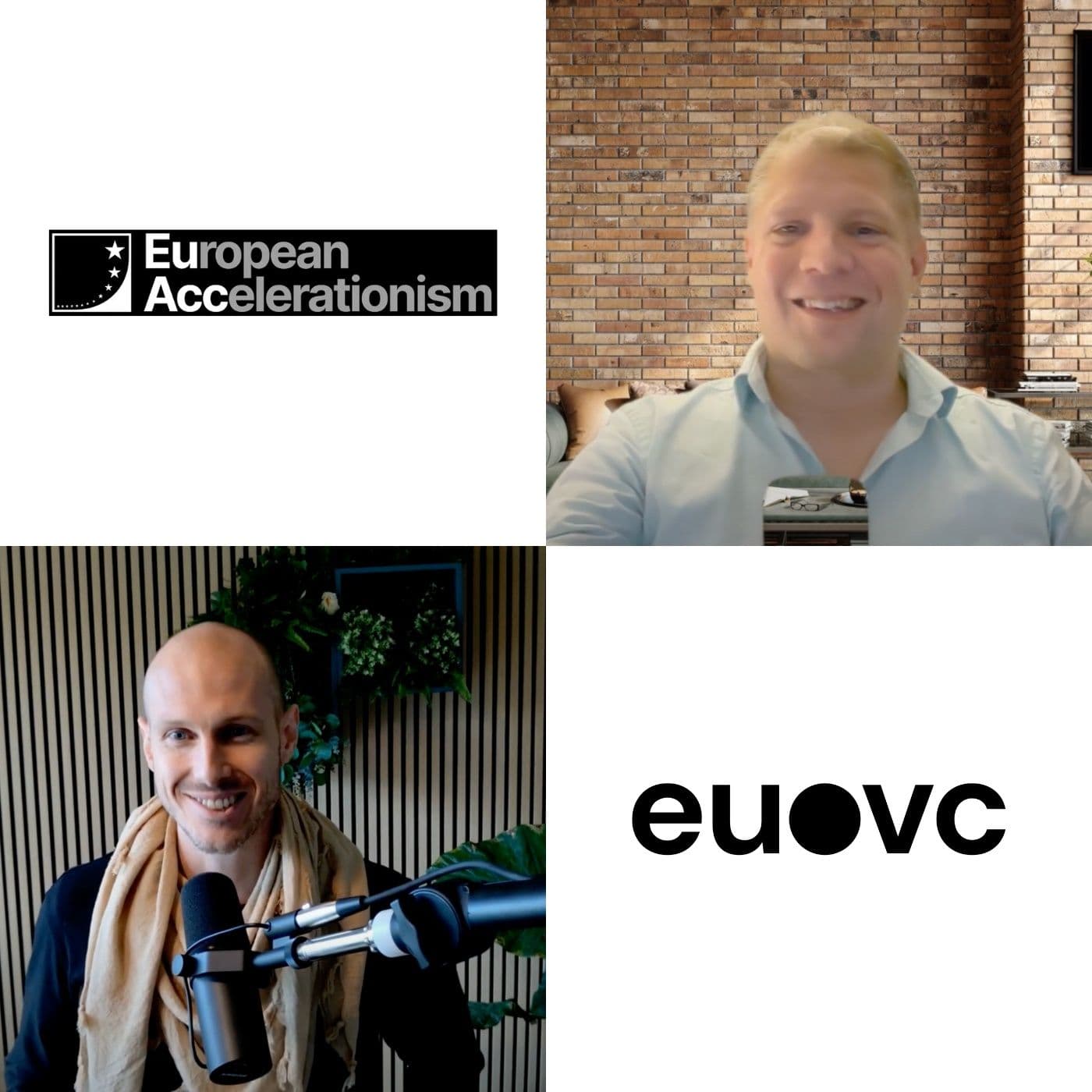
EUVC Podcast Episode Summary: E381 | Benoit Vandevivere, eu/acc Movement
Episode Overview In episode E381 of the EUVC podcast, co-host Andreas Munk Holm interviews Benoit Vandevivere, CEO of Consentio and a key figure in the eu/acc movement. This episode discusses the mission of the eu/acc movement, challenges in the European startup ecosystem, and actionable solutions to foster innovation and policy change in Europe.
Key Takeaways
Introduction to the eu/acc Movement
- Vision: The eu/acc movement aims to revolutionize European startup policies and create a unified ecosystem to accelerate growth.
- Core Initiatives:
- The 10-second investment process: Streamlining investment processes to be as quick and efficient as possible.
- The EU Inc initiative: Designed to simplify and strengthen Europe’s innovation landscape.
Benoit Vandevivere's Background
- Multifaceted Experience: Benoit has a background in engineering, business, and law, providing him with a unique perspective on the intersection of technology and policy.
- Entrepreneurial Journey: Early involvement with AOL and launching social networks in Europe and Asia. Later co-founded Consentio, focusing on digitalizing the food and vegetable industry.
Challenges in the European Startup Ecosystem
- Market Fragmentation: European startups face significant barriers due to fragmented regulations and slow bureaucratic processes.
- Need for Policy Change: Many existing regulations hinder tech adoption and innovation.
- Perception of Entrepreneurs: Entrepreneurs often feel disconnected from policymakers, leading to frustration with the pace of regulatory change.
Discussion Points
- Mindset Shift Required: A cultural shift is needed in European politics to embrace innovation and reward risk-taking.
- AI and Technological Advancements: The importance of fostering a deep understanding of technology and its potential benefits among policymakers.
Key Initiatives and Proposals
- 10-Second Investment Process:
- The proposal aims to mimic successful financial transaction processes by reducing investment paperwork to just 10 seconds.
- A tech-friendly process that aligns with the speed and efficiency of today's financial technologies.
Call to Action
- Engage with Policymakers: Entrepreneurs and investors are encouraged to communicate with their representatives, highlighting the need for more favorable policies.
- Consistency in Advocacy: The movement invites supporters to share their investment experiences and concerns to build momentum for change.
- Grassroots Involvement: Benoit emphasizes the importance of grassroots actions, such as petitions and public demonstrations, to advocate for policy reform.
Conclusion This episode underscores the urgency of reforming European startup policies to enhance competitiveness and innovation. It encourages listeners to actively participate in the eu/acc movement and contribute to building a more cohesive and supportive ecosystem for European entrepreneurs.
Listening Information
- Podcast Hosts: Andreas Munk Holm and David Cruz e Silva
- Guest: Benoit Vandevivere, CEO of Consentio
- Follow Up: For further engagement and updates, listeners are encouraged to follow the eu/acc movement on social media and participate in discussions.
Additional Resources
- Visit the [EUVC website](https://eu.vc) for further insights and takeaways from this episode.
- Follow EU Act Movement on [Twitter](https://twitter.com/eu_ac_hq) for updates and ways to get involved.
---
This summary captures the essence of the podcast episode, outlining the key discussions and actionable insights shared by Benoit Vandevivere while encouraging audience engagement and advocacy.
Written by AI. May contain mistakes. Listen to the episode to check what was said.
Transcript
Automatic transcript. May contain errors.0:00Welcome back, everyone, to the European VC podcast. Today, I have Benoit from the EU Act movement with me. We're going to be talking about the EU Act movement, what it is, what's driving it, who are the people behind it, how can you get involved, as well as, of course, some of the core causes that the EU Act movement is trying to move forward on. One of them being the 10-second investment process, but more well-known to all of you, the EU Inc. movement that we've also been pushing out via the EUVC platform. If you want to get involved, go to EU-AC HQ on Twitter. Follow that. There's a community there that's very active.
0:38And if you want to get involved in the EU movement, you can go to EU-inc.org to get involved and sign the petition today. There's more than, at this time, 11 ,039 supporters. So if you go in there, I promise you, we will make this happen. We will get an EU-inc across Europe. go and become part of the movement, as well as, of course, the EU Act movement. I hope you'll enjoy this episode as much as I did doing it and that you will get involved in the movement. Here's a few words from our beloved sponsor. This episode comes to you by the support of our partners. Portfolio IQ by Synaptic. Portfolio IQ is the most effective way to track your portfolio.
1:18It pulls data from all sources, board decks, financials, MIS sheets, forms, emails, everything, and creates a true single source of truth for your portfolio data. With Portfolio IQ, you can track all the metrics that matter, not just the standard metrics. All metrics are reviewed by a team of certified accountants. You'll get 100 % accuracy. Not sure about a number? Just click on it to see the exact sale in the document it came from. Portfolio IQ also adds a layer of standardisation to make the data comparable and useful for benchmarking, valuations and reporting. All of this is as simple as forwarding an email.
1:56Zero added work for your fund or your portfolio companies. Portfolio monitoring that you'll fall in love with. Go to synaptic.com forward slash portfolio IQ. That's S-Y-N-A-P-T-I-C dot com forward slash portfolio IQ. The good folks at Synaptic will be happy to give you a no-cost trial.
2:20Tear down this wall. It's more than just an ally. This is a union of values. Let's start acting. This show is not investment advice and the hosts of this episode may be invested in the funds and companies featured. Benoit, welcome to the European Easy Podcast. Thank you. Great to have you, Andreas, and great to be here. So we have had quite some conversations back and forth, WhatsApp and emailing, trying to figure out exactly when is the time we should do this, how close partnerships should we have between EUAC and EUBC, because we're both on a mission to try and help the European ecosystem grow, be champion, make everything work more frictionless.
3:06You are obviously very heavily on, I'd say, two sides, as I see it from the outside, both on the community side in terms of creating a movement, but also very much on the policy side. And that's, of course, what we're going to talk a bunch about. And people who have followed our platform will also know that something that EUBC is getting more and more into. But we're also very much saying, well, we have one clear world. We have a platform where you can platform different things. We can platform different speakers, thinkers, and initiatives. We've just done a bunch with EU Inc. in terms of trying to help build some reach for them.
3:43and just a big supporter of all these new initiatives that are happening in Europe. So finally, we now have you on the podcast to talk a bit ahead of a lot of work we're going to do in the future. So tell us, Benoit, a bit about yourself, how you came to build the UAC, what's the core mission? But let's maybe first begin with your background. So I am an engineer. I have a business degree. I'm a lawyer too. I became a lawyer late, seeing how policy affects everything. Because as an entrepreneur, you have to hire people, you have to do financing rounds in many cases, you have to have licensing. And then I was like, okay, I'm going to try to go in other schools.
4:28And finally, I became a lawyer. And it was like, it's like a sport, I would say. So let's get this. So I'm also a lawyer, which I think is useful to understand the perspective. And it's very funny. I would say I'm like a natural large language model because I'm also a software engineer. So I've done language for programming and legal language. And it's very interesting because there are a lot of common patterns where you try to set rules in software or in law. And then you have exception handling like you have the courts or exception, the bugs in the case of software. right? My background is I've always been very excited.
5:10The typical entrepreneur wants to impact change things. And I worked very early with the US. I saw a very huge gap in terms of mindset. So when I was 17, I worked with American Online founding team of friends. And I launched what was you could call, there were no such names back in the time, but in 96, probably what you could call one of the largest social network of France, which was focused on teenagers, university. I was promoted to go to US, but that's also one thing I often say that Europe is lucky. It's not so easy to go to US because I was not even, I didn't have 18 year old, but the AOL headquarters wanted to hire me at the HQ, but I was a European, did have a passport, so it was more complicated.
6:01And then I worked in social networks overall. I launched one in Asia on the birthday. And I was also working with the founders and the team at Studi Fortset, which in 2007, which was one of the largest social networks of Europe that Facebook tried to acquire, and that they refused, the corporate VC refused the offer. I think there were equity deal, maybe 6 % of Facebook. So I'm not sure. So if they listen to the podcast, they know the story and maybe the wrong exit. And that's a typical back in the day, McKinsey, Germany and other kind of consulting firms decided to do the strategy of a startup, right?
6:43And I think it's a good illustration. And then I moved to Barcelona, a bit tired of the story. and I discovered the B2B world and how you could, it was like 23 years older. And I said, look, it's funny how non-tech it is. And I co-founded Consensio where we digitalize a very traditional industry, the food and vegetable industry, which at the face value might look, okay, it's done. but actually it has a huge opportunity in terms of tech because they have so many impacts, demand, the predictions of the demand, the prediction of the weather of the production. So we kind of do a Bloomberg, if you want, for supermarkets, right?
7:28And overall, in parallel, I always, from very beginning, when I was a junior, I would say, wow, the problem is not necessarily the technology, but the technology adoption. and Americans are often much better in pushy. First, because the attitude of many clients are much more, let's try everything. And then the policy, which when you go to US and I lived in US in Boston, you feel often much more, wow, thank you. Thank you for your contribution to the United States. Thank you for your contribution to creating job growth. And we'll talk about it, but that's really, I think, one of the very attractive factors that many Europeans go there, right?
8:07And so in terms of policy, because we'll talk about it, back in the days in 1997, when I wrote to the president of France saying I would leave if we would not take into account what internet and digital will create. And we are talking 1997, right? And I left. Because they contacted me already, policy, when almost nobody had internet in Europe. And then I helped you to make it short in Europe. I think entrepreneurs, venture capital, sometimes find policy, government stuff a bit boring. But I think also, but we do complain about paperwork, red tapes of that. And I think the movement and the European exceptionalism and other movements and the overall mindset is speak up because also they cannot guess what's your life like, right?
9:01So if you want things to change, you have to create a vibration, a vibe that things have to change for the better. And so in Europe, I work with some people like Oliver Gaida to get the crowdfunding regulations through. It took 10 years. I was not there all the years, but I got the first exposure to the timeframes. And then here in Spain, where I live now, I work with the Spanish government and Francisco Polo, who's a great guy who founded Change.org Spain, to pass a startup plan. And those learnings, so it took five years, right? And now from all those learnings, I coordinate, work, talk with the ecosystem to also make the ecosystem benefit from my learnings having done that, right?
9:51And my goal is, and the movement goal is, to make it much faster. Because we cannot take 10 years to do Laos, five years. Time is running out. We have to be much faster. We have to accelerate. And it's interesting because historically, when you try to change Laos, politicians say, don't speak too loud. And OK, let's talk to each other. Let's have meetings. I did that in the past. And my learning is, maybe I should not have listened as much. because at the end, if you look, when things change in Europe or in government is when you have all those tractors, the farmers who go to the headquarters of Brussels and they block all the roads and suddenly the laws can change very quickly.
10:33And I think European venture capital, European founders have to learn from who are successful in changing Europe. And the overall framework, and I want to spare, I think is we are in a good time. We have a window of opportunity. So all the pieces are there. We have to catalyze it, right? Tell me about those pieces a bit because I am seeing the same thing. So if I just add a bit of context why I think this is moving so well is a bit because, at least to myself, that was my real realization. I remember I did a roundtable with leading VCs in Europe on AI. And then I realized that every single of these incredible thought leaders really saw AI being something that had a very large potential disruptive in a negative way for society.
11:35But no one was really talking about this publicly, I found. and neither from the VC side nor from the media side, the mainstream media, bringing venture capitalists or founders of this technology in Europe to talk about what this impact might be and how do we best address it and so on and so forth. So I realized, wait a second, we're spending all this time thinking about the future, backing the future, and then we're not talking heavily with the people that are meant to lay the rails on which we built the future, it seems like there's something off. It seems like there's something we could do here.
12:15And we have a different voice than others, I think, given that we're tech oriented rather than what some of the other players in policy would normally be. So that was really my realization. And then I saw the UAC movement and then I saw the, which I guess from name wise, it's very connected to AIAC as well. and then you have the EU Inc. movement moving heavily now as well and I'm just seeing so many things fall in place and I do agree with you that now is the time for us to really move but my question to you is what are the things maybe I'll let you comment on that first but then afterwards ask you what do you think are the big things you see moving?
12:57So I think I've always tried to when I had the opportunity I've been writing I've been your speaker for the new commission for the crowdfunding back in the days. And also there are schools that sometimes, like the EO School Institute of Empresa in Spain, where now Aaron Keraleta will be the director. I've also helped events where, for example, one event I had the founders of LinkedIn, Wikipedia, and everything. So I think we should do that again. And of Tesla, but Martin Eberhard. So going back to your point, I think it's the exploration mindset that we need to push in Europe. AI is crazy exciting.
13:41But like any exciting technology, of course you can have a bad use. Actually, even with a book, you can beat up someone, you know? So it's interesting, even the story, there's been prohibition of technology in the past. I'm not expert in that, but at some point it seems even a press printing was prohibited in some places. I think often it's related to lack of knowledge. Ignorance creates fear in the story of humanity. But the way to fix fear is you can ban, but then you give a feeling of security, which is just a feeling. because if some politicians really think AI will be very, very powerful and could be used as a threat, then the priority should be to make Europe one of the most knowledgeable places on earth on this because if you think it's powerful, you should try to acquire the technology and be a leader on it.
14:50And that's in the weapon industry, in other industries, that's the way you have to think. And if you trust yourselves, then if you are as well, you have the same power in AI than others, that's what, or more power, that's what should be your source of confidence. If believing that all the talent, and we have so much European talent, from the CTO of OpenAI with Albanese to the chief scientist of AI, Jan Lequin, who is also left for Europe, but who kindly helped to build also bases of AI research in Europe and in France. Is it the interest, is it increasing the safety of Europe to have all the talent who knows about AI leaving Europe?
15:46And a parallel is the nuclear bombs. If people are so scared, first they already exist. But Einstein was European, right? Tesla was European. And I agree with you is it's not that entrepreneurs refuse to contribute to safety and to contribute to privacy. Actually, many entrepreneurs think that privacy is extremely important and they don't want to be tracked. It's just that they're often the best to bring technological solutions and good thinking in how to approach those topics. So historically, the laws were made for non-technological things because we are a much less technological society. But now that more and more the law has impact technology and thus growth, we really have at the European Commission government, we need to much more involve entrepreneurs, venture capital, and ask them how they would do it.
16:56And I would say the other thing is historically, and I talk initially of my experience with helping to have the proper laws in Europe for growth, is we need a mindset shift where governments, lawmakers have a KPI mindset, a performance mindset, more than nice names of laws mindset. because there are already many laws for digitalization of companies that on paper sound great and should have fixings, but they did not, right? And AI is the same. And I think also we go back to what I said earlier is send a message. So for me, the joke I say should be AI Acceleration Act. The names of your law on AI and other things, you want to accelerate.
17:48You don't say, I don't want a safe acceleration, but that's like when you buy a car with a strong acceleration, of course you want a safe acceleration. You want a thrill, but you want safety. Actually, safety comes from having more economic power. It's a story of humanity. If Europe is a leading economic power, that's how it will have the highest safety. I want to ask you, just because for those unfamiliar, somewhat unfamiliar, entirely unfamiliar with EUAC, could you just maybe paint the organization a bit? Is it an organization? Who are the main contributors? What are the main activities? is it's a movement it's a philosophy of accelerating europe and what we try to avoid is it's not like a personality cult or focused on one let's put it that way the european founders and venture capital agree that we need to improve the growth even mario draghi and ricoletta and things.
18:56We should focus on that and then give a lot of freedom on how. Meaning that with the movement doesn't pretend everybody agree on how we're going to achieve that, but we should all achieve and we should have a conversation on achieve that. But we should really make sure to look at the KPIs and the performance metrics. And then like a typical, even a founder, and we have Elon Musk or all the tech founders, they may start with a hypothesis on how to send people on Mars. And then they do a lot of prototypes, they change the materials, things like that. That's the same thing of the EU movement. So it's not a top-down organization where you say, okay, we're going to do it this way, this way, this way.
19:43Because a lot of tiny details can derail or put the things right on track. And entrepreneurs know you have to have a flexibility, a mind flexibility, because as you try to get things better, you discover that one way is better than another one. It's like try and error and look at the numbers. Going back to the organization, so there are several figures that are pushing it that are sometimes more known. But it comes from, so you have Andreas, you have Peter, you have others. I mentioned with surnames and firms. So you have Andreas Klinger, who was launched recently. He used to run Remote First out of Berlin.
20:28And now he runs Prototype Capital. I could use the name. And then the other people. So, for example, with Andreas, I talk on a regular basis. So, for example, it's eWink, right? So I'm on the working group on eWink. And it's a good example. We want UAC to be quite a freedom of speech kind of platform where people may come with different ideas. But Ewing, we wanted to have a lot of signatures and people might be less comfortable with the more open-ended kind of things. So we thought, especially if you make people who have more than 10 ,000 signatures now. So, and in a petition, we said, let's keep it very simple.
21:10So we should have a pan-European company and a few things like this that you can see on the website. and so that people are comfortable signing it. It's under a bit another brand and a very straight to the point. And the vision of EUAC, because where we are not an association, there are already a lot of associations in Europe defending nationally or European-wise startups, which they have been working hard. So we want to be more a catalyst and to do ad hoc initiatives among people who identify in, let's accelerate the growth of Europe, let's be more friendly with founders let's recognize them so EWINC is one of those and EWINC is not EWAC only it's actually a coordination of several associations venture capital and several people so that they say okay EWAC doesn't speak on my behalf which I think is very important because for both sides where people will be more comfortable to sign something where they don't delegate their voice to someone else in the EUAC or any movement.
22:18And the other side, EUAC should not feel that because we got signatures from thousands of people and some of them more institutional, we should filter ourselves. And that's why this movement, it's a mindset. And of course, you probably know also the world accelerationism came from the death, GESOS. And I think it's very interesting what we liked and many people identified and identify as a UAC is because I think the message where we all agree on, we should be proud of wanting to accelerate humanity, accelerate solving some of the biggest change humanity face. and entrepreneurs, most often, they are actually extremely excited to help society.
23:11And I think in Europe, sometimes people forget that, but I meet biotech, you talk about AI, and I meet biotech, medtech scientists who develop AI for medtech to save lives. And then they face an AI act that makes their life more complicated. And I think European politicians may not understand that maybe they delay life-saving treatments when they don't do the proper policies. And that's the philosophy is we should be proud of wanting to accelerate Europe because acceleration growth is what will allow people to have a higher standard of living, feeling better having a better life better health and that's why the overall file of this acceleration should be something we are proud of and Europe should be proud of acceleration so that's a European situation on myself I've been also one of the players and I founded EUAC HQ on X so all the posts are mine to explain a bit why policy impact how it impacts and even before those names I've been in touch with the European Commission and European institutions, members of parliament and several governments to change and accelerate Europe.
24:32And I've been speakers for Asian governments and for other governors. I align with so many of the things you say, Benoit, and that's why I'm so happy to have you here on the podcast to talk about it, because I really think, I think you're absolutely right. We are all doing what we're doing because, you know, if we just wanted to get rich quick, we wouldn't be in venture. Then we'd be in private equity, probably. could do many of the same things, but we'd just be much wealthy and not maybe making the world as good a place as you might be able to if you do venture, both as a VC and as a founder.
25:05So that's the one thing. And then I think that you're also very right that the motivations or the way that the entrepreneurial mindset works, both for a VC and for a founder is, you know, don't gag me, don't try and bite me down by rules, don't try and, you know, force me into one framework. So I think it's very wise to make it a movement and not one big organization that has a big secretariat that you have to have run everything by and all those things. And then I think it's so important that you're doing it cross borders. I think it's so important that we try and get the different movements in every different country because there's powerful moments inside Denmark, but they're not very connected to the other countries.
25:47And they're very much oriented towards dealing with the stuff here in Denmark, as an example. So I think that's incredibly important. We're also going to bring, and this will be announced, but we'll bring a bunch of people together in London to talk about all this. Why London, instead of a European or EU capital, you might say, well, in the end, since we're focused on venture, it's where most people have to go anyway. So that's why we're doing it there. But we're definitely trying to convene everyone to whom this is important sometime next year in the spring. So keep your eyes open for that. Speaking of acceleration, let's go to one of your big important agenda points, which is the 10-second investment process.
26:31That is acceleration. Tell me a bit about that, the concept and the vision of it. The name 10 Second Investment Process is first to recognize that Europe growth, so the politicians start to notice that they have much less growth than U.S., which for founders and venture capital, we knew that for quite some time. Finally, the news arrived to our politicians, which is good news fundamentally. Better late than never, right? We also have to recognize sometimes in social media, we have a very simplified view of Europe, European Commission, and other institutions. When I exchange, there are a lot of people, policymakers, policy officers, commissioners, who really want us to succeed.
27:27meaning European venture capital, meaning European founders, and the type of movements we... So they are quite aligned. What happened is they already... When you do New Laos, you have a lot of vetoes at the member state level, more than the institutions, that are on the wrong battle. Like, I want to keep my German or my Spanish or whatever legal system. Yes, but we are talking scale. it's not this it's if you think if you do the laws this way what actually happened is you don't have a Spanish or German entity you have a US the lower entity and because you're ignoring the reality you actually sending outside Europe the money the founders and that's I think where we have to have a hard work going back to the 10 second investment process Europe is the name come a bit from, we have to recognize, we have to reward or so the things that Europe has done well.
28:30So often people are regulation, regulation, regulation. So as I said, first we have to recognize that the EU Inc., our 20th regime, the European institutions, so I've been in favor for quite some time, but it has been vetoed by several states, and normally Sweden, Germany. And so what they really have is to have more support from Europeans to say, look, come on, stop the veto. So you're saying that Ewing has already been vetoed against by several member states? Yes. Is that because, I don't know the history here, is that because it's been attempted before and then it was just killed, you know, before it even got...
29:09Yes. Okay, so pressure, the real journey right now is actually pressuring the countries that have put vetoes to remove those vetoes so we can get it through. Yes. So what specifically are the countries and the individuals to target, just so everyone can contact their congressman, as they say in the US? So historically, okay, and that's where I think it's unfair to the European Commission and Parliament, because they did push for it, but they got vetoed by member states who can veto a law, and that's at the national level. and it's in what's called the European Council, which is a council of the head of states and ministers who can veto laws, right?
29:55When you pass a new law, you need a strong majority, and it takes into account, I'm explaining a bit, how many the population of the states and how many states, right? And depending on the category of law, you need anonymity, qualified majority, say that. So historically, while I, and I can be fact-checked, But from my understanding, Sweden and Germany were some of the states that blocked it, vetoed it. And historically, Germany has vetoed not only EU Inc. and 28th regime, but they also have vetoed European NASDAQ, Capital Markets Union, right? And I think also those vetoes were with other governments, so other political parties.
30:39So it has been vetoed a few years ago. It could be more than 10 years because it's not new, the idea. And I think back then there were more growth in Germany. And the excuse we got when we investigated a bit is, oh, we can do better German startup. And back in the days, they did the German startup law that didn't lead to any of the food benefits and results they thought it would be, right? So yes, I think historically, Germany, because of its population and Germany, because it has been much more conservative in digitalizing and changing its system, because you have a very, very strong notary system, for example, Germany, has been one of the ones that has to change its mindset.
31:20The good thing is it says they want to change things, but you have to make sure things happen, right? We have had, just to know that we've had so many on the podcast, especially on the angel side because they don't do investments for a living, that say, well, I don't invest in Germany. I did it once. And one time I ended up blocking this startup from getting their round done because they had to go over there and it was difficult. But they let me. So you just have this huge hassle around investing in German companies. And if they think that they're doing themselves a service by trying to make it difficult to build anything cross-border, I would say you should definitely listen to some of the episodes that we've done with angels across Europe.
Read the full transcript
32:07We should do a compilation. let's do that to send them of those stories and one other thing I did on X on UAC HQ is a red tape of our story and I want to do a true story and I think people maybe are scared to speak up with a face so we could do an anonymous where people have their face tape but it's in Europe they've said it publicly on the podcast so perfect we should do a compilation that's where people need to speak up because I think if you're German and you're proud of Germany and if you're Europe, Ian, you're proud of Europe, you are doing the best service to your country when you speak of those issues where many jobs were lost, headquarters move out.
32:50Actually, the loyalty thing is to actually speak up, not to keep the system. And so the politicians who don't change the system are the least loyal to their own flag. And I think it's a mindset shift is you are loyal to Europe and your country, not to the politicians. and politicians should be loyal to their country and to Europe interest, not to someone who has a great relationship with a notary. We are used to accept that, but we should not, right? It's huge. And in Spain, it's the same problem. And that's also the unknown unknown or people who don't trust it because obviously, often what happened, I work at Streeforset, it was a huge social network in Germany, it was the largest of Europe, right?
33:37and Facebook tried to acquire. There was a German founders, but the headquarters, if I'm not mistaken, was in Ireland and they did the UK. So it's still Europe, you could say, but that's not normal for Germany. So what they miss is they believe they are keeping companies in Germany or Spain when they're actually sending them out and most of the time to Delaware. And they have no way, they don't even try to track that information. They have no way of tracking it. But when I look at reports, European, EUIC reports, and 40 % of the most funded companies by European institutions, so the top 10, four out of 10, are leaving their headquarters outside of Europe.
34:25Three went to Delaware. And then, okay, and that's a report from the European institutions. So they should read their own reports, I think. that could be a 10 second investment process sorry uh so 10 seconds to the audience i apologize both uh benoit and i we love to go down different alleys we'll try and uh try and stay focused on the topic exactly but we we do cover some ground here uh okay mr trump on uh on joe rogan podcast called weaving um and he likes to weave and that's why he needs three hours in the joe rogan podcast i listened to it all three and definitely worth listening to very interesting um we'll try and make this less than three hours exactly yes but sorry sorry to everyone who's kind of like sitting there thinking can you get back to topic 10 second investment process we're getting there now benoit go 10 second investment process and and feel free to cut me uh in the final uh so so the 10 second investment process europe has been successful in six for example in the coming months we're going to have, and it's quite unique in the world, a 10-second wire transfer for all bank transfers you do with IBAN.
35:41I send you$10 ,000 euros,$100 ,000,$1 million. In 10 seconds, you see it in your account, which is very, very good for business and for personal. And that's Europe. We did that. And Europe had good fintech laws, and we got Revolut and 26, Conto, we have a lot of very successful stories. And because it did a very good, like one license operate on Europe. So why don't we do the same for investment? And that's where I call the 10-second investment process is let's, because let's make sure that when investors being from outside Europe or from Europe want to invest in a startup, the paperwork, the signature process to buy shares through capital increasing should be 10 seconds.
36:31Okay, we can do 100 seconds. But the philosophy, and that's what Europe should do. We did the 10-second wire transfer. Let's do the 10-second investment process because what Europe recognizes, there is a real need to have more capital in Europe for all the ambition we have on every topic and private money. And it starts... So your clients are the investors. and it starts by making, once they have decided to invest in a company in a round, make it crazy easy to bring the money in. And why all the founders of Germany, Spain, everywhere are speaking up or trying to get things is because I don't want to be a victim of a loss that make it monetary for my investors to fly.
37:17So the philosophy, let's have, and that can be within Ewing or outside of it because it should also apply to all the national companies. the right to have a super fast digital age speed of investment process. And because this is very important from the seed moment, from the first round, from the angel money, because what you want is that having headquarters in Europe from beginning to IPO is attractive. Because if you don't take care of the beginning, companies will not come back. Once they move to headquarters to US because of red tape, it's much more difficult to make them come back. So we have to look at the whole lifecycle.
38:02But suddenly, what would be cool, let's be number one, is that suddenly Europe is identified as having the best performance investment process on earth. And that's really doable. That's a leapfrog. Because we're going to rebuild it, it's the right to have this speed. And that can be API-based, tech-friendly, so that right from your fintech bank accounts, as a venture capital who might use themselves, Conto, Wise, or whatever, suddenly those fintechs can integrate the investment process in the workflow because it's also API-based and you forget about it. I think suddenly we would rework and remind the brand of Europe that did the 10 second wire transfer.
38:47It's doable. We've done it for other things. Let's aim for that. So let's make the money flowing very easily. To make this possible, what are the next steps? What are you doing right now? What's the Iraq movement doing? What's happening in different countries? How can the people listening in, who's asked, well, this sounds like something I'd like to get behind. What can we do? So I think you politicians underestimate still today all the user experience of investment in Europe is critical to the success of Europe. because what you say, what we hear, founders, is when investors see that the investment process, investors in tech invest in tech, right?
39:33So when they see that the investment process in Europe is extremely low tech, non-tech, and analog, it sends a wrong message to them. It's like a turn-off. I invest in a tech company, I cannot have a tech-friendly investment process. So we have to create more awareness, so speak up. Tag your politicians, write to them, being the national one, the institutions, and share your crazy stories where you are the headquarter in Europe and investors say move to US because your system of a notary system. It's not digital. I cannot take that move. What the hell are you doing with this system? You're so right, because I think that if a congressman, so to say, if a representative in Europe suddenly got flooded by emails from investors from their country saying over the last year, like close every year, we're sending an email to your relevant representative and say, this year we've invested in 12 companies.
40:42Seven of them were all Delaware-based. Ideally, they would not have been. But we had to because of X, Y, Z. Please make it different next year. Like, if we all did that every year, that would be interesting, right? And we all have the stories. Yeah, and we have to make understand the European politicians that their inaction are sending headquarters outside Europe, which is one if not the biggest source of GDP growth gap because obviously if all the European companies that are the most successful one end up putting their quarter in the US, that GDP goes for US not for Europe. So it's like the landing page investment process and you just have the worst looking landing page, nobody sign up.
41:36It's very simple and stupid but very efficient is suddenly you what we should aim for that all the best us funds sequoia all of it still say wow now europe has a much better process and that i were for investment it's all tech based it's they have done the revolute n26 in ui of investment because that starts there if you want to send a message technology is welcome start there and speak up speak up and let's have podcasts on that share your story i think people really underestimate how many jobs are lost and headquarters are leaving. So we are looking always also for people with some relevancy for a podcast or a space.
42:16We could do on the exact amount I manage a space on that. And I think we really have to create awareness. Till you see change, speak up. Is that your final word to the audience when I ask you the question, what can we do in general? If someone is sitting at home driving in a plane right now thinking i want to get involved in the eu act movement and try and better some of the policies that are in our way what do you advise that people do my metaphor is we have to be too strong to ignore and it has to be less pain and less cause for european institutions and commissioners to change things the way we want them than to do nothing and that's if you live in brussels you go to brussels maybe we should do like farmers we should go we should throw a party in front of the european commission we should you should talk talk talk and uh and i think it's how many views or followers repost us on x repost this podcast because really the critical size of this is unacceptable and also ask questions and then if you want to go further I would say sue because we there are many laws in Europe that are not respected by member states on digitalization so if you dare start to sue your governments start to sue notaries start to ask questions because we cannot understand why we are millions of entrepreneurs in Europe why a few hundreds of notaries have more power than us.
43:56It's actually not democratic, right? There is no logical reason. So you should ask for transparency on that because it's obviously the past. It's like, for me, it's like the horse traders regulating the car industry when the car was invented. That's how we live right now. And I hope that sounds stupid to you. And that's what we have. We have the notaries. We decide company laws in Europe for tech companies. What are we talking about, right? You're absolutely right. Sounds like a meme that we can create right there. Benoit, thank you so much for joining us on the podcast today. I've just realized if anyone thought, Andreas, you had crap sound today.
44:37I've been speaking into a mic that's not been the one that's been connected. So I think my voice sounds maybe a bit different from usual. I hope everyone has been able to live with that. And Benoit, I hope they just heard your message and realized that EUAC and it is EU-AC, just as the AIAC movement started in the US by, as you said, Beth Jaisos. Also, maybe someone that people know less here in Europe. What a really fun guy, also master of memes. So definitely do go and follow EUAC on Twitter. is where you're primarily at uac hq uac hq on twitter yeah and then reach out to either me or uh or benoit if you want to get involved on a more structured basis because we're trying to map out who really wants to be involved and and who's moving the needle in each country uh so we'd love to just know who you are so we can help get some cross-border activity happening on this level as well benoit thank you so much thank you andreas take care everyone thank you here's a few words from our beloved sponsor.
45:47This episode comes to you by the support of our partners, Portfolio IQ by Synaptic. Portfolio IQ is the most effective way to track your portfolio. It pulls data from all sources, board decks, financials, MIS sheets, forms, emails, everything, and creates a true single source of truth for your portfolio data. With Portfolio IQ, you can track all the metrics that matter, not just the standard metrics. All metrics are reviewed by a team of certified accountants. You'll get 100 % accuracy. Not sure about a number? Just click on it to see the exact sale in the document it came from. Portfolio IQ also adds a layer of standardisation to make the data comparable and useful for benchmarking, valuations and reporting.
46:32All of this is as simple as forwarding an email. Zero added work for your fund or your portfolio companies. Portfolio monitoring that you'll fall in love with. Go to synaptic.com forward slash portfolio IQ. That's S-Y-N-A-P-T-I-C dot com forward slash portfolio IQ. The good folks at Synaptic will be happy to give you a no-cost trial.
46:59Tear down this wall. It's more than just an ally. This is a union of values. Let's start acting. Acting
From the publisher
Benoit is an advocate for innovation and technology in Europe, frequently speaking on the global stage for tech founders, policymakers, and institutions such as the NYSE and the European Commission. Together, we’ll dive into the origins and mission of the eu/acc movement—what it is, why it matters, and how it’s rallying founders and policymakers to create a unified European startup ecosystem. We’ll explore the root challenges facing Europe, from market fragmentation to scaling barriers, and the actionable solutions that the EU Accelerationism movement proposes to accelerate progress.
We’ll also uncover the latest on key initiatives like the “10-second investment process” and the EU Inc movement, both designed to simplify and strengthen Europe’s innovation landscape. If you’re passionate about driving change and empowering European founders, this conversation is one you won’t want to miss.
Go to eu.vc to read the core take-aways.
Chapters:
00:02 Meet Benoit from the EU Act Movement
00:05 Overview of the EU Act Movement
00:30 How to Get Involved with EU Act
00:46 The Growing Support for EU Act
02:40 Introduction to the Podcast Episode
03:56 Benoit's Background and Journey
05:05 Early Career and Entrepreneurial Ventures
07:28 Challenges and Opportunities in Europe
09:09 Policy and Regulation Insights
10:33 The Importance of Speaking Up
13:39 AI and Technological Advancements
15:10 The Role of European Talent
18:31 The EU Act Movement's Philosophy
20:04 Key Figures and Contributors
26:20 The 10 Second Investment Process
28:55 Challenges with Current Regulations
31:37 The Need for Policy Change
39:50 Call to Action for Entrepreneurs
44:29 Final Thoughts and Farewell


