
In short
Podcast Summary: EUVC Episode E382 - Building Teams and Scaling Impact
Podcast Overview Title: EUVC Description: EUVC is a podcast focused on the European Venture Capital (VC) landscape, co-hosted by Andreas Munk Holm and David Cruz e Silva. The podcast features prominent figures from the European VC community, providing insights and perspectives on the industry.
Episode Details
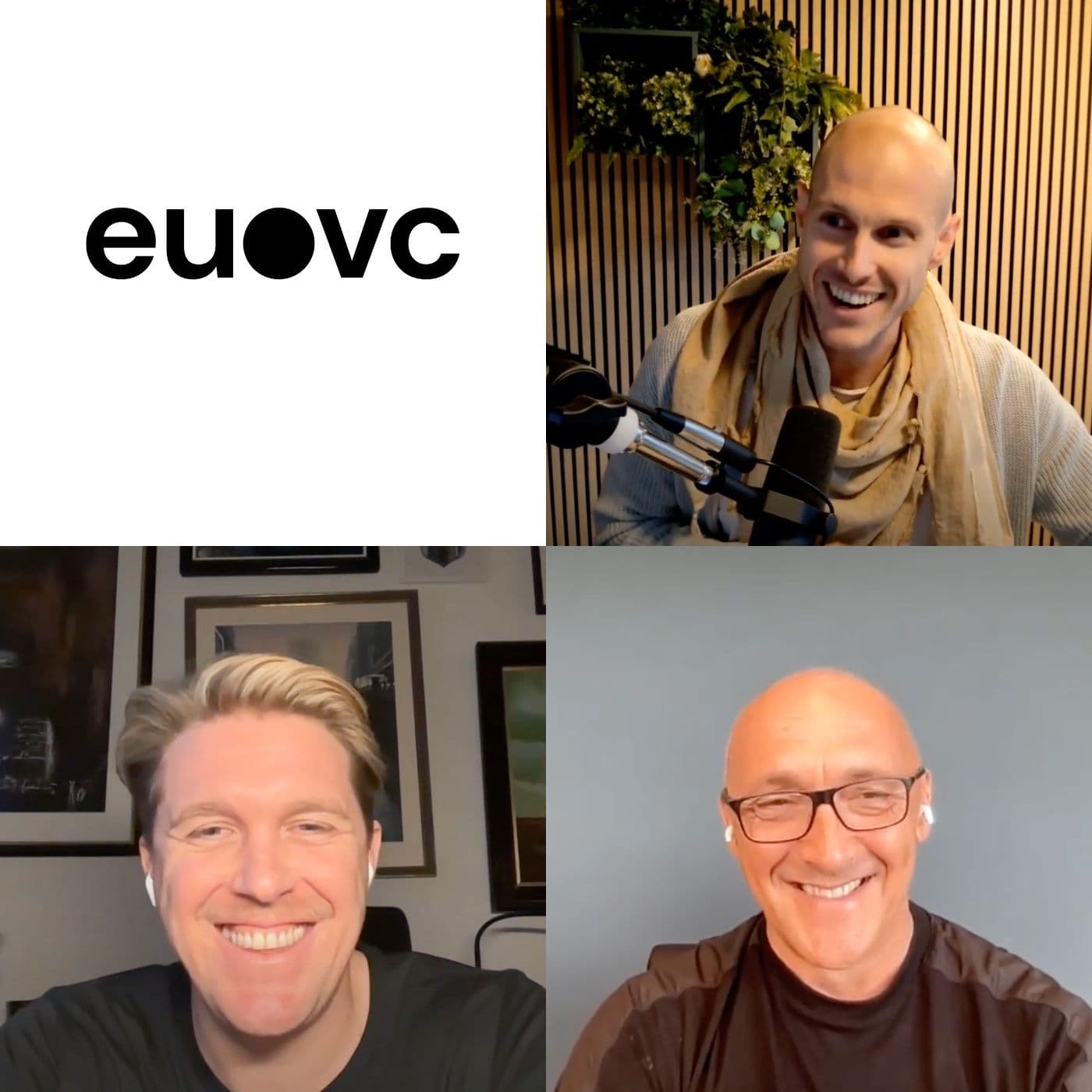
- Episode Title: E382 | Robin Haak (Robin Capital) & Jerome Ternynck (SmartRecruiters): Building Teams and Scaling Impact
- Episode Description: The episode explores the evolution of recruiting, the impact of AI on talent acquisition, and the importance of strong hiring practices. The hosts discuss Jerome's journey with SmartRecruiters, his new initiative Rypples, and the future of sustainable business.
Key Themes and Discussions
- Jerome's Journey and Experience
- Background:
- Jerome Ternynck, founder of SmartRecruiters, emphasizes his long-lasting career in HR tech.
- He reflects on his experiences building three companies, each taking around a decade.
- SmartRecruiters:
- Focused on connecting people to jobs at scale.
- Aims to solve the ongoing challenges in hiring and recruitment.
- The Evolution of Recruiting
- Current Challenges:
- Despite advancements, hiring great talent remains a significant challenge.
- The recruiting process is still seen as broken, with many candidates not receiving feedback after applications.
- AI's Role:
- AI is changing the landscape of recruiting by automating processes and improving candidate interactions.
- The potential for "recruiter-less recruiting" is highlighted, suggesting a shift toward automation in hiring.
- Hiring Success Metrics
- Key Metrics:
- Hiring Velocity: Percentage of jobs filled on time.
- Hiring Budget: Total cost of recruiting divided by salaries.
- Net Hiring Score: Evaluates the fit of new hires through feedback from managers and employees.
- Purpose-Driven Business
- Reverse Recruiting:
- Jerome discusses the concept of reverse recruiting, emphasizing the need for purpose in hiring practices.
- Companies that align their values with their recruitment efforts tend to build stronger partnerships.
- Building a SaaS Company
- Sales and Marketing:
- Importance of understanding the customer journey and optimizing the sales process.
- Challenges faced in scaling SaaS businesses are discussed, including the need for a focused go-to-market strategy.
- Fundraising Dynamics
- FOMO in Fundraising:
- The concept of Fear of Missing Out (FOMO) is crucial in attracting investors.
- Building relationships with VCs over time is emphasized, rather than seeking funding too early.
- Rypples Initiative
- Focus on Sustainability:
- Jerome introduces Rypples, a mission-driven initiative aimed at investing in ocean-positive startups.
- The goal is to combine sustainable impact with financial returns.
- Advice for Founders and VCs
- CEO's Role:
- Founders should recognize their limitations and focus on continuous personal and professional growth.
- VCs are encouraged to serve as pattern recognizers and connectors rather than advisors.
Conclusion The episode provides a wealth of insights into the evolving landscape of recruitment, the impact of AI, and the importance of purpose-driven business practices. Jerome Ternynck and Robin Haak share their experiences and strategies for building successful teams and scaling impactful ventures, particularly in the context of sustainable business practices.
Recommended Actions
- For Founders: Focus on hiring metrics, develop a strong company purpose, and build meaningful relationships with investors.
- For Investors: Understand the founder's journey, provide strategic connections, and recognize the importance of supporting sustainable initiatives.
Additional Resources To explore more insights and summaries from this podcast episode, visit [eu.vc](https://eu.vc).
Written by AI. May contain mistakes. Listen to the episode to check what was said.
Transcript
Automatic transcript. May contain errors.0:00Welcome back, everyone, to the European VC podcast. Today, I am passing the mic to my very good friend, Robin, because I asked Robin, if we should bring a super incredible investor and founder to the European VC podcast and do that episode together, who should we bring? And then Robin said, Andres, I have a name that I really hope would want to come on, but I'm not sure he'd be able to find the time for us, but I'll try. And then I got a text from Robin saying, hey, Andres, Jerome is in. And then I was like, yes. So here we are, guys. I'm so happy to have the both of you here.
0:49This show is not investment advice, and the hosts of this episode may be invested in the funds and companies featured. Robin, maybe you'll take the mic and say a bit about yourself just to make sure that those that didn't listen to our episode know who you are. And then you can introduce Jerome afterwards. Sure. First of all, thank you for giving us the stage somewhat. And it's a pleasure and delighted to be here today making this work. And thank you to Jerome for making the time on myself. I run Robin Capital. Robin like the bird. it's a solo GP and I was a former founder investor before from early stage growth and now it's a very tiny operation but it's an operation I'm deeply passionate about to support founders and I also love to interview founders it's a good occasion to do this and then here today with us Jerome thank you for making the time yeah thank you for having me we have been working together for many years together so it's uh we i'm happy we can put you on the spot here for the next uh minutes and the hour yeah i always kind of feel like sometimes i feel like i should be introducing the guest and sometimes i feel like i should have given the guest the spotlight and just let them introduce themselves this time around because i don't know you personally and don't have the stories i want to give you the give you the mic to say who is jerome smart recruiters why did you found that all this I think I define myself as a founder because that's the only thing I've ever done in my life.
2:26I've done three companies. Each took 10 years. Maybe one day I'll do a company in less than 10 years, I suppose. But so far, I haven't found the recipe. Last company, Smart Recruiters, we're on a mission to connect people to jobs at scale, looking at the employment market and how people and jobs meet. And we're trying to optimize that. We can hopefully talk more about it. I'm a European founder. The first two companies were in Europe. migrated to San Francisco, Smart Scooters was equated in San Francisco. So really excited actually to be on the podcast and worked with Robin for a long time. We've raised some money together, acquired companies together.
3:04And now I work as an LP in Robin Capital and as a venture partner. And you described Robin, you described Robin Cap as tiny, I'd say tiny maybe, but mighty. and it's really impressive what you have achieved in this last two years. So well done. Thank you, sir. And again, thank you for taking the time. Andreas, if you give me your announce, I would just jump right in. Absolutely. Go ahead, Robin. Ask the questions that I can ask. No, I think we make a good compromise. What I had in mind is we could start a little bit with just jumping in on the core expertise, which I believe is here, HR and hiring success.
3:45I think the second bucket could be about, you know, scaling a B2B SaaS company. Interesting for everyone listening, rather investing or building or being a founder. I think from there, obviously, we are in a VC podcast, so it would be interesting. Jerome and I often call it herding cats, but you get the founder perspective on how to raise some money and create board seats and so on and make it work. And then last but not least, Jerome is on a new mission, and we would love to talk about Ripples. This is the name in the last bucket. So jumping right in, Jerome, you have just been, and I had to look at your LinkedIn again, but 1992, seven years, the Accord Group is about recruitment services.
4:27Then talent technology from 1997 to 2007, another 10 years in development. Tenants, then Mr. Ted, I would say maybe probably application tracking system for 11 years until 2010, and then smart recruiters. some could say maybe you're biased on on hr or you have some learnings or not where do you see yourself after decades and and some call you i mean there's a book by the way people you can order this book called hiring success on amazon there's a book you wrote about it how do you how do you feel about all of this in this hr does it does get boring over time or is this like just the start i don't know you know it's interesting because people ask me uh austin like how do you still keep going in recruiting.
5:10It has indeed been 30 years almost. And I'm like, well, it's simple. The problem hasn't been solved. It's still really, really hard to hire great people, and it's really, really hard to find a good job. And so when you work on a problem that is of that magnitude, and it's not solved, you're obviously moving forward, building businesses, helping people. Smart Scooters, we have 100 million users at the moment. I'm hoping that at least for these 100 million users every year, we help them along. but the problem hasn't been solved. So that's what kept me going. And I literally fell into recruiting for no reason other than I showed up in Prague as a French young graduate who wanted to create a business.
5:48And I started to ask people like, what should I do? And everybody said the same. Oh my God, there's so much you can do in this country, but it's so hard to hire great people. I didn't have money, so I wasn't going to get into the telecoms business or something. And so I just said, all right, well, I'll do a recruitment agency. I didn't speak Czech or anything like that. my co-founder and I, and we started. And it was a really interesting moment in time because transitioning from the planned communist economy to the free market meant that there was no candidates. Like nobody had no experience in nothing.
6:22So you would have Coca-Cola come to the Czech Republic and say, I want to hire a marketing director. And you're like, well, nobody knows how to market here. Okay, okay. So give me somebody with at least a couple of years of experience. No, always a marketing degree. No, they don't teach marketing in university. All right, well, give me someone who has a good marketing mindset and we can teach them, right? Which really early on kind of taught us like, how do you get people to realize their full potential? And if we go back to what HR is about, that for me, this is what HR is about. Help individuals achieve their full potential.
6:58Let's put them squarely into a position where they have purpose, They have autonomy and they have mastery. You know, that magic triangle of performance, put them in that triangle and watch it happen. Right. So that's the kind of the core of HR and what keeps me going. That makes sense. And I understand it's still not solved yet. We had the saying, I don't know if you remember, but sometimes we gave this on the problem slide when we were showing our deck. You were saying you fly to Hong Kong tomorrow and it will be very simple for you finding an apartment within a minute, paying everything, fully automated, and you can sleep somewhere forever.
7:39But if you want to find a job next door, literally two streets away, it's super hard. Why do you think it's broken? Why do you think it's still not solved? And what do you think it would need to be solved? There's several reasons why the people kind of problem is not solved inside companies. And I would say the main one has to do with ourselves, like how we manage people, how we recognize who can do what, who has potential, and how we avoid the limitations of discrimination, shortcuts. So there's a general view of how do you actually optimize people inside your team, inside your organization, inside your company.
8:21And that's called leadership. And I think we just need to grow up in leadership. And to me, that's the job of HR is to help leaders develop so that they can build great teams. On the more plumbing side, it's hard because it's a marketing exercise, like finding people. It's a marketing exercise followed by a screening exercise and convincing them. And so very few people actually look at hiring in a marketing way. They look at hiring as like, oh, I posted my job and I got 100 resumes. Which one should I check? They don't look at like, okay, who are you hiring? And who you hire is kind of important, actually.
9:02Where do you, Jerome? Because this is a VC podcast, right? And you've been in the venture ecosystem so much as well. So where do you see VCs not getting it right? Because most VCs, many VCs would say one of our core value adds is helping with hiring. That's bullshit. That's bullshit. Thank you, Jerome. No, it doesn't work, right? Like, be honest. Either you have an executive search firm and you provide free services to your portfolio company or you try to help here and there. Or, I mean, you can do some things, but you're never going to be at a level where thanks to your efforts, your companies have amazing talent.
9:45This is the job of the founders. This is the job of the CEO. And for me, like the early stage companies tend to get that, like founders, okay, two, three, five, and then it dilutes. That's the problem. It dilutes as soon as you hold back. And you hear the stories of amazing founders that continue to interview people late, like 600 employees, and they interview each person. That's also a failure because it means you didn't set up a process that you can trust to actually screen and bring on the people. And so I think for founders, I would say very simple. Who you hire defines your outcome. Plain and simple.
10:31You hire amazing talent, you're going to have an amazing outcome. You hire mediocre talent, you're going to have a mediocre outcome. Just as simple as that. So then the question becomes like, what does it take to hire amazing talent? It's actually not that hard. and just need to source the best people, which is a marketing exercise. You need to be able to recognize great talent when it's in front of you, which is a screening exercise. And then you need to convince them to join you, which has to do with money and purpose and a lot of other cool things. But it's not that hard, but it needs to be a core central focus.
11:05And I think startups generally get it until it dilutes. The claim of smart recruiters is you are who you hire. And I used to work for Slash in an advisory board. and then we rented a plane. And the year after, I asked Jerome if he's okay flying on the plane to slash the speaker, but on top of it, if he would jump out of the plane and pitch, you are who you hire. And then literally, it's like saying, you see the guy right behind me and he's the one pulling the parachute and you hire who you hire. It's better, he's not dying. But this is the claim. I think it's a good, after what you all told us, it's a good example on believe and you are who you hire, the claim.
11:39But Jerome, maybe we drill a little bit in here because the level of you selling smart recruiters and selling an application tracking system and going to customers like Ikea, Bosch, LinkedIn. I mean, LinkedIn is a customer of yours, right? Right, who else? And you wrote this book, you have a mythology, you have certain fundamentals on, I believe it still attracts select and hire and it's on budget and on time and so on. But if you see this in these steps in a product and you mentioned some examples before, right? You have 300 employees, 300 applicants. How do you know who's the right one? And how do you make the screening process?
12:20But I let you guide us through it. But I would love the listeners to understand that you can actually have a fully automated, maybe even with AI, process end-to-end that makes sense. Because I think many listeners don't know what's out there that you could potentially do that makes their life easier. So we used to decompose it or we decompose it in very simple, very simple steps. And the first one is sourcing. How do you actually source interesting candidates? And that's a marketing job. And when I say it's a marketing job, it actually means that you need to have, you define a marketing mix for it.
12:55You're not going to apply the same marketing techniques to attract young graduates from engineering school than you would to attract your next CFO than you would to hire 10 SDRs or 100 reps. So you analyze the, you map the talents you need. with scarcity and importance. And that allows you to define just as you would for normal marketing. Like this is something a HR person can do with a CMO, actually. It is a really cool exercise. Just map the people you need to hire and then assign different marketing techniques to a different profile. For example, if you have a high value, high scarcity profile, well, that's going to be a cold calling exercise or there's going to be you on LinkedIn saying, hey, I know you're the best AI person at my competitor, but actually, would you care to have coffee, right?
13:46So for some profiles, you're really going to apply cold calling and intense things. Others, you're just going to do advertising and get enough candidates. So first, you start by doing this and you map the sourcing. Then that means you get to a position where you have enough of the right people interested to talk to you. That's job number one. And second, job number two is how do you recognize the right people? And for that, I believe in collaborative hiring. I think it's hard to evaluate candidates. And so core principles here would be you set up a small hiring team, two, three people max, depending on levels, but two, three people max.
14:27And you set criteria for which you're going to evaluate the candidates. Most people make the mistake of defining their hiring criteria by must-haves. Must have a degree. Must have five years experience. This doesn't work. You need to define your criteria on must-achieve. Must meet their quota next year. Okay. Do I think this person can make their quota next year? Yeah, maybe. And then now we're talking because now you are actually doing a performance review of the candidate prior to their starting. So you are estimating their propensity to perform as opposed to, yes, they have an MBA. Yes, they worked at McKinsey.
15:06Yes, they should be a good hire, which is completely unrelated to the performance that they would have. And then so if you have those two things, you have enough good candidates who are interested. You have a good screening mechanism. And then you just need to wrap the whole thing into a good, fast experience so that you don't lose the best candidates because you are aiming for the best candidates. This is a good principle of hiring. It's like if someone turns you down, chances are it was the best candidate, right? Because the best candidates have multiple offers, multiple things. So you need to move fast and good.
15:38That's kind of the core drivers of it. And like I say, it's not difficult to do. But it's not done by somebody who is an administrator of personnel from 20 years ago. It's done by marketeers and process owners. And AI, of course, has a lot to do. Like we're definitely headed to a recruiter-less recruiting world. Maybe then I make it two, three more questions. One will be about AI on this topic. If you could speak to it, I think you just launched a new AI capability on smart recruiters. It has a name. I think you wanted to call, we were joking five years ago, calling it Trump. No, Donald, right?
16:12Donald was it. And now it's a different name. Then two, just very shortly, but I would love to understand. I think there's certain KPIs that are valuable in velocity and so on that make sense. I think it's nice to understand it at once because people rarely hear about how to track this and performances. And then three, but I will ask particularly what's done on D &I and then we jump into the next topic. So let me start with metrics, how you measure success in hiring. And typically you get process metrics like time to hire, cost to hire, that kind of stuff. That doesn't work. For me, there are three metrics that are core that one should implement.
16:50Number one, we call this hiring velocity. And hiring velocity is the percentage of jobs that are filled on time. Pretty straightforward. You want to hire 20 reps in Q1, how many did you hire? 18, 5, 20, right? So hiring velocity correlates completely to business velocity. This is a really interesting way to measure recruiting versus your objectives. First one. Second one about money is your hiring budget. which is a total cost that you're spending in recruiting divided by the salary of the person, which then shows you an investment. Hey, we're putting 5 % of our engineering salaries into recruiting.
17:33How does that compare? It's kind of low. Like most people put 10 % and they outperform us on marketing because we are underinvested. Oh, okay. So then it's actually a good way to think about hiring as a budget and as an investment as opposed to as a cost. because if I tell you you have a cost per hire of$1 ,525, you're like, okay, can you make smaller, right? And then the last one is you do a post-hire check, which we run like an NPS. We call this a net hiring score. So 90 days into the hire, you ask the manager on a scale of 1 to 10, how much of a fit is this new candidate you hired? And interestingly, you ask the candidate as well on the scale of 1 to 10, how much of a fit is this new job, right?
18:15And then you take the 9 and 10 NPS methodology. You take the nine and tens minus the one to five, and you end up with a simple score that tells you, do you have more great hires than bad ones? You run this simple metrics. We run this the first time with a very large San Francisco-based company. Their score was minus 30. And when the CEO saw that, he went ballistic, for good reasons, right? Because it's like he was just filling the company with poor performers or with poor fits. It's not just a poor performer. It's just a poor fit, someone who's just not in the right job or doesn't like, or the job is not what I was told, or whatever the mistakes might be.
18:56So those three indicators, hiring velocity, hiring budget, net hiring score, you measure this religiously and you are bound to at least ask yourselves the right question to improve recruiting. Thank you, Jerome. Two more is then AI. I would love to understand the new capabilities and where you foresee this. AI, I think in recruiting, has a lot of potential, right? because you think about what is AI good at, at the moment at least, it's automating conversations. Well, what is recruiting? It's just one big conversation between many different people that needs to be automated. So I think we're going to see massive improvements in AI all the way to recruiter-less recruiting.
19:34So all the aspects of sourcing candidates, bringing them along, managing the process is all easily automated. and Winston, which is the name of our AI, does that already for large volume recruiters, you know, think dominoes or like big companies that are hiring tens, hundreds of thousands of people every year, right? And it's actually for the better, right? There's many ways where you can say, oh, AI is scary. For recruiting, it actually is not scary because you know what is scary? What is scary is I submit my resume and I never hear back, which is what happens to 80 % of candidates. That is scary, right?
20:12Or what is scary is, oh, we had a good candidate. I forgot to call them back and now they're gone. Or like all the inefficiencies in the process. That is scary. I think here AI can absolutely get us to a place where, I think AI just gets us to a place where someone can say, oh, Andreas, you are hiring someone. You should meet Robin, actually. And I set up a meeting for you. I think you will like him. Simple as that, right? Nothing prevents us from getting to that stage, right? And it's an interesting evolution for us at Smart Recruiters for the world of talent acquisition. But if you extrapolate that, it's a very interesting evolution for SaaS as a whole to say, how do the workflow owners, the systems of record leverage AI to fully automate the function that they are managing?
21:00And I think recruiting is going to be at the forefront of that. Can I ask you a question, Robin? Of course. You are an investor and have built in the HR space, obviously. How do you look at HR as an investable sector at this time? Do you think it's super interesting and sexy? Or do you think that there are some red lights and I don't think actually AI looks like something that you'll quickly implement, but it's actually the game of the large players? Or where do you see the opportunities today? do you think that it's a good space to be investing into or do you think it's a very hard one sorry just to clarify is it ai hr or ai in hr ar ai in hr so hr in general yeah no no got it yeah now with the advent of ai probably the main deal are going to be there there's hundreds and thousands of ai companies and we investors see thousands of them i see like 30 at least out of 150 deals per month that I receive.
22:0330 of them are AI related. And many of those are, you know, sometimes it's too deep. Sometimes the question infrastructure layer, application layer, like where are you interested in and what do you think makes sense and what's scalable and what's not, what's just a feature and a product and what's a co-pilot versus what's deeply integrated. And it comes to a mix where I think you should rather be very specialized in a growing market that you grow with and then you're the best in this particular thing or you go in a certain field where the IBCP is clear like it's deeply enterprise and then you then you're entering something and you you make it potentially much better then it takes more time to create this in HR obviously because Jerome and I enjoy much longer than me but also I have been working in the space and I had a company before smart retreat is called job spotting and we had an AI company there for personalized job search.
23:00And it's just incredibly hard because so many things are changing all the time. It's much, much hard. It's a human being ultimately. And another quote I give you from Jerome is like, what's the most important decision you will ever do in your life? It's like, okay, right. Who you marry. But the second one, where you spend eight hours a day. And the decision is big. And so coming in there and saying, oh, we give you an AI pilot and this will solve it for you is difficult. So it's a very complex topic to solve and you need certain ways and you need to find a problem where you want to have a solution and it has to have a clear ICP and it has to go after certain problem networks.
23:40And obviously we are, at least I'm a little bit biased when it comes to HR, but there are many, many things that will change over time and I can't wait. And I think AI is super impactful. So eyes and ears are open, but it's definitely not like a superficial co-pilot. It's something deeper integrated, holistically, that can make a difference. Yeah, and if I may add something here, I think it's the real question for those complex business functions is, can the SaaS that owns the process transform itself? Because it's really hard to automate something that you don't own, that you don't know. Try to automate recruiting.
24:20If you're not a recruiting system, well, who is the hiring manager? Who is the hiring team? Where is this job? Where does it fit in the organization? How much does it pay? What is the process? Do we need to do a background check? Are we doing an assessment? Where is the offer template? Oh, by the way, who manages privacy? Do I have access to the resume? It's impossible. You can automate a little piece on the side, but you're not going to be able to have impact. Now, on the other side, the incumbents, large players. and this applies to recruiting, but it's also applies to Salesforce, right? To every big business function.
24:53They have to realize that their life is over. And I say this very simply, right? No user will want to learn a software ever again. Like fast forward one, two, five years, you can insert timeline, but no user is going to go to your screen to try to figure out which tab, how to save, how to do whatever they want to do, right? They are not going to want to learn the software. They want the software to learn them. And if you take that as a principle, you design software that does not have a user interface anymore. You don't need a user interface. And if you think about it in that way, then you're like, oh, yes, yes, actually, I can use everything I have to deliver to you a single service that actually just does what you need, right?
25:41Without asking you to log in and come and do this and do that and do that. I think AI has a massive potential for incumbents in those complex business functions, whether it's HR, it's finance, you name it. But the transition is interesting. As smart recruiters, I can say that we have 80 % of our R &Ds on the app. Plain and simple. And our thesis is nobody's going to want to use our screens ever again. We have to learn the user. and there was this there was this the choco founder that and he made a talk a podcast with harris stebbings and they were discussing exactly this and it's kind of scary also to a certain point i think some of the b2b sass founders freaked out and the incumbent players of course good players uh good yeah it's yeah freaking out is good yes freaking out is good let's go yes it keeps you let's fucking go jerome i make the last question on on everything about hiring but just because I know it's important to you, you're a very purpose-driven person.
26:38I know you've been some time. I think we connected over this, and the purpose itself was connecting people to jobs that's gay, right? Or eradicating unemployment, however you want to call it a mission. When I started, I knew and I know you made a journey yourself on how to do good. And the journey maybe started with working in the kitchen and going to jail and supporting there. But ultimately, you were all... and supporting people there. But you were always thinking about how to make it scalable. And then you, we, the team, everyone came up with something called reverse recruiting. And you have 100 million, you said it earlier, users, which potentially then means job applicants, you brought 100 people to jobs, one could say.
27:26This reverse recruiting and on CSR, or whatever you want to call this, and DNI and so on, Where do you see this now? How has this... It's already there for some years. I also know you pledged 1%, by the way. But talking particularly about this reverse recruiting, where do you see it? And how do you think it will evolve and so on? So I think purpose is why you do things, right? And the why, I mean, start with why, right? It's a very simple way of saying it, but it's the right way to think about it. And it's not about recruiting. It's all about how you build your business, what you stand for. If you have purpose, you know why you are here.
28:10You already have one of the core elements of motivation for your teams and for your customers. I mean, I'll take you a simple example. As you just described, for many years, I've been like, hey, we need to help candidates find jobs. How do we do that? Well, we're going to help companies do a better job at hiring them. And then we get great. And people are like, yeah, are you sure you want to help candidates? Because I just want to make money from selling software to companies, right? I'm like, no, no, no, no, no, no. And over time, the company really got these values. Fast forward six years into our history, we get into this RFP, largest RFP we got since then.
Read the full transcript
28:48It's like a 10 million TCV, over 10 million TCV contract. The CHRO calls me to tell me that we are awarded the contract. And you know what she said? She said, Ah, Jerome. Yeah, I just want to tell you, you guys won the contract. I'm super happy. And obviously, you seem to have a great product. I mean, my team and your team, I've been speaking for months. You have all the functionalities. And so this seems great. But I'll tell you, for me, what really, really made a difference is what you guys stand for, right? Because you guys have, like, we seem to have the same values. And if we have the same values, then I trust that nothing can go wrong between us.
29:24So I'm really excited to get into this partnership with you. And that was our largest contract ever. Purpose is everything. It just trickles. It's the aura you have around you. It trickles to everything. And a company without purpose is Yahoo. Yahoo lost its purpose. And then Google came in and, poof, bye. Then, my friends, I would love to go to the second bucket, which is, you know, Jerome, you build a Centau, a company that makes millions of revenue AR, recurring revenue, and everybody from a million, or even from start, needs to understand on how to end-to-end, how to create this, right, ultimately.
30:07And I guess on go-to-market, there is from lead gen and channels and marketing to sales to success and support. Could you guide us through there to start with more top-down, how you see this flow and how you see on building a SaaS company? Building a SaaS company today is a good recipe for it. And we can talk about the metrics and the methodologies. But the one thing I really like about a SaaS business is it's predictable. That's what investors like as well. But as an operator, as a founder, it means you can rely on the system to actually grow and you can optimize the system as opposed to having to be on the underlying product.
30:52The simplest way is how do you acquire customers? How do you make them happy, grow them? You look at those big entities and you just turn it to make it more efficient all the time. For me, operating and growing a SaaS business, it's very clear, very clean. You know, like operating a marketplace is completely different, but it's also very clear, very clear. You know what to do if you are operating a marketplace. So I think the building as a B2B SaaS company, like if you're Series A and you're like, okay, things are starting to work. My one piece of feedback would be like, follow the playbook, like buy the book.
31:35Just do it by the book because the book has been written on how to build a big cloud SaaS company. I witnessed you in different roles. I witnessed you being a venture partner and talking to our SaaS founders in the portfolio. And you talk a lot about ICP and customer love and narrow, narrow ICP. At the same time, I remember when we were hitting, I don't know, 25 million ARR, something like this. Dave Carter came, the president, former CSO of Cornerstone. And we were going account model and we wanted to have things also more. You could even argue to a certain point ICP on geography, on mid-market enterprise.
32:13So it never stops. You could almost say it never stops to focus. And I would love to hear your thoughts on this. Yeah. The first thing that came to mind is I remember that time where we were everything except focus. And now I can hear myself give to people other advice. I suppose people learn from their mistakes. That would be a good way to think about it. But it's really hard. And I'll take smart recruiters as an example. Every company in the world needs to hire. Okay, great. You build a good recruiting software. Guess what? Everybody wants to come. And if you let everybody come, then suddenly you are a servant of all, a master of none.
32:51And I think this is a very interesting part of the journey of a SaaS company is when you transition from product market fit, who has a problem that I can solve and they are willing to pay me enough money for? That's iterating on that. And then switching to go to market fit. how do I actually acquire and make successful enough customers at the right level of investment and effort? Two extremely different problems. One says, I opened a restaurant, the whole neighborhood is coming, and they love my food, and they are clapping every night. And the other one says, I have a recipe to open 2 ,000 restaurants next year, and I know it's going to work.
33:38It's a different world. It's a different way of thinking, and it's different things you have to assume. And I think people get stuck here and they start to, they get pleased by the feedback, the positive feedback of many different customers. They keep exploring, but they refuse to transition. Certainly I did refuse to transition into, okay, forget you all. I'm going to focus on these people and I'm going to try to find a million of them to actually do that at scale and then start to work on your go-to market. How do you actually sell? How do you implement customers? How are they successful? for what's your upsell level?
34:14How can you get more gross retention, more net retention, reduce your cash, reduce your time to sell, increase your IR, all these things. Like then you're building a gross engine. That discipline is, I think, key to scaling past the 10 million or past 20 if you want. But once you get to that, okay, we have a lot of customers. They love us. We have good traction. They keep calling us. It's amazing. VCs are doing. That's great. That's 10 million. To get to 100, I think you really need to get to that, like an efficient system, to get to 100 with velocity, right? Not scratch your way to 100. We go a little bit narrow.
34:54Yeah. And maybe then we focus on sales. I could ask with a simple question that people are divided about, is the rep, is this part of marketing or is this part of sales? But besides this, let's say you are the millionaire, you want to go to 10. What's great sales? What's great onboarding? what's great web and e-work? How do you define this piece? And I think many listeners think about this all day long. I think, so you start by the metrics. I like to start by the metrics. Simple metrics is a dollar of sales and marketing gives you a dollar of subscription with a decent cost of net retention. Things look good.
35:32Okay, great. Start with that. How do you spend your dollar of sales and marketing? If you are Salesforce enterprise, You spend 50 % in sales, 50 % in marketing, alliances, and all that. Then you start to decompose. And you make your assumptions around that, and you measure and optimize each function. And I think if you do that, you end up really optimizing the profile of your reps, how much quota they can carry, how many leads they can look after, what level of leads they should lose. And you get to the right balance, right? I see companies are like, well, I have a rep and an SDR and a pre-sales and our ASP is 25K or our average ACV is 25K.
36:20You don't need, yeah, dude, this is not going to work. This is not 25K. If you want your rep to be profitable, then they need to sell a deal every two weeks or so, something like that, right? to get to a 600K quota, which is really a minimum. This is not happening. And you're just not going there unless you have an inbound engine and then you just get rid of the pre-sales person. You don't need an SDR, right? So there is some economics here that are actually not difficult to fine-tune, provided you focus on it and then you follow and validate your assumption. And, of course, try to not burn too much money while validating that.
37:04And I love saying all these wise things because at SmartCookters, we did completely the opposite. So we started as a free software. We had 50 ,000 clients before we had one revenue, one dollar of revenue. Then we pivoted to the world's largest companies. We left behind the free cost. It was a whatever. We all make our mistakes, right? But learning from that, the optimization of the growth engine is, I think, the most important, provided you found your product market. I love this. it makes me happy why because you know i thought myself and then you see you know you hit it or not then you go to the customer and so on but i'm also now talking to all these founders and some some of them even in growth you know i invested growth before and often i see that the the ar the growth the net retention and and the burn and it's not not somehow not correct the ratio doesn't fit the burn is too high and they are pushing for growth but they are dropping out because the The net retention is not high enough.
38:01And it's ultimately, you know, they're pushing so much for growth, but at the same time, they are not sustaining. And then you don't see the overcoming, you know, and there's several ways on how to solve this. One obviously is making the customer like avoiding churn. And then another thing is maybe going up market and going more into enterprise direction. You talked about higher ASPs, ACVs or TCVs like longer contracts. how do you and we often talked about it ourselves when we went enterprise in comparison because short-term competitors went faster and you we went a longer term journey and it was very hard and took a lot of effort to to switch this into this direction but it was worth in hindsight and I was wondering what how do you see this journey yourself and then what do you recommend founders today?
38:49There is a natural pace of learning that is hard to overcome. And the best way to make mistakes in this area is VCs. VCs giving you too much money and on too much growth expectation, which you end up scaling things that are not proven and making too many experiments or expensive experiments, it needs time. You need time to build a good model. And if you are working under a good financial pressure, you end up making better decisions than if you remove the financial pressure. If you remove the financial pressure and you replace it by a gross pressure, then it's a recipe for mistakes. And some people will say, yeah, go big or go home.
39:39It doesn't matter. We probably could have done it with 50 million less than what we did. but anyhow, we are now the world leader. Great, maybe that can work. But I'm more of the school of trying to go step by step and optimize. So I think you work your problems one at a time. Am I good at getting leads? Am I good at converting? Do they sell? What is our price? How do I implement customers? Are they happy? What does the gross retention look like? Then what is my upsell strategy? What is the net retention? It's a simple funnel, but every component needs to be optimized. And don't scale something that doesn't work.
40:18We decided we need customer success managers. Let's hire 20 of them because each of them needs to have a portfolio of 2 million of ACV. And we have 40 million. So, you know, 40 divided by 2 is 20. Let's hire 20 CSMs. No, that's not the right way to do it. I zoom out and then it would be the overlap to the next bucket. And the question would be, and then we go into fundraise, which I think would be interesting for the GPs listening, but also to founders listening on how we see how to fundraise. Zooming out, the last question on this bucket for me here is you often talked about CEOs and leaders need to be athletes.
40:56You even, at Smart Recruiters, you have these, you have the values, the core values, and one is to take responsibility and be the CEO of your job, no? and I would wonder if you could speak to this topic and then from there I think it's great because then we back into the CEO's position and then how to, you call it herding or we call it all herding cats, right? The art of fundraising. I mean, CEOs are actually in that you have a good idea as a founder, as a CEO and you know what? This company is going to get as big as you can take it. We all agree that's true. So then the question means, okay, so how far can you take it?
41:35How far can you scale? What are your personal limits? What do you need to know? What do you need to learn? What do you need to improve? How do you need to operate? Who do you need to hire? What are your personal limits? And I think recognizing that you are, as a CEO, you are the main limitation. Sure, you are the main driver, but you're also the main limitation, acknowledging that, being prepared to move out if it actually turns out that you are scaling out, and being committed to remove that barrier to scale, that is yourself. So for me, this is a critical piece. And you see it's all the good founders.
42:11They are super, they are constant learners, super curious. They are always trying to figure out what to learn from every conversation. But it has to be an active process. Like you, at least for me, that work, that you actively work on yourself and make a list of the things you're not good at, what you want to improve, how you're going to get there, like literally work on your CEO competency and likely get a little bit further or a little bit faster than you would otherwise. Can I ask you before we go into the final segment, where do you see the VCs, and I want to ask you as well, Robin, where do you see the VCs' capability, so to say, to advise founders in the right way and work with founders in the right way on these two dynamics, both the scaling part and also being thoughtful around the journey that you're on as a founder?
43:09The things that VCs are not for a founder is advisors. They're not your advisors. They are your investors. And as a founder, I think you need to recognize that and serve their needs as investors at the board, on reporting, on liquidity, on a lot of things, but treat them as investors. The moment you take your VCs as advisors, which is the natural view at the early pre-seed stage, like you get money from Robin and you're like, oh, Robin, what should I do? What should I do? That's good at the beginning. But later on, I think it's a relationship that has to be different and find your advice elsewhere.
43:52VCs are great at pattern recognition. so I definitely would go to VCs for pattern recognition. Like what are you seeing that I am not seeing? They're great like market makers, market connectors. So go there for that. You mentioned recruiting. Exec recruiting is a good place to go. Who have you worked with that's amazing that I should hire? So that's kind of where I would see VCs. And for VCs themselves, like how do you add more value to portfolio companies with those elements? with those elements, I would say, is where it's the most valuable. It's a nuance. Ultimately, you're a founder. You're in there every day, 12 hours, you're working, and there's a lot of things you need to do with your team.
44:35And the VC comes in a certain amount of time that is a percentage each month. And if you professionalize, and I agree with Jerome, you're the one reporting and you need to manage your board. You need to manage the investors you work with and on the values that they can bring us. They have value at teams and on talent and on comms and on other things, but it's granular. And yes, they can pitch you venture partners. We have venture partners. I love Jerome. I think they love talking to Jerome, but ultimately it's in our ones. It's great. It has a good impact, but it's all to a certain point. Ultimately, I agree with Jerome.
45:15Also in growth, it comes to executive search, board members, M &A acquisition, other things they see, competitive benchmarking um geopolitics where to go um insiders we had inside partners as a in the board and as investors and they have great benchmark for especially for financials i can remember daniel jerome who always had been challenged on how to do things better or or like what are good numbers and how to compare so especially if you come to stage in bcde it can be extremely valuable from like the intel comms perspective and earlier it's it's a noise it's granular it's great to have support and i think most valuable on these follower vcs like myself is often if they're not founders who cannot support you because they haven't been there it's maybe introductions and network which is the number one thing they do right and that's fair short on time um we make two more questions on the fundraise process and then i want to talk about rip it's jerome because it's your thing um the the two questions we have you're talking about leadership in Jerome and working with VCs.
46:20We call it herding cats, formal, creating a pitch deck, perfect pitch deck, sending it out or not, or teasers or blurbs or warm intros. And then you funnel them, you talk to them, you heat it up, and then you want to have term sheet week the same week, like eight weeks in, and then we want to have 10 term sheets the same week. And then we negotiate a little, and so much of it is vision yet not there yet. and you're sending the future, right? And often in Europe, I'm also sending you sending the past. This is what we have achieved. We like to have money. But then in the pitch deck, I never see where we're going forward to, right?
46:56And then they will evaluate you on the past and not on the vision where we are going. But that all said, Jerome, how do you see herding cats and how you make it work? I think the first thing I remind myself is that when you meet a VC, it is in their best interest not to give you a term sheet. unless they think somebody else is going to do it before them. So fear of missing out is actually the only driver of term sheets. It's the only thing. And everybody can produce a term sheet in 24 hours. We all know this, all these things. We need a little bunch. So if you think that, or if you accept that FOMO is the only driver, then the question becomes, how do you organize FOMO, right?
47:43And what do you need to do to prepare the market and to build the relationships and the deck and the positioning such that you actually create that fear of missing out? And if you cannot create it, then I would really like almost go in and out of the market. Like 10 VCs, no FOMO, something wrong, go back. because if you go 10 VCs, nothing doesn't go. Okay, 50 VCs, still doesn't, 100 VCs. Now suddenly you are just this person who stinks in the room, right? And why has everybody passed? Something wrong with your business? No. So I think you prepare the raise and you keep it exclusive and silent and quiet with pockets of VCs that you have worked with before.
48:40So that's one. And yes, I think we did A, B, C, D, E at Smart Recruiters. And I think for A and B, A, I managed to have two competing term sheets at the same time. It was a bit messy. I just arrived in San Francisco. B was a complete fuck up because we had no revenue trying to raise a series B. So that was not a good idea. But we did it. And then C, D, and E, we got several competing term sheets on the same day and led to us being able to decide and have the right investors, actually. We had inside to C &D and Silver Lake come in for Series E. So with super quality investors coming in. But the point there is, I like to write the deck like 12 months out.
49:24You're going to raise a Series A in 12 months? Great. What does the deck say? What does the deck say? What are the metrics? What are the numbers in an ideal world? And then work towards that. What does a Series A investor want to see? And then go and engage VCs about that. Hey, I'm thinking about raising an A next year. What would you like to see on the deck? Well, it would be interesting if this, this, this, this, and that. And then by the time you have those conversations, you build a relationship. They tell you what's important to build accordingly and you hit the market with warm relationships of people that have been following your trajectory.
49:58And I say, don't ask for money in the first two meetings, even the first three meetings, if you can. Just ask for advice and build relationship. The last one here, we did D &E together. How do you, in an ideal world, when you could ideally form a board and a cap table and an equity story, what's your advice? So there are different elements here, equity and board, right? So your equity story, I think you need to respect the different specialties of the different VC players in the market. In other words, I wouldn't take a pre-seed from Sequoia. Yes, it's great. But then if Sequoia doesn't invest in your seed or your Series A, you are in serious trouble, right?
50:46If you take people that are multi-stage, sorry, I'm nothing against the multi-stage big funds. But if you take multi-stage, you take a risk. And the risk is clear that do they have a follow-on? So I would keep the right phones at the right time and then build over. I would ensure that you minimize your equity needs. It goes without saying maybe, but it's actually important to say it. Like fundraising is not a success. Fundraising means, shit, our business is not profitable. We need more money to try and make it work. That's what it means. And then you go with your price release. We raised 60 million or 500 million, whatever.
51:28But it's actually a failure if you think about it in the grand scheme of things, right? So if you can avoid it, I have this conversation with a friend of mine who did a company. And I was an angel in there. He never raised. They never wanted to raise. And it took time. And they did a secondary this year where they gave 1 ,000x to their angels, right? And you don't give 1 ,000x. Yes, whatever. But it's not the point about me, but it's like a thousand X. You don't deliver a thousand X to yourself as a founder unless you really optimize your equity. So don't raise, wait, wait, make it. You know, the market is helping you at that, right?
52:10Don't raise and don't try to make it. Oh, we raised a hundred million. I know it helps, but this vibe is organized by VCs. It's not in the best interest of founders and of companies. So take time, build the right company, raise less if you can. and board yeah board is you have to manage your board if you have a board with only investors it becomes a one-sided one-trick pony because they think in the same way it's a mistake we made at smart recruiters we had you know A board seed B board seed C and E so then you have only investors no operators and the conversations are are turning in circle around VC topics so manage your board actively to bring in other people that bring other expertise in there.
52:57It's an important part as well. At Revaya, we try to have no ego, and then Revaya doesn't take board seats. So Revaya Growth Fund, where I worked before as a GP, we place third party who can support you best in the field you're actually working at. And I think VCs should be starting doing this, like sending in there that they, we incentivize them with our own carry, but sending people in there who are better than you and who are representative to you. You said, Jerome, that if you fill it with VCs, it ends up being pure VC topics. What would you say are the blind spots that you get if you bring a board just of VCs?
53:38The first blind spot you get is when you have a group of people who likes diversity. So if you need inner board, you need multiple perspectives. If everybody listens to EU VC and everybody talks about the same trends, then it's an echo chamber. So you avoid the echo chamber by bringing other people out. The other thing that you miss or that you need to balance is founders are often playing an infinite game. and VCs by the nature of phones are playing a finite game. And when the infinite game and the finite game conflict, usually after 10 years, then you turn into different discussions where the interests of the board or the investors is not aligned with the interest of the company on the longer scale.
54:40And that's where also it's important, right? Think about the CEO of CVS Pharma in the US that comes to their board and says, I think we should stop selling cigarettes. I mean, we're like, our motto is let's make Americans healthy and we sell cigarettes. This is ridiculous. We should stop that. Then the board member is like, yeah, but we make 5 billion a year with cigarettes. Like, this is a hard pill to swallow. Well, yeah, but still, we should do it. Like, who wins that argument, right? If you only have investors, obviously you keep selling cigarettes and then you kill your company because you cannot make Americans healthy if you sell cigarettes.
55:12Anyway, the example is famous, but that's very true, I think. With the time and side, Jerome, you switched from being the CEO and founder, or sorry, to becoming a chairman, a shareholder, and now you started a new mission again. Yes. And a long-term mission and a very important mission and something that I deeply admire. I think you talked earlier about why, but let's make – it's called the ripples, and I want to hear all about the why, the how, the what. Yeah, ripples. You know, it's interesting. I came out of smart recruiters. First, I said, okay, enough candidates. 30 years of helping people.
55:52So let's have impact in another place than social. Obviously, looking at sustainability, big ocean fan. And I look at where we are as a society, as humanity. And I think we actually have the opportunity to become the first sustainable generation. And by this, I mean the first generation that will leave the planet better than we found it. and historically we didn't have a choice like i mean you know our ancestors killed mammoth to eat and they cut trees to build houses or burn coal or now burn oil like we've always been takers of the planet we've never thought about okay what ecosystem services do we provide back to the planet and how do those two balance out today we have the technology to do that we actually have the technology to live in a planet in a sustainable way, which is incredible when you think about it.
56:43Like, you know, sky's the limit if you can do that. Like, we can continue to consume however we want if we do it in a sustainable way. And I think that's a goal worth fighting for. So at Ritmalt, I teamed up with a friend of mine who was my co-founder and the two previous company. And we decided to pull some capital together and to actually go and help entrepreneurs who have ocean-positive solutions and help them scale faster and bigger, like basically putting our little bit of money, but mostly our expertise as operators to help them scale. There's many, many different segments where you can actually make really good ventures on ocean.
57:27Think ocean systems, ocean data, maritime decarbonization, blue foods, there's a lot of area. we focused on ocean just because it's a bit of an overlooked area. And yeah, that's it. That's our mission. And I think we're, by the way, I think we're going to make a ton of money doing that, right? This is not a philanthropic exercise. No, I'm serious, right? Because people are like, okay, so is it impact or is it money, right? I'm like, no, no, no, no. Actually, money drives impact. Like you align it properly, money drives impact. Smart Recruiters is an example. or you want to help people find jobs?
58:03Okay, that's great. How many can you help? 10, 20, 1 ,000, whatever. If you want to help 100 million people somehow with their job search, you better find a way to make money out of it. Otherwise, you're never going to reach that scale. Same is true for every area. And I think the whole world is transitioning to a sustainable economy. Services, goods, transportation, everything. So if you're not transitioning already, you better think about it. So we have two people listening that could be interested in joining this journey. So one is probably Andreas wants to invest, Jerome. Can Andreas and Robin invest into your fund?
58:40What kind of fund is this? And two, I think founders want your money. What kind of fund? Is it pre-seed, seed, whatever? Could you define these two things? Because we all want to work with you now. Sorry, Andreas, again, I'm always cutting you. I feel horrible. bit. I was just about saying here that you must be a master user experience in TeamEar because I was sitting here so is this a fund when I was reading on your website and then literally the sentence I read afterwards is, Ripples is not a fund. So Jerome, tell us, what is Ripples if it's not a fund? It's an ocean investment firm. We invest out of our own balance sheet.
59:22So we are not in the business of managing other people's money, which is pull some capital and we invest out of our own balance sheet. Maybe over time, we'll increase that balance sheet and get it to a certain scale. I think we need, by the way, in impact, we need more liquidity, evergreen mechanism to fund innovation. Because right now there's a big gap. It's like, yeah, you want to fund innovation in sustainability. Great. Give your money to this impact VC. You'll see it in 15 years, baby. with maybe good returns, maybe not so good. I mean, this works for certain LPs and so on, but it actually is a hard proposition still.
1:00:02And so maybe we'll get to bridge that. But for now, we don't raise money. We don't take anybody else's money. And to answer your question, Robin, we invest at the kind of Series A, pre-Series A, seed Series A in that stage where they have product market fit, like, oh, this thing to smell good, and they need to build a go-to market. Like, oh, I have invented a new desalinator that works with the sun, produces fresh water, cheaper and better than everybody. We already have seven or eight. This is starting to work. How do we build a thousand of these things? Or we are taking wastewater from farms and we actually make proteins to feed fish.
1:00:42How do we make more of those? Or we are restoring corals. We have a farm that's restoring coral 50 times faster than in the wild and many contracts coming through. How do we actually scale that? So more the scale phase, where I think our skill as operator is... But then VCs who want to work with you, they take you as a follower, right? Or what's your... Still, I want to know, let's make it clear. Like, who works with you? Like, what's the ticket size? We work in professional soliciting. Yeah, average ticket size for us is 500K. So we are kind of neutral in the balance sheet. And our pitch to VCs is pretty simple, right?
1:01:19You bring us in. We're going to help you de-risk growth and maximize potential. So what are your best companies? What are the best deals where you see the most potential bring us in? And we're kind of a neutral party, half founder, half investor. And I can guarantee that whatever companies we step in, we're going to do whatever we can to get that founder or that founding team as far and as fast as they can. Because that's our true north is scaling impact. I'm so happy, Robin, that I reached out to you and said, shouldn't we bring someone from your network into the podcast and really dive deep?
1:01:55Because I've just been enjoying it for once, just sitting here, resting a bit and listening in. To Jerome and Robin, you have been able to see me all throughout. And you've also been able to see that I've had a dog that's not used to me working at this hour. So he was running around wanting to bark at the neighbors and stuff, which he never does normally. but Jerome and Robin to both of you thank you so much for coming on the podcast I just massively enjoyed it I'm sure our audience will as well thank you for having us Andreas and thanks Robin thank you so much yeah I thank the two of you thank you so much pleasure
1:02:44Acting, acting, acting, acting.
From the publisher
Together, we explore the evolution of recruiting, why "you are who you hire," and how AI is reshaping talent acquisition. Jerome brings insights from decades in HR tech, while Robin adds the investor’s perspective on navigating and succeeding in competitive markets.
We’ll dig into Jerome’s journey with SmartRecruiters and the problem-solving mindset that’s driven his work for the past 30 years. We'll also uncover Rypples—his new mission to combine sustainable impact and financial return by investing in ocean-positive startups—and why sustainability is the next big business frontier.
Go to eu.vc to read the core take-aways.
Chapters:
02:10 Jerome's Journey and Smart Recruiters
03:39 Core Expertise: HR and Hiring Success
03:45 Scaling a B2B SaaS Company
03:57 The Founder Perspective on Raising Money
04:06 Jerome's New Mission: Rypples
15:54 The Evolution of Recruiting and AI
16:34 Metrics for Hiring Success
26:31 Purpose-Driven Business and Reverse Recruiting
32:23 Reflecting on Past Mistakes
32:52 Challenges of Scaling a SaaS Company
34:25 Optimizing Sales and Marketing
35:23 Balancing Growth and Retention
38:50 Navigating VC Relationships
41:17 The Role of the CEO in Scaling
46:13 Fundraising Strategies and FOMO
55:13 Building a Sustainable Business
55:40 Introducing Rypples: An Ocean Investment Firm
01:02:17 Final Thoughts and Farewell


