
In short
EUVC Podcast Episode Summary
Episode Title
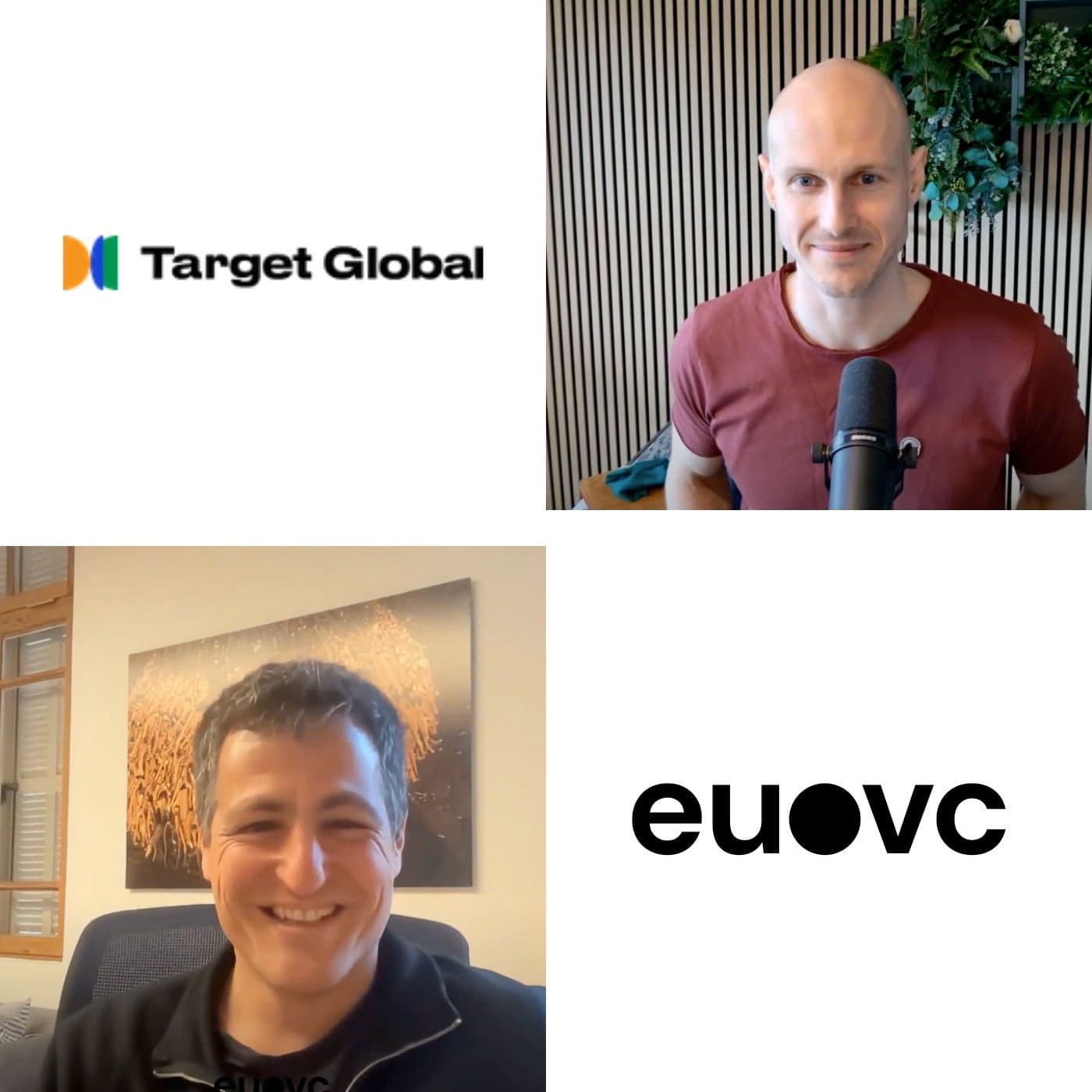
E419 | Shmuel Chafets, Target Global
Reigniting Europe's creator mindset and investing in AI-Native innovations
Hosts
- Andreas Munk Holm
- David Cruz e Silva
Guest
- Shmuel Chafets, Co-founder and Partner at Target Global
Overview In this episode, Andreas hosts Shmuel Chafets, who discusses the current landscape of venture capital in Europe, the importance of a creator mindset, and the transformative potential of AI-native innovations. Target Global is highlighted as a leading venture firm with extensive investments in various sectors, including software, fintech, and healthcare.
---
Key Themes and Discussions
- The State of Europe in Innovation
- Confidence Crisis: Shmuel emphasizes that Europe has lost confidence in its ability to innovate and make significant changes.
- Creator Mindset: A shift towards a creator-driven economy is necessary. This involves:
- Encouraging risk-taking across all levels of society—from frontline workers to CEOs.
- Restructuring Europe’s systems to promote an upside-oriented mindset.
- Focus on AI and Frontline Services
- AI Revolution: Acknowledgment of an ongoing revolution in AI that could reshape industries.
- Frontline Workers: Discussion on how AI can help relieve bureaucratic burdens on frontline workers in sectors such as education, policing, and healthcare:
- A study showed that police officers were more informed about AI than teachers and nurses.
- AI can automate data entry and bureaucratic tasks, allowing workers to spend more time in their primary roles.
- Regulatory Challenges in Europe
- Bureaucracy: The European regulatory environment is seen as a significant barrier to innovation. Shmuel points out that the focus on downside risks, such as GDPR, often stifles the exploration of AI’s benefits.
- Policy Engagement: There are calls for policymakers to engage with venture capitalists and tech founders to foster a more supportive environment for innovation.
- Investment Strategies and Market Dynamics
- Target Global's Approach: Target Global is adjusting its investment strategy to focus more on early-stage companies and AI-native startups rather than later-stage investments.
- Market Comparisons: Shmuel contrasts Europe's venture landscape with that of Israel and the UAE, highlighting the latter's robust support for tech and innovation.
- Vertical SaaS Challenges: There’s skepticism about the future viability of traditional vertical SaaS models in light of AI advancements, suggesting a shift towards more adaptable solutions.
- The Path Forward for Europe
- Investment in Infrastructure: Emphasizing the need for investment in education, public safety, and infrastructure rather than solely in AI.
- Changing the Narrative: Advocating for a cultural shift in Europe towards embracing risks and innovation.
- Historical Context: Shmuel draws parallels to Europe's past, suggesting a return to a proactive, industrious mindset is crucial for future success.
---
Conclusion The episode concludes with a compelling argument for reestablishing Europe's confidence and embracing a creator mindset as critical to the continent's future in tech and innovation. Shmuel's insights present a roadmap for policymakers, venture capitalists, and entrepreneurs to foster a more dynamic and innovative European ecosystem.
Follow along with EUVC for more insights into the European venture capital landscape at [eu.vc](https://eu.vc).
Written by AI. May contain mistakes. Listen to the episode to check what was said.
Transcript
Automatic transcript. May contain errors.0:00Tell me, what is the path to progress for Europe? Is that infrastructure, safety, security, education? I think it's getting European confidence back. I think Europe has lost in a lot of way its footing as a continent, as different countries. And I think it's getting that confidence back in the ability to do great things and in the ability to make big changes and going back to a creator mindset. And a creator mindset is upside, not downside oriented. That's in the end, the only thing that's required. It's not a half a trillion dollars into NVIDIA chips. It's getting back that mindset and saying, OK, we're going to create incentives across the board from the frontline workers where we started right on the street to the CEOs in the boardroom and to the ministers in the cabinet room, giving them all incentives to take risks, to create and to get upside and across the system.
0:58We're going to reshape the system as an upside oriented system. And if that happens, and that's a step change, but it's, I think, absolutely possible, it would be everything. Be much more than any single investment that you can make. There's no single solution. You need to change a mindset across the continent.
1:34welcome back everyone to another episode of the european easy podcast today i have shmuel hafiz with me from target global and first of all shmuel we're going to talk all about ai but let's just make sure that everyone understands who you are and where you're coming from. So thank you for having me. I'm Shmuel Shefetz. I'm one of the founders of Target Global. Target is a VC firm, European venture firm headquartered in London. We started it in Berlin about a decade ago. We're early investors in the European ecosystem. We invest across Europe, Israel, Middle East, and Africa. We have early stage funds and early growth funds.
2:10So we invest in startups across software, fintech, mobility, logistics, healthcare, and consumer internet. We've invested in about 140 companies, been very, very fortunate to be investors in companies like Travelperk, Flow, Rapid, Revolut, some really great, Ottawa, Delivery Hero, so great European and Israeli companies. Some of them we've exited, some of them we're still working with. having fun doing it. And this is your second time on the podcast. You were invited on for a second round because the first time we talked about the tech reset and we asked you, what is your core message to the European venture ecosystem?
2:53And you said, everyone panic. Then you laughed and gave a little more nuanced view. Today, we're not going to talk about that. We're going to almost talk about the opposite because it's quite an opportunity rather than a reset. We're going to talk about AI and the frontier services in the frontline. We're doing so on the back of you and I having seen each other in London because you were so kind to invite me to join you for a dinner that you did with a bunch of policymakers and important stakeholders to the future of AI in Europe. You launched this report that I have with me from human to hybrid, AI and the future of the frontline.
3:30Great piece of research. We'll put it in the show notes for everyone to read. Go on to u.bc. there it'll be in full so you can enjoy it. Shmuel, tell me first, why are you focusing on this? Why are you searing in on the front line and so on? First of all, thank you for coming for dinner. I actually thought it was surprisingly interesting, I have to say. Yeah, it was great. A very engaging conversation with a very diverse group of people, which shows how top of mind this issue is for everybody. So I think obviously AI is top of mind for us, as it is for everybody, right? I want to repeat what I said last time to everyone, please panic.
4:08If there was a time to panic, it's now, actually. There's this incredible revolution that's unfolding in front of us. It's not going to be the revolution that we think it's going to be, most probably, right? I think that's almost always true for these types of tech revolutions. But it definitely is a complete overhaul of this entire industry and of entire areas of our existence, right? It's really incredible, and it's happening right now. And we're seeing this pace of change that's really unbelievable. I think when you listen to the European conversation about it, unlike the American conversation, you see a lot of the risk.
4:47Definitely the policy conversation. A lot of it is about controlling the risk. Job losses and privacy and everything. You absolutely have to think about that. I think that's a relative advantage, actually, of Europe, and this is the regulatory environment and everything. You do have to think about the risk, but you absolutely have to think about the reward. That's something that's a bit missing, and that reward is, on the one hand, the possibility to build new industries, to reinvent existing industries, to make marginal businesses profitable, to get productivity up across Europe, and productivity in Europe is an absolute problem, right?
5:29An absolute problem. So it's an amazing opportunity. It could be counterinflationary. It could help with the crisis on the workflow, the workforce crisis in Europe and different industries. It's incredible. But also I have to think about, I think, the trickle down economy of AI. A lot of AI runs the risk of centralizing, concentrating a lot of wealth, a lot of power in these companies a lot of people are very focused on i think in order to get people excited about ai we also have to help them understand how it's going to be impactful to their lives how it's going to create a positive impact to their lives and a part of that is that trickle down economy where i think we can help transform some public services for the better And that's why we did the report.
6:21We thought, let's try to highlight that piece of the AI revolution, things that are relatively close, that impact our day-to-day, and that are with a relatively low cost, have a lot of influence on the way our day-to-day world works. To define frontline services, in case it's obviously a word that was used a lot in the times of COVID where we all understood it, that was definitely the social services, the hospitals, police. What else are in this concept? So we went for teachers, cops, and nurses. Teachers, cops, and nurses. And cops have a special place in your heart. So let's maybe start with that and share why.
7:11I come from a family of cops. Both my uncles are cops. So I grew up in a house full of police officers and I have a soft spot for that profession. So it's very interesting actually to see that, and we did this study in the UK where our headquarter is. We actually used for every group, we talked to them about AI. We try to understand what they know about generative AI, what they understand from what they've read in the news. Have they ever used it? And then put in front of them an expert from their field. By the way, again, interestingly, most of the experts were Israeli. That also says something.
7:49And had them demonstrate some use cases for AI and then had that group again talk about what they think it could do for them. So that was the methodology that we used, basically. and I think surprisingly or not, I don't know, cops knew the most. They've had the most access to it. They've thought about AI the most. They're most open to it. They saw a lot of an identity fraud and fraud and all sorts of things like that. So they were more open to it. Unfortunately, it seems like teachers were the least, which for me was a bit surprising. And they also saw more of the risks than the rewards. And nurses were somewhere in the middle.
8:31What grabbed me about it was that we've spent the last 20 years bringing in a lot of software into these frontline services, right? Used to be that there was a police officer walk around with a notepad and write reports and then radio them to headquarters or whatever. But we've put a lot of, everybody now has an iPad or some piece of software in their phone. They record a lot of data. and software in the end is bureaucracy. That's what it is. That's what IT is. It's putting on layers of bureaucracy on top of people. And the other thing is data entry, right? We've become obsessed with analyzing data.
9:11And to analyze the data, you have to collect it. So we've made these frontline workers bureaucrats and data collectors. And for all of them, that's two or three hours of their day. So their eight to 10 hour workday, that's two or three hours, a lot of time. and it's the part of their job that they hate. Because people went into education, into healthcare, particularly into nursing, and into policing because they cared about what they were going to do. Definitely nobody's in it for the money. They went because they care and they want to be in front of patients, students, helping people. That's what they want to do.
9:50And basically the software and data entry is keeping them from doing it. and it's making their job less interesting and less fulfilling. And the opportunity that we saw was to take AI applications and rid them of that piece of their job. So just automate that and basically take those two, three hours back and give them to teachers to be with children, for cops to be on the streets, for nurses to be in hospitals with patients, physically touching a patient. And all of them want that at the end. That's what they're in this job. The other interesting thing is the UK, like most other European economies, has been through waves and waves and waves of cutbacks in public services.
10:36And it's very unpopular to cut frontline workers. Nobody wants to be the person who cut, you know, the cop on the beat. So what they do is they cut back end. They cut, they say, oh, we're not cutting the real cops. We're cutting the paper crops. But what happens is... You work from them. Yeah, there's nobody do that work. There's a gap in that. There's a gap and that gap impacts in the end of the front line. And that's something that also AI can do, right? It could fix that. So we didn't go to any super advanced applications, decision making for nurses, nothing. Just talking about how to take this day-to-day bureaucracy and data entry and automate it.
11:19That's all we focused on. I said this at the dinner as well, that I'd just been like I literally came the day before from a meeting with eight different entities or people from the hospital system and the teaching system and so on about one patient's problem. and like you'd have this two-hour meeting, everyone in there, one person like designated to do the minutes of the meeting that will then go and spend three hours, four hours winding up a super bad transcript or like it's so incredible that like we're all sitting there, we could be recording this. I have an AI that does everything. Like I was so baffled at seeing how long or how far we are from implementing that type of thing, especially because the first thing they think about, at least in Europe, is GDPR.
12:15We're never going to be able to have this conversation. And maybe that's a natural place to also ask you, where do you see, because this is the biggest thing, at least I see, that everyone in the public services are very quick to say, GDPR prohibits us from doing anything. Yes, that's the risk. That has anything to do with, yeah. That's the risk. Have you seen any smart developments or ways of addressing this? I mean, I think, unfortunately, I think so far, AI and public services like high school sex, you know, talking about it, not doing it. So we haven't really seen anybody implement much of it.
12:57There's a bit of a top-down approach, right? They're thinking about it as software. Top-down, we're going to build a national AI system. and you know you read a lot of the things they write these government reports you think in europe right america is very different you think what they're thinking about we're going to build they don't we're going to build an ai thingy we're going to pour some ai juice into it and on the other side there's going to be whatever comes out of ai thingies with juice you don't really know but that's going to happen and that's going to be amazing and it's going to be like um like what elon musk is doing basically but just and that's obviously not the case right unbelievable amounts of money are being spent on developing artificial intelligence right now.
13:38I mean, I don't know if you saw the Google public filings yesterday, but they're spending $75 billion on infrastructure. There's massive, massive, massive amounts of money that these hyperscalers, these tech companies are spending on making these large language models easier to use on building applications, on building data centers and all the things you do. most European governments, not to say maybe all of them, cannot compete with that right now. And they shouldn't. And they shouldn't be building their own infrastructure, their own applications. Definitely not for this type of thing. They should be using readily available, publicly available infrastructure, publicly available tools.
14:24do you see that they are taking that build approach instead of buy approach i think that's from what i've seen a lot of the conversations about that national and a national ai and you know i think unfortunately or fortunately it's not going to work for for most countries right you can have things hosted locally you can i think work with some of these big providers as people do today in the general world of IT, right, the oracles of the world, to have your own local cloud for it with some rules that you put on top of some regulations. But the base engine needs to be something that's commercial.
15:04The other thing is, I really believe in the top-down, that the top-down approach is not going to work here. There's a bottom-up that has to happen because there's a learning process. And that learning process requires flexibility. Our suggestion is to put some guardrails, right? What can't happen, what can't happen. And within those guardrails, let a school, a police precinct, a hospital experiment. Let the people in the frontline experiment with commercially available applications and then build back to how you systematize them. That was our approach. And I think that's also going to be very helpful for European companies who obviously are closer to market, more customizable and will have an easier time reaching out to those people.
15:52And I think that would be much better than doing it as a government-run initiative. Let's shift the conversation to something that's a bit closer to home to everyone in venture, which is what's investable here and what is not. If we start first by saying, let's look at frontline, the cops, the nurses, and the teachers, applications that are directed at them. do you see that as a first place of looking for investment opportunities or do you see it rather as this is important but definitely target now we're quite happy in financial services so i have to say i didn't um when we were doing this report i didn't think about it as an no that was not yeah yeah that was not the goal yeah it wasn't the goal it was definitely a part of a learning process for us right we're constantly trying to think through gen ai so it's a part of learning process.
16:44You learn a lot doing these things. It's a part of building a thesis. Because we're thinking bottoms up, I think building, investing in companies that are targeted applications might not make sense, right? The question is, how do you get these generally available platforms to be more easily used in these sectors? And I think, you know, OpenAI is doing something in the government sector. A lot of these companies are thinking about it. So the question is how to get better availability of that to the frontline workers and allow them to integrate it into their flow. I'm not sure, generally speaking, I'm not sure about software investing, that classic vertical SaaS model in the world of generative AI, right?
17:29Investing in an application for a particular audience that's just a very, very narrow application i'm not sure if that's going to work 10 15 20 years from now not to me i mean even five years from now not sure how that works uh let's let's double click on that to explain to me so you think that basically vertical sass is in a lot of trouble when in this new era for you i think vertical sass is in some trouble yeah i mean obviously not every part of vertical sass There are certain things that are very complex, require a lot of integration, require customer support. They require, I think, for instance, SMB SaaS, I think, is a bit more protected in some places, things that are very operational.
18:17But these low-touch software applications, I mean, a lot of them you can, frankly, build on OpenAI, right, on ChatGPT. One of our fintech companies, the CEO showed me a couple weeks ago how he builds authentication off of a$30 ,000 chat GPT for enterprise license. How he just rebuilt his entire authentication flow. And, you know, he can kick out hundreds of thousands of dollars worth of specialized software. So there are whole swaths of companies just, I think, in trouble. And some companies that just. It's actually a little bit funny, Shmuel, because here you're describing actually what you also hear, for those that listen to the All In podcast, you hear Tamath talking about and saying a lot that the whole layer of applications that are currently being sold into enterprises are in big trouble because they're going to, instead of buying it, going to just build it.
19:20but then we just spoke just before that ah we're seeing something dangerous in the public sector in europe which is they probably it seems like they're trying to build rather than buy so tell me about how is this why is this different and i i know there's a good reason but the question is what you're buying what you're building they're going to buy the infrastructure they're going to buy the model they're going to buy the computing power they're going to buy a lot of other things they're going to buy the security they're going to buy a lot of things The applications, they might create themselves.
19:51Say, okay, we're just going to have someone build something that's custom. So we're going to take this very flexible, easy-to-use program. We're just going to create something. But they're obviously going to use a third-party model. They're going to use third-party infrastructure. The same thing applies to governments, right? They shouldn't be creating their own model. They shouldn't be creating their own infrastructure. They should be using something that's publicly available. they could create their own applications and those applications can be created in the front line. They don't have to be standardized.
20:25You can have different applications for different pieces of the system. I think that's also a step change because for many years we tried to have standardization. Everybody has to use exactly the same thing so the information will flow. But here, maybe we can have more customization. Maybe the police force in Leeds need something different than London. And they can have something different. One thing that's like go to a fintech company today, they will have a whole bunch of engineers hired, which they didn't before, or a bank for that reason. I think maybe if there's something that characterizes the front lines is maybe that they haven't really undergone that process.
21:08It's still a place where you have a lot of frontline workers, non-teggies. So I maybe We think that for that reason, you could expect that there will be a higher inclination to buy rather than build because they will have very little build capacity. But on the other hand, I think that you're probably also, I imagine what you're also saying is, well, these organizations will maybe be buying, if we say the teacher's example, they will be buying a 90 % done so to say teaching tool or tool for schools, AI tool. and then the last 10 % is very easy, either with a service provider or on your own, to kind of say, okay, these are the guardrails within Denmark.
21:54This is our curriculum. This is the values. These are the rules, so on and so forth. And I'll also challenge another thing. How many engineers are you going to get? Maybe there's an advantage to not being that techie. Maybe all those huge engineering departments that people created, they're going to also need to change. because it's going to be essentially, since you're working on a platform, you need product people. You need people who will build workflows rather than people who code. So maybe some of these frontline organizations actually have an opportunity to leapfrog the last revolution, which you didn't participate in, straight into this without these extremely cumbersome development organizations that a lot of companies have.
22:40And I think if you look at the opportunity for startups here, and there's always an opportunity for emerging companies, there's going to be a great advantage for companies that are created as AI natives. You can build a company with so much less infrastructure, so much, you can build amazing things right now. And two years from now, I think much more, right? With just a lightweight backend, very flexible. That's, by the way, what happened in the move from on-prem to cloud to SaaS, right? You could build companies for cheaper. And that created a huge wave of innovation, incredible companies. The same thing is going to happen here.
23:20They're going to look different than SaaS companies look. In this time of complete, everything is in a flux. Everything can go super fast in one way or super fast in another direction. what kind of do you use to guide you in investing currently good question i think i'd love to have an answer if i knew um you know i i use tarant cards which i find helpful yeah that's always great but uh still i mean still we invest in two things right in in people and in big big liquid markets and that really hasn't changed right so my belief is that a great team is going to figure it out if they're going after a market that's big enough and dynamic enough.
24:07It's just those two things are what matter. And definitely when you do early stage receipt investing, the application itself doesn't matter much. I think we're pretty, we're very careful right now, right? Because I think it's a moment in time where it's going to be very, very easy to make a mistake. Very, very easy to make mistakes. A lot of things that look amazing right now are going look terrible in a year. Sometimes there's value to just waiting and seeing. Does what you're saying, Shmuel, mean that you're actually investing a little bit less for this reason? And are you also moving earlier with more investments?
24:46Because at the Series B stage, you're so far in to building that if you're not AI native and there's too much sunk cost in building on a platform that was the tier one the year you started so the only series b deal that we did last uh the second half of last year was uh tour lane which is a a company in the uh package trip space and that's a sort of a b stage and we did it because that's a space that has a lot of infrastructure requires a lot of infrastructure so it does take time and effort You have to physically build things and go and plan. But where an emerging player implementing AI can really change its destiny.
25:33And we thought that Tourlane is a great brand with a great team going after this big problem that nobody's really solved, complex leisure travel. And it was always quite expensive to solve it for a tech company. Because really technology wasn't solving it with people. And now you can take this new piece of technology and solve it and build a very scalable business. So those are the types of like later stage deals that I would definitely look at. But most of my time spending with people just getting started. So incubating teams precede things like that. I think that's, as a venture investor, definitely more interesting right now.
26:15In other words, you have moved a little bit earlier and you're a little bit less active in the later stages. Just to those that are not like I know Target quite well by now. So when you say I spend a lot of time with pre-seeds, that's different from Target that I would have thought about two years ago. Definitely. When we started a decade ago, we spent a lot of time on later stage businesses. because I think in Europe there was a lack of funds. There were really incredible European opportunities at very, very cheap prices relative to the American peers. And that cohort of companies really performed incredibly well.
26:58Then I think we went down to sort of A-rounds where, again, there were a lot of ambitious entrepreneurs who were maybe already second-timers and wanted to build small things, wanted to build big things. And I think now we're very, very focused on the new generation of entrepreneurs that are emerging right now, right? So younger people who have maybe a more AI native approach to the world. So funny what's happening, right? Because a lot has happened in the market over the last two, three years. Shmuel, I want to ask you, moving the agenda forward, engaging policymakers in AI, AI, like yesterday, I reshared a post where I saw that the European Union had come to the conclusion that they had to put real money behind AI.
27:50And then they had set aside 56 million, which is like, well, that's a substantial amount. Like you didn't feel at all, all embarrassed coming out with that a week after the US signaled 500 billion, which obviously like there's been a lot of chatter about that and we could talk for ages about that I think it's I try and leave the U.S. conversation to the U.S. people because they're the people closest to that why should I join in on that chatter but I think Europe where are we how do we move the agenda of getting Europe and our policymakers and our politicians to really put real money behind AI and understand that this is not a moment like the others, but it's actually a fork in the road?
28:38I mean, unfortunately, I think Europe isn't anywhere right now. That's the sad, sad reality. I think this is a moment that requires, you know, real leadership in many, in many regards. And, you know, fortunate to say that I don't see much of that around right now. it requires a lot of money it requires understanding what's your pooling resources which the EU hasn't been amazing at and understanding that there's a sort of very robust there's very robust competition what's happening in America is absolutely sort of mind-boggling right not to get into a political conversation but if you think about the last 15 days that that Trump has been president, he's probably had more impact than most presidents in our lifetime.
Read the full transcript
29:29More, he's done more. So the pace of change and evolution is unbelievable. And Europe is just not moving in that direction at all. Right. It is very, very slow and very, very dormant. And it requires a real step change. And the real problem is that just chime in on that. And what frustrates me the most is, so I have always loved the EU because it creates stability. Because that's in the end, that's why we founded it in the beginning. We want to avoid ever having a second world or third world war. However, with that stability, that stability comes from the bureaucracy and all the checks and balances we've created and so on.
30:17But that also means that we've kind of built a structure that is almost built to keep us stuck. And I have no idea how, like, because I'm thinking a lot about it. How can I get VCs? How can I get tech founders to try and move the agenda forward? And then when I think about, and it's, of course, beautiful and great that we cannot have a situation where we have one person who reigns supreme with orange skin. And that's a great thing in our ecosystem. But on the other hand, it also means that, well, those 15 days we're never going to experience. We're never going to unlock it because it's just our system is built to avoid it.
30:59It's a downside oriented system. And I think in all of our conversation about AI and public, you understand that Europe is very downside oriented. The first question is GDPR. The second question, it's all the questions that people have been taught to ask. I think, again, at least in the UK, we've had a lot of interest from policymakers, from senior policymakers who've called and said, OK, I want to meet, I want to talk. And I'm always very happy to have those conversations. They're always very interesting. But I think they're very downside oriented. And I think the system is very downside oriented, generally speaking.
31:38right there's a lot of for you as a as a public servant in europe you have a lot of risk and almost lower work and that has to change like 10 10 12 years ago or a bit more when i started investing in europe and continental europe it was an incredible promise for for something new in the world of tech right we thought berlin was going to be the new sort of silicon valley or european silicon valley and then it migrated for a few places every time there's you. Silicon Circle, there's always something. But when you look at it, some great companies have been created, you know, Spotify and Aideon and Revolut and, you know, some really great companies.
32:21But relative to what happened in the U.S. in that decade, it's really meaningless. The entire European industry is not one of the U.S. tech giants. Europe is actually in its best decade fallen behind, not gone forward. And I think this decade is going to be even worse because of what's going on around this AI adoption. And you just see what the Americans are doing, right? The amounts of money, the amounts of energy, and also pooling external resources, right? The things like the UAE and things like that where governments were joining and pooling resources that's happening in America. I got to interrupt because you've got to make sure that we have enough time to then answer this question, which is given this backdrop, then you just went out on a podcast, streamed to a bunch of LPs across the world that are looking at Europe as, well, what's in Europe?
33:20Here we have a leading voice in European mantra saying, it's a dire, dire time. I don't exactly see the path forward. what's your reply? What is the part that says, well, but Target still has relevance. Target has a good path to high returns as so many other firms. So first of all, Target invests, has always invested in Israel and the Middle East as well, right? And I think if we're having the same conversation about Israel, and by the way, about the Middle East, emphasis to the UAE, it's a completely different conversation. You know, Israel has an unbelievably robust ecosystem and real competitive advantage in certain areas like cyber where it's dominant, but also around AI.
34:09And the UE has this incredible national vision and execution and is creating a platform for global founders and basically, I think, in a way, replacing what London was or what Berlin was for a lot of people. So that part of the world, I think, is going to be a net beneficiary of everything that's going on right now, just a complete net beneficiary. And I have made it a point never to lie, even if it's in my best interest commercially. So I try to tell it as it is. That said, like you're leaving me with a long... Yeah, exactly. Smulders did a mic drop. That said, so I would contend that even though Europe as a continent might not win, and even though Europe as a continent over the last decade and two decades have not been winning, European venture as an investable asset class is actually doing quite okay because of other dynamics than our ability to create a trillion dollar company.
35:27Because if you stitch together your fund correctly, in terms of the sizing of the fund, the types of bets you make and so on, you don't necessarily have to hit a trillion dollar company to return good money on your fund. And for that reason, I think that even in this scenario, where I'm also not super bullish on Europe as a continent, I'm bullish on Europe as an investable geography or venture. It's a big continent, right? It's 500 million people. It's a large economy. It has a lot of smart, educated people. There's obviously deals to be done. Unlike, by the way, there are good venture teams in multiple places.
36:21Like when we were investing in Berlin, there were almost nobody there today. There's funds like Cherry or 468 who are like real, real sort of robust shops with experienced partners and a track record and a future. I think in many cases, the bright future. You look at London, there are great funds like Atomico or Baldrige. They're great funds around. And of course, Index and Excel and those are the bigger guys. But that doesn't change. And some of those funds will make money. A lot of the partners will make good money. Some companies will be created. Some of them, again, really great businesses.
37:03as a whole, as an industry, as an ecosystem, it's the minimus. It's the minimus, and I'm comparing London, Berlin, to, for instance, Tel Aviv, where I am right now. There is no real comparison. You can pack your week in Tel Aviv meeting tier one founders. You can pack the week meeting tier one founders, tier one angel investors and tier one funds and that density doesn't unfortunately exist anywhere in europe that i've seen london is the closest it's the closest the bigger city it's got a lot of international money coming in but it also has to protect itself from the changes the tax changes that are the regulatory changes that are happening right now we have to i mean have to very honestly say it.
38:00It's not completely safe. Europe as a continent is under-investing in the things that are important. The European governments are under-investing in the things that are important. I, by the way, don't think the money is needed for AI. I think from my point of view, investing in education, infrastructure, public safety, and those things will do more for entrepreneurship than anything else. Getting people to want to live there, to want to create lower tax burden, better regulatory environment. So just changing a lot of that. Shmuel, I was sitting here thinking you're coming to talk at our summit May 14th.
38:42The whole summit's tagline has become defining the path to progress. And I was sitting here thinking, huh, that's going to be interesting to see how you'll nail that. Tell me, what is the path to progress for Europe? Is that infrastructure, safety, security, education, getting our heads together around taxation? I think it's getting European confidence back. I think Europe has lost in a lot of way its footing. As a continent, as different countries, and I think it's getting that confidence back in the ability to do great things. and then the ability to make big changes and going back to a creator mindset.
39:27And a creator mindset is upside, not downside oriented. That's in the end, the only thing that's required. It's not a half a trillion dollars into, you know, NVIDIA chips. It's getting back that mindset and saying, okay, we're going to create incentives across the board from the frontline workers where we started, right, on the street, to the CEOs in the boardroom, and to the ministers in the cabinet room, giving them all incentives to take risks, to create, and to get upside. And across the system, we're going to reshape the system as an upside-oriented system. And if that happens, and that's a step change, but it's, I think, absolutely possible, it would be everything.
40:12It would be much more than any single investment that you can make. There's no single solution. need to change your mindset across the continent. The other day, I thought that it was so important to remember that Europe was also the continent in which the Second World War was fought. And everyone was being ingenious, working hard, struggling, on with the gloves, get out there and fought a real war. We know how to do it. We just got to get back to our roots and actually not just enjoy the privileges of having been gifted with a good past. Shmuel, thank you so much for joining me at this podcast today.
40:57Thank you for having me.
41:13Acting
From the publisher
Since launching Target Global a decade ago, Shmuel has been at the forefront of European venture investing, navigating market cycles and shifting investment strategies in response to macro and technological trends. In this conversation, he shares his candid views on Europe's lagging position in AI, why Europe must shift from a risk-averse mindset to a creator-driven economy, and how AI is set to disrupt everything from public services to vertical SaaS. We also dive into why Target Global is moving earlier in its investment strategy, the growing relevance of Israel and the UAE in global tech, and why European bureaucracy remains one of the biggest obstacles to innovation.
Go to eu.vc for our core learnings and the full video interview 👀