
In short
EUVC Podcast Episode E430 Summary
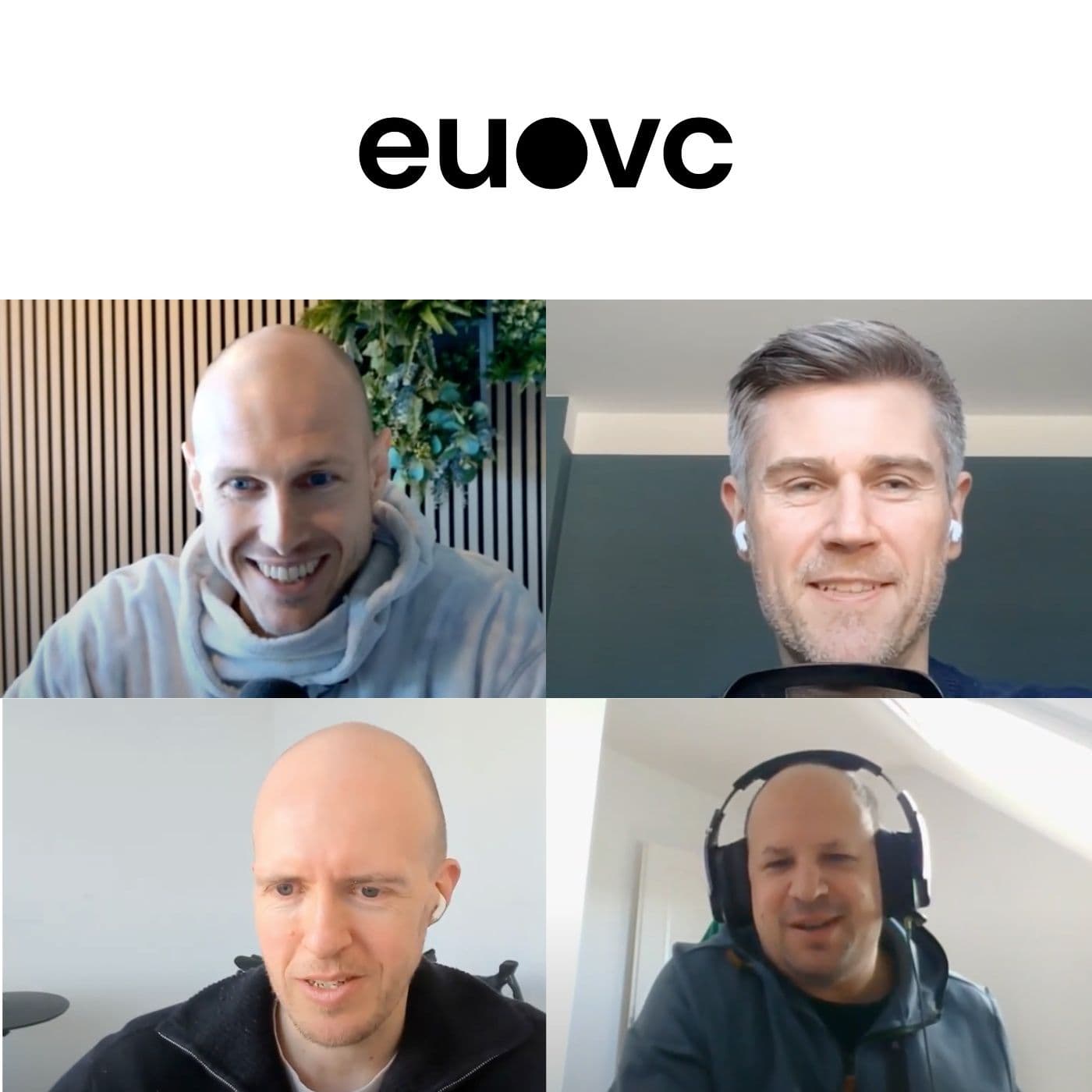
Episode Title E430 | Claude Ritter and Stefan Walter, NAP & Rene Andres, EIF: Building Europe’s Future with Expert Founders
Episode Description In this episode, Andreas Munk Holm engages in a conversation with Claude Ritter and Stefan Walter from NAP (formerly Cavalry) and Rene Andres from the European Investment Fund (EIF). They discuss the strategic rebranding of NAP, shifting investment approaches, and overarching themes influencing the European venture capital landscape.
---
Key Participants
- Andreas Munk Holm: Co-host and moderator
- Claude Ritter: Co-founder and Managing Partner, NAP
- Stefan Walter: Co-founder and Managing Partner, NAP
- Rene Andres: Representative from the European Investment Fund (EIF)
---
Key Themes and Discussions
- Rebranding from Cavalry to NAP
- Reason for Change: Shift from a broad pre-seed approach to a refined investment strategy emphasizing expert founders.
- Meaning Behind NAP: Stands for “Nerds and Pioneers,” highlighting the target demographic of founders NAP aims to support.
- Brand Strategy: Focus on authenticity and relatability to resonate with the newer generation of founders.
- Evolving Investment Approach
- Focus on Expert Founders: An emerging trend where successful founders possess deep domain expertise rather than just innovative ideas.
- Investment Theses:
- Proprietary Data: Emphasizing investments in companies that can leverage unique data.
- Instant Utility: Prioritizing startups that provide immediate value to customers.
- Interoperability: Importance of being interconnected within broader value chains and ecosystems.
- Current State of the European Venture Ecosystem
- Defiance vs. Graduation: Participants reflect on the need for Europe to rise to challenges similar to a 35-year-old moving from their parents' house into independence.
- Political Engagement: Discussion on whether tech entrepreneurs should engage more actively in political discourse and the implications of this for the future of tech in Europe.
- Managing Team Dynamics
- Navigating Partnership Changes: Insights on maintaining transparent communication during periods of transition within venture firms.
- Importance of Agility: The need for VC teams to adapt quickly to the fast-moving technological landscape and market conditions.
- Transparency with Limited Partners (LPs)
- Candid Communication: The significance of honesty in discussions with investors, particularly when facing internal challenges or transformations.
- LP Perspective: Understanding how changes in partnership dynamics might affect investor confidence and funding strategies.
---
Challenges and Strategies
- Maintaining Core Values: As firms evolve, ensuring that the foundational principles and values remain intact is crucial.
- Reflecting on Past Mistakes: Recognizing that many venture firms experience team changes over time and learning from these transitions can aid future stability.
- Building a Supportive Network: Having a reliable advisory network to navigate difficulties can make transitions smoother.
---
Conclusion and Key Takeaways
- The conversation highlights the shift in European VC towards supporting expert founders and the importance of adaptability in the face of market changes.
- Transparency, honesty, and maintaining open lines of communication with investors are deemed essential for long-term success.
- The overarching sentiment is one of cautious optimism, with the recognition that while challenges exist, there are also significant opportunities for growth and innovation in the European tech landscape.
---
For more insights and resources related to European venture capital, visit [EUVC](https://eu.vc).
Written by AI. May contain mistakes. Listen to the episode to check what was said.
Transcript
Automatic transcript. May contain errors.0:00With NAP, we basically sat down and thought about the thesis that we had relative to the investments that worked well for us. And it's basically every time we deviated, it wasn't that great. Every time we followed the thesis, it was better. And so the idea was really to build on the thesis and basically update it rather than change it too much. So if you think about in what we've looked at in the past, we obviously had the thesis around proprietary data. We had the thesis about the thing we call instant utility, which is something that other people call it differently. but effectively it's like how quickly does the customer get value from your product and then on top we added effectively one plus one layers in our thinking and one is a strong thesis around interoperability meaning if a company both from it's inherently the way it's it's sort of structured the way its business model works is not set up in a way to be highly connected with other companies in across value chains.
1:05We're not that interested. And similarly, if the founding team doesn't pitch us a vision of being interconnected and being part of a bigger value chain with their company, we're also not interested.
1:32Let's start acting. Acting. This show is not investment advice and the hosts of this episode may be invested in the funds and companies featured. Welcome back everyone to the European VC Podcast. Today I have three good friends with me. Two from one firm, one from another. Rene Andres from our good friends at the EIF. And Rene will say a few words in a second. And then we have Claude and Stefan from NAP or NAP, formerly Cavalry. We're going to talk a lot about this rebrand, why NAP is the right word. And we have Rene here as a good friend of the team. So maybe let's just run around the horn here.
2:14Let's start with Claude and Stefan. If you could just say a few words about yourself and NAP slash Cavalry and a bit why we're here, then we'll go from there into Rene. Sure. There were like three questions at once. So Stefan, I'm an expert at that. Sorry. Yeah, no, excellent. So yeah, Andreas, thanks for having us. As you know, I'm Claude. I'm one of the co-founders and managing partners at NAP, formerly Cavery, together with Stefan. My background is in entrepreneurship. I started a whole bunch of companies before then starting the firm together with Stefan. And since, you know, getting this off the ground together, there we've been investing in early stage startups always pre-seed seed and we've done almost 70 initial investments since we got started with regard to the firm you know we are berlin-based as i said we invest very early we're happy to join pre-revenue pre-product for us it's really relevant that it actually makes sense for the company to have an investor on board so we're not just like stuffing money down people's throats for the sake of it.
3:23But for us, it's really relevant that the time is right for a company to take on a VC. And then obviously we hope that that's us. Yes. Thanks, Claude. Hey, Andreas, good to see you again. Stefan, as Claude, one of the colleagues who started the firm back in 2015 or back in 2016 as S. Cavalry, background in business economics, previous very short stint in tax in corporate law as well. And yeah, happy to be here for the second time on the podcast. And then, Rene, tell us about yourself, EIF, and maybe also explain a bit why you chose to join us on this podcast. Yes, sure. My tagline is a bit, sounds like a French with a Spanish background, happened that I'm only German, like Stefan and Claude to a certain degree now, our guest.
4:13I have a business and a technical background in data science. mostly worked for larger management consulting firms, Presswaterhouse and some others in big IT projects. It was nice and beautiful, but pretty boring after a while, to be honest. And then via a private company I had got in touch with EIF around seven years ago. And since then, I pretty much worked for EIF and lead primary VC fund investments in Europe. Everything from fairly early stage to what you would consider growth VC strategies. Not too much life science or medical devices, but mostly tech, I would say. I probably invested more of 2 billion now over the seven years into that category.
4:58And also included in Stefan, a relationship I took over from a colleague of mine. EIF, I guess I spare you with details. I would hope most people would know, but in a nutshell, was founded to support innovation entrepreneurship in Europe and the tool chosen was money and the way it was channeled and is channeled is mostly indirectly via venture capital funds private equity funds infrastructure funds as a debt activity we're also doing but that's not so much interesting for the type of entrepreneurs stefan and claude for example back and yeah that's eif we source ourselves from various resource of funding, mostly public money, a bit of private money as well.
5:43Fund of funds, managed accounts, and probably are the largest by volume if you want limited partner and a lot of European venture funds. That's it. Why I joined? Claude just pinged me. Pretty simple. And I said, well, why not? I haven't spoken to Andreas for a long time, to be honest. I think I checked my emails. You pinged me two times. And I failed to respond. So sorry for that. So I said, this time I cannot skip a third time. So I said, then I chip in. I love it. And thank you for doing so, Rene. No, and I think today's conversation is actually super interesting. And I love that we have an LP and also the founding GP team here to discuss it.
6:22Because one thing we, of course, always cover on this pod is the evolution of firms. And there's a special story here, both from the founding GP perspective, but also from the LP perspective, how you navigate through that and so on. But before we go into that, let me just ask you, because we're a bit of a special time in the ecosystem. A lot is happening. Background being Trump, everything happening in the US. We seem to be getting out of the slumps of the tech reset. AI is just tearing through everything. But at the same time, there's a lot of hesitation around Europe's role and a lot of people are saying bad things or less productive things, maybe.
7:09So I'd love to ask you, if you were to give one word to where the European venture ecosystem is today, what would be that word? I'd probably go with something like defiance. So as you mentioned, right, not only the economic, but definitely the economic odds seem to be kind of stacked against Europe right now. Whatever you read right now online or in any newspapers talks about kind of wake up calls for Europe and the kind of last opportunity. And whenever I talk to founders, I get a certain sense of challenge accepted, which is good, to be honest. It's funny. Mine is actually, and we didn't sink on this one, but like mine is pretty similar in a sense.
7:49mine is graduation i feel like you know it's it's time to get your shit together in so many sort of ways and i think it's kind of the same when you graduate and you kind of sort of enter you know actual life post post being a student and you have to sort of organize everything yourself your insurance where you live how your clothes get washed and all of that stuff and i feel like It's a bit the same here to the extent that we clearly are more on our own. So we have to graduate and get our stuff together and hopefully continue winning. In a Danish newspaper, there was a commentary that said that Yerba is like the 35-year-old that's finally been kicked out of their parents' basement.
8:39I don't read Danish newspapers regularly, but that's probably how I feel about it. Yeah, so it's not an 18-year-old graduating. It's actually a 35-year-old. Rene, your take? Nothing's set in stone. There's a certain level of pessimism you have, sometimes optimism from various areas, politically, serenity, entrepreneurship, innovation. You can see it from all ends. At the end of the day, I see it from this. There's a huge chunk of people in Europe, typically well-educated, and there will always be people in every domain, mathematics, computer science, arts, sports, who are curious and driven enough to do something.
9:20And that is just what you need to bet upon and foster a bit, and then things will play out. That's a bit my thing. so I think even though there might be moments in time where people say we have lost this game and we have lost that game and now we need to step up that game yes you just need to try continue try doing and then curiosity of people will will help itself if you foster that that's my belief at the end of the day I have two big questions on this note I'm hugely political being um and I think I find it so interesting to see what's happening right now. My first question is, and I'm doing a summit in London in May, only to further this agenda, which is get the European tech ecosystem more involved in politics and really state our ground and say what we think about things.
10:13I, of course, argue that because we as investors are heads down thinking about the future and And the most important force that's changing the future, which is tech. And for that reason, I really think it's important that we make our voice heard. And I think that looking over to the U.S., the most powerful people there are tech people now. Maybe, you know, Trump is maybe not born tech. But all the people around him that seem to be the things that they have been saying for multiple years are the things that Trump is now saying. And the government is now moving on. So I'd love to ask you, what do you think is the role of the European tech entrepreneurs and tech investors when it comes to politics?
10:59Do you think that this is a rallying cry for us to get in and start actually making our voices heard? Or do you think that, no, we should stay in our swim lane? No one gets anything good from a Musk 2.0 in Europe. I can start. It's wrong answers only, right? Yes, on this one, definitely. Okay, great. Just speaking for sort of the German ecosystem, you can clearly see that there is more development in terms of individuals and also firms becoming active. You can also see that there's a few people that started becoming politically very active. I don't know sort of whether there is a personal agenda or there is just a genuine, I would say, effort to try to change things for the better.
11:50But in any case, you can see that there is more political activity. I don't necessarily think we need a European version of Musk. I think the motives for many of these tech people involved in the US government are somewhat questionable, at least to me. I'm not 100 % sure whether this is all being done for the good of the people, so to say, or whether this is just to further their own specific agenda and sort of cement their position in whatever the future will look like. So I'm not exactly sure whether that's the right model. However, I think, you know, Americans tend to be more extreme in either direction.
12:38And I think Europe is a bit measured and sometimes probably too measured, particularly in light of like really massive change that requires us to sort of, you know, really steer the ship in a certain direction. So maybe we have to swing a bit more into that involved tech people in government direction than we are usually comfortable with. But I don't necessarily think we have to sort of go all the way and sort of come up with an equivalent of, you know, Musk. That would be my take. I don't know. I would heavily agree on the Musk take. And in general, as you said, there's more and more people from tech getting involved and at least making their voices heard.
13:20I think that's a good thing. And then again, just a couple of days from now, we have another chance of making our vote hurt in Germany at least as well. While you were kind of talking about Musk, I think we have a fairly large opportunity to not vote blue, which when it comes to maybe common goal of regaining relevance in terms of both economic as well as kind of political value internationally and globally, and that's probably a good idea. I generally also agree on that. I would probably put an emphasis to something different, which is that, I mean, as an entrepreneur, as an investor, I think I would encourage everybody to voice.
14:01They think it's sensible to voice if they have a concern, if they have a need to the political direction. On the other side, you probably also need to balance out yourself, you know, where you want to put your efforts. You can do this 24-7 if you want and make this your main job and become a kind of political relationship person or you focus on where you think you are the best in or you are very good in. But I think it helps to contribute to signal issues, concerns you have, things you want to see change. And then the political machinery should hopefully be able to continuously deliver. I mean, there's votes coming up and try to tackle these issues if there are more entrepreneurs here and there, Wolf, can be.
14:47Make things more efficient here and there. If you really need a Trump here and there, I don't really know. I don't really think so. That is, there's also, as Claude mentioned, maybe also personal agendas behind some of the very big tech CEOs in the US, why you want to be acquainted so close to politics. But I think in Europe, voice it, at least, like a lot of German entrepreneurs take the German case and also other states many years ago. That's one of the originators of one of the largest fund of funds we are managing. We're continuously managing to invest in venture, but I'm not sure if it needs that crazy more interference of entrepreneurs.
15:28I just want to add one thing. I think, again, that's maybe the German view, but I feel like it's kind of similar across Europe. The political agenda of many countries, in my view, doesn't seem to trend in the right direction. at the same time you have massive technological change so it's clearly not a business as usual moment right so it's not like oh you know we just continue doing what we've been doing slash not doing in the last 10 years so you know getting a push from the us and stefan knows that uh that's like you know that this is my view is probably a good thing for us like getting our asses handed to us by JD Vance in Munich, it's probably a good thing for us, you know, because we need someone to wake us up because we can't just do what we've been doing the last 10 years because we know where that's going or we have a feeling where that's going.
16:22And so there needs to be changed. So I think being more involved and really starting to push as opposed to just being like, you know, coasting along, I think is a good thing. But again, like on the, should we go total tech oligarchy mode is probably, yeah, I don't think we should do that. Yeah, it's a big discussion and we should continue this on the air, off the air, without anyone that wants to take it. I think it's hugely important and I am probably leaning towards saying, like, I've always been inclined to burn the thing to the ground mindset. And I I do think that when we look at what has been happening in the U.S.
17:04over the last three weeks since Trump took office, definitely I can see so many things here in Europe that would definitely benefit from a similar movement. But I can also see that we have institutional forces in place that make it almost impossible to do anything of the like, which is actually what scares me the most. I am very unsure whether our institutions have been built up so strong because they've been built to create stability that we won't really be able to move in a cohesive action quickly in any way, just because that's what the system is designed to avoid. Yeah, but that's a big discussion.
17:44Let's leave it for the UVC Summit in May. Let's rather now focus on NAP, NERTS and Pioneers is what it stands for. First, let me ask you, why did you rebrand from Cavalry to NAP? And what does Nerds and Pioneers stand for? We got started with Cavalry in 2016, and we think we had a pretty good run. Our value proposition worked. You know, we're all former entrepreneurs. Stefan and I both have a founding background. going into the markets with a entrepreneurial approach, you know, really focusing on having sort of eye-level discussion with founders was really something that resonated well with the market.
18:27And then we added a fairly strong sort of platform function where we had operational support for companies. And that worked really well throughout the sort of 2016 to 2020, where you had quite a different founder type, I would say, as opposed to today, where, you know, business school graduates would come out and they would ideate something on a whiteboard and then basically pick the best business case. Then obviously everything became a bit crazy with SERP and free money and multi-stage funds like running around in Europe and all of that. So, you know, the 2021 period is probably something a bit of extraordinary.
19:06And then with the rise of AI and the post-SERB era, we just felt that our positioning, to be honest, wasn't the best anymore. It felt like we needed to adapt the firm to sort of reflect the way we see the market and the way we think things are going to develop in the next 10 years. I mean, we talked about uncertainty, right, for the future. And generally, we felt that we needed to have a more agile structure to cater for the uncertainty that will sort of be inevitably part of our next 10 or so years. And then also from a founder perspective, the founders we've backed in the last 18, 24 months, they're kind of different in terms of founder profiles compared to before, where the founders we back now are a founder type that we call expert founders.
19:58So generally people that have very strong domain expertise in a particular area, either from sort of their previous profession or from an academic background. And that's very different to the founder persona that we tended to back in our first few years. And so there's just a few things that came together where we're like, okay, look, we need to sort of change the way we operate, change our investment strategy. and with that also change the brand. Because it's also one thing, look, we sell money. It's super commoditized, right? And so the question is like, why do the best teams take money from us?
20:38And they will not take money from us because we have the fanciest brand, but having something memorable that is authentic to Stefan and myself definitely helps when competing for the best years. So that's, I would say, in a nutshell, why we came up with a new brand. And then obviously, Nerds and Pioneers, it's funny because we were thinking about a new brand in terms of authenticity, both in terms of like, who are we? And we're like a bit quirky and we like things to be funny. And so it needed to be something that would reflect this. And then also the question was like, who is our target customer in a sense, right?
21:20Like, who's the founder that we back? When we go through the founders we backed in, again, in the last 18 to 24 months, they fall into the nerds and pioneer bucket. And so the idea was really to find a brand that resonates with the founders we liked back. We talked to a number of them about sort of how they see themselves and how they would like to be or what they are drawn to. And that's basically where we came out. we're a firm that likes to back nerds and pioneers, hence NAP. And the funny thing is also obviously NAP is taking a nap, i.e. sleeping, which is the complete opposite that everyone is doing in this industry, which is kind of funny, unintended in a way, but just the way it happened.
22:10I got to ask you, because everyone that's big in the ecosystem and knows, will also know that your partnership changed with this. I would be remiss if we didn't drill a bit into that because every founder, we talk so much about how the founder manages, how founders should manage, you know, this period of splitting up. And in venture, it gets even more complicated in many ways because you have these past investments that are done. You have the LP. Some came in because of that person. Can you shed a bit of light on how you manage this process? Rene, I'm also going to ask you, how does an LP think about this either specifically with Calvary Slash and App, but also with other teams that break up and decide there's a better path individually rather than together?
22:58as you mentioned right the last year was definitely quite a I'd say transformational one for for us so not just the name changed but also the team structure changed and a lot of things we kind of did in a certain way over the past couple of years and that very organically grew to something we kind of questioned over the course of the year and and to be honest changed to a certain extent as well and and now from kind of on experience I can tell that something that you need as a GP, especially as one, even if you do this for nine or 10 years, but you're still doing it kind of for the first time, is to a certain extent a sounding board or somebody can leverage experience as a certain level of guidance.
23:42I have to say EIF is anchor, but also many, many more of our existing IPs and the whole name kind of cavalry came from, we do have quite a broad existing IP base. they have all shown quite a level of dedication and availability for us. That was far beyond what we expected and what definitely helped us navigate through this. Because, of course, kind of founder splitting up, it happens, especially kind of we started this firm nine years ago, almost 10 years ago now. Together, we kept working successfully together for quite a while. And while nobody sets out to do so from the beginning, things change, right?
24:23And at some point, you just have to look each other in the eye and find a solution. And having something like a sounding board for us was definitely helpful. Yeah, your question was on me. I mean, how can I really help you? Like, yeah, a few of these changes, something I can shed some light upon here, which is maybe helpful for some of your audience as well, is that maybe contrary to some expectation of people, changes in Vichy firms happen very relatively frequently. So if you were to take a lifespan of an investment firm, a Vichy investment firm, and take 15, 20 years and look at people who started it and who are there 15, 20 years later, you will find quite a significant amount of change in the firm, not only in terms of strategy sometimes, but also in terms of team.
25:14I think there are two interesting aspects that are to be considered. One is, of course, that there's a, let's call it a certain difference within a team that can occur, that can lead to change, or there can be a kind of an externality and a change outside of the firm that leads you as a firm to reflect on it. On the later one, I think it's important, or at least I noticed that over years, for VC firms that you constantly need to think over the years, do I need to alter myself? Where's the opportunity? If you take a thought example, you say you extrapolate yourself 50 years going forward, and if Claude and Stefan would tell me in 50 years' time, they have Claude and Stefan, NAP, they invest in early-stage NERJ in Europe with a closed-end fund.
26:01maybe we haven't tackled enough problems. Maybe there are things we need to change in this region. Maybe they need to look at different types of entrepreneurs. Maybe they need to invest differently. They need to look into different types of opportunities that were not there, different types of technology. So constantly rethinking this is something that is very important for a venture firm, I believe, which clashes a bit sometimes, unfortunately, with LP expectations. Because on the one hand side, some people like to have certainty, which I totally understand. Like continuity, I do the same as in the past, three, four funds.
26:35But if you really think about it, you would need to expect some change at some point in time, either in terms of where you want to invest, what type of entrepreneurs are you backing, how you approach investing, etc. So that's a natural evolution, and I think every firm should focus on this. Same for the team. A VC team that started might be the perfect team for maybe a duration of 10 years. but after that you might need other people and there will be better people and you need to think about how I incorporate these people into a firm that's why a lot of people struggle to do that it's not easy mentally for some people because you have a strong link to the brand everything you've built to let this go a bit and take some other people to take over and to the first thing I mentioned kind of you have sometimes different views within pinch I would say and that's also something that crystallized within Claude and Stefan's journey with some of the other team members as well.
27:36And they crystallized a new strategy out of it. And this is also quite natural. That can happen. Some people just have, you know, more appetite to do space-related investments or do something in crypto or whatever. And just some part of the other team just doesn't feel, have the capacity, experience, the ambition to do something in the space. So it's good to then also find moments to find ways to build a new team, I would say. But, yeah, change is more there on a day-to-day than people might expect, I would say. And it's a good thing. I'd love to ask you all to reflect on, and obviously for you, Rene, it's multiple funds, but reflect on the core learnings about how to manage a process like this.
28:19When you think back, what would you wish that you had caught earlier? What would you wish that you had done as part of the process of being the founding team? Are there something like, you know, I wish that we had actually looked each other more in the eye on every quarter basis? Or should we have evaluated more every time before we go into a fundraise? Like, do we really like, does this work? And like, what are the things that you wish you'd done more of or that you would just advise others to do? One thing is for maybe, I'm not sure if it's contrarian, but we also, of course, do assess these kind of team changes on an LP side in terms of kind of a post-mortem.
29:03Anything where there's a larger team change, if you like, or what are the root causes they're learning for us, for me, should we have done something different? I think what you can find yourself quickly in is a kind of an over diligence model. they say okay next time because that happened i do this and then another team that just piles up in terms of kind of a take the box approach and i do a gigantic amount of questioning and forth and back does it really result that the effect i may be may be wrong that i don't want to have happen or some apiece don't want to have actually happened question mark what i think is most important, what was the biggest learning for us, well, not big, but important learning for the organization, for us also always, be brutally truthful.
29:53I've gone through various team challenges in venture firms. I would say good ones, bad ones, ugly ones, beautiful ones, young ones, old ones. I've seen a lot of things in an investment period in year 14, whatever it is. Be as honest as you can towards your investors, your advisory boards, even if you have these structures in your funds. And they typically have an interest to help navigating that situation for the best interest of everybody. But the honesty is the most important thing. But in this case, I think Claude and Stefan have done this very well and the entire team as well to make that possible.
Read the full transcript
30:35It's not easy sometimes because sometimes you can have difficult items that are not easy to be brought up. But you typically have a, you know, confidential environment where you, you know, there's a couple of people and you should be comfortable to express it because that helps. In most cases where there had been very big kick-ups in venture funds, it's when that was not the common practice. When there was things hidden behind doors which were discovered. And if you are discovering things, if you start digging and discovering things, that's not a good sign that this is set up for the future, maybe.
31:09So I can only encourage everybody to, you know, be as honest as you can. Even if you have no solution to your current issue, if you say, you know, I'm stuck. We have a conflict between two interns or we have a lawsuit from this Spanish company towards our manager and we don't know, say it. We rather try to find solutions with. If you don't tell me and 10 months later come, yeah, we have been issued a court ruling from the Spanish court penalizing us to 4 million euros. Well, that's difficult to then further navigate. So again, come early, come with issues you have. There are also people like me and others, also other LPs who I think have a bit of experience, are human beings and are able to hopefully navigate the situation.
31:57Transparency and kind of candor in discussions is good. And then also just having the discussions in the first place is good, right? Again, I guess for us, we've been in this together for nine years. We've had those kind of internal discussions. We made sure to kind of have at least once a year a proper kind of management offsite and to discuss how things are going and to discuss where everybody stands. So that's all good and helpful. it doesn't prevent eventually potentially breaking up nonetheless right sometimes this just happens but i think as as mentioned from from renee i think yeah i'm making sure first communication is up and then then second what you say actually reflects what what you really think is is is mandatory to to to get through this maybe just a tangible one um i mean i agree with everything that was said.
32:48I think for managers generally it's good to think about how a case like this would be handled should it ever occur and not have too many things undefined or not discussed. What I mean is that, you know, obviously as Stefan said, no one goes into a partnership like this to end it. It's a bit like marriage, right? Obviously you're not going to marry to get divorced. But as René said, And in venture firms, this happens and it happens more than you think. And so just thinking through, you know, like if someone leaves, how much is the management company worth? And so on and so forth. Like there's a whole sort of, you know, litany of technical questions.
33:35And I think it pays to think about a couple of things in advance and not in the time of, you know, when you should just be able to activate those thoughts effectively. And then I think we did a reasonably good job at this, which was really helpful for everyone. But this could obviously still have been improved. And then just a legacy thing, I think for every new manager starting, I think really thinking through the structure of the fund in terms of how are LPs connected to the vehicles and how do majorities look like and so on can make the process much easier. because obviously if someone leaves the firm, you might need to change contracts and you might have to go to all your LPs to re-sign certain documents.
34:29And that's a bit of work, to say the least. And so I think maybe for us, there are better ways to set this up going forward. Of course, as a GP, sometimes when I have these discussions, when I discuss negotiation legal contracts or anything with the likes of Claude and Stefan or others, and in the first place it can seem a bit sometimes intimidating sometimes from us or other lps that you speak you know partnership agreement obliges us to do xyz and if you are a naughty boy or a naughty girl we kick you out and you lose everything i think i typically tell people that you know if something goes deliberately very extreme there will be very extreme measures against you if you deliberately do things, you know, wrong.
35:16But if there are certain situations that occur in a fund, typically LPs don't have an interest to do crazy things. They never do. You know, just because, I don't know, Claude gets a fine for parking ticket, am I going to remove him for cause? Well, I'm not doing that as a limited partner. But bring these bring topic ups that you have, and typically you can find solutions for that. Only if there's really, you know, but what is important, there is always a last resort in certain situations where I think, you know, 99 % of the capital is typically provided by your LPs. And if there's a big massive issue, they can interfere in this process and make a certain decision if that's needed.
36:01But it rarely comes to the point. A lot of things need to go wrong if you were to go that direction. but again speak communicate have a proper structure initially have a sounding board of people who are that's maybe important also of people who are a bit acquainted in the vc industry on the lp side as well because if you have unexperienced people with unexperienced lp that sometimes can by accident create a mess situation where people just think i hey, I just heard I can kick you out. Let's kick you out. Doesn't really help, you know. So it's good that you have a bit of experience also on the LP side who are maybe exposed to some funds, have gone to certain situations, can navigate it.
36:45Doesn't need to be me or the EF, but anybody in the ecosystem. There was a lot of time both on the tech ecosystem in Europe right now and where we're at. And then also the transition. Now I do want to make sure that we make it to spend the rest of this episode So diving more into NAB and exactly what's your investment thesis, how maybe also many will be listening and knowing what Cavalry was. So maybe worthwhile also juxtaposing it to that and saying, we're not doing this anymore because of X, Y, Z. So if we say NAB's investment thesis, expert founders and founder of FutureFit, tell me about that.
37:24Maybe, yeah, going back to Cavalry, I think, you know, Well, quite frankly, when we got started in 2016 with our first fund, there wasn't really a thesis in the sense that the well-formulated agenda. What we tried, obviously, is to get a foot in the door in the most interesting deals. And that worked. And then over time, we started focusing a lot on data plays where, you know, a company would buy sort of, you know, conducting business, accumulate data that would then basically be used to improve its products and services. And I think that's the thing that we thought about a lot in the past. We invested in a company called PlanRadar in the construction space that is sort of bang on.
38:08We invested in a company called UserCentrics. It's a consent management solution with that theme spread automotive PLM company. So we had a very strong theme around proprietary data. Funny enough, obviously pre-AI and pre-companies needing this proprietary data to train models. But that was always something that we focused on a lot outside of being very generalistic. We invested in across verticals and we were never sort of focused on a specific vertical. With NAP, we basically sat down and thought about the thesis that we had relative to the investments that worked well for us. And it's basically every time we deviated, it wasn't that great.
38:58Every time we followed the thesis, it was better. And so the idea was really to build on the thesis and basically update it rather than change it too much. So if you think about what we've looked at in the past, we obviously had the thesis around proprietary data. We had the thesis about the thing we call instant utility, which is something that other people call it differently. But effectively, it's like how quickly does the customer get value from your product? Sometimes you have companies that go like, oh, and then we do this. And if this happens, this happens, and then this happens, and then we will provide value.
39:35That's things we don't necessarily like that much. So we like instant utility, even if it's a very narrow use case. And then on top, we added effectively one plus one layers in our thinking. And one is a strong thesis around interoperability. Because if you think about how the future works, how people will discover or how software will be discovered, how the future will look like in terms of, you know, different components of our social fabric and economies being connected. Generally, the theme is for us is interoperability, meaning if a company both from it's inherently the way it's sort of structured, the way its business model works is not set up in a way to be highly connected with other companies across value chains.
40:30We're not that interested. And similarly, if the founding team doesn't pitch us a vision of being interconnected and being part of a bigger value chain with their company, we're also not interested. And so the idea is really to say, look, I mean, that's super high level, obviously. But if you look at the world, you have things that historically you just have not been very well connected. You have things like the energy system, energy layer as a whole. People sometimes joke, the only time I hear about my utility provider is when they send me an invoice, which is a symptom of the energy system being super disconnected, not well integrated into other pieces of your life.
41:16And then you think about physical layer, what happens in shop floors. You think about what we call knowledge layer, which is sort of everything around digital, you know, data. And then you think about financial layer, which obviously over the last 10 years, you know, fintech was a big thing. It has become much more interconnected. But broadly, these sort of layers haven't really been connected all that well in the past because it was difficult to integrate them. You had to build APIs and so on and so forth. And now two things are happening. Creating APIs is much easier today. Like it basically gets automatically created by some agent for you.
41:52not perfect, but over the next two, three years, it will be perfect effectively. And then also you have things that sort of bridge technological layer, like gaps completely, like operator from OpenAI and or computer use from Antropic and just technologies like that, that will lead to systems and these layers being much more interconnected. And so if you think about the companies that will sort of prevail in this environment broadly, the theme is interoperability because you don't know how the future looks like you need to make sure you're prepared to sort of integrate with whichever direction things will take and and so this is really important for us and then that sort of leads to something that you know is commonly seen in in you know consumer companies which is uh which are network effects because if you think about sort of being part of a value chain and being sort of the most relevant data store across this value chain, you can profit from very strong network effects.
42:54So if you think about PlanRidar, again, construction management company, you know, you have subcontractors that work with the system, you have suppliers that work with the system. And obviously, the more people you get from each of these parties, the stronger the need or the stronger the push for other parties in these sort of stakeholders to come on board as well. So generally, I think, you know, it's not all that new, but we have a very strong view on this interoperability point because of, you know, how the world probably will evolve. If that makes sense. Sorry for the monologue. I love monologues.
43:34That's why I have a podcast. Yeah, Stephan, we did not, Claude did not in this monologue, though, touch on expert founders and founder future fit so much. It was more on the business model layer and also the maybe technology that enable the future going forward. But if you look at this expert founder, the thesis around the fact that the next generation of founders will probably be experts rather than, and I might be putting words in your mouth, 27-year-olds graduating with a great new idea. Part of the team might be 27-year-olds graduating and being hungry and just very smart and great in exercising topics.
44:18But as Claude mentioned, and as we try to say, when we talk about our thesis, the expert in the expert founding team is definitely something that for us more and more becomes mandatory. I think a good example, Claude mentioned PlanRadar already. this was one of the first companies in our first funds portfolio back then initially started by by by an electrical engineer with with plenty of experience in the field himself and with very deep understanding of first how things actually run in the real world and then also what the limitations of this are and then thirdly and i guess this this is eventually one of the most important angles here is he had quite a solid go-to-market sense as well because of course digitization in real estate per se isn't a crazy crazy thought right but what what said plane radar and the team apart from the get-go was was one certain level of focus they they started out comparable to what clot just said earlier with a very very narrow use case in construction So uploading a floor plan, flagging issues, setting deadlines.
45:28But more importantly, their kind of deep industry experience enabled them to find a wedge in the market and to understand the kind of dynamics, which basically means if you really want something sticky, you have to cater to all stakeholders, architects, engineers, managers, workers on site, inspection. There's so many stakeholders. and to be able to cater to all of those, you need to build something from a software and user experience perspective that is super accessible. And they kind of made it their mantra to build something that no matter who they talk with, doesn't demand more than 10 minutes of onboarding.
46:07And this is what eventually then enabled them to first get off the ground, then get tier one funding in the A and B rounds and today utilize the existing distribution that they've built over the past years to A, broaden their product suite, then also lean more into AI, and then, as Claude mentioned, interoperability, become more and more the base layer for data-driven construction overall. This is just quite a prime example for a kind of expert founder, at least one in the team, really making all the difference. There's so many things we could go to, and we're running out of time, which is super unfortunate.
46:50because you also have the concept of founder future fit. And I just want to touch on that really quick because I do want to ask Rene a final question. But founder future fit, can you explain that concept and why it's central to you? We didn't come up with the word, maybe as a caveat. We read it and it resonated super well with us. And we probably don't necessarily have the 100 % clear, same view as sort of the original author. But generally for us, you don't get excited about a company by doing due diligence. You know, like sometimes VCs go like, I need to know a bit more about the cacks and this and that.
47:27And then maybe I like it. No, you don't. Like either you walk out of the first meeting and you go like, holy shit, like this is amazing. And then through due diligence, you can convince yourself to not do it. Or like it's that immediately. And so Founder Future Fit for us is like, we want to talk to founders who tell us how their version of the future looks like in terms of systems thinking, like how will their place in their vision of the future look like? And then why are they a fit to actually do this? Why are they equipped to do this? Which goes back to what Stefan said regarding expert founders.
48:06Like, you know, if us four have a great idea about rocketry, it's great, but we won't be able to build a rocket, right? We're not equipped to do so. And so this is super important. So having a vision understanding the system of how your company, sort of the place of your company in that system and then being equipped to actually achieve this. That's Founder Future Fit. You prompted me to ask Rene a different question than I first wanted to, because I want to, Rene, ask you the final question here, which is that moment of realization that a founder is just perfectly made for this future and you know right away, you're just in love with it And due diligence is now only serving the purpose of making that big yes and no.
48:52Does that hold in venture? When you meet a founding team of a VC firm, do you know? And then it's just about figuring out whether there's reasons to not go? Or does it require digging to even be convinced? There are some similarities. Yes, there are. First impression plays a very important role. What is very different maybe to what Stephanie and Xolo of course doing is you see a breadth of, let's say, product. Somebody is producing a physical product, a charging device, a software as a service product for running your payroll. You can see how invoices are going. You can kind of see things a bit.
49:35On the venture side, it's kind of a blind pool. There are these guys and girls who want to, you know, raise capital and put it in the hands of entrepreneurs. But yes, something needs to stand out because I guess my experience has been, let's say, look at a couple of hundreds of thousands of interactions, decks and everything I've seen. A lot of things can be relatively homogeneous, very similar, not standing out at all. So there is an important factor also for VC teams to find a way to communicate also in the first interaction you have, there's something special to you. You look at certain types of entrepreneurs that nobody wants to look into.
50:20You look at certain types of technology nobody looks into. You have a certain style of investment that is fairly different from any. So there is something I think there that I typically try to sense in the first interaction. Yes. And yes, it's a bit similar. When you dig, of course, sometimes you find things that need to make you say no, because you are. You thought everything is plain vanilla, but maybe it's not so plain vanilla as initially looked like. But to get this interest, you need to have at least something special to you. Otherwise, you're swimming with everybody. And then it's difficult to really grasp any sort of, you know, speciality, USP if you want, of the team.
51:03and also how that would triple down to the entrepreneur. That's also, I think, one of the key things that if that resonates with me very well, I would hope that resonates with the founder. But of course, I'm also wrong sometimes. Yes. Well, that is the tough thing about life. Sometimes we're wrong, even though we think we're incredibly right. Gentlemen, thank you so much for joining me for this episode. It was one where we made it to talk about some of the topics that I think are most important. for our core audience, which is, of course, founding partners of VC firms and navigating, going from fund one to two and three and four and onwards and the hustle and the work and matching that with your LP base so that they're comfortable moving forward with you.
51:50I think it's incredibly important. So I really hope that a lot of people that tuned in today learn from your story. And thank you, all three of you, for joining me.
52:04It's more than just an alliance. This is a union of values. Let's start acting.
From the publisher
In today’s episode of the EUVC podcast, Andreas Munk Holm talks with Claude Ritter and Stefan Walter from NAP, formerly known as Cavalry and Rene Andres from the European Investment Fund (EIF).
The conversation centers on Cavalry’s recent rebranding into NAP and evolving investment approach, which now emphasizes backing early-stage startups led by expert founders. The team explains how their shift from a broad, pre-seed focus to a more refined strategy—centered around proprietary data, instant utility, and interoperability—reflects the changing dynamics of the tech landscape in Europe.
Our guests also discuss broader themes shaping the venture ecosystem, such as managing team dynamics and maintaining transparent, candid communication with limited partners. They share insights on the importance of agility in a market influenced by rapid technological change, political shifts, and the AI boom.
Go to eu.vc for our core learnings and the full video interview 👀
Chapters:
02:35 Claude and Stefan's Background and Firm Overview
03:52 Rene's Background and EIF's Role
06:13 Current State of the European Venture Ecosystem
09:55 The Role of Tech in Politics
17:47 Rebranding from Cavalry to NAP
20:55 The Meaning Behind Nerds and Pioneers
22:10 Managing Partnership Changes
24:05 Navigating Team Changes in VC Firms
24:39 The Importance of Adaptability
26:00 Challenges and Strategies in Team Dynamics
29:44 Honesty and Transparency with Investors
32:08 Reflecting on Core Learnings
36:55 The Evolution of Investment Theses
38:41 Focusing on Proprietary Data and Instant Utility
39:48 Interoperability: The Future of Business Models
44:09 Expert Founders and Founder Future Fit
48:28 Final Thoughts and Key Takeaways