
In short
Podcast Notes: EUVC Episode E431
Episode Overview
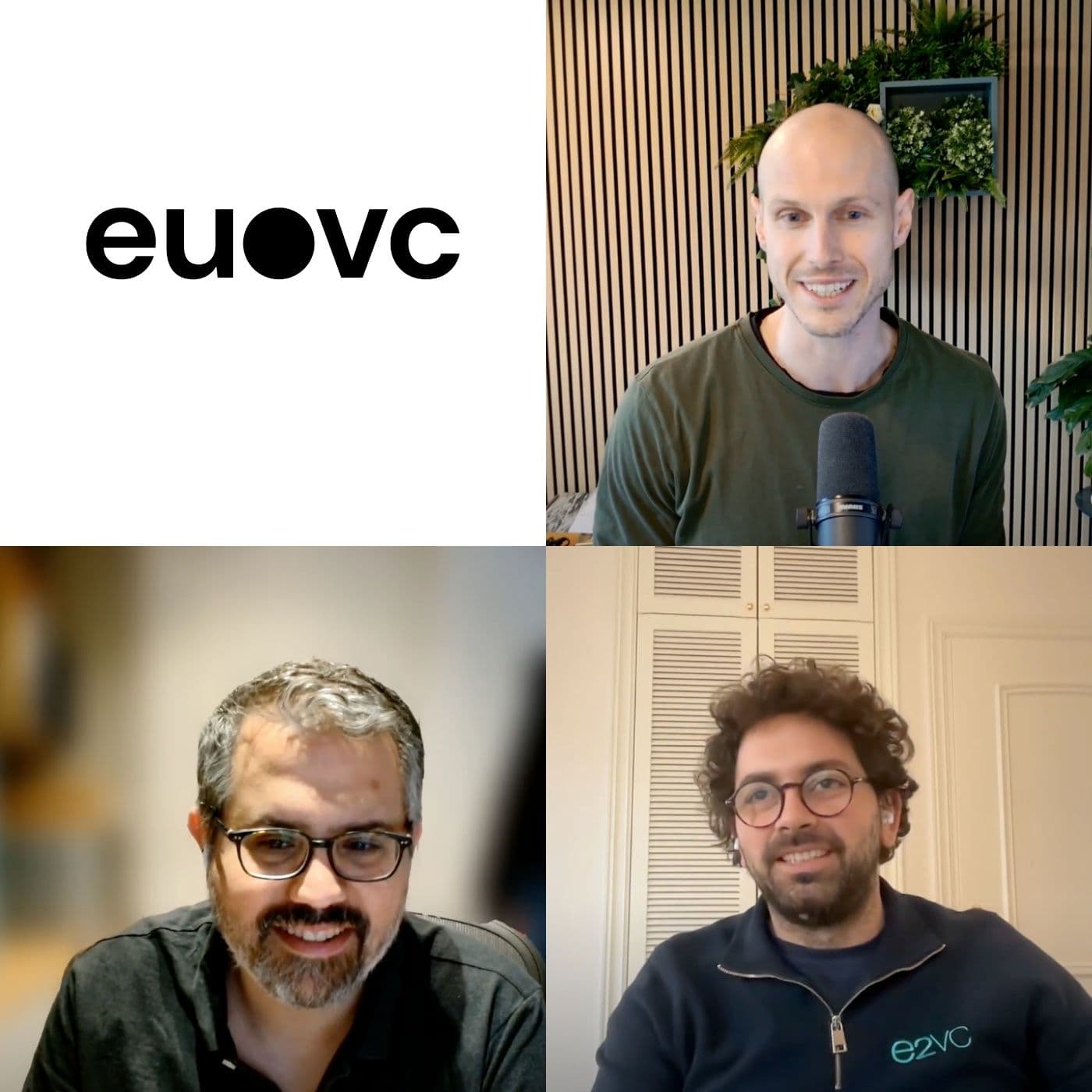
- Title: E431 | Enis Hulli, e2vc & Akin Babayigit, Tripledot Studios: Mobile gaming’s explosive growth and the impact of AI
- Hosts: Andreas Munk Holm
- Guests:
- Enis Hulli, General Partner at e2vc
- Akin Babayigit, Co-founder of Tripledot Studios
Description This episode dives into the dynamic world of mobile gaming, exploring its massive growth, the evolving business models compared to traditional gaming, and the integration of AI in enhancing gameplay and monetization strategies.
Key Chapters
- 02:58: Humorous backstory of how Enis and Akin met.
- 04:56: Akin's life story: from Turkey to the UK.
- 06:01: Career path transition from engineering to gaming.
- 07:46: Overview of Tripledot and its gaming success.
- 09:10: Challenges and opportunities in gaming investment.
- 12:08: Addressing misconceptions about the gaming industry.
- 17:08: Unique business model of mobile gaming.
- 23:08: Gaming talent in Turkey and Eastern Europe.
- 25:11: Unique conditions for success in Turkey.
- 30:50: Comparison of Europe vs. US from a VC perspective.
- 43:51: Launch of a new mobile gaming fund.
Summary of Discussions
The Size and Misunderstood Nature of Gaming
- The gaming industry's size is often underestimated, with estimates around $300-400 billion.
- It's crucial to differentiate between mobile and console/PC gaming, as they operate under distinct business models and strategies.
- Mobile gaming facilitates easy distribution, allowing successful games to reach billions quickly.
Mobile Gaming Business Model
- The mobile gaming sector is characterized by a blend of creativity and data analytics.
- The iterative nature of mobile game development is vital for optimizing user experience and monetization.
Investment Perspectives
- Akin and Enis discuss the challenges and opportunities present in gaming investments.
- The importance of understanding the deep nuances of the gaming ecosystem is emphasized.
- Turkey is highlighted as a burgeoning hub for gaming talent, producing successful companies and unicorns.
The Role of AI in Gaming
- AI is transforming gameplay experiences and enhancing operational efficiencies in gaming.
- Potential applications of AI include hyper-personalization of game experiences and improving gameplay mechanics.
The Future of Gaming and Fund Launch
- Akin is launching a mobile gaming fund, focusing on early to mid-stage investments with a commitment to fostering innovation in the sector.
- The fund aims to leverage Akin's extensive experience in the gaming industry and his network of successful founders.
Key Takeaways
- Mobile Gaming Growth: The mobile gaming industry is rapidly expanding, necessitating a nuanced understanding for investors.
- Importance of Data: Successful mobile games combine creativity with rigorous data analytics.
- AI's Impact: The adoption of AI in gaming could significantly enhance user experiences and operational efficiencies.
- Investment Opportunities: As the gaming landscape evolves, opportunities in mobile gaming are becoming increasingly attractive for investors.
- Geographical Talent: Turkey and Eastern Europe are emerging as key regions for gaming talent, fostering a new generation of successful gaming companies.
Final Remarks The episode highlights the exciting trajectory of mobile gaming and its intersection with technology, particularly AI. It emphasizes the need for investors to stay informed and adaptable in this fast-paced industry. The conversation between Akin and Enis offers valuable insights into the current state and future potential of the gaming sector, making it a must-listen for anyone interested in venture capital and gaming.
Written by AI. May contain mistakes. Listen to the episode to check what was said.
Transcript
Automatic transcript. May contain errors.0:00You know, everything about gaming is misunderstood, which actually is great. It creates a lot of opportunity if you have an information edge in gaming. The first thing that is misunderstood about it is the size. We're talking about a few hundred billion dollars, right? Call it 300, 400, whatever it is. The other thing that is misunderstood is that it is this often tendency to translate what is known by investors in PC console gaming into mobile. And those are completely separate businesses. They have nothing to do with each other. the way they ideate, the way they distribute, the way they improve, the way they build, they're all completely different.
0:41So you have a market where the size is misunderstood, the business models are misunderstood. And also it's very, very easy to distribute in mobile gaming. It's very easy to distribute your product to billions of people in one go. If you build an amazing product, it's really about iteration. It's about perfecting the mix between creativity and analytics. And that's ultimately what attracted me to gaming is the people there, people in gaming are, I often say a mobile gaming studio, you can even say a gaming studio is if a movie studio had a baby with a hedge fund. This is what a mobile gaming studio looks like to me because it's the perfect mixture of creativity, but also very, very heavy on data and analytics and so on.
1:30Here's a few words from our beloved sponsor. Discover where operational expertise meets innovation. With end-to-end coverage across fund admin, tax, accounting, compliance, ESG and more, we take care of the complexities so you can focus on what matters most. Whether it's supporting visionaries or maximising returns for your LPs, our tech-driven and comprehensive solutions empower you to achieve your goals with confidence. Partner with Ace Alternatives to streamline your operations and elevate your fund's success.
2:11This show is not investment advice and the hosts of this episode may be invested in the funds and companies featured. Welcome back, everyone, to the European VC podcast. Today, I have a very dear friend with me, Enes from E2VC. Anyone who has been following E2VC for the last, I guess, four years we've been around, they will know that Enes is a dear friend. We've done many events together. And as we just talked about before we started recording here, we've also done events where I ended up on my face right into the floor. so with that let's get into this akin we've invited you to come on the podcast because you and ennis go way back way back tell us a little about yourself and ennis also you should come in and tell us a bit about e2vc but it doesn't matter how we how we met so well i yeah i mean i i'll first talk about that part so ennis and my brother actually met in a nightclub apparently in uh our summer house cheshire and they were hitting on the same girl talking to the same girl there's and um and you know they kind of started off on the wrong foot as a result and then they during the conversation realized they're both going off to college in canada and the same university so they ended up rooming together so the first time i met ennis was like you know he was like i don't know 17 or 18 or something like that and you know i just uh you know he's just such an easy guy to like and he's he's awesome so i chipped in touch i heard any stories from my brother i heard my brother's stories from ennis and then i you know i just said like this guy has uh you know i i admired a lot the kind of the hustlerness and the gusto and everything so when he launched 500 startups i was like listen man if there's anything i can do to help uh let me know um and then he called me up on that and then i kind of helped them launch their fund etc etc uh so that's kind of how how we met right in this anything else you want to add yeah so i was actually homeless in boston i didn't have a place to stay i was 18 went for a weekend to boston from montreal and then that's how i met him so i had to be likable i had to make sure that he's gonna like me so that you know i have a place to stay but then that i guess continued for 15 more years and yeah i was the first person to land me my first internship land me my first full-time job he actually introduced me to my ex-partner in the fund arena so i mean yeah he's been instrumental and what a beautiful way to celebrate that by by getting both of you on the european vc podcast uh again we did not at all hear a talk about who you are what you're about why the european vc podcast makes sense for you to come on and so on so let's get all that out of the way as well yeah so um you know i'm turkish originally i basically my life you can divide it up into three chunks so zero to 16 i was in turkey i grew up there i'm very much turkish at heart and you know mind etc and then i moved to the states when i was 16 pretty much by myself to a place called wisconsin in the middle of nowhere and then i lived in the u.s for about 16 years so between 16 to 32.
5:24I lived there. I went to high school there. I went to university, you know, masters, MBA, all of it. First job, first experience, you know, et cetera. I must say I was raised effectively in the U.S. Really, the majority of the time I've been alive, I've been in the U.S. And then the third bucket is now the U.K. And I've been here for about 13 years. We This is kind of where I matured, but if my wife heard that, she would laugh at me. But this is kind of where I grew up. So I'm an engineer by background. I studied engineering, went to grad school. I was doing PhD in engineering. Had no idea what I wanted to do with my life.
6:11And as with most people who have no idea what they want to do with their life, I ended up at McKinsey somehow. So I was there in McKinsey. I was there for about two years. I absolutely hated it but it was very valuable it kind of gave me like a sticker of you know okay this guy is you know he can call whatever it is that people think about McKinsey people but and then I went to United Nations I worked for a company that does consulting for the United Nations and that was really great but I realized that I was not going to make any money doing that so then I went to business school I really wanted to learn more about like the business world and you know how things work and i went to harvard i graduated in 2009 and while at harvard i decided that i want to go into technology as a career i graduated in 09 went to skype was there a couple years and right after skype i fell in love with the uh gaming i would say model gaming business i'm not a gamer uh it's pretty crazy that you know i've been gaming yeah i'm not a gamer like I mean, in the stereotypical sense, I'm not a gamer.
7:21I don't have a PlayStation at all. I don't understand much about console games. I mean, I understand a little bit, but for someone who has spent the last 14 years of his career in gaming, I can't say that I'm a gamer. But I fell in love with the business of games, and especially mobile gaming, and how transformative that was going to be. So then I spent a career doing that. So initially as an advisor at Peak Games, joining Facebook, leading the European Games team there. For about five years, I was there initially with the European Games team, then building up Audience Network and then Activision Blizzard.
8:00And while I was at Activision Blizzard, I decided to start TripleDot with my two co-founders. And TripleDot was a true European successor. I know we'll talk about this in a little bit. you know both my co-founders were israeli i was turkish i am turkish and then we decided to build that up in europe in in the uk and then uh you know triple dot reached 1.4 billion dollars in valuation in about five years it was a big success story for you know many reasons and then we did everything they told us not to do so we did you know we built two companies at the same time so you know triple dot was like uh growing and we also built luna labs which is a b2b business we staled that we sold it to iron source in 2021 and uh yeah and then i was also doing quite a bit of angel investing specifically in mobile gaming i can talk about why that is as well and that has gone quite well as well uh you know being the first investor in companies like dream games spike games uh bigger agave among many others and both of you of course are quite avid game gaming investors.
9:10And for that reason, I think we should really spend some time here talking a bit about gaming as an investment vertical. And maybe I should bring you in first to say, tell us how you as a generalist think about gaming, why you think it's a sector that's worthwhile? Because there's a lot of generalists that have not done as many gaming investments as you have. We haven't done much either. Back when we started the fund in 2016, and my partner, she was one of the founders of peak games we were like hey gaming is too cyclical it's like having a lottery tickets it's very hits or miss it's not lunchable so we didn't do any gaming upon since 2019 that's when we met with the dream games team and yes they were amazing we were at the end of our hunt lifecycle and it was a small fund 10 million dollars so it's not like you can do a gaming build with a small fund unfortunately you can't but the way dream games performed and then how gaming in general with after 2019 obviously changed our mindset so 2021 onwards when we raised the second fund, the 70 million fund, we decided we have to do gaming.
10:08We should do gaming. And if you look at success stories from Turkey, you'll see there are multiple unicorns and probably a dozen companies that are around with 100 million plus in gaming, which shows the talent in the country. So not doing gaming as a VC based out of Turkey just doesn't make any sense at all. And then Akin here, I mean, again, I knew nothing about gaming. I was trying to memorize what Akin is telling me all the time. And then I would sell it to people, whether that's our investors, that's other entrepreneurs, et cetera. I'm good at memorizing stuff, I guess. I never truly understand stuff.
10:36I just memorize them. And then I can build my source of content around that. Beautiful. And as you said, one thing there, which was out of a small fund, you can't do gaming. Let me double click on that. Why can't you do gaming as a small fund? So a lot of the gaming companies, especially the best ones, even in a place like Turkey, they start by raising three to five to$10 million rounds. So even from a financial perspective, you can't get a location if you wanted. I mean, of course, you can get 1 % or 0.5 % of a company if you're lucky, but financially, that doesn't make that much sense. And if you're optimizing for ownership, you have to be putting in larger tickets or the fund size needs to be somewhat big for you to be able to do that.
11:17And the reason for that being is content creation. It's a content-heavy business, and the creation of that content takes a lot of time, takes a lot of iteration, and takes a lot of human power. So if you can optimize for a 24-month runway, it's not like a B2B SaaS company where you can have five or six engineers and that, you know, raise accordingly. You have to have multiple departments, maybe a team of a dozen, if not more people, and then all of that add up. But Akon would better, I guess, answer that because, you know, Akon is involved with probably like 100 or so gaming students. I made the figure up.
11:47Is it true, 100? Is that a correct estimate? It's a little bit too much, but it's like 50, I guess. So, I mean, the moment you became a VC, it went from 50 to 100. You have to exaggerate stuff, you know, make it up 100 now. that's how you make it 2x very easy again tell me your perspective on gaming and you are of course a prolific gaming investor you know it's really funny because I think it is the most misunderstood business in the entire world I mean of all the businesses that I spend time looking at in my career everything about gaming is misunderstood which actually is great it creates a lot of opportunity if you have an information edge in gaming the first thing that is misunderstood about it is the size people often say i mean i think it's well known by investors that now gaming is very big but it's genuinely misunderstood how big it really is so we say gaming is bigger than you know i think music and movies combined which is true but that's really underrepresenting a lot of what gaming is so gaming more than half a bit is mobile gaming but i think even the size of the mobile gaming market is misunderstood it doesn't take into account advertising-based monetization, doesn't take into account some of the alternative payment solutions that are popular in certain markets in Southeast Asia and Asia, etc.
13:07So it's a humongous market. We're talking about a few hundred billion dollars, right? Call it 300, 400, whatever it is. The other thing that is misunderstood is that it is this often tendency to translate what is known by investors in PC console gaming into mobile. and those are completely separate businesses they have nothing to do with each other the way they ideate the way they distribute the way they improve the way they build is they're all completely different so you have a market where the size is misunderstood the business models are misunderstood and also it's very very easy to distribute in mobile gaming it's very easy to distribute your product to billions of people in one go if you build an amazing product and you know dream games showed us this better than anybody else is if you build an amazing product you can literally distribute it to billions of people in a relatively short period of time you know it's really about iteration it's about you know perfecting the mix between creativity and analytics and that's ultimately what attracted me to gaming is the people there people in gaming are i i often say a mobile gaming studio you can even say a gaming studio is if a movie studio had a baby with a hedge fund this is what a you know mobile gaming studio looks like to me because it's the perfect mixture of you know creativity but also very very heavy on you know data and analytics and and so on i met a i met a danish founder of a gaming company that it actually went quite was quite successful.
14:49I think they sold for 50 something million dollars. And he then left as soon as he could. And he did so because he said, I started in gaming because I love to create great games, create stories, create experiences that really encapsulate or capture people's dreams and so on. But I kind of felt that I ended up being someone who was getting people addicted to to the drug of games uh meaning betting meaning buying items so on so forth like he almost felt like he was he was uh the designer behind a casino rather than someone creating stories do you think that's a fair critique of the uh of the gaming industry i don't think so but he's entitled to his opinion right so like you know i personally have i personally don't have any problem with trying to create experiences that are enjoyed by millions of people so like it's funny when we are at candy crush so i worked at king for a while as you as i just shared and both at candy crush but also at triple dots you know we would get these emails from people you know that said my you know whatever my father or something has like terminal illness but really the only thing that he's hanging on to life with is budoku i really want to thank you guys it provides an escape etc i'm not saying that to kind of sound high and mighty like let's be clear we're all doing it for the money i think we have to be very clear about that but i think if you're doing it for the money it provides a kind of level of transparency but you know if you're doing it for the art for the storytelling yes i think i could see why certain people would feel i guess money gets in the way or something like that um so you know i don't think it's um lost its virginity once we figured out the real business model for games.
16:41I played World of Warcraft for two years of my life, like obsessively. And man, am I happy. And my son is now getting to the age where he's playing. And I am a big backer of him. And I think it's a great idea that he plays a bunch because you learn a lot, man. You learn a lot about grit. You learn a lot of language. You learn a lot about culture, collaborating, so on. So I absolutely love games. Enes, go on with your question. Yeah, I was going to ask Akun. I mean, obviously, mobile gaming has exploded over the past, say, six, seven years. But a lot of the things, a lot of the business dynamics or the business levers that you've pointed out are not just more for mobile gaming.
17:21Those are also for AAA studios, console games, PC games, et cetera. But those haven't grown as much. So my question is, without such a platform shift that increases the total number of users, would you still be that bullish on gaming? if the whole total industry market size, whether that's number of users or the number of amount spent, if that stagnated, would you still be bullish on investing into gaming on a pre-seed level? The short answer is probably not, but there's a nuance in that. And the nuance is this. When I fell in love with gaming was because of social gaming. You know, this is when in 2009, there was this phenomenon of farm bill that was taking over the Facebook platform.
18:01And, you know, mobile games weren't a real thing back then. They were just starting to emerge. So the thing about mobile is not that I love mobile devices and so on. It's just because it provides such ubiquity that the scale of the number of users you can reach in a short amount of period is huge. So I actually fell in love. I remember reading somewhere that there were more trucks sold inside Farmville than actual real life physical trucks in the US in a given day. so now it seems kind of a trivial piece of information back then it just blew my mind right so then i kind of said oh my god you know so that is what i fell in love with but then if you look at a mobile the the platforms that mobile you know devices allow you to to reach it's absolutely mind-boggling in a successful game people spend north of an hour per day of their lives for many many many many many years you know that level of attention is absolutely mind-boggling and you will see today that the biggest competition it's kind of well known and accepted for gaming studios is coming from not necessarily other gaming studios but things like tiktok and instagram etc we often saw in our data that there was like an instagram outage our usage would go up double digit percentage points so i guess the short answer is not you know but you know the the thing that i fell in love with was how universally accessible games were and this is ultimately a day entertainment that we're providing so you know i love the business model i love how fun it is to create you know i do like the monetary aspect of it although if i was only doing it for money i would you know there are a lot of other people that provide other type of things for money but gambling or betting or whatever which i personally don't enjoy but i don't judge them for enjoying that you know i'm very clearly not doing it for the arts alone let's just say i want to ask you about something that's been baffling me i have not been able to understand it maybe you as a as a gaming investor can why the hell has LinkedIn decided to add games to their platform?
20:19I don't know. I think, you know, gaming is sometimes seen as a panacea, as like a short fix to engagement problems that other people might have, or maybe they think it's going to boost their platform or engagement or whatever. I mean, on a platform like LinkedIn, I agree that it probably doesn't make any sense, you know? So, you know, it's not a panacea. When I was at Facebook, there was a lot of discussion about you know becoming much more friendly to gaming developers and there was these like experiments that facebook ran about you know using the platform as a distribution mechanism for you know taking a page out of the playbook of like wechat and kakao etc and ultimately those experiences didn't really pan out for different reasons i think but ultimately you know people realize like the topic of the day today is like telegram games and whether that's a real platform or not.
21:13And, you know, I actually think that, you know, I've seen a lot of attempted platforms that are trying to do this. And I think that some of those efforts are really not going to work. There might be some short wins and for really, really early adapters or for really kind of clever adaptations, there might be money to be made, but it doesn't build sustainable long-term value. In my opinion, that opinion might change. I might have to eat my words next year or so, which is very possible but like currently people that go to those platforms they don't go in with a view to consume those type of experiences definitely not on linkedin so then discovery becomes a problem engagement becomes a problem there's value confusion etc so ultimately i think we have to differentiate between do i want to build long-term sustainable player habits and and value or do i just want to try to make a quick buck not that there's anything wrong with that it's just that i'm much more greedy on the long term and less greedy on the short term i want to ask you because you are to me one of the very best investors in the in the in the emerging europe uh as e2vc stands for um i love to ask you how e2vc is similar to euvc no the branding by the way i hates the name so i'm not gonna ask him but like when i told you hey you're eubc i'm gonna come here to vc how did that feel like for you when i saw it i thought this is absolutely beautiful especially because you're like when i looked at it and then i squinted my eyes a little bit and the people watching here on uh on the show will also see the the e and the two on on on uh looks like a heart it's so exactly not a lot of people can see it man it's only the artistic people can see that.
23:02I'd love to ask you, Anas, the talent base in Eastern Europe, you said also out of Turkey. Can you talk a little bit about this, both the network dynamics and the continuation of the growth of the Turkish gaming developer ecosystem? Because I do see that quite a bit as something that's powerful in Europe. So I don't think that it exists across Baltics and Eastern Europe and Turkey. We don't do gaming investments across the region. We mostly do it in Turkey. Poland, I think, has good talent in AAA and PC gaming, but we don't do that a lot. We do mobile gaming and then Turkey leads the region by far.
23:40You can compare Turkey to Finland or Israel in terms of success. I think if you're on a forward-looking basis, you might say that Turkey is going to have more success than those two competitive countries just because of the talent that it has. And in trying to pinpoint why that talent exists in Turkey, I think it's tough. I can't point out a single reason why it's there. I think it's more so that the first unicorn in the country was it was Peak Games and then that has its own spillover effects where there were 80 more studios that were founded which pulled a lot of the young talent from say a decade ago to enter into gaming and when when your top tier talent goes into a certain industry that has its own talent flywheel, that has its own talent network effect where talent wants to be where other talent is and then you see especially in arts and in art and product you see amazing purgish talent i don't think development is as important when you compare it to other industries that we focus on i think it's to prioritize in a lot of the founding teams we don't even see that there are sometimes not even engineers in the teams but art is critical product is critical game design is critical i don't know akun what do you think when you come obviously you didn't i didn't do any gaming investment outside turkey but you did a bunch yeah it's a very good i mean you can write a phc thesis so i'll try to summarize kind of what so first you know let's realize that what you said initially is so true so i think right now doing gaming investments in turkey is similar to like doing cyber security investments in israel like the level of expertise and the level of kind of talent spillover cross-pollination etc is just incredible why is that so like i think if you look at turkish so it's a young country so there's some really kind of infrastructural things that are in place those things are necessary but not sufficient conditions for the success that we've seen so some of these conditions are you have a country with a very young population that is very well educated you have a really strong ecosystem of not only tech but also like enis mentioned And very strangely, things that are related to storytelling.
25:43So Turkey is the second largest exporter of TV shows to the world after the United States, for example. So there's creativity and there's also technical talent. And the other conditions that are in the country, right? You have an unstable currency, unstable geopolitical situation that really necessitates. And people like getting paid in foreign currency. So getting paid in dollars, getting paid in euros, et cetera, is great. And gaming is an industry where you have people that are super smart, but also can tell a story. And you have to be able to iterate. So there's low barriers to entry. So take e-commerce.
26:27So in 2010, there was an e-commerce wave in Turkey, and everybody and their grandmother was launching an e-commerce company. and you know this is this is because turkey is a darwinian society people saw the you know success of companies like trend you all run by my very good friend demet uh she started that and then you know everybody started to get into e-commerce but e-commerce is actually a lot tougher to get into you have to worry about like you know supply chain operations gaming comparatively is actually really easy to get into it's harder to maybe differentiate and harder to scale but it's just barriers to entry are low and then as a result like what Ennis said you had some really publicly celebrated success stories so Pete Games, Graham Games, Rolik, Alictus, Good Job Games all these companies Massimo they were all in a short period of time very successful and exited for several hundred million if not billions of dollars in the case of Pete so people said oh wait a minute i can do that too and that led to two things one is if you go to today in like europe or u.s the best of the best of the best students they want to build careers in let's say consulting and hedge funds maybe tech etc and in turkey this is actually more you know more and more in gaming especially in mobile gaming so you go to these like universities the best students there they go to you know those companies that we mentioned like dream and spike and it's a bigger etc or a good job etc so like we are in a position where you have demonstrated success it fits you know the country's natural resources in a way from creativity etc the biggest thing i gotta say and i will say this as well turkish people they work a lot and gaming especially mobile gaming is not an innovation business anymore.
28:29It's an iteration business. So to win, you have to iterate. You have to work. You have to keep at it, et cetera. And I'm not just celebrating the hustle culture, the broadcasts or whatever, but it's just a fact. And this is why you see success coming out of Turkey and other countries like China. I feel like in some investments you do, you're more focused on gaining founders that have a vision of a product that's so differentiated that maybe in their first iteration, they're going to reach success. Let's call that more of like on the spectrum, it's more art than science. And then sometimes it's more the iteration, those short feedback cycles, and they're going to get there eventually step by step.
29:05They're getting to get that. Those are more scientific that turns games into more of a science than art. But I feel like you do both. But in your statement a couple of seconds ago, you mentioned that more and more you think it's more a literate process than it being the art or the creativity behind it. Can you elaborate on that? You know, science exists across the board. So I would try not to invest too much in. I mean, it's a case by case thing, right? And I had been investing as an angel. And it's also a question of risk and reward. And sometimes, you know, I see opportunities that are more the former.
29:40So someone that's super visionary and so on. If I thought it made sense for my personal wealth, I would participate. But I think that typically the risk in investing in the former type of founder is that whatever they do, it's still going to come down to execution because having an idea is no longer enough. any idea that you come up with is going to be cloned seven ways into sunday so the joke that i have internally is like if you have the best idea of how to build a game like you just release it and then like you see how other people make a much better game than you in like a week right so this is this is it's just true so i always try to you know err on the side of you know iteration and science etc but you take someone like sonar right and what they were able to achieve with dream games i mean it is it is just incredibly inspiring what they're doing and how they're doing it but it's not because you know it's they have the vision but they also have the science and the iteration behind it as well i'd love to ask a bit about the um the European versus US ecosystem and kind of you're doubling down on Europe, Akin, and as you're obviously as well, but you're here in person, which, Akin, you've built much of your career in the States.
31:07So I'd love to hear why Europe, why do you think Europe is the right place? And I'll ask both of you here. Okay, you might not like my answers, but I will be honest. I will be very transparent. Cheap as fuck. Is that what you're going to say? No, no. I mean, we actually, I joke with Ennis all the time. I say like, man, like you should go to Israel and like invest in Israel. There's such an amazing opportunity there for you. And he's like, no, no, I want to like build my career in like Lithuania and Slovakia. I was like, okay, you know, you do you. The short answer is I'm married to an amazing woman who likes living in London.
31:39There's really no, you know, two ways about it. Just being very honest. I love the U.S. in many ways. I was raised in the U.S. I am, you know, I think we just said like I have like a Turkish heart and I think maybe a little bit Turkish, a little bit American brain now. But I think that, you know, it's not like you are supporting a football team. You're going to say America is the best or Europe is the best. It's like we have to be able to see the nuance and the good things. So the good things about America, I'm not going to cover because you can go on Twitter and just like read all day about this.
32:13But I think the good things about Europe is obviously the talent is number one for me. You have such access to an incredible amount of talent and a diverse amount of talent because you have different pockets of activity. Being in Europe means that you can actually meet with people and founders from Germany, France, Israel, etc. So just think about like a two hour flight radius from Munich. You have, you know, Paris, which is really strong in like AI and the godfather of AI, Jan Lecoum, who's French. And, you know, Demis built AI, obviously DeepMind here in London. And you also have, we talked about the gaming success of Turkey here.
33:00We talk about cybersecurity and how advanced Israeli tech is, and that's there. And you can't mention of how strong the developer ecosystem is in Eastern Europe, et cetera. So there's that diversity that, you know, I really like. And, you know, honestly, I also think that, you know, it's like competing in a, you know, whether you want to be a big fish in a small pond or a small fish in a big pond type of situation a little bit. So I think in Europe, the lack of some of these trillion dollar companies is sometimes seen as like, you know, why Europe fell short. I actually see that as an opportunity because it's such a new ecosystem.
33:39I mean, Silicon Valley has been around for decades. And if you remove Silicon Valley out of the U.S., then I think it becomes quite comparable in terms of innovation, et cetera, to Europe. So we're not really talking about U.S. versus Europe. we're talking about Silicon Valley versus Europe, which is not a fair comparison. So if you're building a career in venture, you want to be in places where that you're going to be able to ride those tailwinds, et cetera. From a macro perspective, I had to also mention China. I believe that there's a 50, 60 year gap or lag, I should say, between how a country does in high school math and science and between their like uh you know position in the world if you go back 50 60 years ago us was actually the best in the world in high school math and science believe it or not it kind of feels unbelievable right now to be honest but the last 50 60 years it's very obvious that you know the asian countries are taking over the us and you know we're seeing several of those results now nowadays and the work ethic in those countries is just crazy so you know i don't have a loyalty to europe i personally don't you know have any loyalty to you know whatever but i have you know i i do feel that there's a lot of opportunities that are overlooked in europe potentially and as i gotta ask you to come in and uh and say you're a part other than your empire building in Eastern Europe?
35:15Why are you bullish on Europe? From a venture capital standpoint, I think what's different about emerging Europe is because of the nature of global revenues and also with the gaming companies, you can actually write the power law. But if you look at unicorns in Germany, for example, 80 % of their revenue would be coming from Germany and that puts its own ceiling into the upside potential of that opportunity. I would say the same for France. I would say the same for the UK. a lot of the success stories are very hyper-local success stories, unfortunately. And although people compare Germany, France, or UK to the US, you can't compare them to each other after that scale because you do hit the wall at a certain point.
35:52But it doesn't have to be one or the other. I think what I can say is really true that betting on Europe is a big bet on talent, but then you have a massive disadvantage when it comes to the financing ecosystem, whether it's downstream capital or actually M &A or IPO. So you have to hedge against that and be able to play that game in the US. But then taking a big bet on the US, I think is a big disadvantage when it comes to talent, because there's a lot of really strong talent network effects in certain cities in the US. And then it's really competitive, talent retention is really tough. So you have to find ways to scale talent as you scale.
36:26And a lot of the times that's outside the US, which means you have to build operations in places like Europe to be able to scale your tech team. So it's just you have to be aware of what you optimize for and what you de-optimize for so that you can hedge against what you had the disadvantage. And then if you take Silicon Valley out of the equation, then U.S. versus Europe becomes incomparable in a way where Europe would win by far, I think. It wouldn't even be equal. if you also take out the 2 % best deals in the US, which all tend to go to the same firms, which if you're not in them, you can almost by definition say, okay, I'm not going to touch those deals.
37:03And then all of a sudden the US ecosystem is maybe not as an exciting place to be investing. But I want to say one thing here. I mean, we would be intellectually dishonest if we're not talking about the humongous gap in mentality. I think this is the biggest thing. we can talk about talent and you know i mean those are all things that are very important but it is true that you're not going to win the war in technological innovation if we don't change the mentality in europe i mean that is you know i read this on twitter a lot and like the people that are kind of saying this propaganda are people that i don't personally love and care for necessarily but let's be honest they're right um you know it's just a lot easier to build a company in u.s for many reasons mainly psychological reasons like if you start a company in europe you go to your you know middle school classmates and say hey i'm starting a company you know whatever or college classmates whatever you know you're more likely to get laughed out of the room in europe than you are in the u.s that is a huge problem and that permeates every fabric of society it be in Europe.
38:10I'm going to ask you on that one because to me, that argument runs counter to the entire premise that a VC backable founder does not give a fuck about anyone else and they'll run through walls and they're hugely intrinsically motivated and they dream big by definition and so on, which means, okay, if there's then a prevalence of this type of profile in the US, You can argue, right? But I just think that the reaction of your external environment, if you're a VC founder, you're going to do it no matter what anyone says to you. I think it's all about the environment you're growing up in. And we're talking about what you're saying is true in a sense.
38:55If you're a special kind of person, you're not going to care. but that's not that's not to say that many people that would become special are not discouraged from a very early age you know uh if you had their ecosystem you know i have a lot of really really really really intelligent friends that are in turkey that are never going to start companies and i can tell you it's not because there's something intrinsically and it's so wrong it's Just because, you know, they are growing up in an environment where, you know, they just didn't even know that was an option. Whereas if you have that environment, it's just a law of large numbers.
39:35So if you have that environment, ultimately, you're going to have more winners. And we all need heroes in our life. Right. So if you're a kid in Romania, you know, Daniel from UiPath is going to be a hero for you. No matter what, if you're in Turkey, Siddar is going to be a role model for you because he's achieved something that other people haven't. But if you have that environment, you're going to have many more role models and it's just going to permeate, it's going to trickle down effectively. We can continue this conversation for ages and we've had it many times on the European Easy podcast.
40:08What we have not spoken about, though, before is the future of gaming. And I think specifically, I think we need to touch on AI and how AI is going to impact gaming. Of course, anyone can imagine how generative AI should be able to give you a completely crazy storyline in your game. But that's probably not the first application we're going to see. So I'd love to ask the two of you, where are you seeing AI impact in gaming? So I think historically, the company Ennis mentioned is Layer AI. I'm a huge fan. And, you know, we're going to do a lot of interesting things together. I think gaming typically is an industry that adapts to things very quickly and very successfully.
Read the full transcript
40:52So when there's a new platform, new technology, gaming companies are almost always the first ones to try and to adopt. And this has been true for platforms, Windows platform first companies, games, Facebook, same, mobile, the same, etc. etc for ai indeed we've seen a lot of gaming companies already adopt to lots of the ai technology mostly on the generative ai sides and that's exciting in and of itself because you know you gain a lot of efficiency you know the output of your work improves a ton and you know the creative power of your entity just kind of goes through the roof perhaps more interestingly what will happen is especially on the mobile side we're seeing a lot of attempts at using ai to change the fundamental core gameplay so the level the level difficulties you know the live operations that you might be doing inside your game the monetization approaches etc that i think is i've only seen one or two companies that have actually done really well there and they've both been out of china but that I think is going to be the next frontier is not you know like obviously how do I use generative AI to make my existing creative operations better is great but if you can actually you know use AI to build a better game I think that's that's kind of the the trillion dollar question here and I think with AI it comes in ways right like three years ago four years ago now with GPT-2, there was Jasper, and that kind of shifted the whole industry where a lot of companies went to thousands of millions of dollars in revenues, not hundreds, and that category became very AI-enabled.
42:34Everyone's using AI in those industries. Then came multimedia, images, videos, voice. Over the past two years, you also have one of our portfolio companies, Fall AI, doing great. They've raised a lot of money from top-tier funds. Now we're seeing a lot in code development with lovable bolts they're doing dozens of millions of revenue it still hasn't come to games yet people are trying because i also agree with akun that gaming is one of the fields where they use technology a lot whether that's crypto whether that's blockchain whether it does desktop pcs from decades ago you would see that game people developers gaming developers or gaming users are the first early adapters so they have been dwelling with ai it's just that ai wasn't there yet but when that wave comes it does create you know hundreds of millions of dollars of revenue and i think the keyword there is going to be hyper personalization of you know stories characters gaming assets levels on a per user basis i can only imagine uh myself sitting there playing world of warcraft and then having an npc that comes up with me and has he has his whole I generated a script behind him to make me buy some extra equipment.
43:45I think that can be incredibly efficient and very disruptive to the experience. Cool, guys. Anything that we haven't covered about Europe? Maybe I can now, we've spoken a bunch. I think you should talk a little bit about the 100 million euro fund or dollar fund, I guess. They're the same thing now, no? No. Well, is it that right now? Yeah, probably. Almost. Almost. So it's not 100 million, but, you know, it's not too far from that. So I'll let you guys guess. I don't actually know if I can disclose the exact amount, but thereabouts. Yeah, I mean, look, it's been a really interesting journey. Look, I think angel investing alone without any information, asymmetry, et cetera, I think is just not a very smart thing to do.
44:31So, you know, I haven't, I've lost a lot of money just angel investing in things I have no idea about. And that was just, you know, I was betting on, you know, getting lucky, et cetera, and that's just not a smart strategy. And the reason I think that is, you know, obviously all the good deals that are out there that go to, you know, the known entities in the world. And, you know, I realized that if I'm seeing a deal in an area that's not mobile gaming, there's probably a reason I'm seeing it, you know, and not other people. But in gaming, I do have, I feel over just the fact that I've been in this industry for so many years, I do have a little bit of an information asymmetry.
45:13I know the teams. I know the founders. I know how they think, et cetera. And I always felt really excited that we're just so much in the beginning stages of this industry. It's pretty crazy. so if you look at the poster stories or the poster boys of gaming right take two ea activision they're all coming from the smaller bucket you know so if you have the gaming industry as a whole more than half is in mobile gaming yet mobile gaming lacks the the the poster childs of the industry but you have businesses like playrix um supercell um you know zynga king dream games triple dot you have all these companies that are incredibly successful and not many people actually know about them um that i felt that this a will change as a trend and b what's happening a lot now is those i almost view of those companies as like universities that are giving birth to graduates who are now actually trained in really really amazing places and they want to go out and create their own companies um so i've been i've been very bullish on that it's a challenging market in gaming um it's much more competitive but i think oftentimes venture investors they kind of say um you know it's challenging therefore i cannot find the good opportunities or too much competition i actually view that it's challenging because people are actually making a ton of money there and if you get in the right companies at the right time you can make absolute absolute amount you know absolute killing so i'm very excited yes we're launching a fund to invest in mobile gaming companies only and it will be i think one of the largest dedicated funds in mobile gaming i have been discussing this with a few partners they were excited to back me given some of the angel investments i made and also the fact that i come from an operating background um having created triple dots uh you know having uh run it for many years uh having created luna labs etc i think you know the founders that i speak to are you know really excited to work with someone that has been in their shoes and hopefully can you know help them avoid um some of the mistakes i mean there are a lot of good gaming investors out there but there are very few that have actually been in a position where they've launched something launched a company and so on so i think that's that has been resonating with people um quite a bit and i'm really really excited i mean it's um you know i honestly i i could tell you that you know i wasn't i'm this is the first time i'm not doing something for money this is the first time I mean the money helps but this is the first time I'm doing it because I absolutely love like this is what I would do if I wasn't doing a fund anyway like I would invest my own money as I've been doing with Ennis and a few other folks all this time I really enjoy the you know talking to very smart people who are super hungry seeing their ideas actually getting excited by them I have immense respect for them and and yeah I think it's just it's just really interesting time to do what I'm doing.
48:37And then from a strategy perspective, are you going to do follow-ons? Like in gaming, we see companies raise, I don't know, start with 3 to 5 million rounds, but then do 20, 50, 300, and then you've got to stop where you've got to stop. Is it going to be like a first ticket only fund, first and second ticket, no boundaries, God knows, maybe I'll just follow on forever. What's your stance? About half the fund will be pre-seed and seed, so between 1 to 5 million dollar checks. and the other five plus is for kind of more mature opportunities but it's not a follow-on bucket per se it could be companies that we feel excited about and so on and so we don't have a dedicated kind of this is how much i'm going to allocate for follow-on type strategy the idea is really this is a macro bet on the mobile gaming sector as a whole but we're also going to be like quite you know opportunistic if you see an amazing gaming deal um we'll obviously you know try to do that if if it makes sense but really my kind of bread and butter what i know best is mobile gaming so the idea the thesis is you know let's try to you know pick the best companies in mobile gaming because we all believe that you know it's going to make a lot of economic sense going forward and geographic wise is it uk europe israel mean everywhere everywhere including the u.s u.s i mean obviously u.s europe turkey israel etc and then beyond that i facetiously say everywhere i mean you know they'll probably not have some issues doing investments in north korea etc um you know but you know good teams can come out of everywhere right so to the extent we are allowed to do investments in certain jurisdictions we will do but there's no geographical constraint thing you can only operate here or something like that awesome guys we are up on time so we better round it off enez do you have any final remarks before we close no we've co-invested five times so far with that can i just can't believe for entering the podcast i hope we'll do more now that he has a fund i'm trying to i'm stalking his linkedin to see who he's getting connected with so that you know i can hunt them down too that is such a beautiful uh constantly running sourcing engine engine that ns has going on so beautiful regarding tam i was sitting here thinking uh yes and gaming is big today but if we're not living in a simulation already we probably will in 50 years or so which makes the uh tam infinitely bigger uh so i can only imagine that gaming is the place to be at guys thank you so much for joining me thanks for having us here's a few words from our beloved sponsor.
51:19Discover where operational expertise meets innovation. With end-to-end coverage across fund admin, tax, accounting, compliance, ESG and more, we take care of the complexities so you can focus on what matters most. Whether it's supporting visionaries or maximising returns for your LPs, our tech-driven and comprehensive solutions empower you to achieve your goals with confidence. Partner with Ace Alternatives to streamline your operations and elevate your fun success.
From the publisher
In this conversation, Akin and Enis delve into the latest trends reshaping mobile gaming, including the rapid adoption of AI to enhance gameplay and optimize monetization strategies. They also discuss the launch of Arcadia Gaming Advisors, a new $100 million fund designed to drive the next wave of innovation in gaming.
Chapters:
02:58 How We Met: A Humorous Backstory
04:56 Akin's Life Story: From Turkey to the UK
06:01 Career Path: From Engineering to Gaming
07:46 Tripledot and Gaming Success
09:10 Investing in Gaming: Challenges and Opportunities
12:08 The Misunderstood World of Gaming
17:08 Mobile Gaming: A Unique Business Model
23:08 Gaming Talent in Turkey and Eastern Europe
25:11 Turkey's Unique Conditions for Success
26:11 Gaming vs. E-commerce in Turkey
27:03 Rise of Successful Turkish Gaming Companies
27:35 Shifting Career Aspirations in Turkey
28:18 The Importance of Iteration in Gaming
28:47 Investment Strategies in Gaming
30:50 Europe vs. US: A Venture Capital Perspective
32:16 The Talent and Diversity in Europe
40:14 The Future of Gaming with AI
43:51 Launching a Mobile Gaming Fund


