
In short
EUVC Podcast Episode Notes: E434 - MediaTech Roundtable
Episode Information
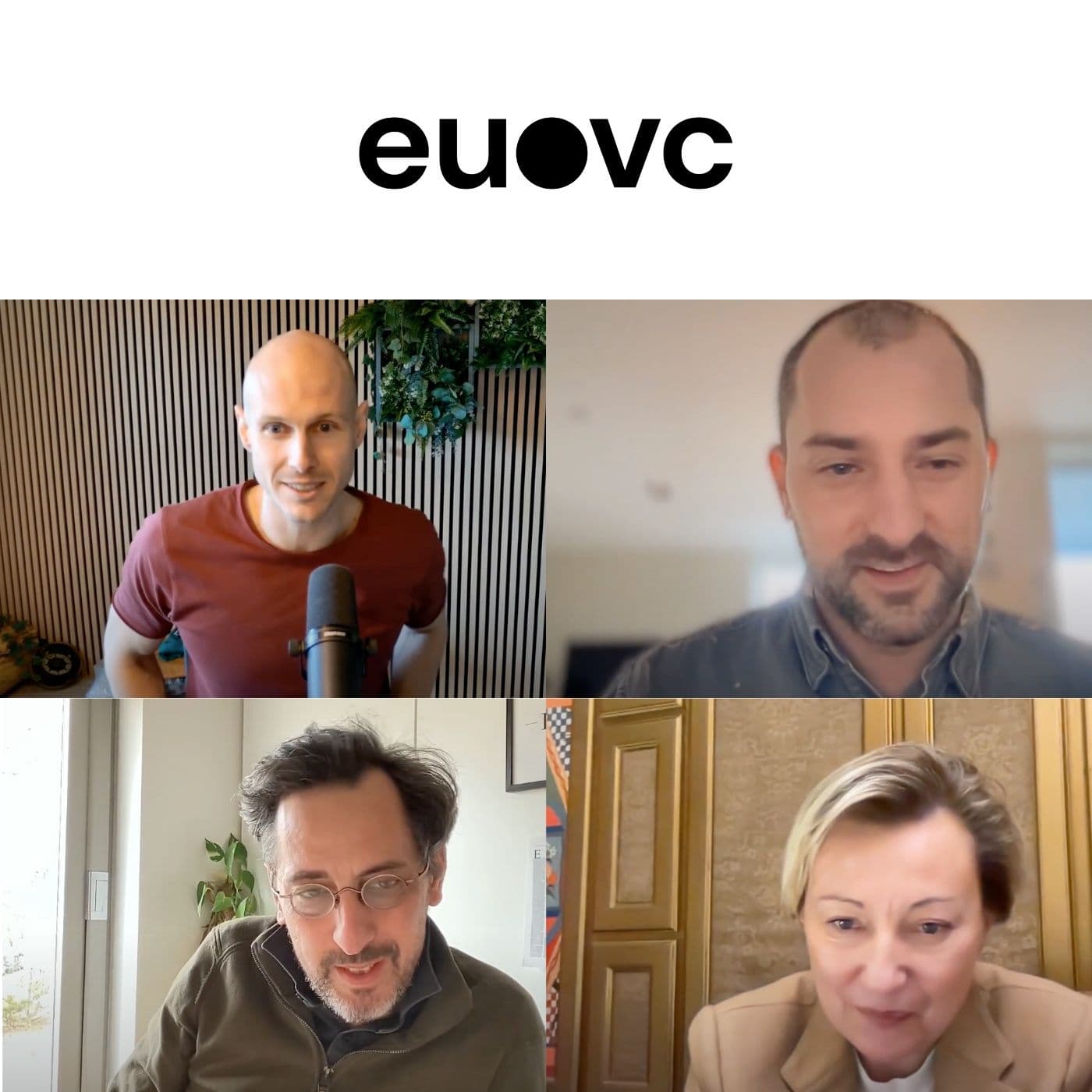
- Title: E434 | Victoria Palatnik, Raw Ventures, Peter Effenberg, Jay & Severin Zugmayer, New Renaissance Ventures: MediaTech Roundtable on Transforming Legacy Media and Redefining Content Creation with AI
- Hosts: Andreas Munk Holm
- Guests:
- Victoria Palatnik (Managing Partner, Raw Ventures)
- Peter Effenberg (Founder & CEO, Jay)
- Severin Zugmayer (Founder, New Renaissance Ventures)
Overview In this episode, the co-hosts and guests discuss the current landscape of MediaTech, focusing on the transformation of legacy media, the impact of AI, and the challenges and opportunities within content creation. The conversation highlights consumer preferences for trusted journalism amid digital noise, the evolving definitions of media, and the potential of AI technologies in shaping the future of content.
---
Key Discussions
- The Rise of Legacy Media
- Consumer Preference: There is a noticeable "flight to quality," with audiences seeking trusted, branded sources of journalism amidst the overwhelming information on social platforms.
- Quality vs. Quantity: The guests argue that branded media outlets provide a quality filter that helps consumers distinguish between misinformation and credible news.
- Challenges in the Media Landscape
- Regulatory Frameworks: Discussion on the challenges posed by regulations like GDPR and how they affect content distribution and creation.
- Monetization Issues: Legacy media outlets struggle with sustainable business models, facing heightened competition from independent creators and social media platforms.
- Changing Dynamics in Media Branding
- Content as Brand: The shift from traditional media brands to content brands, where the content itself becomes the brand across multiple distribution channels.
- Emerging Media Hubs: Analysis of European media tech hubs, with the UK, Germany, France, and Spain leading in startup activity.
- Media Bias and Quality
- Comparison of US and European Media: The guests explore the polarized media landscape in the US, contrasting it with European media practices, which have their own biases but may lack the breadth of representation seen in the US.
- Innovations and Opportunities in MediaTech
- AI Integration: The impact of AI on workflows, content production, and the creation of shoppable content.
- Generative AI: The potential and limitations of generative AI in media production, with current focus on enhancing production processes rather than replacing human creativity.
- Future of Journalism and Content Creation
- Role of Journalists: The evolving responsibilities of journalists in an era of AI and digital tools, emphasizing the need for investigative and original reporting.
- Implications of AI: Ongoing discussions about ethical considerations and the potential for AI to reshape how content is produced and consumed.
---
Key Takeaways
- Legacy Media Resilience: Contrary to perceptions of decline, legacy media has opportunities to thrive by leveraging quality journalism and adapting to new technologies.
- The Creator Economy's Growth: The independent creator economy is on the rise, challenging traditional media by offering diverse viewpoints and content.
- AI as a Tool, Not a Replacement: AI is reshaping workflows in media production, but it is not seen as a full replacement for human creativity and storytelling.
- Ethical Challenges Ahead: As AI technologies advance, discussions around ethical considerations and regulatory frameworks will be critical in balancing innovation with societal values.
---
Conclusion The episode highlights a complex and rapidly evolving MediaTech landscape, characterized by the interplay between legacy media's established presence and the rise of independent creators. The ongoing integration of AI will continue to influence content creation and distribution, with ethical considerations playing a vital role in shaping the future of journalism.
Additional Resources
- Conference Information: For those interested in further exploring MediaTech, information about the annual conference organized by Peter Effenberg and Victoria Palatnik can be found [here](https://www.rawventures.com/).
Follow the Podcast Stay updated on European VC and related discussions by following the EUVC podcast at [eu.vc](https://eu.vc).
Written by AI. May contain mistakes. Listen to the episode to check what was said.
Transcript
Automatic transcript. May contain errors.0:00We're seeing a bit of a flight to quality. and this is why legacy media are winning again or gaining traction again or gaining ownership again because in times of X or Twitter or however you want to call it where you have a constant unlimited flow of live information which has its advantages and there is reasons why people love to spend so much time on X but you don't have that quality filter which you which you might have with with branded media right and this is um consumers um want that again um i want to at least to have a choice to say okay i can go to branded media and then no this is vetted i know there is journalism work behind it i know there's an editorial behind it i know there has been proper research being done on that um and i can trust that um as opposed to I get the constant live stream of information, but I don't have that quality approval stamp.
1:02I can't be sure if this is fake news or real or if there is misinformation, etc. It's interesting, Severin, because at least in the US, it seems very much like it's in the tech ecosystem. system, it seems very much like it has tipped in favor of the creator economy winning because they have ended up with a very biased institutional setup for their media. In Europe, I'm not seeing that crystallize in any way as clearly. However, I am myself very frustrated with the news that I am able to get in Denmark covering, as an example, everything that's happening in the US. with their finance now. Tear down this wall.
1:50It's more than just an ally. This is a union of values. Let's start acting. This show is not investment advice and the hosts of this episode may be invested in the funds and companies featured. Welcome back everyone to the European VC podcast. Today I have a panel I've been looking forward to. Not so much because of the people here. They're not special at all, but because of the topic. No, I'm kidding, of course. I'm excited about it because it's going to be media tech, and that's obviously quite close to, if not my heart, my wallet here at EUVC. So let's just run around the table here, make sure everyone knows who everyone is and the perspective they come to this conversation with.
2:36Victoria, let's start with you, and then we go Peter and then Severin. Thank you, Andres. I'm Victoria. I'm the CEO of a venture capital company called Raw Ventures with headquarters in London and the UK by investing globally. We do have three clusters in our company. One and the most important one is media tech. And that's where I should probably stop because that's the topic of our discussion. For probably our next podcast of any interest, we also have a cluster in health tech and in sustainability. MediaTek for us is everything related to the creation, distribution, monetization of any type of content.
3:16How content is created and what type of content consumers are evolving as of today. So that's what we do. We invest in pre-seed and pre-series A startups, companies starting with half a million up to three million per company. We do about six to eight investments per year, and we continue to grow as we see that very interesting segment for our company going forward. I'm Peter Heierke, Peter Effenberg. I'm based in Potsdam, Germany. So I bring with me about 30 years in the industry, in the media industry, the intersection of content creation and tech all the time. So I was working about 25 years as a live producer with 250 films in my life.
4:06And then I founded the Media Tech Hub in Potsdam, which contains also the Media Tech Hub conference. But since a couple of years, I'm running a company which developed into the leading company for shoppable content in the entertainment industry, especially streaming and broadcasting. tell me 250 films anything that we would have seen it depends on which region you are the uk now well i'm in denmark but uh i guess a lot that is in the uk and it was mainly for uh for german broadcasters um that time a lot of documentaries that also brings that huge number of films uh in the in my last years as a line producer i also produced some feature films but my love was always with the real stories.
5:01So even the feature films we did were always connected to a real story which took place and this is my passion. Well, everyone, of course, if people doesn't know, film production is often referred to as one of the things that mimic the most the dynamics of venture with the power law distribution and the fact that everything is all the money is up front before you know whether anything succeeds and so on and so forth. So cool to have your perspectives here, Peter. Severin, my dear friend, would you please tell us about yourself and a small fund called Renaissance, New Renaissance Ventures? Sure.
5:39Yeah. Thanks. Thanks for having me. Pleasure to be on this podcast. I'm Severin, Vienna-based, Austrian. I'm the founder of a small fund called New Renaissance Ventures, which is the first venture fund dedicated to the cultural and creative industries, so to tech startups in those industries. I'm in the venture circus roughly for the last seven, eight years before launching my own fund. I have been part of the Speed Invest team, leading consumer investments and also had the privilege to work with some really increasing companies and founders throughout that time. but chosen specifically to focus on the culture and creative industries since launching the fund roughly two years ago.
6:26Why? First of all, there is a strong personal interest and passion for the topic. I mean, I myself, I'm a boring business administration guy, but my family background is very much in creative spheres. So there was always a natural fit for that. and secondly because I truly believe that we are at a transformative shift or fundamental shift with the adoption and immersion of new technologies predominantly obviously AI but also AI, VR and blockchain. And third main reason is I do believe there is a lot of space in Europe to build a venture fund and an ecosystem and a platform for tech founders who are active in the cultural and creative industries.
7:15And to close the circuit here, obviously media tech is one of my verticals or one of the verticals I look at within the creative industry, so to say. Beautiful. Okay, with those introductions done all the way around, let me go into the meat of the conversation. We're going to try and cover as much as we can in this hour of media tech going all the way from trends to challenges to emerging opportunities, predictions. But I want to start us off just by looking at a map of Europe, saying where are the most important hops to be paying attention when you're thinking about MediaTek? I think about a few months ago, the team of RoVentures conducted an analysis for our own review of, I think it was 847 companies in media tech, European companies plus UK.
8:16And statistics were that majority of companies, majority meaning, if I remember it correctly, about 33 % were from the UK companies in media tech sector, 19 % were from Germany, 13 % or something, 13 to 16 were France and about 13, 12 Spain. This were, as I remember it correctly, the major hubs where majority of the startups and companies were coming from. That's the analysis conducted by us and we do it actually quite regularly. That's the country level. I often think about cities and smaller ecosystems. Zarin, you were nodding a bit there, Peter, too. Am I wrong in doing so? And how do you think?
9:12No, no, I think I would agree. And I would probably follow the typical broader startup tech logic here that obviously also the main hubs for VC and tech and startups being London, Berlin, Paris, and obviously other cities like Munich. So Germany might be a bit more fragmented than France or UK. So I think these are the cities kind of obviously where we see the most opportunities and also most exciting stuff coming from. But that being said, it obviously doesn't mean that other cities don't bring very exciting opportunities on the surface. And it's very much related to the history of media companies, right?
10:00I mean, when you say, as everything which is right, it's London, Paris, and Berlin, or even Munich, it depends on a very strong broadcasting or streaming industry, which is a production company industry, which is there. Especially in Germany, we have Hamburg, Munich, Cologne, Berlin, which are very much related to broadcasters. London, of course, is a hotspot in the UK, with ITV, Channel 4, Channel 5, Sky UK, the BBC, of course. When you come more to, let's say, for the Scandinavian countries, it's also very interesting how they are driven, because they are smaller, but they are much more innovative sometimes.
10:50And that's not only from tech. I mean, that's also from, I mean, I'm a storyteller, right? The dogma storytelling from Las Ventrias was coming from Denmark, right? And that was very much related to technology by trying to avoid technology, right? I mean, I don't know if you know that philosophy dogma. like just get rid of all these lightning, get rid of all these equipment and just do the fill. And it's very interesting to see these kinds of hubs, especially Copenhagen and Oslo and Stockholm and what they are doing there. Severin, you're nodding a bit. Why are you nodding? No, no, I agree. And I think, I mean, Scandinavia has very strong brands also, right?
11:41And Pony or Shipstead. So if you think about more traditional media in the publishing space. So again, it's probably a testament to the innovative nature of the Nordics
11:56being more innovative in that sector than typically other countries are. But here you have the first trend, Andreas. This is a trend we are discussing at our conference with a lot of people and we're discussing that in the past years because Severin just said brands. And of course, we mean in the first role, we mean companies, right? We mean SVT, BBC, ITV as brands. But that's shifting. Or Netflix, Amazon Prime. The brand of today, and this is one of the most important things I see, is that the brand is the content. so if you are producing content you are not producing it anymore for a certain company you are producing it for a community and you see the content as a brand on very different distribution channels and that is also a shift on where you are producing your brand, your content, there is the media tech innovation, right?
13:04If you have, and that's very much related also to tax incentive systems, right, which we have all over in Europe. Germany does not have one, the law win. And I think, as everyone in Austria, you have just on hold, as I just was reading on the news, since you have these coalition negotiations. but let me give you one example we have a huge production company here just over the street which is called UFA and they were producing one of the most successful contents of the last year Maxton Hall from Prime Video but this is not understood as a brand of UFA or of Prime Video Maxton Hall itself is a brand And these brands, this content is also moving from distribution channel to distribution channel.
13:59And it's very important today to enable the teams who are doing that. I mean, when we're speaking about productive AI or generative AI or about workflows, all that kind of stuff, it's with the teams and that they are doing something new and they are creating brands out of this. This is very important. That also brings the resilience, right? And you can basically change platforms without losing your readers or your fan base or your viewers because the brand allows you actually to react across different channels and media platforms. We have an audience here that are not only media tech people. Can we try and translate to those that just heard what Peter said and thought, this was not what I was thinking at all.
14:48And I don't know exactly who of you should make this translation, but if we just make sure that everyone comes to this discussion with the right mindset when understanding what media tag is and where we're headed, because you jumped directly into talking an example of films here, film production. And obviously we have a lot of other streams of content on different parts of media. but what I hear you describing of this creation of it actually being the content of the brand so to say or the production company so to say I guess is that also what you would equate to seeing Fox News anchors going out building their own platforms a lot of other news anchors CNN news anchor just went out and you know built his own thing via x slash YouTube is this and Severin you're nodding a bit we have of course soft tag that i'm a user of that that is allowing me exactly to own my own audience build it as i want port it to anywhere if i want to um could you talk a bit about that try and put this in a in a bigger context than just films i mean we're not talking about film only we're talking about news we're talking about show we're talking about sports These are the brands of today.
16:11And what we do always is a distinction between what you, some years ago you said there is user-generated content and there is traditional produced content. If it is show or sports, whatever it is, right? Content which is produced with a lot of money, with a production team and all that kind of stuff. Today you would say it is the traditional way of producing content, one, and the other way is the creator community. And the creator community is extremely strong. This is one of the trends of the last years. And this creator community is not linked to just one platform. So you are in TikTok, you are in Insta, you are on YouTube, right?
16:59And the same thing now happens to the traditional media companies. So when you look, for instance, on Channel 4 in the UK, you have a huge strategy of Channel 4 to present all the content from Channel 4 inside YouTube. So they see YouTube not anymore as a competitor. So you have a brand which is called Channel 4 and you have a brand which is called YouTube. But you have content from Channel 4 which is distributed on both platforms by reaching out your audience. I think that's also a result of the struggle of the, let's say, legacy media industry, right? That they're trying to find ways to monetize the content and build new business models.
17:44And it seems they're kind of failing at it, right? Most of them. There's also like, I mean, there's a lot of like hybrid business models of advertising and subscription. And in general, I'd say there is a subscription fatigue, right? So it's extremely hard to monetize content these days. And also all the big publishers struggling. I think probably New York Times is one of the few examples who have been successful in building a subscription base. And even there, some are arguing that 50 % of that is because of the minigames in the app and not because of content. And I think that's exactly one of the key trends we are seeing.
18:26The definition of media tech or media in general is very hard these days because the lines are becoming very blurry. Social media is media, right? And every creator is media and LinkedIn is media and Substack is media. So the definition of media these days is very tough. Or there is a lot of ways how you can define media, I think. And maybe we come out of that at some point and there is a new definition of media, but it's definitely not the definition we thought of it like 10 or 15 years ago. I think the cat is out of the bag. Legacy media has been said a couple of times. We're talking trends.
19:08That's one of the things that I think is on everyone's mind in tech, especially because we're seeing, if not the demise of it, at least then the commentary on the demise of it. or the narrative that the legacy media is dying from all the US tech VCs. It's a very heavy speaking point for them. Is this true? When you're looking at the media tech sector, is this true at all? Peter, you're shaking your head violently. I can give you several examples on that. I mean, of course, everyone also in Europe was even at our conference three years ago, four years ago, everyone was saying legacy media broadcasters are dying.
19:52Right? Period. Right? And then something very funny happened. As Netflix Prime Video were coming up, people were not understanding that these companies were taking huge amount of money to just sit in the market with no idea of how to re-monetize all of this. Netflix was going up to the roof and Prime Video the same way. We are here in Potsdam at a place which is the oldest film studio in the world. Studio Babersberg. It's even Hollywood before Hollywood. And since 100 years, media has only two income channels. Tickets and ads. right that's the only thing so and netflix and and and and and prime they were just sticking on subs by saying okay this is the business model to go and they had serial drama they had feature film high-end productions you remember house of cards game of thrones all these extremely expensive and great stuff right and two years ago they were sitting there saying so hmm, it's not enough.
21:15Subs are not enough. So and then the whole Aboard sector established himself, right? Fast was, and when you look to Aboard and Fast, you can simply say this is the business model of pay TV and broadcasting, right? It is just bringing in ads into your content as a mid-roll or pre-roll, whatever it is, right? And I remember a conference two years ago as they were saying, as they were discussing, okay, if you need to feed your audience all the time with new content, right? Is it enough to do it on feature and serial drama and maybe documentaries? And then they ask, who will go for sports? And everyone on that panel, Amazon, Netflix, and some legacy broadcasters were raising their hand, it just Netflix did not.
22:15And then I said, are you going for shows? And everyone raised their hand again, except Netflix. What is Netflix today doing? Bringing in sports, bringing in shows. What I want to say is, broadcasters are not that, legacy media is not that, because they are producing ongoing, the most content you can ever imagine, one. And second, you have a huge diversity of content. And everyone, especially in the global streaming platforms, is trying to do exactly the same thing. Prime Video is now doing Champions League all in Europe, especially in Germany. I think Netflix is doing some of the major sports events in the meantime in the US.
23:03and if broadcasters are turning into streaming platforms what they are doing right now ITV to ITVX, RTL to RTL Plus 7.1 in Germany to join they are just moving their audience into that streaming but keeping still the linear channel and that is a huge advantage because you have established advertisement contacts which you can use I had a discussion with my company some months ago on in-stream shopping with Paramount. And then someone asked me, what do you think? Who will sell the retailer side to your shoppable stuff on Paramount? I said, Paramount itself. And then he said, they will not because they do not have even an advocacy department.
23:53They are just building it up. It's a bit different with Amazon. But what I want to say is broadcasters are not that at all. If they change technically, if they are opening streaming platforms, if they go as Channel 4 is doing to YouTube, there is a huge chance for broadcasters to be at least a local hero in each market. And they will be there 10, 20 years in the future as well. Victoria and Zarin, do you agree on their perspective? Is that also how you think about it when you are asked the question, is legacy media dying? I tend to agree with Peter and support what he's just shared with us. Again, coming back to the question that you've, your previous question, what is media tech?
24:45So for me in media tech, media sector, media tech sector, it's much broader than video or content creation. There is, again, you might call it a counter trend, but we're seeing a bit of a flight to quality and this is why legacy media are winning again, right? Or kind of gaining traction again or gaining ownership again. because in times of X, right, or Twitter, however you want to call it, where you have a constant unlimited flow of live information, which has its advantages, right? And there is reasons why people love to spend so much time on X, right? On other platforms, but you don't have that quality filter which you might have with branded media, right?
25:41and consumers want that again or want at least to have a choice to say, okay, I can go to branded media and I know this is vetted. I know there is journalism work behind it. I know there's an editorial behind it. I know there's been proper research being done on that and I can trust that as opposed to I get the constant live stream of information, but I don't have that quality approval stamp. I can't be sure if this is fake news or real or if there is some misinformation, et cetera, et cetera. It's interesting, Severin, because I'm preparing for this. I asked GPT as well, kind of give me an overview and analysis of where we are.
26:28It gave a real deep one that I will not discuss here, but it really ended up at the same conclusion, saying that the real battle is not legacy versus digital media, but institutional credibility versus independent creator economies, which I think is kind of what you say, right? But in other words, I would, however, maybe ask, at least in the U.S., it seems very much like it has, at least in the tech ecosystem, it seems very much like it has tipped in favor of the creator economy winning because they have ended up with a very biased institutional setup for their media. In Europe, I'm not seeing that crystallize in any way as clearly.
27:19However, I am myself very frustrated with the news that I am able to get in Denmark covering, as an example, everything that's happening in the US. So as an example, Trump just put out, so I've never ever, and I've asked many, have you ever seen a piece on Donald Trump that was positive? And this is even from the Danish equivalent of BBC. No one has ever seen that, which makes me think, well, there's definitely an editorial line here that I do not consider objective. Do I agree with it? Do I blah, blah, blah. That is not really what matters. What matters is whether I can trust it and I cannot trust it to give me the objective news.
28:08Same thing just the other day he announced this, what right now seems like completely wild plans of annexing the Gaza Strip and create a Gaza Rivera seems absolutely crazy, you know, but I am super annoyed with the fact that all I can get is statements from people saying that it's crazy rather than a journalist trying to get into his mind and the people around him, his and their mind trying to figure out what, why are they saying this? I cannot get that objective analysis of it because it seems like my media is not interested in giving me that. And neither is that an X, but on X at least I have some people that say one thing and some people that say another thing.
28:54And I can't really find that in the European media. Am I being wrong or correct? I totally agree with you. We have the same here in Germany. But I think there is a huge difference between the US and Europe in that case. Yes. Because I'm also following the US what happens in the US, also in US media. What I see from here, from Germany, is that in the US, you have a divided media landscape. You have either the Democrats or you have the MAGA thing. You have Fox News or CNN, right? You can stick to one of them. If I'm watching CNN, I'm never getting a positive narration about Trump. But my point is, do we have other than CNN in Europe?
29:47No. Look, what I want to say is in Europe it's different because Europe has, in my point of view, that's not a tech discussion, but in my point of view, Europe has a Western arrogancy. So the journalists, also what I see in Germany, they understand themselves more and more as people who need to educate audiences in what they think as journalists instead of being a journalist and going, taking your example with the Gaza Strip, and saying, okay, what does that mean? What he wants to do. Is it this, this, this, and this? And let the audience... And this is one of them. We were coming from that legacy media is not dying because they have this high quality news, for instance.
30:33And what I'm telling my people here in Germany all the time is, what you are doing is, you are destroying yourself at the moment because you are doing totally biased news because you are just transporting your own view on the world instead of acting as a journalist itself, right? That might, but that is a discussion which is more on the shift of the whole world or the second world world, which is shifting now and less on tech. What I really, coming back to tech... Well, let me just add on that, because where this is very relevant for tech is, of course, whether it's going to be owned by platforms that offer a free press type access.
31:24Is that the case? I mean, for instance, we have a very new news platform in Germany now, which is called Nius. It's driven by the ex-chief and editor of the build. it's a right wing stuff and they are just calling themselves as the free press you're we're not buyers and all what i what i what i'm saying to the journalists here in germany is look you have now in today technology which is so easy to get just in your backpack and going somewhere and even using this piece of glass and doing an exceptional video it just go it you don't need trucks with lights and with cameras and all that kind of stuff.
32:10You don't need permissions to go to Syria. Just go to hell, go there and do your job. And this is not what they are doing. When I see journalists, they have like the major news show in the evening and then they are calling people in, I don't know, in Cairo, explaining to me the situation in Syria. This is number one. What is that the hell? Why don't you go to Damascus. And number two is they are just reading something which they were just preparing shortly before they were going online, instead of really bringing, and this is mainly agency news, right, instead of bringing their own investigative stuff into it.
32:53That would be trust in journalism, and that would be a huge advantage for legacy media if you bring that also in the distribution channels, which are digital as well. You can bring that to TikTok. You can bring that to Insta. You can do shorts out of this. No problem. But people are really, they want it, but no one is really offering it. That's the problem. And do you see then, to bring it over to the tech space and the startup space, do you see tech founders building in this space, saying that there is a creator economy that's truly flourishing and that we should double down on? I mean, 100%, I think I see tons of startups also trying to solve bias in media and have some sort of like, how can you standardize it or define standards which make it less biased or less political.
Read the full transcript
33:52But to be honest, my opinion is that this doesn't really work. Media is always subjective because it's always, at the end of the day, some human behind it. and it doesn't matter where you read it, there is always a bias. You can't just publish content and say, this is not biased by anything or by anyone. It's just not possible, in my opinion. And I think there have been a couple of projects or initiatives trying to do that and all of them failed, right? At least I can't think of any institution where everyone would agree that they are not either left or right wing, right? So, yeah. And, I mean, coming to your question, flourishing creator economy, 100%.
34:36I mean, there's like millions of tools coming out every day. Basically, yeah, helping creators to shift all the workflows into the cloud, right, from video editing and, I don't know, VFX and collaboration. So there is no hardware involved anymore. At least the only thing you need is like a phone, a laptop, of a microphone. And that's it. The rest is in the cloud. So everyone can be a creator and a content producer in that sense. Let's consider the discussion of legacy media debt, meaning the discussion, not the legacy media, and then go over to the wider spectrum of media tech and dive into the individual core trends that we're seeing really emerge.
35:27Victoria, feel free to tell us first to set the context. What do you consider media tech and where you're seeing the core trends? And then we can kind of pick them apart one by one, so to say. Most of the cases, I would tend to agree, yes, with what you've said. The interesting thing is where we are right now. We are competing with AI using AI tools. This is a fascinating thing for me in terms of any projects, MediaTek or any other industry. But coming to MediaTek, as I started saying, it's for me or actually for an investor, for our team, about three years ago, three and a half years ago, when we started looking at the companies in this sector, it was quite a narrow niche for me, based on my own probably understanding of what is media tech.
36:32Media tech for me was, yes, something to do with video production around movies, industries, around TV, around just probably if you work with broadcasters, if you work with film production companies, there are tremendous amount of projects or IT technologies that somehow bring value or bring new technologies into the space. And over the period of the last three years, I've discovered a lot of different niches in this sector called media tech. As I've said, it's performance management. It could be obviously marketing, advertising. It could be now these days it's all about obviously AI. So there's no niche untouched by AI as of today.
37:33but it's quite challenging and difficult to understand and watch those trends even if you follow that on a daily basis. The amount of companies and projects that appear on a day-to-day basis especially from an investor point of view, you see a lot of projects and how these projects tend to try to compete with technological giants in the space, mentioning just a few, Antropic, ChatGPT, Meta, and the rest, how they try to release new features. And if you look at any of the features released by big companies, the latest being, I don't know, time management that was introduced by ChatGPT or, I don't know, Sora, a video gaming tool, While we're looking and reviewing in my company about 15 projects in the space created by individual small companies, big technological giants provide the solution in a weak time or something that you're not aware of.
38:40For those companies, it's almost impossible to compete and create something new in there. You're describing what many are saying whenever you are building something that looks a bit like a wrapper, as some would call it, on top of ChatGPT and other models. Everyone's afraid, holding their breath. Would this be in the path of these behemoths themselves? Nonetheless, we're also seeing some of the very best companies being built right now, being what people in the beginning called just a wrapper. So for that reason, I think what you're describing is very much the puzzling that everyone has. But I'd love to ask you, Peter and Severin, then when you're looking at AI and how that will impact the media tech landscape, where are you seeing the most important developments happen?
39:36In the workflows, creative workflows, really, video editing, script writing, translation, AI voice, AI image, AI video. So the production, pre-production, post-production of content, if you don't leverage or use AI, you're losing out. You can't compete 100%. I completely agree, Simon. We're in a creator business, right? And I am. Whenever I talk to someone, we're potentially hiring. I have now a question in every single one that is completely designed to figure out how AI native are these candidates. Because if they're not AI native and prone and already doing everything they can to get ahead of that curve, it's not a hire for me at least.
40:31and it's interesting right because like when this whole AI craze and it started the discussion was okay how do you how do you make sure that all these applicants do not use AI and how can we make sure that they still know what they're doing and actually it's now the other way around it's the opposite exactly you need to be sure that they know how to leverage and use AI and it's super interesting I mean we are out of that game and if you look at the next generation like growing up with AI first tools, this is going to be really, really interesting because we are not AI natives in that sense, right?
41:10The next generation is. The application of a video recorder of everything that happens on my screen, the first thing I would set it to do is review everything I do and tell me whenever there's something that I should not be doing in this way, but I should be having AI do. because I think there's so many untapped opportunities. I'm super schizophrenic or paranoid around, am I doing things in the smartest possible way? Are there applications that I haven't thought about? Severin, Peter and Victoria, now you all agreed, you all nodded. It's definitely in the workflows. Could you maybe tell me, at least for me, one of the places where I have been like on a long term basis super excited is to see okay where are we going to land with our stories are we going to land where we have generative games purely where the storyline plays out as we go along are we going to have movies that have a base set of characters and then it develops from there but that's the long term stuff, what are the small things or the more maybe closer to home, closer to what's happening today where you're seeing the applications really make a change?
42:35Some concrete examples. Concrete examples is, I mean, if you look at the lines are being blurry, for example, the new video games and movies, right? And the tech being used for both being lavished on the opposite side. So like gaming engines, for example, like Unity, Unreal, are being used for other forms of content, like movies, for example. And I think we're still far away from fully generative games, which produce themselves live. I mean, there's already startups building that. I'm actually currently looking at one. Think of it like a Figma for game development. super, super, super interesting space, but still very explorative at this stage.
43:27But looking at the innovation cycles, it's typically always coming faster than we assume or expect. So maybe the next Grand Theft Auto is not being coded anymore, but it's just the whole world being live coded while we play. At the same time, it's happening too fast? So things are happening on a daily basis, but we're not there yet. And I would agree that normally the pace, once you've learned about technology, but then you start using it and where you are and the integration that takes time and process. So I think still we, I can't say that we all know 100 % where we're going to be. So it's quite difficult to predict the next five to 10 years.
44:21I remember times when I would be able to do a business plan for my company for at least five years going forward. I'm not doing that any longer. I ask for startups or companies who invest in to provide me with these plans. But I understand the challenges and difficulties of doing. my own company. It is very challenging, but I think although new things are coming up on a daily basis, still we as humans need much more time to daydress and start using all those technological advances that companies are coming up with. Maybe just to add to that, I think one major, major, major trend we are seeing will be, and we're seeing that already, right, will be that we not just consume what we, just consume content, but also create content.
45:15And Roblox is a good example, right? And we're seeing that in other verticals as well. And it's the same in gaming and it will be the same in movies, in storytelling, in books. So like this element of engaging the users, the readers, the audience in innovative phase, I think that is a major trend which will not go away and which will be like a lasting one. Yeah. What I see in the, especially in the conference and the MediaTek Hub, which we are running here in Potsdam is, I absolutely agree with you, Severi, at the moment AI is mainly in a productive AI. It's in the workflows. It's in post-production, production, whatever it is.
45:58It helps. It is not fully replacing tools. It is an add-on. So there is AI integrated in Premiere, there is AI integrated in dubbing systems, whatever it is. When it comes to generative AI, what I hear from the companies which I speak with and also the European broadcasters and streaming platforms, the quality is not good enough at all. That will potentially change. The question is, how do we as media creators or people who are working in distribution or production, even as live producers, how we use that in the next five to ten years? I mean, how do we define ourselves as human beings also in that game?
46:47How far will we go, right? That would be one of the most interesting questions. We have, especially in the big media organizations in Europe, we have a huge discussion and a huge lean-to discussion. How far can we go? I'll give you one example. I have a huge, we'll not tell the name, but I have a huge production company which got a call from OpenAI saying, okay, you have a lot of video content, and you tag that because you have it in your archive. Can we please use that? Right? for training our models. And then the overall boss of that huge company at the end said, no, you cannot, because we're not sure if the people who are in that content would give concept to them, which Google would never ask for, and Meitran would also never ask for.
47:46But this is an interesting discussion that people, especially here in Germany, are asking these questions, trying to make kind of bring in a human factor and a philosopher, which is our case. Maybe we should not do everything what we are able to do with AI. And that will be, in my point of view, one of the major discussions in the next two, three, four years. And also, as we are setting up legal frameworks, especially in Europe, I mean, in the US, to be honest, I don't think there is any legal framework for AI in the next four years. But in Europe, we have. And everyone is just saying, oh, this is a disadvantage for the economy because you cannot move freely.
48:30I don't think so. I think that it would be an advantage for us as Europeans to have this discussion, to have this agreement also in a society. How far do we want to go? And what does that mean also, especially for me, especially when it comes to the information sector, the news sector, fake news, and all that kind of stuff in generative AI. It's a big discussion you open up. I could not be in a bigger disagreement, but Severin, I'll let you go. No, I mean, I kind of agree. And I think we should not lose our values in Europe just because we think, oh, shit, we're losing out now and the US is like getting ahead in the IRAs and everything.
49:16Yes, it is true and yes, we should get our shit together and we need to deregulate and all of that and we need a European MAGA like Doge or whatever. I agree with all of that. Not in the Trump way, I think, but it's more like a personal taste or style. But I do also think that there is a value having regulatory frameworks and this can be also a competitive differentiator. It's probably tough to see this today. But I think some sort of like well is around ethical technology can also has an economic value down the line, which is probably. And by the way, Andreas, having a legal framework and having an ethical framework does not mean that you cannot use and produce with AI.
50:07It's not that you say, OK, you have a legal framework, so forget about AI. That's not the case. You can't do that. My company is doing that in the way. For instance, we did the first shootings in my life just for training AI. We were just producing content to train with that content our AI models, which we need in our company, instead of just scanning it from Google. We are doing that. It's not that it's to say, okay, I have a leader framework. I'm not working with AI. Sorry. It's not the way. No, my take is that obviously there are things we can do within the frameworks that we have. Yes, we're able to build things even though we have GDPR, but definitely there are things being built faster in other geographies because they don't have GDPR rules.
50:56And you said it just before, we almost like, yes, okay, the big media production company was being very ethical when they said, well, I don't know if everyone in that would want to be tagged. So we can give you that data. But that was also maybe a multimillion dollar contract that was lost to Europe because we have GDPR that said, well, you need to have consent from everyone that you can actually share that. Which I think, you know, that happens all the time, especially in startup land. And I think that we're probably at a place in history where there's too much going on and the competition is getting too fierce between both the West and the East.
51:47Because, yeah, okay, I'm okay with the US getting ahead of us. I'm not super okay with, I'm not sure I'm super okay with the other countries of this world getting ahead of the West. So that's probably my framework. And does that mean that we need to leave GDPR by the wayside and some of our ethical considerations, and we're going to have a couple of situations on our hand down the line? I think that's the better world to live in. Victoria? Yes, what we're trying to do, I actually give you an example. We are 30 people in our company, and we're building our own digital twin inside the company. It's not a startup.
52:36We're not planning to take it to the market. It's not a venture studio project. It is something that we've decided to build and test for our own company, for these 30 employees at Raw Ventures. It's almost done. There'll be another. I've seen the first draft and everything. So it will be completed probably in a week or two. And so internally, because I know lots of companies like Accenture or to name a few already implemented that internally in their global offices. I think there will be simply an easier way if we are to shift in that direction in terms of the GDPR, definitely. But it's not an easy conversation.
53:37There are so many things to consider and to be discussed, pros and cons of that. So at the moment, I'm trying to see how it works in one small local organization. And there are many companies, bigger companies doing the same. But the trend is definitely there and just need to watch the space. For me, we talked about it a few minutes ago. We even have this new position in the company, a new hire, an AI specialist, whose job is to update me, the team, on a daily basis, not on investment, in AI sector, but the tools and everything what's in the market that could be used on a daily basis. So that's how important it is for every single one of us.
54:27All right. So we're now up on time. And I hope that everyone who listened in have both been provoked and found great agreement with either Peter, Severin, Victoria or myself. We've had some topics here where we were not in complete agreement. and I always enjoy this conversation. I also hope that everyone who listened in and are now thinking, well, you didn't cover XYZ. I hope that you think of that as a testament to the fact that a lot is happening in media these days and we just weren't able to get it all covered. AI and the demise of legacy media, those were the big topics we made it to cover today.
55:04Hopefully we'll do more in the future. If you love this topic, you can definitely also check out Peter and Victoria's conference they're putting together in September every year. And then I just want to thank you all for listening in and the three of you for joining me here discussing Media, Tech and Victoria. Thank you for the introduction to Pedia. Peter, without that, we could not have done this. Thank you very much, everyone.
55:31Tear down this wall. It's more than just an ally. This is a union of values. Let's start acting
From the publisher
The discussion starts by exploring why consumers are returning to trusted, branded media for quality journalism, even as the digital world bombards us with endless information streams. It also tackles the challenges posed by regulatory frameworks like GDPR, the rapid pace of technological change, and emerging opportunities in areas such as shoppable content and digital twin technology—painting an engaging picture of the media tech future.
Chapters:
01:07 The Rise of Legacy Media
02:41 Victoria's Perspective on Media Tech
03:47 Peter's Journey in Media Tech
05:43 Severin's Focus on Creative Industries
07:32 Mapping Media Tech Hubs in Europe
12:02 The Shift in Media Branding
17:31 Challenges in Monetizing Media Content
19:13 Debate on Legacy Media's Future
28:44 Media Bias in the US vs Europe
29:43 The Role of Journalists in Europe
31:06 The Impact of Technology on Journalism
31:50 The Rise of Independent News Platforms
32:15 Challenges in Modern Journalism
33:15 The Flourishing Creator Economy
35:27 AI's Role in Media Tech
39:36 Generative AI and Media Production
46:59 Ethical and Legal Considerations in AI
52:24 Future of Media Tech and AI


