
In short
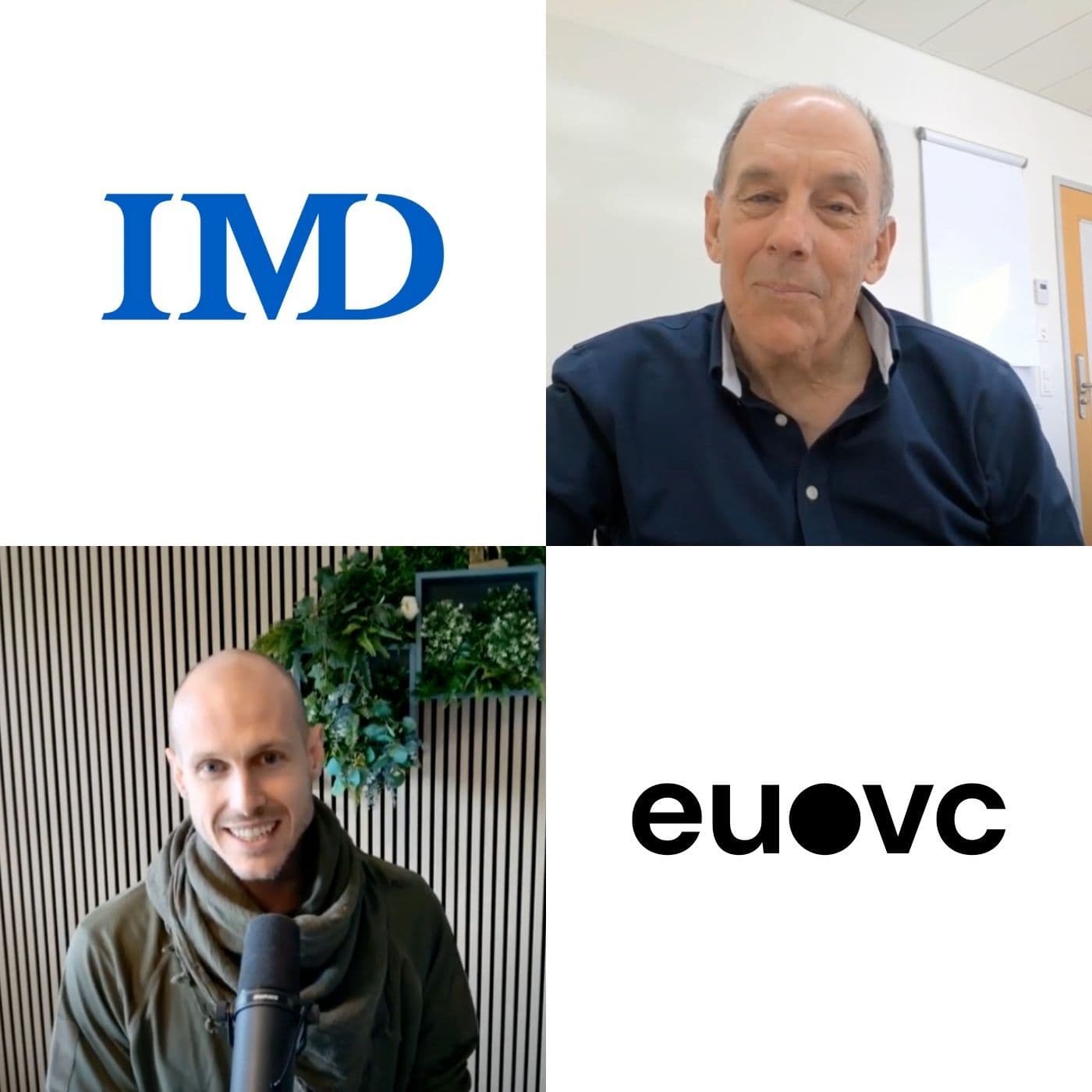
Podcast Summary: EUVC - E439 | Jim Pulcrano, IMD Business School
Overview In this episode of the EUVC podcast, co-host Andreas Munk Holm interviews Jim Pulcrano, an entrepreneur-turned-educator and professor at IMD Business School. Jim discusses his journey into venture capital, the importance of educating Limited Partners (LPs), and the challenges and strategies in the ever-evolving European venture capital landscape.
Key Themes
- Jim's Journey into Venture Capital
- Initial Experience: Pulcrano's entry into venture capital began as an entrepreneur in Switzerland during the nascent stages of the local VC ecosystem.
- Transition to Education: His experience led him to focus on entrepreneurship education within executive programs at IMD, where he eventually created a VC Asset Management Program aimed at educating LPs.
- VC Asset Management Program
- Motivation Behind the Program: The program was initiated in response to the low percentage of Swiss pension funds investing in venture capital. Education was seen as a means to bridge the gap between traditional finance and the venture capital landscape.
- Curriculum Development: Jim emphasized the importance of understanding the fundamental aspects of venture capital, including the risks and challenges faced by General Partners (GPs). The curriculum was designed to cater directly to the needs of conservative pension fund managers.
- Challenges in Educating LPs
- Understanding Pension Fund Managers: Jim outlines the conservative nature of pension fund managers, who prioritize risk aversion and capital preservation over aggressive growth strategies.
- Strategies for Effective Education:
- Transparency in operations and investment strategies.
- Demonstrating historical performance and providing clear, comprehensible insights into alternative investments.
- The IMD Startup Competition
- Learning Outcomes: Jim shares insights from the competition that highlight the differences between Swiss entrepreneurs and their U.S. counterparts. European startups often focus on incremental growth rather than the aggressive scaling seen in Silicon Valley.
- Encouraging Ambition: He reflects on the need for European entrepreneurs to think bigger and embrace the potential for significant growth.
- Teaching Venture Capital
- Can VC be Taught?: Jim believes that while the theoretical aspects of venture capital can be taught, experiential learning and pattern recognition through real-world experience are crucial for developing successful VCs.
- Experiential Learning: He emphasizes the importance of mentorship and hands-on experience in mastering the complexities of venture investing.
- Evaluating Founders and Teams
- Role of HR in VC: Jim discusses the skepticism surrounding HR assessments in evaluating founders, indicating that successful GPs rely on personal interaction and experience rather than standardized testing.
- Sourcing Strategies in VC
- Outbound vs. Inbound Sourcing: The discussion reveals that more experienced VCs tend to proactively source deals rather than waiting for entrepreneurs to approach them, showcasing a significant difference in approach based on experience levels.
Key Findings from Research
- Investment Behavior: A survey indicated that less experienced VCs are eager to lead rounds, while those with more experience tend to wait for established lead investors, reflecting a U-shaped curve in leadership behavior in funding rounds.
- Value of Relationships: The research underscored the social aspect of VC, where successful investments often hinge on personal relationships and trust rather than sheer financial metrics.
Conclusion The conversation with Jim Pulcrano provides valuable insights into the dynamics of venture capital education, the role of LPs, and the differences in entrepreneurial ambition across regions. His experience illustrates the importance of bridging the gap between conservative investment strategies and the fast-paced world of startups, emphasizing the need for education, mentorship, and proactive engagement in the VC landscape.
Key Takeaways
- Education is crucial for demystifying venture capital for traditional LPs.
- European entrepreneurs are encouraged to adopt more ambitious growth strategies.
- Experience matters significantly in determining investment behavior and sourcing strategies for VCs.
- Building strong relationships and transparency is essential in the investment process.
For more insights into European VC, follow the podcast EUVC at [eu.vc](https://eu.vc).
Written by AI. May contain mistakes. Listen to the episode to check what was said.
Transcript
Automatic transcript. May contain errors.0:00It's interesting, but it doesn't make sense. And so I said, put myself in the shoes of the customer. In this case, a typical, very conservative pension fund manager. What would I want to learn and how would I need to learn it? And I'm not going to put more than two or three days into this. How do we do it? And we just work from that. So, OK, let's make sure somebody explains the case for a pension fund to invest in alternative assets. Let's make sure somebody explains the nuts and bolts of how a VC fund works. Let's make sure that we get in there. Why entrepreneurs need capital. You know, let's get down to first principles here.
0:36Let's get into the biases that we might have in making choices of where to invest. Let's put them in front of, you know, say the small amount of information that a GP might have when they have to make choices, even choices as to a second meeting and see how they handle it. Because what we wanted them to do is to both see the upside of venture capital, but also to see the difficulty of GP's job.
1:06Tear down this wall. It's more than just an alliance. This is a union of values. Let's start acting. This show is not investment advice, and the hosts of this episode may be invested in the funds and companies featured. To everyone tuning in today, we're talking to Jim by a nice intro from our good friend, Christian Rangen. And he said, you too should definitely talk. So let's open the podcast by saying, Jim, why should we talk? How did you get into this whole little world of venture capital? So I got into the world of venture capital originally as an entrepreneur. Back before, at least in Europe, we knew what venture capital was.
1:52I joined a startup in Geneva. I became the managing director. It was basically a hobby at that point. And one day I was invited to a meeting of venture capitalists. That's what they called themselves. But really, it was just a bunch of high net worth individuals and private bankers. And they asked me to give a pitch, which, again, I'd never done before. And that's where I started to learn about it. I mean, this is the infancy stage of venture capital in Switzerland. One or two of those people are still around. Yeah. I mean, the co-founders of Index, et cetera. But that was how I got started. And then eventually, on the teaching side, we decided to bring entrepreneurship into our executive MBA and MBA programs.
2:37And I was the obvious person to take that on. Tim, you have done a bunch of work in the educational side and research side of venture in Europe at IMD. You've created the VC asset management program at IMD. Maybe let's start with the obvious question. Why did you feel the need to do that? Why was that important? Well, feel the need. I felt the need for a long time, but it really wasn't central to IMD's teaching. I mean, I was helping relatively senior executives understand the world of entrepreneurship, and that always culminated in them pitching to real Silicon Valley venture capitalists. That was part of the exercise.
3:22But that forced me to start understanding venture capital. But still, IMD's role in teaching venture capital was it didn't fit with our business model. But then one day, a billionaire walks into a bar. That's why I always start this story off. Basically, yeah, a billionaire entrepreneur came to IMD, Swiss guy in the education field, and he was frustrated by the fact that so many Swiss pension funds were unwilling or unable to invest in venture capital funds. And at the time, I remember looking at the numbers and there was like$1.2 trillion in money locked up in pension funds in Switzerland. And only around 1.2 % was actually going into anything alternative, VC, PE, et cetera.
4:10And his belief was, hey, if we educate LPs, they're more likely to consider venture capital as a place to put money. And so that's how we got started. And that's only, no, what's that, two, three years ago. And for me, though, it was just this wonderful opportunity that finally I get to go deep into a topic that I've been playing at the edges with for the last 20-something years. So that's how we got started. super aligned with us and everything we do. So I guess anyone can understand why we had to have a conversation. How do you go about building that program from a curriculum basis, who teaches it, that type of thing?
4:49I know for a fact that Daniel from Speed and Mess, Daniel Capricanore, has come and spoken a few times. But I'd love to hear how do you do this. And Daniel will be with us again in the May program. He's fantastic. Let me put it the way it really happened. First of all, some academics looked at it and said, this is how you build a program. And I remember looking at it thinking, this just does not make sense. It's interesting, but it doesn't make sense. So I said, put myself in the shoes of the customer. In this case, a typical, very conservative pension fund manager. What would I want to learn and how would I need to learn it?
5:28And I'm not going to put more than two or three days into this. How do we do it? And we just work from that. So, okay, let's make sure somebody explains the case for a pension fund to invest in alternative assets. Let's make sure somebody explains the nuts and bolts of how a VC fund works. Let's make sure that we get in there why entrepreneurs need capital. Yeah, let's get down to first principles here. Let's get into the biases that we might have in making choices of where to invest. Let's put them in front of, you know, say the small amount of information that a GP might have when they have to make choices, even choices as to a second meeting and see how they handle it.
6:11Because what we wanted them to do is to both see the upside of venture capital, but also to see the difficulty of a GP's job? Because, and I've said this many times, we saw three potential outcomes. And again, we're not trying to sell venture capital. We are an educational institution. So either the LP, family office, whatever might decide, yes, this is something we want to do. We're going to put money into A or several venture capital funds. And we have a sense of how to choose our GP. B, no, we're not going to do it. We now understand it. We're going to say no to the high potential, but we know why we're saying no.
6:53But third, what I want to make sure is no matter what choice they make of the first or the second, they don't invest directly into startups, that they've understood how difficult it is to do this right. They don't have the benefits of a GP's experience and expertise, and they also don't have the benefit of a GP's portfolio. So at the very least, I want to make sure they don't start just becoming super angels and investing in startups directly. So that's why we did it. And that's how we did it. Can I ask you a bit, because I do think that the world of pension funds and pension fund allocators is not very well understood amongst GPs.
7:34So I'd love to ask you if you could kind of profile them a little bit, profile their thinking, profile their worries when it comes to venture so that we can all get a better understanding. Well, there's a couple of things, and I still don't consider myself an expert on pension funds, but one overriding issue for them is, if you like, the law. I am required by law, and the laws differ across countries, to provide a solid foundation so that people 10, 20, 30 years from now get what they paid into the pension. That drives everything. I have to do it. And mostly that's seen from the point of view of preserving capital rather than growing the capital.
8:19Secondly, most of them have never worked in a startup. They have no idea of how that works. They come very often from an economic background, an economist background. So they're looking at things from a macro point of view. So for them, bonds, public securities, et cetera, are safe bets. as a pension fund manager, all you have to do is stay just a point or two ahead of what the markets are doing, and you've done a great job. Just don't lose money. And you think about it, compared to venture capital, it's exactly the opposite. A venture capitalist is more concerned about how can I get the upside, not how do I avoid the downside?
9:01Whereas a pension fund manager, he's worried about, I have to avoid that downside. I have to. Is that, Jim, also how you would describe the pension funds and sovereign funds and so on that are allocating aggressively to venture? Is that also how they think, but they've just nailed how to manage venture? Well, I think one, yes, they have nailed it. And that takes time. I mean, I don't expect somebody to get it right the first time. But they've also looked at it and said, I have to find some spice out there to keep my fund ahead. I can't just assume that if I put it into the S &P that that's good enough.
9:40Because if it goes down like it is right now, I'm in trouble. So how do I make sure that I've got some alpha built into my portfolio? And doing it appropriately. I think the Yale endowment has some like 14 % into private equity and venture capital. That's a lot. But they've moderate it with the rest of their portfolio. And they've gotten a good return over the last 20 something years. I think it's like 10.4%. Yeah. Anybody would be happy with that. Yeah. Yeah. And in uptimes for venture, they're doing super well. Yes. But that of course moves all the time. Can I ask you a question about the single asset perspective?
10:22Just in Denmark, we had four pension funds together between them. They put 600 million into Northvolt, and that hurts these days. Yes, yes. Could you talk a bit about the perspective on single asset investing? Well, let's see, that goes back to the idea that they should not be doing this directly. You know, and it sounds like they did do it directly. I mean, okay, Northvolt, maybe it was also part of being good citizens with support this potential unicorn. The world needs better batteries, and we need to be independent of China and the United States. Maybe it was all for those kinds of reasons.
11:02But the idea that I, as a pension fund manager, can make good single picks of startups, I think that's ludicrous. I mean, I've been an angel investor. And the number of times I've been wrong is far more than the number of times I've been right. And yet I'm somebody who's in this business every single day. Doing it as single investments, I just think is, let's just call it very risky. And the Northvolt disaster is a very good example of that. I'd love to ask, and I'm really just trying to pull intel out of your mind, right? Because you have a very broad exposure to pension fund managers that are in this interesting place where they are actually looking at venture, which many of us have exposure to pension funds, but the exposure is we're not looking at venture or we're not, you're too small, so I won't take the meeting.
11:57So in that sense, it's quite rare to get this. So I'd love to ask you the arguments that you're seeing that will actually work with a pension fund when it comes to positioning your fund towards them. And what are the things that you're like, just don't go there. It's not like, it doesn't make any sense. So obviously you've got to be on within mandate and so on. But what are the emotions? So for family, oftentimes you'll ask some probing questions to figure out what is the strategic, the motivational mindset here so that you can talk into that with a pension fund. What is the strategy you should deploy in the first 15 minutes of the call to figure out where are these guys when it comes to venture?
12:44Number one is transparency. Remember, a lot of these are public organizations. So they have to be 100 % sure that there's nothing hidden from them. Even if they don't understand everything, they want to know they've got access to the numbers and that nothing is being hidden from them. But secondly, it's performance. I know that it's a power law game. If you're up in that top 20 % of funds that have done well, fortunately for you, but unfortunately for the other 80%, that's what they're going to go for. If you're Sequoia, Index, whatever, you can show that you've done this. Or if you're a former GP of one of these firms, you can show that you've got a record.
13:24And remember, these are people who are thinking in terms of 10, 20, 30 years. They don't need the liquidity that say you or I might need if we were going to put money into a venture capital form. And that's often one of the negatives of venture capital, of course. Your money is locked up for 10 years in a fund. Pension fund managers don't have to think about it. So they should be a natural, but they want to see performance. As always, past performance is not an indicator of future performance, but still, it certainly helps. Yeah. How about the characteristics as to how the pension fund works or things like, can you describe where they all kind of overlap in in the cohorts that you have you can say well they all have they all exhibit this or they all come to me with these thoughts or these frustrations something along those lines yeah one thing first of all maybe not all of them they're not all the same but there is one overall thing that they complain about is the the cost the expense.
14:31So going in and saying, hey, we do the typical two and 20, you just have to accept it. If you're Sequoia, you can do that. If you're a new fund, a hundred million, et cetera, you need to be willing to negotiate so that they can go back to their board and say, hey, we got it at a reasonable cost. Now, the cost is really unimportant if you're going to, if you end up with a couple of unicorns, but still that's what they're going to report this year. So even though their perspective is 10, 20, 30 years out, they still have to be able to explain to their board or to whomever tells them what to do, our cost, our expenses for this kind of investment is in line with what we do with the normal stock market.
15:15So I say that expense side of it is something that a VC firm should be willing to negotiate, especially if you're a new firm, a new fund. And that is what you're seeing from the participants. Interesting. What do you say to them? Do you advise at all on this or do you just? You know, it's like anybody who's negotiating, how much do you want that money? Yeah. And if you can get, I don't know, the pension fund of the city of Zurich into your fund, that might be worth something for you because then it's easier to go to the pension fund of the University of Lausanne. I'm making these things up. But yeah, I mean, just like any entrepreneur who's trying to raise money, who does he have on his cap table that helps him attract other people into his cap table.
15:59Can you share anything about the size of the teams that these guys typically come from, the seniority of the people, this type of thing? Again, it's going to differ between whether it's a private company or a public organization of some sort. Typically, they're fairly senior, but they also have employees. That's our kind of social background in Europe, which I think is a good thing because that way they're thinking in terms of the normal employees. What do they care about? Small, because they have to be lean. They cannot be seen to be spending lots of money on this. So yeah, fairly business-like, at least in the ones I've encountered.
16:39Okay, then let me ask you a second question. And that's about you, because you've, for more than 26 years, you've run the IMD startup competition, and you've had global MBAs and senior executives collaborating with Switzerland-based founders. I'd love to ask you, what are your core learnings from doing this work? We started this because we thought entrepreneurship should be part of our MBA and EMBA programs. And it's not because we're trying to turn them into entrepreneurs, but it's our belief that everybody, even if you're working at a major corporation, should understand the mindset of an entrepreneur.
17:15Because at one point, You'll either be negotiating with one because you're trying to acquire it, acquire their technology, do some kind of deal with them. Or you may have some weird individuals in your own team or your own organization that they're amazing at what they do, but they're strange and they don't act like everybody else. Maybe they're entrepreneurial. And we want people to understand the characteristics of entrepreneurs so they don't crush this entrepreneurial piece of your organization. One of the things we see, and I've seen this year in, year out, is a lot of people go through this exercise with us, which is quite intense.
17:53Some will immediately say, this is it. This is what I'm doing. I'm going to quit my fantastic job with Novartis, ABB, Nestle, whatever, and go do a startup, which scares me. They always say, I don't think you really know what you're getting into. And I usually try to talk them out of it. And if I can't, then I try to help them. But then there's always a substantial portion to say, I'm glad we went through this, but I know I am not a person who should do this. And that in itself is worth the exercise to come out of this saying, OK, this is not me. I shouldn't be anywhere near that kind of thing.
18:29The other thing we see, especially because we take Swiss startups, and the only reason that we're focused on Swiss startups is we want there to be some face-to-face interaction and not just doing this virtual. We take these Swiss startups with us when we go to Silicon Valley. So we're there for seven days. And at the end of the seven days, it's our EMBA students, 40-year-old executives, who pitch these to local venture capitalists. But the interesting thing to see all during the week is our Swiss entrepreneurs who are with us, they're part of the class, as they discover this world, which has, if you like, this giant view of the world, which for a Swiss entrepreneur is just unreal.
19:11And I suspect for most European entrepreneurs, you know, they'll come in and say, this is what we're doing today. And then tomorrow we're going to do 2 % more and then 3 % more. And when they get pushed by the local entrepreneurs or local VCs to say, well, why not do 50 % more? Instead of raising 5 million, why don't you raise 50 million? I don't need to. I don't want to. Or I don't think it's possible. But getting them to think big. and that is one of the most transformative things that we get to. It's not that I'm suggesting that Swiss entrepreneur should go home to Zurich and then try to raise$50 million, but that they start thinking bigger than just, I want a small little company that'll grow little by little by little and maybe one day Google buys me.
19:55And that has been something that's resounded over the years. I have to interject a thing, right, which is European, because it's a very solid narrative that has taken hold around the globe that European entrepreneurs have lower ambitions than our U.S. counterparts. And so what I really think is that we need to be very mindful of the fact that there are some people that are cut out for venture and there are those that are not. And those that are not should not be raising$50 million and they should not have these grand ambitions. They should just be building a great smaller business that will be acquired for a smaller amount or that will never be so.
20:35I tend to think that we're a bit weighing our European entrepreneurs that we all meet all the time against the best of the best that we get to see from the States. But the best of the best in Europe are similar. So I think that there's a bias there that's very dangerous. And I just have to, like I always try and counter the narrative on the podcast here because I think it's so important. And I think that what you're seeing when you're seeing your Swiss entrepreneurs is you're seeing the average entrepreneur, or so to say, because you have a wider split there compared to the top 2 % that end up being venture funded by the best funds.
21:15I agree with you 100%. And also, I'll add in there, my two worlds are Switzerland and Silicon Valley. I would never suggest that we have to copy Silicon Valley or that a Swiss entrepreneur has to do that. But several years ago, we went back and looked and did a survey of the startups that we'd already worked with over the first 15 years of our startup competition. The average success rate, so still alive, was 76%, which is amazing. And you could say, well, Jim, you're just really good at picking startups. I don't think it's that. The other question was the average size of the company at that stage was$5 million.
21:53dollars. And what we could see is that most of them were very content to grow a company that it was profitable and they would just keep going. Maybe they eventually sell it. Maybe they pass it on to their children. And in my opinion, there's absolutely nothing wrong with having a small business until the day that you have a competitor from the United States that raises$100 billion. Then you've got some problems. But even then, should we feel like we're unsuccessful if we don't have 10 Googles a year. And I don't think that's correct. I think we should look at it from the point of view, what are we really good at and where do we fit into the whole value chain of value creation, if you like.
22:32Yeah. And I just think it's so different between whether you're talking about the individual entrepreneur and then you're talking about the ecosystem as a whole. Yeah. You shouldn't stop playing soccer in the weekends just because you're not Ronaldo. Right. Agree. Still have a good time yourself. So I want to ask you something else, which is we had on our on UWC, a guest post by by Eleanor from Newton the other day. And it basically asked the question, can you teach VC? I know just as she she comes to the conclusion that, yes, you can. I'd love to ask you to expand on that view from your perspective.
23:11Well, I spoke to Eleanor a couple of weeks ago. I've even been doing her basic Newton course because I wanted to see what she did. I read that post. So, yes, I think you can teach VC. If I was to say it myself, I would say, I think you can learn VC, how it is taught or how you go about learning it. I think that the nuts and bolts can be taught by courses like hers and others that are out there reading books. I also believe that it's very much an apprenticeship type business. And unfortunately, I don't see a way to speed that up. Little anecdote, I was in China last or a year before last, and we were doing a thing with some senior executives and I brought in some Gen Z Chinese kids.
24:00And one of them, I asked him, and I looked at him, he looked to be about 25, 26 years old. And I said, so what do you do? And he says, I'm a venture capitalist. And I'm thinking, no, you're not. And we did have a corporate venture capitalist in the room, who also is Chinese, and I mentioned the story to him. He says, no, until you've lost$15 million of your LP's money and been through one business cycle, you cannot call yourself a venture capitalist. So you may have the title, but there's a learning here. And maybe that learning is only pattern recognition, but you get good at it. And pattern recognition could be your ability to figure out, is this person across the table from you, the entrepreneur?
24:42Does he or she have what it takes to build a company or not? Is this an idea that can grow or not? So yes, I think it can be taught the nuts and bolts for sure, especially on the fund management side. But the other stuff, I think you'd learn by doing. I wish there was a different way. I'm at an educational institution. I'd like to believe that. I also think that there's an important thing, which is venture is an outlier business. It is not only an outlier business for the founders, it's also for the investors. And I think that needs to be recognized. And we're not all outliers. It's just not possible.
25:20And I think that's a very important take. I think Eleanor with her group, they have tons of applicants and only taking a few. So the bar is high. I imagine you have the same. I just think it's so important to focus on this little point, which is that it is an outlier business. And you've got to recognize whether you are that. Well, the same thing, though, applies to people who decide to become entrepreneurs. They need to recognize that some people should do this and can do this. And some, maybe they can, but maybe they shouldn't. Because there are other things in life that they're going to be much better at.
26:00And venture capital, I think, is the same. Yeah. I also know you run a Swiss scale-up company. Sorry, not company, but program. Could you talk a bit about that? Yeah. I mean, this is an interesting initiative. And it was the state, the local state, the accountant of Vaux, who came to us five years ago and said, you know, we've done very well at having startups in the area. We have the Swiss Federal Institute of Technology right next door. Tons of startups come out of there, people's PhD programs, et cetera, turn it into a startup. But we seem to have a difficulty going from startup to scale up.
26:38And they asked us to create a program to help them understand the challenges they had in front of them and you get through those challenges. So we're in our fourth year of running this program. And it's a joint venture between us and the state, between IMD and the Continental Faux, where we take in about 15 to 20 founder CEOs, take them through, it's five months, 10 evenings. We do it in the evening because that's when we can get their time, going through different facets of what we see from our research and also interviews with companies that have already scaled, what are the challenges they have to overcome?
27:16The red thread through all of it is leadership and getting them to ask and then somehow answer the question, am I the right person for the next stage? And do I want to be that person? And let's assume that the answer is yes to both of those. Okay, what else do I need to do? How do I bring the team along with me? How do I know when to start adding structure and processes, et cetera, to the organization? How do I know when to start saying no to certain customers? What do I need as a board? Can I grow the board at the same rate that I'm growing a sense of maturity, the board at the same rate that I'm growing my organization and the complexity that we're dealing with?
Read the full transcript
28:00It's been fantastic. Are these all venture-backed or not? If I think of the current class, I'd say 80 % of them are venture-backed. We've had a really interesting case in there of one that's been bootstrapped. He's actually one of my former employees from a startup 22 years ago who got the bug, went to a venture capital firm, and then went out and set up his own company. He's bootstrapped. He's doing amazingly well, but he's also starting to think, what's next? and should I, for example, invite in a private equity firm to help us grow or not? But the vast majority of the class is venture-packed.
28:39That's funny because I ask this question specifically because I think it's, there's such a difference between whether you're on this journey of unbounded upside or you're not. And the playbook that you play by is also radically different, which is why I think that as an example, the whole question about, am I the one to lead the company or not? Most VCs would say, well, if you're not, you're probably not one for me to bag either because a lot of VCs are very opinionated on the, it needs to be a founder let all the way through. It's okay if it ends up not being the case, but it has to happen quite late and it has to be like a unplanned series.
29:22No, I don't kick in. It's anecdotal, but. There's a CEO that I was brought in a mediation many years ago. The company was still at five people. The founder had a blocking percentage of the shares. The brought in from the outside CEO and board disagreed with the strategy. Eventually, we mediated the whole thing. Founder was out. That CEO has taken the company from five people to over 300 and raised several hundred million. He is not the founder of the company, but he had the vision that took them to the stage they're at today. So I don't... What do you think was, because one thing is vision. What did you do back in the days there to ensure the alignment for that almost founding CEO that came in?
30:11Yeah. Well, he had alignment from his board. He had a very good board. Did he get like almost founder level shares of ownership? Not at that point. Eventually he did, but not at that original point. And honestly, he'd already had one company sales, so I don't think that was his driver. He just saw that this technology that the founder created could do so much more than what the founder was imagining. And the founder couldn't get out of the technological side of it. And again, that's a classic problem we have here in Switzerland. The startups that come out of our two federal institutes of technology that are so technology driven, they'd like to spend the next two decades perfecting that technology rather than saying, I can take this into three new areas that nobody ever imagined.
30:59And this one was a case of that, but I've seen numerous cases like that. So does it have to be the founder? Couldn't he go into the CTO role or the CSO role and let somebody else take it to the next stage? And that's kind of the question I'm pushing this class with all the way through. Some of them are a technology founder who is questioning that. Some of them, I think, will make the shift. Others will either be pushed out or will decide themselves to bring somebody else in. And that's fine. I love a big discussion on this one day. Let's do a, we need to do a, because I know who I should pin you up against.
31:38Very bullish on founder. Okay, let me ask you then, because you've done a survey, which I think you ended up with some incredibly interesting results that we can reflect a bit on here. So I'll let you kind of describe the whole thing from the bottom up. Well, this idea for this research started from conversations I was having with a lot of entrepreneurs, mostly Swiss again, saying, hey, listen, I'm in fundraising mode. I've got two, three VCs already committed, but they're all waiting for somebody to take the lead. And I can't find a lead investor. What's wrong? What's going on out there? I've got a good company.
32:13These other investors tell me it's a good company, but they won't take the lead until somebody else steps in. So I wanted to get some insights into, are they right? Is it true that it's a minimum of VCs who will lead? Right or wrong, what does a VC look into, decide, how do they decide I'm going to lead the round or I'm not going to lead the round? What we found is that, and again, it's a small sample and there's probably some bias in there because it's mostly people that know me or that know Chris. Over 50 % have led or co-led around over the last 12 months. So to the point of entrepreneurs saying there's nobody out there willing to lead, that's false.
32:54There are quite a few venture firms willing to take the lead. on the question of why would they lead or why would they not lead? The biggest reason for not leading was they felt that the company already had a good lead investor. So why should I push him aside? The second biggest reason was the amount that they were going to invest wasn't enough to make it worth their while. And there, I think there's a recognition that being the lead investor, doing the due diligence, managing the syndicate is a lot of work. So unless you really got enough capital deployed into that startup or enough ownership of it, it's just not worth doing.
33:33When we push them a little bit further to say, okay, well, what would get you to take the lead? So reversing the question, first thing was, if this is a serial entrepreneur that they'd invested in previously, happy to take the lead. Second thing was, if the other committed capital was coming from firms that were experts in the startup's domain, happy to take the lead because they know that there's somebody there who really understands this industry. The third reason was the already committed VCs had brand value for them. These were names that they wanted to be associated with. And so it's interesting to look at it.
34:11We talk about venture capital being all about the money. And yet when we look at the reasons why they might lead, it's a people business. Either it's an entrepreneur that I believe in and I've worked with, or it's other VCs that I believe in and or I want to work with. And I find that fascinating because we look at it as being just these tough bastards who all they want to do is make money. And yet it's about people, one form or another. I actually think that the premise of your study is in a way tackling a falsehood that is being, you know, perpetrated or whatever that's called, that is being set by founders that have been declined by VCs that give bad reasons because they don't want to get into a big discussion or they feel that it's better for their brand to protect the real reason why they're not investing.
35:07I agree. A hundred percent. And so in a sense, I came up with an answer that was the opposite of what I expected. I thought we were going to find out that, hey, all European VCs are ex-bankers who don't understand how to operate a company. I have no evidence of that. I think it's more what you said is a bunch of founders who got turned down, they have to have any reason for saying that. But also, and you alluded to it very well, VCs don't like to say no. Because you never know, maybe you want to be in the next round. Or that guy knows someone who they say, ah, these guys, they were fucking idiots, man.
35:45They thought my technology would never take off and look at it now. Or they thought I wasn't like a high integrity person. And you know me. So you think I'm like. So there's a lot of people feel like there's more to lose than to be gained by giving the real reason. We can all debate whether that's good or good or bad. But it is the truth nonetheless. less. And there's a bunch that say, no, I always give good feedback. We know that most do not. And that is also perfectly fair. Again, back to the founders. What is the business of a VC? It is making good decisions and spending time with the people that you are backing.
36:25So the business is not giving good answers to people that you don't think are investable. Right. That's a good way of putting it. But, you know, we pushed this. We went deeper into the data to try to understand, is there a difference between inexperienced VCs, some with some experience, and then more experience? And we did see a difference. Yeah, you have this. So let me just describe it to the audience. You have a very interesting finding, which is that when you ask whether VCs are wanting to lead, you have a U-shaped curve, which means that on the one end, You have those with very little experience and they would love to lead, so to say.
37:08And then you have those with a lot of experience. And here we're talking 10 years plus. The first group was less than five years that also wants to lead. And then you have the big bulk in the middle of VCs that tend to follow a follower strategy. To be passive. Yeah. And, you know, at this stage, I can only hypothetically interpret what that is. But I did some interviews post with several experienced VCs to try to understand this. And the view was, okay, when you're a new VC, one, maybe you have no effing idea what you're getting into. You think it's a lot easier than it is. So you say, hey, yes, I'll lead that round.
37:46Possible. Two, it could be, well, this is how you get into the game. I mean, you can't wait around to be invited. So just plunge in there, get your battle scars, do it, and hope for the best. And also that way you get into deal flow. On the other side of the U is the experienced ones. They know what they're doing. They've got good deal flow. They know what to look for. So they're confident in taking the lead. The ones in the middle, maybe it's like, okay, I've got my scars now. I'm going to be a passive investor for a couple of years as I kind of recuperate and get things sorted out. I don't know for sure.
38:21But the two ends seem pretty clear as to why they would do this. Let me just ask you, so this is data not on actual behavior, but reported behavior? Yes, so this is self-reported. When you described it to me, my initial thought was, it's very much in your investment strategy defined, what are you going to do with this fund? Are you going to primarily lead? How many tickets fall in that bucket? How many fall in the other? So I kind of look at it from a structural perspective and I'm thinking maybe there's this. So first of all, you might just have a bias in the data. So it ends up being that we have a bulk of people with fund sizes and strategies that make them fall within the U, so to say, and make them not want to lead.
39:15That might be it. But I also think that it might be a structural thing in Europe as well that we have many funds that are in this 50 million euro territory where they are typically not doing a lot of leads. They're actually more doing a couple or a few. And then the rest are co-leads or follower. We did look at that because we've got in the survey, we've got funds as small as I think 20 million, all the way up to funds of over 500 million. We can find no correlation between size of fund and willingness to lead or not lead. So it really did come down to experience was the driver of leading or co-leading.
40:01So yeah, I would, you know, that was my assumption is if you got a $300 million fund, you're more likely to lead. Maybe that one is, but in general, not. But there was also one that was really interesting, SeedStars International, where they said, listen, it is part of our thesis. We do not co-lead. On the other hand, we're willing to come in at the beginning of the syndicate, the end of the syndicate. We don't want to be the ones who block anything from happening. So if it means that we come in last to get the fund led, we're willing to do that. But it is part of our thesis that we don't lead.
40:36And I think several of them had that as, you know, that's the reason why we don't lead is because we've decided we don't have the bandwidth for it. We don't have enough board members, people who could sit on boards to be able to do that. And I think that's a valid choice when you're setting up a fund. Yeah, I always, like we've had tons of these conversations on the podcast, right? And we always talk on the individual level. And there it is these reflections exactly, right? How much time do we want to spend with each investment. What does our fund strategy allow us to do? And it's really not driven by experience or inclinations or anything.
41:12Rather, it is what works for us in the setup that we have and our ability. I'd love to ask you another thing because you found another interesting thing, which is the use of HR experts to evaluate teams and founders. Again, this was because of conversations this time with a corporate venture capital fund where I found that they had a vote in decisions from the HR group. And their job was anytime that anybody else in the fund was looking at a startup was to evaluate the founder, evaluate the team, use some psychometrics and then make a proposal as to, is this a good investment or not? And I asked myself, how often does that happen?
41:51What I can say is it doesn't happen very often. And the response I got back, again, from the interviews was, yes, the team is the most important criteria in our investment. But we believe that the people who are good founders, they're so different from normal people. How could an HR expert really be able to say this person is going to do a good job in building an organization? So I guess there's a little bit of ego in that, and that GPs believe that they're better at this than an HR expert. I think there's also a bread and butter. So what is the bread and butter of a VC? It is first and foremost, the ability to evaluate a founder and their ability to become great entrepreneurs that build world-changing companies.
42:40So it's kind of like if you're outsourcing your main function, what does that say about you? I do think that there are a lot of interesting funds that employ HR teams to do some foundational research, so to say, or so they outsource input to their decision making process. I really don't think if I can see any measure in the 450 episodes we've done, I don't think I can see anything there that kind of follows an H line, but rather it's a bit about how people think about things. Yeah. I'd say, okay, it gives me one more data point, but that doesn't replace me sitting across from the table or spending a couple of days with the team and seeing how they work together, seeing how they argue or don't argue.
43:31And I think a good GP can do that really, really, really well, especially if they've been in this business quite a while. Yeah. It's funny, but I had just this conversation with John from Eka Ventures the other day, and he's very big on founder, him and his team. They're very, very big on founder profiles and understanding how they think and put a lot of work into this part of their fund decision-making process. and what we spoke about was exactly both the importance of bringing in external perspectives but we then let we landed on a on a conversation about how well can and and john didn't have strong perspectives here but i was maybe leaning more a little bit more in but how can a non-senior person, evaluate founder ability if you have never been there yourself.
44:29So the non-operators, I think that is very, very hard. You can do a lot of pattern matching at the desk, but really knowing what great looks like is very difficult. And Jim, I can tell you something that I think you'll find super interesting because I think this is super well describing of it. He said, But I have with the very best founders, I have this queasy feeling in my stomach every time I'm going into a meeting with them because I'm nervous, because I know that they're so intense that I want to really bring my aching because the next hour is going to be completely intense. They don't have time for bullshit.
45:07If you say something that's wrong, they're going to question you and they're going to catch you. And I thought that was so interesting. And I think that that reveals a lot about what a real founder instills in people around them. And you don't need an HR person to tell you that, right? But it takes somebody who's an operator to recognize that that queasy feeling is a good thing. Yeah, exactly. The Scala program I do, which is, again, it's with founders who have been at it for a while. I think that's one of the reasons I enjoy it so much is when I step in front of the class, I really have no idea how they're going to respond, but I know they're going to respond with stuff that's real.
45:49And they're so sharp that I feel like I'm tap dancing up there in front of them. But that is just so much fun. And I learned in every single program that we do together, I'm supposed to be helping them to learn, but I'm learning a ton and working with these kind of people. I completely agree. That's why I love my job, working with all the VCs that I am the most anxious about talking to. I love that. Now let's go to, you have a final finding, which is interesting. It's on the sourcing point. And what you found out was that the more experienced a VC, the more likely they will do outbound sourcing, meaning they will initiate the contact with startups.
46:28Yeah. Again, we know that VCs are really good at networking. And our survey said that they spend 27 % of their time out there networking. And yes, the biggest bulk of their leads will come from their network and from other investors. But the difference between experienced investors and less experienced venture investors on the point of being proactive was remarkable. I mean, in academic world, it's significant. You have to ask yourself, why is that? But again, in the interviews, I put the questions to some experienced VCs and say, well, first of all, we know what we're looking for. We don't have to wait around for an entrepreneur to knock on the door.
47:06We're out there in the network. We see what we want to see and we go after it. Number two, there's some advantages to this. First of all, we get in there before anybody else. We can help shape the eventual deal that'll happen. We probably will be less biased by what other people say about this startup. So we're coming in with our point of view rather than what the press has said or what the network is telling us about this startup. So they saw significant advantages to doing it. But again, you probably can't do this until you've got some experience and you've got a network. Because otherwise, you don't have the listening post out there to know which startups you should go to see.
47:47But for me, that's something that a young venture capitalist could learn from. How do I start picking up the signals to where I can go to them before they come to me. And it also shows that you probably have a pretty clear investment pieces. You know what you want, rather than just taking whatever comes in across the transom. Yeah. Just because you said in academics, this was significant. You found that VCs with less than 10 years of experience were likely to get 3 % to 6 % of the deal flow proactively, whereas the experienced VCs in your cohort, they got 20 to 30 % of their deals by proactively reaching out, which is, as you say, significant.
48:34I want to close this pod on a quote by our good friend, Fred Destin. I don't know if he's also your good friend, but I think he said it so greatly in a LinkedIn post that he put out where he said, he basically described to everyone, this is why I am not replying to cold outbound or inbound for himself. And what he said was his time at Axel, they were going through every single inbound deal. It was an important task for the team, but they never, ever invested in them anyway. So to him, it's like, I am optimizing for spending time with my founders and with the people that I have strong conviction in and trying to figure out, am I going to put real money here?
49:23And then spending 20 % of your time every week dealing with inbound, that honestly, it's just people that have found your email or been able to figure out that it's probably first name and surname at stride.vc or something like that is really not that meaningful. And honestly, this research and some of the work I've done, partly I'm trying to help entrepreneurs to not make that mistake. Yeah. Because too many of them, they've just started, they come to me and say, okay, introduce me to some VCs. I think that's stupid. Which VCs should you be interested in and then be interested in you? Be selective about it.
50:09Maybe you spend some time with the ones you don't care about at the beginning just to hone your pitch. but you have to be super focused just like you would with customers. And if I can help entrepreneurs to be better at this, then maybe the link between them and VCs will be stronger and easier for both parties. Yeah, I completely agree. I think this is literally one of the reasons why we created the podcast is exactly to make it more transparent, more accessible to understand the mindset of a VC. And it's both from the LP angle. I want to create a repository of episodes with the best VCs in Europe so you understand how do they talk, how do they think, how do they describe the European opportunity.
50:51And you can then hold that up against anything else you might meet in the market. But similarly for founders, conversations like these are incredibly important for them to understand because otherwise it's going to be a brick wall once they hit the venture ecosystem. Jim thank you so much for the big work you're doing at IMD and also joining us here at the podcast okay Andreas it's been a pleasure I really enjoyed the conversation I learned a lot
51:18tear down this wall it's more than just an ally this is a union of values let's start acting
From the publisher
Jim also shares what he’s learned running IMD’s startup competition and Swiss scale-up programs. He shares insights from his research into VC behavior, like why less experienced investors are often eager to lead rounds while mid-career ones take a backseat. He explains why experienced GPs tend to source proactively and why most avoid relying too much on HR assessments when evaluating founders.
Chapters:
- 01:38 Jim's Journey into Venture Capital
- 02:42 Creating the VC Asset Management Program
- 03:37 Challenges and Strategies in Educating LPs
- 07:24 Understanding Pension Fund Managers
- 16:40 The IMD Starter Competition
- 18:29 Swiss Startups and Silicon Valley
- 20:04 European vs. US Entrepreneurial Ambitions
- 22:50 Can You Teach Venture Capital?
- 25:38 Recognizing Entrepreneurial Potential
- 26:04 Swiss Scale-Up Program Overview
- 26:32 Challenges in Scaling Up
- 27:16 Leadership in Scaling Companies
- 28:05 Venture-Backed vs. Bootstrapped Startups
- 28:57 Founder-Led Companies and VC Opinions
- 31:41 VCs and Lead Investors
- 36:33 VC Experience and Investment Strategies
- 41:17 Evaluating Founders and Teams
- 46:18 Outbound Sourcing by Experienced VCs


