
In short
EUVC Podcast Episode E441 Summary
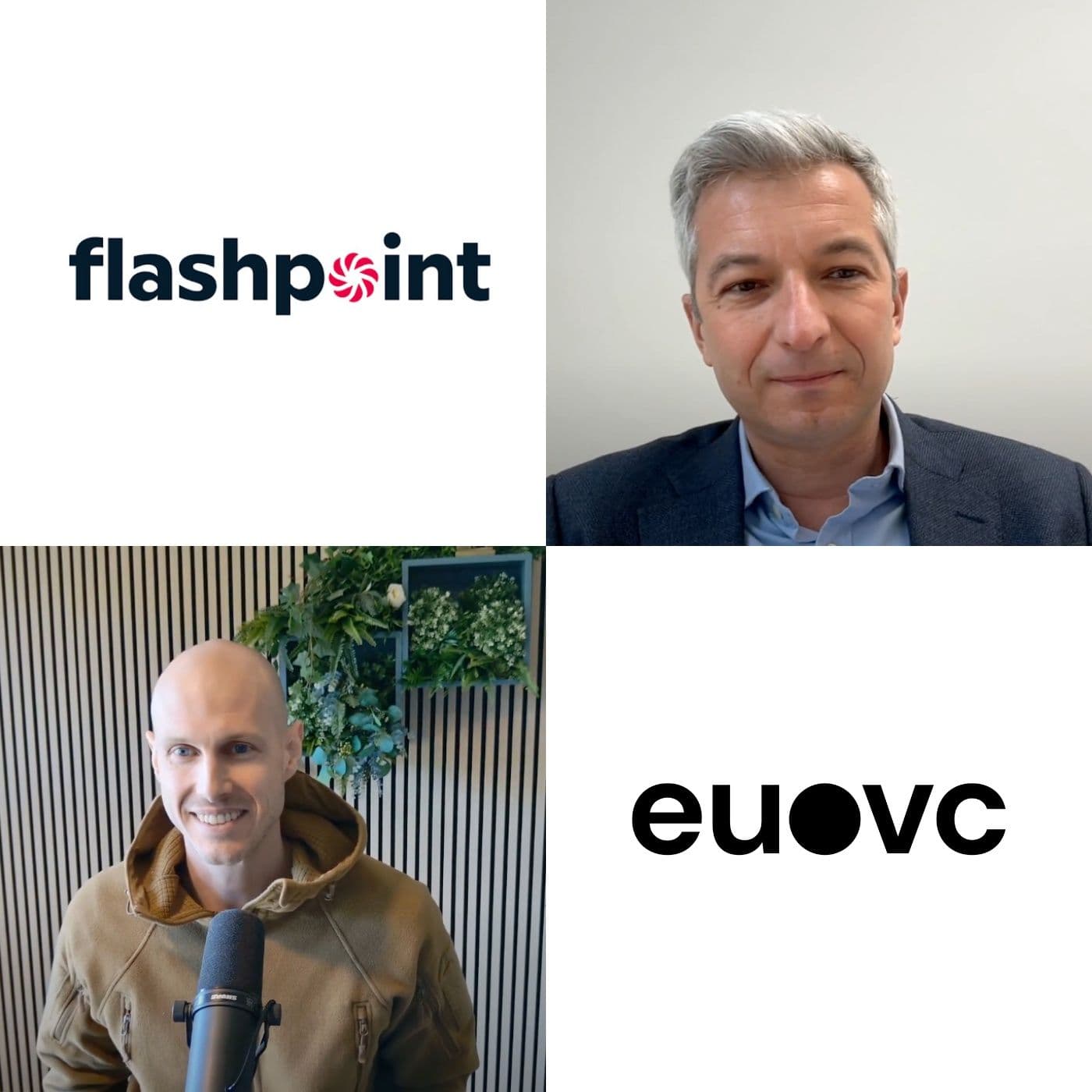
Episode Overview Title: E441 | Alex Konoplyasty, Flashpoint Venture Growth: The current exit landscape and the rise of venture debt Co-hosts: Andreas Munk Holm and David Cruz e Silva Guest: Alex Konoplyasty, Managing Partner at Flashpoint Venture Growth Focus: The current exit landscape in venture capital and the increasing role of venture debt.
Key Themes and Discussions
- Fundraising Challenges and Strategies
- Diverse Channels for Capital Raising:
- Direct outreach, events, partnerships, scouts, and intermediaries.
- Emphasis on the importance of building relationships over time in fundraising, akin to private banking.
- Event Participation:
- Larger events are less effective for building relationships compared to smaller, focused events.
- Importance of consistent representation to foster long-term relationships with investors.
- Portfolio Management and Exits
- Long-term Relationships:
- Fundraising and relationship-building can take years, with many investors only committing after significant time and deliberation.
- Exit Strategies:
- Detailed discussions on how to successfully navigate exits in the current market, which is described as challenging due to lack of liquidity and decreasing company valuations.
- Understanding Liquidation Preferences
- Liquidity Structures:
- The role of liquidation preferences creates a complexity during exits, often leading to conflicts of interest between founders and investors.
- Current Market Dynamics:
- High valuations for tech companies are not translating to favorable exit conditions, causing tension for investors reliant on those exits.
- Valuation Discrepancies in Different Markets
- Market Evaluation Factors:
- Different sectors experience varying valuation pressures; some are stable while others have significantly declined.
- Investor Sentiment:
- The importance of building realistic expectations around valuations, especially as many startups overinflate their worth.
- Strategies for Founders to Manage Valuations
- Capital Efficiency:
- Encouragement for founders to focus on capital efficiency and realistic funding needs.
- Long-term Planning:
- Founders are urged to think about total capital requirements over time rather than just immediate funding needs.
- Investment Criteria and Founder Fit
- Evaluating Founders:
- Importance of founder-market fit and the characteristics of successful entrepreneurs.
- Investment Strategy:
- Flashpoint focuses on founders who can execute and grow a business efficiently, emphasizing the need for clear operational plans and budgeting.
- Co-Investment Opportunities and Challenges
- Co-investment Dynamics:
- Interest from LPs in co-investing due to the desire for direct exposure and lower fees.
- Execution Challenges:
- While co-investing can be beneficial, it poses difficulties in execution and requires deep due diligence from participating LPs.
Key Takeaways
- Long-Term Relationships are Crucial: Successful fundraising and investment strategies hinge on building and maintaining relationships over extended periods.
- Market Realities Affecting Exits: Current economic conditions create significant challenges in exiting investments, necessitating a strategic approach to manage portfolios.
- Founders Must Be Realistic: Emphasis on the need for founders to align their funding requests with realistic business needs and market conditions to avoid dilution and overvaluation.
- Educational Approach: Funds should educate LPs on co-investment opportunities and the realities of the current market to facilitate successful collaborations.
Conclusion The episode provides valuable insights into the complexities of the current venture capital landscape, particularly regarding exits and the rise of venture debt. Alex Konoplyasty's perspective highlights the importance of strategic relationships, realistic valuations, and the necessity for founders to maintain a disciplined approach to capital efficiency.
Written by AI. May contain mistakes. Listen to the episode to check what was said.
Transcript
Automatic transcript. May contain errors.0:00There are many channels how you can raise capital. You can go direct outreach, you can go through various partners, scouts, intermediaries, you can go through events. So there are many, many, like if you say channels, if you wish. Events we've started trying about two years ago, we tried about like a dozen events. Bigger events proved not to work at all. But small events like 0100, I feel like they do give this interaction because the way I think about it, it's about relationship. The way we see GPLP relationship before the investment and also after the investment, it's a very long cycle business because, you know, some people give us money after five years of talking, right?
0:38So you might be talking to people for five years. It's mind blowing a little bit, but it's very close to private banking. On average, it takes like years to convert a client. And then it's another like, you know, five, seven, 10 years after the investment. It's like a marriage. So for people to commit to such timeline is difficult. You know, events definitely, if they're focused and if they bring people together, is a good way to get these like marketing qualified leads. If you put it into like more B2B sales funnel type of terminology. And then you meet these people and then you just talk to them.
1:10You just update them on the results and how you progress. And, you know, five years from now, maybe some of them will convert into something more specific. But that's the part of the job. Here's a few words from our beloved sponsor.
2:03This show is not investment advice and the hosts of this episode may be invested in the funds and companies featured. Welcome everyone to the European VC Podcast. Today I have Alex with me from Flashpoint Venture Growth. Alex, welcome to the pod. Andreas, it's a great pleasure. Thanks for having me. Always happy to tell your audience about us and what we're doing. Now, let me get right into it. I want to first do a bit of context setting. So we make sure that everyone knows who Flashpoint is. You're, of course, now on your fourth venture growth fund. You have a target of 200 million for that one.
2:43So it's a pretty big fund, pretty sizable. So many will know you already, but we should dive further in. You've got 500 million USD in total under management and you're headquartered in the UK. You're focusing on Series A, global high growth companies originating from Europe and Israel. The sector focus is B2B software. And then you've invested in more than 80 companies. And those names include Gusti, or Guesti, Chili, Piper, Office, R &D. Alex, did I get that somewhat correct? Yes, Andreas, it's actually all straight on the point. Thanks for the introduction. Maybe to mention, to add that we have an office in New York as well and in Tel Aviv, in addition to our London headquarters.
3:27So we are on one side an international company. And I think that's the way we differentiate from some of the other European investors that we have boots on the ground in the US, which helps a lot if you are building something there. And I just found out we have some common friends and David is also going to be there because our friends are the team at 0100 and David is going to go to the DAH conference in Amsterdam, which I know you also are. Yes, they're great guys. We really love to visit their events. I think they're super efficient, bringing the right people together and the way they are able to mix people.
4:08I totally enjoy it. I'd love to understand a little bit about how you approach these events, because I spoke to Daniel from Speedinvesting. He said, well, what I often see people getting wrong is firms are sending different partners every time or one year it's one guy and then the next year it's another guy. And that is just not the right approach to go about it in most cases, because it often is the same LPs that are attending the same events. And for that reason, this is a great opportunity to build relationships. But if you keep sending new people there, you won't be building those relationships.
4:45Is that how you think about it as well? Or do you rotate a bit more? Well, Daniel is the grandmaster of LP management and mingling. So I think he's unrivaled in that game. I think, in general, I find events quite difficult. Because if you think about, you know, larger events, not naming names, not to advertise them too much, you know, when it's, you know, thousands of people and there is no software automation, you know, and no in advance management of your time, you will end up coming to an event where other people have pre-agreed to meet each other and they're just there. So it's impossible to find time and to meet people and spend time with them.
5:37What I like about small events like 0100 is that, you know, it's a smaller crowd of people, but also the team actually helps you a lot to look at the list of attendees and think, okay, who are the right people to meet? I think that's great. And I think, you know, beyond LinkedIn, if there is like more automation around like matchmaking, similar to what they do at Slash for startups, right? You can like in Slash, you can do the speed dating for like 15 minutes. You sign up, you get a room and that's it. You go for it. So when I went to Slash, I would be like, you know, for two days, you have 14 meetings.
6:11I think they should do something similar for like LP events. Because a lot of times you meet investors who are not really investing. You know, people work for family offices or for institutions and their job is to like just be in the loop, come to events. They're, of course, sitting in a nice, comfortable position. they're paid for this like you know entertainment and these events for you it's a bit of a waste of time because you keep meeting people who actually don't do anything right so they the lps should be actually asked do you have plans to allocate in 25 right so alex does not waste his time on people who don't allocate in 25 what's the point right if you're not investing in 25 26 like why should we be even talking right just you know for general education how do you go about it then when you go to, and I said 0100DAH before, it's of course 0100 Europe, which comes up here on 2nd of April to 4th of April in Amsterdam.
7:05We'd be super curious to hear how you manage around this, because it's of course a problem that everyone meets when they go to events. So maybe with your fundraising track record, I imagine you do have some hacks that work. Yeah, to be honest, I think, you know, we, as you rightly pointed out, we have about 500 million assets under management. We actually have about 180 LPs in our, across what we're doing. We have returned to these investors about 250 million of cash on top of our 500. So we've been actually returning a lot of cash in the past years. And our main sort of ideal customer profile is actually a family or office, especially if you're coming from Europe.
7:46If you don't get backing of EIF or go like, you know, the major LP of Europe, it's very hard to be fundraising. Our geographic focus has been supporting founders. I'm Ukrainian by origin. I was born in Kiev. So our main, and maybe just also to mention, I started my career here in London at Morgan Stanley. So I've been doing telecomedia and technology all of my life. And that's how I ended up then in the investment business, having started investing my own money. So having a strategy focused like ourselves, when we focus on the particular geography, right? So we support everybody sort of east of Germany, and that doesn't necessarily mean EU, right?
8:25So we support the founders from Armenia, from Ukraine a lot, from Russia, from Belarus, from Kazakhstan, in addition to Central and Eastern Europe. But then we'll also do Israel. This is our geographical focus, right? And a lot of investors are actually very geospecific. So if you talk to EIF who are supporting EU, they will be saying, listen, only 60%, you must have at least 60 % or 70 % even better, or better 100 % EU-focused, right? And then that's it. Like our mix of founders is not fitting their geographical profile. So we actually have been struggling with that a lot in the last 12 years since our launch, but I don't want to adjust myself and put myself into brackets and say, okay.
9:10Like we're gonna do this investment strategy just to shoot some profile to be able to raise money from LPs. This is not what we do. We enjoy what we're doing. We support particular people who have passion for what they're doing. And then basically historically that's been our development. And we resonated a lot mostly with family offices because until certain fund size, until you get to like right now, if you don't get to like 300 million fund size, you can't get any institutions. Like it's impossible unless you from your previous career, you worked with like some big institutions or tech companies or like people know you very well.
9:44For guys like ourselves who come from private equity investment banking, we're maybe not so like on the radar screen of some of these people. We're not product as product maybe driven. So it's harder for us to raise corporate VC money, for example, or some more strategic capital. So we've been focusing on family offices and that's proven like a right strategy. how do you find these family offices you know they're mostly not at the events right so like you know our event participation is not driving really like this uh you know flow of investors mostly it's been direct outreach so we we know you know we go ourselves and then references and introductions that are we're initially coming on the basis of our successes in the first fund second fund third fund because we have very high dpi we have like unlike industry standards we have very high DPI, so distributed to Biden Capital.
10:35So people are referencing us. And that's how we've been growing our sort of universe of OPEX. How do you then think about GPLP events when you say what you just did about, it's actually not really there that we raise our money. Do you think that the GPLPs, or you're going to 0100 Europe, so obviously you do think they're worthwhile going to, but what is it that you seek out from these events then if it's not really the LPs? It's a tough market environment, to say the least, in terms of fundraising. Although for Flashpoint last year was amazing, we raised$90 million of capital across what we're doing.
11:15It was the record year despite the market environment in terms of our fundraising activity. We never raised so much in one year, so it was a Drake year. But there are many channels how you can raise capital. As I said, you can go direct outreach, you can go through various partners, scouts, intermediaries, You can go through placement agents. You can go through basically agents who are like institutional advisors, like Cambridge Associates. You can go through events. So there are many, many, like if you say channels, if you wish, of raising capital, right? And, you know, they all have their own merit.
11:49And some channels have worked for us much better. Events we started trying about two years ago. We tried about like a dozen events. and I think bigger events prove not to work at all, but small events like 0100, I feel like they do give this interaction because the way I think about it is that it's about relationship. The way we see GPLP relationship before the investment and also after the investment, it's a very long cycle business because some people give us money after five years of talking, right? So you might be talking to people for five years, it's mind blowing a little bit, but it's very close to private banking.
12:28On average, it takes like years to convert the client. So in that sense, we're close to private banking in terms of client conversion. And then it's another like, you know, five, seven, 10 years after the investment, right? So it's like a marriage. So for people to commit to such timeline is difficult. So I think, you know, events definitely, if they're focused and if they bring people together is a good way to get these like marketing qualified leads. if you put it into like more B2B sales funnel type of terminology. And then you meet these people and then you just talk to them. You just update them on the results and how you progress.
13:04And, you know, five years from now, maybe some of them will convert into something more specific. So, but that's the part of the job. We had Steven Chandler from Notion Managing and founding partner of Notion Capital on the podcast. And he said that in the last, so I had him drill into some numbers from the last fundraising. He said that the average new LP to convert was three years in the making. Does that sound similar for you? Well, we can't address. I think that's an interesting discussion by itself. I think we had secure issues where people like we met with you, like we're talking right now.
13:44We had some like family offices. It was remarkable. Like I can't forget there was like one guy, a super professional, like a big family office. We met for the first time, but through a good reference. So we were referred by another LP and he was like, basically, but we met for the first time. He wrote a million dollar check on like in the meeting. He basically, he had like a CFO, the head of his family office. And then some other guy who was like, you know, from his like business was more technical. So he basically said, listen, it's a million. and then he says he tells CFO listen you look in the paperwork and then you know report to me and then the technical guy you're responsible for the numbers and like diligence and here's a million and he just walked out we had situations like that but then we had situations where it took like you know longer than three years it took like you know seven years because people I think people are actually less focused on the upside and on the return, right?
14:44People are more focused because, you know, upside return, if it happens, it's great. But people are more focused on the downside. And because you're investing in the illinquent asset class in private equity, and the problem with venture capital is that you get stuck for like a decade, right? People don't want to get stuck for a decade. They want to like somehow minimize the timing. And now in the current environment, if it used to be like, let's say, seven, eight years on average to be stuck in it, like the way they think stuck in the VC fund to get your three, four times money. Now, it could be like longer because of the unfavorable market environment, because the last two years, there were no exits, right?
15:25So they just added to the exit timeline, plus some companies underperformed. So that again, adds it to the exit timeframe, right? So you added two years because of macro and two years because of underperform. So just in the last couple of years, you added four years extra to your eight years average holding period in the fund, right? And if you have like 20 funds, you are really like in a difficult situation because like most VCs, they don't know how to exit. They have no idea. They've never done any exiting in their life. They all used to ride the wave. There is good market, good macro companies are being bought, right?
16:00And exits happen automatically in the way, right? Not right now. And I think that's why a lot of these people are super concerned now, and that's what they want to monitor. They want to monitor, okay, how do you actually manage to return capital? How do you show me the signs that you're going to be able to exit? What is your methodology of exit? How do you think about it? How do we make sure that we don't get stuck for eight years with you? Because we have another 20 positions like that, so we want to make sure that that doesn't happen. So that's where we spend a lot of time with investors these days explaining like how is social point different?
16:34How do we exit? Last year we sold, we've done like five, six exits last year, returned over$60 million of capital to our investors, right? So we have very good, you know, data points in the current difficult market environment, which we can reference and say, listen, here's how we do it. We have some glamorous exits. You know, we sold to KKR last year, which was like a big glamorous exit in our portfolio. But we have a lot of non-glamorous exits where like you have a company with two, three million of revenue, not growing, okay, not losing money, but like stock, right? How do you sell a company like that, right?
17:08You know, returning money, right? How do you do it? So we are able to do that. And that's like, these are the discussions we're having with people mostly these days. So this is a reflection of mine. And oftentimes the discussion on LinkedIn centers around kind of, as you said, good companies are being bought. They're not being sold. You've got to make the bad and you've got to stay in these kind of platitudes almost that venture has been built up and around. And of course, there's also great truth to them. So it's not to say that they don't make sense at all. But oftentimes, the dialogue in the public fora is oftentimes not in depth and nuanced about how you then manage the rest of their portfolio and the tougher parts.
17:55Do you find that there's a disconnect between the conversations that you see are worthwhile and really work with LPs versus what you see projected on social media when you talk about why venture is beautiful and powerful? In general, my feeling is that venture capital is a very fragmented asset class, actually, because people, like when they say, okay, venture, they just like mean like actually a very vast group of asset managers, right? Because if you look at like better performing guys, like, you know, the top names, household names by now in the venture world, they actually turned into large powerhouses that are managing billions of dollars.
18:37And they actually, you know, they're still called venture, although they could have funds that span from like pre-seed, they can do a$500 ,000 check, but they can also write you a$200 million check, right? So, you know, are they like venture? You know, they're, but now they're all like already like super late, gross, buyout, private equity shops, but you know, they all have like these pockets on one side, right? So that's one side of the equation of venture like Sequoia. Is Sequoia a venture or not venture? Most of the money they have is like super late stage and actually most of their portfolio is actually public stocks right now, right?
19:16The whole positions in super big public companies. So if you look at their assets on the management, they're a hedge fund. Today, they're a hedge fund. They're not like a VC fund anymore in that sense. And then on the other spectrum, you have micro funds who have like 10,$20 million on the management and they're investing. So all of this is considered to be venture. And I think what is important to differentiate is to basically try to segment this landscape into different buckets, right? And it actually, all of them are then in a way, a bit of a different asset classes to be honest, from risk return profile, but also from the discussions they have.
19:56Because when you look to Sequoia, this big fund, when you allocate to them, you actually get the diversification. If you're going to get to Microfond that does the same like pre-seed, you're like very narrowly focused. So I think it's important to differentiate on one side. On the other side, if you look at the returns over the last decades, venture has underperformed private equity, right? Big time. And we're seeing it now in the fundraising metrics. In the last 15, whatever, 20 years, the last time I looked the numbers. 24 was like the lowest year in terms of raising capital. Private equity actually last year raised much more money for buyout and like draws versus venture.
20:37So that's where investors are voting with their dollars, where they want like more sort of exposure. And we're seeing that. I think, you know, what people talk about social, I think, you know, there was a very good, again, unprecedented boom market, which lasted for like a decade, right? And I think people just got used to a notion of, okay, what is venture? When we took a look to LPs, a lot of them are focusing, they're telling me, Alex, tell me, how do you source deal flow? How do you source deal? Tell me about sourcing. And that's it. They're not interested about portfolio management and exiting.
21:12A lot of these investors, some of them are very sophisticated and they're focusing in the right way. It's very important how you source deal flow, how do you differentiate on one side. On the other side, what they're forgetting and sometimes they don't understand is that today, all of the sourcing in the VC world, it's like public market investing because every startup who raised like$500 ,000 is out there on the internet, right? Everybody knows about this startup. You can find this startup. I can find this. Anybody can find this startup. So sourcing in a way, it's like public markets. Anybody can source these startups today, right?
21:46There is like no rocket science. I mean, you need to find ways then to get access to the founder, to find the right point in time when you meet him, talk to him, find the chemistry, et cetera. I mean, there is a lot of stuff. But sourcing, when I get asked, okay, like sourcing, I mean, like there is no rocket science about sourcing. Okay, if you're big already and you know how to source. The rocket science is how do your portfolio manage and how do you exit? How do you turn capital in a shorter timeframe with a high IRR? That's what is important, right? And most VCs, to be honest, like investors we have co-invested with a lot of times, that's been the mentality over the last decade, right?
22:26That the most important thing is to allocate capital and the most important thing is to find a deal. And then most VCs become very passive in times of basically difficulty, which we experienced in the last couple of years because, you know, a lot of startups did not raise. So you have to cut the cost. you have to have difficult discussions. How do you sell the company? What do you do? How do you fire CEOs? We've been having these discussions. You have to fire the founder. He's just not performing. Unfortunately, it's a different market environment. Things have changed. It's not gross anymore. It's like strict private equity, cost management.
23:06And if you have a company with 20, 30 million of revenue not growing, you have to change something. And the first thing to change is the CEO, the founder. VCs in this moment, VCs leave the board. They're like, ah, okay, no, no, no. We're founder friendly. We don't want to be part of this conversation anymore because it's becoming a bit difficult. What others will say about us if we fire the founder? Right? Nobody wants to cut. So I think that this is a big problem of the asset class. And that's why I think it has been underperforming private equity, because private equity I'm not shy of these discussions.
23:45How do you think about this, how the market perceives you part? Because obviously now you're on a podcast speaking openly about firing founders where your competition in the market, they might do it or they might be happy that it's being done, but they definitely are not talking about it proactively. How do you kind of... Maybe like because we went into discussing like, you know, what people say on social media versus like real life in a way. I'm like, luckily within the last coin portfolio, we don't have a lot of situations where we do need to have such discussions. And obviously in like better times when markets are super liquid, you have lots of following capital, everything is growing, you would rarely have such discussions.
24:32But I think in the last three years, you know, definitely, you know, this is definitely efficiency and portfolio management is on the agenda. And I actually think it's, in my mind, like these discussions, you know, it's not like you're a bad guy or somebody is a good guy or I want to be firing founders. Nobody wants to be firing founders, honestly. And at Flashpoint, I'm a founder myself in a way, right? So like I'm in the same shoes as any other founder. But what I think is important is that sometimes people, they just get so personalized with the company. They think about the company as like their child.
25:08They cannot let go. and they don't see a problem. It's like, why do people go to psychologists or shrinks? And it's normal because sometimes people just don't see how to manage the problem. And unfortunately, founders who have not had experience of building companies or in environments like this, for them, it's very hard to understand and to tell yourself, listen, I don't know what to do. Honestly, I don't know what to do. And our job as an investor is to have these honest discussions. That's my job. My job is to honestly talk to the founder, help him open the eyes, be a part. It's like marriage, right?
25:50You need to be talking. Some marriages fall apart because people don't talk to each other, right? So our job within the company is to perform this job. It's not being a bad cop or firing somebody. No, it's not about that. It's but be honest. Yeah, I think you're absolutely right. And I think that that is actually, when we come back to the conversation we had before about events, that is actually one of the powerful things about the GPLP events that I think it's a bit too often talked about as a matchmaking event and how much money can be raised and so on. But these events are an opportunity to put on conversations on stage that are about how to manage funds, about what to ask GPs when you're investing instead of hyping up the asset class further and talking the book that we talk when we're talking publicly.
26:38Because if it is truly a strong GPLP event, I think that it should be made so that everyone can talk bluntly about or talk real shop about the inner workings of venture and And that's also about the hard parts. I'd love to ask on this exit environment dynamic. I just saw last week from Megan Reynolds, she does a great wrap up every week where she on excess heard from LPs this week. And then she commented on Hamilton Lane's annual market overview. And she said, and I'd love to hear your perspective on this. She said distribution levels are at a low not seen since the great financial crisis. and that has happened at a time of strong public equity performance.
Read the full transcript
27:26This is something that has not happened before. Can you describe a bit or comment on this discrepancy between what's been happening in the public markets and what's been happening in the venture markets? Yes, absolutely. Thank you. I think, you know, indeed, I mean, NASDAQ from the lows of 2022 is up like 70-80%, right? So it's like the valuations are all-time high in a way now with all the elections and geopolitical turbulence have come down a little bit. But in general, VC is a very particular asset class for a number of reasons. Number one is that investors are coming in into basically preferred shares that are liquidation preference driven.
28:12So for example, imagine you invested$10 million dollars into a company, you value the company, let's say at a hundred million dollars, you got roughly 10 % stake in that company. The company was worth, after your investment, 110 million, right? So you invested in this company at the 30 times revenue multiple. So the company had 3 million revenue, you invested at 30 times revenue multiple. So here's the deal, right? And then everything collapses and the company, okay, it's growing somehow, you know, like whatever, It gets to five, six, seven, 10 million, right? And then basically what usually happens is that for you as an investor, because you're in liquidation preference priority, for you, the company is not worth 110.
28:51For you, the company is worth 10. Because if you sell the company for 10, you're the first to get the money. You will be getting this first distribution. That's like the inherent discrepancy of the VC asset class, which A, creates this unhealthy evaluation environment on one side, but on the other side, in times of downturn, like right now, it creates conflict of interest because the founder does not want to sell at$10 million, because you will get the money, but then all the angel investors, all the common shares, all the management, they lose everything. They spent already 10, 15 years where we're building this thing, and now they're going to lose everything.
29:32So there is a big conflict that arises out of this whole liquidation preference waterfall. And then number two is that VCs, because they have long dated funds, right? They can wait. There is no pressure to sell, right? So for a VC to sell now is to record the loss. If you don't sell now, like nothing happens, right? You can still wait for five years. Yes, you don't make distributions, but then you don't mark a loss. And that's what's been happening, I think. This whole big disconnect between the, on one side, high valuation market environment. On the other side, I think for certain companies, for certain, you know, segments, the valuations have remained high.
30:16For example, you know, we've been actually, last year, we sold companies at like 10 times revenue to private equity. But for certain segments, the valuations have collapsed. If you're in HR tech or if you're marketplace or in e-commerce, you know, the valuations have totally tanked, right? And that's been a disaster. And also, private equities and growth funds are like the nature of buyers right now. They're pressurizing you. Despite Nasdaq trading like all-time high, you know, for certain segments, the valuations are like 10, 15 times revenue. Private equities are trying to buy things at like five times, six times revenue, right?
30:50So you as an investor, you invested at 30 times and now you need to sell at five. So this is a huge disconnect that is happening between public markets and private markets and also the structural, you know, sort of problem with the asset class because of the tiered structure of the gap table. So I think, unfortunately, it's something that, you know, cannot be solved only through time. And if the company can, if the companies can, what we're seeing is that companies are just taking time to grow into valuations where founders are not willing to lose money. Founders are just trying to win time one way or the other, take on debt, cut the cost, do whatever, be the founder, right?
31:32Be like the real entrepreneur. Kudos to those. I think there are a lot of big fighters. And in our portfolio, we've seen like a lot of fighters. Unfortunately, some people had to go through COVID, you know, just four years ago, five years ago. Now they're going again through the turmoil. A lot of like resistance needs to be shown, but there are big fighters who are like fighting and working through, and they just need to grow into the valuation, right? And then, okay, it's easier to sell. And I think slowly this will, this whole problem will devolve, like start devolving. But right now it's like a very stressful environment.
32:04You are investing primarily at Series A, and then of course you follow on in the later rounds. When you're looking at the use of liquidation preferences, How do you think about it yourself at the CSA stage? And how do you think about it in the stages that follow? And what are tactics, strategies for you to use that are effective? It's like a standard market practice. We also come in as a preferred shareholder. I think the way to manage this whole disconnect, I think, is still around the company. right? So, you know, our preference is always to, and what we're telling founders is that, listen, your valuation today at Series A is not a real valuation, right?
32:51It's just some watermark, because two things will happen. You need to be thinking about how much dilution you will, you know, in general experience in the next five, seven years. You know, people rarely think, how much capital do I need to raise in total to get to, let's say,$100 million of revenue? Nobody thinks like that. Everybody's like, okay, I need to raise 10 million now. You know, that's it, right? So how much money do you need to raise in total? What's the business that you can build? Because dilution actually impacts things a lot. So A, valuation in that sense today is theoretical. Number two, nobody's selling, right?
33:26So I'm not buying the founder out today. I'm putting money into the company. So in that sense, valuation is also in a way theoretical. And then for the founders, from our experience, And we have some companies that, you know, took from 2 million, 3 million of revenue to like 200 million of revenue or like hundreds of millions. We have companies like Guesty, you know, Preply, Chess.com, you know, et cetera, Printify that went, you know, all the way and we saw them like grow big. It's all like very different journeys. But what happens usually is that founders and the management team through ESOP, over time, they can compensate this dilution, right?
34:03Why is this entry valuation, series A valuation important? Because when, you know, 50 % of cases are successful, but then 50 % of cases could be not successful. When it's not successful, if you overhiked this valuation, it becomes a problem. Because then you come into all of this discussion, okay, my last round valuation was whatever, 100. I cannot sell for 30 or 40, right? But, you know, and that becomes a conflict because like then for me, you know, for the last investor, then they're losing money. I think that people should like try to be less greedy in a way, like in the good sense. Okay, if you have a deal and somebody gives you money at 100 million valuation, it's great.
34:44But sometimes I feel like it's not the right advice of earlier investors who are pushing the founders to start marketing deals that are more capital than the company needs. And also high valuation that is reasonable, right? It's like early investors who are pressurizing, go, go, go. You can do it five times money. Let's do it. I think it should be more thoughtful in a way and not disconnected from the reality, to be honest. Because the other problem that we're seeing, why valuations are high at Series A also, is that founders take much more capital than they need. They take money for, let's say, their budget for next year to burn$3 million.
35:23They raise$15 million. Why do you need$15 million? Why? You're going to burn$3 million. Why do you need 15? Tell me. Like, honestly, you don't need so much money. Like, I mean, we had a lot of these discussions in 21, in 20, when it was like overinflated environment. But in my mind, because then it destroys discipline within the company, because then you have so much money. You start hiring more people than you can manage. You're growing too fast. You create, you know, inefficiency, A. B, if you're raising 15, that's how the valuation ends up being 45 instead of 20, right? because you're being diluted much more.
35:59So you as a founder, you don't want to be so much diluted. That's why the valuation goes up. It doesn't go up because the business is worth 45. It goes up because you take 15, right? It's like, you know, a very weird logic. So, and that's why we like founders originating from Eastern Europe, to be honest, because they're more efficient just because by nature, the R &D costs much less than in Germany, UK, or Boston, Massachusetts, right? So these founders need less capital. All of our companies took a fraction of capital required to get to$100 million of revenue versus some other peers who went there.
36:37And that's why I really enjoy our thesis because then there is a lot more efficiency. And that's what we are pursuing ourselves. And in general, I think founders need to be thinking about this efficiency already they want. how do you, when you talk to founders at the CSA stage and you're considering coming in, how do you bring this perspective to founders? And oftentimes there'll be competition in the round. So you'll have colleagues in the business that would might have a different perspective than yours or might have that pumping up mentality. And for that reason, are offering different terms than yours.
37:14What are the arguments that you find making sense, both in terms of putting the full syndicate together with co-investors or maybe approaching to an existing potential co-lead and saying, we'd love to come in, but could we maybe talk about how we're structuring this round? And same thing with founders when they approach you and they have a different perspective on what the ideal price of the company would be in the size of the round. Yeah, that's a great question. When we usually come in, most of the time we're like the first in a way institutionalized investor because before us they're usually like angels and early seed investors who are not maybe as equipped they don't have such big teams and they're not as equipped at looking at the underlying business sort of economics and the assumptions we sometimes come across companies who come to us and say listen we have two million of revenue and then you start looking at the revenue it turns out that's not revenue because they include into revenue cash collections, contracted revenue, it could be like a mixed bag of things, right?
38:16And they think it's revenue, so there is no like proper reporting, no proper thinking about it. When we invest, what is important is that to build a company, it's actually a very specific like formula, right, in a way, because, you know, there is a process times people times execution, right? And there is capital that comes into that equation. When we invest, for us, it's very important to agree upon the budget, right? So when we invest, there should be a budget, which is quite specific plan, how the company is going to execute, right? So how many people are they going to have? What sales and marketing channels we're going into?
38:52How do we think about the costs? How do we think about the economics, right? You can't just take money because you need money and like just have money in your bank account, right? You need to be very, very specific and granular. And I think the best founders are the founders who think about this nitty gritty detail and then are capable to hire people and build the processes. Because then, you know, we come usually into companies that have like one founder who is the person responsible for the product and also the person responsible for the sales, right? So there's like no real organization. And then founder needs to start building a C-level, start building processes, right?
39:31How do these various functions work by themselves together? How does it become a company in a way? So this is a difficult bit. Not everybody is actually capable to perform this and to execute on this budget. So for us, that's how we think about it. And then that determines how much capital is required. So we think about the budget because this is a specific plan that we're going to execute. and then it creates like the round and the structure around it. When we invest, we want to provide enough capital for the company, let's say for the next 18 months. I'm not a big fan of overfunding companies, but I also hate to underfund companies because then, you know, you cannot like manage the budget, you cannot hire enough people and then you can fall into a trap that, you know, you're on a plan, you have an investment plan and product.
40:24and because we like invest a lot of times in enterprise software, which takes time to develop, products that take time to develop and also the sales cycle is quite long. Could be 12 to 18 month sales cycles. So you need to allow the company to like go through this thoughtfully because the problem is that you don't see results for a long period of time. That's why discipline is super important. You cannot like defocus, run into too many directions and then you basically fail, but you spent a lot of money and you failed. So this is what we are super cautious about. That's where we spend a lot of time talking to founders, talking to early investors and trying to find, okay, what is the right connection?
41:05And then usually the way the round is structured is that we are quite flexible and loyal. Obviously, we have our own targets in terms of the stake we want to be getting. But then for us, if existing investors want to participate, the founder has preference for some angels joining who could be value additive or some other funds would be value additive, we are very open to that. And thus, on the back of all this work, and I was about to call it financial engineering, but that's not the word, but all this work, looking at the finances, looking at the quality of the real revenue and so on, on that basis, you tend to be able to reset the conversation around valuation and round size.
41:46Am I correct? Well, valuation, I think it's always a discussion. Because I think the way we are trying to think about valuation, as an investor, I want to make money on growth, right? I don't want to arbitrage the founder. In an ideal world, you know, if you sell at 10 times revenue, if you enter at 10 times revenue, that's a fair deal, right? Nobody's like, it's not unfair to anybody. And you just made money on the growth in the meantime, as you were an investor, right? So that's how I think about it. sometimes, you know, you might not sell at 10, you might sell at five, but if you enter at 30, that creates a huge gap, huge disconnect in terms of fairness.
42:28A, B, if the company raised money, let's say six months ago, and then they're asking for like a three times markup versus, you know, that investment round, I just think it's unfair. Well, of course, depending on the performance, you know, performance, like we could, like, we could be flexible. I mean, of course, if the company has grown five times, you know, or whatever, it's a different discussion. But we are looking because we're looking at a lot of companies. Last year, we spoke to about 5 ,000 companies. Andres, we spoke to a lot of companies, right? And then we've closed about six investments.
43:01So we are having a lot of these discussions with founders. Valuation is not the determining factor for us to invest. For us, the determining factor is the quality of the team, the quality of the product, the quality of economics, the quality of the market. So a valuation is a conclusion in a way, right? So if all of these things stack up, then comes the valuation and we need to decide, okay, how much money are we putting in? Do we get enough stake? Because for us, stake is important because we're going to be very involved with the founder. We view it as a partnership. We're going to be spending a lot of time helping him build the company.
43:34I have a curveball for you. And that curveball is you guys are investing in Sirius A. In the US, you oftentimes, like the holy grail of venture was Sirius A, is Sirius A. And then if you do venture, you assume it's, well, okay, you're probably doing Sirius A. And then if you're a seed fund, you'd call yourself a seed fund. In Europe, we tend to say we're a venture fund. And that, in other words, most of the time, you're a seed fund or a pre-seed fund i'd love to ask you any reflections on why this is yeah i think uh to be honest i'll be i'll be very uh like honest with you i'm super confused with all of this like terminology and tax because now they have like this european series a they have like u.s series you know it's like for me like i can tell for ourselves what we're doing because it's like very, like I know, very straightforward.
44:33So we are investing, I don't know if it's series A or post seed or what is it, or series B maybe even because what we're doing is like in the US could be even series B already. So we're investing in particular, into a particular stage of the company itself. So it's less driven by the amount of money the company raises or devaluation because they tell you, listen, if you're below 20, you're a seed value, like if you're more than 20 million, than series A. I don't know. For me, what is important is that stages of risk depending on the company's development. So for me, there are several things you need to prove.
45:11First thing that you need to prove is the founder market fit. And that could be like pre-seed, seed stage where the founder needs to prove to the investors and to himself that he actually fits the market with his product thinking and execution capability. And he needs to build the product. The next stage is the founder product market fit, right? So when the product fits the market that is targeting, and that's when I come in. For me, what is super important is that after this point in time, inflection point, there'll be no pivot of the product. So in the in the founder market fit, he can be pivoting the product.
45:55He keeps iterating, iterating with the product. He keeps iterating. He's trying to find, you know, the founder market fit. And then once he found it, there is this like nutshell. There is a product that starts building. And then for me, it's super important that the product is not going to be pivoted after I came in because that is a disaster. If you need to change the product, it's a disaster because I'm not the right guy. I'm just not the right guy. I'm not the product guy. What I'm good at is to help with the growth, hiring people, thinking about economics. How do you add sales and marketing channels?
46:28How do you think about growth? How do you raise the next round? So we are like, how do you grow a company from 50 people to 60 people? That's where we come in. If you need to stay at 15 people and keep iterating the product, we're just the wrong people. I don't know if it's called Series A or what is it called? Like, I don't know. And to be honest, I don't very much care. In different segments, if it's more enterprise-ish, it could happen like when the revenue gets to three like we just invested in a company that had four million of revenue right so for them i felt like before four million you would because they had one customer or like two customers for like you know half a million dollars each right it's super hard to understand okay when you have two customers like is it the company even like or is it just two customers right now they have like more customers it's easier if you're more as in like smb uh if you have like a thousand customers and they have like a, I don't know, a thousand to two thousand dollars annual contract value, then you need more customers to prove because there is churn, there is net dollar retention.
47:27So we need to look at all of these numbers to understand, okay, how does it stick, you know, product usage. We calibrate depending on the sector, depending on the, you know, this profiling, is it the right point in time? I want to ask you something, it's a completely different topic, but I want to make sure we get to cover it and that's co-investments. It's one that we always hear everyone being interested in on the LP side, but it's oftentimes hard for them to execute. Of course, they like it because they get a direct exposure and reduce the feed drag. That's like the things they see and they think, ah, this is going to be amazing, but it's not always such a great win-win for people.
48:04I'd love to ask you, first and foremost, LP co-invests, what is your take? I totally agree with you that LP is really like coinvest exactly for the reasons you mentioned. They think that they invested in the fund, it's too expensive, we have the fees. And then if they invest directly, become part of the cap table, they control their destiny. And it's a great job. It's very hard to execute for two reasons. And there are two types of coinvestments. There is a type of coinvestment when there is a round, let's say there is like a Series C, Series D, it's happening, it's taking a while and then LPs are aware about this deal and then they want to co-invest like and they're proactively monitoring this these situations themselves amazing we're definitely supportive of that if our LP wants to come into CEC directly I'm happy to introduce him to the founder or he by coming to our investor days he knows the founders he sees the reporting on a quarterly basis if they want to co-invest we're super happy about that we'll introduce them there There'll be zero fees actually, because we don't do the work.
49:11They come in directly into the round. But what is important in this type of co-investing, they should do the work. So the SLP coming into this co-investment, they need to do the work. Because Dragon fee, if I do the work, then all work needs to be paid. I mean, why the work should be free, right? It's a very strange concept to save on the payment of work. Is it also a relationship management solution hack in terms of making sure that if they choose to invest, it's definitely on their own work? It's not based on our recommendation. Because that is what some people oftentimes find that LPs, if it goes well, they're happy.
49:57If it goes bad, they're super angry. And if it goes well, they think it's because they picked the asset and it can be very hard to end up with a win as a GP. You're guilty anyway, even if you didn't do the work, because then you should have advised them not to invest that you didn't. So you're anyway, right? In my mind, the niche that we found ourselves is that we are a very active follow-on investor. And a lot of the follow-ons that we're doing is around cleaning up kept tables or adding some intermediate capital to the companies before next rounds. So we actually have quite a bit of this type of co-investing happening.
50:36And there, we do all the heavy lifting. Like right now, I have a deal where we have been working on a very complex situation. issue. It's a big company already, and there has been some participating league preference structure, which we're restructuring right now. So it took us nine months, Andreas, nine months to re-agree with other shareholders, with the founder, like what we're doing, because it's a drag on the cap table, having a participating league prep. We let it happen in the past because it was bad market environment. We took participating league prep in the company. Things actually turned out to be working very well.
51:10The company has grown like five times since then, it's a performing company, but it cannot take more money because it has a participating leap prep in the cap table. So we need to restructure it. And it was like, and I'm actually, we are like the ones that are saying, listen guys, we need to restructure it. We want future for the company, let's do it. So, but it's a nine months transaction and we need capital to facilitate this restructuring. So that's where our investment comes in, right? And obviously, because we've spent nine months doing this work, like, you know, it's a proprietary deal. So there will be fees, of course.
51:47But our investors appreciate that because they understand that we've done the work. They're doing co-investment with us not because they want to save on the fees or because there is another element to it. If you're a family office, if you end up directly on the camp table yourself, then you probably will end up with a small stake, which means that you have zero information rights. You will not be getting, you will not be part of the board. You will not be getting information, right? And B, you probably would end up like stuck being some, maybe even share classes that don't have privileges of right to first refusal, tag, or, you know, any preemption, right?
52:24So if there is an exit happening, it might be more difficult for you to get out even, right? And manage this position in general. And that's where a lot of family offices do get stuck. They get stuck in these, you know, sort of, I call them lazy SPVs where nobody manages them. People just created SPVs to pump in capital and they just let it sit there. Nobody manages that. So our approach is different. We usually, like, we join these core investments together with our main position. And there we manage it from, like, exit perspective and rights. People get the same rights. People get the same information as I do because I manage the position.
53:04Do you see an increased appetite right now in the co-investment market or do you see that it's actually still quite subdued because of general appetite towards risk in the early stage markets? Yeah, last year we closed, Andres, we closed six co-investments last year. So maybe not a huge volume in dollars, but we've closed a number of co-investments. For this year, we have a plan of like 10 co-investments. And the way we operate is that we basically, ahead of the year, we know the situations which are performing, where we run out of capital and where we would need more money. And we would go to our LPs and tell them, listen, here are the situations, they're evolving, they might be needed capital.
53:50So please take a look, keep them in mind. And let's think, you know, which ones do you like better or not? So it's about education and telling people in advance, because in a lot of these co-investments, we just don't have enough time. You need to wire money in like a month. And if people are not, you know, privy to the situation, if they have not been involved, it's super difficult to wire$5 million in like a month if you have never heard about the company, right? That's the challenge I have, but you're absolutely right. I feel like, you know, there is still a level of appetite for these risky situations is lower on one side.
54:24On the other side, we see other like family offices that have actually ridden the wave of the public market. And they made money in the fixed income and inequities. Last year for some of our family offices, people are telling me that they made in public fixed income, like 20 % net IRR, right? So people are significantly in the money and they want to reinvest that, understanding that the interest rate market environment is stabilizing. It's a good time to be investing in equity section. And I think that was the most beautiful sentence to close on. It's a good time to invest in equity. Yes, thank you so much for doing so, Alex.
55:06Alex, I look forward to hearing from David that the two of you met at the 0100 conference. And I hope they will be doing many things together in the future. Perfect. Andres, it was a great pleasure. Thank you so much. Here's a few words from our beloved sponsor. If you're looking to meet key players in Central Eastern Europe's private markets, this is the conference you don't want to miss. Join us for the 14th edition of the premier networking event for Emerging Europe. You'll meet investors from firms like Antenna Digital Ventures, EBRD, EIB, Ersk Group, IFC, Tybus Ventures and many more. Join 0100 Emerging Europe from May the 15th to the 16th in Budapest.
55:50Tear down this wall. It's more than just an alliance. This is a union of values. Let's start acting.
From the publisher
In this conversation, we discuss the nuts and bolts of exits, co-investments, and the role of venture debt in today’s market. Alex shares how Flashpoint Venture Growth builds operator-led portfolios, taking a hands-on approach to deal sourcing and capital efficiency and helping founders make tough decisions.
Chapters:
- 06:54 Fundraising Challenges and Strategies
- 11:05 Portfolio Management and Exits
- 28:51 Understanding Liquidation Preferences
- 30:02 Valuation Discrepancies in Different Markets
- 32:04 Strategies for Founders to Manage Valuations
- 36:49 Investment Criteria and Founder Fit
- 47:39 Co-Investment Opportunities and Challenges


