
In short
EUVC Podcast Episode Notes: E442 | Enis Hulli, E2VC & Gorkem Yurtseven, Fal.ai: Building Developer-First AI Infrastructure
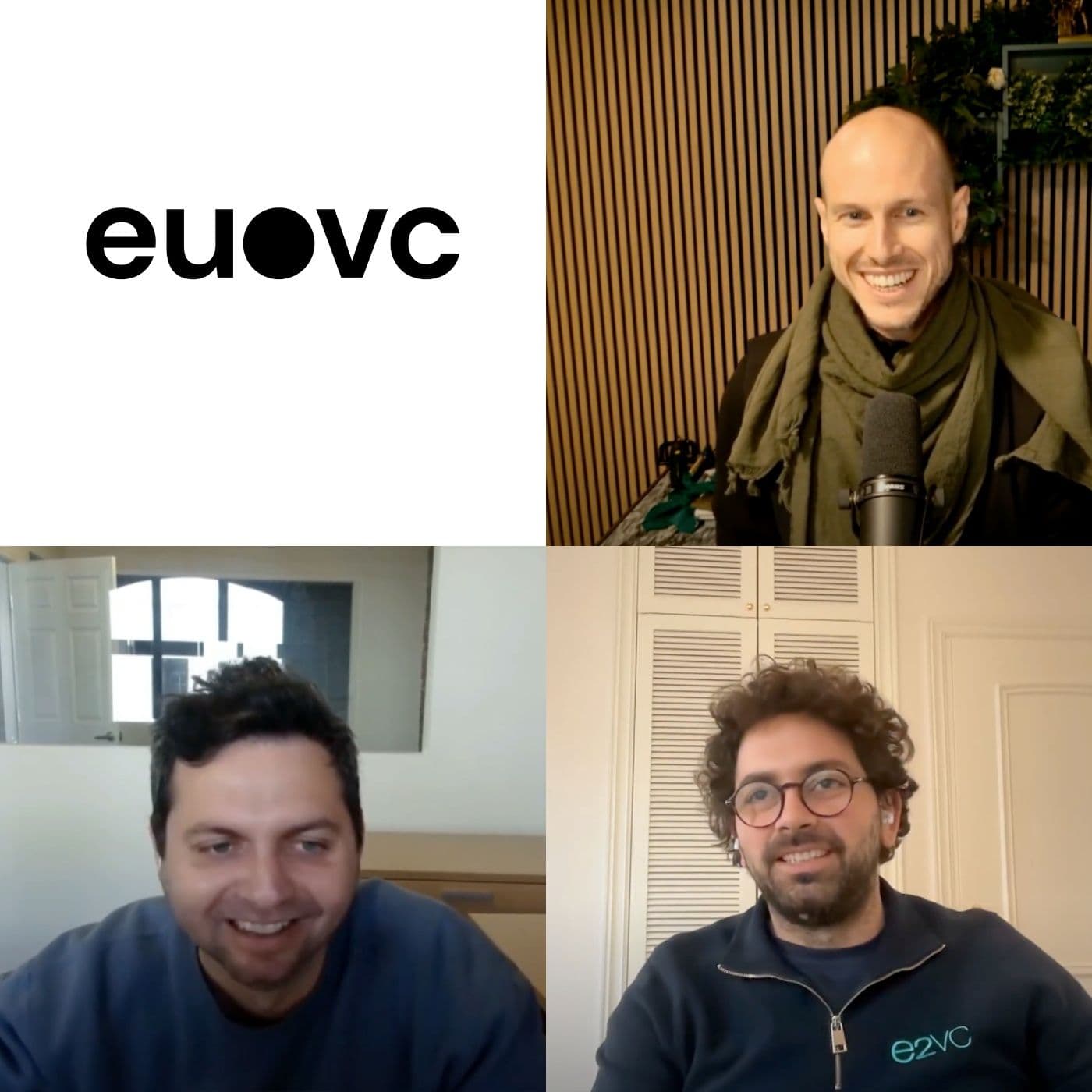
Episode Overview In this episode of the EUVC podcast, hosts Andreas Munk Holm discusses the journey of Fal.ai, a rapidly growing AI startup, with its founder Gorkem Yurtseven and Enis Hulli from E2VC. The conversation dives deep into the evolution of Fal.ai, focusing on its unique niche in generative media and the implications for the European venture capital landscape.
---
Key Participants
- Andreas Munk Holm – Co-host of EUVC
- Enis Hulli – General Partner at E2VC
- Gorkem Yurtseven – Founder and CTO of Fal.ai
---
Episode Highlights
Introduction to Fal.ai
- Fal.ai's Unique Offering
- Focus on generative media: AI-generated images, videos, and audio, diverging from the predominant focus on text in AI solutions.
- The platform hosts a marketplace for models targeted at developers, providing tools to build applications using generative media.
Growth Journey
- Investment Rounds:
- Started with pre-seed funding largely from angel investors, followed by a successful $49M Series B round led by Andreessen Horowitz.
- Insights shared on managing funding dynamics and the challenges faced in securing investments due to ownership requirements in Europe.
Developer-First Approach
- Sales Motion:
- Gorkem discusses the challenges of building a sales strategy as a technical founder, highlighting the importance of establishing a sales advisor and leveraging founder-led sales.
- The need for a structured sales team is recognized as Fal.ai scales.
Market Positioning and Strategy
- Blue Ocean Strategy:
- Enis emphasizes investment in emerging markets with fewer competitors, aiming to leverage European engineering talent.
- Fal.ai's focus on specific media categories allowed it to differentiate and dominate its niche amidst competitors.
Building in Different Regions
- San Francisco vs. Europe:
- The conversation highlights the advantages of being based in San Francisco for networking and growth, while also acknowledging the untapped talent in Eastern Europe.
---
Key Takeaways
Insights for Founders
- Investment Dynamics:
- The importance of having multiple major investors in early rounds to secure better conditions in future funding.
- Clarity in Messaging:
- Gorkem stresses the need for clear communication about product offerings, stating that clarity in messaging often trumps product-market fit.
Insights for Investors
- Market Dynamics:
- The significance of understanding competitive landscapes and the definition of what constitutes competition.
- Investment in Talent:
- Recognizing the value of Eastern European talent and the potential for building scalable companies in different regions.
Lessons Learned
- Navigating Rapid Growth:
- Founders should prioritize sales strategies and adapt their team structures as the company scales.
- Long-term Relationships:
- The importance of nurturing relationships over time, as demonstrated by Enis and Gorkem's long-standing friendship, which facilitated investment opportunities.
---
Chapters
- 04:50 - Deep Dive into Fal.ai and Generative Media
- 23:48 - Revenue Growth and Market Dynamics
- 25:30 - Strategic Market Positioning
- 29:10 - Sales and Team Management
- 35:18 - Building in San Francisco vs. Europe
- 47:33 - Lessons and Insights for Founders and VCs
---
Conclusion The episode encapsulates the fast-paced world of AI startups, underscoring the importance of strategic positioning, clarity in communication, and the power of community and relationships in the venture capital ecosystem. Gorkem and Enis provide a compelling narrative of growth, challenges, and opportunities, offering valuable insights for aspiring founders and investors alike.
For more insights and updates on European VC, follow EUVC at [eu.vc](https://eu.vc).
Written by AI. May contain mistakes. Listen to the episode to check what was said.
Transcript
Automatic transcript. May contain errors.0:00We really wanted to work with A16Z and First Round at the same time. And the thinking behind there was, by the way, I recommend this to any founder who can pull this off. I think ACS and Z is a great multi-stage fund. And they'll be helpful in all stages throughout the company's journey. And first round is amazing when it comes to early stage company building. And we were able to get both of them. And we really liked the partners that we were working with. So once we got both of them, they both have their own ownership targets. They're both pushing for as high ownership as possible. That ends up with a round structure where there is very little space for a third, fourth, fifth fund to come in.
0:52So that's why after those bigger funds coming in, I think the space left in this wasn't happy with it. But then, like, you know, we stretched a little bit, and I'm sure we found a good middle ground. At least that's what I thought. Enes is the best text harasser. So, Enes, maybe you'll spend just a second here telling me what's the playbook for trying to get someone like Gorkum to then let you come in and maybe prevent him or get him to retain him. I made him feel bad. about this so that he gave us more and more allocation in the future rounds. It's the, you know, feel bad effect. I think the problem for us has been in the pre-seed round, which was largely angels than individuals.
1:41It's Europe, man. The problem is Europe. So because we're a Dutch fund, we need more than 5 % ownership to not pay corporate income taxes in the Netherlands. That puts a threshold to any pre-seed investment. So even if that company is raising a couple hundred thousand dollars, you need that 5%. Otherwise there are tax implications. You have to explain it to your investors that also impacts your follow-on funding to that company because then your tax liability just continues to increase and even if fund managers are okay paying tax the fund investors are not okay paying tax i mean almost all the dutch funds have it especially if you're a bv or a co-op structure and that puts a certain minimum threshold as to how much you have to invest in a company and while jorkan was doing the pre-seed angel around they said hey no we're not gonna get anyone more than 250k allocation so i was having this conversation I was like, hey, but like this and this and this.
2:29So we need more allocation. We need that 5%. And they're like, no, we don't want any entire ownership. It has to be maximum 250K. We're not going to go beyond 250K. And I think that created a mental burden on us. Here's a few words from our beloved sponsor. Discover where operational expertise meets innovation. With end-to-end coverage across fund admin, tax, accounting, compliance, ESG, and more, we take care of the complexities so you can focus on what matters most. Whether it's supporting visionaries or maximizing returns for your LPs, our tech-driven and comprehensive solutions empower you to achieve your goals with confidence.
3:04Partner with Ace Alternatives to streamline your operations and elevate your fund's success.
3:27This show is not investment advice, and the hosts of this episode may be invested in the funds and companies featured. Welcome back, everyone, to the European VC Podcast. Today, I have my dear friend Enes Ulle with me from E2VC, formerly the 500 arm in Europe, which he finally broke out of. You don't even remember the name, man. You don't even remember the name of the previous fund. I like it. Emerging Europe, of course I do. Enes has been a long time friend and you'll notice that he's a big bullshitter if you haven't yet and don't know him already. Enes, tell us a little bit about why you said when I said, I want to bring on a super crazy founder, you said, let's talk to Gorkum.
4:11Am I the crazy one? Am I the crazy one? It's not Gorkum was crazy. I think it's the company because I've been hearing about these growth stories ever since I started Vankster, say 10 years ago. I've been hearing these growth stories say from companies like UiTap, for example, which went to nothing to 100 million ARR in a few years or Jasper AI or 11 Lens, but I've never actually witnessed one. I mean, we have three unicorns in our portfolio, amazing companies, but their growth has been rather linear compared to fall. And then what fall experience over the past one year has just been stunning and what to dig deeper with Gorka.
4:46Beautiful. Yeah, thank you. And with those words, Gorker, maybe you will say a little bit about yourself and FAL.AI just to get everyone up to speed. I'm the CTO and founder of FAL. And we are a generative media platform for developers. It's a funny term how we describe our company. I don't think anyone else uses exactly this terminology, which I think is one of the things that sets FAL unique. And so when we say generated media, we talk about image, video and audio mediums. So I know LLens is what everyone cares about, but there's a huge revolution happening on the image, video and audio side as well.
5:30And so we collected all these three mediums and called it media and then generated media because it's AI generated. So we are a platform that hosts open source models. We have our own inference engine. So we host these models as fast as possible and more reliable and performant than our competitors. But also in the past six months or so, we are also hosting more of the inference behind the scenes of certain research labs. So our inference engine is a powerful tool that we can use to host open source models or some closed source models as well. And then we have a model marketplace that's powered by this inference engine.
6:21So developers can sign up and start using any of our models and build products on it. And can you help me understand? Because I am just a guy that invests in venture firms and sees the overall trends and then kind of doesn't try and comment too much on the individual companies and the underlying technology. But I think, Gercram, here you said a bunch of things that need to be said in the context of the AI value chain, so to say, because we have the AI stack or whatever you want to call it. And then it's maybe if you would, because the majority of the audience, of course, are VCs and LPs. So if you take on that hat and say, how should a VC or an LP that's not super native to AI understand what Gorkham just said?
7:09First of all, I don't understand it either. I think our thesis is to invest in shit that we don't understand. We spend a lot of hours trying to understand different companies, just models of technologies. And if you understand it too well, that means anyone can understand things. So it's not that interesting. But when Gercam displayed to us what they're doing on the GPU layer, inference layer, their utilization, latency, etc., it was something that we couldn't quite grasp. But the results were there and they're here today as well. So long story short, I can't explain. But I can explain to you from a business model standpoint.
7:41Obviously, they host all these models on audio, video, and image. and the way they've actually cracked the technology, which I hope they can also begin to, is they have much better utilization, much lower latency, which enables for them to have much higher performance throughput, have more models and have more customers on the same set of GPUs with even better margins and reduced price point. On the one end of the stack, you have NVIDIA doing all the hardware and those guys, and the likes of NVIDIA. Then you have the foundational models. We're on a European podcast, so I'll say the mistrials of this world.
8:23Yeah. And BFL, Black Forest Labs, also based in Europe, in Germany. Yeah. And Black Forest Labs. And then a couple of places we all don't know the names of. And then we're getting into the application layer as well. Are you on the application layer? Is that the way to understand? We sit in between the research labs and the application layer. So because we are a platform for developers, whoever is building applications using any of these models, use it through us to build their production-ready web scale applications. So this could be like we are seeing a lot of traction from visual ad content.
9:10So there's a lot of these like application layer companies now creating advertisements for products, for podcasts, for whatever you are creating ads for. So there's a whole range of companies that are using File to create those ads. We are seeing a lot of traction from voice agents. So people building voice agents for customer support applications for DoorDashes and Ubers of the world. like people are building that is it correct to say that you are on the same layer so to say as chat gpt but chat gpt just utilizes open ai's model um but you're basically on the same so you you're developing a product on the same layer as chat gpt chat gpt is then text a bit of voice and a bit of pictures better comparison would be like the open ai's developer apis you know like you can build on top of OpenAI using their APIs.
10:09So a better comparison would be that layer, but for different type of models. A lot of our portfolio companies use FAL. I think we have 15 AI companies in our portfolio, which probably 12 of them are Gen AI. And I would say five, six of them are FAL customers. For example, one of our portfolio companies, Brainbase, they do a lot of automation using Gen AI, especially for customer support, sales, et cetera. and unknowing, I mean, unconsciously, they didn't even know that FAL was the MaraCourt portfolio. They built their whole stack on top of FAL. Tell me a bit about, from both of you, the opportunity space on this part of the stack, so to say, because, and I'm just trying to abstract things before we go a bit more into your journey and everything, Gokram, but it's just because you always have this discussion in venture, where do you invest in the stack?
11:01where are the biggest opportunities? Seems that most have come to the conclusion you don't want to be on the infrastructure layer. But some also say you don't want to be on the wrapper layer. Others are now saying, well, clearly you do want to be on the wrapper layer. And then there's this API layer or whatever that layer is called, correct? If you have that nomenclature, please tell me. And why is it interesting to build in this layer, both Gorkum, the opportunity you've seen and then maybe NSU can talk about the layer more broadly. Yeah. First of all, no one knows. VCs are just like talking just to talk.
11:38Like, oh, is it going to be application layer? Is it going to be infralayer? Like everyone's just... Management fees? Management fees are for talking. We get paid to talk. It's 2 % per year to talk. We are extremely interested having developers as our audience because we believe it gives us a lot of leverage. So we built something and then millions of developers built things on top of it. And then that creates incredible leverage. If you look at huge companies today, both Databricks, Snowflakes, Stripe, they're all developer-centric platforms. So there is always, whenever a trend like this happens, there's always a developer platform that grows a lot with all the applications being built on top of it.
12:26So I totally believe there's going to be some value at the layer we are in. I'm sure there's going to be great application layer companies too. And I'm sure there's going to be great infralayer companies too. I think all layers that are going to be winners, I think people are just trying to think too hard when they're picking layers to win. No, I think there's going to be winners in all the layers. and hopefully on the developer tools layer, infralayer, it's going to be us. And I think from a VC standpoint, if you believe that the number of models is ever increasing and the infralayers also are going to get more fragmented, then that abstraction layer that file provides makes a lot of sense.
13:10And the fact that the moment you are a business to the developer platform, which file is, you have to be horizontal. You don't know what the actual use case is. People are using, period. What they're using for is a different question wherever the adoption comes from. there are more people building on top of fun and with AI adoption is coming in terms of waves like there are multiple waves happening at the same time from different industries or use cases and the more horizontal our business to develop your position the more you can leverage those ways consecutively over a longer time horizon yes I was about to say okay so that was Enes just talking for the management fee yes this is me fundraising yes thank you and you do it beautifully always Enes Now, with this kind of context set and the broader conversation around the market and so on, let's return back to Gorkum and Fale.ai and maybe start describing it first and foremost from the venture perspective.
14:08How did Fale.ai end up in E2VC's hands? It didn't. I wish it did. And it's why don't you tell the story? Yeah, we're good friends for the past two decades. elementary school, high school, tennis he always beat me at tennis he was becoming, I mean he was like top three in Turkey all the time, I was more the tourist tennis player, I would go to play tennis, I would lose my first or at best second game and then I'll just chill with other tennis players it was my elementary school and high school tennis career we also did M.U.R.E. together, so we've been close friends in fact, when I joined the VC world back in 2016, I was spending time at Gherkin's house in San Francisco that's how we invested into a bunch of companies in the Bay Area, including Carbon House, Billion2One, which are now unicorns.
14:55So Gorkam was also my relay into the venture world, especially in the Bay Area. And when he was joining Sol, it was already too late. I did my best to invest and then did my best to invest more and more every single round. But the company did so well that never had the window to invest as much as I wanted to. And Gorka, what makes a childhood friend refuse another childhood friend? No, he ended up investing in the company actually. But yeah, I think maybe there was an opportunity in the very beginning that it was quickly, we did that very quick pre-seed round and then Inis invested in our seed round.
15:42So I think he ended up investing. Maybe the amount could have been higher, but we had an oversubscribed round on our seed round. So we did our best. Gorkin, we speak very closely on this podcast, and I think Enes is also a very open book. The page is almost flying out of it before you've opened it. Let's unpack the dynamics here. And I think it's super important because I try and make everyone who listened to the podcast that might not be super, let's call it knee deep in the most coveted circles, understand what venture is like in those. And obviously, when you did your pre-seed round and then continued on to more and more success, you were quite coveted founding team and you were building something that there was hype around.
16:34So I do really want to invite you to So to speak bluntly, why did you look at E2BC as their name wasn't at the time and say, well, I can only give you this much? Or in the first round, I actually would prefer to go with locals or whatever was your rationales. Yeah. I mean, in this team round. I'm loving this. I'm loving this, by the way. This is a good conversation. I like it too. The way it usually happens is, so we did actually like two big firms on our seed round. We really wanted to work with A16Z and first round at the same time. And the thinking behind there was, by the way, I recommend this to any founder who can pull this off.
17:20I think A16Z is a great multi-stage fund and they'll be helpful in all stages throughout the company's journey. and first round is amazing when it comes to early stage company building and we were able to get both of them and we really liked the partners that we were working with. So once we got both of them, they both have their own ownership targets. They're both like pushing for as high ownership as possible. That ends up with a round structure where there is like very little space for a third, fourth, fifth fan to come in. So that's why after those bigger fans coming in, I think the space left Enes wasn't activated.
18:09But then we stretched a little bit and I'm sure we found a good middle ground. At least that's what I thought. Enes is the best text harasser. So Enes, maybe you'll spend just a second here telling me what's the playbook for trying to get someone like Gorkum to then let you come in and maybe prevent him or get him to retain him. I made him feel bad about this so that he gave us more and more allocation in the future rounds. It's the feel bad effect. I think the problem for us has been in the pre-seed round, which was largely angels than individuals. It's Europe. Man, the problem is Europe. So because we're a tax fund, we need more than 5 % ownership to not pay corporate income tax in the Netherlands.
18:56That puts a threshold to any preceded investment. So even if that company is raising a couple hundred thousand dollars, you need that 5%. Otherwise, there are tax implications. You have to explain it to your investors that also impacts your follow-on funding to that company because then your tax liability just continues to increase. And even if fund managers are okay paying tax, the fund investors are not okay paying tax. is that only on the first investment and then you can get diluted later and have less than 5 %? As long as you have more than 5%, you don't pay corporate income tax. If you go below 5%, then there's a remedy period where you still don't pay tax.
19:33If you're post that remedy period, you haven't actually fixed the issue, then the capital gains that you made until you were 5 % is still no tax. but the capital gains that you make post dilution, you start, there's basically tax accrued there. And it's a Dutch thing. A lot of the Dutch funds, I mean, almost all the Dutch funds have it, especially if you're a BV or a co-op structure. And that puts a certain minimum threshold as to how much you have to invest in a company. And while Jochen was doing the pre-steed angel round, they said, hey, no, we're not going to get anyone more than 250K allocation.
20:08So I was having this conversation. I was like, hey, but like this and this and this, so we need more allocation. can read that 5 % and they're like, no, we don't want anyone to have ownership. It has to be a maximum 250K. We're not going to go beyond 250K. And I think that created a mental burden on us. Okay. Here comes then the seed round. You were led into the seed round. Gurkum, why did you let E2VC in here? And then we'll go in this afterwards. I mean, there are many reasons. First of all, Ennis is a great partner, GP. and so you know wanted to work closer with him per per dollar invested is for sure been been the most useful investor in the company so reinvested so little that it's easy to beat um and then like in this is you know that they're based in london and and turkey and eastern europe connection was important to us.
21:07We do have some engineers in Turkey. We wanted to grow our team there. Our company is based in San Francisco, but we wanted to grow an engineering team in Turkey potentially. So we thought Amis could be helpful with that. And then it turned out a lot of our customer base is also like Eastern Europe and then some in Turkey too. So even for customer intros, things like that, it actually helped to work with Enes because a lot of app studios in Turkey, Ukraine, in Eastern Europe in general used files. It was really good working with Enes. And that is all thanks to Enes. I'm absolutely sure. Is this like an advertisement break?
21:53Is this like an infomercial me fundraising or just a pundit pitch tech? Then tell me in the seat round, I imagine you did not get your 5 % either. No, of course not. So you threw out the whole tax issue? Yes, I think it was a mental bottleneck. I threw it all together. It wasn't just for fun. I was like, you know what, 5 % Europe, this tax thingy, whatever, who cares? By the way, Netherlands also changed its laws now. Ever since January, you don't have to have 5 % anymore if you're a CD structure. So that applied to our funds. I mean, that applied to many funds. A lot of funds are paying a lot of tax, but hopefully not anymore.
22:33And now let's just fast forward a bit to your latest round, which is going to be announced tomorrow. So by the time this goes out, I promise you it will be past tense. So tell us a bit about putting together this round, who can last it, was Ennis in it, why was Ennis not in it, that type of thing. So this is going to be our Series B. We are raising, I think,$49 million in this round. So it's a pretty big round. Notable NA16Z is leading participation with all our previous investors. Yeah, it came together quite quickly, actually. We were preempted by an existing investor and that kind of built up momentum.
23:24And we were able to get it done pretty quickly. but yeah it was actually like even easier than our our a round uh you know it's it's usually supposedly gets harder but like we had very very good metrics and going into the series b round so it actually ended up easier can we hone in on that can we hone in on the metrics because i mean i know your metrics obviously i don't know how much you want to disclose but this past one year when i you know plot quarter over quarter or month over month um there's been a big inflection post-summer and that that inflection got you to whatever is the number I don't want to disclose millions in ARR but perhaps you can can you tell us a bit about that when we did ICUSA we had single digit revenue growing slowly I would say it wasn't like growing growing very fast but then the the market kind of helped us because a lot of new new models were released over the summer and we were in a very good position to host these models and it was like a step function of quality change and then these models all of a sudden became more useful to bigger companies, more use cases opened up, a number of enterprises who are using these models increased and then we were able to be there at the right time to actually facilitate the usage of these models.
24:53So starting from June, July, our revenue started increasing a lot more. And I think over this year, we almost 20x, 22x our revenue, which is quite a lot. And like these macro dynamics, a lot of models, better quality, a lot of adoption coming from different industries. Those are all macro dynamics where you were good positioned, but so was a number of other players. we even raised more than you guys did past tense, excluding the steering round. But I felt like you grabbed the largest piece of the pie. Is that fair to say? Yeah, I think so. And I think one thing that helped is our market positioning.
25:38When we were raising our Series A, that's exactly when we decided, okay, we are just going to focus on image, video, and audio models. and we got some raised eyebrows because people thought, okay, LLMs are a much bigger market. There's a lot of inference players already that are doing LLMs, but they're also hosting image models. And they thought the market is so crowded. How are you going to depreciate? This is all going down to zero. This is a price war. Everyone's going to reduce their prices. But then when we focused on just this supposedly smaller part of the market on image, video, and audio, we were actually first able to differentiate ourselves with our technology because it's a smaller subset of models that we focused on optimizing and improving.
26:29That worked very well. Also, it was incredible for market positioning. When we said, okay, this is only what we are doing and we are the best at it. And we weren't scared of screaming this. People believe you. And everyone else, all our competitors, they are trying to do everything basically. Mostly focusing on our lens. So the message they are trying to tell their customers gets diluted. And one other insight we had was, okay, these models are actually going to be technologically different, right? Like, we actually have to focus on running, like, these type of models compared to LMs and actually be better at that than compared to our competitors.
27:16And that turned out to be true. It wasn't very clear, I would say, in the beginning, but as bigger image models were released over the year, it became more clear. And we were ranking number one in all the benchmarks, and that also helped us a lot. And one other thing that was maybe obvious, but we actually saw this play out, is the type of customer and buyer that buys image and video models versus LLMs. You know, maybe you are selling LLMs to code editors or, I don't know, like enterprise search companies, things like that. And you are selling original medium oils to like a completely different buyer.
28:01So there were signs that these two markets were going to be completely different. But I think we were the first ones to identify that and actually double down on it. And, you know, that helped us differentiate ourselves and create that value that Enes was talking about over the summer. And then like post-summer, have you seen your competitors jump onto media as well? Jump onto do better image models and build a separate team just for that, for example? A little bit. Still, I think luckily for us, LLM market is also growing, right? with research like DeepSea and Nistel open source models. There is enough things to do over there as well.
28:49So they are still focusing on that. And we see Together and Fireworks, they have some image models, but no one is owning the space as much as we are. And I think it's really important. Hopefully they don't listen to this and change their minds. but yeah and it's crazy because you guys got to this dozens of millions in an annual recurring revenue with only 18 engineers uh it's um it's not that 18 years it's less it's more so that you didn't have a single salesperson and it was founder-led sales where both of the founders were also technical uh what were the pros and cons of that i mean it is it is really good learning experience for us to be you just didn't didn't know how to do do sales at all we kind of had to learn it on the fly, but it was, you know, one of the most rewarding periods of my career because, you know, I'm doing something completely different, but also like, you know, the results were good because you were able to actually style this and get a lot of enterprises on boarded.
29:52We did have a sales advisor that actually helped us a lot. And I recommend like all technical founders to like work with a sales advisor. and there's just little tricks that people learn over the years that if you are not a salesperson yourself in a big company that you never learn and these things actually help a lot in the beginning he helped us set up our order forms we have us set up our pricing you know how to do how to do yearly commitments you know all those things he was really helpful but at the end we were the ones actually going to calls and sell it. And things happen so fast. We actually didn't have time to pause for a bit and then try to build a sales team around what we are doing.
30:43It was moving so fast. We thought this was going to slow us down. Now this is our biggest priority. We are trying to scale up the sales machine, as people say. We are going to build a system where we can scale this up to many account executives and leaders and all that. What was the hardest thing in transitioning from CTO, so to say, to also doing sales? Managing your time is, I think, the hardest part. I usually wake up very early because I have calls with European clients. And it's crazy how it works. I wouldn't say Europe is majority of our business, but a lot of our European customers when I get on a call because they need data protection agreements, things like that, that requires more discussion and communication.
Read the full transcript
31:42So I have calls in the morning and then we have stand up at 9 a.m. and then more calls with our American customers. And then it's like, okay, it's 2 p.m. I go get lunch. And all of a sudden, the rest of the team was a little bit distributed, like on different parts of the U.S. and Europe. Like everyone is either almost done with work or, you know, they're like winding down. And that's when I'm like ready to actually spend some time with the rest of the team. So managing that was the hardest thing, like because it takes up so much of your time. And when you are free, your team has worked like a whole day and now they're ready to take a break or eat dinner.
32:31So managing how to spend time with the team as well as doing sales was definitely the hardest. When you hear what Garkam just said here, does that look like somewhat of the path in portfolio companies of yours? Is it completely different? It's completely different. Like, again, I have never, I've only heard companies grow as fast. I've never actually seen one grow as fast. And then the learnings that come with that blitz, blitz scaling, double blitz scaling, blitz to scaling is, I think, immense for me too. And speaking to Yurke, just because we're close friends, he's been telling me about this on a weekly or bi-weekly basis has been learning for me as well.
33:14And I was trying to pass this learning on to our other portfolio companies, most of which are also in AI. I'm sitting here with a question that is maybe a bit weird and sidetracking, but I'm super curious because I imagine you have a very good eye to what is happening on the customer side, meaning what is the profile of the customers that you have? And what does that tell you about where this segment is moving? one one interesting learning or bet we took um at the beginning of video models like some some video video model foundational model companies they they go out there and they say oh like you are gonna replace hollywood like you are gonna replace all of filmmaking you know that's that's the biggest target they they they talk about that makes for a good good headline and it you know gets attention but film is a small market compared to all of other video content that's out there like 70 of the internet is is video and like almost none of that is is film so if we think all of this content is is going to be air generated i don't care about replacing movies you know it's it's very small compared to the rest of the price.
34:42And I think realizing this and working with companies who are actually generating content for the 70 % of the internet and not wasting time with studios or whatever, I think was also a really good learning for us because I believe that's the actual market we are going after. And movies will eventually get there, but I'm interested in the bigger market that's in front of me. That's why I asked the question because I thought that that was exactly what you saw. And yeah, very interesting. Okay, so now I want to go to something completely else and ask you a bit about building in San Francisco and building in Europe at the same time.
35:28How do you think about where to scale? Why do you like the idea of having Turkish talent base? Is that just because of your Turkish roots or is that because, well, there is actually a talent in Eastern Europe that you want to double down on? I think every founder should be in San Francisco. Like this is very hard. Building a company is incredibly hard. Getting funding is very hard. And you have to do whatever it takes for you to increase your chances. And if that means living in San Francisco, like I think that's an easy sacrifice. if people call it sacrifice to move here. I honestly like it. I've been living here for over 10 years.
36:11It's my home now. I really enjoy it. And then it happens to be the tech capital of the world. So I'm really happy about it. And then when it comes to building an engineering team in Turkey, yes, there is a lot of untapped potential in Eastern Europe. We tried to hire only exceptional talent in Turkey and then tried to build our team in San Francisco. But we were able to find a handful of exceptional people already. So we are still on the lookout. I would just want to double click on SF. Because when I'm talking about San Francisco to other founders, especially the founders in our portfolio who are moving or have moved to San Francisco, of Foul's story is very inspirational.
36:59I feel like Foul became cool on many layers, which created this flywheel effect that affected the whole business. So the fact that Foul's engineering team was great and they had a strong vision meant that they were able to get a bunch of top-tier engine investors on board, which meant that you can get top-tier venture capital funds on board, both on seed and A and B, which meant that a lot of the model creators or people who are building consumer apps wanted to be affiliated with files so they would actually publish their file pictures, file generated images, videos, audio, whatever on Twitter.
37:32And then that flywheel of having investors, influential people, model builders, and consumers are going to consume these APIs. And then after you guys obviously launched that Tabsr platform end of summer, created the ever scaling flywheel of some sort. And that only happens if you're in a SaaS, wouldn't happen elsewhere. This does marketing for us, right? Like two things. First of all, We try to publish models whenever they're available. That's our number one marketing strategy. And our number two marketing strategy is actually our customers are doing our marketing for us. Because anyone building with AI wants to scream that they're using AI.
38:11So it's very out there. And they sometimes tag built with fault. Just it became a badge of honor or a cool thing to do to build something with fault. So that's the second way of how the marketing machine kind of works by itself. Why, Enes, did you say that this would only happen if you were in San Francisco? Because I guess it's really a digital movement, right? With influencers and customers using FAL and tagging FAL and kind of that community. I've always thought of as so borderless. I kind of always call it that, you know, it doesn't really matter where you are physically anymore. matters where you are digitally.
38:55At least that's what explains who I am. If you see my research and in Routon history... I think excluding a CEP is true. I mean, I think if you're not in a CEP, then who cares wherever you are? London versus Summer Town in Turkey, I think it's kind of similar. But then getting... It's like unicorn founders per capita in San Francisco is what can enable 12 to get all these amazing co-founders as angels and precede that seed, which also made them get into the right circles or tap the right circles to get first round and entry snowboard. And that core is not decentralized. That's pretty much centralized.
39:32What comes after it, the model builders, people who are building AI on top of it, etc., is decentralized. But I think that core is offline and centralized. I'll give one example. This actually happened during our fundraising. So we were putting out some interesting demos on the internet and then like one of them went viral on on twitter and um where sales founder gully armo actually dm me hey like are you guys based in san francisco like would love to have coffee and i was like yes i'm like down down the street from you guys's office and then he invited me that same day and we had like an hour long coffee i explained what follows and at the time we were fundraising or like we were about to fundraise and then like next week apparently they had their board meeting and he actually recommended all to one of their investors and then we happened to have like a pitch meeting with them the same week so like you know this this chain of coincidences can can only happen in San Francisco and you know these little things increase increase your chances of success.
40:45I got to dig into this, of course, because it's a European VC podcast. I very much agree, Jorke, I very much agree on the founder side and maybe agree a little bit less on the investor side in the sense that I always describe Europe as incredibly fragmented for a founder or for a new angel or a VC that's not super connected. But my contesting of what you're saying for the VC layer is that my view is that the best angels and the best VCs at the pre-seed seed level, you very quickly hear from each other who's moving, what's most exciting. And that recommendation from an angel that's highly reputed to an board member, that I see happening very efficiently just digitally here.
41:46Do you agree, Anis? Yes and no. Yes, but imagine 10xing that. Imagine there were 10x more VCs in London. And then imagine the flow of gossip or flow of information or the flow of FOMO that that would create. I think there's an exponential, that level of FOMO increases exponentially with number of potential buyers or investors. And that's the case in San Francisco. Funny comment on it. This is exactly why I am off the view that with EUVC, we've got to publish as many episodes as possible. I just want to. Because even if I published five a day, we would not be at anywhere close to the saturation level of covering.
42:26We're building amazing things. We're investing in amazing things. Who's doing what in Europe? We're never going to catch up to what's happening in the States in tech. So for that reason, I'm very much like I just got to do my part and get as much out there as possible. Another question on this point, Enes, what does the FAL story kind of make you think about your own investment strategy and your bullishness on Europe and Eastern Europe? And obviously, to everyone, you do have a quite strong, what is that called, leaning towards diaspora founders. So you've already recognized it and have been doing so for many years.
43:09But yeah. I think like one third of our portfolio is founders already based in SF. Another one third are founders sort of moving to SF. And then another one third of the founders don't have to move to SF because of the nature of their businesses. And majority of that are gaming companies where it's inherently global. you don't have to be anywhere and financing value chain is pretty much global in gaming from that perspective it validates our strategy of sf and being sf first we're trying to invest into blue ocean markets just because talent so talent in eastern europe and turkey is obviously good it's easier to access access to talent is also not that bad and it's it's easier to also retain that talent compared to the talent in the us but then how that turns into your advantages if If you're investing into blue ocean markets, markets that are going to happen, you don't know when they're going to happen, might be happening in one year.
43:58It might be happening in five years. But as long as you can sustain in that market and when that wave comes, you're going to be there to seize it. And follow as a vivid example of that. So it pushes my decision making into being even more blue ocean, more into investing in the market that don't exist right now, where you're taking a big market risk. You're not sure whether that market is ever going to increase or ever going to get to a certain size or not. But then again, if it does and you can sustain in the market just because of the cheaper and good talent base in emerging Europe, you can't see that opportunity.
44:31Currently, our portfolio outstates 50-50 in terms of that spectrum of red ocean versus blue ocean. It pushes me to even make it also like 70-30 on that blue-red spectrum. Gorkram, you look like someone who is about to say something. I mean, we talked about this with Enes. I think it's very interesting to invest in Eastern European founders on very competitive, but big markets too. I mean, that's the beauty of software, right? You can quickly build something that can compete with an incumbent. And if it's built in Eastern Europe, it's also cheaper and more efficient. And you know the market's very big.
45:12And now you have to go execute it. I mean, these opportunities, I think, especially is now more elevated with AI. And so many people are building like AI enabled competitors to big incumbents. I think it's a very, very good opportunity for Eastern Europe to actually build these massive companies. And like phone AI, just to focus on that, I think that way with like ZPT2, Jasper, etc. right now with media solves growth has now fizzled down to the dev tools category as well. A year ago, we were only talking about AI copilot and how LLNs are going to be used for development. It was like flashy videos, but if you actually wanted the output, it wasn't there.
45:56It was cool people with cool videos raising good sums of capital with not actual results. But that changed. I think that adoption has now come with the likes of Lovable, Bolt, Cursor, Arport Solar Company, Pythagora, etc. And then Eastern Europe is very well positioned there because it's the intersection of ai and dev tools which is kind of i'm given the talent phase that's here they people have been building them tools product for a while and now they're trying to reciprocate that onto ai is an opportunity space for us any question for you do you like competitive markets do you pass on deals because the market's too competitive uh yes i don't like competitive markets but at the same time i don't think your market is competitive for me the definition of a competitive market is much more saturated than stable where there's a Gartner report on that market where there's an annual growth rate or whatever, 5 % to 10 % that you can foresee.
46:44I mean, being in it, you think obviously your market is also competitive. There are players, but if you can count the players, and if all of them are growing more than 2x over a year, then on my spectrum, it's not competitive, it's explosive. I love competitive markets, but my definition is a little bit different. I think it's much better to be in a competitive market where you know the market will begin up rather than just questioning if the market's big enough every day and you know like are you are you in the wrong race to begin with is i think is a much worse position than oh i need to like compete against these people would you put foul in that end where like it's a very competitive market because i think compared to the growth let's let's put it let's put it that way it's competitive enough that like you know the there's there's no question that the market's big enough Beautiful.
47:33Guys, I want to close with one question, and that is the one or the two or three core lessons from File.ai, from each of your perspectives, be that to founders or VCs or ecosystem developers, have whatever, whoever in mind that you want. What are those lessons? I mean, I have some very specific lessons. One thing we learned in the journey, I think if founders can make bigger VC firms split around either their seed or series A, I think that's the best position for the founder to be in. that you give incentives for both firms to increase their ownership in the next rounds. And it's much more likely that they'll be more motivated to invest.
48:24So I feel like this is not thought about as much, but I believe this is like the best way to, if you are trying to optimize a round, try to make two big firms with the round in half. And that's going to be the best position for the founder. And we could have spoken a ton about preemptive rounds, how to react to it as a founder, how to navigate it as an existing investor. We did not make it to cover that, but that's a big topic. Anything else, Kerkum, you want to add? And I talked about it a little bit, but market positioning is really, really important. What you are not embarrassed to say about your company and you are willing to scream the loudest is usually what people are going to understand what you do.
49:10And if you have, oh, I have this hidden feature that we can also use, but we don't like talk about it in our landing page. Like those things never work. You need to be extremely clear about what you do. And then people will listen and actually get your message. I always thought, okay, if you do something cool, people will come use it. No, like the messaging and, you know, making, repeating time and time again, what you do as clear as possible really helps people. Clarity on messaging matters a lot. and we saw this like very very clearly on our side that that this clarity of what we exactly do really helped us grow and position ourselves as a leader in the market.
49:55Enes your learnings? Oh yeah building on to what Gerkem said I think messaging markets fit is even more important than product markets fit would be one because that they nailed that. Second is even if you have a couple million ARR doesn't mean you've reached product markets fit you only realize we didn't have product markets. It launched series product markets, which is what happened in the fall. I guess the third one is, we tried leaving HALS A round. We failed. And obviously we're very good friends, which makes me question whether we can ever lead Series A rounds. And we have to ramp up our efforts if you want to get to a position where we are able to do that.
50:31It was a good wake-up call for us, I think, if we're going to increase the hunt size and do A rounds. My core learning is that I just once again got hammered home the point that if you are to be great in venture as an investor, you want to have been around forever and you really want to have it be a completely beautiful line through everything you've done that you should be a VC. And I of course draw this lesson because Ennis has known Gurkham forever and here they are today finally having catched at least a little bit of ownership in something that has caught lightning in a bottle. Guys, thank you so much for joining us for the podcast.
51:11Thank you for having us. Here's a few words from our beloved sponsor. Discover where operational expertise meets innovation. With end-to-end coverage across fund admin, tax, accounting, compliance, ESG, and more, we take care of the complexities so you can focus on what matters most. Whether it's supporting visionaries or maximizing returns for your LPs, our tech-driven and comprehensive solutions empower you to achieve your goals with confidence partner with ace alternatives to streamline your operations and elevate your fun success
51:45tear down this wall it's more than just an ally this is a union of values let's start acting acting acting acting acting acting
From the publisher
In this episode, Andreas Munk Holm talks with Enis Hulli, General Partner at e2vc, and Gorken Yurtseven, founder and CTO of Fal.ai, to unpack the story behind one of Europe’s fastest-growing AI startups.
Gorkem shares how Fal.ai carved a unique niche in the generative media space, focusing not on text but AI-generated images, video, and audio. Enis reflects on the challenges (and perks) of backing a long-time friend turned founder rocketship. Together, they walk through the journey from scrappy pre-seed rounds to a $49M Series B led by Andreessen Horowitz, offering an unfiltered look at what it takes to scale in a hyper-competitive, fast-moving AI landscape.
Gorkem also discusses building a sales motion from scratch as a technical founder, the importance of developer-first products, and how being in San Francisco created viral moments that fueled Fal’s breakout growth. Meanwhile, Enis shares how Fal’s rise shapes his investment strategy, doubling down on diaspora founders and “blue ocean” markets where Europe’s engineering talent can quietly build global winners.
Chapters:
- 04:50 Deep Dive into Faleye and Generative Media
- 23:48 Revenue Growth and Market Dynamics
- 25:30 Strategic Market Positioning
- 29:10 Sales and Team Management
- 35:18 Building in San Francisco vs. Europe
- 47:33 Lessons and Insights for Founders and VCs


