
In short
EUVC Podcast Episode Summary: E444 | Alicia Carney, ex-Deliveroo: Defining and Validating Your Ideal Customer Profile [Path to Market]
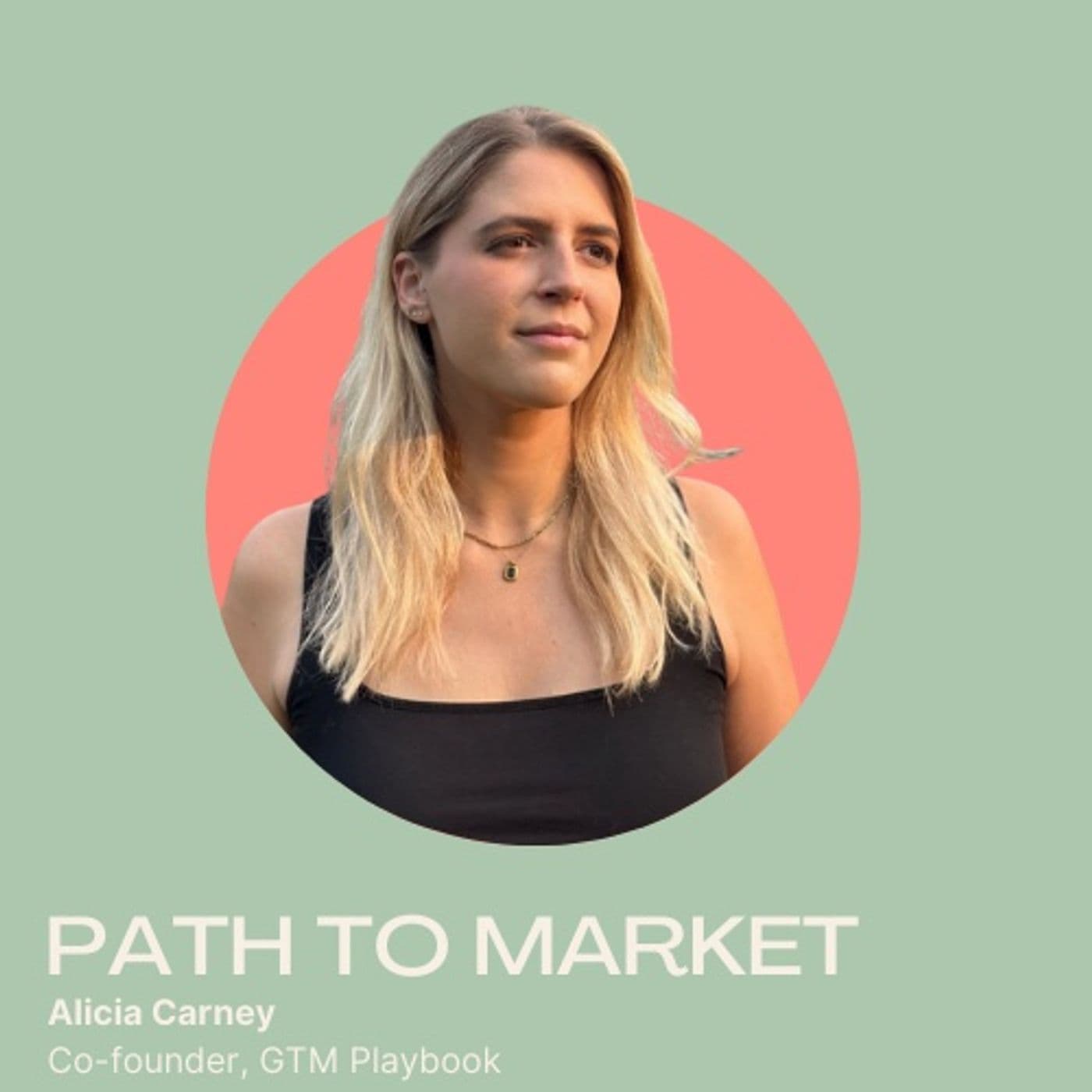
Episode Overview In this insightful episode of the EUVC podcast, co-hosts Natasha Lytton and Micah Smurthwaite engage with Alicia Carney, a seasoned product marketing expert with a background at high-growth startups like Deliveroo. They delve into the critical theme of identifying and validating Ideal Customer Profiles (ICPs) during both pre and post product-market fit stages, sharing practical approaches and strategies.
Key Topics Covered
- Introduction to Ideal Customer Profiles (ICPs)
- Importance of ICPs: Understanding who your ideal customer is essential for product success.
- Common Pitfalls: Starting with a product idea and then searching for an audience can lead to missed opportunities.
- Pre-Product Market Fit Strategies
- Validating Customer Assumptions: Engage with the target audience to assess if the problem is worth solving.
- Customer Interviews: Conduct about 10-15 interviews to identify common pain points and trends.
- Effective Interview Techniques: Focus on understanding the mindset and broader context of potential buyers rather than their immediate functional needs.
- Customer Feedback
- Gathering Insights: Continuous customer feedback is crucial for refining product offerings.
- Retention vs. Acquisition: Emphasizing retention strategies is as important as acquiring new customers.
- Post-Product Market Fit Tactics
- Scaling Operations: After achieving product-market fit, focus on scaling the business effectively by understanding customer needs and behaviors.
- Iterative Learning: Use customer interactions to refine messaging and product offerings continuously.
Key Takeaways
- Fail Fast Philosophy: Early-stage startups should be willing to pivot quickly based on feedback and market research.
- Empathy in Decision Making: Founders should approach customer interactions with empathy to create better user experiences and product adjustments.
- Data-Driven Insights: Utilize tools and data to inform decisions about customer needs and market positioning.
Practical Techniques for Founders
- Pain Mapping: Map pain points from customer interviews to create evidence-based buyer personas.
- Voice of the Stakeholder: Use internal surveys to prioritize feature requests and understand team needs.
Tools and Resources Mentioned
- Grain: Tool for recording and analyzing customer interviews.
- UserInterviews.com: Platform for connecting with B2B panels for market research.
- Pollfish.com: Allows rapid survey of consumer preferences to establish statistical significance.
Conclusion The episode concludes with a strong emphasis on the necessity of understanding customer needs through direct engagement. Alicia Carney's insights provide founders with actionable strategies for defining their ICP and navigating the path to market success. The conversation is a rich resource for anyone involved in product marketing or startup growth.
---
For more insights and updates on European VC, follow the EUVC Podcast at [eu.vc](https://eu.vc).
Written by AI. May contain mistakes. Listen to the episode to check what was said.
Transcript
Automatic transcript. May contain errors.0:03The right way to validate assumptions is by talking to people and letting the target audience tell you if it's a strategic and financial opportunity to solve or not. So many companies end up in the nice to have category because you solve a problem that might be real, but people aren't willing to pay to solve it. Welcome to Path to Market, the podcast where we unravel the art and science of go-to-market strategies for startups and scale-ups. Brought to you by Natasha Litton from Seedcamp, the day one partner for Europe's most exceptional entrepreneurs, and Micah Smirthwaite, Seasoned investor and sales leader, this series dives deep into the challenges, opportunities and insights that define a company's journey to market success.
0:44Together, Natasha and Micah will share their own learnings, uncover practical advice from seasoned go-to-market leaders and dispel the myths surrounding what it really takes to master go-to-market. So whether you're a founder, operator or investor, this series will empower you with actionable insights to navigate your path to market success. Let's dive in. Hi, everybody. Mike and I are very excited to be joined today by the wonderful Alicia Carney. Alicia is a product marketing expert with well over a decade's experience scaling fast-paced startups, including many you've heard of, such as Deliveroo.
1:19And she's been through everything from a merger to an acquisition to an IPO, so really seeing the full gambit of what it is to scale off a company. At Deliveroo, Alicia led global product marketing to launch and scale over 20 technology products serving the needs of 100 ,000 restaurant partners and millions of consumers globally. No small feat. She's built three early stage B2B marketing teams from scratch and now leads the marketing department at Rabia. We're very lucky to have her as one of our esteemed expert collective members at Seedcam. And she's the co-founder of the Go-To-Market Playbook, providing the skills, tools and confidence to build Go-To-Market strategies.
1:54And so really the absolute perfect person to have join us today as part of our Go-To-Market series. Welcome. Thank you so much. I'm so happy to be here. We are very excited. And look, you are, and I've said this to you before, but you are a rare golden nugget in the European system when it comes to genuine expertise around all things product marketing and a true understanding of its importance when it comes to the early stages, especially when we're talking about everything to do with defining your ICP and developing your go-to-market strategies. So what we really wanted to do is kind of break this conversation down today into two phases, into pre-product market fit for those listening who are earlier on in their journeys, and then post-product market fit for those that are that little bit further along.
2:42So starting in the early bits and for everyone who's in the trenches trying to figure things out, how do you go about identifying and validating assumptions about the ideal customer for a new product or service? Can you perhaps give some examples from your experience about how you've done that? Yeah, absolutely. And I think what is all too common and an easy trap to fall into in terms of what not to do first is by starting with an idea for a product and working backwards to find an audience and find people who have that pain point. I've even done it myself. If I think of a startup idea, I'm like, what if you could do this?
3:19And I think, OK, well, is there actual buying intent? And that's what it all comes down to. The right way to approach building a company is by identifying an underserved need in the market, understanding those needs, and understanding willingness to pay for solving that problem. And then you start thinking about solutions. And naturally, that will begin with some assumptions. So you can start with whether you've lived the pain yourself as an expert in an industry or you are searching the market. So, for example, in product marketing right now, because there's so much explosive growth and maturity in understanding the strategic value of product marketing, there's a whole sea of technology tools being built to be sold to me, which is quite meta.
4:07And what's interesting is how many calls I'm taking with early stage founders who are, yes, trying to test and demo their technology, but also just asking me questions about the pain points I'm experiencing. How did that pain hold me back from achieving my goals? What kind of budget do I have available to solve those problems? that's the right way to validate assumptions is by talking to people and letting the target audience tell you if it's actually a strategic and financial opportunity to solve or not. So many companies end up in the nice to have category because you solve a problem that yes might be real but people aren't willing to pay to solve it.
4:45How many people should you be talking to? So you're clearly being very generous with your time and taking these calls but A how are these people reaching you and B how many use do they need to speak to to be able to validate some of these early assumptions? Yeah. So when I've done some zero to one work of, you know, we want to understand where the most visceral pain is in the market, I have literally just gone to LinkedIn and said, hey, I want to talk to product managers or heads of sales or anyone who's commercially accountable for their business. And I want to talk to you about sustainability, for example.
5:18And it only takes about 10 to 15 interviews in my personal experience to start seeing trends. And that's what we're looking for. We're looking for trends and evidence-based understandings of those problems in the market. In theory, you should be doing ongoing market research and user research to continue to stay close to what's happening in your target market. However, I have found 10 to 15 interviews is enough for you to be like, okay, we're on to something. This is real. Or not. Or to be like, this is down in the water and to pivot quickly so we can accelerate your learning. This sounds like a great strategy reaching out to these target potential ICPs, especially when you have little to no customers.
6:01Maybe you could share a little bit more about, and you alluded to budget and some other pain points. What's the right way for a founder to conduct one of these interviews and really hone in on their ICP? Yeah, I have a kind of an interview guide that I can send through. But a lot of the questions that I focus on are less about what do you think of this product or very kind of functional. It's more about the mindset and understanding how solving this problem fits into the broader landscape of what this potential buyer is thinking about. Because 99.9 % of the time, your potential buyer is not thinking about you as much as you're thinking about your solution.
6:39For example, when I was working in the climate tech space and we were trying to evaluate the right ICP, we started with a hypothesis of fintech and payments companies could be a good fit. And certainly through those interviews, we validated, yes, there is a need for a climate solution that can drive loyalty and drive lots of commercial benefits for this ICP. However, what we learned by pitching and positioning the value of that technology to a cohort of those ICP companies is there was so much regulation and red tape and ultimately budget ownership was just not there. So while there was a validated need in the market, it was not the right ICP for us to focus on because our sales cycle was too long and it was too complex.
7:20So it wasn't the right opportunity for us to build initial commercial momentum from. So it allowed us to understand more quickly and evaluate that particular niche vertical. and move on to other ones at an accelerated rate. Oh, that's great. So budget, buying cycle, those are some key indicators it sounds like founders should be testing for. Are there any others that are really important that a founder should be testing for as they hone in the ICP? Willingness to pay is what it really comes down to. I was going to say enthusiasm and word of mouth because I consider those to be qualitative factors of product market fit.
7:55However, people can be shouting about your product and absolutely love it, but if it's free, you don't actually have anything that's viable. So what I'm doing right now with Bravio is some pricing and strategy testing because we have so much enthusiasm and word of mouth and I want to understand what are the constraints of pricing and how do people perceive value. This was something that I did at Deliveroo as well. We had restaurants who loved us, restaurants who hated us, and I wanted to understand their willingness to engage with our ad platform that I was launching in the early stages of my time at Deliveroo and navigating a wide ray of attitudes and perceptions towards different offer mechanics and trying to make sure that we had a commercial model that worked for the right types of restaurants and not suitable for everyone effectively.
8:41I think that's such an important distinction because we can really fall into this trap like well we want people to love our products and of course we do but if you're not willing to pay for it like ultimately you don't love a business right and on the flip side of that there's often things that we hate we were joking on a team call earlier today that someone on the team found a pebble in their delivery it's like but still good then they hate that as a result but they're like but I still need it I'm still gonna order it right and you know that that cycle of when you actually you know somebody sees the extreme value that you bring and the willingness to pay for it as a result yeah absolutely I think that's where some of the mindset stuff really comes in and isn't just air and very fluffy stuff it's really important as a layer to factor into your commercialization, not just commercialization, but how you build your product as well.
9:29So at Deliveroo, when we were originally launching our ad platform, it was just a nascent experiment idea. And a week after I joined, they were like, go launch this ad platform across 12 global markets in Asia, the Middle East and Europe. There's 100 ,000 restaurants in our portfolio. Some have a complete allergy to discounts and see it as a race bottom. Others are more open to it. And what I found was I had a lot of pressure on me from the business from the start to make it successful with all of our restaurants. That includes the likes of quick service restaurants and global chains and some key accounts, so to speak.
10:04But what I found by going out and talking to restaurants is that we were thinking about segmenting our potential ACP the wrong way. We were focusing on the commercial value to delivery, small, mid-market, larger than their price. And what I found by actually going and interviewing restaurants, again, it only took maybe 10 interviews. And what I found is that the right mindset to get this ad platform off the ground was a restaurant that wanted to grow. Not all restaurants wanted or could even afford to grow. So already I'm disqualifying, so to speak, in this initial launch stage, a huge proportion of the addressable audience.
10:44But what that did is opened up my opportunity to position the value of this ad platform directly for them and to start building that flywheel. And what I learned from them, this particular segment of restaurants who wanted to grow, they were interested in the tool, but they have zero margins. They're not making much money. And they didn't have confidence that Unimat ad platform would actually help them grow their business, would attract new customers that would retain and come back and order again. So we actually delayed the launch of that ad platform by a week or two. And I bet I was really popular.
11:18I'd join in the company, go out and talk to restaurants and say, hey, put it on pause. This isn't working. But the reality is that our MVP was insufficient to meet their needs. They needed that feedback loop to feel confident this was going to help them hit their goal. So what we do is we added in an email off the back of every offer they created to tell them exactly how many new orders they got, how many customers are coming back to order from them again. And some other kind of the commercial value of that investment as their marketing spend. And immediately we had in that first kind of launch phase, I believe 60 to 70 percent of restaurants who created an offer would come back to create another one.
11:56So immediately I know from a small segment where I've niched down to understand exactly who's best fit here. They're engaging and they're coming back and they're co-building with us. And they're our first advocates. They were at first our adversaries, but they were like, we want nothing to do with this. We can't afford this. and all of a sudden they're advocating for us. Even though it was in a really scaled environment with 100 ,000 restaurants, it shows that you can always niche down to find your ideal audience at any scale. And how long did you test that for? Because obviously you, I love how you break this down, right?
12:27So you actually started with the mindset and that is a much smaller niche of your market, but then the willingness of them to pay. How long did you run that experiment? And more broadly, how long should anyone be testing any individual ICP before they move on to the next one? Yeah, I think that will vary depending on the type of company. So for example, Deliver was obviously marketing to restaurants and so many more factors at the play. But I think I had about a 12-month go-to-market strategy and I could already tell within the first three months that our supply numbers of offers were continuing to grow.
13:05And so we continued on that path and it was broadly straightforward. There were some things I did to incentivize the local commercial teams across 12 markets to drive that offer supplying for me. And I passed on the knowledge of what's the right mindset. So they helped me to build that supply. If you're going down to think about an early stage startup and you're testing the market and figuring out where to focus, you can be iterating on a month by month cadence. And I would encourage and almost beg early stage founders when you, like I mentioned that payment example, and it was interesting. We had some great commercial conversations.
13:41We won some customers, but the sales cycle was too slow and complex in terms of regulation. I would urge you to drop it and move on and not kind of keep the stove warm a little bit, but keep iterating towards other ones. because what you're doing is just compounding the work and the consideration for all these different niches that you have. I understand the pressure to want to keep multiple pads open. I completely empathize and understand that. However, the companies that I admire the most are ruthless and moving on and saying, that's not the right decision. We're going to fully invest over here and make more decisive decisions, I think.
14:19I love this idea that you're sharing about failing fast and not over-investing in terms of one particular segment and moving on to the next one. Are there any methodologies that you would suggest to early-stage founders about when to cut the cord and exactly how to prioritize potential customer segments? Yeah. I think there's a mixture of signals to look at. One would be the actual commercials. Are you closing deals at the right ACV? Are, you know, of your TAM, are you knocking them down? Are they picking up conversations with you? There's a feeling of momentum too. Like on top of just actually closing the deals with a sales cycle looking appropriate for what you want and need, is there a feeling of momentum?
15:05Do you feel like you're onto something? And I wouldn't underestimate that, especially at Ravido, we're feeling that right now. We are zeroing in on an ICP and creating a mode of differentiation. And there's a feeling of momentum and that is not to be undercounted but I would also just look at look is your ICP aspirational or are you actually getting in the door getting those conversations and continuing to improve your win rate with that ICP then you might be onto something. Any other before we sort of transition a little bit into a post-product market fit world is there anything else that you're like oh my god I wish somebody had told me this when I was in those early stages or any nuggets you think our listeners would benefit from learning?
15:45I think my biggest case would be fail fast, drop what's not working with empathy and compassion. The other piece would be to think about a lot of times I hear and see and experience companies treating customer experience metrics like NPS or CSAT as a feel-good thing, as a customer-love type of thing. I see those as commercial metrics. I see those as long-term driving lifetime value for accounts. And so what I don't like is seeing companies that will do less so now out of the growth at all costs era, but I don't like seeing companies throw resource and everything to close deals, but then not have a consistently positive and differentiated customer experience on the other side of that contract.
16:39The company that I think does this really, really well just from following their founder, Simon, who is next to deliver on LinkedIn, it's called Plain. And I just absolutely love how customer focused they are and what value, what commercial value they're placing on not only closing the right customers, but keeping them happy, retaining them, making sure they're successful and thinking about that from a commercial lens versus something that's just kind of like feel good. So yeah, that would be my other piece of advice. Retention is so important and not cheaper than I was thinking. Exactly. Yes.
17:14If we're moving now into we've reached the holy grail, so to speak, we've got some commercial traction, we've got customers, we've got some validation in our early product that something is working. Beyond the commercialization that our assumptions have validated, can you share some of your examples of how an accurate ICP helped companies you've worked with achieve product market fit that much faster? Yeah, at Deliveroo, we had such varied needs in that restaurant portfolio. And the reality is that the restaurant satisfaction score landscape for the entire competitive landscape was not good. No one was doing really well in terms of treating B2B restaurants as a B2B customer.
17:57And so really understanding how do we create a differentiated proposition was something I was really interested in. And I was really happy to be at Deliveroo at a time when the business was really investing in a B2B proposition and understanding how do we make restaurants successful and in turn make Deliveroo a successful business overall. And so it was great to see that Deliveroo invested in technology to help restaurants make their own decisions, manage their own menu, giving them aggregated insights on how to run a better business effectively. And then there was a commercial resource around that to support driving basically a change management process to take restaurants who live in the real world, in the physical world, and train them on more SaaS-based platforms and leveraging data to run better businesses.
18:43There was a time in a chapter at Deliveroo where my team was in charge of those technology products and driving that change management process. And it was fantastic to see competitive differentiation coming out of that work, seeing a restaurant satisfaction score as a whole across the portfolio improving to see stronger relationships and more social proof coming out of that portfolio as well. and seeing restaurants being treated as strategic partners versus almost a transactional component of a larger resided marketplace. So I think that started at the top with the senior leadership deciding to invest in that B2B proposition.
19:20It trickled down through understanding the varied needs of the restaurant and how we help them grow, building the right technology, and then communicating to different segments within that portfolio, all supported by commercial resource that was guiding that process. And I think just seeing that come through and materialize through successive restaurants and their own profitability, especially during the pandemic, but also their satisfaction scores and seeing them retain as stronger partners to the business was very rewarding. I love this story. And I think it goes back to what you said initially about not building for what you think the customer needs, but asking and figuring out what the customer needs through interviews.
19:57So in the examples you shared at Deliveroo of creating this great product that helps service the broader needs of their organization. And you acting as a partner seems like it took a lot of discovery to figure out the ICP, whether it was a small mom and pop restaurant, I imagine, or whether it was a larger organization. And so for founders that are building, trying to find the ICP for small mid-market versus enterprise, how do the timeframes differ for defining the ICP? Yeah, absolutely. And it's not just about the time frames, it's about understanding the buying committee and who needs to be involved with accelerating a deal through the pipeline.
20:35So what you might find is that for smaller businesses and even mid-market companies, you might get away with a highly scalable, low-touch, self-serve conversion funnel, and you have one champion buyer, and all you have to do is overcome their objections, get them to pay, and you're good to go. It depends on your business model, but especially if you're looking down market, that's quite common. So at Ravio, we are trying to find the right ways to scale high volumes of smaller deals while also staying close to our ICP of a large enterprise kind of VC-backed tech company. And whether it's Ravio or any other company that I work with, and even at Deliveroo, there's different channels and different go-to-market strategies that you're going to want to prioritize based on who you're going after in the market.
21:20So for example, at Delivery Room, you're right. I had the likes of McDonald's and KFC. At the same time, I have my local mom and pop that I'm trying to market to. And what I would recommend is thinking about different ideal audiences and working backwards from who is in their buying committee. What roles do all those people play in their buying committee, whether it's one independent champion that you need to convince or a whole sea of people and they have a CFO that signs off on budget. Totally different strategies. You need to think about, can I do scaled automated outbounding or do I need to do very bespoke, insight led, sales led channel strategies?
21:57So at Delivery, we would launch the self-serve platform of our technology where you could manage your own menu, add photography, run an offer. Those were actually our technology tools that were best suited for, I guess you'd call the long tail, the thousands and thousands of restaurants that don't have as much of white glove commercial service. And so I would leverage a lot of scaled marketing channels. So CRM, even putting some marketing on their invoice, because what we found with user research is restaurant owners are much less bothered by getting a polished marketing email from us. You know what they care about?
22:29Their invoice. And so we'd be like, hey, did you know you can run offers on the invoice at the footer? And that was an effective channel for reaching high volumes of those potential buyers. Whereas I had other products and even some commercial services that we launched that were best suited up market for whole committees and teams that were invested in their success through Deliveroo. And I wouldn't even touch any skilled marketing channels for those types of messages. I would put together sales templates, shareable assets and resources, communication guidance that would all be distributed through key account teams effectively.
23:03And there was actually very little marketing work for me to do. So it depends on where you're marketing in small business, enterprise, understanding who is in the buying committee, what role they play in the buying committee, what's the right point in the customer journey that you need to serve up the right message. That was something we did really well at Loon, a climate tech company that I worked for, is we were hearing so much consistency in the buyer enablement materials that we needed to create. In climate tech, it's so early, it's so nascent, sustainability leads feel quite undervalued and underserved.
23:37So we started adding value to their world by anticipating like, okay, you're going to struggle to make a business case with your PM. You're going to struggle to get budget sign off because your business might see you as a cost item on the P &L. We understand your mindset. Here's templates and resources and guidance for how you can look good and also get what you want, which is to integrate this product. And starting to deliver that in the sales cycle, we actually got ahead of all of our objections. We helped position our champion buyer as the hero in their organization so they could go to their CFO and handle those things.
24:15And that was all just buyer enablement and no investment in scale of marketing at all. So it really depends on all of those factors. That's so interesting. And I think a really useful thing for people to remember, right, just because you might be selling or trying to reach people in the same company, the mindset and their needs are not necessarily one in the same. then how you're approaching the marketing or outreach to them and the messages you're serving need to differ accordingly. Incredibly interesting. Yeah, it would be great if we had just one buyer making a decision, wouldn't it, in the company's budget?
24:49That was a bit of our reality when I worked for a B2B customer service software company called Kayako that's since been bought out by a PE firm and is no longer in its former self. But at the time, we really were focusing, we were lucky, I didn't realize at the time how lucky we were to be selling to the person who has that budget authority. So often now in B2B sales, I find distributed ownership of a problem, distributed ownership of budget, and decision making is so hot potato that it's kind of difficult to know exactly who you're selling to, who's the champion, who's making this final decision.
25:26And I realize now that a lot of kind of more traditional SaaS companies where you're selling to a customer service manager, it's their tool, it's their budget, and it's so much more straightforward. The challenge with a lot of B2B sales is understanding the roles that people generally play in a broader distributed sales process. What guidance would you give to any startup? I feel at the moment, especially in B2B, everything now in the early stages, kind of taking it back early is we need to do content marketing, but they don't yet know who their customer is and who they should be reaching. So what guidance would you give?
Read the full transcript
26:01And they're generally pretty small teams with limited capacity to produce high quality stuff. What guidance would you give to people when it comes to the marketing materials they should be realistically trying to invest in and build and distribute early on? Yep, absolutely. The worst thing you want to do is invest in content production, performance marketing, anything without truly understanding who you're talking to, like quite literally. So the first thing that I would do is this user research we're talking about to validate your buyer personas. And what I mean by validate is don't just make up out of thin air who you want your buyer personas to be.
26:37Do the research, get 20 user interviews done and do this thing, what I like to call pain mapping. So you're going to take those interviews and somewhat manually. I'm sure there's a million companies out there who can automate this. I record my calls with Grain and I will map the pain points that they are organically communicating to me, the value that they want to get out of the solutions we're selling, their aspirations that they have for their own career development and their own life related to the technology and what they aim to gain from it overall. So you have a bit of a quadrant. And so then you're mapping by pain points.
27:12and that's evidence-based personas that are validated by the market versus your own assumptions. What the output of that exercise is you have buyer personas and sometimes anti-personas, people who try to thwart deals, who are organized by a common pain point, not their job title or anything firmographic like that. And when you have buyer personas organized by your common pain point, that is the starting point for your content strategy. That is your starting point for building a positioning of messaging and understanding the roles that all those different personas play in your commercial reality.
27:50So we have content that goes after people who are brand new to compensation at Ranvio who have never purchased a traditional salary survey in their life. And then we have a different kind of content strategy for those who have 20 years of experience with managing compensation. There are different messages. There's different value. There's different pain points that we're solving. And so it just makes it so much easier, honestly, to understand when you know who you're talking to. It's crazy how much content is created that's just like, our competitor made this blog article, I want one too. I've definitely been there for 14 years of product marketing.
28:24You definitely get those reactive requests, less so now. But certainly you are much more vulnerable to reaction to what everyone else is doing when you don't know who you're talking to and why you're talking to them in the first place. That's super valid point. It's really interesting hearing you and from the examples you give as well, right? Like even in a very established business like Deliveroo, there's still new products coming to market. So therefore having to start from the beginning and like define the ICP, do the testing, etc. Can you describe an example where you needed to adjust your go-to-market strategy based on evolving either customer needs or market trends?
29:02Obviously, COVID was, you know, I'm sure a blessing in many ways for businesses like Deliveroo, but unlikely to have been so. For others, what were some of the processes you followed when situations had to change and some of the key lessons learned? Yeah. So in a seed stage business that I was working with a few years ago, we were some of the first 10 employees and we were testing the market and trying to understand where was the most visceral pain. And so we started with a hypothesis using a framework that I love and advocate for a lot from Notion VC on how to establish your first ideal customer profile.
29:35We looked at TAM numbers and we decided to focus on payments in fintech. And then, as I mentioned earlier, there was strong interest in commercial fit, but the sales cycle was too long for us. And so we went through a process of rapid iteration. So after we put that one down, we went kind of navigating through a supply chain. So we went to look at retail and e-commerce companies where, yes, there's a need for consumers want sustainable products. Would those types of companies be motivated and have a willingness to pay for a climate solution? And what we found by going out and just repeating the same process, the same methodology, go out, find those people who are in charge of growth and consumer loyalty at H &M, at Zara, at any sort of e-commerce business and say, are you interested in this?
30:24And the market will tell you. They said, yep, we are super interested in this, but we're not interested in going directly to you. We want to get this from our payments companies. And we could bring that back and be testing and learning. but ultimately what we did is go further into the supply chain and what we found is compliance was a huge trigger and by looking at verticals like procurement and logistics platforms all of a sudden it just unlocked we closed the first big deal at the right acv we could bring that to other similar companies and they just started knocking them down and we really knew we were on to something because we could replicate that commercial success and that the messages were resonating across more than a handful of deals.
31:03And so you'll very rarely have the right answer at first when you have an initial hypothesis of your ICP. But if you can iterate quickly, take what you're learning through the process and just be testing and interrogating and validating. It just speeds up your learning so that you're learning by doing and you'll have commercial success at the outcome. So much of my role was just repeating that process, go out to market, conduct the interviews, build evidence-based messaging, build the collateral, the position of messaging, a pitch deck that's tailored to those needs, go out, test it with those people, understand if you could actually close those deals with a high willingness to pay, and just kind of repeat, repeat, repeat.
31:42That's a great example. And I think winning solves a lot of problems internally. It's easy to get a team aligned when you're winning big accounts. In dysfunctional organizations, when things aren't going well, between sales and marketing, there can often be a lot of finger pointing and sales points at marketing and says, I need these resources, right? Or they give me garbage leads and then marketing points at sales and says, I gave them the resources. They're just not closing and delivering well. Can you talk about team structure and how product marketing can effectively work within the broader go-to-market team?
32:17Yeah, absolutely. So my first B2B startup many, many moons ago back in San Francisco was a customer. Nope. It was an expense report software company. And we had that classic. I mean, we were all sitting in one room together in San Francisco. The whole company was like 30 people. And yet there was so much blame game and finger pointing in between sales and actually the engineering team being like, the product sucks and the free trial isn't bad and no one gets it. Like, well, you guys don't know how to sell. And you're just like, oh, come on, guys. And so I think one of the first things that I did before I even knew I was a product marketer was I took our front line engineer who's more commercially minded and a salesperson out to lunch.
32:57We established common ground and we decided to operate as one team. And then we looked together at the free trial to looking at all of our analytics, looking at qualitative anecdotes from prospect conversations. We looked at it from the products and engineering side, and we made some adjustments to the free trial experience that increased free trial conversion by four percentage points in a couple months. So sometimes it's the conversation that happens between team boundaries that is the most important. And silos can exist and finger pointing can exist when you're all sitting together in one room when you're a 30 person company.
33:31And it can happen at a major scale up. It's just natural, common reality. Product marketers can sit between that and break down boundaries. I have reported into product teams and organizations. I reported into the CEO, commercial organizations, marketing organizations. If you are a product marketer working across those boundaries and trying to bring teams together, then no one should really know where your dotted line goes. No one should really know where you sit, in my opinion. I think what you've shared is a great example. I like the way you put it, that your job is to break down boundaries.
34:01And that way, if no one knows where you sit in the organization, you can present yourself as aligned and an ally to all teams. And I think that's a beautiful definition of the role. And in a success case, that's what the role ends up being. Yeah, absolutely. Diplomat is what I was thinking when you were describing. I love it. But it's so important. I think every company, I see this all the time and I've lived it as well. The tension between different parts of an organization, whereas actually what you need is this cross-functional like little pods so that you're all collaborating and working together.
34:37Just in terms of when you have been hired, have you seen consistently where, you know, this is when you need to bring in the product marketer in terms of your go-to-market team structure? Like here's where it works really well. Here's where it was too late. Yeah, absolutely. I'm obviously biased, but I think it's never too early to bring in a product marketer. And why I think that is because I have heard that a lot of what you learn in Y Combinator cohorts and all that stuff is how to niche down, how to understand your audience, how to find the right TAM. And that is effectively what a product marketer can help you do.
35:13And it's never too early to do that. And that's why I appreciate that so many VCs like Seedcamp is doing a lot to help founders connect to that type of insight and that type of clarity on who you're best fit for and doubling down. Because with the absence of that, you're just inviting a lot of risk, in my view. If you try to go after too much too soon, you dilute your messaging, you don't know who you're after, you build for too many things at once, and you really want to be the thing for someone versus something for everyone. So it's never too early. If you don't have a product marketer at seed stage, then your founders should be doing it.
35:47Someone needs to be doing that work. Product marketers that are strategically minded and not just focused on project management and execution will know how to do that and take a methodical process and to build more evidence-based understanding of your buyers. Definitely biased, but I'm aligned with you. And you know, you're providing useful tools and insights that then they're going to feed into and support the sales teams and everybody else really trying to be ready to pour kind of gasoline on the fire, so to speak, and ramp up that go to market. it. Exactly. And that was actually one point I remembered, but I was going to mention is product marketers also play a role in educating the reps of the business to be customer focused and what that actually means in practicality.
36:30So the question was sales teams say, I need this collateral to close the deal. You create the collateral, nothing happens. Why did I do it in the first place? That I'd have certainly been in that loop for a long time. A lot of what I try to do is educate the sales team and understand how to make a request for collateral with a mind towards unblocking that sales cycle, accelerating the sales cycle, and understanding how each piece of collateral or an asset fits in the customer journey. So I actually have a customer journey map. And at each stage, we think about what is the person thinking and feeling?
37:04Are they excited at this point? Are they overwhelmed by how much work it's going to be to get set up? What if you're requesting a piece of collateral, we together as marketing and sales can figure out what it's actually going to do to unblock that sales process and being more practical in that regard. Similarly, at Deliveroo, I had 12 or 13 different commercial teams requesting product features, assets and collateral. How do I prioritize that? So a lot of what I had to do is educate and get everyone on my side, so to speak, from all these local markets and help them to build a business case around their request.
37:42How many restaurants are asking for this? What's the size of this restaurant? Why do they need this to have that feedback loop be more respected centrally? And then I also created something called the Voice of the Stakeholder Report to quantify feedback. And what I found by surveying our internal teams, there was actually a huge consensus that 60 % of our internal teams who were selling in this product wanted one thing in particular amongst all this noise of a million different requests. And so to have a product marketer, I hope, when they're working across and seeing across boundaries, they're also uniquely positioned to aggregate insights and to create clearer business cases, leveraging everyone's voices versus just saying, no, no, no, no, no, which I have seen as well.
38:25So, yeah, that's where I get quite excited about product marketing is kind of like a sum that's greater than its parts. I like these assets that you've outlined that I think are helpful for any founder, whether it's pain mapping or with this voice of a stakeholder report. If you're a founder and haven't hired a product marketer yet, or if you're a product marketer just joining, what does the tech stack look like of low cost or free tools that someone should be using to gather insights about their ICP and eventually deliver these great assets? Yeah, absolutely. I mentioned Grain. I think Grain or Gong or any of these platforms that are recording your calls, they're so important.
39:03And they can help you identify trends in feedback. They also have some cool AI tools so that if you're doing pain mapping, they can do some of that heavy lifting for you, which is great. But a big part of product marketing is sales enablement and making sure that we're selling value first versus just a feature list. And so having that ability to reflect on your narrative, are we selling the vision? Are we selling something, a new world compared to an old reality? consistently across teams and at every touch point that represents the business. I think that's probably one of the most invaluable tools ever.
39:38I also really love market research platforms like userinterviews.com so that you can actually connect to panels of B2B professionals. That's quite new. Like I've really struggled in the past to get access to market research for B2B. But if you are looking for consumer platforms, which I have used in B2B context as well, Well, Pollfish.com is fantastic. You can get statistical significance in your results in a matter of minutes or hours, which has been great. Like some of the first positioning and messaging that I've built in seed stage companies to try and build a business case in that pitch deck.
40:11I've just gone off to Pollfish and I was able to say like, did you know 75 % of consumers want a climate friendly product? And here is my research. And so that turns into a part of my narrative as a B2B company. So, yeah, having a bit of confidence behind your research can do wonders. So many useful tools there. Thank you. Don't worry, we will link to all of those in the show notes. Alicia, we could carry on talking to you for hours and hours. We may be going to have to bring you back for a part two. But thank you so, so much for sharing all of your insights. I think it can be so daunting for people starting out and trying to break down the barriers and actually speaking to customers.
40:53But all of the ways you've mapped out and how you approach it, the resources and the tools that you use, and just the importance of speaking to your customers and replaying back to them, what they're saying to you and then starting to intersperse that into your collateral and materials and being really intentional and thoughtful around what you're serving to people at what part of the journey are definitely some of the key takeaways I'm taking from this conversation so thank you so very much for joining us thank you for having me it's been a pleasure thanks Alicia
From the publisher
In this insightful episode of “Path to Market”, Director Natasha Lytton and co-host Micah Smurthwaite, Partner at Pipeline Ventures, are joined by Alicia Carney, a seasoned product marketing expert with extensive experience at high-growth startups like Deliveroo. Together, they dive deep into identifying and validating Ideal Customer Profiles (ICPs) in pre and post product-market fit stages. Alicia shares her insights on navigating early market fit through to scaling operations post-product market fit.
Here what's covered:
- 01:01 - 01:36 | Pre-Product Market Fit Strategies
- 01:36 - 02:30 | Validating Customer Assumptions
- 02:30 - 03:50 | Effective Customer Interviews
- 03:50 - 05:04 | Identifying ICP and Pain Points
- 06:23 - 07:39 | The Importance of Customer Feedback
- 07:39 - 08:54 | Retention vs. Acquisition Strategies
- 08:54 - 10:15 | Post-Product Market Fit Tactics


