
In short
EUVC Podcast Episode E445 Notes
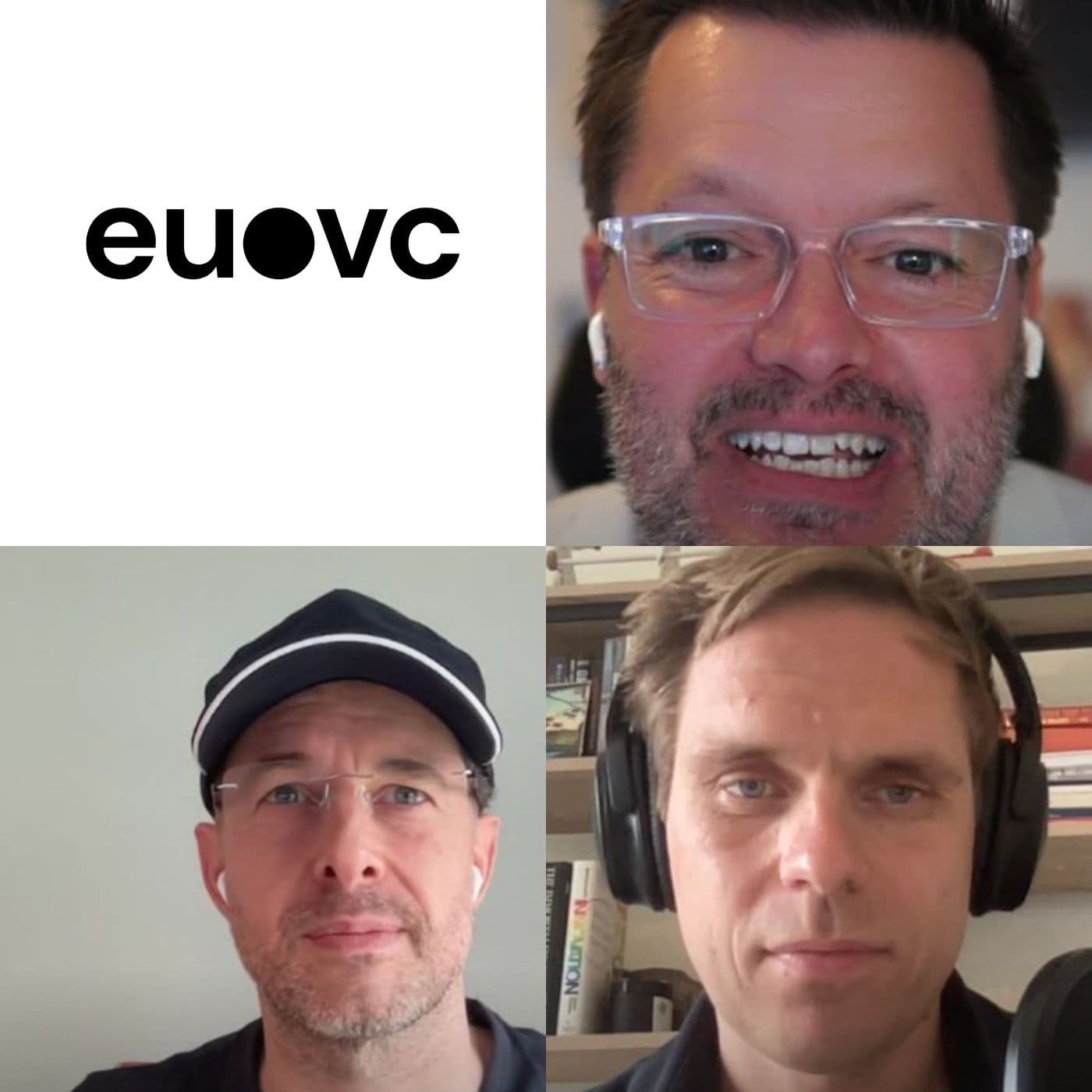
Episode Overview Title: E445 | This Week in European Tech Hosts: Dan Bowyer (SuperSeed), Andrew J. Scott (7percent Ventures), Lomax Ward (Outsized Ventures) Description: This episode discusses recent news and movements in the European tech landscape, covering diverse topics like Klarna's IPO, AI impacts, and venture capital trends.
---
Episode Highlights
01:22 - Klarna's IPO and European Market Insights
- Klarna's IPO Postponement:
- Originally planned for earlier in the year but pulled due to market conditions.
- Valuation decreased from $45 billion to a target of $15 billion.
- Concerns over "buy now, pay later" model amidst inflation and economic slowdown.
- Market Comparison:
- Peer firm Affirm’s stock down 50%, highlighting challenges in the sector.
- Potential impacts on consumer spending and investment sentiment.
04:19 - AI, Tariffs, and Future Predictions
- AI's Role in Business:
- Commentary on AI's potential to reshape employment and business operations.
- A leaked memo from Shopify's CEO emphasizes the need to justify human roles against AI.
- Tariff Discussions:
- Importance of tariffs in shaping investment and operational strategies in Europe.
24:35 - European Venture Capital Trends
- Investment Landscape Analysis:
- Discussion of overall venture capital trends in Europe, noting challenges in early-stage investing.
- The need for a cautious yet strategic approach from VCs amid market fluctuations.
25:52 - Generative AI and Market Speculations
- Generative AI Investments:
- Explosive growth in generative AI ventures, but concerns over potential market saturation.
- Ongoing speculation on the sustainability of investments in AI startups.
29:56 - Challenges in the European Tech Ecosystem
- Impact of Tariffs:
- Discussion on how tariffs affect hardware and manufacturing in Europe.
- VCs' reactions range from head-down building to panic over potential disruptions.
35:30 - UK AI Sector Report Insights
- Tech Nation Report Highlights:
- 2,300 VC-backed AI companies in the UK valued at $230 billion.
- Over $1 billion raised in Q1, with 76% of CEOs optimistic about AI's growth impact.
- Notable concerns about current regulatory frameworks stifling potential growth.
46:22 - Exciting Deals and Future Prospects
- Major Deals:
- Highlight on Polar Mist, a defense company working on optical GPS-free navigation.
- Successful raise of $100 million for climate-focused ventures.
- Commentary on large scale funding events, indicating a thirst for innovation in both defense and tech sectors.
---
Key Takeaways
- Market Dynamics: The European tech market is facing volatility, with significant shifts in funding trends and investor sentiment.
- AI's Growth: AI continues to attract funding but also raises questions about job displacement and market viability.
- Regulatory Environment: The UK and EU must adapt regulations to nurture growth in tech sectors, particularly AI.
- Strategic Investments: Hardware startups must navigate complex tariff implications while maintaining operational efficiency.
- Future Outlook: While challenges exist, the potential for innovation and growth in the tech sector remains high, especially in AI and climate-focused ventures.
---
Discussion Points
- Tariffs: How will ongoing tariff debates impact European tech startup strategies?
- AI Investments: What are the long-term implications of the current rush into generative AI?
- Market Viability: Are European tech companies at risk of falling behind in the global market without structural changes?
---
For further insights and updates on European VC, follow [EUVC](https://eu.vc).
Written by AI. May contain mistakes. Listen to the episode to check what was said.
Transcript
Automatic transcript. May contain errors.0:00Welcome to Upside for the real stories behind the headlines affecting European venture. joining today is Lomax from Outsized, Andrew from 7 % and myself I'm Dan from Superseed VC today we're taking a look back at Q125 a quick look back over the last three months Q1 is now over blimey that went like in a breeze in a quick sharp shop winners losers ups downs mega rounds and some of them minors and then digging further into the impact of tariffs on Europe yes I know we're all tariff fatigued but we just have to it's so bloody important please forgive us
0:50this show is not investment advice and the hosts of this episode may be invested in the funds and companies featured gents what's new low max how are you what's your week been like what's caught your eye? I'm great, thanks. Yep. Building out the office on the beach now, getting furniture. Office on the beach. Exactly. I'll have a pina colada. Come surfing, come for some deep work, etc. It's all actually very excited about that. Caught my eye this week, Plana, the IPO that we've talked about that was slated for earlier this year, pulled their IPO since our last podcast last week. I mean, not surprising, really, given what's going on in markets.
1:30but it was one of the big European-backed exit events that we thought was going to happen. I think it's probably a slightly choppy, postponing definitely, probably slightly choppy water for Klarna now because I actually noticed that its main peer, which is listed already, a firm in the US, its stock is down 50 % this year, so now trading at a 12 billion market cap. Klarna had been aiming for a 15 billion valuation down from the 45 billion at which it raised money at the peak. I think buy now, pay later, which is what Klarna does, its main product, is something that actually probably might come in for a challenge with an inflationary or environment and a slowdown in the economy.
2:12I mean, consumer spending, buy now, pay later, is one of the first things that get hit. So I think Klarna may be taking a double hit in terms of the market, forcing it to postpone the IPO, as well as potentially choppy headwinds on the actual commercial side. And then good news, though, for Europe and for the UK is this deal that Wave, the AV AI company, automated vehicles AI company out of Cambridge, that's one of the leaders in the space and has raised$1.2 billion to date. So not many companies in Europe have raised over a billion dollars, has impressively signed a big deal with Nissan to incorporate its software in cars being released from 2027.
2:53So I think that's a really interesting big deal. And AVs, automated vehicles, obviously been through a bit of a winter the last few years, but now starting to gain a bit of momentum again. So watch this space. It always feels like Waymo and Tesla get the kind of the AV, EV credit when actually, and yeah, Tesla versus Waymo, just an example. Waymo, many more rides going than Tesla have. I think it's hundreds of thousands to zero. Anyway, Andrew, what's happening with you, my man? I'm good. Busy, busy. I actually spent a nice day with Lomax on Tuesday. We had our quarterly strategy session for Dragon Chasers, which is the European BC LP community.
3:35So that's always exciting to plan ahead when you're building. Other than that, back on the race circuit, all good. Back on the race. Do it. What's caught my eye this week? So I saw something quite lovely, And it's got nothing to do with startups investing, obviously, Europe because it's UK. But it was Universal opening a theme park in Bedford. They're looking at a 2031 theme park opening. It just kind of I thought was kind of cool. 28 ,000 jobs. The other thing that caught my eye, which I imagine caught both of your eyes as well, was this leaked memo. It was the Shopify CEO, Toby Ludger, asking teams to demonstrate why AI can't perform a job before they're permitted to ask for more headcounts.
4:19I think we're going to see a lot more of that. Presumably. Sorry, Dan. I mean, that is like every CEO is issuing that already. I mean, I'm not surprised it was even a story, quite frankly. I think it's because there was I think it was the leak, inverted commas. But yeah, you're bang on. I mean, this is going to be every single CEO startup. scale up growth company is going to be thinking how can i how can i tool up and we're going to look at some of the results from the ai report later in the pod which kind of breaks down some of the the confidence or lack of confidence of the impact of ai on recruiting on on redundancies on efficacy on productivity so i think we're going to dig more into that the other thing that caught my eye was the a very thoughtful ai thought experiment from the ai futures project now they're a small research group and they're looking at the potential future of ai and it's a bit like an asimov novel and it's if you want to look it up it's ai-2027.com and you can have a look it's a beautifully designed website and they they look at the next three four years and the potential outcomes of AI and what China may or may not do and what AI and super intelligence may or may not do.
5:37And it's just a very, it's a very kind of smart, thoughtful, cute way of just getting all of your best and worst suggestions for how AI is going to transform the world down on paper. So have a look at that if you can. It's ai-2027.com. It's kind of reminiscent of, I think, max tegmark's book i think it's called life with yes i know which has a very very similar well very similar but a beginning that was written that was that book's probably what eight eight years old now maybe 10 years old so you know had kind of massive echoes of that although this goes into a lot more a lot more detail yeah very specific i mean they've obviously there's i think it's five in the group that wrote the paper they've obviously really kind of got everything all of their worst fears and concerns and their their excitement for the topic all down it's yeah, I highly recommend having a read.
6:29I'm going to have to ask forgiveness up front. We've got to talk about tariffs. I really want to make sure that we focus on the European angles and bring it always back to startups, investing, venture, Europe. But we can't not have a look at, I'll do a quick kind of status update, but we can't not have a look at this topic. So please, again, please forgive us. But here's a quick status update. As of the 10th of April, Trump has obviously avoided an all-out war on tariffs with a 90-day reprieve. There is a global 10%, apart from on China, which is still stuck at 125%. No Christmas presents for any American kids this year.
7:09I've written down eight reasons, and I'd love your insight, thoughts, and kick back to this. I've written down eight reasons why I think Trump is doing it. Many we've talked about, many are in the wider press, but maybe some other angles that are not so obvious. So one, cheapen government debt. So lowering yields in the bond markets, which has massively backfired so far. The safe money route hasn't come to pass. Is it to weaken the dollar for international control? And if you look up Scott Besson's vassals versus neutrals versus enemies, his green, amber, red strategy, have a look at that. It's really, really interesting how Scott Besson, you know, him and Lutnicker, Trump's two right-hand men on this topic.
7:51how he's thinking about how if they weaken the dollar, they can effectively create this kind of vassal control. Is it a negotiating tactic to onshore manufacturing? Again, I can't see why Americans would want Chinese jobs and how fast can they spin up this capacity. I think it's super problematic. Number four, is it a bringing cash to balance the books, but then you can't have it both ways. It's either reshoring or it's, you know, get the revenue in. It can't be both. Is it rebalancing the trade deficits, which aren't actually, when you look behind the scenes, aren't actually all that bad in reality.
8:23Is it really to fully decouple from China? Possibly. Political signaling? Probably. Bullying and control. Purist hegemony? Yeah, because that's not the greatest, smartest way to do it. But I think that's possibly just Trump all over. Some other very quick stats before I open to the floor. Even since the bounce, European and US stock markets are still down somewhere between 4 % and 11%, depending on which markets you look at. What this means is that global markets have effectively been kicked back a year. Now, my personal take is that because the US now can't be trusted, I think that's the kicker here, is this trust piece.
9:01I think we'll see more of everything across Europe. And I've had a look for some kind of proxies or for some kind of insights into where the noises are. So on the people movement flow, the Aix-Marseille University in France have launched a safe place for science initiative, allocating 15 million euros to fund positions for American scientists. I thought that was quite an interesting play. Many investors I've spoken to this week are looking for now safer havens to balance portfolios, looking at LATAM in Europe to try and get cash out of the states and into more more safe and considered markets.
9:36And then to look at yield spreads between the US treasuries and German bonds, it's widening. China, US and the UK are the biggest buyers of German bonds, just as US bonds tank. So I'm sure there are other proxies. Lomax, what do you reckon? What now and what next specifically for Europe? Firstly,$15 million to fund scientists coming to Europe as it sort of seems like a very European amount of money, i.e. not a lot. I think I was reflecting on this because last week when we talked about tariffs and their implications for European startups, the conclusion, at least from my end, was like not much to see here, like head down and build.
10:17Little did we know that during recording the podcast, the markets were crashing. So, you know, there was a risk that we started to look a bit stupid at the back of that. But then lo and behold, a week later, we've come back full circle because, you know, with Trump delaying the tariffs and putting in this 90 day place, the markets are back up and then they're, well, now they're coming down again, potentially. But I think our position on this largely stays the same i think it's head down and build you know i think when i look at what's been happening in the kind of early stage you know vc founder community i mean firstly now as always every vc that i know is suddenly an expert on tariffs you know we see that that happens and you send that beautiful meme in the week didn't he that that you know shut up darling i've got a podcast on tariffs to record so yeah i'm i'm hyper conscious that the three middle-aged wide dude sitting here talking about tariffs oh my god we are now we are the me come here you know people have studied this for that for that you know for the whole of their academic career but you know you can you can hear the best most cutting edge you know insights here i think look you know kind of reactions amongst you know vcs have been you know anything from like kick down and build to to blind panic we've seen you'll remember in 2008 when sequoia um put out to its founders an rip good times memo i've even seen one vc put out one of those memos which you know Really?
11:39Interesting. Well, I know, which definitely seems a bit hyperbolic. I think it's headstab. Look, I'll give an example. Yesterday, I was having lunch with a founder in our portfolio, in sunny Lisbon, and he's building mixed reality games. And, you know, big long-term project, like amazing founder, talk about that another time. But, you know, one of the, you know, it's software. So, you know, no tariffs on software, right? So no kind of massive implications. But, you know, clearly there will be tariffs expected to hit, you know, X of, you know, devices, the headsets. So, you know, during lunch, we were querying what that might do to his business.
12:14You know, we came out of lunch and suddenly realized markets were back up. Tariffs had been put on hold. So my point was we spent an hour and a half worrying about tariffs and the impact, indirect impact on the business when actually, you know, these things at the macro level do not, you know, they're so removed from what founders are doing, especially at the pre-seed and seed level. I think you need to kind of keep your head down and build for the long term. So I think the message is heads down, keep building. Let's not forget that at the moment and probably for the future, there will be no tariffs on software.
12:50In biotech, there may be. So there may be some implications. Hardware, I think this is an interesting one. I think if you're preceding seed in hardware, you're probably working on MVPs and early customers anyway. way, right? So that doesn't really matter. But I think you look at Series A, Series B hardware startups in Europe, they're probably having a good old think now as to where they're going to do their manufacturing, right? And there'll be a discussion, and this is going on in some of our companies, where you'll basically be saying, well, we could do the manufacturing in Asia or in Europe, but then we'll have to hit these tariffs.
13:19Or do we move manufacturing to potentially, depending on the vertical, our biggest market, which is, say, the US, do we potentially do manufacturing there? In which case, you're probably looking at costs two to three to four times what they would be in these other geos. But of course, you then remove the tariff risk. So I think those kind of conversations will be going on in the boardrooms and between co-founders at the sort of series A, series B hardware startup as they move to kind of scale up and manufacturing. That's probably what happens anyway, to be honest, in my experience. You always have tariff risk if you think about supply chains, et cetera.
13:52So for me, head down, keep building. If I had to make one adjustment, I would tighten the belt a little bit. Think about maybe shoring up the balance sheet you know if there's opportunities to take in a safe um you know maybe think about that you know if you were planning to run into the market to make a few hires you know maybe slow down a bit i mean that's you know a lot of this choppiness can impact the fundraising markets in the in the private markets in bc and so that's something to be mindful of and watch but otherwise i think it's just you know crack down at the micro level it's the wonderful thing about what we do.
14:26It's about, you know, products and people and ideas. And, you know, that's it. And that's not, we don't need to be buffeted and tossed around as if we were day trading the stock market. We were talking about the shift of LP cash from public to private markets. And there might be some interesting, apart from cash, potentially capital inflows into Europe or LATEM or other territories. I think there will be a geography play. Well, there's that and one thing i would say look to be honest as a vc who raises money right from lps my biggest competitor in the last two to three years quite frankly has been nasdaq right because lps will say to me why the hell you know they're both eight percent year on year baby well why would i give you any money but in the last three years it's been even more and it's totally liquid whereas remember when you invest in a vc fund you're locked up for 10 years effectively so i i think you know for me i actually think when i go you know speak to lps now i've almost lost one of my biggest competitors right because yeah you know there's still there's still scope for alpha in the stock market but it's very volatile and actually you know the nice thing is we aren't buffeted around by that and if you're building for the long term um so that that could be long time good but none of this really affects short term what founders are doing in the weeds day-to-day and the trenches so Andrew what would you what would you add what would you take away Europe startup investing venture ref tariffs I think the broad brush from Lomax is right.
15:49Head down, keep going. It's a state of flux. So it's hard to suddenly pivot and change all your plans when Trump is making changes as quickly as he is. If tariffs are going to stay, then for sure, hardware companies who are selling into the US have to think carefully about what they do. It's not as simple as just assembling your parts in the US, shipping parts in and assembling and saying it's made in the USA. The Federal Trade Commission has pretty strict guidelines saying all or virtually all of your products, parts and processing must be of US origin to be labeled like made in the USA. And then I think it's the US Customs and Border Protection determines country of origin, which is defined as there must be a substantial transformation.
16:37So did the imported components undergo a meaningful manufacturing process in the US? And how did US origin parts or process contribute to the final value? How much of the value that the product delivers was created domestically? So startups that have products in market and for whom a tariff has impact on their sales potential are going to have to think very carefully about that. And to Blomax's point, that could be a significant investment in moving manufacturing or even sourcing components. So I guess there's summarized this sort of some supply chain risk, cost of parts risk, you know, bill of materials cost risk, which could affect end user cost.
17:20What area that I think is interesting is biotech and pharma and less at the startup, but certainly at the scale up level, which is, you know, where do you manufacture your drugs? OK, this applies a lot to big pharma. But as I said, it applies to emerging biotech companies is if and by the way, at the moment, there are no tariffs on pharmaceutical products. But if as expected, they might come in. You know, these are big CapEx projects and, you know, in the tens of billions. And those could actually be, you know, cancelled. And we talked about some of these projects in the past in the context of the UK.
17:54Like these are big projects that could easily be, you know, potentially moved to the US quite quickly. So that is one area. But I think that's a sub theme to the broader, like early stage tech startups in Europe. And it's funny, you know, you've seen those videos this week of, you know, Trump and Vance, like working in sweatshop conditions, you know, making socks or whatever, you know, middle stereotypical middle Americans. Are these the video memes? Yes, exactly. You know, basically making the point that, you know, it's not exactly like, you know, this is the kind of jobs that you want you want done in America.
18:28But there is a serious point, which is that, you know, and by the way, the UK and the US are on the interesting new news this week is that the UK and the US are on the cusp of potentially, you know, actually agreeing a trade deal, by the way. But if you're a startup, a hardware startup, and, you know, you have a question. It's like, do I manufacture in the US and have like a zero tariff risk potentially in my biggest market? But the cost of manufacturing could easily be three times what they would be in Eastern Europe or in Asia. So actually, maybe commercially, the answer is we'll keep building in Eastern Europe or any part of Europe.
19:00Yeah, maybe take on the chip. Yeah, but you can't ignore the US as such a behemoth. But yeah, of course, it depends exactly what market you're in, for sure. I bet you regulations come down across Europe in 2025. I mean, we've seen a couple of softening of regulations in our industry. we saw that i can't remember what that what was that what was that fca ruling they're looking to clear this year the andrew you and i spoke about it that 100 mil to five bill pe hedge regulation for for investment managers i know that there are other things across europe where it feels and looks like i think this year it's going to be there's going to be a softening of any kind of cross-border or intra-eu intra-eu regulation i think i i i by the way i mean i I don't know, you know, clearly it's part of like Mario Draghi's work and, you know, like structurally like making big change and reform to how Europe operates.
19:58I just am very skeptical of this. It's got to be the kick, Lomax. This has to be the kick in the pants. I can't think of any other Black Swan world change pant kicking episode. This is it. This is it. Trump is doing his NATO defense, you know, pullback tariffs. This is it. This is the message. If we don't get it now, we never will. Yeah, I know. I just think the message is so mollified and softened by the time it gets through to these people, you know, making these laws. I often wonder whether they're incentivized by, you know, each subclause, paid by clause. Fair, fair. But very quickly, before I come into you, Andrew, Wunderland, they imposed at 25%.
20:45And then as soon as Trump flipped on a dime, they withdrew. So it feels like the speed of decision making is going to catch up with the world's reality now. So I think these are good signals, right? Andrew, what do you reckon? That's also one of the biggest impact is the uncertainty. Markets hate uncertainty. If that's likely to increase interest rates, that's not good for VC. It becomes a less and less attractive asset class as interest rates go up when you can put your money instead of a VC for something liquid. and it's not good for anyone. I saw a couple of potential IPOs delayed on the LSE because of the tariffs coming in.
21:28So uncertainty is the biggest problem. Well, let's look at some of the reports. So there are two reports that I want to dig into. One is the state of venture and one is the state of AI in the UK from TechNation. So starting with the state of venture, this is just a Q1 2025 report. It's from CB Insights. It's a global report, but there are some European angles. And obviously the figures are very much skewed by these AI mega rounds, such as OpenAI's 40 billion last month. Global venture funding hit 121 billion in Q125. That's the highest quarterly total since the crazy Q22. AI companies accounted for 20%, depending on how you define an AI company.
22:07But again, that's a conversation for another time. that was a new high eight early stage ai company secured mega rounds of 100 million dollars or more early stage deal size rose to 2.7 million now this obviously this is a global aggregation so take it with a slight pinch of salt but this is up from the 2 million in 2024 about a 35 percent increase record-breaking m &a in q1 12 vc back deals exceeding 1 billion in value set a new record. On the not so positive side, deal counts continue to decline for the fourth consecutive quarter, a 28 % drop year over year. So there is a capital concentration, which we've seen before.
22:48Here's something I found quite interesting. A lot of CVC activity has fallen off a cliff. So Asia CBC is down 34 % year over year to 7 billion. That's mainly China. I guess no great surprise with their economic challenges. And the UK saw its lowest share of regional VC funding in over five years, France, Germany and the Nordics are now gaining ground. And on the CVC front, European CVC is down 40 % year on year. As far as I can see, only two European unicorns minted in Q1 2025. So Andrew, anything else caught your eye in the CB Insights State of Venture 2025 report? There's a lot of dry capital still out there.
23:28And at some point that has to be spent. So we can only stay in this sort of i think we'll only see this um deployed not spent retreat you gotta be careful deployed not spent giving away charity philanthropy we'll only see this um carry on for a certain period of time time and eventually the the cycle will will turn i think the the bigger macro change in the cycle is a focus back on reality from sort of momentum bubble investing. It highlights in the report a focus on profitability over growth and capital efficiency and more disciplined rounds, both on terms but also on the government side. I think that correction was long overdue.
24:14But things are still throthy in certain sectors. The generative AI sector is still incredibly throthy. I still feel that's going to be a bloodbath in the next two to three years. defense is still up across the board. I think it's looking at, I think, was it 8 billion? They're looking at being spent globally on investment in defense, which has doubled from last year and more than a number of previous years put together. So it's a bit of a mixed bag. I think climate was up as well. Lomax, what else caught your eye? This is a cracking report, by the way. I think it's fascinating. What caught my eye?
24:50I mean, And clearly, you know, of the 120 billion, OpenAI was 40 billion. 40 billion. So one third of the total amount spent deployed in Q1. And by the way, just for context, just for context, right? In Europe in 2024, the amount of money invested in the whole of the European venture market was 45 billion. So one round in Q1 by OpenAI is basically the same as the whole of the European market. It's phenomenal what's going on out there right now. I think Andrew's totally right. Where you see VCs and VC capital flock towards and coalesce around something in an aggressive fashion as you're seeing now, there's going to be a bloodbath.
25:31In a way, that's like, I think the people who are doing those deals know there's going to be a bloodbath. But they're so paranoid of missing out on the kind of one or two generational companies that comes out of this that, you know, they're going to keep doing it, right? They're going to be term sheet. I've, you know, this week chatting to, you know, AI focused fund in Europe, you know, about some of our, you know, US colleagues with much, much bigger funds throwing term sheets down in the double digit millions with literally no DD. That's the kind of stuff that's happening because in a way that the fear of missing out on another Google is bigger than, you know, the fear of losing.
26:11This is back into Zerpi bubble territory. I've got one quick thing for you on the amount of money raised specifically by OpenAI. I'm seeing more and more businesses that look at the efficiency of models and looking at compressing models. It feels quite an interesting play to see all this money thrown at infra, data, all of the AI, whether it's inference or training. or whatever it is. And I'm wondering how much of that's going to be required as these models and these technologies become more and more efficient. So do you think... Sounds pretty niche to me. What? Is that a really adventure-scale business that just optimizes one factor of the current technology?
27:00I don't know enough about the specific businesses doing that function, but it feels like... And DeepSeek was obviously a massive chunk out of this story as well. it just feels like there will be more efficient ways to get the same kinds of results that open AI and Anthropic and whomever are producing at the foundationals level. And I'm wondering how much of that 40 billion raised by, and I know it's a numbers game and they've got to go for it and they've got to go nuts, but I'm wondering how much weight that's going to give them as things effectively become more efficient. I don't know if either of you got any thoughts on that.
27:34Well, I think they'll be using that money to make themselves more efficient. I mean, I mean, there will clearly be third-party companies offering software or hardware solutions to make AI more efficient, for sure. I guess they can buy the world anyway, right? They'll be disappeared pretty bloody quickly. Would you rather have your money in one of the model companies that develops the model or one of these tooling companies? I don't know, probably in the former rather than the latter, quite frankly. But that is a whole thing in itself. I mean, you know, we talked about, you know, in the context of Europe, for example, energy prices that, you know, more or less give or take double what they are in the US.
28:17Like, this is a big constraint. So anything you can do, you know, I think we mentioned the other day that I think it's in Ireland that, you know, in 2026, 2027, you know, data centers will use a third of the electricity, you know, generated in the whole country. And that's the same in, you know, many other European countries, right? You know, I actually just chatted to someone the other day running a data center. that they're trying to get the biggest barrier to data centers, for example, in Europe. It's not like, in the UK at least, it's not necessarily planning permission, the things that we often complain about.
Read the full transcript
28:45It's access to power. They can't get the power they need for their data center until 2035. That's 2035, right? So the point is that actually anything that can be done to make all of this more efficient and get better ROI on the capital that's invested in Hawaii, for sure. I'm sure there's plenty of opportunities there. But just stepping back to this report, I think the M &A piece is interesting. I mean, I think there's, you know, I think one of the biggest kind of things that isn't spoken about enough in venture is like the huge liquidity crunch that we have in our industry, actually. There's just a complete dearth of exits and liquidity flowing back to LPs, which is absolutely crucial because that money gets recycled back in.
29:26And clearly in Q1, the numbers have again been skewed in the positive favor by the WIS acquisition, the 33 billion acquisition by Google. So I think it sort of shows, it's funny, both the M &A number is moved immensely by WIS, as is the investment number is moved immensely. It shows the kind of parallel nature of just venture. Everything in venture, every statistic generally in venture is driven by a parallel, right? um but i you know actually if you look at the m &a the numbers it's actually a little bit you dig into the detail it's a bit lukewarm you know there were 2 000 m &a events in q1 well actually last year there was an average of 2100 2200 per quarter so actually our m &a is still a bit soft you know you can if you strip out the whiz deal it's it's it's something i think that's a major issue in in our industry and we'll be yeah but that's like stripping the mag 7 out of the nasdaq right?
30:19It's the same. Of course. And it's like, it's like, it's like, it's like me showing my portfolio to an LP and they strip out of the one outlier and say, well, actually, this isn't any good. And that's the whole point of my, of my portfolio construction. But I think that is, that is interesting to watch. I mean, look, as I said to you earlier, Dan, and I don't want to get too depressive here. And, you know, it's like, my biggest takeaway from this report is that, where is Europe? Like, you know, top 10 deals to in Europe, yeah, Isomorphic Labs, which was around 600 million round that took place 10 days ago, which is the sort of commercial arm of Deep Minds, which is sort of quasi an alphabet subsidiary.
30:53But, you know, it's a UK, you know, origin company. And most all the money that's gone into that is US. But, you know, I think one of the biggest things I might take away from this report is that Europe kind of doesn't feature that much in any of these kind of big numbers, you know, in any of the top 10s of the top 10 the Series A's, the Series B's, the Series C's. And that does give cause for concern. But, you know, on the positive side, it's a low base and things can only get better. Well, going back to the type of investments that are interesting, we've still clear of this recent batch of generative AI.
31:25I think it's really hard to predict where the big bear must in the market, where the customer feature set will end and begin. So unless you're doing something very specialist, where you know that OpenAI or an XAI isn't going to provide functionality out of the box in the near future. because it's a large niche vertical, or a large niche, large vertical you're going after with a niche solution. But for a lot of people, I think that stuff's good. But we focus really on the foundational stuff, and that can be new chips, but it could be also infrastructure or cybersecurity, areas where we know that regardless of the pace of change of AI, there is going to be demand.
32:04I mean, data centers alone, you mentioned those, Lomax. I think between 120 and 130 hyperscale data centers per year are due to come on over the next five to 10 years. It's a huge amount of capacity. So looking to double the amount of capacity totally available. These are buildings with thousands of servers in them, hundreds of thousands of square feet. And yet today they require inordinate amounts of power. We just know that that's inevitable. It's inevitable. In fact, those numbers may even be underestimates. So as a VC, I like to look at stuff which is predictable and we have certainty of the direction of travel.
32:44And then it's a question of, is the technology step change enough, knowing that there will be this demand? And I think with the generative AI stuff, which is still very bubbly today, you're down in the weeds on sort of trying to pick a winner. It's like B2B SaaS, right? Yet another B2B SaaS tool, the best investors, these days in those areas are ones that know an area exceptionally well and can judge that either the team or the specific product design and feature set is going to win or build out and be big in a market and because we're generalists when it comes to deep tech we look for more foundational solutions which we know will be needed and be hugely valuable well let's let's slide into the UK because Tech Nation have launched their UK AI sector report.
33:34I think it was yesterday. It's Thursday the 10th today as a date of recording. So I think it was yesterday they launched this report. And again, this looks at Q1 2025, but specifically in the UK. So CB Insights is the global report. This Tech Nation report is looking at AI in the UK. Just for some context, some highlights of the report, UK has 2 ,300 VC backed AI companies with a combined market valuation of 230 billion dollars uk ai startups raised just over 1 billion in q1 76 of uk ceos say that ai is having a positive impact on growth i'm not quite sure what that means or how on your how you unpack that but that's still it's good that they're feeling positive i guess only six percent saying that ai is affecting redundancies i don't think that is going to stay that low for very long.
34:23The UK AI policy in a doc omits any meaningful focus on growth from my opinion as I was reading it. They've got a timeline in this report of all the UK's AI policy aspects and it just reads like a fearful grandmother worrying about their grandson or granddaughter going out for a night in Croydon on a Friday. So it just feels like come on boys and girls we need to focus more on growth and no great surprises growth capital and talent were both listed as the biggest blockers. Now, I think they're both relatively easy to fix, but, you know, we're still floundering and pondering. Lomax, we've talked a bit about this report.
35:03It feels a bit kind of lacklustre-esque, but what were your key takeaways? Yeah, I mean, first of all, I think I had to take a bit of a cold shower after reading the CB Insights report. It's just like sheer, like, lack of, you know, presence of Europe was slightly depressing. This report, I don't want to be a dick about it but i i sort of like slightly think it doesn't really tell you much it's a bit near like it it's just how i would how i would describe it like it's sort of bless these these guys for pulling it together but you know what were the kind of i'm just trying to think what my takeaways from it were so but maybe maybe they're the takeaways lomex maybe the takeaways are that there's just not enough to get your teeth into is that is that okay well what i will say okay So on the good side, let's try and be positive for once.
35:50Upside, baby, upside. Yeah, there are some great AI. It reminds you that there are some great AI companies in Europe, you know, in the UK, right, that have raised money this quarter, Synthesia, Latent Labs, Eleven Labs, Luminance, on, you know, both vertical-specific AI companies and more kind of horizontal AI companies. So I think that that is a refreshing thing, and those companies could become very, very big companies, right, and actually go on to, you know, raise the big mega rounds that we've seen more in the US. I mean, I don't find these reports that helpful. Like they conflate, they call it an AI report, but they kind of then, I sometimes wonder whether they're shoehorning the conflation between software, what was a, you know, just a normal software company and what is now an AI company is conflated.
36:38So, for example, they never define, they never, ever clearly define what an AI company is. And I understand that. It's hard. Yeah, it's absolutely. But then it means that I sort of feel like they're using the, you know, cherry picking data to kind of portray the sort of picture that they want, which is like a slight movement up and to the right, etc. But, you know, nothing game changing. And yes, we're doing better than Germany. That's not a UK thing. That's not that's not a UK or a European challenge that I mean, what is an AI company, I think is a global report. I agree. I'm just talking about the utility of this report, which is what you asked me about.
37:15I would say, okay, so, you know, for example, they have Flow Health, the, you know, successful women's health company and Lindas Health, which is a great company, by the way, which is working in clinical sort of modern data centric tech first clinical research organization working in clinical trials and biotech. Like these companies both predate the kind of recent AI boom. And, you know, we're basically software companies that now, I guess, are AI enabled software companies. But they're not like core AI companies like Synthesia, Latent Labs, you know, 11 Labs, etc. So I feel like there's a conflation which makes the whole thing a little bit confusing.
37:52You know, the founder of Clio, Barney Huff's CEO, there's a long quote from him in this report, which, you know, maybe you've seen before on LinkedIn. But I think it kind of it delivers it's quite a damning insight into what you know, where where the UK is and what we need to do. I think, you know, either I can read out the quote now or, you know, you can go and read it in your own time. But I'll do it. We can have a, you know, 20. This is this. So this is the founder of Clio, right? A UK bintech AI company. So who moved to the US to build his business. So 20 ,000 users in 24 hours. That's what happened when we launched Clio in the US.
38:28Not because we had some revolutionary new technology, but because we offered something desperately needed in a market ready to embrace conversational AI for finance. This isn't just about America's bigger market or the UK's regulatory caution. It's about a fundamental difference in how these ecosystems approach the future. The UK produces world-class talent and attracts serious investment. What it lacks is the infrastructure and mindset that lets companies dream at scale. British founders aren't told think bigger. They're told grow cautiously. It's a subtle distinction that makes all the difference.
39:00Britain's moment to become a global AI powerhouse won't wait forever. We need regulators who seek growth as part of their mandate. We need to unlock investment from pension funds into venture capital. And we need to make Britain the obvious choice for AI talent, not just a worthy alternative. So, you know, amen to that, you know, in terms of a wake up call. I'm going to give him the slow clap in the high school gym. I think that's what he's pointing to. And actually, interesting, you know, are you checking out the latest, you know, plugging other podcasts here, but, you know, not the Harry Needs It with 20 BC when he was interviewing Stan Boland, former CEO of 5AI, sort of bit of a kind of European deep tech operator, you know, OG, basically saying, you know, I'm fed up with everyone complaining about the UK, but he's basically saying, what do we need?
39:45more money and better talent or you know better migration policies immigration policies and better like that's it i think talent and money i mean it's very easy for us just to sit here and say we all need more money but i really really do think and here are two very you know smart operators saying calling for that so i think that's one of the takeaways from the report i totally agree i think they're relatively easy easy problems to solve whether we'll get there or not a debate for another time andrew what did you think a bit of a mixed bag isn't it i mean it's great to see these big numbers two and a half whatever it's two and a half thousand ai companies but what is an ai company it reminds me very much of the mid-2000s as mobile collided with the internet and for for a period there everybody was a mobile company as if it was some sort of defining factor about the business which would mean they win when they wouldn't otherwise every def i get through has ai in it somewhere so to your point about are these really two and a half thousand AI companies, I suspect up to half of them aren't, possibly even more.
40:46At least we have a lot of companies and startups, at least money is going in. But the biggest challenge I had with the report overall was some of the contradictions. The report recommends on the first page that actually what we need is more R &D tax credits. Yet that's the reason AI leaders later on say is the least important reason for staying in the UK. Worryingly, the reasons to stay in the UK are not what you would want. The top three reasons are family ties, cost of relocating elsewhere, and access to UK customer base. The ones you would want to be the reasons to stay in the UK, talent pool and access to the UK financial centre are listed last.
41:26And conversely, the reasons to relocate out of the UK, number one is better funding elsewhere. and then on the next graph, the number one thing that we need to change is more growth funding. And this isn't just a case of everybody saying, oh, we need more money, we need more money. This remains an existential threat to the ability of the UK to produce global winners. And we see it in our portfolio. I said it before, I think 50 % of our active portfolio, subcode or top code in the US, primarily because of funding. You can get access to a market in the US by opening a sales office. That's no problem.
42:05But these companies are having to go there for the money and we need much more radical solutions. And that is not government funds run by the government, but it is unwinding some of the government policies that are making the UK less and less attractive, both for VCs to live, for funds to be started and for entrepreneurs to exit. Until that ideology changes, taps the rich, taps the entrepreneurs, taps these people who might make, millions after spending 15 years doing nothing but building their companies, not seeing their kids at weekends. Until we get out of that mindset, we're not going to see the growth we want.
42:44So there's lots of good indicators. I think we're still sort of keeping up with the Joneses and with France. But for how long? Well, for France particularly, if Europe does get its act together with EU Inc. and it becomes more of a single market, that's a big if by the way, then the UK really is going to lose its crown. But for today, it's still there. Today, we still have tons of talent. I'm just so frustrated that some really simple government changes in policy around like visas and immigration, both for high, high tension people. Yeah, well, yeah, sure, and pension form, But then just unwind the entrepreneur's relief that you've just killed from 10 million down to 1 million, which they'll probably wipe out completely.
43:32I'm back to being gaslit again by government policy, basically. Oh, I can feel the fists about to be waved. I want to end on an upside. I want to end on a positive because Lomax, you've got an interesting deal of the week. Tell us more about that. I think in the context of deal of the week, yeah. I mean, I think a company called Polar Mist. So this is a seat deal. so it's not a big you know multi multi-million deal company that's come out of stealth defense company working on ensuring european maritime supremacy and sovereignty so they initially are building out a optical gps free navigation so an unjammable communication system and mapping system and then they want to move to work onto full autonomy both software and hardware effectively arguing that the ocean, the sea, is absolutely important for military supremacy, which goes back hundreds of years to he or she who has control of the seas is the one in control.
44:36So I think very interesting. Follows the U.S. playbook, following in the footsteps of a company called Sironic, which we talked about on this pod before, that has raised$845 million based in Texas, that is effectively the Maritime Endural. We again talked about Endural, which is the new wannabe defence prime in the US. So I think this is interesting, backed by Nathan at Airstree and Eric at 201 Ventures and defence funds. So really cool to see the deal. I think it was, you know, as always with Nathan, the kind of marketing and positioning was really, really well done coming out of stealth. And I think this is great to see this kind of thing.
45:14So that deal caught my eye. And on the fundraising side, our friend Lauren at Rebent has just raised 100 million euros for her second fund. Yeah, they closed today, didn't they? Loving it. I think that's great. Focusing on climate based in Berlin and flying in the face of what's going on in the White House. Amazing to see that underway. So exciting to see these things. We touched on Isomorphic earlier on in the pod, which was a round that closed last week. But that was a 600 million raise, right? And I know it's a bit of a funny one because, you know, it was it's effectively a sort of quasi subsidiary of Alphabet.
45:47But that's a, you know, UK company that's the commercial arm effectively of DeepMind and the science that's been pioneered there. I mean, most of the money came from the US. It was led by Thrive Capital, who's been putting a lot of the money into the OpenAI rounds. But actually, I didn't even see a European investor in that in that round. But good to see, at least as another kind of big deal that got done in the last couple of weeks. So interesting things are happening on the ground, for sure. We've had some great news. I mean, too much to cover here, but I'll pick two things out that I was particularly excited about.
46:20Jensen AI, London-based distributed AI company, launched four core open source releases, which is central to their vision for a networked approach to machine learning. So this is where the compute is spread across hundreds, thousands, hundreds of thousands of machines. So that's extremely exciting to see that go into the wild. And then back on defense, Green Jets, which we were first ticket into about two years ago now, completed a$7 million seed, actually led by Tangling Ventures, an Indian fund. Yeah, they'll spin up a manufacturing facility in India. But also, in a change. Have they thought about the tariffs?
47:03In a change. Well, exactly. But in a change. We'll have to do a pod on that. in in a change to some of the sort of strategic priorities uh with all the geopolitical upheaval you know they've got a couple of contracts that are requiring them to build exclusively in the uk to guarantee supply chain etc so they'll actually have multiple places where they build so it's interesting to see how you know you see the stuff in the news the ukraine and and the pullback in the US from Europe. And it does have an impact on policy and does have an impact on these startups on the ground. Pretty bloody direct.
47:41Awesome, awesome, so awesome. Thank you, gents. Let's catch up next week. In the meantime, have lovely, lovely weeks. Bye. Thanks, Sam.
48:03Let's start acting
From the publisher
Here’s what’s covered:
- 01:22 Klarna's IPO and European Market Insights
- 04:19 AI, Tariffs, and Future Predictions
- 24:35 European Venture Capital Trends
- 25:52 Generative AI and Market Speculations
- 29:56 Challenges in the European Tech Ecosystem
- 35:30 UK AI Sector Report Insights
- 46:22 Exciting Deals and Future Prospects


