
In short
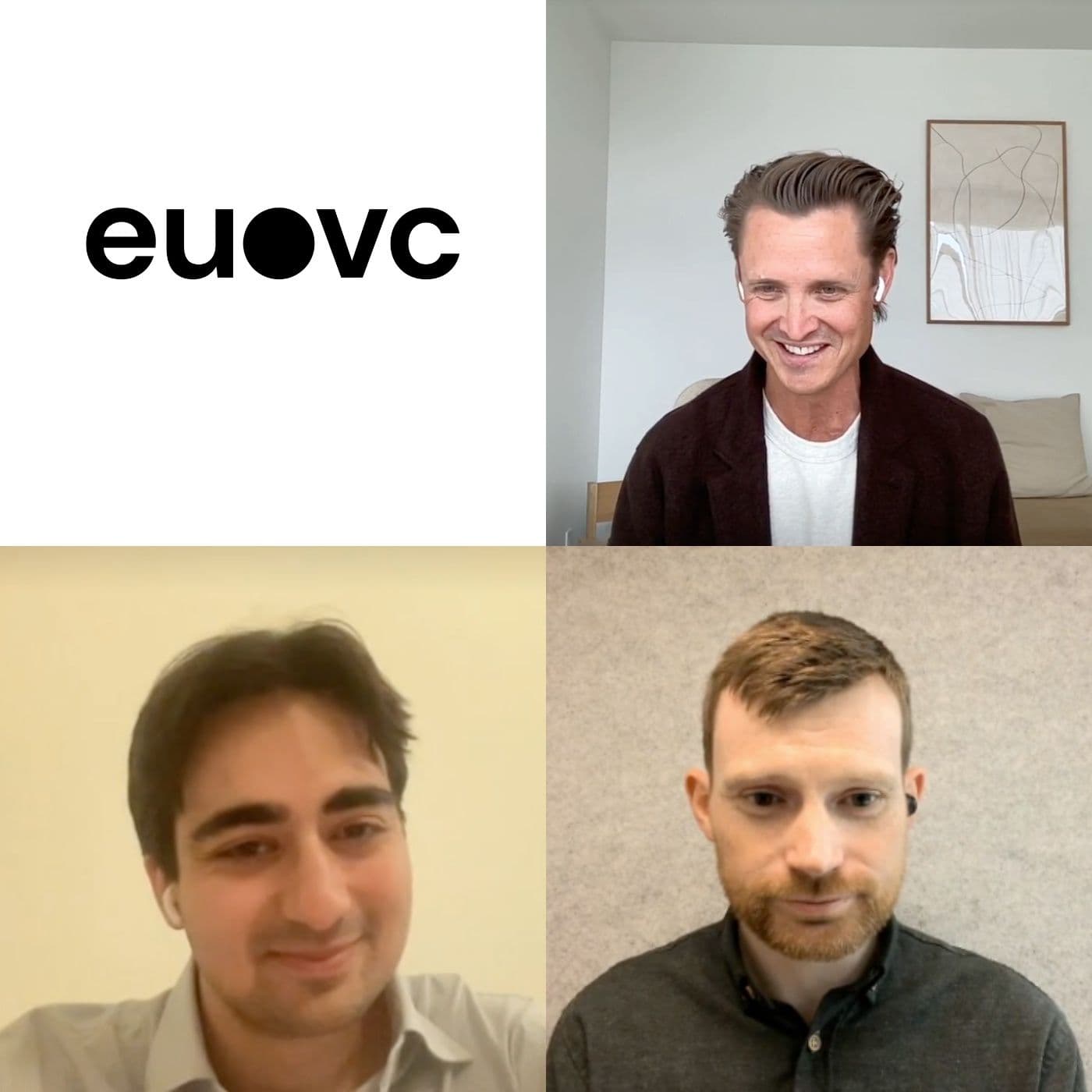
EUVC Podcast Episode Notes: E447 | Niklas Adalberth (Klarna) & Douglas Sloan (Better Society Capital)
Episode Overview
- Podcast Title: EUVC
- Episode Title: E447 | Niklas Adalberth (Klarna) & Douglas Sloan (Better Society Capital): Going From Klarna to Impact and Redefining Venture for Good
- Hosts: August Soliv and Douglas Sloan
- Guest: Niklas Adalberth (Co-founder of Klarna and Norrsken Foundation)
Episode Description This episode introduces a new series focused on impact investing, featuring insights from Niklas Adalberth, who transitioned from fintech to impact venture capital. The discussion explores his personal journey, the establishment of the Norrsken Foundation, and the future of impact-driven investing.
---
Key Themes and Topics Discussed
- Niklas' Personal Journey and Realizations
- Financial Independence: Niklas reflects on becoming financially independent after Klarna's success and the emptiness he felt despite material wealth.
- Existential Crisis: A pivotal moment in Las Vegas led him to question the meaning of success and the societal focus on growth at any cost.
- The Birth of Norrsken Foundation
- Foundation Goals: Norrsken aims to prove that commercial success and social impact can coexist.
- Initial Challenges: Early attempts to create startups under the foundation faced difficulties, leading to a pivot towards investing in existing impact-driven entrepreneurs.
- Norrsken's Global Expansion and Impact
- Global Reach: Norrsken has expanded to various locations, including Barcelona and Kigali, emphasizing the importance of job creation in different socio-economic contexts.
- Investment Success: Norrsken has made around 200 investments, managing close to $800 million, with a significant portion of VC capital directed toward impact.
- Balancing Commercial Success and Impact
- Mutual Benefit: Niklas believes that financial success should be a tool for achieving a better society.
- Planetary Boundaries: Acknowledgment of the environmental limits imposed by relentless economic growth and the need for a sustainable approach.
- The Role of AI in Impact Investing
- Opportunities and Risks: AI is seen as a double-edged sword, with potential benefits in improving therapeutic solutions but also risks of exacerbating profit-driven motives.
- Navigating AI Investment: Norrsken invests in AI solutions that align with their impact goals, while being cautious of the broader implications of technology.
- Building a Mission-Driven Team
- Team Dynamics: Emphasizes the importance of mission alignment, genuine commitment to impact, and open sourcing knowledge within the organization.
- Recruitment Strategy: Attracting top talent by being transparent, mission-driven, and creating a culture that prioritizes collective good over individual gain.
- Future of Impact VC and Norrsken's Vision
- Ecosystem Expansion: Niklas envisions a world where impact ecosystems exist in all major cities, driving a global movement in impact investing.
- Call to Action for Generalist VCs: Encouraged generalist VCs to recognize the unsustainable nature of current business practices and to integrate impact considerations into their investment strategies.
---
Key Takeaways
- Impact and Profitability: The belief that impact investments can yield substantial financial returns while contributing positively to society.
- Evolving Market Sentiment: A noticeable shift in the investment community towards recognizing the importance and profitability of impact investing.
- Collaboration and Community: The importance of creating a collaborative ecosystem among investors, entrepreneurs, and policymakers to address global challenges.
---
Conclusion The conversation with Niklas Adalberth emphasizes the evolving landscape of venture capital, particularly the intersection of profitability and social impact. His journey from fintech success to dedicated impact investing illustrates a growing recognition of the need for responsible capital deployment that prioritizes societal well-being alongside financial returns.
---
For more insights and updates on European VC, follow the EUVC podcast and visit [eu.vc](https://eu.vc).
Written by AI. May contain mistakes. Listen to the episode to check what was said.
Transcript
Automatic transcript. May contain errors.0:00What happens when a fintech unicorn founder realizes his dream only to find himself wondering if any of it truly matters? Seven years in, I realized my dream in life. I became financially independent by selling off some secondary stocks. And we became a unicorn when Sequoia invested into us. But back in his Las Vegas hotel room, Nicholas Adler had a moment of clarity that would change everything. Back in the hotel room, having all of these shopping bags from Gucci Prada and realizing that I didn't taste the difference between this super expensive wine and my bag in box at home and this apartment or room just felt empty and these shopping bags just looked at me as they had like a message that I was just so pathetic that I believed that this could buy me happiness.
0:46That moment led Nicholas to question not just his own success, but our entire economic model. So we have a society that is just totally focused on growth at any cost. Could there be a better way? Nicholas made a radical decision. So I decided to quit eventually after 11 years and instead devote my time and wealth on this norskian foundation which is a non-profit holding company his mission proved that making money and making impact can go hand in hand commercial success is clearly not the point it's just two seven years later the results speak for themselves and but in sweden today were the world leaders in impact startups have 38 times as many impact startups as the world average.
1:28And last year, 72 % of all VC capital was invested into impact. How did a moment of existential crisis transform into a movement changing how the world invests? Join us for the very first episode of our Impact Series, a collaboration between Better Society Capital, Impact supporters, and us at EUVC, as we sit down with Nicholas, the founder of Norsken Foundation. Welcome to the Impact Highlights Series, powered by EUVC, Impact VC and Impact Supporters. I'm August Soliv, your co-host, a previous Impact VC investor and the founder of the newsletter and podcast Impact Supporters. And I'm your co-host, Dougie Sloan.
2:08I'm an Impact LP at Better Society Capital and also co-founder of the Impact VC community. Today, we're talking to Nicholas Adelberth, the founder of Norskin and previously the founder of Klarna. I'm really excited for today's conversation to hear his perspective as an investor, as a business builder, and also as a deep thinker on both people and systemic change. Yeah, it was a super exciting conversation. I think I had three things that really stood out this time around. And those are really the reasons why I think you should listen in today. And that's, first of all, Niklas gives his best tips to grow a top-tier Impact VC fund.
2:41Second of all, Niklas shares his personal journey from starting Klarna into launching an Impact VC. and he actually even answers whether he would start planning again if he was standing with the chance to do it again today. Lastly, Niklas shares how Nord Stream is trying to prove that impact and returns go together. So I hope you want to listen in and we're super excited for the conversation. Here's a few words from our beloved sponsor. Impact VC is a global community of VCs accelerating impact within venture. Their purpose is to cultivate a community and resources to unlock venture capital's ability to tackle the world's most pressing challenges.
3:19The community is made up of over 900 VCs, including both pioneers and newcomers, including generalist VCs and impact specialists. Visit impactvc.co to join the community and explore their resources, including the VC Impact Playbook, the Founder Impact Playbook, and the Impact Investing for VCs online training, which is designed to help VCs integrate impact practices into their investment strategies. That's a lot of information to get in 30 seconds.
3:59This show is not investment advice, and the hosts of this episode may be invested in the funds and companies featured. And then I'm super excited because we have Nicholas with us here today. So thank you so much for joining us, Nicholas. Thank you. Great to be here. Yeah, so what we're going to talk about today is a little bit of your journey, Niklas, also talking about Norsk and what you've built and why you think that Impact VC part and Impact Entrepreneurship more broadly is important. So I think let's just jump a bit straight into it. Maybe my first question is to hear a little bit about your personal side and your journey into what you're doing today with Norskin and some of the experiences you've had, your life learnings and how you got to the Impact VC and Impact Entrepreneurship side.
4:46Sure, happy to. So I was lucky to co-found Klana when I was 23 years old. It was just a couple of months into business school. I had this idea that if I become financially independent, I will be the happiest guy alive. I mean, looking at all the marketing and commercials, people looked so happy, right? And we're very lucky with Klana. It was right when the e-commerce took off. This was in 2005 in Sweden. So when e-commerce took off, so did Klana. Another important thing that happened was that a couple of years in, Niklas Sendström sold his Skype for$2 billion. And overnight, the Swedish tech ecosystem realized that you can build a unicorn company out of the small place of Stockholm.
5:34So that was very important to me and I'm sure to the entire tech ecosystem of what was possible to do. Seven years in, I realized my dream in life. I became financially independent by selling off some secondary stocks. And we became a unicorn when Sequoia invested into us. And I decided to celebrate in Las Vegas on my way to a conference in San Francisco. It was a very short notice. I decided to go by myself, like playing poker, and was able then to go by business class for the first time. You know, you go to the left instead of to the right in the airplane, get a glass of champagne instead of being yelled at.
6:12I mean, really living the dream life, chicked into this big Panorama suite, the Encore in Las Vegas, and went out shopping like crazy and eat expensive seafood and expensive wine. But back in the hotel room, having all of these shopping bags from Gucci Prada and realizing that I didn't taste the difference between this super expensive wine and my bag in box at home and this apartment or room just felt empty. And these shopping bags just looked at me as I had like a message that I was so pathetic that I believed that this could buy me happiness. It was nothing changed in me. It was just quite the opposite.
6:53So I had some kind of existential crisis in that hotel room, realizing that even more money wouldn't make a single difference in my life. And so with this experience, I had to go to therapy. I was lucky enough to be clinically depressed or anything like that. But still, I realized I needed guidance in my life. What was next? and during these retreats and the therapy sessions i kind of realized or come to the realization that what i'd done with calana was not necessarily doing good for the world i mean one way create a lot of jobs right we enabled people to shop really quickly online buying stuff but the flip side of that you could also see it as are we putting people into debt pushing people to pay in installments, buying stuff they could not afford in the first place and maybe not a year later.
7:48And what about the overconsumption? More and more data coming out in Sweden and with Greta Thunberg reminding us that we need four planets to sustain the average consumption of a Swede. And in all of this, what is then my responsibility of this? Being born in one of the best places on earth, right? With free healthcare, free education, and with extreme luck of luck of succeeding with with clana with that perfect timing that we just talked about so sort of trying to like okay do i have a some kind of extraordinary responsibility with all of this extraordinary wealth i've been able to accumulate uh just out of luck and this model that we should just accumulate even more and more wealth and just pass that on to our our kids i I don't see the kids inheriting a lot of money becoming necessarily more happy.
8:39Maybe the opposite, actually. So why don't I do something with this? And the paradox, or not paradox, but the Delta as well, and the strange thing was that becoming a unicorn in Sweden, I was part of Front Page magazine. I received a prize from the prince's hand and was celebrated. celebrated. And the same thing with our other unicorn colleagues creating these addictive computer games or whatever. And you're seeing that. Is this what we celebrate in society? And if we continue to celebrate this kind of innovation, where will we then end up with as a society? So I decided to quit eventually after 11 years and instead devote my time and wealth on this Norskian Foundation, which is a non-profit holding company.
9:29You could see it as a weird idea to put the spotlight and capital on impact entrepreneurs instead. Pretty exciting journey you've been on. Maybe a reflection I'm having now is if you were 23, would you build Klada again? With all the insights I have now and understanding that more money doesn't necessarily make you more happy? No, probably not. But I mean, I don't regret anything in life. I think whatever experiences I learned took me where I am today and I have three lovely children. I don't want to undo that. So I guess no. And yes, depending on how you see it. Do you want to tell us a little bit more about Norskine and sort of what you do today?
10:10You gave us a couple of sneak peeks, maybe a bit more. When I started Norskine Foundation, I didn't know really what to do. I initially donated half of my wealth,$125 million. I knew from the effective altruism movement that you can save a life for about$4 ,500. So it's a lot of lives I could save with that endowment, right? So it needs to be more efficient than just donating it to an efficient charity organization, right? And that was, of course, quite narcissistic to believe that we could be more efficient than that. And I still don't know if that is true, but it at least creates a lot of meaning to operationally work with whatever we're doing.
10:49So when we started, it was initially two startups, foundation-owned, that we tried to build from scratch. That didn't work at all. One is still alive, but the other one is not alive, and it was supposed to solve corruption. So I think an early realization that it's very, very hard to build startups, right? And that was maybe just a one-hit wonder with Klana. But during this period, there was a little bit of buzz around Norskian, and I was approached by a few impact entrepreneurs that wanted to tackle the refugee crisis we had in Sweden going on at that time. And it became quite obvious for us that, okay, what about if we instead invest a couple of hundred dollars, a hundred thousand dollars into these companies with self-motivated entrepreneurs with an existing impactful idea.
11:41And that eventually grew into us raising external capital,$25 million fund that eventually then turned into$125 million fund and then turned into this$320 million Norsk and VC fund. And we have also incubated four more funds in different stages of a startup. So it's an accelerator, we have a business builder, we have two funds in Africa. And they're all based on the same principle that Norsken, you can see it as a collective of fantastic entrepreneurs and investors coming together that really unite on this mission to try to improve society with impactful business models. Apart from investing, we've done about close to 200 investments, have a close to$800 million under management.
12:29We also needed an office space. So I went around in Stockholm to try to find a beautiful space for 20 people and I came across this huge old tram repair station in downtown Stockholm that was just absolutely beautiful super high ceiling and fantastic ambience and we then came up with the idea that why don't we turn this into a space for all people working for impact and we subsidize the space so that you don't have to sit outside the city borders just because you work with a charity NGO or an impact company. And by doing that, maybe we can increase the status of doing good in society. And this has worked incredibly well.
13:10So in Sweden today, in our Norsk and House, it's 450 people sitting under the same roof, everyone working under the same mission. And this has created a lot of buzz from media and big corporates and politicians. When we have head of state visits in Sweden, they tend to come by and have an inspirational nook. And of course, that creates even more buzz. And that in turn creates even more buzz and leads into our funds. And in Sweden today, I have no clue how much it's thanks to Norsken, but in Sweden today, we're the world leaders in impact startups. We have 38 times as many impact startups as the world average.
13:49And last year, 72 % of all VC capital was invested into impact. But what is quite obvious, I mean, it doesn't really matter what we do in Sweden, right? This needs to go viral and needs to be all over the world. So we have expanded this into Barcelona. It's 10 ,000 square meters. It's over 1 ,000 entrepreneurs sitting in that beautiful space by the beach. We have another one in Kigali, Rwanda. It's 1 ,800 people. It's the biggest hub for entrepreneurship on the continent. And obviously, we have a wider definition of impact in these markets. So job creation is probably the most impactful thing you can do for the African economy and society.
14:31And then apart from this, we try to have other impactful initiatives as well. We have the Impact 100 list in which we rank the top 100 most impactful startups in the world, putting them on the NASDAQ or the NASDAQ billboard. We have the Impact Week. It's a week-long festival, so to say. We put the spotlight and capital on this movement. And one of the sub-events of this is something called Impact Return, in which we try to match Impact GPs with Impact NPs as a way to try to catalyze even more capital to these businesses. Because it's quite clear, no matter what Norskian does, we cannot solve the trillion dollar gap into what is needed to solve the SDGs, right?
15:16And whatever we do, we try to open source absolutely everything. I guess this is a benefit of having a non-profit as a holding company on Start that it's all about trying to make this movement as big as possible. And if we can inspire anyone else to open up a Norskan house or call it whatever or open up another impact VC, that is good for the world. That is good for Norskan and good for everyone. Just a little bit of background of what we're doing today. Obviously, we want to expand this ecosystem to more places across the world. So not much then, just a couple of things you're up to in the background, I suppose.
15:52Incredible journey, incredible breadth of activities. And there's a lot of threads that we'd love to pull on in the course of this conversation. One that jumps out to me from your stories so far is that you've seen success and failure, both within and outside of the impact world. A lot of what Norskin is now building and how it fits together is built on this idea that you can have commercial success and impact. together in certain models in certain places. And I wonder if you could unpack that a little bit in terms of how you think about the relationship between impact delivery and building businesses with impact at their heart and commercial success.
16:29That's a very good question. And I might give you a little bit too long answer. But I mean, in short, I think financial return and financial success can never be the point. It always has to be a tool to achieve a better society. And maybe taking one step further back is that today, as you know, we have a society that is entirely focused on this embedded growth obligation. I mean, as individuals, we all want to have a nicer car, another summer cabin or the first summer cabin or another house, whatever, more toys to our kids, higher pension fund payouts. So we're totally focused on increasing our own wealth.
17:13as companies we want to grow them as big and good as possible right to increase once again to increase the dividends from our pensions or whatever but also not to be out competed by whatever rivalry competition we have out there and as states we also are very interested in increasing gdp if we don't increase the gdp our neighbors will increase the gdp and we will lose out in a macro-political power dominance. So we have a society that's totally focused on growth at any cost. And this has been so great, right? We have discovered medicines. We have longer lifespans. We have reduced child mortality.
17:54We're taking a lot of people out of poverty. So it's a model that's been working quite well for the winners in this game. But we all also know that it's some losers in this game as well. If we're going to start out with nature, I think we're very close now to cross seven out of the nine planetary boundaries. It's, of course, a result of this infinite growth obligation. And that would be, for a fact, a thousand times bigger economy, a GDP, than we were 500 years ago. The next 30 years, we will use as much material and energy as we've done the last 10 ,000 years. this has an incredible negative impact in the long run on nature.
18:38And the planetary boundaries framework is just one way to illustrate that. I think if we look at us as individuals trying to optimize for having more stuff, more toys, more cars, it looks like a good thing initially, right? But we also know that in Sweden alone, 20 % of the population are now eating antidepressants or medicine for anxiety. So it's higher than ever before, even though we have more than ever. These kind of research have been done on asking people on their deathbed, what are they wishing? What are they saying? What are they regretting? I mean, I think no one is mentioning anything that has to do with the market.
19:20They're all mentioning that they should have another purpose or do focus more on love and relationships. I mean, this is clearly not the recipe necessarily if you ask these kind of people that should be having the most wisdom in the world, right? Being on the deathbed and be able to look back on their lives. So once again, commercial success is clearly not the point. It's just a tool. And if you can embed commercial success with impact being one-to-one correlated. So for each unit of revenue or each unit of profit, is also one unit of a better society or a better environment and so on, then it can actually work.
20:01But then, of course, you need to be very careful because looking at this as a metric initially, I'm sure like when Mark Zuckerberg created Facebook, he just wanted to connect people. He had nothing in mind that he would just polarize society and destroy democracy. Or the inventor of the combustion engine just wanted to solve the problem with horse defisication and the horses being in the cities, but ended up creating climate change. And you can also say this, for example, from nitrogen fertilizers, creating a huge growth in food to beat them, but also created a lot of negative externalities, such as dead zones in the ocean, all of this nitrogen destroying that.
20:48At least at Norskan, we are believers that in some areas, you could have this one-to-one connection with commercial success and impact. We have that as a non-negotiable. We have companies like Kling Systems, and that, for example, do lithium-ion battery recycling. You have Syra doing the same for the textile industry, recycling. And then in these kind of industries, it's very clear that it's mutual beneficial. But we have to be aware as well. So long answer to that question. Hope it helped. So there's some great examples of venture-style business models that are looking to make a positive difference in the world.
21:26And one of the things I'm really interested in and interested in your reflections on are the ways in which companies can put impact at the heart of how they are building their businesses and do so in a way that drives commercial success and impact delivery together. So things like attracting really strong talent to the company or attracting and retaining customers in different ways or navigating regulation in different ways. And I think you have some phenomenal examples of companies that are doing some of those things, particularly in the climate space in your portfolio at Norsk. And I'm interested in reflections you might have on those sorts of levers and whether and how they show up in some of those success stories and I guess role model companies that you're building in that portfolio.
22:07People now more than ever are looking for a purpose. They're realizing that just continue business as usual is not a recipe for happiness or fulfillment. and it's quite clear that you see these impact companies are attracting the absolute best. I can at least tell from my experience recruiting to Klarna, it attracted a lot of great people, but it's still nothing compared to the CVs we're getting into the Norskan ecosystem as well as our portfolio companies. So yes, that is very, very important, of course. And you also see policy shifts. You see big corporates doing pledges to go net zero. You see nation states doing pledges.
22:46You see cities doing pledges as well. And of course, this fuels a lot of need and demand for climate-friendly solutions and innovations. And this is where these impact startups are operating, having huge tailwinds from this big shift in policy. And I hope and I think that it's just a matter of time before you see negative externalities being taxed, which gives these companies an additional edge to be more competitive and have a higher growth than all other companies. One additional follow-up I think would be around with your work at Norskund and building up to the place that you are now, you've been in the impact space navigating some of these dynamics for nearly 10 years, something like that.
23:30And similarly, in our work at BSC and Impact VC, we've seen market sentiment and perceptions of the interaction between impact and returns change hugely in that time. And I'm interested in what your reflections are and whether you've seen that change too, given the inflection point we seem to have seen in deployment of capital towards climate solutions and raising of funds around impact and whether those perceptions now are different in your mind to the perceptions maybe 10 years ago. No, it's a very big difference. I mean, when we started in 2016, trying to raise the first fund, people just shook their head that you can never combine impact and financial return.
24:08So the first fund of$25 million, it was raised together with three other unicorn founders that were brave enough. And I would guess they didn't expect to get more than the capital back. But fast forward to the second fund we did for Nord Stream VC, the sentiments had shifted a lot in 2020. Even institutions started to realize that, hey, this is actually an area where you can have positive return. And now to our latest fund with North Can BC that was always subscribed and we had to say no to capital. I think, of course, a lot of this is built on the fact that we were very early on. We were very lucky with starting with a big endowment from the Klarna secondaries that were sold, making it a lot more easy.
24:54but today going back again to what we previously talked about the realization by more and more people and leaders that we are crossing the planetary boundaries not something we can continue on forever we need to change we need to have new solutions that make us thrive within the planetary boundaries instead maybe jumping on something we talked about earlier and it's still a little bit linked is sort of talking about some of these very successful impact startups in a lot of it is in climate a question is sort of is it as successful on the social side is one part of my question and then the other part is are there some areas of themes where you simply cannot do it you talked a little bit about the refugee crisis before right can that can you really build something successful there or should it just be in a profit area i think in our portfolio we get thousands and thousands of applications, right?
25:46From our accelerator to our business builder and so on. And I think about 70 % or maybe even more, maybe it's 80 % now, are within the climate tech space. And reason for that is that I think from a planet's perspective, a social perspective, we should probably be more diversified. But our strategy has been to be the top quartile financial return impact VCs so that we can inspire even more capital to go towards impact. And it happens right now that most entrepreneurs, most talent out there are focused on the CO2 issue and climate issue. And that's why we see this kind of portfolio composition. Does this mean that we cannot find business opportunities in the other areas, such as all our social issues?
26:36No, I think, I guess they just need to be higher up on our radar, on everyone's radar. and currently is very, very focused on the climate. But with that said, I'm also equally sure that you cannot find business models for everything, and that society needs to tackle a lot of these issues. So some days when I are a little bit more pessimistic and have worse self-esteem or whatever, or self-confidence, consciousness, I'm afraid that maybe we have crowded out charity capital. instead of going into charities, maybe going into, I don't know, climate tech. That could even be like less negative. But I hope that that's not the case.
27:16I hope people realize that we need the charities, we need the NGOs, we need the state, we need everyone actors coming together to tackle all of these problems. It's not enough just with finding business models to tackle the climate. And I guess LPs like pension funds, right? Would have the proof. Like if you can get a pension fund in as an LP, then you're kind of proving that the money wouldn't have been going to cherry on the wire side. Yes, we're not crowding out that capital, at least. No, that's true. Changing gear slightly, Nicholas, I'm interested in talking a bit about AI here, which is a big topic in VC more broadly at the moment and a big topic in impact VC as well.
27:53And it's clearly a transformative technology and set of technologies that have potential tremendous upside, but also potential tremendous downside. So what are the upsides you see from an impact perspective? What are some of the challenges you were thinking about? How are you navigating that as an Impact VC investor today? No, good question. I think regarding AI, I think most have been said out there. I mean, you have the obvious things that will improve. I'm sure we will find a lot more fantastic therapies, medical therapies. I'm sure we'll find a lot of new materials. Maybe climate modeling will significantly improve, of course.
Read the full transcript
28:32I think one perspective that is not talked about enough, I think, is AI as an accelerator. I mean, AI will accelerate everything, right? And going back again, currently, as a society, we are so much focused on growth and profit. We even have an obligation as a corporation to focus on profit. Given that AI is supercharging this, what will that then do to the planetary boundaries? Well, to me, it will just accelerate it immensely. Because all of these companies in the world are obligated to have this narrow-minded goal of profit maximizing. It's almost like sociopathic, right? Sociopaths cannot tell right from wrong, and they have a narrow-minded goal.
29:20It's the same with corporations. And the corporations of today's world are all legally obligated to be sociopathic. And then with the hands of AI to accelerate this even further means that we will go even faster towards the cliff. And I find this very scary. And my house god, Daniel Schmachtenberger, I don't know if you're familiar with him, but for all the listeners, please listen to him. Daniel Schmachtenberger. I don't know if he was the first one saying this, but technology really gives us the power of gods. Now we ask me to have the love and wisdom to navigate it. And today's world, we don't.
29:59And with AI, this makes it exacerbates this problem even further. And some of those sentiments and those worries, do they inform you avoiding investing in solutions that have AI at their heart as a consequence? Or are you finding ways to get comfortable with AI solutions applied in certain areas that are accelerating the right sorts of things? Or how are you thinking about navigating some of those trade-offs and challenges? We have so long discussions regarding this because once again, we have as a non-negotiable that the impact and profit needs to go hand in hand. But what about if this gets corrupted?
30:34We talked about the combustion engine or Facebook or whatever. How do you cover for that? And this could be very hard. You can let no guarantees that it will not be pivoted into amplifying the fossil fuel industry or whatever eventually. But to answer your question, No, we invest in AI. We invest in AI where we see that you have this correlation, a one-to-one correlation, but we do also find it difficult. And I just remember being at Klana as an operator and the extreme power within the organization to direct the company towards profit. I had this idea when I came out of this retreat that why don't we build a payment solution for charities that we give away for free as a way to improve their conversion rate, taking in even more charity dollars.
31:27But even though I was a deputy CEO, I was a shareholder, I was part of the board, I was a co-founder, I still had such a hard time getting it prioritized into the tech backlog. because in comparison with the features needed to expand into the US or UK, when you have a company that is just fueled by investors and investment managers that only cares about getting their bonuses, and you have 500 stock option holders within the company that all they want is to get their summer house, it was just impossible to get that prioritized. And I don't blame them. I mean, if I didn't have that partial exit, I would probably prioritize the same way, right?
32:06And then Sebastian is still on board as Klarna. He's done an immense job in slashing interest rates and the reminder fees and so on. So he's been really taking Klarna into a much more sustainable company. But still, with that experience, if we don't have this correlation with one-to-one and incentives for companies to do good naturally in the company, it would clearly not happen because these incentives from people inside and outside the company will just take it over. were. Without making this too philosophical, I really like what you talked about with the fact that you accelerate the power of people with AI and tech, but then you still need their love and wisdom.
32:49You said incentives is one way that you're probably making sure that people are not seeing their love and wisdom or feeling their love and wisdom. Are there any other things that, as you see it, that sort of make the fact that people are not close to their love and their wisdom in their hearts? I'm a big believer in inner development. This initial nonprofit company we started at Norskian together with a couple of other people is called 29K and that launched the Aware app. It's an app that anyone can download and you get free psychologically scientific-based practices or interventions that anyone can do.
33:30And when you've done one of those practices, you go into a sharing, live sharing session in your app, in your phone and as a way to then try to grow as a person because if we don't if we only focus on the outer skills and not the inner skills and we don't change our behavior of the current system i mean we were just treating the the symptoms right so we all need to have an inner development which we had done previously in history but we need that kind of enlightenment again i think to change the culture and change the way we conduct business. So I think that's a way to hopefully get some more wisdom and love into society.
34:11I'm just stating clear, I'm very much in the beginning of this journey myself. I'm absolutely not done. I think on this podcast, every listener, I'm sure I have the worst footprint of every one of us. So I'm a total hypocrite. But with that said, I still think that everyone should go to therapy if you can afford it. Everyone should start looking inside. What is driving me? Why do I need to have this feeling of getting external validation or acknowledgement? What kind of traumas was I brought to when growing up? And how can I be like, brought to a better system in total? And I think in the impact space, there's probably some people that have that reflection, but I think it's definitely still worth for everybody to think about.
34:56but maybe bringing us slightly back to the impact VC world, the more tangible half-capitalistic world. I also wanted to talk with you a little bit more about the VC fund that you've raised and some of the learnings you've had through that. And maybe a reflection that both Doug and I had when we were talking about it previously was sort of, as you said yourself, you've gone from a 25 million fund to a 300 million plus fund. what's of the reason for that success and what would be your best advice for some emerging managers in the Impact VC field? Good question. I think the main reason for that, I think, was just luck.
35:40We started very early in 2016 and we started small and then it grew bigger from that. I mean, to have the benefit of having this $125 million donor nonprofit backing you, I mean, that's not super easy to replicate. They can do a lot of mistakes, but still be successful, right, with those prerequisites. But with that said, I think what really worked well for us is that I think that the statues and the mission of Norskan Foundation resonates with a lot of people. You could see Norskan as a collective of fantastic entrepreneurs coming together that are going to do good for the world. No one owns Norskan Foundation.
36:21It's not just about me. It's just a bigger collective of very smart, dedicated people to impact. And by that, I think we recruited and had people join this mission. I mean, it's just so incredible. If you take Norski and Visi, for example, already in 2016, my old mentor from mentoring me at Klarna was David Friedman. He built one of the most successful e-commerce companies and was by then already maybe the most famous angel investor. And he just said that, hey, why should I spend part of my time investing in neutral or negative or positive things and part of my time supporting this charity? Why don't I use the 10 ,000 hours I spent on doing investments into doing something good?
37:11so he came aboard and he was part of building Norsk & Vesey together with two other two fellow GP colleagues, Gart and Tove. And I think also the help with building these ecosystems, these Norsk & Houses that really been able to expand our brand and our mission has also been very helpful because by doing that we were able to attract the best deals. I think it's very few cases in Europe that we have not looked at first, which is obviously also a very big benefit. And I was learning as well, building Klarna, that we approached Sequoia Capital, not the other way around. So if you have that kind of brand, you will get the tier one entrepreneurs approaching you first, and then it's not as difficult to generate tier one returns as well.
37:59And then And finally, I mean, the tailwinds again from the policy shifts going on in impact. I mean, the world is having so much other huge global problems currently, but I still think it is an underlying big trend to be more sustainable as a company, as a city, as a nation. And that is really also helping us raise these funds. And you talked about incentives before. how have you changed incentives to actually succeed in the impact VC model? And would you recommend others to do what you're doing? Yes, I think most important is to find mission aligned people that genuinely and authentically believe in what we're doing.
38:45But second of all, we have the carried interest is tied to the team reaching their impact targets. And the impact targets are set by the end pack, the investors into the fund. So if we don't hit our impact targets, it will be no bonuses for the team. This is a model I think that EIS developed. So it's not our invention. And it's something that we think is working very, very good. There's obviously some risks with it that we need to take into consideration. I mean, we have a world today that is all about reductionism into this dollar value. and you cannot reduce the world into a dollar value. I mean, it's quite obvious.
39:29And are we now doing the same mistake reducing the world's problem or the nature's problem into it's all about reducing CO2? And if you then try to reduce the problems of the world into a couple of matrices that you measure, are you then losing out of many other negative externalities? so with that said I still think the EIS model of tying the carried interest into reaching your impact KPIs makes sense but you also need to be careful. Pure question I don't know the answer to this one so maybe I'm completely off but is part of the sort of the carry also going back into the foundation or is there anything going back into the foundation or how does that work?
40:14The foundation has a minority stake in all our funds we take 30 percent of the carried interest We take 30 % of the management company. So if it goes well for the fund, it also goes well for the foundation. And hopefully we can use that money to open up in even more Norskine houses all over the world. And that in turn will hopefully increase the brand recognition and the movement. And by that, inspiring even more people to start impact companies. That will obviously be very good for the funds as well in the world. So yes, the foundation has a financial upside. But I have zero financial upside in anything that Norskine does.
40:48since they have enough money put aside from the chronodays. Yeah, very clear. And maybe also just jumping on the fact that you talked about tier one brands. And I'm thinking for all the listeners out there, if I were with a GP right now, I'd be thinking how do I then build that tier one brand without going through all the work of building all these houses, et cetera, and without having some of the$125 million ready to go. So are there any other tips and tricks you think they can create that tier one brain? I mean, probably not. We had such an unfair advantage by starting with this big endowment to the Norskland Foundation and the timing going back to 2016.
41:30So that made it so much easier. If I would start new, I think it's important to be authentic about your impact. If you're not, I think the entrepreneurs will see through that eventually. I think it's important to position yourself not only about being a VC investor, but also support the wider ecosystem. Try to influence policy, influence media, influence big corporates, since it's all needed to tackle these big problems. and then I guess the same kind of advice that I had with during the cloner days and when I advise our startups is that try to find the best people and find people that are much better than yourself and that that thread around people and about firm building and about culture has come through in in a lot of your answers today how have you and I guess incentives are one part of that but how have you thought about building a team that embodies that authentic commitment to impact that attracts top talent that retains and develops that talent and has the the sort of impact you're setting out to have on the world how have you thought about that aspect of what you're doing i think it came a little bit automatically i mean since we are a foundation non-profit at top i think that resonates very well with our co-workers and people that want to do good that they're not enriching me by any chance but rather everything goes back into improving the world that in combination, of course, with the people working at the funds, they also have a financial upside.
43:03So to be generous with the carried interest bonuses and so on, I think it's also important in a very competitive industry. I think our dedication to open source everything we do, I mean, I think it's still on our website, but you can check out everything regarding Norskian and what we've done, our strategy, our salaries. If you want to start up your own Norskian house with your own brand or whatever. This is how we did it. And our agreement, our term sheets, when we do deals and all of that is just publicly available for everyone. And I think that is also something that really resonates well with talent, that they're not just optimizing the Norskan ecosystem.
43:49They're also hopefully having ripple effects on everything they do for people to be aspired by to copy and use. And maybe just doubling down on that one. What is the top person or the best hire you can make? Because you said it multiple times, both with Klarna and now Norsekin and even more so the Ipex here. What is the best talent you can attract? I think it's changed over the years. I think in the first years of Klarna, it was all about finding someone that was quite the same as me. I don't know, same age, same background, same interests, same way of operating and so on. I think over the years, I became less sure.
44:35And now fast forwarding to now 2024, I think it varies so much depending on what company you are in, what stage you are in. Before it was all about finding people that are learning on the job, but now it's maybe less so. Find people that have had experience since before. And today is a combination. I think you need to have a combination of everything. So I wish it was a simplified answer to this. But what I try to look for is obviously they need to be mission aligned. They need to care for the world and not only about optimizing for themselves. I think they need to have a strong ambition. I think they need to be true team players.
45:14We don't hire egos or divas. Perhaps an interest to develop themselves, just realizing that no one is complete. Everyone has shadow sides. So we talk a lot about Impact VC and it being sort of the frontier maybe of the VC, traditional VC model. But at the same time, now you've been doing this for 10 years, Niklas. There must be sort of something that's coming next. And you also said that you want to grow Norskin. What would you say are some of the things that will happen potentially in the next five years that you're looking into with Norskin in the next five years? Yeah, I mean, as I mentioned, the stats for Sweden is quite amazing with 38 times as many Impact startups.
45:51and such a big fortune, 72 % of all VC capital going into impact. This is not the case if you look into the bigger economies of US or China or wherever else in the world, basically. So this movement, which I think is the strongest in Sweden, but also in Europe, it needs to go viral. So that is something that if I'm thinking on, how we can influence that. I think one way is, of course, to show to the world with the work that you guys are doing to show that it is profitable to invest into impact, but we need to speed this up. And how to do it, I'm not quite sure, but at Norskine, we dream of a world where you have one of these impact ecosystems in all major cities all over the world.
46:36And it doesn't have to be Norskine, but it needs to be someone or an organization driving it to put this on a map. We always finish our podcast with a question about tip. And I'm interested, we talked about some of your tips for Impact VC so far, but what is your best tip for generalist VC investors about Impact? I guess if they could have a tip of that the current way of doing business is unsustainable, it's basically two paths coming from that. Either we are eventually our future generations are being wiped out due to the biophysical realities of how we grow and use material and energy and the biosphere that we are all dependent on.
47:19or second the generalist VC and their investments will be outcompeted because we will eventually hopefully tax negative externalities they will no longer be competitive they will no longer be able to attract people so my tip to them is of course to go go into be part of the solution and also going back again I think generalist VC if you're lucky enough to be one I think you are among the top, at least top percent in the world in terms of wealth, in terms of where you are in society. Maybe, maybe you have a moral obligation to care about more than just your cared interest. I think that if you do, you will on the deathbed be more happy of what you decided and choose for life than if you just continue the current path of only caring about growth for yourself, for your fund.
48:12With that deep and compelling call to action, I think we will wrap it up there. So huge thanks, Nicholas, for your time today, your insights today. It's been wonderful talking to you. Oh, thank you. Thank you. Very interesting. Thank you very much. Here's a few words from our beloved sponsor. Impact VC is a global community of VCs accelerating impacts within venture. Their purpose is to cultivate a community and resources to unlock venture capital's ability to tackle the world's most pressing challenges. The community is made up of over 900 VCs, including both pioneers and newcomers, including generalist VCs and impact specialists.
48:46Visit impactvc.co to join the community and explore their resources, including the VC Impact Playbook, the founder Impact Playbook, and the Impact Investing for VCs online training, which is designed to help VCs integrate impact practices into their investment strategies. That's a lot of information to get in 30 seconds.
49:08Tear down this wall It's more than just an ally This is a union of values Let's start acting
From the publisher
Here’s what’s covered:
- 02:14 Niklas' Personal Journey and Realizations
- 06:45 The Birth of Norsken Foundation
- 11:30 Norsken's Global Expansion and Impact
- 13:35 Balancing Commercial Success and Impact
- 25:07 The Role of AI in Impact Investing
- 39:50 Building a Mission-Driven Team
- 43:04 Future of Impact VC and Norsken's Vision


